School and college voice: October 2025
Updated 24 September 2026
Applies to England

© Crown copyright 2026
This publication is licensed under the terms of the Open Government Licence v3.0 except where otherwise stated. To view this licence, visit nationalarchives.gov.uk/doc/open-government-licence/version/3 or write to the Information Policy Team, The National Archives, Kew, London TW9 4DU, or email: psi@nationalarchives.gov.uk.
Where we have identified any third party copyright information you will need to obtain permission from the copyright holders concerned.
This publication is available at https://www.gov.uk/government/publications/school-and-college-voice-omnibus-surveys-for-2025-to-2026/school-and-college-voice-october-2025--2
Introduction
The Department for Education (DfE) commissioned Verian to recruit and maintain a panel of school and college leaders and teachers in England, known as the school and college voice (SCV). The SCV is designed to collect robust evidence to help DfE understand the perspectives of teachers and leaders. This allows the department to make more effective policy.
The SCV works as a series of short surveys across the academic year, covering a range of new and longstanding policy issues. This report is about the findings from the October 2025 survey wave of the school and college voice.
Methodology
The SCV survey is answered by teachers and leaders who have agreed to participate in short, regular research surveys on topical education issues.
We select teachers and leaders randomly using records from the school workforce census (SWFC) and invite them to take part in an online survey. For the first survey of the academic year, we send invitation letters and emails to teachers and leaders. For other surveys in that same academic year, we send the invitation by email and text message to the teachers and leaders who agreed to join the panel in the first survey.
We ran the October 2025 recruitment survey between 30 September and 6 November 2025. The respondents were:
| Audience | Responses |
|---|---|
| Primary school leaders | 868 |
| Secondary school leaders | 950 |
| Special school leaders | 388 |
| Primary school teachers | 877 |
| Secondary school teachers | 888 |
| Special school teachers | 446 |
Questions with fewer than 30 responses (before weighting) are not included in this report, and base sizes of below 100 should be treated with caution. Complete findings can be found in the published data tables.
The report makes some comparisons to previous surveys conducted in previous academic years, for example the School and college panel omnibus surveys for 2024 to 2025. These comparisons are helpful to understand how trends may be changing. However, the survey methodology changes over time and so comparisons to previous years are not as reliable as survey findings within each academic year.
In this report, we round figures to the nearest whole number.
We use consistent terminology to describe percentages that fall within specific bands, as follows:
- very few - 0% to 10%
- a small minority - 11% to 32%
- a minority - 33% to 47%
- about half - 48% to 52%
- the majority - 53% to 66%
- a large majority - 67% to 89%
- almost all - 90% to 100%
We do not describe 0% and 100% as ‘none’ and ‘all’ because figure rounding may mean this is not accurate. For instance, 100% may be 99.6% of respondents, rounded to the nearest whole number. Unless otherwise stated, when we refer to the ‘average’, we are reporting the arithmetic mean.
Further information on the survey methodology is available in the accompanying technical report.
Topics covered in this survey
The survey included questions about:
- parental engagement and home learning environment
- breakfast club transport
- recognising special educational needs
- secondary literacy provision
- policies related to staff experience and retention in schools
- schools’ usage of copyrighted materials
- support staff training and career progression
- the use, benefits and challenges of central staff
- understanding school exclusions and suspensions
- sustainability leadership and climate action plans
- special school teachers’ support to manage challenging classroom situations
- teacher and leader wellbeing
Parental engagement and home learning environment
We asked primary and secondary school leaders if their school had a written policy or framework on parental engagement.
Figure 1: Whether school has a written policy or framework on parental engagement
| Phase | We have a standalone policy | It is embedded in other policies | Not yet, but currently developing one | No policy in place and not developing one | Don’t know | Total |
|---|---|---|---|---|---|---|
| Primary | 9% | 50% | 11% | 25% | 4% | 100% |
| Secondary | 11% | 52% | 13% | 18% | 6% | 100% |
Base: Primary leaders (n = 868) and secondary leaders (n = 950). Data table reference = “parentalengagement_policy”.
We also asked primary and secondary school leaders if their school offered training or resources to help staff improve parental engagement. The majority of primary leaders (55%) and about half of secondary leaders (48%) said yes.
We also asked leaders which methods their school uses when communicating general information with parents.
Figure 2: How schools communicate general information with parents
| Response | Primary | Secondary |
|---|---|---|
| Group communications | 94% | 91% |
| Individual/one-to-one communications | 89% | 90% |
| Parent–teacher meetings | 87% | 85% |
| In-person workshops or events | 84% | 69% |
| Social media | 61% | 80% |
| Learning management systems or apps | 56% | 72% |
| Another method | 7% | 6% |
Base: Primary leaders (n = 868) and secondary leaders (n = 950). Data table reference = “parentalengagement_comms”.
We asked leaders what types of support, if anything, would help their school strengthen parental engagement.
Figure 3: What support would help schools strengthen parental engagement
| Response | Primary | Secondary |
|---|---|---|
| Guidance and resources for parents | 72% | 71% |
| Community liaison or family support workers | 60% | 57% |
| Training for staff | 51% | 61% |
| Translation or interpreter services | 45% | 44% |
| Evidence-based tools or toolkits with case studies | 31% | 39% |
| Parental associations or groups | 31% | 36% |
| Closer partnerships with local authorities | 31% | 26% |
| A simpler complaints process | 15% | 18% |
| Other | 4% | 3% |
| None of the above | 2% | 2% |
| Don’t know | 2% | 1% |
Base: Primary leaders (n = 868) and secondary leaders (n = 950). Data table reference = “parentalengagement_support”.
We asked all teachers to what extent they felt confident engaging with parents about pupil progress or attainment.
Figure 4: Teacher confidence in engaging with parents about pupil progress or attainment
| Phase | Very confident | Fairly confident | Not very confident | Not at all confident | Don’t know | Total |
|---|---|---|---|---|---|---|
| Primary | 54% | 44% | 2% | 0% | 0% | 100% |
| Secondary | 56% | 41% | 2% | 0% | 0% | 100% |
| Special | 58% | 40% | 2% | 0% | 0% | 100% |
Base: Primary teachers (n = 877), secondary teachers (n = 888) and special school teachers (n = 446). Data table reference = “parentalengagement_attainment”.
Almost all primary teachers (98%), secondary teachers (97%) and special school teachers (98%) said they were very or fairly confident engaging with parents about pupil progress or attainment.
We also asked teachers to what extent they felt confident engaging with parents about behavioural or pastoral issues.
Figure 5: Teacher confidence in engaging with parents about behavioural or pastoral issues
| Phase | Very confident | Fairly confident | Not very confident | Not at all confident | Don’t know | Total |
|---|---|---|---|---|---|---|
| Primary | 33% | 59% | 8% | 0% | 0% | 100% |
| Secondary | 41% | 48% | 10% | 1% | 0% | 100% |
| Special | 48% | 48% | 4% | 0% | 0% | 100% |
Base: Primary teachers (n = 877), secondary teachers (n = 888) and special school teachers (n = 446). Data table reference = “parentalengagement_behaviour”.
Nearly all special school teachers (96%) and primary teachers (92%), and a large majority of secondary teachers (89%), said they were very or fairly confident engaging with parents about behavioural or pastoral issues.
We asked teachers who did not feel very or fairly confident in engaging parents about behavioural or pastoral issues what, if anything, would make them feel more confident.
Figure 6: What would make teachers feel more confident in engaging with parents
| Response | Teachers |
|---|---|
| Specific training on parental engagement | 53% |
| Specific resources for communications, for example a template or script | 43% |
| More emphasis on parental engagement in school-level priorities | 40% |
| Dedicated time on engagement tasks | 35% |
| Better access to specific communication modes, for example phone, messages in learning management systems | 17% |
| Mentoring | 10% |
| Another type of support | 9% |
| None of the above | 8% |
Base: Teachers who do not feel confident engaging with parents (n = 196). Data table reference = “parentalengagement_confident”.
Breakfast club transport
We asked primary and special school leaders what percentage of special educational needs and disabilities (SEND) pupils at their school were transported to school as part of pre-arranged transport (including local authority scheduled services and taxis).
Figure 7: Percentage of SEND pupils transported to school as part of pre-arranged transport
| Phase | None | Less than 20% | 20-40% | 41-60% | 61-80% | Over 80% | Don’t know |
|---|---|---|---|---|---|---|---|
| Primary | 70% | 26% | 1% | 0% | 0% | 0% | 2% |
| Special | 0% | 0% | 2% | 10% | 28% | 61% | 0% |
Base: Primary leaders (n = 868) and special school leaders (n = 388). Data table reference = “bcaffordability_percentage”.
Almost all primary school leaders (97%) said that less than 20% of their SEND pupils were transported to school as part of pre-arranged transport. In contrast, a large majority of special school leaders (89%) said that 61% or more of their pupils were transported to school as part of pre-arranged transport.
We also asked primary and special school leaders with pupils using pre-arranged transport who was responsible for funding it.
A large majority (81%) of primary leaders said the transport was funded by the local authority, 7% said transport was via a private taxi service and 12% said they did not know.
Almost all special school leaders (99%) said the transport was funded by the local authority.
Recognising special educational needs
The SEND Code of Practice recognises that teachers are well placed to recognise potential indicators of special educational needs when they first emerge.
We asked primary and secondary teachers whether they had ever received training or ongoing professional development to help them recognise special educational needs in the pupils they teach. The majority of primary teachers (85%) and secondary teachers (87%) said they had.
We asked primary and secondary teachers who had received this type of training or ongoing professional development from whom this had been received.
Figure 8: Providers of training or ongoing professional development related to recognising special education needs in pupils
| Response | Primary | Secondary |
|---|---|---|
| A SENCO | 89% | 92% |
| A specialist SEND teacher | 37% | 42% |
| Local authority | 38% | 23% |
| Your school’s MAT | 16% | 15% |
| Local NHS services | 19% | 7% |
| In a National Professional Qualification | 13% | 11% |
| Local specialist SEND schools | 15% | 6% |
| In the Early Career Framework (ECF) | 6% | 14% |
| Universal SEND services | 6% | 3% |
| Somewhere else | 10% | 10% |
| Don’t know | 1% | 1% |
Base: Primary teachers (n = 746) and secondary teachers (n = 774) who have received training to help them recognise special education needs in the pupils they teach. Data table reference = “recognisesend_trainingsource”.
We also asked primary and secondary teachers who had received this type of training or ongoing professional development when they had most recently received it.
Figure 9: When most recently received training or ongoing professional development related to recognising special educational needs in pupils
| Response | Primary | Secondary |
|---|---|---|
| 2025-26 academic year | 39% | 55% |
| 2024-25 academic year | 44% | 32% |
| 2023-24 academic year | 6% | 4% |
| 2022-23 academic year | 2% | 1% |
| Prior to 2022-23 academic year | 4% | 3% |
| Don’t know | 5% | 4% |
Base: Primary teachers (n = 746) and secondary teachers (n = 774) who have received training to help them recognise special education needs in the pupils they teach. Data table reference = “recognisesend_trainingwhen”.
We also asked all primary and secondary teachers what they had personally used to recognise special educational needs in the pupils they teach.
Figure 10: How teachers have recognised special educational needs in pupils they teach
| Response | Primary | Secondary |
|---|---|---|
| Through classroom observations | 99% | 91% |
| Speaking with colleagues | 96% | 88% |
| Views and experiences of parents or guardians | 86% | 49% |
| Using non-statutory in-school assessments | 78% | 56% |
| Discussions with the pupils themselves | 64% | 65% |
| Information provided in transitions from previous settings | 57% | 46% |
| Consulting with external specialist services | 72% | 15% |
| Using statutory health and education assessments | 54% | 20% |
| Using formal screening tools | 38% | 12% |
| Another way | 2% | 2% |
| Don’t know | 0% | 1% |
Base: Primary teachers (n = 877) and secondary teachers (n = 888). Data table reference = “recognisesend_how”.
We also asked all primary and secondary teachers how confident they were in their ability to recognise special educational needs in the pupils they teach.
Figure 11: Teacher confidence in ability to recognise special educational needs in pupils they teach
| Phase | Very confident | Fairly confident | Not very confident | Not at all confident | Don’t know | Total |
|---|---|---|---|---|---|---|
| Primary | 28% | 65% | 6% | 0% | 1% | 100% |
| Secondary | 18% | 67% | 14% | 1% | 0% | 100% |
Base: Primary teachers (n = 877) and secondary teachers (n = 888). Data table reference = “recognisesend_confidence”.
Almost all primary teachers (93%) and a large majority of secondary teachers (85%) were very or fairly confident in their ability to recognise special educational needs in pupils they teach.
Secondary literacy provision
We asked secondary school leaders and teachers whether their school had a ‘reading lead’ or similar. Reading leads were defined as members of staff separate from the special educational needs coordinator (SENCO) with responsibilities including, but not limited to, creating and championing a whole-school reading culture, coordinating the use of screening and diagnostic tools to identify pupils’ reading needs and leading reading interventions with pupils.
Almost all secondary leaders (91%) and a large majority of secondary teachers (85%) said that their school had one or more staff members in such a role.
We also asked secondary school teachers whose school had a reading lead if and how their reading lead supported them in the previous academic year.
Figure 12: Types of support provided by reading leads to teachers in the previous academic year
| Response | Percentage |
|---|---|
| Promoting pupils’ reading for pleasure | 76% |
| Using a screening tool to identify a pupil’s reading age and additional needs | 68% |
| Leading reading interventions with pupils | 67% |
| Strategies or guidance on techniques to promote reading skills in lessons | 66% |
| Support with other aspects of literacy, such as writing or oracy | 57% |
| Sharing learning from CPD programmes | 56% |
| Using a diagnostic tool to identify aspects of reading support needed | 49% |
| Identifying pupils and specific reading needs without using screening or diagnostic tools | 26% |
| Another type of support | 6% |
| None of the above | 3% |
Base: Secondary teachers whose school has a reading lead (n = 741). Data table reference = “literacy_support”.
Policies related to staff experience and retention in schools
We asked primary, secondary and special school teachers whether they were aware of a number of specific policies or action plans being in place for staff at their school. Teachers were asked to include anything that was covered in a specific policy, action plan or charter, or embedded into another policy or action plan.
Figure 13: Specific policies or action plans that teachers were aware of being in place for staff
| Response | Primary | Secondary | Special |
|---|---|---|---|
| Professional development | 60% | 79% | 74% |
| Wellbeing | 64% | 70% | 79% |
| Equalities | 58% | 53% | 64% |
| Disability | 52% | 49% | 65% |
| Workload | 32% | 38% | 31% |
| Flexible working | 26% | 37% | 35% |
| Menopause | 21% | 29% | 33% |
| None of the above | 3% | 2% | 2% |
| Don’t know | 12% | 8% | 6% |
Base: Primary teachers (n = 877), secondary teachers (n = 888) and special school teachers (n = 446). Data table reference = “retention_policies”.
We asked primary, secondary and special school leaders the same question.
Figure 14: Specific policies or action plans that leaders were aware of being in place for staff
| Response | Primary | Secondary | Special |
|---|---|---|---|
| Wellbeing | 85% | 89% | 92% |
| Equalities | 83% | 87% | 90% |
| Disability | 76% | 82% | 87% |
| Professional development | 66% | 86% | 83% |
| Flexible working | 59% | 71% | 77% |
| Workload | 56% | 58% | 61% |
| Menopause | 53% | 55% | 66% |
| None of the above | 1% | 1% | 1% |
| Don’t know | 1% | 2% | 1% |
Base: Primary leaders (n = 868), secondary leaders (n = 950) and special school leaders (n = 388). Data table reference = “retention_policies”.
We also asked primary, secondary and special school teachers what support was offered by their school to teachers.
Figure 15: Support that teachers report being offered by their school
| Response | Primary | Secondary | Special |
|---|---|---|---|
| Access to wellbeing support | 75% | 80% | 90% |
| A programme of professional development | 53% | 79% | 67% |
| Career discussions with your line manager or senior leader | 46% | 38% | 44% |
| Scheduling planning, preparation and assessment time to support flexible working | 52% | 28% | 51% |
| Support to access mentoring or coaching | 32% | 41% | 33% |
| Structured conversations/ engagement to understand flexible working needs and preferences | 31% | 37% | 40% |
| Time off for individual professional development | 29% | 36% | 37% |
| Structured conversations to identify workload issues | 35% | 29% | 41% |
| Resources to support workload management | 35% | 25% | 34% |
| Access to staff inclusion networks, usually led by staff | 11% | 20% | 20% |
| Other | 1% | 2% | 1% |
| None of the above | 4% | 3% | 3% |
| Don’t know | 2% | 2% | 1% |
Base: Primary teachers (n = 877), secondary teachers (n = 888) and special school teachers (n = 446). Data table reference = “retention_support”.
We asked primary, secondary and special school leaders the same question.
Figure 16: Support for teachers that leaders report being offered by their school
| Response | Primary | Secondary | Special |
|---|---|---|---|
| Access to wellbeing support | 95% | 96% | 98% |
| A programme of professional development | 83% | 95% | 93% |
| Career discussions with your line manager or senior leader | 73% | 73% | 83% |
| Structured conversations/ engagement to understand flexible working needs and preferences | 61% | 76% | 82% |
| Structured conversations to identify workload issues | 68% | 65% | 79% |
| Scheduling PPA to support flexible working | 70% | 58% | 83% |
| Support to access mentoring or coaching | 59% | 70% | 71% |
| Resources to support workload management | 66% | 58% | 68% |
| Time off for individual professional development | 57% | 70% | 75% |
| Access to staff inclusion networks, usually led by staff | 20% | 31% | 31% |
| Other | 3% | 3% | 7% |
| None of the above | 0% | 1% | 0% |
Base: Primary leaders (n = 868), secondary leaders (n = 950) and special school leaders (n = 388). Data table reference = “retention_support”.
We also asked school leaders which type of support offered by their school had the most impact in supporting the retention of teachers in their school.
Figure 17: Types of support that are perceived to have the most impact in supporting retention of teachers
| Response | Primary | Secondary | Special |
|---|---|---|---|
| Access to wellbeing support | 37% | 33% | 50% |
| Scheduling PPA to support flexible working | 42% | 23% | 45% |
| A programme of professional development | 25% | 41% | 38% |
| Resources to support workload management | 30% | 19% | 21% |
| Structured conversations to identify workload issues | 27% | 23% | 29% |
| Structured conversations/ engagement to understand flexible working needs and preferences | 16% | 24% | 18% |
| Career discussions with your line manager or senior leader | 13% | 19% | 16% |
| Time off for individual professional development | 9% | 11% | 10% |
| Support to access mentoring or coaching | 9% | 10% | 11% |
| Access to staff inclusion networks, usually led by staff | 1% | 2% | 3% |
| Other | 1% | 1% | 1% |
| None of the above | 11% | 11% | 7% |
| Don’t know | 6% | 8% | 5% |
Base: Primary leaders (n = 864), secondary leaders (n = 945) and special school leaders (n = 387) whose schools offer support to teachers. Data table reference = “retention_impact”.
We also asked all school leaders what types of support, if any, were offered by their school to leaders, including senior leadership and heads of year or department.
Figure 18: Support offered by schools to leaders, as reported by leaders
| Response | Primary | Secondary | Special |
|---|---|---|---|
| Access to wellbeing support | 88% | 88% | 91% |
| A programme of professional development | 63% | 79% | 76% |
| Career discussions with your line manager or senior leader | 60% | 70% | 75% |
| Structured conversations to identify workload issues | 54% | 65% | 71% |
| Time off for individual professional development | 47% | 61% | 67% |
| Structured conversations/ engagement to understand flexible working needs and preferences | 45% | 57% | 65% |
| Scheduling planning, preparation and assessment time to support flexible working | 49% | 52% | 56% |
| Support to access mentoring or coaching | 44% | 54% | 57% |
| Resources to support workload management | 46% | 49% | 58% |
| Access to staff inclusion networks, usually led by staff | 18% | 30% | 26% |
| Other | 3% | 3% | 5% |
| None of the above | 2% | 1% | 1% |
Base: Primary leaders (n = 868), secondary leaders (n = 950) and special school leaders (n = 388). Data table reference = “retention_supportleaders”.
We also asked all school leaders what types of support, if any, were offered by their school to non-teaching staff, including teaching assistants.
Figure 19: Support that leaders report being offered by their school to non-teaching staff
| Response | Primary | Secondary | Special |
|---|---|---|---|
| Access to wellbeing support | 90% | 85% | 94% |
| Support to access either professional development or role specific training | 65% | 66% | 81% |
| A programme of professional development | 63% | 64% | 84% |
| Structured conversations to identify workload issues | 54% | 59% | 60% |
| Structured conversations/ engagement to understand flexible working needs and preferences | 52% | 56% | 67% |
| Career discussions with your line manager or senior leader | 52% | 54% | 70% |
| Scheduling work patterns to support flexible working | 46% | 56% | 62% |
| Resources to support workload management | 45% | 44% | 48% |
| Time off for professional development | 41% | 48% | 55% |
| Access to staff inclusion networks | 17% | 26% | 27% |
| Other | 2% | 2% | 5% |
| None of the above | 2% | 1% | 1% |
| Don’t know | 1% | 8% | 1% |
Base: Primary leaders (n = 868), secondary leaders (n = 950) and special school leaders (n = 388). Data table reference = “retention_supportstaff”.
We asked all teachers the extent to which they agreed with the statement ‘The leadership of my school creates a positive working culture’.
Figure 20: Extent to which teachers agree that the leadership of their school creates a positive working culture
| Phase | Strongly agree | Agree | Neither agree nor disagree | Disagree | Strongly disagree | Don’t know | Total |
|---|---|---|---|---|---|---|---|
| Primary | 27% | 44% | 17% | 8% | 3% | 0% | 100% |
| Secondary | 23% | 47% | 18% | 9% | 4% | 0% | 100% |
| Special | 23% | 49% | 17% | 7% | 4% | 0% | 100% |
Base: Primary teachers (n = 877), secondary teachers (n = 888) and special school teachers (n = 446). Data table reference = “retention_culture”.
A large majority of primary teachers (72%), secondary teachers (70%) and special school teachers (71%) either agreed or strongly agreed that the leadership of their school did create a positive working culture.
Schools’ usage of copyrighted materials
We asked all primary, secondary and special school teachers how often, if at all, they personally used radio, television, newspaper articles and films as part of their classroom teaching or lesson plans.
Radio programmes were defined as content from licensed UK broadcast stations (for example, BBC, Heart, Capital) and their official on-demand services (for example, BBC Sounds). The definition excluded user-generated or internet-only platforms such as YouTube and podcasts.
Television programmes were defined as content from licensed UK broadcast channels (for example, BBC, ITV, Channel 4, Channel 5) and their official on-demand services (for example, iPlayer, ITVX). The definition excluded subscription streaming platforms (for example, Netflix) and user-generated services like YouTube.
Newspaper articles and extracts were defined as including content from national or local print newspapers and their official websites (for example, articles from the Financial Times website).
Films were defined as including standalone feature-length works (as typically shown in cinemas), whether broadcast on TV, supplied on DVD/Blu-ray, or accessed via licensed online services within an educational setting. The definition also included documentary films.
We also asked teachers how often, if at all, they personally showed clips of films or TV shows or complete films or TV shows for non-educational (entertainment) purposes to pupils, such as for an after-school club, during lesson time or at lunchtimes.
Figure 21: How often teachers use different media materials as part of their classroom teaching or lesson plans, or for non-educational purposes
| Response | At least once a week | Less than weekly but at least once a term | Less than termly but at least once a year | Less often than once a year | Never | Don’t know | Total |
|---|---|---|---|---|---|---|---|
| Television programmes | 27% | 33% | 11% | 9% | 17% | 1% | 100% |
| Films | 6% | 34% | 23% | 12% | 23% | 1% | 100% |
| Newspaper articles | 8% | 29% | 19% | 14% | 29% | 2% | 100% |
| Non-educational films or TV | 8% | 24% | 16% | 11% | 40% | 2% | 100% |
| Radio programmes | 7% | 9% | 7% | 17% | 59% | 1% | 100% |
Base: Primary teachers (n = 877), secondary teachers (n = 888) and special school teachers (n = 446). Data table reference = “copyright_radio”, “copyright_television”, “copyright_newspapers”, “copyright_films”, “copyright_noneducational”.
Support staff training and career progression
We asked special school leaders whether non-teaching staff had received professional development training this academic year. Special school leaders responded based on the roles they had staff employed in at their school, so individual base sizes are different for each job role.
Figure 22: Proportion of special schools in which non-teaching staff in specific roles had received professional development training
| Response | Percentage |
|---|---|
| Teaching assistants | 97% |
| Pastoral, health and welfare staff | 87% |
| Administrative staff | 81% |
| School business professionals | 75% |
| Midday supervisors/assistants | 74% |
| Other non-teaching staff | 72% |
| Site staff (cleaners, caretakers, etc.) | 68% |
| Technicians | 59% |
| Catering staff | 44% |
Base: Special school leaders with non-teaching staff in the following job roles: teaching assistants (n = 382), pastoral, health and welfare staff (n = 279), administrative staff (n = 380), school business professionals (n = 285), midday supervisors/assistants (n = 232), other non-teaching staff (n = 129), site staff (n = 360), technicians (n = 187), catering staff (n = 242). Data table reference = “supportstaff_trainingprovide(1)” to “supportstaff_trainingprovide(9)”.
Special school leaders were also asked which factors, if any, had limited their school’s ability to provide professional development training to non-teaching staff this academic year.
Figure 23: Factors which limit special schools’ provision of professional development training to non-teaching staff
| Response | Percentage |
|---|---|
| Contracted working hours make scheduling training difficult | 64% |
| Insufficient funding for external training | 44% |
| Fixed-term contracts restrict time available for training | 25% |
| Staff do not have time to develop in-house training | 23% |
| Lack of suitable external training options | 22% |
| Insufficient funding for internal training | 20% |
| Low staff interest in training | 10% |
| Low uptake for training due to limited career progression opportunities | 6% |
| Unable to develop in-house training due to lack of expertise | 3% |
| Other | 4% |
| Not applicable | 17% |
Base: Special school leaders (n = 388). Data table reference = “supportstaff_barrierstraining”.
We also asked special school leaders how, if at all, non-teaching staff at their school had progressed in their careers this academic year.
Figure 24: How non-teaching staff in special schools have progressed in their careers
| Response | Percentage |
|---|---|
| Promotion in a directly related role | 82% |
| Progressed into formal training | 58% |
| Lateral move to similar job area | 28% |
| Lateral move to a different job area | 22% |
| Other | 6% |
| Don’t know | 3% |
| No non-teaching staff have progressed in their careers this academic year | 8% |
Base: Special school leaders (n = 388). Data table reference = “supportstaff_progression”.
We also asked special school leaders what barriers, if any, their school had experienced in providing career progression pathways for non-teaching staff this academic year.
Figure 25: Barriers special schools have experienced in providing progression pathways for non-teaching staff
| Response | Percentage |
|---|---|
| Insufficient funding to offer higher-paid positions | 58% |
| School size or structure limits opportunities for progression | 45% |
| Non-teaching staff lack sufficient skills or confidence to progress career | 24% |
| High non-teaching staff turnover | 18% |
| Low interest for career progression | 13% |
| Don’t know | 3% |
| Not applicable | 16% |
Base: Special school leaders (n = 388). Data table reference = “supportstaff_barriersprogression”.
The use, benefits and challenges of central staff
We asked all school leaders whether any central staff working directly for their multi-academy trust (MAT) or local authority (LA) provided specific services at their school.
Central staff were defined as staff who work within each school’s MAT or LA and provide support across multiple schools within that MAT or LA.
Figure 26: Services provided to schools by central staff working for their MAT or LA
| Response | Primary | Secondary | Special |
|---|---|---|---|
| HR services | 67% | 61% | 66% |
| IT services | 50% | 50% | 49% |
| Legal services | 47% | 39% | 44% |
| Specialist SEND support services | 49% | 33% | 28% |
| Administrative support services | 38% | 33% | 36% |
| Site and/or catering services | 38% | 32% | 31% |
| Other services | 9% | 13% | 11% |
| No services are provided | 13% | 15% | 14% |
| Don’t know | 7% | 9% | 6% |
Base: Primary leaders (n = 868), secondary leaders (n = 950) and special school leaders (n = 388). Data table reference = “cestaff_employed”.
We asked leaders whose schools had received services from central staff working directly for their MAT or LA what benefits they had experienced from this.
Figure 27: Benefits experienced from having central staff provide services at schools
| Response | Primary | Secondary | Special |
|---|---|---|---|
| Improved access to more specialist staff | 55% | 47% | 40% |
| Cost-savings for the school | 42% | 47% | 36% |
| Improved access to more staff | 22% | 24% | 23% |
| Improved capacity to meet the needs of individual pupils | 25% | 19% | 15% |
| Reduction in staff workload | 18% | 17% | 12% |
| Reduced use of supply and/or agency workers | 12% | 13% | 6% |
| More flexible / resilient workforce | 9% | 13% | 10% |
| Improved pupil wellbeing | 7% | 8% | 7% |
| Other | 4% | 3% | 4% |
| We have experienced no benefits | 13% | 18% | 20% |
| Don’t know | 9% | 9% | 13% |
Base: Primary leaders (n = 692), secondary leaders (n = 706) and special school leaders (n = 304) whose schools received services from central staff. Data table reference = “cestaff_benefits”.
We also asked leaders whose schools had received services from central staff working directly for their MAT or LA what difficulties, if any, they had experienced with this.
Figure 28: Difficulties experienced from having central staff provide services at schools
| Response | Primary | Secondary | Special |
|---|---|---|---|
| Central staff are not familiar with different school cultures and processes | 38% | 48% | 47% |
| Central staff do not have enough time spent in school | 39% | 40% | 40% |
| Central staff lack time to develop relationships with staff | 28% | 40% | 33% |
| Central staff lack time to develop relationships with pupils | 25% | 31% | 31% |
| Lack of certainty over staffing arrangements | 16% | 30% | 19% |
| Increased staff workload | 14% | 20% | 14% |
| Central staff make timetabling more challenging | 9% | 10% | 6% |
| Other | 6% | 6% | 7% |
| We have not experienced difficulties | 24% | 16% | 22% |
| Don’t know | 12% | 11% | 9% |
Base: Primary leaders (n = 692), secondary leaders (n = 706) and special school leaders (n = 304) whose schools received services from central staff. Data table reference = “cestaff_difficulties”.
Understanding school exclusions and suspensions
We asked all school leaders how many exclusion governing board reviews had taken place at their school between September 2024 and July 2025. Governing board reviews were defined as a formal meeting where the board must decide within 15 school days whether to reinstate a pupil excluded by the headteacher, if the exclusion is permanent, exceeds 15 days in a term, or would cause the pupil to miss a public exam or national curriculum test.
Figure 29: Number of exclusion governing board reviews taken place at schools
| Phase | None | 1-3 | 4-6 | 7-9 | 10+ | Don’t know | Total |
|---|---|---|---|---|---|---|---|
| Primary | 82% | 13% | 0% | 0% | 0% | 4% | 100% |
| Secondary | 18% | 36% | 11% | 5% | 4% | 26% | 100% |
| Special | 76% | 16% | 1% | 0% | 0% | 6% | 100% |
Base: Primary leaders (n = 868), secondary leaders (n = 950) and special school leaders (n = 388). Data table reference = “risingexclusion_howmany”.
A large majority of primary school leaders (82%) and special school leaders (76%), but only a small minority of secondary school leaders (18%), said that no exclusion governing board reviews took place.
Overall, 26% of secondary leaders said that they did not know how many exclusion governing board reviews had taken place.
We also asked leaders in schools where at least one governing board review had taken place between September 2024 and July 2025, how many pupils were reinstated following a review.
Figure 30: How many pupils were reinstated to school following review
| Phase | None | 1-3 | 4-6 | 7+ | Don’t know | Total |
|---|---|---|---|---|---|---|
| Primary | 83% | 14% | 0% | 0% | 4% | 100% |
| Secondary | 74% | 19% | 1% | 0% | 6% | 100% |
| Special | 70% | 23% | 0% | 0% | 7% | 100% |
Base: Primary leaders (n = 119), secondary leaders (n = 513) and special school leaders (n = 67) whose schools had at least one governing board review. It should be noted that the number of special school leaders who answered this question is low, meaning the findings should be treated with caution. Data table reference = “risingexclusion_reinstated”.
In schools where a governing board review had taken place between September 2024 and July 2025, 14% of primary school leaders, 20% of secondary school leaders and 23% of special school leaders said that at least one child had been reinstated following a review.
We also asked all leaders if their school had suspended any pupils between September 2024 and July 2025 for persistent disruptive behaviour. Persistent disruptive behaviour was defined as repeated misbehaviour including general disruption or more challenging patterns of behaviour (aggression, bullying) but excluded suspensions based on a single, isolated serious incident.
Overall, 53% of primary leaders, 81% of secondary leaders and 42% of special school leaders reported that their school had suspended at least one pupil for persistent disruptive behaviour.
We asked leaders in schools where at least one pupil had been suspended for persistent disruptive behaviour, whether this included suspending any pupils for low-level disruption. Low level disruption was defined as behaviour that is not particularly challenging but interferes with learning, for example shouting out or not getting on with work.
Very few primary school leaders (8%) and special school leaders (8%), and a small minority of secondary school leaders (19%), said this did include cases of low-level disruption.
We also asked leaders in schools where at least one pupil had been suspended for persistent disruptive behaviour whether this included suspending any pupils for challenging behaviour. Challenging behaviour was defined as a pattern of serious behavioural difficulties which lead to disruption in lessons, for example becoming aggressive or violent. Almost all primary leaders (96%), secondary leaders (94%) and special school leaders (98%) said this did include cases of challenging behaviour.
Sustainability leadership and climate action plans
We asked primary and secondary school leaders whether their school had a formal plan for sustainability and climate change. Overall, 32% of primary school leaders and 28% of secondary school leaders said they already had a formal plan. A further 36% of primary school leaders and 31% of secondary school leaders said that they did not currently have a formal plan for sustainability and climate change but were developing one. As such, a large majority of primary leaders (67%) and the majority of secondary leaders (59%) reported either that they already had a formal plan in place or that they were developing one.
Those primary and secondary school leaders who said their school did have a formal sustainability and climate change plan were then asked what elements were covered by the plan.
Figure 31: Elements covered by schools’ sustainability plans
| Response | Primary | Secondary |
|---|---|---|
| Teaching pupils/students about climate change, sustainability or green skills | 95% | 88% |
| Reducing energy usage | 90% | 85% |
| Reducing carbon emissions of your school | 84% | 86% |
| Increasing green spaces / nature on the school grounds | 57% | 62% |
| Increasing outdoor learning | 69% | 19% |
| Procurement from more sustainable suppliers | 47% | 49% |
| Adapting your school/campus and buildings for climate change such as flooding or overheating | 40% | 55% |
| Don’t know | 2% | 5% |
Base: Primary leaders (n = 263), secondary leaders (n = 281) whose school has a formal plan in place for sustainability and climate change. Data table reference = “sustainability_plancover”.
We also asked primary and secondary school leaders who said their school did not have a sustainability plan, what would most help their school to develop and implement one.
Figure 32: Things that would most help schools develop and implement a sustainability plan
| Response | Primary | Secondary |
|---|---|---|
| Allocated time to develop one | 63% | 62% |
| More guidance on how to develop a plan | 66% | 55% |
| More training on sustainability for staff | 56% | 51% |
| More guidance on the benefits of developing a plan | 49% | 42% |
| Making a climate action plan statutory | 19% | 32% |
| Support from governors | 11% | 10% |
| Support from trustees | 7% | 12% |
| Support from senior leadership team | 8% | 9% |
| Other | 6% | 6% |
| Don’t know | 7% | 12% |
Base: Primary leaders (n = 605), secondary leaders (n = 669) whose schools have no formal plan in place for sustainability and climate change. Data table reference = “sustainability_plandevelop”.
We asked all leaders, including those of special schools, if their school had a designated lead, or leads, for sustainability. Overall, 57% of primary school leaders, 43% of secondary school leaders and 49% of special school leaders said that they had a designated sustainability lead.
Special school teachers’ support to manage challenging classroom situations
We asked special school teachers what support was available to them to help manage or de-escalate a challenging situation in their classroom when supporting or teaching pupils with special educational needs and disabilities (SEND), mental health needs or behavioural difficulties. Challenging classroom situations were defined as any occasion where pupil behaviour or emotional distress makes it difficult to effectively teach and for other pupils to learn.
Figure 33: Support available to help special school teachers manage or de-escalate challenging classroom situations with SEND pupils
| Response | Percentage |
|---|---|
| Classroom support staff | 91% |
| Headteacher or Deputy | 62% |
| Designated safeguarding lead | 60% |
| Designated behaviour lead | 56% |
| On-call or duty staff | 43% |
| Pastoral support team | 37% |
| Trauma-informed practitioners | 26% |
| SENCO | 20% |
| School counsellor or mental health support staff | 19% |
| Other | 6% |
| Not applicable | 1% |
Base: Special school teachers (n = 446). Data table reference = “challengingsituation_who”.
We also asked special school teachers what support was available to them from their school after a challenging situation had occurred in their classroom. For example, to help them emotionally process and reflect on what had happened and to identify what could help prevent a similar situation from arising in future.
Figure 34: Support available to teachers after a challenging classroom situation
| Response | Percentage |
|---|---|
| Informal peer support from colleagues | 68% |
| Headteacher or Deputy | 56% |
| Designated behaviour lead | 47% |
| Designated safeguarding lead | 45% |
| School counsellor or mental health support staff | 22% |
| External support services | 21% |
| Supervision or reflective practice sessions | 20% |
| SENCO | 17% |
| Human Resources | 12% |
| Professional development groups or networks | 8% |
| Other | 3% |
| Don’t know | 5% |
| No support is available | 6% |
Base: Special school teachers (n = 446). Data table reference = “challengingsituation_prevent”.
Teacher and leader wellbeing
We asked teachers and leaders a series of questions about personal wellbeing validated by the Office for National Statistics (ONS). These questions are known as the ‘ONS4’ personal wellbeing measures and are answered using a scale from 0 to 10. For happiness, life satisfaction and the sense of things you do in life being worthwhile, a higher score is indicative of better personal wellbeing. For anxiety, a lower score is indicative of better personal wellbeing.
Figure 35 summarises the average ONS4 scores for teachers’ wellbeing across surveys conducted in this academic year and the previous two academic years.
Figure 35: Teachers’ average personal wellbeing scores over time
| Survey date | Happiness | Worthwhile | Life satisfaction | Anxiety |
|---|---|---|---|---|
| October 2025 | 6.5 | 7.6 | 7.0 | 4.6 |
| June 2025 | 6.5 | 7.4 | 6.9 | 4.6 |
| September 2024 | 6.5 | 7.8 | 7.0 | 4.6 |
| May 2024 | 6.6 | 7.4 | 6.9 | 4.5 |
| March 2024 | 6.4 | 7.4 | 6.8 | 4.5 |
| December 2023 | 6.8 | 7.7 | 7.1 | 4.4 |
Base: All teachers in October 2025 (n = 2211), June 2025 (n = 1452), September 2024 (n = 2683), May 2024 (n = 1548), March 2024 (n = 1307), December 2023 (n = 3614). Data table references = “wellbeing_anxious”; “wellbeing_happy”; “wellbeing_worthwhile”; “wellbeing_satisfied”.
Figure 36: Teachers’ average personal wellbeing scores for happiness, worthwhile and life satisfaction, over time
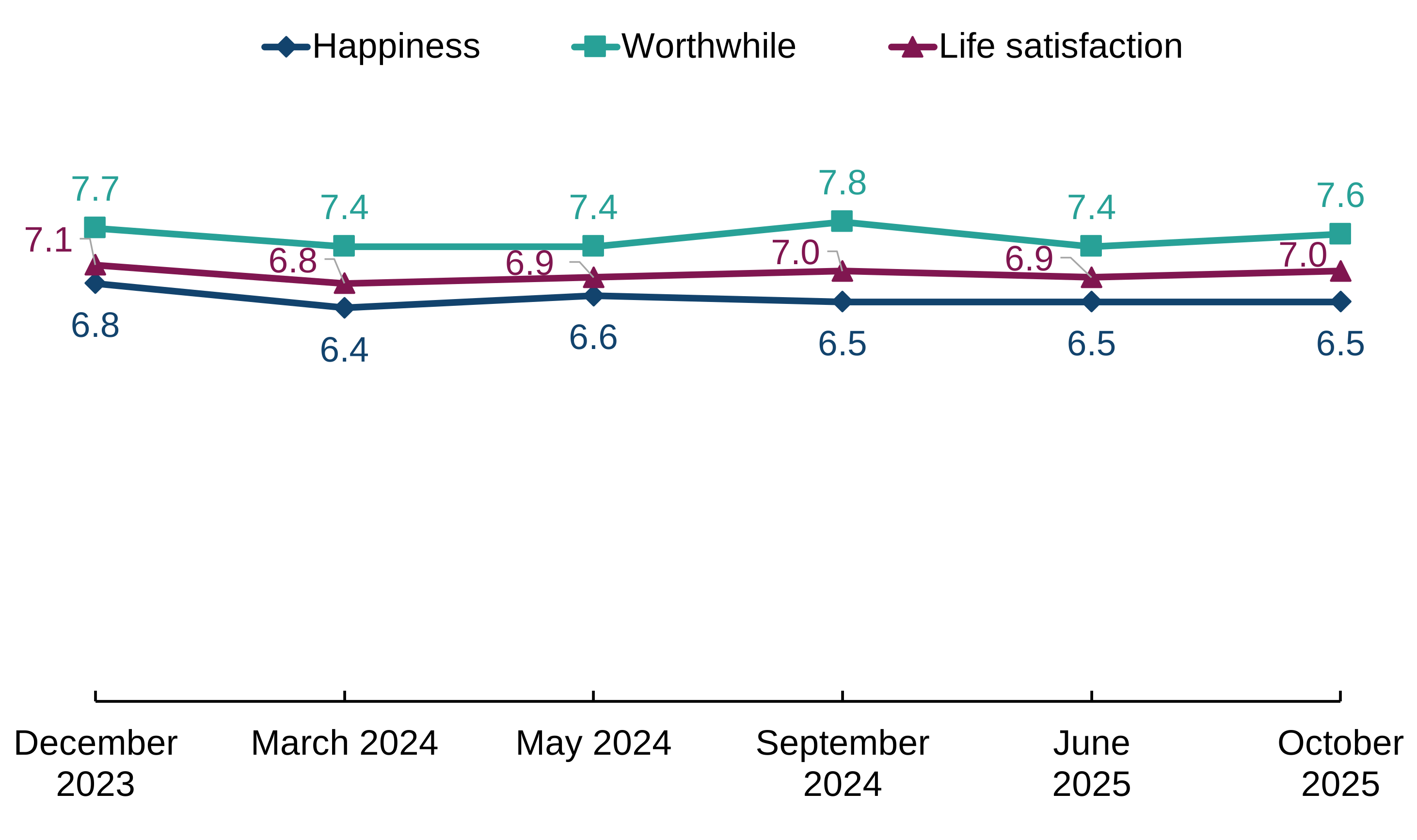
Base: All teachers in October 2025 (n = 2211), June 2025 (n = 1452), September 2024 (n = 2683), May 2024 (n = 1548), March 2024 (n = 1307), December 2023 (n = 3614). Data table references = “wellbeing_happy”; “wellbeing_worthwhile”; “wellbeing_satisfied”.
Figure 36 shows teachers’ average personal wellbeing scores for happiness, worthwhile and life satisfaction over time, the data can be found in figure 35.
Figure 37: Teachers’ average personal wellbeing scores for anxiety, over time
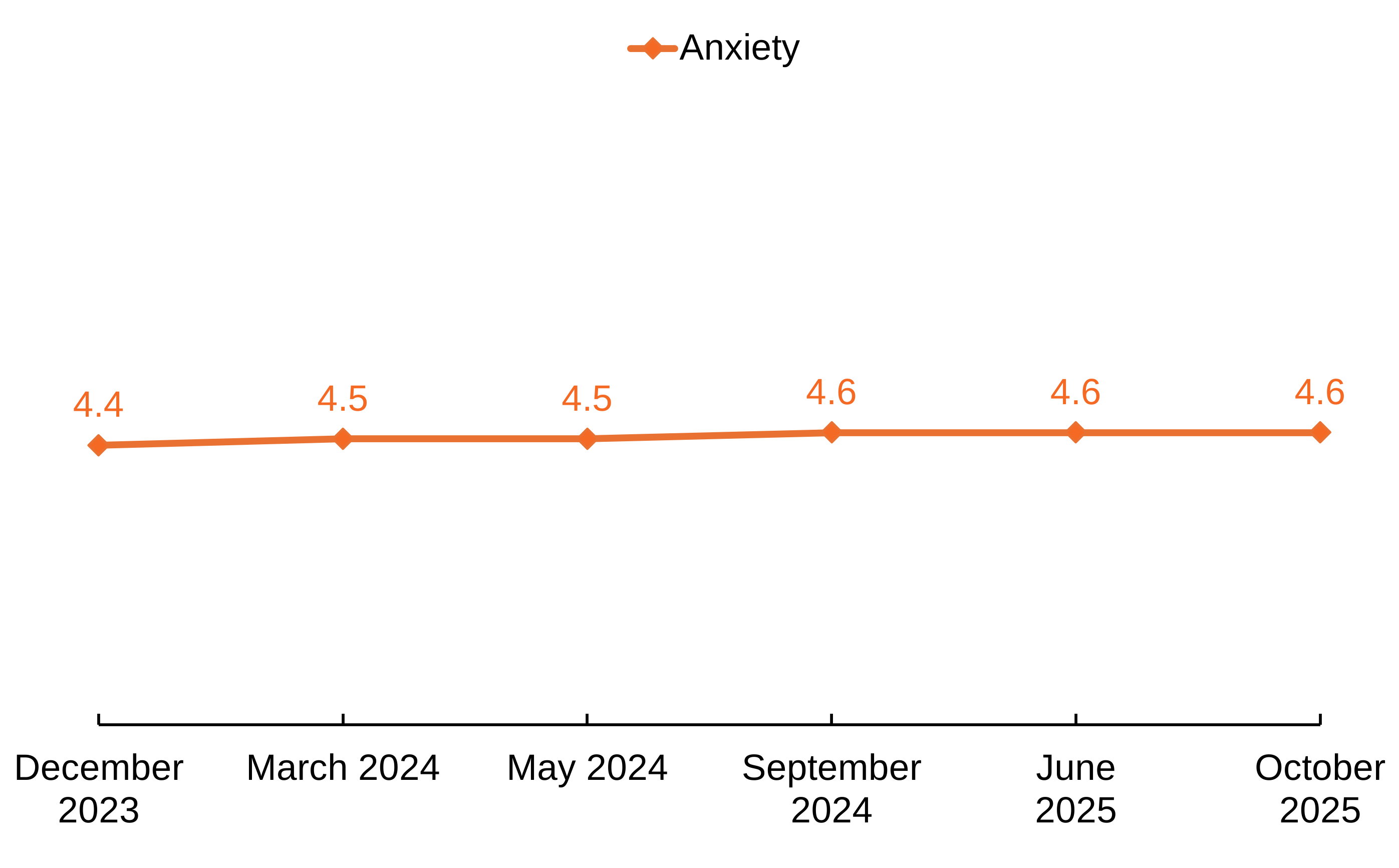
Base: All teachers in October 2025 (n = 2211), June 2025 (n = 1452), September 2024 (n = 2683), May 2024 (n = 1548), March 2024 (n = 1307), December 2023 (n = 3614). Data table references = “wellbeing_anxious”.
Figure 37 shows teachers’ average personal wellbeing scores for anxiety over time, the data can be found in figure 35.
For surveys conducted in this academic year and the previous two academic years, the average scores for leaders’ wellbeing are summarised in Figure 38.
Figure 38: Leaders’ average personal wellbeing measures scores over time
| Survey date | Happiness | Worthwhile | Life satisfaction | Anxiety |
|---|---|---|---|---|
| October 2025 | 6.8 | 8.0 | 7.3 | 4.3 |
| June 2025 | 6.9 | 7.9 | 7.3 | 4.2 |
| September 2024 | 6.8 | 7.9 | 7.3 | 4.3 |
| May 2024 | 6.8 | 7.9 | 7.2 | 4.4 |
| March 2024 | 6.8 | 8.0 | 7.4 | 3.7 |
| December 2023 | 7.2 | 8.2 | 7.4 | 3.8 |
Base: All leaders in October 2025 (n = 2206), June 2025 (n = 1082), September 2024 (n = 2347), May 2024 (n = 846), March 2024 (n = 507), December 2023 (n = 1790). Data table references = “wellbeing_happy”; “wellbeing_worthwhile”; “wellbeing_satisfied”.
Figure 39: Leaders’ average personal wellbeing scores for happiness, worthwhile and life satisfaction, over time
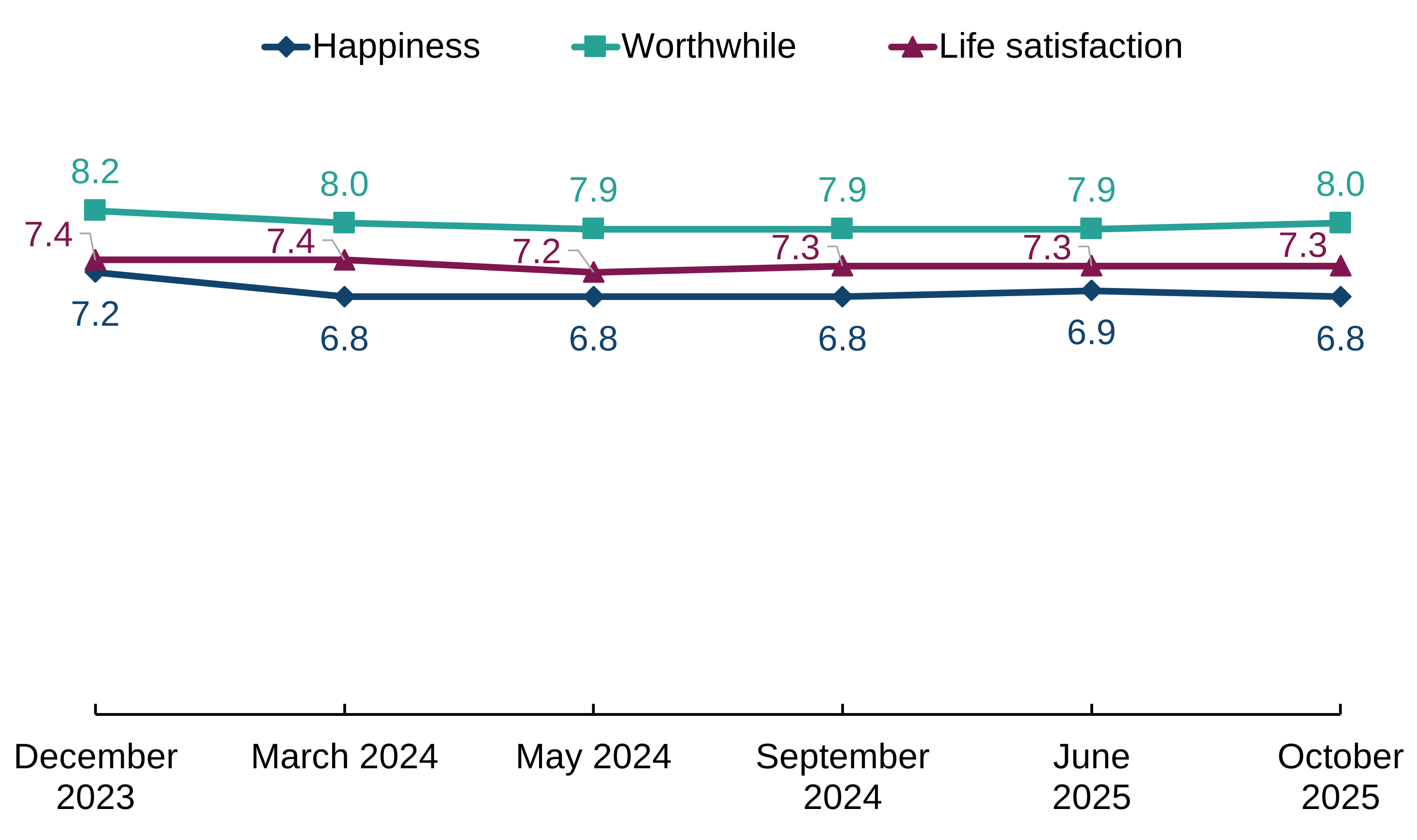
Base: All leaders in October 2025 (n = 2206), June 2025 (n = 1082), September 2024 (n = 2347), May 2024 (n = 846), March 2024 (n = 507), December 2023 (n = 1790). Data table references = “wellbeing_happy”; “wellbeing_worthwhile”; “wellbeing_satisfied”.
Figure 39 shows leaders’ average personal wellbeing scores for happiness, worthwhile and life satisfaction over time, the data can be found in figure 38.
Figure 40: Leaders’ average personal wellbeing scores for anxiety, over time
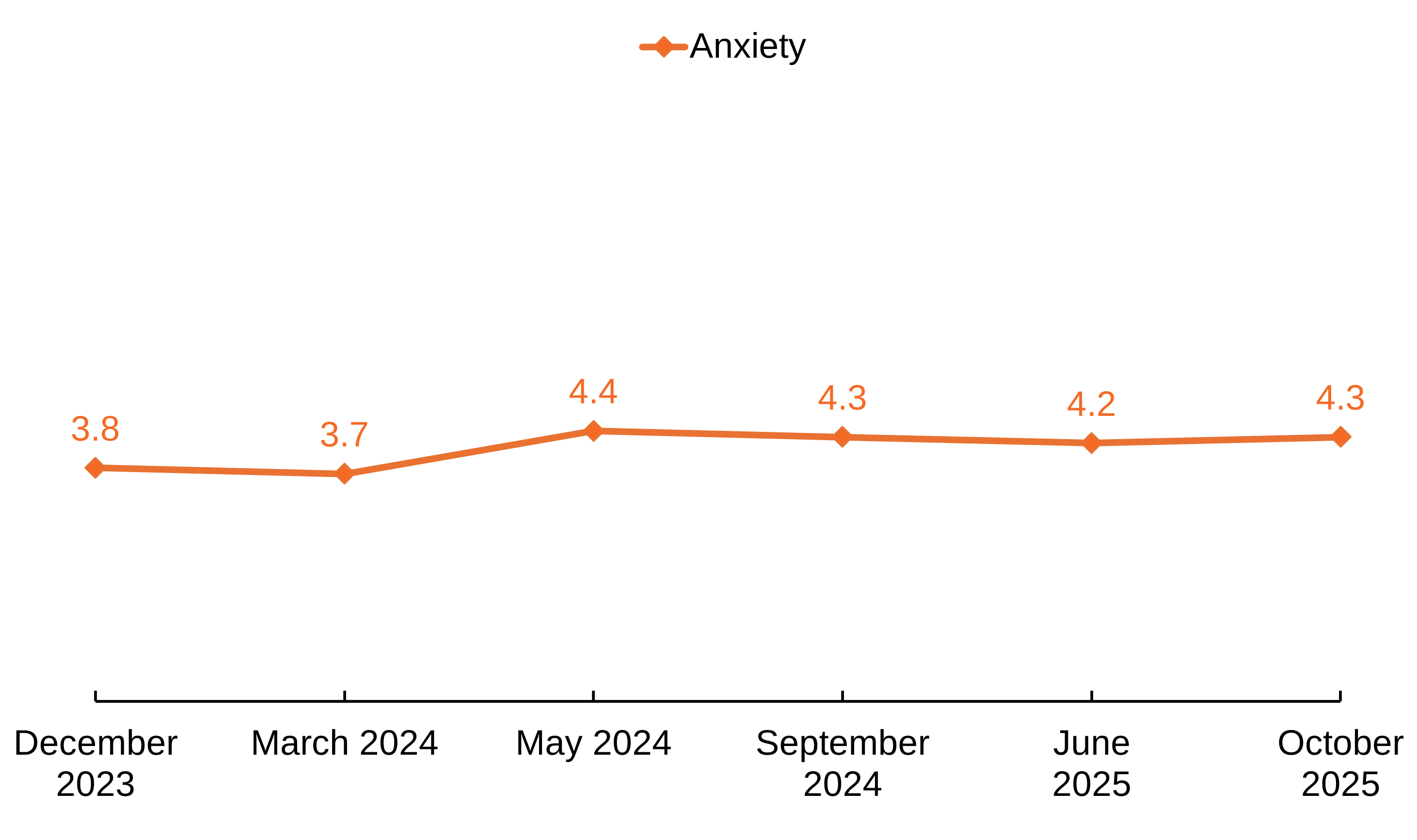
Base: All leaders in October 2025 (n = 2206), June 2025 (n = 1082), September 2024 (n = 2347), May 2024 (n = 846), March 2024 (n = 507), December 2023 (n = 1790). Data table references = “wellbeing_anxious”.
Figure 40 shows leaders’ average personal wellbeing scores for anxiety over time, the data can be found in figure 38.
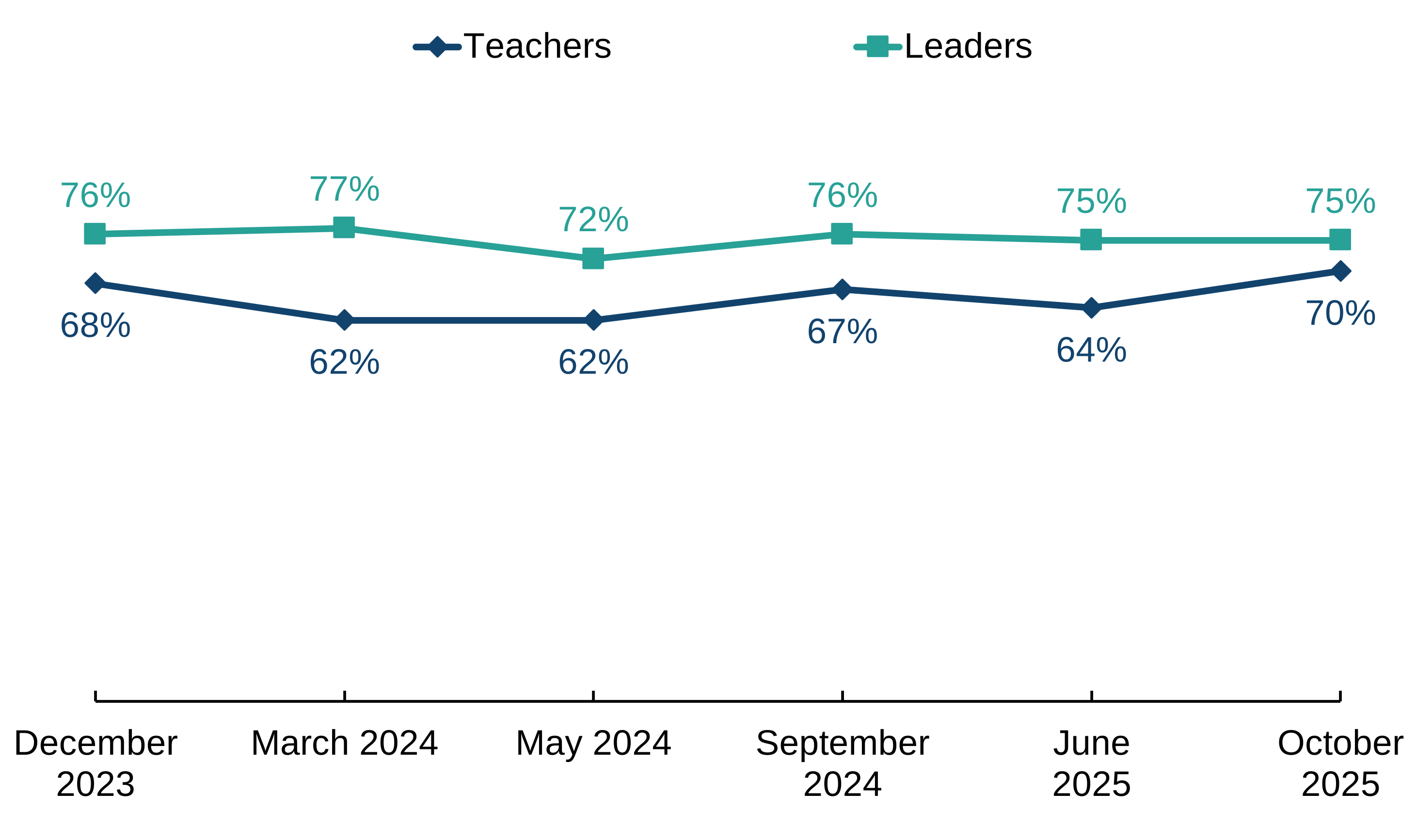
We also asked all teachers and leaders how satisfied they are with their job. This question used a scale of 1 to 7, where 1 means ‘completely dissatisfied’ and 7 means ‘completely satisfied’. For surveys conducted in this academic year and the previous two academic years, the proportion of teachers and leaders who said they were somewhat (5 out of 7), mostly (6 out of 7), or completely (7 out of 7) satisfied with their job are summarised in Figure 41.
Figure 41: Teachers and leaders who were somewhat, mostly or completely satisfied with their job
| Survey date | Teacher | Leader |
|---|---|---|
| October 2025 | 70% | 75% |
| June 2025 | 64% | 75% |
| September 2024 | 67% | 76% |
| May 2024 | 62% | 72% |
| March 2024 | 62% | 77% |
| December 2023 | 68% | 76% |
Base: All teachers in October 2025 (n = 2211), June 2025 (n = 1452), September 2024 (n = 2683), May 2024 (n = 1548), March 2024 (n = 1307), December 2023 (n = 3614). All leaders in October 2025 (n = 2206), June 2025 (n = 1082), September 2024 (n = 2347), May 2024 (n = 846), March 2024 (n = 507), December 2023 (n = 1790). Data table reference = “wellbeing_jobsat”.
Figure 42: Teacher and leader job satisfaction
Base: All teachers in October 2025 (n = 2211), June 2025 (n = 1452), September 2024 (n = 2683), May 2024 (n = 1548), March 2024 (n = 1307), December 2023 (n = 3614). All leaders in October 2025 (n = 2206), June 2025 (n = 1082), September 2024 (n = 2347), May 2024 (n = 846), March 2024 (n = 507), December 2023 (n = 1790). Data table reference = “wellbeing_jobsat”.
Figure 42 shows teachers’ and leaders’ job satisfaction for those who were somewhat, mostly or completely satisfied with their job over time, the data can be found in figure 41.
Glossary of terms
Special educational needs and disability (SEND): A child or young person has SEND if they have a learning difficulty or disability which calls for special educational provision to be made for them. A child of compulsory school age or a young person has a learning difficulty or disability if they:
- have a significantly greater difficulty in learning than the majority of others of the same age
- have a disability which prevents or hinders them from making use of facilities of a kind generally provided for others of the same age in mainstream schools or mainstream post-16 institutions.
Some children and young people who have SEND may also have a disability under the Equality Act 2010 – that is ‘…a physical or mental impairment which has a long-term and substantial adverse effect on their ability to carry out normal day-to-day activities’. Where a disabled child or young person requires special educational provision, they will also be covered by the SEND definition.
Special schools: Schools which provide an education for children with a special educational need or disability. Almost all pupils in special schools have an education, health and care plan (EHCP).