Public messaging for summer concurrent risks: Extreme heat, drought and wildfires
Published 16 December 2025

© Crown copyright 2025
This publication is licensed under the terms of the Open Government Licence v3.0 except where otherwise stated. To view this licence, visit nationalarchives.gov.uk/doc/open-government-licence/version/3 or write to the Information Policy Team, The National Archives, Kew, London TW9 4DU, or email: psi@nationalarchives.gov.uk.
Where we have identified any third party copyright information you will need to obtain permission from the copyright holders concerned.
This publication is available at https://www.gov.uk/government/publications/public-messaging-for-summer-concurrent-risks/public-messaging-for-summer-concurrent-risks-extreme-heat-drought-and-wildfires
Public messaging for summer concurrent risks: Extreme heat, drought and wildfires
July 2025
Executive summary
Background
This project aimed to assess the consistency of public-facing behavioural advice related to extreme heat, drought, and wildfires in the UK. It was commissioned by the Government Office for Science’s Social and Behavioural Sciences for Emergencies group. Using purposive sampling, advice to the public in a range of formats was obtained from national and local bodies, key messages were extracted and then categorised and analysed for consistency and any contradictions.
Key findings
-
69 sources were reviewed from UK and devolved governments, local government, public bodies and water companies. Within these, 1,209 messages were identified that contained behavioural advice to the public.
-
Advice on each risk was largely consistent, with similar information on extreme heat, drought or wildfires provided by a range of organisations.
-
Few contradictions were identified when 1 or more risk occurs concurrently, with some exceptions, which included: Extreme heat messages often advise people to stay indoors and open windows, but during wildfires this may not be safe and can undermine advice to evacuate. For wildfire related risks, there was inconsistent advice regarding whether barbecues and other open fires are permitted or prohibited in certain public outdoor areas. There were also contradictions between advice asking people to report fires immediately versus intervening if they felt confident to do so. Guidance on water resource management can be contradictory during periods when extreme heat and drought co-occur in terms of staying hydrated and maintaining hygiene while also conserving water.
-
Advice provided by local organisations was largely consistent with national bodies. Tailoring advice to local contexts can support behaviour change, but relatively few examples of this were identified.
-
Most sources advised the public to perform several behaviours with little or no clarification of which are most important for whom and in what context. Advice was not always clear or provided enough information about the conditions in which advised behaviours are beneficial. A good example of clarity and explanation from drought is “watering [the garden] in the early morning or evening to reduce evaporation”.
-
There were some gaps in advice for some groups or situations. There was inconsistency in terms of considering vulnerable groups (for example, older people, disabled people, those experiencing homelessness) and few examples of signposting to services, tools or resources for additional support. In advice relating to wildfires, child or pet safety was rarely mentioned.
-
Few documents used images to support their messaging, which evidence suggests is effective at capturing attention, communicating complex information simply, and aiding memory.
Recommendations
Despite the relative consistency in behavioural advice for each individual risk and few contradictions across risks, our review identified several recommendations to improve messaging and support relevant behaviours.
-
Prioritise, contextualise and sequence behavioural advice. When multiple actions are recommended, it would be preferrable to clearly prioritise behaviours based on urgency as well as health and environmental impact. Consistent, logically sequenced messaging can help people understand which actions to take first and in which contexts. Where possible, behavioural advice should be rooted in the local context.
-
Enhance clarity and coherence of messaging. Distinguishing between different behavioural goals (e.g. health protection vs resource conservation) and avoiding overlapping instructions is preferable. Use consistent and directive language appropriate for target populations and clearly explain the rationale behind each behaviour to support informed decision-making. Where summarising advice for short-form communications, ensure that details most relevant to recommended behaviours remain and clarity is maintained. Use pictures or images where possible rather than long blocks of text.
-
Coordinate cross-agency messaging and communication channels.Ideally develop integrated, multi-risk communication frameworks that align messages across organisations and risk; this could be supported by the development of guidance around how messages should be adapted and disseminated. This reduces duplication, ensures consistent use of terminology, and helps the public navigate advice from multiple authorities and channels.
-
Ensure inclusive and resource-aware communication.Messaging should consider the needs and constraints of vulnerable populations and key groups of interest (such as children and pets). Ideally behavioural advice would be accompanied by information on how to access support (e.g. access to services, tools or resources) where socioeconomic and structural barriers exist.
-
Improve signposting to alerts and information sources.Make sources and systems for monitoring warnings (e.g. rainfall gauges, river flow index, reservoir storage levels, heat-health alert, fire risk severity index, etc.) easy to understand and accessible and clearly signpost these sources. Employ a mixture of communication tools including alerts, social media posts, webpage updates to ensure high engagement with warning messages.
-
Messaging should be pre-tested and evaluation with relevant groups. Changes to or new communication strategies should be based on feedback and observed behaviours.
Project initiation and approach
Background
This project was conducted in response to a request from the Social and Behavioural Sciences for Emergencies (SBSE) group convened by the Government Office for Science, as well as stakeholders across government, including the Met Office, Defra and the Environment Agency.
Every year, environmental and health risks from drought, extreme heat and wildfires are expected. Several sources, including government and national agencies at UK and devolved nations levels provide behavioural advice on how the public should respond to each of these risks. SBSE was interested to understand whether public-facing behavioural advice is consistent across different sources, and whether there are contradictions across risks. If the risks occur simultaneously, conflicting advice could cause confusion among the public, increasing individual and societal risks during these periods.
Aims
-
Rapidly review current recommended advice in the UK on how to respond to extreme heat, drought and wildfire.
-
Identify areas of consistency and contradiction, and suggest ways advice can be amended or clarified to ensure greater consistency.
-
Explore how different national sources of warnings and advice are likely to be received at the same time and understood by the public and whether such materials and channels could/should be better coordinated.
-
Explore how local sources of advice & messaging (e.g. public health bodies, local government, fire & rescue services, water companies) can reflect local conditions within an overall national situation.
Project approach
The commissioning team shared known national and local resources with BR-UK for review. The authors then searched for additional resources, including those from 6 water companies across all 4 nations, as well as a selection of unitary authorities, London boroughs, county councils, and locally delivered fire and rescue services (see Annex B for the Sources List). Purposive sampling of sources was used to ensure coverage of key geographical areas across all 4 nations and to include a spread of messaging and advice types. This project does not constitute a comprehensive search or review of all available resources.
After collecting resources, the BR-UK team developed and applied an iterative framework to extract messaging from each. Once messages were extracted, they were grouped into higher-level behavioural advice and educational information categories using the large language model Claude Sonnet 4. These categories for each risk served as a codebook for coding the message datasets with Claude Sonnet 4. The team used R to analyse the consistency of codes across documents and sources within each risk. Claude Sonnet 4 was used to initially analyse the category codebooks and messages to detect potential consistency and contradictions within and across the weather risks. The research team reviewed each of the AI outputs for accuracy, relevance, and appropriateness based on their understanding of the datasets and the research aims. Please see Annex C for more information on methods, including the use of AI.
Consistency of advice within risks
Extreme heat
Extreme heat advice in the UK is commonly shared via websites of UKHSA, UK and devolved governments, the Met Office, and local authorities. We extracted 537 separate messages from 25 documents, including 20 readily available documents (e.g., permanent webpages, general heat advice) and 5 heat event-specific communications (e.g., heat warnings, news updates). Most messages (N=410 messages from 21 documents) contained behavioural advice or a combination of educational information and behavioural advice, while the remainder contained solely educational content. The type of content (behavioural vs. educational only) did not differ notably between readily available guidance and event-specific messages. The messages were mainly disseminated in text format through webpages, blogs and checklists. There were limited examples of short-form content (e.g. posters, social media posts).
Behavioural advice
Seventeen higher-order categories for behaviours advised in extreme heat were identified by the BR-UK team. Figure 1 shows that 9/17 behavioural advice categories were included across more than half on the documents and by most organisations. Sun protection and hydration management were the most common across the documents, followed by guidance on vulnerable population care, temperature avoidance (e.g. seek shading between 11am to 3pm during the day) and planning and preparing (e.g. check weather forecasts and plan journeys ahead). The least frequently mentioned categories were fire prevention, pet and animal care, emergency preparedness (e.g. preparing for heat-related emergencies and power outages) and event management.
These 17 categories contain advice to perform several different but related behaviours. For instance, planning and preparing contains proactive measures such as checking weather forecasts, planning activities around heat, stocking supplies, and preparing homes/vehicles for hot weather.
While some behavioural advice seems generally applicable across most situations (e.g. hydration management), others are context specific, such as transportation safety.
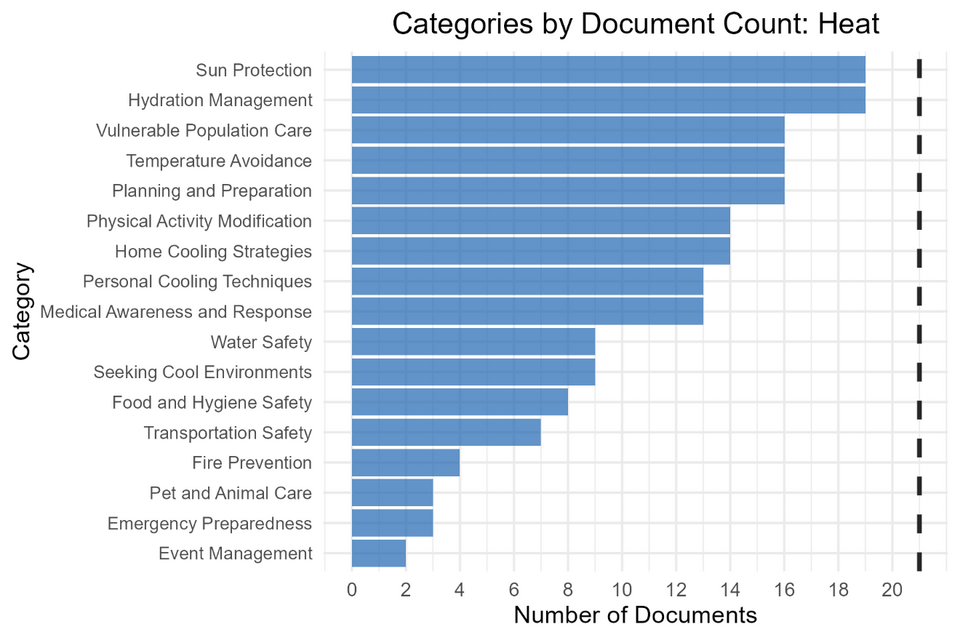
Figure 1: The bar plot shows the number of documents containing at least 1 message regarding each behavioural advice category in extreme heat. The black dotted line denotes the total number of documents containing behavioural advice (N=21). See Annex D, Table A1. Behavioural Advice Categories – Heat, for the descriptions of each category.
Categories by Document Count: Heat
| Category | Number of documents |
| Sun protection | 19 |
| Hydration management | 19 |
| Vulnerable population care | 16 |
| Temperature avoidance | 16 |
| Planning and preparation | 16 |
| Physical activity modification | 14 |
| Home cooling strategies | 14 |
| Personal cooling techniques | 13 |
| Medical awareness and response | 13 |
| Water safety | 9 |
| Seeking cool environments | 9 |
| Food and hygiene safety | 8 |
| Transportation safety | 7 |
| Fire prevention | 4 |
| Pet and animal care | 3 |
| Emergency preparedness | 3 |
| Event management | 2 |
Consistencies and inconsistencies in heat-related messaging
In addition to the same behavioural advice consistently appearing across documents, the way the advice is communicated is also consistent. However, there were some variations in wording that affected clarity. For example, ‘avoiding hottest part of the day (11am–3 pm)’ versus ‘avoid heat’, or ‘wear sunscreen’ versus ‘wear a factor 30 SPF sunscreen’. Such differences are common and often reflect changing from long to short form messaging mediums.
Inconsistencies in the communication of behavioural advice across documents include:
-
Unclear guidance on when opening windows may become counterproductive due to high outdoor temperatures;
-
Conflicting messages about cold water, warning about cold water shock in swimming but also recommending cold water for cooling, which could confuse people;
-
Inconsistent guidance on electric fan use, with some messages specifying temperature limits (e.g. “use electric fans if air temperature is below 35°C”) and warnings against directing fans at the body, while others simply suggest fan use without detail. There is no advice for scenarios where air temperature exceeds 35°C, such as could occur in a poorly ventilated, inner city, top floor apartment.
Educational messages
Educational messages were grouped into ten categories, covering information about a variety of topics, such as who is vulnerable during extreme heat, types of housing at high risk of overheating, and how to recognise heat-related illness (see Annex D for full details). Depending on the purpose of the resource, the breadth of educational advice available varies.
One prevalent inconsistency in educational messages is the age threshold for vulnerable older populations. Some messages state, “65 years and over” while others mention “75 years and over”, which could create confusion if people receive such risk communication from different sources, and potentially risk leaving certain populations unprotected.
Annex D contains more detailed descriptions of the behavioural advice (Table A1) and educational message (Table A2) categories and additional figures on the consistency of advice across sources and documents (Figure A1 -A4).
Recommendations
-
Clarify window opening/closing advice: Provide specific temperature thresholds or conditions for when to open versus close windows (e.g. “open windows when outdoor temperature is cooler than indoor temperature”).
-
Standardise fan usage advice: Advice should include the 35°C temperature threshold (“Do not use electric fans when indoor temperatures exceed 35°C”) and where possible (e.g. in longer format content) explain why this threshold exists. Provide alternative cooling strategies for air temperatures above 35°C, such as seeking cooler environments. Provide warning about not aiming fans directly at the body to prevent dehydration. Additional fan use strategy can be provided, such as using fans to enhance cross-ventilation by placing them near open windows or doors, but only if the outside air is cooler than inside.
-
Clarify cold water shock advice: Clarify that cold water shock warnings apply to full-body immersion in very cold water, not gradual cooling applications.
-
Clarify vulnerable age groups: Make a consistent, evidence-based recommendation of the age groups that face a higher risk of heat-related illness.
-
Integrate cooking guidance: Provide advice about indoor vs. outdoor cooking during extreme heat that balances fire safety with avoiding indoor heat generation. For instance, advice on barbecue safety and restrictions from wildfire messaging should be integrated.
-
Summarising recommendations: When summarising advice for short-form communications, ensure the details that are kept are those most relevant to behaviours being advised and that they don’t lose clarity after being summarised. Keeping more detailed components of advice could be incorporated through means other than text, e.g. “wear sunscreen” messaging alongside an image of a 30 SPF sunscreen bottle.
-
Prioritisation and contextualisation of advice: To aid understanding, the most important general behaviours should be emphasised in documents for the public, and it should be made clear when advice relates to a specific context or scenario. Separating out general from context-specific advice can also help guide decisions about whether a short communication (for example a poster) or a longer format (for example a guidance checklist) is most appropriate.
Drought
Drought advice in the UK is typically shared via text-focused websites of government departments and agencies, and water companies (see Annex B for the full list). More than 400 (N=403) messages from 31 (of 35) documents were reviewed. There were 25 readily available documents (e.g. permanent web pages, drought planning documents, guidance documents, communication toolkits and strategies, policy paper) and 10 drought event-specific documents (e.g. new stories, press releases, blogs). Most messages (N=290 messages, 29 documents) contained behavioural advice or a combination of educational information and behavioural advice, while the rest contained solely educational messages. The type of content (behavioural vs. educational only) did not differ notably between readily available and event-specific materials. Drought reports and communication plans, blogs and social media were most used to disseminate these messages, while policy brief is the least used medium.
Behavioural advice
Advice generally addresses water shortage risks for the public and primarily focuses on water conservation behaviours, such as reducing water use for bathing and showering (e.g. bathing and shower efficiency – switching from baths to shower and shortening shower time) and shortening personal hygiene water use (e.g. turning off taps while brushing teeth) (see Figure 2). Some advice focuses on reusing water such as collected and stored rainwater for garden and landscape irrigation and management (e.g. installing water butts); and avoiding waste through monitoring and reporting water compliance and detecting and repairing leaks (e.g. repairing taps, pipes, and toilets for leaks).
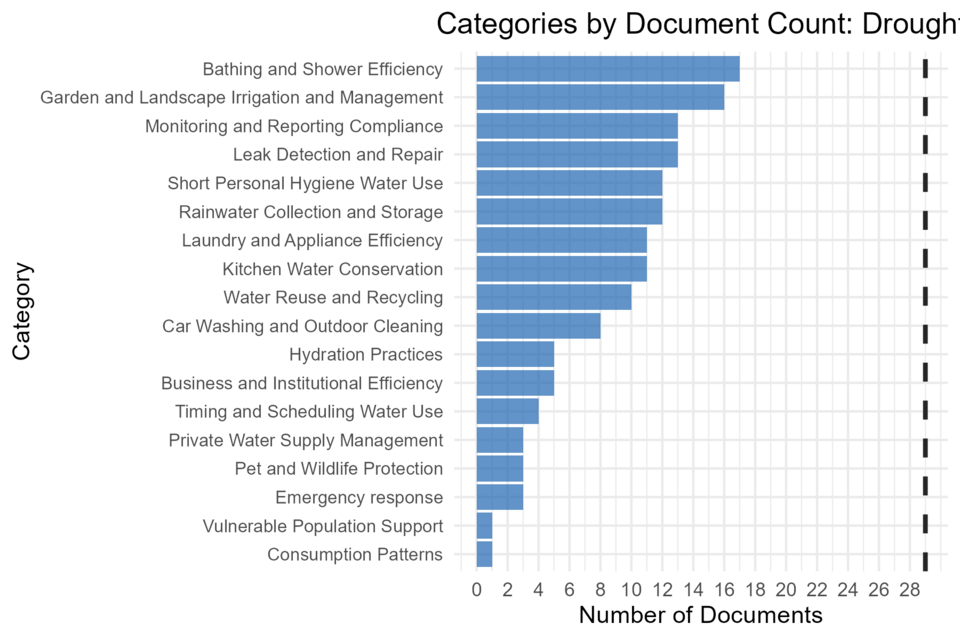
Figure 2. The bar plot shows the number of documents containing at least 1 message regarding each behavioural advice category in drought. The black dotted line denotes the total number of documents containing behavioural advice (N=29). See Annex D, Table A3. Behavioural Advice Categories – Drought, for the descriptions of each category.
Categories by Document Count: Drought
| Category | Number of documents |
| Bathing and shower efficiency | 17 |
| Garden and landscape irrigation and management | 16 |
| Monitoring and reporting compliance | 13 |
| Leak detection and repair | 13 |
| Short personal hygiene water use | 12 |
| Rainwater collection and storage | 12 |
| Laundry and appliance efficiency | 11 |
| Kitchen water conservation | 11 |
| Water reuse and recycling | 10 |
| Car washing and outdoor cleaning | 8 |
| Hydration practices | 5 |
| Business and institutional efficiency | 5 |
| Timing and scheduling water use | 4 |
| Private water supply management | 3 |
| Pet and wildlife protection | 3 |
| Emergency response | 3 |
| Vulnerable population support | 1 |
| Consumption patterns | 1 |
Few messages addressed health-related risks such as dehydration, the spread of water- and food-borne diseases, mental health conditions (e.g. stress, anxiety), and physical health. There was also limited actionable advice aimed at occupational/recreational (e.g. farming, fishing) or vulnerable groups. Messages on the provision of opportunities or support for water conservation behaviours in the reviewed documents may be limited in their effectiveness because they do not link to advice on how to source or fund adaptations needed for these behaviours; this is especially challenging for those without the immediate means to do so. Examples of such behaviours are installing water butts, investing on dishwashers and washing machines with eco mode functions, fitting of cistern devices, and plumbing maintenance.
Educational messages
Drought education messages were categorised into 14 categories covering topics from climate-drive water scarcity, water infrastructure capacity, and impact on vulnerable populations (see Annex D for full details).
The most frequently occurring education content focused on water consumption patterns, explaining usage trends, comparative statistics, and consumption baselines (i.e. “150 litres every day”) that underpin public understanding of water demand. This was closely linked with messages on seasonal demand dynamics and water scarcity causes, forming a consistent narrative how climatic shifts (e.g. shifting season norms and unpredictability in rainfall; hotter and driers summers) are contextualised within household and sectoral water use. Messages on consumption (e.g. “150 litres of water are used per person per day”) and seasonal dynamics (e.g. 25% increase in water demand during dry season) were consistently emphasised across documents and sources, reinforcing water conservation behaviours.
Consistencies and inconsistencies in drought-related messaging
Most drought-related behavioural recommendations are consistent and complementary to each other. Advice for drought shows strong consistency across most categories of actionable advice.
Areas of consistent advice include:
-
Suggested use of water-saving tools across all outdoor activities (e.g. gardening, landscape irrigation, car washing, outdoor cleaning) such as using watering cans over hoses, or buckets over running water;
-
Guidance on optimal timing recommendations for garden watering techniques such as “watering in the early morning or evening to reduce evaporation”;
-
Promoting and maintaining health while implementing water efficiency measures, especially on essential health needs such as “staying hydrated”, “keeping to hygiene standards”, and “using clean water for cooking”;
-
Promoting efficient uses of water-consuming appliances in residential, public, and commercial settings such as using “eco-settings” across all appliances; leak prevention, more specifically on preventing, detecting, and repairing sources of leaks or systems and equipment that is at risk for water waste; and
-
Alternative water sources, specifically on using rainwater, greywater, and other alternative water sources rather than freshwater supplies for non-essential uses, to preserve treated water for essential needs.
Based on the heatmap in Figure A6, there are some examples of inconsistency in the main themes of drought-related messages across all information sources, which may imply a lack of coordination across different national and local level organisations. While some behavioural advice categories (e.g. bathing efficiency or garden irrigation) are covered by certain organisations, other organisations (e.g. Environment Agency, Natural Resources Wales, UKHSA) have limited coverage of these. Some sources focus on specific categories, while others distribute messages more broadly but without alignment.
While the messages use directive language, they frequently fall short of providing clear, contextualised, and actionable guidance necessary for effective public understanding. The use of vague language (e.g. “try”, “help”, “encourage”) has the potential to weaken behavioural directives, while unclear or incomplete advice (e.g. “small adjustments”, “water saving tips”) lacks the specificity needed to support action. Although many messages appear instructive (e.g. “turn off the tap”, “use eco mode setting”), some messages are often conditional (e.g. “consider installing a water butt”), and don’t explain why the behaviour matters. Some present a range of recommended actions without prioritisation, which could leave recipients of the messages uncertain about which behaviours are most important or urgent.
There are also some contradictions in message categorisation. For example, health and environmental impacts are sometimes described using the same wording, even though they related to different issues. 1 message, for instance, urges the public to “help preserve water supplies and the natural environment” without clarifying whether the priority is environmental protection or health-related water security. Another message highlights the benefits of water efficiency in businesses, such as “cost-savings,” “environmental compliance,” and “enhanced reputation,” without distinguishing the regulatory, environmental, or health rational behind them.
Annex D contains detailed descriptions of the behavioural advice (Table A3) and educational message (Table A4) categories and additional figures on the consistency of advice across sources and documents (Figure A5 - A8).
Recommendations
1.Distinguish and clarify advice on personal health needs from water conservation measures for homes and businesses.Clearly separate advice between essential (e.g. hydration and personal hygiene) and non-essential water uses for homes and businesses (e.g. garden irrigation). This will avoid confusion and prevent unintended health risks. For garden management and irrigation, consider introducing a simple decision tree to guide household garden watering practices, clearly identifying when to use stored rainwater, when to delay watering based on the time of the day (e.g. watering plants in the morning during cooler temperature for less evaporation) or when rain is expected, and when to adopt stricter conservation measures.
2.Strengthen connection between related water conservation behaviours.Make explicit connections between interdependent behaviours, such as linking leak detection guidance across all relevant water use efficiency categories. Consider sequencing recommendations by presenting actions in a logical implementation order (e.g. assess water use and fix leaks and adopt efficiency measures a monitor) to help the public understand system-wide water-saving practices.
3.Standardise terminology for equipment and practices. Ideally use clear and more direct language that has been pre-tested across all message categories.
Wildfire
Wildfire advice is commonly shared by local and national fire and rescue services, government campaigns (e.g. UK Prepare, Ready Scotland), and the Forestry Commission (See Annex B for full list). We extracted 269 messages from 13 documents, which (in their current form) includes 8 readily available guidance documents (e.g., permanent webpages), and 5 time and event-specific communications (e.g., social media posts, news articles). Most messages were text based, often accompanied by photos from recent wildfires rather than infographics or images demonstrating desired behaviour. Messages were disseminated on dedicated webpages, with a considerable number of social media posts (on Twitter/X) from local fire and rescue services. The majority of the messages (N=211) contained behavioural advice either on its own or combined with educational information, while the remainder (N=58) contained educational information only.
Behavioural advice
Behavioural advice regarding wildfire prevention, reporting, and other actions included in the documents were grouped into 15 higher-order categories (see Figure 3). There was variety in the coverage of categories across sources, with only 6 out of 15 behavioural advice categories being included in at least half of the documents analysed. The most common behavioural advice across the documents were relating to fire detection and reporting (e.g. immediate actions like calling 999, providing location and other detailed information to emergency services) and safe use of barbecues (e.g. safe setup distances from structures, proper fuel use, complete extinguishment procedures as well as advice for not using barbecues at all during high-risk conditions). These were followed by advice on fire prevention in the countryside, personal safety during fire events, and disposal of cigarettes, glass and other litter.
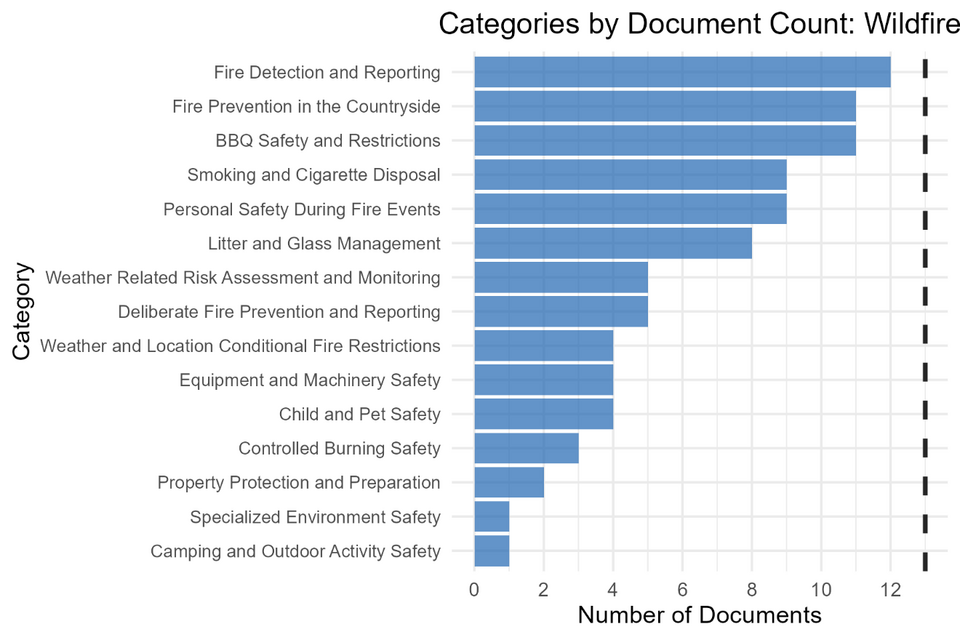
Figure 3: The bar plot shows the number of documents containing at least 1 message regarding each behavioural advice category in wildfire. The black dotted line denotes the total number of documents containing behavioural advice (N=13). See Annex D, Table A5. Behavioural Advice Categories – Wildfire, for the descriptions of each category.
Consistencies and inconsistencies in wildfire-related messaging
There were considerable consistencies in the content of behavioural advice and educational messages related to wildfire across categories and documents.
Areas of consistent advice and messages include:
-
Checking weather conditions and avoiding fire activities during high-risk periods.
-
Proper disposal of potentially fire-starting materials (cigarettes, glass, litter).
-
Being vigilant about deliberate fire-starting activities and reporting instances to the right authorities.
Annex D contains more detailed descriptions of the behavioural advice (Table A5) and educational message (Table A6) categories and additional figures on the consistency of advice across sources and documents (Figure A9 - A12).
While there were no major inconsistencies detected across wildfire messages, there were some issues of clarity, mainly relating to the hierarchy of advice and restrictions and the definition of different types of fires. The recommendations below may help to improve the clarity of behavioural advice and educational messages related to wildfire.
Educational messages
Educational messages related to wildfire were grouped to 9 higher-order categories including characteristics and causes of wildfires, geographic and weather-related risk conditions for wildfires, socioeconomic and environmental impacts of wildfires, wildfire risk assessments and related restrictions, and information on fire and rescue services and their activities (see Annex D for full details). These messages showed high levels of internal consistency across different documents and sources.
Recommendations
1.Clarify the geographical and conditional boundaries for permission and restriction of behaviours to prevent wildfires. Define what constitutes countryside where stricter restrictions apply versus other outdoor areas where some fire-related activities can take place under safety guidelines.
-
Improve the definition and terminology related to different types of fires. For example, clarify whether “open fires” include campfires and bonfires; define controlled burning in residential and agricultural contexts.
-
Establish a hierarchy of restrictions.Clarify whether and when local fire bans override general guidance, weather conditions override seasonal permissions, etc. Signpost clearly where individuals can best find out about this information (alerts, websites, calling local authorities, etc.).
-
Help individuals seek out and understand risk assessments.Simplify access to information regarding risk assessments and warnings related to risk of wildfires. Consider experimentally testing guidance on integrating multiple risk factors (weather, location, fire type, personal capability) into decision-making with the public.
Contradictory advice within and across risks
Across risks
In all 3 risk contexts, integration that considers concurrent risks is uncommon in the messaging. Communication documents offer limited actionable guidance for managing multiple hazards at once. We identified 2 main contradictions in our analyses comparing the behavioural advice messages across all risks (N=906 messages):
Water resource management
Extreme heat messages most frequently advise maintaining hydration but lack guidance on water conservation amid drought risks. Drought messages advise maintaining hydration and conserving water but lack guidance on how to balance this competing advice. For example, advice to reduce bathing frequency or take shorter showers may contradict the need for more frequent washing during hot weather, especially when the advice is not paired or contextualised with extreme heat advice. If both risks co-occur, people exposed to both extreme heat and drought messaging may be confused about which advice to prioritise to manage water resources.
Wildfires need water for suppression, but there is no guidance or prioritisation framework addressing the competing demands to “save water” and “take cool showers”, for example.
Indoor/outdoor activity advice
Advice related to engaging in activities may be contradictory if both wildfire and extreme heat coincide. Extreme heat messages often advise people to stay indoors if it is cooler than outdoors. However, during wildfires, indoor environments might not be safe and extreme heat messages may contradict the need to evacuate. Wildfires can also cause polluted air outdoors, making it unsafe for people to open windows to ventilate their homes during cooler periods of the day to mitigate extreme heat indoors.
Within risks
Extreme heat
We found no contradictions across the behavioural advice within extreme heat messages and therefore don’t include here any recommendations for alignment. However, this review is based on a non-complete set of resources, so these may appear in others not reviewed.
Drought
The following contradictions in drought messaging were identified:
-
There is a tension between hygiene and water conservation. While people are advised to maintain personal hygiene, this can conflict with efforts to reduce water use, especially if interpreted as continuing pre-drought hygiene routines.
-
Guidance on greywater reuse raises safety concerns, as it may blur the lines between environmental sustainability and health protection, particularly regarding the risk of water- and food-borne diseases.
Recommendations
-
Balance health protection with water conservation. Drought messaging should clearly distinguish between essential and non-essential water use. Guidance should prioritise health-critical needs (e.g. hydration and hygiene) and encourage people to continue engaging in these behaviours, while identifying areas where water use can be reduced safely.
-
Define and clarify hygiene and safe water standards.Guidance should clarify “maintaining hygiene standards” in water-scarce conditions, including specifying essential hygiene behaviours (e.g. handwashing before eating, after toilet use) versus adaptable behaviours (e.g. frequency and length of showers). Safety messaging should clearly identify which types of greywater are safe for reuse (e.g. from showers or laundry) and for what purposes (e.g. garden irrigation).
-
Establish a water use priority hierarchy.Messaging should offer a clear order of priority for water use that is simple, intuitive and repeated consistently across all communication materials, covering essential health needs (hydration of self and others, including animals), basic hygiene (handwashing, limited showering), and other uses (cleaning, gardening).
Wildfire
A contradiction in wildfire messages was identified between behavioural advice that allows outdoor fires in certain contexts versus advice that prohibit all fires, regardless of conditions. This is particularly relevant to barbecue and campfire use advice. Contradictions tend to emerge between general guidelines from national sources versus time, weather, and location-sensitive advice from local fire and rescue services.
For example, Fire England’s webpage [W3] advises using barbecues in “designated areas of the countryside and follow safety”, which echoes messaging from Ready Scotland [W5] which advises individuals “Only have a barbecue within safe designated areas outdoors”. This contradicts advice, for example, from the Forestry Commission [W8.4] which states, “Follow the Countryside Code and never light open fires, such as campfires or barbecues, in the countryside”, from Surrey Fire & Rescue Services [W8.16] which asks people to “swap barbecues for picnics and avoid open fires” and from the West Yorkshire Fire and Rescue Service which encourages individuals to ‘never be tempted to light a fire in the countryside and only barbecue in authorised area’.
While most sources advise that the public should not attempt to put out fires, but instead report to fire and rescue services immediately, some sources recommend cautious intervention. The contradictions centre around what types of fire (e.g. a campfire or a fire lit in the backyard of a home versus a fire that is in the countryside or in a woodland area) and whether different levels of personal interventions can be appropriate under different circumstances and locations.
For example, Fire England [W3] asks individuals to “not attempt to tackle fires that cannot be put out with a bucket of water – leave the area as soon as possible” and states “if in doubt, don’t fight a fire yourself. Get out, stay out and wait for the fire and rescue service”. Ready Scotland [W5] on the other hand states that individuals “should only try to extinguish a fire if you have suitable means of extinguishing it and are confident that you are able to do so safely”, while Northern Ireland Water [W7] clearly asks people to “not attempt to intervene or fight fires under any circumstances”.
Recommendations
-
Clarify the scope of prohibitions. Specify whether countryside fire prohibitions apply to all fires or only to unauthorised/recreational fires. Indicate whether there are exceptions for designated camping areas. Clarify whether prohibitions are weather and location dependent or if they are blanket bans.
-
Resolve conflicting advice regarding individual fire response. Provide clear guidelines on whether individuals should try to fight fires before reporting to fire and rescue services and distinguish between types of fire that could be fought (e.g. campfires, fires in the backyard of a home) versus those that should be reported immediately (e.g. fires in the countryside). Do not use subjective language such as “if you are in doubt” or “if you feel confident” when describing a situation where personal intervention could be appropriate.
Concurrent risks
Few resources were identified that guide public behaviour during periods of concurrent extreme weather risks. In the context of drought and extreme heat, messaging is unclear, e.g. not distinguishing between drought and extreme heat and how they are related. Messaging is also not contextualised in terms of cooccurring risks and lacks clear prioritisation or integration of recommended behaviours when multiple risks occur simultaneously.
Recommendations
An integrated framework of what advice to give during concurrent weather risks should be developed for national and local use. Within this, the following issues could be helpfully clarified by helping the public prioritise behaviours where contradictory advice exists:
1. Create clear hierarchical prioritisation of behavioural advice to use during concurrent weather risks for:
-
Water use and resource management. Establish minimum allocations for life-safety (e.g. hydration, fire suppression) vs. comfort cooling.
-
Indoor/outdoor activities. Create explicit priority hierarchies that guide what behavioural advice is best for public health and safety (e.g. fire risk overrides heat management when both are severe).
2. Modify public advice for emergency response to explicitly address concurrent weather risk scenarios.
3. Develop integrated and coordinated communication guidance across all 3 weather risks that provides clear recommendations for local use on how to assess people’s relevant knowledge, skills, and opportunity and to offer support in preparation for concurrent weather risks.
Overall considerations on how messaging, guidance and advice is likely to be received by the public
Public guidance for extreme weather conditions in the UK displays several gaps when assessed against risk communication best practice criteria. We analysed the strengths and weaknesses of the messages within each risk (see Table 1) using the WHO and other relevant criteria for evaluating risk communication in public health emergencies and extreme weather conditions (World Health Organisation, 2017; MacIntyre et al., 2019), to gauge if the existing messages could be effectively received by the public.
Most messages provide behavioural advice without explaining the rationale or potential consequences. Research shows that impact-based warnings that incorporate weather event information, potential impacts, and behavioural advice are more effective (Shin et al., 2022; Weyrich et al., 2018). For example, “Drink plenty of water” is less effective than “Drink plenty of water because dehydration increases risk of heat stroke.” Enabling changes in people’s habitual behaviours that form part of people’s stable daily routines (e.g. what people drink and how they wash) is difficult to achieve through messaging alone (Verplanken & Orbell, 2022; Albarracín et al., 2024). It may be helpful to focus on helping people to set intentions for particular situations, such as incorporating if-then plans, in the form of “If I am in the situation X, then I will Y” (Bieleke et al., 2021).
Research demonstrates that weather warnings incorporating behavioural advice increase intentions to engage in protective behaviours during extreme weather conditions (Heidenreich & Thieken, 2024), indicating the need for behavioural advice in emergency weather warnings. Few of the reviewed documents make use of social media, print, radio, television, and other communication channels. Social media is a proven tool for real-time public engagement during extreme weather events (Sadiq et al., 2023), and so this could also be used during emergencies.
Most advice in the reviewed documents was provided in English only, with very limited multi-lingual accessibility (only appearing in a few national sources) and lacked specific guidance for vulnerable and isolated populations. This is a key gap, especially given that isolation exacerbates negative health effects during crises (Kung & Steptoe, 2024). Vulnerable groups require clear, targeted guidance tailored to their needs. It is important to consider how to tailor advice according to contexts, and relevance for different populations. Being selective and prioritising relevant types of actionable advice for specific groups can prevent overwhelming the audience with an extensive list of actions. Some actions may be more relevant, and therefore usefully targeted, for different groups. For example, vulnerable groups need tailored messaging and potentially message delivery via intermediary communicators as they may not have direct access to the common risk communication channels and languages (McLoughlin et al., 2022).
Most research on extreme weather communication focuses on influences on behaviour, such as attitudes or intentions, with little on how to achieve sustained behaviour change. Addressing these gaps requires implementing impact-based messaging, establishing timeliness protocols, adopting multi-modal strategies, producing multi-lingual and equity-oriented guidance, and developing evaluation metrics that measure protective behaviours over time.
The volume of advice and guidance provided in a single resource may pose a problem for the public. Many of the documents reviewed were lengthy and unlikely to be read in full by most people. When people attempt to set multiple behavioural goals or intentions, these are less likely to lead to behaviour change than when 1 or 2 are set (Bieleke et al., 2021). Communicating a large amount of information can also reduce the effectiveness of messaging, especially for vulnerable groups (Lambert et al., 2025).
Table 1. The matrix shows a summary of strengths and weaknesses of public advice for extreme weather conditions in the UK.
| Criteria for Effective Risk Communication* | Extreme heat | Drought | Wildfire | ||
|---|---|---|---|---|---|
| Transparency | Weakness: Most messages do not explain the rationale behind recommended behaviours or the link between these components is limited (e.g. across different pages). There is also a lack of information on what temperature might constitute extreme heat. | Weakness: Most messages do not explain the rationale behind recommended actions. | Weakness: Many messages do not explain the rationale behind fire bans or specific thresholds for activity restriction procedures. | ||
| Clarity and comprehensibility | Strength: Most behavioural advice is written in plain, accessible language. | Strength: Messages on protective actions and conservation are often conveyed in clear, simple, and instructive language, making them accessible to wide audience. Some messages adopt a more cautious or general phrasing, allowing for flexibility and broad applicability across contexts. | Strength: Core protective actions are conveyed using simple and direct language, however increased clarity is needed for terminology relating to types of open fire and natural areas. | ||
| Timeliness and relevance | Weakness: Most messages within static webpages or documents and it is unclear from these when and how this advice will be disseminated. | Strength: Messages acknowledge current drought conditions and seasonal water usage patterns. | Weakness: Messages lack prioritisation between general guidance and weather and location specific actions which may hinder decision-making under time pressure. | ||
| Acknowledgement of uncertainty | Weakness: Few messages explain the evolving nature of extreme heat risks such as the temperatures when this advice becomes relevant or the additional risk of concurrent risks such as drought and heat. | Weakness: There is little to no mention of limitations, evolving risk conditions, or uncertainty. | Weakness: Fire risk measures generally do not explain how risk levels are determined or updated, nor do they communicate uncertainty in forecasts and emergency response. | ||
| Multi-lingual accessibility | Weakness: There is little indication of translation into multiple languages or adaptation to low-literacy or culturally diverse audiences. | ||||
| Multi-modal delivery | Weakness: While messages are disseminated across multiple platforms (e.g. websites, social media, videos), most of these are static. Based on the reviewed documents, there was limited indication of how the messages could be adapted in other formats for prints, radio, television, etc, except in one national source on extreme heat where such communication guidance was provided, and 2 sources on wildfire that mocked up potential social media posts. While actual implementation was not assessed, reviewed drought communications plan provided guidance on how traditional media (e.g. television, radio) and other communication channels (e.g. text messages, press releases, leaflets, letters) will be used to deliver advice at each stage of drought. | ||||
| 2-way engagement | Communication is predominantly top-down and one-way, with limited visible mechanisms for feedback. | ||||
| Source credibility | Strength: Guidance is consistently issued by trusted national and local organisations | Strength: Most messages originate from government agencies and local water utilities in England and Wales. In Scotland, advice is from Scottish Water. | Strength: Guidance is consistently issued by trusted national and local organisations. | ||
| Evidence-informed content | Strength: Practical advice suggests evidence on protective actions during extreme heat. | Strength: Specific water usage statistics are provided with references to water utility duties and regulatory requirements. | Strength: Messages appear to be based on established fire safety principles (e.g. proper cigarette disposal, barbecue safety, etc.) | ||
| Actionability | Strength: Messages offer specific actions that can be easily implemented. | Strength: Many messages contain clear, directive language. | Strength: Advice is generally action-oriented, offering specific behavioural instructions. | ||
| Protective framing | Strength: Messages prioritise public health and safety. | Strength: Guidance aligns with the goal of protecting public and environmental health. | Strength: Many messages are focused on protecting life and property, fire prevention, and personal safety. | ||
| Equity and vulnerability sensitivity | Weakness: While vulnerable groups are mentioned, but messages often lack tailored advice for specific needs. | Weakness: Messages rarely address the situational constraints of vulnerable groups, nor do they tailor advice accordingly. | Weakness: Messages rarely account for the needs of vulnerable people and at risk groups. | ||
| Inclusivity and cultural relevance | Weakness: Limited consideration of different cultural practices around heat management. | Weakness: There is limited evidence of content designed for people with different literacy levels, languages, or cultural contexts. | Weakness: Limited cultural adaptation or recognition of different cultural practices and traditions around fire use. | ||
| Message framing and relevance | Weakness: Many messages lack contextual framing that links actions to broader outcomes. | Weakness: Messages often lack prioritisation of behaviours and urgency framing. | Weakness: Some messages focus on negative consequences without balancing with positive action framing. |
*WHO (2017), Macintyre et al (2019)
Further work is needed on effective ways to communicate behavioural advice concisely without sacrificing clarity in short-form messaging. How advice is framed can also affect public perception of each risk and hence their subsequent actions. For example, loss framing (e.g. presenting information by highlighting the potential negative outcomes or loss if the action is not taken), is often used to promote pro environmental and health behaviours (Homar and Cvelbar, 2021; Bosone and Martinez 2017). The effectiveness of these strategies depends on people’s psychological characteristics. For instance, promotion-focused individuals, driven by growth and aspirations, respond best to messages that highlight potential gains, while prevention-focused individuals, motivated by avoidance of negative outcomes, are more influenced by messages that stress potential losses or the dangers of inaction (Higgins, 1997). More generally, public perceptions of weather risk messaging are under-researched, and so it is important to consider future primary research exploring, and empirically testing, how these messages are received to guide improved messaging.
Recommendations
-
Ensure targeted, inclusive, and culturally relevant messaging. Tailor messages to specific groups (e.g. older adults, low-literacy populations) using local languages, cultural references, and relevant examples. Where appropriate, incorporate images alongside text to improve accessibility and comprehension, supported by clear guidance on image use.
-
Use clear, actionable, and context-sensitive communication. Provide simple, specific, and feasible instructions ground in local realities. Enhance behavioural uptake by including implementation prompts such as “if-then” statements to help adapt actions to people’s own contexts.
-
Establish credibility through trusted and coordinated sources. Attribute messages to trusted institutions or experts, using consistent branding and voices that are authoritative in relevant communities. Strengthen impact through coordination of materials and messaging channels to prevent confusion and fragmentation.
-
Deliver timely messages through multiple, accessible channels. Disseminate messages early and repeatedly using coordinated mix of accessible formats (e.g. SMS, radio, social media, visual materials) to reach diverse and underserved audiences.
-
Test, monitor, and adapt communication strategies. Pre-test messages particularly short-form advice and visual formats with target audiences to assess clarity and personal and local relevance. Establish feedback loops and impact monitoring systems to continuously refine content, tone, and delivery.
Local messaging, advice and guidance considerations by risk
Extreme heat
Most public facing messages, guidance and advice communicated by local sources for each of the individual risks were consistent with the messages communicated by national or general sources across all risks. For instance, Tower Hamlets Council [E24] had a comprehensive coverage of most recommendation categories similar to the national sources in coping with extreme heat. However, there are differences in messaging content between national and local authorities. Extreme heat recommendations varied across local councils, for example, Edinburgh [E23] had limited advice on hydration and sun protection, while Monmouthshire [E21] lacked guidance on vulnerable populations, and Hammersmith and Fulham Council [E20] prioritised a reminder to check on homeless population in the area. There were also recommendations that were inconsistent across both national and local sources. For example, not all extreme heat-focused national sources mentioned seeking cool environments, energy preparedness (e.g. power outages) and fire prevention.
There were examples of consistent messaging being shared and framed in the local context, which are likely to be particularly effective. A good example is the guidance for staying safe for attendees at Glastonbury Festival by the Somerset Council that was circulated in advance [E19]. Amber heat health alert and weather forecast for the festival were mentioned, with brief behavioural recommendations including hydration and sun protection, and information on signs and symptoms of heat illnesses. Another example is the suggested cool spaces and water foundations for refills in local areas by Hammersmith and Fulham Council [E20], offering details relevant and accessible to the local population, instead of simply stating “seek cooler environment” and “stay hydrated”.
Drought
Many drought-related messages supported enhancing general awareness and offer water-saving tips, but few fostered a deeper understanding of local drought risks or the underlying rationale for behaviour change. Skills-based behaviours, such as actions on installing water butts or identifying leaks, are insufficiently addressed. Local opportunity and resources to enable appropriate changes in behaviour are often assumed, with no information as to how to access them or attention to infrastructural inequalities across housing types or communities. Some messages are aimed at increasing motivation as well as knowledge and skills: ideally messages would aim to increase knowledge and skills (capability), resources to enable change (opportunity) and motivation for the desired behaviour. The limited contextual and behavioural adaptation of these messages weakens their potential for effective risk communication and sustained water-saving behaviours.
Drought-related messaging across UK water utilities has a high degree of uniformity, with content largely homogenised across geographic regions. The messages focus predominantly on generic water-saving behaviours (e.g. taking shorter showers, turning off taps, or using water butts), with little to no tailoring to regional water supply contexts, vulnerabilities, or sociodemographic factors. Nearly all messages target the general public without segmentation by geographic locations, socioeconomic status, or household type. Few messages reference to specific settings. For example, Waterwise provides specific guidance for general settings such homes [D10], schools [D11], workplaces [D12], while Scottish Water offers similar guidance (e.g. “Waste less water”) for hospitality and beauty businesses [D20]. Place based framing is limited, with exceptions like “Don’t let the Skye go dry” [D22] offering emotional or local meaning. While messages emphasise water conservation behaviours, these are not often linked to localised water stress indicators or community narratives, thereby limiting personal relevance. Messages lack the local anchoring which may help enhance behavioural relevance or create a sense of place-based responsibility.
A 6-stage process (1-Normal Operation; 2-Developing Drought; 3-Drought; 4-Severe Drought; 5-Emergency Measures; 6-End of Drought) is evident across sampled drought communication plans of UK water utilities [D26, D29, D30, D33, D34, D35]. This framework structures the dissemination of key messages, matching content, audiences, and communication channels with the severity of drought conditions. For example, South Staffs Water [D33] and Welsh Water [D34] adhere closely to this framework, escalating from routine water efficiency messaging to more urgent appeals and formal restrictions as drought conditions intensify. However, the content of key messages remains largely standardised. Messaging tends to focus on individual responsibility and water-saving tips, and the tone remains predominantly informative and directive, relying on increased frequency and urgency. The final stage (e.g. post-drought) focuses on lifting restrictions but offers no clear plan to sustain the behavioural gains achieved during drought.
Wildfire
There were differences in advice regarding lighting outdoor fires for wildfire prevention given by national sources and local fire and rescue services. For example, while Northumberland [W8], Devon & Somerset [W11], and West Yorkshire [W12] fire and rescue services explicitly communicate that no barbeques or campfires should be lit in the countryside or moorlands, general guidance from England, Wales, Scotland and Northern Ireland all state that barbeques and small fires can be lit in designated areas within the countryside.
Based on the heatmap in Figure A10, local sources varied in their coverage of different categories of messages. For example. Devon & Somerset [W11] and Surrey Fire and Rescue Services [W9] communicated behavioural advice relating to property protection and preparation, while Dorset & Wiltshire Fire and Rescue Services [W8.12-13] mentioned camping and outdoor activity safety, and Lincolnshire Fire and Rescue Services [W8.19-22] focused on weather and location conditional restrictions. These variations may reflect different priorities and concerns of local services.
Conclusion
Public-facing guidance on extreme heat, drought, and wildfire in the UK is largely consistent within individual risks, particularly in promoting protective actions such as sunscreen application, hydration, hygiene, water conservation and fire prevention. Some contradictions and inconsistencies emerge when messages for concurrent risks intersect, such as the tension between conserving water during drought and body cooling during extreme heat. These may be exacerbated by unclear language, limited contextualisation, and a lack of prioritisation across multiple recommended behaviours. There was also limited advice for vulnerable populations, and few documents used pictures to support their messaging, which evidence suggests is effective at capturing attention, communicating complex information simply, and aiding memory.
To address these challenges, messaging should move beyond single-risk frameworks toward an integrated, multi-risk communication strategy. This includes harmonising guidance across concurrent risks, clearly framing behavioural trade-offs, and explicitly prioritising actions where conflicts arise. Advice statements, where possible, should be tied to specific behaviours and explanations for advice should be given. Some messages are aimed at increasing motivation as well as knowledge and skills. Ideally messages would aim to increase knowledge and skills (capability), resources to enable change (opportunity) and motivation for the desired behaviour.
Communication strategies should expand in range from documents to multi-modal and multi-lingual formats, with tailored guidance for high-risk vulnerable populations. Improving the consistency and alignment of public messaging is essential to increase comprehension, trust, and protective action during increasingly frequent and compounding extreme weather events in the UK.
References
Albarracín, D., Fayaz-Farkhad, B., & Granados Samayoa, J. A. (2024). Determinants of behaviour and their efficacy as targets of behavioural change interventions. Nature Reviews Psychology, 1–16. https://doi.org/10.1038/s44159-024- 00305-0
Bieleke, M., Keller, L., & Gollwitzer, P. M. (2021). If-then planning. European Review of Social Psychology, 32(1), 88–122. https://doi.org/10.1080/10463283.2020.1808936
Bosone, L., & Martinez, F. (2017). When, how and why is loss-framing more effective than gain- and non-gain-framing in the promotion of detection behaviors? International Review of Social Psychology, 30(1). https://doi.org/10.5334/irsp.15
Heidenreich, A., & Thieken, A. H. (2024). Individual heat adaptation: Analyzing risk communication, warnings, heat risk perception, and protective behavior in three German cities. Risk Analysis, 44(8), 1788–1808. https://doi.org/10.1111/risa.14278
Higgins, E. T. (1997). Beyond pleasure and pain. American Psychologist, 52(12), 1280–1300. https://doi.org/10.1037/0003-066X.52.12.1280
Homar, A. R., & Cvelbar, L. K. (2021). The effects of framing on environmental decisions: A systematic literature review. Ecological Economics, 183, 106950. https://doi.org/10.1016/j.ecolecon.2021.106950
Kung, C. S. J., & Steptoe, A. (2024). Changes in well-being among socially isolated older people during the COVID-19 pandemic: An outcome-wide analysis. Proceedings of the National Academy of Sciences, 121(18), e2308697121. https://doi.org/10.1073/pnas.2308697121
MacIntyre, E., Khanna, S., Darychuk, A., Copes, R., & Schwartz, B. (2019). Evidence synthesis evaluating risk communication during extreme weather and climate change: A scoping review. Health Promotion and Chronic Disease Prevention in Canada: Research, Policy and Practice, 39(4), 142.
McLoughlin, N., Howarth, C., & Shreedhar, G. (2023). Changing behavioral responses to heat risk in a warming world: How can communication approaches be improved? WIREs Climate Change, 14(2), e819. https://doi.org/10.1002/wcc.819
Lambert, H., Doumont, D., Reviers, N., Vandenbroucke, M., & Aujoulat, I. (2025). Enhancing accessibility of crisis communication to people in vulnerable circumstances. Journal of Public Health. https://doi.org/10.1007/s10389-025-02436-x
Sadiq, A.-A., Dougherty, R. B., Tyler, J., & Entress, R. (2023). Public alert and warning system literature review in the USA: Identifying research gaps and lessons for practice. Natural Hazards, 117(2), 1711–1744. https://doi.org/10.1007/s11069-023-05926-x
Shin, J., Rang Kim, K., & Choi, H. (2022). The effects of impact-based heatwave warnings on risk perceptions and risk-mitigating behaviors. Proceedings of the Human Factors and Ergonomics Society Annual Meeting, 66(1), 1761–1761. https://doi.org/10.1177/1071181322661343
Weyrich, P., Scolobig, A., Bresch, D. N., & Patt, A. (2018). Effects of impact-based warnings and behavioral recommendations for extreme weather events. Weather, Climate, and Society, 10(4), 781–796. https://doi.org/10.1175/WCAS-D-18-0038.1
World Health Organization. (2017). Communicating risk in public health emergencies: A WHO guideline for emergency risk communication (ERC) policy and practice. Geneva, Switzerland: World Health Organization. Licence: CC BY-NCSA 3.0 IGO. https://www.who.int/emergencies/risk-communications/guidance
Annexes
A: Original request from SBS team
is a short-term piece of social and behavioural science work that our SBSE working group has raised as a priority for this summer. I am including details below about the scope, ideally it would be completed by the end of June to inform govt and local responder comms and engagement.
We were wondering if BR-UK might have capacity through the rapid response workstream?
Scope
Given the potential for concurrent risks this summer around droughts, wildfires and extreme heat, the task is to review messaging, advice and recommended actions to identify:
-
Areas of consistency across extreme heat, drought and wildfires materials advice
-
Any contradictory advice (for example, advice for drought around conserving water could contradict advice to use showering as a means for staying cool) and if so whether it can be simply amended to provide more consistency
-
How different national sources of warnings and advice (central government like Cabinet Office, national services & agencies like Met Office, UKHSA & Environment Agency) are likely to be received at the same time and understood by the public and whether such materials and channels could/should be better coordinated
-
How local sources of advice & messaging (e.g. public health bodies, local government, fire & rescue services, water companies) can reflect local conditions within an overall national situation.
The sources of advice, messaging and action to be considered – and any other relevant guidance and materials - will be provided by members of the cross-government Social and Behavioural Science for Emergencies Steering/Working Group.
B: Sources list
| Sources | Extreme heat | Drought | Wildfire |
|---|---|---|---|
| Affinity Water | / | ||
| Anglian Water | / | ||
| Consumer Council for Water (CCW) | / | ||
| Devon and Somerset Fire and Rescue Service | / | ||
| Dorset and Wiltshire Fire and Rescue Service | / | ||
| Edinburgh City Council | / | ||
| Environment Agency | / | ||
| Fire England | / | ||
| Forestry Commission | / | ||
| GOV.UK Prepare | / | / | / |
| Hafren Dyfrdwy – Severn Dee | / | ||
| Hammersmith & Fulham Council | / | ||
| Hampshire & Isle of Wight Fire and Rescue Service | / | ||
| Kent Fire and Rescue Service | / | ||
| Lincolnshire Fire and Rescue Service | / | ||
| Met Office | / | ||
| Middlesbrough Council | / | ||
| Monmouthshire Local Council | / | ||
| National Fire Chiefs Council | / | ||
| Natural England | / | ||
| Natural Resources Wales | / | ||
| Northern Ireland Water | / | / | |
| North Yorkshire Fire and Rescue Service | / | ||
| Northern Ireland Direct Government Services | / | / | |
| Northern Ireland Water | / | ||
| Northumberland Fire and Rescue Service | / | ||
| Ofwat | / | ||
| Public Health Wales | / | / | |
| Ready Scotland | / | ||
| Scottish Government | / | ||
| Scottish Water | / | ||
| Sommerset Council | / | ||
| South Staffs Water | / | ||
| Surrey Fire and Rescue Service | / | ||
| Tower Hamlets Council | / | ||
| UK Health Security Agency | / | ||
| Waterwise | / | ||
| Welsh Water (Dwr Cymru) | / | ||
| West Yorkshire Fire and Rescue Service | / |
The full resource list, including sources, individual document and message identifiers, message medium, type of context, is available on request.
C: Methods and use of AI statement AU Usage Statement
During this research, the author(s) used Claude Sonnet 4 to assist in conducting qualitative analyses of the data. While using this tool, the author(s) tested their prompts and reviewed the AI generated outputs for consistency and accuracy in representing the raw data. The authors edited all AI generated text before its inclusion in the final report and take full responsibility for the content of the publication.
Step 1: Call for Extreme Weather Advice
National government departments (e.g. UK Health Security Agency, Met Office) were asked to submit documents, such as communication plans, websites, and blogs, containing behavioural recommendations for the public when dealing with extreme heat, drought, and/or wildfires. We also carried out searches for behavioural recommendations from other sources, such as water companies and local councils.
Step 2: Data Extraction of Behavioural Recommendations
We developed a framework to extract concrete behavioural recommendations from raw government messaging data about extreme heat. Each row in our dataset represented a single behavioural recommendation, with the following columns:
-
Document identifier (ID): Source document reference.
-
Page no.: Page where the message was located.
-
Message ID: Unique identifier for the original message.
-
Author: Specific source of the advice.
-
Medium: Communication channel (e.g. social media, government website).
-
Type of content: Format of the message (e.g. text, image, video).
-
Message: Original message text.
-
Type of message: Categorised as either educational or actionable.
-
Target risk: The specific health risk addressed (e.g. dehydration, heat exhaustion).
-
Target population: Intended audience (e.g. general public, older adults).
During the extraction, we took notes regarding potential conflicting and consistent messages within and across risks, how well the recommendation can be tailored or disseminated via local communication channels, and suggestions to improve clarity, accessibility, or applicability of the original advice.
Step 3: Generating a Codebook of Recommendations
For each extreme weather category, we separated the extracted message data into messages containing actionable and educational messages in R. We input these messages into a large language model, Claude Sonnet 4, using the prompts outlined in Box 1. This generated a codebook of distinct behavioural recommendations that can be used to code the dataset. 2 researchers each used the prompt to separately generate a codebook. They then compared the similarity between the codes (e.g. exact matches, overlap, unique codes) in each codebook using Claude. Pairs of researchers then discussed the 2 codebooks and the comparison file produced by Claude to decide on a final set of codes based on their familiarity with the underlying data.
Box 1: Prompts for Codebook Generation
Below is a list of recommendations issued to the public during [extreme heat events]. It includes free-text behavioural recommendations (e.g. “Drink plenty of water”, “Check on older neighbours”, “Avoid strenuous exercise during midday”). Your task is to develop a coding framework that groups similar recommendations based on:
-
The core behaviour being recommended
-
The context or situation (e.g., time of day, location, conditions)
-
The target population, if any (e.g., older adults, children, outdoor workers, pets).
Please return a list with the following information:
Label: A short, descriptive code for the group (e.g., “Hydration”, “Check on vulnerable people”). Brief description: 1–2 sentences explaining what the label covers, including the types of behaviours, situations, or populations it includes.
Each code should be discrete and distinct, with no overlap between the labels. Aim for clarity and usefulness for someone using these to code the dataset to summaries the types of recommendations being made across documents.
The recommendations are: [insert messages here]
Educational Messages Below is a list of messages issued to the public during [extreme heat events]. It includes free-text educational (or informative) messages (e.g., “Who is at risk”, “Places more at risk”). Your task is to develop a coding framework that groups similar messages based on broader topic of the educational content. In creating the broader topics, please exclude behavioural recommendations or protective actionable measures, such as “Check weather forecasts”.
Please return a list with the following information:
Label: A short, descriptive code for the group. Brief description: 1–2 sentences explaining what the label covers, including the topic of the educational message and the types of situations or populations it relates to.
Each code should be discrete and distinct, with no overlap between the labels. Aim for clarity and usefulness for someone using these to code the dataset to summarise the types of educational messages included across documents.
Step 4: Applying the Codebooks
For each extreme weather category, the actionable and educational codebooks were used to code the datasets with Claude Sonnet 4 using the prompt in Box 2. We then randomly sampled 20% of the messages from each of the coded datasets for manual review by 1 researcher to assess whether they agreed with the codebook assignments.
Box 2: Prompt for Codebook Application
Actionable messages
The CSV file “[insert csv file name]” contains behavioural recommendations for the public during [insert weather event]. The columns are document_id, message_id, and message. Please print a table with document_id in the first column and message_id in the second. Add a third column to manually assign each message into 1 of the predefined categories below, using the category definitions to determine the best match.
IMPORTANT: Do NOT write any code, JavaScript, Python, or automated scripts to categorize these messages. I want you to use your own language understanding and judgment to manually review and categorize each message 1 by 1. Do not use keyword matching, NLP libraries, or any automated categorization methods.
Categorisation instructions:
Step 1: Review Process
-
Read each message completely and understand its primary intent
-
Consider the main behavioural recommendation being communicated
-
Identify the primary focus of the message (what is it mainly trying to achieve?)
-
Determine if the message addresses 1 or multiple distinct behavioural categories.
Step 2: Category Assignment Logic
-
Match the message’s primary purpose to the category definitions
-
Use the category descriptions as your guide, not just the category names
-
Consider the specific action or behaviour being recommended
-
Assign the PRIMARY category that best represents the main behavioural focus
-
If the message substantially addresses a second distinct category of equal or near-equal importance, assign a SECONDARY category using a semicolon separator (e.g., “Primary Category; Secondary Category”)
-
Only use dual coding when both categories are genuinely essential to understanding the message’s behavioural recommendations.
Step 3: Decision Framework
-
Ask yourself: “What is the primary behaviour this message is trying to encourage?”
-
For potential dual coding: “Does this message give substantial guidance for 2 different types of behaviour?”
-
Choose the category that best captures the primary behavioural goal
-
Only assign dual categories if removing either category would significantly diminish the message’s meaning
-
Only assign ‘N/A’ if the message truly doesn’t fit any category or is too general
-
Avoid dual coding for minor mentions or secondary elements.
Output Format: Format the table as CSV and include it in a code block. Each message should be assigned to 1 primary category, or where absolutely essential, use dual coding with semicolon separation for messages that address multiple categories of equal importance.
Categories: “[insert Category Labels]” Category Descriptions: “[insert Category Descriptions]”
Educational Messages
The CSV file “[insert csv file name]” contains educational messages for the public during [insert weather event]. The columns are document_id, message_id, and message. Please print a table with document_id in the first column and message_id in the second. Add a third column to manually assign each message into 1 of the predefined categories below, using the category definitions to determine the best match.
IMPORTANT: Do NOT write any code, JavaScript, Python, or automated scripts to categorize these messages. I want you to use your own language understanding and judgment to manually review and categorize each message 1 by 1. Do not use keyword matching, NLP libraries, or any automated categorization methods.
Categorisations Instructions:
Step 1: Review Process
-
Read each message completely and understand its primary intent
-
Consider the main educational message being communicated
-
Identify the primary focus of the message (what is it mainly trying to achieve?)
-
Determine if the message addresses 1 or multiple distinct educational categories.
Step 2: Category Assignment Logic
-
Match the message’s primary purpose to the category definitions
-
Use the category descriptions as your guide, not just the category names
-
Consider the specific educational or informational content being communicated
-
Assign the PRIMARY category that best represents the main focus
-
If the message substantially addresses a second distinct category of equal or near-equal importance, assign a SECONDARY category using a semicolon separator (e.g., “Primary Category; Secondary Category”)
-
Only use dual coding when both categories are genuinely essential to understanding the message’s educational content.
Step 3: Decision Framework
-
Ask yourself: “What is the primary educational topic this message is trying to convey?”
-
For potential dual coding: “Does this message give substantial information for 2 different topics?”
-
Choose the category that best captures the primary educational goal
-
Only assign dual categories if removing either category would significantly diminish the message’s meaning
-
Only assign ‘N/A’ if the message truly doesn’t fit any category or is too general
-
Avoid dual coding for minor mentions or secondary elements.
Output Format: Format the table as CSV and include it in a code block. Each message should be assigned to 1 primary category, or where absolutely essential, use dual coding with semicolon separation for messages that address multiple categories of equal importance.
Categories: “[insert Category Labels]” Category Descriptions: “[insert Category Descriptions]”
Step 5: Analysing Consistency and Contradictions
We used R to summarise the consistency of codes across documents and sources within each extreme weather category. We also compared the codebooks using Claude Sonnet 4 to identify potential consistency and contradictions in the codes within and across the extreme weather categories with the prompts in Box 3.
Box 3: Prompt for analysing consistency and contradictions
Cross-risk comparison for actionable messages
In the 6 documents shared, 3 documents outline categories for behavioural recommendations for the general public regarding 3 extreme weather conditions: extreme heat, drought, and wildfire. Each condition contains category labels and their corresponding descriptions. Another 3 documents contain detailed behavioural recommendation messages (in column “message”) gathered from a number of communication documents upon which the categories were developed. Your task is to mainly compare the category labels and their descriptions across the 3 weather conditions, and refer to the detailed messages wherever necessary to ensure your observation is rooted in the evidence. For instance, the categories do not mean certain behavioural recommendations always appear in all communication documents. Your task: For each of the following combinations of hazard conditions:
-
Extreme Heat and Drought
-
Extreme Heat and Wildfire
-
Drought and Wildfire
-
Extreme Heat, Drought and Wildfire (all 3 together).
Identify any category descriptions that: a) Explicitly mention or can reasonably be interpreted as relevant to the concurrence of the combined risks (e.g. advice applicable when 2 or more hazards happen at the same time). b) Include preventive or preparatory actions aimed at managing or reducing the risks associated with the possible concurrence of these hazards (e.g. behaviours recommended before or in anticipation of multiple hazards occurring together).
For each such category description, list:
-
The labels of the pair categories in comparison and their descriptions.
-
The hazard(s) it comes from (extreme heat, drought, wildfire).
-
Whether the description refers to preventive/preparatory actions (before events), or both.
-
An assessment of whether the implied actions are consistent, contradictory, or require prioritization across the hazards (for example, advice to increase water use vs. to conserve water).
-
If contradictions exist, briefly explain the conflict. Use detailed messages as examples to illustrate the contradictions.
Present your findings in a table for each combination, with these columns: | Category Label (Source) | Description | Preventive/Preparatory? (Yes/No) | Consistent Across Hazards? | Contradiction/Conflict? | Notes/Explanation with Examples |
After the tables, provide a concise summary highlighting:
-
Key consistencies and contradictions in both concurrent risk and preventive guidance.
-
Any gaps where guidance does not address concurrent risks or preparation for them.
-
Recommendations for improving behavioural guidance to better prepare the public for concurrent extreme weather hazards.
If category descriptions do not explicitly mention concurrent risks or preparation, use your judgment to infer applicability to combined hazards, and clearly state your reasoning. List all such absence of explicit mentions at the end.
Output in well-formatted html file with appropriate margins on the side.
Within-risk comparison for actionable messages
In the 2 documents shared, 1 document outline categories for behavioural recommendations for the general public regarding [1 extreme weather condition]. Each condition contains category labels and their corresponding descriptions. The other document contains detailed behavioural recommendation messages (in column “message”) gathered from a number of communication documents upon which the categories were developed. Your task is to mainly compare the category labels and their descriptions across the 3 weather conditions, and refer to the detailed messages wherever necessary to ensure your observation is rooted in the evidence. For instance, the categories do not mean certain behavioural recommendations always appear in all communication documents.
Your task: Review all category labels and descriptions and the detailed behavioural recommendation messages for this single hazard.
Identify:
-
Any areas where the advice in different categories is consistent (e.g. the behaviours support or reinforce each other).
-
Any areas where the advice is contradictory or could create confusion (e.g. the behaviours conflict, or 1 category’s advice undermines another’s).
For each pair or group of related categories, list:
-
The relevant category labels and their descriptions.
-
Whether the advice is consistent or contradictory.
-
A brief explanation of your reasoning by referring to the detailed messages wherever necessary to ensure your observation is rooted in the evidence.
Present your findings in a table with the following columns: | Category Label(s) | Description(s) | Consistent/Contradictory? | Notes/Explanation |
After the table, provide a brief summary of:
-
The main consistencies and contradictions you found.
-
Any recommendations for improving the clarity or coherence of the guidance for this hazard.
If the descriptions are ambiguous, explain your interpretation and reasoning.
Step 6: Analysing Message Alignment with WHO criteria
We assessed whether the message content for each risk aligned with WHO criteria for evaluating risk communication in public health emergencies using the prompt in Box 4. The research team reviewed the output to identify key strengths and weaknesses of messaging in each risk, reflecting their understanding of the raw data. During this process, strengths and weaknesses within the AI output were refined or removed, and the team also considered current research on risk communication and behaviour change.
Box 4: Prompt for assessing messaging against WHO criteria
The attached CSV file, “[insert csv file name]”, contains messages with behavioural advice for the general public to follow during [insert risk]. It has 3 columns: doc_id, message_id, and message. Assess the effectiveness of these messages in the message column using the WHO criteria for international best practices for a message-centred approach to risk communication.
IMPORTANT: Do NOT write any code, JavaScript, Python, or automated scripts to analyses these messages. I want you to use your own language understanding and judgment to manually review and assess the messages in relation to the criterion. Do not use keyword matching, NLP libraries, or any automated categorization methods.
Produce 2 outputs: Output 1: A summary table with the following columns:
-
“WHO Criteria”, each row is a criterion from the WHO criteria below
-
“Strengths”, assessing how these messages meet each criterion. Provide examples of your claims using the original messages.
-
“Weaknesses” assessing how these messages do not meet these criterion.
-
Provide examples of your claims using the original messages.
Output 2: Bullet point summary of how the messages can be improved based on the WHO criteria based on the Weaknesses from the summary table.
WHO criteria:
-
Transparency – Does the message clearly state its purpose, rationale, and the authority behind it?
-
Clarity and Comprehensibility – Is the message written in plain, jargon-free language that can be easily understood, even in stressful conditions?
-
Timeliness and Relevance – Was the message issued in a timely way, and does it respond to the current stage or severity of the risk?
-
Acknowledgment of Uncertainty – Does the message explain what is known and unknown, and express uncertainty honestly?
-
Multi-lingual Accessibility – Is the guidance available in languages relevant to the target populations?
-
Multi-modal Delivery – Has the message been shared across multiple formats (e.g. text, graphics, audio, video) to increase accessibility?
-
2-way Engagement – Are there mechanisms for public feedback, questions, or clarification? Is dialogue encouraged?
-
Credibility of the Source – Is the origin of the message clear, and is the institution or spokesperson trusted by the public?
-
Evidence-informed Content – Is the guidance supported by current scientific or expert knowledge, and does it reference relevant data or sources?
-
Actionability (Specificity + Feasibility) – Does the message provide clear, practical steps that people can realistically take in their circumstances?
-
Protective Framing – Does the guidance explain how following the advice will protect individuals or the community?
-
Equity and Vulnerability-Sensitivity – Does the message account for the needs and constraints of high-risk or marginalised populations (e.g. older adults, disabled people, low-income groups)?
-
Inclusivity and Cultural Relevance – Is the message respectful and appropriate across cultural and social contexts?
-
Message Framing and Salience – Is the message framed in a way that resonates with public values and highlights the urgency or relevance of action without inducing fear or disengagement?
D: Additional figures and tables
Extreme heat
Table A1: Behavioural advice categories - heat
| Category | Description | Documents (%) | Sources (%) |
|---|---|---|---|
| Hydration management | Recommendations about drinking fluids, maintaining hydration, and avoiding dehydrating substances. Includes guidance on what to drink, how much, and what to avoid. Includes drinking water regularly, avoiding alcohol/caffeine, and carrying water bottles. | 90 | 92 |
| Sun Protection | Behaviours to protect against UV radiation and direct sun exposure, including sunscreen application, wearing protective clothing/hats/sunglasses, seeking shade, and wearing appropriate clothing choices (light-coloured, loose-fitting). | 90 | 92 |
| Planning and preparation | Proactive measures such as checking weather forecasts, planning activities around heat, stocking supplies, and preparing homes/vehicles for hot weather. | 76 | 83 |
| Temperature avoidance | Recommendations to avoid exposure during the hottest times of day (typically 11am-3pm) and to stay out of direct sunlight or hot environments. | 76 | 83 |
| Vulnerable population care | Specific guidance for checking on, protecting, or caring for at-risk groups including older adults, infants, children, and youth, people with health conditions, and those living alone. Specific measures for children include modified clothing, shade requirements, activity restrictions, and special supervision needs. | 76 | 83 |
| Home cooling strategies | Actions to maintain cool indoor environments, including closing blinds/curtains, using fans appropriately, opening windows strategically, and moving to cooler rooms. | 67 | 83 |
| Physical activity modification | Adjusting or limiting physical exertion during hot weather, including avoiding strenuous exercise, reducing outdoor work, and modifying sports/recreational activities. | 67 | 83 |
| Medical awareness and response | Guidance on recognizing heat-related illness symptoms, knowing appropriate immediate responses, including moving to cool areas, cooling techniques, and when to seek medical help, and managing medications and health conditions during heat events, including proper medication storage requirements, continuing prescribed treatments. | 62 | 67 |
| Personal cooling techniques | Direct methods to cool the body, including cool showers/baths, cold water application, removing excess clothing, and using cooling products like ice packs. | 62 | 67 |
| Seeking cool environments | Finding and accessing cooler spaces outside the home, including visiting public buildings (libraries, supermarkets), going outdoors to shaded areas. | 43 | 50 |
| Water safety | Safe practices for swimming and water activities during hot weather, including lifeguard supervision, avoiding alcohol, understanding water temperature risks (avoiding cold water shock). | 43 | 67 |
| Food and hygiene safety | Guidance on food storage, waste management, and hygiene practices during hot weather to prevent contamination and pest issues. | 38 | 67 |
| Transportation safety | Heat-related precautions for travel, vehicle and public transport use, including journey planning, carrying extra water, checking vehicle maintenance, and avoiding leaving people/pets in cars. | 33 | 42 |
| Fire prevention | Recommendations to prevent fires during hot, dry conditions, including restrictions on outdoor fires, barbecue safety, and cigarette disposal. | 19 | 25 |
| Emergency preparedness | Preparing for heat-related emergencies and power outages, including having emergency supplies, knowing emergency contacts, and understanding when to call for medical help. | 14 | 17 |
| Pet and animal care | Recommendations for protecting pets and animals from heat, including providing water, shade, avoiding hot surfaces, and recognizing heat stress signs. | 14 | 25 |
| Event management | Guidance for organizing or attending outdoor events during hot weather, including providing shade, water, and safety measures for mass gatherings. | 10 | 17 |
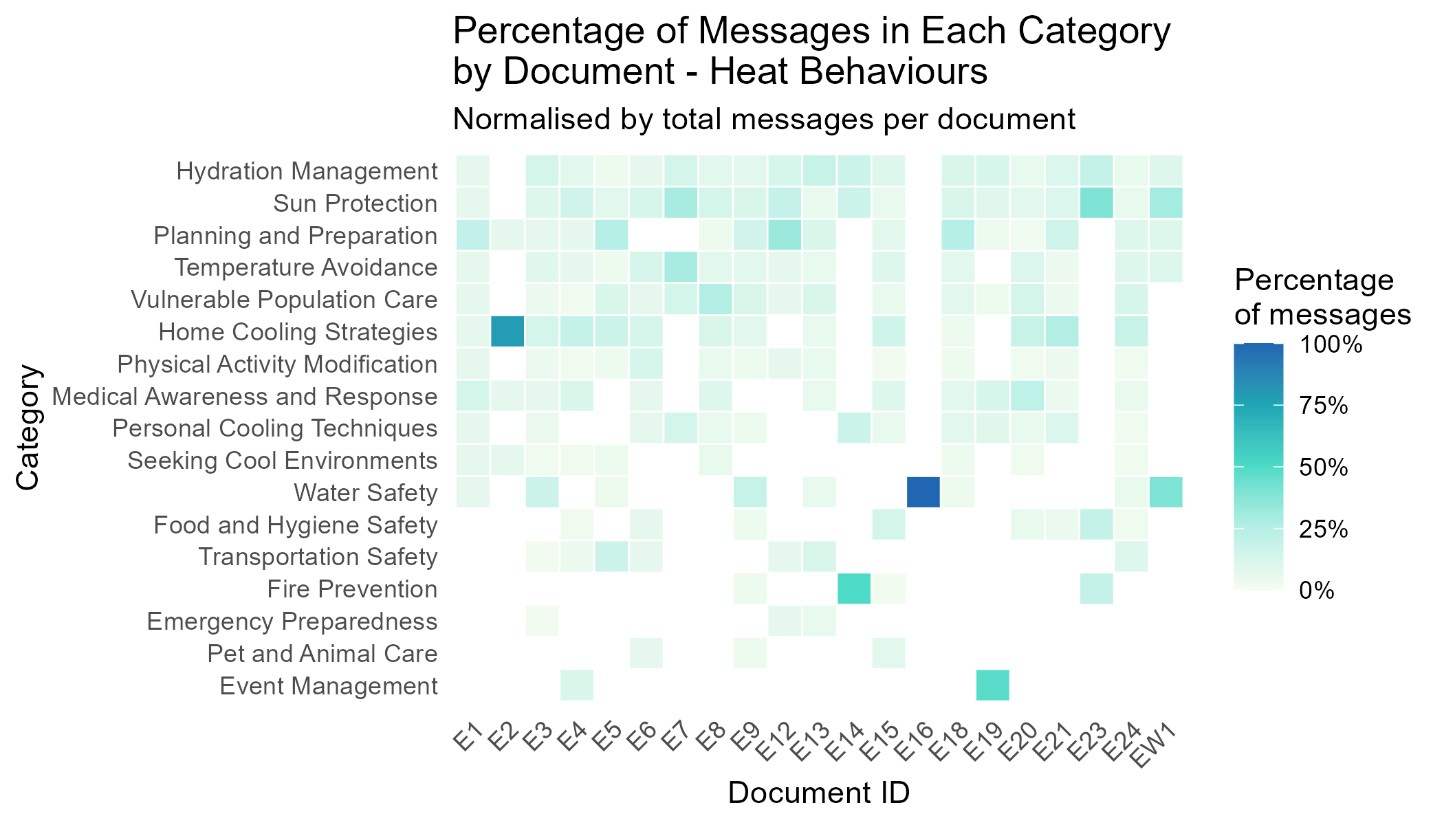
Figure A1: This heatmap shows the proportion of messages within each document that are related to each behavioural advice category, from no messages (white) to 100% of messages (dark blue).
Percentage of Messages in Each Category by Document - Heat Behaviour
Normalised by total messages per document and category
| Document ID | E1 | E2 | E3 | E4 | E5 | E6 | E7 | E8 | E9 | E12 | E13 | E14 | E15 | E16 | E18 | E19 | E20 | E21 | E23 | 24 | EW1 | |
|---|---|---|---|---|---|---|---|---|---|---|---|---|---|---|---|---|---|---|---|---|---|---|
| Hydration Management | 7% | NA | 14% | 8% | 4% | 7% | 14% | 8% | 8% | 13% | 19% | 17% | 10% | NA | 12% | 13% | 6% | 11% | 20% | 6% | 10% | |
| Sun Protection | 7% | NA | 10% | 15% | 8% | 13% | 29% | 14% | 12% | 20% | 6% | 17% | 6% | NA | 12% | 9% | 8% | 11% | 40% | 6% | 30% | |
| Planning and Preparation | 21% | 7% | 7% | 7% | 25% | NA | NA | 4% | 15% | 33% | 12% | NA | 8% | NA | 25% | 4% | 3% | 16% | NA | 10% | 10% | |
| Temperature Avoidance | 7% | NA | 9% | 7% | 4% | 13% | 29% | 8% | 8% | 7% | 6% | NA | 10% | NA | 8% | NA | 11% | 5% | NA | 10% | 10% | |
| Vulnerable Population Care | 7% | NA | 5% | 3% | 12% | 7% | 14% | 26% | 12% | 7% | 12% | NA | 6% | NA | 8% | 4% | 14% | 5% | NA | 13% | NA | |
| Home Cooling Strategies | 7% | 79% | 14% | 20% | 17% | 13% | NA | 12% | 8% | NA | 6% | NA | 16% | NA | 4% | NA | 19% | 26% | NA | 19% | NA | |
| Physical Activity Modification | 7% | NA | 5% | 3% | 4% | 13% | NA | 6% | 4% | 7% | 6% | NA | 2% | NA | 4% | NA | 3% | 5% | NA | 3% | NA | |
| Medical Awareness and Response | 14% | 7% | 7% | 12% | NA | 7% | NA | 10% | NA | NA | 6% | NA | 10% | NA | 8% | 13% | 22% | 5% | NA | 6% | NA | |
| Personal Cooling Techniques | 7% | NA | 5% | NA | NA | 7% | 14% | 6% | 4% | NA | NA | 17% | 6% | NA | 8% | 9% | 6% | 11% | NA | 3% | NA | |
| Seeking Cool Environments | 7% | 7% | 3% | 3% | 4% | NA | NA | 6% | NA | NA | NA | NA | NA | NA | 4% | NA | 3% | NA | NA | 3% | NA | |
| Water Safety | 7% | NA | 17% | NA | 4% | NA | NA | NA | 19% | NA | 6% | NA | NA | 100% | 4% | NA | NA | NA | NA | 6% | 40% | |
| Food and Hygiene Safety | NA | NA | NA | 3% | NA | 7% | NA | NA | 4% | NA | NA | NA | 14% | NA | NA | NA | 6% | 5% | 20% | 3% | NA | |
| Transportation Safety | NA | NA | 2% | 5% | 17% | 7% | NA | NA | NA | 7% | 12% | NA | NA | NA | NA | NA | NA | NA | NA | 10% | NA | |
| Fire Prevention | NA | NA | NA | NA | NA | NA | NA | NA | 4% | NA | NA | 50% | 2% | NA | NA | NA | NA | NA | 20% | NA | NA | |
| Emergency Preparedness | NA | NA | 2% | NA | NA | NA | NA | NA | NA | 7% | 6% | NA | NA | NA | NA | NA | NA | NA | NA | NA | NA | |
| Pet and Animal Care | NA | NA | NA | NA | NA | 7% | NA | NA | 4% | NA | NA | NA | 8% | NA | NA | NA | NA | NA | NA | NA | NA | |
| Event Management | NA | NA | NA | 12% | NA | NA | NA | NA | NA | NA | NA | NA | NA | NA | NA | 48% | NA | NA | NA | NA | NA |
Table A2: Educational message categories - heat
| Category | Description | Documents (%) | Sources (%) |
|---|---|---|---|
| Vulnerable populations | Identifies specific demographic groups or individuals who face higher health risks during hot weather due to age, health conditions, social circumstances, or other vulnerabilities. Covers populations such as older adults, children, pregnant women, people with chronic conditions, those living alone, and individuals experiencing homelessness. | 73 | 85 |
| Help resources signposting | Provides information about where to access support, advice, and assistance during hot weather. Includes healthcare resources, housing support services, emergency contacts, government advice websites, and pathways for vulnerable individuals to get help with home cooling adaptations. | 50 | 62 |
| Heat illness recognition | Educational content about recognising symptoms and understanding the progression of heat-related medical conditions. Includes signs of heat exhaustion (tiredness, headache, muscle cramps, heavy sweating) and heatstroke (confusion, hot, dry skin, seizures), emphasising the medical emergency nature of severe heat illness. | 45 | 54 |
| Environmental secondary impact | Brief description: Addresses broader environmental hazards and secondary risks associated with hot weather beyond direct heat exposure. Includes air quality impacts, wildfire smoke risks, thunderstorm asthma, increased food safety risks, UV exposure dangers, and how heat affects existing medical conditions. Covers potential failures of heat-sensitive systems, power outages, transport delays, increased demand on healthcare services, and impacts on utilities and emergency services. | 41 | 46 |
| High risk housing | Describes residential characteristics and building features that increase overheating risk. Covers structural factors like top-floor flats, poor ventilation, inadequate shading, urban heat island effects, highly insulated homes that trap heat, and restricted window access that limits cooling options. Also focuses on people experiencing housing instability or inadequate accommodation that increases heat vulnerability. Includes homeless individuals, rough sleepers, those in temporary accommodation like hostels, and people unable to modify their living environment for cooling. | 32 | 46 |
| Water safety risks | Addresses increased drowning and water safety risks during hot weather when more people seek cooling in water bodies. Includes warnings about cold water temperatures, hidden hazards in reservoirs and open water, and the dangers of swimming in unsupervised natural water environments. | 32 | 54 |
| Special circumstances | Describes unique situations or events that may increase heat-related risks beyond typical daily life. Includes considerations for large public events, festivals, travel disruptions, and circumstances where normal heat protection behaviours may be compromised. | 27 | 31 |
| Climate seasonal context | Provides broader context about climate change impacts, heat patterns, and seasonal trends relevant to the region. Includes information on record temperatures, historical temperature records, increasing frequency of heat events, typical seasonal patterns, and definitions of heatwaves for the specific geographic area. Also covers mortality statistics and predictions about future heat-related health impacts to frame the urgency of heat preparedness. | 23 | 38 |
| Alert system education | Provides information about official heat warning systems, alert levels, and their meanings. Explains the colour-coded warning system (yellow, amber, red) and what each level indicates in terms of health impacts and required responses from health services and the public. | 14 | 23 |
| Occupational outdoor risk | Addresses heat risks for people whose work or lifestyle involves significant outdoor exposure or physical activity. Covers manual labourers, outdoor workers, athletes, runners, cyclists, and others who spend extensive time outside or engage in strenuous physical activity during hot weather. | 14 | 15 |
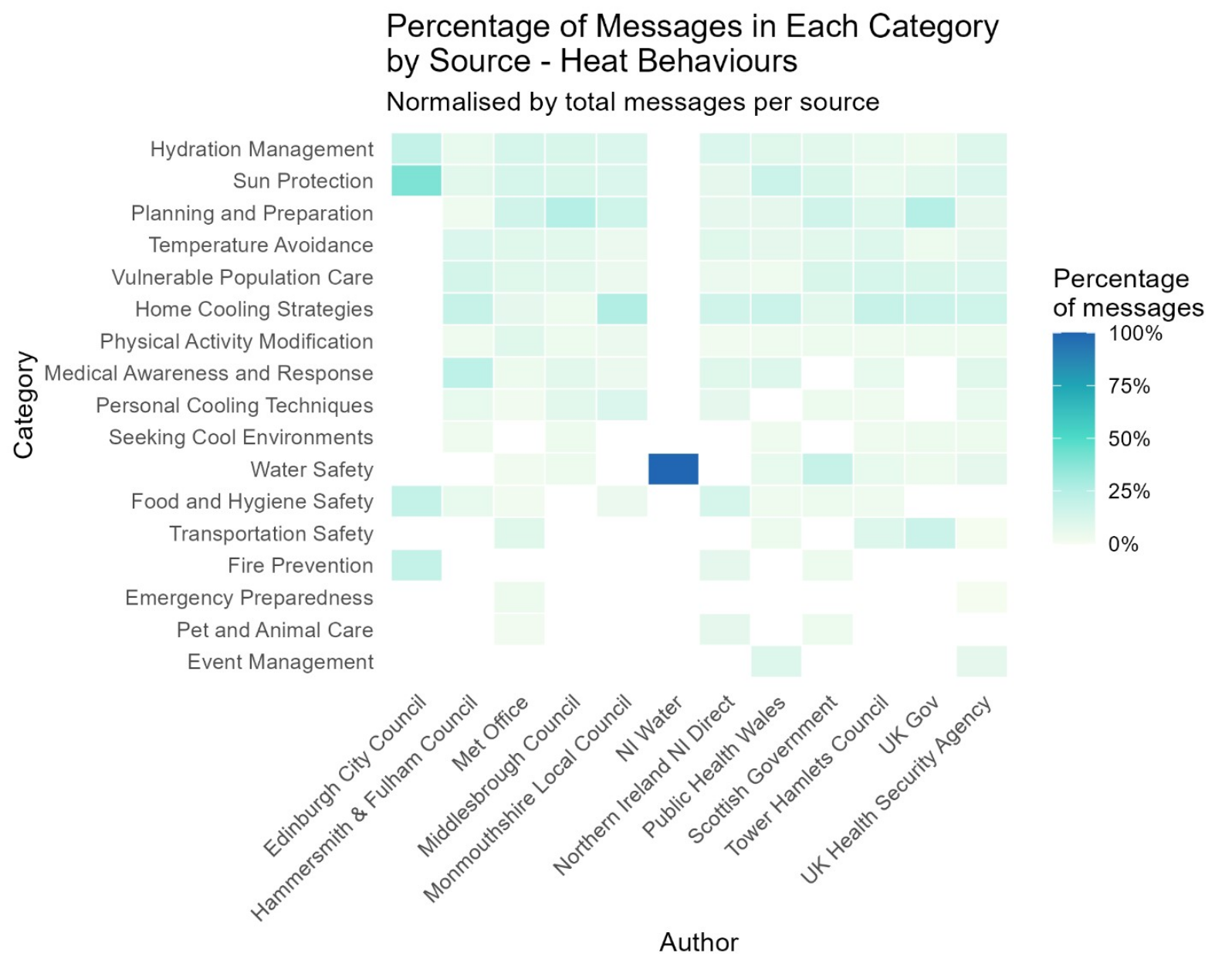
Figure A2. This heatmap shows the proportion of messages from each author (averaged over documents if multiple) that are related to each behavioural advice category, from no messages (white) to 100% of messages (dark blue).
Percentage of Messages in Each Category by Document - Heat Behaviour
Normalised by total messages per source and category
| Source | Edinburgh City Council | Hammersmith & Fulham Council | Met Office | Middlesbrough Council | Monmouthshire Local Council | NI Water | Northern Ireland NI Direct | Public Health Wales | Scottish Government | Tower Hamlets Council | UK GOV | UK Health Security Agency |
|---|---|---|---|---|---|---|---|---|---|---|---|---|
| Hydration Management | 20% | 6% | 13% | 12% | 11% | NA | 11% | 9% | 8% | 6% | 4% | 10% |
| Sun Protection | 40% | 8% | 13% | 12% | 11% | NA | 7% | 17% | 12% | 6% | 8% | 11% |
| Planning and Preparation | NA | 3% | 15% | 25% | 16% | NA | 7% | 7% | 15% | 10% | 25% | 7% |
| Temperature Avoidance | NA | 11% | 9% | 8% | 5% | NA | 9% | 7% | 8% | 10% | 4% | 7% |
| Vulnerable Population Care | NA | 14% | 9% | 8% | 5% | NA | 5% | 3% | 12% | 13% | 12% | 11% |
| Home Cooling Strategies | NA | 19% | 7% | 4% | 26% | NA | 15% | 17% | 8% | 19% | 17% | 16% |
| Physical Activity Modification | NA | 3% | 9% | 4% | 5% | NA | 2% | 3% | 4% | 3% | 4% | 4% |
| Medical Awareness and Response | NA | 22% | 4% | 8% | 5% | NA | 9% | 10% | NA | 6% | NA | 9% |
| Personal Cooling Techniques | NA | 6% | 2% | 8% | 11% | NA | 7% | NA | 4% | 3% | NA | 6% |
| Seeking Cool Environments | NA | 3% | NA | 4% | NA | NA | NA | 3% | NA | 3% | 4% | 4% |
| Water Safety | NA | NA | 2% | 4% | NA | 100% | NA | 6% | 19% | 6% | 4% | 7% |
| Food and Hygiene Safety | 20% | 6% | 2% | NA | 5% | NA | 13% | 3% | 4% | 3% | NA | NA |
| Transportation Safety | NA | NA | 9% | NA | NA | NA | NA | 4% | NA | 10% | 17% | 1% |
| Fire Prevention | 20% | NA | NA | NA | NA | NA | 7% | NA | 4% | NA | NA | NA |
| Emergency Preparedness | NA | NA | 4% | NA | NA | NA | NA | NA | NA | NA | NA | 1% |
| Pet and Animal Care | NA | NA | 2% | NA | NA | NA | 7% | NA | 4% | NA | NA | NA |
| Event Management | NA | NA | NA | NA | NA | NA | NA | 10% | NA | NA | NA | 7% |
Drought
Table A3: Behavioural advice categories - drought
| Category | Description | Documents (%) | Sources (%) |
|---|---|---|---|
| Bathing and shower efficiency | Recommendations for reducing water consumption during bathing and showering. Covers switching from baths to showers, shortening shower duration, employing toilet efficiency measures, and bathroom fixture improvements like low-flow devices and leak detection. Water-saving measures for toilet and bathroom fixtures include installing cistern devices, fixing leaky toilets, upgrading to dual-flush systems, and proper flushing practices. | 59 | 100 |
| Garden and landscape irrigation and management | Recommendations for water-efficient garden watering techniques. Covers using watering cans instead of hoses, timing of watering (early morning/evening), and targeted watering of plant roots. Landscape management includes allowing lawns to go dormant, selecting drought-resistant plants, and using mulch to retain soil moisture. | 55 | 75 |
| Leak detection and repair | Recommendations for identifying and fixing water leaks in homes and properties. Covers regular inspection of taps, pipes, toilets, and other fixtures, plus prompt repair actions. | 45 | 67 |
| Monitoring and reporting compliance | Staying informed about drought conditions, water restrictions, and local water availability through official channels, water company communications, and monitoring personal water usage. Such as reporting issues to authorities, checking water meters, reporting leaks to suppliers, and following official water restriction guidelines. | 45 | 67 |
| Rainwater collection and storage | Recommendations for capturing and storing rainwater for later use. Focuses on rainwater harvesting with installed water butts, collecting roof runoff, and utilizing stored rainwater for gardening. | 41 | 58 |
| Short personal hygiene water | Recommendations for water-efficient practices during personal hygiene activities like handwashing, teeth brushing, and shaving. Includes behaviours like turning off taps while brushing teeth and maintaining hygiene standards despite water restrictions. | 41 | 67 |
| Kitchen water conservation | Water-saving behaviours in kitchen activities including dishwashing, cooking, and food preparation. Includes using bowls for washing, reusing cooking water, and efficient use of appliances like dishwashers. | 38 | 50 |
| Laundry and appliance efficiency | Recommendations for water-efficient use of washing machines and dishwashers. Focuses on running full loads, using eco-settings, and optimal timing of appliance use. | 38 | 50 |
| Water reuse and recycling | Behaviours involving reusing water for secondary purposes. Includes using greywater for plants, reusing cooking water, and repurposing water from cleaning activities. | 34 | 67 |
| Car washing and outdoor cleaning | Water-efficient practices for vehicle washing and outdoor cleaning activities. Includes using buckets instead of hoses and minimizing water use for external cleaning tasks. | 28 | 33 |
| Business and institutional efficiency | Water conservation recommendations specifically for businesses, schools, and institutions. Includes commercial appliance efficiency, employee education, and institutional water management practices. | 17 | 33 |
| Hydration practices | Health and hydration recommendations during drought conditions. Includes maintaining adequate hydration, fluid intake, and water intake. | 17 | 33 |
| Timing and scheduling water use | Recommendations about when to use water for optimal efficiency. Includes watering during cooler parts of the day, using appliances during off-peak times, and scheduling water-intensive activities strategically. | 14 | 25 |
| Emergency response | Preparations for severe water shortages, emergency water supplies, alternative supply arrangements, and actions during water outages or severe restrictions. | 10 | 25 |
| Pet and wildlife protection | Recommendations for protecting and taking care of pets, animals, and wildlife during drought. This includes, learning about animals that live and depend on water and efficient use of water for animal and pet hygiene. | 10 | 25 |
| Private water supply management | Specific recommendations for those with private water supplies such as farmers, private well owners, and those with alternative water sources like boreholes. Covers monitoring water levels, pump management, and developing alternative supply strategies. | 10 | 25 |
| Consumption patterns | Broader lifestyle and consumption changes to reduce water footprint including dietary choices, clothing purchases, and general consumption awareness related to embedded water use. | 3 | 8 |
| Vulnerable population support | Specific guidance and support measures for vulnerable groups including elderly, children, people with health conditions, people with physical disability or mental health conditions (e.g. stress and anxiety) and those on private water supplies during drought conditions. | 3 | 8 |
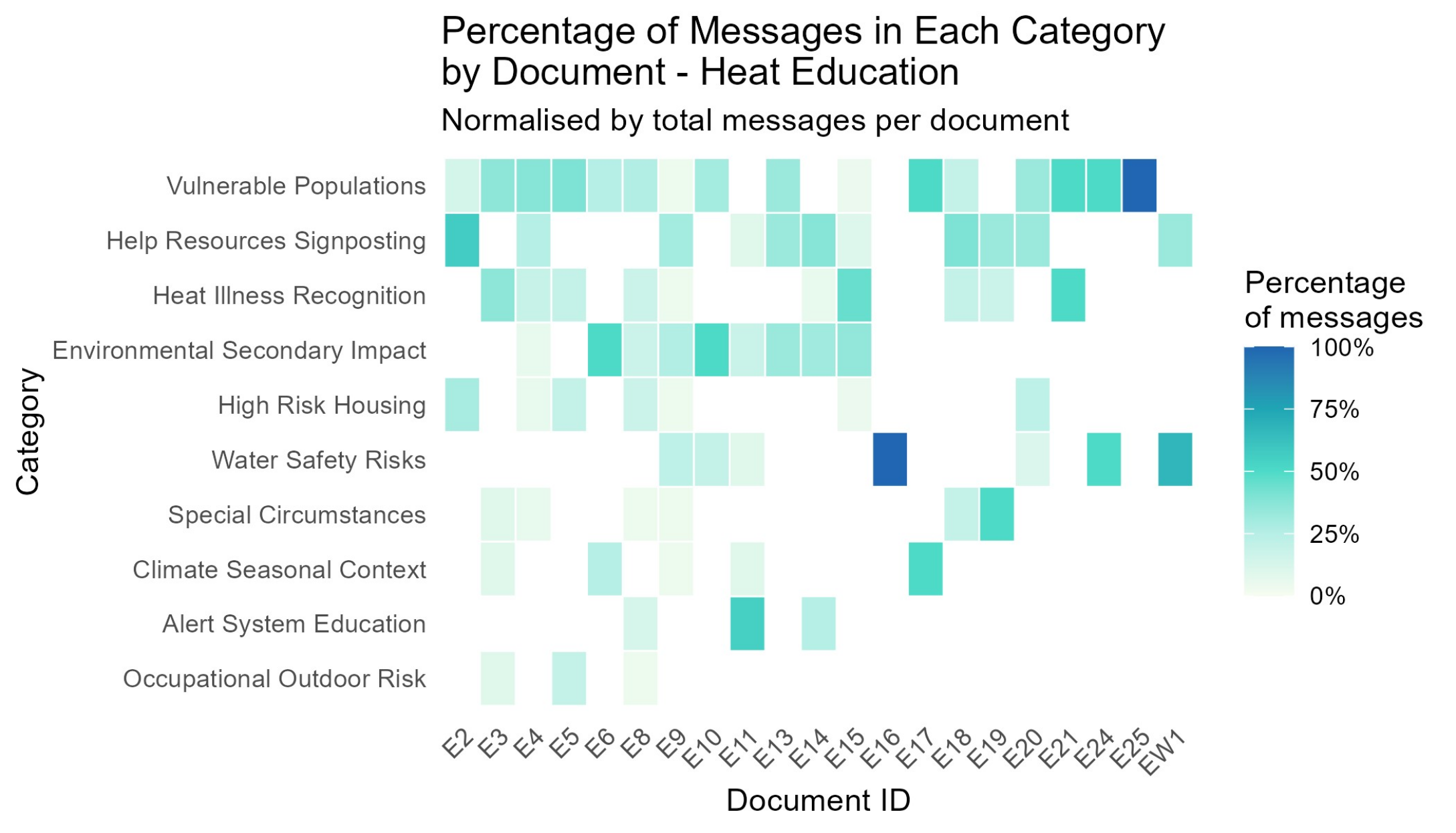
Figure A3: This heatmap shows the proportion of messages within each document that are related to each educational message category, from no messages (white) to 100% of messages (dark blue).
Percentage of Messages in Each Category by Document - Heat Education
Normalised by total messages per document and category
| Document ID | E2 | E3 | E4 | E5 | E6 | E8 | E9 | E10 | E11 | E13 | E14 | E15 | E16 | E17 | E18 | E19 | E20 | E21 | 24 | EW1 | |
|---|---|---|---|---|---|---|---|---|---|---|---|---|---|---|---|---|---|---|---|---|---|
| Vulnerable Populations | 14% | 36% | 38% | 40% | 25% | 26% | 4% | 30% | NA | 33% | NA | 5% | NA | 50% | 20% | NA | 33% | 50% | 50% | 100% | NA |
| Help Resources Signposting | 57% | NA | 25% | NA | NA | NA | 30% | NA | 9% | 33% | 38 10% | NA | NA | 40% | 33% | 33% | NA | NA | NA | 33% | |
| Heat Illness Recognition | NA | 36% | 19% | 20% | NA | 17% | 4% | NA | NA | NA | 6% | 45% | NA | NA | 20% | 17% | NA | 50% | NA | NA | NA |
| Environmental Secondary Impact | NA | NA | 6% | NA | 50% | 17% | 26% | 50% | 18% | 33% | 31% | 35% | NA | NA | NA | NA | NA | NA | NA | NA | NA |
| High Risk Housing | 29% | NA | 6% | 20% | NA | 17% | 4% | NA | NA | NA | NA | 5% | NA | NA | NA | NA | 22% | NA | NA | NA | NA |
| Water Safety Risks | NA | NA | NA | NA | NA | NA | 22% | 20% | 9% | NA | NA | NA | 100% | NA | NA | NA | 11% | NA | 50% | NA | 67% |
| Special Circumstances | NA | 9% | 6% | NA | NA | 4% | 4% | NA | NA | NA | NA | NA | NA | NA | 20% | 50% | NA | NA | NA | NA | NA |
| Climate Seasonal Context | NA | 9% | NA | NA | 25% | NA | 4% | NA | 9% | NA | NA | NA | NA | 50% | NA | NA | NA | NA | NA | NA | NA |
| Alert System Education | NA | NA | NA | NA | NA | 13% | NA | NA | 55% | NA | 25% | NA | NA | NA | NA | NA | NA | NA | NA | NA | NA |
| Occupational outdoor Risk | NA | 9% | NA | 20% | NA | 4% | NA | NA | NA | NA | NA | NA | NA | NA | NA | NA | NA | NA | NA | NA | NA |
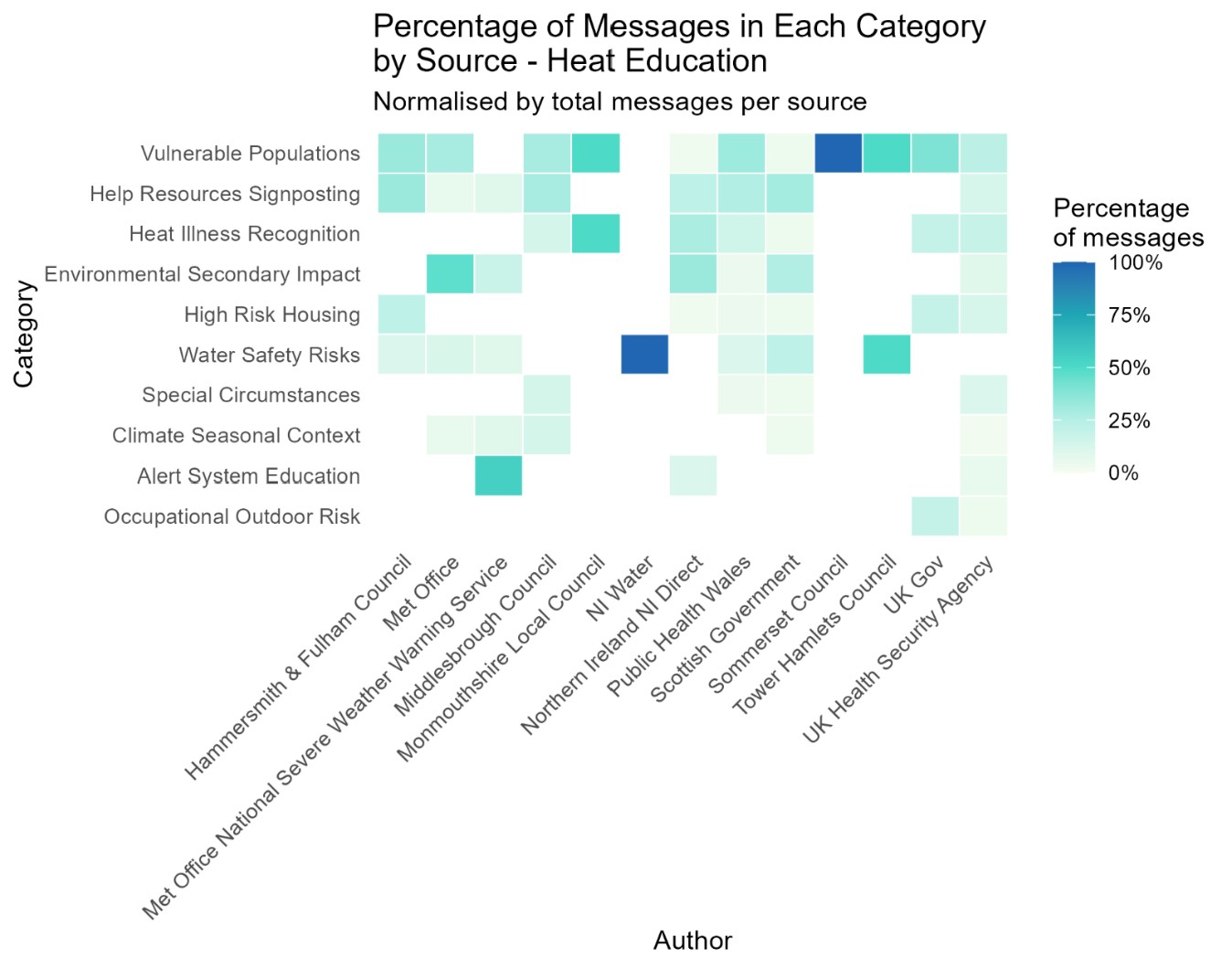
Figure A4: This heatmap shows the proportion of messages from each author (averaged over documents if multiple) that are related to each educational message category, from no messages (white) to 100% of messages (dark blue).
Percentage of Messages in Each Category by Document - Heat Education
Normalised by total messages per source
| Source | Hammersmith and Fulham Council | Met Office | Met Office National Severe Weather Warning Service | Middlesbrough Council | Monmouthshire Local Council | NI Water | Northern Ireland NI Direct | Public Health Wales | Sottish Government | Sommerset Council | Tower Hamlets Council | UK GOV | UK Health Security Agency |
|---|---|---|---|---|---|---|---|---|---|---|---|---|---|
| Vulnerable Populations | 33% | 29% | NA | 29% | 50% | NA | 3% | 32% | 4% | 100% | 50% | 40% | 23% |
| Help Resources Signposting | 33% | 6% | 9% | 29% | NA | NA | 22% | 26% | 30% | NA | NA | NA | 13% |
| Heat Illness Recognition | NA | NA | NA | 14% | 50% | NA | 28% | 16% | 4% | NA | NA | 20% | 19% |
| Environmental Secondary Impact | NA | 47% | 18% | NA | NA | NA | 33% | 5% | 26% | NA | NA | NA | 9% |
| High Risk Housing | 22% | NA | NA | NA | NA | NA | 3% | 5% | 4% | NA | NA | 20% | 13% |
| Water Safety Risks | 11% | 12% | 9% | NA | NA | 100% | NA | 11% | 22% | NA | 50% | NA | NA |
| Special Circumstances | NA | NA | NA | 14% | NA | NA | NA | 5% | 4% | NA | NA | NA | 11% |
| Climate Seasonal Context | NA | 6% | 9% | 14% | NA | NA | NA | NA | 4% | NA | NA | NA | 2% |
| Alert System Education | NA | NA | 55% | NA | NA | NA | 11% | NA | NA | NA | NA | NA | 6% |
| Occupational Outdoor Risk | NA | NA | NA | NA | NA | NA | NA | NA | NA | NA | NA | 20% | 4% |
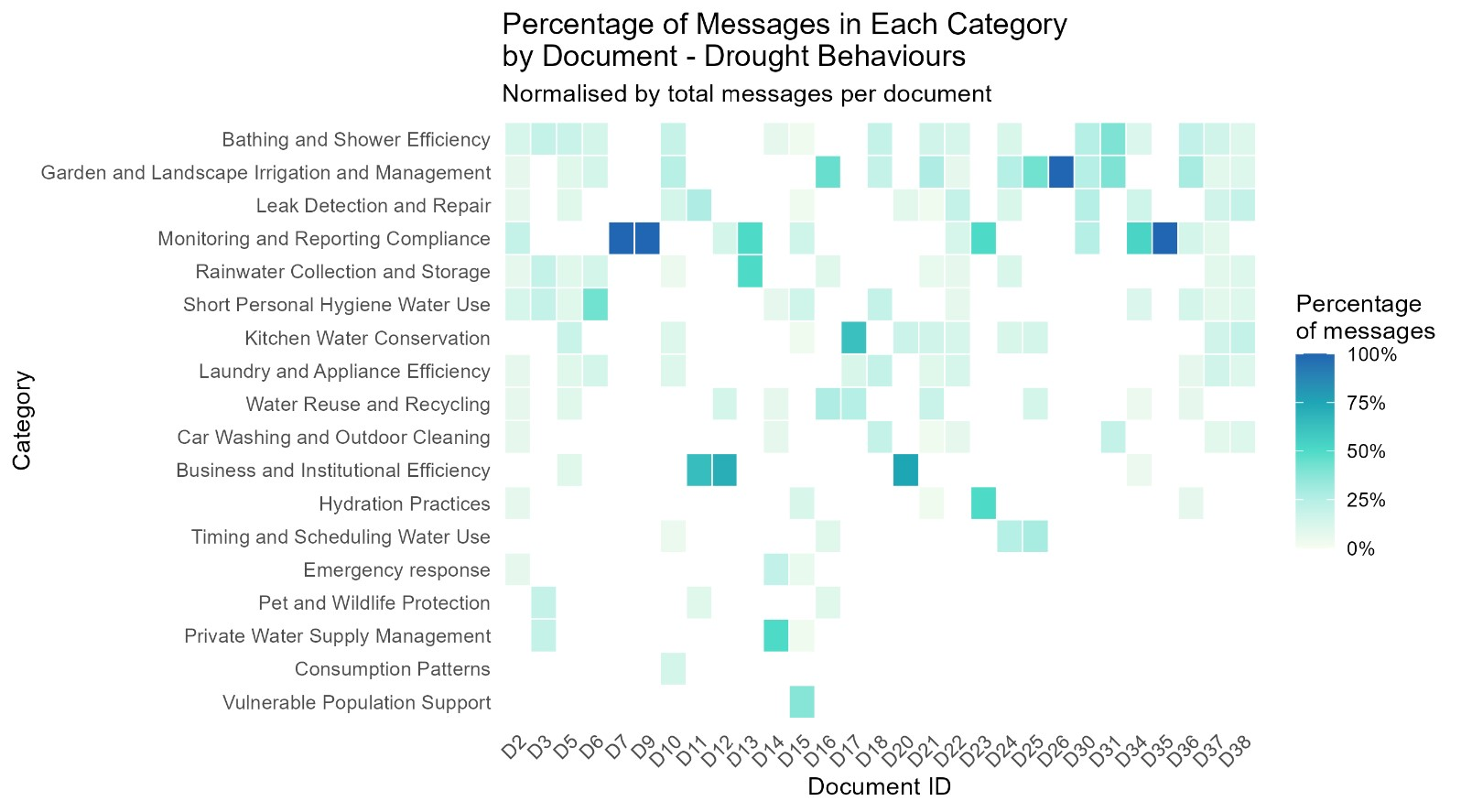
Figure A5: This heatmap shows the proportion of messages within each document that are related to each behavioural advice category, from no messages (white) to 100% of messages (dark blue).
Percentage of Messages in Each Category by Document – Drought Behaviours
Normalised by total messages per document and category
| Document ID | D2 | D3 | D5 | D6 | D7 | D9 | D10 | D11 | D12 | D13 | D14 | D15 | D16 | D17 | D20 | D21 | D22 | D23 | D24 | D25 | D26 | D30 | D31 | D34 | D35 | D36 | D37 | D38 | |
|---|---|---|---|---|---|---|---|---|---|---|---|---|---|---|---|---|---|---|---|---|---|---|---|---|---|---|---|---|---|
| Bathing and Shower Efficiency | 13% | 20% | 18% | 14% | NA | NA | 19% | NA | NA | NA | 7% | 3% | NA | NA | 20% | NA | 15% | 13% | NA | 12% | NA | NA | 25% | 40% | 11% | NA | 21% | 15% | 10% |
| Garden and Landscape Irrigation and Management | 7% | NA | 9% | 14% | NA | NA | 24% | NA | NA | NA | NA | NA | 45% | NA | 20% | NA | 27% | 7% | NA | 25% | 43% | 100% | 25% | 40% | NA | NA | 29% | 8% | 10% |
| Leak Detection and Repair | 7% | NA | 9% | NA | NA | NA | 14% | 27% | NA | NA | NA | 3% | NA | NA | NA | 8% | 3% | 20% | NA | 12% | NA | NA | 25% | NA | 16% | NA | NA | 15% | 20% |
| Monitoring and Reporting Compliance | 20% | NA | NA | NA | 100% | 100% | NA | NA | 14% | 50% | NA | 16% | NA | NA | NA | NA | NA | 13% | 50% | NA | NA | NA | 25% | NA | 53% | 100% | 14% | 8% | NA |
| Rainwater Collection and Storage | 7% | 20% | 9% | 14% | NA | NA | 5% | NA | NA | 50% | NA | NA | 9% | NA | NA | NA | 6% | 7% | NA | 12% | NA | NA | NA | NA | NA | NA | NA | 8% | 10% |
| Short Personal Hygiene Water Use | 13% | 20% | 9% | 43% | NA | NA | NA | NA | NA | NA | 7% | 16% | NA | NA | 20% | NA | NA | 7% | NA | NA | NA | NA | NA | NA | 11% | NA | 14% | 8% | 10% |
| Kitchen Water Conservation | NA | NA | 18% | NA | NA | NA | 10% | NA | NA | NA | NA | 3% | NA | 62% | NA | 17% | 15% | 13% | NA | 12% | 14% | NA | NA | NA | NA | NA | NA | 15% | 20% |
| Laundry and Appliance Efficiency | 7% | NA | 9% | 14% | NA | NA | 10% | NA | NA | NA | NA | NA | NA | 12% | 20% | NA | 9% | 13% | NA | NA | NA | NA | NA | NA | NA | NA | 7% | 15% | 10% |
| Water Reuse and Recycling | 7% | NA | 9% | NA | NA | NA | NA | NA | 14% | NA | 7% | NA | 27% | 25% | NA | NA | 18% | NA | NA | NA | 14% | NA | NA | NA | 5% | NA | 7% | NA | NA |
| Car Washing and Outdoor Cleaning | 7% | NA | NA | NA | NA | NA | NA | NA | NA | NA | 7% | NA | NA | NA | 20% | NA | 3% | 7% | NA | NA | NA | NA | NA | 20% | NA | NA | NA | 8% | 10% |
| Business and Institutional Efficiency | NA | NA | 9% | NA | NA | NA | NA | 64% | 71% | NA | NA | NA | NA | NA | NA | 75% | NA | NA | NA | NA | NA | NA | NA | NA | 5% | NA | NA | NA | NA |
| Hydration Practices | 7% | NA | NA | NA | NA | NA | NA | NA | NA | NA | NA | 12% | NA | NA | NA | NA | 3% | NA | 50% | NA | NA | NA | NA | NA | NA | NA | 7% | NA | NA |
| Timing and Scheduling Water Use | NA | NA | NA | NA | NA | NA | 5% | NA | NA | NA | NA | NA | 9% | NA | NA | NA | NA | NA | NA | 25% | 29% | NA | NA | NA | NA | NA | NA | NA | NA |
| Emergency response | 7% | NA | NA | NA | NA | NA | NA | NA | NA | NA | 21% | 6% | NA | NA | NA | NA | NA | NA | NA | NA | NA | NA | NA | NA | NA | NA | NA | NA | NA |
| Pet and Wildlife Protection | NA | 20% | NA | NA | NA | NA | NA | 9% | NA | NA | NA | NA | 9% | NA | NA | NA | NA | NA | NA | NA | NA | NA | NA | NA | NA | NA | NA | NA | NA |
| Private Water Supply Management | NA | 20% | NA | NA | NA | NA | NA | NA | NA | NA | 50% | 3% | NA | NA | NA | NA | NA | NA | NA | NA | NA | NA | NA | NA | NA | NA | NA | NA | NA |
| Consumption Patterns | NA | NA | NA | NA | NA | NA | 14% | NA | NA | NA | NA | NA | NA | NA | NA | NA | NA | NA | NA | NA | NA | NA | NA | NA | NA | NA | NA | NA | NA |
| Vulnerable Population Support | NA | NA | NA | NA | NA | NA | NA | NA | NA | NA | NA | 38% | NA | NA | NA | NA | NA | NA | NA | NA | NA | NA | NA | NA | NA | NA | NA | NA | NA |
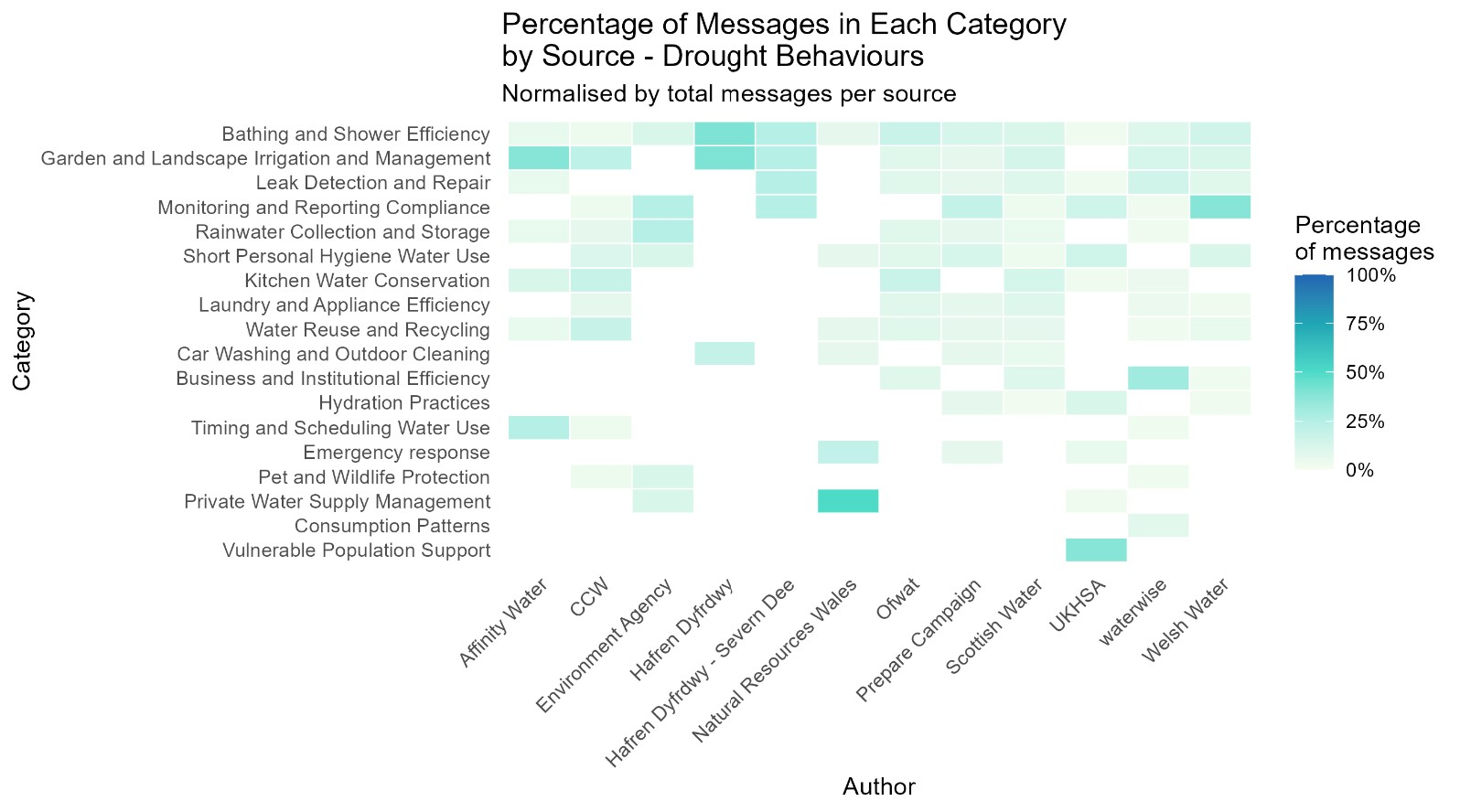
Figure A6: This heatmap shows the proportion of messages from each author (averaged over documents if multiple) that are related to each behavioural advice category, from no messages (white) to 100% of messages (dark blue).
Percentage of Messages in Each Category by Document – Drought Behaviours
Normalised by total messages per source and category
| Source | Affinity Water | CCW | Environment Agency | Hafren Dyfrdwy | Hafren Dyfrdwy - Severn Dee | Natural Resources Wales | Ofwat | Prepare Campaign | Scottish Water | UKHSA | waterwise | Welsh Water |
|---|---|---|---|---|---|---|---|---|---|---|---|---|
| Bathing and Shower Efficiency | 6% | 4% | 12% | 40% | 25% | 7% | 18% | 13% | 12% | 3% | 10% | 15% |
| Garden and Landscape Irrigation and Management | 38% | 22% | NA | 40% | 25% | NA | 9% | 7% | 14% | NA | 13% | 12% |
| Leak Detection and Repair | 6% | NA | NA | NA | 25% | NA | 9% | 7% | 10% | 3% | 15% | 9% |
| Monitoring and Reporting Compliance | NA | 4% | 25% | NA | 25% | NA | NA | 20% | 4% | 16% | 3% | 38% |
| Rainwater Collection and Storage | 6% | 7% | 25% | NA | NA | NA | 9% | 7% | 6% | NA | 3% | NA |
| Short Personal Hygiene Water Use | NA | 11% | 12% | NA | NA | 7% | 9% | 13% | 4% | 16% | NA | 12% |
| Kitchen Water Conservation | 12% | 19% | NA | NA | NA | NA | 18% | NA | 14% | 3% | 5% | NA |
| Laundry and Appliance Efficiency | NA | 7% | NA | NA | NA | NA | 9% | 7% | 10% | NA | 5% | 3% |
| Water Reuse and Recycling | 6% | 19% | NA | NA | NA | 7% | 9% | 7% | 7% | NA | 3% | 6% |
| Car Washing and Outdoor Cleaning | NA | NA | NA | 20% | NA | 7% | NA | 7% | 6% | NA \ NA | NA | |
| Business and Institutional Efficiency | NA | NA | NA | NA | NA | NA | 9% | NA | 10% | NA | 31% | 3% |
| Hydration Practices | NA | NA | NA | NA | NA | NA | NA | 7% | 2% | 12% | NA | 3% |
| Timing and Scheduling Water Use | 25% | 4% | NA | NA | NA | NA | NA | NA | NA | NA | 3% | NA |
| Emergency response | NA | NA | NA | NA | NA | 21% | NA | 7% | NA | 6% | NA | NA |
| Pet and Wildlife Protection | NA | 4% | 12% | NA | NA | NA | NA | NA | NA | NA | 3% | NA |
| Private Water Supply Management | NA | NA | 12% | NA | NA | 50% | NA | NA | NA | 3% | NA | NA |
| Consumption Patterns | NA | NA | NA | NA | NA | NA | NA | NA | NA | NA | 8% | NA |
| Vulnerable Population Support | NA | NA | NA | NA | NA | NA | NA | NA | NA | 38% | NA | NA |
Table A4: Educational message categories - drought
| Category | Description | Documents (%) | Sources (%) |
|---|---|---|---|
| Water consumption patters | Educational content about water usage statistics, consumption trends, and comparative data. Includes information about how much water different activities, demographics, or regions use, and historical changes in consumption patterns. | 79 | 67 |
| Economic impacts | Educational content about the financial implications of water scarcity, including effects on agriculture, tourism, business operations, and the costs associated with water treatment and infrastructure maintenance during drought periods. As well as the financial advantages of water conservation, including cost savings on water bills, energy costs, and business operational expenses. | 50 | 50 |
| Infrastructure capacity | Information about water system limitations, including treatment capacity, distribution network constraints, pressure management, and why infrastructure capacity can become a limiting factor even when water sources are adequate. | 25 | 42 |
| Water scarcity causes | Educational content explaining the underlying causes and drivers of water scarcity and drought conditions. Covers topics such as climate change impacts, rainfall patterns, seasonal variations, and environmental factors that contribute to water shortages. | 25 | 42 |
| Environmental impacts | Educational content about the health consequences and risks associated with drought conditions. Covers dehydration risks, respiratory impacts from dust and poor air quality, mental health effects, and vulnerable populations most at risk during drought periods. | 21 | 42 |
| Regulatory framework | Educational content explaining water use restrictions, hosepipe bans, temporary usage bans, and emergency measures. Describes what these restrictions mean, when they are implemented, and their legal framework without focusing on compliance behaviours. | 14 | 25 |
| Seasonal demand dynamics | Information about how water demand varies seasonally, particularly explaining summer demand spikes, the impact of hot weather on usage patterns, and how seasonal activities (gardening, cooling, tourism) affect water consumption. | 14 | 33 |
| Water level monitoring | Information about how drought is measured and monitored, including reservoir level tracking, rainfall statistics, rainfall data, groundwater monitoring, regional variations in water availability, and the indicators used to assess drought severity and progression. | 14 | 25 |
| Health impacts | Educational content about the health consequences and risks associated with drought conditions. Covers dehydration risks, respiratory impacts from dust and poor air quality, mental health effects, and vulnerable populations most at risk during drought periods. | 11 | 25 |
| Sectoral impacts | Educational content about how drought affects specific sectors or settings, including agriculture, schools, businesses, tourism, and different geographical regions. Covers sector-specific vulnerabilities and water use patterns. | 11 | 25 |
| Water quality and safety | Information about water quality considerations during drought, including guidance on tap water safety, bottled water use (particularly for infant formula), and potential quality changes in private water supplies during low water periods. | 11 | 25 |
| Climate impacts | Information about how climate change and weather patterns affect water resources, including explanations of how droughts develop, the relationship between rainfall patterns and water availability, and long-term climate projections affecting water supply. | ||
| Vulnerable populations | Educational content identifying and explaining risks to specific groups during drought, including elderly people, infants, individuals with respiratory conditions, those dependent on private water supplies, people with physical disability or mental health conditions (e.g., stress and anxiety), and communities in water-stressed regions. | 4 | 8 |
| Water cycle and system infrastructure | Educational content explaining how water systems work, including the relationship between rainfall, reservoirs, groundwater, surface water sources, and the water treatment and distribution process from source to tap. | 4 | 8 |
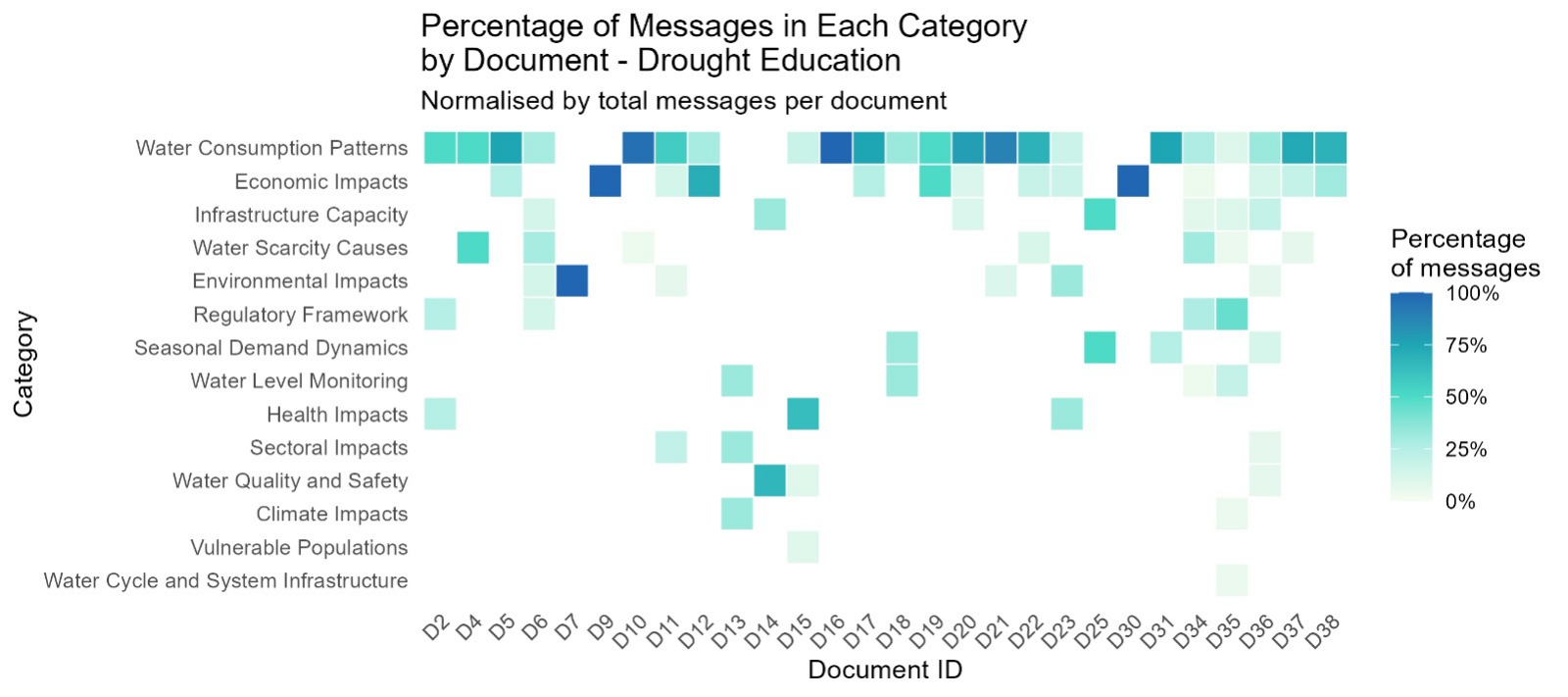
Figure A7: This heatmap shows the proportion of messages within each document that are related to each educational message category, from no messages (white) to 100% of messages (dark blue).
Percentage of Messages in Each Category by Document – Drought Education
Normalised by total messages per document and category
| Document ID | D2 | D4 | D5 | D6 | D7 | D9 | D10 | D11 | D12 | D13 | D14 | D15 | D16 | D17 | D18 | D19 | D20 | D21 | D22 | D23 | D25 | D30 | D31 | D34 | D35 | D36 | D37 | D38 | |
|---|---|---|---|---|---|---|---|---|---|---|---|---|---|---|---|---|---|---|---|---|---|---|---|---|---|---|---|---|---|
| Water Consumption Patterns | 50% | 50% | 75% | 29% | NA | NA | 96% | 57% | 29% | NA | NA | 18% | 100% | 75% | 33% | 50% | 78% | 89% | 69% | 17% | NA | NA | 75% | 27% | 10% | 33% | 73% | 69% | |
| Economic Impacts | NA | NA | 25% | NA | NA | 100% | NA | 14% | 71% | NA | NA | NA | NA | 25% | NA | 50% | 11% | NA | 19% | 17% | NA | 100% | NA | 4% | NA | 13% | 20% | 31% | |
| Infrastructure Capacity | NA | NA | NA | 14% | NA | NA | NA | NA | NA | NA | 33% | NA | NA | NA | NA | NA | 11% | NA | NA | NA | 50% | NA | NA | 8% | 10% | 20% | NA | NA | |
| Water Scarcity Causes | NA | 50% | NA | 29% | NA | NA | 4% | NA | NA | NA | NA | NA | NA | NA | NA | NA | NA | NA | 12% | NA | NA | NA | NA | 31% | 5% | NA | 7% | NA | |
| Environmental Impacts | NA | NA | NA | 14% | 100% | NA | NA | 7% | NA | NA | NA | NA | NA | NA | NA | NA | NA | 11% | NA | 33% | NA | NA | NA | NA | NA | 7% | NA | NA | |
| Regulatory Framework | 25% | NA | NA | 14% | NA | NA | NA | NA | NA | NA | NA | NA | NA | NA | NA | NA | NA | NA | NA | NA | NA | NA | NA | 27% | 45% | NA | NA | NA | |
| Seasonal Demand Dynamics | NA | NA | NA | NA | NA | NA | NA | NA | NA | NA | NA | NA | NA | NA | 33% | NA | NA | NA | NA | NA | 50% | NA | 25% | NA | NA | 13% | NA | NA | |
| Water Level Monitoring | NA | NA | NA | NA | NA | NA | NA | NA | NA | 33% | NA | NA | NA | NA | 33% | NA | NA | NA | NA | NA | NA | NA | NA | 4% | 20% | NA | NA | NA | |
| Health Impacts | 25% | NA | NA | NA | NA | NA | NA | NA | NA | NA | NA | 64% | NA | NA | NA | NA | NA | NA | NA | 33% | NA | NA | NA | NA | NA | NA | NA | NA | |
| Sectoral Impacts | NA | NA | NA | NA | NA | NA | NA | 21% | NA | 33% | NA | NA | NA | NA | NA | NA | NA | NA | NA | NA | NA | NA | NA | NA | NA | 7% | NA | NA | |
| Water Quality and Safety | NA | NA | NA | NA | NA | NA | NA | NA | NA | NA | 67% | 9% | NA | NA | NA | NA | NA | NA | NA | NA | NA | NA | NA | NA | NA | 7% | NA | NA | |
| Climate Impacts | NA | NA | NA | NA | NA | NA | NA | NA | NA | 33% | NA | NA | NA | NA | NA | NA | NA | NA | NA | NA | NA | NA | NA | NA | 5% | NA | NA | NA | |
| Vulnerable Populations | NA | NA | NA | NA | NA | NA | NA | NA | NA | NA | NA | 9% | NA | NA | NA | NA | NA | NA | NA | NA | NA | NA | NA | NA | NA | NA | NA | NA | |
| Water Cycle and System Infrastructure | NA | NA | NA | NA | NA | NA | NA | NA | NA | NA | NA | NA | NA | NA | NA | NA | NA | NA | NA | NA | NA | NA | NA | NA | 5% | NA | NA | NA |
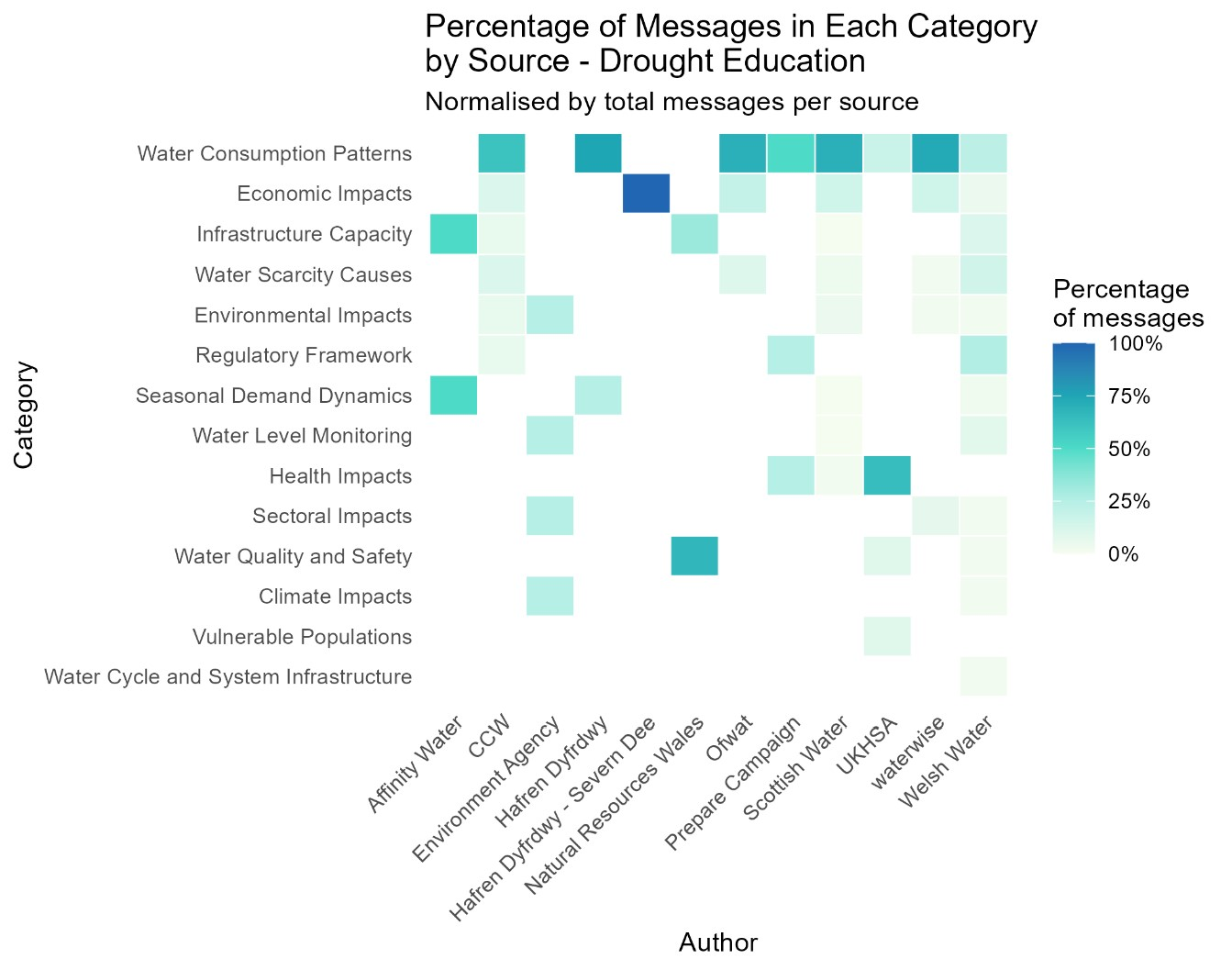
Figure A8: This heatmap shows the proportion of messages from each author (averaged over documents if multiple) that are related to each educational message category, from no messages (white) to 100% of messages (dark blue).
Percentage of Messages in Each Category by Document – Drought Education
Normalised by total messages per source and category
| Author | Affinity Water | CCW | Environment Agency | Hafren Dyfrdwy | Hafren Dyfrdwy - Severn Dee | Natural Resources Wales | Ofwat | Prepare Campaign | Scottish Water | UKHSA | waterwise | Welsh Water | |
|---|---|---|---|---|---|---|---|---|---|---|---|---|---|
| Water Consumption Patterns | NA | 61% | NA | 75% | NA | NA | 70% | 50% | 70% | 18% | 73% | 23% | |
| Economic Impacts | NA | 11% | NA | NA | 100% | NA | 20% | NA | 16% | NA | 16% | 5% | |
| Infrastructure Capacity | 50% | 6% | NA | NA | NA | 33% | NA | NA | 1% | NA | NA | 11% | |
| Water Scarcity Causes | NA | 11% | NA | NA | NA | NA | 10% | NA | 4% | NA | 2% | 15% | |
| Environmental Impacts | NA | 6% | 25% | NA | NA | NA | NA | NA | 5% | NA | 2% | 2% | |
| Regulatory Framework | NA | 6% | NA | NA | NA | NA | NA | 25% | NA | NA | NA | 26% | |
| Seasonal Demand Dynamics | 50% | NA | NA | 25% | NA | NA | NA | NA | 1% | NA | NA | 3% | |
| Water Level Monitoring | NA | NA | 25% | NA | NA | NA | NA | NA | 1% | NA | NA | 8% | |
| Health Impacts | NA | NA | NA | NA | NA | NA | NA | 25% | 2% | 64% | NA | NA | |
| Sectoral Impacts | NA | NA | 25% | NA | NA | NA | NA | NA | NA | NA | 7% | 2% | |
| Water Quality and Safety | NA | NA | NA | NA | NA | 67% | NA | NA | NA | 9% | NA | 2% | |
| Climate Impacts | NA | NA | 25% | NA | NA | NA | NA | NA | NA | NA | NA | 2% | |
| Vulnerable Populations | NA | NA | NA | NA | NA | NA | NA | NA | NA | 9% | NA | NA | |
| Water Cycle and System Infrastructure | NA | NA | NA | NA | NA | NA | NA | NA | NA | NA | NA | 2% |
Wildfire
Table A5: Behavioural advice categories - Wildfire
| Category | Description | Documents (%) | Sources (%) |
|---|---|---|---|
| Fire detection and reporting | Recommendations about identifying, reporting, and responding to discovered wildfires. Includes immediate actions like calling 999, providing location and other detailed information to emergency services using geocode systems such as What3Words, and coordinating and meeting with fire crews at access points, unlocking gates for emergency access, and coordinating community responses, and sharing safety messages with others. | 92 | 63 |
| BBQ safety and restrictions | Guidelines for safe barbecue practices including designated area requirements, prohibition during high-risk conditions, safe setup distances from structures, proper fuel use, supervision requirements, and complete extinguishment procedures. Includes particularly recommending picnics instead of barbecues during high-risk conditions or in sensitive natural areas. | 85 | 84 |
| Fire prevention in the countryside | Following established countryside codes and guidelines, including respecting wildlife, staying on designated paths, and following posted signs. Recommendations to use alternative cooking methods like portable stoves and avoiding fires during dangerous weather conditions, as well as prohibitions against lighting fires, campfires, or using open flames in natural areas including woodlands, moorlands, and countryside locations regardless of weather conditions. | 85 | 84 |
| Personal Safety during fire events | Actions to take when encountering a wildfire including moving to safety, following emergency service instructions, evacuation procedures, staying clear of smoke and dangerous areas, and avoiding smoke inhalation. Also avoiding attempts to fight fires beyond very small blazes manageable with basic tools. Emphasizes leaving fire suppression to professionals and prioritizing personal safety. | 69 | 47 |
| Smoking and cigarette disposal | Proper disposal and extinguishment of cigarettes and other smoking materials, including use of portable ashtrays, ensuring complete extinguishment, and prohibitions against throwing cigarettes from vehicles or onto the ground. | 69 | 47 |
| Litter and glass management | Taking all rubbish and litter home from outdoor activities. Proper disposal of glass bottles and reflective materials that can magnify sunlight and start fires. Emphasizes taking glass items home or disposing in appropriate bins rather than leaving in natural areas. | ||
| Deliberate fire prevention and reporting | Reporting suspicious fire-starting behaviour, deliberate fires, or criminal fire activity to police or Crimestoppers, and community vigilance against arson and reckless behaviour. Includes anonymous reporting options for community safety. | 38 | 32 |
| Weather related risk assessment and monitoring | Checking fire danger warnings, weather conditions, official risk assessments, and local restrictions before engaging in outdoor activities or fire-related behaviours. Includes using official fire severity indices and adjusting behaviour based on environmental conditions. | 38 | 26 |
| Child and pet safety | Keeping children and pets away from fire hazards, cooking areas, and fire-related equipment, plus educating children about fire dangers, supervising children around any fire-related activities or equipment, and including pets in evacuation planning. | 31 | 21 |
| Equipment and machinery safety | Safe operation of outdoor equipment, tools, and machinery that could generate sparks or embers in fire-prone areas. Includes proper vehicle parking to avoid hot exhausts igniting dry vegetation and careful use of power tools. Also includes safe handling of gas cylinders and proper storage of flammable materials. | 31 | 21 |
| Weather and location conditional fire restrictions | Avoiding fire-related activities specifically during high-risk weather conditions such as dry spells, heatwaves, high winds, low humidity, or when official fire danger warnings are in place. Following area-specific fire bans, restrictions, and designated use areas. Covers compliance with local regulations and signage in parks, forests, and other natural areas. | 31 | 21 |
| Controlled burning safety | Safe practices for intentional fires such as bonfires, controlled burns, and debris burning including weather considerations, supervision requirements, and having extinguishing materials readily available. | 23 | 16 |
| Property protection and preparation | Protecting homes and businesses in rural areas through vegetation management, creating defensible space, ensuring clear address visibility, and maintaining emergency access routes. | 15 | 11 |
| Camping and outdoor activity safety | Fire safety specific to camping and outdoor recreation such as cooking area setup, equipment storage, placing tent at a safe distance from other campers, and emergency preparedness for campers. Includes specific advice for caravan and mobile home users such as appliance use, ventilation, smoke alarm installation, and maintenance of gas and electrical systems. | 8 | 5 |
| Specialised environment safety | Fire safety measures specific to unique environments such as boats, marine settings, or other specialized locations with particular fire risks and safety requirements, including fuel handling, cooking safety, ventilation requirements, and emergency planning for marine environments. | 8 | 5 |
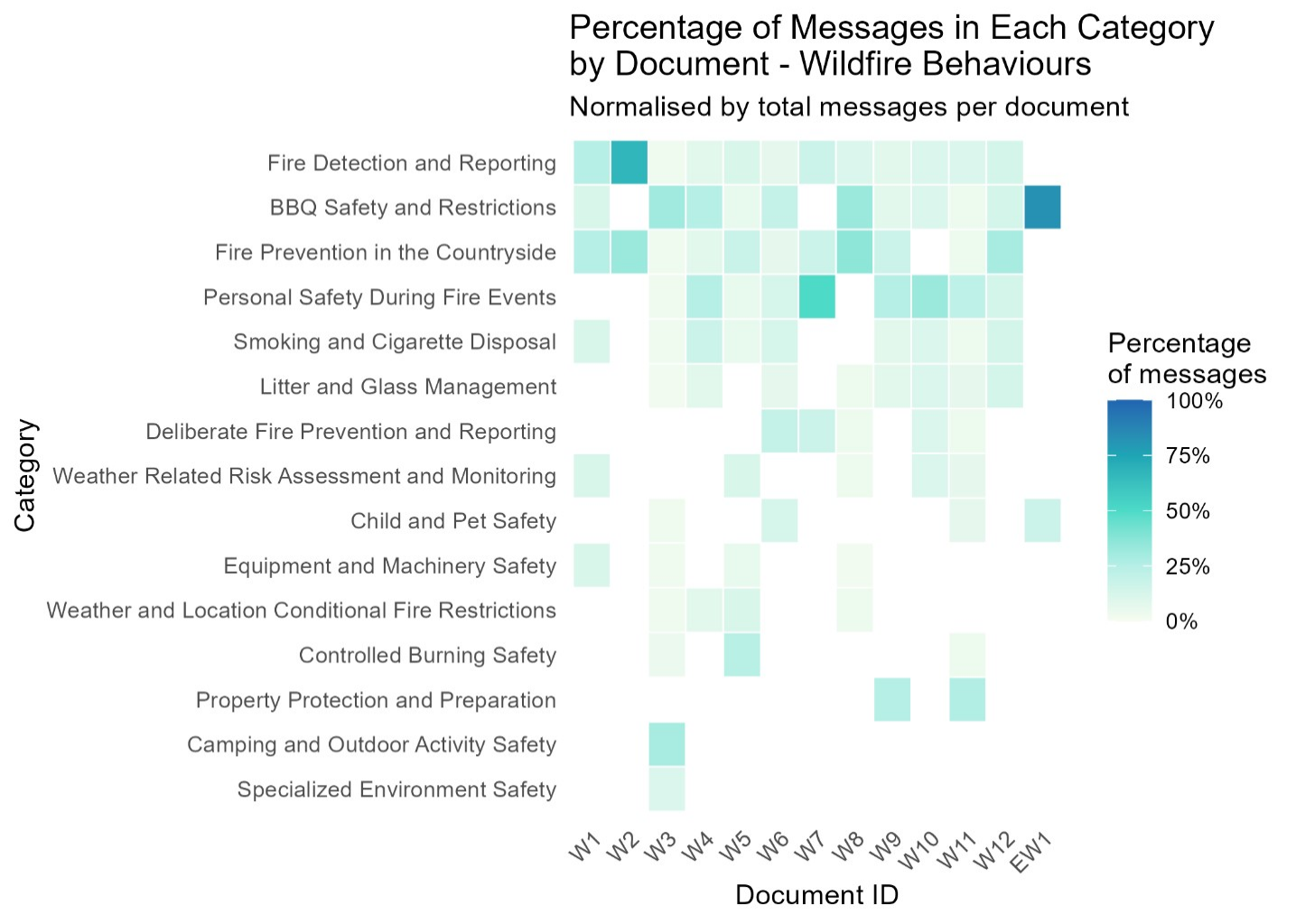
Figure A9: This heatmap shows the proportion of messages within each document that are related to each behavioural advice category, from no messages (white) to 100% of messages (dark blue).
Percentage of Messages in Each Category by Document – Wildfire Behaviours
Normalised by total messages per document and category
| Document ID | W1 | W2 | W3 | W4 | W5 | W6 | W7 | W8 | W9 | W10 | W11 | W12 | EW1 | |
|---|---|---|---|---|---|---|---|---|---|---|---|---|---|---|
| Fire Detection and Reporting | 25% | 67% | 3% | 8% | 12% | 7% | 17% | 11% | 8% | 11% | 11% | 14% | NA | |
| BBQ Safety and Restrictions | 12% | NA | 31% | 25% | 6% | 20% | NA | 33% | 8% | 11% | 4% | 14% | 83% | |
| Fire Prevention in the Countryside | 25% | 33% | 3% | 8% | 18% | 7% | 17% | 36% | 17% | NA | 4% | 29% | NA | |
| Personal Safety During Fire Events | NA | NA | 3% | 25% | 6% | 13% | 50% | NA | 25% | 33% | 22% | 14% | NA | |
| Smoking and Cigarette Disposal | 12% | NA | 3% | 17% | 6% | 13% | NA | NA | 8% | 11% | 4% | 14% | NA | |
| Litter and Glass Management | NA | NA | 2% | 8% | NA | 7% | NA | 4% | 8% | 11% | 7% | 14% | NA | |
| Deliberate Fire Prevention and Reporting | NA | NA | NA | NA | NA | 20% | 17% | 4% | NA | 11% | 4% | NA | NA | |
| Weather Related Risk Assessment and Monitoring | 12% | NA | NA | NA | 12% | NA | NA | 4% | NA | 11% | 7% | NA | NA | |
| Child and Pet Safety | NA | NA | 3% | NA | NA | 13% | NA | NA | NA | NA | 7% | NA | 17% | |
| Equipment and Machinery Safety | 12% | NA | 3% | NA | 6% | NA | NA | 2% | NA | NA | NA | NA | NA | |
| Weather and Location Conditional Fire Restrictions | NA | NA | 3% | 8% | 12% | NA | NA | 4% | NA | NA | NA | NA | NA | |
| Controlled Burning Safety | NA | NA | 5% | NA | 24% | NA | NA | NA | NA | NA | 4% | NA | NA | |
| Property Protection and Preparation | NA | NA | NA | NA | NA | NA | NA | NA | 25% | NA | 26% | NA | NA | |
| Camping and Outdoor Activity Safety | NA | NA | 29% | NA | NA | NA | NA | NA | NA | NA | NA | NA | NA | |
| Specialized Environment Safety | NA | NA | 11% | NA | NA | NA | NA | NA | NA | NA | NA | NA | NA |
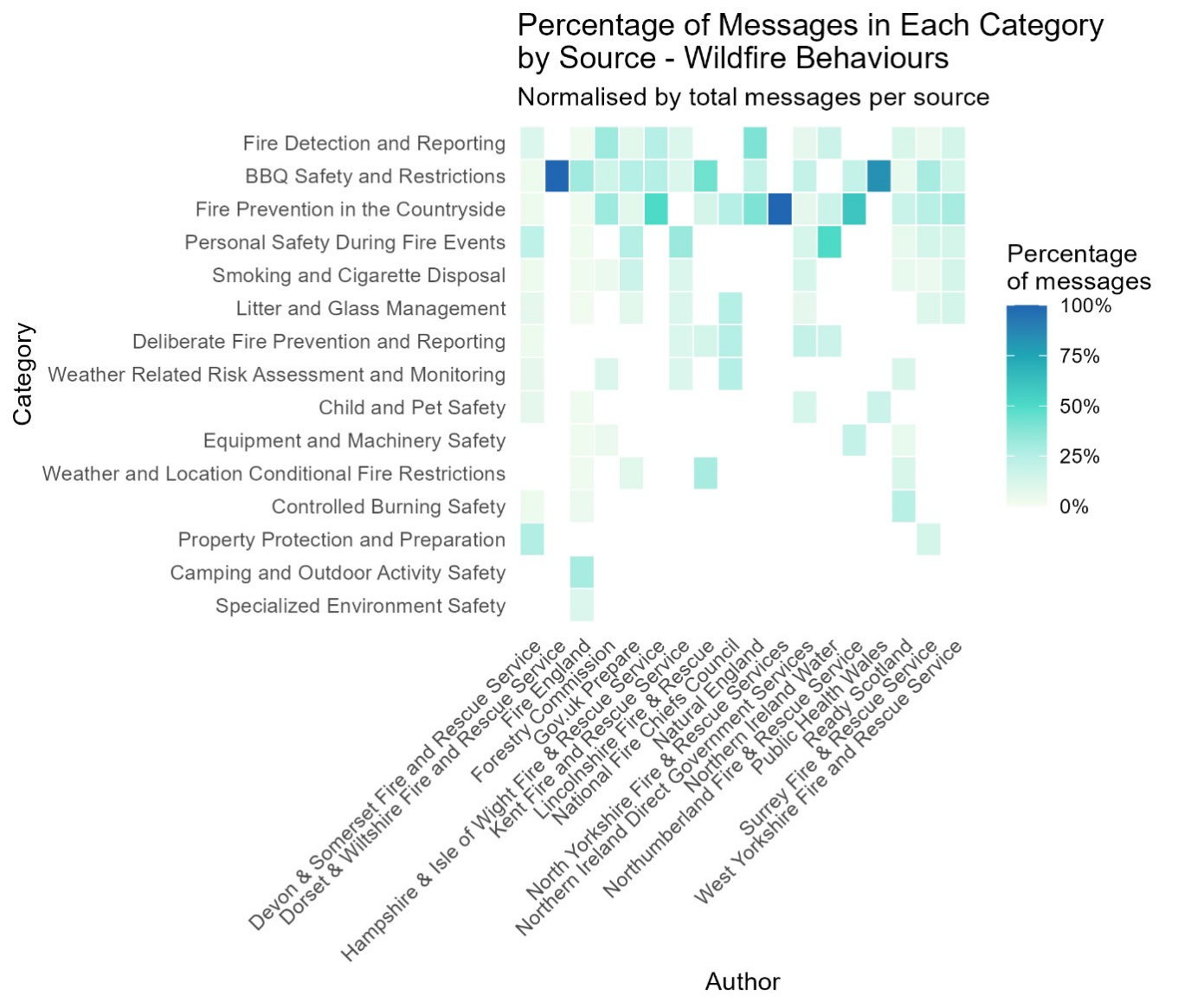
Figure A10: This heatmap shows the proportion of messages from each author (averaged over documents if multiple) that are related to each behavioural advice category, from no messages (white) to 100% of messages (dark blue).
Percentage of Messages in Each Category by Source – Wildfire Behaviours
Normalised by total messages per source and category
| Author | Devon & Somerset Fire and Rescue Service | Dorset & Wiltshire Fire and Rescue Service | Fire England | Forestry Commission | Gov.uk Prepare | Hampshire & Isle of Wight Fire & Rescue Service | Kent Fire and Rescue Service | Lincolnshire Fire & Rescue | National Fire Chiefs Council | Natural England | North Yorkshire Fire & Rescue Services | Northern Ireland Direct Government Services | Northern Ireland Water | Northumberland Fire & Rescue Service | Public Health Wales | Ready Scotland | Surrey Fire & Rescue Service | West Yorkshire Fire and Rescue Service | |
|---|---|---|---|---|---|---|---|---|---|---|---|---|---|---|---|---|---|---|---|
| Fire Detection and Reporting | 11% | NA | 3% | 32% | 8% | 25% | 11% | NA | NA | 4% | NA | 7% | 17% | NA | NA | 12% | 5% | 14% | |
| BBQ Safety and Restrictions | 4% | 100% | 31% | 16% | 25% | 25% | 11% | 43% | NA | 2% | NA | 2% | NA | 2% | 83% | 6% | 29% | 14% | |
| Fire Prevention in the Countryside | 4% | NA | 3% | 32% | 8% | 5% | NA | 14% | 25% | 40% | 100% | 7% | 17% | 60% | NA | 18% | 24% | 29% | |
| Personal Safety During Fire Events | 22% | NA | 3% | NA | 25% | NA | 33% | NA | NA | NA | NA | 13% | 50% | NA | NA | 6% | 14% | 14% | |
| Smoking and Cigarette Disposal | 4% | NA | 3% | 5% | 17% | NA | 11% | NA | NA | NA | NA | 13% | NA | NA | NA | 6% | 5% | 14% | |
| Litter and Glass Management | 7% | NA | 2% | NA | 8% | NA | 11% | NA | 25% | NA | NA | 7% | NA | NA | NA | NA | 1% | 14% | |
| Deliberate Fire Prevention and Reporting | 4% | NA | NA | NA | NA | NA | 11% | 14% | 25% | NA | NA | 2% | 17% | NA | NA | NA | NA | NA | |
| Weather Related Risk Assessment and Monitoring | 7% | NA | NA | 11% | NA | NA | 11% | NA | 25% | NA | NA | NA | NA | NA | NA | 12% | NA | NA | |
| Child and Pet Safety | 7% | NA | 3% | NA | NA | NA | NA | NA | NA | NA | NA | 13% | NA | NA | 17% | NA | NA | NA | |
| Equipment and Machinery Safety | NA | NA | 3% | 5% | NA | NA | NA | NA | NA | NA | NA | NA | NA | 2% | NA | 6% | NA | NA | |
| Weather and Location Conditional Fire Restrictions | NA | NA | 3% | NA | 8% | NA | NA | 29% | NA | NA | NA | NA | NA | NA | NA | 12% | NA | NA | |
| Controlled Burning Safety | 4% | NA | 5% | NA | NA | NA | NA | NA | NA | NA | NA | NA | NA | NA | NA | 24% | NA | NA | |
| Property Protection and Preparation | 26% | NA | NA | NA | NA | NA | NA | NA | NA | NA | NA | NA | NA | NA | NA | NA | 14% | NA | |
| Camping and Outdoor Activity Safety | NA | NA | 29% | NA | NA | NA | NA | NA | NA | NA | NA | NA | NA | NA | NA | NA | NA | NA | |
| Specialized Environment Safety | NA | NA | 11% | NA | NA | NA | NA | NA | NA | NA | NA | NA | NA | NA | NA | NA | NA | NA |
[Table A6]
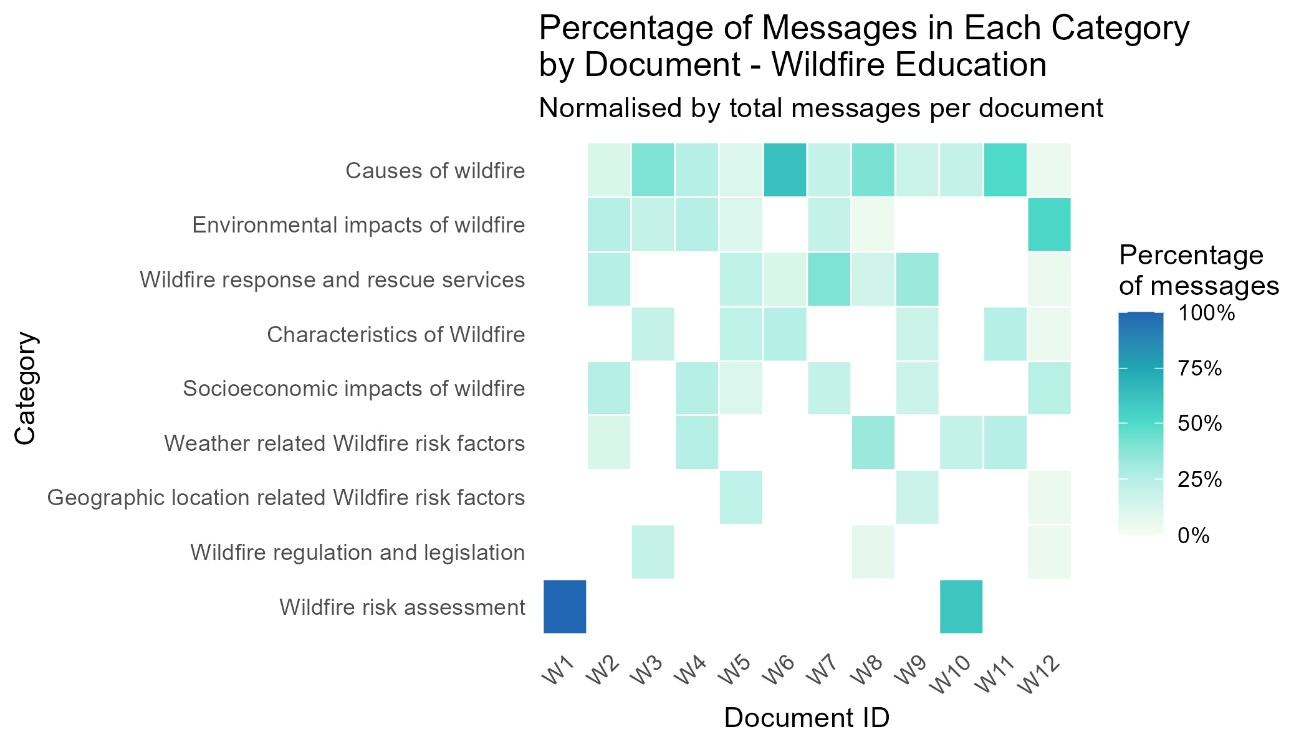
Figure A11: This heatmap shows the proportion of messages within each document that are related to each educational message category, from no messages (white) to 100% of messages (dark blue).
Percentage of Messages in Each Category by Document – Wildfire Education
Normalised by total messages per document and category
| Document ID | W1 | W2 | W3 | W4 | W5 | W6 | W7 | W8 | W9 | W10 | W11 | W12 | |
|---|---|---|---|---|---|---|---|---|---|---|---|---|---|
| Causes of wildfire | NA | 12% | 40% | 25% | 11% | 62% | 20% | 41% | 17% | 20% | 50% | 5% | |
| Environmental impacts of wildfire | NA | 25% | 20% | 25% | 11% | NA | 20% | 4% | NA | NA | NA | 52% | |
| Wildfire response and rescue services | NA | 25% | NA | NA | 22% | 12% | 40% | 15% | 33% | NA | NA | 5% | |
| Characteristics of Wildfire | NA | NA | 20% | NA | 22% | 25% | NA | NA | 17% | NA | 25% | 5% | |
| Socioeconomic impacts of wildfire | NA | 25% | NA | 25% | 11% | NA | 20% | NA | 17% | NA | NA | 24% | |
| Weather related Wildfire risk factors | NA | 12% | NA | 25% | NA | NA | NA | 33% | NA | 20% | 25% | NA | |
| Geographic location related Wildfire risk factors | NA | NA | NA | NA | 22% | NA | NA | NA | 17% | NA | NA | 5% | |
| Wildfire regulation and legislation | NA | NA | 20% | NA | NA | NA | NA | 7% | NA | NA | NA | 5% | |
| Wildfire risk assessment | 100% | NA | NA | NA | NA | NA | NA | NA | NA | 60% | NA | NA |
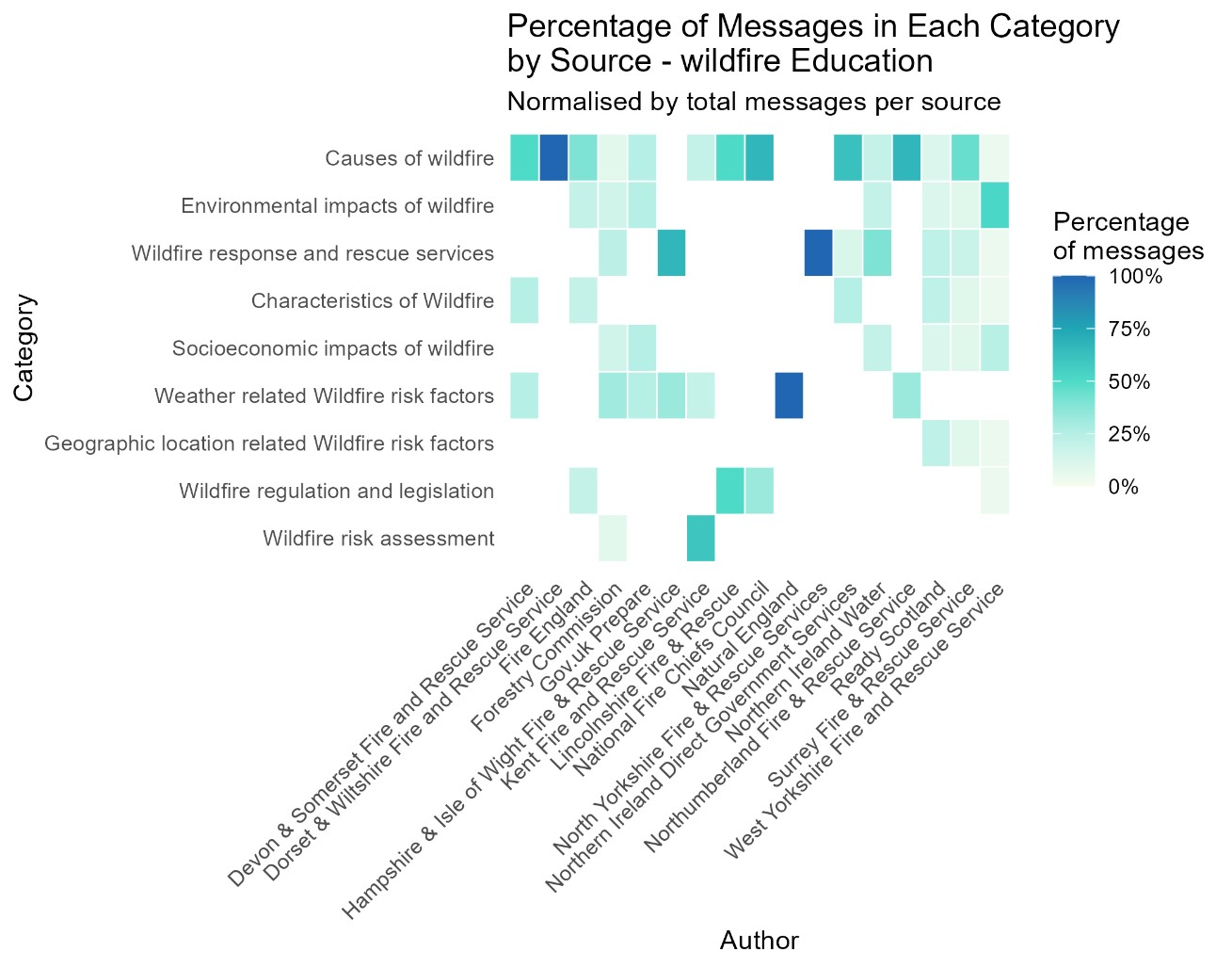
Figure A12: This heatmap shows the proportion of messages from each author (averaged over documents if multiple) that are related to each educational message category, from no messages (white) to 100% of messages (dark blue).
Percentage of Messages in Each Category by Source – Wildfire Education
Normalised by total messages per source and category
| Author | Devon & Somerset Fire and Rescue Service | Dorset & Wiltshire Fire and Rescue Service | Fire England | Forestry Commission | Gov.uk Prepare | Hampshire & Isle of Wight Fire & Rescue Service | Kent Fire and Rescue Service | Lincolnshire Fire & Rescue | National Fire Chiefs Council | Natural England | North Yorkshire Fire & Rescue Services | Northern Ireland Direct Government Services | Northern Ireland Water | Northumberland Fire & Rescue Service | Ready Scotland | Surrey Fire & Rescue Service | West Yorkshire Fire and Rescue Service | |
|---|---|---|---|---|---|---|---|---|---|---|---|---|---|---|---|---|---|---|
| Causes of wildfire | 50% | 100% | 40% | 8% | 25% | NA | 20% | 50% | 67% | NA | NA | 62% | 20% | 67% | 11% | 45% | 5% | |
| Environmental impacts of wildfire | NA | NA | 20% | 15% | 25% | NA | NA | NA | NA | NA | NA | NA | 20% | NA | 11% | 9% | 52% | |
| Wildfire response and rescue services | NA | NA | NA | 23% | NA | 67% | NA | NA | NA | NA | 100% | 12% | 40% | NA | 22% | 18% | 5% | |
| Characteristics of Wildfire | 25% | NA | 20% | NA | NA | NA | NA | NA | NA | NA | NA | 25% | NA | NA | 22% | 9% | 5% | |
| Socioeconomic impacts of wildfire | NA | NA | NA | 15% | 25% | NA | NA | NA | NA | NA | NA | NA | 20% | NA | 11% | 9% | 24% | |
| Weather related Wildfire risk factors | 25% | NA | NA | 31% | 25% | 33% | 20% | NA | NA | 100% | NA | NA | NA | 33% | NA | NA | NA | |
| Geographic location related Wildfire risk factors | NA | NA | NA | NA | NA | NA | NA | NA | NA | NA | NA | NA | NA | NA | 22% | 9% | 5% | |
| Wildfire regulation and legislation | NA | NA | 20% | NA | NA | NA | NA | 50% | 33% | NA | NA | NA | NA | NA | NA | NA | 5% | |
| Wildfire risk assessment | NA | NA | NA | 8% | NA | NA | 60% | NA | NA | NA | NA | NA | NA | NA | NA | NA | NA |