Value for Money: what have we learnt
Published 6 May 2026

© Crown copyright 2026
This publication is licensed under the terms of the Open Government Licence v3.0 except where otherwise stated. To view this licence, visit nationalarchives.gov.uk/doc/open-government-licence/version/3 or write to the Information Policy Team, The National Archives, Kew, London TW9 4DU, or email: psi@nationalarchives.gov.uk.
Where we have identified any third party copyright information you will need to obtain permission from the copyright holders concerned.
This publication is available at https://www.gov.uk/government/publications/newton-fund-impact-evaluation/value-for-money-what-have-we-learnt
Drivers of good value for money in research and innovation funds: What have we learnt?
Authors: Catrin Hepwoth, Zoe Sutherland, Panayiota Kastritis, Chris Barnett, Yasmine Bettine, Fred Carden.
This brief distils key lessons from the Newton Fund’s impact evaluation, offering insights into how strategic clarity, equity practices, and evidence-led adaptation can enhance value for money in complex research and innovation programmes.
It explores how rubric-based Value for Money (VfM) approaches enable nuanced assessments across diverse contexts and outlines practical steps that funders and researchers can take to embed value for money principles throughout the programme lifecycle, from design to long-term impact.
Newton Fund at a glance
The Newton Fund was an investment of around £652 million[footnote 1] made by the UK government, administered through the Department for Science, Innovation and Technology (formerly the Department for Business, Energy and Industrial Strategy), to support partnerships between UK institutions/researchers and 17 middle-income countries.[footnote 2]
Running from 2014-2021, the fund administered grants to 15 academies and research councils, academy partners and other research delivery partners. The Fund aimed to strengthen research through 3 core pillars:
- People (improving research capacity in researchers and their institutions)
- Research (understanding development challenges and exploring solutions)
- Knowledge Translation (translating research into useful products for policy and commercial use).
What is value for money?
In investments like the Newton Fund, VfM is about achieving the best possible research and innovation (R&I) outcomes and impact through optimal investment of resources.[footnote 3] Resources include not just funding, but human resources and political capital. Achieving VfM is not about sacrificing quality or results by minimising costs. Instead, it’s a careful analysis of the trade-offs involved, ensuring resources are used in the best way.
When done effectively, assessing VfM should therefore support:
- Evidence-based decision making to help promote greater impact
- Clear understanding and justification of the investment of public resources
How do you assess the value for money of research and innovation in a large, complex fund?
Assessing the VfM of R&I funds and programmes poses unique challenges, particularly at the scale of the Newton Fund.
-
R&I investments are complex and multifaceted, with processes, outcomes and impacts that are not readily quantified and may take many years to emerge. This particularly applies to ODA-funded R&I that aim to achieve development impacts both through the process of R&I and through delivering societal and economic benefits across a range of country contexts. Approaches such as Return on Investment (RoI) and Cost-Benefit Approaches (CBA) require all the costs and benefits to be predicted, estimated or known. These approaches can also struggle to incorporate intangible benefits, particularly equity and inclusion (as not all cost-effective decisions are the most equitable). Additionally, in ODA-funded R&I programmes, processes and ways of working can be as important as the outcomes achieved, which may not be sufficiently captured by ROI and CBA approaches.
-
For an R&I investment like the Newton Fund, a different approach was needed that captured value at Fund level and at award level, and we therefore combined value-centric and rubric-based[footnote 4] approaches to design the VfM module. Rubric-based approaches have informed DSIT’s VfM assessments of its ODA investments since 2019 and have been developed through subsequent evaluations of its major research funds.[footnote 5]
In the design stage, we developed an assessment tool, known as a rubric, that could be applied to a sample of awards within the Newton Fund to assess VfM.
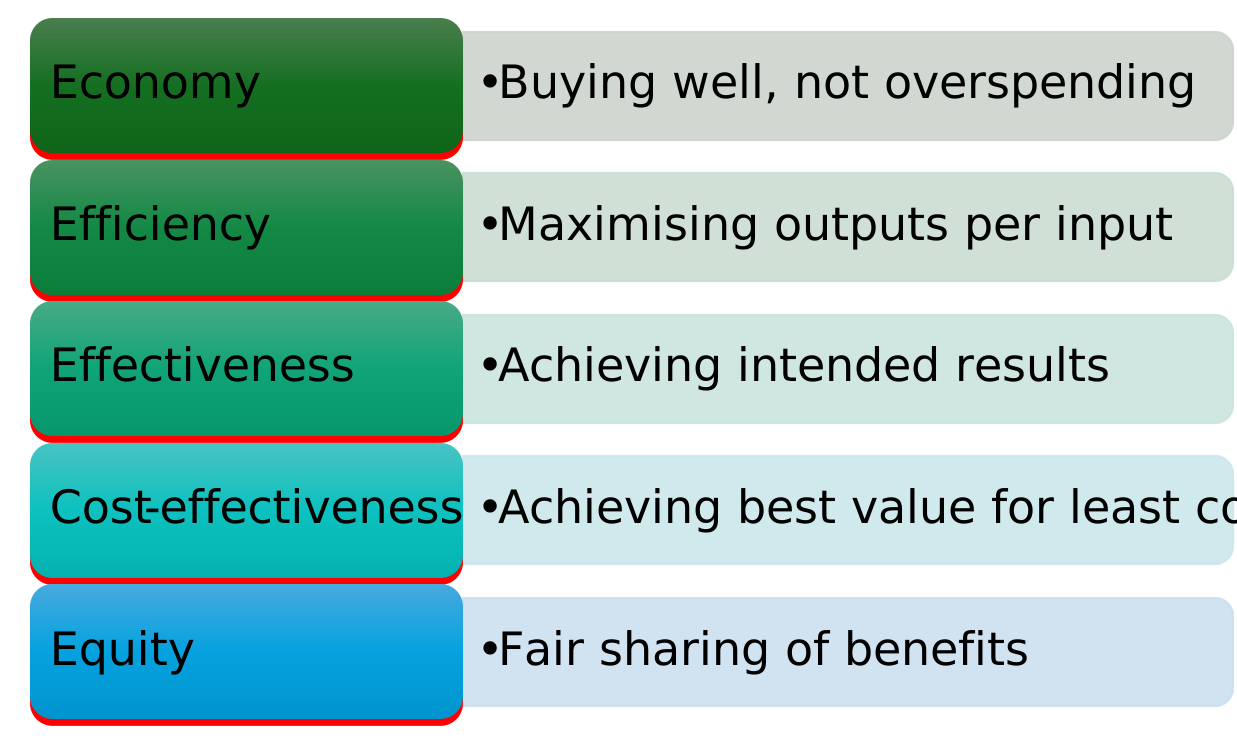
The assessment tool was organised around the 5Es (see Figure 1) and set detailed descriptions of what attainment of each of 4 performance standards would look like for each sub-dimension of the 5Es. There were 11 sub-dimensions in total. The performance standards were set at Poor/1, Adequate/2, Good/3, and Excellent/4 (with a fifth option available for ‘not applicable’). The descriptions were tailored to the Fund’s specific definitions and context (according to the Newton Fund’s objectives and Theory of Change) to improve the consistency and accuracy of application of the assessment tool. The tool provided a consistent way to apply an evaluative judgement by providing a clear description of what we’re judging with clear standards of quality of performance, which can be used to reach explicit conclusions about value from the evidence.
Figure 1: The 5Es
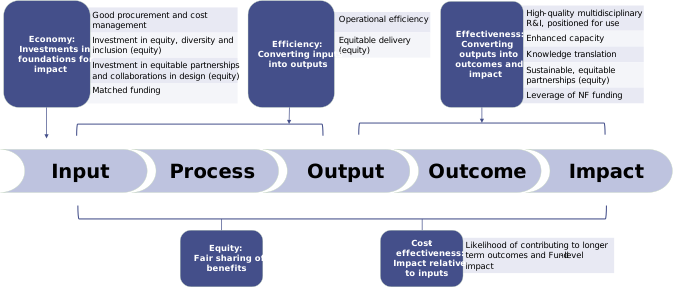
A summarised version of the 5Es, their associated sub-dimensions and how the 5Es map against a generalised results pathway is presented in Figure 2.
Figure 2. Summary of the 5Es, their associated sub-dimensions and how these map against a (generalised) results pathway
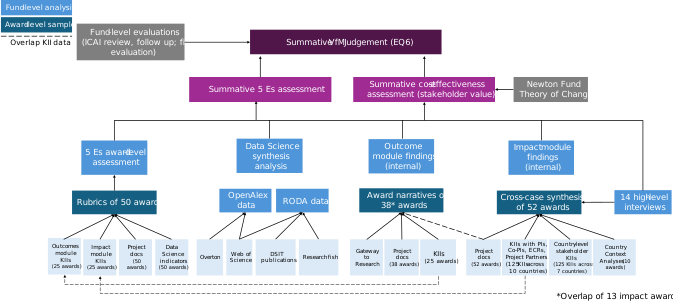
We used the rubric to assess the performance of 50 awards. Each award was given a numerical score based on its performance against each sub-dimension of the 5Es. We complemented this award-level analysis with a review of evidence emerging from the other modules within the evaluation and with interviews. We triangulated and synthesised across these sources to develop a comprehensive assessment of VfM across the Fund based on the 5Es. We also conducted a stakeholder value and cost-effectiveness assessment, which contributed to an overall judgement of the VfM of the Fund (see Figure 3).
The findings were used to inform reflections and recommendations on assessing VfM and on strengthening VfM in future R&I Fund design.
Figure 3 summarises the different sources at award and Fund level used in the VfM assessment and required due to the complexity of the fund and the data gaps that existed. The diagram includes all evidence gathered across the evaluation (impact-level aggregation, outcomes-level aggregation, data science module, high-level key informant interviews) that contributed to the overall VfM assessment.
Figure 3. VfM data inputs
What were the drivers of good value for money?
Analysing examples of good VfM within the Fund indicated key VfM drivers for this Fund. 3 clear elements emerged:
1. Clear strategic objectives: The Fund initially lacked coherent overall objectives. Once a clear value proposition[footnote 6] was developed and an effective Operational Framework[footnote 7] introduced, better, more targeted investments were made. Strategy, therefore, drove more economical, efficient use of inputs by strengthening alignment with ODA and improving strategic alignment with partner countries.
2. Strong equity, diversity and inclusion (EDI) practices: Equity considerations were not built into the Fund from the start. This meant that benefits were initially disproportionately accruing to UK stakeholders. The Fund introduced some measures to improve equity, diversity and inclusion, which in turn would ensure greater alignment with its key value proposition of contributing to economic and social good in middle-income countries (with a focus on achieving this through equitable partnerships - as an ODA fund). These measures led to some improvements in gender-sensitive grant design and monitoring; however, this was late in implementation of the Fund and results were inconsistent across the Fund.
3. Clear processes for collecting and reflecting on evidence: Improvements in the Fund’s VfM were informed by learning from 2019 ICAI review.[footnote 8] The response included a new operational framework, improved governance systems, and strengthened monitoring, evaluation, and learning processes. This enhanced coherence (reduced duplication, improved complementarity, better use of resources), accountability (for performance), and alignment with development goals (via strategic allocations), and ultimately delivered greater VfM.
How can funders and researchers maximise value for money?
Although the Newton Fund has now closed, evidence on what works for good VfM remains applicable to current and future R&I funds and programmes. Although it’s clear that best practice is to embed VfM principles from the start, the Newton Fund also shows that improving processes and structures to achieve better VfM is possible once a fund has begun.
These are the fundamentals for maximising value within a Fund:
-Funders should clearly articulate their value proposition from the start. Funders need to be clear on what they value and how they plan to achieve it, with value encapsulated in the programme’s strategy or Theory of Change. A clear VfM strategy should be in place, with all partners involved in its implementation, along with a schedule of periodic reviews. Those receiving the funds need not only to develop the plan but also to ensure the implementation and use of the data to periodically review VfM throughout a programme’s lifecycle.
-
Foster a culture of VfM literacy and shared responsibility. Research funders should build VfM capacity across delivery partners and research teams, plus encourage communities of practice and support a culture of continuous improvement. Open reflection and shared ownership of VfM principles help embed them into everyday decision-making, allowing changes to be made to support improvements in VfM. Research Funders should engage closely with stakeholders through consultations as a useful way to determine value, as value is subjective and can look different to different groups.
-
Make VfM data collection routine and actionable. VfM-aligned data should be mandated by research funders and systematically collected at all levels, from fund or programme to award, with clear metrics that appropriately capture different aspects of VfM from the start. This requires strong data quality, consistency, and record-keeping practices (particularly financial data) across delivery partners. This will ensure VfM insights are available and usable for decision-making.
-
Design structures that enable long-term value. There are structural enablers that are critical to achieving sustained outcomes and improving longer-term value for money. These include:
-
Design programmes that allow 4 to 10 year R&I awards to allow for more strategic planning, deeper partnerships, and the pursuit of more ambitious outcomes that require time to mature.
-
Embed VfM principles in workplans, terms of reference, and key decision points to ensure that VfM is actively considered and managed throughout the programme lifecycle.
-
Resource joint strategic planning among delivery partners appropriately to reduce duplication, align objectives, and improve coherence and collective value across the portfolio.
-
Establish mechanisms for transition funding, institutional support, or alumni engagement to help sustain momentum, retain talent, and ensure that promising work achieves its potential value, as many outcomes of R&I emerge after the end of formal funding cycles.
-
To maximise value (and VfM learning) across funds, it’s important to ensure that all value of a Fund is captured, assessed and understood:
- Set aside resources to track post-fund outcomes. Capturing impact means looking beyond the closure of a fund. Investing in post-award data collection, such as alumni tracking, follow-on funding, and translation outcomes, helps demonstrate the sustained impact and legacy of funded research and innovation. This should be planned from the design and early planning stage and include resources both for the Research Fund managers (e.g., to set up and manage alumni network), and for key recipients who can provide the data.
What value did the Newton Fund create?
Overall, the impact evaluation found that the Newton Fund represented good value for money. The average scores reached during the award-level assessment are set out below; ‘Equity’ is a cross-cutting dimension and so is embedded within the other Es. The following summaries explain both positives and limitations across the fund on each dimension of the VfM rubric. Whilst the overall scores were determined by the award-level analysis, the specific findings summarised here are across the fund (including the awards analysis) and have been highlighted to support learning from the fund.
| Dimension | Overall average score |
|---|---|
| Economy: Buying well, not overspending | 2.6 |
| Efficiency: Maximising outputs per input | 2.5 |
| Effectiveness: Achieving intended results | 2.8 |
| Cost-effectiveness: Best results for least cost | 2.6 |
Figure 4. Average assessment scores

Economy: Well-judged investments in training, infrastructure, and dissemination platforms maximised the strengths and multidisciplinary expertise of institutions. Where both country partners contributed funding, joint ownership strengthened the investment. However, assessing this was difficult because partner country funding contributions were not well documented, and project-level spend data was incomplete. This limited our ability to assess the extent to which costs were effectively managed.
Efficiency: Many awards delivered on outputs and milestones; however, delivery challenges affected the Fund’s efficient use of inputs. Where award teams applied flexible, adaptive management and had strong equitable partnerships, they managed inputs the most efficiently (compared with other awards within the Fund that did not apply these ways of working). Across the Fund, funding delays, procurement issues, and COVID-19 disrupted early outputs, decreasing efficiency. Administrative plans were often proposed but not consistently implemented. Coordination asymmetries between UK and partner institutions slowed progress.
Effectiveness: The Fund delivered a strong portfolio of R&I outputs and contributed to individual research careers and institutional capacity. Many projects aligned with national priorities and generated policy-relevant tools. However, the Fund was less effective in achieving its knowledge translation objective. Translation into policy or commercial use varied across the Fund, with greater success where these goals were planned for from the outset. Sustainable partnerships were also inconsistent across the Fund, those that were formed most effectively were often in countries with a well-developed R&I sector.
Equity: While the Fund progressed to embed (gender-only) EDI into its operations, there was a missed opportunity to embed Equity in the early stages, leading to uneven equity outcomes. There were some good examples of equity at investment level, such as some Partner Organisations pursuing diversity initiatives. Additionally, the Fund contributed to the increased representation of women and early career researchers. However, the lack of a clear EDI strategy and equity-focused objectives from design stage meant that there was inconsistent implementation of equity principles and poorly documented equity results.
Cost-effectiveness: Limited data shows the Fund delivered on its value proposition. Sparse financial data made cost-effectiveness difficult to assess as costs could not be analysed in detail. For instance, systematic evidence on procurement, pricing or cost comparisons was largely absent. Judgements relied on whether expected value was delivered within the overall allocated budget. Based on this approach, the Fund offered good value for researchers and institutions, with some instances of strategic investments creating potential for long-term impacts.
The Newton Fund has demonstrated good overall VfM. It delivered strong results against its objectives, particularly by producing high-quality, multi-disciplinary research positioned for use, and by significantly strengthening individual and institutional research capacity. Its knowledge translation and leverage of other funds was more varied across the Fund. Although VfM was not embedded into the early programme design, limiting VfM data availability, the Fund improved its VfM significantly over time with clearer strategic objectives and operational tools and systems, stronger equity, diversity and inclusion practices and more intentional partnerships emerging in later phases.
-
Between 2014 and 2024 ↩
-
Brazil, Chile, China, Colombia, Egypt, India, Indonesia, Jordan, Kenya, Malaysia, Mexico, Peru, Philippines, South Africa, Thailand, Turkey, and Vietnam. Kazakhstan was intended to be the 18th country in the Fund (and approximately £3 million was invested in early partnership development), but arrangements could not be finalised between the UK and the government of Kazakhstan. Not all Newton Fund partner countries remain ODA eligible today, as ODA classifications and policies evolve over time. Chile left the Fund when it achieved high-income country status. ↩
-
Based on the NAO and ICAI definitions, and developed with reference to ISF African VfM Toolkit. 2025 and King et al. 2018 ↩
-
For a more in-depth discussion on rubric-based approaches, see Peterson. 2023. Cost–Benefit Analysis (CBA) or the Highway? An Alternative Road to Investigating the Value for Money of International Development Research. The European Journal of Development Research (2023) 35:260–280 ↩
-
The overall VfM methodology builds on a general approach developed by King (2017, 2019) and published in Oxford Policy Management Ltd’s (OPM’s) guide to assessing VfM (King et al., 2018 and 2023). Key reference publications are: King, J. (2017) ‘Using Economic Methods Evaluatively’. American Journal of Evaluation 38(1): 101–13; King, J. (2019). Evaluation and Value for Money: Development of an approach using explicit evaluative reasoning. (Doctoral dissertation). Melbourne, Australia: University of Melbourne; King, J. and OPM (2018) OPM’s approach to assessing value for money: A guide. Oxford Policy Management Ltd; King, J., Wate, D., Namukasa, E., Hurrell, A., Hansford, F., Ward, P. and Faramarzifar, S. (2023) Assessing Value for Money: the Oxford Policy Management Approach: Second Edition: 2023. Oxford Policy Management Ltd. ↩
-
Please see ‘How can funders and researchers maximise value for money?’ for more on the ‘value proposition’ ↩
-
The Operational Framework improved the transparency of how BEIS outlined the primary and secondary objectives of the Fund ↩
-
ICAI is the Independent Commission on Aid Impact. Its 2019 review of the Newton Fund can be found here ↩