Modernising regulatory pathways for assisted reproductive technologies: a case study on in vitro gametogenesis (IVG)
Published 10 July 2026

© Crown copyright 2026
This publication is licensed under the terms of the Open Government Licence v3.0 except where otherwise stated. To view this licence, visit nationalarchives.gov.uk/doc/open-government-licence/version/3 or write to the Information Policy Team, The National Archives, Kew, London TW9 4DU, or email: psi@nationalarchives.gov.uk.
Where we have identified any third party copyright information you will need to obtain permission from the copyright holders concerned.
This publication is available at https://www.gov.uk/government/publications/modernising-regulatory-pathways-for-assisted-reproductive-technologies-a-case-study-on-ivg/modernising-regulatory-pathways-for-assisted-reproductive-technologies-a-case-study-on-in-vitro-gametogenesis-ivg
Forewords

Good regulation is not simply about speed. Its real test is whether it is ready before pressure for change becomes acute. Scientific progress rarely follows a neat timetable. It can advance slowly for years and then move suddenly, leaving little time for careful public debate or considered legislative design. In areas with profound ethical and social implications, that challenge is especially important.
The United Kingdom has a strong record in assisted reproduction. From the birth of the world’s first IVF baby in 1978, to the creation of a bespoke framework for fertility treatment and embryo research, and later the introduction of mitochondrial donation, we have shown that scientific ambition and public safeguards can go together. That remains one of our great strengths.
This is exactly the kind of challenge the Regulatory Horizons Council was created to address. Its role is not simply to comment on technologies once they are already at the door, but to help Government think ahead about how regulation should respond before decisions have to be taken under pressure. That means bringing together scientific evidence, ethical scrutiny, and questions of public legitimacy early enough to shape better choices.
This report examines in vitro gametogenesis (IVG), a potentially transformative assisted reproductive technology. In time, IVG could allow eggs and sperm to be generated from a person’s own cells. For patients who cannot produce viable gametes, for cancer survivors whose treatment has affected their fertility, and for others for whom biological parenthood is currently out of reach, the significance is obvious and important. IVG is not ready for clinical use and may not be for some time, but the question it raises are already live.
IVG does not fit comfortably within legal frameworks built around the scientific assumptions and treatment pathways of an earlier era. In those circumstances, the system can default to prohibition or ambiguity, not because the risks have been judged unacceptable, but because there is no clear route to assess them at all. The question the report puts to Government is whether the UK’s framework for assisted reproduction is capable of responding lawfully, credibly and with public legitimacy as IVG and related technologies develop. That requires more than incremental adjustment. It requires a framework that is clear about what is permitted today, capable of supporting careful evaluation as evidence develops, and flexible enough to adapt as science and public attitudes evolve.
This is also part of a wider national challenge. The Government has rightly placed emphasis on growth, innovation and the role of regulation in enabling both. That ambition appears in the 10 Year Health Plan and the Life Sciences Sector Plan. In practice, it means ensuring that regulation is not merely protective, but also sufficiently forward-looking to provide the clear regulatory pathways that businesses, investors and researchers need to have confidence in how new technologies will be assessed and governed.
We begin from a position of real strength. We have scientific excellence, trusted regulators, and a serious tradition of ethical scrutiny. On those foundations, responsible innovation need not mean waiting passively for others to move first. It can mean preparing earlier, so that when difficult decisions have to be taken, they are taken deliberately, with proper safeguards, and with public confidence intact.
This report does not argue for the adoption of IVG, and it does not ask Government to decide on whether IVG should proceed to clinical use. It sets out, seriously and in one place, the choices the UK will face as IVG and related technologies develop: how we assess it, how we govern it, and how we maintain the public confidence on which progress in assisted reproduction has always depended. The central question is not whether change will come. It is whether we are ready when it does.
The Rt Hon Lord Willetts FRS
Chair, Regulatory Innovation Office

The UK has long been a world leader in the regulation of fertility treatment and research involving human embryos. The Human Fertilisation and Embryology Act 1990 was the first law of its kind in the world. In the 35 years since, the HFE Act has enabled the introduction of several world firsts, including, most recently, the successful birth of eight babies free of serious inherited mitochondrial diseases following the use of mitochondrial donation. Such success shows that regulation need not inhibit innovation; well-designed regulatory rules can generate public trust and create the conditions that encourage the translational investment and scientific talent that innovation requires.
The HFE Act has stood the test of time remarkably well, but emerging technologies, like in vitro gametogenesis (IVG), are challenging the Act’s framework – its definitions and technical language – that was designed for a different scientific era. Without reform, the UK risks losing its competitive advantage. This will not just impact the country’s reputation as a leading place to conduct life sciences; patients could miss out on life changing new treatment too. That is why the HFEA published recommendations for law reform in November 2023. This report from the Regulatory Horizons Council is a significant step forward in thinking about how a regulatory system could be designed to meet the challenge of accommodating ever changing scientific research and clinical practice, within a clear legal framework.
I welcome, in particular, the RHC’s options approach and support the case for acting now, when we have the time and space to think through the policy issues. We need to be ready for the challenges that new technologies like IVG will present. Not because we should adopt them without question, but so we have the option to accommodate them on terms that society finds acceptable. Or as the report puts it, we need to adopt a stance of ‘regulatory readiness’, where our legislative framework ‘is ready to respond by design, if and when evidence and wider conditions justify evaluation’. The HFEA has always encouraged scientific innovation and is well placed to play our part in what could be a recasting of the UK’s fertility laws so that they continue to be world leading.
Peter Thompson
Chief Executive, Human Fertilisation & Embryology Authority

Research on in vitro-derived gametes (IVGs) could transform our understanding of human sperm and oocyte development, including the underlying causes of male and female infertility, and perhaps lead to simple ways to avoid or treat this. However, as this report by the RHC makes clear, if the direct use of IVGs to derive embryos can be shown to be sufficiently safe for potential clinical applications, this might lead to treatment for infertility where no or few normal gametes are available, such as for individuals rendered infertile by cancer therapies. However, contentious uses might also become possible, and so it follows that if IVGs are to be used to obtain embryos with the aim of having children, there needs to be careful review and oversight, backed by regulations that are clear and strong, but sufficiently flexible to allow for rapid changes in the science, potential uses, and societal views.
This report carefully considers the types of regulatory changes that might permit the clinical use of IVGs, discussing several options and their likely consequences for the UK research endeavour and clinical practice in this area. This includes a proposal that could markedly change the way regulation is carried out generally for emerging technologies, especially where there is a degree of controversy. A framework prepared in advance, incorporating staged routes for clinical evaluation, would provide a clear sense of the evidence and standards required before wider use could be considered by the relevant regulator, allowing promising work to proceed earlier and more responsibly, rather than being delayed by legal uncertainty or pushed elsewhere. I consider this to have substantial merit, the adoption of which would help the patients, researchers, the regulator (such as the HFEA), as well as UK competitiveness, and help to maintain UK leadership in regulatory practice.
Why is regulatory change becoming urgent? The term IVGs is can be applied to gametes derived in several ways, including: in vitro growth and maturation of immature oocytes from primordial follicles; isolation, culture and perhaps reintroduction of spermatogonial stem cells in the testis; and the use of pluripotent stem cells, such as patient-specific iPSCs, where many or all of these steps to obtain gametes are carried out in vitro. Substantial progress has been made with all of these in recent years, and this is accelerating. Taking the most dramatic of the technologies, it is now possible to generate functional IVGs from mouse iPSCs, perhaps also macaques, and this is getting close for human. Several companies have been established to exploit this technology. But other research areas might also benefit from changes in the way the UK carries out regulation, with heritable genome editing being an obvious example; although still far from being safe enough, the methods are becoming more precise and efficient. Indeed, related research activities and topics - such as human organoids, stem cell-based embryo models (SCBEMs) and the 14-day rule - would also benefit from a renewed focus on regulatory reform across the broader regenerative medicine sector. I hope this report leads to more debate over emerging technologies for assisted reproduction and how they should be governed.
Professor Robin Lovell-Badge CBE FMedSci FRS
Principal Group Leader, The Francis Crick Institute

Even if the Human Fertilisation and Embryology Act 1990 has stood the test of time remarkably well, there is now widespread agreement that it needs to be updated. This report sets out a clear blueprint for making the Act fit for the challenges that lie ahead over the next few decades. Science has a tendency to develop in unexpected ways, making statutory drafting especially challenging. Any mismatch between the statutory wording and a new technique can have unintended consequences, such as restricting access to what turns out to be a beneficial intervention, or permitting a concerning practice by default.
The best way to deal with the time lag between scientific progress and legislative reform is to empower an agile regulator to incorporate new developments into clinical practice, once there is sufficient evidence of safety and efficacy, and subject to clear guardrails and ‘red lines’. As it faces the challenges of 21st century fertility medicine, the UK is fortunate to have a trusted and experienced regulator, which – within the constraints of an ageing legislative framework – has been able to accommodate a range of new developments over the last 35 years, while always putting patient safety first, and taking public engagement seriously.
Under the current regulatory framework, reproductive technologies are either permitted (and, as a result, widely sold to patients), or banned altogether. It would be much more sensible for new techniques to undergo tightly controlled clinical evaluation, in order to establish an evidence base before their use becomes routine. I support the report’s proposal that the government should take the opportunity presented by reopening the Act to enable, for the first time, the staged introduction of new reproductive technologies, so that their safety and efficacy can be properly evaluated.
Demand for IVG when it is offered anywhere in the world is likely to be huge. It could fundamentally change reproductive options for individuals and families, reshaping how families are formed, who is able to have genetically-related children, and on what terms. It could also reduce some of the physical, emotional and financial burdens currently borne disproportionately by women, including the need to self-fund egg freezing to preserve fertility or undergo invasive treatment. Waiting until IVG is available elsewhere before contemplating legislative reform in the UK will potentially lead to thousands of British patients travelling overseas for treatment, as well as an exodus of scientists, and of investment in the fertility sector. The options discussed in this report build upon the Warnock Report’s recognition that effective and proportionate regulation is not only necessary to protect patients, but that it can also be a driver and enabler of scientific progress and innovation.
Professor Emily Jackson
Professor of Law, London School of Economics and Political Science

The UK has a strong tradition of combining scientific leadership in human reproduction with clear legal boundaries and trusted oversight, underpinned by the Human Fertilisation and Embryology Act 1990 (as amended) and the Human Fertilisation and Embryology Authority. Yet emerging technologies such as in vitro gametogenesis, alongside wider advances in stem cell-based research, are exposing the limits of the current legislative framework.
These developments do not simply add new techniques to an established system. They strain inherited legal definitions, create boundary cases between research and treatment, and reveal the constraints of a framework designed around earlier clinical assumptions. The challenge is therefore to respond to scientific change while preserving the safeguards, accountability and statutory clarity on which public trust depends.
This report offers options, but I believe it is most persuasive when describing why reform should not be left to reactive or repeated ad hoc amendment alone. The stronger course is to develop a framework that can accommodate innovation while preserving clear democratic oversight and avoiding unchecked regulatory discretion. That means Parliament setting the core permissions and “red-lines”, and the regulator operating transparently within that mandate to support staged, evidence-led evaluation. The report emphasises regulatory readiness, ensuring that the UK can respond deliberately and responsibly, rather than under pressure or too late.
Emerging ARTs such as IVG present difficult questions, but also an opportunity to renew the UK’s tradition of ethical seriousness, scientific ambition and accountable governance. The legislative models set out in this report are timely and constructive because they point towards a framework that is more adaptable without being less rigorous. In doing so, they offer a credible basis for regulation that is fit for the future.
Professor Emma Cave
Professor of Law, Durham Law School, Durham University
Executive Summary
The UK has a long track record of combining scientific leadership with trusted oversight in assisted reproduction. The birth of the first child conceived through in vitro fertilisation (IVF) in 1978 ultimately led to the creation of the Human Fertilisation and Embryology Authority (HFEA) in 1991. Over the last 35 years, the UK has shown that innovation in sensitive areas, where science often moves faster than social consensus, can be enabled through a regulatory system that places patient safety, consent, and public confidence at its core. That model has allowed assisted reproductive technologies (ARTs) to become a routine and trusted part of healthcare and family formation, supporting tens of thousands of new births every year.
Each year more than 50,000 patients undergo IVF treatment in the UK, leading to over 20,000 children being born and accounting for just over three percent of all UK births, equivalent to one child in every classroom. At the same time, clinical practice has expanded beyond treating infertility alone, with techniques such as preimplantation genetic testing (PGT) and mitochondrial donation reducing the risk of transmitting serious inherited diseases within a framework of clear safeguards and trusted oversight.
Patterns of fertility care and family formation are also changing. Demand for fertility treatment and embryo storage is rising, and use of egg freezing is increasing. At the same time, a larger share of care is now self-paid as the number of NHS-funded IVF cycles has declined, from around 40% in 2012 to around 27% in recent years, widening inequalities in access. The total fertility rate in England and Wales was 1.41 in 2024, the lowest on record and well below the replacement level of around 2.1 children per woman. Together, these trends are increasing public and policy attention on what future options should exist, for whom, and with what safeguards.
IVF has transformed fertility care, but it also illustrates why the next wave of innovation matters. IVF relies on the availability of viable eggs in the ovaries and sperm from testes. When people cannot produce healthy gametes, or when gamete quality is diminished, treatment options become limited. Success rates also vary substantially by age and other factors, and many patients experience repeated cycles that are physically and emotionally demanding, as well as expensive. The current toolkit therefore delivers major benefits, but it does not meet every need, and it remains dependent on biological constraints that in some cases cannot be overcome.
We are now on the cusp of another major shift. Advances in stem cell biology are creating the possibility of in vitro gametogenesis (IVG) – an emerging suite of technologies with the potential to generate functional gametes (eggs and sperm) in the laboratory from ordinary cells, such as those found in blood and skin.[footnote 1] Alongside IVG, wider scientific developments are expanding the range of ways gametes and embryos might be created, modified, or matured. These novel techniques could, over time, reshape what assisted reproduction can do, and for whom. They could also disrupt the assumptions that sit behind an ageing framework built around conventionally produced gametes and established clinical pathways.
IVG brings these issues into sharp focus and is a topic that must be framed with care. The use of IVG is neither lawful in the UK nor technically ready for clinical applications in humans today, and there is uncertainty about when it will become feasible. If it becomes feasible, there will need to be extensive assessment of its safety, including how it might be used in different clinical contexts. These potentially transformative technologies could expand the treatment options for some people who cannot produce viable gametes, due to medical intervention (for example, chemotherapy), age, or genetic conditions, and, perhaps in the future, for same-sex couples who wish to have genetically-related (biological) children. It may also offer alternatives to traditional IVF, which relies on hormonal stimulation of the ovaries that carries health risks. IVG could also reduce the reliance on gamete donation in many cases, which currently accounts for around 1 in 5 IVF and donor insemination births. This report treats all these potential impacts as plausible future possibilities, not present capabilities.
More broadly, IVG illustrates a wider class of disruptive assisted reproductive technologies that are beginning to place pressure on the way the current legal framework operates. These developments are creating situations in which new techniques do not fit clearly into existing legal definitions or approval routes. As a result, the regulatory question is no longer only whether a technology is safe and effective, but whether the system is even able to credibly evaluate it.
There are economic and strategic opportunities linked to these technologies. Assisted reproduction is a high-skill, innovation-led part of the life sciences, drawing on UK strengths in reproductive medicine, stem cell science, genomics, clinical research, and regulatory science. Globally, fertility treatment was valued at around $64 billion in 2024 and is projected to reach $123 billion by 2029. The UK fertility market is worth around £320 million and growing, but it operates within a legal framework designed for a different scientific era.
The UK’s strengths in this area depend on its credibility. The UK has a reputation for a permissive but scientifically and ethically robust approach to ARTs and the wider life sciences sector. This must be maintained throughout the UK’s future approach. There must be careful assessment of the use of novel ARTs in any update of the regulatory framework. In a sometimes controversial field, trusted safeguards are not a brake on growth and innovation. They create a solid foundation that encourages confidence in patients, clinicians, researchers, investors and the wider public.
This report sits within wider Government commitments on health and growth that treat regulation as a core lever for competitiveness and value. The 10-Year Health Plan aims for a system fit for the future, focused on disease prevention, new technologies, and empowered patients. The Life Sciences Sector Plan positions life sciences as a priority growth sector for the UK and explicitly links investment and competitiveness to faster, predictable, risk-proportionate regulatory routes that reduce unwarranted barriers to market entry. Alongside these wider priorities, the renewed Women’s Health Strategy for England places emphasis on improving women’s health and healthcare over the next 10 years, including by strengthening women’s voices, choices and power, and ensuring that research and healthcare innovation is governed in ways that reflect women’s needs, risks and evidence gaps.
The regulatory landscape is therefore changing. The direction of travel is towards enabling innovation while maintaining public protections. Delivering growth and societal value in high consequence fields requires more than reforming individual processes. It requires proactive regulatory readiness, with clear control mechanisms, so the system can respond swiftly, safely and legitimately when science progresses.
Against this backdrop, the central issue is whether the UK’s legal and regulatory framework is equipped for the next generation of ARTs. The framework is now over thirty-five years old and is not structured around a modern model of staged evidence generation for novel technologies. IVG is a clear example. Under current law, there is no lawful route to clinical use of IVG, because the Human Fertilisation and Embryology Act (HFE Act) defines those gametes permitted in treatment in a way that directly excludes IVG. More broadly, as new technologies emerge, the system can default to prohibition or ambiguity when methods do not fit existing statutory definitions or prescribed routes. That matters not only for what can be offered clinically, but for what clinical and safety evidence can be generated lawfully in the UK, and under what conditions. If the framework cannot accommodate staged evidence generation, the UK risks relying on evidence generated elsewhere and losing influence over how new technologies are evaluated and governed.
This report, therefore, makes the case for regulatory readiness. The UK should not be forced into rushed decisions by the pace of scientific development, media pressure, or the legislative timetable. That would unnecessarily risk poorly designed regulation. The objective should be a framework that is ready to respond by design, if and when evidence and wider conditions justify evaluation.
The Regulatory Horizons Council (RHC) provides Government with several options across 2 linked dimensions. One set of options concerns the UK’s posture on timing – whether to prepare in advance, to wait for scientific triggers, or to follow developments elsewhere. The other concerns the design of any future legislative framework, if Government decides to act. Each combination of options across these 2 dimensions carries different trade-offs in terms of risk, legitimacy, and the UK’s ability to shape outcomes.
The RHC’s view is that the best approach for the sector combines:
- A lead posture on timing: Begin work now to modernise primary legislation so that, if and when evidence and wider conditions justify it, a staged clinical evaluation for a new ART can be authorised without delay driven by legislative timing. This creates time to design safeguards deliberately and to build legitimacy through ethical scrutiny and early public engagement, rather than doing both under compressed timeframes.
- A technology-neutral legislative design, based on close clinical evaluation before wider roll-out: Modernise the HFE Act so it creates a route for novel ARTs, including IVG, to move into tightly controlled clinical evaluation only after Parliament has set the framework, limits, and safeguards. Within those limits, the HFEA would oversee evaluation through licensing and the Code of Practice, setting conditions, monitoring evidence, and acting quickly if concerns arise. If evaluation is successful, wider use could then be allowed within the boundaries already approved by Parliament. This would avoid reopening primary legislation each time science advances, while keeping clear Parliamentary oversight at the point a new technology moves towards clinical use
This approach shifts the focus from waiting for technological readiness before establishing a lawful pathway, to creating regulatory readiness to enable technological innovation. It does not assume that IVG, or any other novel ART, will become clinically feasible or socially acceptable. It creates a regulatory pathway in advance and a robust route to evidence generation if, and only if, conditions for evaluation are met and legitimacy is secured.
The question of timing matters because legislative change takes time. If the UK were to wait until preclinical data indicate IVG is ready for clinical use before introducing legislative changes to Parliament, it would likely be at least 1 to 2 years before clinical use is made legal in the UK. If the UK were to wait for clinical data from other countries, including evidence of healthy live births and longer-term follow-up, it would be at least 3 to 4 years between preclinical evidence indicating it is safe for clinical use and being permitted in the UK. Meanwhile, other countries would likely proceed with implementation. The point, however, is not to be first. It is to avoid a system in which the UK can only respond late, under pressure, and on the basis of other jurisdictions’ approaches to consent, follow-up, and acceptable risk.
Taken together, the proposal is to modernise how the UK governs innovation in assisted reproduction. It preserves trusted safeguards while ensuring the UK can evaluate novel techniques lawfully, if and when evidence and public legitimacy justify this. It aligns with the Government’s cross-cutting regulatory reform agenda by embedding risk-proportionate control mechanisms that enable innovation, growth, and societal value under clear safeguards.
It will be for Government to decide their preferred option, including whether to adopt a lead posture, whether to legislate on a technology-neutral basis, and how to balance readiness, legitimacy, and the role of regulator discretion within clear statutory limits.
1. Introduction
1.1 The UK fertility sector
The UK has a well-established tradition of combining scientific leadership with trusted oversight in assisted reproduction. The birth of the first child conceived through in vitro fertilisation (IVF) in 1978 helped establish the UK as a pioneer in this field. However, that first IVF birth took place before formal oversight was in place, and its impact helped spur later calls for clear governance and public accountability. Following the 1984 report of the Committee of Inquiry into Human Fertilisation and Embryology (the Warnock Committee report), and a White Paper in 1987, the UK established the Human Fertilisation and Embryology Authority (HFEA) as the bespoke regulator of the fertility sector. Since then, assisted reproductive technologies (ARTs) have become a routine part of healthcare and family formation. In 2023, 52,400 patients underwent 77,500 IVF cycles, resulting in 20,700 births, accounting for just over 3% of UK births, equivalent to one child in every classroom.[footnote 2]
The fertility sector is governed by a statutory framework centred on the Human Fertilisation and Embryology Act (HFE Act), which defines which forms of assisted reproduction are lawful in treatment, the conditions under which they may be used, and the boundaries within which clinics and researchers must operate. It embeds a regulatory approach that places patient safety, consent, and public confidence at its core, supported in practice by detailed standards set through the HFEA’s Code of Practice. This model has enabled the UK to support innovation in a sensitive area while maintaining high levels of public trust, by providing clear legal boundaries for the development and introduction of novel technologies.
The context in which this framework operates is now changing. Scientific advances are expanding the range of techniques that could be used to create or manipulate gametes and embryos, including reducing the risk of transmitting serious inherited diseases. Patterns of demand for fertility treatment are also shifting. HFEA data show growing use of treatment and storage of embryos, rising demand for egg freezing, and a continuing shift towards self-funded care, reflecting a sustained decline in NHS-funded IVF over the past decade.
At the same time, the legislative framework governing the sector is now more than 35 years old and was designed for a scientific landscape that could not have anticipated the range of new ARTs that is emerging. As a result, new approaches may not fit clearly within existing legal definitions or approval routes. This creates a structural tension. The framework continues to provide strong oversight for established practices but may be less equipped to accommodate the staged evaluation of novel ARTs. If the framework cannot support lawful routes to generate clinical and safety evidence, the UK risks relying primarily on evidence produced in other jurisdictions and having fewer options for shaping how those techniques are evaluated and governed.[footnote 3]
1.2 Social value and patient impact
The fertility context is changing. The total fertility rate in England and Wales was 1.41 children born per woman of childbearing age in 2024, down from 1.84 in 1990, and has remained at historically low levels in recent years.[footnote 4], [footnote 5] This reflects a longer-term trend seen across many developed countries, where fertility rates have declined over time.
Assisted reproduction already supports many families, but access, affordability, and clinical suitability vary across groups. The current clinical toolkit does not meet everyone’s needs. Some people cannot produce viable gametes due to childhood cancer treatment, genetic conditions, or other causes of infertility. Others face age-related infertility and repeated invasive treatment cycles that are physically and emotionally demanding.
Some families also lack routes to having genetically-related children using existing technologies. The use of donated gametes has enabled many families to form, but this can also raise complex social and relational questions for some individuals and families, particularly around disclosure, identity, and biological relatedness when donor conception is discovered later in life through, for example, genetic ancestry testing.[footnote 6] Taken together, these realities shape public expectations and raise questions about what future treatment options should be, and under what safeguards.
Where existing treatment options are limited or uncertain, patients may turn to alternative strategies, including fertility preservation or seeking treatment overseas. One response to age-related fertility decline in women has been the growing use of egg freezing. This typically involves hormonal stimulation and egg retrieval in younger women and is frequently self-funded, often at significant personal cost. Available evidence suggests that only a minority of those who freeze eggs later return to use them, meaning that the physical, emotional, and financial burdens are borne upfront by individuals.[footnote 7]
Assisted reproduction undertaken overseas, sometimes described as reproductive tourism, can also have implications for the UK health system. IVF carried out in jurisdictions with different regulatory standards is associated with higher rates of multiple pregnancy and increased maternal and neonatal care needs on return to the UK. One UK study found that the average cost of NHS care per baby referred to a London fetal medicine unit was £7,826 for babies conceived in the UK, compared with £20,599 for babies conceived through IVF overseas, reflecting greater clinical complexity in these latter cases.[footnote 8]
In vitro gametogenesis (IVG) is an emerging suite of technologies for generating sperm and eggs from cells in the laboratory. It could provide options for those who cannot use conventional IVF to have genetically-related children. This alone would make it an attractive option for many. It might even offer a less invasive and risky method for producing eggs than ovarian stimulation and egg retrieval in conventional IVF. It could reduce reliance on donor gametes and make egg donation and egg freezing unnecessary, with major implications for the sector. Indeed, if it were to become available as a treatment overseas before it is available in the UK, this might lead to increased foreign travel for fertility treatment services.
IVG’s potential to contribute to the ART sector should be framed with care. It is still in the preclinical research phase, where it is contributing to our understanding of gamete development, causes of infertility and stem cell biology more widely. It is not technically ready for clinical use in humans today, and a great deal of uncertainty exists over when (or if) it may be feasible.[footnote 9] Moreover, broad public engagement and debate would be needed to explore the ethical and social issues it raises, as a condition of legitimate use (see Appendix 2 for a brief discussion of these ethical issues). This report treats all these potential impacts as plausible future possibilities, not present capabilities.
1.3 Economic value and strategic advantage
Assisted reproduction is a high-skill, innovation-led part of the life sciences economy. It draws on UK strengths in reproductive medicine, stem cell science, genomics, clinical research, and regulatory science. The UK’s comparative advantage has historically been its combination of scientific capability and credible governance. Any economic value is contingent on maintaining that credibility, and should not override patient safety, ethics, or public confidence.
In ethically contested areas such as assisted reproduction, safety and ethical assurance provide the basis for public confidence. That confidence, in turn, supports innovation by enabling sustained research activity and long-term investment, and helps create the stable conditions under which new technologies can translate into social and economic value. The HFEA has argued that trusted oversight can support legitimate innovation by reducing uncertainty and reputational risk for patients, clinicians, researchers and investors.[footnote 10]
Fertility treatment is now a global industry valued at around $64 billion in 2024 and projected to reach $123 billion by 2029, with annual growth of 13.4%.[footnote 11] Meanwhile, the UK fertility market is worth £320 million, growing around 3 – 4.5% annually.[footnote 12] The UK, however, is still operating within the constraints of a 1990s legal framework that prevents next-generation ARTs from being developed or deployed in response to preclinical evidence of safety and effectiveness.
For emerging technologies with long development timelines, the UK’s ability to attract research activity and investment depends in part on whether there is a credible and lawful route for evidence generation, including how the system would handle early clinical evaluation where permitted. This report does not assume that IVG will become feasible and be adopted by the UK as an ART. Instead, it sets out how regulatory design choices can strengthen the conditions for responsible research and, if justified in future, controlled clinical translation.
1.4 Government commitments and ‘why now?’
This report aligns with wider Government ambitions for health and growth, where innovation is treated as a means to improve outcomes and productivity, not an end in itself. Both the 10-Year Health Plan and the Life Sciences Sector Plan depend on a regulatory system that enables innovation rather than one that unnecessarily constrains it.[footnote 13], [footnote 14]
The Health Plan commits to a system “fit for the future,” driven by new technologies and empowered patients, with major shifts from sickness to prevention and from analogue to digital. This reflects expectations that the system should be future-facing and ready to adopt new tools safely.
The Life Sciences Sector Plan positions life sciences as a priority growth sector and aims for the UK to be Europe’s leading life sciences economy by 2030 and third globally by 2035. It explicitly identifies regulation as a core lever for investment and competitiveness. Action 25 reinforces this ambition: the UK must “reduce unwarranted barriers to market entry” through faster, risk-proportionate and predictable approvals, ensuring the UK remains an attractive place to research, test and scale innovation.
Additionally, the renewed Women’s Health Strategy for England sets out a 10-year ambition to improve women’s health and healthcare, by strengthening women’s voices, choices and power, improving the evidence base and ensuring that healthcare innovation is governed with proper attention to women’s needs and risks.[footnote 15]
Regulation of assisted reproduction has the Human Fertilisation and Embryology Act (HFE Act) at its heart. It has delivered public confidence through establishing clear boundaries, but parts of the Act were designed for a different scientific era and are not structured around a modern model of staged evidence generation for novel technologies. Amendments over time show that Parliament can update the framework when needed, but this has tended to focus on specific technologies. Notable examples include the Human Fertilisation and Embryology Act 2008, which updated parts of the framework to reflect scientific and social change, and later regulations that enabled mitochondrial donation using prescribed methods for prescribed purposes (see Appendix 1).
Addressing the ‘why now?’ question is not simply a matter of pointing to the age of the Act. Stem cell-based technologies and related research tools are opening up new possibilities in regenerative medicine, yet the cells and tissues they generate do not fit easily within a framework designed around conventional IVF and a small number of tightly specified routes. The closer these technologies move towards clinical relevance, the higher the risk that the UK faces a choice between rushed legislative change, or no lawful evaluation route at all. This rush may happen as an attempt to keep up with international developments, or as a negative reaction to a premature or controversial use of the technology elsewhere.
The central question is whether the UK wants a framework that is primed to enable safe, staged clinical evaluation of novel ARTs, if and when evidence and public legitimacy justify it, without embedding assumptions that any specific technology will proceed to clinical use.
Timing also matters because legislative change takes time. Ethical scrutiny and public engagement take time. Building robust evidence takes time. Acting too early, without safeguards and public legitimacy, risks undermining trust. Acting too late risks leaving the UK without a clear route to generating evidence domestically or to shaping emerging international norms. The focus of this report is therefore regulatory readiness, not technological inevitability, and ensuring the UK can respond deliberately rather than under pressure when evidence matures.
The government will ultimately decide whether the UK should lead or wait and follow, and what the design of any legislative reform may include, combining when to act and what to change as part of a coherent approach. The purpose of this report is to set out some of the choices clearly, identify actions that can be initiated now, and propose a pathway that keeps safety, ethical acceptability, and public confidence at its centre.
2. IVG and the technology landscape
2.1 What IVG is and what it could enable
IVG refers to a suite of emerging technologies that aim to generate eggs and sperm (gametes) in the laboratory using cells found, for example, in blood or skin and most often by first converting these to pluripotent stem cells.[footnote 16] IVG has the potential to revolutionise assisted reproduction by providing new options for individuals who cannot produce viable gametes using current clinical approaches and who are unable to benefit from existing treatment options like IVF.
Briefly, one common scenario is for adult somatic cells (e.g. blood- or skin-derived cells) to be reprogrammed into pluripotent stem cells. These stem cells have the capacity to become any cell type in the body.[footnote 17] Pluripotent stem cells are then directed to become primordial germ cell-like cells (PGCLCs), mimicking the earliest stages of gamete development in an embryo.[footnote 18], [footnote 19] PGCLCs are further differentiated by culturing them with specialised supporting somatic cells (such as those found in the ovary or testis), and possibly in the context of a ‘lab grown’ gonad entirely derived from pluripotent stem cells, to promote further maturation into eggs or sperm.[footnote 20]
IVG is in the preclinical stages of research and development, and this research is likely to be enormously useful in understanding the causes of infertility and developing novel stem cell therapies.[footnote 21] Full development of viable gametes using IVG has been shown to be possible in mice, where IVG-derived gametes have produced overtly healthy offspring, albeit with very low efficiency. Many experts consider that IVG could become suitable for clinical use in humans within 5-10 years, although this remains uncertain.
Formidable technical challenges still exist. Even if technical feasibility is reached, assessment of safety for both patients undergoing treatment and the children born would require extensive research and testing in a preclinical setting before clinical use is even contemplated. Moreover, reproductive use in humans would still depend on ethical acceptability, public confidence, and a clear clinical justification. Even then, IVG could not be used clinically unless legislative changes created a lawful route (further discussed in Section 3).
Scientific advances can be non-linear, and how this technology will evolve remains unclear, so preparedness is advisable. Feasibility does not imply that use is justified. Any move towards reproductive application would require both robust evidence and a judgement that use is justified, acceptable, and appropriately governed.
2.2 The broader regenerative medicine context: how IVG relates to other novel assisted reproductive technologies an related research tools
IVG is one example of a possible future ART, albeit one that will potentially have a transformative impact on research and fertility treatments. It also forms part of a wide range of developing stem-cell-based technologies, including embryo models and organoids, which are reshaping reproductive and developmental biology and contributing to regenerative medicine.
2.2.1 In vitro fertilisation (IVF)
IVF is the process by which mature gametes (sperm and eggs) are retrieved from the gonads (testes and ovaries) and combined to allow fertilisation in vitro, outside the body in a laboratory setting, before any resulting embryo is transferred to the uterus of the intended mother. IVF is in regular clinical use and in 2023 was used by over 52,000 prospective parents in the UK, resulting in 20,700 births, accounting for just over 3% of all UK births that year. IVF is, however, invasive for the person undergoing egg collection: it involves hormonal stimulation for several weeks ahead of time, which involves risks, and then egg (oocyte) collection under conscious sedation. The number of embryos that can be created through IVF is limited by the number of viable eggs extracted in each cycle, typically around 10-12, but sometimes fewer and of variable quality.
IVG would be a dramatic evolution of this technology. It would reduce reliance on gamete donation for those committed to biological relatedness. It might also be far less invasive for women by reducing reliance on ovarian stimulation and egg retrieval in some use cases and may enable more embryos to be created due to the availability of larger numbers of eggs. Higher embryo numbers, however, would also raise important questions about clinical practice, decision making, storage, and ethical governance. The potential for increased numbers of embryos has implications for IVF success rates, and for allied technologies that require IVF, such as embryo selection following preimplantation genetic testing (PGT) to prevent disease transmission.
2.2.2 In vitro growth and maturation of gametes
Related assisted reproductive technologies that are emerging may allow the maturation of immature gametes to be completed in the lab setting. Hormonal stimulation of the ovary sometimes results in eggs being collected that are not completely mature and therefore not ready for use in IVF. Protocols are already available for completing their maturation in the lab, a process known as in vitro maturation.
New experimental methods are also being developed that may allow highly immature eggs, such as those found in prepubertal gonads, to be developed to maturity in the lab through a process known as in vitro growth and maturation.[footnote 22] This approach could be used, for example, for fertility preservation in pre-pubertal girls who cannot supply mature eggs before cancer treatment (that will likely render them infertile), but from whom ovarian biopsies can be stored for future use. In the case of some blood-borne cancers, transplantation of cryopreserved tissue back to the gonad is too risky, so in vitro growth and maturation is proposed as a way of isolating immature egg cells from stored tissue and growing them towards maturity in the lab, in preparation for IVF, when the tissue donor is an adult.
So far, this approach has only been performed successfully in sheep, yielding live offspring. Some protocols may require prolonged culture (2-3 months), which introduces additional safety, quality, and governance challenges. Related approaches might be used in future to allow generation of sperm from cryopreserved immature testicular tissue that contains spermatogonial stem cells (SSCs) from which sperm are derived following puberty. Such tissue, isolated from prepubertal boys about to undergo cancer treatment, can be stored for years and one option is for SSCs to be retrieved from the biopsy and either reintroduced into the testis of the adult patient to complete their maturation in vivo or used to generate functional sperm in vitro.[footnote 23]
The potential for refinement of fertility preservation methodologies, which are an ongoing focus of research in the UK, also has major implications for the feasibility of IVG in future, since it is likely that IVG will employ very similar methodologies in its later stages. The legal status of different versions of fertility preservation, including the clinical use of sperm or eggs derived from the most immature gametes, will require clarification as techniques develop.
2.2.3 Preimplantation genetic testing (PGT) and genome editing
PGT is an established assisted reproductive technology used to screen embryos for specific genetic or chromosomal conditions prior to transfer. It is routinely used to reduce the risk of transmitting serious heritable disease and is regulated under the HFE Act. The effectiveness of PGT is constrained by the number of embryos that can be created in a given cycle, which in turn is limited by the number of eggs that can be safely retrieved from the patient. IVG could, in future, enhance the effectiveness of embryo selection following PGT by enabling the creation of a larger number of embryos for screening.
Heritable human genome editing, an early stage and controversial technology, could also be enabled through the use of IVG. Genome editing has been used to edit the genome of human embryos in a research context, with notable contributions from UK researchers. It has also been proposed as a way of preventing disease transmission from parents to offspring when combined with embryo genetic testing.[footnote 24] Direct editing, however, of the embryonic genome presents risks in terms of the accuracy of the editing methodology. IVG could enable editing to take place in precursor stem cells, with those cells tested to ensure only the desired edit is present, prior to gamete generation, an approach that would likely be safer and more effective than directly editing the genome of a gamete or embryo.
Genome editing of human embryos is permitted for research purposes in the UK, and this research is regulated by the HFEA. Embryos with edited genomes, however, regardless of how they are generated, cannot be used for clinical treatment purposes (i.e. heritable uses). In addition to technical challenges, heritable human genome editing raises a host of ethical and social questions concerning its use in principle and which applications might be justified.[footnote 25] Nevertheless, it is an example of a technology that, if permitted, would fall within the remit of the HFE Act and would raise similar questions about regulatory readiness and oversight.
2.2.4 Stem-cell-based embryo models (SCBEMs)
SCBEMs are a highly diverse array of cellular structures that are generated by exploiting the self-organising properties of cells during culture. Human SCBEMs, derived from pluripotent stem cells, are used to model a range of features of embryonic development, including events that occur during gastrulation that cannot be investigated in human embryos due to the current 14-day statutory limit on culture. They represent a toolkit that is being used to study the fundamental basis of human and animal development. Such research could lead, for example, to a better understanding of infertility and miscarriage.
It is widely acknowledged that human SCBEMs are not embryos, despite similarities, and they should not be used to initiate a pregnancy. Notwithstanding safety concerns, such use, if successful, would amount to reproductive cloning of the donor that supplied the cells and this has been historically prohibited by law. The use of human SCBEMs in research is lawful, but there have been calls for a greater degree of oversight of research activities, and a non-statutory Code of Practice has been developed.[footnote 26] The Nuffield Council on Bioethics has argued that amendments to the HFE Act would be beneficial in creating clarity on the legal status of SCBEMs and to explicitly prohibit transfer of a SCBEM to a human uterus.[footnote 27] In addition to preventing inappropriate use of SCBEMs for assisted reproductive purposes, greater clarity would also encourage further research and investment in this area.
2.2.5 The 14-day rule
The statutory 14-day limit on human embryo research, or 14-day rule as it is commonly known, has come under increasing pressure in recent years. The rule states that human embryos must not be cultured in the laboratory beyond 14 days after fertilisation or beyond the appearance of the primitive streak, whichever comes first. The embryo must be destroyed after this point. The rule has been in place since its recommendation by the Warnock Committee in 1984 and it is widely adhered to around the world.
Advances in culturing techniques now make it feasible to culture human embryos beyond 14 days, and many scientists have argued that the knowledge that could be produced by examining later stages of development will lead to benefits that outweigh any risks of extending the culture limit.[footnote 28] Options are being discussed internationally, including possible extension to a later limit in some jurisdictions, but any change would require careful ethical scrutiny and continued public engagement on this topic in the UK.[footnote 29]
The HFEA has itself recommended an extension to the time limit. In November 2024, the HFEA stated that “The Authority agreed with a clear majority that there is now a case for recommending that the law is changed to extend the time limit on embryo research. The Authority agreed that 28 days would be an appropriate new fixed upper limit.”[footnote 30] A working group of the Nuffield Council on Bioethics is currently considering the ethical and policy issues raised by a possible change to the rule, demonstrating the UK’s commitment to exploring responsible innovation in this space.[footnote 31] Any opening of the Act to address the regulation of novel ARTs would, of course, represent an opportunity to clarify the status of SCBEMs and amend the 14-day rule.
2.2.6 Implications for regulation of emerging assisted reproductive technologies
The structure of the HFE Act is limited by what was conceivable when it was developed in the late 1980s. The HFE Act specifies in detail what it permits, and this creates gaps and default prohibitions for new approaches not envisaged at the time, including many emerging and likely future ARTs. Even if a new technique is considered safe and effective, it may fall foul of these automatic prohibitions based on statutory definitions or details of prescribed methodologies.
In 2008, the HFE Act was amended to create a regulation-making power to allow Mitochondrial Donation, leading eventually to the Human Fertilisation and Embryology Mitochondrial Donation Regulations 2015 (SI 2015/572). This was a positive advancement, but maintained this technology-specific approach, tying it to the scientific understanding of the time. This statutory instrument (SI) governs the use of mitochondrial donation and prescribes only two methods, maternal spindle transfer and pronuclear transfer (see Appendix 1). Other promising approaches, such as polar body transfer, and emerging methods to eliminate pathogenic mitochondrial DNA, are not prescribed and even if evidence of safety and effectiveness were to accumulate in other jurisdictions, they would continue to be prohibited unless Parliament permitted further amendments to the Act.
2.3 Scientific readiness and safety assessments
IVG is still at a preclinical stage. Research using mice shows what is possible in principle, but it does not yet show that IVG can be performed safely and reliably in humans. Extrapolation from mice to humans is risky, because human germ cell development and early embryogenesis differ in important ways.
Some of the main scientific hurdles and safety assessments required are outlined below. Like other ARTs, IVG would be a treatment leading to the creation of new individuals. The tolerance for uncertainty is therefore low.
2.3.1 Replicating human germ cell development in vitro
- Human gametogenesis is a long, complex, tightly controlled process in vivo. IVG must reproduce many sequential steps outside the body, ensuring genetic and epigenetic integrity, often over weeks or months of culture.
- Gamete development depends on a supportive gonadal environment. IVG methods rely on co-culture with specialised supporting cells, but the human ovarian and testicular microenvironments are hard to model faithfully with current methodologies. Current progress with human IVG has often relied on non-human supporting somatic cells, which limits what can be concluded about human feasibility and safety. Methods to address this are being developed, including the generation of functioning gonadal tissue from pluripotent stem cells in vitro.
A core challenge is initiating and completing meiosis. This is the specialised cell division that halves the chromosome number in germ cells and reshuffles (recombines) genetic material. Errors here can create abnormal chromosome numbers (aneuploidy) and other abnormalities. In humans, the key gap remains supporting germ cells through meiosis with faithful recombination and progression to functional gametes.
2.3.2 Genetic integrity
- Adult somatic cells have already accumulated mutations over a lifetime. Mutations that are harmless in a tissue could be harmful if present in an embryo.
- Prolonged cell culture can add additional mutations or select for cells with growth advantages, which may not align with reproductive safety. Safety may require choosing cell sources with a lower mutational burden (such as quiescent stem cells or early life tissues, e.g. cells from umbilical cord blood, instead of skin cells) and tighter controls during extended culture.
- Any credible pathway will need robust strategies for cell selection, screening, and quality control of both starting cells and final gametes.
2.3.3 Epigenetic integrity and genomic imprinting
- Germ cell development involves major remodelling of the epigenome.[footnote 32] IVG must recreate this remodelling accurately, including correct establishment of genomic imprints.
- Culture conditions can drive epigenetic changes. Some may be subtle and not detectable with routine checks, yet may still matter for development and long-term health. This is particularly important because imprinting errors may not be apparent at fertilisation or early development but may affect later health outcomes.
2.3.4 Functional competence and embryo quality
- The practical ‘gold standard’ test of a gamete’s viability is whether it can support fertilisation and normal embryo development. For IVG, this means creating IVG embryos, using either one IVG and a conventional gamete or two IVGs, and comparing them to embryos created via IVF with conventional gametes. Such comparisons would explore molecular and cellular properties of the embryos.
- There is not yet an agreed ‘checklist’ for which ‘tests’ must be passed before a new assisted reproductive method is considered suitable for any move towards clinical use. A key question is what minimum evidence would be considered necessary, recognising that consensus may evolve over time.
- The 14-day rule limits how far embryo development can be assessed in human research, which constrains what can be known before any clinical proposal is even considered.
2.3.5 Reproducibility, standardisation, and scale
- Even if a protocol works in a specialist laboratory, clinical translation requires repeatability across batches, sites, and operators. It also requires clear release criteria and traceability.
- Where private sector methods are proprietary, the evidence base may be harder to interrogate publicly, which increases the need for independent verification. This does not preclude regulators from assessing confidential data, but it does increase the importance of robust, independent assurance mechanisms.
2.3.6 Linked challenges from adjacent technologies
- Techniques such as in vitro growth and maturation may involve extended culture of very immature gonadal germ cells. These approaches raise related questions about the fidelity of in vitro gamete development and the genomic and epigenomic impacts of long-term culture outside the usual in vivo environment.
- Progress in fertility preservation research more widely may help close parts of the IVG gap, but these approaches also surface related safety questions that, whilst nowhere near as acute as those raised by IVG, regulation must handle coherently.
2.4 What evidence would be needed before any first-in-human clinical step?
In this report, “any clinical step” should be understood as the first move from research towards reproductive intent. That includes any proposal to create embryos using IVG gametes with a view to transfer, or any actual transfer to a uterus. The safety threshold for such a step would be high and would require scientific evidence in addition to ethical justification and governance readiness. Any such move would also require regulatory assessment of both the proposed protocol and the competence of the provider. A defensible evidence package, some of which could apply to other novel technologies used to generate embryos, would likely need to cover the following areas.
2.4.1 Evidence that the IVG process is controllable and reproducible
- A clear, repeatable protocol for producing the intended cell types at each stage, with defined critical process controls.
- Evidence that final gametes meet agreed quality attributes, including correct chromosome number, evidence of meiotic recombination, and appropriate molecular markers of maturation.
- Evidence that residual pluripotent cells are not present in the final product, to reduce risks linked to inappropriate cell states.
2.4.2 Evidence of genetic and epigenetic integrity
- Systematic genomic assessment of starting cells and derived gametes, including screening for harmful variants and culture-associated changes. This should include assessment of mitochondrial function and the mitochondrial genome.
- Systematic epigenetic assessment, including evidence that key germline epigenetic remodelling has been recapitulated and that genomic imprints are established as normal.
- A clear argument for how starting cell source and handling choices minimise accumulated mutations, given the lifetime mutational burden in adult tissues. For example, some stakeholders anticipate that cryopreserved early life tissues could offer a lower burden starting point, although this would require its own ethical and operational justification.
2.4.3 Evidence that embryos created using IVG behave like embryos created using conventional IVF
- Research on the creation of IVG embryos, with comparisons to appropriate control embryos, assessing morphology, developmental milestones and molecular signatures. Molecular studies would likely be performed at multiple developmental stages and explore genomic, transcriptomic, epigenomic, and related ‘omic’ data. Some tests of IVG embryo behaviour may be dispositional. For example, how does the IVG embryo respond to stress and how does it perform in in vitro models of endometrial implantation?
- A transparent account of what can and cannot be assessed within current legal limits on embryo culture, and what uncertainty remains as a result.
- A proposed minimum dataset for embryo assessment, recognising that there is currently no settled, standard checklist for novel methods.
- Starting cells should be sourced from individuals representing a diverse range of human ancestries to ensure that datasets are representative of the wider UK population.
2.4.4 Evidence from suitable animal models that addresses intergenerational safety
- Success, including live birth following IVG and assessment of health of offspring, in larger mammals (e.g. sheep) is likely to be expected before any human reproductive proposal could be considered, because this is a better test of developmental and gestational complexity than rodents alone. The use of non-human primates may be considered essential, notwithstanding ethical issues raised by all animal research.
- Live births would not be sufficient on their own. Evidence would need to include structured phenotypic assessments of animal offspring, including metabolic, neurological, and behavioural tests, plus longer-term follow-up.
- Evidence should address fertility and health of offspring where feasible, because the core concern is not only health at birth but flourishing across the life course.
- In addition to its value as a biomedical model, the use of IVG for animal breeding may be an important element of future agriculture and conservation of endangered species.
- Animal studies such as these will require careful ethical assessment in whatever jurisdictions they are performed and the data arising will require careful interpretation; they will likely complement studies of human embryos generated by IVG but will not replace them.
2.4.5 Evidence that there is a regulatory governance system ready for a new way of assisting human reproduction
- A clear clinical and ethical rationale for any proposed initial use case, including how IVG compares with existing assisted reproductive options for the relevant patients.
- A consent model that reflects novelty, uncertainties, and long-term follow-up expectations.
- A long-term monitoring plan, including a registry, clear stopping rules, and independent review points.
- Public and stakeholder engagement that is proportionate to the ethical sensitivity, recognising that technical feasibility should not imply social acceptability.
Taken together, these requirements support a staged approach. They keep open the possibility of future translation, while making clear that the first clinical step would need an unusually robust and transparent evidence base, plus an explicit ethical and political mandate. The HFEA has previously commissioned multiple safety and efficacy reviews of mitochondrial donation by panels of experts, ahead of its first clinical use, and it is anticipated that outcomes of the above ‘tests’ would be independently assessed in a similar fashion.[footnote 33] Finally, regardless of the IVG technology being tested, the same tests on IVG embryos should be required. This includes embryos derived exclusively from an in vitro methodology, and those derived through a protocol that involves transplantation of IVG to a human gonad to complete maturation.
3. UK legal and regulatory position
3.1 What is permitted today and what is not
Clinical use of human IVG, if it becomes feasible, would fall within the scope of the Human Fertilisation and Embryology Act 1990, as amended, because it concerns the creation and use of gametes and embryos for treatment, which are overseen through HFEA licensing. This report takes the view that the use of IVG in a research context to generate embryos would be similarly captured by the Act, requiring an HFEA research licence.
Some may argue for alternative categorisations because IVG-derived gametes are generated via stem cell differentiation, and because other stem-cell-derived systems, such as SCBEMs, appear to sit outside the definition of a human embryo in law. This report does not adopt that framing for IVG. IVG research is oriented towards producing functional gametes, with the explicit purpose of enabling fertilisation and embryo creation in future. If a researcher proposes fertilisation i.e. the creation of embryos using IVG-derived gametes, that activity would engage the core remit of the HFEA and would be expected to require licensing.
For regulatory coherence and public confidence, this report proceeds on the basis that for the purposes of research licensing, in vitro gametes intended for fertilisation should be treated as gametes, and that embryos created through fertilisation using IVG should be treated within the existing embryo research licensing framework.[footnote 34] This is a pragmatic position for the preclinical research phase. It does not imply that IVG should be treated as equivalent to conventional gametes for clinical use, nor does it undermine the case for a staged route to any future clinical evaluation. Regulatory simplicity suggests that the HFEA research licensing framework should apply once fertilisation (embryo creation) with IVG is attempted, even if that attempt fails. If fertilisation occurs but the early stages of embryogenesis that follow are abnormal, the products of the fertilisation should still be viewed as (abnormal) embryos (see Appendix 2, section 1 for further discussion of these issues).
Research that contributes to IVG is already permitted in the UK, but regulatory requirements depend on whether embryos are created or used. Most IVG-related research such as studies on stem cell lines and early germ-cell development derived from them, falls under standard institutional research governance. Where embryos are created, kept, or used, an HFEA research licence is required. Where work takes place as part of providing treatment services, an HFEA treatment licence can also cover specified activities involving gametes, even before embryo transfer is contemplated.
A HTA licence may be required if human cells or tissue are stored for purposes of future research, but not if they are processed immediately. Approval should be sought from a research ethics committee to ensure that matters such as informed consent are dealt with appropriately. Licensing requirements may change where materials are stored for future use in treatment, rather than research. Beyond this, there are no additional specialist regulators with specific statutory oversight of IVG-related research. Other standard governance requirements may still apply, depending on the setting and whether human participants are involved.
- Work on pluripotent stem cells, germ cell development, and in vitro gametes can be lawful within standard research governance routes.
- Creating, keeping, or using embryos in vitro for research requires an HFEA licence and is subject to strict statutory conditions, including the 14-day limit and the prohibition on transferring a research embryo to a woman.[footnote 35]
IVG research that would most directly support future reproductive use is constrained by what can be tested in humans under current law, including limits on embryo culture and the prohibition of use in assisted reproduction. Currently, research remains preclinical, relying on non-human models, stem-cell-based systems, and computational approaches, alongside licensed human embryo research within the statutory limits.
In the UK, researchers at institutions such as the Universities of Cambridge, Oxford, Newcastle, Leeds, Sheffield and London, the Francis Crick Institute, and the University of Edinburgh are actively studying human infertility, fertility preservation, germ cell development and stem-cell-based embryo models, providing a scientific foundation for future IVG research at the forefront of research internationally. Moreover, many overseas researchers at the cutting edge of IVG research, most notably world-leading IVG researchers in Japan, are alumni of UK laboratories.
3.2 Why IVG cannot be used clinically under current law
Under current primary legislation, IVG could not be used in clinical treatment, even if future preclinical data suggested that it could be used safely and effectively.
Section 3ZA of the HFE Act states that only permitted gametes and embryos can be used in clinical treatment. Permitted gametes are defined as those that have “been produced or extracted from the ovaries of a woman or the testes of a man”. As IVG gametes would be derived from somatic cells, such as stem cells found in blood or skin, through laboratory processes, rather than being produced or extracted from adult gonads, they would not be permitted gametes. This definitional gateway means that IVG could not lawfully be used to create embryos for treatment, and any embryos created using them would not be permitted embryos.
One frequently mentioned challenge to this legal clarity concerns whether IVG-derived gametes, such as pluripotent stem cell-derived spermatogonial stem cells, that are introduced into the testis in order to facilitate completion of their maturation in vivo, would subsequently be viewed as permitted gametes upon retrieval from the testis for use in IVF. Whether this process would be legal under the HFE Act, or adjacent MHRA regulations, is not clear and it would not provide a clear or generalisable route for clinical use. It may also be viewed as an attempt to circumvent a patient-safety-oriented definitional boundary in primary legislation, which increases legal and reputational risk. As a result, the UK currently has no clear legal route to clinical use of IVG, whatever future scientific and social developments might eventuate.
Without legislative change, there is no lawful pathway to clinical translation for IVG. Over time, that could reduce the UK’s ability to generate clinical evidence domestically and to shape credible standards for responsible use. This is predicated on the risk that investment and talent will be diverted to other countries should clear regulatory pathways to market for ARTs such as IVG be established there.
3.3 Adjacent technologies where legal clarity is also needed
ARTs are a broad category of interventions. Some, such as IVF and PGT, are clearly lawful within the current framework, if used for permitted purposes. Others are either unclear, prohibited, or constrained in ways that may not map well onto future progress in scientific research.
The legal status of some approaches, including in vitro growth and maturation of immature oocytes and other forms of fertility preservation, is unclear. In vitro growth and maturation involves the growth and maturation of very immature female germ cells outside the body, whereas IVG aims to generate gametes de novo from pluripotent stem cells or similar, rather than further developing those already present in gonadal tissue. Whilst in vitro growth and maturation involves the proposed clinical use of mature gametes, derived in vitro from gonadal germ cells, it raises safety questions given the length of time such cells will spend in culture (possibly months) and clarity would be welcomed over its legal status. As discussed above, clarity would also be welcome over the status of male germ cells produced by IVG that are introduced into the testis prior to use in assisted reproduction or even natural reproduction.
The legal status of in vitro growth and maturation also illustrates a broader issue with statutory language drafted for an earlier generation of technologies. Depending on how key provisions of the HFE Act are interpreted, gametes derived from in vitro growth and maturation may be considered permitted because their origin lies in gonadal tissue, even if their growth and maturation occur over an extended period in vitro. Equally, a stricter reading may exclude their use in treatment. This highlights a risk that the current framework may be either over-inclusive or under-inclusive, depending on legal interpretation, as new technologies emerge.
Other technologies are beginning to enter clinical use internationally or are moving closer. For example, a method that uses gonadal support cells, derived by reprogramming of pluripotent stem cells, to assist egg maturation in vitro (IVM) has been reported to result in the birth of eight healthy live births.[footnote 36] Different types of intervention in the eggs of women of advanced age have also been proposed, with varying degrees of scientific support, as treatments for age-related infertility.[footnote 37] These developments increase the importance of clear classification and oversight boundaries in the UK, including when an approach should be treated as a novel technique requiring specific regulatory approval.
Some emerging technologies, such as heritable human genome editing, are not permitted in treatment under the current framework and raise profound ethical and social issues, although future use has been proposed and discussed. Other current and future techniques are likely to be either legally ambiguous or prohibited by default, especially where they involve invasive intervention in gametes or embryos or do not clearly fit the Act’s definition of permitted gamete and embryo.
Mitochondrial donation became possible only after Parliament created a specific legal route for defined techniques using secondary legislation (see Appendix 1). That approach can work, but it also illustrates the limits of relying on technology-specific reform where scientific methods may continue to evolve. The central question is therefore how the legislative framework can remain robust and trusted, while also being capable of responding in an agile way when evidence and public legitimacy justify a staged clinical evaluation of a novel ART.
4. Broader international context and UK positioning
4.1 Where other countries sit today
Internationally, no jurisdiction explicitly authorises the reproductive use of human IVG. Instead, countries fall into broad buckets: (1) those that clearly prohibit it; (2) those with no defined authorisation route; and (3) those that are silent on such matters, where legality may depend on whether unprohibited activities are treated as lawful by default. There are clear differences between jurisdictions in the legal status of related technologies and research techniques. These include whether and which types of embryo research are permitted, the extent of PGT permitted, the legal status of mitochondrial donation and stem cell-based embryo models, and whether governance is statutory, guidance-based, or fragmented across multiple bodies. These wider regulatory choices form part of the broader landscape within which any future IVG pathways would sit.
In this global context, the International Society for Stem Cell Research (ISSCR) is an influential international body that issues widely recognised guidelines on ethical practices in human embryo research, SCBEM research, IVG and germline interventions such as mitochondrial donation, contributing to a degree of international alignment where formal legal consensus is limited.[footnote 38]
4.1.1 United States: permissive research conditions, fragmented governance, uncertain translation route
In the United States, Congress has used appropriations legislation to restrict the Food and Drug Administration (FDA) from considering certain clinical applications that would involve heritable genetic modification. In practice, this has included restrictions that prevent the agency from acknowledging or accepting certain applications involving embryos with heritable genetic modifications, including those generated by mitochondrial donation, in the opinion of the FDA. The impact this restriction will have on IVG in the future is unclear and it will depend on how the relevant appropriations rider is interpreted.[footnote 39] However, it illustrates how clinical translation of germline-affecting interventions can be constrained through federal mechanisms, even where basic research continues.
Privately funded laboratory research on human embryos can proceed within institutional oversight structures, but federal rules significantly constrain the use of federal funds for embryo-related research. The Dickey–Wicker Amendment restricts federal funding for research in which human embryos are created or destroyed. Here, an embryo is defined as an organism derived by fertilisation, parthenogenesis, cloning, or any other means from one or more human gametes or human diploid cells.[footnote 40] This would mean there could be no federal funding for human IVG research leading to attempted or actual embryo creation.
In parallel, the legal status of SCBEMs (used for research, not clinical treatment) under Dickey–Wicker is not yet determined, and current legal analysis suggests they may fall outside this definition because they are generated from pluripotent stem cells rather than through fertilisation, cloning or parthenogenesis.[footnote 41] This shapes the funding landscape and pushes key areas of embryo and embryo-adjacent research towards private and state-level pathways.
Overall, the United States can be described as scientifically strong and research-enabling in practice, but with less statutory clarity and less predictable national decision-making on when and how reproductive applications could be authorised.
4.1.2 Japan: strong research capability, guidance led oversight, cautious sequencing
Japan has invested heavily in stem cell science and developmental biology.[footnote 42] Oversight tends to rely more on national guidance, professional standards, and institutional review, rather than on a single statutory licensing model equivalent to the UK. In assisted reproduction more broadly, practices such as preimplantation genetic testing are permitted under professional guidelines, while interventions involving germline modification or mitochondrial donation remain more tightly constrained.[footnote 43]
Recent policy work on SCBEMs and their use in research shows an active effort to clarify boundaries and strengthen governance as science evolves, while signalling caution about moving into ethically contested territory without strong justification and legitimacy. This is consistent with a wider pattern in Japan: scientific leadership combined with careful staging of what is permitted, particularly where research tools could become clinically relevant.
4.1.3 Europe: wide variation, with many jurisdictions structurally restrictive
Across Europe, the legal position varies sharply by country. For example, the extent to which PGT is permitted to prevent heritable disease transmission, if at all, varies considerably. In addition, other than the UK, no European country has a functioning mitochondrial donation regulatory pathway.[footnote 44] In respect of supporting research, some states (including Sweden, Belgium and Spain) license embryo research within defined limits, while others prohibit human embryo research (Germany, Austria), most prohibit the creation of embryos for research, others tightly restrict embryo research generally (e.g. Italy, Portugal), or constrain the use of embryos and gametes in ways that would make parts of the IVG pathway legally precarious.
A key reference point is the Council of Europe Convention on Human Rights and Biomedicine (the ‘Oviedo Convention’[footnote 45]). Article 13 of the Convention prohibits any heritable genetic modifications in humans, placing clear limits on the clinical use of ARTs that alter the germline. The Convention includes a prohibition on the creation of human embryos for research purposes and in vitro embryo research is permitted only on “spare” embryos from IVF. The creation of human embryos for research is also prohibited under the Horizon Europe funding framework, which may also have implications for intellectual property incentives in this area.[footnote 46], [footnote 47]
This variation reflects a broader pattern in which some jurisdictions permit embryo and embryo-adjacent research within defined limits, while others maintain more restrictive statutory frameworks. This has implications for where early-stage research and translational planning can realistically occur.
4.1.4 Australia: licensed research within hard statutory limits
Australia has legislated to permit mitochondrial donation through the Mitochondrial Donation Law Reform (Maeve’s Law) Act 2022. The law introduces mitochondrial donation via a staged clinical pathway, beginning with a tightly regulated pilot program and initial clinical trials of a number of permitted methodologies, overseen through amendments to the Research Involving Human Embryos Act and the Prohibition of Human Cloning for Reproduction Act. This provides a clear statutory route for initial clinical evaluation of mitochondrial donation, which is expected to commence through a government‑funded trial.[footnote 48] This reform also permits embryo creation for research purposes for the first time in Australia.
Australia has a national licensing approach for embryo research, with statutory constraints, including the 14-day embryo culture limit and clear restrictions on creation and use.[footnote 49] The framework is anchored in Commonwealth legislation and implemented through a licensing committee structure. This provides clarity on the types of permitted research but also means that any step towards novel reproductive use would typically require legislative change rather than regulatory interpretation.
Recent analysis indicates that Australia takes one of the strictest positions globally by classifying certain stem‑cell‑based embryo models, including blastocyst‑like structures (blastoids), as embryos in law. This classification places some SCBEM research within the same statutory framework as embryo research, including licensing requirements and the 14‑day limit. Researchers have suggested that this approach may create a chilling effect by imposing additional regulatory burdens and restricting experimental flexibility in early‑stage developmental and stem‑cell model research.
4.1.5 Middle East: selective clinical capacity under high constraints
A number of countries in the Middle East have advanced clinical fertility services, but legal and religious frameworks can tightly constrain key practices that matter for future IVG translation, including the use of third-party gamete donation and embryo handling norms. Rules vary across jurisdictions and across religious contexts, and some countries in the region may be open to technology that could reduce the burden of genetic disorders, but the overall pattern is that clinical provision is often strong while the envelope for embryo and gamete innovation is narrower than in the most research-permissive systems.[footnote 50]
4.1.6 China: a new regulatory pathway
The announcement in 2018 that twin girls had been born following the use of genome editing in human embryos prior to uterine transfer created a storm of publicity and widespread condemnation from scientists, clinicians and bioethicists around the world. The scientist responsible was subsequently jailed for illegal medical practice. This event arguably reinforced China’s reputation, justified or not, for being a jurisdiction with a lax regulatory framework governing the use of stem cells and regenerative medicine.
China has responded to criticisms of a fragmented regulatory framework, which, some have argued, was partly responsible for the unethical and unsafe practices described above, by developing a new and comprehensive national legal framework. State Council Order No. 818 came into force on 1st May 2026 and governs the use of biomedical new technologies, including clinical research and clinical translation. One significant feature is the reliance on intervention-based regulation rather than product-based. In the context of assisted reproduction, it is noteworthy that Article 8 states that the scope of the order includes “performing operations on human reproductive cells, zygotes, or embryos, and then implanting them into the human body so that they develop”. It remains to be seen how this new framework will respond to any application to trial emerging technologies such IVG, mitochondrial donation and heritable genome editing. Whilst these new regulations have safety, efficacy and ethical compliance as central themes, impacts on innovation and commercialisation are intended. China continues to be a major force in stem cell research and has the scientific capability to contribute to the development of the above technologies.
Taken together, these varied models suggest that IVG is developing in a world where basic science can progress in several places, but where legitimate, publicly governed routes to reproductive use are limited and, in many cases, structurally absent without legislative change. This provides an opportunity for the UK to lead the regulatory discussions as technologies emerge and to drive the establishment of global standards.
4.2 What this means for investment, talent and influence
4.2.1 Investment follows scientific capability, but translational investment follows regulatory clarity
Early-stage investment tends to cluster where the science is excellent and where research permissions are workable in practice. However, translational investment depends on whether there is a credible path to generating clinically relevant evidence, including clarity on what decision-makers would require before any first-in-human steps, and who has authority to permit them. Where governance is fragmented or politically uncertain, sponsors may delay, externalise, or relocate the most sensitive stages of development.
4.2.2 Talent moves towards ecosystems that combine research freedom with trusted oversight
Researchers and clinicians are drawn to environments that provide: (1) access to high-quality scientific research with realistic funding opportunities, (2) stable infrastructure for embryo and gamete work, and (3) predictable ethical review and licensing.[footnote 51] Licensing regimes can be a strength if they are clear, proportionate, and trusted, because they reduce ambiguity and reputational risk for institutions and collaborators.
4.2.3 Influence is shaped by who sets norms and who runs credible evaluation pathways
Even before any country permits reproductive use of IVG, influence is already being exercised through scientific and ethics standards, including international guidance on oversight expectations for in vitro gametogenesis research and related areas. Countries with credible governance models, strong public legitimacy, and the ability to define evidence thresholds can shape how patient safety, consent, and acceptable use are framed globally.
A realistic implication is that jurisdictions which cannot offer a lawful, trusted route to clinical evidence generation will have less ability to shape emerging norms, because they will participate mainly as observers or as basic science contributors rather than as places where regulated evaluation frameworks are designed and tested.
4.3 Risks of UK not creating a path for IVG
Regardless of whether the UK eventually moves to permit IVG (or other novel ARTs), other countries will progress with these technologies should they prove clinically viable. If other countries were to introduce IVG, whilst the UK did not at least signal its intent to do so, investment, talent and infrastructure in the assisted reproduction sector would likely be diverted elsewhere.
This disparity in technology adoption would not only entail opportunity costs but would also create disadvantages for UK patients and the UK healthcare system. Wealthier UK patients would likely travel abroad to access IVG, as many already do to access IVF services.[footnote 52] Those on lower incomes would be unlikely to be able to afford to do so, even if private services were cheaper abroad. This would lead to greater disparities in access to healthcare, the impact of which might be exacerbated in a highly emotive area of medicine.
Other countries that implement IVG or other novel ARTs may do so within quite distinct regulatory frameworks, embedding different attitudes to safety. This could potentially result in additional costs to the NHS, as UK patients travelling overseas for treatment can then return to the UK for follow-up care, as with certain IVF treatments.
4.4 Why the UK is well placed if it chooses to move
Against this backdrop, the UK occupies a distinct position. It permits licensed embryo research within a clear statutory framework but places a clinical gate in primary legislation.
The UK is also well placed because it combines strong science and technology capability with deep clinical expertise in assisted reproduction. It has leading strengths in reproductive medicine, stem cell science, genomics, and clinical research. It has established infrastructure for regulated embryo research and treatment, supported by clear oversight. It also has experience of managing ethically sensitive innovation through robust evidence review, structured patient and public engagement, and clear boundaries, including where Parliament has chosen to create tightly controlled routes for specific techniques.
In contrast, some peers face different constraints. These include national or funding-based restrictions, constitutional limits, fragmented regulatory authority, or cultural reluctance to be first movers. The UK constraint is less about institutional capacity and more about legislative timing and regulatory readiness. If human IVG reaches scientific readiness, the UK has a credible route to controlled evaluation, but only if Ministers judge that evidence, safeguards, and public confidence are sufficient and the legal route exists.
That potential rests on a wider governance ecosystem that can support world-leading work, while maintaining balance and public legitimacy. The HFEA is the anchor, but not the only source of credibility. The UK has institutions that can generate independent ethical analysis, convene public and patient perspectives, and translate emerging science into norms and standards.
Key parts of that ecosystem include:
- The Human Fertilisation and Embryology Authority (HFEA), as a specialist regulator with established inspection, licensing, and Code of Practice tools, with a track record of evidence-based decision making, engagement on sensitive questions and oversight.
- The Nuffield Council on Bioethics, as an established source of independent ethical analysis in areas such as assisted reproduction and human genome editing, with experience of supporting public deliberation and informing policy.
- Research funders such as the Wellcome and the Medical Research Council that shape the research landscape, support responsible innovation norms, and can strengthen the evidence base and expectations on governance and engagement. Sciencewise supports public dialogue in areas of technology use of strategic importance to wider government.
- Professional and scientific bodies such as The Royal Society, The Academy of Medical Sciences, The Royal Society of Biology, and the British Fertility Society that provide forums for discussion of standards, professional practice, and responsible conduct across a fast-moving field. Each also promotes wider dissemination and public engagement on scientific and medical topics. The Science Media Centre is an important amplifier of scientific news in the media and works closely with scientists and journalists in highlighting and explaining progress in an accessible way.
- Public and patient organisations including Progress Educational Trust, which convenes debate and promotes public understanding, and The Fertility Alliance and Fertility Network UK, which represent the lived experience of patients and support informed decision-making and discussion about access, safeguards, and acceptability.
- International links and norm setting through communities such as the International Society for Stem Cell Research and the European Society of Human Reproduction and Embryology, where UK scientists and bioethicists are active contributors and help shape global expectations on safety, oversight, and legitimacy.
This brief summary shows that the UK has credible science, clinical capability, trusted oversight, and mature institutions for ethical scrutiny and public deliberation. This ecosystem, which has not been described exhaustively above, means the UK can deliver world-leading research and translation if it chooses to be a first mover. This capability and capacity will not deliver impact by default. It requires clear signalling about the UK’s approach, clarity about lawful routes to evidence generation, and an anticipatory framework that is ready to respond if and when science advances and social legitimacy can be secured.
5. Options for regulating IVG and other future ARTs
5.1 Framing the options: timing and legislative design
This section sets out strategic options that government could take in relation to IVG and other emerging assisted reproductive technologies. These options aim to address the challenges noted in Section 3. IVG is used as an illustrative case because it is scientifically novel, ethically sensitive, and likely to require a staged route to evidence generation before widespread use in assisted reproduction could be considered. The options below do not represent positions in a race. Nor do they exhaust all possible options. They should be evaluated as strategic choices against economic and societal value, safety, and public legitimacy.
To ensure these options are clear, it is important to distinguish two related, but distinct dimensions of choice. First, decisions must be made on the UK’s timing and posture: whether to prepare in advance, act when preclinical evidence indicates readiness, or follow developments elsewhere. Second, Government must decide on the design of any reform if decisions are made to legislate. For example, whether to create a broadly technology-neutral framework with a staged evaluation route for novel ARTs, legislate for IVG alone, or simply change the statutory definition of a permitted gamete. These dimensions interact, but are not the same, and different combinations lead to different strategic outcomes.
5.2 Timing and Posture Options
This section outlines choices for Government on whether the UK prepares in advance for possible future clinical evaluation, waits for scientific and international triggers before acting, or waits until safe clinical use is demonstrated elsewhere before considering a UK legislative pathway.
A fourth baseline option is included for comparison. It reflects the position if Government chooses not to pursue primary legislation at all, setting out what can be done under current law without amendment, which is preclinical research only, with no lawful route to clinical use of in vitro gametes.
These options describe timing and posture only. They are distinct from legislative design choices in section 5.3, which set out the extent of reform that could be pursued if Government chooses to legislate.
The timing options outline when Government might seek Parliamentary authority and develop legislation. They concern the timing of legislative preparation, not the timing of clinical use. Pause points could be built into the regulatory system to ensure that IVG, or other emerging ARTs, do not proceed to clinical trials and wider use until appropriate governance mechanisms have determined that it is safe and justified to do so. The options are distinguished by the point at which Government seeks Parliamentary authority to amend primary legislation: ahead of the technology being ready, when it is close to being clinically viable, or after it is already implemented in another country.
The four options are as follows:
-
Lead (early enactment of primary legislation with enabling powers) Government begins work now to modernise primary legislation on a broadly technology-neutral basis. This ensures that, if and when preclinical evidence and wider public discourse justify it, a staged clinical evaluation of a novel ART could be authorised. This would be subject to defined governance and parliamentary accountability mechanisms.
Trade-offs:
- Timing of political and public debate: Under this option, ethical scrutiny, public engagement, and political debate would happen earlier, including before IVG (a key technology driving the legislative updates) is clinically feasible. This would enable this discourse to shape governance, research, and legislative design decisions earlier. However, it may be harder to shape and direct the debate while there are still major technological uncertainties due to the pre-emptive nature of this approach.
- Parliamentary time: It may be harder to secure parliamentary time to reform the legal framework proactively to enable future technologies, compared to a point at which the technologies are closer to clinical use.
- Benefits to UK life sciences sector: Moving proactively to create a potential regulatory pathway would increase the attractiveness of the UK in terms of investment, talent and infrastructure, while building on the UK’s historic strengths in the assisted reproduction sector.
- Health tourism: This lead position would minimise issues linked to outbound reproductive health tourism, including increased costs to the NHS and health inequalities/inequities.
- Global influence: This would create greater opportunities for the UK to shape global norms and evidence standards and to demonstrate global leadership in a sector of great symbolic and social value.
-
Preclinical trigger (legislation triggered by preclinical evidence thresholds) Government maintains a watching brief until preclinical evidence is sufficiently strong to suggest that clinical use would likely be safe. Only then would preparatory work for amending primary legislation begin. In the meantime, clinical use of IVG would likely begin in more permissive jurisdictions. Where permitted, data from the clinical use of IVG abroad, as well as domestic public discourse, would be used to inform the design of UK legislation.
Trade-offs:
- Timing of political and public debate: Waiting until a key technology such as IVG is near-ready would enable the public and parliamentary discourse to be more focused due to less technological uncertainty and increased evidence from first-mover countries.
- Parliamentary time: It may be easier to secure parliamentary time, but timeframes for developing the legislation may be more compressed due to perceived pressure to keep up with other countries.
- Time to clinical use in the UK: Subject to parliamentary timelines, clinical use of IVG in the UK would likely be behind countries with greater regulatory flexibility for initiating clinical trials. During this period, and unless the UK rapidly signals reform intent, investment and talent could be diverted abroad.
- Impact on UK life sciences sector: Delaying the introduction of a bill to amend the HFE Act increases the length of time that the UK life sciences sector faces uncertainty. Investors and researchers may move to other jurisdictions where there is a clearer and quicker route to market. This could be mitigated by clear signalling from government of its intent.
- Health tourism: Outbound reproductive health tourism would likely increase while IVG is permitted in other countries but not the UK.
- Global influence: There would be fewer opportunities for the UK to shape global norms and standards of evidence gathering.
-
Clinical trigger (legislation triggered by successful clinical use in other countries) Government does not prepare legislation in advance, but signals that it intends to create a UK clinical pathway once there is sustained evidence of safety and efficacy from clinical use elsewhere. In the case of IVG, this would include clinical evidence from healthy human births.
Trade-offs:
- Greater precaution: There would be more opportunities to learn from IVG and other novel ARTs implementation in other countries before seeking to change primary legislation domestically.
- Parliamentary time: It may be easier to secure parliamentary time due to perceived pressure to “keep up” with other jurisdictions or as a reaction to a negative incident that happens elsewhere (e.g. IVG being used prematurely or in an unethical manner). This may lead to pressure to conduct the public engagement, ethical scrutiny and parliamentary debate hastily, rather than in the considered manner that a complex and sensitive topic such as this requires.
- Time to clinical use in the UK: Subject to parliamentary timelines, clinical use of IVG in the UK would likely be several years behind jurisdictions with more flexible and agile regulatory frameworks and a clear intent to progress towards clinical use. Additionally, subject to evidence requirements, innovators operating in the UK would still need to demonstrate clinical success domestically, rather than relying on international clinical data.
- Impact on UK life sciences sector: With longer delays to the introduction of a bill to amend the HFE Act, investors and researchers are more likely to move to other jurisdictions rather than wait until there is greater legislative clarity in the UK.
- Health tourism: Outbound reproductive health tourism would likely increase while IVG is permitted in other countries but not the UK.
- Global influence: There would be reduced opportunities for the UK to influence safety and evidence standards internationally.
-
Only research permitted - current law (no primary legislation change) Government does not plan to change primary legislation. The UK continues to support high-quality preclinical research but creates no lawful route to clinical use of in vitro gametes, regardless of how evidence or international practice evolves.
Trade-offs:
- There would be no legal pathway to introduce IVG or other ARTs currently prohibited in the UK, even if they are shown to be safe and effective elsewhere. If there is no clear route to market and no plans to create one, researchers and investors would be discouraged from operating in the UK. There would be increased risks linked to outbound reproductive health tourism, alongside heightened healthcare inequity.
The diagram below shows how the timing options differ according to when Government passes primary legislation. That choice then affects how early the UK is legally able to permit staged clinical evaluation and, later, wider clinical use, if evidence and legitimacy justify it.
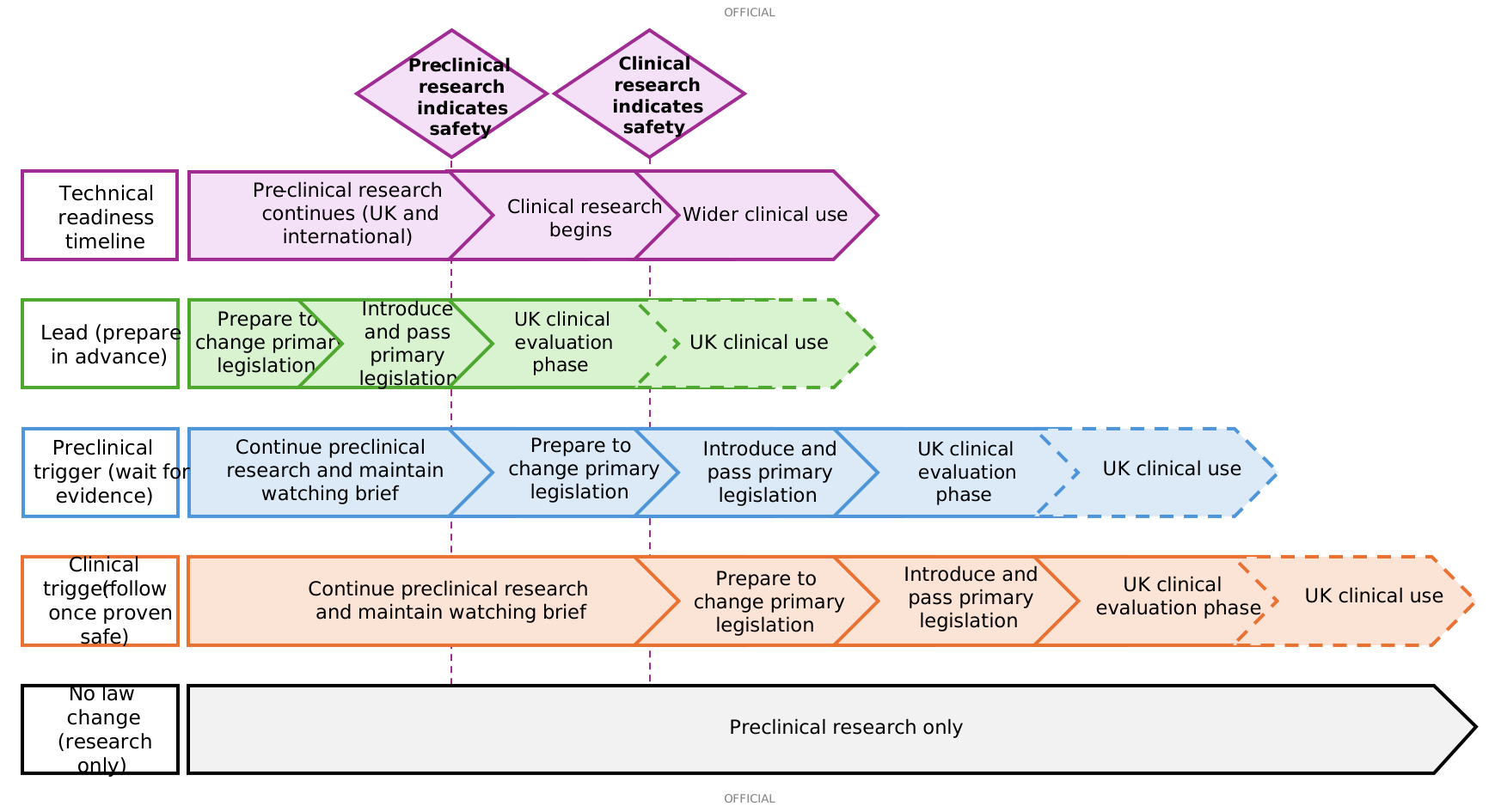
NB: The pathways shown are illustrative rather than linear. Progress between stages includes pause and decision points, and entering a pathway does not imply progression to clinical use.
5.3 Legislative reform models
As well as options for timing, there are multiple models for the type of legislative reform that could be used to allow the clinical use of IVG and other novel ARTs. The models presented here: (1) create a technology-neutral framework that can accommodate multiple ARTs; or (2) legislate for one technology at a time as evidence and international precedent emerges; or (3) rely on narrow definitional changes that would treat IVG as equivalent to existing permitted gametes.[footnote 53]
The options presented here focus on amendments to the HFE Act because it is the primary legislation that governs the clinical use of assisted reproductive technologies in the UK. Under the current Act, there is no lawful route to the clinical use of IVG. In practice, creating a route for the clinical use of novel ARTs, assuming that some become feasible, will require amendment of the HFE Act.
Each of the models below could, in principle, be combined with any of the timing posture options in section 5.2, but in practice, different timing postures tend to align more naturally with different legislative designs, as described in section 5.5.
5.3.1 Model 1. Create a statutory, staged evaluation route for novel ARTs, including IVG
Overview
In this model, the HFE Act would be amended to create a pathway for novel ARTs that generate or materially alter gametes or embryos, including IVG. This would enable the introduction of new technologies with close oversight during the early stages of implementation and strong accountability checkpoints.
Legislation would introduce two distinct stages, subject to Parliamentary approval. The first stage would be a mechanism to allow the HFEA to authorise the controlled clinical evaluation of novel (first-in-human) ARTs, subject to independent ethical approval, specified safeguards and monitoring requirements. This stage is intended to operate in a collaborative manner, in which the HFEA works closely with the sector to test, learn and adjust conditions as evidence develops, within the boundaries set by Parliament. The second would provide a route to wider clinical use if the evidence justified it. The HFEA would then regulate each stage through licensing and oversight within the framework approved by Parliament.
This model is designed to create a legislative pathway with close oversight for future ARTs, should they prove clinically feasible and socially acceptable. It does not assume that any specific technology will necessarily reach that stage or do so within a specific timeframe.
To deliver this model, Government would need to (1) amend primary legislation to create a provision to introduce new ARTs through this two-stage process, and to (2) design appropriate accountability mechanisms. These accountability mechanisms would need to balance any increase in discretion granted to the HFEA and would need be agreed with Parliament.
What would change in primary legislation?
Government would modernise the HFE Act in technology-neutral terms to allow a two-stage approvals process for novel ARTs. This requires substantive amendment, not a single definitional tweak. The changes to the primary legislation would include:
- introduction of the concept of a ‘clinical evaluation period’ and a statement that a clinical evaluation period would be time-limited, use case-limited and not equivalent to routine treatment;
- the statutory limits and baseline prohibitions. For example, prohibitions on reproductive cloning and on transferring a SCBEM to a uterus;
- governance mechanisms, evidence thresholds and decision criteria for starting a clinical evaluation period, and for wider roll-out under HFEA licensing conditions;
- revisiting the definition and use of “permitted gametes and embryos” in the HFE Act to ensure legal coherence; and
- requirements for independent scientific and ethics scrutiny, early public and stakeholder deliberation and other duties that support the legitimacy of a technology before it is approved on a provisional or permanent basis.
Care would be needed to avoid the incremental expansion of detailed statutory prohibitions, which could recreate rigidity in the framework. Independent ethical approval and formal parliamentary decision points would help mitigate this risk by maintaining confidence and reducing pressure for greater prescription.
The primary legislation would not, as far as practicable, specify particular techniques or methodologies. It would focus on the nature of what is created or altered, permitted use cases and the risk profile, rather than the method used. The legislation should be drafted broadly enough to accommodate potential future variants in how an outcome could be delivered. This reflects a more outcomes-focused approach to legislative design, rather than one centred on specific technologies. Further details, such as definitions of specific technologies, would be outlined within secondary legislation or statutory guidance, such as the HFEA Code of Practice
Increased accountability mechanisms
Government would design and agree strong accountability mechanisms to balance any increase in discretion granted to the HFEA. They would build on existing accountability mechanisms, such as updates to the HFEA Code of Practice being laid before Parliament and would likely include greater use of parliamentary select committees and greater scrutiny of HFEA plans.
One option would be for Government to create a statutory route under which a novel ART could enter a clinical evaluation period only after the necessary legal gateway has been established and the proposed use has been authorised through defined governance processes. Within that framework, individual clinical evaluation proposals could then be considered, rather than requiring Parliament to approve each new ART or each individual study. This would allow the HFEA to assess the scientific rationale, evidence base, and proposed safeguards for a specific use case, subject to independent ethics approval, compliance with relevant safety and quality standards, informed consent, and appropriate insurance and indemnity arrangements.
Where Parliamentary approval is required, DHSC would lay the relevant statutory instrument before Parliament, informed by HFEA advice and wider governance input. For example, there could be a requirement to lay an affirmative statutory instrument that sets out the scope of a clinical evaluation period, the permitted use cases, and the period during which evaluation could take place. Where affirmative statutory instruments are used, they should create clear accountability checkpoints at which Parliament could debate the proposed changes. The focus of these debates should not be methodological details, but ethical and political considerations, including:
- which use cases of this technology should be permitted or prohibited;
- what additional safeguards, follow-up duties, reporting, stopping rules, and monitoring requirements must apply; and
- whether, if Parliament considers the evidence or plans to be lacking, commencement should be delayed until specified conditions are met.
A separate question is how wider clinical use should be authorised if a clinical evaluation period is successful. One option would be to require a further Parliamentary step before wider licensed use could begin. Another would be to allow the HFEA to determine, within a framework already approved by Parliament and subject to external review and strengthened scrutiny, when the evidence is sufficient for wider use.
This is one example among several possible approaches to balancing increased HFEA discretion arising from technology-neutral updates to the HFE Act with increased accountability and close Parliamentary oversight. Further work would be required by Government to determine the preferred mechanism and develop the detail.
The report does not seek to prescribe that detailed design, as it reflects Ministerial choices on discretion and accountability. Its purpose is to show that there are credible ways to combine a stronger translational pathway with clear checks on regulator discretion. Consideration should be given both to the extent to which decision-making powers should be delegated and the strength of the accountability mechanisms required to balance that delegation. There should be careful consideration of the trade-offs between increased Parliamentary scrutiny, the demands on the Parliamentary calendar and the need for a system that is able to respond in an agile fashion to evolving technologies and scientific understanding.
The role of the HFEA
The extent to which the HFEA would be granted additional discretion under this model would depend on the nature and extent of the accountability mechanisms and the statutory limits set within the updated primary legislation, as debated and agreed by Parliament. At a minimum, we envisage the HFEA being granted greater discretion by creating a framework in which it can identify, recommend and, if appropriate approvals are secured, implement clinical evaluation periods for promising novel ARTs. In exercising this discretion, the HFEA should work collaboratively with the sector it regulates, drawing on pro-innovation approaches used elsewhere in the UK regulatory system, so that the discretion granted by Parliament is used transparently and responsively as evidence develops.
Building on its current level of operational discretion, the HFEA would also:
- specify detailed conditions for use of novel ARTs through licensing and the Code of Practice, including informed consent, traceability, reporting, follow-up, stopping rules, and limits on scope or duration of the evaluation where appropriate;
- monitor delivery and act quickly if evidence changes, including pausing or stopping permissions where required;
- publish a clear evidence summary and rationale for decisions, with appropriate handling of confidential and proprietary data; and
- escalate issues to DHSC where emerging evidence raises system-level questions or where changes in scope would require Parliamentary amendment.
In this model, the Code of Practice would become the main mechanism for translating the statutory and regulatory permissions into practical, enforceable conditions. It would set the operational detail that instructs licensed providers what they must do and what they must not do.
Where Parliamentary oversight sits
- Primary legislation sets the durable framework and safeguards.
- Accountability mechanisms set in secondary legislation would provide opportunities for Parliamentary checkpoints and increase democratic legitimacy of decisions to introduce specified new ARTs.
- Ongoing scrutiny is supported through reporting duties, transparency on evidence and rationale, continued Parliamentary visibility of Code of Practice updates, and, potentially, increased use of Parliamentary select committees.
Benefits
- Avoids reopening primary legislation for each technological advance while retaining close Parliamentary accountability;
- Creates a clear separation between permission to evaluate and permission for wider use, enabling lessons to be learnt from early clinical use and prompt embedding of these in the regulatory framework;
- Uses Parliament for red lines and ethical boundary setting, and the HFEA for operational delivery and evidence-based control; and
- Creates possibilities for routes to market which improves investor and research confidence without creating any commitment to clinical use of a technology.
Risks
- Requires careful initial legislative design to ensure coherence with the existing Act and standard prohibitions;
- Requires strong transparency and reporting so that increased discretion is balanced by increased accountability; and
- Requires DHSC capacity to draft and table major primary legislation updates and associated secondary legislation.
5.3.2 Model 2. Create an IVG-specific, staged evaluation route
Overview
In this model, the HFE Act would be amended to create a staged pathway for IVG only. A legislative basis for a clinical evaluation period for IVG would be introduced, but not for other ARTs. This model would create strong democratic legitimacy for IVG, but the primary legislation would need to be revisited as future ARTs develop, where they would be prohibited under the current HFE Act. Future updates to the Act could include repeating the process of introducing a clinical evaluation period for specific technologies.
What would change in primary legislation?
This would require a targeted amendment, narrower than Model 1. The HFE Act would be updated to:
- introduce the concept of clinical evaluation period but for IVG only;
- outline permitted and/or prohibited use cases, follow up duties, and reporting requirements;
- set the conditions for moving from evaluation to wider use for IVG, including appropriate governance mechanisms, evidence thresholds and decision criteria; and
- revisit the statutory definition of “permitted gametes and embryos” to ensure legal coherence.
Where Parliamentary oversight sits
- Primary legislation: Parliament explicitly authorises an IVG evaluation route and can incorporate key ethical boundaries.
- Secondary legislation: Details of how the IVG evaluation route would be implemented would likely be set in affirmative secondary legislation, which Parliament could oversee and debate.
- Ongoing oversight: Through existing scrutiny routes for HFEA governance and Code of Practice updates.
- Future technologies: Parliament must return to primary legislation again for linked technologies and other novel ARTs.
The role of the HFEA
In this model the HFEA would, within the statutory limitations of the updated HFE Act):
- have the discretion to design and implement the regulatory elements of the clinical evaluation period, including developing the evidence-base required to inform decisions on wider roll-out of IVG;
- define licensing conditions based on the evidence gathered during the clinical evaluation period; and
- regulate IVG on an ongoing operational basis through licensing and the Code of Practice.
HFEA discretion would not extend to other novel ARTs unless primary legislation was further amended.
Benefits
- Clear democratic justification for introducing IVG first for a clinical evaluation period, then for broader use licensed by the HFEA.
- Enables close evaluation of IVG during the early stages of clinical use and ensures that these lessons can be built into the broader regulatory framework.
- Likely to be easier to pass legislative changes for a specific technology compared to a broader technology-neutral mechanism.
Risks
- Does not future-proof the Act for other novel ARTs. There would be increased delays and repetitive demands on Parliamentary time as the primary legislation would need to be updated for each subsequent technology.
- Higher risk of inconsistency across technologies as each is handled through separate legislative changes.
- Less clarity for researchers, investors and others in the wider sector concerning legislative pathways for other future technologies.
- While it is not possible to know whether any specific future technology, such as IVG, will become clinically viable, despite promising indications, it is reasonable to expect that new types of ART will continue to emerge. This model would not account for these different technological scenarios.
5.3.3 Model 3. Expand the statutory definition of “permitted gametes” to include in vitro gametes
Overview
In this model, the HFE Act would only be amended to include in vitro gametes in the statutory definition of “permitted gametes”. This would bring IVG into the existing treatment framework without creating a dedicated, staged evaluation gateway.
This model could create major risks, subject to how it is implemented. This is not because legal equivalence with conventional gametes could never be justified, but because it would make IVG derived gametes part of the ordinary treatment framework from the outset, without a dedicated statutory route for staged clinical evaluation. The HFEA may be able to limit, to some extent, early use of IVG through its licensing conditions, but the sanctions for violating these would be far lower than those associated with a violation during a statutory clinical evaluation period and may be easier to challenge in court.
What would change in primary legislation?
This model would entail only limited changes to primary legislation. The HFE Act would be updated to:
- amend the definition of “permitted gametes” to include gametes derived via IVG from somatic cells; and
- clarify how the definition interacts with existing prohibitions and offence provisions, to avoid creating loopholes or ambiguity.
In developing these updates, Government should consider whether additional statutory limits are needed to avoid reliance on guidance for high sensitivity boundary setting.
Where Parliamentary oversight sits
- Primary legislation: Parliament would make the core decision once by incorporating in vitro gametes into the definition of “permitted gametes” by amending existing definitions.
- Ongoing oversight: This would operate mainly through existing scrutiny routes for HFEA governance and Code of Practice updates.
- There would be no dedicated Parliamentary checkpoint focused on which use cases of IVG would be acceptable, beyond existing mechanisms in which updated versions of the Code of Practice are laid in Parliament.
The role of the HFEA
In this model, the HFEA would regulate IVG as it does other permitted gametes in treatment, through licensing, inspection, and the Code of Practice. The absence of a statutory clinical evaluation period would limit the HFEA’s ability to require a structured evaluation phase with explicit stopping rules before wider use.
Benefits
- Simpler legislative drafting and potentially faster passage through Parliament.
- Would give legislative clarity to researchers and investors on the legislative route to market for IVG.
Risks
- Does not future-proof the Act for other novel ARTs that do not fit existing definitions or are otherwise prohibited by the current Act.
- Weakens the HFEA’s ability to closely monitor the first-in-humans uses of IVG and tailor regulations accordingly. This could impact negatively on public and stakeholder confidence.
- Without further amendments, there would be no legislative red lines set by Parliament and so any use case, anticipated or otherwise, would be lawful unless it contravened existing prohibitions associated with the definition of “permitted gamete”, such as genetic alteration to nuclear DNA.
5.4 How these two sets of options interlink
Sections 5.2 and 5.3 describe two different dimensions of choice.
In principle, any legislative design could be adopted under any timing posture. In practice, however, some combinations are more coherent than others. Some pairings would require Parliament to commit prematurely to a specific technology. Others would leave the regulator without tools needed to act if and when new evidence emerges.
A lead posture, which involves preparing legislation in advance of clinical readiness, aligns most naturally with a technology-neutral, staged evaluation framework (Model 1). This would allow Parliament to set rules and accountability mechanisms without committing now to the use of any single technology while uncertainties exist.
The preclinical and clinical trigger postures, which defer action until evidence on a particular technology is clearer, tend to align more naturally with technology-specific legislative changes. Model 3 in particular, simply changing the definition of “permitted gamete”, would fit most naturally with the clinical trigger posture once IVG has been shown to be safe in other countries.
5.5 Non-legislative options
Even though the current statutory definition of ‘permitted gamete’ prevents clinical use of IVG eggs or sperm, there are actions that can be taken now within the existing legal framework.
The actions outlined in 5.5.1 are high priority actions that would improve clarity and strengthen safeguards for researchers and clinics in relation to current and emerging ARTs. The actions outlined in 5.5.2 would support preclinical research on IVG within the UK, as is currently permitted under primary legislation. 5.5.3 outlines steps to maintain a good understanding of emerging ARTs and related research and should be considered high priority to inform all future ART regulatory decisions, regardless of whether primary legislation is updated. 5.5.4 to 5.5.6 outline steps that should be taken to inform decisions on whether to update primary legislation and how to prepare for the changes if that is pursued.
5.5.1 Clarify what is lawful today and reduce legal uncertainty (high priority)
- The HFEA should clarify the legal status of fertility preservation approaches, such as the use in treatment of gametes derived by in vitro growth and maturation of primordial follicles or the transfer of bona fide spermatogonial stem cells to a testis prior to retrieval of mature gametes for use in IVF. This could be done through published positions and updates to the HFEA Code of Practice.
- The HFEA should clarify the status of adjacent emerging approaches that use cells generated through reprogramming methods to support in vitro maturation, where they raise similar questions of classification, oversight, or clinical creep. Recent work on induced pluripotent stem cell derived ovarian support cells illustrates how these technologies are beginning to move closer to clinical application.[footnote 54]
- The HFEA and government should clarify the legal status of SCBEMs. This should include a statement that SCBEMs should be used for research purposes only, not for assisted reproduction.[footnote 55] Some of this could be addressed through guidance and Code of Practice updates, although an explicit prohibition on transfer of an SCBEM to a uterus may require primary legislation.
- The HFEA should publish guidance on how IVG-derived materials are treated under the current Act. This should include clarification of: (1) where early-stage germ cells generated through IVG sit in relation to statutory definitions, and what activities trigger licensing requirements; (2) the legal status of embryos generated by fertilisation using IVG at different stages of technology readiness, including non-standard embryos,[footnote 56] which raise foreseeable boundary questions.
- The HFEA and Government should clarify how current rules apply where IVG maturation includes an in vivo stage, for example, when early-stage male germ cells generated through IVG, such as spermatogonial stem cell-like cells, are transferred to a human testis for further maturation before being retrieved for later use in assisted reproduction. This is important because the current prohibition on the clinical use of IVG turns in part on how gametes are produced or extracted, and informal interpretations could otherwise proliferate without an agreed position.
5.5.2 Use existing licensing, guidance, and inspection levers to strengthen safeguards for research
- Set out best practice expectations for IVG-related research through licence conditions and guidance, including traceability, documented ownership and handling controls, data integrity, and reporting of adverse findings.
- Make clear what current licensing requirements do and do not cover, to avoid misunderstanding. Guidance should distinguish storage, creation, and use of IVG-derived materials.
5.5.3 Create a standing oversight and horizon scanning function
- Establish a formal watching brief to monitor the development of IVG technologies and related ARTs, using existing structures such as the HFEA’s Scientific and Clinical Advances Advisory Committee (SCAAC). This function should be strengthened with additional technical and ethical expertise where appropriate.
- Link horizon scanning to wider stem cell governance where appropriate, to avoid siloed oversight. A joined-up approach could monitor overlapping developments such as embryo models, including gastruloid research relevant to in vitro germ cell derivation, and enabling culture systems adopted in organoid research. This function should be designed to complement, not duplicate, the emerging oversight arrangements for SCBEMs.
5.5.4 Prepare the ethical and social foundations before any legislative decisions
To inform decisions on whether to pursue legislative changes and the types of changes to pursue, Government should:
- Commission an independent ethical review that explicitly covers clinical use of IVG. This review or separate reviews could also be performed for other prospective ARTs, including fertility preservation methods such as in vitro growth and maturation, that also raise questions of governance readiness. This should surface points of consensus, fault lines, and conditions for democratic legitimacy.
- Run discursive public engagement early, not as a communications exercise, but as a substantive input into policy design. In addition to exploring the attitudes of those with no direct interests, engagement should include those likely to be most affected, including patients, donor-conceived people, disability groups, faith communities, clinicians, and LGBT+ communities.
- Scope implications for parenthood, consent, and welfare tests, because these issues will shape whether any future pathway is seen as legitimate, regardless of technical progress. Work on these questions can begin without changing the Act.
In preparation for these changes, the HFEA could:
- Strengthen consent and provenance expectations now, given the distinctive features of IVG. The relative ease of sourcing somatic cells raises sharper risks around consent and misuse than conventional gamete procurement. The Code of Practice can set expectations for robust consent models and governance controls in research settings
5.5.5 Build readiness for future evidence assessment, without pre-committing to clinical use
To inform decisions on whether to pursue legislative changes and the types of changes to pursue, the HFEA and the Government should:
- Develop an evidence framework and decision criteria for any future policy decision, including what would count as sufficiently reliable preclinical evidence, how uncertainty would be handled, and what red lines would stop progression.
- Plan for data governance and long-term follow-up models in principle, including privacy, consent over time, and institutional responsibilities for outcome monitoring. Even if clinical use never proceeds, designing this architecture now reduces the risk of rushed design later.
5.5.6 Commission a practical scoping exercise for modernising the framework
To inform legislative decisions and make any future changes smoother, Government could begin developing policy and drafting preparation by scoping options for how the Act could be made more agile in future, including what should sit in statute and what should sit in regulator guidance. This would not be a commitment to reform, but rather would reduce the risk of delay or poor design if reform becomes justified.
Taken together, these actions strengthen governance and preparedness, reduce the risk of confusion or inadvertent non-compliance, and ensure that if evidence and social legitimacy evolve, the UK is able to respond deliberately rather than reactively.
5.6 Oversight, accountability and governance choices
Effective oversight needs to do three things at once. It must:
- protect public confidence and ensure ethical scrutiny
- enable high-quality evidence assessment
- avoid duplicative or unclear institutional responsibilities across the fertility, health research, and wider life sciences landscape
If Government chooses any pathway that could in future permit staged clinical evaluation of a novel ART, there will need to be decisions on institutional design and oversight. The key choice is not whether there is oversight, but where it sits, how it connects to existing bodies, and how accountability is maintained without creating new layers that duplicate current functions and increase regulatory burden.
This section does not present a further set of strategic options. It sets out considerations and illustrates governance arrangements that could support implementation of whichever option Ministers choose.
Core governance design questions:
- Who holds which decisions at each stage, and what is delegated to the regulator versus retained as a ministerial or parliamentary choice?
- How is duplication avoided across existing committees and emerging oversight arrangements, while ensuring independent challenge is strong enough for a technology with intergenerational implications?
- How is accountability expressed in practice, including what is published, what is reported to Parliament, and what is escalated to Ministers?
Illustrative ideas for ongoing governance and oversight:
-
HFEA-led model using existing structures The HFEA leads scientific and clinical readiness judgements through existing bodies such as its SCAAC. DHSC sets policy direction and maintains oversight through defined reporting and escalation triggers. Strength: least disruptive and fastest to stand up. Trade-off: may need strengthening to demonstrate sufficient independent challenge and cross-cutting coordination.
-
HFEA-led model with strengthened external scrutiny HFEA remains the decision maker within statutory parameters, but the process includes formal external scientific and ethics scrutiny, with patient and public perspectives, feeding into HFEA decisions and published rationale. Strength: builds legitimacy and reduces perceived regulatory capture. Trade-off: heavier process design and potential for slower decisions unless tightly scoped.
-
Government-chaired, cross-system oversight with HFEA decision authority retained DHSC convenes a time-limited, cross-system forum to coordinate evidence thresholds, ethical inquiry, public and stakeholder engagement, and implementation readiness, while the HFEA remains the statutory decision maker on licensing and the Code of Practice. Strength: clearer join-up and avoids siloed work. Trade-off: risk of duplication unless the remit is narrow and time-bound.
These arrangements are intended to support trusted and workable implementation of whichever option Ministers choose.
6. The RHC’s preferred approach
This report has set out a range of options for how the UK could approach IVG and other novel assisted reproductive technologies. The RHC’s view is that, taken together, timing posture option 1, lead, and legislative reform model 1, a statutory staged evaluation route for novel ARTs, including IVG, represent the best approach for the sector.
In the RHC’s view, this approach best preserves the strengths of the current system while improving the UK’s ability to respond to scientific change. It keeps safety, ethics, consent, and public confidence at the centre. It does not treat technical feasibility as sufficient for clinical use. At the same time, it creates a lawful and structured route for evaluation if evidence and wider public legitimacy justify it.
The main advantage of this approach is that it shifts the UK from dependence on technological readiness alone to regulatory readiness by design. The question now should not only be “is the technology ready?”, but “is the UK’s framework ready to make a safe, ethical, legitimate decision when technologies become ready?”. In this sector, this is what is ultimately required to future-proof the regulations.
Under the current framework, the UK risks waiting until a technology is close to use, and only then beginning the legislative process. That creates pressure for compressed decisions, reduces clarity, and leads to greater dependence on evidence, standards, and practice developed elsewhere. A lead posture, combined with a staged and broadly technology-neutral legislative model, gives Government and Parliament time to design safeguards deliberately, build legitimacy through ethical scrutiny and early public engagement, and create a durable framework that can also accommodate future technologies.
This approach also offers the clearest balance between flexibility and control. It avoids reopening primary legislation each time science advances, but it does not give unchecked discretion to the regulator. Instead, it allows Parliament to set the framework, limits, and accountability mechanisms, while enabling the HFEA to exercise operational judgement within those boundaries. In the RHC’s view, that is the strongest basis for supporting responsible innovation in a field where the scientific, ethical, and social stakes are unusually high.
The RHC recognises that this approach carries a clear trade-off. It brings political, ethical, and public debate forward, before IVG or related technologies are ready for clinical use. However, in a sensitive area such as assisted reproduction, that is also how legitimacy is built. Ethical scrutiny and public engagement are harder to do well once pressure for change has already arrived.
The purpose of this view is not to imply that IVG, or any other specific technology, should proceed to clinical use. It is to set out what the RHC considers to be the best way for the sector to remain safe, trusted, and capable of responding lawfully and credibly - and in agile fashion - if scientific evidence and public legitimacy evolve.
It will ultimately be for Government to decide whether to adopt this approach.
7. Appendices
7.1 Appendix 1. Introducing Mitochondrial Donation into the UK clinic
7.1.1 Mitochondrial Donation and the Law
There has been only one significant update to the HFE Act, in 2008, which included introducing a provision to allow for regulations governing the clinical use of mitochondrial donation to be passed in the future.[footnote 57] Section 7.1.2 explains the basics of mitochondrial donation itself and the rationale for its use.
Section 3ZA of the Act defines which gametes and embryos can be used in clinical treatment, described as ‘permitted’ gametes and embryos, as follows:
‘A permitted egg is one: (a) which has been produced by or extracted from the ovaries of a woman, and (b) whose nuclear or mitochondrial DNA has not been altered.
An embryo is a permitted embryo if: (a) it has been created by the fertilisation of a permitted egg by permitted sperm, (b) no nuclear or mitochondrial DNA of any cell of the embryo has been altered, and (c) no cell has been added to it other than by division of the embryo’s own cells.’
The clauses concerning alteration of mitochondrial DNA (mtDNA) expressly preclude eggs or embryos generated by mitochondrial donation techniques from being permitted for treatment. The 2015 Mitochondrial Donation Regulations are a set of statutory instruments that act to extend the definition of ‘permitted’ egg and embryo in the following way:
‘Regulations may provide that: (a) an egg can be a permitted egg, or (b) an embryo can be a permitted embryo, even though the egg or embryo has had applied to it in prescribed circumstances a prescribed process designed to prevent the transmission of serious mitochondrial disease.’
The prescribed circumstances specify that mitochondrial donation can only be used to prevent or reduce the risk of transmitting defective mitochondria in an egg and that any egg used must be extracted from an ovary. This prevents mitochondrial donation from being used for any other purpose, such as to treat idiopathic infertility associated with early embryonic arrest and IVF failure.[footnote 58]
The prescribed process limits the embryological techniques that can be performed to maternal spindle transfer (pre-IVF) and pronuclear transfer (post-IVF), both of which are essentially described in the Regulations. Other promising techniques, such as those involving transfer of polar bodies, are precluded.[footnote 59]
These Regulations permitted the lawful use of a new assisted reproduction technology in the UK for the first time. This was a world first in its clinical and regulatory ambition, showcasing the UK’s ability to pioneer new technologies, including controversial ones, by combining its strong research base in the life sciences and its regulatory prowess. Many supporters of this approach overseas envied the UK and the role played by the bespoke regulator in facilitating this innovation.[footnote 60] Australia introduced legislation to permit trials of mitochondrial donation in 2022, influenced by the UK’s route. The first UK children born following mitochondrial donation were reported in 2025.
7.1.2 Understanding mitochondrial donation
Most cells of the body contain small structures, or organelles, in their cytoplasm that produce the energy required to drive a range of activities: mitochondria. Mitochondria contain a small, circular DNA molecule known as mtDNA, which all of us inherit only from our biological mother. mtDNA is therefore inherited in a different fashion to the chromosomes that are found in the nucleus of the cell, with 23 chromosomes inherited from each parent. mtDNA encodes a small number of genes required for energy production by mitochondria and, as with other DNA molecules, some changes to the sequence of that DNA (mutations) can disrupt function.
In the case of mtDNA, mutations can lead to a set of devastating diseases (mtDNA diseases) that can be passed on from mother to offspring. There are no curative treatments for these diseases, so attention has focussed on preventing or reducing the risk of transmission from mother to child. One option is for an egg donor, free of mtDNA disease, to be used to generate embryos from the intended father’s sperm using IVF.[footnote 61] This would allow the intended mother to give birth to a child free of mtDNA disease; but she, unlike the father, would not be biologically related to that child. For those individuals at risk of transmitting mtDNA disease and for whom biological relatedness is of paramount importance, two options exist: PGT and mitochondrial donation.
-
PGT involves the generation of embryos, using IVF, from the intended mother and father. These embryos then have a small biopsy removed (usually just a few cells) in order to test for levels of the disease-causing (pathogenic) mtDNA mutation inherited from the at-risk mother. The mother’s eggs each contain around half a million mitochondria and in some cases, known as heteroplasmic, the egg can contain a mixture of pathogenic and non-pathogenic mtDNA. PGT allows embryos with a sufficiently low number (or load) of pathogenic mtDNA to be selected for transfer back to the uterus of the mother. PGT for mtDNA is an established procedure that is used to reduce the risk of transmission of mtDNA disease.
-
For some women, PGT is very unlikely to be successful because their eggs contain either very high levels of pathogenic mtDNA (high heteroplasmy) or exclusively pathogenic mtDNA (homoplasmy). This would result in embryos with very high risk of leading to mtDNA disease, if transferred. For these women, mitochondrial donation is an option. This involves removing the chromosomes from the intended mother’s egg (either before or after fertilisation by the intended father) and transferring them to a stage-matched donor egg from which the chromosomes have been removed. This results in embryos with the two parental chromosome sets, as usual, but with the vast majority of mtDNA supplied by a third individual, the egg (mitochondria) donor. This is why the procedure can be known as 3-person IVF, and the children born described as 3-parent babies, although the mitochondrial donor is not recognised as a parent in UK law.[footnote 62] There are two lawful ways of performing mitochondrial donation: maternal spindle transfer (MST) before IVF, and pronuclear transfer (PNT) shortly after IVF. In July 2025, the births of 8 healthy children following mitochondrial donation were reported in two landmark papers by a team in Newcastle, UK.[footnote 63]
A small proportion of the mother’s mtDNA is usually carried over into the donor egg or embryo. Whilst this is unlikely to cause disease because the levels of pathogenic mtDNA in the embryo are so low after transfer, the possibility exists that ‘reversion’ may occur, whereby the levels of the mother’s mtDNA increase during embryonic and fetal development, sometimes to high levels. This could result in mtDNA disease. The frequency and extent of reversion that might occur following mitochondrial donation are difficult to assess: clinical data are limited and there is at the moment no clear mechanistic explanation for the effect. More research is required, including the exploration of methods, such as mtDNA editing, to eliminate pathogenic mtDNA before it can proliferate. Until such methods are developed, it is likely that mitochondrial donation will continue to be viewed as a risk reduction strategy, alongside PGT for pathogenic mtDNA, rather than a disease prevention method.[footnote 64]
7.2 Appendix 2. IVG: ethical considerations
There have been a number of examinations of the ethics of IVG that are fairly comprehensive and numerous academic papers consider the implications of various use cases.[footnote 65], [footnote 66] A recent report jointly produced by the Nuffield Council on Bioethics and the Future of Human Reproduction project usefully considers ethical issues in the UK context.[footnote 67] This section will briefly survey some ethical issues raised by IVG, with an emphasis on how they might impact regulatory policy.
7.2.1 Gametes, embryos and embryo models
IVG is an example of technological innovation, in this case human engineering biology, that challenges the legal definitions and categories that regulation uses.[footnote 68] As in the case of the relationship between stem cell-based embryo models (SCBEMs) and bona fide embryos themselves, it is possible to ask metaphysical/ontological questions about whether IVG are really gametes, and whether any embryos generated by the use of IVG are therefore really embryos, or something else.[footnote 69] Any lack of clarity in how we answer such questions will lead to regulatory unclarity, accordingly. The human embryo has a special status in UK law and for many it has a special moral status i.e. its nature, including any potential to yield a new human being, makes demands on us in terms of how we should treat it. It is highly unlikely that such questions about moral status will be easily answered or resolved in a morally pluralistic society, but the very existence of such pluralism suggests wider societal debate will be required to find a consensual way forward.
Answers to questions about the nature of IVG do not dictate particular regulatory approaches and regulatory policy decisions can and will, more or less pragmatically, reflect a variety of factors that must be considered. We see no obvious ethical objections to research on IVG, including their use to generate embryos, if that research is appropriately regulated, as would be equivalent research using conventional gametes. Moreover, since any clinical grade embryos eventually generated using IVG may be suitable for clinical use, this report believes that they and IVG embryos of much lower quality should have the same legal status as embryos generated using conventional gametes, which also vary from high grade to moribund.
7.2.2 Safety and risk
Whilst safety is usually considered in a technical sense, analysed and quantified following a battery of tests or risk assessments, it is actually an ethical category too: it would be unethical to offer a treatment that is known to be unsafe or ineffective, or both. Moreover, preclinical research itself cannot establish the safety of a prospective treatment or intervention. Rather, on the basis of preclinical data, one can only decide if a treatment is safe enough to proceed clinically.
In the case of IVG, there are a number of uncertainties concerning whether IVG and IVG-derived embryos will ever be of sufficient quality (clinical grade) to use clinically and how it could be established that this is the case. A conventional approach to an intervention would consider the potential harms and benefits that could accrue, for example, to an individual recruited to a clinical trial.
In the case of clinical use of IVG, and of other ARTs, such an analysis is complicated. Firstly, there is the welfare of the participant undergoing clinical evaluation to consider i.e. the prospective mother, where there are risks during pregnancy; but the welfare of the child conceived must also be considered. Indeed, welfare of the child considerations are fundamental to UK regulation of ART. These considerations are also complicated by the fact that the child produced would not exist were it not for the treatment. So, whilst the harms and benefits of a treatment are usually assessed in a before-and-after-comparison fashion, that cannot be done in the case of children-creating ARTs (more specifically, identity-affecting uses). Instead, there must be some consideration of standards of health and welfare for the child that no treatment can fall below. These should extend to the potential for psychological harm to the child conceived, perhaps due to social stigmatisation arising from the novelty of their origin. Wider social harms, caused by the normalisation of IVG, could also be considered.
Given the nature of clinical IVG, at least when thinking of first-in-human uses, it seems that clinical safety could only be assessed initially in the context of a limited period of clinical evaluation. In addition to questions of evaluation design, in respect of number of participants and duration, there are significant issues of informed consent, by the women to whom IVG embryos will be transferred and the individuals whose cells yielded the IVG being used. There is an elaborate framework for consenting to the use of standard gametes in ART, but consenting to use of IVG will require a good deal of attention when policy in this area is formulated, and this must exclude the possibility of uses of IVG without consent, such as by theft of cells from an individual.
Finally, the topic of potential harm has been used to promote one possible benefit of IVG, which would be an end to the requirement to stimulate the ovaries to produce eggs for assisted reproduction. Controlled ovarian stimulation poses considerable health risks for women. IVG might usher in an era of IVF freed from the onerous requirement for a woman to undergo hormonal stimulation and egg retrieval. Unlike some of the use cases considered below, this proposal immediately raises the prospect of a general benefit of IVG, which would be applicable to almost any woman wishing to undergo IVF.
7.2.3 Proposed use cases/indications for IVG
A good deal of interest and controversy has been generated by discussion of various proposed use cases of IVG. What indications might there be for such uses? Here, we will address some prominent proposed use cases and their ethical dimensions.
Infertility
Some infertile individuals cannot produce gametes or cannot produce gametes of suitable quality, due to a variety of reasons, including genetic conditions, previous insults to the gonads, including chemotherapy, or unknown causes.[footnote 70] For such individuals, where no existing treatment would allow birth of biological children, safe IVG would be indicated.
Arguably, older women, perhaps even in their 50s and 60s, who no longer produce eggs of sufficient quality also fall into this category, since ageing is another biological cause of loss of fertility. However, the literature on IVG suggests this will be a contested topic. Some will argue that older women will not be good mothers, either due to the impacts of ageing on their physiology, or due to the fact that they may not survive to see their children reach adolescence. Others will see IVG as potentially liberatory or emancipatory, freeing women from the reproductive constraints of aging and offering parity with older men, who often remain fertile but also face the challenges of ageing noted above. This is one example of the potential for IVG to challenge social norms in respect of reproduction and family formation.
Same sex couples
The above category comprises individuals with infertility that has a biological cause. But some have argued for another category of infertility, known as social or situational infertility.[footnote 71] This infertility is caused by social, relational or legal circumstances. Someone suffering from this form of infertility may be biologically fertile. This is the case with same-sex couples: each individual in a male- or female-only relationship may produce functional gametes, but their situation does not allow them to have biological children with their partner.
IVG may in future provide a solution. It may be possible to generate functional eggs from a chromosomally XY man using IVG technology, a process successfully used (albeit at very low efficiency) in mice.[footnote 72] It may even be possible to generate sperm using chromosomally XX cells from a female. But both approaches are technically very challenging – especially the derivation of sperm from an XX individual who lacks the Y chromosome necessary for spermatogenesis − and require significant genomic alterations to cells, which raises independent ethical and legal issues.
The possibility of such interventions in future has resulted in discussions of their acceptability. Are same-sex couples entitled to costly healthcare to support their desire to have biological (genetically related) children? If the answer to this question in the case of heterosexual couple is (sometimes) ‘yes’, refusing support to any same-sex couple appears to be discriminatory. The additional technical complexity of IVG for same-sex couples, which will require genetic manipulation of starting cells, means that even greater scrutiny of its safety will be required, and on that basis alone it seems unlikely to be here that first uses of this technology will be seen.
Another group that could benefit from IVG are transgender individuals who wish to reproduce but do not wish to use any gametes produced by their gonads (if these have not been removed), since these correspond to the sex they were assigned at birth. Again, a careful and sensitive discussion will need to be had about the entitlements that such individuals have i.e. what society owes them in terms of technological interventions to support their reproductive desires.
Solo parenting and multiplex parenting
Two use cases that have received much attention are IVG to produce sperm and eggs from one individual and produce children from these (solo genetic parenting or auto-parenting), and the use of IVG with embryonic cells to ‘skip’ generations and allow children to be born from 4 or more biological parents (multiplex parenting).[footnote 73], [footnote 74] One fatal objection to solo genetic parenting is its safety: such re-shuffling of gene variants within an individual risks generating new combinations causing serious genetic disease.[footnote 75] Indeed, it is recommended that these health risks be recognised with a straightforward prohibition if it were to become feasible.
7.2.4 IVG as a ‘gateway technology’
There are two technologies whose use in assisted reproduction would receive a significant boost if IVG were to be feasible: preimplantation genetic testing (PGT) and heritable human genome editing. PGT comes in different forms, depending on the genetic abnormalities that are being screened for: PGT for monogenic diseases (PGT-M), for structural variants (PGT-SR) and for aneuploidy (PGT-A). All these rely on testing of a biopsy from the embryo, usually a few cells at day 5 or 6, followed by selection of a clinical grade embryo (if available) lacking the disease-causing genotype for transfer to the prospective mother. On occasion, PGT-M can be unsuccessful because the proportion of embryos with the desired genotype(s) is too low and none of these is of sufficient quality.[footnote 76] However, if IVG were to allow the generation of large numbers of oocytes, and thus embryos, it would be highly likely that embryos of the desired genotype(s) and quality would be identified.
Some have expressed concern that IVG may open the door to more extensive embryo screening, including for complex genetic traits influenced by hundreds of genes or more (polygenic traits). Several of the greatest health challenges of our time, such as cardiovascular disease and dementia, are diseases influenced by a large number of genes and so there might arguably be utility in screening for increased risk of these diseases if knowledge of their genetic basis in individuals (of all ancestries) increases with more research; but there are also non-disease traits, including height and some behavioural traits, that might appear to be attractive to clinics marketing IVG-based embryo testing (and those using their services) and which would fuel the objection that IVG is promoting a desire for ‘designer babies’ or even eugenic practices.[footnote 77], [footnote 78]
Embryo testing is regulated in the UK by the HFEA and it decides whether to permit it for a condition or not. It prohibits, for example, use of PGT for social sex selection and screening of embryos for polygenic risk scores (so-called PGT-P). It seems clear that if IVG leads to larger numbers of embryos being routinely available in treatment, potentially expanding the possibilities associated with effective genetic testing of embryos, extending into polygenic traits, policy in this area may need to be reviewed.
In respect of genome editing, IVG offers the prospect of performing editing in precursor stem cells prior to gamete generation. The advantage of this over directly editing the genome of an embryo is that the outcome can be checked in cells to ensure that appropriate on-target editing, and no detectable off-target editing, has occurred before gametes are generated.[footnote 79] Nevertheless, any proposal to use genome editing to control human genetic inheritance would need to be discussed and debated independently of IVG. Heritable human genome editing is currently unlawful in the UK and most other jurisdictions worldwide.
7.2.5 Public engagement and trust
Red lines in assisted reproduction were appreciated by Mary Warnock and her Committee of Enquiry into Human Fertilisation and Embryology (the Warnock Committee), which noted in its landmark 1984 report that:
“People generally want some principles or other to govern the development and use of new techniques. There must be some barriers that are not crossed, some limits fixed beyond which people must not be allowed to go. A society which had no inhibiting limits, especially in the areas of birth and death, of the setting up of families and the valuing of human life, would be a society without moral scruples, and this nobody wants.”[footnote 80]
This still appears to be true over 40 years after it was written. But the question remains where such red lines are to be drawn today. Deliberative public engagement exercises allow attitudes to such red lines to come into view, along with the reasoning that establishes them. The values in play when individuals express their objections (and hopes) also become visible. It isn’t an exaggeration to suggest that legitimacy of regulatory policy in this particular space requires early public engagement. It is one of the conditions of securing public trust in a potentially controversial area of healthcare and can promote resilience of policy in times of controversy. Moreover, it reminds the public that policy and associated decision making are motivated not just by technical considerations: ethics also plays a central role and public attitudes to what is ethically acceptable are a significant element.
7.2.6 Other ethical issues and the role of regulation
This brief survey of the ethical landscape surrounding IVG has included many significant issues but is still not comprehensive. Other topics with a clear ethical dimension include the creation of human embryos for IVG research purposes, the moral status of IVG embryos when compared to conventional embryos and SCBEMs, the impact of the extensive genetic alteration of research embryos that IVG will permit, the possible impact of commodification of human embryos (and eggs) if they become available in much larger numbers, impacts on gamete and embryo donation and the donor conceived, impacts on legal parenthood and its basis in law, questions of human dignity in an age where technological interventions in ART become more commonplace; and, in a society where healthcare resources are increasingly stretched, how novel technologies such as IVG, which aim to satisfy the strong desire for genetically-related children, can be justified; and if they are, how they are made accessible to all those who need them or want them. These issues will need to be carefully handled by law makers and regulators. In the meantime, IVG continues to promise real benefits to many in future.
8. Acknowledgements
We thank the following individuals for agreeing to be interviewed during our stakeholder engagement:
- Emma Cave (Durham University, UK)
- Alta Charo (University of Wisconsin, US)
- Tim Child (Fertility Consultant, UK)
- David Cyranoski (Kyoto University, Japan)
- Megan Edwards (Nuffield Council on Bioethics, UK)
- Henry T. Greely (Stanford University, US)
- Agustina Imfeld (Gameto, US)
- Emily Jackson (London School of Economics, UK)
- Matt Krisiloff (Conception, US)
- Robin Lovell-Badge (The Francis Crick Institute, UK)
- Rasmus Mikkelsen (Democracy X, Denmark)
- Rod Mitchell (University of Edinburgh, UK)
- Raj Mathur (Manchester Fertility, UK)
- Sarah Norcross (Progress Educational Trust, UK)
- Rosamund Scott (King’s College London, UK)
- Sandy Starr (Progress Educational Trust, UK)
- Roger Sturmey (Hull York Medical School, UK)
- Ranveig Svenning Berg (Nuffield Council on Bioethics, UK)
- Evelyn Telfer (University of Edinburgh, UK)
- Stephen Wilkinson (University of Lancaster, UK)
- Suzannah Williams (University of Oxford, UK)
The Council is especially grateful to a number of individuals who provided valuable input and in-depth feedback during the development of this report. In particular, we would like to thank Emma Cave, Emily Jackson and Robin Lovell-Badge for their expert advice and comments on earlier drafts.
We are also very grateful to Peter Thompson, Dina Halai and Rebecca Taylor from the Human Fertilisation and Embryology Authority (HFEA) for their constructive engagement throughout the project, including sharing their expertise on the current regulatory framework, supporting discussions to test emerging ideas, and providing comments on earlier drafts.
We also thank the Office for Health Economics for their thoughts on the economic and social impacts of novel ARTs.
All opinions expressed in this report are the RHC’s and not necessarily those of stakeholders and organisations engaged.
This report was authored by Dr Andy Greenfield, a member of the Regulatory Horizons Council, and the RHC executive team: Tanuj Jain, Laura Cole, Kieran Saggar and Adam Stirling.
Footnotes
-
In this report, the term “IVG” is used to refer both to in vitro gametogenesis (the process) and to in vitro-derived gamete(s) themselves, for ease of reference. ↩
-
Fertility treatment 2023: trends and figures, HFEA (2025). ↩
-
Early clinical assessment of a novel technology or intervention is sometimes described as a ‘trial’. The initial evaluation activity considered in this report would not constitute a clinical trial in the standard biomedical sense. It would involve a tightly governed process of staged clinical evaluation, designed to generate safety and effectiveness evidence with defined safeguards under the assisted reproduction regulatory framework. ↩
-
How is the fertility rate changing in England and Wales?, Office for National Statistics (2024). ↩
-
Births in England and Wales: 2024 (refreshed populations), Office for National Statistics (2025); See also: Understanding the Decline in Live Birth Rate in the UK: Barriers, beliefs and opportunities to support future families, Merck (2026). ↩
-
Dempsey, D., Nordqvist, P. & Kelly, F. (2021) Beyond secrecy and openness: telling a relational story about children’s best interests in donor conceived families. BioSocieties, 17, 1–22. doi: 10.1057/s41292-021-00225-9. ↩
-
Egg freezing in fertility treatment: trends and figures, HFEA, UK Government (2017). ↩
-
Jaspal, R. et al. (2019) The impact of cross border IVF on maternal and neonatal outcomes in multiple pregnancies: Experience from a UK fetal medicine service. Eur J Obstet Gynecol Reprod Biol, 238, 63–67. doi: 10.1016/j.ejogrb.2019.04.030. ↩
-
IVG is also currently unlawful in the UK – see discussion in Section 3 below. ↩
-
Human Fertilisation and Embryology Authority (HFEA), Written evidence to the House of Lords Industry and Regulators Committee inquiry on the role of regulators in supporting economic growth (2025), para. 5. ↩
-
Fertility Services Market Trend, Growth Analysis Report 2025, The Business Research Company (2025). ↩
-
Consumer law compliance review of fertility clinics: Findings report, Competition and Markets Authority (2022). ↩
-
Fit for the future: 10 Year Health Plan for England - executive summary, UK Government (2025). ↩
-
Life Sciences Sector Plan, UK Government (2025). ↩
-
Renewed Women’s Health Strategy for England, Department of Health and Social Care, UK Government (2026). ↩
-
Stem cells capable of differentiating into any cell type of the body are known as pluripotent stem cells. Pluripotent cells generated in vitro by reprogramming adult cells are known as induced pluripotent stem (iPS) cells. These and other cell types may be used in attempts to generate gametes in vitro, with the methods differing depending on whether sperm or eggs are being produced. These methods are likely to evolve as understanding of gamete development advances. ↩
-
An alternative method, known as SCNT-IVG, was recently reported, involving the transfer of genetic material (a nucleus) from a bodily cell into a donated egg from which the genetic material has been removed. The egg is then coaxed into halving its number of chromosomes as if it had completed meiosis before being fertilised. This approach raises its own distinct set of challenges in respect of safety and effectiveness. It also does not increase the overall number of eggs available for treatment or research, since each instance of IVG requires a donated egg. See: Marti Gutierrez, N. et al. (2025) Induction of experimental cell division to generate cells with reduced chromosome ploidy. Nat. Commun. 16: 8340 doi: 10.1038/s41467-025-63454-7. ↩
-
How such directed differentiation works in vitro is usually a matter of culturing cells in the presence of specific combinations of growth factors and other molecules (or additional cell-types), in a supportive culture environment, in order to orchestrate a highly complex and controlled sequence of cellular events. Ideally, this recapitulates the processes that occur during development in vivo. ↩
-
One potential source of PGCLCs is a stem cell-based embryo model (SCBEM) modelling the gastrulation stage of embryogenesis (a gastruloid), the stage at which primordial germ cells arise. ↩
-
See Mitchell, R. T. (2026) ‘How to build a testis, cell by cell’ Science 391: 865-866. doi: 10.1126/science.aef2220. ↩
-
IVG is reviewed in Saitou, M. & Hayashi, K. (2021) Mammalian in vitro gametogenesis. Science 374: eaaz6830. doi: 10.1126/science.aaz6830; Czukiewska S.M. et al (2025) Human and non-human primate female in vitro gametogenesis toward meiotic entry: a systematic review. Fertility and Sterility https://doi.org/10.1016/j.fertnstert.2025.04.040; and Landecker, H. L. & Clark, A. T. (2026) Considerations for the future of in vitro gametogenesis in fertility care. Nat. Biotech. doi: 10.1038/s41587-026-03034-2. ↩
-
See: Telfer, E. E. & Andersen, C. Y. (2021) In vitro growth and maturation of primordial follicles and immature oocytes. Fertil. Steril. 115: 1116-1125. doi: 10.1016/j.fertnstert.2021.03.004; Picton, H. M. (2022) Therapeutic potential of in vitro-derived oocytes for the restoration and treatment of female fertility. Annu. Rev. Anim. Biosci. 10: 281–301. doi: 10.1146/annurev-animal-020420-030319; and Bjarkadottir, B. D. et al. (2021) Analysing culture methods of frozen human ovarian tissue to improve follicle survival. Reprod. Fertil. 2(1): 59-68 doi: 10.1530/RAF-20-0058. ↩
-
Mitchell, R. T. et al. (2025) ESHRE good practice recommendations on fertility preservation involving testicular tissue cryopreservation in children receiving gonadotoxic therapies. Hum. Reprod., 40: 1391-1431. doi: 10.1093/humrep/deaf106. ↩
-
Genome editing reveals a role for OCT4 in human embryogenesis, Fogarty et al., (2017) Nature 550: 67-73; Base editing reveals an essential role for NANOG in human embryogenesis, Bower OJ et al., (2026) Nature; Correction of a pathogenic gene mutation in human embryos, Ma et al., (2017) Nature 548: 413-419; and Could Failure in Preimplantation Genetic Diagnosis Justify Editing the Human Embryo Genome?, Steffann et al., (2018) Cell Stem Cell 22: 481-482. ↩
-
See discussions in Human Genome Editing: Science, Ethics, and Governance (2017), National Academies of Sciences, Engineering and Medicine; and Heritable Human Genome Editing (2020), National Academies of Medicine and Sciences, The Royal Society. ↩
-
The SCBEM Code of Practice, University of Cambridge/Cambridge Reproduction/Progress Educational Trust (2024). ↩
-
Stem cell-based embryo models, Nuffield Council on Bioethics (2024). ↩
-
Such benefits include the ability to better assess the safety of novel assisted reproductive technologies by studying impacts on embryogenesis over an extended period of time. See: Human embryo research: how to move towards a 28-day limit, De Los Angeles et al., (2025) Nature. ↩
-
There has been some public engagement on the topic of the 14-day rule. See: Public dialogue on early human embryo research, Human Developmental Biology Initiative (2023). ↩
-
Human Fertilisation and Embryology Authority (HFEA), Minutes of the Authority Meeting, 20 November 2024, p. 10. ↩
-
See more on this at: Reviewing the 14-day rule for human embryo research, Nuffield Council on Bioethics (2025). ↩
-
The epigenome is the totality of chemical modifications to DNA and the proteins associated with DNA (chromatin) that influence gene function without altering DNA sequences themselves. ↩
-
See: UK’s independent expert panel recommends “cautious adoption” of mitochondrial donation in treatment, HFEA (2016). ↩
-
It might be argued that some entities generated by attempted fertilisation during IVG research should be considered stem-cell-based embryo models (SCBEMs) rather than embryos in law, particularly in the early stages of technology development. This would likely create complex regulatory boundary disputes. Treating all entities generated by fertilisation using IVG within the scope of the HFE Act embryo research framework avoids this complexity during the preclinical research phase. That position is adopted here for research governance and does not, in itself, determine how IVG should be treated in any future clinical framework. More discussion on the future statutory definition of ‘IVG’ would be required ahead of any legislative changes. ↩
-
The HFE Act requires embryo research to be “necessary or desirable” for one of the statutory purposes. As alternative research tools such as stem-cell-based embryo models (SCBEMs) emerge, some commentators have questioned how this necessity test should apply and whether it may warrant reconsideration if the Act were amended. ↩
-
Development of human induced pluripotent stem cell-derived ovarian support cells as a clinical-grade product for in vitro fertilization, Paulsen et al., (2026) Cell Stem Cell 33: 202-216.e12. ↩
-
See discussions at: Scientists ‘rejuvenate’ human eggs in breakthrough for IVF treatment, The Independent (2026); Scientists discover novel approach to rejuvenate aged egg cells, ScienceDaily (2024): and Mitochondria as a tool for oocyte rejuvenation, Labarta et al., (2019) Fertil. Steril. 111(2): 219-226. ↩
-
See Lovell-Badge, R. et al., (2021) ISSCR guidelines for Stem Cell Research and Clinical Translation: the 2021 update Stem Cell Reports 16, 1398-1408 doi: 10.1016/j.stemcr.2021.05.012 (and 2025 update); and discussion in Kimmelman, J. et al., (2016) Policy: Global standards for stem cell research. Nature 533, 311-313. doi: 10.1038/533311a. ↩
-
See pages 82-83 of Imagining a Potential Clinic Research Pathway for Human IVG in the United States, In Vitro–Derived Human Gametes as a Reproductive Technology: Scientific, Ethical, and Regulatory Implications: Proceedings of a Workshop, National Academies of Sciences, Engineering, and Medicine (2023). ↩
-
Dickey-Wicker Amendment, 1996, Embryo Project Encyclopedia / U.S. Public Law 104-99 (2010). ↩
-
Reconstructing Embryos: The Legal Ramifications of iPSC Technology and the Dickey-Wicker Amendment, The University of Chicago Legal Forum (2022). ↩
-
Regulating stem cell–based embryo model research in Japan, Sawai et al., (2025) EMBO Reports 26:1682-1687. ↩
-
See: Evaluating standards for ‘serious’ disease for preimplantation genetic testing: a multi-case study on regulatory frameworks in Japan, the UK, and Western Australia, Nakasato et al., (2022) Human Genomics, 16: 16; and Ishii, T. ‘Asia’ in Bowman, Ludlow & Johnson (eds), Reproduction Reborn: How Science, Ethics and Law Shape Mitochondrial Replacement Therapies (New York, 2023) https://doi.org/10.1093/oso/9780197616192.003.0010. ↩
-
Greece permitted, however, a small-scale trial of maternal spindle transfer (a form of mitochondrial donation) to treat idiopathic infertility. See coverage here: Results from the first clinical pilot study using maternal spindle transfer, Institute of Life (2023). ↩
-
Convention on Human Rights and Biomedicine (Oviedo Convention), Council of Europe (1997). Like some other European countries, the UK is not a signatory to the Oviedo Convention. ↩
-
See Article 18 of the general provisions - ‘Eligible actions and ethical principles’, of Regulation (EU) 2021/695 of the European Parliament and of the Council establishing Horizon Europe, EUR-Lex (2021). ↩
-
Intellectual property considerations may also influence the development of IVG and related technologies. In some jurisdictions, the patentability of embryo-derived or embryo-like materials has been contested, which may affect commercial incentives and the eligibility of certain research activities under EU research funding frameworks such as Horizon Europe. ↩
-
Mitochondrial Donation Law Reform (Maeve’s Law) Act 2022, Federal Register of Legislation, Australian Government (2022); Mitochondrial donation, Australian Government Department of Health, Disability and Ageing (2022). ↩
-
Research Involving Human Embryos Act 2002, Federal Register of Legislation, Australian Government (2002). ↩
-
Review of assisted reproduction techniques, laws, and regulations in Muslim countries, Middle East Fertility Society Journal (2020). ↩
-
In response to claims that access to donated human embryos for research is too limited, with researchers often lacking access and those who wish to donate embryos sometimes being unable to do so, the HFEA has proposed reform to the donation process, including the creation of embryo research ‘banks’. See Proposal 13 of the HFEA’s Modernising Fertility Law (2023). This report does not address the wider question of whether regulation of human embryo research is unnecessarily onerous in respect of the burden it imposes on researchers. ↩
-
Gaps in UK fertility treatment push patients abroad, Fertility Network (2017). ↩
-
If Government chose to pursue legislative reform, detailed questions would arise about sequencing and prioritisation of specific amendments to the HFE Act. This report does not attempt to prescribe that sequencing, which would depend on Ministerial priorities and Parliamentary opportunities. ↩
-
Paulsen, B. et al., (2026) Development of human induced pluripotent stem cell-derived ovarian support cells as a clinical grade product for in vitro fertilization. Cell Stem Cell 33(2):202-216.e12. doi: 10.1016/j.stem.2025.12.020. ↩
-
SCBEMs (such as gastruloids) may turn out to be the best source of primordial germ cell-like cells for the derivation of IVG - but this potential for use in reproduction should be distinguished from the transfer of a complete (integrated) SCBEM to a uterus for reproductive purposes. ↩
-
These ‘non-standard embryos’ might, for example, be the product of the unusual biology of atypical gametes generated by IVG or be generated through the use of extensive genetic alteration of stem cell progenitors prior to IVG. Such embryos, created exclusively for research purposes, might be designed to have only a subset of the biological features usually associated with embryo development and some features not associated with canonical embryo development. ↩
-
A useful summary of the series of events, spanning some 17 years, that supported the eventual introduction of the Mitochondrial Donation Regulations, which made mitochondrial donation lawful in 2015, is given in: Research into Policy: A Brief History of Mitochondrial Donation, Craven et al., (2016) Stem Cells 34: 265-267. ↩
-
One of the techniques for mitochondrial donation, maternal spindle transfer, has been assessed in a small trial outside of the UK as a treatment for idiopathic infertility, with apparent success. See: First pilot study of maternal spindle transfer for the treatment of repeated in vitro fertilization failures in couples with idiopathic infertility, Costa‑Borges, N. et al., (2023) Fertil. Steril. 119(6):964-973. ↩
-
Review of the safety and efficacy of polar body transfer to avoid mitochondrial disease, HFEA (2014). ↩
-
World hails UK vote on three-person embryos, Callaway E. (2015) Nature 518: 145–146. ↩
-
Non-technological options for those wishing to avoid mtDNA disease transmission include having no (further) children, or adoption. Prenatal testing can also be performed during pregnancy. ↩
-
What are ‘three-parent babies’ and how does the IVF treatment work?, Metro (2025). ↩
-
Mitochondrial Donation and Preimplantation Genetic Testing for mtDNA Disease, Hyslop et al., (2025) New England Journal of Medicine; Mitochondrial Donation in a Reproductive Care Pathway for mtDNA Disease, McFarland et al., (2025) New England Journal of Medicine. ↩
-
See detailed discussion of mitochondrial donation in Assisted reproductive technologies to prevent human mitochondrial disease transmission, Greenfield et al., (2017) Nat. Biotech. ↩
-
See, for example: Pluripotent Stem Cell-Derived Gametes: Truth and (Potential) Consequences, Mathews et al., (2009) Cell Stem Cell; Ethical aspects of the use of stem cell derived gametes for reproduction, Mertes et al., (2010) Health Care Analysis; Ethical and legal implications of in vitro gametogenesis and germline editing-current status, Cohen et al., (2025) Fertil. Steril; In vitro gametogenesis, ‘social infertility’, and the legacy of the Warnock report, Fovargue et al., (2025) Human Fertility 28 (1). 2525895. ↩
-
See, for example: Drawing the line on in vitro gametogenesis, Notini et al., (2020) Bioethics, 34(1):123-134; “I am Your Mother and Your Father!” In Vitro Derived Gametes and the Ethics of Solo Reproduction, Cutas et al,. (2017) Health Care Analysis, 25(4): 354-369; Artificial gametes and the ethics of unwitting parenthood, Smajdor et al., (2014) Journal of Medical Ethics, 40(11): 748-751; and In vitro gametogenesis and reproductive cloning: Can we allow one while banning the other?, Segers et al., (2019) Bioethics, 33(1): 68-75. ↩
-
In vitro gametogenesis; A review of ethical and policy questions, Nuffield Council on Bioethics (2025). ↩
-
It is noteworthy that biotechnology also challenges our linguistic conventions, since gametes generated from stem cells in vitro have been called ‘artificial gametes’, ‘synthetic gametes’ and ‘stem cell derived gametes’ – and even ‘stametes’ - in the literature on this topic. In this report, we use the term ‘IVG’ to mean, depending on context, in vitro gametogenesis, in vitro gamete(s), in vitro-derived gamete(s), stem cell-derived gamete(s) and stem cell-based gamete(s) and so on –in order to prevent a profusion of TLAs and because terms like ‘artificial’ and ‘synthetic’ are already ethically loaded and likely to cause confusion. ↩
-
In vitro gametogenesis; A review of ethical and policy questions, Nuffield Council on Bioethics (2025). ↩
-
A genetic condition – such as one caused by a mutation in a gene(s) required for gametogenesis – might also prevent successful IVG with that individual’s cells. It is possible to imagine future interventions that allow such ‘roadblocks’ to be overcome during culture, either by provision of the relevant RNA, protein or by ‘correction’ of the mutation(s). ↩
-
Expanding the Clinical Definition of Infertility to Include Socially Infertile Individuals and Couples, Lo, W., Campo-Engelstein, L. (2018), In: Campo-Engelstein, L., Burcher, P. (eds) Reproductive Ethics II. Springer, Cham; In vitro gametogenesis, ‘social infertility’, and the legacy of the Warnock report, Fovargue et al., (2025) Human Fertility 28 (1). 2525895. ↩
-
Generation of functional oocytes from male mice in vitro, Murakami et al., (2023) Nature 615: 900–906. ↩
-
Drawing the line on in vitro gametogenesis, Notini, L. et al., (2020), Bioethics, 34(1):123–134. ↩
-
Multiplex parenting: IVG and the generations to come, Palacios‑González, C. et al., (2014), Journal of Medical Ethics, 40(11):752–758. ↩
-
In essence, it produces the risk of a deleterious mutation which exists in only one copy (heterozygous) in the parental genome – and all of us carry such mutations - being present in 2 copies (homozygous) in the child produced, thus causing disease. Extensive genetic screening of large numbers of embryos might be used to eliminate such cases, but many genetic variants are of unknown significance and so such screening may be of limited use. ↩
-
The chances of success using PGT-M are reduced even further if the embryo being tested must be free of a disease-causing genotype and have an HLA typing that would make any future child suitable to act as a donor of an organ, stem cells or bone marrow to an existing sibling with the disease i.e. the use of embryo testing to create a so-called saviour sibling. ↩
-
It is an often-made observation that simple interventions in an individual’s diet or exercise regime would likely have much greater impact on their future risk of such diseases than interventions based on genetic technologies. ↩
-
A fairly early go-to discussion of IVG and its potential for impact on PGT and embryo selection is Henry T. Greeley’s The End of Sex and the Future of Human Reproduction (Harvard University Press, 2016). ↩
-
See discussion of IVG in Heritable Human Genome Editing, National Academies of Sciences, Engineering & Medicine (2020), National Academies Press. ↩
-
See paragraph 5.5 in the Report of the Committee of Inquiry into Human Fertilisation and Embryology, Warnock Committee (1984). ↩