
DNA contamination detection - The management of DNA elimination databases (accessible)
Published 2 April 2026

© Crown copyright 2026
This publication is licensed under the terms of the Open Government Licence v3.0 except where otherwise stated. To view this licence, visit nationalarchives.gov.uk/doc/open-government-licence/version/3 or write to the Information Policy Team, The National Archives, Kew, London TW9 4DU, or email: psi@nationalarchives.gov.uk.
Where we have identified any third party copyright information you will need to obtain permission from the copyright holders concerned.
This publication is available at https://www.gov.uk/government/publications/management-of-dna-elimination-databases-fsr-gui-0028/dna-contamination-detection-the-management-of-dna-elimination-databases-accessible
FSR-GUI-0028
Issue 1
1. Introduction
1.1.1 This guidance updates and replaces FSR-P-302 ‘DNA contamination detection - The management and use of staff elimination DNA databases Guidance.’
1.1.2 The purpose of this guidance is to preserve the integrity of forensic DNA evidence and databases by identifying and preventing the addition of DNA profiles derived as a result of contamination from individuals involved in the DNA process chain. Policies and procedures implemented to achieve this aim must demonstrate respect for the privacy of individuals, and compliance with the Data Protection Act 2018 [1] with respect to holding relevant and accurate data.
1.1.3 With cross-border cooperation in law enforcement, particularly in combating terrorism and cross-border crime, international searching through Interpol and the Prüm Treaty [2] is now routine. It is essential to identify as far as possible and remove DNA profiles of innocent parties from the National DNA database™(NDNAD), these might include practitioners, any personnel across the forensic process chain, consumable manufacturers, victims and DNA from the environment inadvertently transferred.
1.1.4 Contamination events from individuals involved in the DNA process chain that have not been detected have:
a. misled police investigations;
b. wasted resources associated with significant costs; and
c. delayed cases reaching a judicial conclusion through the courts.
1.1.5 For the purposes of this guidance, contamination is defined as “the introduction of DNA, or biological material containing DNA, to an exhibit or sample during or after its recovery from the scene, or from a person.” This is distinct from the adventitious transfer of biological material to an exhibit or sample that can also occur, usually prior to the exhibit or sample being recovered and before investigative agencies have intervened.
1.1.6 This guidance is intended to assist in the assessment of forensic science providers, police force scientific units, sexual assault referral centres (SARCs) and any other functions as appropriate to demonstrate compliance with the Forensic Science Regulators Code of Practice (the Code) [3].
1.1.7 DNA profile providers generating profiles for the investigation of crime are required to have accreditation [4] and approval from the Forensic Information Database Strategy Board to load to the National DNA Database™ [5].
1.1.8 This guidance should be used in conjunction with quality standards for consumables [6], [7] and other anti-contamination guidelines concerned with the prevention of contamination developed by the Forensic Science Regulator:
a. PAS 377: 2023 Consumables used in the collection, preservation and processing of material for forensic analysis – Product, manufacturing and forensic kit assembly – Specification [7];
b. BS ISO 18385:2016 Minimizing the risk of human DNA contamination in products used to collect, store and analyse biological material for forensic purposes [6];
c. FSR-GUI-0016 Contamination controls – Scene of crime [8];
d. FSR-GUI-0017 Forensic Science Regulator , “DNA contamination controls: forensic medical examinations [9];
e. FSR-GUI-0018 DNA contamination controls: laboratory [10]; and .
f. FSR-GUI-0019 Contamination Detection- DNA Elimination Samples [11]
1.1.9 The interaction of these guidelines and standards is shown in Figure 1.
Figure 1: Interaction of prevention and detection principles across the DNA workflow from recovery of material to analysis
| Recovery in sexual assault referral centres FSR-GUI-0020 |
Forensic Grade Consumables | Laboratory Analysis | |
|---|---|---|---|
| Prevention | Contamination Controls FSR-GUI-0017 |
ISO 18385 PAS 377 |
Contamination Controls FSR-GUI-0018 |
| Detection | Elimination Databases | Elimination Databases | Elimination Databases |
1.1.10 From a forensic science perspective, investigation activities can be considered as two distinct phases:
a. the pre-submission phase (scene/victim/suspect), during which investigative agencies are involved in locating, recovering, packaging, storing and transporting exhibits; and
b. the analytical phase (laboratory) in which the recovered exhibit is processed within a laboratory.
1.1.11 Contamination can occur at any point in these investigation phases. The principal sources of DNA contamination are:
a. from personnel to exhibit/DNA sample;
b. from contaminated consumables (for example, swabs, tubes) to exhibit/DNA sample; and
c. from exhibit to exhibit or sample to sample.
1.1.12 Anti-contamination measures fall into two core areas of activity.
a. Prevention of contamination as far as is practicable. Preventative measures entail:
i. minimising the chance of contamination occurring by, for example, staff using barrier clothing;
ii. restricting access to areas containing exhibits;
iii. cleaning laboratory surfaces;
iv. rendering consumables free from detectable DNA; and
v. ensuring that equipment used at scenes is adequately decontaminated between scenes.
b. Detection of contamination primarily entails:
i. comparison of DNA profiles generated from items against a database of reference DNA profiles from personnel from whom there is a significant risk of contamination;
ii. cross-checking of profiles within the same batch of samples and from different batches of samples processed within the same laboratory; and
iii. the investigation of unexpected results.
2. Scope
2.1.1 This guidance provides the requirements and recommendations on the management and use of elimination databases as a primary means of detecting contamination.
2.1.2 This guidance builds on contamination risk assessment and the contamination avoidance, monitoring and detection sections in the Regulators Code [3],
2.1.3 This guidance applies to England and Wales. Scotland and Northern Ireland and Crown dependencies should also institute parallel arrangements for their jurisdictions, in particular if loading DNA profiles to the NDNAD.
3. Implementation
3.1.1 This guidance takes immediate effect from the date of publication as the predecessor requirements came into effect from April 2015.
4. Terms and definitions
4.1.1 In addition to the terms and definitions set out in the Glossary (Section 28) those in the Forensic Science Regulators Code of Practice [3] apply to this guidance. For the purposes of this guidance, abbreviations and acronyms are listed in section 27, Abbreviations and Acronyms.
4.1.2 The word ‘shall’ has been used in this document where there is a corresponding requirement in the Forensic Science Regulator’s Code [3] , ISO/IEC 17025 General requirements for the competence of testing and calibration laboratories [12] or ISO 15189 Medical Laboratories - Requirements for quality and competence [13]; the word ‘should’ has been used to indicate generally accepted practice and the word ‘may’ has been used for recommendations.
5. Contamination profile checks
5.1.1 It is recognised that DNA contamination incidents cannot be eliminated completely, given the prevalence of human DNA within the environment in which we both live and work. The issue is exacerbated by the increasing sensitivity of DNA analytical techniques. Therefore, an effective DNA anticontamination process requires a combination of approaches to both minimise the risk of occurrence (ISO/IEC 17025 ref 6.3.3) and to maximise the ability to detect contamination when it does occur (ISO/IEC 17025 ref 6.3.4) [12].
5.1.2 Following batch profile integrity checks and prior to the submission of DNA surrogate reference or casework profiles to the NDNAD or prior to communicating the casework results to customers and stakeholders in the criminal justice system (CJS), This applies to prosecution, defence and criminal case review authorities), the DNA profiles shall be compared against any personnel that have a high-risk of transferring their DNA (Code 92.11 [3]) held as elimination profile data reference collections (Code sec 27 [3], these include :
a. the Laboratory Staff Elimination Database (SED) profiles;
b. the Contamination Elimination Database (CED);
c. the relevant subset of profiles pertaining to the investigating police force and, where appropriate, forensic healthcare practitioners (SED/CED); and
d. profiles of manufacturing staff relevant to the consumables used by the police force, forensic healthcare practitioners (ISO/IEC 15889 ref 6.3.1,
6.3.2 [13] and laboratory/forensic science provider (FSP) (ISO/IEC 17025 ref 6.6) [12] and FSR Code of Practice (sec 92.11) [3].
5.1.3 Searches against the relevant elimination profile data sets should also be conducted for profiles that do not meet the aforementioned criteria (for example, a partial profile derived from a mixture) and those being used for investigative purposes (ISO/IEC 17025 ref 6.6 [12]).
5.1.4 Exceptionally, under urgent circumstances results may be communicated prior to the elimination databases check, but the fact that contamination checks have yet to be completed should be made known to the customer and stakeholders (ISO/IEC 17025 ref 6.6.3 [12]).
5.1.5 Where relevant checks against appropriate staff elimination profiles are not possible for whatever reason, then this should be made known to the customer and stakeholders, for example, by the use of an appropriately worded caveat.
5.1.6 All instances where a match against an elimination profile is observed shall be investigated ((Code sec 92.11 [4]), ISO/IEC 17025 ref 7.10 [12]). The approach taken will be on the basis that there is an innocent explanation for the match (see Section 17).
6. Responsibilities and Code of Conduct
6.1.1 All parties within the criminal justice system (CJS) involved either directly, for example, the police, forensic science providers (FSPs), forensic healthcare practitioners (SARCs) or indirectly, for example, exhibit handlers, consumables manufacturers, in the processing of DNA samples should recognise that contamination of samples and potential inclusion on the National DNA Database® (NDNAD) is an occupational hazard for workers within the CJS [14], [15], [16], [17], [18], [19] and that employers have a duty of care to employees to minimise the risk of this happening.
6.1.2 Whilst the occurrence of contamination from personnel within the CJS can be minimised through the adoption of appropriate anti-contamination measures, this risk cannot be completely eliminated. Hence effective management of contamination requires a combination of actions both to minimise the frequency of occurrence and maximise the chances of its detection through the use of effective elimination databases.
6.1.3 All personnel working within the CJS who are at high risk of contaminating evidential material should have a DNA profile held on an appropriate DNA elimination to enable comprehensive and effective DNA elimination checks to be undertaken (Code 92.11 [3]) .
6.1.4 All matches against DNA elimination databases are to be investigated (ISO/IEC 17025 ref 7.10 [12]) and all investigations are undertaken from a standpoint that the match has arisen due to an inadvertent contamination or other innocent circumstances; past experience has demonstrated this to almost always be the case. Over a period of more than a decade several million DNA trace/stain and reference DNA samples processed have been routinely compared against elimination databases, data on contamination investigations is provided in section 1.5 of the Forensic Information Databases Service (FINDS) 2023-24 annual report [20]. Most observed matches were attributable to contamination occurring either at crime scene recovery, within the laboratory or manufacture of consumables. Instances that could not be attributed to contamination can on investigation, find that it were attributable to members of staff being associated with a scene by innocent means, even being victims themselves. Further use of the matching reference or DNA trace/stain profiles should be put on hold until the investigation has been completed. Responsibility for investigating an identified match lays with the organisation within which it has been observed, for example, the police, FSP, SARC or consumables manufacturer. Outcomes of the investigation should be fed back to the end user (see section 17) and FINDS [21].
6.1.5 All investigations should be undertaken sensitively and discreetly by nominated individuals. The individual being investigated (where known) should be kept informed of the progress of the investigation, and the exercise should be undertaken as a means to identify potential improvement actions rather than as a route to disciplining staff, unless it transpires that the individual has repeatedly failed to follow written procedures.
6.1.6 Even when anti-contamination procedures have been correctly followed, contamination events are known to occur through no fault of the individual concerned. For example, some people are more prone to shedding DNA than others and therefore more at risk than others of contamination. In extreme cases this can result in an individual repeatedly contaminating with their own DNA despite wearing appropriate protective clothing and correctly following procedures. If all preventative measures fail, then consideration should be given to moving the individual to a different role.
6.1.7 Where an investigation has been conducted and the investigator is satisfied that the observed match is explicable through contamination, the police customer accepts this outcome and the identity of the individual should not be disclosed; only the alleles in the person’s profile that match the DNA trace/stain should be included in any contamination report.
6.1.8 Only in the rare event that the investigation concludes that the match is not explicable through contamination or other innocent means, then it may be necessary, depending on circumstances, for the name of the individual concerned (where known), or the name of the organisation if individuals are anonymised, to be divulged to the police via a single point of contact, in order to facilitate further investigation for elimination purposes. For example, knowing whether the manufacturer is UK-based may have a bearing on police considerations regarding the need for follow-up investigations.
6.1.9 DNA profiling providers/FSPs and manufacturers should work together collaboratively to address the issue of contamination of consumables. The fact that contamination cannot be completely eliminated should be the guiding principle. Detection of contamination should be used by FSPs as an opportunity to provide regular feedback to manufacturers to enable continuous review and improvement of their quality procedures, rather than as a reason to undertake legal action against the manufacturer for provision of a non-conforming product.
6.1.10 It is the responsibility of police forces to provide up-to-date data to the Contamination Elimination Database (CED), including changes to records and search parameters to ensure that, as far as is practicable, screening continues to be restricted to all relevant individuals. These changes include the following:
a. CED records, reflecting movement of police personnel from one force to another or exiting the CJS;
b. forensic healthcare practitioners’ records, reflecting any changes of the service provider utilised by a force; and.
c. MED records reflecting new and staff exiting the manufacturer.
6.1.11 It is the responsibility of FINDS [21] to operate and maintain the profile data held on the CED and CDD.
6.1.12 It is the responsibility of DNA profiling provider/FSP, SARCS and police laboratories to maintain up-to-date staff elimination profile data sets (sets (ISO/IEC 17025 ref 7.11 [12]).
6.1.13 It is the responsibility of manufacturers to maintain a current collection of DNA profiles for contamination detection, and where appropriate to provide up-to date data to the centrally held Manufacturers Elimination Database (MED) and Contamination Elimination Database (CED), i.e. new profiles, removal of old profiles and update of details.
6.1.14 For the MED it is the responsibility of manufacturers, as the data owners, to determine the user communities in addition to forensic DNA profiling laboratories that are authorised to check against their elimination profile records; these may, for example, include organisations that provide testing for them, produce reference DNA materials or generate quality assurance test samples.
6.1.15 It is the responsibility of the MED operator(s) to establish the user communities in addition to forensic DNA profiling laboratories that are authorised by the manufacturers to check against the elimination profile records being held and processed on their behalf.
6.1.16 It is the responsibility of the elimination database operator(s) to ensure that they are registered with the Information Commissioner’s Office, unless they are exempt, as failure to do so is a criminal offence.
6.1.17 It is the responsibility of the elimination database operator(s) to establish ownership of the data, whether they are the data owner (for example, data from their own staff), the data processor (for example, holding and processing data from other organisations) or both. It is important to clarify who the data controller is and ensure compliance with the Data Protection Act 2018 [1] for organisations based in the UK (ISO/IEC 17025 ref 7.11 [12] and the Forensic Science Regulators Code [3]. For manufacturers based overseas, the data protection laws relevant to their own country should be observed.
6.1.18 It is the responsibility of the elimination database operator(s) to demonstrate that the software and algorithms used are appropriate and fit for purpose (the Code 27, 92.11 [3] and ISO/IEC 17025 ref 7.2 and 7.7 [12] for SED operators).
6.1.19 Security of the elimination database records shall be maintained by enforcing restricted access to nominated authorised individuals, and through working practices that ensure compliance with the Data Protection Act 2018 [1]. The data shall be backed up and transmitted in accordance with the Government’s Security Policy Framework [22] (ISO/IEC 17025 ref 7.11 [12] and the Code 19 [3]).
6.1.20 Procurement functions shall ensure that consumables purchased for the collection, retention and processing of DNA samples comply with ISO 18385 [6] or PAS 377 [7], where these exist and are appropriate (Code sec 18 [3], ISO/IEC 17025 ref 7.1, 7.3, 7.4 and 7.5 [12]).
6.1.21 DNA profiling providers/FSPs shall provide the CDD with regular updates of contamination profiles that are categorised as unsourced, so that a current pooled collection of these profiles is used to search against profiles from all FSPs. This effectively constitutes an unconfirmed supplement to the MED, the value of which is maximised by having the widest possible usage and contribution (Code sec 92.11 [3], ISO/IEC 17025 ref 7 [12]).
7. Management of Personnel Who Pose Risk of Contamination
7.1.1 More detailed guidance on this section can be found in GUI-0019 Guidance: Contamination Detection: DNA Elimination Samples [11].
7.2 Police personnel
7.2.1 The risk of DNA contamination from police personnel has long been recognised and from April 1, 2003 there has been a requirement for all new recruits to provide a DNA sample for inclusion on the centrally held elimination database which is the CED and since October 2012, for new recruit profiles to be compared against the NDNAD on a one-off basis as part of the vetting procedure.
7.3 Management of profiles from high-risk police personnel
7.3.1 High risk individuals shall be screened automatically and routinely against all DNA trace/stain profiles and reference profiles generated from material collected by their own police force (Code sec 27,91,92 [3]). For certain roles there will also be a requirement to screen profiles generated by bordering forces with which an individual may undertake overlapping operational activities. Roles and organisational structures can vary significantly between forces, so each force should conduct its own risk assessment of roles, but in general the following are considered to be high risk.
a. All scene-going staff, as all such roles are considered high risk even if, for example, the individual in question is solely a footwear-mark examiner or fingerprint officer.
b. All personnel involved in seizure of exhibits in planned operations, including firearms and drugs officers who may handle exhibits either at the scene or within a laboratory prior to submission for DNA analysis.
c. Evidence-related property officers, including those handling or opening exhibit bags and splitting those incorrectly containing more than one exhibit.
d. All personnel involved in handling unpackaged exhibits, i.e. police laboratory staff, including those searching for trace evidence material and screening exhibits. The provision for these staff shall meet the same requirements as those for laboratory staff working for forensic science providers (FSPs) (Code sec 27,91,92 [3]).
7.3.2 Police forces need to satisfy themselves that all high-risk personnel (defined above) have provided a sample. Those not yet on the CED and who do not volunteer a sample should either be moved to a low-risk role, or their terms and conditions of employment should be changed, through appropriate consultation, to make inclusion on the CED a requirement.
7.3.3 The Police Regulations 2003 provided the basis for samples to be obtained from new police recruits [23]. Since the 1st April 2015, Law Enforcement Agencies have been permitted by the Police (Amendment) Regulations 2015 [24], [25] to take DNA samples from all serving Police Officers and Special Constables who are at high risk of contaminating the DNA supply chain.
7.4 Management of profiles from low-risk police personnel
7.4.1 Police roles other than those specifically identified as high risk should be considered as low risk, for example, members of community policing teams. A contamination risk assessment (Code sec 23.3 [3], FSR-GUI-0019 sec 2 [11]) to identify profiles from low risk individuals that do not need to be held on the CED and routinely screened should be considered. Such individuals may still need to be screened in particular case circumstances, for example, where an officer attends the scene of a serious incident when this is not part of their regular role. Under these circumstances, a record shall be kept of all attendees entering the scene, as per police policy nationally. As part of the investigation, the Senior Investigating Officer or another senior police officer will typically authorise comparison of profiles from all individuals attending the scene against any recovered DNA trace/stain profiles.
7.5 Additional non-police personnel
7.5.1 It is recognised that there are additional groups of non-police personnel, who through their roles may also pose a risk of contamination. A contamination risk assessment (Code sec 23.3 [5], FSR-GUI-0019 sec 2 [14]) to identify profiles from low-risk individuals that do not need to be held on the CED and routinely screened should be considered. These include:
a. vehicle recovery officers;
b. paramedics, doctors, ambulance staff;
c. partner agency staff, for example, social services, those involved in securing premises (boarding up doors and windows, etc.); and
d. personnel working for FSPs who do not undertake DNA analysis but do nevertheless examine items (such as mobile phones) that could subsequently be the subject of DNA analysis.
7.5.2 It is not proportionate to have elimination profiles for all such groups routinely; it is recommended that elimination sample provision be made for any instance where elimination is required for specific circumstances or contamination investigations.
7.6 Forensic medical practitioners
7.6.1 All individuals who routinely enter medical examination rooms, post-mortem facilities or any other rooms used for the examination and recovery of evidential material from either living or deceased victims of crime, shall provide DNA samples for elimination purposes (Code sec 91 [3]). These include the following groups of individuals.
a. All staff working within Sexual Assault Referral Centres (SARC) i.e. forensic healthcare practitioners, crisis workers, cleaning staff and other SARC staff.
b. Staff working within post-mortem facilities, including pathologists.
c. Translators, family members or friends, who may be present during a medical examination at the request of the victim are not required to provide an elimination sample but their details shall be recorded in case there is a need to obtain an elimination sample at a later stage in the investigation (Code sec 91 [3]).
7.6.2 Further details can be found in FSR-GUI-0019 Contamination Detection-DNA Elimination Samples [11] and FCN-SAR-GUI-0034 SARC Elimination Database Guidance [26]
7.7 Manufacturing staff
7.7.1 All parts of the criminal justice system (CJS) involved in the processing and analysis of DNA evidential material should utilise consumables, where these are available, that are free of detectable human DNA and comply with:
a. PAS 377: 2023 Consumables used in the collection, preservation and processing of material for forensic analysis – Product, manufacturing and forensic kit assembly – Specification [7]; or
b. ISO 18385: 16 Minimizing the risk of human DNA contamination in products used to collect and analyse biological material for forensic purposes [6] for Forensic DNA grade consumables.
7.7.2 Manufacturers and assemblers of consumables and kits should establish and maintain an up-to-date collection of DNA profiles from all personnel with access to the manufacturing/assembly work environment and who pose a risk of contaminating the consumables with their own DNA. These can be held in an anonymised form, but ideally a master list should be maintained as per section 10 for FSP staff. This potentially enables the source of contamination to be pinpointed to a specific individual, which facilitates the adoption of effective improvement and corrective actions.
7.7.3 The anonymised profiles from manufacturing staff should be provided to create a collection of profiles for contamination detection purposes, i.e. a Manufacturers Elimination Database (MED). The data format should meet the requirements for international DNA databases, including the country in which the individual is working as this may impact the investigation process. Manufacturers may elect to provide this information directly to a centrally held and maintained elimination database or may provide DNA samples from the relevant personnel to an accredited DNA profiling provider to undertake profiling and submit the profiles on their behalf, for inclusion on the MED.
7.7.4 Major DNA kit, consumable manufacturers and kit assemblers providing DNA grade consumables are familiar with the requirement for contamination elimination by complying with ISO 18385 [6] and will determine how they manage holding staff profiles and conducting profile checks against their staff, this may include permission to hold DNA profiles internationally, centrally or, locally on FSP SEDs to maximise contamination detection.
7.8 Laboratory staff/forensic science providers
7.8.1 Police laboratory staff are included in this category and shall meet the same requirements as laboratory staff in FSPs (Code sec 27,91,92 [3]).
7.8.2 Each DNA profiling provider/FSP shall establish and maintain a laboratory Staff Elimination Database (SED) for against which DNA profiles from casework and reference samples shall be compared for elimination purposes only ((Code sec 92 [3]). ISO/IEC 17025 ref 7.7 [12]).
7.8.3 The FSP DNA elimination data shall contain profiles from laboratory trace evidence recovery staff, DNA processing staff, staff involved in sample reception, and proportionate contractors and visitors who enter DNA-sensitive areas.
7.8.4 In addition, the FSP SED may also contain profiles from force staff such as crime scene examiners and laboratory staff and forensic healthcare practitioners from SARCs. Primarily, this is to enable checks to be carried out pre-loading to the NDNAD. Laboratory staff and forensic healthcare practitioners are also checked against profiles generated from their environmental monitoring activities.
7.8.5 It shall be a condition of employment for new members of laboratory/FSP staff to give written consent to provide a DNA sample for profiling, and for this profile to be held on the SED. Where existing members of staff do not have this requirement in their original employment contract, they shall either give written consent to provide a DNA sample for the SED, or their terms and conditions of employment should be modified, through appropriate consultation, to include this as a requirement.
7.8.6 Reference DNA samples shall be taken as part of the induction process for new staff before they enter a DNA-sensitive area.
7.8.7 All contractors and visitors who require entry to a DNA-sensitive area should give written consent for their DNA profile to be entered on the SED and provide reference DNA samples prior to entry. Where possible, they should be given advance notice of this requirement before arriving on site.
7.8.8 The SED shall also contain unsourced contaminant profiles, these shall also be provided to FINDS for loading to the Contamination DNA Database (CDD), searching against the CED. These are primarily profiles observed in negative controls and consumable batch tests, i.e. laboratory-owned quality data (ISO/IEC 17025 ref 7.7 [12]).
7.9 Providers of Quality Assurance Test Materials
7.9.1 Whether Quality test(s) provided internally or externally, such as proficiency tests (PT), interlaboratory comparisons ILCs) and collaborative exercises (CEs), personnel engaged in preparing test material for quality assurance DNA testing are deemed to be high risk of contaminating material being handled.
7.9.2 Staff preparing test samples shall provide a DNA elimination sample either routinely on an elimination database or for contamination investigation of the test samples in individual tests based on a contamination risk assessment (Codes sec 23.3 [3] and FSR-GUI-0019 sec 2 [11].
7.10 Environmental Monitoring Profiles
7.10.1 Profiles generated from environmental monitoring activities should be checked against the appropriate staff on the SED and if not identified, checked against the SED, CED and CDD. A determination should be made if the profile is treated as an unsourced contaminant to be retained on the CDD and loaded to the International Commission on Missing Persons (ICMP) exclusion database [27].
7.11 Unsourced contaminants
7.11.1 DNA profiling providers/FSPs will check profiles that are categorised as unsourced (these include negative controls and consumable batch test results) against an appropriate MED. Any non-matched profiles are to be submitted to the CDD, so that a current pooled collection of these profiles is used to search against profiles from all DNA profiling providers/FSPs. Profiles should meet the minimum load criteria for partial profiles to the MED/CDD. The CDD will be regularly checked to remove duplicate profiles and depending on retention regimes those for which a source has been identified [1]. Consideration should be given to the minimum load criteria and the accepted match criteria for determining a match to an individual as a profile containing less than 12 alleles could be adventitious.
7.11.2 Due to the high standards of compliance to ISO 18385 [6]; or PAS 377: [7] few manufacturer profiles are identified, though contamination profiles that are unsourced and suspected to be from consumables are loaded to the unsourced profile repository of the ICMP exclusion database [27] by the FINDS [21].
7.12 Sampling
7.12.1 Consent to the loading of a reference DNA profile from an individual to the CED will depend on whether it is mandatory through terms of employment (does not require consent) or is on a voluntary basis (consent required) ; the lawful basis for processing a DNA record, derived from the elimination sample provided, is for the purposes of identifying contamination. The processing of the DNA record is necessary to perform the task of eliminating innocent individuals, who have inadvertently contaminated a DNA sample or crime scene exhibit, from enquiries. The reason for processing is that it is necessary for reasons of substantial public interest.
7.12.2 The sampling and analysis process is as per the requirements of the DNA profiling provider, who shall use a validated DNA profiling method. The method used shall be proven to perform as required and should be covered by accreditation. Once a full designated DNA profile has been generated from a reference sample and quality checks completed, it shall be submitted to the appropriate elimination profile data set.
7.13 Destruction of unused DNA material
7.13.1 Following all quality control checks and confirmation that a full profile has been obtained from a donor, any unused sample, including DNA extract, shall be destroyed. Unless there are demonstrable proportionate reasons to retain any unused sample, including DNA extract, it shall not be retained for longer than six calendar months after the sample has been taken. Consent from the donor to retain their sample for an extended period, or for additional profiling, is a legitimate reason for longer sample retention periods. This recommended time period takes due regard of practice already enforced under the Protection of Freedoms Act 2012 [28] for destruction of samples taken under Police and Criminal Evidence Act 1984 [29].
7.14 Business continuity
7.14.1 Business continuity plans are required for the operation of elimination databases for staff within the CJS in England and Wales, and where possible for staff of consumables manufacturers supplying to the CJS, in order to meet the provision to provide checks against ongoing cases, appeals and judicial reviews. In the event of closure or ceasing to provide the elimination database screening service, the organisation shall have in place a process to archive and transfer the data to an agreed authorised provider or archive (Code, section 12 [3]).
7.14.2 The requirement to transfer the data shall be built into the consent form for both business continuity and sharing with FSPs for contamination investigations (see section 10).
8. The Use and Management of DNA Elimination Databases
8.1 Organisation of elimination databases
8.1.1 A unified approach to the organisation and use of DNA elimination databases comprising locally, nationally (centrally) and internationally managed DNA elimination databases is in place for England and Wales. The sole purpose is to detect potential contamination from personnel involved in the manufacture of consumables (swabs, tubes, etc.), the collection and processing of the DNA samples and those who pose a risk of contamination across the DNA forensic process.
8.1.2 Elimination profile data sets are established and maintained within which the profiles of the following groups are held and compared against trace/stain and reference DNA profiles purely for the purposes of identifying potential DNA contamination events (ISO/IEC 17025 ref 7.7 [12] ;Code sections 23.3, 27, 92.11 [3] and FSR-GUI-0019 [11]).
a. Laboratory/forensic science provider (FSP) staff undertaking processing of evidential samples, and any visitors to the facility who pose a risk of contaminating the DNA samples processed within the organisation, for example, laboratory staff elimination data set (SED).
b. Police personnel, both officers and civilian staff, for example, national (central) staff elimination data sets, for example, Contamination Elimination Database (CED) [21].
c. All forensic healthcare practitioners, Sexual Assault Referral Centre personnel [26], pathologists, and doctors directly or indirectly involved in recovery of evidence from victims of crime, both living and dead, or from arrested suspects, for example, national (central) staff elimination data sets for example, Contamination Elimination Database (CED) or SED for checks against profiles obtained from environmental monitoring.
d. Personnel directly involved in the manufacture and assembly of consumables used in the collection, preservation and processing of material in order to generate DNA profiles, for example, national (central) or international staff elimination data sets, for example, Contamination Elimination Database (CED), Manufacturers Elimination Database (MED) and/or the ICMP exclusion database [27].
e. Unsourced contaminants, for example, the Contamination DNA Database (CDD) and the ICMP exclusion database.
8.1.3 Each of these groups shall be held within separate sub-data sets, which shall be maintained completely separately from the NDNAD and should comply with security requirements as set out in the Code [3] in particular section 26 on control of data.
8.1.4 The rationale for having laboratory Staff Elimination databases for DNA profiling providers/FSPs is that these contain profiles of individuals who pose a risk of contamination at a single site or by a single organisation only.
8.1.5 Conversely the CED and MED contain profiles from police and other staff that over time may require checking against different FSP submissions depending on changes in service provider contracts, plus some staff may work for two or more forces that may also use different/multiple FSPs to process their samples. FSPs and police forces may also over time change their consumable suppliers. Hence elimination databases for these groups should be managed nationally as a Contamination Elimination Database (CED) or internationally with authorised access for searching either by individual forensic DNA profiling providers/FSPs or by FINDS [21] on behalf of their criminal justice jurisdiction.
8.2 Subject access
8.2.1 Donors have the right to a copy of their DNA profile where it is associated with them as a named individual. On written request, the organisation shall provide them with a certified copy of their personal information stored on the elimination database. This certified copy can be used as a ‘biometric passport,’ removing the need to be re-profiled if, for example, the person moves jobs to a different FSP or requires access to DNA-sensitive areas in a different organisation. It will be for the elimination database operator to determine whether a copy of the profile is acceptable and meets the profile requirements for inclusion on their elimination database.
8.3 Retention periods on elimination database
8.3.1 Consideration shall be given to retention periods that are relevant to their role once staff have left and the expected period of time that relevant material handled by them will be in the criminal justice system (CJS) before DNA profiles are generated.
8.3.2 The shelf life of manufactured consumables should be considered for determining the retention period of manufacturing staff data. Laboratory contamination with an 18-month interval has been observed; therefore, unless contamination incidence data provide evidence to the contrary, then, as a minimum, profiles shall be retained for searching for 18 months after staff have left the organisation. In the case of contractors/visitors six to twelve months after last entering a DNA-sensitive area and for police officers in attendance (excluding scene recovery staff and subject to exhibit submission periods) twelve months may be more appropriate.
8.3.3 Profiles for forensic healthcare practitioners in SARCS should be retained for 24 months after leaving to coincide with the self-referral sample retention period on both SED and CED.
8.3.4 Laboratory Staff Elimination Databases (SED) may consider long-term retention of profiles from specific staff roles in order to facilitate long term case resubmissions and cold case reviews (see section 8.4).
8.3.5 The routine retention period for profiles held on the CED is 12 months after leaving, except for SARC staff profiles, which is 24 months.
8.4 Archive
8.4.1 The requirement for the archive and the retention period should be determined for each elimination database or staff role, be relevant, proportionate and shall form part of the consent required from staff working within the CJS in England and Wales.
8.4.2 Once the period for retaining a profile on the live elimination database has elapsed for staff exiting the CJS then the data may be deleted or stepped down by either annotating the record, removing the individual’s name or transferring the record to an archive, providing consent has been given.
8.4.3 The record could be retained for up to 30 years in order to be available for:
a. checks against cold cases; and
b. appeals and judicial reviews.
Retention periods are set out in the code of practice issued under the Criminal Procedure and Investigations Act 1996 for England and Wales [30]. It should be noted that cases older than 30 plus years have been tested for DNA, rather than indefinite retention, then an appropriate minimum retention period could be set for example, at 30 years, if deemed appropriate (ISO/IEC 17025 ref 7.11 [1]).
8.4.4 Access and searching against any archived profiles shall be restricted only for the purposes stated above (section 8.4).
8.5 Interface with international manufacturers elimination databases
8.5.1 Consumables used in the processes of sampling and DNA profile production are widely used by the police, laboratories/FSPs globally; many examples of profiles from manufacturing staff having been observed in multiple countries have been documented (Sullivan et al., 2004 [31]). With increasing sharing of biometric data including DNA across borders, particularly in Europe as a result of the Prüm Treaty decisions, sharing of information regarding contamination is becoming ever more important if the integrity of the DNA comparisons is to be assured.
8.5.2 The DNA Working Group of the European Network of Forensic Science Institutes is continuing to work towards shared manufacturers and unsourced contaminants databases. The forensic DNA community and FSPs should collaborate with such international initiatives, particularly in sharing unsourced contaminant profiles, including:
a. collaborations to have reciprocal agreements for facilitating searching for unsourced contaminant profile records by both UK and international forensic DNA profiling laboratories/FSPs; or
b. where contaminations checks are carried out after loading to NDNADs, by central/national database operators on behalf of their forensic DNA profiling laboratories as appropriate for the purposes of their criminal justice system.
8.5.3 The International Commission on Missing Persons (ICMP) [27] operates a secure international DNA exclusion database for staff manufacturer profiles and unsourced profiles for the forensic DNA community to maintain their own profiles and/or search.
8.5.4 FINDS [21] loads unsourced profiles to the ICMP exclusion database and acts as liaison for matches obtained against UK profiles loaded to facilitate follow up investigation.
8.5.5 FINDS will maintain and update the data held on the ICMP exclusion database and the CDD.
9. Consent form (see also section 22)
9.1.1 In circumstances where individuals pose a risk of contamination to the DNA supply chain, but their inclusion on an elimination database is not required by terms and conditions of employment/service, they should provide informed consent for their DNA to be taken and be entered on to an elimination database. Individuals should be requested to sign and date a consent form. The consent form should provide sufficient detail to ensure that the donor understands why the sample is required and how it will be used. This should include but is not limited to the following.
a. The organisation is authorised to collect a DNA sample and generate a DNA profile from it.
b. The individual is provided with written information explaining the lawful processing, management of the elimination database, including how investigations are conducted in the event of a match and the arrangements in place for retention and removal of their profile.
c. The results will be used solely for comparison with profiles generated from casework or reference samples in order to detect contamination incidents. Where contamination is confirmed, investigations are targeted towards identifying improvements rather than disciplining staff.
d. The organisation will retain a copy of the results of the tests performed on the sample, ideally with the metadata and profile stored separately and not accessible except by a restricted number of staff conducting investigations. The organisation will not disclose the information in any way other than as authorised in the consent form, or as may be required by law.
i. Specific authorisation may be sought on the form for limited disclosure of the profile to other accredited forensic providers where necessary and following agreement between the respective Human Resources departments.
ii. In the event of the operator of the elimination database ceasing to operate the data are transferred to another authorised operator or archive that meets the existing security and legal requirements of the organisation that owns the data to enable transfer to a data new processor.
9.1.2 The individual agrees to provide a DNA sample on a voluntary basis if it is not part of their terms and conditions of employment/service. Consent to provide a sample is not required for those required to provide a sample under their terms and conditions of employment/service. Comparison against NDAND is recommended for individuals that have undertaken roles that pose a risk of contamination for a period of time prior to provision of an elimination profile or for individuals exiting employment within the criminal justice system (CJS).
9.1.3 Profiles will be retained (specified) until the individual no longer poses a risk of contamination once they have left the DNA process chain.
9.1.4 After the specified time the individual’s profile shall be stepped down in the live elimination database, deleted or transferred to a restricted archive database for cold case review appeals and judicial reviews use only. If this is not part of their terms and conditions, then consent shall be required from staff as appropriate to work within the CJS in England and Wales.
9.1.5 If there are any specific proposals to vary the basis on which the data are held or processed, a further specific written consent would be required from the individual who originally provided the sample for profiling.
9.1.6 The process for the withdrawal of consent and deletion of their profile for individuals who provided a DNA sample on a voluntary basis needs to be provided with the information provided to the donor.
10. Information Recorded and Retained on Elimination Databases
10.1 Data format
10.1.1 As a minimum, entries of information should use a data format and other configuration parameters that closely align to those defined in the ‘DNA chapter 1’ of the annex to the EU Council Decision 2008/616/JHA [32]used for the Prüm DNA data exchange and applications [2]. This allows for interoperability between different elimination databases.
10.1.2 Only unsourced profiles and by agreement with the manufacturer, the Manufacturers Elimination Database (MED) data, shall be shared with other countries.
10.2 Data fields
10.2.1 As a minimum, each entry should include the following information.
a. A reference number unique to the individual. Personal information, for example, name shall not be held on any of the elimination databases [1].
b. A country code, relevant to manufacturing staff elimination data and laboratory location for unsourced contaminants.
c. The organisation for which the individual works/data owner/controller.
d. The multiplex kit(s) used.
e. The profiling organisation (if this is different to the organisation that the individual works for and is authorised by the data owner/controller to load, amend, delete that profile and for follow-up profile queries).
f. The sample category (for example, manufacturer, police, medic, contractor, visitor, or an unsourced profile).
g. A full designated short tandem repeat (STR) DNA profile provided using a validated profiling system.
10.2.2 For local and national (central) elimination database profiles – utilising the current standard multiplex in use and that meets the allele reporting requirements determined from the validation of the method used or the load criteria set for the NDNAD.
10.2.3 For MED profiles – utilising a multiplex that provides comprehensive coverage of the European Standard Set of loci (ESS) and the United States Combined DNA Index System (CODIS) loci in use globally [33], [34], but as a minimum it should include all DNA 17 loci. This is to account for the fact that consumables will be used for processing samples using any number of STR multiplex kits and will allow any users of these consumables to carry out meaningful searches for manufacturer contamination regardless of which STR profiling system is used by them.
10.2.4 The exception is for unsourced contaminants – as a minimum this should be a partial profile utilising the current standard multiplex in use that meets the criteria set by the DNA profiling provider/forensic science provider (FSP) for searching their Staff Elimination Database (SED) for matches, and may be lower than the criteria for loading to the NDNAD. For those profiles to be added to the MED or CDD, the minimum load criteria set for that database shall be met [21]. It is recommended when appropriate for inclusion on the MED or CDD that re-profiling is undertaken, utilising a multiplex to obtain a more discriminating profile to minimise occurrence of adventitious matches.
10.2.5 For all elimination databases, including the MED, consideration should be given to data fields that indicate archive and deletion dates and a flag for records where the profile is anonymised that any match against that record will not necessarily be traceable to the individual.
11. Legacy Profiles
11.1.1 For existing elimination databases, the profiles will have been generated using short tandem repeat (STR) multiplexes that have been superseded by more sensitive discriminating STR profiling technology, therefore consideration should be given to re-sampling staff and upgrading profiles if at all possible. The discriminating power of the legacy profiles will have a bearing on the searching and matching regime used against these profiles.
12. Additional Retained Information
12.1.1 Ideally Human Resources or an equivalent function or authorised individual, such as the data protection officer, should maintain a master list in which the names of individuals are linked to the unique reference number held within a secure system. Data shall be maintained in compliance with the Data Protection Act 2018 [1] for UK operators. Overseas manufacturers should give due regard to the legislation of their own country. Access to this list should be protected and available to only a few nominated authorised individuals permitted to search the data when a specific contamination incident is being investigated.
12.1.2 For manufacturers outside the UK, where national legislation would prevent the name of the individual being held, then information as to the parts of the manufacture process that they are involved in can be recorded to aid identifying possible areas for quality improvements should there be a match against an anonymised DNA profile record.
13. Searches Against Elimination DNA Profile Records
13.1.1 An example of a schematic for checking against elimination databases is shown in Figure 2.
Figure 2: Example schematic for elimination database screening.
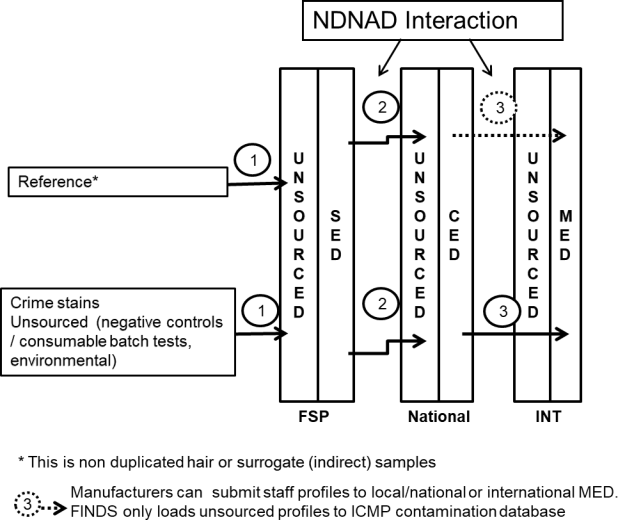
13.1.2 All profiles, either single source or component(s) of interest in interpreted mixtures, casework or reference, should be compared against the relevant laboratory staff elimination profiles held on the laboratory Staff Elimination Database (SED) and if undetected against the Contamination Elimination Database (CED), plus the relevant subset of profiles pertaining to the investigating police force, including forensic healthcare practitioners, unsourced and manufacturing staff profiles pertaining to the consumables used by the police force and laboratory (ISO/IEC 17025 ref 6.2 and 7.11 [12]) (also see section 5). Wherever possible data input should be automated to avoid DNA profile data errors. Where manual input of the data cannot be
avoided then processes such as double entry or a second independent check should be implemented and documented.
14. Searching
14.1 Match regime
14.1.1 The searching and matching regime should optimise the identification of contaminating profiles but minimise the number of adventitious matches. The regime should take into account the number of alleles that a forensic science provider (FSP) will use to report:
a. a statistical match probability to the court;
b. the minimum load criteria for the local, national and international databases. The load and search criteria for the Laboratory Staff Elimination Database (SED) can be less than that permitted for loading and searching against the Central Elimination Database (CED) and the Manufacturers Elimination Database (MED) as the laboratory staff Elimination Database (SED) will contain fewer staff profiles to search against, thus will have a higher tolerance to adventitious matches for partial profiles. This will allow for the identification of profiles that are more prevalent but difficult to identify due to the partial nature of the profiles;
c. the number of elimination records held in the elimination database;
d. the discriminating power of the elimination DNA profiles held; and
e. in particular any legacy profiles and the short tandem repeat (STR) multiplex kit(s) used to generate the profiles being compared.
14.2 Same short tandem repeat polymerase chain reaction chemistry/multiplex
14.2.1 For searches against profiles generated using the same polymerase chain reaction (PCR) chemistry/multiplex, demonstrable consideration should be given to high stringency searching and searching to accommodate for profile anomalies, such as allele mis-designation or omission and the rarer event of a somatic mutation.
14.2.2 Demonstrable consideration should be given to ensuring that the searching of profiles is conducted on numbers of alleles that maximise the chances of detecting contamination yet also minimise the numbers of false positives generated (the Code 92.11 [3]), and ISO/IEC 17025 ref 7.7 [12]).
14.2.3 For a highly discriminating search profile, high stringency matching with an N-1 routine should be undertaken. N-1 means that the search profile can contain a single designated allele difference at one locus and is not position specific (i.e., it can be in either the high or low molecular weight position).
14.2.4 The partiality of the profile where N-1 searching is unsuitable should be determined using the considerations listed in section 14.1.1 (for example, for search profiles with less than 8 alleles present against the SED and less than 12 alleles present against the CED and MED).
14.3 Different short tandem repeat polymerase chain reaction chemistries/multiplexes
14.3.1 For searches against profiles generated using different PCR chemistries/multiplexes, demonstrable consideration shall be given to high stringency searching and searching to accommodate for profile anomalies such as allele mis-designation or omission and the rarer events of non-concordance and somatic mutations. Such profiles types should be included as part of the validation of the searching algorithm to determine limitations of the search algorithm (the Code 27 [3] and ISO/IEC 17025 ref 7.7 [12]).
14.3.2 For a partial search profile determined to be unsuitable for N-1 searching (section 14.2.4) then high stringency matching should be undertaken to reduce the adventitious match rate.
14.3.3 For a discriminating search profile (for example, 11 to 16 alleles present) then high stringency matching with an N-1 routine should be undertaken.
14.3.4 For a highly discriminating search profile (for example, 17 or more alleles present) then high stringency matching with an N-1 routine shall be undertaken.
14.3.5 The use of an N-2 routine for highly discriminating profiles should also be considered. N-2 means as a minimum that the search profile and the retained elimination database profile contains a single designated allele difference at one locus, of which the loci could be different for each profile and is not position specific (i.e. either high or low molecular weight allele). The relevance of two differences in a DNA trace/stain profile of interest compared with an elimination profile should be considered as a targeted N-2 search condition (for example, for use on search profiles derived from component[s] of interest in interpreted mixtures). The N-2 routine could automatically produce N-1 matches.
15. Reporting Matches
15.1.1 A match to a DNA trace/stain or reference DNA profile shall be reported directly to the search requester for speculative searches, typically the DNA profiling provider/forensic science provider (FSP). For routine automated searches of SED, or CED, matches should be reported to the crime stain and staff profile owners to investigate as a contamination event.
15.1.2 Where a match against a profile from a consumables manufacturer is observed, the manufacturer should also be notified. See Table 1.
| Target profile source | Match against | Match report sent to single point of contacts |
|---|---|---|
| Undetected crime stains Reference samples Unsourced (negatives) |
Laboratory staff i.e. DNA profiling lab/FSP/police force (SED) (CED) | Target profile owner Lab/FSP/ police force (Target profile provider if match generated from CED) |
| Undetected crime stains Reference samples Unsourced (negatives) |
Manufacturing and kit assembly staff i.e. consumable suppliers (MED) | Target profile owner Manufacturer Target profile provider |
| Undetected crime stains Reference samples Unsourced (negatives) |
Medical staff for example, forensic pathology, medical and nursing staff – i.e. force contracted to SARC and Custody (CED, SED) | Target profile owner Force/SARC/pathology unit as pre-determined as the staff profile owner Target profile provider |
| Undetected crime stains Reference samples Unsourced (negatives) |
Unsourced (CDD) | Target profile owner DNA profile providers (target and matched profiles) NDNAD data integrity |
| Unsourced (negatives) | Consumable batch and negative controls (MED, CDD) | Target profile owner DNA profile providers (target and matched profiles) CED NDNAD data integrity |
Table 1: Guide to where matches should be sent for investigation and follow up.
15.1.3 Demographic information, except for the individual’s name (if it is held), and the search profile submitted alongside the matching loci (including the N-1, N-2 near match) of the nominated profile shall be provided with a unique match reference number, to allow for the distinction between repeat profile searches and for audit, tracking and follow-up purposes.
15.1.4 Following the investigation (see section 17) of the match, the organisation shall provide feedback as to the outcome of its investigation to relevant stakeholders, including FINDS.
16. Management Information
16.1.1 Records shall be maintained of all reported matches (Code sec 19 [3]) and outcomes of the investigations. Contamination rates and trends shall be recorded and periodically reviewed as appropriate within the laboratory/forensic science provider (FSP) quality management review meeting (ISO/IEC 17025 ref 6.4, 7.5 [12], ISO 15189:2022 sec 8.3, 7.3.6 [13],and the Code sec 19 [3], 27 [3]).
16.1.2 Records shall be maintained of the matches and outcomes of the investigations and made available on request to the Forensic Science Regulator/designated representative or nationally authorised forensic assurance unit e.g. FINDS for appropriate reviews/analysis/monitoring of contamination rates and trends.
16.1.3 The details recorded and reported for trend analysis and management information purposes should include the following:
a. single source or mixture profile result;
b. full or partial profile match i.e. match probability/confidence;
c. the type of event i.e. person to person, person to item, item to item determined through the root cause analysis of the investigation;
d. direct or indirect transfer i.e. primary (handler), secondary transfer, etc.;
e. the stage, process or place in the process where the contamination event occurred i.e. the consumable, equipment, environment, recovery, packaging, examination, sampling, extraction, polymerase chain reaction (PCR) and post-PCR;
f. timeline i.e. especially where indirect contact/secondary or complex transfer is the only feasible explanation;
g. other relevant information to aid trend analysis, understand mechanisms of transfer and improve anti-contamination good practice, for example, staff repeat incidences, faulty air flow, cleaning regime, storage conditions, sampling process, skin condition, etc.
17. Investigation process
17.1 Match investigations
17.1.1 All instances where a match against an elimination database profile is observed are to be investigated. The default position is that there is an innocent explanation for the match.
17.2 Match of reference (PACE) sample to a laboratory elimination profile record
17.2.1 An investigation is undertaken to determine if contamination occurred during processing of the Police and Criminal Evidence Act 1984 (PACE) sample, and full records shall be maintained of all instances (Code sec 19 [3]), investigative steps taken, conclusions drawn and subsequent corrective actions taken. Throughout the investigation, the individual member of staff should be kept fully informed of progress. Investigations may include one or both of the following steps, depending on the circumstances:
a. the investigation may include processing the second sample (swab), where this still exists due to the constraints of PACE as modified by the Protection of Freedoms Act 2012 [28], as a quality assurance measure; and
b. if the match was against a member of staff involved in the processing of reference samples, they should not be involved in the reprocessing of the second sample.
17.2.2 If the profile obtained from the second sample does not match the profile from the first, attempts should be made to determine the point at which contamination occurred, by re-extracting and re-amplifying sample 1 and/or reamplifying the DNA extract from sample 1.
17.2.3 If the profiles from the first and second samples match, this indicates that contamination may not be the only explanation. The DNA profile result shall be loaded to the NDNAD once the FINDS DNA testing team has confirmed that the match is not due to the individual being a donor of a quality assurance sample used in an external quality assessment test.
17.3 Match of DNA trace/stain profile to laboratory elimination database profile record
17.3.1 An investigation is undertaken to determine if contamination occurred during processing of the DNA trace/stain/scene sample within the laboratory environment, and full records shall be maintained (Code section 19 [3] for each investigative step taken, conclusions drawn and subsequent corrective actions taken.
17.3.2 Investigations may include some or all the following steps depending on the circumstances:
a. the investigation may include reworking the original material, for example, by re-electrophoresis, re-amplification, or re-extraction from the stored extract component;
b. if the match was against a member of staff involved in the processing of DNA trace/stain/scene samples they should not be involved in the reworking; and
c. where appropriate, a deep clean should be conducted of the laboratories where the contamination may have occurred and where any re-processing takes place before re-processing is undertaken.
17.3.3 If the profile obtained from the rework no longer matches the original profile (if a single source) or in the case of a DNA mixture no longer contains the components that matched, the rework result may be used for casework analysis or for NDNAD applications, provided all the other required quality criteria are met.
17.3.4 If the profile remains unchanged on the reworking of the original material, then the original item should be re-examined and, where possible, attempts should be made to re-sample, i.e. take a new previously unprocessed part of the material, for example, a different area of the same stain or other discrete source of biological material.
17.3.5 If the re-sampled material no longer matches the original elimination profile record the rework result may be used for casework analysis or for NDNAD applications, provided that all other required quality criteria are met.
17.3.6 If the re-sampled material still provides a profile that matches against the original elimination profile record, another item linked to the same case or a different stain from the same item should be sought and processed, if these options exist.
17.4 Match of reference (PACE) sample or DNA trace/stain to a contamination elimination database (CED) profile record
17.4.1 The Force scientific unit(s) shall be informed that a match to a trace/stain or reference DNA profile has been obtained against a police staff elimination profile, disclosing demographic and matching profile information as agreed in the consent form.
17.4.2 It is the responsibility of the police force(s) involved in the match to investigate and advise the reporting DNA profiling provider/forensic science provider (FSP) whether or not contamination is the accepted explanation for the match and agree any follow-up actions and reporting requirements as necessary.
17.5 Match of reference sample or DNA trace/stain to a manufacturing staff elimination (MED) profile record
17.5.1 The police force single point of contact shall be informed that a match to a trace/stain or reference DNA profile has been obtained against a manufacturing staff elimination profile, providing matching profile information as agreed in the consent form.
17.5.2 Consideration should be given to whether contamination is the accepted explanation, particularly if the consumable manufacturer is not UK-based. The DNA profiling provider/forensic science provider (FSP) shall advise the police force if any follow-up investigation should be undertaken for the match and agree any follow-up actions and reporting requirements as necessary.
17.5.3 The manufacturer shall be informed that a match to a trace/stain or reference DNA profile was obtained against one of their staff elimination profiles, providing matching profile information as agreed in the consent form, to enable the manufacturer to investigate and feedback. The outcome of the investigation should be used for continuous review and improvement of its quality and staff training procedures.
18. Follow-up actions in the event of a DNA trace/stain match against elimination database profile record
18.1 Actions where contamination is a feasible explanation for the observations
18.1.1 In virtually all circumstances where the profile of an individual matches that from an exhibit that they have had either direct or indirect exposure to, it is reasonable to believe that this has arisen through innocent means of which contamination is the likely cause.
18.1.2 The investigation process outlined (section 17) is designed to elicit information regarding the probable mechanism by which contamination may have occurred. However, not all investigations into instances of matches against the staff elimination profile can be completed, for example, if insufficient material remains to enable rework to be undertaken, or only a partial profile can be generated. Under these circumstances the conclusion drawn should also be that contamination is the likely cause, but it cannot be proven. As a guide the following actions should be considered.
a. Notify all relevant staff (for example, the individual involved, their line manager, the quality leader, and other senior managers as dictated by the severity of the impact of the contamination) on the outcome of the investigation. It is not necessary to disclose the name of the person involved with staff or senior managers that are not relevant to the investigation.
b. Inform the person involved in the match, or where this person’s sample has been anonymised, the organisation for which they work.
c. Document that contamination may have occurred on the case-file, together with the summary of the investigation (ISO/IEC 17025 ref 7.10 [12]).
d. Record the incident in the non- conformance log This should be regularly reviewed to identify trends in contamination and potential improvements to reduce the risk of recurrence. These actions should be captured within the improvement and corrective action process (ISO/IEC 17025 ref 7.10 [12], ISO 15189 ref 8.5, 8.6, 8.7 [13]).
18.2 Actions where contamination is not a plausible explanation for the observations
18.2.1 Circumstances in which contamination is not a plausible explanation for a match are extremely rare.
18.2.2 Typically, this is where a discrete item, such as a piece of chewing gum or blood stain, is of sufficient size and DNA yield to enable re-sampling from a separate part of the same item, and this repeatedly yields a full DNA profile matching against the laboratory Staff Elimination Database (SED). Under these circumstances, assuming it is not a quality assurance sample used in a FINDS DNA testing trial, the following actions may be required.
a. Disclosure to the investigating police force of the name of the individual concerned where this is known, for example, a member of staff of the consumable manufacturer, FSP, SARC or police staff.
b. Disclosure of the organisation for which the matching individual works, where their name has not been provided, for example, subcontractors.
c. Depending on the circumstances of the case, the police may wish to make further inquiries with the individual in question in order to eliminate them from the investigation.
d. Disclosure of the incident to senior managers within the relevant organisation, with subsequent actions according to their Human Resources procedures.
e. At the conclusion of the investigation a decision should be made in conjunction with the police force on whether the DNA trace/stain profile should be retained or entered on the NDNAD.
19. Broader considerations in contamination investigations
19.1.1 Knowledge and understanding regarding the mechanisms by which DNA contamination can occur is continuously developing and will continue to do so in line with the evolution of new or increasingly sensitive DNA profiling technology.
19.1.2 Investigations into contamination events should not just focus on the processing of exhibits for DNA analysis and the events within the rooms in which samples have been processed but should take a wider view of activities within the entire building. For example, any activities including exhibit storage and movement, inspection, cleaning or maintenance of air management systems within the same building, even if remote from DNA clean (sensitive) areas, or any other kind of structural perturbation of the building, increases the risk of contamination occurring. This risk should be addressed by additional non-routine deep cleaning and environmental monitoring as required.
20. Collaborative contamination checks between forensic science providers
20.1.1 Where an accredited DNA profiling provider/forensic science provider (FSP) is undertaking analysis on material previously examined by a different DNA profiling provider, it may be necessary to check any new profiles generated against the Staff Elimination Database (SED) of the original examining FSP. Where this is undertaken, the DNA trace/stain profile shall be provided to the original examining DNA profiling provider/FSP for a SED search. Where a match is observed, release of the information is limited to the alleles shared with the DNA trace/stain profile, provided the consent form has explicitly allowed for such disclosure (sections 9 and 22).
21. Contamination report
21.1.1 Should the police require a contamination report (ISO/IEC 17025 ref 7.10 [12]) it should be provided.
21.1.2 Where a contamination report has been prepared it is revealable and disclosed to the Crown Prosecution Service and should be notified to the police for inclusion in any schedule of unused material prepared for the purposes of criminal proceedings. A summary on the schedule using similar terms to that outlined below might assist the prosecutor in determining whether a report is required, or whether there is a need to disclose.
a. The contamination report must not identify the person involved by name.
b. The report should explain the principles by which the appropriate laboratory Staff Elimination Database (SED), Contamination Elimination Database (CED) or Manufacturers Elimination Database (MED) operates, and the nature of investigations undertaken when a match occurs.
c. The investigation undertaken should be outlined in the report, identifying the root cause of the observed match and corrective actions taken where appropriate.
d. The report should include wording along the lines of: “The result/components of the DNA profile obtained from item x has matched a DNA profile held on the laboratory Staff Elimination Database/Contamination Elimination Database/Manufacturers Elimination Database. As the result/the component of the mixture relates to an individual involved with the laboratory analysis/sample handling/manufacturing process, the profile/component of the mixed profile can be assumed to be the result of contamination at the laboratory/scene/manufacture. As such, it has been treated as having no evidential value and has not contributed to my interpretation.”
22. Elimination database consent form
22.1.1 The principles and basis for obtaining consent for elimination samples for inclusion on an elimination database is set out in section 10. An example template that can be customised as appropriate is set out below.
22.2 Elimination database consent form template – visitor example
- I recognise that in the course of my employment or during my attendance at a scene or visiting a facility processing forensic material, I may come into contact with (select as appropriate):
- items, samples, or extracts on which DNA analysis may be required;
- consumables to be used in the collection, storage, and processing of samples for DNA analysis.
- As such there is a possibility that I could inadvertently contaminate these with my own DNA, and this could give misleading results.
- I therefore volunteer to provide a buccal/saliva sample for DNA profiling, and I agree to this profile being held on the Staff/Manufacturers (select as appropriate) Elimination Database.
- I also agree to this database being used by the Staff/Contamination/Manufacturers (select as appropriate) Elimination Database administrators and authorised forensic science providers to check against profiles generated for intelligence or evidential purposes for contamination, prior to and/or after their being loaded on to the National DNA Database® or used for casework reporting purposes.
- I understand that routinely this will involve the checking of each profile generated for criminal justice purposes against relevant staff, scene attendee, contractor and visitor profiles from site or sites where the item, or sample derived from it, or consumables used in the processing of the sample, have been handled.
- I understand that should I withdraw my consent, my profile will be removed and destroyed six or twelve months (Retention time is dependent on the role, access, risk and processing timescales for submission and analysis) after I cease to pose a contamination risk as defined in paragraph 1 above: it will not be transferred to an archive database and I will be notified of its destruction.
- I attach the following conditions to my agreement.
- My DNA profile must not be used for any other purpose than for the detection of accidental contamination.
- Should my DNA profile match that of a sample from a scene of DNA trace/stain will be checked prior to being disclosed to the Investigating Officer, who will assume it to be the result of contamination if this is a reasonable explanation.
- Access to information to link my DNA profile with me must be on a strict need to know basis, and all reasonable steps must be taken to eliminate any adventitious match with my DNA profile.
- Once I cease to pose a contamination risk as defined in paragraph 1 above, my profile shall either be (a) permanently deleted, or (b) transferred to a secure archive restricted for cold cases, appeals and judicial reviews (delete as appropriate).
- Should the Staff/Manufacturers (select as appropriate) Elimination Database cease to operate, then my DNA profile should be (a) transferred to another approved elimination database/authorised archive, or (b) removed and destroyed (select as appropriate), and I will be notified of this in writing.
Donor (name) Witness (name)
(The witness is anyone confirming the continuity of the sample taken against the details of the individual, this is usually someone involved in the sample collection or work.)
Signature
Signature
Date
Date
23. Acknowledgements
23.1.1 This guidance has been adapted from the previous, non-statutory
guidance FSR-P-302 “DNA contamination detection - The management and use of staff elimination DNA databases Guidance’ The Office of the Forensic Science Regulator and Forensic Information Databases Service undertook the review and update. The Regulators DNA Sub-Specialist Group provided an overall review of this guidance.
24. Modification
24.1.1 This is the first issue of this document under section 9 of the Forensic Science Regulator Act 2021.
24.1.2 The PDF is the primary version of this document.
24.1.3 The Regulator uses an identification system for all documents. In the normal sequence of documents this identifier is of the form ‘FSR-###-####’ where
(a) (the first three ‘#’) indicate letters to describe the type of document and
(b) (the second four ‘#’) indicates a numerical code to identify the document. For example, this document is FSR-GUI-0028, and the ‘GUI’ indicates that it is a guidance document. Combined with the issue number this ensures that each document is uniquely identified.
24.1.4 If it is necessary to publish a modified version of a document (for example, a version in a different language), then the modified version will have an additional letter at the end of the unique identifier. The identifier thus becoming FSR - ### - #### - #.
24.1.5 In the event of any discrepancy between the primary version and a modified version then the text of the primary version shall prevail.
25. Review
25.1.1 This document is subject to review by the Forensic Science Regulator at regular intervals.
25.1.2 The Forensic Science Regulator welcomes views on this guidance. Please send any comments to the address as set out at the following web page: www.gov.uk/government/organisations/forensic-science-regulator or send them to the following email address: FSREnquiries@forensicscienceregulator.gov.uk.
26. References
-
UK Legislation, “Data Protection Act 2018,” legislation.gov.uk, [Online]. [Accessed 19 02 2026].
-
The Council of The European Union, “Council Framework Decision 2009/905/JHA of 30 November 2009 on accreditation of forensic service providers carrying out laboratory activities,” [Online]. [Accessed 19 02 2026].
-
Forensic Science Regulator, “Forensic science activities: statutory code of practice - version 2,” [Online]. [Accessed 23 01 2026].
-
UK Statutory Instruments 2018 No. 1276, “The Accreditation of Forensic Service Providers Regulations 2018 and The Accreditation of Forensic Service Providers (Amendment) Regulations 2019,” [Online]. [Accessed 10 03 2021].
-
Home Office, “Forensic Information Databases Strategy Board,” [Online]. [Accessed 14 01 2026].
-
International Organization for Standardization, Minimizing the risk of human DNA contamination in products used to collect, store and analyze biological material for forensic purposes — Requirements.
-
British Standards Institute, “PAS 377 - Consumables used in the collection, preservation and processing of material for forensic analysis – Product, manufacturing and forensic kit assembly – Specification,” 01 01 2023. [Online]. [Accessed 07 01 2026].
-
Forensic Science Regulator, “Contamination controls – Scene of crime (FSR-GUI-0016),” [Online]. [Accessed 13 01 2026].
-
Forensic Science Regulator, “DNA contamination controls: forensic medical examinations (FSR-GUI-0017),” [Online]. [Accessed 13 01 2026].
-
Forensic Science Regulator, “DNA contamination controls: laboratory (FSR-GUI-0018),” [Online]. [Accessed 13 01 2026].
-
Forensic Science Regulator, “FSR-GUI-19 Guidance: Contamination Detection- DNA Elimination Samples,” 2026. [Online]. [Accessed 20 02 2026].
-
British Standard Instutute, BS EN ISO/IEC 17025, General requirements for the competence of testing and calibration laboratories.
-
International Organization for Standardization, BS EN ISO 15189 Medical Laboratories - Requirements for quality and competence, ISO, 2022.
-
Fonneløp, E., Egeland, T., Gill, P., “Secondary and subsequent DNA transfer during criminal investigation,” Forensic Science International: Genetics, vol. 17, p. 155–162, 2015.
-
Cale, C. M., Earll, M. E., Latham, K. E. and Bush, G. L., “Could Secondary DNA Transfer Falsely Place Someone at the Scene of a Crime?,” Journal of Forensic Sciences, vol. 61 (1), p. 196–203, 2016.
-
Lapointe, M., Rogic, A., Bourgoin, S., Jolicoeur, C. and Séguin, D., “Leading-edge forensic DNA analyses and the necessity of including crime scene investigators, police officers and technicians in a DNA elimination database,” Forensic Science International: Genetics, vol. 19, pp. 50-55, 2015.
-
Pickrahn, I., Kreindl, G., Müller, E., Dunkelmann, B., Zahrer, W., Cemper-Kiesslich, J.; Neuhuber, F., “Contamination incidents in the pre-analytical phase of forensic DNA analysis in Austria - statistics of 17 years,” Forensic Science International: Genetics, pp. 3112 -3118, 2017.
-
Basset, P., Castella, V., “Lessons from a study of DNA contaminations from police services and forensic laboratories in Switzerland,” Forensic Science International: Genetics, vol. 33, p. 147–154., 2018.
-
Mercer, C., Abarno, D., Hearnden, P., Linacre, A., “DNA transfer between evidence bags: is it a means for incidental contamination of items?’,” Australian Journal of Forensic Sciences, vol. 53, no. DOI: 10.1080/00450618.2019.1699957, pp. 256-270, 2021.
-
Forensic Information Databases, “Forensic Information Databases annual report 2023 to 2024,” Home office, 11 10 2024. [Online]. [Accessed 13 01 2026].
-
Home Office, “Forensic Information Databases Service,” [Online]. [Accessed 9 01 2026].
-
Cabinet Office, National Security and Intelligence and Government Security Profession, “Security policy framework: protecting government assets,” [Online]. [Accessed 26 01 2026].
-
UK legislation, “The Police Regulations 2003, UK Statutory Instrument No. 527, Regulation 19 for DNA.,” [Online]. [Accessed 11 02 2026].
-
UK Legislation, “The Special Constables (Amendment) Regulations 2015.,” [Online]. [Accessed 10 09 2025].
-
The Police Regulations, “The Police (Amendment) Regulations 2015 No. 455, “Explanatory Memorandum,” 2003. [Online]. [Accessed 14 01 2026].
-
Forensic Capability Network, “FCN-SAR-GUI-0034 SARC Elimination Database Guidance,” 30 01 2025. [Online]. [Accessed 9 01 2026].
-
International Commission on Missing Persons, “DNA Exclusion Database,” ICMP, [Online]. [Accessed 12 01 2026].
-
UK Legislation, “Protection of Freedoms Act 2012,” [Online]. [Accessed 10 02 2026].
-
UK Legislation, “Police and Criminal Evidence Act 1984,” [Online]. [Accessed 11 02 2026].
-
UK Legislation, “Criminal Procedure and Investigations Act 1996,” Legislation.gov.uk, [Online]. [Accessed 13 01 2026].
-
Sullivan, K., Johnson, P., Rowlands, D. and Allen, H., “New developments and challenges in the use of the UK DNA Database: addressing the issue of contaminated consumables,” Forensic Science International, vol. 146S, p. 175–176, 2004.
-
THE COUNCIL OF THE EUROPEAN UNION, “COUNCIL DECISION 2008/616/JHA of 23 June 2008,” [Online]. [Accessed 16 02 2026].
-
D. R. Hares, “Expanding the CODIS core loci in the United States,” Forensic Science International: Genetics, vol. 6, no. 1, p. e52–e54. , 2012.
-
D. R. Hares, “Addendum to expanding the CODIS core loci in the United States,” Forensic Science International: Genetics, vol. 6, no. 5, p. 135, 2012.
27. Abbreviations and acronyms
| Abbreviation | Meaning |
|---|---|
| BS | British Standard |
| CDD | Contamination DNA Database |
| CED | Contamination Elimination Database |
| CJS | criminal justice system |
| CODIS | Combined DNA Index System: the USA national DNA Database |
| DNA | Deoxyribonucleic Acid |
| EN | European Standards |
| ESS | European Standard Set of Loci |
| FINDS | Forensic Information Databases Service |
| FSP | forensic science provider |
| IEC | International Electrotechnical Commission |
| ISO | International Organisation for Standardization |
| SED | Staff Elimination Database (laboratory) |
| MED | Manufacturers Elimination Database |
| NDNAD | National DNA Database® |
| PACE | Police and Criminal Evidence Act 1984 |
| PAS | publicly available specification |
| PCR | polymerase chain reaction |
| STR | short tandem repeat |
28. Glossary
DNA contamination
The introduction of DNA, or biological material containing DNA, to an exhibit or subsample derived from an exhibit during or after its recovery from the scene or a person.
DNA 17
Short tandem repeat (STR) multiplex system (kit) with 17 STR loci (including the gender marker amelogenin).
DNA-sensitive area
Area in which appropriate DNA contamination prevention measures shall be maintained at all times. Also referred to as DNA clean areas.
Elimination database
Collection of DNA profiles held in a searchable format from personnel and visitors (e.g. service engineers) whose access/role/activities are deemed to be a potential contamination risk. The data are used to identify instances of inadvertent contamination.
Forensic DNA Grade
Consumables that are compliant with the requirements set out in ISO 18385:2016 Minimizing the risk of human DNA contamination in products used to collect, store and analyse biological material for forensic purposes.
Forensic science provider
Organisation that undertakes any part of the DNA sample recovery and analytical process on behalf of the police or other criminal justice system customers, police evidence recovery labs are also included.
Mixture
DNA profile that contains more designated alleles than would be expected if there were only one contributor to the sample
Partial profile
An incomplete profile obtained from the profiling system used.
Police and Criminal Evidence Act 1984 samples (PACE)
Reference DNA samples taken under the provisions of the Police and Criminal Evidence Act 1984 (PACE) and accompanying codes of practice that provide the core framework of police powers and safeguards around stop and search, arrest, detention, investigation, identification, and interviewing detainees.
The Prüm Treaty
The Prüm Treaty is an international police co-operation agreement signed by Austria, Belgium, France, Germany, Luxembourg, the Netherlands, and Spain on 27 May 2005, which has now become part of the legislative framework of the EU. The agreement involves police co-operation and information exchange on DNA profiles, fingerprints, and vehicle numberplates.
Reference sample
A biological sample obtained from a known person with the purpose of creating a DNA profile for comparison against an unknown questioned or casework sample.
Unsourced contaminant
A DNA profile identified as a contaminant i.e. following all relevant elimination database checks of which the source has not been identified. No template (negative) controls and quality control batch tests are considered as having originated from the manufacturing supply chain.
29. Further reading
Criminal Procedure and Investigations Act 1996 for England and Wales. [Accessed 13/02/2026].
Criminal Procedure Rules and Criminal Practice Directions. London: Ministry of Justice. [Accessed 13/02/2026].
European Council (1953) European Convention of Human Rights. [Accessed 13/02/2026].
European Network of Forensic Science Institutes, Guideline for DNA Database Management Review and Recommendations. [Accessed 13/02/2026]
Published by:
The Forensic Science Regulator
23 Stephenson Street
Birmingham
B2 4BJ.
www.gov.uk/government/organisations/forensic-science-regulator