Case study 2: CityFibre
Published 10 September 2026

© Crown copyright 2026
This publication is licensed under the terms of the Open Government Licence v3.0 except where otherwise stated. To view this licence, visit nationalarchives.gov.uk/doc/open-government-licence/version/3 or write to the Information Policy Team, The National Archives, Kew, London TW9 4DU, or email: psi@nationalarchives.gov.uk.
Where we have identified any third party copyright information you will need to obtain permission from the copyright holders concerned.
This publication is available at https://www.gov.uk/government/publications/local-full-fibre-networks-evaluation-work-package-one-report/case-study-2-cityfibre
CityFibre was selected as a case study because it is the largest alt-net provider involved in LFFN and delivered a large number of Public Sector Anchor Tenancy (PSAT) projects. This allowed us to examine the impacts of LFFN on the company as a whole, as well as its effects on supplier entry and competition in local broadband markets.
1. CityFibre – Market Position and Growth Context
CityFibre was founded in 2011 with the aim of transforming connectivity in the UK’s mid-tier urban areas (towns and cities outside London with populations of around 50,000 or more). Its early strategy centred on developing “Gigabit City” projects, which used an anchor tenancy model. Under this model, CityFibre partnered with local authorities that committed to taking fibre services across a portfolio of public sites. These long-term contracts provided guaranteed revenue streams that helped to de-risk investment and make wider commercial roll-out viable.
By 2014, CityFibre was already working with several cities, including Peterborough, Coventry and York, and had announced plans to expand to a further 10 locations. These early deployments demonstrated the potential of local authority partnerships to stimulate private investment in full-fibre infrastructure and laid the foundations for further expansion.
In 2017, the company’s growth strategy shifted following the announcement of a long-term strategic partnership with Vodafone. The deal granted Vodafone a period of exclusive rights to market ultrafast consumer broadband on CityFibre’s fibre-to-the-premises network. This agreement marked CityFibre’s move from a primarily public-sector-anchored model towards large-scale residential delivery, with an initial plan to reach at least one million homes across up to 12 cities and towns by the end of 2021.
CityFibre’s expansion accelerated further in 2018 when it was acquired by Bidco, a joint venture between Antin Infrastructure Partners and West Street Infrastructure Partners (backed by Goldman Sachs). Later that year, the new investors established a £2.5 billion fund to support an ambitious build programme targeting 5 million premises in 37 UK cities and towns by 2025. In 2020, CityFibre announced a major expansion of its programme, adding a further 36 locations and increasing the total footprint to 62 cities and towns.
As of March 2025, CityFibre’s network reached around 4.3 million premises nationwide. While the company still aspires to reach up to 8 million premises, its commercial build has slowed in recent years, and future growth is expected to be driven increasingly through acquisitions.
Alongside its urban focus, CityFibre has also expanded into rural areas, securing 9 Project Gigabit contracts worth more than £865 million to extend full-fibre coverage to harder-to-reach communities.
2. CityFibre’s involvement in LFFN
The PSAT model taken forward through the LFFN programme was, in part, inspired by CityFibre’s own approach. CityFibre had successfully demonstrated the benefits of this model in several early projects and had submitted evidence during the programme’s design phase on how anchor tenancy agreements with local authorities could be used to stimulate fibre investment in towns and cities.
When this model was incorporated into LFFN, it created opportunities for a number of councils that CityFibre had already been working with to access public funding and move forward with their fibre plans. CityFibre supported several of these authorities in preparing their bids and subsequently went on to secure LFFN contracts in 5 areas:
-
Portsmouth – PSAT
-
Suffolk – PSAT
-
Wolverhampton – PSAT
-
Highlands – PSAT
-
Cambridgeshire – Public Sector Building Upgrade
2.1 Coverage of CityFibre in LFFN areas
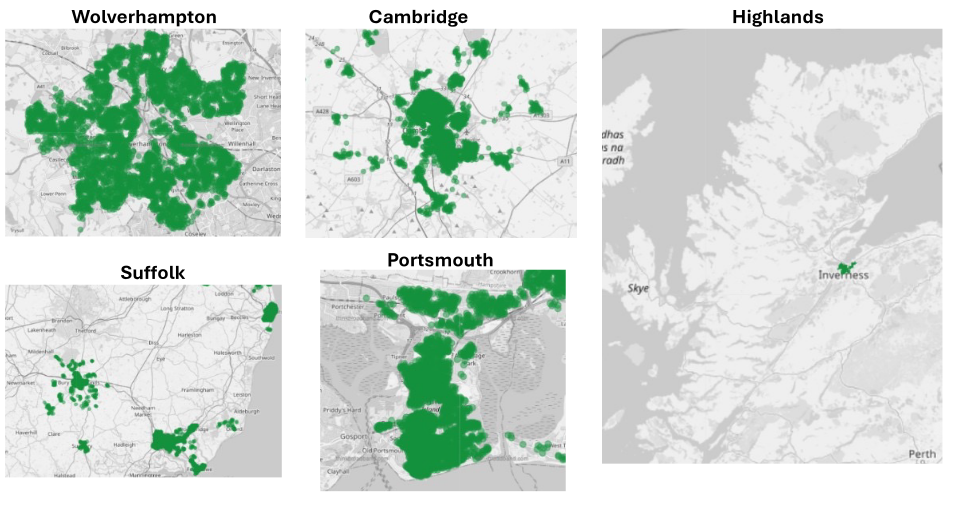
Source: ThinkBroadband – accurate as of January 2026
In addition to these projects, CityFibre has also made use of LFFN-funded infrastructure in other areas. In Blackpool, the company used CNI infrastructure that was funded through LFFN (see previous chapter). In Cambridgeshire, it has made commercial use of the county council’s LFFN-funded infrastructure, which is owned by the council and operated through Light Blue Fibre, a joint venture between the council and the University of Cambridge.
Of these locations, only Cambridge appeared on CityFibre’s original list of 10 target cities published in October 2018. However, the remaining areas were added to its national build plan following the award of LFFN contracts or the ability to access existing LFFN infrastructure. In July 2019, 3 LFFN areas – Inverness (Highlands), Lowestoft and Ipswich (both Suffolk) – were added to CityFibre’s Phase 2 rollout programme. This expansion was followed in March 2020, when CityFibre announced a further 36 build locations, including Bury St Edmunds (Suffolk), Portsmouth, Wolverhampton, and Blackpool.
2.2 Market entry and expansion
The chart below shows how CityFibre’s network coverage has evolved in each area where it secured an LFFN contract. Cambridge was the only location with an existing, though limited, presence in 2019, before the LFFN awards. In all other areas, the first premises were connected from 2021 onwards, suggesting that LFFN enabled CityFibre’s market entry. Since then, coverage has expanded rapidly, particularly in Cambridge, Portsmouth, and Wolverhampton, where more than 65% of premises could access CityFibre’s FTTP network by June 2025. Coverage remains lower in Suffolk (32%) and the Highlands (21%), reflecting their more rural and dispersed geography.
2.3 Coverage of CityFibre in areas where it won LFFN contracts

The CityFibre interviewee reported that 2 main factors influenced the company’s decision making on which areas to prioritise during its early expansion phase:
-
Local authority relationships: CityFibre prioritised areas where they had an existing relationship with the local council, particularly those that had clear digital connectivity strategies and objectives, and control over funding. This made engagement easier in unitary authorities, while coordination was more challenging in two-tier areas.
-
Market competition: The company focused on places with limited existing full-fibre coverage, typically where Virgin Media was absent or Openreach had not announced fibre rollout plans.
The interviewee noted the company had been in discussion with several of the relevant local authorities prior to LFFN, but projects had not progressed because of a lack of finance. In this context, the LFFN programme played a pivotal enabling role by providing the funding to unlock the anchor tenancy model. As the interviewee explained:
“LFFN drove our investment in these locations… When LFFN came along, it just meant that some of the councils we were engaged with could access funding to get their projects off the ground that they wanted to do with us already, but just were struggling because they didn’t have the money to start…. That was how our model worked; we needed the council as the anchor tenant and a lot of the councils would not have become an anchor tenant without the LFFN funding.”
This statement is supported by the timing of CityFibre’s rollout announcements. With the exception of Cambridge, none of the LFFN areas where CityFibre subsequently built networks appeared in the company’s published rollout plans until after LFFN funding had been awarded. This strongly suggests that CityFibre would not have entered these local markets without LFFN or that their entry would have been substantially delayed.
The interviewee could not confirm when CityFibre might otherwise have reached these areas in the absence of public funding. They acknowledged that the company had entered and expanded in several other cities (such as Milton Keynes and Leeds) without anchor tenancy agreements and therefore might eventually have reached the LFFN locations given the ambitious growth strategy at the time. However, they emphasised that the availability of LFFN funding “made the decision easy” and brought forward investment by at least a few years.
They also observed that LFFN’s influence varied by location. In their view, the programme likely had a more decisive impact in smaller towns and cities. They highlighted Inverness, Bury St Edmunds, and Lowestoft as examples where LFFN funding was particularly important in enabling deployment.
2.4 Conclusion
Evidence from the interview and rollout data indicates that the LFFN programme was an important factor in CityFibre’s expansion into new markets between from 2021 onwards. Apart from Cambridge, which was already part of its plans, LFFN provided the funding needed to progress anchor tenancy projects in all other areas where CityFibre secured contracts, helping to bring forward deployment.
This took place during a period of rapid growth for CityFibre, when the company was regularly announcing new towns and cities for rollout. It is therefore likely that some of the LFFN areas would eventually have been included in its plans. However, while the precise timescales are uncertain, the evidence suggests that deployment in the Highlands and Suffolk would have been substantially delayed, or may not have occurred at all, without LFFN support. This indicates that the programme played a particularly important role in enabling CityFibre to enter these markets.
| Area | Contribution category | Justification |
|---|---|---|
| Cambridgeshire | Enabling contribution | CityFibre already planned to enter Cambridge, but LFFN strengthened the business case and enabled delivery. |
| Portsmouth, Wolverhampton | Substantial contribution | LFFN funding unlocked the anchor tenancy project in both areas, bringing forward the date of deployment. Neither area was in CityFibre’s stated rollout plans, but both are medium sized cities, which fit with CityFibre’s expansion strategy at the time, meaning it is likely they would have been connected eventually. |
| Highlands, Suffolk | Primary contribution | These areas were outside CityFibre’s usual commercial focus on urban areas. LFFN funding and anchor tenancy commitments were key to market entry, which would otherwise have been severely delayed or not occurred. |
3. Impacts on growth and financial performance
CityFibre published its first set of company accounts in 2016, reporting an annual turnover of £13.9 million. The company experienced steady growth up to 2021, when turnover reached £27.9 million, before accelerating sharply in subsequent years to £77 million by 2024. Despite this growth, CityFibre remains loss-making, reflecting the substantial capital investment undertaken over the past decade and the long timescales required to recover these costs.
3.1 Annual turnover of CityFibre, 2016 to 2024
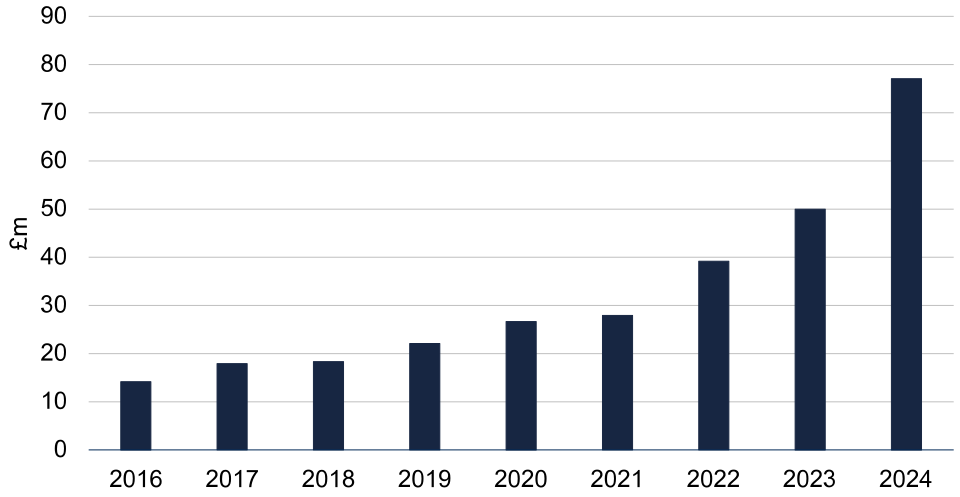
Source: Companies House
The interviewee from CityFibre believed that the LFFN programme had a positive impact on the company’s growth, estimating that revenue from LFFN areas accounted for around 10% of its annual turnover. This figure, however, does not consider the counterfactual scenario. At the time, CityFibre was pursuing an ambitious national expansion, meaning that the resources invested in LFFN areas could potentially have been directed elsewhere had the funding not been available.
The interviewee also noted that LFFN contributed to the company’s growth indirectly by enhancing its credibility and helping it to secure larger government contracts through Project Gigabit:
“It definitely helped us. We used it in all of our engagement with government, and obviously we have secured 9 [Project Gigabit] contracts. So we had credibility through the LFFN programme, which certainly helped us in that space for sure.”
3.2 Conclusion
LFFN made an enabling contribution to CityFibre’s growth and financial performance. While the company has expanded rapidly since 2016, this growth has largely been driven by its pre-existing national expansion strategy and substantial private sector investment already in place when most LFFN contracts were awarded. Even so, revenue from LFFN areas represents a notable share of annual turnover and the experience gained through LFFN strengthened CityFibre’s position to secure larger government contracts.
4. Attracting private investment
The interviewee from CityFibre explained that the company’s biggest barrier to growth has always been access to finance. Fibre deployment is highly capital intensive, and in its early years CityFibre often relied on borrowing against long-term government contracts to fund network build. When the company secured anchor tenancy agreements with local authorities, these commitments provided reassurance to lenders and helped to unlock working capital.
The interviewee believed that LFFN was “an important factor [in their ability to secure borrowing] in the early days”, referring in particular to the first LFFN contract in West Sussex as an example of how the programme supported confidence among investors and lenders. However, this was a wave one LFFN project, which falls outside the scope of this evaluation.
For the wave 2 projects (Wolverhampton, Suffolk, Portsmouth, and the Highlands), the evidence is less clear. The interviewee could not recall specific details but suggested the company might have continued borrowing against government contracts up to 2020. However, they also confirmed that access to finance became less of a constraint once major investment deals were in place, noting that
“Once Vodafone came on board and Goldman came on board, then obviously we didn’t need to raise money as much.”
Given that the Vodafone partnership was announced in 2017 and the Bidco acquisition in 2018 (both before the wave 2 contracts were awarded) it is unlikely that these later LFFN projects played a role in enabling CityFibre to attract private investment. The balance of evidence suggests that LFFN contributed to lender confidence in the company’s early growth phase, but by the time the wave 2 contracts were secured, CityFibre already had access to substantial private capital.
4.1 Conclusion
While there is some uncertainty about the precise impact of the wave 2 LFFN projects, the timing indicates they played only a marginal role in CityFibre’s ability to raise finance, as major private investment deals had already secured the necessary funding.
5. Competition in local broadband markets
5.1 Wholesale market
The charts below show how competition in gigabit-capable broadband coverage has evolved in areas where CityFibre delivered LFFN-funded projects. While the trends vary between locations, the data indicates that in each area CityFibre has established itself as one of the largest network providers alongside Openreach and Virgin Media O2 (VMO2) and, in some areas, other alt-nets. This suggests that LFFN investment has helped stimulate greater competition in local wholesale broadband markets.
It is less clear whether CityFibre’s entry directly prompted a competitive response from other operators. The CityFibre interviewee believed that it did, commenting that “the competition has reacted and improved their networks as well to keep up with what we’ve built.” In Wolverhampton, this was independently confirmed by a representative from Wolverhampton City Council, who explained that prior to LFFN, most operators were reluctant to invest locally, viewing the area as commercially unviable. Following CityFibre’s rollout, however, Openreach rapidly expanded its footprint, leading the council to believe that LFFN had been a “major catalyst” for greater competition This interpretation is supported by Point Topic data, which shows minimal Openreach coverage in Wolverhampton before CityFibre entered the market, followed by a sharp increase thereafter.
In other areas, the picture is more mixed. VMO2 already had extensive coverage in Cambridge, Portsmouth and Wolverhampton through its legacy cable network, and the data shows little subsequent change in its footprint. Openreach’s coverage increased only modestly in Cambridge and Portsmouth, and although it rose more sharply in the Highlands and Suffolk, this trend was already underway before CityFibre’s entry, making it difficult to attribute these increases directly to competitive effects from LFFN.
5.2 Percentage of premises able to access full-fibre or gigabit capable broadband through different providers in areas where CityFibre won LFFN contracts, 2019-2025
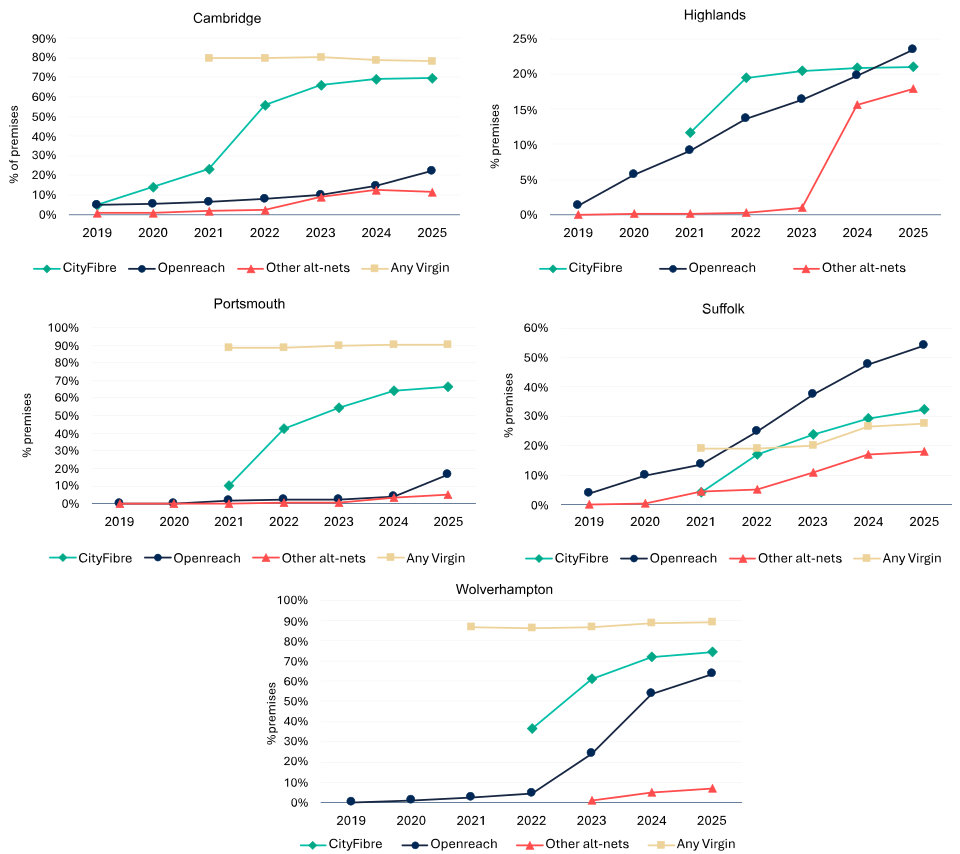
Source: Point Topic
Overall, the evidence suggests that LFFN supported CityFibre’s successful entry and expansion across diverse markets, strengthening local competition. However, the extent to which this triggered wider market responses from incumbent providers appears to vary by location. While it is difficult to assign a contribution category for Claim 6 without the input of VMO2 or Openreach, the available evidence suggests the competitive response was clearest in Wolverhampton.
5.3 Retail market
The entry of CityFibre into LFFN areas has increased competition and consumer choice in the retail broadband market. Across all areas, the CityFibre network is used by 2 Internet Service Providers (ISPs) to deliver broadband services; Zen Fibre and Vodafone. Both providers offer packages at 100–299 Megabits per second (Mbps), 300–999 Mbps, and over 1 Gigabit per second (Gbps), while Vodafone also provides options below 99 Mbps.
These ISPs represent a substantial share of available deals at higher speed thresholds. In the Highlands, for example, 20% of operators offering packages between 100 and 999 Mbps and half of those offering speeds above 1 Gbps use CityFibre’s network (see chart below). With the exception of Suffolk, CityFibre-based ISPs make up around 50% of operators offering 1 Gbps+ packages, suggesting that LFFN has had the greatest impact in expanding consumer choice for very high-speed broadband.
5.4 Number of ISPs offering broadband services at different speed thresholds, 2019-2025
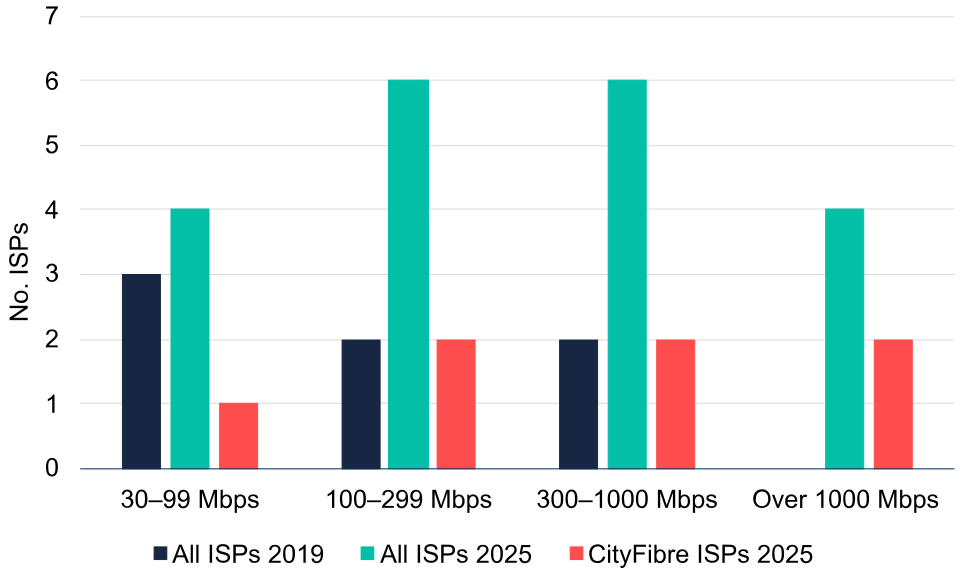
Point Topic
Overall, the evidence indicates that LFFN directly led to greater consumer choice by enabling CityFibre’s entry and expansion, which in turn increased competition in the retail market.
6. Market signal effects
The CityFibre interviewee did not believe that the LFFN programme had any wider market-signalling effect on the company’s strategy or investment plans. They explained that CityFibre’s rollout objectives were set independently and have remained unchanged despite shifts in government priorities and programmes:
“We were founded in 2020 to build to 8 million homes with full fibre, and that never changed. [The CityFibre founder]’s vision of what we were going to achieve never changed. LFFN was a further endorsement that, you know, we were on the right path and that the government felt that investing in it as well alongside us was the right thing to do to help accelerate things… So it didn’t influence us, it just supported what we were already doing.”
This suggests there is no evidence to support Claim 4 (LFFN acted as a market signal, influencing broadband operators to modify their strategic investment decisions by accelerating, expanding, or reprioritising their network expansion plans). While CityFibre did reprioritise its rollout in specific locations as a direct result of winning LFFN contracts, this is a direct result of programme participation rather than a wider market signalling effect. There is no evidence from the interview that LFFN altered CityFibre’s overall strategy, delivery model or national approach to network expansion meaning it made no contribution.
7. Cost of broadband services
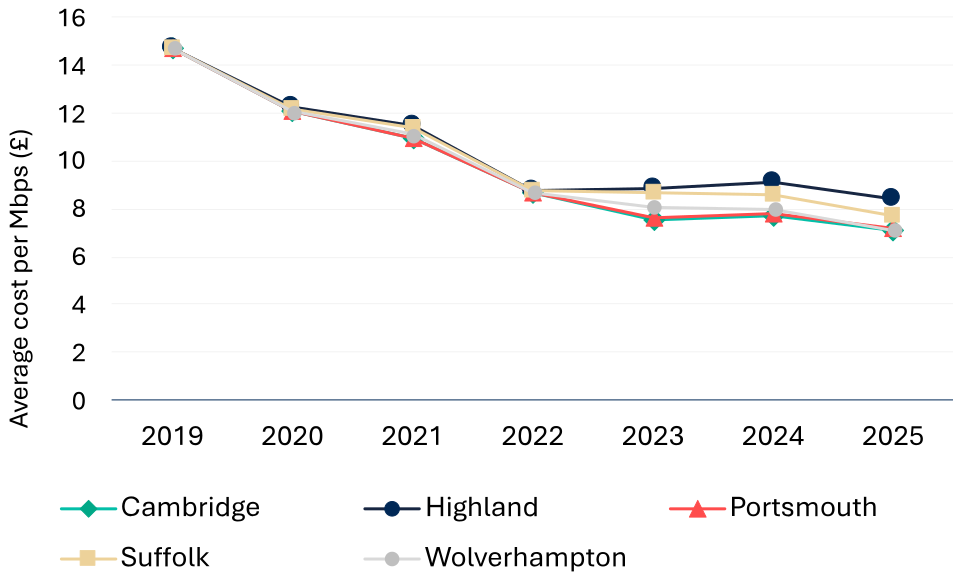
Analysis of change in the cost of broadband in areas where CityFibre won LFFN contracts shows very similar patterns in all of the areas. This is particularly the case for 2019 and 2020 when all markets were dominated by incumbents, meaning the packages available were largely the same in each area. There is more variation in costs from 2021 onwards, when new suppliers entered the market, though the average costs per Mbps are still broadly similar. The chart below relates to broadband deals for between 30 and 99 Mbps, but this pattern is repeated across other speed thresholds, with cost variation only occurring from 2021 onwards.
7.1 Average annual cost per Mbps for broadband deals with download speeds between 30 and 99 Mbps.
Source: Point Topic
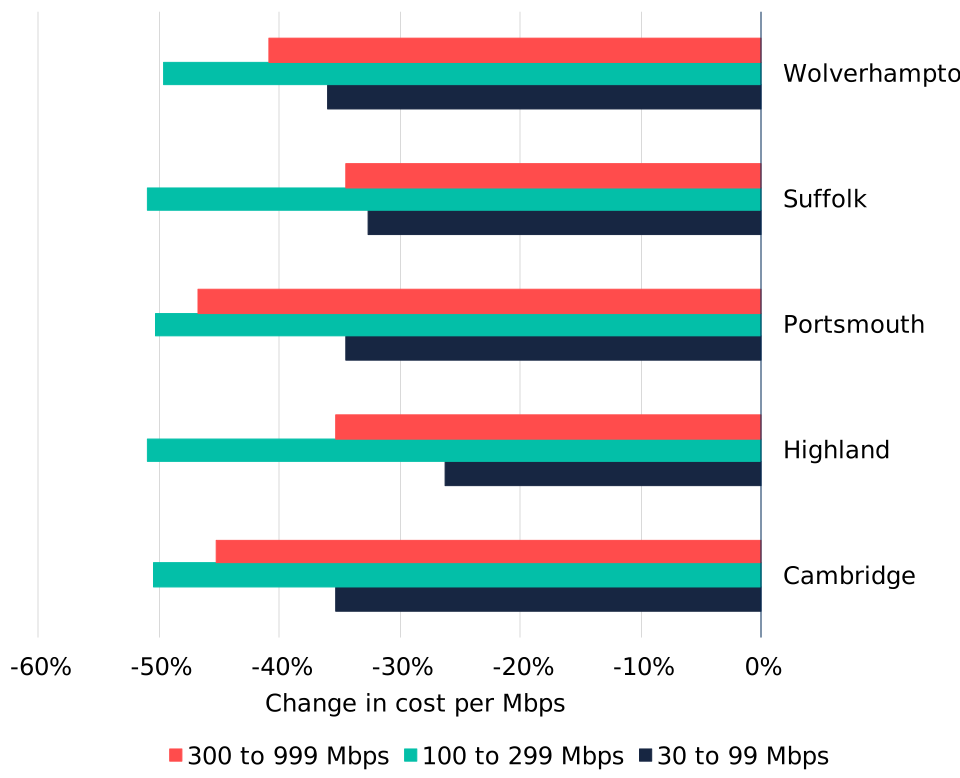
The chart below focuses on the period since 2021 as data before this date includes fixed telephony and is therefore not directly comparable. This is also consistent with the period when CityFibre first entered these markets. All areas have seen falls in the cost of broadband over time. This is the case for all speed thresholds, although the percentage falls are greater for higher speed packages.
7.2 Percentage change in the average annual cost per Mbps in CityFibre areas, 2021-2025
Source: Point Topic
The data also shows that CityFibre ISPs are offering the cheapest prices available on the market in all of the areas where they operate. This is the case for all speed thresholds, indicating that their entry into the market has reduced prices and made broadband more affordable for consumers.
This provides strong evidence in support of Claim 8: LFFN influenced broadband pricing by increasing competition in local markets, leading to a reduction in the cost of broadband subscriptions.
8. Summary of conclusions
| Outcome area | Evaluation conclusions (including contribution categories where assigned) |
|---|---|
| Supplier entry (Claim 1) | Cambridgeshire – Enabling contribution. CityFibre already intended to enter Cambridge, but LFFN strengthened the business case and helped progress delivery. Portsmouth & Wolverhampton – Substantial contribution. LFFN funding unlocked anchor tenancy arrangements that brought forward deployment; both areas fit CityFibre’s strategy and would likely have been reached eventually. Highlands & Suffolk – Primary contribution. These areas were outside CityFibre’s urban commercial focus. LFFN was a decisive factor enabling entry that may not otherwise have occurred or would have been substantially delayed. |
| Alt-net growth and financial performance (Claim 3) | Enabling contribution. CityFibre’s national growth trajectory was primarily driven by major private investment deals from 2017 onwards. However, revenue from LFFN areas represents a material share of turnover (around 10%), and the company reported that participation in LFFN enhanced its credibility when bidding for later public contracts (e.g. Project Gigabit). |
| Attracting private investment (Claim 5) | Marginal or no observable contribution. While early LFFN projects helped CityFibre secure borrowing in its early years, the wave 2 projects considered here took place after major investment from Vodafone (2017) and Bidco (2018). By this stage, LFFN contracts were no longer a material factor in accessing private capital. |
| Market competition – wholesale (Claim 6) | LFFN supported CityFibre’s emergence as a major competitor in all project areas. Evidence of wider competitive response is strongest in Wolverhampton, where Openreach expanded rapidly following CityFibre’s entry. In Cambridge, Portsmouth and Wolverhampton, VMO2 already had strong coverage, limiting observable effects. In Suffolk and the Highlands, Openreach expansion pre-dated CityFibre. |
| Market competition – retail (Claim 7) | Substantial contribution. In all project areas, CityFibre enabled additional retail competition by supporting entry of Zen Internet and Vodafone, particularly at higher speed tiers. CityFibre-based ISPs accounted for around 50% of 1 Gbps+ offers (except in Suffolk), increasing consumer choice for very high-speed services. |
| Pricing impacts (Claim 8) | Substantial contribution. Across all areas, CityFibre ISPs consistently offered the lowest-cost packages at all speed thresholds. Prices declined across the market from 2021 onwards, and CityFibre’s low-priced gigabit packages exerted downward pressure on local pricing. |
| Market signalling effects (Claim 4) | No observable contribution. CityFibre reported that LFFN did not influence its wider investment strategy. The company’s national targets and commercial priorities remained unchanged. |