Inclusion and Diversity Annual Report 2024-25
Published 15 December 2025

© Crown copyright 2025
This publication is licensed under the terms of the Open Government Licence v3.0 except where otherwise stated. To view this licence, visit nationalarchives.gov.uk/doc/open-government-licence/version/3 or write to the Information Policy Team, The National Archives, Kew, London TW9 4DU, or email: psi@nationalarchives.gov.uk.
Where we have identified any third party copyright information you will need to obtain permission from the copyright holders concerned.
This publication is available at https://www.gov.uk/government/publications/inclusion-and-diversity-annual-report-2024-25/inclusion-and-diversity-annual-report-2024-25
Foreword from Penny
At the Intellectual Property Office (IPO), we aspire to be a high performing organisation. In the context of inclusion, this means that we create an environment where all our people feel supported and encouraged to thrive. We want to be the best IPO we can be, for our people, our customers and wider society.
This year, we’ve built on the things that our people value, and adapted our approach where we know we can do better. We have strengthened the support we offer our community, especially around neurodiversity, reducing our gender pay gap, improving men’s mental health and wellbeing, while improving inclusion for ethnic minority colleagues.
We are proud of the way our culture is evolving, demonstrating our values of being adaptable, accountable, and connected, and helping us shape an IPO that has a positive effect on our economy and society. Our people strategy challenges us to grow our skills, improve how we work, and find purpose in our shared ambition. All our people have a role to play in building our future, and we are energised by that collective responsibility.
We know that inclusion is not only about fairness, it is also about the tangible differences our people make as they promote and uphold intellectual property (IP) rights. A more diverse and inclusive IPO helps us better serve the UK’s innovators, creators, and entrepreneurs. Well-used IP unleashes creativity and strengthens our economy. Supporting growth and investment, an effective, accessible, and forward-thinking IP environment can make the UK one of most attractive places for innovation and creativity to call home.
This report reflects the progress we’ve made and the work still ahead. We are proud of what we’ve achieved, and we remain committed to continuous improvement, together.
Highlights
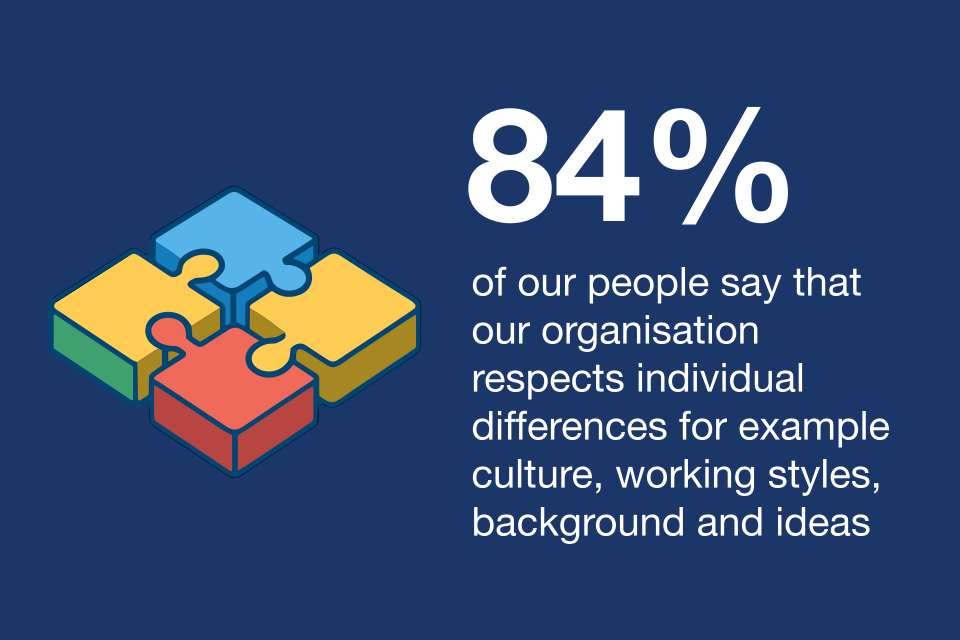
- 84% of our people say that our organisation respects individual differences for example culture, working styles, background and ideas

- 83% of our people feel treated fairly at work
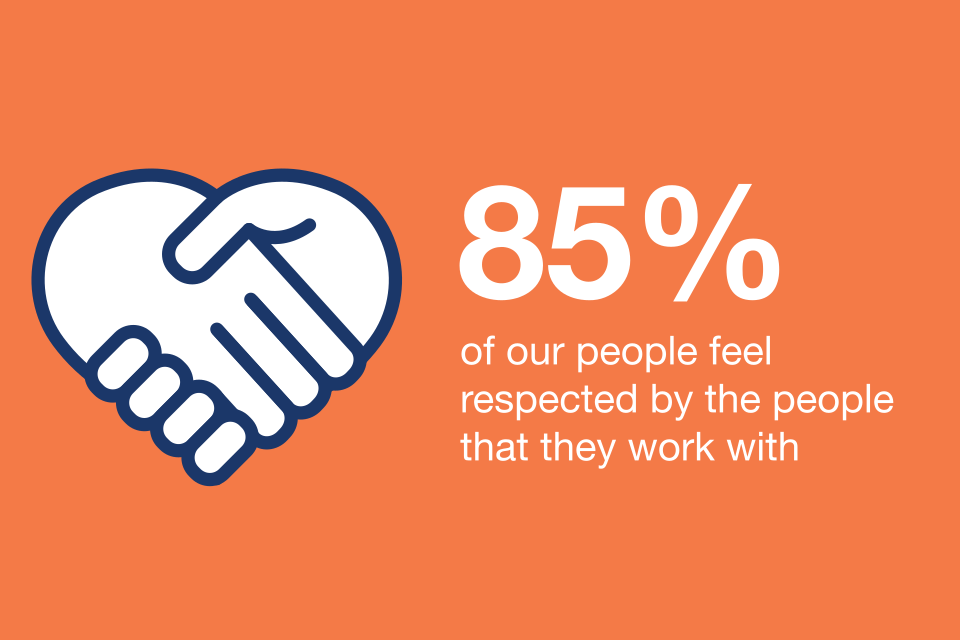
- 85% of our people feel respected by the people that they work with
Source: People Survey 2024
Our inclusion strategy
Culture statement
Over the past two years we have developed and communicated a vision for the culture that we need at the IPO to enable us to successfully achieve our strategy.
The culture we need is one where:
- we are adaptable, we value ideas and take opportunities to make the IPO better
- we are accountable for our experience, development and performance and build effective relationships with our colleagues
- together we carry out our strategy, share our successes and are connected to each other and our organisation
In 2025, we are continuing to embed that vision, adopting a skills-based approach to developing our people and equipping our leaders and managers with the skills and tools they need to have a positive effect on our culture and performance.
At the IPO, we believe everyone should feel comfortable being who they really are at work. When our people feel they belong, they flourish and achieve great things.
Strategy
Our inclusion and diversity ambition is to be one of the most universally accessible employers and service providers in the UK. To do that, our plan focuses on:
- creating an environment where people feel a sense of belonging and feel valued and safe to be themselves in the workplace
- equipping leaders and managers with the confidence, clarity, and capability to capitalise on the benefits of a truly diverse organisation
- developing talent streams which enable diversity at all levels of the organisation creating a true sense of belonging
- developing comprehensive and rich data which allow us to target the right support in the right places at the right time
- encouraging improved representation in IP, working right across the IP ecosystem, not just in the UK but globally
I can’t imagine a more supportive workplace. Many colleagues are open about their autism and ADHD, which allows other colleagues who are less open, to be themselves. The IPO’s culture allows me to grow, but also provides empathy for the challenges I face.
Connor
Zero tolerance approach to bullying, harassment and discrimination
At the IPO, we have a zero-tolerance approach to bullying, harassment and discrimination.
Everyone must help prevent bullying and discrimination by creating a culture where people can speak honestly about hurtful experiences, knowing they’ll be heard and supported.
Over the past year, we’ve worked with a taskforce to improve our people’s confidence in reporting bullying, harassment and discrimination. We’ve improved reporting processes for bullying, harassment and discrimination, making both support services and resolution procedures more accessible. It’s our aim to create an environment where our people feel safe and confident to challenge inappropriate behaviours. We’ve also created workshops to build our people’s skills when navigating conflict and giving feedback.
Our people
I am impressed with how the IPO recognises the differences in its people and how the Inclusion and Diversity networks support them. In particular, as a woman of a certain age, developing understanding of and how line managers can support women through the menopause.
Helen
We listen to and learn from our people. We gather insights from our diverse workforce about their experiences, using this understanding to improve how we connect with and support the communities we serve.
Our open communication culture, where staff can raise questions and concerns through dedicated channels, helps us identify blind spots and ensures we’re addressing the issues that matter most to the people we work with.
At the heart of our approach are our employee networks, which play a vital role in shaping our organisational culture and informing our understanding of different communities. These networks don’t just support our people internally - they enhance our ability to communicate effectively with diverse audiences and ensure our services are accessible to everyone.
By investing in our people’s voices and experiences, we’re building an organisation that truly understands and reflects the communities we serve, enabling us to deliver more inclusive and effective public services.
We encourage our people to share their personal characteristics with us as this is an important means of implementing and promoting diversity within the workplace. By collecting diversity data on our workforce and those that apply to work with us, and analysing the results, we can address any areas of our business where challenges such as unintended bias or exclusion may be holding us back. This also allows us to identify areas of good practice so we can continue and build on them.
Gender
We have seen a small decrease in female representation at the IPO from 47.86% in 2023 to 47.23% in 2024. We recognise that work needs to be done to improve this and address any perceived barriers that are preventing women from advancing in their careers at the IPO. In the coming year, we will continue to target women into leadership and specialist roles by continuing to provide our current initiatives and to encourage diverse representation across all levels of the organisation.
| Gender | Percentage of staff |
|---|---|
| Female | 47.23% |
| Male | 52.77% |
Gender pay gap
We are committed to being an inclusive organisation. While our mean gender pay gap has decreased, we recognise that that there is still much work to do. In 2024 to 2025, our mean gender pay gap was 15.35% and the median was 25.42%, favouring men’s salaries. This gap is not due to unequal pay, but rather an underrepresentation of women in STEM roles.
Although this issue is not exclusive to the IPO and reducing the gap is complex, we take it very seriously. We are actively seeking to recruit more women into our STEM roles and remove unintended barriers for all our women to develop in the workplace.
| Gender pay gap | Percentage of staff |
|---|---|
| Mean Gender Pay Gap | 15.35% |
| Median Gender Pay Gap | 25.42% |
Our organisation has implemented a comprehensive approach to addressing gender representation in the workplace, with particular focus on the information technology (IT) sector where women remain significantly underrepresented.
Through our strategic partnership with Code First Girls, we sponsor intensive coding programmes that provide women and non-binary individuals with essential technical skills. These initiatives create direct pathways into our IT department through 2-year fixed-term opportunities, ensuring talented individuals from underrepresented groups can access technical careers.
Our STEM Returners Initiative addresses the critical challenge of career gaps by supporting individuals re-entering the STEM sector. This 2-year programme combines tailored training, professional coaching, and confidence-building support to help participants successfully transition back into technical roles.
Recognition of our efforts came through our success at the Women in Tech Awards, where we won Best Public Sector Award in 2024. This achievement reflects our commitment to creating an inclusive culture where women can progress into leadership positions whilst breaking down traditional barriers to STEM careers.
Beyond STEM roles, our Empowering Women Programme provides structured mentoring and career development through our Women’s network. This initiative creates safe spaces for open dialogue about career progression, helping participants overcome perceived barriers and develop greater confidence in their professional aspirations.
We also recognise the broader life experiences that impact workplace equality, offering comprehensive support for menopause, caring responsibilities, and parenting through dedicated sessions, peer support groups, and team networks. These initiatives acknowledge that true equality requires understanding and accommodating the diverse challenges our workforce faces throughout their careers.
These programmes demonstrate our commitment to creating systemic change that addresses gender representation at every career stage, from entry-level opportunities through to senior leadership development.
Our action plan will see us concentrate on three main areas for the year ahead:
- awareness and candidate experience
- review internal processes, procedures, and system
- STEM Impact Programme
Ethnicity
The percentages for our diversity characteristics exclude those with an unknown characteristic and those that have selected to not declare their characteristic. Therefore, it does not show all staff in the organisation.
This year, ethnic minority colleagues represent 8.2% of our workforce, an increase from 7.25% last year. White colleagues (including white minorities) make up 91.72% of our workforce, compared to 92.75% in the previous year.
| Ethnicity | Percentage of staff |
|---|---|
| Ethnic minority | 8.2% |
| White (including White Minorities) | 91.72% |
| Mean ethnicity pay gap | 3.33% |
We recognise that meaningful change requires sustained effort and investment. Over the past year, we have introduced several key initiatives to support our black and ethnic minority colleagues and create a more inclusive environment.
We have launched a dedicated Race and Ethnicity Hub designed to help both managers and staff develop their confidence in discussing race and ethnicity issues. This resource supports more effective conversations and enables colleagues to better support one another in the workplace.
We conducted a comprehensive review of all our people data through an ethnicity lens, working closely with our staff network and trade unions. This collaborative approach helped us identify the most meaningful and impactful changes needed to improve the experiences of our black and ethnic minority colleagues across the organisation.
Our staff network leads monthly discussion sessions that are open to all colleagues. These sessions provide a safe space for people to ask questions about the experiences of black and ethnic minorities, explore topics of shared interest, and help managers develop a deeper understanding of how to create more inclusive teams.
Our action plan will see us concentrate on three main areas for the year ahead:
- attraction, recruitment and retention
- career development
- data
Disability
We reviewed our disability data collection process after feedback that our categories didn’t accurately reflect people’s experiences. To ensure data accuracy, we reset all disability records and invited everyone to provide fresh information, allowing them to self-categorise their disabilities. Our goal is to reach an 85% declaration rate, giving us confidence that our data is truly representative. We are committed to cultivating a culture of trust and psychological safety, where our people feel confident and supported in sharing their personal information with us.
Based on the data provided, 15.01% of staff have declared a disability while 85% identify as non-disabled. These figures are based on a 58.41% declaration rate from the workforce.
| Disability | Percentage of staff |
|---|---|
| Disability | 15.01% |
| Non-disabled | 85% |
The organisation established peer-led networks that create safe spaces for employees with disabilities and neurodivergent conditions to connect, share experiences, and develop strategies for workplace success. These networks not only help build individual confidence and reduce isolation but also provide valuable insights that help identify and address systemic barriers affecting career progression and pay equity.
Through campaigns during Neurodiversity Celebration Week and Disability Pride Month, the organisation actively works to increase public understanding of hidden disabilities and long-term conditions. These initiatives challenge societal stigma and promote more inclusive attitudes that extend beyond the workplace into the broader community.
The organisation has developed practical accessibility resources, including comprehensive toolkits for people with long-term conditions and inclusive hybrid working arrangements. These initiatives demonstrate how removing barriers benefits everyone and serves as a model for other organisations seeking to create more accessible environments that support career advancement for people with disabilities.
By aligning disability inclusion work with national Civil Service diversity strategies and organisational priorities, the organisation ensures that addressing the disability pay gap becomes embedded in wider policy frameworks. This strategic approach creates sustainable change that influences sector-wide practices and contributes to broader societal progress on disability equality.
Our networks main priorities this year will be:
- reducing stigma around disclosing disability conditions, requesting and using workplace adjustments, unmasking traits
- improving accessibility and our disability data
- increasing the profile of the network
Neurodiversity
Based on the provided data, the Intellectual Property Office (IPO) reports that 5.5% of its workforce identifies as neurodiverse. This figure represents the proportion of employees who have disclosed neurodivergent conditions within the organisation. However, it’s important to note that this representation figure is calculated from a 58.41% declaration rate, meaning that fewer than six in ten employees have chosen to share information about their neurodiversity status. The actual percentage of neurodiverse staff may therefore be higher, as the remaining 41.59% of employees who have not declared their status could include additional neurodiverse individuals who have chosen not to disclose this information.
We are continuing to improve declaration rates by building trust, increasing confidence, and creating a psychologically safe environment where our people feel comfortable sharing their personal data.
Lesbian, gay, bisexual, transgender and queer (or questioning) plus (LGBTQ+)
Based on the data collected, 8.28% of staff identify as LGBO (lesbian, gay, bisexual, or other sexual orientation) and 1.038% identify as transgender. These figures represent a partial picture of diversity within the service, as they are calculated from a 58.41% declaration rate and exclude colleagues who responded, “not sure”, “prefer not to say”, or did not declare their identity.
| LGBO | Percentage of staff |
|---|---|
| LGBO | 8.28% |
| Transgender | 1.038% |
The iPride Network has provided essential support for LGBTQ+ colleagues throughout the year, particularly during periods of uncertainty. Following the UK Supreme Court ruling on gender recognition in Scotland, the network hosted a dedicated discussion to create a safe space for colleagues to process the news and support one another, reinforcing its role as a trusted community resource.
iPride has also advanced trans inclusion across the broader intellectual property sector. The network collaborated with IP Out to develop a trans inclusion toolkit for law firms, providing practical guidance to support trans staff and equip managers with the tools needed for more inclusive working environments. This demonstrates iPride’s commitment to driving positive change beyond organisational boundaries.
Our networks main priorities this year will be:
- providing their members support in maintaining their mental and physical wellbeing through a series of support meetings
- liaising and working with senior management on how they can support the wellbeing of their people
Caring responsibilities
Nearly a quarter of IPO staff (23.93%) have identified themselves as having caring responsibilities, highlighting the significant proportion of the workforce who balance their professional duties with supporting family members or dependents outside of work. This finding underscores the importance of flexible working arrangements and supportive policies that enable employees to manage both their career commitments and their caring obligations effectively.
Wellbeing
In 2023, for the first time in my life, my mental health wasn’t good. I joined the Peer-2-Peer Network, and I’m so glad I did. The network has been an amazing source of support and friendship and has been great for my mental health.
Based on the IPO’s comprehensive wellbeing strategy and staff feedback, a range of support options are available to help maintain and improve employee wellbeing across three key areas.
The IPO’s Mental Health Strategy has helped create an environment where 63% of staff report being satisfied with their lives and 64% find their work worthwhile. Mental health support includes access to staff counsellors, trained mental health first aiders throughout the organisation, and a comprehensive employee assistance programme. This approach has helped destigmatise mental health discussions, with 66% of staff rating their mental health as good to excellent in 2024, showing a slight improvement from 2023.
Physical health support remains strong, with 68% of staff rating their physical health as good to excellent. Popular facilities include on-site gym access and cycling facilities for active commuting and fitness. The organisation also provides preventive healthcare through regular health screening programmes, offering blood pressure monitoring, osteoporosis testing, and cholesterol checks, complemented by an annual flu vaccination programme.
The IPO recognises volunteering as a vital component of social wellbeing, providing structured opportunities for staff to support local community organisations. Our volunteering initiatives serve a dual purpose: strengthening community partnerships whilst enhancing employee wellbeing through skill development, improved mental health, and stronger team relationships.
Whilst 58% of staff report feeling happy, the data shows that managing anxiety remains a challenge, with 38% reporting unfavourable anxiety levels, highlighting the continued importance of these comprehensive wellbeing services.
Recruitment
Attraction
The IPO is a very flexible place to work and provides everything you need to have a comfortable working environment, whether at home or in the office. The staff networks allow you to find people with common interests that keep staff motivated and helps deliver a good work life balance.
Zena
Maintaining an inclusive and diverse workplace culture begins from the beginning stage of the recruitment life cycle, reaching and attracting an inclusive audience - the calibre of candidates, and the diversity of candidates that apply.
This year we took action to strengthen application numbers, attract better candidates, and increase diversity. We did this by getting the recruitment team and hiring managers to engage early on in the process about what each role really needed.
These calls helped us remove unnecessary barriers. We cut down the essential requirements, got rid of desirable requirements where we could, and avoided excessive qualification requirements.
Additionally, to ensure fair and inclusive recruitment, we expanded our diversity advertising from 4 to 10 unique job boards including those targeting parents, people with disabilities, ethnic minorities, LGBTQ+ communities and neurodivergent individuals. The data shows some positive results at the attraction stage with a 10% increase of applicants declaring an ethnic background from last year.
Disability - Total applicants
| Disability disclosure | Percentage |
|---|---|
| No | 86% |
| Prefer not to disclose | 5% |
| Yes | 9% |
Sexuality - Total applicants
| Sexual orientation | Percentage |
|---|---|
| Bisexual | 5% |
| Gay or lesbian | 3% |
| Heterosexual or straight | 83% |
| Prefer not to disclose | 9% |
| Prefer to self-describe | 1% |
Ethnicity - Total applicants
| Ethnic group | Percentage |
|---|---|
| Asian / Asian British | 23.7% |
| Black / African / Caribbean / Black British | 18.1% |
| Mixed / multiple ethnic groups | 2.7% |
| Other ethnic group | 1.6% |
| Prefer not to disclose | 5.7% |
| White | 48.1% |
Gender - Total applicants
| Gender identity | Percentage |
|---|---|
| Man | 59% |
| Prefer not to disclose | 4% |
| Prefer to self-describe | 0% |
| Woman | 37% |
Selection
We continue to follow Government People Group and Civil Service Recruitment Principles, ensuring our processes reflect the latest guidance and best practice. Sifting of anonymised applications is carried out by the hiring manager and an independent panel member, all of whom have completed the necessary training. We are committed to ensuring that recruitment panels are as diverse as possible.
To further break down barriers for candidates, we have listened to feedback and acted upon feedback and this year produced additional guidance to help applicants understand what we are looking for at both the application and interview stages. This includes updated ‘How to Apply’ information on our careers site, as well as improvements to the candidate experience and our reasonable adjustments process.
Hiring managers have been encouraged to use the full range of Civil Service Success Profiles, incorporating assessment methods more commonly seen in the private sector, to attract candidates from a wider variety of backgrounds. In this reporting period, we invited 709 candidates to interview. Below is a breakdown of the diversity declarations for those invited:
Disability - Invite to interview
| Disability disclosure | Percentage |
|---|---|
| No | 81% |
| Prefer not to disclose | 7% |
| Yes | 12% |
Sexuality - Invite to interview
| Sexual orientation | Percentage |
|---|---|
| Bisexual | 5% |
| Gay or lesbian | 3% |
| Heterosexual or straight | 81% |
| Prefer not to disclose | 11% |
| Prefer to self-describe | 1% |
Ethnicity - Invite to interview
| Ethnic group | Percentage |
|---|---|
| Asian / Asian British | 23.2% |
| Black / African / Caribbean / Black British | 17.6% |
| Mixed / multiple ethnic groups | 2.3% |
| Other ethnic group | 1.6% |
| Prefer not to disclose | 5.4% |
| White | 49.9% |
Gender - Invite to interview
| Gender identity | Percentage |
|---|---|
| Man | 54% |
| Prefer not to disclose | 6% |
| Prefer to self-describe | 1% |
| Woman | 39% |
Recruited
As we reach the offer stage, the data shows a shift in those appointed who have declared a minority ethnic background. We recognise a need to do more to understand why candidates from non-white backgrounds do not convert into offers at the same rate as white candidates.
We are committed to ensuring that our recruitment processes are fair, inclusive, and reflective of the areas in which we employ. While we continue to attract applications from a highly diverse range of candidates, we acknowledge that this is an area where more understanding is needed. Encouragingly, the proportion of ethnic minority colleagues we appoint remains broadly comparable to the UK and Welsh working-age populations.
As part of our ongoing commitment to equity, we are taking steps to review our recruitment practices in detail, including deeper analysis of interview outcomes and candidate feedback. We are also enhancing our monitoring and follow-up processes to better understand the experiences of all candidates. These actions will help us identify and address any barriers, ensuring that everyone has an equal opportunity to succeed at the IPO.
We issued offers to 209 individuals. Below is a breakdown on the diversity declarations for successful applicants after interview:
Disability - Offered a post
| Disability disclosure | Percentage |
|---|---|
| No | 84% |
| Prefer not to disclose | 7% |
| Yes | 9% |
Sexuality - Offered a post
| Sexual orientation | Percentage |
|---|---|
| Bisexual | 5% |
| Gay or lesbian | 4% |
| Heterosexual or straight | 81% |
| Prefer not to disclose | 9% |
| Prefer to self-describe | 1% |
Ethnicity - Offered a post
| Ethnic group | Percentage |
|---|---|
| Asian / Asian British | 8.8% |
| Black / African / Caribbean / Black British | 0.4% |
| Mixed / multiple ethnic groups | 2% |
| Other ethnic group | 0.4% |
| Prefer not to disclose | 5.8% |
| White | 82.6% |
Gender - Offered a post
| Gender identity | Percentage |
|---|---|
| Man | 45% |
| Prefer not to disclose | 5% |
| Prefer to self-describe | 1% |
| Woman | 49% |
Looking ahead
Over the next year we will be scrutinising data to support programmes such as:
- improving access to leadership for underrepresented groups with programmes such as our reshaped Empowering Women Programme
- improving support around health issues such as endometriosis and men’s mental health
- building our people’s confidence to have sensitive conversations around their personal experiences
- working with staff networks to reduce discrimination, bullying and harassment
Diversity statistics
Working pattern
| Working pattern | IPO | Civil Service (2024/25) |
|---|---|---|
| Full Time | 78.92% | 80.6% |
| Part Time | 21.08% | 19.4% |
Gender
| Gender | IPO | Civil Service (2024/25) |
|---|---|---|
| Female | 47.23% | 54.6% |
| Male | 52.77% | 45.4% |
Gender in STEM
| Gender | Percentage |
|---|---|
| Female | 23.95% |
| Male | 76.05% |
Gender in non-STEM
| Gender | Percentage |
|---|---|
| Female | 60.67% |
| Male | 39.33% |
Ethnic minority staff as a percentage of known ethnicity
| Ethnicity | IPO | Civil Service (2024/25) |
|---|---|---|
| Ethnic Minority | 8.2% | 18% |
| White (Including White Minorities) | 91.8% | 82% |
LGBO staff as a percentage of known sexual orientation
| Sexual orientation | IPO | Civil Service (2024/25) |
|---|---|---|
| LGBO | 8.28% | 7.2% |
| Heterosexual / Straight | 91.72% | 92.8% |
Disabled staff as a percentage of known disability status
| Disability status | IPO | Civil Service (2024/25) |
|---|---|---|
| Disabled | 15% | 17.9% |
| Non-disabled | 85% | 82.1% |
Neurodiverse staff as a percentage of known disability status
| Disability status | IPO |
|---|---|
| Neurodiverse | 5.5% (51) |
| Other disabled staff | 9.5% |
| Non-disabled | 85% |
Gender Pay Gap
| Measurement | IPO | Civil Service |
|---|---|---|
| Mean Gender Pay Gap | 15.35% | 6.9% |
| Median Gender Pay Gap | 25.42% | 6.4% |
Civil Service pay gaps retrieved from 2024/25 Civil Service data tables