
How we manage waste more sustainably guidance
Published 21 May 2026

© Crown copyright 2026
This publication is licensed under the terms of the Open Government Licence v3.0 except where otherwise stated. To view this licence, visit nationalarchives.gov.uk/doc/open-government-licence/version/3 or write to the Information Policy Team, The National Archives, Kew, London TW9 4DU, or email: psi@nationalarchives.gov.uk.
Where we have identified any third party copyright information you will need to obtain permission from the copyright holders concerned.
This publication is available at https://www.gov.uk/government/publications/how-we-manage-waste-more-sustainably/how-we-manage-waste-more-sustainably-guidance
1. About this guide and our overall objective
At the Nuclear Decommissioning Authority (NDA), our aim is to decommission and clean up the UK’s earliest nuclear sites safely, securely and cost effectively, and return them to beneficial use.
At nuclear sites, decommissioning is the dismantling of facilities and structures that have reached the end of their useful lives, and clean-up is treating or removing contamination from leaks or spills on or around the site. We are carrying out this work on behalf of government using public money to enable the return of these sites, some of which began operating in the 1960s, to society in a safe and publicly acceptable condition.
The final stages of decommissioning and clean-up involve managing large volumes (hundreds of thousands of tonnes) of relatively low-level radioactive waste and conventional waste, which is not radiologically contaminated. Much of this waste will be made up of rubble from the demolition of buildings after the equipment has been removed, and foundations, drains, pipes and soil.
All this waste needs to be managed safely and disposed of somewhere suitable. This could be on the site that produced the waste or at another site. In line with sustainability good practice, there is the potential to reuse some of these wastes on site. To achieve more sustainable waste management and a balanced overall outcome for society, we need to consider many factors while ensuring the protection of people and the environment, and acknowledging the need to support local communities by creating sustainable local and regional economies.
This guide seeks to inform the discussion by providing background information about the trade-offs involved in arriving at a balanced outcome for a site, local interested parties and society at large. It focuses on how decisions are made for the more sustainable management of large volumes of relatively low-level radioactive waste and conventional waste from the final stages of decommissioning. There are several options for this, including on-site disposal, in-situ disposal and disposal for a purpose.[1]
1.1 Who is this guide for?
Lots of people and organisations have an interest in how nuclear sites are decommissioned so they can be reused to benefit society. This guide has been produced primarily for local communities but may also be useful for a wider audience. We have kept it brief but included links to policies and technical documents for those who want more information.
2. Why is making decisions difficult and who is involved?
Making decisions can be challenging for several reasons:
- nuclear decommissioning means dealing with radioactivity and its safety implications
- there are many interested parties with different roles, responsibilities, perspectives, and environmental, social and economic interests. For example, you may prefer a longer period of
remediation and/or off-site waste disposal to reduce site contamination to very low levels with no significant risk to people or the environment. Alternatively, you may, on balance, favour on-site disposal because of road safety and air quality concerns associated with off-site disposal, especially if you have children or grandchildren walking to school nearby. We also need to consider the safety implications for the heavy-machinery operators needed to remove large volumes of waste and to transport backfill onto the site, often along narrow rural roads, and whether moving materials from one site to another is the best use of public money - decisions at one site may have consequences for another site, for example, receiving waste or supplying backfill material if offsite disposal is selected
- we are dealing with timescales of several decades. Decisions put in place now may trigger actions that cannot easily be altered if interested parties change their views.
Some of the interested parties and considerations involved in deciding on a balanced outcome for a site:
- Local communities
- Environmental regulators (including marine)
- Enivonrmental protectors
- Available remediation and waste-disposal options
- Other sites
- Local authority
- Office for Nuclear Regulation
- NDA
- Landowners (including MoD)
- Cost
- Operator
- Benefits for society
All these reasons and concerns are valid, which is why we are committed to meaningful engagement with local communities and other interested parties to manage waste more sustainably and achieve a balanced outcome for a site and for society.
To achieve a balanced outcome for each site and for society, we need a clear framework that enables us to make good decisions that take account of local, regional and national factors.
3. What is the policy, regulation and strategy framework context?
Governments set the policy for nuclear decommissioning to ensure sites can be of beneficial use and waste is managed for the protection of people and the environment. They mandate action that is enforced by regulators.
The overall approach to nuclear decommissioning and waste management is driven by policy and legislation. The UK government and the devolved administrations in Wales, Scotland and Northern Ireland have developed policies that cover the decommissioning of nuclear facilities, the management of radioactive waste and land remediation.
These policies ensure that radioactive waste is not created unnecessarily, but, where this is unavoidable, different waste types are managed appropriately and disposed of in suitable ways and at appropriate times. For example, higher-activity waste is being stored securely until dedicated disposal facilities can be constructed. Most nuclear sites already have well-established programmes for this.
In this guide, we are focusing on the management of relatively large volumes of low-level radioactive waste and conventional waste from the final stages of decommissioning, for which there are more options.
Working with regulators and the NDA, the UK government Department for Energy Security and Net Zero (DESNZ) identified a streamlined and proportionate approach to the regulation of nuclear sites in the latter stages of decommissioning. By this stage all the significant nuclear safety hazards will have been resolved, leaving the largely conventional demolition of redundant facilities.
Guided by these policies, regulatory authorities and other organisations such as the Office for Nuclear Regulation (ONR), environment agencies[2] and the NDA have developed national strategies, practices and guidance documents to steer nuclear sites to a state in which they can be safely released from regulatory control (Figure 2).
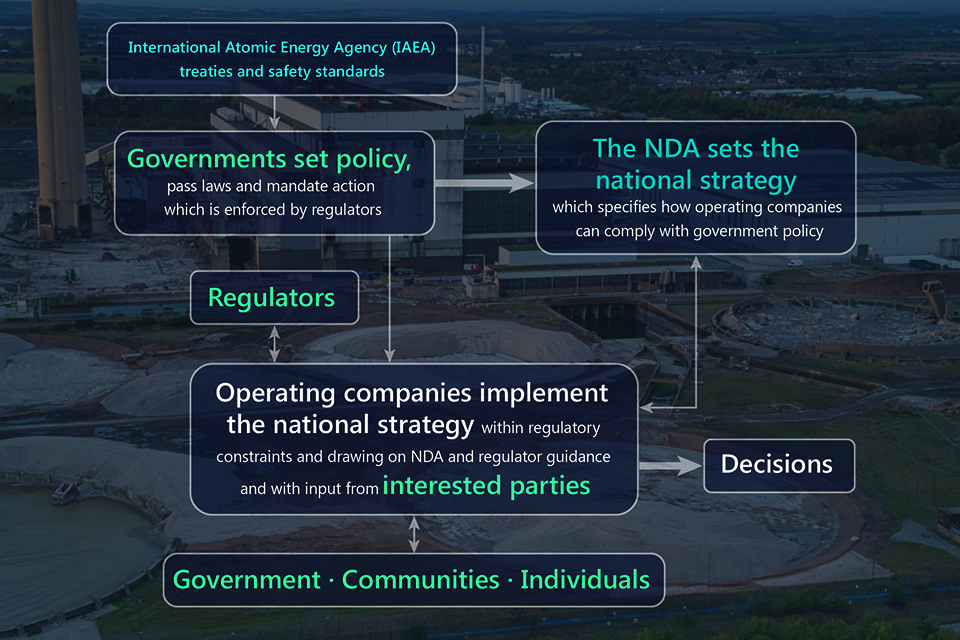
Figure 2. Organisations and people involved, from policy to interested-party-guided decisions.
The NDA sets the national strategy, which specifies how operating companies can comply with government policy.
At the NDA, we have developed a primary decommissioning strategy for nuclear sites.
This sets expectations for how decommissioning is conducted by operating companies. It ensures that decisions are made and plans are in place to define the decommissioned site condition and how the agreed end state will be achieved. The decisions should ensure a balanced outcome for the site and interested parties. Site reuse and release from regulatory control, including the nuclear site licence, should be considered too.
Operating companies must decide how to implement the national strategy within regulatory constraints by drawing on guidance from the NDA and regulators. At various stages, from planning to decommissioning and remediation work, decisions must be made by the operating company and a wide range of interested parties, from government to communities and individuals living close to a nuclear site.
The ONR regulates activities associated with site licence conditions that each operating company must comply with legally or risk prosecution. These conditions include those relating to decommissioning and radioactive waste management. The ONR is also the enforcing authority for general health and safety legislation on licensed nuclear sites.
Following consultation, the government amended the Nuclear Installations Act 1965 to allow an operating company to apply to the ONR to exit the nuclear licensing regime once it can show that the ONR’s requirements have been met for a site or part of a site.
The ONR publishes supporting documents, including Safety Assessment Principles, Technical Assessment Guides, and Joint Guidance with the environment agencies on managing radioactive waste, licensing nuclear installations and nuclear regulation in the UK.
The environment agencies advise on specific environmental regulation issues. For example, they have legal powers and statutory duties to authorise radioactive waste disposal. The agencies attach limits and conditions to the authorisations they grant for the disposal of radioactive waste. Operating companies involved in radioactive waste management must demonstrate that they are working within these authorised limits and meet the conditions, and that they will properly protect people and the environment.
The Environment Agency, Natural Resources Wales and the Scottish Environment Protection Agency have jointly produced guidance on release from radioactive substances regulation (GRR) that requires operating companies to produce a waste management plan and a site-wide environmental safety case. They must also ensure the site condition meets standards for protecting people and the environment, now and in the future.
The guidance describes what operating companies need to do when planning and carrying out decommissioning and clean-up work. The goal is to ensure the work is done in ways that are safe for people and the environment, and this includes the ways in which they manage radioactive waste and the condition in which they leave their sites. This will enable the environment agencies to release sites from radioactive substances regulation.
After the end of the nuclear site licence, health and safety remains under Health and Safety Executive (HSE) regulation and environmental aspects under the relevant environment agency.
4. What are the complexities of a nuclear site?
Decommissioning a nuclear site is complex and can take many decades.
National decommissioning policy, strategy, legislation and regulation are designed for all nuclear sites. However, a balanced outcome for an individual site and its regulation is influenced by its setting, local communities and local authorities. Each site is unique, with different:
- size, landscape and physical hazards such as flooding
- types and extent of nuclear activity
- types and amounts of waste, and it may have waste storage and disposal facilities
- contaminant sources, and transport and distribution pathways
- local communities and local authority needs and values
- non-radiological challenges, for instance, asbestos, which was a common building material when many facilities were constructed.
And there are many other factors that add to the complexity, which is why a balanced outcome for one nuclear site may be inappropriate for another.
Decisions taken today must lead to an overall balanced outcome for a site. We must consider the duration and complexity of decommissioning activities and clearly understand the criteria for protecting people and the environment. These decisions require many factors to be balanced including the impacts of radiation on people and the environment, today and in the future.
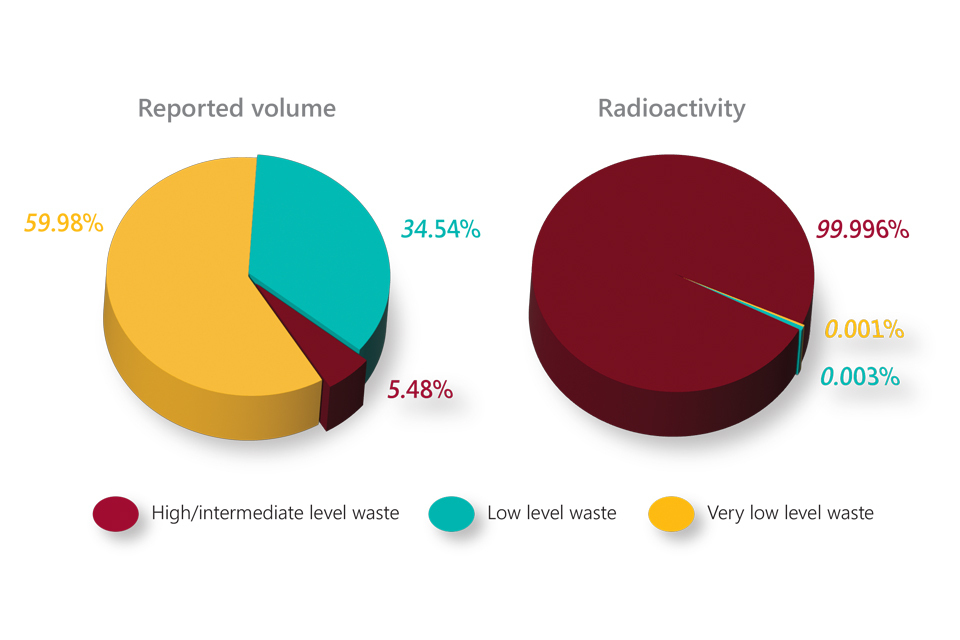
Figure 3. 2022 UK Radioactive Waste Inventory data
This guide focuses on how decisions are made to manage the much larger volumes of wastes with much lower levels of residual radioactivity, for which there are options, including on-site disposal, in-situ disposal and disposal for a purpose.
The risks associated with these wastes come from a combination of factors, including non-radiological characteristics common to many industrial sites, such as asbestos and oil residues, and the risks posed by the management option (for example, the physical hazards of using heavy earthmoving machinery). In some cases, the radiological hazard may not be the dominant factor affecting a decision. The driving factor may be one or a combination of the need to reduce physical hazards, reach a desired site end state, achieve timely release from regulation and deliver sustainability.
Decisions must balance safety and environmental impacts, sustainability, economics and the needs of society, such as waste transportation noise, emissions and road safety concerns, and potential economic opportunities from site reuse.
A balanced decision-making process will need to understand which waste management option is appropriate, and whether new disposal sites are required or disposal on the site where the waste is generated is a better outcome.
5. How do we move towards release and reuse of nuclear sites?
Following its primary use, a facility undergoes various changes and multiple key decision points before it is available for reuse (Figure 4). This guide focuses on how decisions are made to manage the relatively large volumes of waste with low levels of residual radioactivity generated by decommissioning and remediation work. There are several options for the disposal of these wastes, including off-site disposal and on-site disposal (in-situ disposal and disposal for a purpose).
The hazards presented by radioactive waste can vary significantly. Some waste materials, known as higher-activity waste (HAW), contain a significant amount of radioactivity and will be very hazardous for a long time. These materials are being safely and securely packaged and stored pending disposal in highly engineered facilities. This type of waste is a small proportion of the total volume of radiological waste that is generated. To put this in context, HAW by volume is 5.5% of the total radioactive waste inventory and contains 99.9% of the radioactivity whereas very low level waste (VLLW) is 60% of the inventory by volume and 0.001% of the total radioactivity.
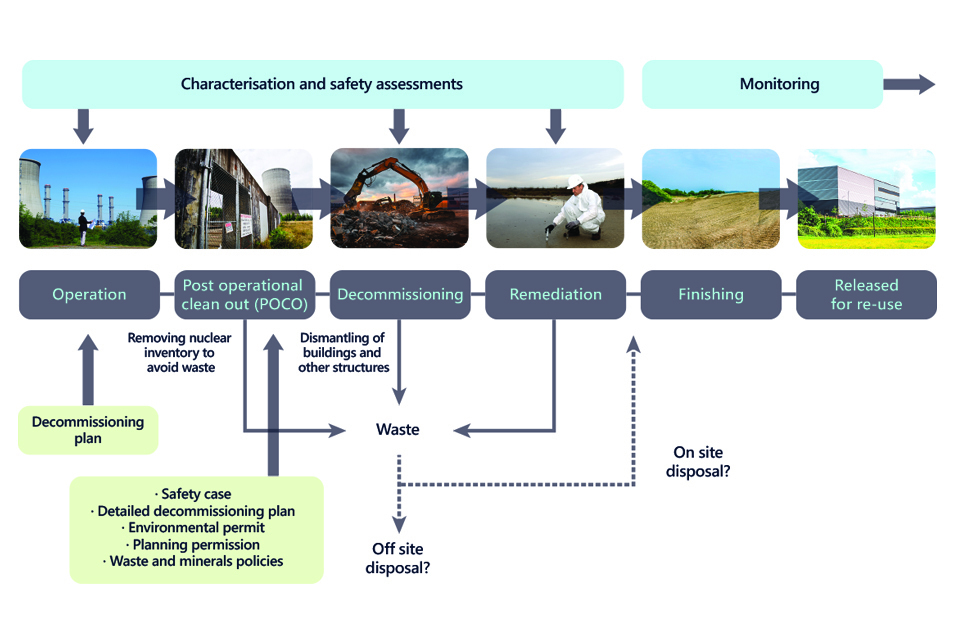
Figure 4. The steps towards release and reuse of nuclear sites.
6. What is optimisation in decision making?
Before we continue, it may be useful to outline the role of optimisation in decision making. This is the process of arriving at waste management options with as low as reasonably achievable (ALARA) radiological risk, but not necessarily the option with the lowest possible radiological risk. It considers technical, economic and social factors, and varying timescales, and is a continuing, forward-looking and iterative process aimed at maximising benefit over harm. Optimisation is continually questioning whether everything reasonable has been done to reduce risks, and balances risks with the advantages and disadvantages of the options being considered and the resources available.
The options identified following the optimisation process are referred to Best Available Techniques (BAT) in England and Wales, and Best Practicable Means (BPM) in Scotland.
7. What is off-site disposal?
Off-site disposal is the removal of waste to another site. The principal advantage is that this removes radioactive material from the site, taking it to a dedicated facility. Although the physical work of removing the materials may take longer than leaving waste in situ (see below), release from regulation may be quicker. However, a waste-receiver site must be found and large volumes of material would need to be transported offsite, and backfill materials brought in, with air-quality, road-safety and traffic-congestion concerns.
A truck can carry about 15 tonnes of material, so moving 100,000 tonnes each way would be more than 13,300 journeys. Sites may be several hundred miles apart. Rail transport may be an option at sites with existing infrastructure.
Moving large volumes of waste off- and on-site has safety implications for the people operating and working near the heavy machinery needed, and draws on public funding, which may be better used elsewhere. There are also environmental impacts associated with operating large vehicles including local noise, dust and exhaust emissions, and global carbon emissions.
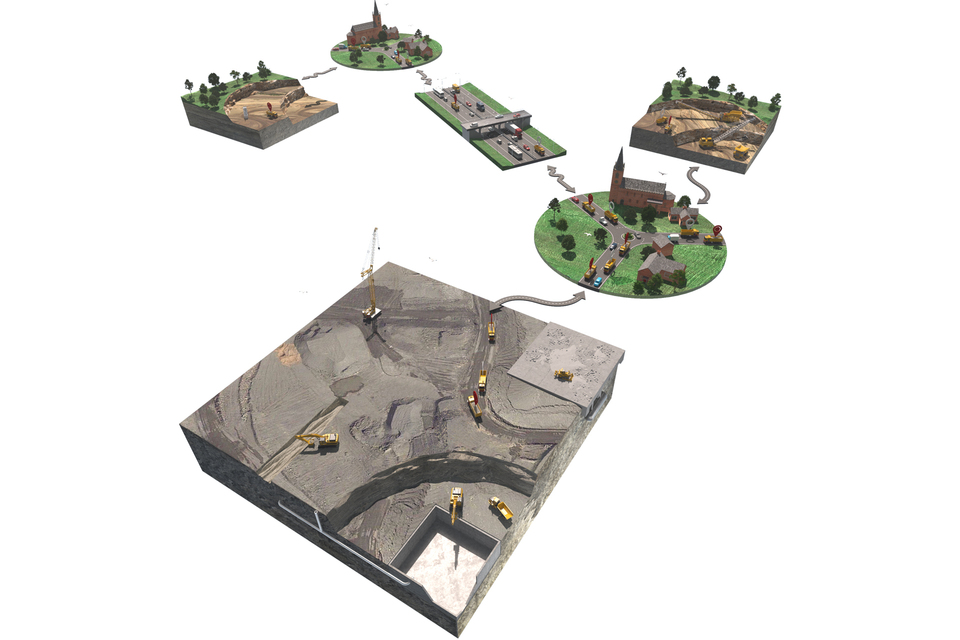
Figure 5. Off-site disposal.
8. Where are on-site and in-situ disposal, and disposal for a purpose?
On-site disposal is where suitable waste, with low levels of radioactivity, for example, from the demolition of buildings, is disposed of on the site of origin, without the need to transport it to a receiver site (Figure 6). On-site disposal requires an appropriate environmental permit and planning permission, and can take three forms:
-
in-situ disposal is where below-ground structures and infrastructure are left in their original locations with voids infilled. In some cases, this may be a more sustainable option than excavation and removal of the waste
-
disposal for a purpose is where suitable wastes are used on site for a purpose as part of the site restoration, for example, for infilling voids, constructing roads and bunds, and landscaping to comply with
local planning authority requirements. This removes the need to bring in materials that would otherwise have been needed for infilling, road construction, etc -
disposal in an engineered facility (such as a landfill) constructed on the site where waste has been produced.
Reuse of suitable materials is good environmental practice. In other sectors, on-site reuse of suitable demolition materials is established practice. For example, concrete and brick rubble is crushed and screened (to sort it by size) to produce aggregate for fill and subbase, reducing the need to bring in new materials and lowering waste disposal costs. In addition to the obvious cost and sustainability advantages, this also reduces the number of heavy-vehicle (or rail) movements, which positively impacts road safety and air quality.
The physical work of moving materials may be partially eliminated, enabling a faster return to some limited beneficial use, but release from regulation and surrender of environmental permits may take longer.
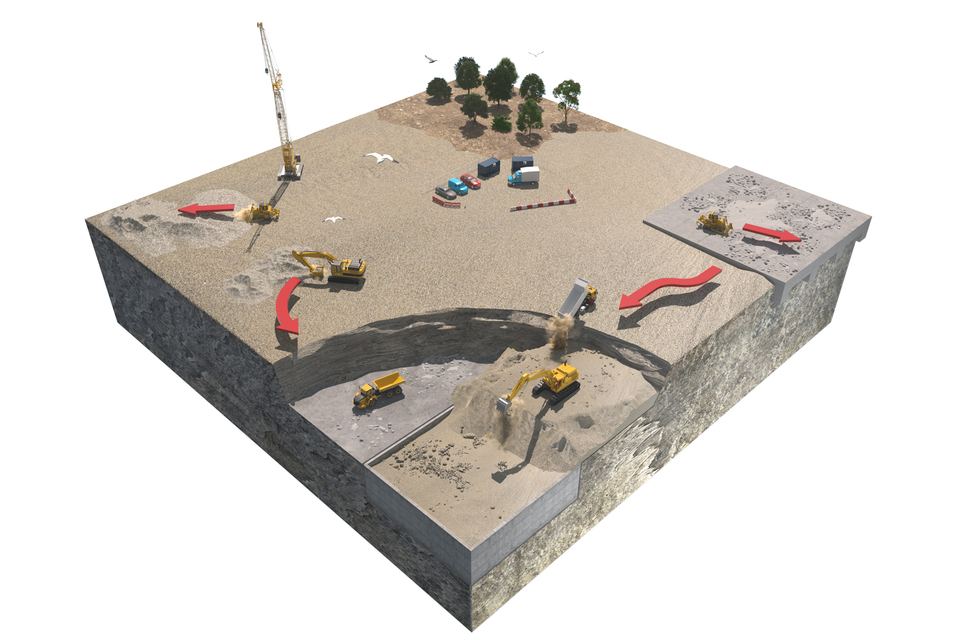
Figure 6. On-site disposal.
9. Which is better, on- or off-site disposal?
There is no easy answer. As discussed earlier, decision making is complex and, to achieve the best overall outcome for each site and society, we need a clear framework that enables us to make good decisions that take account of local, regional and national factors.
Any decision-making process is interconnected. For example, if the balanced outcome for a site is on-site waste disposal, then this triggers applications for planning permission and environmental permits for disposal.
If on-site disposal is considered a balanced overall outcome for a site, what is the process?
The process of decommissioning a site and getting it to a condition in which it can be released for future reuse can take many decades. During the process, on-site disposal may be identified as a balanced outcome for redundant facilities, and the following process may be triggered:
- setting an end-state date
- identifying disposal options, and the preferred option, after dialogue with communities and the NDA
- applying for a permit for on-site disposal of radioactive waste, including dialogue with regulators and communities, a work programme and an environmental safety case
- applying for planning permission for the disposal of radioactive waste
- release from regulation.
In parallel to this process, there would be ongoing engagement and evidence gathering to enable release from nuclear licences and permits.
When the planned decommissioning work and restoration has been completed an application to surrender the environmental permit would be made. At this point, the relevant environment agency must be satisfied that the site is in a condition in which no further regulatory controls are necessary.
10. Who is involved in making decisions and what are their responsibilities?
This section introduces the parties involved in the decision making and their roles and responsibilities. A more extensive list of organisations can be seen here.
10.1 UK government
The UK Government and the devolved administrations set the high-level direction for regulators and operating companies through policy, strategy and legislation. The UK government Department for Energy Security and Net Zero (DESNZ), created in 2023 from the Department for Business, Energy and Industrial Strategy (BEIS), is responsible for policy on nuclear decommissioning and managing radioactive materials and wastes. The Welsh Government, Northern Ireland Executive and Scottish Government have policy and legislative responsibility for the management of radioactive waste and environmental protection. There can therefore be differences in the approaches taken.
Key documents
Managing radioactive substances and nuclear decommissioning 2024
UK Strategy for the Management of Solid Low Level Waste from the Nuclear Industry 2016
10.2 Local authorities
Local authorities are responsible for land use, waste and emergency planning, transportation, development control and sustainable development. They have a key role in engaging with communities, as people are likely to contact their local authority for information or to raise concerns about decommissioning activities. Local authorities are also key interested parties with the Planning Authorities as regulators under the Town and Country Planning Act 1990.
10.3 Nuclear Decommissioning Authority
The NDA is responsible for decommissioning the UK’s nuclear legacy. It was founded in 2005 by the Energy Act 2004 and is committed to overcoming nuclear decommissioning challenges to leave sites safe and ready for their next use. Its purpose is to clean up the UK’s earliest nuclear sites safely, securely and cost-effectively, and with care for people, communities and the environment.
The NDA manages 17 nuclear facilities. Operational commercial nuclear reactors managed by EDF and other privately operated facilities are not currently included. The NDA engages with these organisations and may support decommissioning or take on additional liabilities for decommissioning if instructed to by the government. For example, the UK government has directed the NDA to take on the decommissioning of EDF’s advanced gas-cooled reactors once the fuel has been removed.
10.4 Office for Nuclear Regulation
The ONR regulates licensed nuclear sites across England, Scotland and Wales, including activities associated with nuclear safety, nuclear security, nuclear site health and safety, nuclear safeguards, and transport of radioactive materials, including waste, by road rail or inland waterway. It sets out the site licence conditions that each operating company must comply with legally or risk prosecution, including those relating to decommissioning and radioactive waste management. The ONR is also the enforcing authority for general health and safety legislation on licensed nuclear sites.
When the operating company considers a site, or part of it, meets the conditions described in the Nuclear Installations Act 1965, then it may apply to the ONR for release from the site license. The ONR publishes supporting documents, including Safety Assessment Principles, Technical Assessment Guides, and Joint Guidance with the environment agencies on managing radioactive waste, licensing nuclear installations and nuclear regulation in the UK.
10.5 Environment agencies
In Great Britain, responsibility for environmental regulation is divided between the Environment Agency, Scottish Environmental Protection Agency and Natural Resources Wales (together, the ‘environment agencies’), and each enforces laws that protect the environment in England, Scotland and Wales respectively. These organisations regulate nuclear sites through environmental permits to protect people and the environment. Permits are applied in England and Wales under the Environmental Permitting (England and Wales) Regulations 2016 and in Scotland under the Environmental Authorisations (Scotland) Regulations 2018, and serve as a tool to control the activities and impacts of nuclear operations on the environment. The agencies have the power to take enforcement action when permit conditions are not met.
As part of their duty, the environment agencies seek to protect the public and environment from radioactive substances by regulating the disposal of waste on or from nuclear sites and providing guidance on waste management. This includes the condition in which an operating company leaves its sites (the ‘end state’) following decommissioning and its release from radioactive substances regulation. Guidance on the management of waste was published in 2018.
10.6 Health and Safety Executive
The Health and Safety Executive (HSE) is the national regulator for workplace health and safety. It ensures workplace and public safety standards are appropriate. The primary legislation for occupational health and safety in the UK is the Health and Safety at Work Act 1974. The HSE will only become an enforcing authority following removal the nuclear site licence, until which time the ONR regulates the Health and Safety at Work Act 1974 and its relevant statutory provisions.
10.7 International Atomic Energy Agency
The International Atomic Energy Agency (IAEA) is the world’s intergovernmental forum for scientific and technical cooperation in the nuclear field. The agency reports directly to the United Nations and works with its member states and multiple partners worldwide to promote the safe, secure and peaceful use of nuclear technologies. The IAEA is governed by its own treaties that provide legally binding international rules and expectations for members, which help to steer national level policy and regulation. Its policy-making bodies, the General Conference of all Member States and the 35-member Board of Governors, decide on the agency’s programmes and budgets.
The IAEA is not directly involved in making decisions. However, it defines safety standards, publishes guidance and technical reports, and provides peer review of members decisions.
Interested parties (stakeholders)
Following international good practice and UK guidance, interested parties should be engaged early in the process of determining an end state for nuclear sites. A wide range of national and local communities and organisations have a key role in providing input to support decisions on returning nuclear sites to economic use or nature, and need to have confidence that appropriate decisions are being made. Interested parties include local communities, particularly those directly affected by decommissioning activities and the return of sites to beneficial use; national groups that need to have confidence in the process; suppliers; contractors; operators of adjacent facilities; regulators setting the standards, and monitoring and enforcing compliance; and the government setting policy.
11. Considerations, trade-offs and decision making
Making decisions that ensure a balanced outcome for a nuclear site is complex, with a wide range of considerations and trade-offs. To support holistic decision making, the NDA has established a value framework. This is a set of criteria against which options can be assessed; it is not a decision-making process. The NDA Value Framework ensures that the decisions consider the value that each option would deliver against a range of criteria. It offers a way to rationally assess the advantages and disadvantages of the options. Operating companies will be aware of the NDA Value Framework but are required by the regulators to have their own radioactive waste management decision-making processes.
Applying the NDA Value Framework in decision making means:
- never compromising on safety or security
- taking full account of social, economic and environmental responsibilities
- putting the social, economic and environmental pillars of sustainability at the heart of the decision making.
The NDA Value Framework criteria include:
- health and safety
- security
- environment
- risk and hazard reduction
- socio-economic impacts
- lifetime cost
- enabling the mission.
For example, environment considerations may include the production of wastes, the resources required and the environmental impacts associated with a particular decommissioning option. Socio-economic impacts may consider communities and community needs, local infrastructure burden (for example, from increased traffic) and job creation. Optimisation principles should be applied, including ALARA, BAT and BPM, as introduced earlier in this guide, and considerations need to be balanced, for example, offsetting short-term impacts against associated long-term benefits. Optimisation also includes restricting the radioactivity exposure of people involved in a chosen decommissioning activity to as low as reasonably practicable (ALARP). A full list of criteria and guidance for applying the NDA Value Framework can be found here. Applying the Value Framework or a similar tool can help to promote balanced decision making through the consideration of a range of criteria. The framework can be adapted and weighting applied to enhance its effectiveness.
Balanced decision making needs to recognise the interests and expectations of the different parties involved and affected by these decisions. This includes ensuring that legal and regulatory obligations are met, best practice is applied in a manner proportionate with risk, and the opinions of external interested parties including the public and local authorities are considered. The development of NDA strategy requires the use of the Value Framework and engagement with interested parties for certain purposes, including defining credible objectives for identifying the optimised end state for its sites.
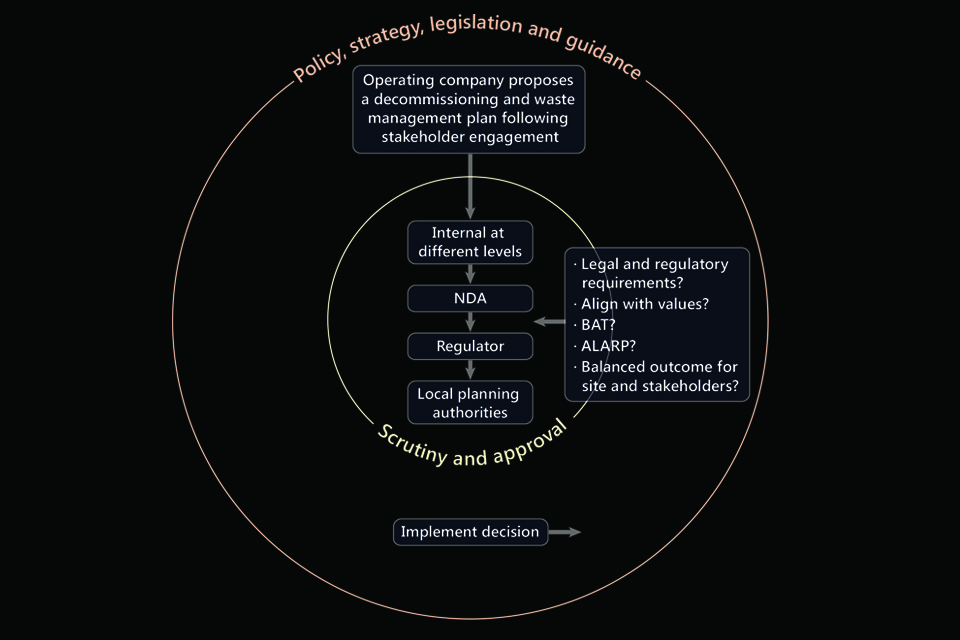
Figure 7. A framework for implementing holistic decisions
12. What next?
We want to engage in a discussion on returning UK nuclear sites to economic use or nature in a more sustainable way. We hope this guide has helped to inform discussion by providing background information about our aims and the trade-offs involved in arriving at the best outcome for a site and society.
12.1 Additional information
Key organisations
There are many organisations involved in achieving the best outcome for a site and society, including the following:
UK government
- Department for Energy, Security & Net Zero (DESNZ), formerly part of the Department for Business, Energy & Industrial Strategy (BEIS)
- Department for Environment Food & Rural Affairs (DEFRA)
- Department for Levelling Up, Housing and Communities (formerly the Ministry of Housing, Communities & Local Government)
Devolved administrations
- Northern Ireland Executive
- Scottish Government
- Welsh Government
Liability owners and site operators
- Nuclear Decommissioning Authority (NDA)
- Ministry of Defence (MOD)
- Site licence companies
- EDF
Regulators
- Environment Agency (EA, England)
- Local Planning Authorities (Local Authorities are key interested parties with the planning authorities as regulators)
- Marine Management Organisation (MMO)
- Natural Resources Wales (NRW)
- Office for Nuclear Regulation (ONR)
- Scottish Environment Protection Agency (SEPA)
13. Roles and responsibilities
Here is a brief guide to the roles and responsibilities of the key organisations involved in site clean-up decisions.
13.1 UK Government
Organisations
-
Department for Energy, Security & Net Zero (DESNZ) formerly part of the Department for Business, Energy & Industrial Strategy (BEIS)
-
Department for Environment Food & Rural Affairs (DEFRA)
-
Department for Levelling Up, Housing and Communities (DLUHC)
-
Northern Ireland Executive
-
Scottish Government
-
Welsh Government
Roles and responsibilities
-
Setting UK policy for nuclear energy, including development, operation and decommissioning, and setting radioactive substances policy for England, including for radioactive sources, waste management and disposal (DESNZ)
-
Responsible for UK-wide environmental policy (DESNZ) and setting environment policy for England (DEFRA)
-
Planning policy for development, waste and mineral development rights (DLUHC)
-
The devolved administrations have responsibility for these policy matters in Northern Ireland, Scotland and Wales
Site clean-up decisions
- Approving business cases above a certain level of expenditure (DESNZ)
13.2 Nuclear site owners and operating companies
Organisations
- Nuclear Decommissioning Authority (NDA)
Roles and responsibilities
-
Liability owner
-
Establishing national strategy for the decommissioning and
clean-up of civil nuclear legacy sites
Site clean-up decisions
- Approving strategies presented by nuclear licensed sites
Key documents
-
Nuclear Decommissioning Authority Strategy effective from March 2021
-
NDA Value Framework: How We Make Decisions 2021
-
The NDA Group Sustainability Strategy 2022
13.3 Nuclear site owners and operating companies
Organisations
- Site licence companies
Roles and responsibilities
-
Regulated entity and statutory liability holder for specific sites
-
Undertaking nuclear activities in compliance with nuclear site licence and other regulatory permissions
-
Developing and delivering strategy for the decommissioning of
end-of-operation sites, and determining the site end state
Site clean-up decisions
- Making site-based decisions in line with policy and strategy, and legal and regulatory frameworks, and with stakeholder engagement
Key documents
-
Environmental permit granted by the relevant environmental agency
-
Nuclear site licence granted by the ONR
-
Operating company’s own safety cases, decommissioning plans, etc.
-
Site strategy and end-state documents
13.4 Regulators
Organisations
- Office for Nuclear Regulation (ONR)
Roles and responsibilities
The UK’s independent nuclear regulator for - nuclear safety - nuclear site health and safety - nuclear security - nuclear safeguards - transport of radioactive materials, including radioactive waste, by road, rail and inland waterway
-
Regulates the design and construction of new nuclear facilities, safe and secure operations, and decommissioning of nuclear facilities, including radioactive waste management, in accordance with each of its five statutory purposes listed above
-
Competent authority for the Nuclear Reactors (Environmental Impact Assessment for Decommissioning) Regulations (EIADR), which require consent to be granted by the ONR before decommissioning of nuclear power stations and reactors
Site clean-up decisions
- Release from nuclear site licence, end-of-period responsibility and permission for decommissioning activities
Key documents
- See ONR resources
13.5 Regulators
Organisations
-
Environment Agency (EA, England)
-
Natural Resources Wales (NRW)
-
Scottish Environmental Protection Agency (SEPA)
Roles and responsibilities
-
Lead environmental regulators of nuclear sites, including regulation of radioactive waste disposals on or from nuclear sites
-
Regulating compliance with relevant environmental permits and authorisations
-
Regulating the transfer of environmental permits
Site clean-up decisions
- Releasing sites from radioactive substances regulation (RSR) (permit surrender)
Key documents
-
Environmental permits
-
Geological Disposal Facilities on Land for Solid Radioactive Wastes: Guidance on Requirements for Authorisation
-
GRR – Management of Radioactive Waste from Decommissioning of Nuclear Sites: Guidance on Requirements for Release from Radioactive Substances Regulation
-
Near-surface Disposal Facilities on Land for Solid Radioactive Wastes: Guidance on Requirements for Authorisation
-
Radioactive Substances Regulation – RSR: Principles of Optimisation: Principles of Optimisation in the Management and Disposal of Radioactive Waste from Radioactive Substances Activities
13.6 Regulators
Organisations
- Defence Nuclear Safety Regulator (DNSR)
13.7 Regulators
Organisations
- Local Authorities
Roles and responsibilities
- Democratically elected bodies responsible for land use, waste and emergency planning, transportation, development control and sustainable development
Key documents
- Local plan including mineral, waste and development plan, policies
and guidance
13.8 Regulators
Organisations
-
Marine Management Organisation (MMO) and devolved organisations
-
Natural Resources Wales (NRW)
-
Scottish Environmental Protection Agency (SEPA)
Roles and responsibilities
- License, regulate and plan marine activities in the seas around the UK, including licensing physical activities related to offshore pipeline decommissioning
14. Glossary
Backfill
Material used to fill a hole.
Clean-up
Clean-up means treating or removing contamination from leaks or spills on or around a site.
Decommissioning
At nuclear sites, decommissioning means the dismantling of facilities and structures that have reached the end of their useful lives. It is a staged process through which a nuclear facility, at which normal operations have finally ceased, is taken out of service, including decontamination and full or partial dismantling of buildings and their contents. It may include other operations such as the decontamination of buildings that are not to be dismantled and the remedial treatment or restoration of the land under and around the facility.
Disposal for a purpose
Beneficial reuse of remediation or demolition waste on site, for example, for restoration work such as landscaping, void filling or flood defences, with the advantage of minimising the use of new materials and reducing environmental impacts associated with the work.
Legislation requires that beneficial reuse of radioactive waste is classed as waste disposal (‘disposal for a purpose’) and not recycling or repurposing as the reuse of demolition waste may be referred to in other sectors.
Guidance on Release from Radioactive Substances Regulation (GRR)
The condition to which the site (land, structures and infrastructure) will be taken at the end of the decommissioning process for the intended end use.For many sites, the site end state is not scheduled for decades.
Joint guidance produced by the Environment Agency, Natural Resources Wales and the Scottish Environment Protection Agency for operators of nuclear sites describing what they need to do when planning and carrying out decommissioning and clean-up work to keep people and the environment safe. The guidance requires operators to produce a waste management plan and a site-wide environmental safety case, and to ensure the site condition meets standards for protection of people and the environment, now and into the future.
Higher-activity waste (HAW)
Waste with radioactive content exceeding 4 gigabecquerels per tonne (GBq/te) of alpha or 12 GBq/te of beta or gamma activity, and any radioactive wastes below these thresholds that are unsuitable for near-surface disposal.
In-situ disposal
Disposal of solid radioactive waste, such as a buried structure, by leaving it permanently in place, together with any necessary preparatory works.
Low-level radioactive waste (LLW)
Defined in government policy as ‘radioactive waste having a radioactive content not exceeding 4 gigabecquerels per tonne (GBq/te) of alpha or 12 GBq/te of beta or gamma activity.’
LLW consists largely of paper, plastics and metal that have been used in the nuclear industry, hospitals and research establishments. In future, there will also be large volumes of LLW in the form of soil, concrete and steel as existing nuclear facilities are decommissioned.
Off-site disposal
Removal of low-level radioactive wastes from a site, transport to an authorised off-site receiver site and disposal at that receiver site.
On-site disposal
Disposal of low-level radioactive wastes within the decommissioned site, that is, without transport to a receiver site.
Remediation
The action of reversing or stopping environmental damage including, for example, contaminant removal, disruption of contaminant linkages (pathways from source to receptor) and monitored natural attenuation.
[1] Radioactive waste generated from non-nuclear sites, such as universities and hospitals, is not part of this discussion.
[2] In Great Britain, responsibility for environmental regulation is divided between the Environment Agency (serving England), the Scottish Environmental Protection Agency and Natural Resources Wales. Together, these bodies are referred to as ‘environment agencies’.