Informal and proxy support for digital inclusion: final report
Published 29 September 2026

© Crown copyright 2026
This publication is licensed under the terms of the Open Government Licence v3.0 except where otherwise stated. To view this licence, visit nationalarchives.gov.uk/doc/open-government-licence/version/3 or write to the Information Policy Team, The National Archives, Kew, London TW9 4DU, or email: psi@nationalarchives.gov.uk.
Where we have identified any third party copyright information you will need to obtain permission from the copyright holders concerned.
This publication is available at https://www.gov.uk/government/publications/how-people-are-helped-online-informal-and-proxy-digital-support/informal-and-proxy-support-for-digital-inclusion-final-report
Contributors
This report was commissioned by the Department for Science, Innovation and Technology (DSIT), and the research carried out by The Social Agency.
This report was authored by:
- Becca Altman, Research Manager, The Social Agency
- Dan Clay, Managing Partner, The Social Agency
- Vic Harkness, Senior Director, The Social Agency
- Erica Harrison, Associate Director, The Social Agency
- Dan Lemmon, Research Manager, The Social Agency
- Reema Patel, Director, Elgon Social Research
- Connie Portman, Research Executive, The Social Agency
1. Key findings
For many digitally excluded people, informal support from a family member or other acquaintance is their primary, and sometimes only, route to digital access. Around 1 in 3 UK adults (35%) have provided informal support of this kind in the last year, and this research examines how those informal support relationships work, and what is needed to make them safer, more effective, and more sustainable. Some key themes emerging from this research include:
- Informal support is vital but structurally fragile. Many excluded people depend on a single person for all their digital access, risking severe impacts if that that person becomes unavailable. There are also safety concerns as, in the absence of safe, official mechanisms for delegating access to digital services, many supporters and supported people resort to informal workarounds such as sharing login credentials.
- The mode of support shapes long-term outcomes. Support which focuses on teaching or advising through a task is associated with growing independence over time, while proxy support (where the supporter completes the task on someone else’s behalf) enables immediate access but can reinforce dependency and reduce motivation to engage independently. Many relationships default to proxy support because it is quicker and less emotionally demanding, creating a tension between short-term access and longer-term skills development.
- Exclusion is partly a service design problem. Individual barriers such as low confidence, fear of making mistakes, and limited digital skills are real, but they are amplified by systems that do not account for less confident users. This research suggests that any service requiring high levels of skill and motivation to navigate, and which produces anxiety in those less equipped, risks reinforcing digital exclusion.
This research also produced 2 typologies to deepen understandings of informal supporters and those receiving support. Different types of supporters were differentiated by factors such as the mode of support they offer, their key concerns, and their views on some of the causes of digital exclusion. The different groups of people receiving support were differentiated by their personal level of motivation to become more independent online, and the degree of reliance on their informal supporter. For both typologies, the emotional experience of support interactions (positive or negative) was also key. Critically, the wider qualitative research highlights that a person’s position is not fixed: motivation, reliance, and the quality of the support interaction can all shift depending on the task, the relationship, and the wider personal and social context.
The research identified 4 areas for policy consideration by DSIT and with implications for companies and organisations providing digital tools and services:
- redesigning services so supported access is built in from the outset
- diversifying support ecosystems through community-based provision such as Digital Inclusion Hubs
- formalising proxy access with safe, permission-based delegation pathways and
- establishing cross-sector minimum inclusion standards that reposition digital inclusion as an organisational obligation rather than an individual responsibility
2. Executive summary
Digital exclusion – the experience of barriers to accessing the internet and engaging online – remains a significant challenge across the UK, with millions of adults struggling to fully participate in an increasingly digitally connected world. The government’s Digital Inclusion Action Plan (2025) defines digital inclusion as ensuring everyone has the access, skills, support, and confidence to participate in modern digital society.
While formal digital inclusion initiatives exist, a substantial proportion of excluded individuals rely on informal and proxy support from family, friends and other acquaintances. DSIT identified a gap in the evidence base around this informal support and commissioned this research to examine how such relationships work, how effective they are, and how they can be better understood and integrated into broader digital inclusion strategies.
Four aims guided the research: identifying barriers to digital inclusion; investigating the role of informal and proxy support; examining the quality and effectiveness of support relationships; and producing a typology of support relationships.
The research used a four-stage mixed-methods design:
- Scoping interviews with expert stakeholders and a rapid evidence assessment of key literature.
- Qualitative in-depth interviews with supported/supporter pairs, conducted in-person across all 4 UK nations, exploring barriers, quality of support, and patterns of interaction through observation.
- A nationally representative survey of 2,261 adults who had helped another adult to use or access the internet in the previous 12 months. Factor Analysis and Convergent Cluster Analysis were used to produce typologies of supporters and supported people.
- A co-creation workshop with expert stakeholders and supporters used the research findings to develop and refine ideas for policy and community-led interventions.
Who needs help to be digitally included, and why
People receiving digital support tend to be older (the median age is 70) and are more likely to be female (61%) than male (38%). Approximately one third have a long-term health condition or disability and this increases with age (48% among those aged 75 and over). The research identified 3 primary barriers to using and accessing the internet, which frequently intersect and compound one another:
-
Lack of digital skills, cited by 55% of supporters as a challenge for those they support, rising to 60% where supported people are aged 55 or over.
-
Low confidence using the internet, cited by 53% of supporters. Confidence declines with age and is more commonly identified as a barrier for women.
-
Fear of making a mistake, experienced by 47% of supported people. This fear spans all age groups and is the most common single barrier for younger supported adults aged 18 to 34.
Beneath these primary barriers sit deeper drivers including limited literacy (both general and digital), language barriers, health conditions, and a sense of generational distance from technology. However, this research highlighted that focusing solely on these individual barriers risks overlooking important systemic dimensions to the problem of digital exclusion. Expert stakeholders consistently argued that systems requiring high levels of skill, confidence, and motivation to navigate (and which therefore often induce anxiety in those less equipped) are poorly designed systems. This reframes digital exclusion as, in significant part, a service design issue rather than a user capability problem.
A typology of people receiving support was produced based on survey data around 3 key factors: the person’s willingness to practice / personal level of motivation to become more independent using the internet; the level of reliance on their informal supporter; and their enjoyment of the interactions around support. This analysis identified 3 broad segments: Motivated Learners (with high motivation, low level of reliance on their supporter, and an average level of enjoyment), Uncomfortable Receivers (average motivation and reliance but low enjoyment) and Vulnerable Dependents (high reliance and enjoyment but low personal motivation to become more independent).
Who provides informal digital support and what challenges do they face
Around 1 in 3 UK adults (35%) have acted as an informal digital supporter in the past year. Supporters are demographically diverse (spread evenly across age groups and by gender) and are drawn from all walks of life. The factors driving someone to become a supporter are primarily situational rather than demographic and include physical proximity to the person needing help, availability, perceived technical capability, trust, emotional connectedness, and a sense of personal or familial responsibility.
Supporters most often help family members (78% have helped a family member in the past 12 months), with mothers (or stepmothers) the most commonly supported individuals. Over 1 in 3 (36%) have helped someone outside their family, generally a friend (23%). In most cases, support relationships are experienced as mutually beneficial, but the research also highlighted significant variation in how supporters experience their role, and this was a key factor in the typology produced of informal supporters.
In this typology of supporters, groups were differentiated by their survey responses on 5 key factors:
- likelihood to take over (rather than demonstrate) a task
- likelihood to view providing support as a burden
- level of concern around online safety and responsibility
- openness to learning new skills / receiving support themselves
- their views on the accessibility of online tasks and existing help options for those needing support
This analysis identified 6 segments of supporters, each representing between 10% and 23% of the supporter population.
Key challenges faced by supporters include strain on the relationship between them and the person they support (exacerbated by possible frustration on both sides, as well as feelings of guilt and resentment), concerns around sensitivity and the privacy of the information they have access to, and anxiety over online safety and their responsibility in preserving it.
How is informal digital support delivered
The research showed that support is predominantly reactive and episodic, triggered by immediate task needs rather than a structured intention to build skills. Three distinct modes of support were identified which are not mutually exclusive and which supporters move between depending on the task, its urgency, and the emotional state of both parties. These modes are termed teaching support (‘doing with’), proxy support (‘doing for’), and advisory support (‘second pair of eyes’). Teaching support is the mode most associated with growing independence, but it requires time, patience, and motivation from both parties, and is largely confined to simple, low-stakes, repeatable tasks. Proxy support was often relied upon for more complex, high-stakes, and infrequent tasks where the risk of making a mistake was seen as more consequential. However, the research suggested a reliance on proxy support risks reinforcing dependencies and often involves insecure processes (e.g. sharing passwords and log-in details). This creates a structural tension: the mode that best enables immediate access can undermine longer-term inclusion.
Policy implications and conclusions
The research identified 4 interconnected policy areas where co-ordinated action could shift informal support from a de facto mechanism without adequate recognition or governance into a robust and sustainable means to furthering digital inclusion:
- Redesigning services for inclusion by design: Services should be redesigned to lower the stakes and barriers associated with digital engagement, making it feel safer and more rewarding.
- Strengthening and diversifying support ecosystems: Proposed models such as telephone support lines, community outreach, and a Digital Inclusion Hub concept could reduce vulnerabilities where people depend on a single supporter.
- Formalising and safeguarding proxy access: Acknowledging that proxy and supported access are legitimate modes of engagement and designing for them from the outset could reduce the use of risky workarounds. Stakeholders called for explicit delegation pathways with granular, time-limited, and reversible permissions, and for redesigned authentication journeys that reflect the reality of how help is actually provided.
- Establishing cross-sector governance and standards: Minimum inclusion standards covering accessibility, assisted pathways, and proxy governance would reposition digital inclusion as an organisational obligation. Workshop participants argued this may require regulation or much clearer standard-setting, particularly where commercial incentives do not align with inclusion needs.
3. Introduction
3.1. Background
Understanding digital exclusion (and inclusion)
Digital exclusion - when a person experiences barriers accessing the internet and engaging online – is a challenge across the UK. Approximately 2.8 million households lack internet access and millions more struggle with insufficient digital skills to fully participate in an increasingly digitally connected society.
The concept of digital inclusion and exclusion has evolved significantly over time. Earlier definitions focused primarily on access to digital devices and infrastructure. The government’s most recent publication on digital inclusion - Digital Inclusion Action Plan: First Steps (2025) - provides a holistic conceptualisation of digital inclusion as ‘ensuring that everyone has the access, skills, support and confidence to participate in and benefit from our modern digital society, whatever their circumstances’. DSIT’s broader definition recognises that to be digitally included now requires the ability to use increasingly complex digital systems and services, keep up with rapid technological changes, and navigate new digital environments.
The Minimum Digital Living Standard has been proposed as one possible metric for measuring digital inclusion, outlining the minimum digital goods, services, and skills a household needs to participate in modern society. Recent data indicates 3.7 million households fall below the level suggested, with 7.9 million adults lacking basic digital skills, and 21 million adults unable to complete essential digital tasks for work. The statistics paint a picture showing a sizeable proportion of the population as encountering digital exclusion. In many cases, this is discussed at length as a digital or data ‘divide’ e.g. Ada Lovelace, 2021.
While digital exclusion can impact anyone, the literature suggests certain groups are more likely to experience it, including disabled people or those with long-term health conditions, older adults (aged 65+), individuals/households on low incomes, people living alone, and people in rural areas.[footnote 1]
Although the conceptualisation of digital inclusion widely used to date acknowledges the importance of measuring capability (rather than focusing purely on access), some have argued it also places significant responsibility on individuals for their own inclusion/exclusion. This is seen by some to reduce the onus on services and technologies for making their interfaces and user experience more inclusive and accessible. This illustrates that experiences of digital exclusion are not binary. Individuals may be confident online in some domains while excluded in others, for example, accessing social media versus online banking. The evidence suggests exclusion occurs due to a combination of individual, relational and systemic factors: limited digital skills; limited (digital) literacy; language barriers; safety concerns (fear of scams and fraud, often associated with low confidence); low levels of motivation (lack of interest or appreciation of relevance); social isolation; lack of access (including reliable connectivity in rural areas and to evolving technologies for households in poverty); inadequate formal support services; poor digital service design; a ‘digital by default’ approach to service provision without adequate offline alternatives; and the nature of some proxy support relationships, where the emphasis is on ‘doing for’ rather than ‘doing with’.[footnote 2]
Informal and proxy support
While formal digital inclusion initiatives (e.g. digital inclusion hubs) exist to support people to develop skills, a substantial proportion of digitally excluded individuals rely on informal and proxy support. These informal supporters often serve as critical intermediaries, bridging the gap between digital services and those unable to navigate them independently.
Defining what constitutes ‘informal support’ and ‘proxy support’ presents conceptual challenges. In the context of digital inclusion, ‘informal support’ refers to help which someone receives from another person (a friend, family member, peer, colleague, or someone working in a voluntary capacity ) to undertake or manage a task online or through a digital tool/platform.[footnote 3] ‘Proxy support’ is a form of informal support where someone undertakes a task (online/digitally) on behalf of someone else. Recent data indicates the scale of reliance on these support pathways. Ofcom (2025) found that 43% of offline adults had asked someone to do something online for them in the past year, and 16% of those without home internet access cited reliance on others as a reason for not going online themselves.
Asmar et al. (2020) offer a typology of social support patterns in digital inclusion, identifying categories such as: support-deprived individuals, community-supported learners, network-supported learners, and those supported through substitution (i.e. proxy users). While this is a helpful starting point for thinking about a typology of informal support, it categorises individuals into discrete, steady support patterns. Digital exclusion cannot be reduced to the influence of individual and social factors in isolation of one another. These factors interact and form a set of constraints leading to ‘the inability for an individual to make empowered and informed choices about their use or non-use of ICT-based practices’. Other literature has identified associated typologies of support: informal (lay and unpaid) support from family, friends or neighbours; informal (trained but unpaid) support from voluntary services; formal (trained and paid) support from voluntary and statutory services delivered ad-hoc; and proxy support (without legal recognition).[footnote 4]
3.2. Research aims
The Department for Science, Innovation and Technology (DSIT) identified a gap in the evidence base around informal support for digital inclusion. While there is some literature around the role of formal digital support, the informal networks remain underexplored despite a potentially vital role. For the purposes of this research, we are defining informal support as that provided by non-professionals. This specifically refers to family, friends, community members and colleagues (or even complete strangers) who provide digital support to people experiencing digital exclusion, but who are not necessarily trained, qualified or experienced in doing so. DSIT is interested in identifying intervention opportunities to support and strengthen these informal support ecosystems for digitally excluded groups. The central research question of the project can be framed as: How do informal and proxy support relationships enable digital inclusion, and how can they be further understood, optimised, and integrated into broader digital inclusion strategies?
This research has been commissioned to:
- identify key barriers to digital inclusion for those relying on proxy/informal support
- investigate the role of informal and proxy support relationships in addressing and potentially overcoming these barriers
- examine the quality and effectiveness of these support relationships from the perspective of those providing the support and receiving the support
- produce a typology of informal or proxy support relationships that facilitate digital inclusion among digitally excluded individuals in the UK
3.3. Methodology
We took a phased approach combining a more detailed exploration of how informal or proxy support might be understood (including how different attitudes and support behaviours manifest), before then looking at how this plays out across a more representative sample. The methodology involved:
Stage One: A scoping stage consisting of:
- 24 interviews with expert stakeholders, including academics, government representatives (both local and national), private sector companies, and voluntary sector organisations
- a rapid evidence assessment of referenced key literature to help produce a typology of support pathways
Stage Two: qualitative research with:
- 36 people receiving informal/proxy support (referred to in this report as ‘supported people’) to understand perceptions of quality/effectiveness of support, and barriers/enablers to further inclusion.
- 36 people providing informal/proxy support (referred to in this report as ‘supporters’) to understand sufficiency of support/information available to them, and barriers/enablers to further inclusion.
Stage Three: a nationally representative online survey of 2,261 people across the UK that have helped another adult to access or use the internet in the last year – what we term as ‘supporters’ in this report. Data from this survey of supporters included questions on both their own experiences, and their knowledge and perceptions of the person they support.[footnote 5] This data was then used to generate a typology of both Supporters and Supported People (as viewed by Supporters). Further technical information is provided in the Appendices.
Stage Four: a co-creation workshop with stakeholders (including both ‘experts’ and Supporters) to reflect on the findings of previous stages, and to help refine ideas for policy or community-led interventions to improve access to, or effectiveness of, support.
4. Who needs help to be digitally included and why
4.1. Who needs help to be digitally included
Digital inclusion can be seen as a spectrum, and everyone has the potential to experience some form of digital exclusion at a point in time depending on their circumstances and the nature of the digital task at hand. In keeping with previous studies, this project found that people who need help to be digitally included tend to be older. The median age of people in receipt of support from those responding to the survey was 70, with three-quarters of supporters (76%) saying the main person they support is over 55 and over a third (36%) supporting someone over the age of 75. 6% of supported people were aged 18 to 34 and 11% 35 to 54, while 8% of supporters did not specify the age of the person they support. Supported people were also more likely to be female (61%) than male (38%).
Also reflecting existing findings, a notable proportion of people receiving support have a long-term health condition or disability; over one third have a condition of any kind (36%), whether that be a physical condition (22%), a sensory condition (10%), or a cognitive condition (11%). Health conditions were more prevalent among older age groups, affecting 3 in 10 supported people aged 18 to 54 (30%), nearly 4 in 10 among those aged 55+ (38%) and almost half of those aged 75+ (48%). While previous research has highlighted a correlation between disability and digital exclusion (see 3.1), these prevalence figures are comparable to those of the wider population of England and the survey showed that not all conditions are seen to impact digital access. For example, half of supporters surveyed who help someone with a health condition (50%) felt that physical or health issues made using digital devices difficult for that person, but so did 1 in 5 supporters where no condition was present (19%).[footnote 6]
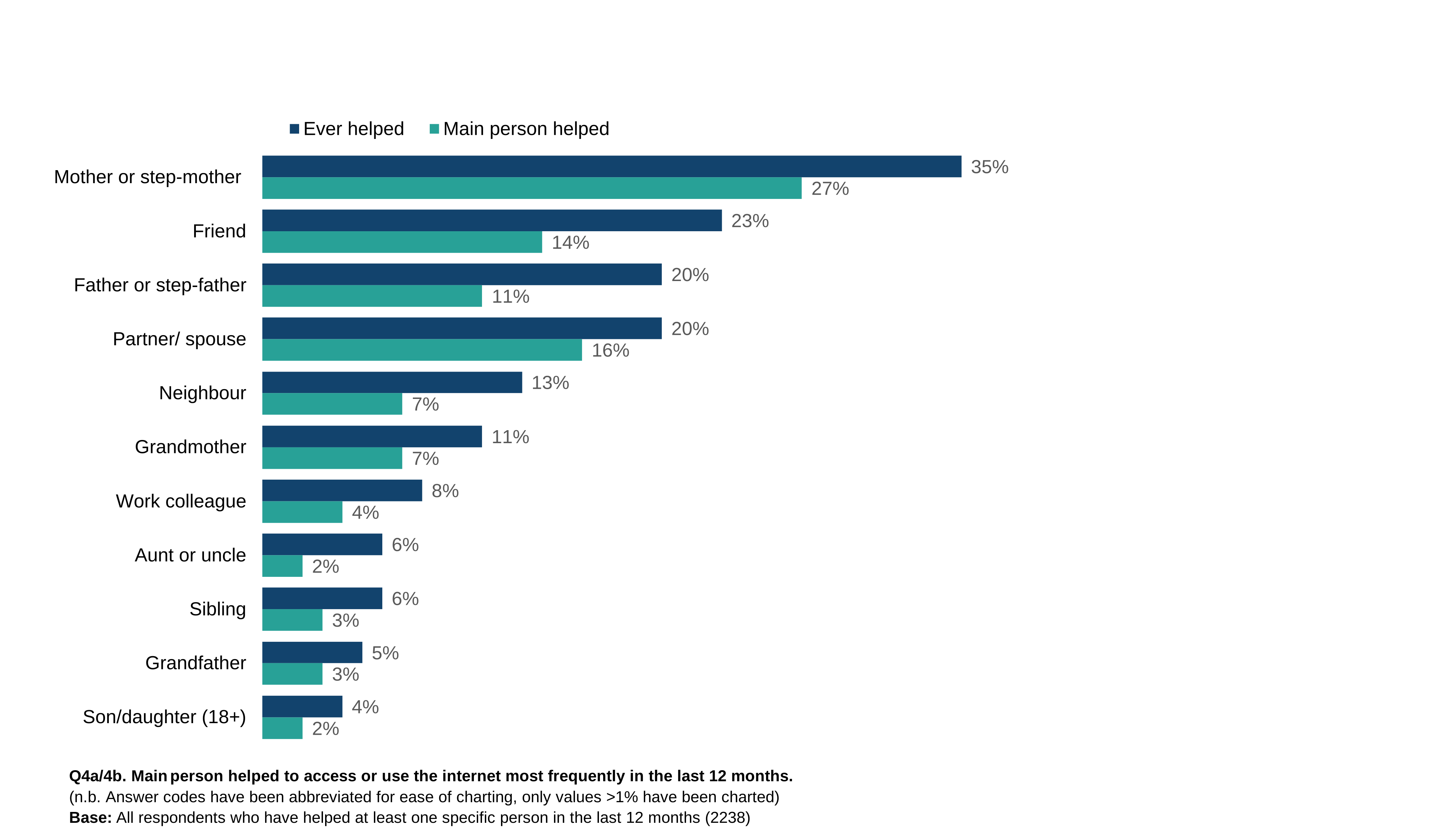
Supporters are most commonly helping family. Nearly 8 in 10 (78%) have helped a family member to use or access the internet in the last 12 months, and over 1 in 3 (36%) have helped someone outside their family. Mothers (or stepmothers) are the most commonly supported people (supported by 35% of supporters, and the main person supported for 27%). Other common family members are partners/spouses (helped by 20% of supporters, and the main person for 16%) and fathers/stepfathers (helped by 20%, and the main person helped by 11%). Outside of family, almost a quarter of supporters (23%) have supported a friend in the last year, and 13% have helped a neighbour, but these were less commonly the main person helped (14% and 7% respectively). Figures 1 and 2 illustrate who supporters report helping with digital access and tasks.
Figure 1: People supported
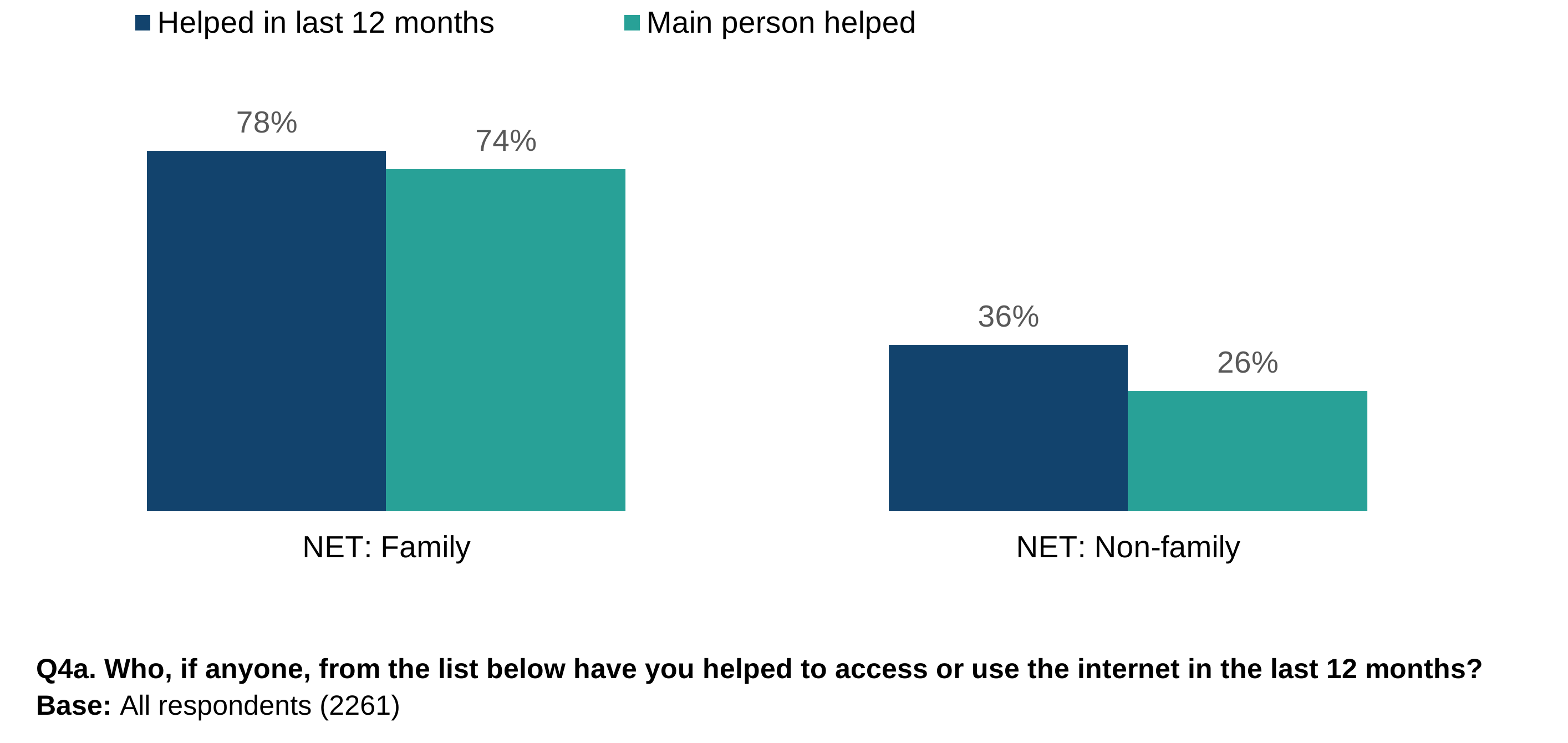
Figure 2: People supported (detailed breakdown)
4.2. What do people need help with?
Informal digital support interactions are overwhelmingly triggered by an immediate need to complete a task, rather than a desire to further knowledge, skills, or confidence of those receiving support. In qualitative discussions, participants gave examples such as needing help completing an online passport application, setting up a new device, shopping online, submitting a meter reading or paying a bill. Support is therefore not approached as a structured programme of teaching and learning by informal supporters, but is rather reactive and episodic.
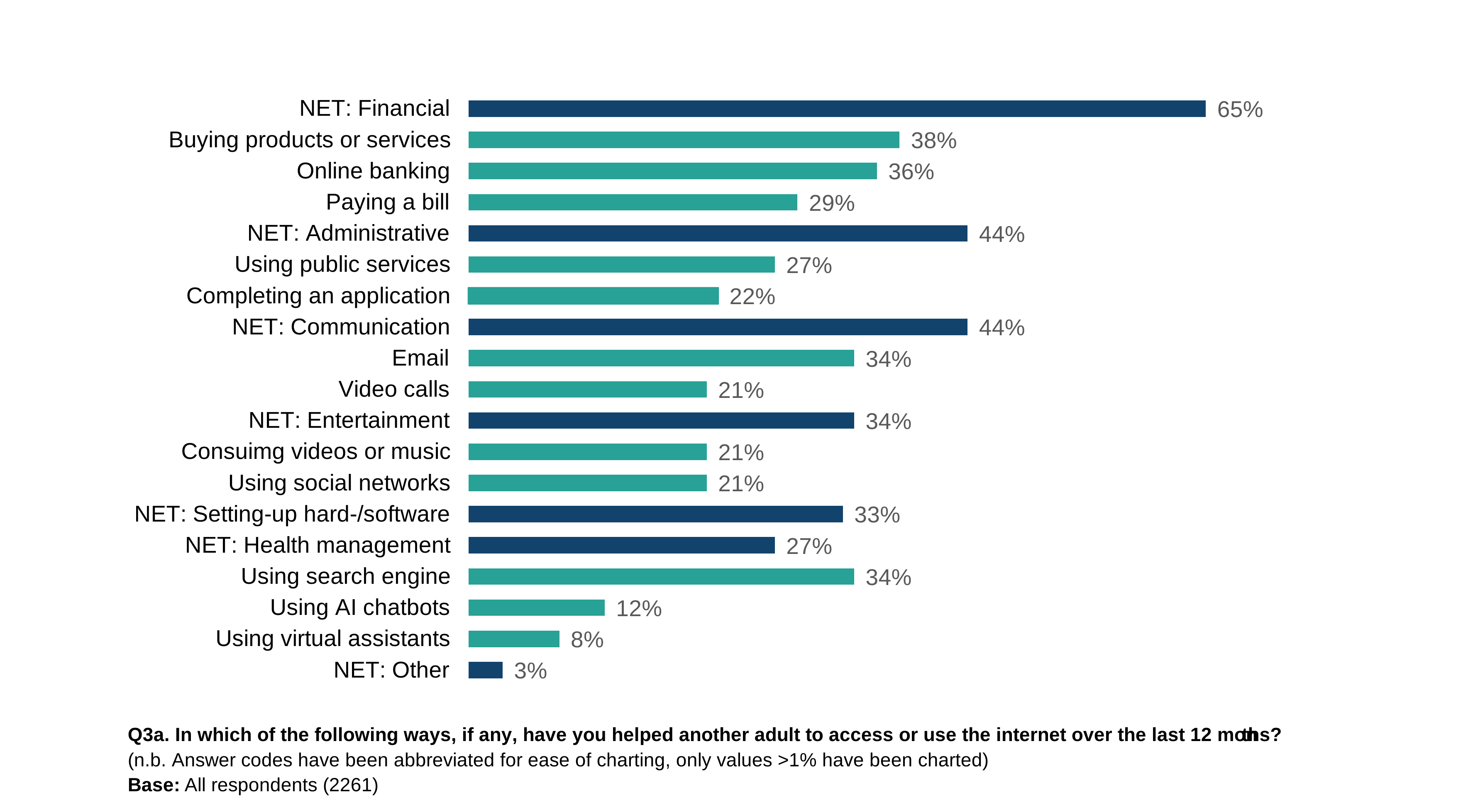
The survey offers further data on specific tasks supporters help with (see also Figure 3). In terms of broad categories, financial transactions are most common, with nearly two-thirds of supporters (65%) saying, in the last year, they have helped with at least one of: buying products or services online (38%), using online banking services (36%), and/or paying a bill (29%). Administrative tasks such as completing applications or accessing public services were also widespread (44%), followed by tasks relating to communication (44%), entertainment (34%), setting up hardware or software (33%), and tasks relating to health appointments or prescriptions (27%).
When supporters were asked in the survey which task they had helped another adult with the most, there was a wider spread of responses. The top 3 tasks selected by supporters were: buying products or services online (14%), using online banking services (13%), and accessing or setting up an internet-enabled device or internet access (11%). Supporting can be repetitive, with over half of supporters (57%) saying they find themselves doing the same tasks over and over, despite having demonstrated how to do it previously.
Figure 3: Tasks supported
4.3. Why do people need help
There are a number of barriers that drive the need for informal digital support to complete a task. These barriers can intersect and overlap, compounding an individual’s need for digital support.
Discussion of digital inclusion in the literature has often focused on barriers such as access to appropriate devices and connectivity, but this was a barrier for a minority in the survey (10% reported limited access to suitable devices as a barrier for the person they support). However, it was more prominent for disabled people receiving support (14%), notably affecting 1 in 5 of those with a sensory condition (21%). This could point to a lack of assistive technology - such as screen readers - as well as the device itself.
The qualitative research showed that where individuals were not regularly using a device or operating system, they were not able to learn and develop their skills to the point at which they became comfortable with it. Some participants only had access to certain types of devices, such as a smartphone, but did not have access to others, such as a laptop. This created device-limited literacies where participants had become comfortable with certain devices and operating systems but could not make sense of others. Some participants were unable to afford multiple devices, and some households would often share devices, further limiting the opportunities for individuals to use and practice with them.
It’s great to have a small device, but actually I wish that I did have a laptop or knew how to use one.
Supported, female, 75
Supporters felt the main barriers or challenges people they support faced when it came to using or accessing the internet was a lack of digital skills (cited by 55%) and a lack of confidence using the internet (53%). Many of those receiving support reported a lack of understanding about how digital interfaces and operating systems work, how to find information online, or how to access various digital services. A lack of digital skills was higher amongst people receiving support over the age of 55 (60%), and with a disability or health condition (59%). Qualitative interviews revealed participants’ own awareness of their lack of digital skill and knowledge also contributed to low confidence, with participants describing online tasks as ‘daunting’. The survey found those supporting women were significantly more likely to view low confidence as a key barrier (58%, compared to 47% among those supporting men) and there was a strong age factor as older people were significantly more likely to be seen to lack confidence compared to young people (34% among those aged 18 to 54, 59% among those aged 55 or over).
Some participants interviewed for this research also experienced broader challenges with their cognitive and sensory health, language, and literacy which compounded their challenges with digital processes and text-based interfaces. Others felt they were victims of a generational digital gap, where they had not grown up with digital technology and therefore felt they had ‘missed’ formative exposure. This sentiment was not limited to older generations who would have grown up before the advent of household computers and was felt by some as young as 43. Regardless of why they lacked skill and/or confidence, they felt that digital tools and services were not designed for less confident or capable users. Participants receiving support highlighted how tools and services can be too complex or overwhelming in both form and function. For example, one participant described how “companies layering on more and more and more functionality” makes platforms “overwhelming, visually cluttering,” and suggested the need for simpler, more accessible user interfaces, such as a “starter mode” or pared-back options. Specific platform limitations were mentioned, such as Android phones not displaying attachments as photos but as icons, and issues with two-factor authentication or buttons being too small, which create barriers for those with lower digital exposure or fluctuating health capacities. And then there were also commonly cited challenges around digital-specific terminology: ‘hyperlinks’, ‘jpeg’, ‘browser’, and ‘operating system’ were just some examples of terms that people could struggle to understand. Supporting this, the survey found as many as 3 in 10 supporters (30%) reported that a lack of confidence in reading or understanding online information on their own was a common barrier to the person they support in getting online and using the internet.
When I was born in the 80s… I missed computers… It’s happened too fast.
Supported, male, 43
Beyond digital skills and the confidence to use them, there is an additional barrier of interest and motivation to engage digitally. Less than half of supporters (48%) felt that the person they most supported was motivated to learn to use the internet independently, and motivation appears to decline with age (56% for people under 55, compared to 46% for those above, and just 41% for those aged 75 and over). One-in-four supporters (24%) felt the person they supported most lacked interest in learning the new skills they need to navigate the online world, and just under 1 in 10 (8%) felt the person they support does not see online independence as beneficial. Qualitative interviews reflected this, with many of those participants receiving support saying digital technology did not interest them and did not feel relevant to their lives. They actively sought out more ‘traditional’ methods of communication, preferring to engage with people and services face-to-face or over the phone.
I don’t really want to learn all that computer stuff.
Supported, male, 42
Throughout qualitative interviews, it was evident that sitting underneath many of the barriers for those receiving support was a sense of anxiety when engaging with digital technology. People seeking support often perceived a high level of risk in engaging with digital tools and services. Reinforcing this, the survey showed that fear of making a mistake was seen as a barrier for almost half of people receiving support (47%). Qualitative interviews highlighted concerns around:
- making mistakes when carrying out important tasks (e.g. completing an online form, making a financial transaction, sending a formal email)
- losing important information (e.g. within a benefit application)
- breaking expensive hardware (that may belong to someone else if loaned)
- falling prey to scams and other online risks
Fear of making a mistake or something going wrong was reported as a barrier for people in all age groups in receipt of support, but was the single most common barrier for those aged 18 to 34 receiving support (36%), a group that was perceived by supporters to be less held back by lack of confidence (29%) or digital skills (30%).
You push one button on the computer and it’s a mistake… like I touch a computer and think I’m gonna break it.
Supported, male, 43
I watched that Scam Interceptors on the TV and the folk can take over your iPad on a phone.
Supported, male, 70
The perception of risk as inherent in digital tools and services, and the level of anxiety this induces, suggest a need to reframe how and why barriers are experienced. Stakeholders involved in this research stressed that experiences of digital exclusion are as much about system and service failings, as they are about individual deficits. They argued that any system that requires high levels of resource, skill, confidence, and motivation to navigate, and produces anxiety in those that are less equipped in these domains, is a poorly designed and inaccessible system. When discussing ‘barriers to digital inclusion’ they wanted to shift the ‘blame’ away from the individual and onto system and service design that produces barriers to access.
4.4. Understanding people who receive support
In the survey, supporters were asked a number of questions about their perceptions of the support relationship, as experienced by those they support. This has enabled us to produce a typology of people receiving support with digital tasks which provides insights into some of the key factors that appear to differentiate the experience. However, it must be borne in mind that people receiving support were not surveyed directly and, while the qualitative interviews offer supporting data to contextualise this typology, it is based on the perceptions of supporters in the survey.
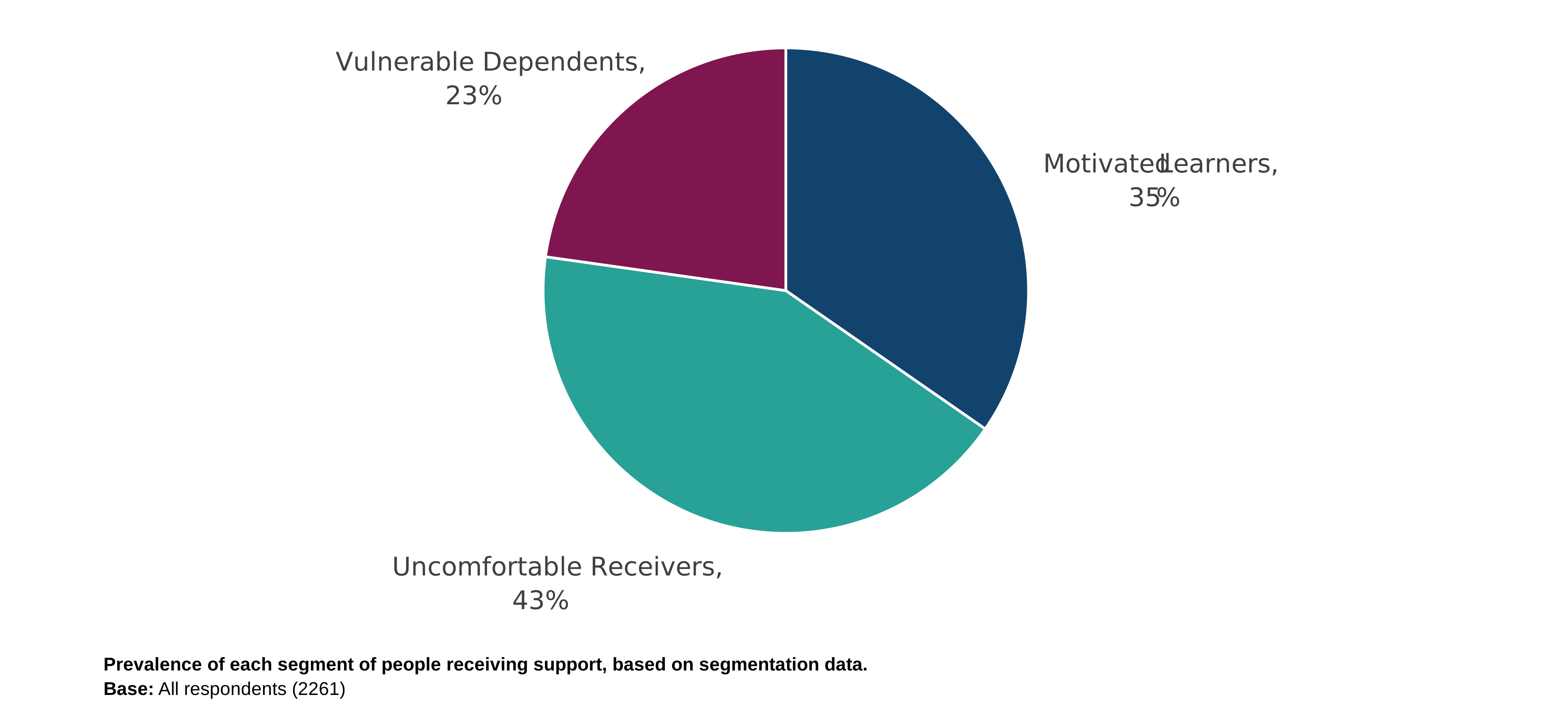
Based on factor analysis incorporating data from 11 different questions within the survey, the typology outlined 3 segments of people receiving support.[footnote 7] They are principally differentiated around 3 different factors, summarised below in Table 1 (full details on the variables used in each factor can be found in the Appendix). Once the segments were established and each respondent assigned to their appropriate segment, other variables were checked to develop a sense of the demographic profile of each segment. The prevalence of each segment within the survey data is shown in Figure 4.
Table 1: Factors influencing segmentation of people receiving digital support
| Motivated Learners | Uncomfortable Receivers | Vulnerable Dependents | |
|---|---|---|---|
| Prevalence within survey | 35% | 43% | 23% |
| Factor 1: Willingness to practice / level of motivation | High | Average | Low |
| Factor 2: Level of reliance on supporter | Low | Average | High |
| Factor 3: Enjoyment of support interactions | Average | Low | High |
Figure 4: Prevalence of each segment within survey results – People receiving Support
These details have been combined with insights from the qualitative interviews and used to draft 3 personas, each representing a segment and the ways in which it differs from the others. These personas are intended to be illustrative and give a sense of how factors and characteristics intersect; the typology is not designed to be exhaustive, and not all Supported People will align neatly with a single persona.
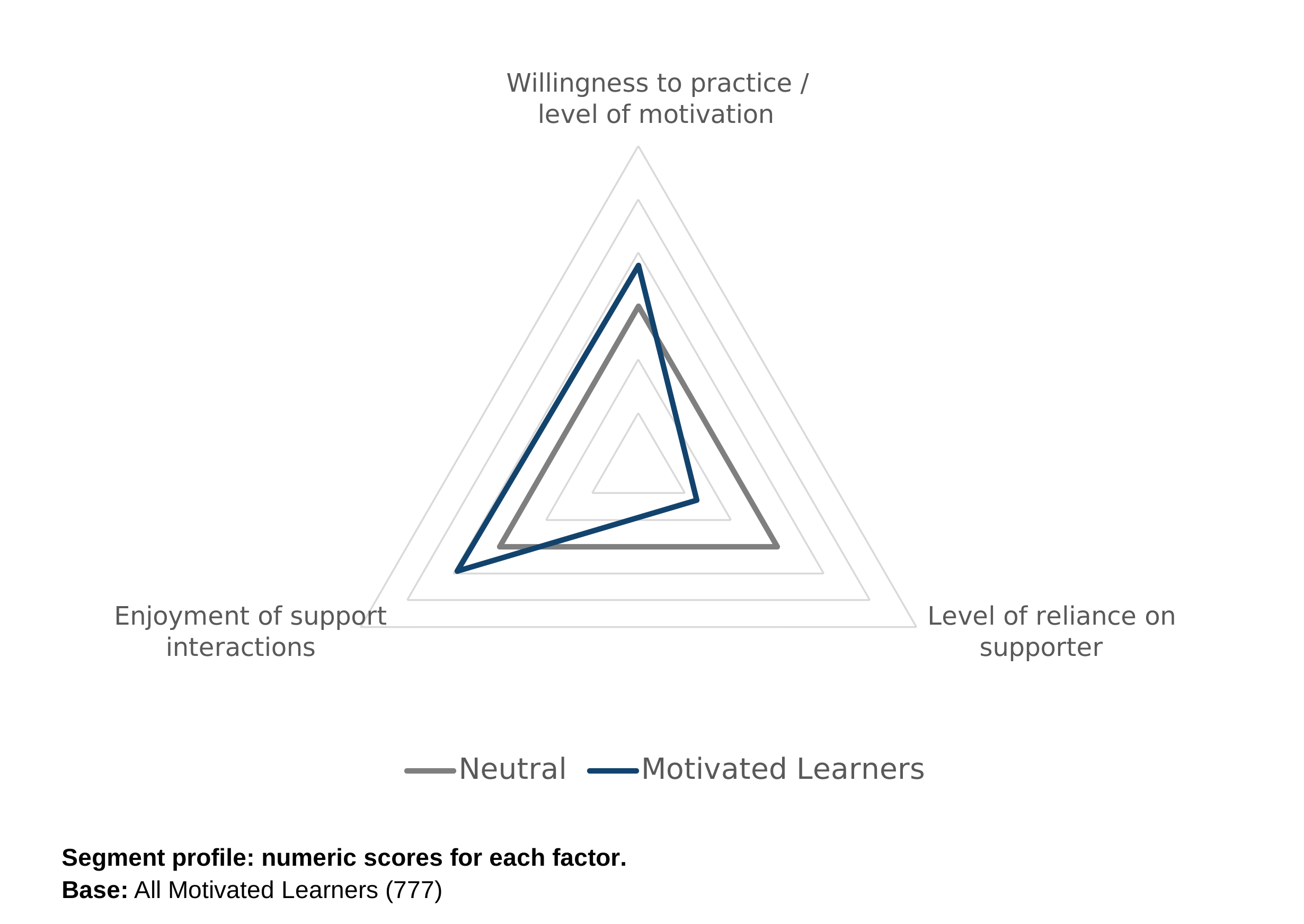
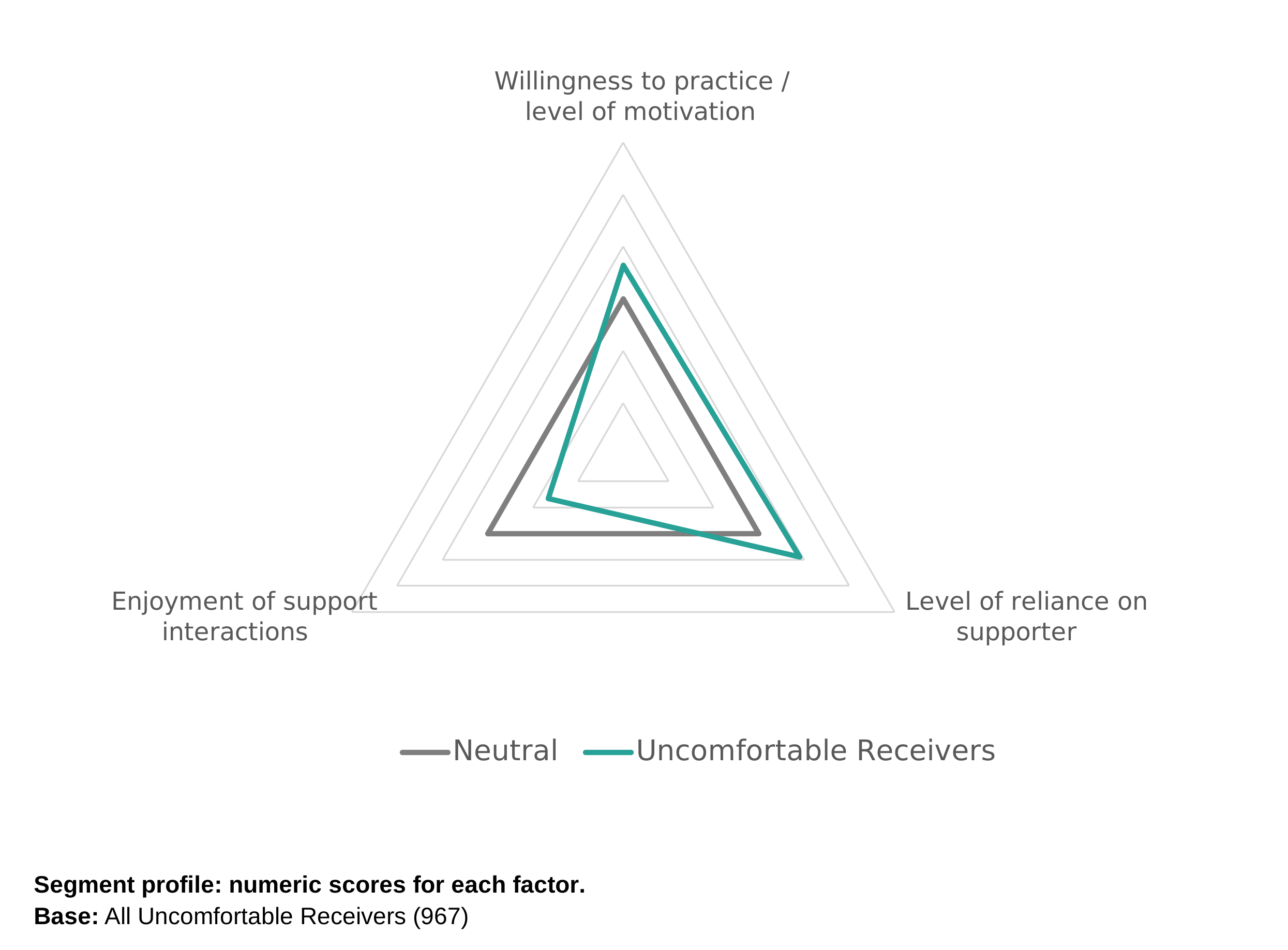
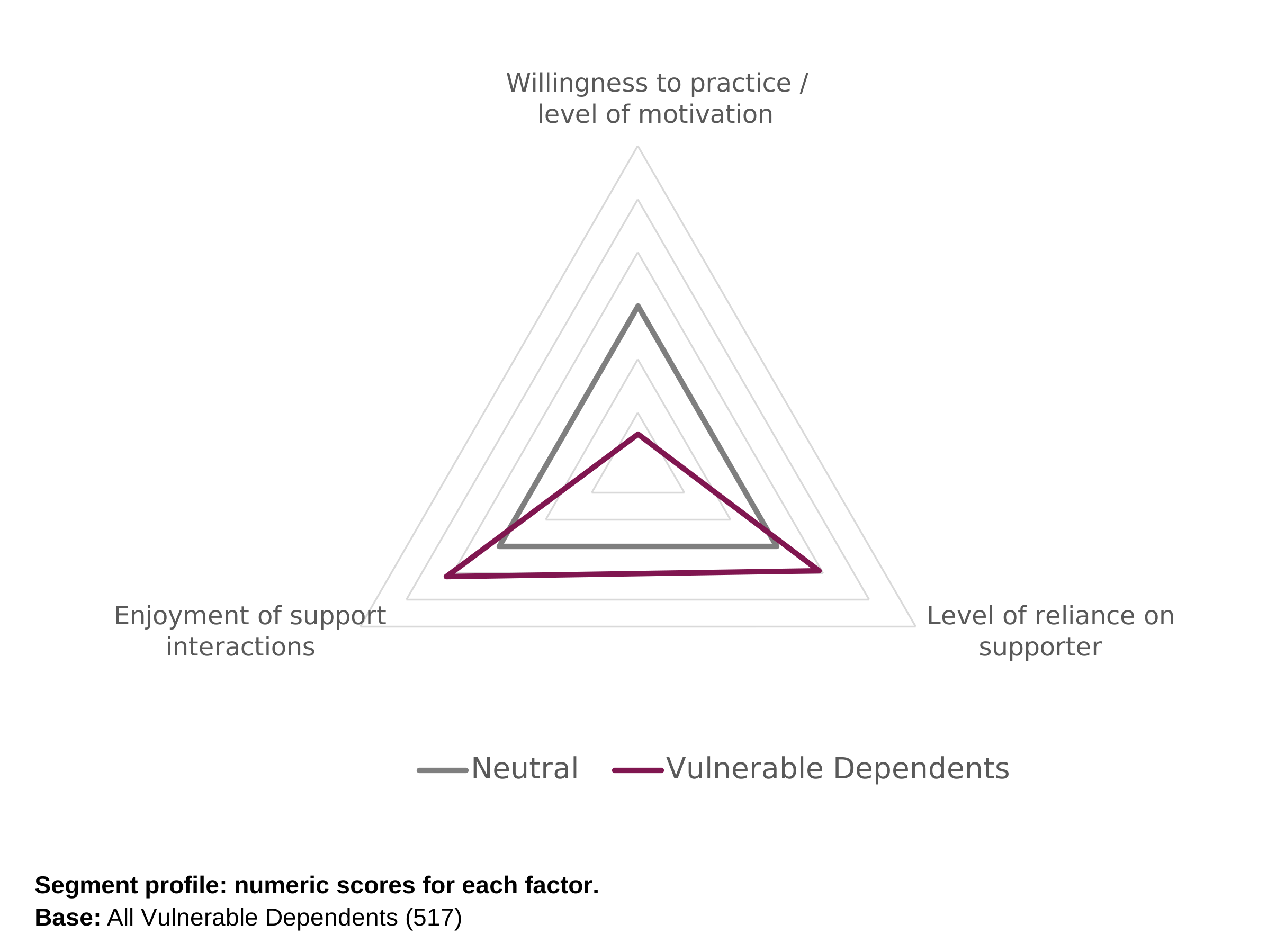
Accompanying each persona is a chart representing how this segment scored on each of the 3 factors (figures 5, 6 and 7). By comparing with the ‘neutral’ score of 0 for each factor, these charts indicate where each segment over- or under-indexes.
| Motivated Learners | Score |
|---|---|
| Prevalence in the survey | 35% |
| Willingness to practice / level of motivation | High |
| Level of reliance on supporter | Low |
| Enjoyment of support interactions | Average |
Janet is 67 and lives on her own. Her daughter helped her set up online banking last year, and since then Janet has asked for help with a few other things, steadily building her confidence with doing tasks online. She enjoys the time she spends talking things through with her daughter and finds it satisfying when something new ‘clicks’. After her daughter shows her how to do something new, Janet practises it on her own until she feels comfortable. She’s not embarrassed about asking for help and jokes that she’s not doing too badly for her age. She’s now managing more tasks independently than she was 6 months ago, from checking her energy account to video-calling friends. Janet’s growing independence means she’s relying on her daughter less over time. She’s motivated to continue learning as she wants to maintain her independence and keep up in a world where everyday tasks seem to increasingly require digital skills.
Figure 5: Segment profile – Motivated Learners
| Uncomfortable Receivers | Score |
|---|---|
| Prevalence in the survey | 43% |
| Willingness to practice / level of motivation | Average |
| Level of reliance on supporter | Average |
| Enjoyment of support interactions | Low |
This is Ryan. He’s 34 and has a long-term health condition that makes using devices for extended periods physically difficult. He gets help from several people (his partner, a friend, and occasionally a support worker) depending on who’s available and what the task is. Ryan finds the whole experience uncomfortable. He feels embarrassed about needing help and doesn’t enjoy the process of asking for and receiving support. He’s heard there might be an adapted device that could help, but money is tight and his home broadband connection is unreliable anyway. Ryan would rather not have to ask for help at all and he is open to improving his computer skills, but the combination of physical difficulties, cost, and connectivity means he can’t easily manage online tasks alone.
Figure 6: Segment profile – Uncomfortable Receivers
| Vulnerable Dependents | Score |
|---|---|
| Prevalence in the survey | 23% |
| Willingness to practice / level of motivation | Low |
| Level of reliance on supporter | High |
| Enjoyment of support interactions | High |
This is Dorothy. She’s 78 and has a physical disability that limits her mobility, as well as failing eyesight. Her son handles most of her online tasks such as booking medical appointments, managing her bills, and placing a weekly online grocery shop. Dorothy feels out of her depth using computers and worries about making a mistake that she can’t undo. While she does have some concerns about online security, it’s the fear of getting something wrong that holds her back most. She doesn’t practise tasks after her son has demonstrated how to do something and, if anything, has become more reliant on him over time rather than less. Dorothy regrets how much of modern life seems to require going online and would say the online world wasn’t designed with someone like her in mind. Because she has no other family nearby to call on, and friends face similar difficulties to herself, she often says she doesn’t know what she would do without her son’s help.
Figure 7: Segment profile – Vulnerable Dependents
5. Who provides help and why
5.1. Who are those people providing informal support
Around 1 in 3 adults in the UK (35%) have acted as a supporter for someone who struggles to use or access the internet in the last year, and they are a diverse group. [footnote 8] People of all ages act as supporters, with an even split across age groups (34% of 18 to 34 year olds, 33% of 35 to 54 year olds, 34% 55+ year olds) and no significant variation by gender (49% of supporters identify as male, and 50% identify as female). Just over a quarter record having a disability or long-term health condition (27%), which is comparable to the general population (25%). Supporters are slightly more diverse than the general population in terms of their ethnicity (77% identify as White, compared to 84% among the population as a whole). In terms of their income, work status, household size and other demographic factors, the supporter population is as diverse and varied as the UK population as a whole: people from all walks of life find themselves supporting others when it comes to getting online.
The factors driving someone to act as a supporter do not appear to be particularly demographic, but rather situational. Qualitative interviews highlighted a number of common reasons why particular individuals took up the role of an informal supporter:
- Physical proximity - Living with or near someone needing support enabled immediate, hands-on help.
- Availability - Supporters who can make the time and space when needed are preferred.
- Perceived technical capability - Supporters are perceived as “more digitally capable”, though this is based on the perspective of those they support.
- Trust - Supporters had to be trusted enough to handle sensitive information such as those related to finances or health.
- Emotional connectedness - Strong emotional bonds facilitate more patient, sustained support.
- Feelings of responsibility - Supporters often feel a moral or familial obligation to help.
I’d always have to have my husband with me, I suppose… Like, I wouldn’t attempt it myself. I’d wait until… I’d just have to wait until he was there.
Supported, female, 39
It’s just something I’m just… Sure, it’s just sort of mandatory, but in a good way, like… Yeah, but not only mandatory. Like, I want to do it, and I feel good about doing it… You know, it’s your duty… Your duty as your, as the, as the son for your mum.
Supporter, male, supporting their mother
In terms of their own perceptions of their capability, supporters are largely confident in their ability to help people to do things online. Almost all (96%) supporters rated themselves as either fairly or very confident in their own abilities as an internet user, though this may be being skewed towards high-confidence supporters by the fact that this was answered via an online survey. This confidence is carried through into their support interactions; 89% supporters agreed with the statement ‘I feel confident in the quality of help and support I have been able to offer’.
In most cases, support relationships are mutually beneficial. Eight-in-ten supporters said they enjoy helping (80%), with a similar proportion (82%) saying they feel it is a positive experience for the supported person too. Supporters also saw value in their actions, with almost 9 in 10 (88%) saying that it was important for them to be able to provide help to the person they support.
Qualitative findings reflected this, with participants suggesting the support relationship was mutually beneficial and a natural part of their relationship, especially in the case of younger relatives helping older relatives for example. However, where either (or both) parties experienced challenges around the support interactions, this was often a defining factor for the experience as a whole, as discussed below in the typology of supporters.
5.2.Understanding supporters
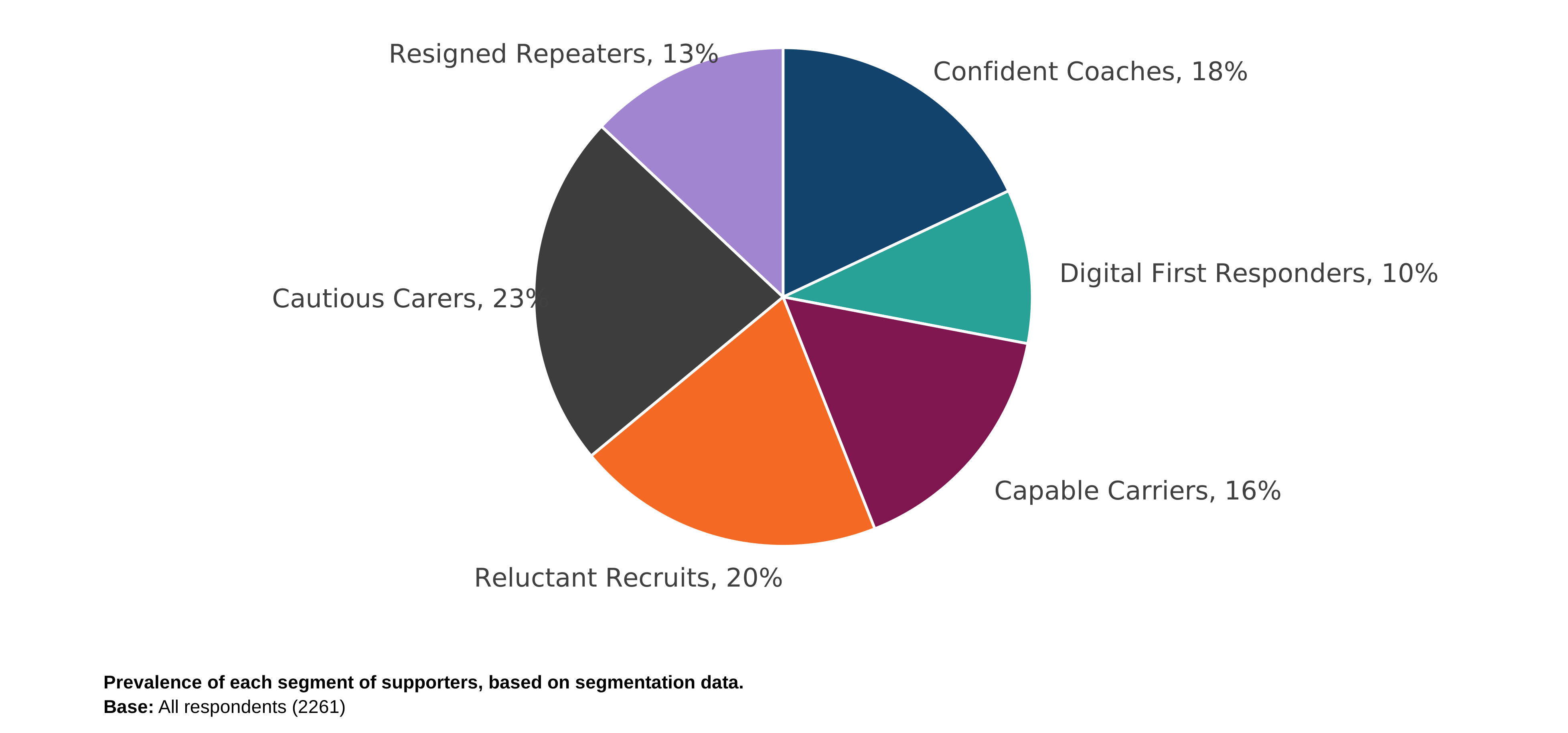
Based on the survey data, we developed a typology of supporters, complementing that outlined above for those they support. The method used to produce the segmentation was the same, but the number of variables included in the factor analysis was higher, reflecting the greater granularity of data available when surveying the supporter population themselves. The factor analysis in this case was based on 14 different questions, and resulted in 6 different segments of supporters. They are principally differentiated around 5 different factors, summarised below in Table 2 (again, full details on the variables used in each factor can be found in the Appendix). The prevalence of each segment within the survey data is shown in Figure 8.
Once the segments were established, other variables were checked to develop a sense of the demographic profile of each segment. As before, these factors and other data were used to identify the profile of each segment and these have been used to draft 6 illustrative personas. As with the previous typology, this is not intended to be exhaustive and not all Supporters will align neatly with a single persona.
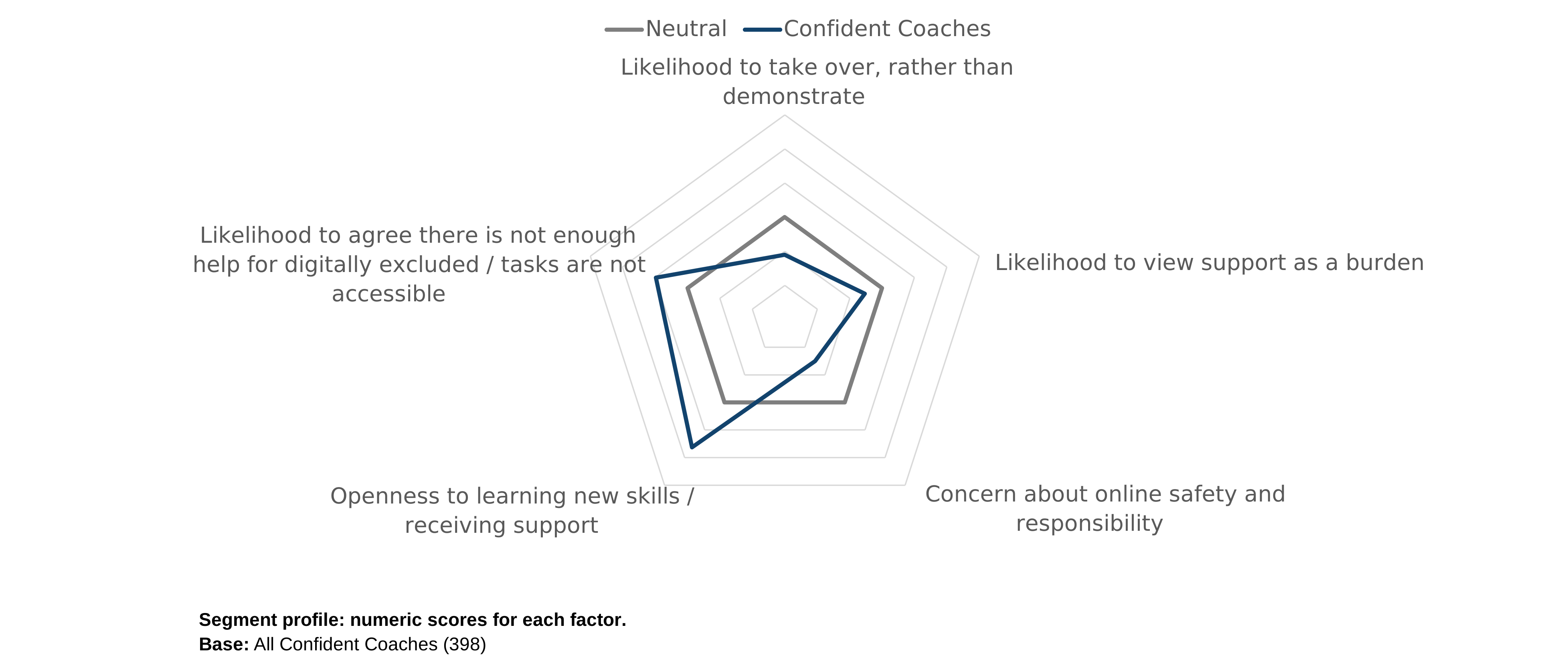
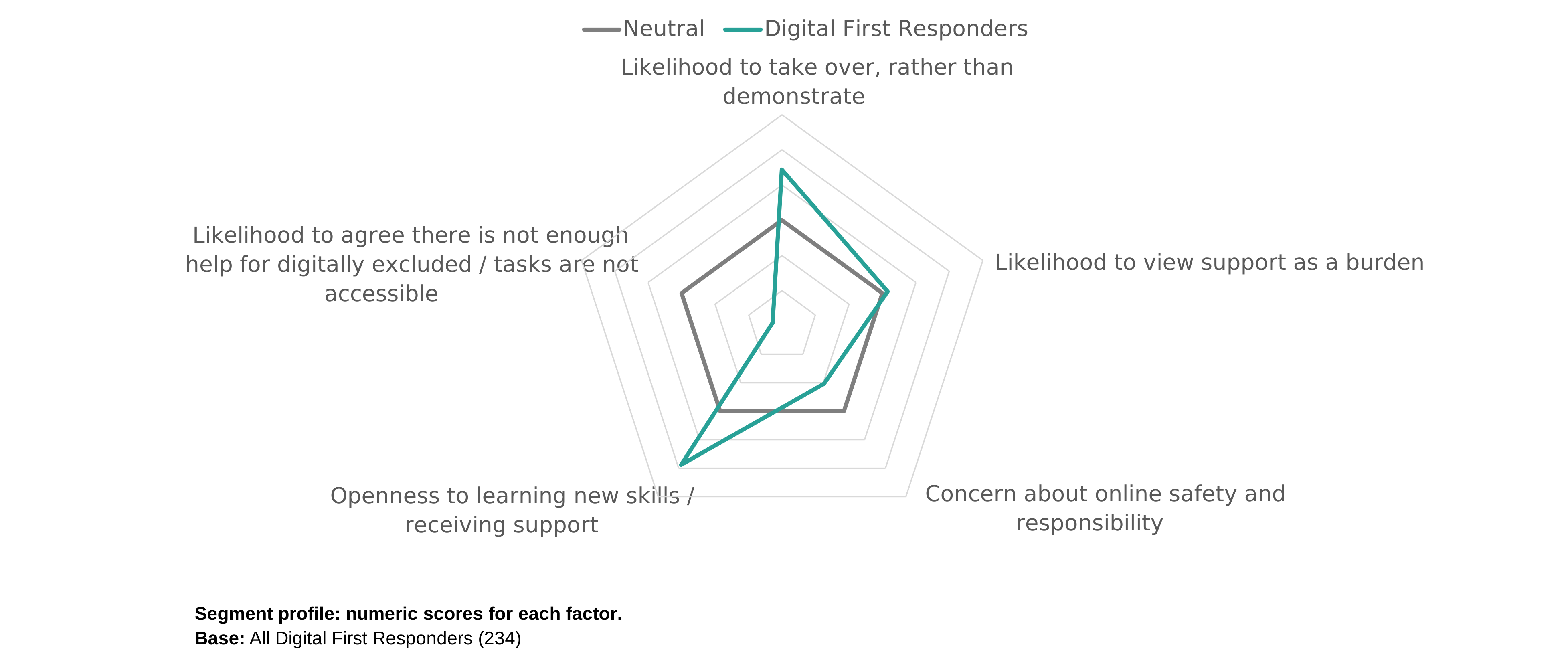
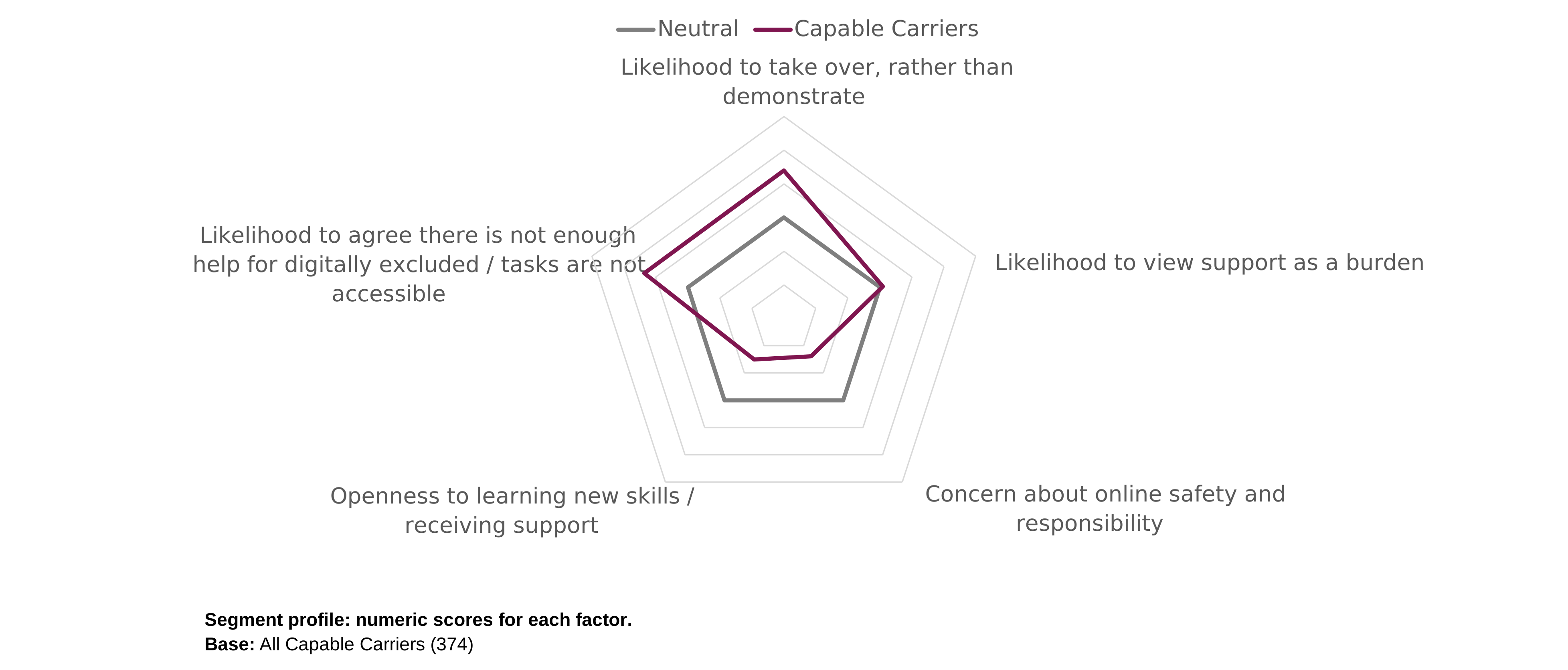
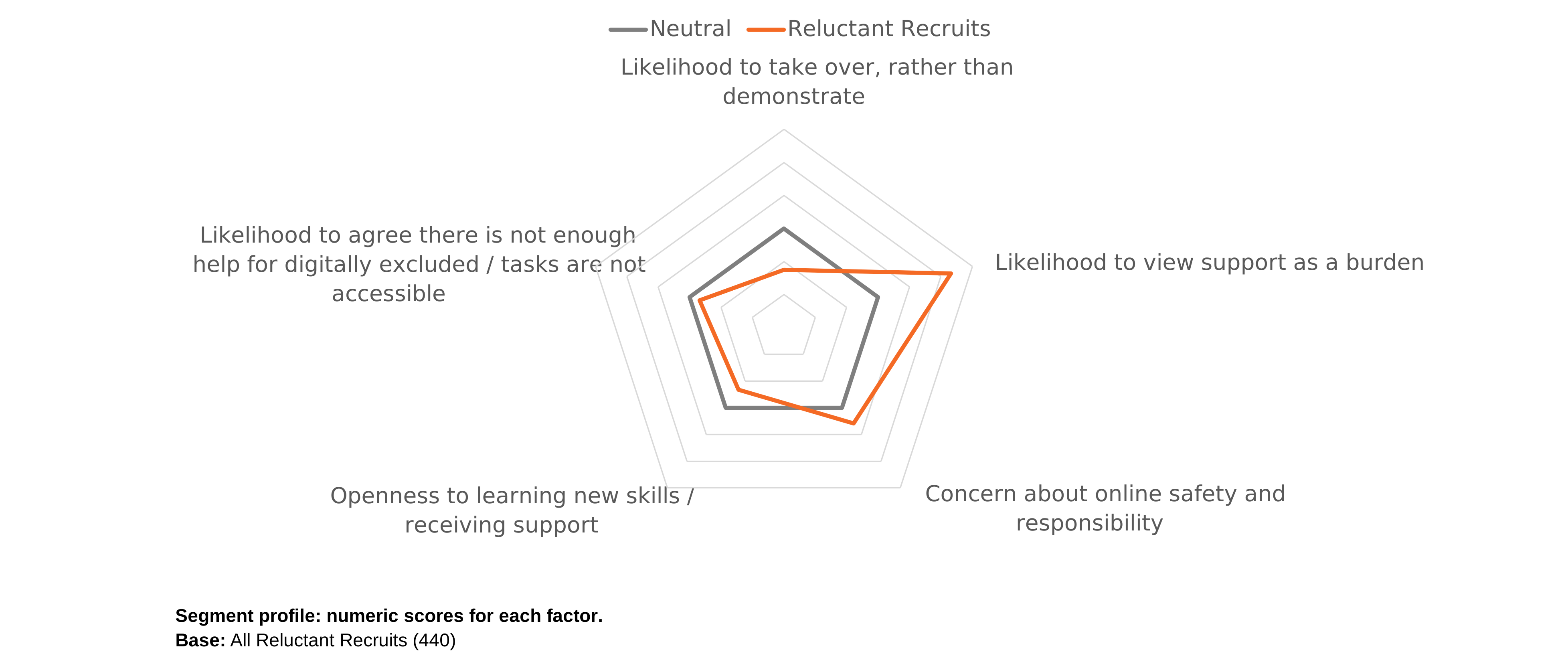
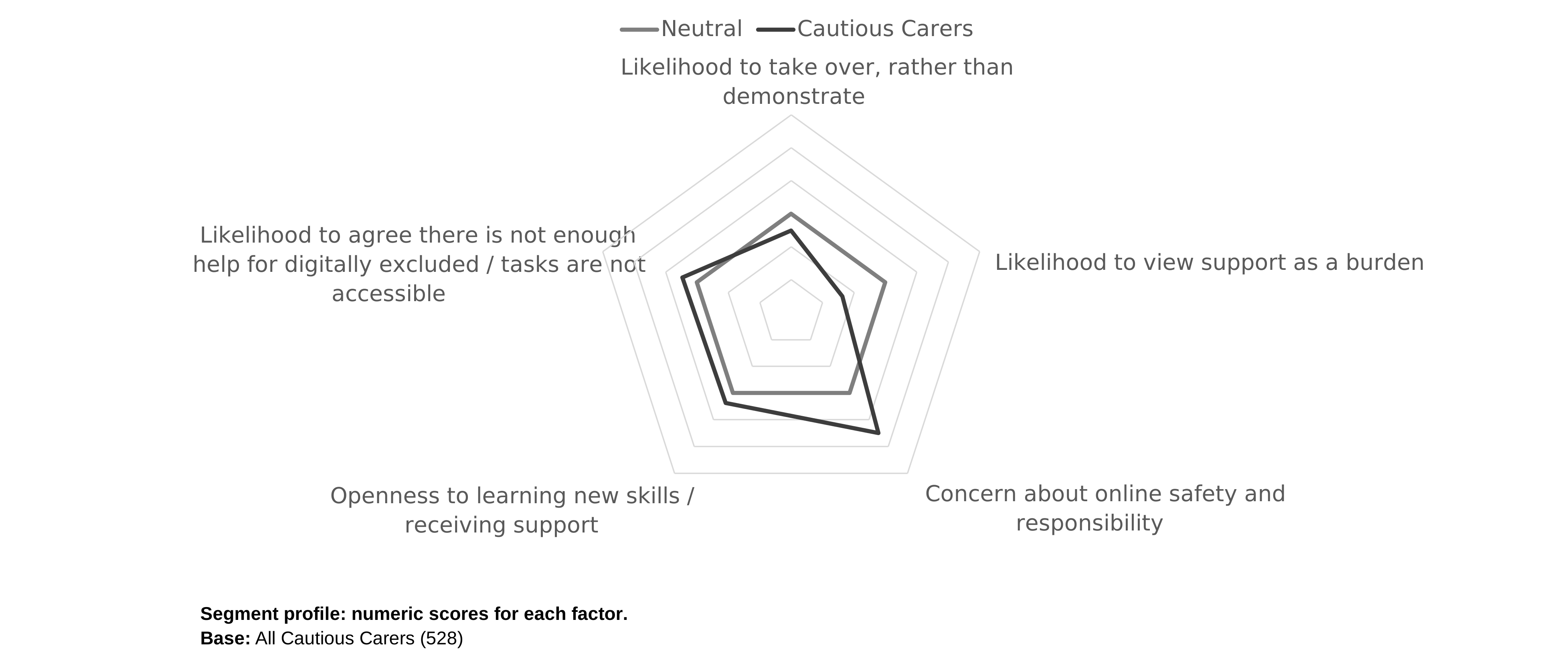
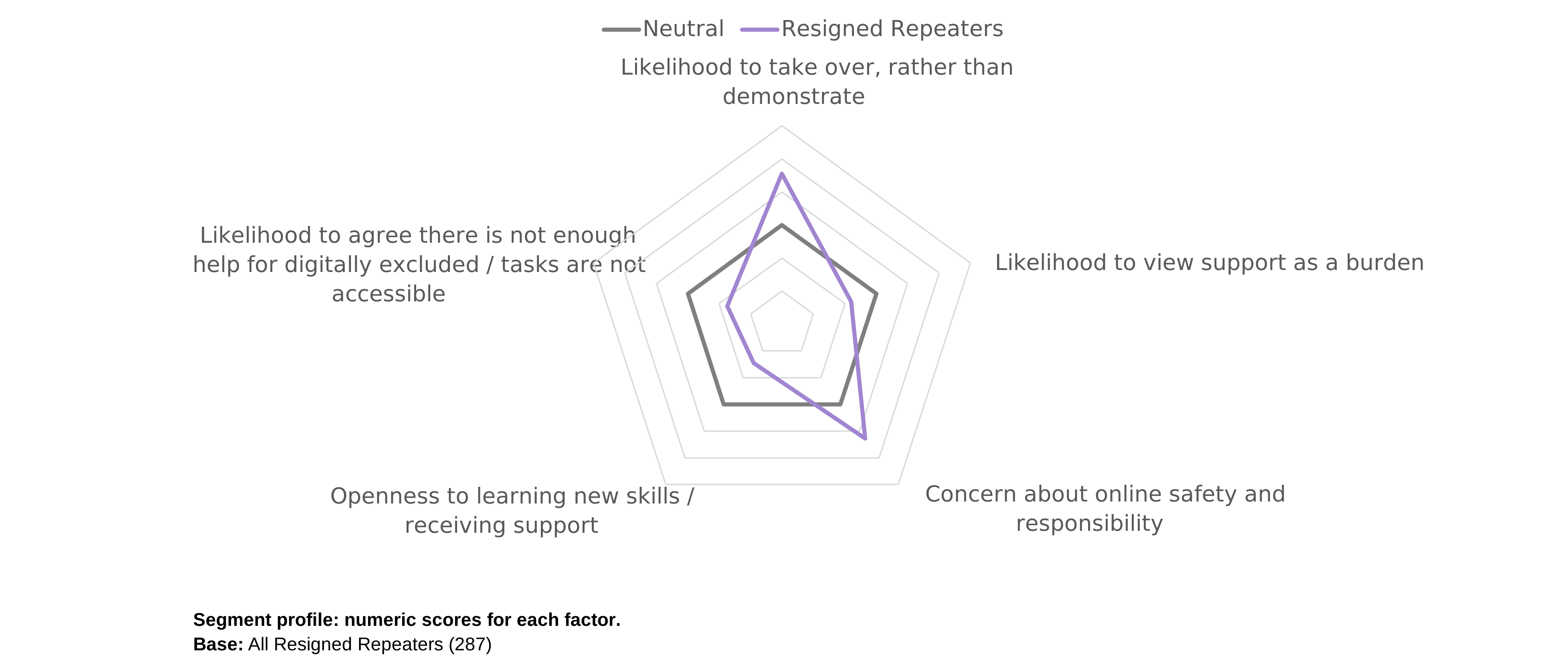
As with the segmentation of people receiving support, each persona has an accompanying chart (figures 9 to 14) illustrating where that segment over- or under-indexes for each of the 5 factors in comparison to a ‘neutral’ score of 0.
Table 2: Factors influencing segmentation of people providing digital support
Segments
| Confident Coaches | Digital First Responders | Capable Carriers | Reluctant Recruits | Cautious Carers | Resigned Repeaters | |
|---|---|---|---|---|---|---|
| Prevalence within survey | 18% | 10% | 16% | 20% | 23% | 13% |
| Factor 1: Likelihood to take over, rather than demonstrate | Low | High | High | Low | Low | High |
| Factor 2: Likelihood to view support as a burden | Low | Average | Average | High | Low | Low |
| Factor 3: Concern about online safety and responsibility | Low | Low | Low | High | High | High |
| Factor 4: Openness to learning new skills / receiving support | High | High | Low | Low | High | Low |
| Factor 5: Likelihood to agree there is not enough help for digitally excluded / tasks are not accessible | High | Low | High | Average | High | Low |
Figure 8: Prevalence of each segment within survey data – Supporters
| Confident Coaches | Score |
|---|---|
| Prevalence in the survey | 18% |
| Likelihood to take over, rather than demonstrate | Low |
| Likelihood to view support as a burden | Low |
| Concern about online safety and responsibility | Low |
| Openness to learning new skills / receiving support | High |
| Likelihood to agree there is not enough help for digitally excluded / tasks are not accessible | High |
This is Graham. He’s 61 and recently retired from a senior financial management role. He often helps his wife get to grips with things online. He’s confident in the help he gives and genuinely enjoys doing it; he’s even picked up a few new skills himself along the way. He knows his wife appreciates the effort and time he puts in to helping her and wants to encourage her to be more independent and enjoy what the internet has to offer. That’s why he prefers to guide his wife through a task, giving her encouragement and offering to check things she has done, rather than just taking over and doing it himself. Graham sees his wife as someone who is motivated to learn, and his approach reflects that: her confidence is growing as a result. He strongly believes there isn’t enough guidance available for people who are struggling online and would welcome more support himself. However, he isn’t aware of any and is slightly sceptical about the quality of guidance that’s likely to be available to the general public.
Most likely to be supporting: Motivated Learners
Figure 9: Segment profile – Confident Coaches
| Digital First Responders | Score |
|---|---|
| Prevalence in the survey | 10% |
| Likelihood to take over, rather than demonstrate | High |
| Likelihood to view support as a burden | Average |
| Concern about online safety and responsibility | Low |
| Openness to learning new skills / receiving support | High |
| Likelihood to agree there is not enough help for digitally excluded / tasks are not accessible | Low |
This is Amir. He’s 28, lives in Birmingham, and works in marketing. He’s the most digitally confident person in his family, meaning a number of people come to him for help. He helps his parents, his aunts, and an elderly neighbour with a wide range of online tasks. Some are straightforward, like online shopping or using social media, but Amir also helps with things like setting up his mum’s Alexa virtual assistant and showing his dad how to use AI chatbots to draft letters. He’s picking up new digital skills himself through helping and feels it is important that older people aren’t excluded from anything due to lack of digital skills. He’ll continue to help as long as he’s needed, but he occasionally feels taken for granted and resents how much of his spare time he ends up losing by helping others this way. He is also a bit uncomfortable with the sensitive financial and health information he’s sometimes exposed to when helping people book appointments and manage their banking. He doesn’t think there’s a shortage of support for people struggling online but thinks the responsibility will mostly sit with him regardless. What he’d really find useful is a way to remotely access the devices of people wanting his help, so he doesn’t always have to be there in person. However, most of the people he helps have multiple people in their family and wider community to call on if needed, which eases the load slightly.
Most likely to be supporting: Uncomfortable Receivers
Figure 10: Segment profile – Digital First Responders
| Capable Carriers | Score |
|---|---|
| Prevalence in the survey | 16% |
| Likelihood to take over, rather than demonstrate | High |
| Likelihood to view support as a burden | Average |
| Concern about online safety and responsibility | Low |
| Openness to learning new skills / receiving support | Low |
| Likelihood to agree there is not enough help for digitally excluded / tasks are not accessible | High |
This is Sarah. She’s 46 and lives in Leeds. She helps her elderly father with a range of online tasks including booking appointments, paying bills, and ordering groceries. She’s a confident internet user and isn’t learning anything new from doing what she considers pretty basic tasks on her dad’s behalf. Sarah is close with her dad and comfortable handling his health and finances, as she’s already familiar with his needs. She is short on time though, and juggling work and childcare, so she often takes away a list of digital tasks her dad needs doing, and just does them at home on her own devices. Sarah doesn’t need any support herself and wouldn’t seek it out. She’s largely comfortable when it comes to staying secure online and knows her dad feels safer knowing Sarah has access to personal information and log-in credentials too. Sarah believes there isn’t enough help available for people like her father, and that everything is moving online in ways that don’t take account of older, less confident users. Neither of them has any expectation of her father becoming any more independent online and Sarah thinks taking care of all things digital is her responsibility anyway so there is no need to change their arrangement.
Most likely to be supporting: Vulnerable Dependents
Figure 11: Segment profile – Capable Carriers
| Reluctant Recruits | Score |
|---|---|
| Prevalence in the survey | 20% |
| Likelihood to take over, rather than demonstrate | Low |
| Likelihood to view support as a burden | High |
| Concern about online safety and responsibility | High |
| Openness to learning new skills / receiving support | Low |
| Likelihood to agree there is not enough help for digitally excluded / tasks are not accessible | Average |
This is Tyler. He’s 24, lives in London, and helps a colleague who has English as a second language with online forms and admin tasks. Tyler doesn’t think his own digital skills are particularly strong, and doesn’t always feel comfortable with some of the tasks he’s asked to do. He doesn’t particularly enjoy helping and he can tell his colleague feels awkward about having to ask for help too. He worries about being held responsible if he fills out an application incorrectly, and thinks his colleague takes his help a bit for granted. Tyler thinks his colleague should look for help elsewhere and resents the time taken up by helping. He would not want to spend any further time receiving guidance or training on how to give support because in an ideal world he would be able to stop helping as soon as he can.
Most likely to be supporting: Uncomfortable Receivers
Figure 12: Segment profile – Reluctant Recruits
| Cautious Carers | Score |
|---|---|
| Prevalence in the survey | 23% |
| Likelihood to take over, rather than demonstrate | Low |
| Likelihood to view support as a burden | Low |
| Concern about online safety and responsibility | High |
| Openness to learning new skills / receiving support | High |
| Likelihood to agree there is not enough help for digitally excluded / tasks are not accessible | High |
This is Margaret. She’s a 71-year-old retired cleaner living on a small pension. Her arthritis has been getting worse, making her less confident getting out and about, so she has thrown herself into improving her digital skills. Though she considers herself very much a learner, and isn’t necessarily that confident in her own skills, she happily helps her friend Jean who struggles more. She thinks Jean’s biggest barriers are low confidence and a fear of making mistakes, so she tries to make it less overwhelming for her and reduce any embarrassment Jean feels. Margaret is more than happy to talk things through with Jean over a cup of tea, and encourages her to try things herself, going step by step to reduce Jean’s anxiety. Margaret really enjoys helping and is committed to continuing for as long as Jean needs her. She knows Jean appreciates her help and Margaret thinks it is empowering for older women to keep up with the online world. Margaret does have worries about online safety though, having heard about some awful scams, and she would hate to inadvertently misguide her friend. She would welcome advice on internet safety and training to improve her own skills, but she doesn’t know what guidance exists or where to look for it.
Most likely to be supporting: Motivated Learners
Figure 13: Segment profile – Cautious Carers
| Resigned Repeaters | Score |
|---|---|
| Prevalence in the survey | 13% |
| Likelihood to take over, rather than demonstrate | High |
| Likelihood to view support as a burden | Low |
| Concern about online safety and responsibility | High |
| Openness to learning new skills / receiving support | Low |
| Likelihood to agree there is not enough help for digitally excluded / tasks are not accessible | Low |
This is Karen. She’s 48 and helps her elderly mother with a small set of recurring online tasks: looking things up on Google, ordering groceries, and managing online banking. She has tried to show her mum how to do things for herself but doesn’t really get anywhere. Her mother would rather wait for Karen to be available than try on her own. As such, Karen just tends to find it easier to do digital tasks herself. Karen doesn’t feel comfortable handling all her mother’s online accounts and worries about being responsible if something goes wrong. If she’s honest, she’s not all that confident online herself. However, she’s not particularly interested in receiving digital support or guidance (she’s the most averse of any group to the idea). Karen doesn’t believe there’s a shortage of support available to those who want it; she just wouldn’t seek it out herself. She thinks her mother lacks both digital skills and confidence but also has very little interest in improving. The result is a settled, but static pattern: her mother waits for her to do things, Karen does them, and neither expects that to change.
Most likely to be supporting: Vulnerable Dependents
Figure 14: Segment profile – Resigned Repeaters
6. How is help delivered
6.1. Three modes of support
The qualitative and quantitative strands of this project highlighted the complexity of support that supporters provide when it comes to completing online tasks, with different modes favoured in different instances. Although 3 distinct modes of support were observed in the ethnographic component of interviews, there was notable variation by task and context. These modes are:
- teaching support (i.e. guiding a supported person through a task)
- proxy support (i.e. completing a task on behalf of a supported person)
- advisory support (i.e. checking something a supported person has done themselves)
It is also common for supporters to provide general encouragement and emotional support as required.
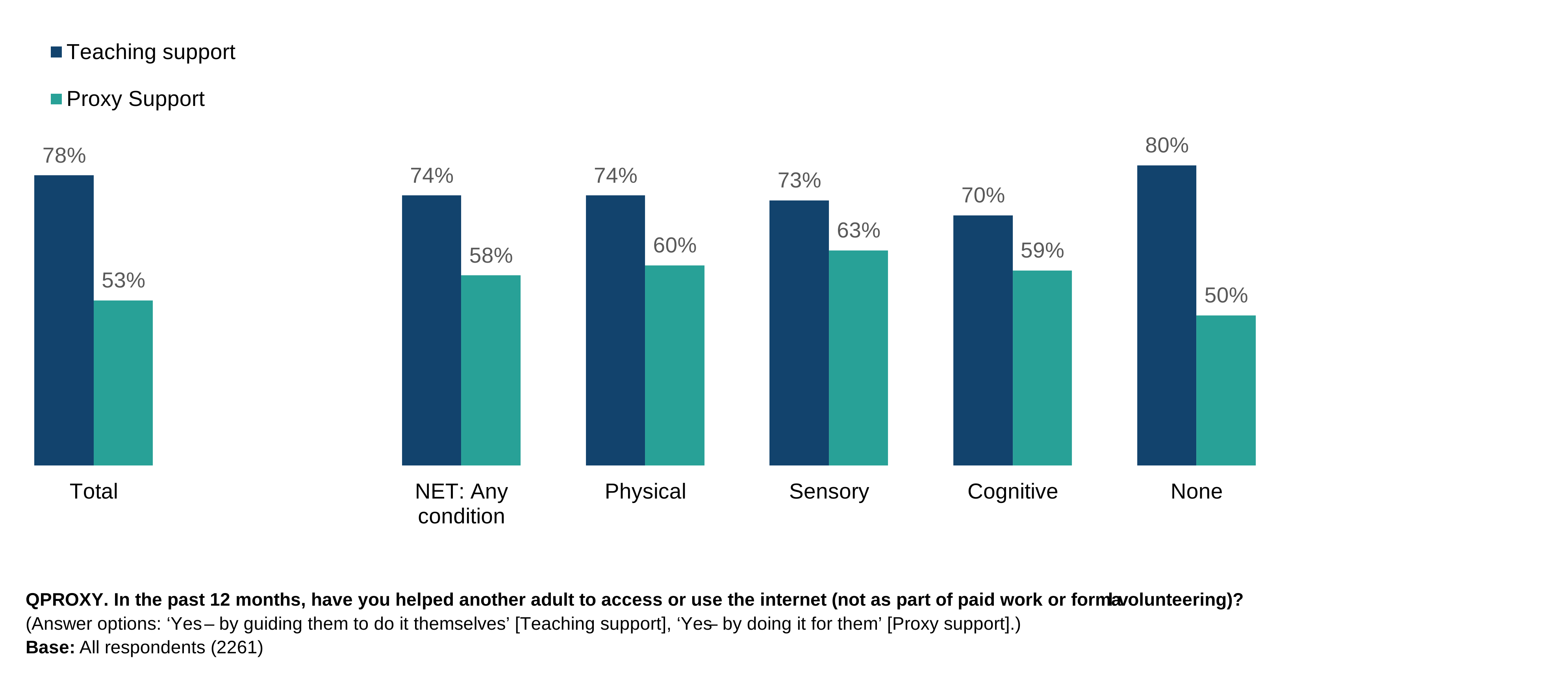
In the survey (see Figure 15), teaching support (doing with) was most commonly recorded overall, with nearly 4 in 5 (78%) supporters having provided it in the last year, and just under half (47%) saying this is the sole form of support they provide [footnote 9]. Over half of supporters (53%) have provided proxy support in the last year, with 1 in 5 exclusively offering this support (22%). For 3 in 10 supporters (31%), a combination of the 2 is favoured. The age profile of people supported in these various modes does not notably vary (only among those aged 85 and over is proxy support significantly more common), but disabilities and health conditions are a prominent factor. Where people receiving support have a health condition or disability of any kind, supporters are significantly more likely to offer solely proxy support, or a combination of the two. Proxy support was also significantly more common where supporters were helping family members (56%) than where they were helping people outside of their family (45%), suggesting closer personal relationships may be more likely to include proxy support.
Importantly, support types are not always mutually exclusive. As discussed, some relationships involve a combination. The observations revealed that supporters can move through support types depending on circumstances. Mode selection depended on a range of factors, such as: the complexity of the task at hand, the urgency of the task, the emotional state of both parties, and whether a task is novel or familiar. Throughout several observations supporters would begin by guiding people through a task until they encountered a barrier that could not be overcome independently, at which point the supporter would take over and complete the task on their behalf.
Figure 15: Type of support given by health condition of person supported
6.2 Teaching support (‘Doing with’)
This form of support involves the person in receipt of support completing tasks themselves with guidance or instruction from their supporter. As mentioned above, ‘doing tasks with them’ was the most common form of support provided by supporters from the survey sample.
So, normally, I wouldn’t… If I ever needed anything from my mum, I would always ring her anyway. But there was a point where I wouldn’t have even bothered sending her a WhatsApp or whatever because she wouldn’t have known how to use it… Now she knows how to get it up, and she knows how to send pictures back because we’ve shown her. So, that’s been a good thing, to be honest with you.
Supporter, female, supporting their mother
Teaching support (through advice and instructions) was mostly used for tasks that were simple, procedural, frequently repeatable, and non-urgent. Survey data showed it was the favoured mode of support for tasks such as making or receiving video calls (used by 71% of those supporting with this task), using online banking (59%), using search engines (59%), and watching videos or listening to music (59%). Discussion with supporters and supported people highlighted the need for the person being supported to be motivated to learn to complete the task for this mode of support to work. Given the extra time and effort required by both parties, the benefits needed to be clear, such as the increased ability to keep in touch with family via video calls. Participants in the qualitative interviews commented that both time and patience are required from both parties, often conflicting with the more time-sensitive tasks that people are often providing support around.
While there was an acknowledgement among qualitative participants that teaching support can be slower and more challenging, the benefits in terms of increased independence where it worked successfully were also noted. In the survey, supporters who exclusively offered teaching support were significantly more likely to agree that the person they support had become more independent in using the internet (64%), compared to those who combined it with proxy support (59%) and those who exclusively offer proxy support (39%). It is not possible to establish cause and effect from the survey data alone, however, as it is also possible that teaching support was favoured by those supporting people with greater interest or potential to learn.
The qualitative findings support the hypothesis that effective teaching support can help people became more proficient and confident in using the internet independently, but also demonstrated why it was not universally applicable. Amongst those interviewed, teaching support was often limited to basic, low stakes tasks, such as sending messages, making and receiving calls, and using social media. Where situations arose that were too urgent, stressful, or challenging for the supported person to resolve with guidance alone, supporters would revert to proxy support.
6.3 Proxy support (‘Doing for’)
In this case, the supporter completes the online task entirely, either by taking control of the device in the presence of the supported person, or by doing it from elsewhere in their own time. Such interactions were frequently observed in the qualitative phase, with the supported person often having limited or no visibility of the process. Qualitative interviews suggested participants were more likely to default to proxy support where tasks were complex, infrequent, and high stakes (often in financial terms). This is reinforced by survey data showing it was a favoured mode of support when it came to using public services (used by 55% of supporters doing this task), purchasing goods or services online (51%), accessing or setting up a device (50%), and booking health appointments (50%). Notable minorities of supporters also use proxy support for other potentially high-risk tasks such as paying a bill (47% of those supporting this task) and filling in an application (43%). During qualitative interviews, supporters felt it was more appropriate in these scenarios as it reduced the risk of the person they support making potentially costly mistakes.
In qualitative interviews, proxy support was often framed as the mode supporters fell back on when they felt teaching support was inappropriate, or too time consuming. For tasks that were infrequent in nature, these supporters felt that investing time in teaching the person they supported how to complete them would not be worthwhile as instructions may be forgotten before they were next needed. When a task was particularly urgent or of high importance, there was also the potential for it to heighten stress and anxiety among supported people, and to cause frustrations for both parties involved. Supporters in the qualitative interviews mentioned ‘taking over’ when the supported person began to struggle or became anxious, and some suggested the people they support favoured this mode because it avoided stress and the potential for mistakes, and was more efficient.
Because it’s faster you doing it than me trying to do it.
Supported, female, 58
The qualitative research suggests that proxy support is at times necessary for certain tasks to be completed correctly and safely, but that defaulting to proxy support carries a range of implications. Whilst convenient for both parties, defaulting to proxy support could create and reinforce dependencies. Interviews suggested that a reliance on proxy support can reduce a supported person’s motivation to engage with digital technology, and there are correlations evident in the survey data too (although, again, cause and effect is difficult to establish). Supporters in the survey who exclusively provide proxy support were significantly less likely to agree that the person they support ‘is motivated to learn to use the internet independently’ (32%) compared to both those who only offer teaching support (58%) and those who combine the 2 (43%). Qualitative interviews suggested that, where supported people were confident someone else would complete a task for them, they were not forced to become more proficient, and therefore did not become more confident engaging with digital tools and services independently.
I just can’t do it. She does it all for me. That’s just how it is.
Supported, male, 41
6.4 Advisory support (‘Second pair of eyes’)
While teaching and proxy support were more common, a third mode of support observed can be described as ‘advisory support’. This involves the supporter providing verification, reassurance, or checking on tasks the supported person completes themselves. This was seen to preserve the supported person’s autonomy while also addressing anxiety. In the survey, an average of around 3 in 10 supporters said they helped with a task by ‘checking something [the supported person has] done themselves’. Data was collected by task, with this featuring most prominently for sending or receiving email (used by 39% of supporters who helped with this task), using social networking sites/apps (37%) and filling in an application (36%). An average of around 3 in 10 supporters also said they helped by ‘offering encouragement reassurance, or emotional support’ for a given task.
Advisory support was predominantly used by participants to check if they had made any mistakes when completing a task independently, and to identify potentially fraudulent requests or scams. This helped to reduce anxiety when navigating a wide range of tasks online.
Sometimes I do, because I make sure it is the actual link first, and if I’m not quite sure… I will ask him, ‘Is this the actual link?
Supported, female, 58
Advisory support is generally light touch, allowing the person being supported to retain a sense of independence, and giving space for them to practice using different digital tools and services relatively independently. It served as a supportive safety net which helped address the anxiety people felt when engaging with digital tools and environments. Many were reassured to know someone “more capable” could check what they were doing.
6.5 What channels are used to deliver support
In both the quantitative and qualitative phases of research, support was seen to predominantly take place in-person. This was the most common mode of delivery for all tasks asked about in the survey, with notably high prevalence for accessing or setting up a device (88% of supporters who have helped with this did so in person), using online banking (84%) and paying a bill (82%). On average across all tasks, support was provided in person by just under 8 in 10 supporters (78%).
In the qualitative phase, all interactions were deliberately observed face to face. In-person support was felt to be most effective and typically suited to those living together or with regular scheduled visits. In-person support allows supporters to physically point, demonstrate, and (where necessary) take over the device. This enables supporters to more easily transition between proxy support, teaching support, and advisory support as appropriate.
However, almost all supporters also mentioned providing supplementary support remotely for at least one task. Participants described receiving remote support through phone calls, video calls, screenshots, and occasionally screen sharing, with the survey also recording instances of support via text messaging and email. There was variation by task within the survey but, on average, 1 in 5 supporters (21%) are providing remote support for any given task. Whilst helpful when trying to reach a supporter who might be far away, or reducing the need for an additional in-person visit, the qualitative research suggested remote support presented its own challenges. It requires some level of digital skill to use the remote support tools themselves (for example, screen sharing) and guidance can be more difficult to deliver without a shared visual reference. As a result, it was more likely to breed frustrations during the support interaction.
7. What challenges do supporters face in providing help
7.1 Challenges experienced when delivering informal digital support
Informal digital support can place strain on the broader relationship between supporter and those they support. Supporters can become impatient when explanations must be repeated and they see progress stalling. They can often be managing other competing priorities in their own life alongside their supporting responsibilities, making them tired and overwhelmed. This is a particular factor for those in the Digital First Responder and Reluctant Recruits segments who were significantly more likely than all other segments to say that helping took up more time than they would like.
It’s frustrating when it gets you at the wrong time… if you’re coming back from work and you just want to chill out and have a bit of peace. Just frustrating sometimes. So, especially if she doesn’t understand the first time, then you’ll have to experience it again.
Supporter, male, supporting their mother
Similarly, those people receiving support can feel guilty and burdensome because of the level of support they need. They are often acutely aware of the time and effort required to deliver the support they need. For some, this manifested as embarrassment at needing to ask for help and could cause the whole dynamic around support to feel quite negative. This was notably the case for Uncomfortable Receivers who were significantly more likely than both other segments to appear embarrassed about asking for help (54%, compared to 10% for Motivated Learners and 14% for Vulnerable Dependents), and least likely to feel the experience is positive (68%, compared to 94% and 89%). These emotionally demanding relationship dynamics are naturally challenging for supporters to navigate in a constructive manner.
I feel a bit bad sometimes. I just pester him all the time. I do.
Supported, female, 58
Many participants described feeling uncomfortable supporting with digital tasks that involved sensitive personal information. This was particularly acute around health-related tasks, financial and banking accounts, and benefit applications. For instance, one participant expressed unease when helping to complete PIP forms that required detailed information about health conditions and medication. This made them question whether they were the appropriate person to be supporting in these circumstances. Others described feeling awkward accessing personal accounts of the person they support without formal clearances. Supporters in the survey echoed this, with a quarter (24%) reporting they had ‘access to this person’s sensitive personal information that I’d rather not have’. Overall, 1 in 5 supporters (19%) agreed with the statement ‘I am not always comfortable with the nature of the tasks I am asked to help with’. This is significantly higher for those who are supporting someone outside of their family (24%) compared to supporters who help a family member (17%), suggesting that these boundaries may become harder to navigate amongst non-familial relationships. It is also a particular challenge for supporters who are Reluctant Recruits (38%), significantly higher than every other segment. Without clear frameworks for what constitutes appropriate involvement, supporters were left navigating these boundaries intuitively.
Supporters also expressed anxiety about navigating online safety risks on behalf of the people they helped. In the qualitative research, some participants supported people who had fallen victim to scams and other online safety risks in the past, which made them particularly wary, as they felt responsible for preventing future harm. The survey found that 28% of supporters agreed with the statement that ‘I worry about staying safe online when helping someone with their online tasks’. Security and staying safe online was more of a concern for younger supporters: 34% of supporters aged 18 to 34 agreed, compared to only 23% of supporters over 55. It was also a key defining factor in the supporter segmentation, concerning Cautious Carers (50%) and Resigned Repeaters (42%) more than all other segments.
The introduction of everyday use of AI tools carries wider risks and challenges for supporters to navigate when helping people get online and use the internet. The rapid emergence of AI means that people are still learning how and when to use these tools, and their risks. During qualitative interviews researchers witnessed supporters unknowingly teaching people poor practices with AI. For example, one participant delivering support advocated the use of ChatGPT for analysing legal documents like their mortgage agreement and did not understand the level of risk involved with these tasks.
In terms of the survey findings, when asked to rate their own confidence in doing digital tasks online, just under 2 in 3 supporters (63%) rated themselves as confident when ‘using AI chatbots such as ChatGPT, Gemini, or Claude’. When compared with high confidence ratings amongst longer-established internet tasks such as using search engines (97%), emails (98%), buying products or services online (97%) and using online banking services (96%), this lower confidence could underscore the general lack of understanding of AI, and its limitations, given its rapid emergence as a free to use everyday tool.
7.2. Appetite for external support
The survey data highlighted some of the complexity around assessing appetite for external help among supporters. There were 2 key elements at play: their view on the extent to which there is a lack of support available to those who struggle to use the internet, and their own personal interest in getting help to aid them in providing support to others. On the former point, approximately 3 in 5 supporters (62%) agreed that there is not enough support or guidance available for people who struggle to use the internet. There was significantly higher agreement among those supporting older people (65% among those supporting someone over the age of 55, increasing with supported person’s age), supporters who support someone with a disability or long-term health condition (69%) and supporters who themselves have a disability or condition (70%). There is also notable variation across the supporter segments with significantly higher levels of agreement from Confident Coaches (85%), Capable Carriers (78%) and Cautious Carers (76%) compared to Reluctant Recruits (53%), Resigned Repeaters (32%) and, lowest of all, Digital First Responders (23%).
Overall, only half of supporters (49%) surveyed said that they would personally welcome more support and guidance to help them help others who struggle to use the internet. Supporters who were more interested in receiving help tended to be younger (62% among those aged 18-34), more likely to be helping a grandparent (61%) and more likely to be from a Black (73%) or Asian (70%) background. The segments who would most welcome help are Confident Coaches (79%) and Digital First Responders (66%), followed by Cautious Carers (53%). Only a minority of Reluctant Recruits (39%), Capable Carriers (34%) and Resigned Repeaters (20%) said that they would welcome help, suggesting that they are either happy with the support relationship as it stands (more likely for the latter 2 groups, who are more positive about the interactions) or they are not prepared to invest any further time in preparing support (more likely for Reluctant Recruits, who tend to view the support they already provide as something of a burden).
Among those who said they would welcome more support and guidance, 4 in 10 (43%) said they would value advice on how to use the internet safely. This was the joint most popular option presented, along with online resources and training on how to help others use the internet independently (also 43%) and followed by signposting to services which might help the person they support to get online independently (seen as useful by 34% of those who would welcome guidance). Fewer than 3 in 10 (28%) were interested in attending in-person sessions to upskill themselves, and a similar proportion (27%) thought it would be useful to be granted access to key services used by the people they help, so they can access online accounts on their behalf (e.g. health, welfare, finances).
8. Understanding informal digital support to enhance digital inclusion
The conversations with informal supporters and those they support illustrate the important role that informal supporters play in helping to address digital exclusion. It also surfaces some of the structural limitations that constrain the effectiveness of informal support as a pathway to inclusion. This leads to a further question: how can this understanding of informal digital support be used to strengthen broader digital inclusion strategies?
To address this, 3 interlinked problem statements were identified from the evidence gathered across the research. These were used as provocations to frame discussion in a co-creation workshop attended by expert stakeholders, supporters from the qualitative research, and DSIT representatives.
The 3 problem statements discussed were:
- Learned helplessness: Many digitally excluded people are held back by a lack of confidence, worry about making mistakes, or don’t see the benefits of being online. As a result, they prefer supporters to complete digital tasks for them and are not motivated to learn the digital skills they need to become more independent online.
- Fragile ecosystems of support: People who rely on one main supporter to do digital tasks for them can face challenges if that person becomes unavailable. These relationships can lead to learned dependency, where the person cannot manage essential online tasks on their own, and can also place pressure on the supporter.
- Digital delegation: Many people will not become fully independent digital users and will continue to rely on others to complete online tasks on their behalf. Because official options for accessing digital services on another’s behalf are limited, difficult to navigate, or there is little awareness of them, people turn to risky, informal workarounds like credential sharing.
In practice, workshop discussions around these problem statements converged on a set of overlapping themes and implications. The same systemic issues – around service design, governance, and the nature of support itself – arose repeatedly across all 3 provocations. The following sections therefore present the workshop’s conclusions thematically, organised around 4 cross-cutting areas for policy attention that emerged from the discussions.
8.1 Redesigning services for inclusion by design
A consistent theme across all 3 problem statements was that experiences of digital exclusion are as much about system and service failings as they are about individual deficits. Workshop participants explicitly challenged deficit-based interpretations of disengagement, reframing it as a rational response to high levels of perceived risk, a lack of accessible support, and poorly designed services and systems. This marks a shift from “Why don’t people use services?” to “How do services create barriers to use?”
The evidence from this research supports this reframing. Fear of making a mistake was identified as a barrier for almost half of people receiving support (47%), and a lack of confidence in using the internet was cited by 53% of supporters as a challenge for those they help. Qualitative interviews revealed that participants perceived digital tools and services as not designed for less confident or capable users, contributing to anxiety that compounds existing skills gaps. The perception of risk as inherent in digital tools and services suggests that poorly designed systems are themselves a barrier to inclusion, rather than simply the context in which individual barriers are experienced.
Workshop participants proposed that the framing question should not be about correcting user behaviour, but rather: what would it mean for people to feel genuinely supported, rather than managed or corrected? This has 2 practical implications.
First, services should be designed to lower both the stakes and the barriers associated with digital engagement. Stakeholders emphasised the importance of starting with low-risk interactions to build confidence and competence over time and suggested that the focus should be on making the internet experience feel enjoyable rather than demanding or challenging. The survey data reinforces this: a quarter of supporters (24%) felt the person they support lacked interest in learning new skills needed for the online world, and only 48% felt the person they supported was motivated to learn to use the internet independently. Making digital engagement feel safer and more rewarding is essential to shifting these patterns.
Second, services need to acknowledge that proxy and supported access are legitimate modes of engagement, not failures of inclusion. Proxy support already operates as a de facto inclusion mechanism, with many supporters routinely assisting people in navigating digital systems in high-stakes domains such as banking, benefits, and healthcare. Any system that requires high levels of resource, skill, confidence, and motivation to navigate – and produces anxiety in those who are less equipped in these domains – needs to be redesigned with supported access pathways built in from the outset, rather than bolted on as an afterthought.
Stakeholders expressed the need for shared spaces (both physical and digital) that combine service access with human assistance, recognising that voluntary or piecemeal approaches are insufficient. They felt that this required direction from government and regulators, especially where commercial incentives do not align well with inclusion needs and priorities.
8.2 Strengthening and diversifying support ecosystems
The research reveals that many digitally excluded people depend on a single informal supporter as their primary route to digital access. Forty-one per cent of supporters disagreed with the statement that the person they support has ‘a range of people offering support with online tasks, not just me’. This single-supporter dependency is most acute where the supported person is a partner or spouse (62%) or has a disability or long-term health condition (48%).
This creates what stakeholders described as a ‘fragile ecosystem’ in which digital access is contingent on one person’s availability and capacity. Almost half (47%) of supporters agreed that, without their help, the person they support would struggle to manage in everyday life. This rose to 52% for those supporting someone over the age of 75, and 57% for those supporting someone with a disability. For disabled and older people, these pressures can accumulate over time, narrowing opportunities to build confidence and reinforcing patterns of repeated delegation.
Workshop participants defined pressure on supporters broadly, encompassing physical, emotional, and psychological availability, as well as resilience and digital confidence. As with the discussion of service design, participants emphasised that responses framed around correcting user behaviour risk misdiagnosing the problem. The focus, they argued, should be on preventing dependency by making independent engagement feel safer, rather than by intensifying expectations of self-sufficiency.
There was a clear call from participants for alternative avenues of support that could complement and relieve pressure on informal relationships. Suggested models included telephone services directing human support to specific homes, a ‘dial a ride’ style outreach model, and provision through post offices, libraries, and community organisations. The Digital Inclusion Hub model, inspired by banking hubs, was proposed as a practical complement to service reform: a trusted, person-centred space where people could complete real tasks with support, build confidence through low-stakes interactions, and safely manage informal support relationships.
Crucially, stakeholders stressed that such infrastructures should complement, not substitute for, improvements in core service design and standards. The role of these spaces is to diffuse pressure, enable task-oriented learning, and allow individuals to build confidence through supported interactions, rather than to create a parallel system that excuses poor service design elsewhere.
Workshop discussions also surfaced tensions around whether tasks should be designed for supporters’ convenience or the supported person’s autonomy, and whether introducing roles such as ‘coaches’ might unintentionally add relational strain. Participants highlighted the need for clearer structures that reduce over-reliance on single supporters and legitimise assistance without embedding long-term dependency. This route to action centres on stabilising support relationships while preventing them from becoming single points of failure.
8.3 Formalising and safeguarding proxy access
Despite its prevalence, proxy support often exists in a grey zone: tolerated rather than designed for, relied upon rather than safeguarded. The research surfaces a core tension: proxy arrangements can both enable access and introduce new vulnerabilities. Poorly governed proxy access can expose individuals to impersonation and fraud, coercion, undue influence, privacy breaches, and loss of autonomy over time. Yet discouraging proxy support without providing viable alternatives risks deepening digital exclusion.
The survey revealed the extent to which people resort to informal workarounds in the absence of safe, formal alternatives. Almost a third of supporters (31%) have used someone else’s log-in details to manage their online banking or financial accounts, whereas only 7% have been officially added to someone’s bank account as a third party. Similarly, a quarter of supporters (26%) have used someone else’s log-in details to manage their healthcare online, whereas only 8% have been added to someone else’s NHS App. Some supporters did suggest they would consider more formal channels in the future (35% would consider being added to someone else’s NHS App, 29% to someone else’s bank account, and 26% as a Trusted Helper with HMRC to manage some else’s tax affairs) but their use is currently limited.
As stakeholders emphasised, by informally sharing their personal information, people can often unknowingly open themselves up to potential harm. These risks are particularly relevant for those with disabilities and learning difficulties, as documented in Project Nemo’s 2025 report on safe spending for adults with learning disabilities.
Workshop discussions converged on 2 priorities for making proxy access safer. The first is to make formal proxy support visible, usable, and treated as a first-class, legitimate mode of access. This means designing explicit delegation pathways that reflect how support actually happens: people help without taking over, and supporters are given the authority and permission to act safely. Stakeholders proposed models akin to ‘carers cards’ with clear controls around access, enabling granular, time-limited permissions rather than full account control, ensuring visibility over who can act on someone’s behalf, and making proxy access easily reversible as relationships and circumstances change. In this framing, the measure of success is that fewer people are forced into unsafe practices to get basic tasks done.
The second priority is to reduce authentication friction and enable safer shared use without undermining security. Stakeholders repeatedly located failure at the intersection of identity verification, two-factor authentication, and real-world constraints. When thinking through how these proxy access mechanisms could function in practice, the biggest challenges centred around how to efficiently verify the identity of both the supported and the supporter at various points along the user journey. If ‘ID is where it fails’, then improving proxy safety cannot be separated from redesigning authentication journeys for the contexts in which help is actually provided, including multi-channel realities and offline dependencies. Practical approaches such as biometrics, transaction monitoring, and password managers were discussed as viable options, but participants stressed these need to be quick and usable. Design of these features needs to start with an understanding of the supported person’s specific needs and the end-to-end journey, rather than bolting security onto an idealised model of full digital independence.
For those facing intersecting, complex, and more severe barriers to digital inclusion, these discussions also prompted recognition that proxy arrangements are both necessary and appropriate for their circumstances. Protections need to guard against undue influence without framing support itself as suspicious.
8.4 Establishing cross-sector governance and standards
Across all 3 problem statements, stakeholders surfaced oversight and governance as a key constraint that quietly determines whether safer and more effective approaches to digital inclusion can be scaled. Without clear rules, providers will default to discouraging delegation (even when it happens anyway) or will allow it informally while displacing risk onto supporters and the supported. Questions raised during the workshop included ‘who’s liable?’, with ideals described as ‘risk transferring from consumer to organisation’, and an exploration of what happens when support relationships break down.
Stakeholders pointed to the need for consistency in standards and governance across essential services including benefits, health, public services, utilities, and banking. They argued that the current fragmented approach – where each service or sector develops its own ad-hoc response to proxy access and supported use – pushes people to the simplest workaround: sharing credentials rather than navigating service-specific permission models. This fragmentation also means that the burden of understanding what is and is not permissible falls on individual supporters and the people they help, rather than being made clear through consistent, cross-sector standards.
Workshop participants proposed that minimum inclusion standards covering accessibility, assisted pathways, and proxy governance would reposition inclusion as an organisational obligation rather than an individual responsibility. Standards and governance would establish minimum expectations for digital delegation, multi-channel support, and accountability, while making the economic case visible: failures in digital inclusion already cost money and time through fraud, service failure, and exclusion from essential services.
This route may require regulation or much clearer guidance and standard setting. It would also need to address the question of how much responsibility can reasonably be placed on individuals, charities, or informal support networks, versus the obligations that should sit with service providers, regulators, and government. The discussion of banking hubs as an existing model in other domains illustrated a broader institutional question: where commercial incentives do not align with inclusion needs, direction from government and regulators may be necessary to create the infrastructure required.
9. Conclusions and considerations
This research set out to answer how informal and proxy support relationships enable digital inclusion, and how they can be further understood, optimised, and integrated into broader strategies. The findings challenge a number of assumptions about the role of informal support, and surface important implications for policy. This section draws together the key conclusions, structured around the 4 research aims.
9.1 Understanding barriers to digital inclusion
The most commonly reported barriers for supported people were a lack of digital skills (55%), low confidence (53%), and fear of making mistakes (47%). Beneath these sit deeper drivers: limited literacy, language barriers, health conditions, generational distance from digital technology, and negative past experiences. Crucially, these barriers are not solely individual deficits. Almost half of supported people fear making a mistake when engaging with digital tools, suggesting that the perception of risk produced by current digital service design is itself a barrier. Stakeholders consistently argued that any system requiring high levels of skill, confidence, and motivation to navigate – and produce anxiety in those less equipped – is a poorly designed system. This reframes digital exclusion as, in significant part, a service design issue rather than a user capability problem.
9.2 The role of informal support
Informal support plays a vital role in enabling access to digital tools and services, particularly for older and disabled people who might otherwise be entirely excluded from essential online services. Around 1 in 3 UK adults has acted as a supporter in the past year, and for many supported people this help is their primary – sometimes only – route to digital access. However, the research identifies 3 structural problems that limit the effectiveness of informal support as a pathway to inclusion: learned helplessness, where low motivation and high anxiety lead to entrenched reliance on proxy support; fragile ecosystems, where dependence on a single supporter creates vulnerability if that support is disrupted; and digital delegation, where the absence of safe, official proxy mechanisms pushes people toward risky workarounds such as credential sharing.
Addressing these problems requires a shift in how digital inclusion is conceptualised in policy. Rather than focusing exclusively on building individual independence, or teaching people how to teach, the evidence suggests a need to design services that accommodate the reality of supported access. This means making proxy pathways safe and legitimate, distributing support across wider networks, and embedding skill-building within meaningful real-world tasks. The co-creation workshop with stakeholders and supporters generated specific routes to action in each of these areas, including the development of legitimate permissioned proxy access models, a Digital Inclusion Hub concept inspired by banking hubs, and cross-sector governance standards for digital delegation.
9.3 Quality and effectiveness of support
In most cases, informal digital support is experienced positively by both parties. Eight-in-ten supporters enjoy helping, and a similar proportion believe the experience is positive for the person they support. Support relationships that work well tend to be characterised by trust, patience, physical proximity, and emotional connectedness.
However, the research reveals a fundamental tension at the heart of informal support. Teaching support – where the supporter guides someone through a task – is associated with greater independence over time, with 64% of supporters who exclusively offer this mode agreeing the person they support has become more independent. Yet teaching support requires time, motivation, and emotional resilience from both parties, and is largely confined to simple, low-stakes, repeatable tasks. For complex, urgent, or high-stakes tasks, proxy support – where the supporter completes the task on the person’s behalf – is more common. While proxy support enables immediate access to services, it can reinforce dependency and reduce motivation for independent engagement. Only 39% of supporters who exclusively provide proxy support reported growing independence. This suggests a paradox exists within some informal support relationships: the mode that best enables access in the short term can undermine digital independence in the longer term.
9.4 A typology of informal supporters and supported people
The research produced 2 complementary typologies grounded in survey data from over 2,000 supporters. The typology of people receiving support identifies 3 segments, differentiated by levels of motivation, the severity of barriers experienced, and the degree of dependence on their supporter. The typology of supporters identifies 6 segments, differentiated by their confidence, the emotional quality of the support relationship, the degree of burden experienced, and their appetite for external guidance. Together, these typologies offer a more nuanced picture than previous frameworks, which tended to categorise individuals into discrete, relatively static support-seeking patterns. A critical finding is that both exclusion and support are fluid: individuals move between modes of need and support (teaching, proxy, and advisory) depending on the task, its urgency, and the emotional state of both parties. Policy interventions that assume fixed categories of ‘independent users’ versus ‘dependent non-users’ risk missing this complexity.
9.5 Policy implications
This research identified 4 areas of action – redesigning services, strengthening support ecosystems, formalising proxy access, and establishing governance standards – which would help to improve digital inclusion for those who struggle to access digital tools and services. These areas represent a shift from treating informal support as a private, informal arrangement to recognising it as a critical component of the digital inclusion landscape that requires deliberate policy attention. The evidence from this research suggests that addressing any one of these areas in isolation would bring some improvement, but meaningful progress will require coordinated action across all 4.
9.6 Further research
This research has established a foundation for understanding informal digital support, but several areas warrant further investigation. First, the typologies of supported people and supporters could be explored in greater depth to understand the specific challenges and intervention opportunities for each segment, informing more tailored policy responses. Second, future policy planning could benefit from further research to determine how this new understanding of informal digital support dynamics can be incorporated. Third, the perspectives of supported people themselves were captured indirectly in the survey (via supporter perceptions); future research should survey digitally excluded individuals directly, potentially using mixed-mode approaches to reach those not online. Finally, the rapid emergence of AI tools as an everyday digital capability introduces new risks and support needs that were only beginning to surface in this research, and which merit focused investigation.
10. Appendices
Appendix 1: Technical note on survey approach and interpretation
Qualitative research is illustrative, detailed and exploratory. It offers insights into the perceptions, feelings and behaviours of people rather than quantifiable conclusions from a statistically representative sample. In contrast, quantitative research allows us to extrapolate to the wider population (in this case, supporters) about attitudes and behaviours relating to providing digital support. It also provides a reliable means of comparing and validating findings from the qualitative research. Throughout this report we have tried to make clear the evidence we have drawn upon from the relevant project phases in our interpretation.
A 15-minute UK wide survey of 2,261 digital supporters using online panel was conducted between 12 and 20 January 2026. For the purposes of this research, a ‘supporter’ was defined as anyone who had helped another adult to use or access the internet in the last 12 months (not as part of paid work or formal volunteering).
A nationally representative profile of supporters was generated by carrying a question on a nationally representative UK online omnibus of 2,090 respondents, conducted between 29 and 31 August 2025[footnote 10]. From this, quotas could be set on the survey for this project to ensure representation of the supporter population. Specifically, quotas were set to be proportionate to the 4 nations (and ‘boosted’ for Scotland, Wales and Northern Ireland to ensure a minimum number per nation), plus for age, gender, ethnicity, socio-economic groups and region (for England) at the overall UK level. Data was also weighted at the back end to these same profiles to account for any non-response bias.
The final survey data is based on a sample rather than the entire population of the population of supporters in UK, so we cannot be certain that the figures obtained are exactly those that would have been reached had everyone been interviewed (the ‘true’ values). We can, however, predict the variation between the sample results and the ‘true’ values from knowledge of the size of the samples on which the results to each question is based, and the number of times a particular answer is given. The confidence with which we can make this prediction is usually chosen to be 95% - that is, the chances are 95 in 100 that the ‘true’ value will fall within a specified range. Broadly speaking, this survey data (assuming total sample of 2,261) is subject to a sampling tolerance of c.+/-2 percentage points (ppts) at the 95% confidence interval (though technically this figure applies to random samples only, this can reasonably be applied to quota samples).
This report identifies statistically significant differences between individual sub-groups (e.g. age groups, disability), where relevant. Please treat answers with a base size of less than 100 with caution.
Where percentages do not sum to 100 per cent, this may be due to computer rounding or when questions allow multiple answers. An asterisk (*) denotes any value less than half of one per cent, but greater than zero.
For some questions, we refer to aggregate ‘net’ figures, e.g. ‘agree’ being an aggregate of those reporting that they feel ‘strongly agree’ or ‘tend to agree’.
Appendix 2: Sample profiles
Stage 1 stakeholder engagement interviews sample profile
| Stakeholder group | Quotas (24 stakeholder in total) | Recruited |
|---|---|---|
| Academic | min 2 | 2 |
| Voluntary sector | min 2 | 15 |
| National Government | min 2 | 2 |
| Local Government | min 2 | 3 |
| Private | min 2 | 2 |
| From devolved nations | min 3 | 5 |
Stage 2 in-person qualitative survey sample profile
| Characteristic | Quotas (cases n 36; 72 people in total) | Recruited |
|---|---|---|
| Location (geographic) | England | – |
| Location (geographic) | South (n 6) | 6 |
| Location (geographic) | Midlands (n 6) | 6 |
| Location (geographic) | North (n 6) | 6 |
| Location (geographic) | Scotland (n 6) 3 days | 6 |
| Location (geographic) | Wales (n 6) 3 days | 6 |
| Location (geographic) | Northern Ireland (n 6) 3 days | 6 |
| Rurality (n.b. 15% of UK is rural so overweighting here) | Urban/sub-urban (min n 12) | 24 |
| Rurality (n.b. 15% of UK is rural so overweighting here) | Rural (min n 12) | 12 |
| Age of supported (tied to tech evolution) | 18 to 28 years old; Gen Z (min n 4) | 2 |
| Age of supported (tied to tech evolution) | 29 to 44 years old; Gen Y (min n 8) | 8 |
| Age of supported (tied to tech evolution) | 45 to 60 years old; Gen X (min n 8) | 16 |
| Age of supported (tied to tech evolution) | 61 to 79 years old; Baby Boomers (min n 8) | 10 |
| Income of supported (n.b. overweighting lower income households) | Below median (min n 16) | 13 |
| Income of supported (n.b. overweighting lower income households) | Median (min n 8) | 17 |
| Income of supported (n.b. overweighting lower income households) | Above median (max n 8) | 6 |
| Working or educational status of supported | In work or education (max n 20) | 18 |
| Barriers to digital or online encountered for supported (n.b. barriers are non-exclusive) | Language (max 5) – n.b. also needs to have an access, skills, confidence or motivation barrier | 3 |
| Barriers to digital or online encountered for supported (n.b. barriers are non-exclusive) | Disability (max 5) - n.b. also needs to have an access, skills, confidence or motivation barrier | 3 |
| Barriers to digital or online encountered for supported (n.b. barriers are non-exclusive) | Lack of local friends, family or support services who can help (min n 8) - n.b. also needs to have an access, skills, confidence or motivation barrier | 4 |
| Barriers to digital or online encountered for supported (n.b. barriers are non-exclusive) | Access and/or connectivity (min n 8) | 7 |
| Barriers to digital or online encountered for supported (n.b. barriers are non-exclusive) | Skills (min n 12) | 28 |
| Barriers to digital or online encountered for supported (n.b. barriers are non-exclusive) | Confidence and/or trust (min n 18) | 31 |
| Barriers to digital or online encountered for supported (n.b. barriers are non-exclusive) | Lack of motivation (min n 8) | 20 |
| Nature of the support relationship | Child – parent (min n 7) | 11 |
| Nature of the support relationship | Partner (min n 7) | 12 |
| Nature of the support relationship | Other family member (min n 6) | 5 |
| Nature of the support relationship | Carer (min n 4) | 0 |
| Nature of the support relationship | Friend, neighbour or community member (min n 4) | 6 |
| Nature of the support relationship | Colleague (min n 4) | 2 |
| Nature of the support relationship | Other | 0 |
Quantitative survey sample profile – survey of supporters
| Respondent characteristics | Unweighted total | Unweighted % | Weighted total | Weighted % | |
|---|---|---|---|---|---|
| Gender | Male | 1122 | 50% | 1102 | 49% |
| Gender | Female | 1127 | 50% | 1147 | 51% |
| Age | 18 to 24 | 319 | 14% | 365 | 16% |
| Age | 25 to 34 | 392 | 17% | 388 | 17% |
| Age | 35 to 44 | 391 | 17% | 365 | 16% |
| Age | 45 to 54 | 394 | 17% | 388 | 17% |
| Age | 55 to 64 | 316 | 14% | 320 | 14% |
| Age | 65 to 74 | 255 | 11% | 228 | 10% |
| Age | 75 to 84 | 183 | 8% | 194 | 9% |
| Age | 85+ | 11 | * | 12 | 1% |
| Region | Scotland | 209 | 9% | 179 | 8% |
| Region | Wales | 204 | 9% | 112 | 5% |
| Region | N. Ireland | 206 | 9% | 90 | 4% |
| Region | NE Eng. | 103 | 5% | 112 | 5% |
| Region | NW Eng. | 193 | 9% | 246 | 11% |
| Region | Yorks.& Humber | 171 | 8% | 179 | 8% |
| Region | East Midlands | 125 | 6% | 134 | 6% |
| Region | East of England | 170 | 8% | 179 | 8% |
| Region | West Midlands | 185 | 8% | 246 | 11% |
| Region | London | 267 | 12% | 313 | 14% |
| Region | SE Eng. | 278 | 12% | 313 | 14% |
| Region | SW Eng. | 150 | 7% | 157 | 7% |
| Ethnicity | Asian, Asian British | 162 | 7% | 158 | 7% |
| Ethnicity | Black, Black British, Black Caribbean, Black African | 77 | 3% | 90 | 4% |
| Ethnicity | Mixed or Multiple ethnic groups | 92 | 4% | 113 | 5% |
| Ethnicity | White | 1868 | 83% | 1762 | 78% |
| Ethnicity | Other ethnic group | 37 | 2% | 113 | 5% |
| Social grade | AB | 729 | 32% | 728 | 32% |
| Social grade | C1 | 605 | 27% | 628 | 28% |
| Social grade | C2 | 435 | 19% | 427 | 19% |
| Social grade | DE | 491 | 22% | 477 | 21% |
| Physical or mental health conditions or disability | NET: Yes | 561 | 25% | 551 | 24% |
| Physical or mental health conditions or disability | No | 1623 | 72% | 1633 | 72% |
Appendix 3: Technical note on typology of Supported People and Supporters
The 2 typologies were created independently of each other but using the same technique. Firstly, attitudinal statements from the survey were identified as likely to provide insight into the experiences of the Supporters, and of their perceptions of the experience of Supported People (details on the variables chosen shown in tables 3.1 and 3.2 below). No variables were shared across the 2 models. The full base of 2,261 respondents was used and the data were weighted as in the main survey to ensure accurate representation of the wider supporter population.
Variables were cleaned, with Don’t Know responses recoded and then entered into an Exploratory Factor Analysis to identify where responses tended to interrelate in common themes or ‘factors’. Survey responses were converted into numeric scores for each factor which were then input into the clustering process, and later used to support interpretation of the resulting typologies.
Clustering was conducted using an advanced version of the common k-means algorithm. Initial solutions were evaluated based on stability, interpretability and distinctiveness between clusters and candidate solutions were refined on this basis. Additional variables (including demographics) were then profiled against the resulting typologies to further inform interpretation and ensure the final solution included segments that were statistically robust, coherent, and clearly differentiated from one another.
Table 3.1: Factors used to derive Supported People typology
| Factor | Attitudinal statements incorporated (all 5-point scale: Strongly agree; tend to agree; Neither agree nor disagree; tend to disagree, strongly disagree) |
|---|---|
| 1. Willing to practice/motivated | They are willing to practise online tasks if someone shows them how |
| 1. Willing to practice/motivated | This person is motivated to learn how to use the internet independently |
| 1. Willing to practice/motivated | They have become more independent in using the internet since I started supporting them |
| 1. Willing to practice/motivated | This person values the social interaction that comes with getting support with online tasks |
| 1. Willing to practice/motivated | They have a range of people offering support with online tasks, not just me |
| 2. Heavy reliance on supporter | Without my help and support with online tasks, I worry this person would struggle to manage in everyday life |
| 2. Heavy reliance on supporter | Physical or health issues make it difficult for them to use digital devices (e.g. mobile phone, desktop, laptop or tablet computer) |
| 2. Heavy reliance on supporter | They would say online services are not designed with people like them in mind |
| 2. Heavy reliance on supporter | By getting my help with online tasks, they are less inclined to do it for themselves |
| 2. Heavy reliance on supporter | They feel embarrassed about needing help with online tasks |
| 3. Support interactions are a positive experience | They generally find the process of me helping them with online tasks a positive one |
Table 3.2: Factors used to derive Supporter typology
| Factor | Attitudinal statements incorporated (all 5-point scale: Strongly agree; tend to agree; Neither agree nor disagree; tend to disagree, strongly disagree) |
|---|---|
| 1. I do everything | I find it easier to do digital tasks for the person myself, rather than talk them through it |
| 1. I do everything | I find myself doing the same digital tasks for this person, even though I’ve shown them how to do it before |
| 1. I do everything | This person would rather wait for me to be available to help them, rather than attempt digital tasks on their own |
| 2. Helping can be a burden | I sometimes feel taken for granted when providing support |
| 2. Helping can be a burden | Helping takes more time than I’d like |
| 2. Helping can be a burden | I intend to continue offering support as long as it’s needed |
| 2. Helping can be a burden | I’ve got access to this person’s sensitive personal information that I’d rather not have (e.g. their financial or health data) |
| 3. Worry about online safety and responsibility | I worry about staying safe online when helping someone with their online tasks |
| 3. Worry about online safety and responsibility | I worry about being responsible if something goes wrong |
| 3. Worry about online safety and responsibility | I am not always comfortable with the nature of the tasks I am asked to help with |
| 4. Learning new skills/welcome support | I am learning new digital skills as a result of the support I provide |
| 4. Learning new skills/welcome support | I would personally welcome more support and guidance to help me help others who struggle to use the internet. |
| 5. Not enough help/tasks not accessible | There is not enough support or guidance available for people who struggle to use the internet. |
| 5. Not enough help/tasks not accessible | Online services are not designed with people like the person I help in mind |
Appendix 4: Typology profiles
Table 4.1: Supported People Segments (figures shown are percentages of the total population of this segment)
| Participant characteristics | Motivated Learners (Segment 1) | Uncomfortable Receivers (Segment 2) | Vulnerable Dependents (Segment 3) | |
|---|---|---|---|---|
| Gender | Male | 32 | 41 | 39 |
| Gender | Female | 67 | 57 | 60 |
| Age | 18 to 24 | 3 | 5 | 1 |
| Age | 25 to 34 | 2 | 4 | 1 |
| Age | 35 to 44 | 3 | 6 | 1 |
| Age | 45 to 54 | 7 | 8 | 4 |
| Age | 55 to 64 | 18 | 18 | 14 |
| Age | 65 to 74 | 25 | 19 | 26 |
| Age | 75 to 84 | 29 | 21 | 36 |
| Age | 85+ | 6 | 8 | 15 |
| Age | Prefer not to say | 6 | 11 | 3 |
| Physical or mental health conditions or illnesses lasting or expected to last for 12 months or more | NET: Yes | 24 | 38 | 50 |
| Physical or mental health conditions or illnesses lasting or expected to last for 12 months or more | Yes – Physical | 15 | 24 | 31 |
| Physical or mental health conditions or illnesses lasting or expected to last for 12 months or more | Yes - Sensory | 6 | 11 | 17 |
| Physical or mental health conditions or illnesses lasting or expected to last for 12 months or more | Yes - Cognitive | 6 | 12 | 17 |
| Physical or mental health conditions or illnesses lasting or expected to last for 12 months or more | Yes – Other | 1 | 2 | 3 |
| Physical or mental health conditions or illnesses lasting or expected to last for 12 months or more | No | 74 | 57 | 47 |
| Physical or mental health conditions or illnesses lasting or expected to last for 12 months or more | Prefer not to say | 2 | 5 | 2 |
Table 4.2: Supporter Segments (figures shown are percentages of the total population of this segment)
| Participant characteristics | Confident Coaches (Seg. 1) | Digital First Responders (Seg. 2) | Capable Carriers (Seg. 3) | Reluctant Recruits (Seg. 4) | Cautious Carers (Seg. 5) | Resigned Repeaters (Seg. 6) | |
|---|---|---|---|---|---|---|---|
| Gender | Male | 52 | 54 | 43 | 54 | 46 | 44 |
| Female | 48 | 44 | 56 | 46 | 54 | 56 | |
| Age | 18 to 24 | 16 | 22 | 10 | 20 | 16 | 13 |
| Age | 25 to 34 | 14 | 24 | 20 | 24 | 10 | 15 |
| Age | 35 to 44 | 15 | 15 | 18 | 15 | 15 | 20 |
| Age | 45 to 54 | 17 | 17 | 21 | 13 | 19 | 17 |
| Age | 55 to 64 | 15 | 12 | 16 | 12 | 13 | 17 |
| Age | 65 to 74 | 9 | 7 | 9 | 8 | 14 | 13 |
| Age | 75 to 84 | 12 | 4 | 7 | 6 | 14 | 5 |
| Age | 85+ | 1 | - | * | 1 | 1 | - |
| Region | Scotland | 7 | 11 | 7 | 7 | 9 | 7 |
| Region | Wales | 5 | 9 | 7 | 4 | 4 | 3 |
| Region | N. Ireland | 3 | 2 | 4 | 3 | 6 | 5 |
| Region | NE Eng. | 5 | 3 | 6 | 4 | 6 | 5 |
| Region | NW Eng. | 10 | 12 | 12 | 9 | 11 | 13 |
| Region | Yorks.& Humber | 6 | 6 | 11 | 8 | 9 | 6 |
| Region | East Midlands | 5 | 4 | 7 | 8 | 6 | 3 |
| Region | East of England | 12 | 6 | 6 | 8 | 8 | 6 |
| Region | West Midlands | 11 | 18 | 8 | 12 | 8 | 12 |
| Region | London | 15 | 13 | 13 | 20 | 11 | 11 |
| Region | SE Eng. | 15 | 11 | 13 | 11 | 14 | 19 |
| Region | SW Eng. | 6 | 4 | 6 | 7 | 7 | 10 |
| Ethnicity | Asian, Asian British | 7 | 11 | 4 | 11 | 5 | 4 |
| Ethnicity | Black, Black British, Black Caribbean, Black African | 5 | 9 | 3 | 3 | 3 | 3 |
| Ethnicity | Mixed or Multiple ethnic groups | 5 | 5 | 6 | 6 | 3 | 6 |
| Ethnicity | White | 78 | 71 | 81 | 69 | 83 | 83 |
| Ethnicity | Other ethnic group | 4 | 4 | 5 | 10 | 3 | 2 |
| Social grade | AB | 38 | 37 | 30 | 32 | 29 | 28 |
| Social grade | C1 | 27 | 23 | 30 | 30 | 27 | 28 |
| Social grade | C2 | 17 | 21 | 18 | 18 | 19 | 21 |
| Social grade | DE | 19 | 18 | 21 | 19 | 25 | 23 |
| Physical or mental health conditions or disability | NET: Yes | 26 | 17 | 26 | 22 | 28 | 26 |
| Physical or mental health conditions or disability | No | 72 | 80 | 71 | 73 | 69 | 69 |
Appendix 5: Full Bibliography of Rapid Evidence Assessment and other referenced sources
Sources referenced in the rapid evidence assessment are detailed as follows.
Ada Lovelace Institute (2021) The data divide.
Ada Lovelace Institute (2024) Access denied? Socioeconomic inequalities in digital health services.
Ada Lovelace Institute and Health Foundation (2020) Living online: the long-term impact on wellbeing.
Ada Lovelace Institute (2021) The data divide: Public attitudes to tackling social and health inequalities in the COVID-19 pandemic and beyond.
Age UK (2024) Offline and overlooked: Digital exclusion and its impact on older people.
Asmar, A. (2020) Social Support for Digital Inclusion: Towards a Typology of Social Support Patterns.
Audit Scotland (2024) Tackling digital exclusion.
Cambridge Centre for Housing and Planning Research (2025) Digital Inclusion in Cambridgeshire and Peterborough: a study of limited internet use and proxy internet use.
Dove, E.S. et al., (2017) Beyond individualism: Is there a place for relational autonomy in clinical practice and research?
Hill et al., (2025) A Minimum Digital Living Standard for UK households in 2025.
NHS England (2024) Health Survey for England, 2022 Part 2.
Ofcom (2025) A demographic deep dive into internet adoption.
Project Nemo (2025) Safe Spending for Adults with Learning Disabilities: A call to action.
Romanowski, H. and Lally, C. (2024) Digital disengagement and impacts on exclusion.
-
Audit Scotland, 2024; Cambridge Centre for Housing and Planning Research, 2025 ↩
-
I.e. recognising that ongoing maintenance, updates, and repairs are required to keep (online and digital) access up-to-date Cambridge Centre for Housing and Planning Research, 2025 ↩
-
Including support provided by voluntary and community sector organisations and networks. ↩
-
E.g. Age UK, 2024; Cambridge Centre for Housing and Planning Research, 2025 ↩
-
Where Supporters said they helped more than one person, they were asked to answer in relation to the person they help the most, referred to in this report as their ‘main supported person’. ↩
-
Data from these 2 different questions around health of the supported person show some of the nuances around the intersection of health and digital access. The standardised question around long-term health conditions and/or disabilities makes no specific reference to any impact this health condition has on digital access. The later question (‘To what extent do you agree or disagree with the following statements about this person: Physical or health issues make it difficult for them to use digital devices (e.g. mobile phone, desktop, laptop or tablet computer’) which is discussed above does make this direct connection. It is likely some of the difference in interpretation at these questions relates to e.g. a sense that only formally diagnosed conditions are relevant at the former question, not all of which are seen to impact digital access. ↩
-
Factor analysis is a statistical method that identifies a smaller number of underlying “factors” that explain patterns of correlation among a larger set of observed variables - essentially revealing what hidden dimensions drive the responses you’re seeing. It works by identifying variables that tend to move together, so if several survey questions all correlate highly, they likely reflect a single underlying construct (e.g. “trust” or “motivation”). ↩
-
For the purposes of this research, a ‘supporter’ was defined as anyone who had helped another adult to use or access the internet in the last 12 months (not as part of paid work or formal volunteering). Data on incidence was collected via an online omnibus of 2,090 respondents, conducted between 29 and 31 August 2025. The profile of supporters established here was then used to set quotas on the subsequent survey, ensuring representation of the supporter population. ↩
-
It should be noted that the qualitative research differed in that teaching support was less commonly seen or reported than proxy support, perhaps reflecting higher reliance relationships and the deliberate inclusion of a number of participants with health conditions. ↩
-
The question used to define the supporter population was as follows: In the past 12 months, have you helped another adult to access or use the internet (not as part of paid work or formal volunteering)? This could include help with online safety or doing tasks online (such as digital banking, booking an appointment, filling in a form, paying bills, online shopping or streaming audio/video content). Those answering ‘ Yes – by guiding them to do it themselves’ and/or ‘Yes – by doing it for them’ were then included as our supporter survey sample. ↩