Appendix B — practical examples
Published 9 February 2026

© Crown copyright 2026
This publication is licensed under the terms of the Open Government Licence v3.0 except where otherwise stated. To view this licence, visit nationalarchives.gov.uk/doc/open-government-licence/version/3 or write to the Information Policy Team, The National Archives, Kew, London TW9 4DU, or email: psi@nationalarchives.gov.uk.
Where we have identified any third party copyright information you will need to obtain permission from the copyright holders concerned.
This publication is available at https://www.gov.uk/government/publications/help-with-sharing-group-structure-information-gfc17/appendix-b-practical-examples
Group structure chart — example 1
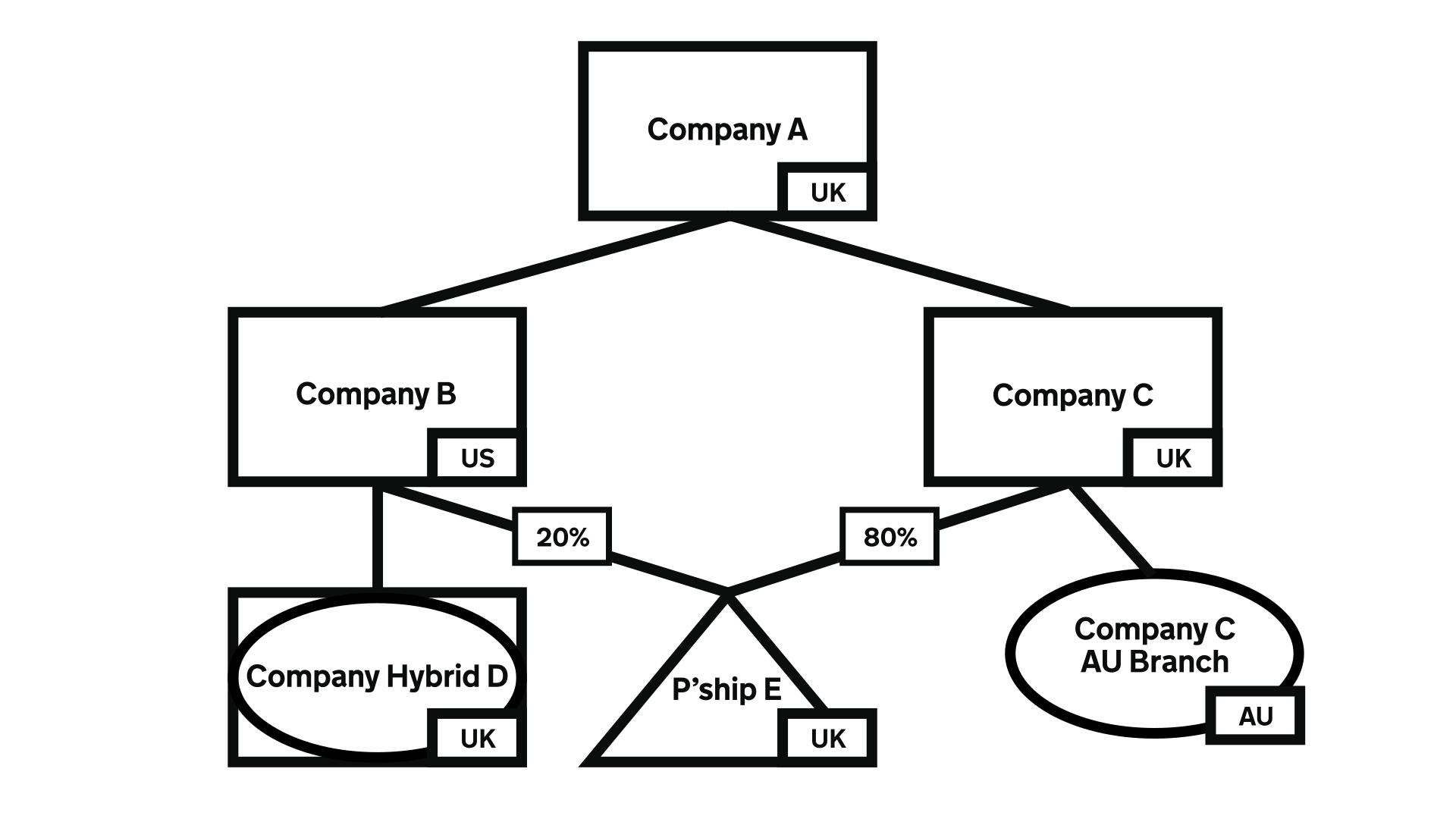
The group structure chart shows the typical information customers should share with HMRC. A reference key and any supplementary information would accompany the diagram.
Explanation of the group structure chart (accessible version)
Company A (UK) is the top-level parent entity in the structure. It is a company represented by a rectangle with the company name in the centre. A small rectangle in the bottom right corner indicates the country of incorporation and tax residence (UK).
Company A (UK) owns two entities directly, and is joined to these with a solid line:
- Company B (US) (100% ownership)
- Company C (UK) (100% ownership)
Company B (US) is owned directly by Company A (UK). Company B is represented by a rectangle with the company name in the centre. A small rectangle in the bottom right hand corner indicates the country of incorporation and tax residence (US).
Company B (US) has ownership interests, which are shown by a solid line, in:
- Company Hybrid D (UK) (100% ownership)
- Partnership E (UK) (20% ownership)
Company C (UK) is owned directly by Company A (UK). Company C is represented by a rectangle with the company name in the centre. A small rectangle in the bottom right corner indicates the country of incorporation and tax residence (UK).
Company C (UK):
- has ownership interests, shown by a solid line in Partnership E (UK) (80% ownership)
- operates a branch, shown by a solid line in Company C AU branch
Company Hybrid D (UK) is owned directly by Company B (US) (100% ownership). Company Hybrid D is represented by an oval inside of a rectangle with the company name in the centre. A small rectangle in the bottom right corner indicates the country of incorporation and tax residence (UK).
Partnership E (UK) is jointly owned by Company B (US) (20% ownership) and Company C (UK) (80% ownership). Partnership E is represented by a triangle with the partnership name in the centre. A small rectangle in the bottom right corner indicates the country where legally formed (UK).
Company C AU branch is a branch of Company C (UK). It is represented by an oval with the branch name in the centre. A small rectangle in the bottom right corner indicates the country of permanent establishment (AU).
Transaction flow diagram — example 2
The transaction flow diagram explains a transaction between connected companies. It is best practice to include enough detail to clearly explain the:
- entity type
- name
- ownership or control
- country of jurisdiction
- special characteristics
Depending on your situation you should aim to show the flow of loans, cash or assets involved in the transaction. A reference key and supplementary information should accompany the diagram.
Explanation of the transaction flow diagram (accessible version)
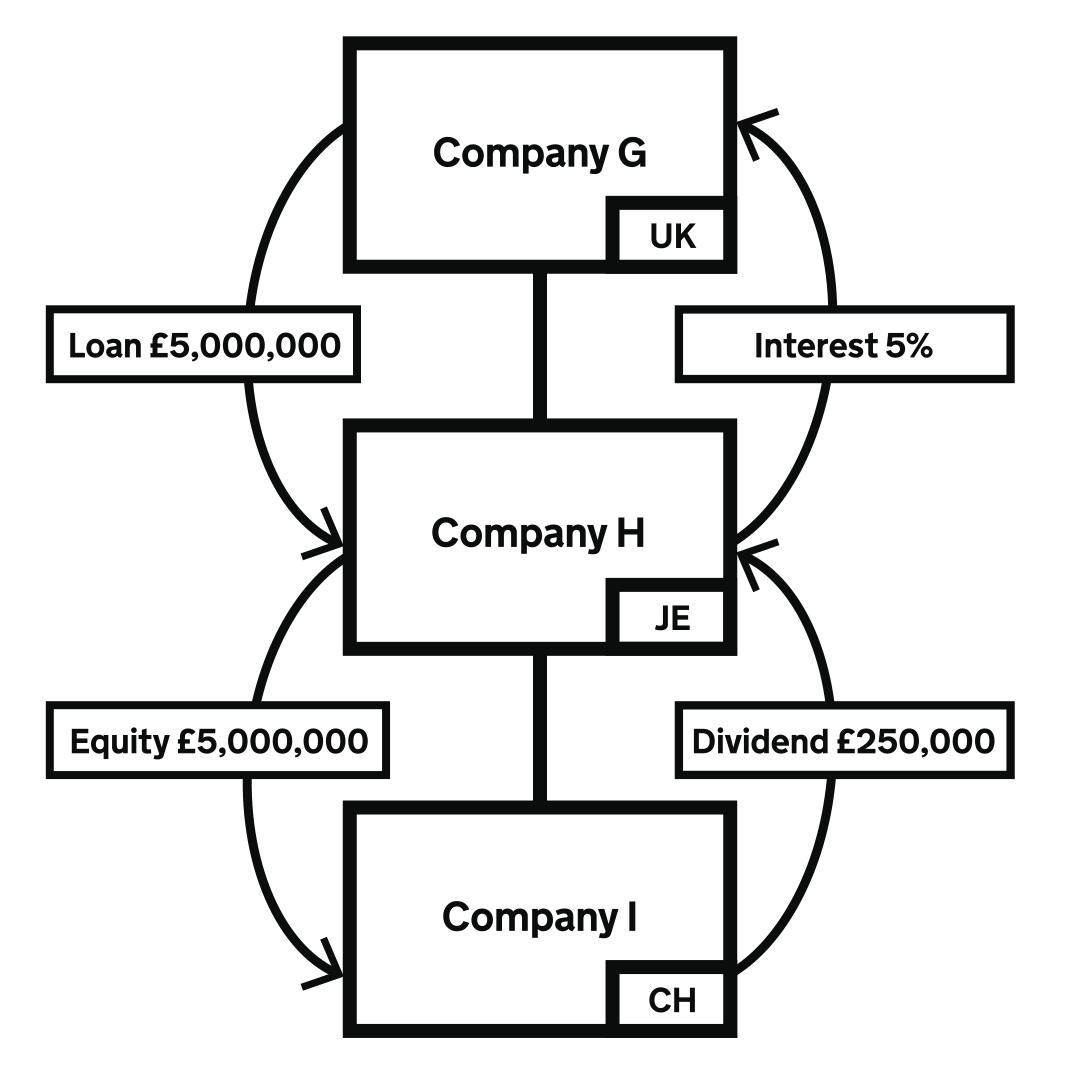
Company G (UK) is the top-level parent entity in the structure. It is a company represented by a rectangle with the company name in the centre. A small rectangle in the bottom right corner indicates the country of incorporation and tax residence (UK).
Company G (UK) owns directly 100% of Company H (JE). This is shown by a solid line.
Company H (JE) is represented by an oval inside a rectangle with the company name in the centre. A small rectangle in the bottom right corner indicates the country of incorporation and tax residence (JE).
Company H (JE) owns directly 100% of Company I (CH). This is shown by a solid line.
Company I (CH) is a company represented by a rectangle with the company name in the centre. A small rectangle in the bottom right corner indicates the country of incorporation and tax residence (CH).
There are four arrows indicating financial flows:
- a downward arrow from Company G to Company H, labelled Loan £5,000,000
- an upward arrow from Company H to Company G, labelled Interest 5%
- a downward arrow from Company H to Company I, labelled Equity £5,000,000
- an upward arrow from Company I to Company H, labelled Dividend £250,000
This shows that Company G has made a £5 million loan to Company H. Company H has invested £5 million in return for equity in Company I. The return on the loan is 5%. The return on the equity is a dividend of £250,000.