Global Research and Technology Development approach paper 2026
Published 14 May 2026

© Crown copyright 2026
This publication is licensed under the terms of the Open Government Licence v3.0 except where otherwise stated. To view this licence, visit nationalarchives.gov.uk/doc/open-government-licence/version/3 or write to the Information Policy Team, The National Archives, Kew, London TW9 4DU, or email: psi@nationalarchives.gov.uk.
Where we have identified any third party copyright information you will need to obtain permission from the copyright holders concerned.
This publication is available at https://www.gov.uk/government/publications/global-research-and-technology-development-approach-paper-2026/global-research-and-technology-development-approach-paper-2026
Foreword by the Minister of State for International Development and Africa
The world is changing rapidly. The challenges we face, including climate change, conflict, pandemics, and rising inequality, are more complex and urgent than ever. The UK’s commitment to international development is rooted in our values and interests. We believe in a fairer, safer, and more prosperous world, and know our future is linked to others. That is why this government is putting international development at the heart of our foreign policy, making our approach modern and fit for the times.
We are clear-eyed about the scale of the task. Development gains are at risk, and the global order is shifting. Yet we are confident in the UK’s ability to make a difference. Our science, technology, and research base is a national asset. By harnessing it and deepening our international science partnerships, we can help tackle the defining challenges of our age.
Our research and development investments are guided by 4 shifts: moving from donor to investor, using resources to unlock innovation and crowd in finance; from service delivery to system support, strengthening institutions and capabilities; from grants to expertise, ensuring policy and practice are informed by evidence; and from international intervention to local provision, putting local leadership and partnerships at the centre.
Global partnerships are fundamental to this approach. We will work with governments, multilaterals, foundations, and research institutions to tackle shared challenges, whether building resilience to climate shocks, transforming food systems, advancing health and education, or harnessing technology for inclusion and equity. We will prioritise partnerships that combine world-class science with strong pathways to policy influence and innovation adoption.
The UK’s Science and Technology Network and diplomatic footprint connect research to policy and ensure our investments deliver for those who need it most. We will draw on the best of UK science, across AI, engineering biology, clean energy and more, while supporting local research ecosystems and building capability in partner countries. Our approach will be open, ethical and inclusive, with a focus on equity and the needs of the most marginalised.
This is a moment for leadership and partnership. The UK will play its part, bringing together scientific excellence, global networks, and commitment to a fairer world. Through our Global Research and Technology Development portfolio, we will ensure our research and innovation investments deliver lasting impact, strengthen partnerships and help shape a future that is safer, greener and more just for all.
Baroness Jenny Chapman, Minister of State (International Development and Africa)
Preface from FCDO’s Chief Scientific Adviser
Science, technology and research shape our world, driving economic opportunity, transforming health and food systems, accelerating the clean energy transition, and influencing security and geopolitical stability. For me as the FCDO’s Chief Scientific Adviser, that matters for a simple reason – we cannot deliver effective foreign policy or international development without grounding our decisions in the best available evidence, and without investing in the innovations that can shift outcomes at scale.
This paper sets out how we will do that through the Global Research and Technology Development portfolio (GRTD). It reflects deliberate choices about what we will prioritise and what we will not, so we can focus our research funding where it can deliver the greatest global impact over time, supporting mission‑driven research and innovation that tackles shared global challenges and reduces poverty, produces global public goods, and strengthens the systems and partnerships needed for those goods to be adopted widely. In a world of tightening budgets, greater volatility and rapidly advancing technology, clarity matters. This paper is intended to give partners, researchers and policy colleagues greater certainty about our direction so they can plan, invest and work with us for the long term.
Over the remainder of the decade, GRTD will represent a very significant UK commitment to development research on the order of up to £1 billion by 2030. So it is right that we set out, clearly, what we are trying to achieve and how we will go about it.
A central motivation for me in leading this portfolio is the opportunity to bring together two strengths that the FCDO is uniquely positioned to combine – world‑class UK science and global diplomatic reach. Done well, science is a force for good in the world, but it is also a strategic asset. It can build trust between countries, strengthen alliances, open doors for cooperation even when politics is difficult, and help the UK shape the international environment in ways that support our long‑term interests as well as our values.
That is why this paper puts such emphasis on partnership, on routes to scale, and on coherence across government. GRTD is not simply a set of research grants – it is part of the UK’s wider offer. We will work alongside other departments, and through our global networks, to ensure research investments are coordinated and geared towards adoption, learning, and sustained impact. FCDO’s new Communities of Expertise, the UK’s Science and Technology Network, and our Consulates, Embassies and High Commissions overseas give us an ability to connect research to policy, understand demand and context, and support uptake through long‑standing relationships and local insight.
Just as importantly, we will protect what makes the UK a credible and trusted research funder. The effectiveness of research and innovation depends not only on what we fund, but on how we fund it. That means maintaining high standards of research integrity, ethical practice and openness, and continuing to strengthen independent challenge and quality assurance. I am particularly grateful to the FCDO’s independent Research Advisory Group for their scientific challenge, strategic guidance across our portfolio, and scrutiny of this paper. Their contributions ensure that our work remains rigorous, relevant and outward‑looking.
This paper is the product of sustained work across the Research and Analysis Directorate and the wider FCDO, shaped by engagement from policy colleagues and partners across government and overseas in our global network. I want to thank my research teams who have driven the thematic and strategic prioritisation underpinning GRTD, and who will now turn this direction into delivery – often in difficult circumstances and under significant time pressure. I also want to thank colleagues across other departments, including members of the Chief Scientific Adviser community, who have contributed to the discussions on coherence and collective ambition. The approach set out here reflects FCDO’s contribution to a shared effort across government to strengthen the impact, coherence and governance of the UK’s ODA‑funded research and development.
My ambition is straightforward – that the UK’s research and innovation investments deliver global impact, help tackle the defining challenges of our time, and strengthen the UK’s partnerships, influence and credibility as a trusted scientific, development, and diplomatic actor. This approach paper is an important step in that direction. It sets a clear framework for how we will focus our effort and for how we will work with others to ensure that the outputs of science and research translate into outcomes that matter.
Sir John Edmunds, Chief Scientific Adviser and Director, Research and Evidence Directorate, FCDO
Executive summary
Through the Global Research and Technology Development portfolio (GRTD), FCDO will invest in high‑potential research and development that tackles the critical global challenges of our time, focusing where UK scientific capability, expertise and partnerships allow us to have the greatest impact. GRTD reflects a strategic shift in how the FCDO approaches development research: moving towards mission‑driven investments that combine science, innovation and evidence, delivered through strategic partnerships with like‑minded governments, foundations and research institutions.
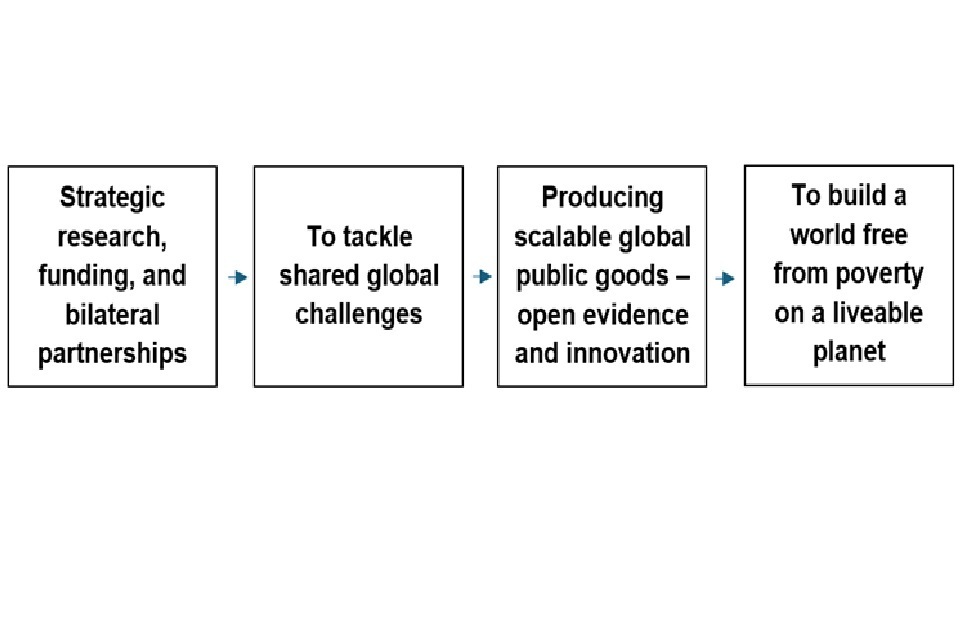
Together, these partnerships will address shared global challenges by generating global public goods – new technologies, scientific advances and robust evidence on what works – that can be adopted across countries and systems, in support of the UK’s development mission: contributing to a world free from poverty on a liveable and safer planet. In line with the FCDO’s modern approach to development, the GRTD portfolio reflects the UK Government’s 4 development shifts, translating them into how we fund and deliver research and innovation in practice.
From donor to investor – tackling global challenges through strategic partnerships:
We will evolve from a donor to a catalytic investor, using research and innovation funding alongside expertise and influence to build strategic partnerships with like‑minded governments, foundations and research institutions, and to crowd in additional finance, capability and policy traction to tackle global challenges.
From service delivery to system support – strengthening impact at scale:
Rather than delivering services directly, we will strengthen the systems that sustain impact over time – building evidence on what works across contexts, informing policy and institutional reform, and supporting new, affordable and scalable innovations to reach new markets and enhance equitable access to goods.
From grants to expertise – informing policy and uptake:
We will place UK and international expertise, not grant funding alone, at the centre of our offer – drawing on world‑class research, technical and institutional capability through deep, in‑country research partnerships to inform evidence‑based policymaking and innovation uptake.
From international intervention to local provision – co‑creating research:
We will engage Southern institutions and governments as leaders in defining shared priorities, co‑creating, co‑leading and delivering research that reflects local needs, strengthens national capability and advances shared global priorities.
This paper and our portfolio will strengthen coherence and introduce shared principles across the UK Government’s international R&D portfolio in different departments, working through new joint-governance and delivery mechanisms like the Ayrton Fund. By embedding unified research standards and strengthening data systems, GRTD will ensure that FCDO’s investments are closely aligned with wider government activity, reducing duplication and maximising our collective impact.
GRTD investments will unlock climate science and new approaches to food security and nature protection; strengthen the evidence base for responding to humanitarian crises, epidemic and pandemic threats, and geopolitical instability; support human development, including health and education; alleviate poverty; promote sustainable economic growth; and deliver innovations that enable clean and inclusive energy and transport transitions. We will apply emerging technologies, including artificial intelligence, responsibly across the portfolio and integrate gender, disability and equity to ensure scientific progress benefits all.
Our investments will concentrate where need is greatest, recognising the growing concentration of extreme poverty and security risks in Africa and across South and West Asia, particularly in fragile and conflict‑affected states. We will draw on the UK’s full development, science, and diplomatic offer combining finance, expertise, research, and partnership – working across government, through Communities of Expertise, the Science and Technology Network, and FCDO’s global footprint – to maximise impact and ensure coherence in how UK research and development supports international development and foreign policy objectives.
This paper sets out FCDO’s approach to delivering its share of ODA‑funded research, consistent with the principles for cross‑government ODA research agreed by Ministers, and alongside continued joint working with other departments through established cross-government governance mechanisms.
A track record of impact
Through strategic research partnerships, GRTD investments transform lives across continents – curing diseases, improving food security, advancing clean energy and embedding evidence into global and national policy systems.
Since 2021 our portfolio is estimated to have benefitted hundreds of millions of people in low- and middle-income countries through improved clean energy access, scaling technologies like the mobile financial tool M-Pesa and developing prosthetic limbs to change lives in Gaza.
Investments have led to the development of over 60 new varieties of climate-resilient, nutritious crops which have been developed and deployed, and are now consumed by over 100 million people. Almost 3 billion livestock vaccines, therapeutics and other animal health products have been used by farmers, averting 38 million livestock deaths and saving the sector over £260 million. Research into malaria has seen 19 new treatments brought to market and over 1 billion doses distributed, saving more than 1.8 million lives. Research has improved water security for over 10 million people in vulnerable regions.
GRTD evidence has also informed decision-making and policy systems to maximise impact. Research showing which policies work and where – and which don’t – has shown that targeted interventions can halve domestic violence rates, improve girls’ school enrolment and learning, and enhance women’s access to labour markets.
1. GRTD’s modern portfolio
GRTD’s modern portfolio is organised around refreshed thematic areas that reflect a strategic shift in the UK’s approach to development research. Across the portfolio, our investments are guided by these core related objectives:
- We focus on building strategic partnerships with like‑minded actors – including governments, foundations, multilaterals and research institutions – who are seeking to address the same development, climate, growth and security challenges.
- We prioritise shared global challenges that cannot be solved by any one country alone and where collective action through science, innovation and evidence can make a decisive difference.
- These partnerships are designed to generate global public goods, including new technological innovations, scientific advances and robust evidence on what works, which can be adopted and scaled across countries and systems.
- The primary purpose of this portfolio is to support the UK’s development mission: contributing to a world free from poverty on a liveable and safer planet.
Our approach combines thematic focus with geographic prioritisation. We concentrate on scalable, generalisable advances and on producing robust, decision‑relevant evidence – including on cost‑effectiveness – while focusing impact where need is greatest. Recognising the growing concentration of extreme poverty and security risks in Africa and across South and West Asia, particularly in fragile and conflict‑affected states, we expect our research to primarily benefit people in these regions.
Within this framework, our portfolio focuses on critical evidence needs and new technology and innovation that advance FCDO’s international development and diplomacy objectives. This is reflected in a thematic focus on Climate, Food and Nature; Geopolitics and Humanitarian; Human Development; Growth, Energy and Infrastructure; and Technology, Gender and Inclusion, which together define the core of GRTD’s modern portfolio.
Our portfolio is almost entirely funded through Official Development Assistance (ODA) with a small amount of other funding integrated into the portfolio.
Climate, food and nature
Climate change, environmental degradation, and rising food and water insecurity are increasingly interconnected pressures shaping global development outcomes. Intensifying climate impacts are disrupting ecosystems, livelihoods and economies, with vulnerable groups most at risk. At the same time, nature loss and unsustainable resource use amplify shocks, undermine resilience and constrain long‑term growth. Meeting these challenges requires integrated science, innovation and systems approaches that drive resilience and climate‑compatible development at scale.
GRTD’s research focuses on the key transitions needed to deliver sustainable and resilient development outcomes in a rapidly changing climate. Our ambition is to generate replicable, scalable approaches to transform food, land and water systems, focusing on solutions for those most at risk or marginalised. This includes working with universities and the private sector to develop next‑generation agriculture and clean energy technologies, innovations and business models that can reach scale, alongside systems research that strengthens climate science and deepens understanding of climate risks. These investments will support the transformational adaptation required to protect development gains and enable climate‑resilient growth.
GRTD’s approach contributes to the UK’s Modern Industrial Strategy 2025 which positions agri-tech as a frontier sector, highlighting engineering biology and precision breeding as priority technologies for driving productivity, resilience and growth.
Key research priorities include:
Strengthening adaptation and resilience
Investing in decision‑relevant climate science to understand climate risk; advancing early warning systems and anticipatory response capabilities which reduce vulnerability; generating evidence on what works to support systemic, cross‑sectoral approaches to resilience and adaptation; and advancing climate security through research on multi-disciplinary approaches to human and national security.
Transforming food systems
Developing globally coordinated, science‑driven innovation to deliver impacts for people, climate and nature through food system transformation; advancing climate‑smart agri‑tech (including gene editing, remote sensing, and AI‑enabled solutions) to enhance productivity, reduce emissions, and protect ecosystems; and generating nature‑positive approaches to managing animal and plant health threats through surveillance, early warning, and preventive action.
Reversing nature loss and management of resources
Generating evidence on the impacts of environmental degradation and on how systems can be managed to support the sustainable use of priority ecosystems and ecosystem services – particularly freshwater systems and carbon stocks – including research to improve governance of land use and natural assets to strengthen water security, ecological and economic resilience, human health and sustainable growth.
Climate, food and environmental security
Improving knowledge of how a liveable planet relates to human and national security, identifying solutions and utilising data and interventions to enable security of supply chains, reduce threat multipliers, and secure UK strategic interests and prosperity amid increasing geopolitical competition for resources and in a changed climate.
AI prediction model strengthens flood preparedness in South Sudan
South Sudan faces increasingly severe seasonal flooding due to climate change, worsening a humanitarian crisis that has displaced over two million people. Limited hydrological forecasting has hampered protection efforts in the White Nile catchment. GRTD-funded research, through the INFLOW project, developed an AI Flood Inundation Prediction Model using satellite data and advanced simulations for more accurate and timely forecasts. Now adopted by the South Sudan National Flood Task Force, the model helps authorities predict floods and improve preparedness. This advances evidence-based decision-making and resilience, safeguarding vulnerable communities and supporting more effective humanitarian response.
Geopolitics and humanitarian
The international order is changing fast, driven by intensified geopolitical and geoeconomic competition, rapid technological change, climate change and new state and non-state threats. Political instability, autocratisation, conflict and inequality are increasing, and the changing information space – including technology, AI and online violence – creates new vulnerabilities. There is a widening spectrum of risks to UK and international security, from grey‑zone tactics and illicit economies to transnational organised crime, terrorism, hostile state activity, and growing nuclear salience. International norms, alliances and formal agreements are being disrupted and conflicts and humanitarian needs are escalating, with extreme poverty concentrated in fragile and conflict settings, with wider implications for patterns of irregular migration.
GRTD will substantially expand investment in security and migration research. This will fund long‑term, original research to provide a rigorous evidence base for policy. Recognising interconnections between global and UK resilience, this research area will take an integrated approach to politics, security, conflict, humanitarian and migration themes, including links to gender and climate.
Key research priorities include:
Navigating contemporary politics
Investing in research on how technologies are changing citizen-state and international relations and what works to counter information manipulation; strengthening the evidence base on the drivers and consequences of regime transitions, political protest mobilisation, tax and urban challenges, and implications for autocratisation and UK partnerships.
Countering modern security threats
Delivering evidence on approaches to address transnational threats like grey-zone violence, the evolution of illicit finance, and organised crime impacting security; investing in research to support diplomacy in the context of modern security challenges, including the impact of new technologies and across shared domains.
Addressing conflict and fragility
Advancing research on conflict and fragility to protect the UK from the impacts of conflict globally, and to understand increasingly fragmented and regionalised and internationalised conflicts; strengthening evidence on effective peace processes, conflict resolution and post-conflict recovery to support responses.
Improving humanitarian and crisis response and preparedness
Investing in research on forecasting and anticipatory action, new tech and innovation for humanitarian response (such as AI and mobile); strengthening the evidence base on what works in health, education, livelihoods, food security and economic systems, with a focus on inclusion; providing science advice and expertise to inform FCDO disaster response.
Responding to drivers of irregular migration
Investing in research to strengthen international cooperation on migration, including understanding dynamics of irregular migration and drivers – conflict, climate, demographic shifts, urbanisation, labour markets and organised crime – to inform managed, principled migration system, and strengthen evidence use in a contested policy space.
Humanitarian innovation in crises
In humanitarian crises, menstrual hygiene management has often been overlooked by humanitarians, yet it is essential to the dignity, health, and daily wellbeing of women and girls. Through FCDO support to develop and scale innovations in humanitarian settings, Oxfam GB adopted Reemi’s Zero Waste Menstrual Hygiene Products. These kits address the need for low-cost, quality, culturally sensitive, and environmentally friendly menstrual hygiene products in fragile contexts.
In very difficult circumstances, Oxfam’s local partners distributed over 5,000 Reemi kits in Northern Gaza in early 2025. Despite extreme conditions including mass displacement and limited access to clean water, product uptake was exceptionally high: after 3 to 6 months, 99.8% of women were still using the kits. Reemi has distributed 100,000 kits to date in Bangladesh, Central African Republic, Mali and Somaliland.
Growth, energy and infrastructure
Sustainable and inclusive economic growth is the only long-term driver of sustained improvement in living standards across the world. Accelerating the global clean energy transition and enabling resilient infrastructure systems are critical for driving climate-compatible growth, increasing incomes and delivering services to reduce poverty. With young and fast-growing populations, job creation is a major priority among our partner countries, which requires increased investment, trade, efficient transport links and productivity growth – all powered by reliable and affordable energy. Increasing economic opportunities for women drives inclusive growth and transformation, which requires progress on norms and institutions that limit their labour force participation.
GRTD’s research and innovation supports rapid, sustained, and broad-based economic transformation in low- and middle-income countries to drive long-term job creation and poverty reduction on a liveable planet. Our support aims to generate robust evidence and actionable insights that inform policy, guide investments and harness the potential of innovation.
We manage strategic partnerships with international financial institutions, development finance organisations, academic networks, and local research consortia to produce high-quality research, drive policy uptake, build capability in systems, shape global thinking and mobilise finance. Our investments through the UK Government’s Ayrton Fund also build on specialist clean energy technology and business expertise including UK-international innovation networks, industry associations, foundations, financial platforms, and incubators. These enable new partnerships that develop scalable energy and transport innovations and business models, creating a pipeline for FCDO development capital investments as well as leveraging private finance.
Key research priorities include:
Strengthening capable states and macroeconomic stability
Creating the conditions for growth through improved fiscal and monetary policy, stronger tax capacity, better investment climates and tackling unsustainable debt.
Accelerating the global clean energy transition
Supporting partners to move towards clean, reliable and affordable energy for all through expanding clean energy access and electrification, developing equitable transition pathways and investing in emerging technologies for modern energy cooking.
Building resilient infrastructure systems
Enabling increased investment in economic infrastructure for growth and improving access to affordable, reliable, safe and inclusive transport services.
Boosting productivity, structural transformation and women’s economic empowerment
Enhancing broad-based growth and job creation through research on firms, markets, trade, urbanisation and industrial policy, with a focus on priority sectors such as critical minerals. Tackling the constraints that limit women’s and marginalised groups’ participation in the economy and generating evidence on policies and interventions that expand access to skills, finance and economic opportunity.
UK co-ordination to accelerate the global clean energy transition
The Ayrton Fund is the UK’s delivery mechanism for research and innovation support to accelerate energy transitions in emerging economies. Ayrton coordination across UK government departments is led by GRTD and our portfolio includes several clean energy research programmes. The Ayrton Fund has supported advancements by UK-international collaborations in key energy technology areas such as energy storage, sustainable cooling, electric cooking, green grids, smart energy systems, industrial decarbonisation, electric vehicles, e-waste recycling and solar home systems. Ayrton-supported innovations have to date improved clean energy access for 37 million people in developing countries, reduced 8.4 million tonnes of CO₂ emissions (equivalent to the annual carbon footprint of 1.5 million people in the UK), leveraged £2.5 billion in private and public finance, created and supported 198,000 green jobs globally and developed 1,662 research papers advancing knowledge in Ayrton Challenge priority areas.
Human development
Human development is at a tipping point, with progress on maternal mortality and preventable infectious diseases – such as malaria, tuberculosis and neglected tropical diseases – stalling or reversing. Climate warming, urbanisation and environmental degradation are driving the emergence and spread of infectious diseases, and the risk of another pandemic is rising. Hard-won progress on sexual and reproductive health and rights is increasingly being challenged. Education outcomes in low- and middle-income countries have declined, especially in sub-Saharan Africa, with global systems strained by overlapping crises such as conflict, climate change, displacement, inequality and a widening digital divide.
GRTD’s human development research focuses on generating robust, policy‑relevant evidence and developing scalable innovations that strengthen human capital across the life course. We work across health and education systems to understand what works, in which contexts, and ensure evidence can be applied at scale and adapted across countries. Our approach combines applied research, synthesis and innovation to address practical challenges in health and education systems, from improving service quality to strengthening resilience in crisis‑affected settings. Working with partners in low‑ and middle‑income countries, we generate evidence that informs policy choices, guides investment and supports the adoption of effective and affordable solutions at scale.
Reflecting this integrated approach, GRTD’s human development research is organised around priority areas that address the most pressing risks to health and education outcomes. These priorities focus on where evidence and innovation can be most effectively deployed to deliver gains in human development, particularly in fragile, conflict affected and climate vulnerable contexts.
Preventing and responding to infectious disease and health security threats
Developing new tools and products for tackling the persisting and neglected infectious diseases of poverty, while also strengthening prevention, preparedness and response to emerging disease outbreaks and epidemics in low- and middle-income countries. Supporting multidisciplinary and One Health approaches to address other emerging health risks driven by climate change, conflict, urbanisation and environmental pressures.
Improving health outcomes for women, children and vulnerable populations
Advancing evidence and innovations to improve women and girls’ health, counter rollbacks in sexual and reproductive health and rights, and help end preventable maternal, child and newborn deaths, including through affordable and accessible products, services and delivery models.
Improving foundational learning and equity
Generating evidence on what works to improve foundational learning outcomes, strengthen national capacity, and reach the most marginalised learners, including displaced children and those affected by crisis, with a focus on scalable, cost‑effective approaches.
Building resilient and adaptive health and education systems
Advancing research on how health and education systems can adapt to and withstand shocks from conflict, climate change and humanitarian crises, including the safe, effective and equitable use of technology and digital and AI tools to support learning continuity, quality and inclusion.
Empowering girls in rural Bangladesh
Researchers in rural Bangladesh found that adolescent empowerment programmes did not delay child marriage, but conditional financial incentives significantly reduced child marriage and teenage childbearing, while boosting girls’ education. Political and bureaucratic challenges prevented government scale-up, so researchers from Jameel Poverty Action Lab shared evidence and findings with the development organisation BRAC. This shaped BRAC’s Social Empowerment and Legal Protection conditional cash transfer initiative, convincing them to integrate financial incentives. In 2023, BRAC launched the programme in 200 villages, with plans to expand to over 2,410 locations.
Technology, gender and inclusion
In a fast-changing world, low- and middle- income countries face escalating and interconnected geopolitical, economic, and climate pressures that deepen poverty, erode rights, and accelerate inequalities. These challenges are particularly acute for women, girls and other marginalised groups, whose rights and opportunities are increasingly under threat.
Limited resources mean traditional development approaches are no longer sufficient. Instead, there is a growing need for innovative solutions that harness the potential of emerging technologies. Yet without careful stewardship, powerful technologies may create new security risks and reinforce global divides, intensifying inequalities both within and between countries. Harmful norms, gender-based violence and unequal access to the digital economy and emerging technologies can further entrench exclusion.
GRTD investments generate evidence to harness technology for good, tackle harms and reduce future risks. By ensuring inclusive access to safe technology, we can catalyse key development outcomes, inclusion and equity, ultimately delivering better results for all. We partner with universities, the tech sector, civil society, governments and communities and promote safe, inclusive digital and public spaces where everyone can participate equally.
Key research priorities include:
Advancing inclusion, equity and women’s economic empowerment
Creating opportunities for all from the digital economy, and realising the potential of emerging technologies for women, girls, persons with disabilities and other marginalised groups.
From horizon scanning to responsible technology at scale
Horizon scanning and enabling high‑risk, high‑reward experimentation to identify emerging technologies, alongside testing, developing and scaling innovations with the potential to significantly improve development outcomes, catalysing and crowding in investment for scalable, inclusive, responsible and ethical technological innovation.
Building inclusive AI and innovation ecosystems
Strengthening the inclusive use of AI technology and innovation ecosystems in developing countries by building enabling environments for safe and inclusive AI innovation, scaling solutions and closing digital divides. This includes strategic and equitable investments in policy research, talent, data and computing infrastructure.
Protecting rights and tackling technology‑enabled harms
Countering online harms, disinformation and gender‑based violence, and deepening understanding of emerging anti‑rights trends both online and offline to make societies safer, more peaceful and more prosperous.
Scaling access to assistive technology
AT2030, led by the Global Disability Innovation Hub and funded by GRTD, moved from pilot projects to global influence by developing scalable assistive technology models. The program partnered with governments, agencies, and the private sector to promote supportive policies and market growth, contributing to global reports and enabling environments for assistive tech adoption. AT2030 outcomes have impacted over 64 million people in 61 countries by improving access to assistive technology and strengthening policy frameworks.
2. How we work
Through the new GRTD portfolio, FCDO will operate a modern, integrated approach to research and innovation that combines catalytic investment, strategic partnerships, multilateral engagement, system support and expertise to deliver impact at scale. We will make deliberate choices about where the UK adds distinctive value, deploying funding, evidence, expertise and convening power to strengthen systems, accelerate innovation and embed uptake from research through to real‑world impact. This approach underpins a coherent, outcomes‑driven model for development‑focused research aligned with UK priorities and partner needs.
Catalytic investment
We are evolving from a donor to a catalytic investor, using targeted investments to shape markets, mobilise partners and accelerate pathways from research to real‑world impact. Catalytic investment means deploying funding alongside expertise, influence and convening power to crowd in additional finance, strengthen systems and unlock scale – whether through strategic partnerships, multilateral engagement or support to innovation pipelines. This approach requires active portfolio management, clear choices about where the UK adds distinctive value and a focus on outcomes that cannot be achieved through stand‑alone funding alone.
Strategic partnerships
Strategic partnerships are central to how GRTD delivers impact at scale in a constrained resource environment. We will move beyond programme‑based funding relationships to build a small number of deep, long‑term partnerships that bring together complementary expertise, influence and resources to tackle global challenges where the UK can add distinctive value. These partnerships will be mission‑driven, aligned to UK priorities and partner needs and focused on delivering outcomes that could not be achieved by the UK acting alone.
Our strategic partnerships will be based on clear mutual expectations and shared accountability. We will prioritise partnerships that combine world‑class science with strong pathways to policy influence, innovation adoption and scale in low‑ and middle‑income countries. Partners will be selected where they bring unique capability, leadership or convening power, and where collaboration enables us to mobilise additional finance, accelerate innovation, strengthen systems and build sustainable capability. We will measure success through evidence‑based policy uptake, innovations adopted and scaled, capacity built in partner institutions, the strength and longevity of relationships, funding leveraged and the contribution of partnerships to the UK’s global leadership and soft power.
Working with others: our partnership with the Gates Foundation
Through a strategic partnership with the Gates Foundation, GRTD has leveraged significant inward investment into UK science (roughly £260 million per year) primarily in global health and agriculture. This collaboration has accelerated the development and deployment of new vaccines, climate-resilient crops, and health technologies, benefiting millions in low- and middle-income countries. The partnership exemplifies how aligning UK expertise with global philanthropic investment can deliver transformative impact at scale.
Multilateral engagement
Our research and development portfolio will continue to be central to the UK’s engagement in the multilateral system. We will provide direct funding, technical expertise, and policy support to multilateral organisations including UN agencies, the International Monetary Fund and development banks, working alongside FCDO and UK government leads. We will focus on enhancing the accountability of multilaterals and using our influence to embed UK priorities in multilateral decision-making.
GRTD funding has historically informed major World Bank investments in women’s economic empowerment, sustainable transport, road safety and energy. Most recently, offering technical assistance in countries like Ghana and Nigeria to strengthen foundational learning reforms.
What Works Hub for Global Education
The GRTD-funded What Works Hub, delivered through the Blavatnik School of Government at the University of Oxford, has helped to design the World Bank’s Implementation Science for Scaling Education initiative. This provides technical assistance to improve investments for foundational learning including improving measurement tools, supporting data collection and generating real-time insights to adapt national programmes. In Cambodia, the World Bank is now partnering with the government, using this implementation science to improve early grade reading and numeracy. Further research is now testing a low-cost approach to improving classroom teaching with the potential to improve teaching practices for 40,300 teachers and improve learning levels for 1,700,000 children.
Our health investments work in coordination with our wider multilateral investments in the Global Fund, the Gavi Vaccine Alliance and the World Health Organisation, ensuring the ‘pull through’ to scale of new technologies such as drugs or next generation bed nets.
We will embed multilateral engagement into the design of new partnerships, align activities with UK priorities and coordinate across government to maximise impact. Using our convening power, we will strengthen cohesion in multilateral initiatives, provide targeted support to our global network of Embassies and High Commissions and engage with key forums such as the G7, G20, and the UN General Assembly to advance UK leadership in science and innovation.
Macroeconomic research to inform multilateral policy and practice
The Macroeconomics Research in Low-Income Countries Programme is the primary source of funding for the International Monetary Fund’s (IMF) macroeconomic research, exemplifying FCDO’s strategic use of research funding to influence multilateral policy and practice. Research informs IMF country teams and flagship IMF publications such as the World Economic Outlook. Notable recent successes include the transformation of Ghana’s monetary policy framework and the widespread adoption of the Debt-Investment-Growth and Natural Disasters model in climate resilience planning across multiple countries.
Pathways to scale
To enable promising innovations to move from prototype to widespread adoption, we operate as a convener. By building and expanding product pipelines and fostering innovative public‑private partnerships, we aim to create conditions where new solutions can be tested, iterated and deployed quickly in new markets. Strengthening connections to UK investors and other funders will ensure that promising innovations are pulled through to deployment and delivers tangible benefits in the Global South.
We will use a wide range of instruments to support scaling, including generating evidence on enabling policies and regulations, and commissioning impact evaluations and cost-effectiveness studies. We will also strengthen ventures through incubation and business development, financial planning, and regulatory guidance. We will continue to connect innovators with investors for follow-on funding, and we will build partnerships with governments, multilaterals and the private sector to embed innovations for lasting impact.
Scaling life-saving health innovation
GRTD provided core funding and strategic guidance to the Medicines for Malaria Venture (MMV), enabling the partnership to de-risk early-stage research, convene global partners, and accelerate product development. Our involvement was instrumental in moving innovations from pilot to scale, supporting MMV to deliver 19 antimalarial products that have reached high-burden countries including Coartem® Baby, the world’s first antimalarial treatment designed specifically for very young infants, addressing a long‑standing treatment gap for a highly vulnerable group. This collaborative approach has averted an estimated 1.83 million deaths, showcasing how our core funding and strategic partnership has driven the successful scaling of life-saving health products
System support
Through equitable science collaborations with partners in the Global South, including through the UK’s Science and Technology Network, we focus on strengthening the systems that enable countries to generate, govern and use research and innovation sustainably over time. Our approach centres on building durable national and regional science and innovation systems, addressing capability across people, institutions and the enabling environment that underpin effective, locally owned research ecosystems. We co‑design systems‑strengthening support with local and regional partners, prioritising interventions that deliver lasting change and leveraging co‑funding to reinforce sustainability.
We support country‑led development priorities by strengthening the institutional and policy foundations that allow science, technology and innovation to contribute to inclusive growth, resilience and development outcomes. By combining UK and local expertise, we help shape national research frameworks, funding models, regulatory environments and market‑enabling conditions that support innovation and evidence use at scale. This systems‑focused approach complements our commitment to equitable partnerships by ensuring that local institutions are not only participants in research, but are equipped to lead, sustain and apply it independently over the long term.
Strengthening science systems in Africa
Our support to the pan-African Science Granting Councils Initiative – together with partners such as Canada’s International Development Research Centre, The Norwegian Agency for Development Cooperation (known as Norad), the Wellcome Trust, and South Africa’s National Research Fund – is strengthening the capability of over 20 national science funding agencies in Africa to commission and fund high quality, locally-led and impactful research. This initiative is also enabling development of national science and technology agendas and systems across the continent in support of the Science, Technology and Innovation Strategy for Africa (STISA 2034) agenda. This partnership ensures reciprocal North-South and South-South learning to strengthen systems, unlock investment and deliver a more equitable global science and technology ecosystem.
Expertise
Expertise is a critical ingredient in evidence uptake and taking innovations to scale. The GRTD portfolio provides expertise through integration in FCDO’s flagship Communities of Expertise, by directly embedding uptake in programme design, and by championing evidence in FCDO.
Communities of Expertise
Research is a core component of FCDO’s Communities of Expertise, underpinning the rigorous, evidence‑based advice they provide to partner countries. Evidence and innovation generated through the GRTD portfolio form the analytical foundation of the Communities’ technical offers, providing robust research, synthesis and in‑country academic partnerships that ensure advice is credible, current and grounded in what works. Many GRTD programmes are already embedded within Communities of Expertise, enabling integrated, demand‑responsive offers through a single ‘shopfront’ that brings together policy advice, evidence, innovation and expertise.
Through this model, Communities of Expertise draw directly on GRTD research partners to deliver tailored evidence, rapid analysis and deeper research support aligned to country and policy priorities. Investments support evidence synthesis, knowledge hubs and accessible resources, while helpdesk services enable country offices and policy teams to request customised support. Where priorities align, deep country research partnerships provide locally grounded expertise and capacity strengthening, with scope for country posts to co‑fund or commission research.
Integrating research into the Communities of Expertise
The International Growth Centre (IGC) is a fully integrated ‘research-into-policy’ model and is part of FCDO’s Growth, Jobs and Trade Community of Expertise – demonstrating how GRTD’s research investments can have influence through Communities of Expertise to deliver sustained, system‑level policy impact.
Through long‑term, in‑country teams working closely with partner governments, the IGC generates demand‑led, rigorous research on core growth challenges – such as macroeconomic stability, firms and productivity, cities, energy and climate‑compatible growth – and translates this evidence into operational policy advice. From 2019 to 2025, IGC research has delivered 16 instances of advancing frontier academic debates on inclusive growth issues and 95 documented cases of policy decisions made as a result of research and advice across nearly 20 countries.
Embedding uptake in research programme design
GRTD investments prioritise the development of global public goods that generate robust, reusable evidence and innovations with relevance across countries and contexts. These investments are designed with clear pathways to policy influence, adoption and scale and complement the demand‑responsive and tailored technical assistance delivered through Communities of Expertise. By embedding uptake considerations from the outset, GRTD ensures that research outputs inform policy, guide investment and support innovation beyond individual programmes or countries.
For example, GRTD’s funding to the global agricultural network CGIAR supports an end‑to‑end approach to global agriculture research, generating public goods that inform hundreds of policy changes each year and brokering relationships with governments and investors to scale proven innovations. Embedding uptake pathways in programme design enables advances in global knowledge and innovation, while maximising development impact across partner countries.
End-to-end innovation: delivering clean cooking energy
Our Modern Energy Cooking Services programme (MECS) exemplifies GRTD’s approach to developing and delivering solutions with clear uptake pathways. Through research funding and pilot projects, our research built robust evidence for the viability of electric cooking in Africa and Asia. GRTD’s convening power united governments, utilities, and private sector actors, resulting in policy shifts and new investment. MECS-stimulated innovations have reached millions and evidence has directly influenced national policy adoption of electric cooking in Kenya, Uganda, Tanzania, India, Bhutan and Nepal.
Championing evidence and expertise in FCDO
GRTD also supports the effective use of evidence across FCDO through the Chief Scientific Adviser, ensuring that research, analysis and innovation inform policy choices, spending decisions and delivery approaches. Drawing on FCDO’s technical cadres, senior research fellows and external research networks, the Chief Scientific Adviser provides authoritative scientific advice to Ministers and senior officials, promotes the rigorous and ethical use of evidence and helps connect GRTD‑funded research with wider departmental priorities. This role complements the delivery‑focused elements of the portfolio by strengthening the conditions for evidence‑based decision‑making, learning and capability across the organisation and with partners.
Looting Mariupol
GRTD-funded research delivered through the Serious and Organised Crime – Anti-Corruption Evidence programme examined how Russia has used systematic economic exploitation to consolidate control in occupied Mariupol and generate economic benefits for Russian and proxy actors. Research combined opensource intelligence, corporate and administrative records, and legal analysis to identify emerging wartime business networks and map patterns of asset seizure, illicit finance and sanctions circumvention.
The evidence informed National Economic Crime Centre and UK government discussions on sanctions design, illicit finance and investment screening. It has contributed to the evidence base of the UK Anti-Corruption Strategy and for an International Criminal Court filing, extending accountability to financial system enablers of war crimes.
Local leadership and equitable partnerships
Change will come from local partners – governments, civil society, businesses and communities – shaping and delivering their own sustainable, locally-led solutions. We will work with partner governments, researchers and the private sector to define research priorities and approaches together, ensuring that research responds to locally identified needs and contributes to shared global challenges, rather than being driven externally.
We are committed to delivering our research portfolio through mutually beneficial and equitable partnerships that place Southern researchers and institutions in leadership roles. Partners will co‑create, co‑lead, co‑fund and co‑deliver research, with shared decision‑making over research questions, methods, governance and use of findings. This ensures research is locally relevant and applied, while also contributing to wider learning and global evidence. In a constrained resource environment, we will prioritise research that strengthens the global evidence base and reduce funding for isolated or extractive studies that do not meet this standard.
Local leadership driving research to prevent gender-based violence
GRTD works with local leaders to design, test and scale interventions to prevent gender-based violence. In several interventions, targeted community-based interventions halved rates of domestic violence in pilot areas. The model’s success lies in co-creating research with local partners, generating actionable and generalisable evidence, and working with policymakers to scale proven solutions. This approach has informed national policies and improved the lives of women and girls across multiple countries.
To enable equitable partnerships in practice, we will ensure fair budgets for local partners and draw on local co-funding when possible and continue to improve the accessibility and design of funding calls. We will support Southern researchers to engage in global research networks, build professional connections and influence international research agendas, recognising that equitable partnership requires sustained access, visibility and voice, not just participation.
The UK-Senegalese partnership through Institut Pasteur de Dakar
Institut Pasteur de Dakar (IPD) is a leading African public health and research institution strengthening regional health security and improving outcomes across Africa. GRTD’s 2024-2028 strategic partnership with IPD supports capabilities in surveillance, outbreak response, advanced genomics and vaccine and diagnostic research and development, alongside major manufacturing innovations.
The partnership includes collaboration with UK institutions such as the UK Health Security Agency, Oxford and the London School of Economics and aligns with Senegalese and regional priorities while deepening the UK’s diplomatic relationship through the British Embassy in Dakar.
3. Research principles, policies and standards
The GRTD portfolio is underpinned by robust research principles, policies and standards that ensure the evidence and innovation we fund are credible, ethical and fit for purpose. We draw on current best practice and develop new standards to maximise impact, uphold our reputation for excellence and deliver value for money in a constrained resource environment. FCDO is committed to fair and sustainable funding across all partners to support inclusive, sustainable delivery. Integrity is a core foundation of the portfolio, including through open and accessible results, transparent data, and clear, proportionate reporting. The policies and standards here deliver the shared set of ODA R&D principles established across UK Government (see Annex 1).
Inclusion and mainstreaming equity
Embedding inclusion and equity throughout research design and delivery is essential to ensuring that evidence and innovation are relevant, credible and effective for those most affected by poverty, inequality and exclusion. GRTD mainstreams equity across the research cycle to improve the quality, reach and impact of the research we fund, and to ensure that development outcomes are shaped by the needs and experiences of marginalised groups.
We apply an intersectional approach to research design, implementation and evaluation, using gender and disability as entry points while recognising how multiple forms of exclusion interact. This includes integrating equity considerations into research questions, methods, partnerships and uptake pathways, and supporting progress towards the UK’s target for 90% of ODA programming to be marked as principal or significant against the OECD gender marker by 2030. Through a combination of targeted research and systematic mainstreaming, GRTD generates robust evidence that informs policy and programming on issues such as women’s economic empowerment, sexual and reproductive health and rights, gender‑based violence, disability inclusion, the equitable use of technology and education for marginalised children.
Research, development and training in human reproduction
Co-sponsored by multiple United Nations (UN) agencies and hosted by the World Health Organisation (WHO), the Human Reproduction Programme partnered with the University of Birmingham to conduct a landmark trial on post-partum haemorrhage, a major complication for women after giving birth. The ‘E-MOTIVE’ trial demonstrated that a 60% risk reduction of postpartum haemorrhage can be achieved through early diagnosis and use of ‘bundled treatment’, and the mortality risk can be reduced by 27%. This has led to new guidelines issued by WHO and other UN agencies on the treatment of postpartum haemorrhage.
Conflict sensitivity
We will deliver all research in fragile or conflict-affected settings with sensitivity, avoiding harm and maximising opportunities for positive impact. Through our conflict research portfolio, we will ensure a deep understanding of local dynamics, uphold ethical and inclusive practices, and begin with a thorough conflict and gender analysis to identify key actors, risks and trade-offs. We will support research projects that prioritise the security and safety of all researchers, built on strong risk mitigation and management.
Safeguarding is central to effective delivery. Researchers will protect confidentiality, prioritise participant safety and use data collection methods that minimise harm and avoid reinforcing power imbalances and trauma. We expect researchers to analyse risks, engage and build trust with local stakeholders and share findings responsibly.
From smugglers to supply chains
XCEPT research analysed how Yemen’s Houthi movement evolved from a local insurgency into a global security and economic threat that was resilient to traditional countermeasures. Using fieldwork, expert interviews, open‑source and confidential data and remotely sensed information – including maritime tracking and satellite imagery – researchers mapped procurement channels and traced weapons systems from component origin to deployment.
The study revealed a global shadow economy blending licit and illicit trade, and showed the Houthis’ shift toward domestic military‑industrial capability using globally sourced components, with growing operational autonomy and external links beyond Iran. The research informed renewal of the UN Yemen sanctions regime under UNSCR 2801 which strengthened measures on dual‑use components, and sharing high-quality and independent research enabled UK diplomats to build Security Council consensus
Emerging technology
Emerging technologies are critical for tackling global challenges, and we will integrate them systematically across our portfolio to accelerate real world impact. We will prioritise applications that deliver step change gains in speed, cost and effectiveness – such as engineering biology and AI to accelerate the development of climate resilient crops and treatments for neglected diseases, and data systems that improve access to, and use of, fragmented information across sectors like transport.
We will ensure these technologies are harnessed responsibly and inclusively, recognising that without deliberate design they can deepen digital exclusion and inequality. Our approach embeds inclusive design, strengthens safeguards and works with partners to ensure technological advances are accessible, appropriate and beneficial for people in low‑ and middle‑income countries, reinforcing local ownership, capability and agency. Where the UK has distinctive strengths in emerging technologies, we will use research and development investments to deliver global public goods while strengthening long‑term scientific and industrial capabilities.
Unlocking AI for all
The Masakhane African Languages Hub is a pioneering initiative addressing the exclusion from AI technologies of over 1 billion Africans speaking more than 1,000 languages. Historically, African languages have been absent from natural language processing and voice technologies, perpetuating global inequalities.
Supported by the AI4D programme and Funders Collaborative, Masakhane is developing a sustainable ecosystem for over 40 local languages, promoting safe, equitable and culturally relevant AI. By leveraging local expertise and research, the Hub aims to fill systemic gaps, train AI on African data and create solutions informed by local experiences, scalable globally and fostering a safer, inclusive AI environment.
Open research and knowledge sharing
To foster equity, partnership, and evidence uptake, we support open and collaborative research. GRTD research is freely available so that scientists and policymakers worldwide can access, contribute to and use the latest evidence. We have updated and published our Open Access policy, aligning it with other UK government research funders to reduce bureaucracy for partners.
We will develop a new open data policy with the UK government to promote transparency, collaboration, and strong ethical and safeguarding standards across the GRTD portfolio. Working with partners, we will shape our future Open Research strategy, including addressing the opportunities and challenges of AI in research, and improve access to GRTD evidence and learning through open access tools.
Commissioning principles and reducing research bureaucracy
Open competition is our standard approach to research commissioning, ensuring transparency, fairness and inclusivity. We work closely with major commissioning partners who share our commitment to best practice. Our Research Commissioning Centre drives agile and impactful commissioning, testing innovative and equitable approaches and sharing what works across our portfolio.
Looking ahead, we will continue to embed innovation and reduce bureaucracy, including the responsible use of AI in the commissioning process. We will also maintain ethical standards as set out in our Research Concordat Annual Statement of Compliance.
Improving research commissioning practices
Through the Research Commissioning Centre, we are delivering an evidence-use in policy-making programme in sub-Saharan Africa and South Asia. The programme has attracted a higher-than usual number of applications from researchers in the Global South, who have also received a majority share of funding. To enhance effectiveness and impact, the commissioning process incorporated best practice and equity measures, including an extensive scoping phase, two-stage funding calls, tailored communications, extended deadlines and expert support for low- and middle-income country applicants. Proposals were reviewed by a diverse panel specialising in research methods and economic policy across the Global South.
4. The ‘whole of UK’ offer
To maximise the impact of the GRTD portfolio, we draw on the UK government’s collective capabilities, networks and global reach. A joined‑up approach across government, combined with FCDO’s global footprint, science diplomacy and the UK’s scientific strengths, enables development‑focused research and innovation to deliver impact at scale and reinforce the UK’s role as a trusted partner.
A joined‑up UK government approach to development research
We are strengthening coherence across the UK government’s ODA research and development portfolio through new cross‑government governance and coordination arrangements. Ministers have agreed a shared set of principles and strategic choices to guide how ODA research and development is prioritised, governed and delivered across departments.
The GRTD portfolio reflects these agreed principles within FCDO’s remit, including clarity on investment choices, the balance between global and local impact and the alignment of development outcomes with UK interests. Annex 1 sets out the agreed funding principles underpinning this cross‑government approach.
Funding for international development R&D across the UK government will increasingly be channelled through coordinated delivery mechanisms, reducing duplication and improving value for money. This includes established and proven arrangements, such as the Ayrton Fund, and joint delivery on global health security with the Department of Health and Social Care to support the Coalition for Epidemic Preparedness Innovations (CEPI), alongside new mechanisms to ensure that all areas of potential joint work benefit from improved coordination and coherence.
Bringing together FCDO’s global footprint
To strengthen our impact we must work more closely with partners in priority countries and leverage the FCDO’s global network to do this. We know that our Consulates, Embassies and High Commissions overseas are starting points for UK influence and engagement in-country. This includes coordinating in-country work with multilaterals.
Our advisory and specialist research teams based at Post will support research delivery including through Communities of Expertise. Through their deep country knowledge and networks these teams can strengthen science and research ecosystems and support demand-responsive evidence.
Leveraging the UK’s global Science and Technology Network
The UK’s Science and Technology Network is our key global delivery mechanism for advancing UK science and technology priorities globally. This network uses science diplomacy and partnerships with government, academia and industry to maximise the rapid advances in science and tech for the benefit of the UK’s economy, society and security, growing UK strategic advantage.
Drawing on the best of UK science
The UK has world‑leading strengths across science, engineering and technology, including in areas such as AI, engineering biology, clean energy, transport and the life sciences. We will draw on these strengths to support high‑quality research and innovation that delivers development impact at scale, particularly where UK capability can contribute to global public goods and shared challenges.
Partnering British and African expertise to accelerate livestock vaccines
The Centre for Veterinary Vaccine Innovation and Manufacturing anchors vaccine platform development, pilot manufacturing and regulatory readiness in the UK, while the Global Alliance for Livestock Veterinary Medicines supports the rapid transfer of innovative vaccine technology to the private sector, supporting field validation, regulatory approval and market shaping with partners in Africa. This collaboration accelerates implementation of innovative livestock vaccines to low‑income farmers to tackle neglected diseases and food security risks, whilst supporting resilience, growth and security in the UK bioeconomy.
Annex 1: UK government principles for ODA R&D
The following 11 principles were agreed by the 5 ODA R&D-spending UK government departments (Foreign, Commonwealth and Development Office, Department for Science, Innovation and Technology, Department for Health and Social Care, Department for Energy Security and Net Zero, and Department for Environment, Food and Rural Affairs). Officials in these departments will work together to implement the principles, ensuring consistent and effective application.
| Principle | Description |
|---|---|
| 1: International development impact | Deliver research to ensure greatest development impact for ODA-eligible countries, with a focus on the most vulnerable groups and ecosystems and, where necessary, using conflict- sensitive approaches. |
| 2: Delivery mechanisms | Use full range of delivery mechanisms and partners available to the UK government. |
| 3: Equitable partnerships | Pioneer equitable and inclusive research practices and mainstream gender and inclusion. |
| 4: Open research | Align open access and open research policies and reduce research bureaucracy. |
| 5: HMG Global Network | Work globally through the Science and Technology Network and the UK’s global network of Posts. |
| 6: AI for science | Embed artificial intelligence and other critical and emerging technologies into our ODA funded science and research and promote UK leadership in these fields. |
| 7: Integrity and ethics | Ensure all commissioned research meets UK and international development research standards. |
| 8: Communities of Expertise | Where applicable and pragmatic, cross-government research will support the FCDO-led Communities of Expertise with research and expertise addressing priority problems identified by the Communities of Expertise. |
| 9: Coherence | Strengthen ODA R&D coordination across UK departments. |
| 10: Data | Improve standardised ODA R&D data recording and reporting to better track the spend and impact of research projects. |
| 11: UK secondary benefit | Actively consider UK strategic interests as a secondary benefit, while ensuring all ODA R&D primarily delivers development impact for ODA-eligible countries. |