
Forensic Science Regulator annual report for 2024 to 2025 (accessible)
Updated 29 July 2026

© Crown copyright 2026
This publication is licensed under the terms of the Open Government Licence v3.0 except where otherwise stated. To view this licence, visit nationalarchives.gov.uk/doc/open-government-licence/version/3 or write to the Information Policy Team, The National Archives, Kew, London TW9 4DU, or email: psi@nationalarchives.gov.uk.
Where we have identified any third party copyright information you will need to obtain permission from the copyright holders concerned.
This publication is available at https://www.gov.uk/government/publications/forensic-science-regulator-annual-report-for-2024-to-2025/forensic-science-regulator-annual-report-for-2024-to-2025-accessible
Annual Report: 25 July 2024 – 24 July 2025
Presented to Parliament pursuant to Section 9(5) of the Forensic Science Regulator Act 2021
July 2026
© Crown copyright 2026
This publication is licensed under the terms of the Open Government Licence v3.0 except where otherwise stated. To view this licence, visit nationalarchives.gov.uk/doc/open-government-licence/version/3.
Where we have identified any third-party copyright information you will need to obtain permission from the copyright holders concerned.
This publication is available at www.gov.uk/official-documents. Any enquiries regarding this publication should be sent to us at:
The Forensic Science Regulator
23 Stephenson Street
Birmingham
B2 4BJ
ISBN: 978-1-5286-6164-5 E03505448 07/26
Printed on paper containing 40% recycled fibre content minimum
Printed in the UK by HH Associates Ltd. on behalf of the Controller of His Majesty’s Stationery Office
This annual report is published under the following provisions of the Forensic Science Regulator Act 2021 [footnote 1]
s9(4) As soon as reasonably practicable after the end of each reporting period the Regulator must—
(a) prepare a report about the exercise of the Regulator’s functions during that period, (b) publish the report in such manner as the Regulator considers appropriate, and (c) provide the report to the Secretary of State.
s9(5) The Secretary of State must lay the report before Parliament. s9(6) In subsection (4) “reporting period” means—
(a) the period of 12 months beginning with the date on which section 1 comes into force, and (b) each successive period of 12 months.
On the 21 July 2022 the Minister of State for the Home Office laid a Commencement Order for the Forensic Science Regulator Act 2021 (SI 2022 No. 856 (c. 51) Commencement No. 1 and Transitional Provision) that came into force on 25 July 2022.
This commenced sections 1 to 5 and 9 to 10 of the Forensic Science Regulator Act 2021. Sections 11 and 13 came into force on the day the Act received Royal Assent.
The only provisions that were not commenced on 25 July 2022 cover the issuing of Compliance Notices, Completion Certificates and the Appeals process. These were brought into effect on 2 October 2023.
This annual report is prepared under the provisions of section 9(4) and, in line with these provisions, covers the period 25 July 2024 to 24 July 2025.
Foreword
This is the first full annual reporting year where the statutory Code and the provisions of the Forensic Science Regulator Act 2021 (the Act) have been in place. The statutory regulation of forensic science within the criminal justice system in England and Wales has now become part of the landscape, with the focus in this reporting year on improving the effectiveness of regulation through the development of the Code and addressing risks to criminal investigations and proceedings through effective regulatory investigation and action.
In this reporting year Version 2 of the Code[footnote 2] was finalised following a series of statutory consultations, approved by the Secretary of State and in April 2025 approved by both Houses of Parliament. The most significant changes in Version 2 of the Code were to address concerns about the effectiveness of the regulation of incident examination. In my last annual report, I set out six key areas where changes were needed, these have been addressed by changes to the Code, the introduction of specific regulatory requirements for incident examination and the production of s9 guidance. To ensure an effective transition the requirement for accreditation for incident examination will be removed when the Code comes into force in October 2025 and reinstated based on the regulatory requirements in Version 2 in April 2027, the current basis of accreditation no longer providing a mechanism to demonstrate compliance with the Code.
Some other changes were made to the Code particularly in the areas of drugs driving analysis and friction ridge which detail comparison and a general restructuring was undertaken to allow for a range of compliance mechanisms with the Code. Overall, these changes were welcomed in the parliamentary debates on Version 2 and the need for a risk based and proportionate approach to regulation endorsed.
On investigation and enforcement, there are a number of significant regulatory investigations underway, one of these on speed estimation from video footage was reported in my last annual report and continues to be a substantial referral involving many organisations. To provide a basis for the criminal justice system to understand the potential risks in this type of examination a very detailed FSR Notification was issued in August 2024[footnote 3] and in this annual report more detail is given on the current status of this investigation. In general, I have found that organisations and individuals cooperate fully with regulatory investigations without having to resort to using the powers under s5 or s6 of the Act. However, in this reporting year I have made request for information under s5 on several occasions, I have not yet issued any Compliance Notices under s6.
In both previous annual reports,[footnote 4] [footnote 5] I have set out indicative Code compliance, albeit this has been a laborious process to produce, involving the use of surveys and extensive data processing. I am pleased to report in this annual report that with the support of the Home Office we have introduced a new compliance survey platform that was being implemented as the annual reporting year came to a close. The new platform will allow organisations to enter compliance data via a portal streamlining the process and reducing duplication.
Alongside the development of the Code and the regulation of forensic science generally there are important structures to be put in place to enable the Regulator to operate effectively and a wider government agenda on regulation and the actions of Regulators. The main structure to enable the Regulator to secure resources and give clarity to the relationship between the Regulator as a statutory role holder and the Home Office as sponsoring department is a Framework Agreement issued by the Treasury. Over the course of this reporting year, I have been working closely with the Sponsorship Unit in the Home Office to finalise the Framework Agreement between the Regulator and the Home Office, this will be openly published in due course. This is important in not only defining the structures and processes for the Regulator to secure resources under paragraph 6 of the schedule to the Act but also in the establishment of the Office of the Forensic Science Regulator (OFSR) as separate from the Home Office acting under the direction and authority of the Regulator. More widely there has been particular interest by the government in improving regulation and reducing the administrative costs of regulation. While much of this focuses on promoting economic growth, I am keen to ensure effective regulation in line with government policy, and to explore with regulated organisations how administrative costs can be reduced – particularly as a hard target of a 25% reduction in regulatory administrative costs is being proposed.
Finally, and most importantly I must thank all the individuals and organisations who have supported me and the effective regulation of forensic science. I am grateful to all the forensic practitioners, quality staff and senior leaders who I have met on my visits to organisations, to the chairs and members of the Forensic Science Regulator Specialist Groups and those who presented at my Conference in October 2024.[footnote 6] As I step down from this role in July 2025, I must also extend my thanks and gratitude to the staff past and present who have worked in the OFSR and supported me over the last four years, with a very special thanks to the Head of the OFSR Chanda Lowther-Harris for her leadership, wise counsel and commitment to the effective regulation of forensic science.
Gary Pugh
Forensic Science Regulator
Development of Regulatory Requirements and the Code of Practice
Development of Version 2 of the Code
Under the Forensic Science Regulator Act 2021, the Forensic Science Regulator (the Regulator) is required to keep the Code under review and update it as needed. The Regulator conducted extensive consultations in 2024 with law enforcement, forensic practitioners, and advisory groups. Feedback directly shaped the revisions, and it introduces several key changes aimed at improving efficiency, clarity, and quality across forensic science activities (FSAs) in England and Wales.
In Version 2 of the Code, the Regulator addressed the lack of alignment of accreditation with the aim of regulation by establishing the primacy of the Code and the Regulator’s role in determining the ISO standards, the interpretation of ISO standards, defining the scope of accreditation that will apply to the undertaking of forensic science activities and the applicability of any guidance. The Regulator has also opened discussions with the CEO of UKAS to reshape the accreditation process to meet the requirements of the statutory regulation of forensic science.
One key change was a structural reorganisation of the Code, allowing for the Regulator to set compliance requirements for sections of the Code rather than the whole document. Although in Version 2, there were no new activities where the requirement for adherence to section A of the Code was introduced, it clarified how the NPCC CCTV framework would be applied and gave an option for the Regulator to use this approach in future, for example for some of the forensic science activities that currently sit outside the Code.
Version 2 will streamline the compliance process for forensic science providers. The previous Code caused unnecessary replication as all 149 sites that deploy crime scene investigators were individually inspected despite each forensic department following the same processes (known as a quality management system) across all their sites. The new Code will mean that sites no longer need individual assessments, and only require accreditation for each department, saving policing significant staffing hours.
Revisions have also been made to requirements in fingerprint and toxicology analyses to improve consistency and quality control.
In addition, a clarification in Version 2 of the Code in relation to the use of forensic DNA grade consumables (products used to collect, store, and analyse DNA evidence) will negate the need for local batch testing, and will reduce costs for policing estimated to be at least £350k per annum. Taken together with other changes in Version 2 relating to contamination measures and validation exercises, the overall changes to the regulation of incident scene examination requirements are likely to lead to cost avoidance of approximately £1m for policing per annum.
The Regulator engaged in statutory consultation of the revisions, as required in Section 3(1) and Section 3(2) of the Act. The consultation was launched in February 2024 and closed in March 2024. It was undertaken through a survey on the Regulator’s website with the options to respond online, by email and by post. Proposed changes to the Code were set out and direct feedback requested from stakeholders. Direct approaches were made to organisations that had informed the Regulator they were involved in undertaking FSAs. Other stakeholders and agencies across the Criminal Justice System were informed of the consultation, as well as all interested parties who had signed up to the Regulator’s distribution list. The Regulator also conducted a separate targeted consultation with forensic units on the technical changes within draft Version 2 of the Code between August and October 2024.
The initial consultation in February 2024 asked stakeholders whether they had any comments on the draft Code and the FSAs it sets out; and whether they thought there was anything missing and what could be added. Approximately 1230 comments were received from 96 respondents during the initial consultation from a range of organisations and sectors, including law enforcement, academia, and commercial providers. Law enforcement made up 64 of the 96 respondents. A consultation was launched on 22 August 2024 and closed on 13 September 2024 on a revised definition and specific requirements for friction ridge detail comparison. The consultation was aimed at the community who undertake this activity and supported with webinars held on 28 August 2024 and 4 September 2024. A consultation was also launched on 20 September 2024 and closed on 11 October 2024 on revised requirements for analyses of drugs in relation to s5a of the Road Traffic Act 1988. The consultation was conducted through targeted engagement with the community involved in this activity. It was publicly published and invited feedback from both the general public and relevant stakeholders. Finally, a consultation was also held from 24 September 2024 to 11 October 2024 on proposed amendments to human biological material examination and testing, human biological material distribution and interpretation, the glossary terms for biological material and body fluids, and a proposed new definition for attribution of DNA. The consultation was aimed at the forensic units undertaking these activities. Consultation was carried out through targeted engagement with the chair of the Regulator’s Biology specialist advisory group and key stakeholders. The Regulator has published a comprehensive report on the consultation responses, which can be accessed here Code of practice version 2 consultation response report (accessible) - GOV.UK.
Version 2 of the Forensic Science Regulator’s Code of Practice (the Code v2), came into force on 2 October 2025.
Case Review
Case Review is defined in the Code (CDM-100), but the Code does not apply to the case review FSA and hence currently a declaration of compliance is not required. The Regulator has been working with the Chartered Society of Forensic Sciences whose members and chartered members represent a large proportion of the individuals who undertake case review. The Regulator has also engaged with stakeholders on post-conviction review, to understand the current landscape and challenges in the undertaking of Case Review.
While those who undertake the FSA of Case Review are subject to the requirements of the Criminal Procedure Rules and Criminal Practice Directions[footnote 7], the Case Review sector is unregulated, with no barriers to entry. There is no requirement for assessment of the competence of those undertaking Case Review. Another issue is that it has been reported to the Regulator that the Legal Aid Agency frequently refuses to fund peer review for defence review. There are many committed and capable practitioners in the sector, but Case Review provision relies on sole traders and microbusinesses, and the funding and sustainability of the sector is very fragile.
Effective Case Review is a critical element of our criminal justice system in assisting the court with assessments of admissibility of expert evidence and to reveal miscarriages of justice but in its current state the introduction of regulatory requirements could fundamentally undermine the viability of the current provision. The Regulator continues to work with stakeholders to develop the necessary structures that can enable sustainable delivery and effective regulation.
Compliance with Code Regulatory Requirements and Assessment of Risk
Development of a New Compliance Survey Platform
Background and Initial Feedback
In October 2022, the Regulator undertook an initial baseline compliance survey structured around FSAs set out in the draft Code of Practice (the Code) that was subject to consultation as required by the Act. This was essentially a pilot exercise to gather information about the FSAs being undertaken, to support the statutory consultation and enable effective regulation. This provided a basis for understanding compliance with the Code.
Following the approval by Parliament and publication of the Code, the Regulator established the extent of compliance with the finalised Code by issuing a second compliance survey in June 2023. The primary purpose of the survey was to provide a starting point for discussion and action in respect of achieving compliance with the Code.
In the Regulator’s first annual report, it highlighted the compliance survey and noted the need for an IT solution that would significantly reduce the cost, time, and complexity of administering one-off surveys. Organisations completing the 2023 compliance survey expressed frustration with the linear nature of the tool available to the Regulator – for example, being asked about every FSA in sequence.
This approach proved inefficient, particularly for organisations involved only in specific FSAs such as digital forensic sciences, which appeared toward the end of the list. These organisations were required to confirm whether they performed each preceding FSA before reaching the relevant section. Additionally, larger, well-established forensic science providers - many of whom had held accreditation for years – found the process burdensome, as the tool required all data to be re-entered annually, despite minimal changes in compliance levels.
Response and Platform Development
In response to feedback on the burden the 2023 compliance survey placed on organisations, the Regulator decided that until a new platform was available, no further compliance survey would be undertaken which would include all FSAs subject to the Code.
In the interim, the Regulator devised small and more targeted surveys focussing on FSAs with low indicative compliance levels (e.g. digital) or to understand in advance the levels of preparedness among those scheduled to come under the Code (e.g., Sexual Assault Referral Centres (SARCs)).
Following the decision mentioned above, the Home Office invested resource in developing a new platform tailored to the Regulator’s requirements. Although the platform was delivered in time to support the survey covering the July 2024–July 2025 reporting period, its limited functionality has affected the production of the outputs produced. This shortfall has created additional pressures on OFSR staff and contributed to delays against planned timescales and requiring further investment to progress development work.
Platform Features and Limitations
The new system allows organisations to select the FSA they carry out at the outset. This ensures that only relevant questions are included, making the survey more proportionate and easier to complete. Where appropriate, users will be able to view and reuse information previously submitted through the system. This is intended to streamline future submissions, reduce duplication, and improve efficiency.
However, due to time constraints, it was not feasible to upload data from previous submissions into the new system ahead of the July 2024–July 2025 compliance survey. As a result, historical data could not be re-entered for this cycle, and all organisations were required to complete the survey in full.
Future Enhancements
The platform is still in its early stages, with additional features currently under development. Every effort will be made to reduce the burden on organisations and facilitate the provision of this important data.
Compliance Survey
The Regulator launched a compliance survey on the 8th of August 2025 to understand the evolving compliance levels with the Code version 1. The compliance survey required information covering the period of 25 July 2024 – 24 July 2025. For this annual report, the compliance survey covering the period of 25 July 2024 – 24 July 2025 will be referred to as the 2025 compliance survey.
Data inclusion criteria and analytical approach for the 2025 compliance survey
The 2025 compliance survey generated a large and complex dataset, which was analysed to provide a high-level overview of compliance and associated risks based on the following:
a. Only FSAs subject to the Code during the reporting year are included. Two FSAs, BIO 100 – Forensic medical examination of complainants and DIG 200 – Cell site analysis for geolocation were omitted due to their deferred effective compliance date and therefore no assessment of compliance was made.
b. BIO 500 was excluded from data analysis as no organisations reported undertaking this activity within the reporting period. These exclusions account for the variance between the total number of FSAs subject to the Code (36) and the number presented in the compliance tables (33).
c. The data reflects a specific point in time when the survey was completed by participating organisations, the current position may have changed since then.
d. The findings in this annual report are based on submitted data, with some organisations contacted to verify accuracy and provide additional clarification where necessary.
e. The number of organisations counted as undertaking an FSA has been calculated using the responses who confirmed they perform the FSA “internally only” to the organisation and/or “Internally and by other Forensic Science Providers (FSPs)”.
f. The number of organisations counted as undertaking an FSA has been calculated using one count per organisation. There are instances where one police force may have several units undertaking one specific FSA and have submitted survey responses for each unit. In these scenarios, the unit submissions have been counted as one organisation, but each unit’s data submission has been analysed to determine indicative compliance levels for each FSA.
An ‘indicative % compliance’ has been estimated for the FSAs that are subject to the Code using the data supplied on the case volume of FSAs undertaken by compliant and non-compliant organisations. This differs from the 2023 compliance survey where compliance levels were based on case volumes from a single sub activity, meaning non-compliance in that area was recorded for the whole FSA.
‘Organisational view’ of the 2025 compliance survey findings
A total of 136 organisations were successfully onboarded to the new survey platform, with 80 organisations submitting a survey response.
Of the 80 organisations which responded, all are undertaking at least one of the 33 FSAs subject to the Code. Out of the 80 organisations 42 undertook 1–5 FSAs, compared to 52 organisations reported in the 2023 compliance survey. There were 5 organisations who undertook more than 15 FSAs, compared to 4 organisations reported in the 2023 compliance survey. The figures for the 2025 compliance survey are shown in table one and chart 1 below.
Chart 1: Number of organisations undertaking volume of FSAs for both 2023 and 2025
| Amount | 2023 | 2025 |
|---|---|---|
| 1-5 FSAs | 52 | 42 |
| 6-10 FSAs | 14 | 24 |
| 11-15 FSAs | 7 | 9 |
| 16-20 FSAs | 3 | 3 |
| 21-25 FSAs | 1 | 2 |
| 26-30 FSAs | 0 | 0 |
| 31-22 FSAs | 0 | 0 |
The 2025 survey reported that the commercial sector undertook the highest numbers of FSAs subject to the Code, followed by law enforcement, and then Government. This was consistent with the findings of the 2023 survey.
Table 1: Number of FSAs undertaken by type of organisation
| Organisation type | Number of FSAs |
|---|---|
| Commercial | 33 |
| Law Enforcement | 26 |
| Government | 11 |
‘FSA view’ of the 2025 survey findings
Chart 2 shows the overall number of organisations that carry out each of the 33 FSAs covered by the Code.
Chart 2: Number of organisations undertaking FSAs 2025
| FSA | Number of organisations |
|---|---|
| INC 100 | 35 |
| BIO 200 | 21 |
| BIO 201 | 1 |
| BIO 300 | 8 |
| BIO 400 | 5 |
| BIO 401 | 3 |
| BIO 500 | 0 |
| DTN 100 | 2 |
| DTN 101 | 6 |
| DTN 102 | 6 |
| DTN 103 | 9 |
| DTN 200 | 3 |
| DTN 300 | 2 |
| DTN 400 | 3 |
| DTN 500 | 1 |
| DTN 501 | 3 |
| MTP 100 | 29 |
| MTP 101 | 26 |
| MTP 200 | 15 |
| MTP 201 | 13 |
| MTP 202 | 11 |
| MTP 300 | 5 |
| MTP 301 | 4 |
| MTP 400 | 8 |
| MTP 500 | 7 |
| MTP 600 | 4 |
| MTP 601 | 14 |
| MTP 602 | 7 |
| MTP 700 | 3 |
| MTP 701 | 3 |
| DIG 100 | 57 |
| DIG 300 | 33 |
| DIG 301 | 43 |
| DIG 400 | 21 |
Digital forensics, specifically DIG 100 (data capture, processing and analysis from digital storage devices) and DIG 301 (specialist video and multimedia recovery, processing and analysis), together with INC 100 (incident scene examination), continued to account for the primary FSAs delivered by most providers, aligning with trends observed in the 2023 compliance survey.
In contrast, BIO 201 (nonhuman biological examination and analysis: vertebrates) and BIO 500 (taggant analysis) remained among the least frequently performed FSAs, mirroring the findings reported in the 2023 compliance survey.
A comparison of the number of organisations undertaking each FSA in 2023 and 2025 is set out in the portfolio sections later in this report.
Analysis and indicative compliance for FSAs subject to the Code
For the 2025 compliance survey, the indicative compliance level was calculated by analysing the data for the FSAs that are subject to the Code and taking into account the volume of cases to calculate a weighted indicative compliance level for each FSA. Table 2 shows the indicative compliance level for each FSA.
Table 2: Indicative compliance level per FSA FSAs with indicative % compliance
Very high (>90%)
- BIO 200 – Human biological material examination and analysis
- BIO 201 – Non-human biological examination and analysis: vertebrates
- BIO 300 – Human body fluid distribution analysis
- BIO 400 – Human DNA analysis
- BIO 401 – Human kinship analysis
- DTN 101 – Toxicology: analysis for drugs and/or alcohol under the Road Traffic Act 1988, Transport and Works Act 1992, and Railways and Transport Safety Act 2003
- DTN 102 – Toxicology: analysis for drugs in relation to s5A of the Road Traffic Act 1988
- MTP 100 – Friction ridge detail: visualisation and enhancement
- MTP 101 – Friction ridge detail: comparison
- MTP 202 – Footwear mark comparisons
- MTP 300 – Marks visualisation and enhancement
- MTP 301 – Marks comparison
- MTP 601 – Examination, analysis and classification of firearms, ammunition and associated materials
High (75–89%)
- DTN 100 – Toxicology: analysis for drug(s), alcohol and/or noxious substances
- DTN 400 – Examination and analysis of ignitable liquids and their
- MTP 200 – Footwear: coding
- MTP 201 – Footwear: screening
- MTP 500 – Examination and analysis of particulate trace materials
- MTP 600 – Examination and analysis of gunshot residue (GSR)
Average (50–74%)
- DIG 300 – Recovery and processing of footage from closed-circuit television (CCTV)/video surveillance systems (VSS)
- DTN 103 – Examination and analysis to identify and quantify controlled drugs and/or associated materials
- DTN 200 – Examination and analysis of corrosives and/or noxious substances
- MTP 602 – Firearms: ballistics
- MTP 400 – Damage and physical fit
- MTP 700 – Document handwriting
- MTP 701 – Document authenticity and origin
Low (25–49%)
- DIG 100 – Data capture, processing and analysis from digital storage devices
- DTN 300 – Examination and analysis of residues of lubricants used in sexual offences, including oils, greases and lubricants
- INC 100 – Incident Scene Examination
- DTN 500 – Examination and analysis of chemical
Very low (0–24%)
- DIG 301 – Specialist video multimedia, recovery, processing and analysis
- DIG 400 – Technical audio operations
- DTN 501 – Examination and analysis of explosives, explosives precursors and explosive residues
Table 3: Indicative compliance level for FSAs for the 2023 and 2025 compliance survey
| Indicative compliance | Number of FSAs 2023 | Number of FSAs 2025 | |
|---|---|---|---|
| Very high | ≥ 90% | 12 | 13 |
| High | 75%–89% | 10 | 6 |
| Medium | 50%–74% | 5 | 7 |
| Low | 25%–49% | 3 | 4 |
| Very low | 0%–24% | 4 | 3 |
| Total | 34 | 33 |
The comparison of indicative compliance levels between the 2023 and 2025 surveys – covering 34 FSAs in 2023 and 33 FSAs in 2025 – shows notable shifts in compliance:
- Very high compliance (≥90%): increased from twelve FSAs in 2023 to thirteen FSAs in 2025, indicating improvement at the top level.
- High compliance (75–89%): declined significantly from ten FSAs in 2023 to six FSAs in 2025, suggesting fewer FSAs maintained strong compliance.
- Medium compliance (50–74%): rose slightly from five FSAs to seven FSAs, showing moderate improvement in the mid-range.
- Low compliance (25–49%): increased from three FSAs in 2023 to four FSAs in 2025.
- Very low compliance (0–24%): has remained consistent since the 2023 survey with three FSAs reporting very low compliance.
Table 4: Comparison of indicative compliance levels from the 2023 to 2025 compliance survey
| FSA | 2023 level | 2025 level | Change |
|---|---|---|---|
| INC 100 | Low | Low | No change |
| BIO 200 – Human biological material examination and analysis | Low | Very high | ↑ Improved |
| BIO 201 – Non-human biological examination and analysis: vertebrates | Medium | Very high | ↑ Improved |
| BIO 300 – Human body fluid distribution analysis | Very high | Very high | No change |
| BIO 400 – Human DNA analysis | Very high | Very high | No change |
| BIO 401 – Human kinship analysis | Very high | Very high | No change |
| DTN 100 – Toxicology: analysis for drug(s), alcohol and/or noxious substances | High | High | No change |
| DTN 101 – Toxicology: analysis for drugs and/or alcohol under the Road Traffic Act 1988, Transport and Works Act 1992, and Railways and Transport Safety Act 200 | High | Very high | ↑ Improved |
| DTN 102 – Toxicology: analysis for drugs in relation to s5A of the Road Traffic Act 1988 | Very high | Very high | No change |
| DTN 103 – Controlled drugs examination | High | Medium | ↓ Declined |
| DTN 200 – Examination and analysis of corrosives and/or noxious substances | Medium | Medium | No change |
| DTN 300 – Lubricant residues analysis | Very high | Low | ↓ Declined |
| DTN 400 – Examination and analysis of ignitable liquids and their residues | High | High | No change |
| DTN 500 – Examination and analysis of chemical and/or biological agents and associated materials | Very High | Low | ↓ Declined |
| DTN 501 – Examination and analysis of explosives, explosives precursors and explosive residues | Very high | Very low | ↓ Declined |
| MTP 100 – Friction ridge detail: visualisation and enhancement | High | Very high | ↑ Improved |
| MTP 101 – Friction ridge detail: comparison | High | Very high | ↑ Improved |
| MTP 200 – Footwear: coding | Very high | High | ↓ Declined |
| MTP 201 – Footwear: screening | Medium | High | ↑ Improved |
| MTP 202 – Footwear mark comparisons | High | Very high | ↑ Improved |
| MTP 300 – Marks visualisation and enhancement | Very high | Very high | No Change |
| MTP 301 – Marks comparison | High | Very high | ↑ Improved |
| MTP 400 – Damage and physical fit | High | Medium | ↓ Declined |
| MTP 500 – Examination and analysis of particulate trace materials | Medium | High | ↑ Improved |
| MTP 600 – Examination and analysis of gunshot residue (GSR) | Very high | High | ↓ Declined |
| MTP 601 – Examination, analysis and classification of firearms, ammunition and associated materials | Very high | Very high | No change |
| MTP 602 – Firearms: ballistics | High | Medium | ↓ Declined |
| MTP 700 – Document handwriting | Very high | Medium | ↓ Declined |
| MTP 701– Document authenticity and origin | Low | Medium | ↑ Improved |
| DIG 100 – Data capture, processing and analysis from digital storage devices | Very low | Low | ↑ Improved |
| DIG 300 – CCTV/VSS recovery and processing | Very low | Medium | ↑ Improved |
| DIG 301 – Specialist video multimedia, recovery, processing and analysis | Very low | Very low | No change |
| DIG 400 – Technical audio operations | Very low | Very low | No change |
Overall indicative compliance levels across FSAs remained broadly consistent between 2023 and 2025, with a slight shift in distribution across the compliance categories. Possible reasonings for the changes in some indicative compliance levels from the 2023 compliance survey to the 2025 compliance survey is set out in the portfolio sections later in this report.
General Assessment: High – Very high indicative compliance levels
Data from the 2025 compliance survey shows an increase in the number of FSAs achieving very high indicative levels; however, there was a decrease in the number of FSAs achieving high compliance.
The FSAs that have high to very high compliance levels are:
- BIO 200 – Human biological material examination and analysis
- BIO 201 – Non-human biological examination and analysis: vertebrates
- BIO 300 – Human body fluid distribution analysis
- BIO 400 – Human DNA analysis
- BIO 401 – Human kinship analysis
- DTN 101 – Toxicology: analysis for drugs and/or alcohol under the Road Traffic Act 1988, Transport and Works Act 1992, and Railways and Transport Safety Act 2003
- DTN 102 – Toxicology: analysis for drugs in relation to s5A of the Road Traffic Act 1988
- MTP 100 – Friction ridge detail: visualisation and enhancement
- MTP 101 – Friction ridge detail: comparison
- MTP 202 – Footwear mark comparisons
- MTP 300 – Marks visualisation and enhancement
- MTP 301 – Marks comparison
- MTP 601 – Examination, analysis and classification of firearms, ammunition and associated materials
- DTN 100 – Toxicology: analysis for drug(s), alcohol and/or noxious substances
- DTN 400 – Examination and analysis of ignitable liquids and their residues
- MTP 200 – Footwear: coding
- MTP 201 – Footwear: screening
- MTP 500 – Examination and analysis of particulate trace materials
- MTP 600 – Examination and analysis of gunshot residue (GSR)
In the 2023 compliance survey, FSAs BIO 201 – Non-human biological examination and analysis: vertebrates, MTP 201 – Footwear: screening, and MTP 500 – Examination and analysis of particulate trace materials were reported with a medium indicative compliance level. In contrast, BIO 200 – Human biological material examination and analysis was reported as having a low to very low indicative compliance level.
Possible reasonings for the changes in some indicative compliance levels from the 2023 compliance survey to the 2025 compliance survey is set out in the portfolio sections later in this report.
General assessment: medium indicative compliance level
There was a slight increase noted in the 2025 compliance survey of the number of FSAs with a medium indicative compliance level.
The FSAs with medium indicative compliance level are:
- DIG 300 – Recovery and processing of footage from closed-circuit television (CCTV)/video surveillance systems (VSS)
- DTN 103 – Examination and analysis to identify and quantify controlled drugs and/or associated materials
- DTN 200 – Examination and analysis of corrosives and/or noxious substances
- MTP 602 – Firearms: ballistics
- MTP 400 – Damage and physical fit
- MTP 700 – Document handwriting
- MTP 701 – Document authenticity and origin
In the 2023 compliance survey, FSAs DTN 103 – Examination and analysis to identify and quantify controlled drugs and/or associated materials, MTP 602 – Firearms: ballistics, and MTP 700 – Document handwriting were reported as having a high – very high indicative compliance level. DIG 300 – Recovery and processing of footage from closed-circuit television (CCTV)/video surveillance systems (VSS), and MTP 701 – Document authenticity and origin were reported as having a low to very low indicative compliance level.
Possible reasonings for the changes in some indicative compliance levels from the 2023 compliance survey to the 2025 compliance survey is set out in the portfolio sections later in this report.
General assessment: low to very low indicative compliance levels
The FSAs that demonstrated low to very low compliance in the 2023 compliance survey continued to exhibit similar compliance levels in the 2025 survey. Within this group, some FSAs recorded improvements, while others experienced further declines in low to very low compliance. These variations are detailed in Table 5.
Table 5: showing the change in the low to very low compliance level
| FSA | Compliance level – 2023 | Compliance level – 2025 | Reason for change |
|---|---|---|---|
| INC 100 – Incident scene examination | 43% | 40% | Some organisations reported difficulty in providing accurate figures because of the level of detail required, which may have contributed to part of the observed reduction. |
| DIG 100 – Data capture, processing and analysis from digital storage devices | 19% | 33% | In the 2023 compliance survey, compliance was based on case volumes from a single sub activity, meaning non-compliance in that area was recorded for the whole FSA. In contrast, the 2025 survey assessed compliance using case volumes across all sub-activities, providing a more comprehensive picture. |
| DIG 301 – Specialist video multimedia, recovery, processing and analysis | 2% | 19% | In the 2023 compliance survey, compliance was based on case volumes from a single sub activity, meaning non-compliance in that area was recorded for the whole FSA. In contrast, the 2025 survey assessed compliance using case volumes across all sub-activities, providing a more comprehensive picture. |
| DIG 400 – Technical Audio Operations Technical audio operations | 9% | 2% | The Regulator permits compliance with DIG 400 to be demonstrated through adherence to the NPCC Framework for Video-Based Evidence as an alternative to formal accreditation. |
Compliance levels across the selected FSAs showed mixed movement between 2023 and 2025. INC 100 experienced a small decline (43% to 40%), which some organisations attributed to difficulties providing data at the required level of granularity. In comparison, DIG 100 and DIG 301 recorded significant improvements, rising from 19% to 33% and from 2% to 19% respectively. This uplift may be attributable to the 2025 compliance survey, which assessed compliance using case volumes across all sub-activities. DIG 400 decreased from 9% to 2%, likely reflecting providers choosing to demonstrate compliance through the NPCC Framework for Video Based Evidence rather than formal accreditation, resulting in fewer being recorded as accredited in the survey.
Portfolio analysis of the 2025 compliance survey
Marks, Traces and Patterns
Marks, Traces and Patterns (MTP) is a mature, well-established portfolio, with a long and stable history of compliance, demonstrated by accreditation to ISO/IEC 17025. The FSAs that make up this portfolio are delivered by a mixture of police forces and commercial providers with a proven record of addressing quality issues as they arise through their Quality Management Systems. In this way, they represent a generally low level of risk.
Over this reporting period, there has been little overall change in the general compliance levels of this portfolio, with most FSAs either registering no change, or demonstrating an increase. The exceptions are discussed below.
Chart 3: Comparison of the number of organisations undertaking MTP FSAs 2023 and 2025
| FSA | 2023 | 2025 |
|---|---|---|
| MTP 100 | 25 | 29 |
| MTP 101 | 24 | 26 |
| MTP 200 | 14 | 15 |
| MTP 201 | 13 | 13 |
| MTP 202 | 9 | 11 |
| MTP 300 | 7 | 5 |
| MTP 301 | 5 | 4 |
| MTP 400 | 6 | 8 |
| MTP 500 | 5 | 7 |
| MTP 600 | 4 | 4 |
| MTP 601 | 9 | 14 |
| MTP 602 | 4 | 7 |
| MTP 700 | 2 | 3 |
| MTP 701 | 3 | 3 |
MTP 200 – Footwear: coding
Compliance survey responses indicated that fifteen organisations undertook this FSA, comprising one commercial provider and fourteen police forces. The majority of casework was reported by police forces, with only a small number of cases being undertaken by the commercial provider.
The overall reported compliance level for this FSA was 88%, representing a slight decrease compared to the 2022–2023 period, where compliance exceeded 90%. Although this represents a decrease, compliance for this FSA remains high.
Four organisations reported instances of non-compliance within casework for this FSA, the majority of which were non-compliant cases undertaken by three of the police forces doing this work. The commercial provider undertaking this work also reported a small number of non-compliant cases, related to enhancement of marks, with the rest of their work being compliant.
This decrease seen is primarily a result of non-compliant casework undertaken by a police force, who had previously reported compliant work for this FSA in the 2022–2023 period.
MTP 400 – Damage and physical fit
Compliance survey responses indicated that eight organisations undertook this FSA, comprising of five commercial providers and three police forces. The majority of casework was reported by two of the commercial providers, and one of the police forces.
The overall reported compliance level for this FSA was 51%, representing a decrease compared to the 2022–2023 period, where compliance was in the range 75–89%. This equates to a shift from a high to a medium level of compliance.
Seven organisations reported instances of non-compliance within casework for this FSA, with the majority of this being non-compliant work undertaken by a single FSP.
This decrease seen is primarily a result of a large increase in non-compliant casework undertaken by the FSP above, who had previously reported a smaller volume of mostly compliant work for this FSA in the 2022–2023 period. Non-compliance was largely seen in relation to specific sub-activities, where the same forensic unit also reported compliance for other sub-activities of this same FSA. It is not clear from this data whether this reported non-compliance represents a genuine change in compliance, or a change in how this activity is recorded. In the 2023 compliance survey, compliance was based on case volumes from a single sub activity, meaning non-compliance in that area was recorded for the whole FSA. In contrast, the 2025 survey assessed compliance using case volumes across all sub-activities.
MTP 600 – Examination and analysis of gunshot residue (GSR)
Compliance survey responses indicated that four organisations undertook this FSA, comprising two commercial providers and two police forces. The majority of casework was reported by one of the commercial providers.
The overall reported compliance level for this FSA was 83%, representing a decrease compared to the 2022–2023 period, where compliance exceeded 90%. Although this represents a decrease, compliance for this FSA is nevertheless high.
Three organisations reported instances of non-compliance within casework. The reduction in compliance resulted from several small changes in the data compared to the 2022–2023 period, with reported instances of non-compliance primarily relating to the sub-activities of recovery of GSR, and presumptive testing.
MTP 602 – Firearms: ballistics
Compliance survey responses indicated that seven organisations undertook this FSA, comprising four commercial providers and three police forces. The majority of casework was reported by the three police forces and one of the commercial providers.
The overall reported compliance level for this FSA was 68%, representing a decrease compared to the 2022–2023 period, where compliance was in the range 75–89%. This equates to a shift from a high to a medium level of compliance.
Six organisations undertaking this FSA reported instances of non-compliance within casework with all six showing a mixture of compliant and non-compliant work.
The decrease seen is primarily a result of a large increase in reported non-compliant casework undertaken by a police force, who had previously reported only compliant work for this FSA in the 2022–2023 period. The data indicates that this force carries out all of the sub-activities for this FSA and that those sub-activities are carried out in equal number and are either 100% or 0% compliant depending on sub-activity.
MTP 700 – Document handwriting
Compliance survey responses indicated that three organisations undertook this FSA, comprising two commercial providers and one police force.
The overall reported compliance level for this FSA was 63%, representing a decrease compared to the 2022–2023 period, where compliance exceeded 90%. This equates to a shift from a very high to a medium level of compliance.
This decrease seen is a result of non-compliant casework undertaken by a police force, who had not previously reported undertaking this FSA in 2022–23. The force has informed us that this change is due to them having identified additional areas within their organisation where FSAs are being conducted, including document handwriting analysis.
Digital Forensics
Digital forensics (DIG) are delivered by a mixture of police forces, government bodies, and commercial providers. DIG compliance has been achieved using accreditation since 2017 with statutory enforcement of this accreditation coming into place in 2023. As quality management systems have been implemented, there has been an improvement in the understanding of addressing quality issues, however many organisations did not actively start increasing their implementation until the statutory requirement came into force. Gaining accreditation has a relatively long lead time. As the levels of compliance were identified to be low after the 2023 compliance survey, in March 2025 an interim survey was initiated which is reported in the narrative where relevant which covered 25 July 2023 – 24 July 2024. For this annual report, the compliance survey covering the period of 25 July 2023 – 24 July 2024 will be referred to as the 2024 compliance survey.
Chart 4: Comparison of the number of organisations undertaking FSAs 2023 and 2025
| FSA | 2023 | 2025 |
|---|---|---|
| DIG 100 | 59 | 57 |
| DIG 300 | 44 | 33 |
| DIG 301 | 41 | 43 |
| DIG 400 | 27 | 21 |
DIG 100 – Data capture, processing and analysis from digital storage devices
Compliance survey responses indicated that fifty-seven organisations undertook this FSA, comprising eleven commercial providers, seven government bodies and thirty-nine police forces.
The overall reported compliance level for this FSA was 33%, representing an increase compared to the 2022–2023 period, where the reported compliance level was 19%. This equates to a shift from a very low to a low level of compliance. Compared to the DIG survey for July 2023 – July 2024, result show a slightly lower figure which gave an indicative compliance level of 37%.
Feedback from this survey highlights challenges in providing data at a case-level granularity. Responses revealed inconsistencies, certain organisations reported case-level data, others provided figures based on the number of devices. Additionally, DIG 100 has many sub-activities, the way the compliance portal asked the question, non-compliance in just one sub-category (such as analysis) would result in a response of non-compliance for the whole. These variations are likely to have contributed to the slight decline observed in indicative compliance within this survey. Although organisations were able to submit attachments explaining their data, percentages cannot convey nuance.
Quality management systems to enable compliance is often incremental, table x shows process where accreditation has not been achieved.
Table 5: The percentage of forensic units performing this FSA reporting that they had the listed elements within a Quality Management System.
| 2023 survey | 2024 survey | 2025 survey | |
|---|---|---|---|
| Validation of the methods employed | 83% | 62% | 58% |
| Competent practitioners involved in the work | 94% | 74% | 71% |
| Documentation of the method employed | 98% | 71% | 76% |
| Equipment fit for purpose | 96% | 79% | 81% |
| Environment fit for purpose | 100% | 83% | 79% |
| Peer review | Not asked | 74% | Not asked |
In the compliance survey in 2024 and 2025, the data collected was more comprehensive and included data from activities undertaken outside of the main digital forensic units. The increased number of policing units from outside the main digital forensic unit in the 2025 survey appeared to cause the apparent drop in some metrics in table 5 compared to in the 2023 survey.
DIG 300 – Recovery and processing of footage from closed-circuit television (CCTV)/video surveillance systems (VSS)
Compliance survey responses indicated that thirty-three organisations undertook this FSA in very high volumes, comprising three commercial providers, one Government body and twenty-nine police forces.
The overall reported compliance level for this FSA was 59%, representing an increase compared to the 2022–2023 period, where the reported compliance level was 22%. This equates to a shift from a very low to a low level of compliance. Results for the 2024 compliance survey, show a slightly lower figure which gave an indicative compliance level of 21%.
For DIG 300 the Regulator allows adherence to the NPCC Framework for Video Based Evidence to be a demonstration of compliance as an alternative to accreditation along with the FSA specific requirements for video processing and analysis, using senior accountable individual (SAI) or on behalf of SAI methods and tools.
Previous compliance surveys reflected a lack of general understanding of the application of the NPCC framework for video-based evidence. It is not possible to fully take account of the impact of indicative compliance with the NPCC Framework for Video Based Evidence, however a measure of the uptake of a College of Policing course acts as a proxy measure. As of July 2025, almost 115,000 police personnel have completed the level 1 training course. As explained in the last annual report, understanding the levels of compliance in individual forces is challenging, as the number of front-line personnel who should have this training was not known. The NPCC capability manager for CCTV used the number of College of Police Learn accounts as the denominator to give relative percentages, as this closely related to force strengths. The following chart shows that there have been significant improvements since the last annual report.
Chart 5: Percentage range of forces staff trained to level 1 in CCTV recovery as of July 2025
| Percentage | Number of forces |
|---|---|
| 0-10% | 0 |
| 11-20% | 1 |
| 21-30% | 9 |
| 31-40% | 12 |
| 41-50% | 11 |
| 51-60% | 8 |
| 61-70% | 2 |
DIG 301 – Specialist video multimedia, recovery, processing and analysis
Compliance survey responses indicated that forty-three organisations undertook this FSA and in high volumes, comprising twelve commercial providers, two Government bodies and twenty-nine police forces.
The overall reported compliance level for this FSA was 19%, representing an increase compared to the 2022–2023 period, where the reported compliance level was 2%. This equates to a shift from a very low to a low level of compliance. Results for the 2024 compliance survey, show a slightly lower figure which gave an indicative compliance level of 18% for the sub-activity used as the key measure in that survey i.e. recovery of CCTV/VSS footage from a DVR removed from the CCTV/VSS system.
There was a mix of police forces and commercial providers who undertook DIG 301 and it is the second highest undertaken digital FSA (DIG 100 is the highest). Compliance is demonstrated only with accreditation, unlike DIG 300, there are no framework alternatives available.
Organisations are working towards compliance however the overall percentage remains similar. Although organisations were able to submit attachments explaining their data, percentages cannot convey nuance.
Around half the sub-activities of DIG 301, are specialist recovery and processing, the remainder is specialist analysis. An organisation which does both, but only holds accreditation for the recovery, would be expected report non-compliance for DIG 301 as a whole. There are no organisations holding accreditation for the specialist analysis sub-activities.
It is recognised that there are two distinct groupings of sub-activities; the Regulator will explore whether to track progress separately either for reporting, or even as separate FSAs.
It is worth noting that the 2023 compliance survey covering 25 July 2022 – 24 July 2023 was prior to the Code coming into force; this is only the second survey year where compliance with the Code was required. Developing the quality management system to enable compliance is often incremental, the community report progress on this but achieving accreditation is a several year endeavour. Typically, organisations start with a small schedule of accreditation, normally covering the recovery stages first, and extending the scope later.
Table 6: The percentage of forensic units performing this FSA reporting that they had the listed elements within a Quality Management System
| 2023 survey | 2024 survey | 2025 survey | |
|---|---|---|---|
| Validation of the methods employed | 10% | 21% | 27% |
| Competent practitioners involved in the work | 20% | 48% | 68% |
| Documentation of the method employed | 21% | 57% | 64% |
| Equipment fit for purpose | 25% | 64% | 76% |
| Environment fit for purpose | 25% | 68% | 76% |
| Peer review | Not asked | 58.9% | Not asked |
Table 6 shows positive increases in organisations self-reporting the implementation of elements of the quality management system. The Code sets specific validation requirements, if they are not met as set then organisations are expected to report non-compliance. This means that the implementing organisation has not fully documented the testing of their methods to show they are optimised and that any limitations are understood. This needs to be declared in evidential reports, including how case specific risk was managed. Clearly more work is required in this.
DIG 400 – Technical Audio Operations
Compliance survey responses indicated that twenty-one organisations undertook this FSA, comprising two commercial providers, one Government body and eighteen police forces.
The overall reported compliance level for this FSA was 2%, representing a decrease compared to the 2022–2023 period, where the reported compliance level was 9%. This equates to a shift from a very low to a low level of compliance. Results for the 2024 compliance survey, show a slightly lower figure which gave an indicative compliance level of 7%.
These organisations were mainly police forces and in low volumes in comparison to the other digital FSAs. The Regulator allows DIG 400 compliance to be demonstrated by adherence to the NPCC Framework for Video Based Evidence as an alternative to accreditation. In response to the previous survey, more clarity on how this applied was added to version 2 of the Code, however this reporting period is still against version 1.
The Code excludes ‘self’ created material such as 999 calls, body worn video and video interviews from this FSA, which many organisations previously had not recognised. Although organisations were able to submit attachments within their survey response explaining their data, these narratives could not be incorporated into the dataset.
Incident Scene Examination
Incident Scene (INC) is a developing portfolio encompassing a number of significant discipline-focused FSAs, including FSA-INC 101 Collision Investigation and FSA-INC 102 Fire Investigation. At present, the only FSA within this portfolio subject to the Code is FSA-INC 100 Incident Scene Examination, which is delivered at high volumes, largely by law enforcement organisations.
Compliance with the Code is therefore concentrated on this activity, with accreditation to ISO/IEC 17020 providing the principal assurance mechanism. Given the scale and operational nature of delivery, ensuring a consistent and pragmatic application of standards across organisations remains a key consideration for this portfolio.
Chart 6: Comparison of the number of organisations undertaking FSAs 2023 and 2025
| FSA | Number of organisations that carry out INC 100 FSA 2023 | Number of organisations that carry out INC 100 FSA 2025 |
|---|---|---|
| INC 100 | 48 | 35 |
Compliance survey responses indicated that thirty-five organisations undertook this FSA, comprising four commercial providers, one Government body and thirty law enforcement organisations.
Eight of the law enforcement submissions were provided through collaborative agreements, collectively representing data from twenty-four police forces. Combined with the remaining twenty-two individual law enforcement responses, this indicates that forty-six law enforcement organisations undertook FSA – INC 100 during the reporting period, rising to fifty-one organisations when commercial providers and government bodies are included. Three of these law enforcement responses were submitted by regional specialist units that provided individual organisational responses.
The overall reported compliance level for this FSA was 40%, representing a slight decrease compared to the 2022–2023 period, where the reported compliance level was 43%. The level of compliance for both periods equates to a low level of compliance.
Some organisations noted difficulties in obtaining accurate figures due to the granularity of the data requested, which may account for part of this reduction.
This year, organisations have been preparing for the transition to version 2 of the Code in October 2025, which introduces significant regulatory changes and new specific requirements for this FSA.
Biology
Biology (BIO) is a mature, well-established portfolio, with a long and stable history of compliance, demonstrated by accreditation to ISO/IEC 17025. The FSAs that make up this portfolio are delivered by a mixture of police forces and commercial providers with a proven record of addressing quality issues as they arise through their Quality Management Systems. In this way, they represent a generally low level of risk.
The 2025 compliance survey covering the 25 July 2024 to 24 July 2025 reporting period reflects a strong and stable performance across the biology portfolio, the compliance survey indicated that 28 organisations submitted responses. Compliance across BIO FSAs remains consistently high, reinforcing the maturing regulatory environment that has developed since the version 1 of the Code came into force, showing little to no change from the 25 July 2022 to 24 July 2023 reporting year.
Overall, the level of compliance indicates a system that is operationally robust and progressing steadily in the right direction, with no emerging or systemic risks identified across the biology portfolio. The biology FSAs continue to settle into the expectations of statutory regulation, with compliance patterns reflecting increased familiarity with the Code’s requirements and more consistent reporting practices.
Looking ahead, key priorities include enhancing declaration consistency within law enforcement settings, supporting the sector-wide transition of FSA-BIO-100 into the statutory regime which becomes subject to the Code on 02 October 2025, and embedding the clarified FSA definitions and compliance expectations introduced through Version 2 of the Code. The portfolio as a whole is well placed to meet these expectations, with strong foundations and a clear trajectory of continuous improvement
The exception of FSA BIO-500 – taggant analysis is discussed below as there were no reported cases undertaken during the July 2024 – July 2025 period.
Chart 7: Comparison of the number of organisations undertaking BIO FSAs 2023 and 2025
| FSA | 2023 | 2025 |
|---|---|---|
| BIO 200 | 23 | 21 |
| BIO 201 | 2 | 1 |
| BIO 300 | 8 | 8 |
| BIO 400 | 6 | 5 |
| BIO 401 | 4 | 3 |
| BIO 500 | 2 | 0 |
BIO 200 – Human biological material examination and analysis
Compliance survey responses indicated that twenty-one organisations undertook this FSA, comprising five commercial providers, one Government body and fifteen police forces.
The overall reported compliance level for this FSA was 99.6%, representing a significant increase compared to the 2022–2023 period, where the reported compliance level was 35%. This equates to a shift from a very low to a very high level of compliance.
This improvement reflects the transition from an early, pre-statutory baseline, where compliance reporting was indicative and methodologies for declaring compliance were still developing to a more mature position under the statutory Code.
Within the 2024–2025 period, the relatively small number of non-compliant cases were concentrated within law enforcement, while commercial providers demonstrated consistently high levels of compliance. While the data does not in itself, identify the precise cause of non-compliance it suggests that differences may relate to how compliance is being interpreted, evidenced or recorded, rather than indicating widespread issues with the underlying forensic processes.
It is also important to note that, during the 2024–2025 reporting period, work was ongoing to clearly distinguish between examination and testing activities, distribution-based activities and interpretation-based activities, as well as to clarify which elements require accreditation and which require compliance with the Code without accreditation. In addition, there was not a mechanism to assess compliance across all aspects of this FSA, particularly where activities extended beyond accredited laboratory practice.
As such, the reported compliance position should be interpreted with some caution, as it reflects activity that could be clearly reported and assessed within the current framework, and may not fully capture all relevant activity undertaken in practice.
Where the marked increase in compliance aligns with the continued adaptation to statutory requirements, further clarity in FSA scope and consistent declaration practices are necessary. Further improvements are expected as the proposed updates within Version 2 of the Code provide greater clarity around activity scope and associated compliance expectations.
BIO 201 – Non-human biological examination and analysis: vertebrates
Compliance survey responses indicated that one commercial provider undertook this FSA.
The overall reported compliance level for this FSA was 100%, representing an increase compared to the 2022–2023 period, where the reported compliance level was within the 50–74% compliance range. This equates to a shift from a medium to a very high level of compliance.
While the data indicates no instances of non-compliance, it should be noted that the volume of activity for FSA BIO-201 is comparatively low and limited to one organisation which is a decrease from the 2022–2023 reporting period. As such, while the compliance appears strong, the data does not allow for assessment across a broad range of operational settings.
Nonetheless, the consistent reporting and absence of non-compliant cases suggest that BIO-201 currently represents a low-risk and well-controlled area within the BIO portfolio, broadly aligned with the performance expected for activities with clearly defined scope and established accreditation pathways.
BIO 300 – Human body fluid distribution analysis
Compliance survey responses indicated that eight organisations undertook this FSA, comprising five commercial providers and three police forces.
The overall reported compliance level for this FSA was 99.85%, which is consistent to the 2022–2023 period, where the reported compliance level was within the >90% range. This suggests that compliance for this FSA has remained stable across the reporting periods, with little to no change in indicative compliance following the introduction of the statutory Code.
Within the 2024–2025 period, the relatively small number of non-compliant cases were concentrated within law enforcement, while commercial providers demonstrated consistently high levels of compliance. While the data does not in itself, identify the precise cause of non-compliance it suggests that differences may relate to how compliance is being interpreted, evidenced or recorded, rather than indicating widespread issues with the underlying forensic processes.
However, during the reporting period, the way in which compliance is assessed for this area of work was still being clarified and there was no mechanism to assess compliance across all aspects of this FSA, particularly for activities involving interpretation and distribution analysis. In addition, the boundary between examination activities and interpretation-based activities continued to be clarified, meaning that similar work may have been classified and reported differently across organisations.
As such, the reported compliance position reflects activity that could be consistently reported and assessed within the current framework and may not fully represent all relevant activity undertaken in practice.
Therefore, the interpretation of the compliance data should be treated with caution and as indicative and as part of a broader period of regulatory refinement rather than a definitive measure of change over time.
The proposed updates within Version 2 of the Code are expected to provide greater definition around scope and reporting requirements, which should support improved consistency in compliance measurement in future reporting cycles.
BIO 400 – Human DNA analysis
Compliance survey responses indicated that five organisations undertook this FSA, comprising four commercial providers and one police force.
The overall reported compliance level for this FSA was 99.99%, which is consistent to the 2022–2023 period, where the reported compliance level was >90%. This indicates that a high level of compliance has been maintained over time, with no increase or decrease observed following the introduction of the statutory Code.
Overall, the indicative compliance recorded from this reporting period remains consistent with previously reported high compliance levels for this FSA. On this basis, current assurance can be maintained as there is no evidence that indicates any concern as it is a well-established FSA within the BIO portfolio prior to introduction of the statutory Code.
BIO 401 – Human kinship analysis
Compliance survey responses indicated that three commercial providers undertook this FSA.
The overall reported compliance level for this FSA was 97.9%, which is consistent to the 2022–2023 period, where the reported compliance level was >90%. This indicates that a high level of compliance has been maintained over time, with no increase or decrease observed following the introduction of the statutory Code.
Within the 2024–2025 reporting period, the number of non-compliant cases is relatively small in proportion to the overall volume of work undertaken. The small number of non-compliant cases recorded in the dataset may reflect minor documentation or declaration gaps; however, the data is based on indicative compliance and does not identify the underlying causes of non-compliance. As such, this should be interpreted cautiously.
Overall, the indicative compliance may be consistent with slightly improved compliance relative to earlier indicative survey findings, although this cannot be stated definitively on the basis of the survey data alone. On that basis, continued routine quality assurance activity may support further improvement and may contribute to greater consistency in compliance over time.
Sexual Assault Referral Centres (SARC) Baseline Compliance Survey – March 2025
The forensic medical examination of victims conducted in sexual assault referral centres (SARCs) was not under the statutory Code for this reporting period, however, to gauge compliance readiness for when it would come in on 02 October 2025, a baseline survey was conducted between 20 February and 19 March 2025. See the Regulatory notice www.gov.uk/government/publications/regulators-notification-01-2025-fsa-bio-100/regulators-notification-01-2025-fsa-bio-100-accessible
Responses were collected from forty-five individual SARC units. These responses represent nineteen legal entities, with 100% confirming their legal status. The survey aimed to assess readiness for compliance with forensic standards and allow commentary on barriers to accreditation. There are forty-eight English and four Welsh units totalling fifty-two, therefore not all units responded at the time of the survey, and some were undergoing contract transition.
Key Findings:
- SARCs span commercial (53.3%), NHS (22.2%), other government (15.6%), and police force (6.7%) entities.
- 64.4% of SARCs have a written Quality Manual, 33.3% are in draft, and 2.2% have not started. Audit schedules are in place for 88.9% of units, and 73.3% have completed a management review.
- Only 18.9% have completed validation milestones. Risk assessments are in place for 77.8% of SARCs. Proficiency testing and collaborative learning exercises are underway in many units.
- 100% have maintenance schedules in place, and 84.4% have completed QA checks. 40% have completed building work for Code compliance, while 37.8% have plans in place.
- 82.2% conduct ongoing cleaning monitoring, with 54.1% having over two years’ worth of data, allowing trend analysis to be conducted.
- 91.1% of practitioners have a training and competency framework, and 80% have complete training records. Peer review is in place for 97.8% of cases are subject to peer review.
- Only 15.6% of SARCs have staff on a DNA elimination database, with varied systems in use.
- 100% use forensic DNA-grade consumables, and 95.6% check integrity on receipt.
Compliance Readiness:
- Significant commitment by practitioners, managers and leaders to achieve compliance with the Code.
- Only 37.5% of the sub-activities listed are compliant, with 62.5% not yet compliant.
- There was a recognition of the need for trauma informed care and the role of crisis workers
- Delays due to building works and lead in time for capital investment
- Wide variation in preparedness for accreditation assessment (0–100%)
- Estimated compliance dates range from February 2025 to January 2027, though at the survey end date no unit had gained approval for accreditation.
The data is incomplete and assessing risk to overall compliance is subjective as there were clear differences in the ranges seen between the commercial sector and the rest and some SARCs were unclear as to what the expectations for compliance was. Due to the quality of the data received a broad compliance range across the community was between 30–42%. There were two clear groupings (a) commercial providers declared compliance was 37–42% whereas (b) public sector providers declared compliance were lower at 30–36.5%.
Declarations Required by the Code
Table 7: Compliance Survey Responses on Code Declaration Mitigations
| Code Declaration Mitigations | Compliance Survey Responses |
|---|---|
| a. Competence of the practitioners involved in the work. | Practitioner Competence: 91% have training and competence framework in place. |
| b. Validity of the method employed | Methods Validated: 18% have methods validated and report available |
| c. Documentation of the method employed | Quality Manual Written: 64% have quality manual written and in operation, 33% have quality manual in “draft” |
| d. Suitability of the equipment employed (including the approach to maintenance and calibration). | Equipment: 89% have Service Level Agreements in place for equipment and maintenance |
| e. Suitability of the environment in which the work is undertaken. | Suitable Environment: - 82% have environmental monitoring - 40% compliant with airflow requirements in the Code |
In further discussion with SARC staff and stakeholders, the Regulator decided that the FSA for forensic medical examination of complainants should proceed as planned and be subject the statutory Code in October 2025. There were however some additional guidance and clarification of regulatory requirements that is needed.
The focus when managing the risk of DNA contamination must be on the basis that organisations understand and actively manage the risks, rather than a procedural approach and blanket requirements for monitoring and testing. Batch testing and point of use testing are not required for consumables which are purchased as DNA-free. The general and specific requirements in the Code highlight the need for competency to be demonstrated not only in the recovery of forensic material but the interpretation and presentation of expert opinion in the forensic medical examination of complainants. The Regulator will be issuing guidance on the competencies required for interpretation and provision of expert opinion taking account of the work undertaken by the Regulator’s Interpretation Specialist Group and the Faculty of Forensic and Legal Medicine (FFLM) guidance. Interpretation and expert opinion in the forensic medical examination of complainants as it relates to physical examination and the recovery of samples (i.e. sub-activity 40.3.1) is not required by the Code to be within the scope of accreditation but it is important that, in making declarations of compliance with the Code, individuals consider their compliance with this requirement.
Based on the survey results the Regulator believes it is likely, in October 2025 the majority of SARCs will not be compliant with the Code and therefore, will be required by the Code to make a non-compliant declaration and set out the mitigating steps to address this. In anticipation of v2 of the Code coming into force in October a revised version of the Declaration’s Guidance will be issued by the Regulator.
The Regulator plans further guidance in support of the regulation of the forensic medical examination of complainants including an FSR GUI 020 Forensic medical examination of sexual offence complainants.
Drugs, toxicology and noxious materials
Forensic Science Activities active in the Code version 1 within the Drugs, Toxicology and Noxious Materials (DTN) portfolio can be categorised as follows:
- Toxicology, including Road Traffic Act toxicology: DTN 100, DTN 101, DTN 102
- Drugs, primarily lab-based identification of controlled drugs: DTN 103
- Noxious substances, which encompasses a range of analytical chemistry based forensic activities including explosives and ignitable analysis, corrosives, lubricants, identification of chemical and biological agents: DTN 200, DTN 300, DTN 400, DTN 500, DTN 501
From the 2025 compliance survey results there are six commercial providers that undertake DTN activities, with two to three commercial providers undertaking most of the activities within the DTN portfolio. There is also a defence provider that undertakes aspects of most of the FSAs. There are thirteen police forensic units undertaking drugs analysis under DTN 103 which do not undertake any other DTN activity. One or two police forces undertake noxious substance activities.
A like for like comparison of the compliance status since the 2023 survey is not possible for all respondents as some that responded in 2023 did not partake in 2025, similarly there are first time respondents for the 2025 survey. In general, for those that responded to both surveys, the responses indicate that the same organisations are undertaking the same activities at a similar compliance level to 2023. The Regulator will engage with those organisations that did not respond in 2025 to understand their compliance status.
Chart 8: Comparison of the number of organisations undertaking DTN FSAs 2023 and 2025
| FSA | Number of organisations that carry out each FSA 2023 | Number of organisations that carry out each FSA 2025 |
|---|---|---|
| DTN 100 | 6 | 2 |
| DTN 101 | 5 | 6 |
| DTN 102 | 5 | 6 |
| DTN 103 | 8 | 9 |
| DTN 200 | 2 | 3 |
| DTN 300 | 2 | 2 |
| DTN 400 | 2 | 3 |
| DTN 500 | 1 | 1 |
| DTN 501 | 1 | 3 |
Toxicology
DTN 100 – Toxicology: analysis for drug(s), alcohol and/or noxious substances
DTN 101 – Toxicology: analysis for drugs and/or alcohol under the Road Traffic Act 1988, Transport and Works Act 1992, and Railways and Transport Safety Act 2003
DTN 102 – Toxicology: analysis for drugs in relation to s5A of the Road Traffic Act 1988
For the period the survey covers, six organisations undertake one or more toxicology FSAs, comprising entirely commercial providers with no police providers undertaking toxicology analysis. Compliance to the Code for toxicology testing is high, with analysis under the Road Traffic Act (DTN 101 and DTN 102) having 99% and 100% compliance respectively. Casework toxicology, DTN 100 has a reported compliance level of 79%. This is reflective of the traditional lab-based nature of chemical analysis and an embedded culture of regulatory standard, accreditation and quality management systems. The overall reported compliance level for these FSA is on average greater than 90%, consistent with compliance levels during the 2022–2023 period.
Drugs
DTN 103 – Examination and analysis to identify and quantify controlled drugs and/or associated materials
Compliance survey responses indicated that nine organisations undertook this FSA, comprising three commercial providers and six police forces.
The overall reported compliance level for this FSA was 74%, representing a decrease compared to the 2022–2023 period, where the reported compliance level was greater than or equal to 90%. This represents a slight decrease in compliance levels however there was variation in respondents to each survey, so it is not a direct like for like comparison.
Drugs analysis under DTN 103 is undertaken predominantly, based on case number, by a commercial provider with several police forces undertaking a significant amount of testing in house and some police forces undertaking fewer cases, or specific sub-activities only. Drugs analysis is the only drugs and toxicology activity being undertaken by police forces in house, at the time of the survey.
Noxious Substances
DTN 200 – Examination and analysis of corrosives and/or noxious substances
DTN 300 – Examination and analysis of residues of lubricants used in sexual offences, including oils, greases and lubricants
DTN 400 – Examination and analysis of ignitable liquids and their residues
DTN 500 – Examination and analysis of chemical and/or biological agents and associated materials
DTN 501 – Examination and analysis of explosives, explosives precursors and explosive residues
The number of reported cases undertaken activities relating to the ‘noxious substances’ part of the portfolio is fewer and tend to be undertaken by specialist government organisations and larger commercial providers with one or two police providers. Compliance is generally good, some activities including DTN 200 and DTN 400 have reported compliance of 70% and 86%. Some activities are reporting compliance levels of less than 30% with the associated casework numbers also low. The reasons for this are complex and relate partly to the format of the survey questions and the structure of the FSA definitions. The Regulator will continue working with these organisations to understand the compliance situation to enable accurate reporting for future surveys and raise compliance levels.
Forensic Science Regulator Specialist Groups
The Regulators Specialist Groups play an important role in the regulation of forensic science. They support the Regulator by making recommendations on the regulatory approach to the undertaking of FSAs defined in the Code, including advising the Regulator on:
- the definitions of FSAs set out in the Code to ensure they provide the basis for effective regulation.
- the most effective mechanism for ensuring compliance with the requirements set out in the Code, this will include where appropriate advising on the application of ISO standards, the interpretation of ISO standards in respect of the undertaking of forensic science activities that are subject to the Code and the applicability of any guidance that is used in achieving accreditation where this is a requirement of the Code.
- the general levels of risk to criminal investigations and proceedings in any of the FSAs under the remit of the Specialist Group.
- recommended actions to address the levels of risk to criminal investigations and proceedings in any of the FSAs under the remit of the Specialist Group.
- issues and opportunities in the regulation of FSAs and associated activities.
The following provides a summary of the work undertaken by each Specialist Group in this reporting year.
Incident Examination Specialist Group
The Incident Examination Specialist Group (IESG) met four times between July 2024 and July 2025. The minutes for all IESG meetings are published on the GOV.UK website. The IESG has sub-groups that advise it on issues relating to fire investigation, collision investigation, covert incidents and counter-terrorism incidents and in April 2025 a further sub-group was established to support the implementation of regulatory change in incident examination – the Compliance Assurance Working Group.
The Compliance Assurance Working Group (CAWG), chaired by Pete Arnold, is a large task and finish group comprising regional representatives from policing as well as representatives from national organisations such as British Transport Police, NCA and UKAS. The remit of the group is to support the implementation of the six points of regulatory change:
- Corporate Competency Framework: Focus on competency and professional judgement.
- Contamination Risk Management: Assurance of understanding and managing contamination risks.
- Validation: Methodology of incident examination to be deemed fit for purpose.
- Note Taking: Proportionate notes required for incident circumstances.
- Volume and Major Crime: No distinction between types of incidents, competence in crime scene management critical.
- Site-Based to Organisation-Based Accreditation: Shift to corporate approach for complying with FSA – INC 100.
Much of the work of the main IESG in 2024/25 was focussed on the continued development and refinement of the statutory guidance document to support implementation of the new FSA specific requirements for incident scene examination. Building on feedback from the workshop held in February 2024 the guidance document was drafted to provide explanation and clarity for each of the FSA specific requirements where necessary.
The group also made its final comments on the draft guidance document in April 2025 and following circulation to the CAWG and wider regional representation, FSR-GUI-0006[footnote 8] was published on the 3rd of June 2025. Ownership of this guidance will sit with the CAWG and proposals for changes and improvements to the guidance are welcomed and can be submitted to the CAWG or emailed to FSREnquiries@forensicscienceregulator.gov.uk.
In September 2024 the members were asked to advise the Regulator on an appropriate timeline for removal of the requirement for accreditation to ISO 17020 to demonstrate compliance with the Code. The group also began to consider how the corporate approach expected in Version 2 of the Code could be assessed without adding significant regulatory burden whilst providing the necessary assurance and oversight. It was agreed that while an 18-month period without the requirement for accreditation may not provide sufficient time for all organisations to meet the requirements of Version 2 of the Code, a longer timeframe may result in deprioritising of accreditation.
In November 2024 the IESG considered how to provide support for validation of technical methods and demonstration of fitness for purpose of processes in incident examination. A pilot decision assurance model proposed by the FCN was considered that would use a decision tree to guide users to the appropriate means of assurance. To provide clarity for the community a simple approach of providing a list of methods and indicating which would require validation was proposed. This list would draw on data gathered by the FCN on existing validation studies with the intention to support use of centralised validation data with local verification. This would reduce duplicate validation of common methods.
In April 2025 the IESG welcomed a new chair, Michelle Painter. The Forensic Science Regulator thanked the outgoing chair, Alan Tribe, for his foundational work in establishing the IESG in 2022 and acknowledged the significant progress made under his leadership, particularly in developing the regulatory framework for incident scene examination. The Regulator noted that the leadership transition was well-timed, aligning with a broader shift from the development phase of the Code to its implementation through oversight, coordination, and guidance.
In April 2025 the IESG considered a list of activities that would be included in sub-activity b) of FSA – INC 100: examination of surfaces and items and recovery of items, such that further testing or examination that is specified as an FSA in the Code can be undertaken. This list was drawn from accreditation scopes and data gathered by the FCN.
In June 2025 the IESG considered a minimum scope proposal based on the list of activities previously identified. The benefits of a minimum scope would include consistency in accreditation schedules and clarity on the minimum requirements for compliance with FSA – INC 100. The group reached an agreement in principle on a minimum scope, focussed on the key activities that would be expected across all forces.
The June IESG meeting also looked at the regulatory changes from Version 2 of the Code of practice relating to incident and scene examination, with a focus on six areas of change: Corporate Competency Frameworks; Contamination Controls; Validation; Note Taking; Volume and Major classifications; and Organisational Accreditation.
The collision investigation and fire investigation sub-groups of the IESG continued their work on developing FSA-specific requirements for FSA – INC 101 and FSA – INC 102, respectively.
Work also continued on developing the staged, milestone-based approach to compliance with the Code.
There was greater engagement with the wider community in collision investigation with sharing of a draft of the milestone approach and the incident examination FSA specific requirements. These were shared with policing via the sub-group regional representatives and with members of the Institute of Traffic Accident Investigators. The views of the wider community would be used to draft FSA specific requirements for collision investigation and further develop the milestone approach to compliance.
The Regulator sought follow up on his presentation to the National Fire Chiefs Council Fire Investigation Strategic Steering Group in March 2025 to gain an understanding of the level of readiness amongst Fire and Rescue Services to meet the requirements in the Forensic Science Regulator’s Code of Practice. A readiness survey was sent to all providers, both public and private sector to understand the level of compliance against the Code. Providers of fire investigation services were also supplied with the draft milestone approach to compliance to increase awareness of the intended approach to demonstrating compliance for this FSA. Responses to the survey were requested by the 15th of August 2025 and would be reported through the IESG. Policing organisations that outsource fire investigation were also reminded of their responsibilities and the requirements of the Code regarding external suppliers.
Medical Forensics Specialist Group
The Medical Forensics Specialist Group (MFSG) is chaired by Dr Bernadette Butler and met 03 February 2025. At the meeting the Terms of Reference were finalised and published 17 February 2025, the stakeholder organisations across the CJS, policing, professional bodies, sexual assault referral centres units, inspection bodies and independents outside the jurisdiction of the Regulator are listed here. The minutes for all the MFSG meetings are published on the GOV.UK website.
At the meeting, the workplan was discussed with focus on categorising workstreams for updating guidance documents FSR GUI-0017 and FSR GUI-0020, and the development and progress of custody guidance.
The Forensic Capability Network (FCN) discussed the survey on the developing declaration guidance and the compliance table to be distributed. Following limited feedback, a pilot exercise was initiated to develop guidance for SARCs in readiness for declaring compliance or non-compliance to the Regulators Code from 02 October 2025. The FCN also provided updates on verification, practitioner competency, and live data exercises in progress.
Concerns about SARC compliance readiness were raised. UKAS continues to run drop-in sessions, and the OFSR informed the group that a compliance survey was soon to be launched.
A number of stakeholder updates were provided that covered FFLM updated standards and guidance, the delay in the RCPCH Purple Book, UKAFNP training initiatives and webinars, issues with self-swab services and sample storage, service delivery progress and challenges and the development of early evidence kit videos by SPA.
An update was provided on the progress of the overarching interpretation guidance being developed by the Interpretation SG, leading to a recognition for tailored guidance.
The chair notified the group that she is stepping down from clinical practice and therefore sought nominations for a new chair for the MFSG, with a handover planned for the next MFSG meeting in September 2025.
Interpretation Specialist Group
The Interpretation Specialist Group met three times in the reporting period.
Drafting of an overarching guidance document continues to make progress and is nearing completion. This group has a high degree of stakeholder engagement, with community representation at two workshop events, one in October 2024 and the other in May 2025.
These events shared progress of the overarching document and advised on development of the templated discipline specific guidance documents under construction by each of eighteen working groups. There was also extensive shared learning between groups, with disciplines where the concepts are more established providing practical and pragmatic advice to those for whom some of the concepts are new.
Drugs and Toxicology Specialist Group
The Drugs and Toxicology Specialist Group (DTSG) was convened and met for the first time in January 2025 and then a second time in June 2025. The DTSG is chaired by Professor David Cowan and currently brings together representatives from forensic provider associations, policing, Royal Statistical Society, British Mass Spectrometry Society, Chartered Society of Forensic Sciences. The chairs of the s5A Working Group and Drug Testing Kits Working Group are members of the DTSG and report to the DTSG on progress. The DTSG is formulating its workplan and associated governance documents to fulfil its duty to provide expert advice and keep under review the Drugs and Toxicology FSAs within the Code. The DTSG will next meet in early 2026.
Digital Forensics Specialist Group
The Forensic Science Regulator convened the Digital Forensics Specialist Group in this reporting period, established to provide expert advice on the regulation of digital forensic science activities (FSAs).
Chaired by Beverley Nutter, the group brings together a small group of professionals from policing, regulation, and the private sector. Members include specialists in digital forensics, vehicle systems forensics, CCTV, audio analysis, and communications data. The group’s remit is to advise the Regulator on the definition and scope of FSAs, the development of regulatory requirements, and the identification of emerging risks and technologies. Although this is a small group, sub-groups and working groups will be formed to increase representation.
The Regulator emphasised the need for the group to take ownership of digital FSAs and to guide both current and future regulatory approaches. He highlighted findings from a recent compliance survey, which revealed significant variation in standards across police forces and a lack of cohesive oversight. This fragmentation, he noted, underscores the need for clearer definitions, improved governance, and potentially the creation of new FSAs—such as one focused on vehicle systems forensics.
A key topic of discussion was the potential development of a national framework for some aspects of digital forensics, similar to the existing CCTV framework. While supportive in principle, the group acknowledged the challenges of implementing such a framework across diverse police forces and stressed that it must not be seen as a substitute for accreditation. Instead, it should support risk-based regulation, competency standards, and consistent validation practices. Although a framework may be the correct answer for certain procedural lower-risk activities such a kiosk use or serve as a requirement on the roadmap towards the accreditation requirement, the accreditation requirements are not expected to change for any laboratory-based activities where accreditation is achievable in the normal digital forensic units. However, the incoming Regulator will be presented with options for a workplan covering scene, triage, kiosks, and vehicle systems forensics.
The group also explored the challenges of tool validation, particularly in the context of rapidly evolving technologies and software. Members discussed the need for more practical approaches to verification, especially where traditional validation methods are impractical due to frequent updates or proprietary constraints.
Looking ahead, the group will oversee the formation of several subgroups to address specific areas such as digital device forensics (DIG 100) and cell site analysis (DIG 101 and 200).
Consideration of how standards for audio-visual activity (DIG 300, 301, 400, and 401) will be covered will remain with the main specialist group for the next reporting period. The group will also consider broader issues such as the use of AI tools in investigations, how procurement exercises should view standards, and the presentation of digital evidence in court. However, scale of the potential work programme does mean that only the highest priority items are likely to be actively worked on in the next reporting period.
Biology Specialist Group
The Biology Specialist Group (BIOSG), chaired by Sue Pope met twice between July 2024 and July 2025. The minutes of all BIOSG meetings are published on the GOV.UK website. Since the last meeting of the BIOSG in February 2024, the group met again to further refine the group’s membership which is set out in the updated Terms of Reference that has been published on the GOV.UK website, and the workplan, which includes all the workstreams from the other biology groups.
As a result of the statutory powers of the Regulator, the structure of the biology groups has changed. This has resulted in the BIOSG becoming the overarching group in which the other Biology Groups will fall under and advise on biology related issues.
The other biology groups consist of the Human DNA sub-specialist Group (HDNASSG), the Body Fluid Distribution Working Group (DIST WG), which was established April 2024, and the Non-Human Biology Sub-Specialist Group (NHBSSG) which was established in July 2024.
Currently the Medical Forensics Specialist Group (MFSG) liaises with the BIOSG but in the future the group will become a subgroup which will fall under the BIOSG.
The current structure of the biology portfolio including the Regulators biology groups, their link to two other Specialist Groups, and their associated FSAs are depicted in Figure 1:
Figure 1: Organogram of the biology portfolio structure
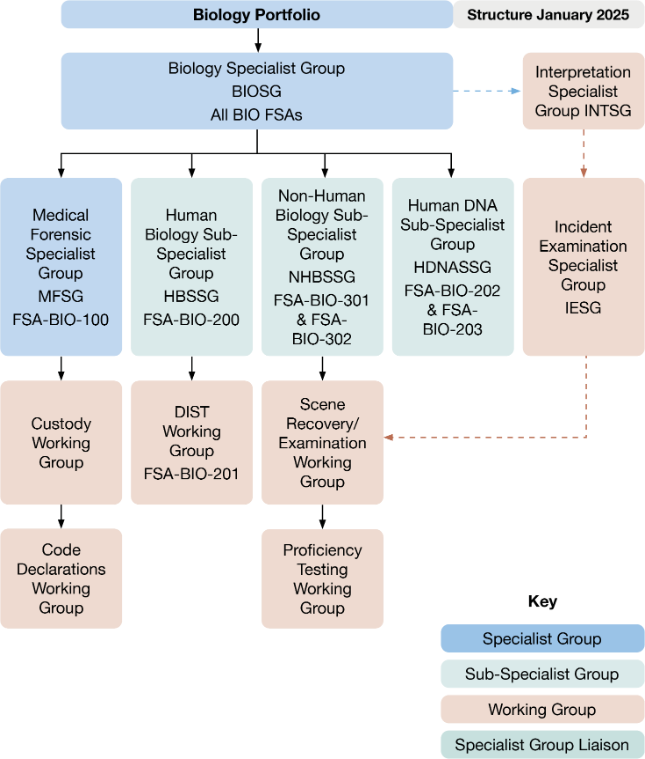
This structural change was established within the January 2025 meeting of the BIOSG. It should be noted that from September 2025, the DIST working group (FSA BIO 201) will become the main Human Biology Sub-Specialist Group that will cover FSA BIO 200 and 201.
The Biology Specialist group held its latest meeting 22 July 2025, the meeting focus was on the overview of all the biology groups workplans, including updates from the biology subgroups and stakeholders, risks and opportunities within the biology portfolio, in which the BIOSG would need to advise on, including ongoing and developing research that would be of interest to the group.
The Non-Human Biology Sub-Specialist Group (NHBSSG) is an advisory subgroup of the BIOSG that continues to work on ongoing issues to support and develop regulatory change in non-human biology. The group comprises of regional representatives from policing, academia, practitioners as well as independent advisors who fall outside the Regulator’s jurisdiction. The remit of the group is to:
- Review and advise on specific requirements for both FSA-BIO-201 and FSA-BIO-202.
- The development of FSA specific interpretation guidance.
- The review of Scenesafe’s “Scenes Of Crime” handbook to improve aspects that relate to collection, handling and preservation of non-human biological evidence types.
- The development of technical working groups that will focus on developing work and standards for the non-human bio community regarding proficiency testing, crime scenes which will liaise with the IESG and interpretation.
During the July 2025 meeting, the group focused on exploring the development of interpretation guidance for forensic reporting within the non-human biological cases. There was an agreement that tailored interpretation guidance was needed for the NHBSSG, however it was noted that it will be difficult for the NHBSSG to produce their own FSA specific interpretation guidance due to the differences within the specialisms. However, determining the type of interpretation carried out by each discipline would be a starting point for deciding what should go into the Non-Human Biology FSA specific guidance.
The group also addressed training gaps for experts entering forensic work from non-forensic backgrounds, difficulties in calibrating expertise due to lack of standardised datasets, limited visibility and integration with broader forensic science initiatives and the need for better communication and collaboration with policing and academic networks. They also discussed upcoming research projects that are relevant to the group.
Looking ahead, the group will explore options for training and mentoring to support continuity and the onboarding of new experts and will continue to advocate for funding and recognition of non-human forensic disciplines within national frameworks.
The Human Biology distribution working group (DIST WG) chaired by Jo Millington is a task and finish group which has largely focused on the production of Blood Pattern Analysis (BPA) guidance which will replace the previous published FSR-C-102: Code of Practice and Conduct Blood Pattern Analysis. The group comprises of regional representatives from policing, academia, practitioners as well as independent advisors who fall outside the Regulator’s jurisdiction. The remit of the group is to:
-
address a suspension of accreditation requirements to ISO 17020 and ISO 17025 for BPA and to develop an effective process for regulation and consider the impact of a suspension
- challenge the existing norms and consider alternative approaches to demonstration of compliance with the Code
- review the remit and scope of the working group, which includes all body fluids, not just blood
- consider the challenges around the differences between BPA and other body fluids in terms of existing frameworks
The group faced challenges regarding the accreditation requirements of ISO 17020 or ISO 17025 when assessing BPA, which had a significant delay on the development of the BPA guidance [footnote 9]. However, the guidance is now complete and has been published to the GOV.UK website on 17th July 2025.In the future the group will become a part of the human biology sub-specialist group.
The renewed Human DNA sub-specialist group (HDNASSG) is an advisory subgroup of the BIOSG that continues to work on ongoing issues to support and develop regulatory change in human DNA and kinship. The group comprises of regional representatives from policing, academia, forensic practitioners as well as independent advisors who fall outside the Regulator’s jurisdiction.
The HDNASSG met in November 2024 and July 2025 and has continued assisting the Regulator’s office in reviewing DNA guidance documents to update them in line with the Forensic Science Regulator’s Act, with two documents signed off for approval by the Regulator for publication. The two documents, ‘FSR-G-213: Allele frequency databases and reporting guidance for the DNA STR profiling in the UK’ which has the new reference and title, FSR-GUI-0012 ‘The use of allele frequency databases to assign a likelihood ratio (LR) in human DNA cases reporting’ and ‘FSR-G-228: DNA relationship testing using Autosomal DNA’ which has the new reference and title, FSR-GUI-0014 ‘Autosomal DNA relationship testing’ are due to be published late summer 2025.
As the result of an AFSP collaborative exercise, there was review and update to FSR-GUI-0013: Y-STR profiling.
In future, the group aims to update three more documents for publication in line with the Forensic Science Regulator’s Act in November 2025, as well as the future development of working groups that will look at sequencing technologies, forensic investigative genealogy, body fluid identification and interpretation, and opinions.
Fingerprint Quality Standards Specialist Group
The Fingerprint Quality Standards Specialist Group (FQSSG) met in August 2024 and January 2025, at which meeting the Chair Neil Dennison resigned from post due to his retirement. The Regulator thanks Neil for his dedication to the group and to the fingerprint community in general over many years. The Regulator also welcomes a new Chair in Kirsty Potter, an experienced forensic lead from Northumbria Polce.
The main work of the group continues, through an FQSSG working group, to focus on restructuring the FSA-MTP 101-FRD to reflect the services that bureaux provide and engaging with UKAS so that schedules align with the FSA to provide clarity in compliance and accreditation scope.
Webinars were held in August and September of 2024 to consult with the community on the proposed changes to the FSA, and to the related FSA specific requirements. The proposed changes were met favourably by the community and regarded generally as a simplification of what has been in place for some time. These changes have been taken forward and incorporated into Version 2 of the Code.
The Regulator has allowed a twelve-month transition period from the time that Version 2 of the Code comes into force, during which forensic units must assess their compliance status against the amended requirements of the FSA and to make any changes that are necessary. All forensic units must therefore have completed their transition by 2 October 2026. At the time of writing, the transition arrangements, including any support packages that may be made available, are under consideration by the working group. Guidance on appropriate declarations is also anticipated for Version 3 of the Declarations Guidance.
Firearms Specialist Group
The Firearms Specialist Group, chaired by Martin Parker met three times over the reporting period, in September 2024 and then in February and June 2025. The group has discussed a range of topics, including top venting blank firers and the application of the allowance that the Regulator makes for classification to take place outside accreditation in urgent circumstances to inform a remand decision.
The Regulator has requested data returns from forces that, after application to the Regulator, are making use of the provision mentioned. This data has been discussed by the firearms specialist group and, overall, those forces are providing the Regulator with adequate reassurance that they are making appropriate and good use of the provision. Clarification of the data from two forces is being sought and when this is received, the Regulator will determine what, if any, action may be necessary.
The specialist group next plans to turn its attention to issues around classification generally and to whether advice can be given on the degree of reconstruction work that might be considered appropriate if it is necessary to show that an item is readily convertible as a firearm.
Referrals and general enquiries to the Regulator
The Code requires forensic units carrying on an FSA to which the Code applies to inform the Regulator about non-conforming work if it has potential to:
a. adversely affect any investigation;
b. impede or prejudice the course of justice in any proceedings;
c. create adverse public comment; or
d. be against the public interest.
Enquiries received by the OFSR on behalf of the Regulator via the FSR Enquiries mailbox, that are not reporting non-conformances, are classified as general enquiries. Examples of general enquiries include questions about the Code or guidance documents, and general enquiries from the public about forensic science.
The Regulator received 183 referrals and 141 general enquiries during the reporting period (25 July 2024 to 24 July 2025). The Regulator and members of the OFSR handle a wide range of enquiries submitted via the FSR Enquiries mailbox and through direct emails to the Regulator and OFSR staff. Enquiries received directly by individuals on a frequent basis have not been included in the reported total for general enquiries.
Of those 183 referrals, 77% were self-referred and the remaining 23% were referred from third parties. Most referrals received by the Regulator were from law enforcement as shown in chart 9.
Chart 9: Source of referrals
| Source of referrals | Number of referrals |
|---|---|
| Law enforcement | 88 |
| Commercial | 65 |
| Other | 23 |
| Member of the public | 7 |
Total = 183
Digital forensics received the most referrals in the 2024–2025 reporting period, equating to 30% of the total referrals received. The biology referrals followed closely at 25%. The breakdown of referrals per forensic category is shown in table 8.
Table 8: Breakdown of referrals per forensic categories
| Forensic categories | Number of referrals |
|---|---|
| Digital forensics | 54 |
| Toxicology/drugs | 37 |
| Incident scene | 23 |
| Biology | 46 |
| Marks, traces and patterns | 17 |
| Forensic science services | 6 |
| Total | 183 |
At the point the Regulator was placed on a statutory footing, a number of referrals from non-statutory regulation remained open. None of these legacy referrals were addressed during the 2024–2025 reporting period.
During the same period, 34 referrals received were closed, representing 19% of all referrals received. Although no legacy referrals were concluded, a deliberate effort was made to reduce the backlog of cases received since the transition to statutory regulation, with a focus on identifying and addressing any ongoing risks.
Over the 2024–2025 reporting period, a further 64 referrals originating from earlier statutory reporting periods (2022–2023 and 2023–2024) were also closed.
Table 9 shows the numbers of referrals received, the numbers closed and the reporting year they were closed in. Some figures differ from those reported in previously published annual reports. This reflects cases that were initially recorded as general enquiries and later reclassified as referrals. In addition, in some instances there may be a delay in updating records.
Table 9: Summary of referrals
| Reporting period | Referrals received | Remaining open | Total closed | Closed during reporting year 2022–2023 | Closed during reporting year 2023–2024 | Closed during reporting year 2024–2025 |
|---|---|---|---|---|---|---|
| Prior to Statutory Regulation reporting period – before 24 July 2022 | 148* | 40 | 108 | 59 | 49 | 0 |
| 25 July 2022 to 24 July 2023 | 115 | 10 | 105 | 57 | 33 | 15 |
| 25 July 2023 to 24 July 2024 | 139 | 46 | 93 | N/A | 44 | 49 |
| 25 July 2024 to 24 July 2025 | 183 | 149 | 34 | N/A | N/A | 34 |
*These are referrals that remained open prior to statutory regulation, not newly received during the period.
Chart 10: Referrals overview by reporting period
Number of organisations that carry out each FSA
| Timeframe | Total closed | Total remaining open | Same year closures |
|---|---|---|---|
| Pre 24 July 2022 | 99 | 40 | 59 |
| 25 July 2022 to 24 July 2023 | 87 | 28 | 54 |
| 25 July 2023 to 24 July 2024 | 41 | 97 | 41 |
| 25 July 2024 to 24 July 2025 | 76 | 108 | 31 |
Anonymous reporting
An anonymous reporting line operated by Crimestoppers has now been live since July 2019. This line is available to report concerns about forensic science quality. For those within the profession, it is intended that this line is used as a last resort, since the Regulator generally expects any quality issue identified within a forensic unit to be addressed through that organisation’s internal quality management processes in the first instance. There may, however, be instances where a person believes either that their organisation has not addressed their concerns or that they would be disadvantaged in some way by reporting concerns internally.
It is for such instances that the anonymous reporting line has been established.
In this reporting period there have been four reports through this route. The number is, as anticipated, relatively small. The culture of forensic science in England and Wales means that most people, and organisations, generally feel confident about reporting issues. These anonymous reports were reviewed by the Regulator and necessary actions were taken.
The Regulator did not identify any significant concerns via the anonymous reporting line.
Significant Referrals
Speed estimation from CCTV footage
In October 2023 the Regulator was made aware of unsatisfactory results in Proficiency Tests involving the estimation of speed from video footage. The Regulator’s approach to addressing the potential risks to criminal investigations and proceedings had three elements:
i. to establish who is undertaking speed estimation and in what volume, and the current capability and competence of organisations to undertake speed estimation.
ii. to understand the action taken by SAIs and their position on the continued undertaking of speed estimation and the extent of retrospective case review.
iii. to establish the plans and action taken to achieve compliance with the Code for organisations undertaking speed estimation and any interim steps taken to ensure the criminal justice system can have confidence in the results.
The Regulator has made inquiries to establish which organisations are undertaking speed estimation from video footage and made several requests for information from all those organisations. This has proved to be a large and complex referral and now involves forty-eight police and commercial organisations.
The Regulator is grateful to all organisations that have cooperated and provided the detailed information requested, in some instances the Regulator has used the investigation powers under s5 of the Forensic Science Regulator Act to require organisations to provide information. The Regulator has classified each organisation on the basis of the information received to determine if there is a s a substantial risk to criminal investigations from poor delivery of this FSA. The classification system assigns organisations to three categories:
1. Organisations that have suspended or stopped undertaking speed estimation from video footage, in some instances these organisations have subcontracted work to organisations that continue to undertake speed estimation from video footage. The Code includes requirements for sub-contracting to ensure that risks to the criminal justice system are recognised and managed, and the Regulator has been seeking reassurance that organisations are complying with these requirements. The Regulator has also been seeking to establish the intentions of those organisations that have stopped undertaking speed estimation from video footage and are not subcontracting.
2. Organisations that have provided detailed information and reassurance that they are committed, have made significant progress towards meeting the requirements in the Code and have put in place processes to manage the risks to criminal investigations and proceedings. These organisations have provided the Regulator with sufficient information that he does not believe that they currently create a substantial risk to criminal investigations and proceedings and need to be subject to enforcement action under s6 of the Act. For these organisations the Regulator is continuing to monitor their progress and require regular updates and committed timescales to achieve compliance with the Code for speed estimation from video footage.
3. Organisations that have provided information, but this has not given the Regulator sufficient reassurance that risks to criminal investigations and proceedings are being effectively managed and so further enforcement action may be required. The Regulator will consider taking enforcement action under section 6 of the Act.
In addition to the analysis of the information received from organisations that undertake speed estimation from video footage, in August 2024, the Forensic Science Regulator issued Notification 02-2024 to highlight potential risks associated with the forensic science activity of estimating vehicle speed from video footage. This encourages users of the results and expert opinion of speed estimation from video footage in the criminal justice system to exercise scrutiny in using the results. The activity of estimating vehicle speed from video footage, commonly used in collision investigations, falls under the statutory Code of Practice introduced in October 2023 and requires accreditation to ISO/IEC 17025. However, no organisations currently meet these accreditation requirements. Code Version 2 will contain greater clarity in the regulatory requirements for the undertaking of speed estimation from video footage in the FSA specific requirements section for video processing and analysis and this will come into effect in October 2025.
The notification concerns the reliability of speed estimation methods, and the key risks identified include:
- Lack of validated methods and inconsistent documentation.
- Unclear estimation of measurement uncertainty, which may undermine evidential value.
- Insufficient peer review and checking procedures, increasing the risk of human error.
The Regulator has encouraged transparency in reporting non-compliance and mitigation strategies. The self-assessments from forensic units were used by the Regulator to encourage improvements in competence assessment and the documentation of methods. Many police forces, with the assistance of standard operating procedures from the Forensic Collision Incident Network, made notable improvements. Although many methods are based on relatively standard methods with a sound scientific basis, however the real-world implementation of them involves multiple steps and software packages and the uncertainties of pixel selection and frame rate determination. The end-to-end method needs to be shown to be valid, many forensic units embarked on drawing this data together as well an instigating some validation and verification testing. The Forensic Collision Incident Network is conducting more comprehensive validation studies to support policing of their methods. The Regulator has not taken enforcement action but continues to monitor risks to ensure the integrity of evidence presented in the criminal justice system.
Certified Reference Materials
In October 2024, the Regulator was made aware by Key Forensic Services (KFS) of a procedural error in their forensic toxicology work related to section 5A of the Road Traffic Act 1988, which involves drug analysis in blood samples. The error concerned the use of certified reference materials (CRMs), where the same batch was mistakenly used to prepare both calibrants and internal quality control (QC) samples between 25 June and 27 September 2024. According to KFS’s internal investigation, the QC stock was accurately prepared and remained stable throughout the period, and all results were found to be within the Forensic Science Regulator’s Expanded Uncertainty threshold of 30% for THC.
In response, the Regulator commissioned an independent review to assess the impact of the error. The review concluded that the procedural mistake did not invalidate any case results. This was due to several mitigating factors, including the use of CRMs from ISO 17034 accredited suppliers and the overlapping periods during which calibrants and QCs were changed. The review also determined that the use of the same CRM batch did not significantly affect the measured results and remained within acceptable uncertainty limits. The FSR’s Code Version 1, did not directly make stipulations around the use of CRMs in s5A testing, however it did require accreditation to ISO/IEC 17025 which at the time required adherence to Lab 51 as part of UKAS’ accreditation process. Lab 51 set the requirement for CRMs from separate sources to be used where possible. Whilst the Regulator did not set this requirement in the Code, he does accept that there was an inherent and indirect best practice to do so. As such, Key Forensic Services was found to be compliant with regulatory requirements in the Code Version 1, and the scientific review clarified the residual risk as low.
For clarity, the Code Version 2 has subsequently been updated to include the following requirement for s5A drugs driving analysis: “For any part of the analysis employing a chromatographic method the forensic unit shall follow these requirements: Certified reference materials (CRMs) from different manufacturers shall be used to prepare calibrants and QCs for each analyte, but if this is not possible then CRMs with different lot numbers from the same manufacturer is a suitable alternative option.” Lab 51 has also been disapplied to the accreditation process of DTN-102.
Investigations and Enforcement
The Act confers powers on the Regulator to undertake investigations, and issue compliance notices and completion certificates. The investigation and enforcement powers are based on the Regulators belief that a person may or is carrying on an FSA to which the Code applies in a way that creates a substantial risk of adversely affecting any investigation or impeding or prejudicing the course of justice in any proceedings. In deciding whether to serve a compliance notice on a person and in determining the content of a notice the Regulator may take into account any failure by a person to act in accordance with the Code.
The Regulator’s understanding of risk can be reactive in responding to referrals where issues are brought to the notice of the Regulator or proactive in the Regulator establishing who is undertaking FSAs that are subject to the Code and the extent to which they comply with the requirements set out in the Code.
There are established mechanisms for making reactive referrals to the Regulator including anonymously. The Head of Office of the Forensic Science Regulator (OFSR) has implemented a robust process for managing referrals. All enquires to the Regulator are scrutinised and those that have the potential to pose a risk are classified as referrals. The Regulator’s policy on enforcement action has been published on the Regulator’s website.
The Regulator receives over one hundred referrals annually about quality issues, some of those are not within scope as they are not FSAs for which the Code applies. The majority of those that are within the purview of the Regulator are investigated and resolved through dialogue and co-operation with the forensic unit.
An investigation under Section 5 of the Act is where the Regulator has reason to believe that a person may be carrying on a forensic science activity to which the Code applies in a way that creates a substantial risk, and:
a. Following an evaluation of the ongoing risk posed, the Regulator still believes the risk presented is substantial and cannot be addressed through dialogue and co-operation alone. An example would be where sensitive third-party information is included e.g. a casefile.
b. The person has not engaged with the Regulator in addressing a non-conformance through dialogue and co-operation.
Five notices under Section 5 of the Act were issued to 4 different parties in this reporting period, two of these notices were issued as the information being requested from the onset contains sensitive case information and the Act provided a legal avenue for sharing; this was considered the most expedient method of resolving the issues. Three notices were issued after seeking information through dialogue and co-operation with the forensic unit had been unsuccessful, either as it had become unresponsive or the need for legal avenue for sharing was identified. As of the end of this reporting period, all investigations under Section 5 of the Act were still ongoing and none of the investigations resulted in a compliance notice under Section 6 of the Act.
Communications
FSR Notifications
In this reporting year the Regulator published the following FSR Notifications.
Regulator’s notification 02-2024: estimating vehicle speed from video footage – issued August 2024
Issue: notification on the broad risks the Regulator has identified in the forensic science activity of estimating vehicle speed from video footage.
Notification: the Regulator wishes to make the forensic science community, and criminal justice system aware of potential risks currently associated with the undertaking of estimation of speed from video footage.
Regulator’s notification 03-2024: friction ridge detail comparison – issued August 2024
Issue: notification on the changes to the Code FSA definition and FSA specific requirements for FSA – MTP 101 – Friction ridge detail: comparison, and public consultation.
Notification: the Regulator wishes to inform to inform the forensic science community, and the criminal justice system on the changes to the Code FSA definition and FSA specific requirements for undertaking of FSA – MTP 101 – Friction ridge detail: comparison.
Regulator’s notification 04-2024: s5A drug driving consultation – issued September 2024
Issue: notification on the consultation to the proposed changes to the FSA-specific requirements for FSA – DTN 102: Toxicology: analyses of blood samples for s5A drug driving.
Notification: the Regulator is informing the forensic science community and the criminal justice system about the consultation on the proposed changes to the FSA-specific requirements for FSA – DTN-102: Toxicology: analyses for drugs in relation to s5A of the Road Traffic Act 1988 and inviting those carrying out this FSA are invited to comment on the changes in the consultation.
Regulator’s notification 05-2024: FSA – BIO 200 and FSA – BIO 201 consultation – issued September 2024
Issue: notification on the consultation to the proposed changes to FSA – BIO 200 and FSA – BIO 201 and related glossary terms in Version 2 of the Code.
Notification: the Regulator is informing the forensic science community and the criminal justice system about the consultation on the proposed changes to FSA – BIO 200 and FSA – BIO 201 (previously FSA – BIO 300) and related glossary terms in Version 2 of the Code and inviting those carrying out these FSAs are invited to comment on the changes in the consultation.
Regulator’s notification 06-2024: use of certified reference materials (CRMs) in analysis for drugs in relation to s5A of the Road Traffic Act 1988 – issued November 2024
Note: this notification was republished in December 2025 to clarify the Regulator’s determination on the quality failure and the findings of an independent review.
Issue: notification on a procedural error related to the use of certified reference materials (CRMs) in the undertaking of FSA – DTN 102: Toxicology: analyses for drugs in relation to s5A of the Road Traffic Act 1988.
Notification: the Regulator wishes to make the forensic science community, and criminal justice system aware of a procedural error related to the use of certified reference materials in the undertaking of FSA – DTN 102 and the findings of an independent review commissioned by the FSR to assess the significance of the error.
Regulator’s notification 07-2024: suspected data manipulation at Randox Testing Services and Trimega Laboratories – issued December 2024
Issue: notification on the Forensic Science Regulator’s press release following Greater Manchester Police’s statement of 29 November 2024 concerning suspected data manipulation at Randox Testing Services and Trimega Laboratories.
Notification: the Regulator wishes to inform the forensic science community, and criminal justice system of the Regulator’s press release outlining the current situation and intended next steps from a regulatory perspective.
Regulator’s notification 01-2025: FSA-BIO 100 – issued July 2025
Issue: preparation for FSA-BIO 100 to come under the FSR Code of Practice in October 2025
Notification: the Regulator wishes to inform the forensic science community, and criminal justice system of that the forensic science activity FSA-BIO-100 the Forensic medical examination of complainants believed to be relevant to an alleged sexual offence from a complainant in a dedicated facility will come under the FSR Code of Practice in October 2025 providing some additional guidance and clarification of regulatory requirements that is needed.
Regulator’s notification 02-2025: drug testing kits – issued July 2025
Issue: Notification regarding the use of drug testing kits and devices for rapid drug identification under the Home Office Circular 015/2012.
Notification: This notification is to alert the Criminal Justice System to potential risk associated with the use of drug testing kits and devices under the current Home Office framework and the FSR’s intentions to develop a Forensic Science Activity for the use of drug testing kits that will be included in a future version of the code of practice.
FSR Guidance and Reports
2024 Conference Report
Following the Regulator’s Conference in October 2024, the Regulator published a response addressing the thirty-two questions raised by attendees. These questions focused on the implementation of the Code and the transition to statutory regulation of forensic science.
Forensic Science Regulator 2024 conference: summary and questions - GOV.UK
Forensic Science Regulator Newsletters
In this annual reporting period, the Regulator has issued one Newsletter.
Newsletter 06/2024 – issued December 2024 [footnote 10]
This Newsletter announced:
- the publication of the first annual report prepared under the provisions of the Act, which covered the period 25 July 2022 to the 24 July 2023.
- the Forensic science Code of Practice: Version 2 had been consulted on there has been a delay in the Code being approved by the Secretary of State and laid before parliament for approval.
- the Regulator was planning to run a DIG 101 and DIG 301 compliance survey, and sexual assault referral centres (SARCs) compliance survey.
- the Regulator held the second conference as the statutory Regulator. The conference took place on 10 October 2024 and was attended by 160 delegates.
Forensic Science Regulator newsletter: number 6 - GOV.UK
General Regulatory Information
This section of the annual report deals with the business-as-usual activities undertaken by the Regulator and the OFSR.
Data protection
There have been no issues affecting the Regulator’s use of personal data in this reporting period.
Freedom of Information (FOI)
Following the commencement of section 1 of the Act on 25 July 2022, the Regulator became a public authority subject to the Freedom of Information Act 2000 [footnote 11] (FOIA). During the reporting period from 25 July 2024 to 24 July 2025, the Regulator received 26 information requests. Of these, 23 were responded to within the statutory timeframe, while 3 were answered outside the required timescale.
Transparency and freedom of information releases - GOV.UK
Subject access request
The Regulator received one subject access request, which was dealt with within the required time limit.
Resources and Finance
Under paragraph 6 of the Schedule to the Act, the Secretary of State may, after consultation with the Regulator, provide the Regulator with staff, accommodation, equipment and other facilities as the Secretary of State considers necessary for the carrying out of the Regulator’s functions. This section of the annual report sets out the resources made available to the Regulator.
The Regulator is supported by a team known as the Office of the Forensic Science Regulator. This team works under the direction of the Regulator and is employed by the Home Office.
As this annual report spans two financial years and it is not straightforward to extract data accurately for this annual report reporting year, the financial year 2024–25 has been used to report on the resources made available to the Regulator. This is shown in tables 10 and 11.
Table 10: Staff Resources allocated to the Regulator in 2024–25
| FTE (Full Time Equivalent) | |
|---|---|
| Regulator | 1 |
| Office of the Forensic Science Regulator | 9 |
Table 11: Budget allocated to the Regulator in 2024–25
| Financial year 2024–25 | |
|---|---|
| Staff pay | £725,038 |
| Non-staff pay | £219,837 |
| Total budget | £944,875 |
The Regulator is seeking more resource/budget to fulfil its functions under the Act both timely and effectively.
Afterword
Gary Pugh stepped down as Forensic Science Regulator on the 25 July 2025. Gary’s term as the Forensic Science Regulator ran through a period of unprecedented change for Forensic Science regulation in England and Wales. When he became the Regulator, the Voluntary code was still in force and he led the delivery of the statutory regulatory system, the first version of the Code of Practice and set the foundations for the second version that came into force on 2 October 2025. He provided clear strategic leadership through this rapid development process and applied sound judgement in resolving conflicting issues and managing referrals. His in-depth expertise has shaped Forensic Science in England and Wales, and he adeptly defended and justified these changes to Parliament, policing and other stakeholders. His wisdom will be greatly missed.
As his successor I have inherited a relatively young regulatory system with sound foundations. I will build on these foundations to ensure that forensic science activities are delivered to high-quality standards, with known risks and that the evidence generated support the Criminal Justice System and the victims of crime.
Dr Marc Bailey
Forensic Science Regulator
Abbreviations
AFSP
The Association of Forensic Science Providers
BPA
Blood Pattern Analysis
DIST WG
Body Fluid Distribution Working Group
CRM
Certified Reference Materials
CCTV
Closed-circuit television
CAWG
The Compliance Assurance Working Group
CJS
Criminal Justice System
THC
Delta-9-tetrahydrocannabinol
DTSG
The Drugs and Toxicology Specialist Group
FCN
Forensic Capability Network
FSA
Forensic Science Activities
FSP
Forensic Science Provider
FSR
Forensic Science Regulator
HDNASSG
Human DNA sub-specialist Group
IESG
Incident Examination Specialist Group
NPCC
National Police Chiefs’ Council
NHBSSG
Non-human Biology Sub-Specialist Group
OFSR
Office of the Forensic Science Regulator
PT
Proficiency Test
QMS
Quality Management System
QC
Quality Control
SAI
Senior Accountable Individual
SARCS
Sexual Assault Referral Centres
UKAS
United Kingdom Accreditation Service
References
-
Forensic Science Regulator Act, 29 04 2021. [Online]. Available: https://www.legislation.gov.uk/ukpga/2021/14/contents/enacted [Accessed 23 04 2024]. ↩
-
Forensic Science Regulator, “Regulator’s notification 02-2024: estimating vehicle speed from video footage,” [Online]. Available at: https://www.gov.uk/government/publications/regulators-notification-02-2024-estimating-vehicle-speed-from-video-footage [Accessed 23 September 2025]. ↩
-
Forensic Science Regulator, “Regulator’s notification 02-2024: estimating vehicle speed from video footage,” [Online]. Available at: https://www.gov.uk/government/publications/regulators-notification-02-2024-estimating-vehicle-speed-from-video-footage [Accessed 23 September 2025]. ↩
-
Forensic Science Regulator, “Forensic Science Regulator annual report 2023,” [Online]. Available at: https://www.gov.uk/government/publications/forensic-science-regulator-annual-report-2023 [Accessed 23 September 2025]. ↩
-
Forensic Science Regulator, “Forensic Science Regulator annual report 2024,” [Online]. Available at: https://www.gov.uk/government/publications/forensic-science-regulator-annual-report-for-2023-to-2024 [Accessed 16 September 2025]. ↩
-
Forensic Science Regulator , “Forensic Science Regulator 2024 conference: summary and questions,” [Online]. Available: https://www.gov.uk/government/publications/forensic-science-regulator-2024-conference-summary-and-questions. [Accessed 7 October 2025]. ↩
-
“Criminal Procedure Rules 2020 and Criminal Practice Directions 2023,” [Online]. Available at: https://www.gov.uk/guidance/rules-and-practice-directions-2020 [Accessed 20 September 2023]. ↩
-
Forensic Science Regulator, “FSR-GUI-0006 Incident scene examination,” [Online]. Available at: https://www.gov.uk/government/publications/incident-scene-examination-fsr-gui-0006 [Accessed 16 July 2025]. ↩
-
Forensic Science Regulator, “FSR-GUI-0021 Bloodstain pattern analysis,” [Online]. Available at: https://www.gov.uk/government/publications/bloodstain-pattern-analysis-codes-of-practice [Accessed 13 August 2025]. ↩
-
Forensic Science Regulator, “Forensic Science Regulator newsletter number 6,” [Online]. Available at: https://www.gov.uk/government/publications/forensic-science-regulator-newsletter-number-6 [Accessed 18 June 2025]. ↩
-
Freedom of Information Act, 2000. [Online]. Available at: https://www.legislation.gov.uk/ukpga/2000/36/contents [Accessed 16 April 2024]. ↩