
FCRM investment programme and asset management commercial strategy: 2025 to 2035
Published 17 December 2025
Applies to England

© Crown copyright 2025
This publication is licensed under the terms of the Open Government Licence v3.0 except where otherwise stated. To view this licence, visit nationalarchives.gov.uk/doc/open-government-licence/version/3 or write to the Information Policy Team, The National Archives, Kew, London TW9 4DU, or email: psi@nationalarchives.gov.uk.
Where we have identified any third party copyright information you will need to obtain permission from the copyright holders concerned.
This publication is available at https://www.gov.uk/government/publications/fcrm-investment-programme-and-asset-management-commercial-strategy-2025-to-2035/fcrm-investment-programme-and-asset-management-commercial-strategy-2025-to-2035
1. The strategy in brief
This strategy is a:
- 10-year plan for how we procure, manage contracts, and engage with suppliers
- structured strategic model that ensures alignment and consistency, and supports building-in best practice across contract and framework delivery
- commitment to becoming a mature, intelligent client that maximises value in every commercial decision, supported by a clear capability-building pathway through our active plans
- recognition that commercial capability, and the responsibility to apply it, extends beyond commercial teams and is shared across the organisation
- proportionate approach that recognises the diversity of our procurements – applying the principles of the strategic model flexibly to suit the scale, complexity, and context of each procurement
It matters because:
- the previous strategy ended in 2020, and we need a clear, structured commercial approach to meet new challenges
- it makes sure that we have long-term supplier relationships, commercial decisions are informed by data, and commercial consistency across the organisation
- it aligns with government policies and industry best practices, which makes sure we are compliant and encourages efficiency across procurement and commercial operations
How it works:
- the strategic model defines what good looks like - a structured view of best practice set out across thirteen components to guide commercial activity and decision-making
- each of the thirteen components is supported by an active plan, which builds capability in a structured and phased way
- the strategy in operation ensures that the principles of the strategy are applied in practice – through governance, assurance, and targeted support that encourages alignment across projects and teams
What it means for you:
- for suppliers, this strategy clarifies our direction and how we want to work with industry – it offers an opportunity for you to align and build capability to help us meet our aspirations
- for the Environment Agency, all our teams have a role in achieving this strategy – whether you shape procurement decisions, manage or support projects or define investment needs, this strategy will give you the tools and guidance needed to make confident, commercially aware decisions
1.1 Executive endorsement
This 10-Year FCRM investment programme and asset management commercial strategy is ambitious. It will support our corporate strategy objective of ‘ensuring we are a nation resilient to climate change. The strategy outlines how we will:
- procure and manage contracts
- strengthen our capability as an organisation
- work with our partners to achieve real value for the communities we serve
The strategy is about more than process though - it is about culture, consistency, and confidence. We will put in place best practice through our strategic model and active plans. Doing this will make sure that every commercial decision:
- creates value
- supports innovation
- contributes to a more resilient, sustainable future
Our success will depend on everyone playing their part. Whether you are shaping policy, managing projects, or working alongside us as a supplier, this strategy provides direction on how we will work together. We will do so:
- openly
- jointly
- with shared purpose
By embracing this approach, I hope that we can strengthen trust, unlock efficiencies, and make sure that public investment achieves the outcomes that matter most, protecting people, places, and the environment.
I hope you will join and support us on our journey – achieving change for a better environment.
Caroline Douglass - Executive Director Flood and Coastal Risk Management
2. Introduction
2.1 Background
The Environment Agency plays a critical role in:
- public infrastructure
- environmental resilience
- flood risk management
As we continue to evolve in a rapidly changing landscape, the need for a robust and future-proof commercial strategy has never been greater. This strategy provides a structured framework for how we procure, manage contracts, and engage with suppliers. This will make sure our commercial decisions align with long-term organisational objectives and government aspirations.
Over the years, we have developed commercial frameworks that have provided significant benefits. However, we now face new challenges.
These include:
- increasing external expectations, requiring more transparency and accountability
- greater emphasis on sustainability, ensuring our procurement aligns with our eMission goals and beyond
- the need to clearly demonstrate achievement of value for money, particularly in a fiscal environment that demands smarter use of public funds and a sharper focus on achieving better outcomes, alongside high efficiency, and productivity
This strategy builds on our past successes to make sure we continue to achieve our outcomes effectively. It integrates :
- best practice
- innovative approaches
- how commercial decisions will be informed by data
In 2019, we introduced our Next Generation Supplier Arrangements (NGSA). The first iteration of the Collaborative Delivery Framework (CDF1) was at its centre. While CDF1 was not without its challenges, it introduced:
- longer-term supplier relationships
- earlier supply chain involvement
- value-based mechanisms that rewarded performance in areas such as sustainability, innovation, and collaboration
Many of the building blocks of good practice were there. However, we have now assessed CDF1 through the lens of the strategic model. This shows where a more consistent, joined-up application of best practice could have strengthened outcomes even further.
We are using these lessons to actively shape the development of CDF2. Separately, we have continued to strengthen our approach to lower-value and specialist frameworks. These include the:
- asset operation, maintenance and response (AOMR) framework
- mapping and modelling framework (MMF) 2024
- property flood resilience framework 2 (PFR2)
These are now all administered through our central contract management system.
This is part of a broader effort to build our commercial intelligence and improve visibility and control. This is supported by more robust framework management and oversight, helping us refine our approach to these types of works.Without a clear strategy, there is a risk of inconsistent procurement practices, missed opportunities for innovation, and reduced value for money.
2.2 Why the strategy is needed
The previous commercial strategy finished in 2020. Since then, the commercial landscape has changed significantly. The main changes have affected the whole infrastructure sector, and include:
- rising costs
- increasing demand for people, plant, materials, and funding
These pressures highlight the need for a structured commercial approach. We need this to make sure there is:
- consistency across procurement and contract management processes
- alignment with government policies and industry standards
- aligned organisational maturity and capability with commercial strategy
- greater efficiency and cost-effectiveness, reducing waste and duplication
- improved supplier engagement, ensuring mutual benefit and innovation
- resilience and adaptability, enabling us to respond to changing priorities
However, this strategy is not just about responding to today’s challenges. It is about building the organisational commercial capability we need for the future.
While we need to achieve value for money in the short term, we also need to take a longer-term view on how we improve commercial intelligence, efficiency, and delivery.
This means:
- developing more progressive procurement models
- developing should-cost modelling and integrating with project delivery
- strengthening commercial pipeline planning
Together, these will achieve better outcomes over time.
Without a clear strategy, there is a risk of:
- inconsistent procurement practices
- missed opportunities for innovation
- reduced value for money
This strategy ensures that we remain effective today while actively shaping a more efficient, forward-thinking commercial approach for the future.
2.3 Industry, government, and internal policy alignment
The Environment Agency’s commercial strategy is based on government and industry best practice. This makes sure that we are aligned with national priorities and policy direction. It reflects guidance from several important policy and industry standards, including:
- the Construction Playbook – commercial best practice in public sector procurement
- Transforming Infrastructure Performance (TIP) – long-term value through collaboration and innovation
- g National Infrastructure and Service Transformation Authority (NISTA) guidelines – supporting robust commercial governance and accountability
- Constructing the Gold Standard – promoting improved procurement through early supply chain involvement and longer-term contracting
- Project 13 – championing enterprise-based approaches for the provision of infrastructure built on integrated, collaborative behaviours
Aligning with these standards makes sure our commercial activity:
- supports national policy objectives, including decarbonisation and climate resilience
- delivers best value for public investment
- integrating social value and sustainability in proportionate and practical ways across a wide range of commercial activity
We have developed this strategy in close consultation with other important Environment Agency strategies and improvement programmes.
These include:
- the Asset Management Strategy
- EA 2030
- eMission 2030
- Project Aurora
- flood and coastal risk management infrastructure improvement programme (FIIP)
In a constantly evolving policy environment, we have designed the strategy to be flexible. It will:
- maintain a solid foundation of commercial and contract management principles
- enable proportionate application across different types and scales of procurement
Rather than prescribing a one-size-fits-all approach, it focuses on building organisational capability. This will let us respond effectively to emerging challenges and continue to encourage value, innovation, and efficiency into the future.
2.4 Scope
This commercial strategy applies to the full breadth of our asset management (AM) system requirements. It aligns with the AM Strategy and supporting strategic documents. It covers the entire AM lifecycle across all AM families. This makes sure there is a consistent, best-practice approach to procurement and commercial operations.
The scope includes:
- FCRM – the frameworks and bespoke procurements that will help us achieve the outcomes in the Spending Review 2025 and beyond
- Navigation – supporting the management and maintenance of inland waterways and navigation assets
- Water, Land, and Biodiversity – ensuring effective commercial strategies for water resource management, conservation, and environmental projects
The scope does not include:
- fleet management – this is managed separately under operational policies
- facilities management – this is covered by dedicated corporate functions
- IT systems – these are governed under separate procurement frameworks
2.5 Roles in the implementation of this strategy
This strategy is relevant to a wide range of stakeholders. These include:
- Environment Agency leadership – so they can make sure commercial decisions align with strategic goals
- project and programme teams – so they can apply best commercial practices
- DEFRA Group Commercial (DgC) and Cabinet Office – so they can make sure our procurement activity aligns to, and supports development of the strategy
- suppliers and partners – so we foster collaborative and mutually beneficial relationships
Internally, the expected interaction of various departments in roll out and development of the strategy is shown in table 1.
Table 1 - general expectation of what different teams can expect their interaction with the strategy to be.
| Involvement | Team | Role |
|---|---|---|
| High | Commercial strategy team | Full ownership, champion the strategy, lead development, and implementation |
| Medium-high | Commercial and Framework Management (CAFM) and DEFRA Group Commercial (DgC) teams | Function as subject matter leaders for the strategy. Provide active commercial assurance, shape capability development, and integrate the strategy across your portfolio. |
| Medium | Programme and project delivery(PPD) teams | Apply the principles of the strategy to projects and programmes. Maintain awareness of Active Plans and be prepared to help to develop them where appropriate. |
| Medium-low | Area project sponsor and stakeholder teams | Recognise how local commercial decisions contribute to broader strategic aims. Be ready to engage with capability development when required. |
| Low | Other relevant Environment Agency teams | Gain familiarity with the strategy’s purpose and direction to support good commercial behaviours in your area of work. |
3. Vision, principles and behaviours
3.1 Our 10-year vision – where we want to be in 10 years
Our 10-year vision is for ‘a multi-disciplined enterprise jointly and objectively incentivised to deliver Environment Agency outputs, outcomes, and strategic objectives.’
By this, we mean:
- multi-disciplined – we will avoid silo working and bring together some or all of our frameworks under a common approach for the provision of infrastructure, potentially including Tier 2 suppliers and small and medium-sized enterprises (SMEs)
- enterprise – we have a collaborative model where asset owners, project teams, consultants, and suppliers work together as one, potentially through alliance contracts
- jointly and objectively incentivised – we make sure we are an intelligent client by measuring project costs and achievable outputs based on historical data, and rewarding all parties when the enterprise outperforms
- outputs – we will achieve traditional commercial priorities such as time, cost, and quality
- outcomes – we will achieve broader strategic priorities, including better-protected properties, carbon reduction, sustainability, social value, environmental net gain, circular economy principles, and modern methods of construction
- strategic goals – we will support national priorities such as build back better, faster, and greener so we align with government objectives
3.2 Principles
We have several important principles which underpin this strategy.
These are:
- collaboration and mutual benefit – we work with our suppliers and stakeholders to create commercial arrangements that encourage mutual success, ensuring fairness and transparency in all dealings
- transparency and accountability – all commercial decisions will be fact-based, informed by data, and aligned with best practices, ensuring accountability at every level
- intelligent client – we will continuously develop our internal capability to make informed, strategic procurement decisions using structured data, digital tools, and market intelligence
- a focus on outputs and outcomes – we focus on achieving measurable results that provide real benefit, rather than prescriptive specifications
- alignment with strategic goals – all commercial activities align with government policies, industry best practices, and our long-term objectives
- proportionality and efficiency – we make sure that procurement and commercial processes are fit for purpose, avoiding unnecessary complexity while maximising efficiency and value
- achieving value for money – this is defined not just by cost savings but by a balance of economic, environmental, and social benefits, ensuring optimal use of resources
3.3 Behaviours
We will apply several behaviours to make sure we integrate the strategy effectively. We will:
- have confidence in the model – we will maintain discipline in adhering to the designed commercial model, ensuring consistency, and avoiding deviations that could undermine its effectiveness
- achieve quality outcomes – we will prioritise quality and ensure that all commercial arrangements deliver tangible, high-value results
- innovate and adapt – we will actively seek new approaches, leverage technology, and learn from best practices to continuously improve commercial operations
- solve problems and make decisions – we will approach commercial challenges with a solution-focused mindset, making decisions informed by data to address risks and optimise outcomes
- work as one team – we will foster a collaborative culture built on mutual trust and cooperation, which will make sure that commercial decisions are aligned with broader organisational goals while maintaining professionalism and operating in line with contractual obligations
4. The strategic model
4.1 The strategic model introduction
The foundation of our commercial strategy is the strategic model, which is shown in Image 1. It is explained in Section 4.2.
This provides a structured approach to:
- best-practice procurement
- contract management
- commercial capability development
It makes sure that commercial activities are consistently aligned with:
- government policy
- industry standards
- long-term organisational objectives
The strategic model is interdependent. This means that each component must function effectively to create an efficient and resilient commercial framework. It applies across:
- framework strategies
- large individual procurements
- commercial activities
It will make sure that capability is developed consistently across all commercial functions.
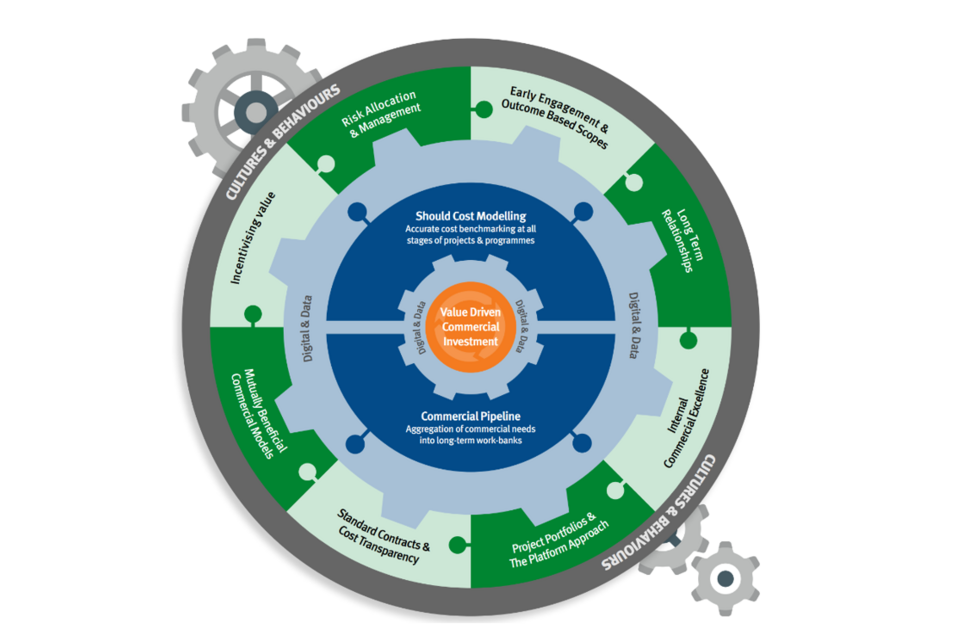
Image 1 – the Environment Agency strategic model. Credit: Environment Agency
4.2 The components of the strategic model
This section provides an overview of the most important components of the strategic model. You can find more detailed information in the active plans for each component. These are set out in section 6 (strategy in operation) and section 7 (next steps).
4.2.1 Investment to create measurable value
We will make sure that investment decisions lead to measurable value, not just outputs. This includes financial, environmental, and social benefits.
Current state
- We focus on products we want to create, rather than benefits that we wish to obtain
- there are strong examples of creating sustainability and social value in our commercial activity, but not in all contracts and frameworks
Future aspiration
- all commercial arrangements will be assessed and incentivised based on the overall value achieved – including time, cost, quality, carbon, social value, and other strategic benefits
- approaches to measuring and incentivising value will be proportionate to the nature, scale, and complexity of the procurement – recognising that what adds value in a major capital project may differ from what matters in a small maintenance activity
- a consistent set of principles will underpin this work, with flexibility in how they are applied across different project or programme contexts
Government alignment
- Construction Playbook – whole-life value focus
- Net Zero strategy – carbon reduction targets
4.2.2 Digital and data
We will have a structured, digital-first approach to commercial decision-making. We will use data analytics to track:
- cost
- performance
- risk
Current state
- there is inconsistent use of digital tools and data across teams
- we have limited ability to benchmark or make evidence-based commercial decisions
Future aspiration
- we integrate digital tools across the full commercial lifecycle – from planning and tendering through to contract management and performance reporting
- there is proportionate digital adoption across teams – recognising that different activities may require different levels of tooling or data sophistication
Government alignment
- TIP and NISTAguidance – encourages digital procurement tools.
4.2.3 Should cost modelling
We will determine what a project or programme should cost, based upon what it has cost in the past.
Current state
- we have limited ability to forecast project costs based on historic benchmarks
- there is heavy reliance on supply chain for pricing
Future aspiration
- we will use should cost modelling to distinguish between inflated or inaccurate prices, and genuine value engineering or innovation
- a mature cost intelligence function will enable objective commercial decisions.
- we will have integrated cost modelling tools
Government alignment
- Construction Playbook – data-led cost estimation
4.2.4 Commercial pipeline
We will have a structured work bank that provides transparency on upcoming commercial activity.
Current state
- pipelines exist but lack certainty and therefore confidence
- published pipelines lack consistency and transparency
- there are missed opportunities to group projects for efficiency
Future aspiration
- we will have an accessible, structured pipeline that supports market engagement and can be relied upon by the supply chain, encouraging them to invest time and resources to deliver
Government alignment
- NISTA Guidance - encourages pipeline visibility
4.2.5 Cultures and behaviours
We will seek to build in commercial discipline whilst maintaining mutual trust and cooperation.
Current state
- there are inconsistent commercial behaviours across teams
Future aspiration
- we will have a culture of accountability, confidence, and adherence to structured commercial models
Government alignment
- Cabinet Office commercial standards
4.2.6 Early engagement and outcome based scopes
We will work with suppliers early to influence project scope, risk-sharing, and innovation.
Current state
- we engage early, but often without shared outcomes
- the engagement process is complex and piecemeal, with very specific scopes that limit flexibility
Future aspiration
- we will have targeted and proactive engagement that delivers meaningful benefit
- we will have outcome-based scopes that leave room for innovation and are proportionate to the scale and complexity of the project
Government alignment
- Construction Playbook – encourages early supplier involvement
4.2.7 Long term relationships
We will build trusted, strategic relationships with important suppliers.
Current state
- we have transactional frameworks
- we have fledgling relationships with Tier 2 and Tier 3 suppliers
Future aspiration
- we have long-term partnership models that improve supplier investment and innovation
Government alignment
- Procurement Policy Notes (PPNs) – encourages long-term strategic relationships
4.2.8 Commercial excellence
We will have a structured, organisation-wide capability-building programme to ensure the EA operates as an intelligent client. This includes building commercial confidence and understanding across all roles that contribute to shaping, influencing, or providing commercial outcomes.
Current state
- there are gaps in commercial skills and capability across project and programme teams
Future aspiration
- our capability standards will be understood, and we will have structured training regimes in place to build individual skills and capability
- we will recognise that commercial capability exists beyond commercial job roles – and is critical across project, planning, and leadership teams
Government alignment
- Cabinet Office Commercial Continuous Improvement Assessment Framework (CCIAF) – maturity assessments for commercial teams
4.2.9 Project portfolios and the platform approach
We will have a portfolio-led approach that encourages repeatable, efficient approaches for the provision of infrastructure.
Current state
- procurement is often fragmented, lacking economies of scale
Future aspiration
- we will have modular, scalable assets based on common design principles
Government alignment
- TIP – supports platform-based approaches
4.2.10 Standard contracts and cost transparency
We will use industry-recognised contract forms and ensure cost transparency.
Current state
- bespoke contracts create complexity and inefficiencies
Future aspiration
- we will use standardised contract templates as a foundation – with flexibility to adapt where justified by project complexity or risk profile
Government alignment
- NEC adoption, boiler plate clauses
4.2.11 Mutually beneficial commercial models
We will use contracts that align incentives to ensure shared success between the Environment Agency and suppliers.
Current state
- our commercial models do not always align risk and reward effectively
Future aspiration
- we will use outcome-aligned contracts that balance risk and reward
Government alignment
- Procurement Policy Notes (PPNs) – best practice guidance
4.2.12 Incentivising value
We will make sure contracts reward efficiency, innovation, and sustainability.
Current state
- there is limited and inconsistent use of performance-based incentives
- where incentives do exist, they are often applied at framework level, with no direct link to individual project performance – this can reduce buy-in and clarity around what success looks like at project or programme level
Future aspiration
- we will build in have incentive mechanisms in all major contracts – designed to reward outcomes such as efficiency, innovation, sustainability, and collaboration
- these incentives will be transparent, proportionate, and clearly aligned to the behaviours we want to encourage – with stronger understanding and engagement across all project or programme levels
Government alignment
- Construction Playbook - encourages outcome-based incentives
4.2.13 Risk allocation and management
We will make sure that risks are managed by the party best placed to do so – not just at the point of contract, but throughout the project lifecycle.
Current state
- risk allocation is often inconsistent or defaulted to the client, with little structured discussion around who is best placed to manage specific risks
- in current approaches for the provision of infrastructure (including CDF1), commercial arrangements do not always incentivise our contractors and consultants to engage meaningfully in risk management early in the project lifecycle – especially when contracts are only confirmed at full business case (FBC) stage
- this can lead to a passive or transactional approach to risk, rather than collaborative ownership and mitigation
Future aspiration
- we will actively manage risk throughout the project lifecycle – with clearly defined responsibilities that evolve as projects progress
- commercial models will better incentivise early engagement with risk – rewarding our contractors and consultants who identify, price, and manage risks effectively earlier in projects
- we will carry out structured, transparent risk discussions from the outset – with risk registers, assumptions, and ownership shared openly between parties and reviewed regularly
- our risk processes will be proportionate to the scale and complexity of the work – which will ensure pragmatic approaches for smaller or lower-risk activities, while maintaining rigour on major or high-value projects
Government alignment
- Construction Playbook – mandates fair risk allocation and avoidance of poor contracting practices
- NEC frameworks – encourage structured risk allocation to reduce disputes and inefficiency
5. Active plans
5.1 What an active plan is
We will build and strengthen our commercial capability in a structured and controlled way using an active plan. This :
- serves as a pathway for continuous improvement
- ensures that the strategic model is implemented effectively
- can be adapted over time as policies evolve and best practices develop
Unlike static documents, the active plan is a live tool. It makes sure commercial processes and procurement approaches remain responsive to:
- changing priorities
- market conditions
- government directives
It provides a structured process for measuring and advancing commercial capability across teams. This will make sure the strategy is not just aspirational but integrated with everyday operations. We will review the active plan each year. This will make sure it:
- remains relevant
- is up to date
- can support evolving organisational needs
5.2 Phased capability development approach
The active plan will operate in a 3-stage development framework. This will make sure that capability is developed and integrated, in a manageable and effective way.
The 3 phases are:
- initial phase – we will establish foundations, identify important gaps and set up baseline capability
- developing phase – we will expand capability, build in best practices and address weaknesses identified in the initial phase
- developed phase – we will be fully integrated with best practices and use digital tools and structured governance to achieve commercial excellence
Each component of the strategic model has an associated active plan. Each plan outlines how we will develop and improve capability in that area over time. This structured, phased approach will make sure we build commercial maturity progressively. This will avoid disruption while building in long-term improvements.
6. Strategy in operation
6.1 Gold, silver and bronze on the shoulder support
We will offer tailored support through our 3-tiered on-the-shoulder support model. This will help teams successfully apply the commercial strategy to major procurements and frameworks. This 3-tiered approach will make sure that the right level of commercial expertise is available where it is needed most.
This will help teams:
- navigate governance
- unlock value
- achieve outcomes with confidence
Gold level tier - full integrated support
This applies to large-scale strategic frameworks and major bespoke procurements.
The Commercial Strategy Team Commercial Centre of Excellence (CoE) and DEFRA Group Commercial (DgC) is fully integrated with the project team from inception.
Gold-tier procurements receive:
- strategic steering
- leadership
- commercial assurance
This will make sure that the commercial strategy is fully integrated into the procurement approach.
Silver level – support at key stages
This applies to significant procurements where oversight is beneficial but full integration is not required. The CoE will provide structured support at important stages, such as:
- governance reviews
- workshops
- procurement strategy development
This will make sure they are aligned with the commercial strategy without the need for full-time integration.
Bronze level - light-touch support
This applies to lower-risk or more straightforward procurements. In these cases, teams are expected to follow structured documentation and governance processes, with periodic check-ins and advisory support.
This allows commercial teams to self-assess compliance with the strategy, using structured tools such as the strategy in operation checklist.
This tiered support structure will make sure that resources are focused where they add the most value. At the same time, it will maintain a consistent, best-practice approach to procurement and contract management.
Instigating Support
On-the-shoulder support is primarily intended for:
- the procurement of frameworks
- major bespoke procurements
In these cases, early strategic input can shape long-term outcomes. Most call-offs under existing frameworks are expected to require minimal support. This is because those frameworks will already have been aligned to the commercial strategy through their initial design and assurance processes.
Support may be initiated in one or two ways:
- proactively by the Commercial Strategy team based on visibility of the commercial pipeline
- via request from DEFRA Group Commercial (DgC) Category leads or Environment Agency teams
We want the model to be collaborative, not mandatory.
Where support is not requested or taken up, we still expect teams to maintain strategic alignment through other mechanisms. These include:
- the strategy in operation checklist
- existing governance processes
The commercial strategy team will continue to monitor the procurement pipeline. They will offer support where it will add most value. This will help to encourage consistency and commercial maturity across the programme.
6.2 Assurance mechanisms
Ensuring compliance with the commercial strategy is critical to delivering consistent, high-quality commercial outcomes. Our assurance model operates at 2 important levels:
Strategic tier assurance
This is where on-the-shoulder support is given, during framework development and bespoke procurements. This:
- ensures that frameworks and major bespoke procurements comply with the commercial strategy
- will be conducted by the commercial strategy team
- focuses on long-term strategic alignment, governance approvals, and ensuring that frameworks build in the principles of the strategy within their contracts
Tactical tier assurance
This occurs at the call-off contract level once frameworks are in place. This:
- is conducted at the contract level within frameworks
- is managed by DGC and CAFM commercial service managers, ensuring procurement strategy updates align with the commercial strategy
- includes updates to deeds and schedules to ensure that framework-level aspirations are reflected at the contract level
This assurance framework ensures that procurement activities, from major frameworks to contract-level decisions, are aligned with the strategy.
We will develop the role of the commercial strategy team in assurance as part of implementation. We do not intend to introduce an additional approval layer. Instead, we will work with DEFRA Group Commercial and Environment Agency governance groups to integrate strategic assurance within existing governance processes. The aim is to:
- reinforce alignment and consistency
- avoid duplication
- ensure that assurance effort is proportionate and focused where it adds most value
6.3 Strategy in operation checklist
Used as part of the on-the-shoulder support
The strategy in operation checklist is a tool designed to test whether a procurement aligns with the commercial strategy. It will be a practical framework for commercial teams to:
- assess compliance
- make sure that procurement decisions reflect best practice principles
The checklist:
- provides structured prompts to assess whether key components of the strategy have been incorporated
- will be used by the commercial strategy team to provide recommendations to governance boards
- helps make sure that strategic objectives are maintained and commercial best practices are integrated
Gold-tier procurements should not require this checklist, as the commercial strategy should be fully integrated with in their approach. For Silver and Bronze-tier projects, the checklist acts as a compliance and assurance tool. This makes sure that projects maintain strategic alignment.
6.4 Summary of strategy in operation
We will ensure that the Commercial Strategy is fully operational, measurable, and continuously improving by integrating:
- the active plan
- on-the-shoulder support
- assurance mechanisms
- the strategy in operation checklist
This structured approach:
- enables teams to balance consistency with flexibility
- ensures that commercial activities are strategically aligned
- remains adaptable to new challenges and opportunities
7. Next steps - a call to action
The commercial strategy team has been working since early 2024 to shape, refine, and begin to build in the principles of this strategy. To do this, they have engaged with internal teams and external stakeholders. This work has included:
- internal alignment activities
- supplier engagement
- the early implementation of strategy in operation mechanisms
This means that the strategic model and active plans are already taking effect.
With this official launch, we now have a clear direction of travel. This provides both suppliers and Environment Agency teams with a structured framework for commercial excellence. However, this strategy will only succeed if it is put into practice.
If you are a supplier, this strategy should give you greater clarity on how we approach procurement, contract management, and commercial relationships. We are committed to fostering long-term, mutually beneficial partnerships. This strategy outlines how we will work together to with our supply chain to encourage:
- value
- sustainability
- efficiency
If you work within the Environment Agency, now is the time to consider what this means for you and your team. You should revisit the roles in section 2.5 and reflect on how your role supports implementation.
As we move forward, this strategy will continue to evolve. Its success depends on everyone playing their part. Whether you are shaping approaches for the provision of infrastructure, making commercial decisions, or simply influencing how we work with others, your contribution matters.
Let us build in this strategy together to ensure the Environment Agency remains:
- an intelligent client
- an innovative procurer
- a leader sustainable commercial activity that is focused on creating measurable benefits