
Copernicus Evaluation Programme Interim Report
Published 3 August 2026

© Crown copyright 2026
This publication is licensed under the terms of the Open Government Licence v3.0 except where otherwise stated. To view this licence, visit nationalarchives.gov.uk/doc/open-government-licence/version/3 or write to the Information Policy Team, The National Archives, Kew, London TW9 4DU, or email: psi@nationalarchives.gov.uk.
Where we have identified any third party copyright information you will need to obtain permission from the copyright holders concerned.
This publication is available at https://www.gov.uk/government/publications/evaluation-of-the-uks-participation-in-the-copernicus-programme/copernicus-evaluation-programme-interim-report
Executive Summary
Introduction and methodology
Copernicus is the EU’s flagship Earth Observation (EO) programme and a leading global EO system, of which the UK was a founding member. However, UK membership was paused from January 2021, restricting UK users’ access to some Copernicus data and services, and rendering UK organisations ineligible to bid for Copernicus contracts. The UK rejoined Copernicus in January 2024, reinstating access to many of these benefits and enabling participation in certain governance structures.
This interim evaluation was commissioned by the UK Department for Science, Innovation & Technology (DSIT) to assess the impact of the UK’s participation in the Copernicus programme since 2024 and to evaluate the cost‑effectiveness of this investment so far, with the aim of informing future government decision‑making. Alongside qualitative analysis, we use both Theory-Based Evaluation (TBE) and Quasi-Experimental (QE) design to deliver a quantitative assessment of impacts to date. Quantitative and qualitative evidence is drawn from around 100 interviews, 160 survey responses from data users, a review of over 60 documents, as well as further desk-based research. The evaluation focuses on three impact channels: influence, contract wins, and data use. While the scope of the study does not include consideration of the potential impact of alternate uses of the funding, counterfactuals were developed to estimate what may have occurred had the UK not rejoined in 2024, to understand the additional impacts of participation. This report provides analytical insights, rather than any policy steer.
Emerging findings
Key takeaways
Participation in Copernicus since 2024 has:
- Increased the UK’s influence in EO in Europe and globally
- Secured modest contract returns, with signs of growth
- Enabled resilient access to highly valued data, including cost savings
Participation in Copernicus has increased UK international influence in EO compared to the period of withdrawal, secured modest contractual returns, and enabled resilient access to highly valued data - including significant cost avoidance. While only a partial assessment of value for money is possible at this stage, the estimated annual realised monetised benefits from data use and contract wins achieved since January 2024 are significant, at £63-£107 million. This analysis does not account for key non-monetised benefits, notably influence. Quantified benefits also reflect the position at the time of assessment and are anticipated to grow over time.
At the time of writing (March 2026), the UK has been back in the programme for just over 2 years. We expect UK benefits from existing investments to develop over time. Notably, rejoining in the middle of the EU’s 2021–2027 Multiannual Financial Framework (MFF) has limited the volume of contract tenders which UK organisations can access, with many contracts issued before the UK rejoined. As such, the UK is temporarily ‘locked out’ of many ongoing contracts until these expire and new contracts are tendered. Meanwhile, the Copernicus programme will expand considerably in the coming years. This enhanced scale is expected to offer substantial contract opportunities to the UK, and in the longer term, boost the data offering. Future outcomes are inherently uncertain, but initial evidence suggests that returns may significantly exceed those generated at this stage.
Participation today is a long-term decision which enables the UK to have a voice in shaping one of the world’s most advanced EO systems. It ensures that data of UK interest is captured, the country retains access to unparalleled EO datasets and services (especially important for continuity), and that UK industry can play a role in developing these leading capabilities in collaboration with European partners. In the views of many stakeholders, participation is crucial for guaranteeing that the UK can be seen to be a serious player in the global EO sector.
Data use
While our evaluation focuses on the value-add of UK participation (above and beyond open access datasets and services), it is clear that the use of Copernicus data is deeply embedded into UK public services and the operations of many companies. Scientific researchers, particularly climate researchers, are largely reliant on Copernicus data, and large datasets such as the ones provided by the programme are critical to AI and Machine Learning training. Over a typical 30-day period, 1,500+ UK users access Atmosphere or Climate data through official portals alone. The true total, including use through data intermediaries, is far higher. Copernicus provides vast amounts of EO data and often globally unmatched data consistency. UK withdrawal would create a budget shortfall, potentially slowing or scaling back the evolution of future Sentinel missions, and weakening the programme’s offering.
If the UK did not contribute to the programme, UK users would face restrictions including:
- Download quotas (while access through commercial intermediaries can mitigate this, there is no future guarantee, since their storage costs will increase as data volumes grow)
- Delays on accessing most data types
- Limited access to archive data and crisis response
- No access to calibration and validation processes to independently assure data quality, resulting in reliance on third-party standards
- Restricted access to the Copernicus Emergency Management Service (CEMS), Copernicus Land Monitoring Service layers, and the European Ground Motion Service (EGMS)
- Loss of public sector access to Copernicus Contributing Missions data
- No access to Maritime or Border Surveillance (still pending under the current agreement)
Many users were unaware of these additional data benefits from participation. This may reflect that the UK was able to rely on an agreement reached with ESA predating EU Exit, which largely protected UK access to Sentinel data via the ESA Collaborative Ground Segment whilst there remained an intention to negotiate. If the UK were to withdraw from Copernicus again, it is unlikely that this agreement could remain in place. Replicating these capabilities nationally would in most cases prove unworkable. In others, it would incur significant and recurring costs, as Sentinel data is regularly reprocessed, meaning that without participation, domestic archives would require costly ongoing refreshes to remain valid (with storage costs alone estimated at £2.5-£4 million per year). Our willingness-to-pay analysis reveals that the average organisation using Copernicus data would pay £32,000-£61,000 per year, with a central estimate of £47,000, to avoid a total loss of data access. We also explored how much of this value would be lost if data quality or access routes were to be degraded in line with a possible UK withdrawal from the programme in the future. Once aggregated across a population of UK data users, the added benefit of participation (which is not based on a total loss of all Copernicus data) is valued at £56-£100 million per year.
Participation offers assurance not only of data access but of data capture itself, including influence over mission parameters and tasking, mitigating growing risks from rising data volumes, budget pressures, and technological change that could otherwise result in gaps in coverage, increased latency, or reliance on delayed, higher‑level processed products only.
Moreover, the key benefit of participation from a data use perspective may lie in hedging against the high impact (though hypothetical) longer-term risk of changes to the EU’s free and open access data policy. Under this scenario, Expansion Missions especially would be more vulnerable due to their more limited historical precedent for open data. Previous studies have estimated the overall socio economic benefits of Copernicus data to be valued at around €67–131 billion for European society.[footnote 1] While this study focuses only on the additional benefit that formal participation brings, loss of access to Copernicus open data was a key concern for UK stakeholders under a withdrawal scenario. Although there is no indication that the EU would change its open data policy, this scenario could plausibly result in lost benefits of tens of billions in value. With the volume and quality of Copernicus data and products growing, UK dependence is only increasing. UK participation ensures the long-term security of comprehensive and resilient access to one of the world’s most advanced EO systems.
Contract wins
Comparing contracts since 2024 to the previous period of engagement (2014-2023) and to other similar European nations, UK wins have so far been underwhelming. In total, 30 UK organisations have secured contracts in 2024 and 2025, worth a combined £26.1 million. However, contract wins increased by 29% from 2024 to 2025, showing early signs of growth. 46% of value is associated with Climate contracts, 40% with Space contracts and 14% with Marine contracts. No Land service contracts have been won. Returns are concentrated, with the Met Office alone winning 12 contracts worth £6.6 million. RAL Space and Airbus have also achieved notable successes. Established UK players appear to be on track to return to earlier contract levels, notably within the Copernicus Climate Change Service (C3S). However, smaller industrial players have struggled to compete with European counterparts, having lost incumbent status in delivering services.
Lower returns than before are to be expected, given the UK rejoined in the middle of an MFF period. The value of available contract opportunities fluctuates over time, so large contract opportunities will not always be available. Over a longer time horizon, the Next Generation missions should offer substantial opportunities (e.g., Sentinel Next-Generation and Expansion mission development, Sentinel operations, CCMs), with smaller contracts expected in the near term (e.g., mid-stream activities, and services). UKspace estimate that upcoming procurement opportunities, including the Next Generation missions, could offer up to £260-£300 million in UK industrial value by 2034.
However, UK industry will have to compete with European counterparts to realise these opportunities and there are concerns that the competitiveness of UK industry has eroded due to the UK’s temporary withdrawal. In this period, notable players downsized UK operations, and skilled workers relocated to Europe. Meanwhile, European counterparts developed their capabilities through Copernicus contracts and captured ‘incumbency’, which helps position them more strongly for follow-on activities. Incumbents can also benefit from contract change notices (CCNs), which allow contracts to be extended rather than re-tendered, thereby ‘locking out’ others (such as UK organisations) from these follow-on opportunities. Whilst an increase in UK contract wins is expected, stakeholders often queried to what extent the UK can fully realise upcoming opportunities from the programme without targeted government support. Continued uncertainty around future UK participation may also impact the success of UK organisations in securing these opportunities.
Given lower contract wins, the total economic impact of UK contracts to date is muted. We estimate that the economic benefits of private sector contracts won over the last two years are ~ £7 million per year in GVA terms. Nonetheless, there is evidence of an economic benefit which a Copernicus contract can confer, as contract winners go on to grow faster than we would otherwise expect, consistent with a positive ‘Copernicus effect’. Our quasi-experimental analysis, using data from 2014 onwards, shows a positive initial Copernicus effect on growth for the first three years post contract award. Companies that won Copernicus contracts experienced faster and economically-meaningful employment growth relative to comparable UK firms. The point estimates of additional growth and associated 90% confidence intervals in each of these three years are 14% (2-29%), 13% (3-25%) and 17% (2-35%). The magnitude of the initial effects is substantial, suggesting a potentially economically-meaningful impact.
Of the 61 total contracts to UK organisations, there have been 16 contracts awarded to UK firms (private) across 2024 and 2025. Collectively, these two years of contract wins could generate £14.1 million of additional GVA across the economy, which corresponds to an annualised benefit of £7.1 million. It is possible that further benefits may arise from these contracts in the future if they are extended further.
There is also rich qualitative evidence of benefits. For UK contractors, the programme provides a route to collaborate with European partners, facilitating knowledge sharing benefits and opening valuable follow-on opportunities, notably through other European institutional customers. Stakeholders frequently maintained that delivering a Copernicus contract confers a ‘stamp of approval’, demonstrating organisational capabilities to a global customer base and potential investors. Some noted that participation also supports UK contract wins through ESA programmes, notably ESA Copernicus Space Component 4 (CSC-4). Copernicus provides a route for EO funding, especially important given the recent cancellation of the planned Traceable Radiometry Underpinning Terrestrial- and Helio-Studies (TRUTHS) mission and perceived underwhelming recent UK ESA EO contributions. Some stakeholders, notably including some not successful in recouping past contracts, felt that funding could be better spent through a national EO programme. Our evaluation does not consider the impact of alternate uses of funding, but we note that there is no guarantee that if the UK were not in Copernicus, national EO funding would correspondingly increase. Finally, while UK funding could instead be directed towards national EO programmes, Copernicus has unique attributes which could not be replicated by the UK, as a large-scale, global programme providing ‘gold standard’ data.
Influence
UK participation is essential if the UK wishes to shape the future direction of Copernicus and ensure its needs continue to be met by the programme. This is especially relevant given significant planned expansion missions, with Next Generation missions being defined or built now. The cost of membership is however anticipated to increase to fund these plans,[footnote 2] which could create a risk to future UK participation. Although the UK lacks formal voting rights in EU Copernicus management, stakeholders view this has not materially limited its influence: observer status still grants access to informal discussions that precede formal decisions, and the UK remains influential within the ESA Programme Board on Earth Observation (PBEO), where many of the decisions on the long-term scenario of the space component are made, as well as in EUMETSAT. This maintains the UK’s platform to formally advance national interests within the Copernicus programme. The UK contributes 18.4% of the overall programme budget over the 2024-2027 period of participation (~£133 million annually on average, £533 million total over the four years[footnote 3]), which gives a notable voice to UK delegates in negotiations.
Nonetheless, there is a perception within the UK EO community that objectives driving UK participation in Copernicus are not clear, including priorities around data capture, service development, and contract roles and returns. We have only been able to identify limited concrete examples of UK stakeholders shaping programme decisions through the EU Copernicus management channels. The UK did however negotiate the removal of a requirement for consortia to nominate an EU-based organisation as a backup for any UK partner, which is a key demonstration of the country’s influence in advocating for its EO community. The UK would arguably have more opportunities to influence the direction of activities from the next MFF, with involvement from the beginning. Participation also ensures that the UK is part of European-level EO conversations. We heard that being in Copernicus strengthens the UK’s influence within the ESA PBEO, as it can remain involved in all big components of ESA’s EO programme (including ESA-managed Copernicus R&D). This is particularly valuable to represent non-EU Member States interests, especially in discussions concerning EU influence in the programme.
A system the scale of Copernicus requires collaboration and the pooling of resources. Participation in the programme enables the UK to both contribute to and benefit from synergies, delivering greater benefits than could be achieved unilaterally. Stakeholders noted that future programme expansions would be delayed without UK funding and elements of missions would not have gone ahead without UK funding, notably the Copernicus Anthropogenic Carbon Dioxide Monitoring (CO2M) mission’s third satellite. UK participation additionally generates synergies with other funding streams, including ESA, EUMETSAT, ECMWF, and UK national funding. These synergies strengthen UK competitiveness through enhanced capability, heritage, and the pipeline between ESA EO R&D and Copernicus operational contracts. Participation has also opened new channels for collaboration, including with parts of the European Commission’s DG‑DEFIS, and aligns with broader UK‑EU cooperation commitments and global engagement on climate and space. Involvement in Copernicus supports UK soft power and a unified European voice, with many arguing that it signals the UK’s seriousness as a global EO player. Withdrawal was viewed largely negatively by consultees, with reputational, scientific, and commercial repercussions, particularly for the UK’s ability to participate in wider high‑value strategic and return‑generating opportunities with European peers. Leaving Copernicus could be damaging to broader UK-EU relations, potentially positioning the UK as an unreliable partner. With this scenario, HMG stakeholders expect stronger consequences would be put in place, resulting in a more definitive ‘exit’ from the programme than during the last period of withdrawal.
Next steps
This Interim Report conclude Phase 1. Phase 2 (2026-28) will deliver a full and comprehensive assessment of UK participation in Copernicus since 2024, including case studies, international comparison, the exploration of strategic objectives, and further economic analyses.
Introduction
Context
Copernicus is the EU’s flagship EO programme (see Annex B for an overview). As a core pillar of the EU Space Programme, it is among the world’s most advanced EO systems, comprising six families of Sentinel satellites (and a further six Expansion Missions in development), Contributing Missions, and data services. The UK was a founding member of Copernicus, but participation was paused in January 2021, restricting access to certain data and services, and rendering the UK ineligible for Copernicus contracts. Immediate impacts on the UK’s access to Copernicus free and open data was mitigated via the UK’s investment in ESA’s Collaborative Ground Segment associated to an agreement with ESA predating EU exit, meaning UK users retained high speed, non-limited access to data comparable to that available under participation.
The UK rejoined Copernicus in January 2024 for the remainder of the EU’s 2021–2027 Multiannual Financial Framework (MFF), restoring access to Copernicus services (apart from the Security Service), enabling access to Sentinel and CCM benefits, reinstating contract eligibility, and enabling participation in certain governance structures. This evaluation was commissioned by DSIT to assess the impacts of the UK’s participation in the Copernicus programme since January 2024 and to evaluate the cost‑effectiveness of this investment, with the aim of informing future government decision‑making. This report presents the interim findings of our evaluation.
Methods and scope
This study uses a theory-based, mixed-methods approach to assess the impacts of the UK’s participation in the Copernicus programme from January 2024 onwards. It leverages extensive primary and secondary research to deliver qualitative and quantitative insights across three impact channels: contract wins, data use, and influence. The evaluation does not consider alternatives to Copernicus or other potential uses of funding. Within the broader mixed‑methods design, Theory-Based Evaluation and Quasi-Experimental analysis provide robust components of the analytical approach. TBE explores causal pathways, assumptions, and enablers, while QE provides a quantitative lens to assess contribution. The methodology is set out in detail in Annexes C to F.
Figure 1: Theory of change
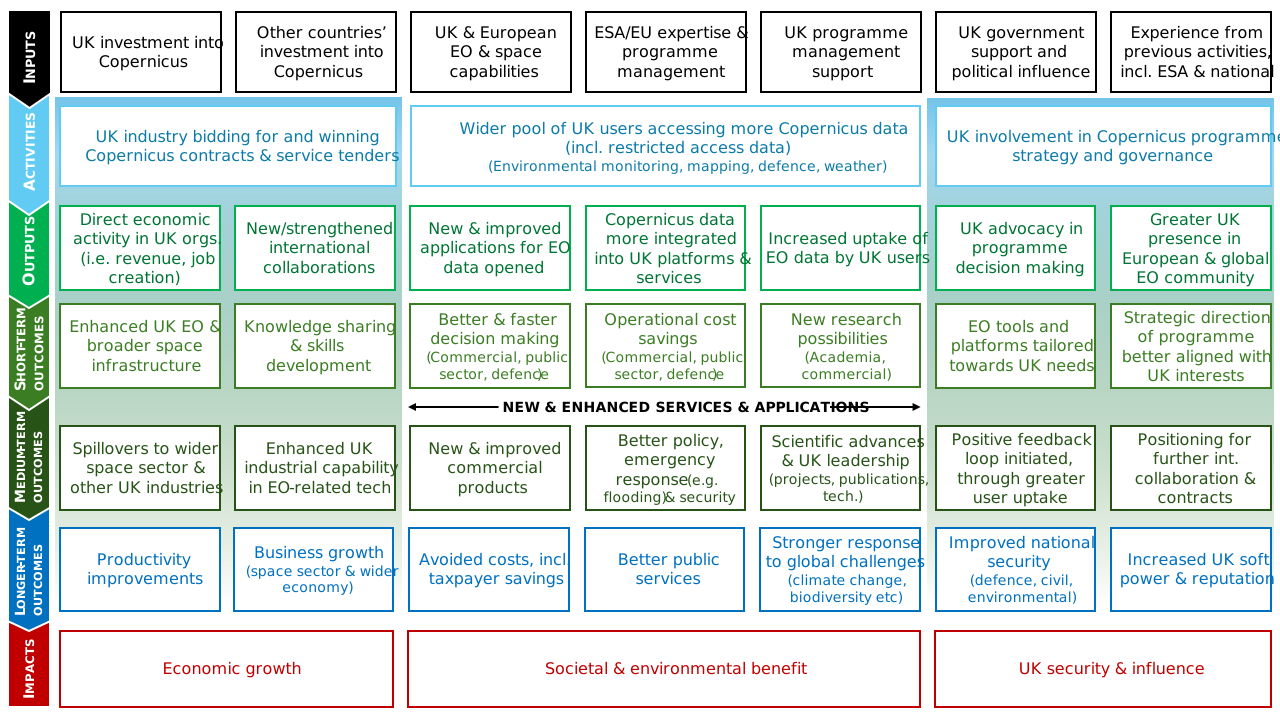
Underpinning the evaluation is a Theory of Change (ToC), which outlines how UK participation in the Copernicus programme is expected to generate outputs. It maps how UK financial contributions, policy decisions, and general engagement translates into outcomes across contract wins, data use, and influence.
Evaluation questions guide the research and ensure that the key objectives driving UK participation to Copernicus are met. Definitive answers to these questions are not expected until Phase 2 final reporting, with this report instead presenting interim findings. The overarching evaluation questions for each impact channel are presented below.
Table 1: Evaluation questions
| Contract wins |
|---|
| C1: What economic benefits stem from Copernicus contract wins? |
| C2: To what extent has the UK been successful, or hope to be successful, in winning contracts as part of the Copernicus programme? |
| C3: To what extent does Copernicus contribute to a strengthening of the UK’s national capabilities in EO and other relevant areas? |
| C4: To what extent do other sources of funding prepare and support UK entities to win Copernicus contracts? |
| C5: Does participation to Copernicus demonstrate good value for money for growing the EO sector in the UK? |
| Data use |
| D1: How does participation in the programme impact data access and usage, beyond free and open access to Copernicus data available to users from non-participating states? |
| D2: How does Copernicus data impact the welfare of UK citizens? And to what extent does this depend on UK participation? |
| D3: How and to what extent are data and services across the whole Copernicus programme used to support the provision of public services in the UK? |
| D4: How significant is UK participation to UK-based scientific research, particularly climate science? |
| D5: Does participation to Copernicus demonstrate good value for money for UK data users? |
| Influence |
| I1: To what extent does the UK influence priorities and direction of the programme? |
| I2: Does UK influence lead to benefits for the UK? |
| I3: How does UK participation shape the scale and output of the programme? |
| I4: What are the international collaboration benefits of participation? |
Evidence is drawn from a wide range of sources, including:
- 100 stakeholder interviews (across industry, research and academia, government, European institutions, and international space agencies);
- Around 160 survey responses from Copernicus data users;
- The review of over 60 documents, including data, policy papers, and government records;
- Additional desk-based research, such as organisation websites and press releases; and
- Beauhurst, a continuously updated, comprehensive database of private companies.
Top-down perspectives from groups representing the community (e.g., UKspace, Space Academic Network (SPAN)) have also been consolidated, and findings have been validated and reviewed through initial feedback from a panel of subject-domain experts and DSIT / UK Space Agency, to provide a comprehensive and defensible overview of current impacts. Interviews were a central source of evidence for the evaluation. The influence channel particularly benefited from insights provided by government officials, European institutional representatives, and other stakeholders, which were essential for assessing the UK’s role in shaping Copernicus and capturing the nuances across different perspectives. These semi-structured interviews explored the evaluation questions most relevant to each stakeholder, with tailored prompts reflecting their specific roles and relationship to the programme.
Primary research was complemented with econometric analysis of over 350 firms, including Copernicus contract winners and comparable firms. Counterfactual scenarios in which the UK does not participate in Copernicus were developed to support assessment of the additionality of participation benefits.
Caveats
Findings should be interpreted as a snapshot in time, approximately two years since the UK rejoined the programme. Impacts, particularly in the space sector, take time to materialise, so this assessment does not represent a definitive or final evaluation. Findings will be updated over the coming years as longer-term effects become clearer. Specific caveats are outlined below.
- Data coverage and quality: No single complete source of Copernicus contracts or data users exists, making identification and quantification of contracts / users challenging.
- Attribution and additionality: EO data and capabilities often reflect cumulative funding and broader European collaboration, limiting strict Copernicus attribution.
- Counterfactual uncertainty: Estimates and assumptions are required regarding outcomes and evolution of the programme without UK participation.
- Timing and lags: The UK’s re-entry in January 2024 provides a short window for benefits emerging from contracts, spillover benefits, and added value from data use.
- Stakeholder engagement: Unsuccessful contract bidders are hard to identify; contractors face engagement fatigue.
- Lack of awareness: Many data users are unaware of what restrictions would be put in place on UK access to Copernicus data without UK participation, making it difficult for them to help identify impacts.
Influence
Key findings
- Participation in Copernicus gives the UK essential access to programme discussions and enables the shaping of the future direction of the world’s largest EO programme.
- The UK retains meaningful influence through informal negotiations and its strong role at ESA’s Programme Board on Earth Observation (PBEO).
- Relationships and visibility are being rebuilt, though influence has not fully returned to pre-withdrawal levels, largely due to joining mid-MFF and the lingering impact of the UK’s EU exit.
- European stakeholders emphasise that UK expertise continues to add significant value and improves programme quality.
- UK funding has helped enable the continuation and expansion of Copernicus missions.
- Future withdrawal could damage credibility, reduce UK influence in both Copernicus and ESA, weaken the UK’s position across the European EO landscape, and cause wider diplomatic tensions.
Counterfactual
The counterfactual was developed based on primary and secondary research and validated by DSIT. Under this scenario, the UK would not participate in the Copernicus programme and would therefore have no representation within Copernicus management. As a result, UK stakeholders would lack access to formal programme discussions and would be limited to more informal EO-related exchanges, to a much lesser extent than if the UK were a full programme participant. Many UK and EU stakeholders noted that the UK would be unlikely to participate in Copernicus activities via ESA Copernicus Space Component 4 (CSC-4)[footnote 4], as it did during the 2021–2023 period of non-association, as there would be no longer be any obvious pathway to follow-on EU contracts. The UK would therefore lose some of the Copernicus access it maintained through ESA (e.g., data hubs) in the previous withdrawal period. Given the nature of the UK’s existing engagements, it would have little practical choice but to continue contributing to Copernicus via ECMWF and EUMETSAT. However, this route would be unlikely to deliver the same level of benefits, particularly in terms of industrial contract returns, as with the current set up. Visibility, collaboration, and influence would thus be restricted.
UK influence on Copernicus
Nature of the UK’s influence
Participation in Copernicus provides access to key stakeholders and conversations within the European EO domain. Beyond formal steering forums (e.g., the Space Programme Committee - Copernicus Configuration, and the Copernicus User Forum) where the UK sends delegates, many stakeholders highlighted the importance of informal discussions, which UK stakeholders would likely not be involved in without participation in Copernicus.
The benefits of such access are twofold. We repeatedly heard how it creates an opportunity for the UK to influence the direction of the programme, ensuring alignment with UK needs (e.g., data captured, data policy), shaping the evolution of the European EO sector. Participation also enhances UK stakeholders’ awareness of upcoming opportunities. As a result, the UK can advocate for its interests and position itself to secure leading and high value roles in future programme activities. Several stakeholders mentioned that this will be particularly important over the next few years, as plans for the next generation of Sentinel satellites will be finalised and implemented, with many high value roles and contracts expected to be tendered over the next decade. Having ‘a seat at the table’ and ensuring UK organisations have an ability to prepare and bid competitively is thus seen by many stakeholders as critical to drive stronger returns for UK industry.
Extent of the UK’s influence
Under the agreement negotiated with the EU, the UK rejoined Copernicus (except the security service[footnote 5]) in 2024 without formal voting rights within the programme’s management. Nevertheless, many institutional stakeholders, both in the UK and EU, highlighted that the UK maintained influence on the programme’s direction and priorities through the important discussions preceding votes, where UK stakeholders were reported to be active and sought-after participants. The UK also exerts influence on Copernicus through the ESA EO project board (PBEO), where many of the decisions on the long-term scenario of the space component are made, as well as through its participation in EUMETSAT. For example, annual joint PBEO / Copernicus Committee meetings allow countries to discuss and debate the future development and budget of the Copernicus Space Component. Through this forum, the UK retains full voting rights on the upcoming decision about the second-generation Expansion Missions blueprint, which will shape programme plans beyond 2040. This is particularly significant given that Copernicus is one of the world’s largest EO programmes, giving the UK substantial influence and reinforcing its reputation as a serious player in the EO domain. However, engagement with the UK’s industry and research EO community revealed a limited understanding of the specific objectives the UK is pursuing through the programme, including priorities around data capture, service development, and contract roles and returns.
Views on the extent to which the UK currently benefits from access and influence differ, with European stakeholders reporting that the UK is fully embedded and has regained its position in the programme, while many UK stakeholders consider that links have not yet returned to pre-withdrawal levels. This may be because the UK does not hold large contracts in this MFF (see ‘Bidding for and winning Copernicus contracts’, where this is discussed in more depth).
While some stakeholders highlighted areas of relatively greater UK interest (e.g., marine and oceanography), our research has so far identified only limited specific additional benefits resulting from greater UK influence since 2024 beyond the expanded activities enabled by UK funding. A key UK ‘win’ has been to negotiate the removal of a requirement for consortia to nominate an EU based organisation as a backup for any UK partner. The limited number of obvious examples does not indicate an absence of influence, but likely reflects the constraints of rejoining only two years ago, midway through the current MFF. As a result, opportunities to more strongly align the programme with UK priorities may remain limited until the next MFF, when the UK would be able to contribute from the outset and its EO community would be more firmly established within the programme. Several stakeholders noted the TRUTHS mission (de-funded by the UK before the 2025 ESA Ministerial) as a potential candidate for a future CCM, where UK organisations could be well placed to win high-value contracts and improve the UK’s return on Copernicus contracts. If realised, this could offer a tangible example of UK ‘success’ from participation to the programme. However, it remains speculative at this stage: there is no evidence that it is currently being pursued, it would require active UK advocacy, and it would take significant time to materialise.
Additionally, participation in Copernicus strengthens the UK’s influence within the ESA PBEO, as it can remain involved in all major components of ESA’s EO programme (including the ESA-managed Copernicus R&D activities). This involvement is particularly valuable in representing the interests of non-EU Copernicus Member States, especially in discussions concerning EU influence in the programme.
UK added value in the programme
UK funding contribution
The UK’s relative financial investment in Copernicus is significant (~£133 million per year between 2024 and 2027, providing 18.4% of the overall programme budget[footnote 6]), which naturally gives a voice to UK delegates in discussions and negotiations. The cost of membership is however anticipated to increase to fund the programme’s significant expansion plans[footnote 7], which could create a risk to future UK participation.
The UK’s investment in the programme was well-received in 2024 and EU stakeholders highlighted that it enabled various activities to go forward or be expanded, which otherwise would not have occurred. This includes elements of three Sentinel Expansion missions (CO2M, CRISTAL and CIMR). We explore the benefits of this for CO2M below.
Case study: UK-enabled expanded activities for the CO2M mission
The CO2M mission is a three-satellite mission that aims to measure human-produced carbon dioxide. It was originally planned to be a two-satellite system, with OHB (Germany) selected as the prime contractor in 2020.
The UK lost its leading role to develop the Multi-Angular Polarimeter (MAP) instrument due to a strategic decision from Thales Alenia Space to shift the activity from its UK branch to the French branch, limiting UK involvement to smaller sub-contracts. Since rejoining Copernicus, the UK is anticipated to regain larger participation in work packages for MAP Optical Unit technical design, and on-ground and flight verification activities (first and second satellites) and the MAP optical units AIT (third satellite).
Several stakeholders highlighted that the additional funding associated with the UK rejoining the Copernicus programme enabled the development of a third satellite for the mission (also by OHB).[footnote 8] Although the satellite is being developed in Germany, the UK’s financial contribution helped increase the mission’s global coverage, accelerating data gathering, supporting European leadership in greenhouse gas monitoring and addressing climate change.
The enhanced data return is expected by stakeholders to benefit the UK’s EO data processing industry and enable world-leading climate science research. The mission is seen as crucial for evaluating the effectiveness of climate policies, with the third satellite improving the efficiency and reliability of these assessments. This, in turn, supports the UK’s strategic priorities, including monitoring progress toward its Net Zero goals.
The UK’s funding contribution also filled funding gaps for the development of Next Generation missions, operations of flying missions, coordination, and preparation, and launch services. It provided additional funding for elements of Copernicus services, including Land Monitoring, Marine Environment Monitoring, Atmosphere Monitoring, Climate Change and Emergency Services.
Both UK and European stakeholders perceive the UK’s funding and expertise (e.g., calibration and validation) contributions as key enablers for maintaining Copernicus performance standards. The transfer of industrial activities during the period of non-participation was described as creating significant technical challenges and risks, as well as additional costs for the programme.
Across all stakeholder groups, a common message was that the programme helps countries create synergies, working together in ways that achieve more than they could on their own. Most UK stakeholders agreed that the UK could not replicate these benefits through a national programme, even with domestic funding equivalent to UK Copernicus contributions. UK participation in Copernicus also embeds itself in a wider funding landscape, creating synergies with other streams (e.g., ESA, domestic), enhancing competitiveness and returns on Copernicus and non-Copernicus investments.
Provision of leading capabilities
UK influence cannot be simplified to its budgetary contributions. The UK is home to global leaders in EO (e.g. the Met Office) who UK and European consultees reported could not be replaced easily due to their unique expertise and world-class reputation. Even when European alternatives could be identified during the period of non-participation, stakeholders agreed that the EU had an interest in securing UK participation to regain access to these capabilities and help improve the programme. An entrusted entity noted that they pushed to continue hiring UK nationals to work on Copernicus during the period of non-participation to benefit from their knowledge.
Many UK and European consultees emphasised the UK’s leading expertise in climate science, calibration, and validation (cal/val)[footnote 9], integrated modelling, uncertainty assessment, quality control, ground segment, data exploitation, and data analytics. They also highlighted the UK’s key role in the Copernicus Climate Change Service (C3S) prior to the country’s withdrawal, explaining that the UK’s departure in 2021 was a significant loss in this area. They stressed that the country remains highly capable and competitive in the domain, and is progressively regaining a central role in C3S, helping improve this service which focuses on a fast-moving global challenge. The UK has secured around 9% of all C3S funding in MFF21-27, which is notable given the UK was not eligible for any contracts for the first 3 years of that period. The UK also displays capabilities across the different Copernicus services, including the atmosphere and marine services, though stakeholders noted that climate remains a core strength relative to other Member States.
UK participation has enabled Copernicus to benefit from these leading capabilities. While hard to tangibly illustrate so soon after re-joining, there is a clear agreement within both UK and European circles that UK participation is contributing to improving the programme, resulting in better and more fit-for-purpose data and services. For example, the UK helps shape (via the Met Office) the scope, quality, credibility, and continuity of key datasets, such as ERA5. ERA5 underpins climate science, weather prediction, risk assessment, and increasingly the training of AI / Machine Learning models. Beyond this, stakeholders highlighted that this expertise, particularly in climate, makes the UK a sought-after partner. This drives strong reputation, which can help the UK advance its interests and vision in the programme, translating to influence.
Benefits of international collaboration
Copernicus is Europe’s contribution to the Global Earth Observation System of Systems (GEOSS) and is recognised globally as a leading EO programme - a point that was reinforced by our conversations with European and other international stakeholders. Participating in the programme reflects positively on Member States and their respective EO communities, boosting their international reputation. Many stakeholders explained that the pooling of resources and capabilities in Copernicus delivers more than the sum of the individual Member State inputs.
Access to contracts and conversations helps build and maintain leadership and working relationships, strengthening UK competitiveness internationally through knowledge and technology exchanges and funding and capabilities synergies. We heard how networking opportunities associated with participation in the programme can also lead to new or strengthened collaborations, supporting:
- Future Copernicus contracts,
- Other programmes such as Horizon Europe, ESA EO (including European Resilience from Space to Earth Observation (ERS EO) activities),
- Follow-on EU-tendered operations activities,
- IRIS2 involvement.
As EO is perceived to be shifting from a predominantly sustainability focus towards defence applications, some stakeholders emphasised the strategic importance of the UK’s comprehensive cooperation with the rest of the EU in the domain (notably on the future Earth Observation Governmental Service (EOGS) and European Space Shield).
Involvement in Copernicus opens access to key forums for the UK, such as parts of the EU’s Directorate-General for Defence Industry and Space (DG DEFIS). A UK government stakeholder also noted that the UK’s participation in the Copernicus Sentinels, as well as ESA and EUMETSAT EO missions, underpins UK membership of CEOS, as the UK otherwise does not operate any nationally-owned EO satellites. Through this committee, which the UK chaired from October 2024 to November 2025, the country has a voice on international coordination of civil EO programmes and participates in data exchanges.
Several stakeholders reported that the UK rejoining the Copernicus programme is an opportunity to present a unified European voice in a global landscape that is becoming increasingly complex and hostile geopolitically. They explained that this helps enhance visibility, competitiveness, and influence in international negotiations and debates, as part of a ‘greater game’ of international relations. UK participation in Copernicus also supports the consistency and credibility of the UK’s position in international climate and environmental discussions, where absence from a programme of this scale could be perceived as disengagement.
We repeatedly heard how, in the environmental domain, an increasing number of regulations rely on Copernicus data, making participation in the programme valuable to secure access to a common dataset and to maintain consistency in approach and policy direction across jurisdictions.
The soft power benefit is also relevant in terms of international aid, with access to Copernicus restricted data and services being leverageable as part of the EU’s contribution to major international actions (e.g., managed by the UN or Red Cross) and Member States’ respective development and aid agenda. For example, the CEMS mapping component can be activated by the UK on behalf of a third-party country to provide valuable information to support disaster management, response, and recovery.
Some UK stakeholders, particularly on the upstream side due to the typical long lead times, report facing reticence from European partners to include them in consortia because of the uncertainty surrounding future UK participation in the programme. Stakeholders in academia did not report this obstacle. The Copernicus entrusted entities[footnote 10] consulted also did not note any reticence vis-à-vis the UK and were encouraging further involvement, as they saw the country’s EO capabilities as strengthening the quality of consortia. Some stakeholders nevertheless noted that ministerial-level messaging on UK intentions to negotiate for the next MFF would be important to alleviate these uncertainty-driven obstacles.
Impact of a potential future withdrawal on UK standing in Europe
Almost all stakeholders across industry, research and government in the UK and EU regarded a potential future UK withdrawal from Copernicus as highly detrimental, with significant commercial, scientific and policy harm expected for the UK.
Most consultees agreed that the UK would face significant reputational damage and a loss of goodwill from the EU (at country level; not necessarily organisations individually). This would be driven by the perception that a second withdrawal reflects a pattern of unreliability, as well as by the logistical problems a UK departure would create for the programme, including delayed or cancelled activities due to the resulting gap in the budget. This reputational effect would be especially significant following the UK-EU Summit, which aimed to strengthen cooperation. Withdrawal could be perceived globally as the UK shifting its interest away from EO and climate and environmental monitoring (key UK strengths), affecting its influence in these domains.
The UK’s access to strategically critical data could also be jeopardised, as it would lose influence to guarantee that areas of national interest are captured, as the programme expands and data volumes increase.
While there is no indication from the EU that this is being considered, several UK stakeholders highlighted the possibility of punitive measures, notably in terms of data access by, for example, excluding UK territory from data and services. Another possible repercussion that was noted was the negative spillover impact on other collaboration frameworks and opportunities with European and global partners, including ESA ERS, IRIS2, Horizon Europe, defence programmes, and bilateral initiatives.
For UK organisations, a potential withdrawal from the programme would affect communication channels and access to key stakeholders and conversations, limiting opportunities beyond Copernicus contracts and possibly resulting in a loss of capabilities and competitiveness across the board.
While this evaluation does not investigate how funding could be otherwise used, several stakeholders noted that withdrawal from Copernicus may also have implications for the nature of the UK’s ESA EO programme participation. UK organisations would remain involved in FutureEO, Earth Watch, and the Climate Change Initiative (CCI), but the inability to bid for EU follow-on contracts would – we heard - likely result in non-involvement in CSC-4 and possibly ERS R&D activities. As a result, the UK’s wider influence in European EO initiatives could be diminished.
Contract wins
Key findings
- Since rejoining Copernicus in 2024, UK organisations have secured £26.1 million in contracts, mainly across ECMWF C3S contracts and ESA Space contracts, concentrated across a few organisations (e.g. Met Office, RAL Space and Airbus).
- Smaller industrial players have fared notably worse in attempts to re-gain contracts, struggling to compete internationally after having lost incumbency during the non-participation period.
- Current returns remain lower than the UK’s earlier period of participation, reflecting re-entry mid-MFF, loss of incumbency, and capabilities erosion.
- Future opportunities for securing contracts are expected to grow through Next Generation missions, Expansion missions, and CCM procurements.
- Evidence shows a positive effect of Copernicus contracts on organisations, with companies growing 13-17% faster than comparable firms in the three years post-contract.
- Copernicus contracts enhance credibility, collaboration, and access to European follow-on opportunities.
- Targeted government support and clarity regarding the UK’s future participation is key for capturing upcoming opportunities, as uncertainty may hinder competitiveness for incumbency-setting early phase contracts and reticence within European consortia to include UK organisations.
- While UK funding could instead be directed towards national EO programmes, Copernicus has unique attributes which could not be replicated by the UK.
Counterfactual
Our counterfactual scenario, in which the UK does not participate in Copernicus, assumes that UK organisations would not be eligible to bid for Copernicus contracts procured through the EU.[footnote 11] UK organisations would still be eligible for ESA Copernicus contracts through ESA CSC‑4, as long as the UK continues to invest in that element of the ESA EO programme. However, there may be fewer incentives for UK organisations to bid for these contracts, as they could not access subsequent EU contracts and it is unlikely they would be competitive against a European alternative. This ineligibility for follow-on EU contracts may also make European consortia reticent to include UK organisations. We also assume that UK organisations would be ineligible to enter the EU’s CASSINI Business Accelerator, Europe’s largest space accelerator, which mainly supports the EO industry.[footnote 12]
Funding from the UK’s Copernicus contribution could be redirected into national programmes, similar to the Earth Observation Investment Package (EOIP, 2022-2025) created after the UK’s withdrawal from Copernicus. However, there is no guarantee that these funds would be allocated to the UK EO sector or space sector more broadly at comparable scale (if at all), continuity, and focus. A comparison to a potential national programme or examination of the design of a nationally-focused EO programme is beyond the scope of this evaluation.
Bidding for and winning Copernicus contracts
Trends across UK contracts
Since the UK rejoined Copernicus in January 2024 and UK organisations regained the ability to bid for EU contracts, contract returns have been lower than in the UK’s earlier period of Copernicus participation. This is to be expected given significant barriers faced by UK organisations when the UK rejoined (see below). Nonetheless, there are early signs that UK contract returns are growing. In 2024, UK organisations won contracts worth £11.4 million (€13.5 million). In 2025, UK organisations won £14.7 million (€17.3 million)[footnote 13] in contracts, a 29% increase relative to 2024. In comparison, UK returns fluctuated strongly between years during the UK’s earlier period of participation, but contract returns averaged over £18 million (€23 million) per year during the MFF 2014 period, with a few large contracts often driving returns in a given year.
Table 2: UK contract returns (2014-2025)
| Year | ECMWF | EEA[footnote 14] | Mercator[footnote 15] | ESA | Total |
|---|---|---|---|---|---|
| 2014 | - | - | £ 1,700,000 | - | £ 1,700,000 |
| 2015 | £ 3,600,000 | - | £ 1,500,000 | £ 66,900,000 | £ 72,000,000 |
| 2016 | £ 6,800,000 | - | £ 1,700,000 | £ 7,600,000 | £ 16,100,000 |
| 2017 | £ 5,400,000 | £ 700,000 | £ 1,900,000 | £ 6,500,000 | £ 14,400,000 |
| 2018 | £ 4,400,000 | - | £ 1,900,000 | £ 2,900,000 | £ 9,100,000 |
| 2019 | £ 5,800,000 | £ 26,000 | £ 1,900,000 | £ 2,000,000 | £ 9,600,000 |
| 2020 | - | £ 100,000 | £ 1,900,000 | £ 300,000 | £ 2,300,000 |
| 2021 | - | - | £ 1,000,000 | £ 2,000,000 | £ 3,000,000 |
| 2022 | £ 500,000 | - | £ 1,300,000 | £ 700,000 | £ 2,500,000 |
| 2023 | - | £ 26,000 | £ 800,000 | £ 200,000 | £ 1,000,000 |
| 2024 | £ 2,900,000 | - | £ 2,100,000 | £ 6,400,000 | £ 11,400,000 |
| 2025 | £ 9,100,000 | - | £ 1,700,000 | £ 3,900,000 | £ 14,700,000 |
| Total in GBP | £ 38,400,000 | £ 900,000 | £ 19,200,000 | £ 99,400,000 | £ 157,900,000 |
| Total in EUR | € 45,600,000 | € 1,000,000 | € 22,700,000 | € 130,400,000 | € 199,700,000 |
Of the contract value secured since the UK re-joined, 46% is associated with European Centre for Medium-Range Weather Forecasts (ECMWF) C3S contracts, 40% with ESA Space contracts[footnote 16] and 14% with Mercator Marine contracts. No Land service contracts have been won by UK organisations since the UK rejoined Copernicus. The UK is particularly strong on climate activity, most notably with the ECMWF headquartered in the UK. Stakeholders told us that UK organisations are involved in nearly every climate contract.
Whilst 30 organisations have won Copernicus contracts, most of the return is concentrated in a few large contracts. The Met Office has achieved the greatest success (in terms of value of contracts won) of any UK organisation, winning 12 contracts worth £6.6 million (€7.6 million) through ECMWF and Mercator. The Met Office is prime contractor on two of these contracts. RAL Space and Airbus have also achieved notable success, winning three and four contracts respectively. There have also been some commercial successes. Notably in 2025, SatVu won a £2.6 million (€3 million) CCM contract to supply real time climate and security data. Highly respected UK institutions, with deep expertise and capabilities, appear to have fared best in terms of recent contract wins. Meanwhile, smaller UK industrial players have fared worse, particularly start-ups. Firms who had enjoyed success in winning contracts in the UK’s earlier period of participation but have struggled to regain a foothold often commented that other European players have similar capabilities. As such, they have struggled to compete with European competitors, having lost incumbent status, and sometimes capabilities (see below). Meanwhile, prestigious UK organisations, including the Met Office, RAL Space and some universities, were clear that they have unique capabilities within Europe and the quality of data produced by the programme would in some respects suffer were they not involved.
Some stakeholders commented that the roles secured by UK organisations are typically smaller and less prestigious than in the previous period of UK participation. Most notably, UK organisations are often playing the role of subcontractor. In total, UK organisations are currently (at the time of writing) primes on 15 contracts including three roles worth over £1 million, and subcontractors or co-contractor on the remaining 46 contracts. One leading UK player noted that they had rejoined consortia in smaller roles where their previous work could not be replicated by their European partners.
Factors underlying recent trends
Whilst contract returns have been low by historical standards and - in comparison to other large European nations - stakeholders consistently highlighted that current returns need to be viewed in the context of long-term decision making. At the time of writing, the UK has only been back in the programme for a little over two years. This lag impact has been compounded by the UK rejoining in the middle of a MFF period.
Many multi-year contracts are ongoing and held by a European incumbent, having been tendered before the UK rejoined the programme. Some UK organisations have not yet had the chance to compete for contracts, having missed early tenders and opportunities to form or join consortia. The frequent use of contracts extensions through CCNs may negatively impact UK organisations, keeping them ‘locked out’ of activities for longer (though this could constitute a benefit once the UK regains incumbency). While some UK organisations are benefitting from rekindled industrial partnerships formed in the UK’s earlier period of participation, uncertainty around the UK’s future in the programme following the UK’s decision to exit the EU affected the ability of UK organisations to join EU consortia in the 2016-2020 period. Whilst the UK only left the programme for 4 years, the period of uncertainty surrounding UK future participation was much longer, creating greater barriers to UK organisations in joining European consortia today. The consortia formed during the final years of the UK’s previous period of Copernicus participation to deliver small scale, early contracts are in some cases now delivering large contracts from which the UK is effectively locked out. Furthermore, we heard from industry that for a time after the UK rejoined the programme, European consortia were required to nominate an EU-based organisation as a back-up to any UK organisation included in the consortium. This is no longer the case, as the UK Space Agency successfully lobbied ESA and the EU to remove this mitigation plan requirement. In general, we expect barriers to UK organisations bidding to lessen naturally over time, as contracts come up for tender.
There are opportunities for UK organisations to bid for Copernicus contracts aligned with existing UK capabilities within the remainder of the current MFF, with larger opportunities expected in MFF 2028-2034.[footnote 17] More generally (and assuming continued Copernicus participation), UK organisations are better positioned to compete for future Copernicus contracts, including those procured via ESA. ESA membership allows UK companies to bid for CSC-4 contracts which build UK capabilities, as well as giving access to information and stakeholders. These contracts can offer UK industry incumbent status since Copernicus EU contracts are often direct follow-ons from ESA contracts: a consortium might develop one Copernicus satellite through an ESA contract, then receive an EU contract to complete the constellation. As such, UK industry is likely to play a key role in Sentinel Expansion missions.
Lastly, the Next Generation missions, expected to be implemented over 2024-2032, will be awarded through open competition and are expected to offer large opportunities for UK organisations. Whilst UK industry has had limited ability to bid for Copernicus contracts to date, there will be substantial opportunities in the future, with the programme entering a critical procurement phase. Many of these early contracts are for definition, qualification and production phases, meaning securing incumbency is strategically important to increase competitiveness for the follow-on activities. We received evidence suggesting that the next phase of Copernicus procurement (the current MFF and MFF 2028-2034), including the Next Generation missions, could offer up to £260-£300 million (€300-€350 million) in UK industrial value, if the UK continues to participate in Copernicus[footnote 18]. Still, UK industry will have to compete with European players to capture these opportunities, and it is naturally not guaranteed that the UK can win these contracts. Some stakeholders highlighted that uncertainty surrounding future UK participation to Copernicus may hinder UK competitiveness for these incumbency-setting early phases. They emphasised the need for UK government support to help secure these opportunities (see below) and ministerial-level messaging indicating intention to negotiate for the next MFF.
There are concerns that returns may not revert to previous (higher) levels. Few Copernicus tenders are for entirely new technology or solutions – most build on earlier contracts or are for the continuation of an existing service, with contracts often lasting several years. Some UK organisations felt that there is a strong advantage to being the incumbent organisation and once incumbent status is lost, it is hard to break back in when a tender is reissued. One reason is the loss of communication channels. One stakeholder explained that Copernicus tenders often do not indicate a budget and the incumbent will have better knowledge of the cost of delivery, putting them in a stronger position to bid again. The incumbent may also have better knowledge of when a tender is likely to be reissued, supporting internal planning.
Loss of capabilities is also a concern since incumbent European organisations have developed their capabilities over the period of UK non-participation, whilst some UK organisations have seen their capabilities decline. Stakeholders suggested that there has been a significant transfer of capabilities from the UK to the EU as a result of the period of UK non-participation. We heard several examples of companies transferring some capabilities to the EU (with others seriously considering this option). Meanwhile, skilled, internationally mobile individuals chose to relocate to Europe to continue to work on Copernicus contracts. Across the sector, around 100 highly skilled jobs were lost in this period[footnote 19]. Whilst UK organisations are once again eligible to bid for Copernicus contracts, in some cases, their ability to win these contracts is diminished.
Case study: Permanent loss of capabilities
One small UK firm explained how they lost critical capabilities when the UK left Copernicus which have not been regained since the UK rejoined the programme.
During the UK’s earlier period of participation, Copernicus contracts had been a major source of revenue for the company. When the UK left Copernicus, the company could no longer bid for contracts and attempted to relocate part of their operations to a European site. However, their European arm still could not bid for contracts given the company was UK-registered. Therefore, the decision was made to separate this European branch from the UK company. The UK team is now around a third of the size it was during the earlier period of UK participation. What had been a small company is now a micro-entity, and the team has lost critical capabilities in EO, as UK employees moved to the European site or competitors.
Whilst the firm is once again eligible to bid for Copernicus contracts, they no longer have the capabilities in the UK team to deliver these contracts. Therefore, the UK-based organisation has not bid for any Copernicus contracts since the UK rejoined the programme.
The Earth Observation Investment Package (EOIP), a national funding programme designed to mitigate the impact on UK industry of the UK leaving Copernicus, was esablished to support UK organisations to continue to develop their capabilities and remain visible in international arenas in the period of UK non-participation[footnote 20]. However, the EOIP’s £230 million in funding only supported some organisations previously in receipt of Copernicus contracts, with many stakeholders consulted unaware of the programme’s existence. Despite efforts from UK government to mitigate loss of UK capabilities, there is significant concern within industry that without near term government support, UK capabilities will downgrade, with UK organisations increasingly uncompetitive in bidding for contracts. These fears may be compounded by perceptions of low investment in ESA EO programmes at CMIN25[footnote 21], especially compared to European neighbours.
Some stakeholders also felt that continued uncertainty around the UK’s future in the programme may be impacting current contract returns with international consortia reticent to include UK organisations, particularly upstream actors, in case the UK leaves the programme. Nevertheless, it is a mixed picture, with some organisations optimistic about their ability to win future contracts once tenders are released. Indeed, entrusted entities highlighted that UK organisations strengthen consortia and internationally, organisations remain keen to partner with the UK to benefit from UK expertise.
Given low contract returns and the barriers to firms winning contracts, some organisations felt strongly that more needs to be done by the UK government to support UK organisations in regaining a foothold in the programme, leading to frustration within industry. Suggestions included further direct funding, perhaps through a targeted national EO programme mirroring similar models used in France and Germany, to support UK industry in building the capabilities needed to capture Copernicus contracts. More activity to raise awareness to UK industry of the contract opportunities available through Copernicus and support in building consortia with European organisations was also suggested. A minority of stakeholders suggested that the UK government could better use the UK’s funding to the programme as leverage with the EU to request greater EU support in increasing UK contractual return. Some made comparisons to ESA geo-return. However, others argued that this is “not how the EU does business” and the UK should focus on rebuilding trust with the EU. Nonetheless, there was general agreement that UK organisations are unaware of the UK’s strategy for boosting contract returns.
Impact of Copernicus contracts
Whilst contract returns provide an immediate indication of benefits to the UK economy, it is crucial to consider the socioeconomic benefits which stem from these contracts. We have assessed socioeconomic impact through two lenses: quasi-experimental analysis and a theory-based, more qualitative approach. Quasi-experimental analysis provides a robust but narrow lens to view impact, demonstrating a causal link between contract wins and employment benefits. We leverage contract data from the UK’s earlier period of participation to demonstrate the potential impact of Copernicus contracts on the UK economy. This top-down view is complemented by the qualitative assessment of realised benefits accruing from contracts won since 2024. We examine benefits to data across three impact themes: competitiveness and reputation, skills and knowledge, and technology and infrastructure.
Quasi-experimental analysis
We assess whether winning Copernicus contracts has contributed to improved business performance and growth of UK firms in the space and EO sectors. To identify causal impacts of receiving Copernicus contracts, we applied a quasi-experimental econometric approach combining propensity score matching (PSM) and Difference-in-Differences (DiD) methods. This allows us to isolate the impact of firms receiving Copernicus funds on subsequent growth to confirm the extent to which a positive and persistent ‘Copernicus effect’ exists.
PSM was used to construct a control group of non-winning firms that closely resemble contract winners (private firms who won any Copernicus contract from 2014 onwards) and would have been expected to follow a similar trajectory (had the treatment group not won Copernicus contracts). DiD compares outcome trends between the two groups over time. The estimated differences capture the isolated impact of winning a contract. Annex D presents details of the methodology, and robustness tests.
Since 2014, Copernicus contracts worth more than £110 million (€130 million) have been awarded to 60 unique UK-based private companies, primarily through ESA and ECMWF (where some companies won multiple contracts). 16 UK private firms have won contracts since the UK rejoined Copernicus. To maximise sample size, the analysis draws on the full historical sample of UK contract winners to inform potential post-re-association impacts. Our total regression sample size is 360 (each observation refers to a specific firm in a given year). Further detail on the sample size is presented in Annex D. Our analysis uses firm-level data from Beauhurst to obtain: (i) company identifiers, (ii) firm demographics, (iii) indicators of innovation activity, and (iv) outcomes (i.e. headcount employment and turnover) from official filings covering 2014–2024. We report employment outcomes, as data are more consistent. Turnover results are presented in Annex D.
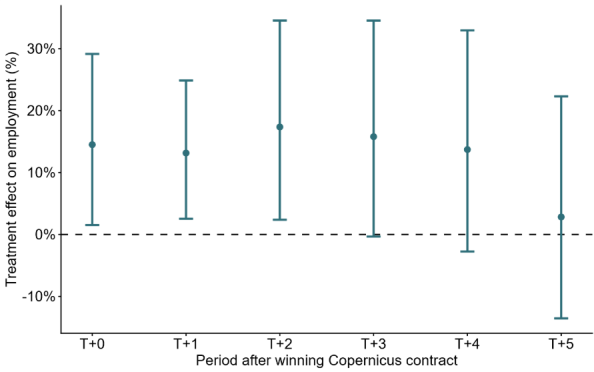
Dynamic estimates indicate that employment amongst treated firms grows faster than at comparable control firms in the first years following contract award. In particular, employment at treated firms grew 13% faster than controls in the first full year, 17% in the second full year and 16% in the third full year. Effects therefore peak two years post-award, and remain positive thereafter. Longer-horizon estimates are less precise due to limited post-treatment data. This pattern is consistent with previous work[footnote 22], which concluded that employment impacts amongst EO contract winners materialise gradually over several years.
Figure 2: Copernicus contract wins are associated with positive employment growth in the first three years after award
Source: Frontier Economics econometric analysis based on Beauhurst data[footnote 23]
Note: Each point shows the estimated percentage difference in employment between contract-winning firms and matched non-winning firms at a given horizon after the contract award. Estimates are pooled across cohorts of firms first winning contracts between 2015 and 2020. Shaded bands indicate 90% confidence intervals.
Findings suggest that winning Copernicus contracts is associated with employment growth among UK private companies. Our analysis shows the presence of a positive initial Copernicus effect on growth which is statistically significant (at the 10% level) for the first three years post contract award after controlling for observable firm level characteristics (the respective annual p-values are 8%, 5% and 7%). Companies that won Copernicus contracts experienced faster and economically meaningful employment growth relative to comparable UK firms (between 13-17% in the initial three years post contract award). Our estimated effects of winning Copernicus contract on employment in later years weaken and are not statistically significant (although they do remain positive). The direction and scale of our estimated effects are consistent across our sensitivity analyses.
Results are economically meaningful and robust across model specifications. Therefore, while this analysis is based on historical contract winners we do find some tentative evidence of a positive Copernicus effect. Results should be interpreted cautiously given the small number of treated firms, minor residual differences in pre-treatment characteristics after matching, and unobserved firm-level factors. These limitations could be partially addressed in the next evaluation phase by using administrative microdata to strengthen controls and expand sample coverage.
Competitiveness and reputation
Whilst relatively few contracts have been won by UK organisations since 2024, those in receipt of contracts were clear that the reputational and competitiveness benefits associated with delivering a contract are significant. Contracts are viewed by contractors as a “stamp of approval”, signalling high technical credibility to the high standards and scrutiny applied through the programme. Globally, potential customers recognise the credibility signalled through delivery of Copernicus contracts. Some organisations pointed to strengthened bids for programmes such as Horizon Europe and increased interest from international space agencies. Others also felt that their likelihood of securing external investment had increased as a result of delivering a Copernicus contract, though at this early stage we could not identify specific investment events linked to Copernicus contracts since 2024 and investors did not generally report a link between Copernicus and an organisation’s attractiveness for investment.
UK contractors also highlighted the value of renewed access to Copernicus forums and consortia, which support international collaboration and networking opportunities. The annual CCMs workshop was noted as particularly useful, enabling engagement with a wide range of EO data providers and service developers. Stakeholders reported that these interactions help form new partnerships and increase awareness of emerging capabilities across the sector. They emphasised that this value is greater now that the UK has full access to these events, as limited access during the non-participation period had constrained the benefits UK organisations could derive.
Looking forward, some stakeholders noted that continued participation, particularly the opportunity for involvement in the Next Generation missions, will be important for maintaining the UK’s reputation and competitiveness within a rapidly evolving European EO ecosystem.
Skills and knowledge
Copernicus contracts provide important opportunities for UK organisations to develop and sustain skills, supporting continuous building of organisational capabilities. Stakeholders noted that without these contracts, there are few comparable opportunities to maintain and advance competitive skills at the scale that Copernicus affords. This issue is explored further in the withdrawal scenario below. Participation in Copernicus consortia also enables UK organisations to engage in knowledge-sharing with European partners.
We heard how contracts expose UK organisations to cutting-edge operational activities within teams of international experts. This helps to enhance upstream EO and space systems expertise in the UK, strengthening end-to-end capabilities across instrumentation. This integration was viewed as valuable for reinforcing the UK’s position in the European EO landscape. Organisations reported positively on Copernicus-driven technical upskilling. Evidence for business-skills impacts were more mixed.
Funding also supports job creation and retention in high-skilled UK roles. One notable recipient of Copernicus contracts reported that these contracts support around 80 UK jobs, with three new jobs created directly through Copernicus contracts since 2024[footnote 24].
Technology and infrastructure
Since rejoining Copernicus in 2024, UK organisations have secured contracts across upstream hardware and downstream service delivery, supporting high-tech activity across the value chain.
40% of total contract value won relates to ESA-led Copernicus Space Component activities. This includes involvement in the early design and development of Next Generation Sentinel instruments and satellites. These contracts sustain and advance UK capabilities in spacecraft engineering, instrument development, sensor technologies and system integration, and are expected to generate follow-on opportunities through Copernicus, notably as procurement for the Next Generation missions scales up, as well as position industry to compete for broader future domestic, European (notably ESA) and international opportunities.
Meanwhile, downstream service delivery and operational support contracts strengthen digital infrastructure, including advanced data processing systems, modelling capabilities, and cloud-based platforms. These impacts are particularly evident in areas of UK strength, such as environmental monitoring, ocean and atmospheric modelling and weather forecasting.
Copernicus contracts won since 2024 have not typically been associated with large-scale new facilities or major hardware investments, with contractors noting that existing facilities have been leveraged for contract delivery. Stakeholders noted some reluctance to invest in UK infrastructure given the uncertainty of the UK’s future participation in Copernicus. Continued opportunities to win contracts could drive longer-term commitments to developing UK-based infrastructure.
Potential impact of UK withdrawal
Our evidence suggests that UK withdrawal from Copernicus and the subsequent inability of UK organisations to bid for Copernicus contracts would be damaging to the UK’s EO sector. There is strong evidence that the UK’s temporary departure from the programme had a negative impact on the UK EO sector, with notable examples of lost capabilities through companies shifting operations abroad, skilled individuals relocating and company-level capabilities slipping behind in a fast-evolving sector. Stakeholders also noted that uncertainty regarding contracts began at the point of the referendum, before any formal changes to the UK’s participation had taken place. This is despite national efforts to bridge the funding gap in this period and the relatively short duration of the UK’s absence from the programme.
Whilst Copernicus is far from the only source of funding to the EO sector, and it is likely that other funding sources could help to compensate for the loss of Copernicus contracts, stakeholders were clear that Copernicus has unique attributes. It is a highly regarded global programme, producing a “gold standard” of EO data. It is also unmatched internationally in its scale (budget of €5.8 billion for MFF 2021-2027[footnote 25]), with the EU acting as an anchor customer for the EO sector. Stakeholders viewed Copernicus as a gateway to other markets, positioning UK industry to win further contracts globally. Delivering a Copernicus contract gives an internationally recognisable ‘stamp of approval’, demonstrating strong capabilities to future customers and investors. Moreover, there is no guarantee that should the UK withdraw from Copernicus, the funding would be spent on the UK EO sector.[footnote 26]
UK contract returns have been low since the UK rejoined and consequently the socioeconomic benefits from these contracts have been muted. However, given future returns are expected to outstrip current returns, the focus should be on the near-term potential for the UK in terms of winning Copernicus contracts. Our analysis shows that a causal link exists between winning Copernicus contracts and subsequent economic activity (job creation), beyond pure funding-employment links. There is disagreement amongst stakeholders over the extent to which contract returns will return to their previous levels without targeted UK government support, but far more substantial UK contract wins are expected in the coming years given planned EU procurements. UK withdrawal would render UK organisations unable to access large future contracts expected through the expansion of the programme, notably through the Next Generation missions.
Conversations with stakeholders highlighted that a decision to withdraw from Copernicus again would be more final than the UK’s previous withdrawal, which took place as a result of the UK’s EU exit, with negotiations for programme-level cooperation still intended. Another withdrawal would signal long‑term disengagement and remove the realistic prospect of re‑entry. As a result, the impacts on industry would likely be more severe and enduring, with UK organisations locked out of future procurements in a way that would be difficult to reverse.
Data use
Key findings
- UK users, often unknowingly, are benefitting from enhanced data quantity, speed, and reliability, conditional on the UK’s participation in Copernicus.
- UK data users leveraging real-time Sentinel data streams, such as the Met Office, would likely face delay in a non-participation scenario.
- During non-participation, many users did not notice data constraints and were even unaware that the UK had withdrawn, potentially as a result of the agreement reached with ESA predating EU Exit.
- On average, each organisation would pay £32,000-£61,000 per year to avoid a total loss of Copernicus data access – an aggregate annual Willingness-to-Pay (WtP) for all UK data users of £110 million (a range of £62-£217 million).
- Participation avoids significant domestic storage and archiving costs, estimated at £2.5-£4 million annually, as well as considerable data reprocessing costs.
- Participation guarantees access to restricted services, including the Copernicus Emergency Management Service (CEMS) and specialised land products, alongside assured UK and overseas VHR coverage.
- Stakeholders emphasised that viable substitutes do not exist at comparable scale, consistency and continuity.
Counterfactual
Under the counterfactual scenario where the UK does not participate in the next MFF, we anticipate a broad range of restrictions to be placed on the UK in terms of data use.
Table 3: Data use counterfactual
| Category | Counterfactual: no participation in MFF28. | ||||
|---|---|---|---|---|---|
| Breadth of data available | Access to free and open Copernicus data, available to individual users under EU data policy and licensing frameworks | ||||
| Quotas on direct access (e.g., STAC, S3, OData) data volume, limiting transfers to 12TB (~400 GB per day over 30 days, and slower download speeds (20 MB/s for general users compared to 90 MB/s for entitled users). If the monthly transfer limit is exceeded, bandwidth is throttled to 1Mb/s or limited simultaneous connections.[footnote 27] | |||||
| Quotas on online processing services, limited processing credits / processing units. For example, within the Copernicus Data Workspace, there is a 100 GB per month download limit and a maximum of 25 processed products per month. | |||||
| Difficulty accessing bulk datasets or archive data | |||||
| Restricted access to CEMS via activation by an authorised user | |||||
| Loss of public sector access to CCM data | |||||
| Restricted access to certain cloud-based platforms (e.g. WEkEO) | |||||
| No access to Security Service, including Maritime surveillance, Border Surveillance, or Support to EU External and Security Actions (SESA) | |||||
| Restricted access to Copernicus Services data (e.g. classified land cover maps, air quality forecasts, sea ice forecasts) | |||||
| Timeliness | No priority access to low-latency data streams | ||||
| No direct ground station downlink | |||||
| Delays on most data types (>24 hours for Sentinel 1 data) | |||||
| Crisis response access limited to Response phase only, requiring a request through the Disaster Charter | |||||
| Excluded from early access to new missions and tools and from many opportunities to develop these/take them forward once operational | |||||
| Archiving / Preservation | CEDA’s current archive is maintained, but would not retain current levels of access to new or reprocessed Copernicus data | ||||
| Data architecture influence | Little to no UK influence | ||||
| Copernicus data policy | No influence | ||||
| Calibration and validation | Partial access to sensor performance data and processing chains | ||||
| Geographical coverage | UK coverage unlikely in future missions, including CCMs and Next Generation Sentinels | ||||
| UK data potentially discarded in the future to save costs |
UK data access and usage
UK data usage trends
UK users draw on a broad range of Copernicus data streams, with survey responses identifying Sentinel-2 as the most frequently accessed mission, followed by Sentinel‑1 and Sentinel‑3. This reflects strong domestic demand for optical imagery, radar data, and marine and atmospheric products. Most respondents to our survey (80%) reported using data from at least two Sentinel missions, and over a quarter accessed more than three, indicating that UK users typically combine multiple Copernicus capabilities rather than relying on a single mission.
Despite this extensive usage, many users remain unsure whether they access open or restricted Copernicus datasets. Most survey respondents indicated they rely exclusively on open data and only 11% of respondents, primarily from research institutions or university students, reported knowingly accessing restricted Copernicus data. However, stakeholder interviews revealed widespread uncertainty about which forms of data access or products could be limited in a non-participation scenario, as set out in the counterfactual.
There are many routes to access Copernicus data (core data and data products), including through the Copernicus Data Space Ecosystem and third-party intermediaries (e.g., AWS, Google Earth Engine). Due to this variety, access is challenging to comprehensively track.
Timeliness is equally critical for certain UK data users. The Met Office has a strong operational dependency on Copernicus data for marine, air quality, and seasonal forecasting, with around 600 Met Office scientists utilising this data daily.
During the period of non-participation in 2021-23, few users reported constraints relating to spatial or temporal resolution, latency, download limits, or bandwidth, and many users were even unaware that the UK had withdrawn. This may be a result of the agreement reached with ESA predating EU Exit, which largely protected UK access to Sentinel data via the ESA Collaborative Ground Segment, whilst there remained an intention to negotiate. If the UK were to actively withdraw from Copernicus again, we heard that it is very unlikely that this agreement could remain in place. A significant proportion of private-sector users however access Copernicus data through cloud-based intermediaries such as AWS or Google Earth Engine, where new Sentinel data is usually added within a few to 24 hours of publication and are not subject to formal Copernicus download limits.
Willingness-to-Pay (WtP)
To complement the qualitative stakeholder insights relating to the benefits of participation on data use (see subsections above and below) we carried out a WtP survey of current data users.[footnote 28] This provides monetary estimates of stakeholders’ WtP to avoid disruptions to their current and future data usage.
As Copernicus data is free and open-access, we applied stated-preference valuation methods (see Annex E) consistent with Green Book guidance for valuing non-market goods. We estimated the value of avoiding a complete loss of Copernicus data and users’ WtP to avoid hypothetical scenarios which related to degradations in data quality or continuity. These scenarios reflect potential counterfactuals associated with a hypothetical withdrawal of the UK in the next MFF (see ‘Counterfactual’ section). We have used these scenarios to proxy the additional value that users derive from the UK’s participation.
The analysis is based on a survey of 142 organisations. Almost all (97%) respondents are active users of Copernicus data. Respondents were predominantly academic and research organisations (72%) with relatively fewer commercial firms (14%), public-sector bodies (7%), and non-profit organisations (3%). Respondents used Copernicus data for environmental monitoring, climate analysis, geospatial services, and EO-related research. The majority of respondents use data from multiple Copernicus Sentinel missions.
On average, each organisation would pay £32,000-£61,000 per year with a central estimate of £47,000 to avoid a total loss of Copernicus data access. Extrapolating these results to the estimated population of UK Copernicus data users yields an aggregate annual WtP of £110 million to avoid a loss of Copernicus data with a range of £62-£217 million. The range reflects this uncertainty in the size of the user population. Our estimates cover Copernicus data usage via the Copernicus Data Space Ecosystem (CDSE), the Centre for Environmental Data Analysis (CEDA) and JASMIN, excluding Data and Information Access Services (DIAS) and commercial platform users, and anonymous users. Values are estimated for only a subset of UK Copernicus data users; therefore, aggregate WtP may be understated.
The survey also assessed users’ WtP to avoid specific degradation scenarios that related to reductions in Copernicus data quality or access. While these scenarios are hypothetical in nature, some combination of these degradations could arise if the UK did not participate in Copernicus beyond the current MFF. Results show that: (1) Reduced spatial resolution (lower detail in imagery and products) corresponds to an estimated 91% loss of total Copernicus value. (2) Less frequent updates and lower download allowances each correspond to 63% loss of value. (3) Reduced geographic coverage (no UK data available) corresponds to a 55% loss of total value. (4) Lower bandwidth caps correspond to around a 51% loss of value. This variation reflects both the unique features of Copernicus and current usage patterns amongst survey respondents (see Annex E). The results suggest that a significant proportion of the total value of current data usage could be at risk if the UK were to leave Copernicus.
Table 4: WtP to avoid specific degradations, by scenario
| Scenario | Low | Central | High | % Lost value |
|---|---|---|---|---|
| Entire Copernicus offering discontinued | £62m | £110m | £217m | 100% |
| Scenario 1. Reduced geographic coverage (no UK data available) | £34m | £62m | £123m | 56% |
| Scenario 2. Lower spatial resolution (less detail in imagery and products –e.g., <1m up to 10m) | £57m | £102m | £201m | 93% |
| Scenario 3. Less frequent and continuous updates (data refreshed less often – e.g., from 1-2 hours to up to 24 hours) | £38m | £68m | £136m | 62% |
| Scenario 4. Lower download allowance (reduced data volume allowed to be downloaded per day – e.g., 10-20 GB/day/IP) | £36m | £68m | £137m | 62% |
| Scenario 5. Lower bandwidth caps (reduced download speed affecting bulk data retrieval) | £27m | £56m | £116m | 51% |
These estimates represent the best available approximation of the benefits that UK users derive from specific attributes of Copernicus data and services, and therefore indicate the value that UK data users place on continued UK participation in Copernicus. A hypothetical UK withdrawal and resulting impacts on data access are inherently uncertain. Therefore, we have created a range of potential monetised impacts which is based on the lower bound of value lost (51% for Scenario 5) and the upper bound of value lost (93% for Scenario 2).
Values are estimated for only a subset of UK Copernicus data users; aggregate WtP may therefore be understated. Conversely, some respondents may have overstated the costs associated with adjusting to hypothetical changes, which could inflate the estimated benefits.
The sections below outline qualitative benefits of participation to help provide contextual evidence for these monetary estimates.
Benefits of participation for data users
Limited equivalent offerings
Many stakeholders, including international space agencies, regard Copernicus as an unrivalled EO programme. UK participation provides comprehensive access to its world-leading datasets and services, both open and restricted (which the UK contributes to improving with its large budget contribution). It also grants access to CCM data (expected to grow significantly in the next decade). Our survey (~160 respondents) and the WtP analysis show that Copernicus data is widely used across sectors.
Viable alternatives are limited. Other commercial EO providers exist (e.g., Airbus, Open Cosmos, Planet), but users report they do not match Copernicus in authoritativeness, consistency, and archival depth. Other institutional programmes such as Landsat exist, but users report Copernicus remains distinctive for the breadth of instrument modalities it provides as a coherent, operationally sustained system (e.g., optical, radar, altimetry, atmospheric composition), rather than a single-sensor offering. In some areas, such as Sentinel‑1 synthetic aperture radar, no equivalent alternatives exist. Higher-resolution commercial data is thus typically used to complement Copernicus rather than replace it.
The widespread reliance on Copernicus is driven by over a decade of continuous data collection, billions of euros of investment, and CCMs, making Copernicus uniquely comprehensive and robust.
Continuity and assurance
Copernicus data underpins essential public services, research, commercial applications, and is used to verify national EO products. Participation offers assurance not only of data access but of data capture itself. This includes influence over mission parameters and tasking, mitigating growing risks from rising data volumes, budget pressures, and technological change that could otherwise result in gaps in coverage, increased latency, or reliance on delayed, higher‑level processed products only.
This widespread dependency makes continuity and assured access critical, as any disruption could have significant consequences. Lack of participation would create a major budget shortfall that could slow or scale back the evolution of future Sentinel missions, undermining Copernicus’s ability to deliver the planned level of data provision. The UK would also be forced to rely on data products without access to the underlying calibration and validation processes, reducing its ability to independently verify data quality and increasing reliance on standards determined by third parties.
Case Study: Natural England – Living England National Habitat Mapping
Natural England’s Living England programme delivers a repeatable, national habitat map for England using machine-learning models trained on survey labels and fed by insights derived from Sentinel-2 seasonal mosaics and vegetation indices along with Sentinel-1 radar mosaics (in addition to LiDAR and other predictors).
This service enables consistent, national-scale environmental monitoring at a cadence that would be impractical to achieve through field campaigns alone. Living England is built around sustained access to a stable Sentinel data stream. UK participation in Copernicus protects the country against potential changes to open data policy, providing long-term certainty and ensuring continuity, standardisation, and predictable access to this core public service resource.
As outlined earlier, participation guarantees UK full and streamlined access, and specifically ensures systematic Very High Resolution (VHR) coverage of the UK, Crown Dependencies, and Overseas Territories, providing intelligence that supports national interests and public service delivery. It also grants access to internal sensor performance data and ESA/EUMETSAT processing chains, enabling the UK to conduct quality assurance.
Stakeholders raised concerns about the long-term business models of commercial EO providers and the risk that they may not maintain continuity for long-term monitoring. Geopolitical factors were also noted, particularly reliance on US-based systems, where shifting dynamics could affect data access. One stakeholder reported switching from Landsat to Copernicus due to these risks, highlighting the value of sovereign capabilities for strategic independence and reliable continuity.
Participation provides strategic resilience, protecting the UK from potential changes to Copernicus open data policy – a risk frequently highlighted by users and government stakeholders, even if no changes are currently planned by the EU. Expansion Missions may be more vulnerable due to their more limited historical precedent for open data.
Case Study: Rural Payments Agency – Crop Map of England
The Rural Payments Agency has operationalised crop monitoring at national scale using Copernicus Sentinel data via its Crop Map of England (CROME) approach, combining Sentinel-1 and Sentinel-2 time series with machine learning to classify crop types and support compliance monitoring and scheme administration.
The value of Copernicus for public services in this case is mainly demonstrated through the automation made possible leading to reduced burden for the agency (fewer physical checks, more systematic oversight) due to frequent, standardised observations. This improved efficiency is estimated to save the UK £12.3 million annually[footnote 29]. As in the previous case, the benefit of participation in Copernicus is primarily about assuring that the UK is resilient to future changes in the free and open access data policy. Maintaining an operational, at-scale monitoring capability requires reliable access to high-quality, regularly updated Sentinel data and associated processing pathways, rather than ad hoc arrangements.
Continuity and assurance in Copernicus data access, particularly open data and services, are essential for stable public service delivery and for maintaining industrial and research competitiveness, as they help avoid additional costs and delays in data procurement. Guaranteed access also supports investment by giving industry the confidence to plan, invest, and build sustainable businesses around Copernicus data, ensuring stability where open data underpins business models.
Guaranteed service activation
Most Copernicus services are accessible to non-participants, but UK participation safeguards against any future changes to this open access policy. Some services, however, are only available to programme participants. The UK re-joining Copernicus in 2024 restored continuity and reinstated access to restricted services, including the ability to backdate certain products created during the non-participation period.
The UK notably regained access to Copernicus Land Monitoring Service layers and the European Ground Motion Service (EGMS), which the British Geological Survey has since used extensively to monitor subsidence and shrink-swell hazards, track mining-related ground movement and infrastructure stability, and assess coastal risks across the UK.
UK participation in Copernicus also ensures the ability to directly activate the CEMS mapping component, including for its Crown Dependencies and Overseas Territories. The UK has used CEMS mapping three times for flooding and forest fires since 2024. Participation also allows the UK to activate CEMS on behalf of other countries. The resulting VHR images are only provided to the requesting entity and are generally not publicly available.
Non-participating countries must request CEMS mapping through a Member State. As climate change increases the frequency of natural disasters, Member States retain preferential and guaranteed access, while non-Member States could be denied access if the dedicated funding envelope is exhausted.
Case Study: Copernicus Emergency Management Service
UK civil protection authorities have used CEMS Rapid Mapping to obtain near-real-time flood extent maps during severe flood events, supporting incident management and coordination across national and local responders. During severe flooding in Scotland (North West / Western Cairngorms) in late December 2024, UK responders triggered the CEMS Rapid Mapping service to generate flood-extent maps for operational incident response. During Storm Éowyn (January 2025), CEMS Rapid Mapping was activated to support response needs, including initial estimation and flood-extent emergency mapping.
This case study illustrates Copernicus value as an operational, on-demand public service: rapid, standardised satellite-derived products that can be activated when needed rather than built in-house for every incident. Crucially, CEMS activations are only available to authorised public authorities within the Copernicus framework. UK withdrawal from the programme would remove this direct access channel, reducing speed and certainty in accessing crisis-mapping support at scale. As a result, the UK would need to rely more heavily on ad hoc commercial tasking and bespoke arrangements.
Reprocessing, storage & archiving cost savings
UK participation in Copernicus also provides significant cost savings for data storage and archiving. The UK Space Agency estimates that storing 20 petabytes of EO data domestically could cost an estimated £2.5 million to £4 million per year in staffing and overheads, in addition to the upfront investment needed to develop and maintain the required infrastructure.
Participation also delivers reprocessing cost savings, as Sentinel data is regularly reprocessed, and non‑participants would otherwise need to fund repeated refreshes to keep national archives valid.
Potential impact of UK withdrawal
In the event of a UK withdrawal from Copernicus, the country would lose access to restricted data and services, assured territorial VHR coverage, performance data for quality assurance, and storage and archiving benefits, while retaining access to anything currently accessible to non-participant entities.
Where alternative data suppliers exist, relying on fragmented procurement and sources would increase costs and hinder interoperability. The absence of a shared system and common data practices could lead to duplicated effort and limit information sharing. More broadly, because Copernicus data is widely used across the ecosystem, UK withdrawal would fragment the landscape, creating additional costs and resource inefficiencies.
Many stakeholders have expressed concern that the Copernicus open access policy could change in the future. While the EU has not indicated any intention to do so, any change – ranging from full restrictions to reduced coverage or quality – would be highly disruptive for users, as shown by the WtP analysis. This is notably because there are only limited viable alternatives to Copernicus data and no ‘one-stop-shop’ like the programme, likely due to the lack of incentive to compete with its free offering. Workarounds such as intermediaries or VPNs may be unreliable, unsustainable, or unlawful. Withdrawal would leave the UK without influence over the potential evolution of Copernicus open access policy and exposed to any resulting restrictions.
The consequences of losing access to Copernicus open data could be considerable and wide-ranging. Stakeholders indicated that reduced or lost access would require budget increases or make some activities unviable due to cost or the lack of suitable alternatives. Public service delivery could be disrupted, industry could face competitive disadvantages from delays relative to European counterparts, and academic research could be affected due to its sensitivity to changes in spatial or temporal resolution. Together, these impacts could lead to job losses and the discontinuation of projects and business ventures.
Indicative interim Value for Money (VfM) analysis
Key findings
- Degradations to Copernicus data quality and service provision would result in losses equivalent to between 51% to 91% of the total value that users place on Copernicus data.
- The additional data use benefits from UK participation in the programme, relative to a plausible counterfactual, are approximately £56–£100 million per year.
- The two years of contract wins since re-joining could generate £14.1 million of additional GVA across the economy, which corresponds to an annualised benefit of £7.1 million.
- When the data use benefit range (£56-£100 million) is combined with the annualised contract wins benefit (£7 million) the aggregate, annualised benefits are £63-£107 million. This range includes both monetised benefits that have been assessed as part of this interim report.
- The UK’s current annual public sector Copernicus costs are £133 million per year.
This section compares a subset of identified economic benefits of UK participation to the current annual public sector cost. This analysis explicitly covers only a subset of benefits which are amenable to monetisation. However, these impacts are broadly in keeping with the qualitative insights that we have collected as part of the evaluation to date. Furthermore, some benefits take a long time to emerge fully. This analysis should therefore be considered partial and interim in nature.
Previous studies have assessed the overall socioeconomic benefits of Copernicus data, estimating a total value of €67–131 billion for European society.[footnote 30] While this study focuses on the impact of participation, loss of access to Copernicus open data was a key concern for UK stakeholders under a withdrawal scenario. Although there is no indication that the EU would change its open data policy, this scenario could plausibly result in lost benefits of tens of billions in value.
Context
The UK has committed £533m of public investment to Copernicus over a four calendar-year period 2024–2027 (FY 2023/24–FY 2027/28), corresponding to an average annual contribution of approximately £133m. This figure includes a participation fee of approximately £15m. This investment secures participation in nearly all aspects of the Copernicus programme, including access to data services, participation in governance, and eligibility for UK organisations to bid for Copernicus contracts.
Figure 3: UK financial contributions to Copernicus are expected to increase from 2023/24 to 2027/28
| Year | UK Copernicus Contribution (£million) |
|---|---|
| FY2023/24 + FY2024/25 | 125 |
| FY2025/26 | 125 |
| FY2026/27 | 139 |
| FY2027/28 | 143 |
Source: Dataset of annual UK financial contributions to Copernicus provided to the research consortium by DSIT
Note: This chart presents data by financial year. FY 2023/24 and FY 2024/25 data is combined to reflect that the UK rejoined the programme in January 2024.
The VfM assessment considers whether a subset of monetisable economic benefits attributable to UK participation exceed or are commensurate with this annual public investment. This analysis focuses on two quantifiable and monetisable impact channels:
- Downstream welfare benefits to UK Copernicus data users, estimated through a WtP (see ‘Willingness-to-Pay (WtP)’ section)
- Upstream commercial benefits to UK firms winning Copernicus contracts, estimated through quasi-experimental impact evaluation (see ‘Quasi-experimental analysis’ section)
Together these provide a partial but evidence-based interim estimate of VfM. This analysis will be further developed during Phase 2 of this Monitoring and Evaluation contract.
Impact channel 1: Downstream benefits to UK data users
To inform this impact channel, we have used results from the WtP survey, as they provide monetary estimates of data use benefits. We have included a discussion of qualitative data use benefits in the previous dedicated section on data use.
The WtP analysis (see Annex E for details) provides an estimate of the total value that UK organisations place on access to Copernicus data and services. However, for the VfM assessment, the key quantity of interest is not the total value of Copernicus data per se, but the additional benefit that arises specifically from UK participation in the programme relative to a plausible counterfactual (if the UK were to leave following the current MFF, for example).
Under a counterfactual in which the UK does not participate in Copernicus, UK users would likely still retain access to Copernicus open-access data, but would lose access to restricted services, priority data streams, certain processing environments, and governance influence. This implies that UK users would continue to receive some value from Copernicus data, but at a degraded level of access and service quality.
To quantify this difference, we apply the percentage of value losses derived from the WtP survey for scenarios involving reduced data quality and service provision. These scenarios were designed to align with the most plausible post-exit counterfactuals, including reduced geographic coverage, lower spatial resolution, and less frequent updates. Survey responses indicate that such degradations would result in losses equivalent to between 51% to 91% of the total value that users place on Copernicus data.
The aggregate annual WtP to avoid complete loss of Copernicus data is estimated at £110 million in the central case. Applying the relevant percentage value losses to this total allows us to estimate the additional welfare benefits that UK users derive from full participation compared to the counterfactual of degraded access. The results indicate that the additional data use benefits that arises specifically from UK participation in the programme relative to a plausible counterfactual are approximately £56–£100 million per year. The precise value depends on which degradation scenario is taken as the most representative of the counterfactual. These values represent only the incremental benefit of participation, net of the baseline value of open-access data that UK users would continue to enjoy even without membership.
Impact channel 2: Upstream benefits of winning contracts
To inform the VfM assessment, we translate the QE estimate of the employment effect of winning Copernicus contracts into an estimate of additional UK economic output expressed as additional gross value added (GVA). We have included a discussion of qualitative upstream benefits in the previous dedicated section on contract wins.
At a high-level, this monetisation combines (see Annex F for details):
- The magnitude of dynamic year-by-year post-treatment employment uplift for contract winners relative to comparable non-winners (over a five-year horizon). It is important to note that this is a historical estimate which is applied to current contract winners to produce an indicative benefit estimate.
- Baseline employment levels amongst firms active in relevant sectors.
- Benchmark productivity metrics (GVA per worker) in relevant sectors (Information & Communications) to convert net additional jobs into additional GVA.
- The number of private sector contracts that have been awarded to UK firms since reassociation in 2024.
A key consideration is additionality. Not all observed employment gains necessarily translate into new UK economic activity, as some workers may be reallocated from other firms or sectors rather than representing net job creation. To reflect this, we apply an adjustment informed by evidence on labour market switching, so that the resulting estimate reflects net additional GVA, rather than gross activity that could have occurred elsewhere in the economy. This approach aligns with past evaluations and recognised practice.[footnote 31]
Indicative value for money estimates
At this stage, the VfM assessment should be interpreted as partial. The Quasi-Experimental (QE) analysis focuses on employment-driven impacts for private-sector contract winners and does not yet capture longer-term productivity, innovation, export, or spillover effects. The WtP estimates are drawn from the survey only and do not reflect additional qualitative benefits of data usage identified via interviews. Likewise, no impacts from the influence channel are included here.
According to our survey responses the downstream data user welfare benefits associated with the UK’s participation correspond to £56-£100 million per year. Of the 61 total contracts to UK organisations, there have been 16 contracts awarded to UK firms across 2024 and 2025. Collectively, these two years of contract wins could generate £14.1 million of additional GVA across the economy which corresponds to an annualised benefit of £7.1 million. Therefore, our two impact streams, in aggregate, lead to annualised benefits of £63-£107 million. This accounts for discounting of future benefits and adjusts for inflation. However, this analysis does not account for changes in average contract size, wider non-monetised benefits, even before accounting for wider non-monetised benefits (e.g. UK influence). Some of these additional factors will be explored in Phase 2 of this evaluation.
Interpretation and limitations
Converting econometric estimates of previous impacts into future benefits requires us to undertake a scenario-based ‘what if’ analysis. The WtP analysis captures only a subset of identifiable UK data users (i.e. CDSE, CEDA and JASMIN, excluding DIAS and commercial platform users, as well as anonymous users). This could understate benefits. However, the WtP to avoid losing access to Copernicus data expressed by survey respondents may in some cases be exaggerated (this would overstate benefits). Nevertheless, the combined evidence indicates that:
- Copernicus participation generates material additional commercial benefits for UK firms operating in the EO market.
- Copernicus data and services deliver substantial welfare value to UK research, public-sector, and commercial users.
- Under reasonable scenarios the quantified benefits are broadly commensurate with the UK’s annual contribution.
As further data become available in Phase 2, particularly through expanded administrative microdata for firm performance, the precision of this VfM assessment could be improved. At this stage, a full value-for-money assessment is not feasible, particularly given that many wider and longer-term benefits have yet to materialise or be monetised. Therefore, benefits are expected to grow in the coming years.
Discussion and next steps
Key findings
This report presents the interim findings of the evaluation of the UK’s participation in Copernicus since 2024. They should be interpreted as a snapshot in time, approximately two years since the UK rejoined the programme. Impacts, particularly in the space sector, take time to materialise, so this assessment does not represent a definitive or final evaluation. Findings will be updated over the coming years as longer-term effects become clearer. The evidence underpinning these interim conclusions is drawn from over 100 interviews with a wide range of stakeholders (including industry, research and academia, government, European institutions, and international space agencies), approximately 160 survey responses from Copernicus data users, the review of over 60 documents, and an econometric analysis of over 350 firms (including contract winners and comparable firms). Top-down perspectives from groups representing the community (e.g., UKspace, SPAN) have also been consolidated, and findings have been validated and reviewed through initial feedback from a panel of subject-domain experts and DSIT / UK Space Agency, to provide a comprehensive and defensible overview of current impacts.
Arguably, the key impact associated with the UK’s participation in Copernicus is its ability to influence the future of the world’s largest EO programme, including its strategic direction, priorities, new activities, and data policy. Participation signals the UK’s seriousness as a global EO player. Although the UK does not hold formal voting rights within EU Copernicus management, this does not appear to have constrained influence in practice. Observer status enables participation in informal discussions that typically precede the formal validation of decisions, and the UK maintains strong influence within ESA PBEO on the future of the Space Component, as well as in EUMETSAT. This gives the UK a platform to advocate for its national interests and an avenue through which these can be realised in practice. There is, however, no clear consensus on the extent of UK influence withi n the programme two years since re-joining. Copernicus entrusted entities (arguably unsurprisingly) affirm that the UK is fully embedded in the programme and its governance, while UK stakeholders report that they have not yet returned to pre-withdrawal levels.
Beyond direct influence in Copernicus, there were also suggestions that UK participation in Copernicus enhances the country’s influence in ESA EO project board discussions. This is particularly important because it strengthens the UK’s ability to represent the interests of non-EU Member States within ESA, notably in discussions regarding EU influence in the programme. Additionally, UK participation in Copernicus was reported to create synergies with other funding streams (e.g., ESA, EUMETSAT, ECMWF, and domestic), enhancing returns on both Copernicus and non-Copernicus investments. Stakeholders attributed this primarily to improved competitiveness, driven by incumbency, heritage, and capabilities built through Copernicus contracts, and the pipeline between ESA EO R&D activities and EU Copernicus contracts. Participation in the programme has also opened new forums of collaboration for the UK, such as parts of the EU’s DG-DEFIS, and more generally, embeds itself in the wider context of strengthened cooperation with the EU (announced during the 2025 UK-EU Summit) and global engagement in climate and space.
Contract returns to the UK have been considerably lower than prior to withdrawal, with £26.1 million worth of contracts won since 2024. There are early signs of growth, with a 29% increase in the value of contracts won in 2025 relative to 2024. Future contract opportunities for UK organisations are expected to be far more substantial. Where UK capabilities are unique within Europe (e.g., climate, calibration-validation, uncertainty assessment), contracts were often secured soon after organisations became eligible again, showing evidence of the added value the UK can bring to the programme. Industrial stakeholders, particularly start-ups, have faced challenges in accessing opportunities. During the period of non-participation, the UK lost incumbency, with many cases of consortia roles being transferred overseas. The consequent loss of established communication channels resulted in limited visibility of opportunities, further constraining competitiveness - though these effects are gradually easing since rejoining. Some UK organisations reported declining capabilities due to downsizing, relocation of staff to EU countries, and limited involvement in cutting-edge activities, while European counterparts continued to develop their capacities through Copernicus contracts. These factors have created obstacles to the UK’s ability to compete effectively for contracts, which need to be overcome, with time, to achieve an even playing field. There is disagreement amongst stakeholders over the extent to which contract returns will return to their previous levels without substantial UK government support.
Nonetheless, large tendering opportunities are expected through Copernicus in the coming years, with identifiable opportunities for UK industry to build on existing strengths and capabilities. Notably, CCMs and Sentinel Expansion Missions are likely to present a near term opportunity for UK organisations. Over the 2024-2034 period, the Next Generation missions will offer large opportunities. Upcoming procurement opportunities (up to 2034) could offer up to £260-£300 million in contract returns if UK industry can successfully compete with European players. Quantitative analysis of previous UK contract winners (prior to disassociation) indicates a potential modest positive effect on employment growth among organisations that secured Copernicus contracts, relative to similar firms. This suggests a broader ‘Copernicus effect’, whereby participation supports growth beyond the immediate impact of contract funding. However, further analysis is needed as the sample size remains small.
The limited contract wins are influenced by the UK joining the programme only two years ago and mid-way through an MFF. The timing of contract opportunities is important, as tenders are generally less frequent and of smaller scale mid-MFF. Consortia take time to form, and there is an expected lag in benefits materialising. The uncertainty surrounding the UK’s future in the programme in the final years of the UK’s earlier period of participation (2016-2020) also affected the UK’s ability to join early consortia, with ongoing repercussions for UK involvement today. Consequently, VfM can only be assessed over the longer term and should not be considered through the lens of contract returns alone. Participation from the start of the next MFF – should that be the UK policy position – is expected to reduce timing-related constraints, and stakeholders view that re-building a track record will help address obstacles related to incumbency, visibility, and capabilities.
On the data side, UK participation in Copernicus provides secure access to critical EO and climate datasets and services (which the UK contributes to improving with its large budget contribution), widely used across government, research, academia, and industry. While our research did not identify many users requiring restricted data, the UK is a major user overall, particularly of open data. Stakeholders currently benefit from easier access, for example through fewer bandwidth and download restrictions compared with non-Member States, and notable cost avoidance relating to data reprocessing, storage and archiving. Through WtP analysis, we estimate that the additional data use benefits that arise specifically from UK participation in the programme are worth approximately £56–£100 million per year.
The primary impact of participation however lies in the certainty it provides against potential future changes to the EU’s open data policy, to which Expansion Missions may be more vulnerable due to their more limited historical precedent for open data. Although such changes are hypothetical, non-participation in Copernicus would leave the UK without influence over these decisions. This could potentially expose stakeholders to restrictions that could limit their ability to use and benefit from the data. This would, in turn, have repercussions on the socio-economic benefits stemming from Copernicus data applications. Many argued that the UK could not replicate anything like Copernicus on its own in terms of funding, capabilities, or time resolution. A potential lack of access to open data would also hinder the UK’s ability to calibrate any alternative system it might develop. Commercial suppliers are not currently considered viable alternatives due to limited investment and uncertainty over long-term consistency, and possibly the lack of incentive to compete with the programme’s rich open data offering. Copernicus remains global state of the art, in part because of the consistency it provides and the scale and synergies it enables.
The impact of a potential future UK withdrawal from Copernicus remains uncertain, as it would depend on how withdrawal is implemented in practice. Funding currently dedicated to Copernicus may not be re-allocated to a domestic EO (or space) programme in the event of UK withdrawal. Regardless of the set-up, most stakeholders anticipate negative consequences, including commercial, scientific, and policy impacts. Beyond the loss of procurement opportunities, risk of data access loss, inability to guarantee that data of UK interest is captured, and considerable additional reprocessing, storage and archiving costs, a key concern is the potential reputational effect, as withdrawal could be perceived as a pattern of unreliability. This could reduce UK engagement in other European and global collaborations and frameworks, both within and beyond the space sector, including areas such as defence and science. Withdrawal could also be perceived globally as the UK shifting its interest away from EO and climate and environmental monitoring (key UK strengths), reducing its influence in these domains. Evidence from the previous withdrawal suggests that resulting impacts can take time to recover from, and a repeated withdrawal may have even more detrimental impacts. Several stakeholders raised that the UK EO community has already been impacted by recent policy decisions, such as the cancellation of the TRUTHS mission and perceived underwhelming ESA CMIN25 EO commitments. Withdrawal from Copernicus could send an additional pessimistic signal to the sector, exacerbating perceived challenges. Uncertainty regarding the future of the UK’s involvement in the programme could affect current and future returns, as highlighted with the reticence faced by upstream organisations.
Interim takeaways
The realisation of the full benefits associated with UK participation in Copernicus depends on long-term consistency and certainty. As a non-EU Member State, the UK will remain subject to the timing and constraints of MFF cycles, so long-term commitment on participation to the programme may not be feasible. However, many stakeholders highlighted a lack of clarity regarding the UK’s objectives and expectations for its participation in Copernicus, and some noted that ministerial-level messaging on UK intentions to negotiate would be important. Further guidance would help the sector align its activities and maximise value.
Overall, our interim evaluation findings highlight clear impacts: UK participation in Copernicus has increased the country’s influence in EO, secured modest contractual returns, and enabled resilient access to highly valued data, including significant cost avoidance related to data reprocessing, storage and archiving. Together, these factors lay the groundwork for further benefits in the future.
Our early VfM analysis shows that aggregated annual benefits linked to Copernicus data access and contracts are £63-£107 million per annum. This total is driven by data use benefits but does not account for other important non-monetised benefits. The scope of this evaluation is not to determine whether UK participation provides greater benefits than other programmes or alternate use of funding for (for example) a national EO programme, although this remains an important consideration when assessing VfM. Nevertheless, impacts such as those identified, particularly the modest positive effect of Copernicus contracts on employment growth, are not always observed across publicly funded activities.
The ultimate VfM of participation will depend on how contract returns and influence benefits evolve over time and the future cost of continued participation, which is expected to increase. In the event of UK withdrawal, it would also depend on whether any alternative support is established and on future EU policy regarding open data access, both of which remain uncertain. There is currently insufficient evidence to determine definitively whether the benefits of participation outweigh the costs due to benefit realisation lags, inherent uncertainties and the importance of non-monetisable benefits, notably UK influence. Phase 2 research (2026–28) will be critical in addressing this question. Nevertheless, Phase 1 findings indicate that UK involvement is already generating benefits two years into re-association with the programme, and there is broad support for participation across the UK EO community.
Next steps
This interim report has been reviewed by DSIT / UK Space Agency, marking the conclusion of Phase 1.
Phase 2 (2026-28) will officially kick-off in May 2026, and deliver a full and comprehensive assessment of UK participation in Copernicus since 2024. The longer timelines for this phase will enable more extensive use of quantitative and qualitative evaluation methods, including deeper analysis of secondary data sources, broader stakeholder engagement, and a wider range of use cases, with increased focus on climate monitoring. We intend to further interrogate the link between organisations winning national or ESA funding then going on to win Copernicus contracts, as well as the link between winning a Copernicus contract and subsequent investment. Phase 2 will also incorporate bibliometric analysis and longitudinal re-survey methods to update and build on findings from Phase 1, allowing impacts to be assessed as they continue to materialise over time.
About us
know. /nəʊ/v.
to understand clearly and with certainty
know.space[footnote 32] is a specialist space economics and strategy consultancy, based in London and Edinburgh. It is motivated by a single mission: to be the source of authoritative economic knowledge for the space sector.
www.know.space hello@know.space
Frontier is one of the largest economic consultancies in Europe with offices in Berlin, Brussels, Cologne, Dublin, London, Madrid and Paris. Frontier uses cutting edge economics to solve complex business and policy problems, and works with leading private and public sector organisations.
TerraWatch Space is an Earth observation market research and advisory firm providing strategic consulting to government agencies, satellite companies and enterprises and independent market analysis through its flagship newsletter.
Authors: Will Lecky, Alyssa Frayling, Andrew Leicester, Nick Fitzpatrick, Aravind Ravichandran, Luca Niccolai, Eloise Trimingham, Maria Gracia Guijon, Maria Cody, Scott Mackie, Trinity Block, Helen Waghorn, Myrthe Bekkers, Delaney Zaleski
Any enquiries regarding this publication should be sent to us at: copernicus@knowspace.net
-
PricewaterhouseCoopers (2017). Copernicus ex ante benefits Assessment. Available from: https://www.copernicus.eu/en/what-are-tangible-benefits-copernicus ↩
-
Overall Copernicus budget, and thus membership costs, are anticipated to increase in the next MFF to fund the development of Sentinels (e.g., Sentinels 1, 2, 3 NG Topography, 3 NG Optical, 6 NG and FM2), launch, ground segments and operations, CCMs and their evolutions, and the early development of Sentinel Expansion mission continuity (e.g., CO2M-NG). ↩
-
The UK has committed £533 million of public investment to Copernicus over a four calendar-year period 2024–2027 (FY 2023/24–FY 2027/28), corresponding to an average annual contribution of approximately £133 million. Note that this figure includes the participation fee (~£15 million over the 2024-2027 period). The percentage figure refers to UK contributions to the Copernicus budget, excluding the participation fee. ↩
-
Copernicus Space Component 4 (CSC-4) is managed by the European Space Agency (ESA) on behalf of the European Union and focuses on developing and preparing new Sentinel missions to enhance Copernicus’s environmental and climate monitoring capabilities. ↩
-
Stakeholders reported being impacted by the loss of access to the Security Service due to the withdrawal, having to procure alternative services that were subsequently deemed sub-optimal and costly. The UK notably used to be a key user of the Maritime Surveillance Service prior to withdrawal. The country has expressed interest to the EU in accessing the maritime and border surveillance elements of the Copernicus security service again, with licensing agreements with EMSA and Frontex still pending at the time of writing. ↩
-
The UK has committed £533 million of public investment to Copernicus over a four calendar-year period 2024–2027 (FY 2023/24–FY 2027/28), corresponding to an average annual contribution of approximately £133 million. Note that this figure includes the participation fee (~£15 million over the 2024-2027 period). The percentage figure refers to UK contributions to the Copernicus budget, excluding the participation fee. ↩
-
Overall Copernicus budget, and thus membership costs, are anticipated to increase in the next MFF to fund the development of Sentinels (e.g., Sentinels 1, 2, 3 NG Topography, 3 NG Optical, 6 NG and FM2), launch, ground segments and operations, CCMs and their evolutions, and the early development of Sentinel Expansion mission continuity (e.g., CO2M-NG). ↩
-
EUMETSAT. (2024). Annual Report. Available at: https://www.eumetsat.int/all-annual-reports ↩
-
Cal/Val refers to the calibration and validation activities that ensure Earth‑observation satellite instruments and their data products are accurate, traceable, and reliable throughout the mission. ↩
-
The European Commission delegates the delivery of Copernicus services to dedicated providers known as Copernicus Entrusted Entities. ↩
-
There is a possibility of some minor exceptions to this. We heard from stakeholders that whilst Switzerland is not a member of the EU they have in the past been involved in EU Copernicus contracts in a minor way given Swiss expertise in the glacier climate record. However, stakeholders indicated that this exemption was removed following UK exit and it is unlikely that future exemptions would be made for the UK. ↩
-
Whilst the UK has been eligible for CASSINI since rejoining Copernicus, no UK organisations have yet been successful in the accelerator. ↩
-
Note: we have attributed multi-year contracts to the year in which the contract started to ensure consistency across entrusted entities. There are various possible approaches to annualising totals, which result in slightly different figures. ↩
-
European Environment Agency ↩
-
Mercator contract data for MFF2014 did not include a breakdown per year. We have assumed an even annual split across for 2014-2020. ↩
-
The UK has not won any EEA Land contracts since rejoining, but historically few contracts were awarded to the UK through the EEA. ↩
-
ESA. (2025). Strategic interests of UK participation to the EU Copernicus Programme Industrial Opportunities. Confidential. ↩
-
UKspace (2023). UK Membership of Copernicus 2023 – a White Paper by UKspace. ↩
-
UKspace. (2026). Paper for Copernicus review. [Unpublished] ↩
-
Technopolis. (2025). Impact Evaluation of EOIP: Direct Projects (only). ↩
-
CMIN (Council Meeting at Ministerial Level) is ESA’s highest‑level governing meeting where ministers from Member States set the Agency’s overall policy direction, approve programmes, and decide on funding. ↩
-
UK Space Agency (2025). Evaluating the benefits of the UK’s investments in the European Space Agency. Available from: https://www.rand.org/pubs/research_reports/RRA3101-1.html ↩
-
Beauhurst provides a continuously updated, comprehensive database of private companies, primarily in the UK and Germany, compiled from thousands of sources and covering company financials, funding events, ownership, patents, hiring activity, sector classifications, and other indicators of growth and performance. ↩
-
This example illustrates a direct Copernicus funding-employment link. Broader employment effects not attributable solely to funding are examined in the QE analysis. ↩
-
European Parliament. (2018). EU Space Programme. Available at: https://www.europarl.europa.eu/legislative-train/theme-a-europe-fit-for-the-digital-age/file-mff-eu-space-programme ↩
-
As noted above, this study does not consider the potential impacts or benefits from alterative use of Copernicus funding for a national EO programme. ↩
-
Copernicus Space Data Ecosystem (n.d.). Quotas and Limitations. Available from: https://documentation.dataspace.copernicus.eu/Quotas.html ↩
-
A total of 142 respondents completed the survey, of which 56 answered WtP related-questions. The respondent profile is broadly representative of the population of data users, with a similar distribution across key characteristics (see Annex E). ↩
-
Defra (2023). Roadmap for the Defra Earth Observation Centre of Excellence 2023 to 2028. Available at: https://www.gov.uk/government/publications/defra-earth-observation-centre-of-excellence-roadmap-2023-to-2028 ↩
-
PricewaterhouseCoopers (2017). Copernicus ex ante benefits Assessment. Available from: https://www.copernicus.eu/en/what-are-tangible-benefits-copernicus ↩
-
Frontier Economics. (2023). An evaluation of DSIT grant funding for Tech Nation. ↩
-
know.consulting ltd. (CRN: 12152408; VAT: 333424820), trading as know.space ↩