Environmental Indicator Framework Theme C (Seas and Estuaries)
Published 1 December 2025
Applies to England

© Crown copyright 2025
This publication is licensed under the terms of the Open Government Licence v3.0 except where otherwise stated. To view this licence, visit nationalarchives.gov.uk/doc/open-government-licence/version/3 or write to the Information Policy Team, The National Archives, Kew, London TW9 4DU, or email: psi@nationalarchives.gov.uk.
Where we have identified any third party copyright information you will need to obtain permission from the copyright holders concerned.
This publication is available at https://www.gov.uk/government/publications/environmental-indicator-framework-theme-c-seas-and-estuaries/environmental-indicator-framework-theme-c-seas-and-estuaries
C1: Clean seas: marine litter
Short Description
This indicator of clean seas shows changes in the amount of litter in the marine environment, including litter on beaches, on the seafloor and floating litter. Beach litter surveys are completed annually or quarterly and cover a representative number of beaches. Data from benthic trawl surveys, typically carried out for fish stock assessments, are used to monitor the amount of litter on the seafloor. After each tow, all litter items are emptied from the net and counted and classified. Beached fulmars or individuals accidentally killed are collected as part of a monitoring programme in the Greater North Sea to assess the plastics found in their stomachs. Fulmars forage exclusively at sea, generally at the surface of the water. The amount of plastic they ingest can be used as a proxy for the abundance of floating litter in their environment and how this is changing. Indicators for seafloor litter, beach litter and plastic found in fulmar stomachs have been developed and expert groups are working to improve the data. Additional monitoring programmes are being developed to record the amount of microplastics in sediment and in biota.
Readiness and Links to Data
This indicator shows three aspects of litter in the marine environment: a) beach litter b) plastic in fulmar stomachs and c) seafloor litter.
The beach litter component of this interim indicator is drawn from an assessment of beach litter, developed by the Marine Conservation Society for Defra (project code ME5438) to support reporting under the Convention for the Protection of the Marine Environment of the North-East Atlantic (OSPAR) and UK Marine Strategy. This replaces an assessment previously presented here, reported under the UK Marine Strategy in 2019. The newer assessment is considered to be more statistically robust, as it is based on quarterly surveys of the same subset of beaches, as opposed to annual surveys of often differing beaches.
Data on the litter content of fulmar stomachs are published in the latest research report from Wageningen University to Defra (project code ME5227).
Assessments of marine litter were conducted as part of the OSPAR Quality Status Report 2023. The revised assessment of seafloor litter was incorporated into this indicator as part of the 2023 update.
The Centre for Environment, Fisheries and Aquaculture Science (Cefas) are currently developing indicator methods for microplastics in marine sediment and biota, which will be incorporated in a future update to the Environmental Indicator Framework.
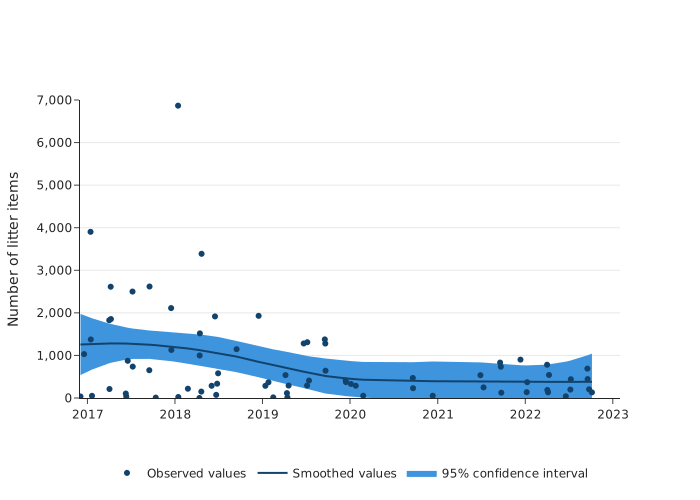
C1a: Items of litter per 100m of beach, England, 2017 to 2022
Source: Department for Environment, Food and Rural Affairs
Download the data for this chart in .csv format
Notes on Figure
Full scale locally estimated scatterplot smoothing (LOESS) curve (dark blue line) of total litter count over time on OSPAR monitored beaches in England between 2017 to 2022. Each individual data point represents the total litter count for an individual survey. The light blue area on the graph represents the 95% confidence interval (a measure of uncertainty).
Some datapoints from the 2016 calendar year are included in the plot, as the winter survey season for a given year includes surveys conducted in the December of the previous year.
Trend Description
The individual survey results show that the number of litter items per 100 metres of beach in England varies considerably, from a maximum of 6,900 items in January 2018 to a minimum of zero items in April 2018. Therefore, a LOESS smoother has been applied to view trends in the data. The smoothed values peak in April 2017 at 1,280 items per 100 metres. The trend shows an overall decline between this date and September 2021 to 380 items per 100 metres, where it remains until the end of the series, October 2022.
Assessment: C1a
The assessment presented here is taken from the source publication for this indicator component. A Theil-Sen slope estimation was used, as this method is robust to outliers, which are common in beach litter data. It was not considered appropriate to assign a percentage change using this methodology. A statistically significant decrease (or improvement) of 103.6 litter items per 100 metres per year was observed over the short-term time period (2017 to 2022). This assessment does not consider whether any improvement is on a sufficient scale for meeting targets.
Change since 2018 has not been assessed, however this will be considered for future updates to this indicator.
The assessment results reported here may not be directly comparable with other analyses published elsewhere that use different methodologies to explore these indicators or are based on alternative datasets.
Further information on this assessment, along with details on the methodology, is provided in the Assessment guide page. Summaries by Environmental Improvement Plan goal and information on indicator links are presented in the Assessment results pages.
| Component | Subcomponent | Period | Date range | Percentage change | Smoothing function | Assessment of change |
|---|---|---|---|---|---|---|
| C1a | Observed values | Short term | 2017 to 2022 | N/A | Theil-Sen slope estimation | Improvement |
| C1a | Observed values | Medium term | N/A | N/A | N/A | Not assessed |
| C1a | Observed values | Long term | N/A | N/A | N/A | Not assessed |
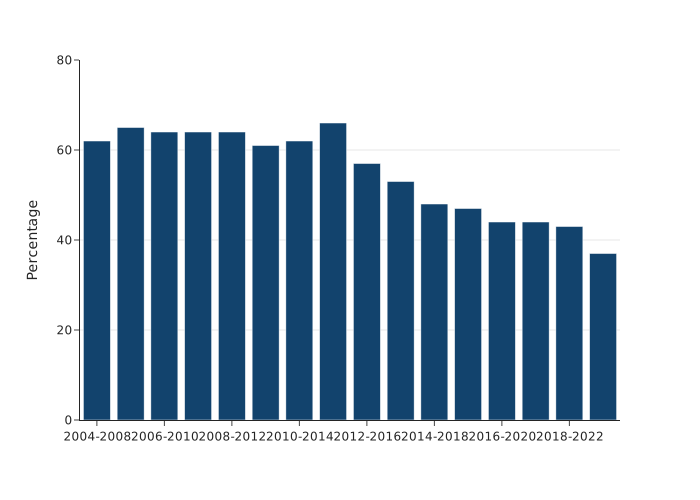
C1b: Percentage of sampled fulmars having more than 0.1 g of plastic in their stomach, Greater North Sea, 2004-2008 to 2019-2023
Source: Department for Environment, Food and Rural Affairs, Wageningen University & Research
Download the data for this chart in .csv format
Notes on Figure
Data on fulmars are presented as 5-year moving average time periods because annual data may show strong variation as the sample size may fluctuate.
Avian flu outbreaks in seabird species have led to restrictions on the collection of fulmars on English beaches. This led to reductions in the number of sampled fulmars since 2022.
The data were subject to slight changes in the 2024 update as a small number of Fulmars collected in the Celtic Seas region were included, however this indicator remains mainly relevant to the Greater North Sea.
Trend Description
The percentage of surveyed (beached) fulmars in the Greater North Sea region which were found to have more than 0.1 g of plastic in their stomachs decreased from a peak of 66% in the 2011-2015 survey period to 37% in the 2019-2023 survey period. This measure reflects the abundance of floating litter in their environment, with 0.1 g being the threshold level used in the OSPAR target definition.
Assessment: C1b
A decrease (or improvement) in the percentage of sampled fulmars which have more than 0.1 g of plastic in their stomach was observed over the short-, medium-, and long-term time periods. This assessment does not consider whether any improvement is on a sufficient scale for meeting targets.
Change since 2018 has also been assessed. A decrease (improvement) in the fulmar indicator was observed since 2018.
The assessment results reported here are not directly comparable with other analyses published elsewhere that use different methodologies to explore these indicators or are based on alternative datasets.
Further information on this assessment, along with details on the methodology, is provided in the Assessment guide page. Summaries by Environmental Improvement Plan goal and information on indicator links are presented in the Assessment results pages.
| Component | Period | Date range | Percentage change | Smoothing function | Assessment of change |
|---|---|---|---|---|---|
| C1b | Short term | 2014-2018 to 2019-2023 | -22.92 | Rolling average | Improvement |
| C1b | Medium term | 2009-2013 to 2019-2023 | -39.34 | Rolling average | Improvement |
| C1b | Long term | 2004-2008 to 2019-2023 | -40.32 | Rolling average | Improvement |
Percentage change refers to the difference seen from the first to last 5-year moving average in the specified date range.
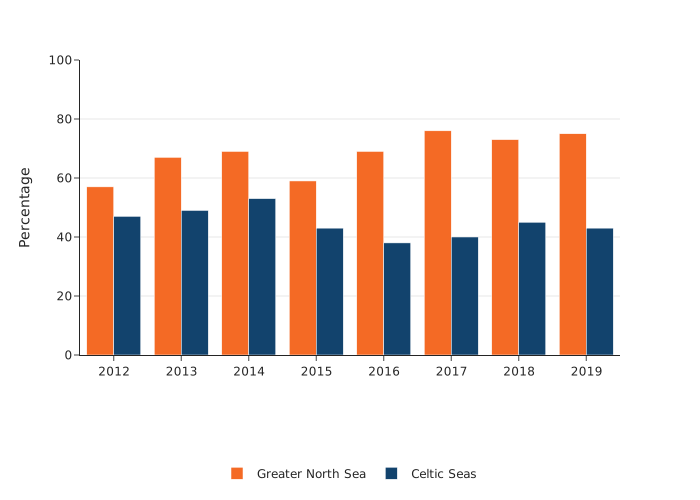
C1c: Mean probability that benthic trawl surveys contain a litter item, expressed as a percentage, Greater North Sea and Celtic Seas, 2012 to 2019
Source: Centre for Environment, Fisheries and Aquaculture Science
Download the data for this chart in .csv format
Notes on Figure
Seafloor litter surveys are conducted via routine benthic (seafloor) trawl surveys for fish stock assessments. These surveys are considered to be a practical way to monitor seafloor litter because they are already in use, are repeated so provide information on temporal trends, cover a wide area of seafloor and collect sufficient litter for analysis.
The measure used in this indicator has changed from ‘median total seafloor litter per km2’ in the 2023 update of the Environmental Indicator Framework (previously named the Outcome Indicator Framework) as the methodology for counting the number of items found in a survey was not consistently followed across the OSPAR region. As such, a measure based on the presence or absence of litter has been developed and trends in UK seafloor litter are now represented by the probability that a benthic trawl survey contains a piece of litter.
Trend Description
In the Greater North Sea, there has been a gradual increase in the mean probability of a benthic survey containing litter, from 57% in 2012 to 75% in 2019. In the Celtic Seas, the mean probability of a survey containing litter has fluctuated around 45%, with a peak of 53% in 2014.
Assessment: C1c
The time series for C1c, mean probability that benthic trawl surveys contain a litter item, is from 2012 to 2019 which is not yet long enough to produce an assessment for the medium- and long-term time periods.
An increase (or deterioration) was observed in the Greater North Sea region, but a decrease (or improvement) was observed in the Celtic Seas region over the most recent 5 years for which trends can be assessed (2014 to 2019). However, it is important to note that assessment results reported here are based on smoothed data, and are not directly comparable with other analyses published elsewhere that use different methodologies to explore these indicators or are based on alternative datasets.
Further information on this assessment, along with details on the methodology, is provided in the Assessment guide page. Summaries by Environmental Improvement Plan goal and information on indicator links are presented in the Assessment results pages.
| Component | Subcomponent | Period | Date range | Percentage change | Smoothing function | Assessment of change |
|---|---|---|---|---|---|---|
| C1c | Celtic Seas | Short term | 2014 to 2019 | -12.64 | Loess | Improvement |
| C1c | Celtic Seas | Medium term | N/A | N/A | N/A | Not assessed |
| C1c | Celtic Seas | Long term | N/A | N/A | N/A | Not assessed |
| C1c | Greater North Sea | Short term | 2014 to 2019 | 11.93 | Loess | Deterioration |
| C1c | Greater North Sea | Medium term | N/A | N/A | N/A | Not assessed |
| C1c | Greater North Sea | Long term | N/A | N/A | N/A | Not assessed |
Assessment categories for indicator C1c were assigned based on smoothed data, so percent change figures in Table C1c may differ from unsmoothed values quoted elsewhere. Percentage change refers to the difference seen from the first to last year.
Metadata
| Headline | Not applicable |
|---|---|
| Primary Goal | Waste |
| Relevant Goals | Waste |
| Relevant Targets | Significantly reducing and where possible preventing all kinds of marine plastic pollution – in particular material that came originally from land |
| Natural Capital | Pressure on natural capital assets |
| Related Commitments | UK Marine Strategy (Marine Strategy Regulations 2010), Convention for the Protection of the Marine Environment of the North-East Atlantic (OSPAR), Relevant to Sustainable Development Goal 14 |
| Geographical Scope | UK (Celtic Seas and Greater North Sea) |
| Development Status | Interim |
| First Reported | 2020 |
| Last updated | May 2025 |
| Latest Data | 2023 |
Return to Environmental Indicator Framework Collection Page
C2: Seabed subject to high pressure from human activity
Short Description
This indicator tracks changes in the distribution and intensity of potential physical disturbance caused by human activities on the seabed. The indicator combines data on the intensity and distribution of pressures from human activities with data on the distribution and sensitivity of seabed habitats. Data from vessel monitoring systems (VMS) showing fishing activity are linked to vessel logbook information and processed to create a layer showing abrasion pressure on the seabed. A second layer is produced by combining data on distribution of seabed habitats with information on resilience and resistance to evaluate their sensitivity to the pressure. The pressure and sensitivity layers are combined using a spatial method to create a single data layer showing the area of seabed subject to high disturbance from human activity. This indicator is linked to the ‘Extent of Physical Disturbance to Benthic Habitats’ indicator, developed for the Convention for the Protection of the Marine Environment of the North-East Atlantic (OSPAR) and used for the UK Marine Strategy (UKMS) Part One (2019) assessment of Good Environmental Status (GES).
Readiness and Links to Data
An interim indicator is presented here that shows the predicted area of seabed in the UK Continental Shelf exposed to disturbance from mobile bottom-contact fishing, by vessels over 12 metres long. The assessments on disturbance used for this interim indicator, including data and analytical methods, have been reported under the updated UKMS Part One (2019). Further development will result in some changes to the method to include additional activities and improve the habitat sensitivity assessment.
There has been an update relevant to the development of this indicator published via the OSPAR Quality Status Report (QSR) in 2023, including an updated indicator assessment of the extent of physical disturbance from fisheries with mobile bottom-contacting gears, and a new indicator assessment on the extent of physical disturbance by commercial aggregate extraction activities. However, further development is required to make the latest assessments UK-relevant only, which will be completed via the UKMS in 2025.
Notes on Indicator
The degree of disturbance to a habitat is an index based on the predicted spatial and temporal overlap of its sensitivity and exposure to a specific pressure. Sensitivity is assessed using the distribution of habitats and information on species presence collected across the reporting cycle (2010 to 2015). The annual values of the distribution and intensity of pressure are aggregated to give a single value, representative of pressure intensity for a reporting cycle. Sensitivity and pressure are combined via a matrix, producing 10 categories of disturbance ranging from 0 (no disturbance) to 9 (greatest risk of disturbance).
A lack of data relating to the activities of smaller fishing vessels (less than 12m) exists as they were not equipped with a VMS recorder at the time of the assessment. Consequently, there is an underestimate of disturbance in inshore waters, where smaller vessels predominantly operate. Additionally, fishing pressure layers were created in a gridded format which aggregates all fishing activity within a cell. Consequently, within a grid cell the intensity of fishing pressure, and the risk of disturbance, are potentially over or underestimated (i.e. fishing activity is not equally distributed).
The data presented here is from an assessment which pre-dates the 25 Year Environment Plan. However, this assessment provides an initial baseline from which to measure progress towards the goals of the Environmental Improvement Plan when the indicator is next updated. As stated in the Readiness and links to data section, an updated assessment of physical disturbance to benthic (seafloor) habitats has been conducted through the OSPAR QSR 2023. Following further developments via the UKMS in 2025 to make the assessment UK-relevant, this indicator will be updated.
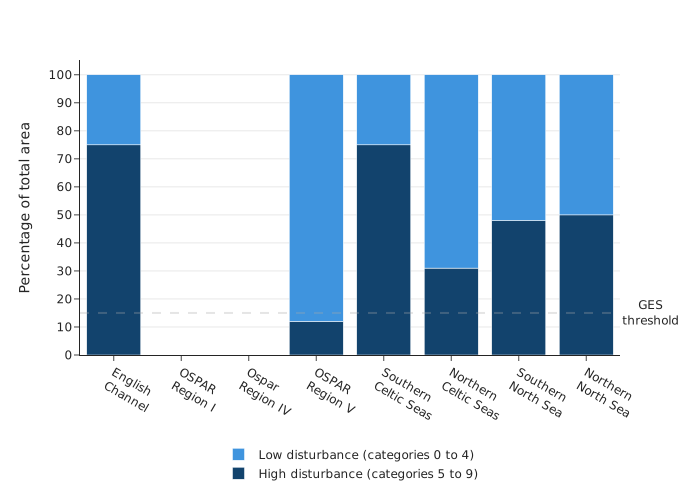
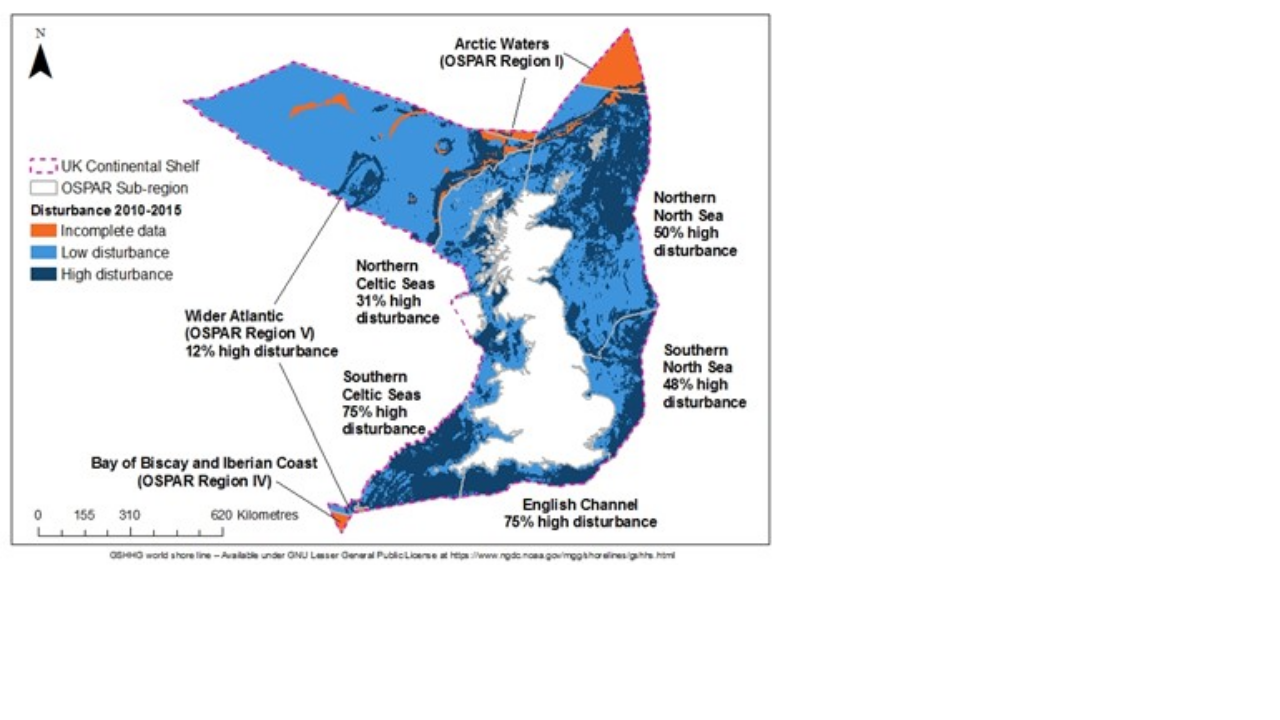
C2i: Predicted area of seabed in the UK Continental Shelf exposed to disturbance from bottom contact fishing by vessels over 12m long and regional progress towards Good Environmental Status (GES) 2010 to 2015
Source: Convention for the Protection of the Marine Environment of the North-East Atlantic
Download the data for this chart in .csv format
Notes on Figure
The chart shows the percentage area of OSPAR sub-regions in disturbance categories 0 to 4 (no or low disturbance) and 5 to 9 (high disturbance) across the reporting cycle (2010 to 2015). Incomplete data made it difficult to assess disturbance in the Bay of Biscay and Iberian Coast (OSPAR Region IV) and in Arctic Waters (OSPAR Region I).
Trend Description
The results from 2010 to 2015 show pressure and disturbance caused by fishing activities to be widespread, occurring to some degree in 57% of the cells within UK waters. The chart shows the aggregated values for seafloor disturbance from bottom-contact fishing for the period 2010 to 2015. The highest level of disturbance is found in the English Channel and Southern Celtic Seas with 75% of both these areas being subject to high disturbance (categories 5 to 9). The extent of disturbance in the Northern North Sea and Southern North Sea is lower, 50% and 48% respectively, but still considerably above the target figure for GES. Within each assessment area there are grid cells showing no disturbance or low disturbance (categories 0 to 4), such as some central areas of the Northern North Sea. The Wider Atlantic (OSPAR Region V) was the only region to achieve GES over the assessment period 2010 to 2015 with 12% of its area subjected to high disturbance from bottom contact fishing.
Assessment: C2i
There is currently no assessment of change due to constraints of current data availability. In future updates, changes over time might be identified by comparing results from multiple reporting cycle assessments, such as those produced by the UKMS every 6 years. Future assessments may enable any trends to be identified, for example the number of regions achieving GES or estimates of annual disturbance intensity and distribution changing over time.
C2ii: Predicted area of seabed in the UK Continental Shelf exposed to disturbance from bottom contact fishing vessels over 12m long, 2010 to 2015
Source: Convention for the Protection of the Marine Environment of the North-East Atlantic
Download the data for this chart in .csv format
Notes on Figure
The chart shows the percentage area of OSPAR sub-regions in disturbance categories 0 to 4 (no or low disturbance) and 5 to 9 (high disturbance) across the reporting cycle (2010 to 2015). Incomplete data made it difficult to assess disturbance in the Bay of Biscay and Iberian Coast (OSPAR Region IV) and in Arctic Waters (OSPAR Region I).
Trend Description
The results from 2010 to 2015 show pressure and disturbance caused by fishing activities to be widespread, occurring to some degree in 57% of the cells within UK waters. The chart shows the aggregated values for seafloor disturbance from bottom fishing for the period 2010 to 2015. The highest level of disturbance is found in the English Channel and Southern Celtic Seas with 75% of both these areas being subject to high disturbance (categories 5 to 9). The extent of disturbance in the Northern North Sea and Southern North Sea is lower, 50% and 48% respectively, but still considerably above the target figure for GES. Within each assessment area there are grid cells showing no disturbance or low disturbance (categories 0 to 4), such as some central areas of the Northern North Sea. The Wider Atlantic (OSPAR Region V) was the only region to achieve GES over the assessment period 2010 to 2015 with 12% of its area subjected to high disturbance from bottom contact fishing.
Assessment: C2ii
There is currently no assessment of change due to constraints of current data availability. In future updates, changes over time might be identified by comparing results from multiple reporting cycle assessments such those produced by the UKMS every 6 years. Future assessments may enable any trends to be identified, for example the number of regions achieving GES or estimates of annual disturbance intensity and distribution changing over time.
Metadata
| Headline | Not applicable |
|---|---|
| Primary Goal | Restored nature |
| Relevant Goals | Restored nature |
| Relevant Targets | Ensuring seafloor habitats are productive and sufficiently extensive to support healthy, sustainable ecosystems |
| Natural Capital | Pressure on natural capital assets |
| Related Commitments | UK Marine Strategy (Marine Strategy Regulations 2010), Convention for the Protection of the Marine Environment of the North-East Atlantic (OSPAR), Relevant to Sustainable Development Goal 14 |
| Geographical Scope | UK Continental Shelf |
| Development Status | Interim |
| First Reported | 2021 |
| Last updated | May 2025 |
| Latest Data | 2015 |
Return to Environmental Indicator Framework Collection Page
C3: Diverse seas: status of marine mammals and marine birds
Short Description
This indicator of diverse seas tracks changes in status assessments of marine mammals and marine birds. The assessments of marine mammals will be based on trends in the abundance of harbour seals; grey seal pup production; and the abundance of cetaceans (whales and dolphins). The assessments of marine birds will be based on the proportion of marine birds that have met breeding or non-breeding abundance targets, which were set to inform progress towards Good Environmental Status (GES). The GES assessments of marine mammals and birds were used in the updated UK Marine Strategy (UKMS) Part One (2019) and to fulfil reporting commitments under the Convention for the Protection of the Marine Environment of the North-East Atlantic (OSPAR).
As of the 2025 update of this indicator, components C3ai and C3aii (looking at trends in the abundance of harbour seals and grey seal pup production respectively) have been temporarily removed as part of an ongoing data audit and review of the methodology used to produce them. We intend to reinstate the components once the review is complete and sufficient refinements have been made.
Readiness and Links to Data
An interim indicator is presented here that shows changes in the abundance of breeding and non-breeding marine birds in the Greater North Sea and Celtic Seas (OSPAR marine regions including data from neighbouring countries). The data for marine birds used for this interim indicator have been reported via the OSPAR Quality Status Report 2023 (QSR). The marine birds component of the indicator is based on the latest methodology developed for the OSPAR QSR.
At this time, the marine bird component of the indicator is only based on breeding and non-breeding abundance. Future assessments of marine birds will be based on the integration of OSPAR abundance and breeding productivity indicators following the approach to the Marine Birds Thematic Assessment reported for the OSPAR QSR 2023. A Marine Mammals Thematic Assessment is also available.
Notes on Indicator
The term “marine bird” includes seabirds that spend the majority of their lives at sea (petrels and shearwaters, gannets and cormorants, skuas, gulls, terns and auks) and waterbirds that mostly inhabit intertidal areas or inshore areas close by (waders, ducks, geese, swans, grebes and divers). For most seabirds, and some waterbird species, abundance is assessed when they are breeding, because they are much easier to count when they aggregate on land to breed in colonies than when they are dispersed at sea over large areas. Most waterbirds, and some seabird species, are assessed using non-breeding abundance, because they are much easier to count when they aggregate in intertidal and inshore areas during migration or in winter. Assessments of marine birds are conducted separately for breeding and non-breeding birds as these often do not belong to the same population and because most species in the breeding assessment are seabirds that use the wider marine environment and most species in the non-breeding assessment use intertidal and inshore areas. The breeding and non-breeding assessments therefore indicate impacts from different suites of pressures, operating in different parts of the marine environment.
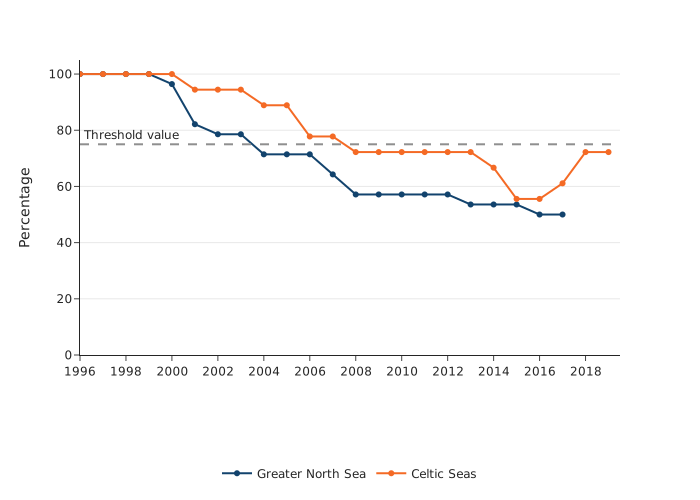
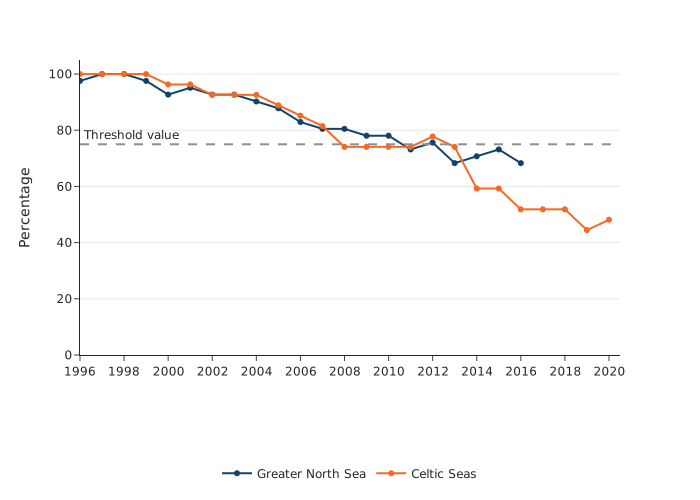
Marine birds are considered in good status if at least 75% of species assessed achieve targets for relative breeding or non-breeding abundance (dashed line on figures C3bi and C3bii). The relative abundance of a species is the annual abundance expressed as a proportion of the baseline, which was either based on a regression analysis of the first 10 years of data (1991 to 2000) with the predicted value for the first year (1991) used as the baseline value, or the mean of the first 10 years. Species were deemed to meet abundance targets if their relative abundance was either: equal or above 80% of the baseline for species that lay one egg or equal or above 70% of the baseline for species that lay more than one egg.
C3bi: Change in the annual proportion of marine bird species achieving relative breeding abundance targets, Greater North Sea and Celtic Seas, 1996 to 2019
Source: The Convention for the Protection of the Marine Environment of the North-East Atlantic
Download the data for this chart in .csv format
Notes on Figure
Individual species-specific assessments are based on a 6-year rolling geometric mean of relative abundance which accounts for year-to-year variations in the data. Each datapoint refers to the final year of the 6-year moving average. Time series breeding marine birds used data from 1991 to 2017 for the Greater North Sea and from 1991 to 2019 for the Celtic Seas.
Trend Description
The proportion of marine bird species meeting targets for breeding abundance in the Greater North Sea and Celtic Seas has generally remained below the 75% threshold since 2011 and 2008, respectively. In the Celtic Seas, the proportion has been 72.2% for the latest 2 years in the series (2018 and 2019), recovering to this level after a reduction to low of 55.6% in both 2015 and 2016. In the Greater North Sea, the proportion of species achieving abundance targets has reduced steadily since the start of the series to 50% in 2016 and 2017.
Assessment: C3bi
In the Celtic seas, an increase (or improvement) in the breeding abundance of marine birds in the was observed in the long-term. However, there has been little to no change in breeding abundance in the medium-term and a decrease (deterioration) was observed in the short-term. In the Greater North sea, decreases were observed over the long-, medium- and short-term assessment periods.
Change since 2018 has also been assessed in the Celtic Seas. Since 2018, there was little to no change in the breeding abundance of marine birds. However, this is based on 2 years of data so should be considered as indicative and not evidence of a clear trend.
Assessment results presented here are not directly comparable with analyses published elsewhere that use different methodologies to explore these indicators or are based on alternative datasets.
Further information on this assessment, along with details on the methodology, is provided in the Assessment guide page. Summaries by Environmental Improvement Plan goal and information on indicator links are presented in the Assessment results pages.
| Component | Subcomponent | Period | Date range | Percentage change | Assessment methodology | Assessment of change |
|---|---|---|---|---|---|---|
| C3bi | Celtic Seas | Short term | 2014 to 2019 | 8.33 | Rolling average | Improvement |
| C3bi | Celtic Seas | Medium term | 2009 to 2019 | 0.00 | Rolling average | Little or no change |
| C3bi | Celtic Seas | Long term | 1996 to 2019 | -27.78 | Rolling average | Deterioration |
| C3bi | Greater North Sea | Short term | 2012 to 2017 | -12.50 | Rolling average | Deterioration |
| C3bi | Greater North Sea | Medium term | 2007 to 2017 | -22.22 | Rolling average | Deterioration |
| C3bi | Greater North Sea | Long term | 1996 to 2017 | -50.00 | Rolling average | Deterioration |
Percentage change refers to the difference seen from the first to last datapoint in the specified date range.
C3bii: Change in the annual proportion of marine bird species achieving relative non-breeding abundance targets, Greater North Sea and Celtic Seas, 1996 to 2020
Source: The Convention for the Protection of the Marine Environment of the North-East Atlantic
Download the data for this chart in .csv format
Notes on Figure
Individual species-specific assessments are based on a 6-year rolling geometric mean of relative abundance which accounts for year-to-year variations in the data. Each datapoint refers to the final year of the 6-year moving average. Time series for non-breeding marine birds used data from 1991 to 2016 for the Greater North Sea and from 1991 to 2020 for the Celtic Seas.
Trend Description
The proportion of marine bird species meeting targets for non-breeding abundance in the Greater North Sea has seen an overall decline since the start of the series to 68% in 2016, with the threshold of 75% not being met since 2012. The proportion of marine bird species meeting targets for non-breeding abundance in the Celtic Seas has also declined sharply since the start of the time series to a value of 48% in 2020, remaining below the 75% threshold in every year since 2012.
Assessment: C3bii
In the assessment of non-breeding abundance of marine birds, a decrease, or deterioration was observed in the long, medium and the short term in both regional seas: the Celtic Seas and the Greater North Sea.
Change since 2018 has also been assessed in the Celtic Seas. Since 2018, there was a decrease (a deterioration) in the non-breeding abundance of marine birds. However, this is based on 3 years of data so should be considered as indicative and not evidence of a clear trend.
Assessment results presented here are not directly comparable with analyses published elsewhere that use different methodologies to explore these indicators or are based on alternative datasets.
Further information on this assessment, along with details on the methodology, is provided in the Assessment guide page. Summaries by Environmental Improvement Plan goal and information on indicator links are presented in the Assessment results pages.
| Component | Subcomponent | Period | Date range | Percentage change | Assessment methodology | Assessment of change |
|---|---|---|---|---|---|---|
| C3bii | Celtic Seas | Short term | 2015 to 2020 | -18.75 | Rolling average | Deterioration |
| C3bii | Celtic Seas | Medium term | 2010 to 2020 | -35.00 | Rolling average | Deterioration |
| C3bii | Celtic Seas | Long term | 1996 to 2020 | -51.85 | Rolling average | Deterioration |
| C3bii | Greater North Sea | Short term | 2011 to 2016 | -6.67 | Rolling average | Deterioration |
| C3bii | Greater North Sea | Medium term | 2006 to 2016 | -17.65 | Rolling average | Deterioration |
| C3bii | Greater North Sea | Long term | 1996 to 2016 | -30.00 | Rolling average | Deterioration |
Percentage change refers to the difference seen from the first to last datapoint in the specified date range.
Metadata
| Headline | Diversity of our seas |
|---|---|
| Primary Goal | Restored nature |
| Relevant Goals | Restored nature |
| Relevant Targets | Reversing the loss of marine biodiversity and, where practicable, restoring it, Ensuring seafloor habitats are productive and sufficiently extensive to support healthy, sustainable ecosystems |
| Natural Capital | Condition of assets - seas |
| Related Commitments | UK Marine Strategy (Marine Strategy Regulations 2010), Convention for the Protection of the Marine Environment of the North-East Atlantic (OSPAR), Bern Convention, Relevant to Sustainable Development Goal 14 |
| Geographical Scope | England; OSPAR marine regions (Greater North Sea and Celtic Seas) |
| Development Status | Interim |
| First Reported | 2021 |
| Last updated | May 2025 |
| Latest Data | 2020 |
Return to Environmental Indicator Framework Collection Page
C4: Diverse seas: condition of seafloor habitats
Short Description
This indicator of diverse seas evaluates the condition of seafloor habitats. Seafloor habitats assessed include soft sediment invertebrate communities and intertidal communities of seagrass, rocky shore macroalgae and saltmarshes. Once developed, the indicator will assess the impact of human activities on the condition of seafloor habitats.
Data for the seafloor habitat condition indicators come from surveys undertaken on a 6-yearly cycle using methods developed for Water Framework Directive (WFD) classifications, now transposed to the Water Environment Regulations (WER). These include the intertidal rocky shore macroalgae tool, intertidal seagrass tool, Infaunal Quality Index, and intertidal saltmarsh tool.
Readiness and Links to Data
An interim indicator is presented here that shows target achievement for regional sea assessment, status of coastal water bodies and offshore assessment results. The assessments used for this indicator have been reported under the UK Marine Strategy (UKMS) Part One (2019) to assess progress towards the UKMS target of achieving and maintaining Good Environmental Status (GES) in UK seas.
Data on benthic (sea floor) habitats, analytical methods and assessment are available, including information on the intertidal seagrass tool, intertidal rocky shore macroalgae tool, intertidal saltmarsh tool and Infaunal Quality Index.
The indicator will be further developed to include data on the condition of benthic communities. A trial assessment on the condition of benthic communities was reported under the UKMS Part One (2019). Updates to the method and data underpinning the condition of benthic communities indicator was made available as part of the OSPAR Quality Status Report (QSR 2023) and will be further updated as part of the UKMS Part One Assessment in 2025. When available, C4 may also include data the condition of sublittoral rock communities (those that occur from the lowest point exposed by low tide to the edge of the continental shelf) and the condition of biogenic reefs (formed by horse mussel and Ross worm).
Notes on Indicator
While the currently available data predate the 25 Year Environment Plan, they provide the most recently available assessment of the condition of benthic habitats. They enable a better understanding of a baseline from which to measure progress towards the goals of the Environmental Improvement Plan when the indicator is next updated following the UKMS Part One assessment in 2025.
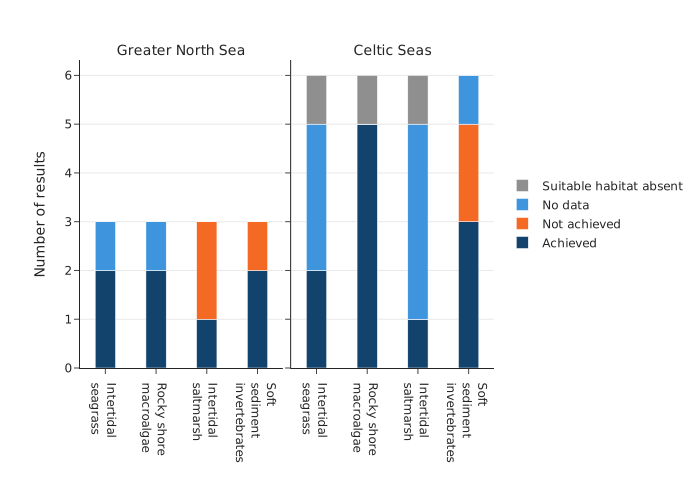
C4: Summary of regional sea assessment results for coastal and offshore habitats, 2010 to 2015
Source: Department for Agriculture, Environment & Rural Affairs of Northern Ireland, Environment Agency, Natural Resources Wales, Scottish Environment Protection Agency
Download the data for this chart in .csv format
Notes on Figure
This chart is based on the regional-sea level assessments conducted for the UKMS in 2019, and is presented spatially in figures C4i, C4ii, C4iii and C4iv. Data was collected between 2010 and 2015.
Under the UKMS, the UK is split into 2 sub-regions, the Greater North Sea and the Celtic Seas. There are 3 assessment units (Regional Seas) in the Greater North Sea and 6 in the Celtic Seas. In the Celtic Seas, only soft sediment invertebrates are present in all Celtic Sea assessment units, the other habitat types shown in C4 are only present in 5.
Trend Description
In the Greater North Sea, the UKMS target was met in two out of three Regional Seas for intertidal seagrass and intertidal rocky shore habitats, with insufficient data to make an assessment in the third. Targets were achieved for soft sediment invertebrates in two out of the three Regional Seas. Two of three Regional Seas did not meet targets for intertidal saltmarsh.
In the Celtic Seas, the UKMS target was met in all five Regional Seas where habitat is present for rocky shore macroalgae. The majority of Regional Seas where habitat is present did not have data for intertidal seagrass (three of five) or intertidal saltmarsh (four of five), with the remainder having met their target. For soft sediment invertebrates, targets were achieved in three out of six Regional Seas. In the remainder, targets were not achieved in two Regional Seas, and there was not enough data for an assessment in one Regional Sea.
Assessment: C4
No assessment of change was undertaken for this indicator as a suitable time series is not yet available in the Environmental Indicator Framework.
C4i: Regional sea assessments, and the status of coastal water bodies for seagrass, 2010 to 2015
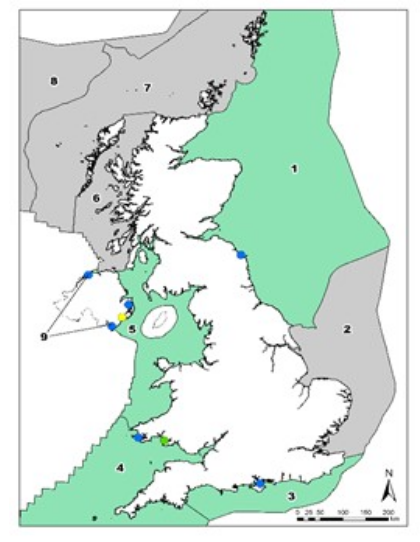
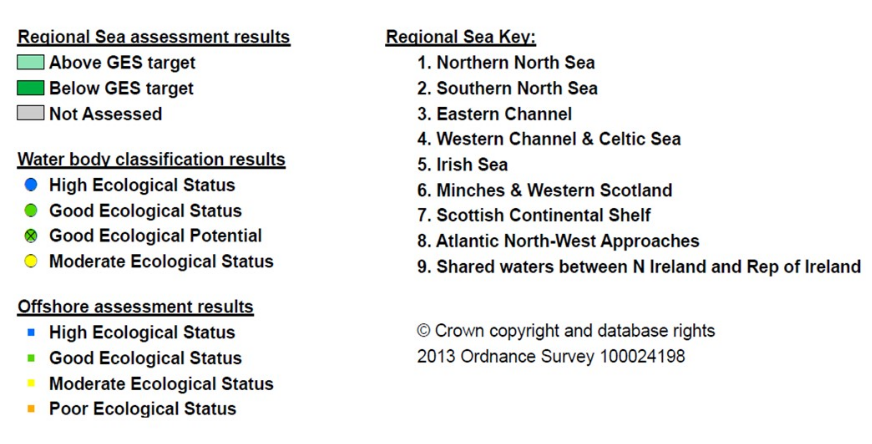
Source: Department of Agriculture, Environment and Rural Affairs of Northern Ireland, Environment Agency, Natural Resources Wales, Scottish Environment Protection Agency
Download the data for this chart in .csv format
Notes on Figure
Inshore data, predominantly collected under the WFD between 2010 and 2015, were used to assess seagrass habitats.
Trend Description
The UKMS target for intertidal seagrass communities was met for all assessed Regional Seas. Four Regional Seas were not assessed due to either an absence of intertidal habitat which is required by the indicator or an absence of existing WFD classification data. The natural conditions required for intertidal seagrass beds to exist limits their occurrence in coastal water bodies. However, for those contributing, the quality threshold of ‘Good’ or ‘High’ Ecological Status was met for the majority of surveyed locations. The Irish Sea had the lowest extent of intertidal seagrass meeting the quality target, although the total remains markedly above the indicator quantity threshold of 85%.
Assessment: C4i
No assessment of change was undertaken for this indicator as a suitable time series is not yet available in the Environmental Indicator Framework.
C4ii: Regional sea assessments, and the status of coastal water bodies for rocky shore macroalgae, 2010 to 2015
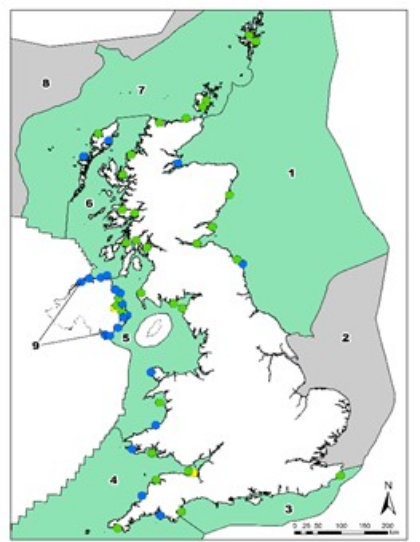
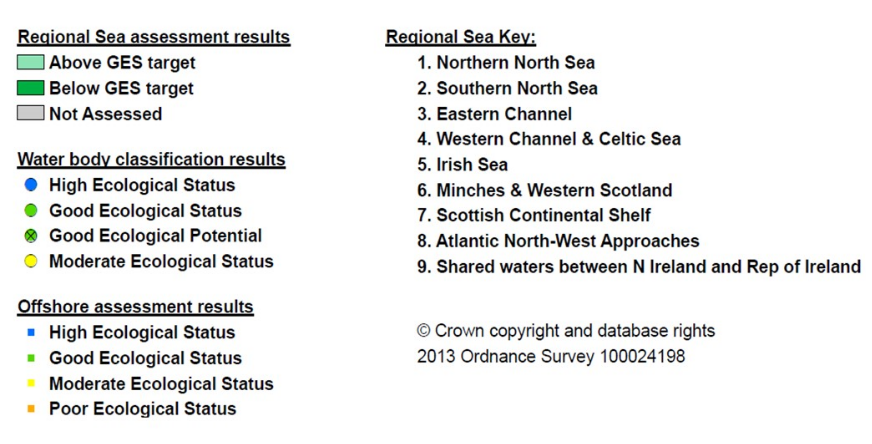
Source: Department of Agriculture, Environment and Rural Affairs of Northern Ireland, Environment Agency, Natural Resources Wales, Scottish Environment Protection Agency
Download the data for this chart in .csv format
Notes on Figure
Inshore data, predominantly collected under the WFD between 2010 and 2015, were used to assess rocky shore macroalgae habitats.
Trend Description
The UKMS target for the intertidal rocky shore macroalgae was met for all 7 assessed Regional Seas. Two Regional Seas were not assessed due to either an absence of intertidal habitat which is required by the indicator or an absence of existing WFD classification data.
Assessment: C4ii
No assessment of change was undertaken for this indicator as a suitable time series is not yet available in the Environmental Indicator Framework.
C4iii: Regional sea assessments, and the status of coastal water bodies for saltmarsh, 2010 to 2015
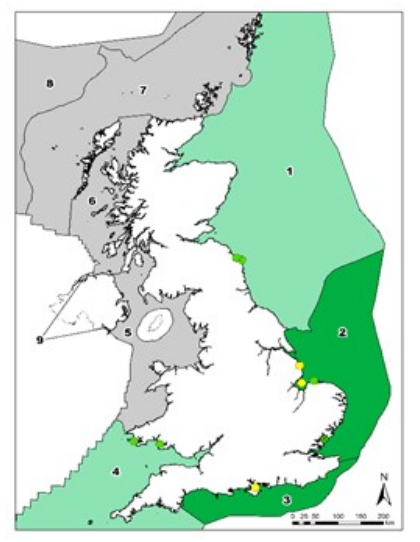
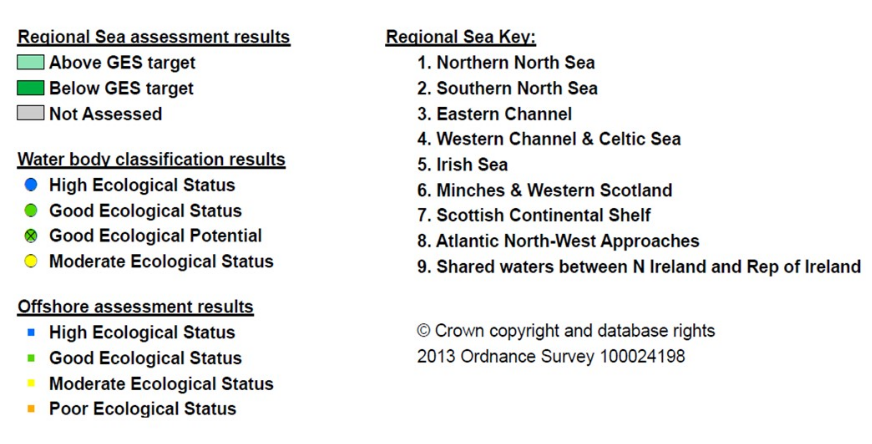
Source: Department for Agriculture, Environment & Rural Affairs of Northern Ireland, Environment Agency, Natural Resources Wales, Scottish Environment Protection Agency
Download the data for this chart in .csv format
Notes on Figure
Inshore data, predominantly collected under the WFD between 2010 and 2015, were used to assess saltmarsh habitats.
Trend Description
The UKMS target for the saltmarsh communities was largely met for the Western Channel and Celtic Seas; and Northern North Sea but was not met for considerable areas of the Southern North Sea and the Eastern English Channel Regional Seas. Five Regional Seas were not assessed due to either an absence of intertidal habitat which is required by the indicator or an absence of existing WFD classification data.
Assessment: C4iii
No assessment of change was undertaken for this indicator as a suitable time series is not yet available in the Environmental Indicator Framework.
C4iv: Regional sea assessments, and the status of coastal water bodies and offshore units for soft sediment invertebrates, 2010 to 2015
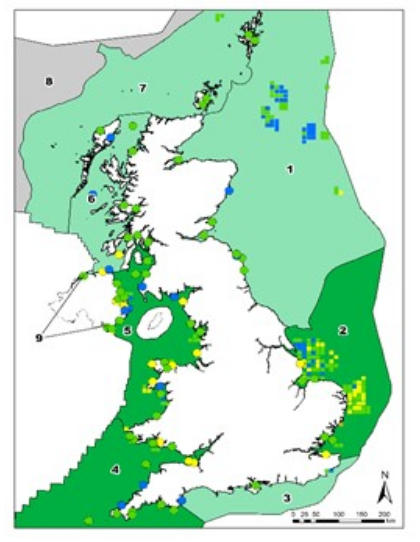
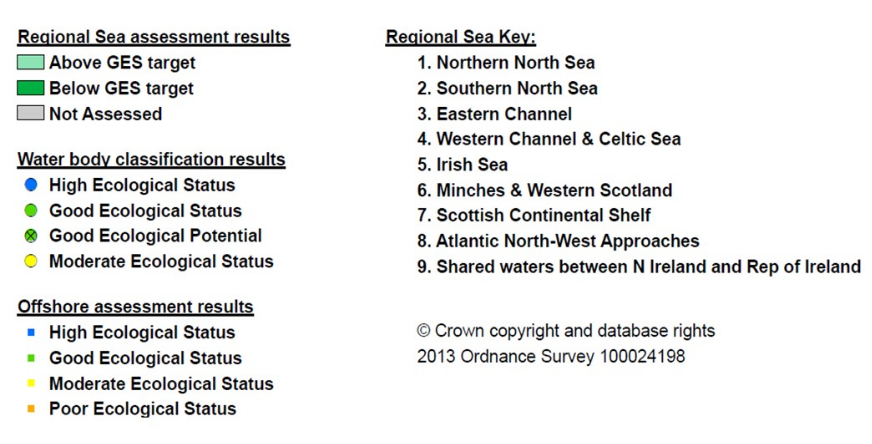
Source: Department for Agriculture, Environment & Rural Affairs of Northern Ireland, Environment Agency, Natural Resources Wales, Scottish Environment Protection Agency
Download the data for this chart in .csv format
Notes on Figure
Soft sediment invertebrates were assessed using inshore and offshore intertidal and subtidal data collected between 2010 and 2015.
Trend Description
The UKMS target for soft sediment (benthic) invertebrate communities was largely met for most Regional Seas including the Minches and western Scotland, Scottish Continental Shelf, Shared Waters between Northern Ireland and Republic of Ireland, Northern North Sea and Eastern English Channel. The Western English Channel and Celtic Sea Region did not reach the target largely due to the inshore classification results, while the failure of the Southern North Sea to meet the target can be attributed to the offshore results. The Irish Sea did not meet the target due to both inshore and offshore results. The Atlantic North-West Approaches was not assessed due to an absence of data.
Assessment: C4iv
No assessment of change was undertaken for this indicator as a suitable time series is not yet available in the Environmental Indicator Framework.
Metadata
| Headline | Diversity of our seas |
|---|---|
| Primary Goal | Restored nature |
| Relevant Goals | Restored nature |
| Relevant Targets | Reversing the loss of marine biodiversity and, where practicable, restoring it, Ensuring seafloor habitats are productive and sufficiently extensive to support healthy, sustainable ecosystems |
| Natural Capital | Condition of assets - seas |
| Related Commitments | UK Marine Strategy (Marine Strategy Regulations 2010), Convention for the Protection of the Marine Environment of the North-East Atlantic (OSPAR), Relevant to Sustainable Development Goal 14, Water Environment Regulations – The Water Environment (Water Framework Directive) (England and Wales) Regulations 2017, The Water Environment (Water Framework Directive) Regulations (Northern Ireland) 2017, Water Environment and Water Services (Scotland) Act 2003 |
| Geographical Scope | UK |
| Development Status | Interim |
| First Reported | 2020 |
| Last updated | May 2025 |
| Latest Data | 2015 |
Return to Environmental Indicator Framework Collection Page
C5: Diverse seas: condition of pelagic habitats
Short Description
This indicator of marine biodiversity tracks changes in the Good Environmental Status (GES) of pelagic (water column) habitats. The assessment is based on (a) changes in lifeforms (groups of plankton species that perform the same function in the marine environment) that make up plankton communities, and (b) changes in the biomass of phytoplankton and the abundance of zooplankton. These assessments have been used to inform the assessment of GES for the updated UK Marine Strategy (UKMS) Part One (2019) and to fulfil reporting commitments under the Convention for the Protection of the Marine Environment of the North-East Atlantic (OSPAR). The changes experienced by plankton communities could have implications for the health (functioning, dynamics and structure) of the whole marine ecosystem.
Readiness and Links to Data
An interim indicator is presented here that shows GES assessments conducted for the OSPAR Quality Status Report (QSR) 2023. Status of plankton lifeforms from Changes in Phytoplankton and Zooplankton Communities is presented in C5a, and the status of broad habitat from Changes in Phytoplankton Biomass and Zooplankton Abundance is presented in C5b. The 2 components are presented at differing levels (lifeforms versus habitat) due to the nature of the underlying assessments.
Previous assessments of pelagic habitats have been reported under the updated UKMS Part One (2019). UKMS Part One will be updated in 2025 by adopting the results of the OSPAR QSR 2023 to carry out the regional pelagic habitats assessment for UK waters.
Notes on Indicator
The status of phytoplankton and zooplankton communities has been assessed by analysing trends in the abundance of planktonic lifeforms (those organisms that spend all or part of their lives in the water column as plankton). GES is assessed by identifying the primary drivers for observed changes – if these changes are closely linked to increasing anthropogenic pressure (identified via statistical analyses), the status is determined to be ‘not good’. However, the complexity of these systems means that in many instances the indicator exhibits a change, but it is unclear whether this change is associated with an anthropogenic pressure (for example, climate change, or nutrient pollution) or a reduction in anthropogenic pressure (such as a reduction in nutrient pollution). This means that for many of the component parts of this indicator it is not currently possible to identify whether GES has been met.
Both components of C5 have been disaggregated by 3 major pelagic habitat types in the Greater North Sea and Celtic Seas: variable salinity (which correspond to river plumes and regions of freshwater influence), coastal (nearshore areas adjacent regions of freshwater influence with mean salinity of less than 34.5 parts per thousand), and shelf (habitats that are offshore with an average depth of less than 200m and a salinity of greater than 34.5 parts per thousand). The assessment has been organised this way because these habitats have differing properties and are subject to different pressures.
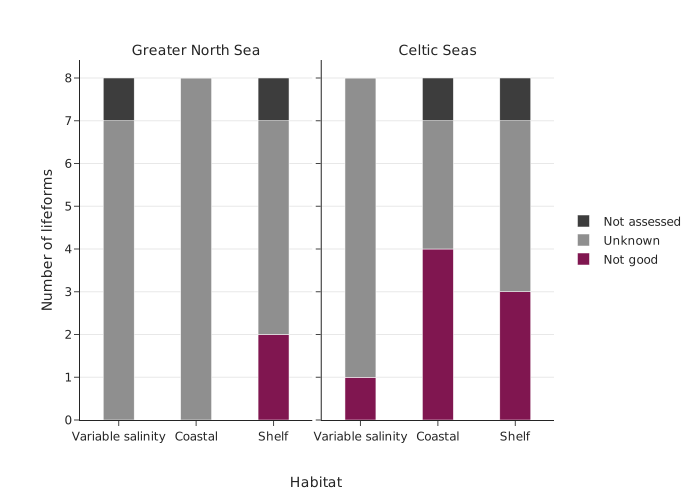
C5a: Changes in phytoplankton and zooplankton communities: proportion of lifeforms consistent with Good Environmental Status, Greater North Sea and Celtic Seas, 1960 to 2019
Source: The Convention for the Protection of the Marine Environment of the North-East Atlantic
Download the data for this chart in .csv format
Notes on Figure
The categories presented in the chart are:
-
Not good: Change is linked to increasing impact of anthropogenic pressures (including climate change)
-
Unknown: No assessment threshold and/or unclear if change in abundance represents declining or improving state, or indicator shows no change but uncertain if state represented is satisfactory.
-
Good: Lifeform value is above assessment threshold, or indicator represents improving state, or indicator shows no change but state is satisfactory. There are no 'good' results in the recent assessment as there is not currently a strong baseline for what represents Good Environmental Status in pelagic habitats.
-
Not assessed: Lifeform(s) were not assessed in a region due to lack of data, lack of expert resource, or lack of policy support.
Maps are also available which demonstrate the changing nature of these lifeforms.
Trend Description
The results from the OSPAR QSR 2023 vary by OSPAR region and by broad habitat type. In the Greater North Sea, change in the majority of lifeforms could not be identified as being in either ‘good’ or ‘not good’ status. In shelf habitats, 2 of the 8 lifeforms were assessed as ‘not good’, with the remainder being ‘unknown’, or ‘not assessed’.
In the Celtic Seas, coastal habitats were identified as having the most lifeforms in ‘not good’ status (4 of 8). Whereas shelf and variable salinity habitats had 3 and one lifeform assessed as ‘not good’, respectively.
There are currently no 'good' results in the recent assessment as there is not enough historical data to identify what represents GES in pelagic habitats. The drivers of change for lifeforms in ‘not good’ status are sea surface temperature and pH (related to ocean acidification) and changes in the ratio of nitrogen and phosphorous (related to nutrient pollution). Plankton lifeforms linked to anthropogenic pressures are generally exhibiting decreasing trends, however meroplankton (lifeforms which spend part of their lives as plankton, such as crabs and lobster) abundance in shelf habitats is increasing in both regional seas, which has been associated with increases in sea surface temperature.
Assessment: C5a
No assessment of change was undertaken for this indicator as a suitable time series is not yet available in the Environmental Indicator Framework.
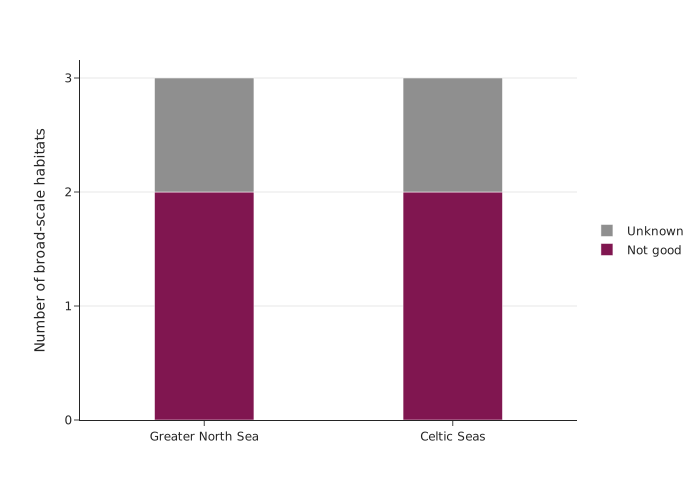
C5b: Changes in phytoplankton biomass and zooplankton abundance: number of broad habitat types consistent with Good Environmental Status 1960 to 2019
Source: The Convention for the Protection of the Marine Environment of the North-East Atlantic
Download the data for this chart in .csv format
Notes on Figure
The categories presented in the chart are:
-
Not Good: Indicator change is linked to increasing impact of anthropogenic pressures (including climate change)
-
Unknown: No assessment threshold and/or unclear if change represents declining or improving state, or indicator shows no change but uncertain if state represented is satisfactory.
-
Good: Indicator value is above assessment threshold, or indicator represents improving state, or indicator shows no change, but state is satisfactory. There are no 'good' results in the recent assessment as there is not currently a strong baseline for what represents Good Environmental Status in pelagic habitats.
Maps are also available which demonstrate the changing nature of these lifeforms.
Trend Description
In both the Greater North Sea and the Celtic Seas the Coastal and Shelf habitats were assessed as being in ‘not good’ status as changes in phytoplankton biomass and zooplankton abundance were found to be in response to anthropogenic pressure. The environmental status of variable salinity habitats is currently unknown.
Changes in phytoplankton biomass and zooplankton abundance were evident across the Greater North Sea and Celtic Seas. The primary drivers attributed to these changes are changes in the ratio of nitrogen and phosphorous, the mixed layer depth, pH and the Atlantic Multidecadal Oscillation.
Assessment: C5b
No assessment of change was undertaken for this indicator as a suitable time series is not yet available in the Environmental Indicator Framework.
Metadata
| Headline | Not applicable |
|---|---|
| Primary Goal | Restored nature |
| Relevant Goals | Restored nature |
| Relevant Targets | Reversing the loss of marine biodiversity and, where practicable, restoring it, Ensuring seafloor habitats are productive and sufficiently extensive to support healthy, sustainable ecosystems |
| Natural Capital | Condition of assets - seas |
| Related Commitments | Convention for the Protection of the Marine Environment of the North-East Atlantic (OSPAR), UK Marine Strategy (Marine Strategy Regulations 2010), River Basin Management Plans, Relevant to Sustainable Development Goal 14 |
| Geographical Scope | UK (Celtic Seas and Greater North Sea) |
| Development Status | Interim |
| First Reported | 2021 |
| Last updated | May 2025 |
| Latest Data | 2019 |
Return to Environmental Indicator Framework Collection Page
C6: Diverse seas: status of threatened and declining features
Short Description
This indicator of diverse seas shows changes in the status of vulnerable features flagged for protection, either listed in national legislation or international agreements. These features include the features of conservation interest protected in Marine Protected Areas, Natural Environment and Rural Communities Act Section 41 habitats and species of principle importance for conservation, and under the Convention for the Protection of the Marine Environment of the North-East Atlantic (OSPAR), amongst others. The overall indicator will be derived from the status of the individual features.
Readiness and Links to Data
An interim indicator is presented here based upon UK-relevant information published by OSPAR, and Habitats Directive Article 17 UK marine-specific feature assessments, compiled by the Joint Nature Conservation Committee (JNCC) in the C6 indicator report (JNCC Report 794). The indicator will be updated when new status assessments become available. The indicator will be flexible, with intended scope for integration with wider datasets, where relevant data are publicly available. Where appropriate, results from different assessment periods will be shown in future updates. The data for component C6b are published as an official statistic in development to gather feedback and facilitate user involvement in the development of the indicator.
Two assessments on the status of vulnerable features have been presented here. C6a is based on the OSPAR list of Threatened and/or Declining Species and Habitats. C6a incorporated published OSPAR status assessments, where available. For species on the list that did not yet have a published status assessment, but were assessed via OSPAR Common Indicators, the Common Indicator assessment was used (relevant to harbour porpoise and roseate tern only). C6b is based on Habitats Directive Article 17 marine-specific UK status assessments (this reporting requirement has since been translated into the Habitats Regulations).
Notes on Indicator
This indicator is an official statistic in development and has been published in order to facilitate user involvement in its development – information on how the data have been obtained and how the indicator has been prepared is available via the link(s) in the 'Readiness and links to data' section. We would welcome any feedback, particularly on the usefulness and value of this statistic, via environmentalindicators@defra.gov.uk.
The two assessments (C6a and C6b) are not currently directly comparable. OSPAR assessments are conducted by OSPAR regional sea, whilst the Article 17 marine-specific assessments are only available at a UK-wide scale. Additionally, Article 17 assessments were conducted earlier than the OSPAR assessments, so they have been presented separately. Furthermore, the OSPAR Threatened and/or Declining list includes features that are considered to be in need of priority protection, whereas Article 17 features are considered threatened and listed on the annexes of the Habitats Directive.
Whilst most features appear in only one assessment, there is some minor overlap between the two lists. Annex I habitats are habitat complexes made up of a mosaic of subtidal and intertidal habitats, therefore multiple Threatened and/or Declining habitats potentially form part of a single Annex I listed feature. Where habitats correlate and have been assessed under both, they generally have similar assessment outcomes (poor, or unfavourable, depending on the assessment). There are also four species in both lists, but none of these have an assessment result under their Article 17 assessment, being assigned either ‘not assessed’ or ‘unknown’. They have all been given a 'poor' assessment result under their OSPAR assessment. Whilst there is a small amount of overlap, the OSPAR Threatened and/or Declining list aims to compliment, rather than duplicate, work under the other existing legislation in Northern Europe, including the Habitats and Birds directives (OSPAR Agreement 2019-04).
In 2025, additional categories were added to the chart in C6b to give further context to those features found to be in unfavourable condition. These categories reflect trend assessment results for features and show whether they are improving, deteriorating, stable, or the trend is unknown.
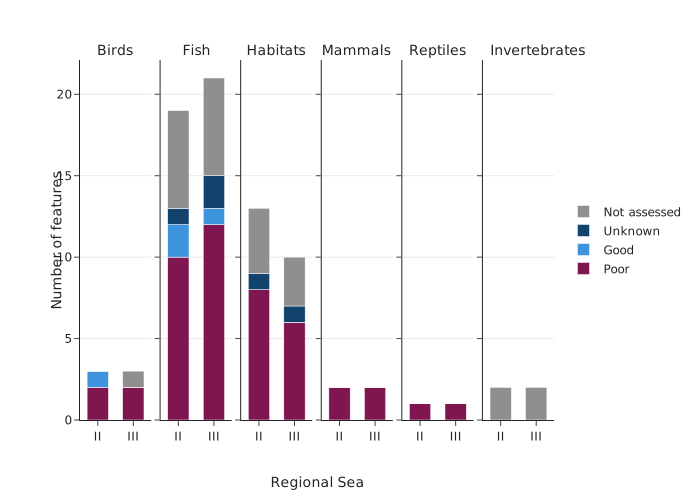
C6a: Status of UK relevant OSPAR threatened and/or declining species and habitats across OSPAR Region II (Greater North Sea) and III (Celtic Seas), 2019 to 2023
Source: Joint Nature Conservation Committee, Convention for the Protection of the Marine Environment of the North-East Atlantic
Download the data for this chart in .csv format
Notes on Figure
Unknown status is applied when an assessment has been conducted, but there was insufficient information available within the region to identify whether a feature is in good or poor status. Not assessed is applied to features that have not yet had their status assessed by OSPAR.
Roseate tern and harbour porpoise assessments are included in this figure. These species are included on the OSPAR Threatened and/or Declining Species and Habitats list but have not been assessed under this programme. However, at the time of analysis, they have been assessed using the OSPAR Common Indicator approach so have been included here.
European flat oyster and Ostrea edulis beds are, respectively, listed as an invertebrate species and a habitat under OSPAR’s Threatened and/or Declining list. There was a combined assessment of these features in 2020. Therefore, under the C6 indicator these are classed as a habitat.
Trend Description
The majority of features on OSPAR’s list of Threatened and/or Declining Species and Habitats are in poor status in both the Greater North Sea and Celtic Seas regions.
This includes all three of the mammal and reptile species. For birds, two out of three assessed species were in poor status in the Greater North Sea and two out of two assessed species in the Celtic Seas. Of the fish species assessed, 10 of 13 in the Greater North Sea and 12 of 15 in the Celtic Seas are in poor status.
The only features in good status are two fish species in the Greater North Sea, one fish species in the Celtic Seas and one bird species in the Greater North Sea.
Habitats have similar assessment results with eight of nine assessed habitats, and six of seven assessed habitats being in poor status in the Greater North Sea and Celtic Seas, respectively. The status of the remainder of the assessed habitats on the list is unknown.
There are features included on the OSPAR Threatened and/or Declining Species and Habitats list that have not been assessed, these include eight species and four habitats in the Greater North Sea and nine species and three habitats in the Celtic Seas. None of the listed invertebrates in the Greater North Sea or Celtic Seas have been assessed.
Assessment: C6a
No assessment of change was undertaken for this indicator as a suitable time series is not yet available in the Environmental Indicator Framework.
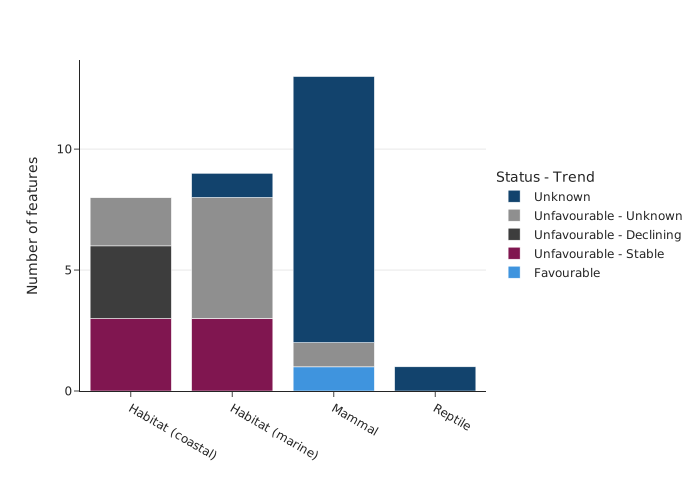
C6b: Status of Habitats Directive Article 17 listed coastal and marine features in the UK, 2019
Source: Joint Nature Conservation Committee
Download the data for this chart in .csv format
Notes on Figure
In Article 17 assessments, Favourable Conservation Status assessments are made by assessment of 4 components: Range, Area (for habitats) or Population (for species), Structure and Function (for habitats) or Suitable Habitat (for species), and Future Prospects. The status for each of these components dictates whether the overall assessment concludes if the feature is in favourable, unfavourable, or unknown state. Further context is provided for the unfavourable category to show how many features are showing improving or declining trends, are stable or if trends are unknown.
Under Article 17, maerl was assessed as 2 separate species in 2019. However, due to the difficulties in differentiating between species, the assessment was combined and the same report was submitted for both species. In figure C6b, both species have been combined, and feature classed as a habitat, rather than a species.
The assessment categories are defined based on a combination of assessments made on range, area or population, structure and function or suitable habitat, and future prospects.
Trend Description
Most of the marine and coastal habitats listed under Article 17 of the Habitats Directive which have been assessed at a UK scale are in Unfavourable condition (eight of eight coastal, and eight of nine marine). The status of the remaining assessed marine habitat is unknown. Three of the coastal habitats assessed are in Unfavourable-Declining condition. No features are in the Unfavourable-Improving category. Of the marine mammal species assessed, one is in Favourable condition, one is in Unfavourable-Unknown condition, and the remaining 11 mammals on the list are in Unknown status. One reptile was assessed as unknown.
Assessment: C6b
No assessment of change was undertaken for this indicator as a suitable time series is not yet available in the Environmental Indicator Framework.
Metadata
| Headline | Diversity of our seas |
|---|---|
| Primary Goal | Restored nature |
| Relevant Goals | Restored nature |
| Relevant Targets | Reversing the loss of marine biodiversity and, where practicable, restoring it |
| Natural Capital | Condition of assets - seas |
| Related Commitments | Convention for the Protection of the Marine Environment of the North-East Atlantic (OSPAR), UK Marine Strategy (Marine Strategy Regulations 2010), Relevant to Sustainable Development Goal 14 |
| Geographical Scope | UK (Celtic Seas and Greater North Sea) |
| Development Status | Interim |
| First Reported | 2024 |
| Last updated | May 2025 |
| Latest Data | 2023 |
Return to Environmental Indicator Framework Collection Page
C7: Healthy seas: fish and shellfish populations
Short Description
This indicator tracks the health of our seas using assessments of demersal fish populations (fish that live and feed on or near the bottom of seas). It consists of 2 metrics. The first metric looks at the size of the fish in a community (typical length) and the second looks at the composition of fish communities (mean maximum length). Together these metrics tell us about the health and status of fish communities. A healthy fish community will be made up of species in the expected ratio of numbers of individuals, and with individual species showing the age classes and sizes consistent with a healthy population. Typical length: a reduction in the proportion of larger, older, fish (as measured by typical length) of several species, suggests the top (predator) level of the food web is in poor condition. Mean maximum length: if the species that tend towards larger individuals are depleted and smaller-bodied species become more abundant (shown by a reduction in mean maximum length), the species composition of the community can change, suggesting prolonged periods of pressure. When the community is dominated by slow growing species (as expected at low maximum mean length), the size structure is limited in its ability to recover (reduced typical length).
Readiness and Links to Data
An interim indicator is presented here based on assessments of demersal species, published as part of the Convention for the Protection of the Marine Environment of the North-East Atlantic (OSPAR) Quality Status Report 2023. Data on the typical length and mean maximum length of demersal fish are available.
Data on fish populations, published as part of the UK Marine Strategy Part One (2019) are also available, and UK Biodiversity Indicator: Fish Size Classes provides additional data on fish sizes. Further development of this indicator is required to incorporate UK Biodiversity Indicator: Fish Size Classes and assessment thresholds.
Notes on Indicator
It has been agreed between the OSPAR member states to cease updating the typical length and mean maximum length indicators for pelagic species. Whilst earlier assessments are still available in previous versions of the Environmental Indicator Framework (previously named the Outcome Indicator Framework) (which can be accessed via the National Archives), they will no longer be included here. This is due to size-structure of pelagic fish being less affected by fishing activity given that there is only a small number of pelagic species - they are all typically small sized, and therefore reach sexual maturity and maximum size much faster than demersal species. It is thought that the assessment of feeding guilds (presented in Indicator C8: Healthy seas: marine food webs functioning) is a more appropriate indicator for these species as a community and a more appropriate indicator for populations of these species individually is given within Indicator C11: Status of sensitive fish species.
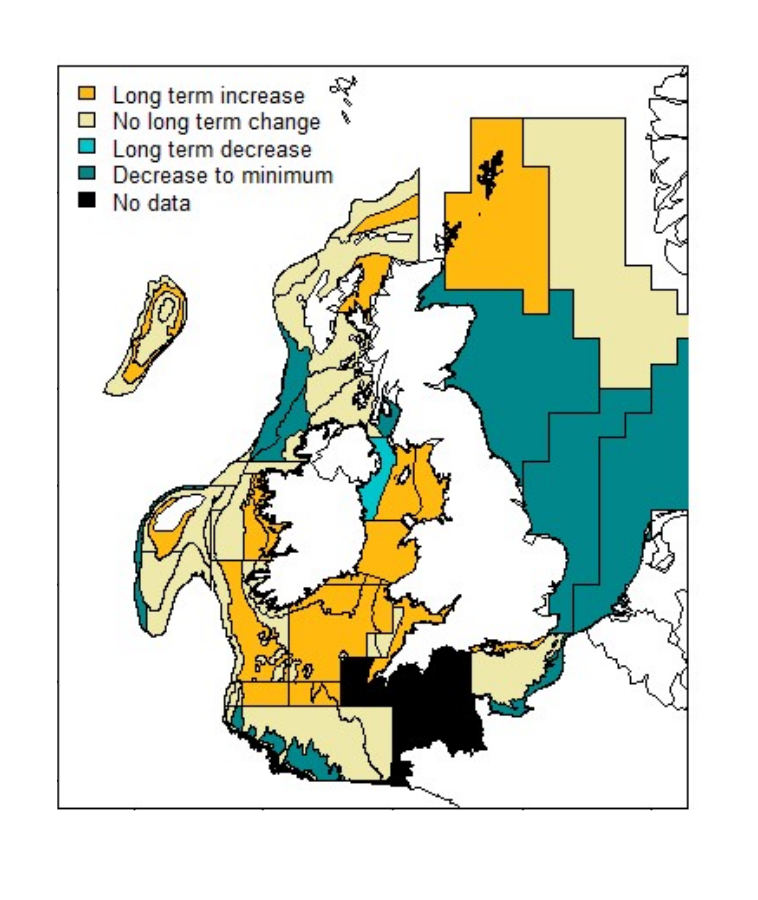
C7a: Long-term changes in the typical length of demersal fish communities in UK waters and surrounding areas, 1983 to 2020
Source: The Convention for the Protection of the Marine Environment of the North-East Atlantic
Download the data for this chart in .csv format
Notes on Figure
The assessment period differs depending on the survey, starting at the earliest in 1983 in five of six Greater North Sea subdivisions (i.e. excluding the Eastern English Channel) and ending in either 2019 or 2020.
The legend entries are defined as follows:
- Long-term increase: an increase in the size of fish within the community over the period
- No long-term change: no change in the size of fish
- Long-term decrease: the size of fish in the community has decreased from an earlier period but has increased from a more recent period
- Decrease to minimum observed state: the fish in the community are currently at the lowest size recorded
In the 2025 update of this indicator, table C7a has been added, summarising the assessment results which feed into the map. Whilst the table and map are linked, surveys often overlap. Where this happens, an aggregated result is shown in the map. More information about the surveys, their location and the technical areas within the surveys (strata) can be found in OSPARs Coordinated Environmental Monitoring Programme (CEMP) guidelines for common indicators FC1, FC2, FC3, and FW3.
Trend Description
In the central and southern North Sea and on the shelf edge to the west of Scotland, the proportion of individuals within demersal communities, relative to the early 1980s, has shifted towards smaller fish (low typical length) indicating this community is in poorer health. In the northern North Sea, eastern English Channel, Irish Sea, the Bristol Channel and much of the Celtic Seas south of Ireland, the health of the demersal fish community has improved since the 1990s, with an increasing contribution of large individuals (increasing typical length).
Assessment: C7a
No assessment of change was undertaken for this indicator as a suitable time series is not yet available in the Environmental Indicator Framework.
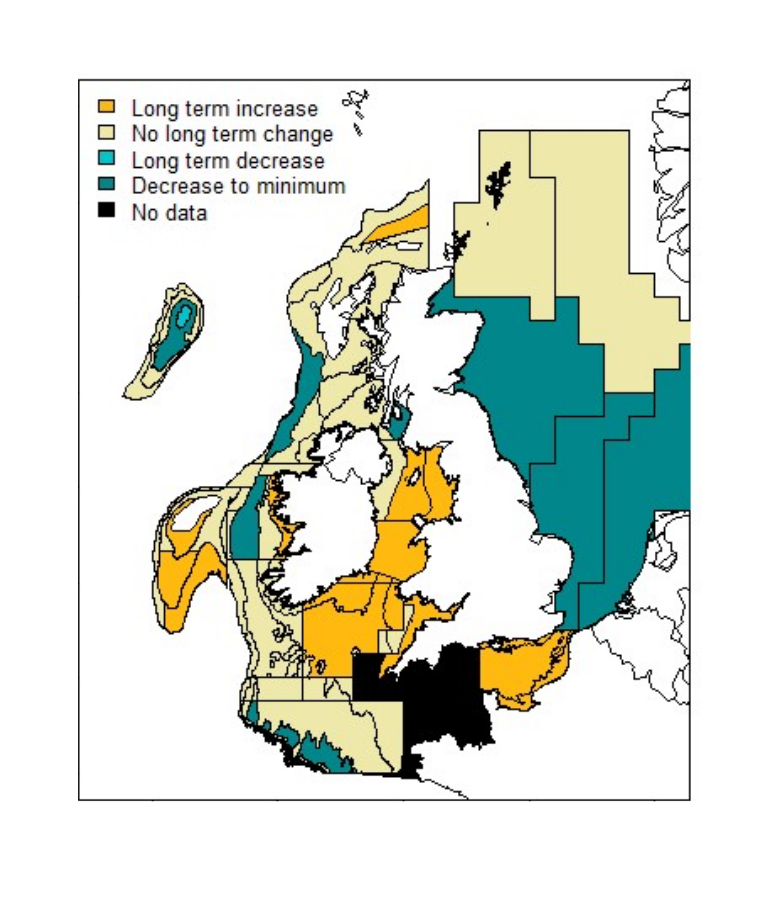
C7b: Long-term changes in the mean maximum length of demersal fish communities in UK waters and surrounding areas, 1983 to 2020
Source: The Convention for the Protection of the Marine Environment of the North-East Atlantic
Download the data for this chart in .csv format
Notes on Figure
The assessment period differs depending on the survey, starting at the earliest in 1983 in five of six Greater North Sea subdivisions (i.e. excluding the Eastern English Channel) and ending in either 2019 or 2020.
The legend entries are defined as follows:
- Long-term increase: the fish are shifting back towards larger species
- No long-term change: no change in the composition of fish communities
- Long-term decrease: more smaller species than in an earlier period but less than in a more recent one
- Decrease to minimum observed state: the community has the highest proportion of small species recorded
In the 2025 update of this indicator, table C7b was added, summarising the assessment results shown in the map. Whilst the table and map are linked, surveys often overlap. Where this happens, an aggregated result is shown in the map. More information about the surveys, their location and the technical areas within the surveys (strata) can be found in OSPAR’s Coordinated Environmental Monitoring Programme (CEMP) guidelines for common indicators FC1, FC2, FC3, and FW3.
Trend Description
In the central and southern North Sea and on the shelf edge to the west of Scotland, the balance of species within demersal communities, relative to the early 1980s, has shifted towards smaller species (low mean maximum length), indicating this community is in poorer health. There has been no long-term change in mean maximum length of demersal fish communities in the northern North Sea. In the eastern English Channel, Irish Sea, the Bristol Channel and much of the Celtic Seas south of Ireland, the health of the demersal fish community has improved since the 1990s, with an increasing contribution of species that can grow large (increasing mean maximum length).
Assessment: C7b
No assessment of change was undertaken for this indicator as a suitable time series is not yet available in the Environmental Indicator Framework.
Metadata
| Headline | Health of our seas |
|---|---|
| Primary Goal | Restored nature |
| Relevant Goals | Restored nature |
| Relevant Targets | Making sure populations of key species are sustainable with appropriate age structures, Reversing the loss of marine biodiversity and, where practicable, restoring it, Ensuring seafloor habitats are productive and sufficiently extensive to support healthy, sustainable ecosystems |
| Natural Capital | Condition of assets - seas |
| Related Commitments | UK Marine Strategy (Marine Strategy Regulations 2010), Convention for the Protection of the Marine Environment of the North-East Atlantic (OSPAR), Relevant to Sustainable Development Goal 14, International Council for Exploration of the Seas (ICES), Stock sustainability and reducing bycatch under the Joint Fisheries Statement |
| Geographical Scope | UK (Celtic Seas and Greater North Sea) |
| Development Status | Interim |
| First Reported | 2020 |
| Last updated | May 2025 |
| Latest Data | 2020 |
Return to Environmental Indicator Framework Collection Page
C8: Healthy seas: marine food webs functioning
Short Description
This indicator will track the health of our seas using metrics based on the size, structure and function of different feeding (trophic) levels in marine food webs. The indicator will focus on pelagic (water column) habitats and populations of key species groups within the food web. The indicator will also link to and complement C9 Healthy seas: Seafloor habitats functioning. These show whether ecosystems are healthy and are being used sustainably. Currently, the metrics within this indicator are being developed for the UK Marine Strategy Descriptors 1 (biodiversity), 4 (food webs) and 6 (seafloor integrity) and the Convention for the Protection of the Marine Environment of the North-East Atlantic (OSPAR).
Readiness and Links to Data
An interim indicator is presented here based upon the pilot assessment of feeding guilds, published as part of the OSPAR Quality Status Report (QSR) 2023. Additional data on modelled and observed fish feeding traits for the North Atlantic and Arctic Oceans has been published on Cefas Data Hub, and will be incorporated here in a future update to the Environmental Indicator Framework. A Food Webs Thematic Assessment, conducted via the OSPAR QSR (2023) is also available, which summarises the overall status of marine food webs in the OSPAR region.
Ongoing developments include the collation of more stomach content data to further resolve predator diets and to identify the drivers behind changes in feeding guild biomass. Stomach content data are publicly available from International Council for the Exploration of the Seas (ICES) stomach content data portal and the Cefas Integrated Database and Portal for Fish Stomach Records. Fisheries-independent survey data are also available from the ICES Database of Trawl Surveys (DATRAS).
Notes on Indicator
A chart is not currently presented in the Environmental Indicator Framework, but spatial representations and figures supporting this interim indicator can be accessed via the OSPAR QSR (2023) pilot assessment of feeding guilds.
There is currently no desired direction of change for this indicator, further work is planned to identify a baseline and drivers behind changes to determine whether food webs are improving or deteriorating. An increase or decrease in biomass in any of the feeding guilds may reflect an improvement or deterioration, depending on the cause of change. Anthropogenic pressures such as fishing activity, climate change and nutrient pollution can directly drive increases or decreases in the biomass of a feeding guild, depending on how the specific pressure affects habitat conditions, the fish assemblage, and their various prey. Such pressures can also have indirect effects across the food web, by reducing predator pressure from one feeding guild and causing increases in the biomass of fish prey in another feeding guild, for example. Conversely, a reduction in the biomass of one feeding guild that are prey for another could reflect recovery of the food web, as larger piscivorous fish biomass is restored via effective fisheries management. Whilst it is not possible to identify a driver for the changes presented here, change in the composition and biomass of feeding guilds could cascade through the food web, affecting fish prey (for example, zooplankton) and predator assemblages (for example, marine mammals and birds), and could impact the human food chain via disruption of edible components.
C8: Change in the biomass of fish feeding guilds in UK waters and surrounding areas, from 1997 to 2020
Source: The Convention for the Protection of the Marine Environment of the North-East Atlantic
Trend Description
Whilst further improvements to this indicator are planned to identify drivers behind the change and a desired direction of change, it shows that fish feeding guilds are changing and therefore are not stable which may be a cause for concern.
The biomass of planktivores (fish lower in the food web that feed on plankton) declined in the Celtic Sea and north-western North Sea but increased in the English Channel, Bristol Channel and west of Scotland.
The biomass of benthivores (fish lower in the food web that feed upon organisms on the sea floor) increased across the Irish Sea, to the north and west coast of Scotland, in the southern North Sea and eastern English Channel. There were spatially small-scale decreases in benthivore biomass south of Ireland in the Celtic Sea.
The biomass of pisco-crustivores (fish higher in the food web which feed upon small fish and crustaceans at the sea floor) was decreasing in some areas of the northern North Sea and between Scotland and Northern Ireland but increasing over much of the rest of the study area.
The biomass of piscivores (fish high in the food web which feed upon other fish) was increasing north and west of Scotland, in the Celtic Sea, northern Irish Sea, southwestern North Sea but decreasing in the west of the North Sea.
The latest OSPAR Thematic Assessment (2023) for food webs which covers all OSPAR Regions and indicators concludes that food webs are not in good environmental status.
Assessment: C8
No assessment was undertaken for this indicator as a suitable time series is not yet available in the Environmental Indicator Framework.
Metadata
| Headline | Health of our seas |
|---|---|
| Primary Goal | Restored nature |
| Relevant Goals | Restored nature |
| Relevant Targets | Making sure populations of key species are sustainable with appropriate age structures, Reversing the loss of marine biodiversity and, where practicable, restoring it, Ensuring that all fish stocks are recovered to and maintained at levels that can produce their maximum sustainable yield |
| Natural Capital | Condition of assets - seas |
| Related Commitments | Convention for the Protection of the Marine Environment of the North-East Atlantic (OSPAR), UK Marine Strategy (Marine Strategy Regulations 2010), International Council for Exploration of the Seas (ICES), Relevant to Sustainable Development Goal 14 |
| Geographical Scope | UK |
| Development Status | Interim |
| First Reported | 2024 |
| Last updated | May 2025 |
| Latest Data | 2020 |
Return to Environmental Indicator Framework Collection Page
C9: Healthy seas: seafloor habitats functioning
Short Description
This indicator will show changes in the natural functionality and extent of seafloor habitats able to support a healthy and productive ecosystem. The indicator is linked to the UK Marine Strategy (UKMS) Descriptor 6 (Seafloor Integrity). The indicator will be derived from the integration of metrics of individual broad habitat types and selected vulnerable habitats. Well-functioning seafloor habitats (physically and structurally) are both productive and sufficiently extensive, to carry out natural functionality, including the necessary ecological processes which underpin ecosystem goods and services, and are capable of supporting a healthy and sustainable ecosystem for the long term.
Readiness and Links to Data
An interim indicator is presented here that shows progress towards the UKMS target of achieving and maintaining GES for 2 benthic (seafloor) habitats (seagrass beds and horse mussel reefs) in UK seas.
The assessments used for this indicator have been reported under the UKMS Part One (2019). Data on benthic habitats, analytical methods and assessment are available, including information on the potential physical loss indicator.
The potential physical loss indicator will be updated (both the current assessment and a new assessment for the period 2018 to 2024) during the next round of the UKMS in 2025. The indicator may also be expanded to include additional habitats in a future update.
An additional indicator Sentinels of the Seabed used in the Convention for the Protection of the Marine Environment of the North-East Atlantic (OSPAR) Quality Status Report (QSR) 2023 will be piloted for the first time in UK waters as part of the UKMS Part One assessment in 2025. This indicator may cover the functionality aspect of C9, however further development work is required before it can be incorporated here.
Notes on Indicator
A graph is not yet presented for this indicator as only a single datapoint is available for both seagrass beds and horse mussel reefs up to the year 2016.
Habitat suitability models and information on activities that will cause irreversible loss of the habitat were spatially overlaid to predict area of potential habitat loss for seagrass beds and horse mussel reefs up to 2016. These habitats were chosen as they are both very fragile and vulnerable to pressures from human activities. They are also an important food source, refuge, and nursery ground for many species. It is important to note that the outputs from the habitat suitability models show ‘potential’ habitat. This may differ from the ‘realised’ (occupied) habitat.
While the currently available data predate the 25 Year Environment Plan, they provide the most recently available assessment of the condition of benthic habitats. They enable a better understanding of a baseline from which to measure progress towards the goals of the Environmental Improvement Plan when the indicator is next updated following the UKMS Part One assessment in 2025.
C9: Extent and distribution of potential habitat for seagrass beds and horse mussel reefs, to 2016
Source: Department of Agriculture, Environment and Rural Affairs of Northern Ireland, Joint Nature Conservation Committee, Marine Directorate (Scotland), Natural England, Natural Resources Wales, University of Hull
Trend Description
The UKMS target for either seagrass beds or horse mussel reefs was not met as the potential extent and distribution of each habitat is neither stable nor increasing. Up to 2016, 32 km2 (2%) of the potential habitat for seagrass beds (Zostera marina), and 39 km2 (0.5%) of the potential habitat for horse mussel reefs (Modiolus modiolus) has been lost. The main causes of potential physical loss to these habitat types are aquaculture, navigational dredging, dredge and spoil disposal, coastal development, and recreational activity.
Assessment: C9
No assessment was undertaken for this indicator as a suitable time series is not yet available in the Environmental Indicator Framework.
Metadata
| Headline | Not applicable |
|---|---|
| Primary Goal | Restored nature |
| Relevant Goals | Restored nature |
| Relevant Targets | Ensuring seafloor habitats are productive and sufficiently extensive to support healthy, sustainable ecosystems |
| Natural Capital | Condition of assets - seas |
| Related Commitments | Convention for the Protection of the Marine Environment of the North-East Atlantic (OSPAR), UK Marine Strategy (Marine Strategy Regulations 2010), Water Environment Regulations – The Water Environment (Water Framework Directive) (England and Wales) Regulations 2017, The Water Environment (Water Framework Directive) Regulations (Northern Ireland) 2017, Water Environment and Water Services (Scotland) Act 2003, Relevant to Sustainable Development Goal 14 |
| Geographical Scope | UK |
| Development Status | Interim |
| First Reported | 2023 |
| Last updated | May 2025 |
| Latest Data | 2016 |
Return to Environmental Indicator Framework Collection Page
C10: Productive seas: fish and shellfish stocks fished sustainably
Short Description
This indicator shows changes in the proportion of commercial fish and shellfish stocks that are within safe biological limits and fished sustainably. The indicator is derived from assessments of individual stocks. Where available, the assessment of stocks against their Maximum Sustainable Yield (MSY) will be incorporated into the overall indicator. The indicator is linked to UK Marine Strategy (UKMS) Descriptor 3 (Commercial Fish and Shellfish) and the Convention on Biological Diversity sustainable fisheries indicators and is derived from International Council for the Exploration of the Sea (ICES) and national stock assessments.
Readiness and Links to Data
An interim indicator is presented here that shows: C10a, the percentage of stocks of UK interest fished at or below the level capable of producing MSY (FMSY); and C10b, the percentage of stocks with Spawning Stock Biomass (SSB) at or above the level capable of producing MSY (MSY Btrigger).
The assessments used for this interim indicator have been reported under the UKMS Part One (2019) using data from 1990 to 2015 for FMSY and from 1990 to 2016 for MSY Btrigger. Data are also published annually in the form of other indicator UK Biodiversity Indicator – Sustainable fisheries. Data on national shellfish stock assessments are not currently included in the interim C10 indicator but were published as part of the UKMS Part One (2019). Further updates will be made in the next update for UKMS Descriptor 3 and included in the final C10 indicator.
Notes on Indicator
Indicator component C10a uses the same metrics as UKMS Descriptor 3.1 (commercial fish), showing the categories that can be assigned to a fish stock considering the reference point FMSY for fishing pressure that will provide the maximum sustainable yield in the long term. Stocks fished above FMSY are considered overfished and will deplete over time. In 2022, a fourth category was included in this indicator ‘percentage in FMSY range’ for few stocks managed under Multi Annual Plans for fisheries and fished above FMSY.
C10a: Marine fish (quota) stocks of UK interest harvested sustainably, 1990 to 2020
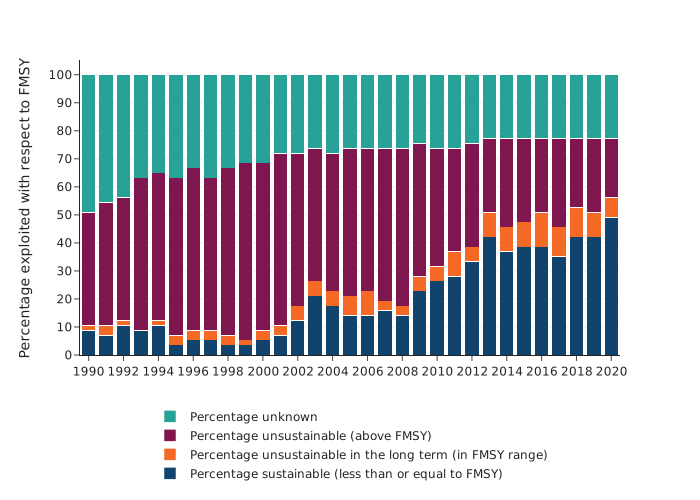
Source: Joint Nature Conservation Committee, Department for Environment, Food & Rural Affairs
Download the data for this chart in .csv format
Notes on Component
Based on 57 stocks of interest to the UK, derived from ICES and national stock assessment reports. When new stock assessment data are incorporated into the model that compiles this time series, all data are subject to minor revisions.
Trend Description
Overall, there is evidence of a positive trend towards a greater proportion of stocks fished sustainably in both the long term and in recent years. There is also a decreasing percentage of stocks with unknown status, from almost 50% in 1990 to 23% in 2020. The percentage of fish stocks (including Norway lobster, Nephrops norvegicus) fished at or below FMSY, and/or within acceptable mortality range levels, has increased from 10% in 1990 to 56% in 2020. The percentage fished above FMSY has decreased over the same time period, from 40% of UK quota-fish stocks assessed being fished at levels of fishing pressure above FMSY in 1990 to 21% in 2020.
Assessment: C10a
Assessments of change are made for the short term, as well as medium and long-term periods. In every case there has been an improvement recorded.
Change since 2018 has also been assessed, with an increase (improvement) in the percentage of quota fish stocks fished at less than or equal to FMSY detected. However, this is based on 3 data points so should be considered as indicative and not evidence of a clear trend.
The assessment results reported here are not directly comparable with other analyses published elsewhere that use different methodologies to explore these indicator components.
Further information on this assessment, along with details on the methodology, is provided in the Assessment guide page. Summaries by Environmental Improvement Plan goal and information on indicator links are presented in the Assessment results pages.
| Component | Subcomponent | Period | Date range | Percentage change | Smoothing function | Assessment of change |
|---|---|---|---|---|---|---|
| C10a | Percentage sustainable | Short term | 2015 to 2020 | 25.58 | Loess | Improvement |
| C10a | Percentage sustainable | Medium term | 2010 to 2020 | 81.59 | Loess | Improvement |
| C10a | Percentage sustainable | Long term | 1990 to 2020 | 355.55 | Loess | Improvement |
Note that assessment categories for the short, medium and long term were assigned based on smoothed data, so percentage change figures in Tables C10a may differ from unsmoothed values quoted elsewhere. Percentage change refers to the difference seen from the first to last year in the specified date range.
C10b: Marine fish (quota) stocks of UK interest with biomass at levels capable of maintaining full reproductive capacity, 1990 to 2020
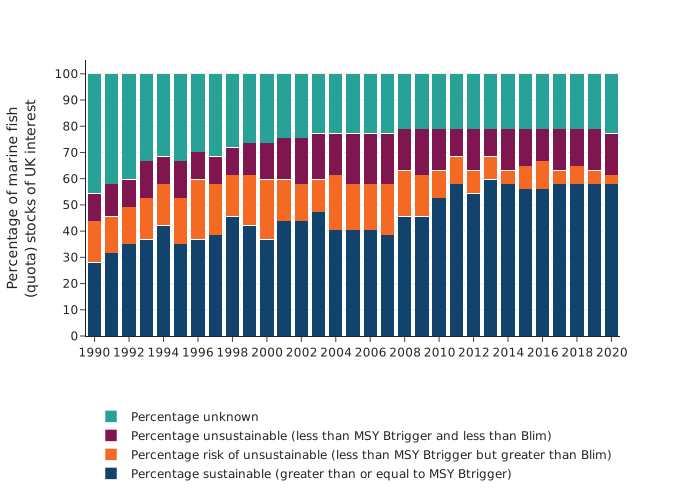
Source: Joint Nature Conservation Committee, Department for Environment, Food & Rural Affairs
Download the data for this chart in .csv format
Notes on Component
Based on 57 stocks of interest to the UK, derived from ICES and national stock assessment reports. When new stock assessment data are incorporated into the model that compiles this time series, all data are subject to minor revisions.
Stocks at risk of reproductive impairment are split into 2 categories. Those with SSB less than MSYBtrigger and greater than Blim are deemed to be lower risk, and those with SSB below MSYBtrigger and below Blim are deemed to be higher risk.
Trend Description
Overall, there is evidence of a positive trend for fish stocks remaining within safe biological limits in the long term, but little change in recent years. There is also a decreasing percentage of stocks with unknown status, from almost 46% in 1990 to 16% in 2020. To maintain the reproductive capacity of stocks, each SSB should be at or above the level capable of producing maximum sustainable yield (that is, MSY Btrigger). The percentage of stocks subject to quota management and achieving this goal has increased from 28% in 1990 to 58% in 2020.
Assessment: C10b
Assessments of change are made for the short term, as well as medium and long-term periods. In every case there has been an improvement recorded.
Change since 2018 has also been assessed. There was little or no change in marine fish stocks with biomass at levels capable of maintaining full reproductive capacity (that is, greater than or equal to MSY BTrigger). However, this is based on 3 data points so should be considered as indicative and not evidence of a clear trend.
The assessment results reported here are not directly comparable with other analyses published elsewhere that use different methodologies to explore these indicator components.
Further information on this assessment, along with details on the methodology, is provided in the Assessment guide page. Summaries by Environmental Improvement Plan goal and information on indicator links are presented in the Assessment results pages.
| Component | Subcomponent | Period | Date range | Percentage change | Smoothing function | Assessment of change |
|---|---|---|---|---|---|---|
| C10b | Percentage sustainable | Short term | 2015 to 2020 | 3.14 | Loess | Improvement |
| C10b | Percentage sustainable | Medium term | 2010 to 2020 | 17.26 | Loess | Improvement |
| C10b | Percentage sustainable | Long term | 1990 to 2020 | 93.66 | Loess | Improvement |
Note that assessment categories for the short, medium and long term were assigned based on smoothed data, so percentage change figures in Tables C10b may differ from unsmoothed values quoted elsewhere. Percentage change refers to the difference seen from the first to last year in the specified date range.
Metadata
| Primary Goal | Resources |
|---|---|
| Relevant Goals | Resources |
| Relevant Targets | Ensuring that all fish stocks are recovered to and maintained at levels that can produce their maximum sustainable yield |
| Natural Capital | Condition of assets - seas |
| Related Commitments | UK Marine Strategy (Marine Strategy Regulations 2010), Relevant to Sustainable Development Goals 12 and 14, Stock sustainability under the Joint Fisheries Statement |
| Geographical Scope | UK |
| Development Status | Interim |
| First Reported | 2019 |
| Latest Data | 2020 |
| Last Updated | Feb 2026 |
Return to Environmental Indicator Framework Collection Page
C11: Status of sensitive fish species
Short Description
This indicator tracks changes in the occurrence of sensitive fish species at risk of depletion. The indicator is derived from individual assessments of populations based on scientific survey data; note that a subset of species may also be included in indicator C6 Diverse seas: status of threatened and declining features. The indicator is linked to the UK Marine Strategy Descriptor 1 (biodiversity) and the Convention for the Protection of the Marine Environment of the North-East Atlantic (OSPAR).
Readiness and Links to Data
Data on the occurrence of sensitive fish species are drawn from OSPAR common indicator ‘Recovery of Sensitive Fish Species’, produced as part of the OSPAR Quality Status Report (QSR) 2023.
Notes on Indicator
Species are assessed for evidence of a significant increase or decrease in frequency of occurrence across the assessment period (2015 to 2020) compared to a reference period, and results of these assessments are presented here. There is an aspiration to reverse any long-term depletion of species populations, so the basis of the assessment is a long-term reference period inclusive of all years prior to the assessment period for which there are robust survey data (that is, 1983 to 2014). To identify whether depletion is ongoing or if signs of recovery are evident, a secondary short-term reference period is also defined (here, 2009 to 2014).
C11: Long-term and short-term changes in the occurrence of sensitive fish species, Greater North Sea and Celtic Seas, 1983 to 2020
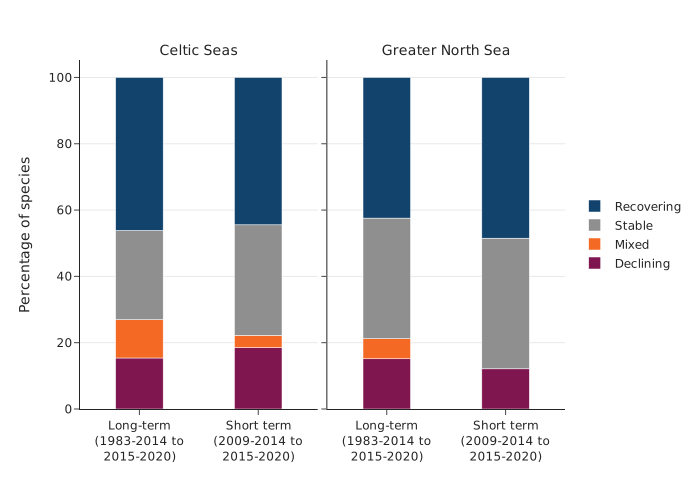
Source: The Convention for the Protection of the Marine Environment of the North-East Atlantic
Download the data for this chart in .csv format
Notes on Figure
Figure C11 is based on the assessment results for 33 populations of sensitive fish species found in fisheries surveys in the Greater North Sea and in the Celtic Seas, 26 and 27 populations in the long-term and short-term assessments respectively. Additionally, in both the long-term and short-term assessments for the Greater North Sea, 11 populations had insufficient data to assess against thresholds. For the long- and short-term assessments for the Celtic Seas, 24 and 23 populations respectively had insufficient data to assess against thresholds.
Each regional sea was surveyed multiple times and surveys can be conducted across differing extents of each regional sea. A mixed category has been included for those species populations where both increases and decreases were detected across the relevant region.
A more detailed assessment can be found on the OSPAR indicator page for the Recovery of Sensitive Fish Species.
Trend Description
In the Celtic Seas, over the long term, 12 (46%) of the 26 species assessed are recovering, while 4 (15%) of the 26 species assessed show a significant decline in occurrence, over the assessment period (2015 to 2020) compared to the long-term reference period (1983 to 2014).
In the Celtic Seas, over the short term, 12 (44%) of the 27 species assessed are recovering, while 5 (19%) of the 27 species assessed show a significant decline in occurrence, over the assessment period (2015 to 2020) compared to the short-term reference period (2009 to 2014).
In the Greater North Sea, over the long term, 14 (42%) of the 33 species assessed are recovering, while 5 (15%) of the 33 species assessed show a significant decline in occurrence, over the assessment period (2015 to 2020) compared to the long-term reference period (1983 to 2014).
In the Greater North Sea, over the short term, 16 (48%) of the 33 species assessed are recovering, while 4 (12%) of the 33 species assessed show a significant decline in the assessment period (2015 to 2020) compared to the short-term reference period (2009 to 2014).
Assessment: C11
No assessment of change was undertaken for this indicator as a suitable time series is not yet available in the Environmental Indicator Framework.
Metadata
| Headline | Not applicable |
|---|---|
| Primary Goal | Resources |
| Relevant Goals | Resources |
| Relevant Targets | Ensuring that all fish stocks are recovered to and maintained at levels that can produce their maximum sustainable yield |
| Natural Capital | Condition of assets - seas |
| Related Commitments | Convention for the Protection of the Marine Environment of the North-East Atlantic (OSPAR), UK Marine Strategy (Marine Strategy Regulations 2010), Relevant to Sustainable Development Goals 12 and 14, Stock sustainability and bycatch under the Joint Fisheries Statement |
| Geographical Scope | UK (Celtic Seas and Greater North Sea) |
| Development Status | Final |
| First Reported | 2022 |
| Last updated | May 2025 |
| Latest Data | 2020 |