Environmental Indicator Framework Theme A (Air)
Published 1 December 2025
Applies to England

© Crown copyright 2025
This publication is licensed under the terms of the Open Government Licence v3.0 except where otherwise stated. To view this licence, visit nationalarchives.gov.uk/doc/open-government-licence/version/3 or write to the Information Policy Team, The National Archives, Kew, London TW9 4DU, or email: psi@nationalarchives.gov.uk.
Where we have identified any third party copyright information you will need to obtain permission from the copyright holders concerned.
This publication is available at https://www.gov.uk/government/publications/environmental-indicator-framework-theme-a-air/environmental-indicator-framework-theme-a-air
A1: Emissions for five key air pollutants
Short Description
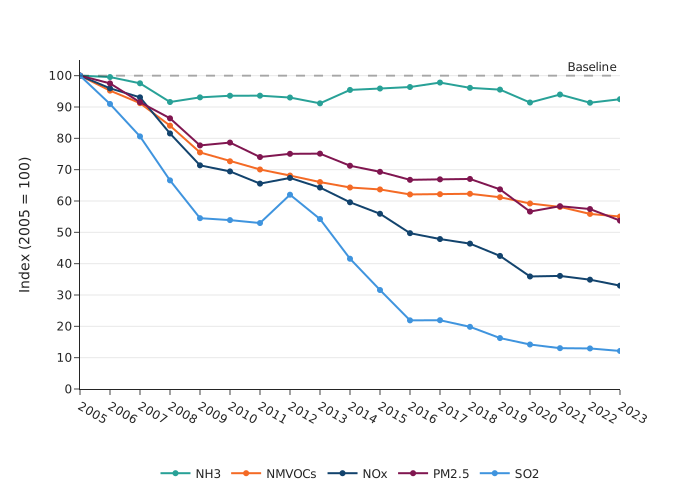
This indicator shows changes in the estimated emissions of the 5 key air pollutants: fine particulate matter (PM2.5), nitrogen oxides (NOx), ammonia (NH3), non-methane volatile compounds (NMVOCs) and sulphur dioxide (SO2).
Air pollution has negative impacts on human health and the environment. Long-term exposure to particulate matter contributes to the risk of developing cardiovascular diseases and lung cancer. As well as being emitted directly, particulate matter can be formed in the atmosphere from reactions between other pollutants, of which SO2, NOx, NMVOCs and NH3 are the most important. NOx and NH3 emissions can be deposited in soils or in rivers and lakes, for example, through rain. Resulting nutrient nitrogen deposition affects nutrient levels and species diversity in sensitive environments, for example, by encouraging algae growth in lakes and water courses. Chemical reactions between NOx and NMVOCs produce ozone (O3), which damages human health and crops. O3 damages habitats, which impacts on wildlife, and ozone can react with other chemicals in the air to form smog.
This indicator provides an assessment of pressures on the atmosphere caused by the emissions of the 5 key air pollutants, which, when concentrated in the air or later deposited into soil or water, have impacts on human health and ecosystems.
Readiness and Links to Data
Modelled emissions data are published annually in the Air Pollutant Inventories 2005-2023. These data may differ from the data appearing in this indicator because of differences in the timing of annual updates and because the entire time series is revised when new data points are added.
Notes on Indicator
Consultation with the devolved administrations led to an agreement to limit updates to historic devolved administration air pollutant inventories to 2005 as this is the base year for legally binding emissions reductions commitments. This also allows more resource to be allocated to the development of more recent years of the time series for which there is better access to updated methods and data. A UK-wide historic time series of emissions for each of the air pollutants included within this indicator remains available dating back to 1970. These data are published each February as part of Defra’s annual reporting on the Emissions of air pollutants.
It is not possible to measure precisely how much of each pollutant is emitted into the atmosphere by every source. Therefore, modelling is used in the Air Pollutant Inventories to estimate the level of activity of each source and the emissions released from each type of source. All modelling has an associated level of uncertainty, and the results for each pollutant included within this indicator have a different level of uncertainty depending on the underlying data and assumptions that contribute to the calculations. More information can be found in the UK Informative Inventory Report and in the annual Air Pollutant Inventories for England, Scotland, Wales, and Northern Ireland report. However, in summary, estimates of the uncertainty in emissions for 2023 using error propagation range from +/- 9% for NOx to +/- 32% for PM2.5. Uncertainties for 2005 emissions range from +/- 6% for SO2 to +/- 22% for NH3. Further information on uncertainties in emissions can be found in the UK Informative Inventory Report.
A1: Emissions for five key air pollutants in England, 2005 to 2023
Source: Ricardo Energy and Environment
Download the data for this chart in .csv format
Trend Description
Estimated emissions for all 5 key air pollutants (NH3, PM2.5, NOx, NMVOCs and SO2) in England have fallen over the latest 16 years for which annual, country-level data are available. Emissions of SO2 have seen the greatest reductions, falling by 88% between 2005 and 2023. Emissions of NOx, NMVOCs and PM2.5 have also fallen considerably, by 67%, 45% and 46% respectively; and emissions of NH3 have fallen by 8% over the same period.
Assessment: A1
Assessments of all air pollutants measured by the A1 indicator (NH3, PM2.5, NOx, NMVOCs and SO2) have shown an improvement over the short, medium and long term, except for NH3 which showed little or no change over the medium term. More detailed reporting mentioned in the ‘Readiness and links to data’ section for this indicator may provide insights into the factors behind this change in NH3 emissions. This assessment does not consider whether any improvement is on a sufficient scale for meeting targets. Projections towards air emissions targets set at a UK scale are available to supplement this assessment.
Change since 2018 matches the short term time period for this indicator, over which there has been a decrease (improvement) in the emissions of all 5 air pollutants included.
Further information on this assessment, along with details on the methodology, is provided in the Assessment guide page. Summaries by Environmental Improvement Plan goal and information on indicator links are presented in the Assessment results pages.
| Component | Subcomponent | Period | Date range | Percentage change | Smoothing function | Assessment of change |
|---|---|---|---|---|---|---|
| A1 | NH3 | Short term | 2018 to 2023 | -5.16 | Loess | Improvement |
| A1 | NH3 | Medium term | 2013 to 2023 | -2.88 | Loess | Little or no change |
| A1 | NH3 | Long term | 2005 to 2023 | -9.60 | Loess | Improvement |
| A1 | NMVOCs | Short term | 2018 to 2023 | -10.44 | Loess | Improvement |
| A1 | NMVOCs | Medium term | 2013 to 2023 | -16.44 | Loess | Improvement |
| A1 | NMVOCs | Long term | 2005 to 2023 | -45.96 | Loess | Improvement |
| A1 | NOx | Short term | 2018 to 2023 | -26.94 | Loess | Improvement |
| A1 | NOx | Medium term | 2013 to 2023 | -47.29 | Loess | Improvement |
| A1 | NOx | Long term | 2005 to 2023 | -68.14 | Loess | Improvement |
| A1 | PM2.5 | Short term | 2018 to 2023 | -16.43 | Loess | Improvement |
| A1 | PM2.5 | Medium term | 2013 to 2023 | -25.79 | Loess | Improvement |
| A1 | PM2.5 | Long term | 2005 to 2023 | -46.90 | Loess | Improvement |
| A1 | SO2 | Short term | 2018 to 2023 | -23.80 | Loess | Improvement |
| A1 | SO2 | Medium term | 2013 to 2023 | -71.53 | Loess | Improvement |
| A1 | SO2 | Long term | 2005 to 2023 | -86.39 | Loess | Improvement |
Note that assessment categories for short, medium and long term were assigned based on smoothed data so percentage change figures in Table A1 may differ from unsmoothed values quoted elsewhere. Percentage change refers to the difference seen from the first to last year in the specified date range.
Metadata
| Headline | Air quality |
|---|---|
| Primary Goal | Air |
| Relevant Goals | Air, Restored nature |
| Relevant Targets | Meeting legally binding targets to reduce emissions of five damaging air pollutants, Restoring 75% of our one million hectares of terrestrial and freshwater protected sites to favourable condition, securing their wildlife value for the long term |
| Natural Capital | Pressure on natural capital assets |
| Related Commitments | Emissions Reduction Commitments for the UK |
| Geographical Scope | England |
| Development Status | Final |
| First Reported | 2019 |
| Last updated | Dec 2025 |
| Latest Data | 2023 |
Return to Environmental Indicator Framework Collection Page
A2: Emissions of greenhouse gases from natural resources, waste and fluorinated gases
Short Description
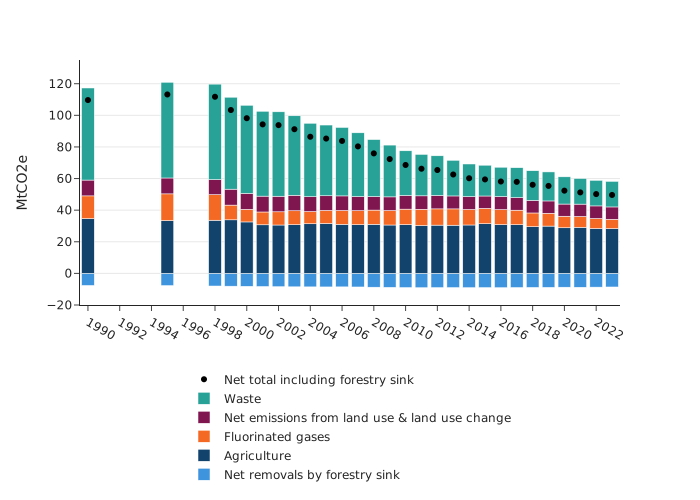
This indicator tracks the changes in the estimates of greenhouse gas (GHG) emissions from natural resources, waste and fluorinated gases as described in the Powering Up Britain: Net Zero Growth Plan. GHGs contribute to global climate change which is a pressure on many aspects of our environment. The indicator shows the annual net amount of GHG emissions from land use and land use change, forestry, agriculture, and waste sectors and from the use of fluorinated gases. It measures GHG emissions on a ‘territorial’ basis, which means that only emissions occurring within England’s borders are included.
Readiness and Links to Data
Underlying modelled data are published annually in the Greenhouse Gas Inventories 1990 to 2023. Additional information is also published annually in UK Spatial Emissions Methodology 2022 and mapping of the UK Greenhouse Gas Inventory sectors to the sectors used in this indicator is available in the Net Zero Strategy: emissions taxonomy.
Notes on Indicator
The data in this indicator are reflective of the current definition for GHGs from natural resources, waste and fluorinated gases, they may be subject to change in future updates.
All emission estimates include the basket of 7 GHGs set out in the Intergovernmental Panel on Climate Change’s (IPCC) Kyoto Protocol: carbon dioxide (CO2), methane (CH4), nitrous oxide (N2O), hydrofluorocarbons (HFCs), perfluorocarbons (PFCs), sulphur hexafluoride (SF6) and nitrogen trifluoride (NF3). The estimates use the global warming potentials from the IPCC's Fifth Assessment Report (AR5 without feedback).
It is not possible to measure precisely how much of each pollutant is emitted into the atmosphere by every source. Therefore, modelling is used in the GHG Inventories to estimate the level of activity of each source and the emissions released from each type of source. All modelling has an associated level of uncertainty, and the results for each source included within this indicator have a different level of uncertainty depending on the underlying data and assumptions that contribute to the calculations. More information can be found in the UK Greenhouse Gas Inventory, 1990 to 2023: Annual Report for submission under the Framework Convention on Climate Change. However, in summary, the level of uncertainty in the figure reported by the inventory for total emissions of GHGs in the UK for 2023 using Monte Carlo simulation is estimated to be 2.8% and the equivalent figure for 1990 is estimated to be 4.9%.
In 2023, the total net emissions from the sectors included within this indicator accounted for approximately 15% of the total emission reported for England.
A2: Emissions of greenhouse gases from natural resources, waste and fluorinated gases in England, 1990 to 2023
Source: Department for Energy Security and Net Zero
Download the data for this chart in .csv format
Notes on Figure
No data are available for 1991 to 1994 inclusive, 1996 and 1997.
Trend Description
Although there was a small initial increase in net emissions of GHGs from natural resources, waste and fluorinated gases in England between 1990 and 1995, total emissions have fallen by 55% across the full time period covered by this indicator, from 110 million tonnes of carbon dioxide equivalent (MtCO2e) in 1990 to 50 MtCO2e in 2023. Net GHG emissions have fallen from all sectors included within the indicator; however, the greatest reduction has been achieved in the waste sector (42 MtCO2e or 72%). Emissions from fluorinated gases, agriculture, and net emissions from land use and land use change have fallen by 59%, 18% and 22% respectively. Net removals by the forestry sector have increased by 13%.
Emissions from agriculture and net removals by the forestry sector have fluctuated over the last 20 years, but overall, while emissions from the former show a small improvement, emissions from the latter show little change over the last 20 years. More recently, in the latest 10 years for example, emissions of GHGs from the waste sector have continued to fall considerably, whereas net emissions from land use and land use change have fallen more gradually. Emissions from fluorinated gases also fell considerably in the latest 10 years, mostly offsetting increases seen in this sector during the previous decade.
Assessment: A2
A decrease (improvement) in emissions of GHGs from natural resources, waste and fluorinated gases has been observed over the short-, medium- and long-term assessment periods. This assessment does not consider whether any improvement is on a sufficient scale for meeting targets.
Change since 2018 has also been assessed, which matches our short-term assessment. There has been decrease (improvement) in emissions of GHGs from natural resources, waste and fluorinated gases over this time period.
Further information on this assessment, along with details on the methodology, is provided in the Assessment guide page. Summaries by Environmental Improvement Plan goal and information on indicator links are presented in the Assessment results pages.
| Component | Subcomponent | Period | Date range | Percentage change | Smoothing function | Assessment of change |
|---|---|---|---|---|---|---|
| A2 | Net total including forestry sink | Short term | 2018 to 2023 | -8.68 | Loess | Improvement |
| A2 | Net total including forestry sink | Medium term | 2013 to 2023 | -20.64 | Loess | Improvement |
| A2 | Net total including forestry sink | Long term | 1990 to 2023 | -55.02 | Loess | Improvement |
Note that assessment categories for the short, medium and long term were assigned based on smoothed data, so percentage change figures in Table A2 may differ from unsmoothed values quoted elsewhere. Percentage change refers to the difference seen from the first to last year in the specified date range.
Metadata
| Headline | Greenhouse gas emissions |
|---|---|
| Primary Goal | Climate change |
| Relevant Goals | Climate change |
| Relevant Targets | Continuing to cut net greenhouse gas emissions including from land use, land use change, the agriculture and waste sectors and the use of fluorinated gases, The UK Climate Change Act commits the UK to reducing net greenhouse gas emissions by at least 100% of 1990 levels (net zero) by 2050 |
| Natural Capital | Pressure on natural capital assets |
| Related Commitments | UN Framework Convention on Climate Change (UNFCCC) greenhouse gas emissions inventory data for Agriculture, Land Use, Land Use Change and Forestry (LULUCF), Waste Management and Industrial Processes, The UK Climate Change Act 2008 requires an annual report by the Committee on Climate Change to parliament on whether the UK is on course to meet its carbon budgets and targets |
| Geographical Scope | England |
| Development Status | Final |
| First Reported | 2020 |
| Last updated | Dec 2025 |
| Latest Data | 2023 |
Return to Environmental Indicator Framework Collection Page
A3: Concentrations of fine particulate matter (PM2.5) in the air
Short Description
This indicator is an assessment of clean air (reporting the condition of the atmosphere as an asset). It measures the level of people’s long-term exposure to airborne fine particulate matter (PM2.5). Long-term exposure to particulate matter contributes to the risk of developing diseases, such as cardiovascular disease and lung cancer, as well as other long-term health impacts. The main sources of PM2.5 pollution are combustion in the residential, public and commercial sectors; industrial processes; road transport and agriculture.
The Environmental Targets (fine particulate matter) (England) Regulations 2023 set 2 targets for PM2.5 in England to be met by the end of 2040. One, is a minimum level of reduction in the average concentration people are exposed to. The other, is a maximum concentration level which should not be exceeded. Both targets are based on measurements of PM2.5 concentrations taken at national monitoring sites throughout England. Interim targets for 2028 were published in the Environmental Improvement Plan 2023.
Readiness and Links to Data
The data in this indicator are published annually on the PM2.5 Targets (PERT and AMCT) page of the UK-AIR website. These data are used to assess compliance with the Population Exposure Reduction Target (PERT) and the Annual Mean Concentration Target (AMCT) for PM2.5, although the assessments used to monitor progress towards the former (see Methodology for calculating progress towards the PM2.5 targets) differ from the trend assessments reported in this indicator.
Notes on Indicator
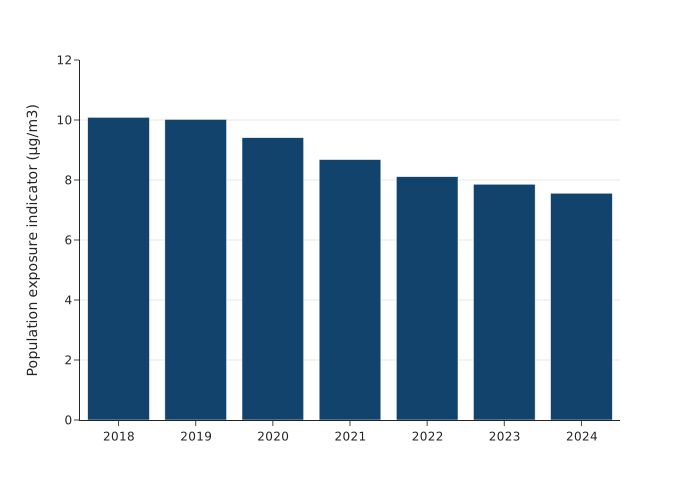
Population exposure to PM2.5 is represented by the population exposure indicator (A3i), calculated using measurements of annual mean concentrations of PM2.5 at representative Automatic Urban and Rural Network (AURN) monitoring sites. The monitoring sites are spread geographically across England, they reflect population density and are located in areas where concentrations are typical of where most people in that region live. Monitoring sites characterised as ‘urban background’ (and, in some instances, ‘suburban background’) meet these criteria. Other considerations, such as representing areas of deprivation, are also taken into account when establishing new sites. This enables the indicator to account for most of the population living in densely populated urban areas, where concentrations are likely to be greatest.
The calculation approach (see Methodology for calculating progress towards the PM2.5 targets) incorporates a statistical method recommended by experts to account for the large change in the number of PM2.5 monitoring sites expected as a result of the ongoing expansion of the AURN. A decrease in the population exposure indicator represents a reduction in the risk to the nation’s health from PM2.5.
The annual mean concentration of PM2.5 (A3ii) indicates the concentration at a particular location, and it varies from year-to-year due to a range of factors such as weather conditions, as well as pollutant emissions. A reduction in the maximum annual mean concentration measured and a reduction in the number of locations above the annual mean concentration target shows that concentrations are reducing in the areas where they are the highest.
A3i: Population exposure to fine particulate matter (PM2.5) in England, 2018 to 2024
Source: Department for Environment, Food & Rural Affairs
Download the data for this chart in .csv format
Notes on Figure
Each datapoint in Figure A3i is a 3-year average to reduce interannual variability due to factors such as weather and other temporary external events and to provide a more stable trend. Datapoints represent the final year in the 3-year moving average time periods, therefore, the 2024 data point, for example, includes data from 2022 to 2024.
The number of AURN monitoring sites meeting the required data capture threshold for inclusion in the population exposure indicator changes from year to year. Overall however, the number of sites has increased over the time period covered by this indicator, and it will continue to do so over the next few years as the monitoring network expands.
Some PM2.5 is naturally produced, for example, from sea salt or dust, so it is not possible for the population exposure indicator for PM2.5 to reach zero.
Trend Description
The population exposure indicator for PM2.5 in England has fallen from 10.1 micrograms per cubic metre (μg per m3) in 2018 to 7.6 μg per m3 in 2024, a decrease of 2.5 μg per m3, or 25.1% over the latest 6 years for which data are available.
Assessment: A3i
Concentrations of PM2.5 have shown a decrease (improvement) over the short-term assessment period. The time series is not yet long enough to make a trend assessment over the medium- and long-term time periods. This assessment does not consider whether these improvements are on a sufficient scale for meeting any targets; however, information on how the data in this indicator are used to measure progress towards the Environment Act PM2.5 targets can be found on the UK-Air website.
Change since 2018 has also been assessed, which showed a decrease (improvement) in concentrations of PM2.5.
Further information on this assessment, along with details on the methodology, is provided in the Assessment guide page. Summaries by Environmental Improvement Plan goal and information on indicator links are presented in the Assessment results pages.
| Component | Period | Date range | Percentage change | Smoothing function | Assessment of change |
|---|---|---|---|---|---|
| A3i | Short term | 2019 to 2024 | -24.55 | Moving average data | Improvement |
| A3i | Medium term | N/A | N/A | N/A | Not assessed |
| A3i | Long term | N/A | N/A | N/A | Not assessed |
Note that percentage change refers to the difference seen from the first to last year in the specified date range. Assessment results presented here may differ from those used to monitor progress towards the PERT (see PM2.5 Targets (PERT and AMCT)) because the latter accounts for changes in the number of monitoring sites over time, whereas the former does not.
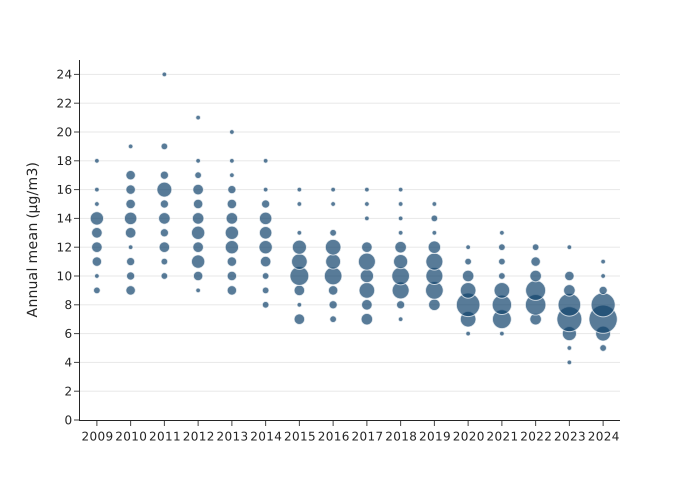
A3ii: Concentrations of fine particulate matter (PM2.5) at AURN monitoring sites in England, 2009 to 2024
Source: Department for Environment, Food & Rural Affairs
Download the data for this chart in .csv format
Notes on Figure
Figure A3ii shows the distribution of annual mean PM2.5 concentrations at English AURN monitoring sites. Each individual scatter marker corresponds to an individual year and integer-rounded annual mean PM2.5 concentration, with the size of the marker corresponding to the number of AMCT sites it represents.
There were 50 AURN monitoring sites across England that met the required data capture threshold for inclusion in 2018 and 79 sites that met the threshold in 2024.
Trend Description
Trends for each monitoring site vary, but in general concentrations of PM2.5 have been decreasing at the majority of sites. In 2009, the highest annual average concentration of PM2.5 at an English AURN site that met the required data capture threshold was 18 micrograms per cubic metre (µg per m3) and 11% of sites (3 individual AURN sites) were equal to or below the 10 µg per m3 annual mean concentration target. By 2024, the highest measured annual mean concentration of PM2.5 at an English AURN site had fallen to 11 µg per m3 and 99% of sites (78 individual sites) were equal to or below the target. This is equivalent to a 7 µg per m3 (39%) reduction in the highest recorded concentrations of PM2.5 over the 15 years for which data are available.
Assessment: A3ii
No assessment of change was undertaken for this indicator component as it is based on the same underlying data that are already assessed in A3i.
Metadata
| Headline | Air quality |
|---|---|
| Primary Goal | Air |
| Relevant Goals | Air |
| Relevant Targets | Meeting legally binding targets to reduce emissions of five damaging air pollutants |
| Natural Capital | Condition of assets - atmosphere |
| Related Commitments | None |
| Geographical Scope | England |
| Development Status | Final |
| First Reported | 2019 |
| Last updated | Dec 2025 |
| Latest Data | 2024 |
Return to Environmental Indicator Framework Collection Page
A4: Rural background concentrations of ozone (O3)
Short Description
This indicator tracks changes in rural background concentration of ground-level ozone (O3). Chemical reactions in the air involving nitrogen oxides (NOx) and volatile organic compounds (VOCs) produce the toxic gas O3 which can harm health, damage wild plants, crops, forests, and some materials, and is a greenhouse gas contributing to global warming.
This indicator is an assessment of clean air (reporting the condition of the atmosphere as an asset). Exposure to O3 can also be considered as a pressure on human health and plants and wildlife. The indicator is determined by calculating the annual average of the maximum daily 8-hour mean concentrations of O3 measured at all rural measurement sites on Defra’s Automatic Urban and Rural Network (AURN).
Readiness and Links to Data
UK data on the measured concentrations of O3 from the AURN, together with an annex containing the summary data for rural background monitoring sites in England, are published annually as Accredited Official Statistics; Air Quality Statistics. Depending on when these data are accessed, they may differ from the data appearing in this indicator because of differences in the timing of annual updates and because there can be minor changes to the time series following further data ratification and quality assurance checks. For more information on this, please see: Automatic Urban and Rural Network (AURN) - Defra, UK.
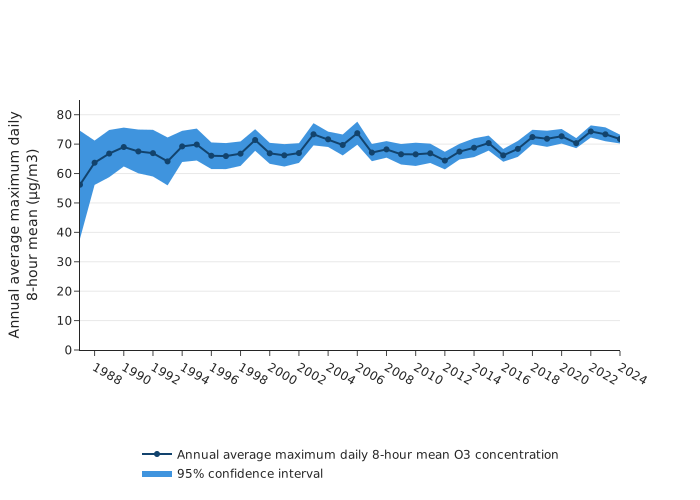
A4: Rural background concentrations of ozone (O3) in England, 1987 to 2024
Source: Department for Environment, Food & Rural Affairs
Download the data for this chart in .csv format
Notes on Figure
The shaded area in the graph represents the 95% confidence interval (measure of uncertainty) for how representative the annual mean concentration of O3 measured at rural background sites is of the true UK rural annual mean levels. This does not include measurement uncertainty. The interval has generally narrowed over time because of an increase in the number of monitoring sites and a reduction in the variation between annual means for O3.
Trend Description
The average daily maximum 8 hour mean concentration of O3 has fluctuated considerably since the time series began, but overall it has increased by 27.6%, from 56.2 micrograms per cubic metre (μg per m3) in 1987 to 71.7 μg per m3 in 2024. Some variance from year to year is expected due to fluctuations in the occurrence of hot summer weather conditions which are associated with high O3 concentrations.
Assessment: A4
There has been an increase (deterioration) in rural background concentrations of O3 over the short-, medium- and long-term assessment periods.
Change since 2018 has also been assessed, over which there was also an increase (deterioration) in rural background concentrations of O3.
Further information on this assessment, along with details on the methodology, is provided in the Assessment guide page. Summaries by Environmental Improvement Plan goal and information on indicator links are presented in the Assessment results pages.
| Component | Subcomponent | Period | Date range | Percentage change | Smoothing function | Assessment of change |
|---|---|---|---|---|---|---|
| A4 | Annual average maximum daily 8-hour mean O3 concentration | Short term | 2019 to 2024 | 5.67 | Loess | Deterioration |
| A4 | Annual average maximum daily 8-hour mean O3 concentration | Medium term | 2014 to 2024 | 9.08 | Loess | Deterioration |
| A4 | Annual average maximum daily 8-hour mean O3 concentration | Long term | 1987 to 2024 | 19.37 | Loess | Deterioration |
Note that assessment categories for short, medium and long term were assigned based on smoothed data, so percentage change figures in Table A4 may differ from unsmoothed values quoted elsewhere. Percentage change refers to the difference seen from the first to last year in the specified date range.
Metadata
| Headline | Not applicable |
|---|---|
| Primary Goal | Air |
| Relevant Goals | Air, Restored nature |
| Relevant Targets | Meeting legally binding targets to reduce emissions of five damaging air pollutants, Restoring 75% of our one million hectares of terrestrial and freshwater protected sites to favourable condition, securing their wildlife value for the long term |
| Natural Capital | Condition of assets - atmosphere |
| Related Commitments | Air Quality Standards Regulations 2010. Measurements from the UK AURN form part of the annual assessment of air quality against the limit and target values specified by this legislation |
| Geographical Scope | England |
| Development Status | Final |
| First Reported | 2019 |
| Last updated | Dec 2025 |
| Latest Data | 2024 |
Return to Environmental Indicator Framework Collection Page
A5: Roadside nitrogen dioxide (NO2) concentrations
Short Description
This indicator tracks changes in average roadside concentration of nitrogen dioxide (NO2). NO2 arises predominantly from combustion sources such as traditionally fuelled vehicles and therefore the highest concentrations are often found at roadside locations.
This indicator is an assessment of clean air (reporting the condition of the atmosphere as an asset). Exposure to NO2 can also be considered as a pressure on human health. The indicator is determined by calculating the average value of the annual mean concentrations measured across Defra’s Automatic Urban and Rural Network (AURN) at all roadside locations (with greater than 75% data capture in any one year).
Readiness and Links to Data
UK data on the measured concentrations of NO2 from the AURN, together with an annex containing the summary data for roadside monitoring sites in England, are published annually as Accredited Official Statistics; Air Quality Statistics. Depending on when these data are accessed, they may differ from the data appearing in this indicator because of differences in the timing of annual updates and because there can be minor changes to the time series following further data ratification and quality assurance checks. For more information on these please see: Automatic Urban and Rural Network (AURN) - Defra, UK.
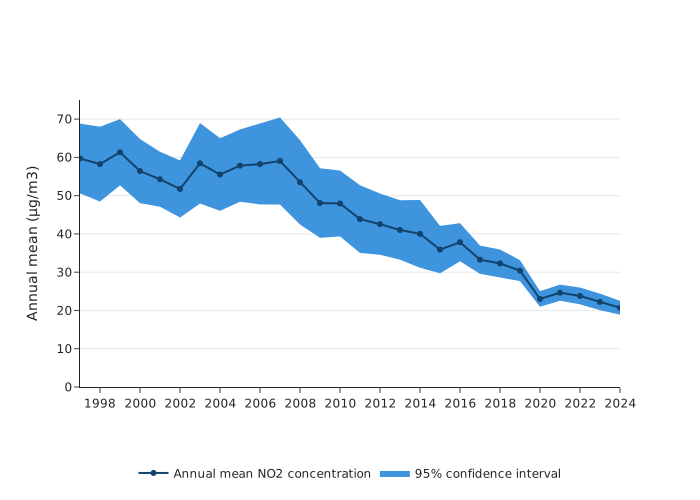
A5: Roadside nitrogen dioxide (NO2) concentrations in England, 1997 to 2024
Source: Department for Environment, Food & Rural Affairs
Download the data for this chart in .csv format
Notes on Figure
The shaded area in the graph represents the 95% confidence interval (measure of uncertainty) for how representative the annual mean concentration measured at roadside sites is of the true UK roadside annual mean levels. This does not include measurement uncertainty. The interval has generally narrowed over time because of an increase in the number of monitoring sites and a reduction in the variation between annual means for NO2.
Trend Description
Average roadside NO2 concentrations in England have fallen considerably from 59.7 micrograms per cubic metre (μg per m3) in 1997 to 20.7 μg per m3 in 2024, a drop of 65.3% over the latest 28 years for which data are available. The general trend in measured NO2 concentrations is decreasing and the average value falls below the NO2 limit of 40 μg per m3 in recent years. However, there was a slight increase in 2021 following the lifting of COVID-19 lockdown restrictions as the time series decreased in 2020 because of an unusually low level of road traffic. There are also hotspots of NO2 exceedances across England, which are being addressed through the NO2 plans.
Assessment: A5
Average roadside NO2 concentrations have decreased (shown an improvement) over the short-, medium- and long-term assessment periods. Compliance with legal NO2 limits is assessed at individual locations rather than using the England average recorded by this indicator, so it would not be appropriate to use results from this indicator to establish whether targets have been met.
More information on trends and monitoring at a regional level can be found in the Air Pollution in the UK report.
Change since 2018 has also been assessed, over which the results also show a decrease (improvement) in average roadside NO2 concentrations.
Further information on this assessment, along with details on the methodology, is provided in the Assessment guide page. Summaries by Environmental Improvement Plan goal and information on indicator links are presented in the Assessment results pages.
| Component | Subcomponent | Period | Date range | Percentage change | Smoothing function | Assessment of change |
|---|---|---|---|---|---|---|
| A5 | Annual mean NO2 concentration | Short term | 2019 to 2024 | -31.31 | Loess | Improvement |
| A5 | Annual mean NO2 concentration | Medium term | 2014 to 2024 | -48.93 | Loess | Improvement |
| A5 | Annual mean NO2 concentration | Long term | 1997 to 2024 | -65.43 | Loess | Improvement |
Note that assessment categories for the short, medium and long term were assigned based on smoothed data, so percentage change figures in Table A5 may differ from unsmoothed values quoted elsewhere. Percentage change refers to the difference seen from the first to last year in the specified date range.
Metadata
| Headline | Not applicable |
|---|---|
| Primary Goal | Air |
| Relevant Goals | Air |
| Relevant Targets | Meeting legally binding targets to reduce emissions of five damaging air pollutants |
| Natural Capital | Condition of assets - atmosphere |
| Related Commitments | Air Quality Standards Regulations 2010. Measurements from the UK AURN form part of the annual assessment of air quality against the limit and target values specified by this legislation |
| Geographical Scope | England |
| Development Status | Final |
| First Reported | 2019 |
| Last updated | Dec 2025 |
| Latest Data | 2024 |
Return to Environmental Indicator Framework Collection Page
A6: Exceedance of damaging levels of nutrient nitrogen deposition on ecosystems
Short Description
This indicator shows changes in the percentage of sensitive habitats exceeding the internationally agreed thresholds for harmful effects (critical load) of nutrient nitrogen deposition. The damaging nutrient nitrogen comes predominantly from UK emissions of ammonia (NH3), but partly from UK emissions of nitrogen oxides (NOx) and long-range transport of these air pollutants.
This indicator is an assessment of clean air (reporting the condition of the atmosphere as an asset). Nutrient nitrogen deposition can also be considered as a pressure on plants and wildlife. The first component of this indicator is determined by calculating the area of sensitive habitat exceeding the internationally agreed thresholds for likely damaging effects from reactive nitrogen deposition in both oxidised and reduced forms, termed the critical load. It uses modelled interpolations of atmospheric concentrations of NOx and NH3 and models deposition processes based on internationally agreed methodology. The second component of this indicator measures the magnitude of the nutrient-nitrogen exceedance.
Readiness and Links to Data
Assessments of nutrient nitrogen deposition are undertaken and published annually using 3-year moving average data at UK Air Information Resource: Trends in critical load and critical level exceedances in the UK. Component A6i shows the percentage area of sensitive habitats in England where nutrient nitrogen deposition exceeded the internationally agreed thresholds for likely damaging effects from reactive nitrogen deposition in both oxidised and reduced forms, termed the critical load. In the 2025 update of this indicator, component A6ii was introduced to show the magnitude of the nutrient-nitrogen exceedance (expressed as average accumulated exceedance, or excess nitrogen) across England.
Notes on Indicator
The 13 nitrogen-sensitive habitat types included in this indicator are acid grassland, calcareous grassland, dwarf shrub heath, montane, bog, Scots pine woodland, managed coniferous woodland, beech woodland, acidophilous oak woodland, other broadleaved woodland, mixed woodland, dune grassland, and saltmarsh. In total, these habitats amount to approximately 26,000 square kilometres (almost 20% of the land area of England).
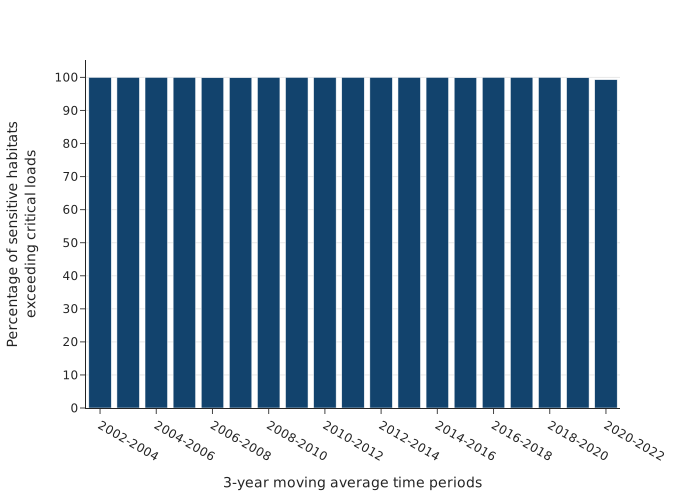
A6i: Exceedance of damaging levels of nutrient nitrogen deposition in England, 2002-2004 to 2020-2022
Source: UK Centre for Ecology & Hydrology
Download the data for this chart in .csv format
Notes on Figure
Data are presented as 3-year moving average time periods. A 3-year moving average is used to smooth out inter-annual variability due to the influence of weather on atmospheric chemistry.
Subsequent back casting of the data using the new methodology introduced in advance of the 2023 update has resulted in a time-series that now extends back to the 3-year period 2002 to 2004. These changes also mean that the chart presented here cannot be directly compared to charts presented in publications of this indicator prior to 2023.
Trend Description
The percentage area of sensitive habitats in England where nutrient nitrogen deposition exceeded critical load remained between 99.9% and 100.0% from 2002-2004 to 2019-2021 (3-year moving average time periods). In the most recent time period, 2020-2022, the percentage area fell to 99.3% - the lowest value in the time series so far. Nutrient nitrogen deposition has fallen, but still exceeds the thresholds of harm. See component A6ii for more information on the magnitude of the nutrient-nitrogen exceedance.
Assessment: A6i
There has been little or no change observed in exceedance of damaging levels of nutrient nitrogen deposition on ecosystems over the short-, medium- and long-term assessment periods.
There has also been little or no change observed in exceedance of damaging levels of nutrient nitrogen deposition on ecosystems since the 2016-2018 period. However, this result is based on only 5 data points so should be considered as indicative and not evidence of a clear trend.
Further information on this assessment, along with details on the methodology, is provided in the Assessment guide page. Summaries by Environmental Improvement Plan goal and information on indicator links are presented in the Assessment results pages.
| Component | Period | Date range | Percentage change | Smoothing function | Assessment of change |
|---|---|---|---|---|---|
| A6i | Short term | 2015-2017 to 2020-2022 | -0.6 | Moving average data | Little or no change |
| A6i | Medium term | 2010-2012 to 2020-2022 | -0.7 | Moving average data | Little or no change |
| A6i | Long term | 2002-2004 to 2020-2022 | -0.7 | Moving average data | Little or no change |
Note that percentage change refers to the difference seen from the first to last 3-year moving average in the specified date range.
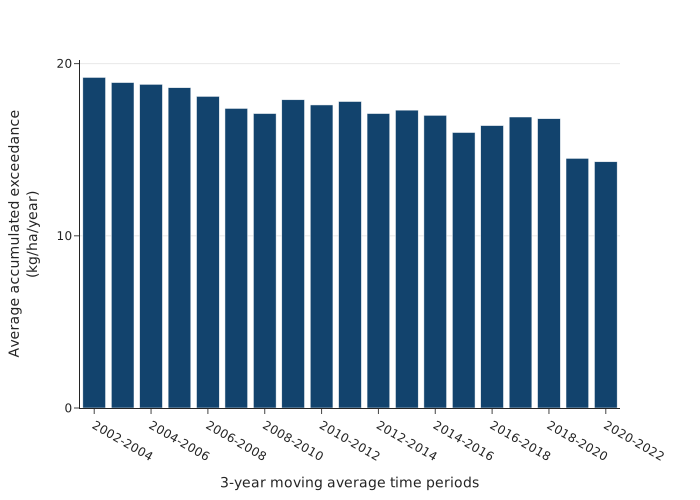
A6ii: Excess deposition of nutrient nitrogen in England, 2002-2004 to 2020-2022
Source: UK Centre for Ecology & Hydrology
Download the data for this chart in .csv format
Notes on Figure
Data are presented as 3-year moving average time periods. A 3-year moving average is used to smooth out inter-annual variability due to the influence of weather on atmospheric chemistry.
Trend Description
The magnitude of the nutrient-nitrogen exceedance (expressed as average accumulated exceedance, or excess nitrogen) across England has fluctuated over the last 2 decades, but overall it has decreased by 26%, from 19.2 kg per hectare per year (kg/ha/year) in the 3-year moving average time period 2002-2004 to 14.3 kg/ha/year in 2020-2022. However, it still exceeds the thresholds of harm.
Assessment: A6ii
There has been a decrease (improvement) in the deposition of excess nutrient nitrogen over the short-, medium- and long-term assessment periods.
There has also been an improvement in the deposition of excess nutrient nitrogen since 2016-2018. However, this result is based on only 5 data points so should be considered as indicative and not evidence of a clear trend.
Further information on this assessment, along with details on the methodology, is provided in the Assessment guide page. Summaries by Environmental Improvement Plan goal and information on indicator links are presented in the Assessment results pages.
| Component | Period | Date range | Percentage change | Smoothing function | Assessment of change |
|---|---|---|---|---|---|
| A6ii | Short term | 2015-2017 to 2020-2022 | -10.62 | Moving average data | Improvement |
| A6ii | Medium term | 2010-2012 to 2020-2022 | -18.75 | Moving average data | Improvement |
| A6ii | Long term | 2002-2004 to 2020-2022 | -25.52 | Moving average data | Improvement |
Note that percentage change refers to the difference seen from the first to last 3-year moving average in the specified date range.
Metadata
| Headline | Not applicable |
|---|---|
| Primary Goal | Air |
| Relevant Goals | Air, Restored nature |
| Relevant Targets | Meeting legally binding targets to reduce emissions of five damaging air pollutants, Restoring 75% of our one million hectares of terrestrial and freshwater protected sites to favourable condition, securing their wildlife value for the long term, Creating or restoring 500,000 hectares of wildlife-rich habitat outside the protected site network, focusing on priority habitats as part of a wider set of land management changes providing extensive benefits |
| Natural Capital | Pressure on natural capital assets |
| Related Commitments | International Collaborative Partnership reporting under United Nations Economic Commission for Europe’s Working Group on Effects |
| Geographical Scope | England |
| Development Status | Final |
| First Reported | 2019 |
| Last updated | May 2025 |
| Latest Data | 2022 |
Return to Environmental Indicator Framework Collection Page
A7: Area of land exposed to damaging levels of ammonia (NH3) in the atmosphere
Short Description
This indicator tracks changes in the amount of land area affected by damaging levels of ammonia (NH3) in the air. Excess NH3 in the atmosphere leads to direct toxic effects on vegetation, with very low concentrations causing damage to the leaves and surfaces of sensitive plant species such as lichens and bryophytes (mosses and liverworts) an integral part of many habitats. Agriculture is the main source of NH3 emissions to the atmosphere.
This indicator is a measure of pressure on sensitive plant species from air pollution. It shows the percentage of land area where interpolated measurements of ground-level air exceed the lower critical level threshold for NH3 of 1 microgram per cubic metre (μg per m3).
Readiness and Links to Data
Assessments of damaging levels of ammonia in the atmosphere are undertaken and published annually using 3-year moving average data at UK Air Information Resource: Critical load and critical level exceedances in the UK.
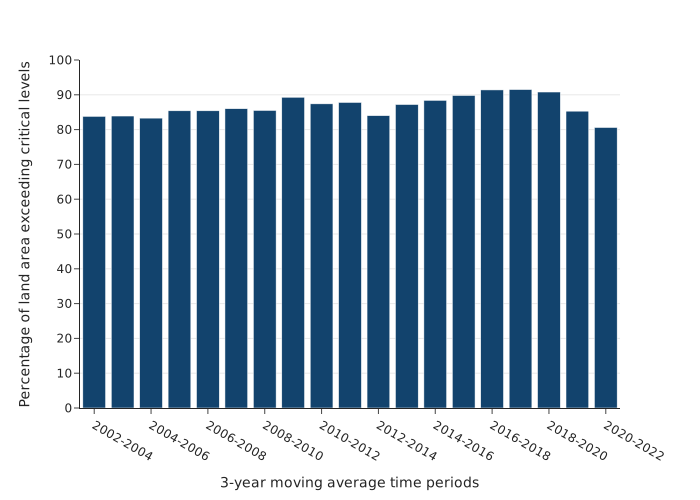
A7: Area of land in England exposed to damaging levels of ammonia (NH3) in the atmosphere, 2002-2004 to 2020-2022
Source: UK Centre for Ecology & Hydrology
Download the data for this chart in .csv format
Notes on Figure
Data are presented as 3-year moving average time periods. A 3-year moving average is used to smooth out inter-annual variability due to the influence of weather on atmospheric chemistry.
Trend Description
Overall, the percentage of land area exposed to concentrations of NH3 that exceed critical levels (1 μg per m3) has decreased by 3.2 percentage points between the 3-year moving average time periods 2002-2004 and 2020-2022. The percentage of land area has shown a decreasing trend since reaching its peak in the time series of 91.5% in 2017-2019.
Assessment: A7
The area of land exposed to damaging levels of NH3 in the atmosphere has decreased (an improvement) over the short-, medium- and long-term assessment periods.
Change since 2018 has also been assessed. A decrease (improvement) was observed for exceedance of damaging levels of NH3 in the atmosphere since the 2016-2018 period. However, this result is based on only 5 data points so should be considered as indicative and not evidence of a clear trend.
Further information on this assessment, along with details on the methodology, is provided in the Assessment guide page. Summaries by Environmental Improvement Plan goal and information on indicator links are presented in the Assessment results pages.
| Component | Period | Date range | Percentage change | Smoothing function | Assessment of change |
|---|---|---|---|---|---|
| A7 | Short term | 2015-2017 to 2020-2022 | -10.24 | Moving average data | Improvement |
| A7 | Medium term | 2010-2012 to 2020-2022 | -7.78 | Moving average data | Improvement |
| A7 | Long term | 2002-2004 to 2020-2022 | -3.82 | Moving average data | Improvement |
Note that percentage change refers to the difference seen from the first to last 3-year moving average in the specified date range.
Metadata
| Headline | Not applicable |
|---|---|
| Primary Goal | Air |
| Relevant Goals | Air, Restored nature |
| Relevant Targets | Meeting legally binding targets to reduce emissions of five damaging air pollutants, Restoring 75% of our one million hectares of terrestrial and freshwater protected sites to favourable condition, securing their wildlife value for the long term, Creating or restoring 500,000 hectares of wildlife-rich habitat outside the protected site network, focusing on priority habitats as part of a wider set of land management changes providing extensive benefits |
| Natural Capital | Pressure on natural capital assets |
| Related Commitments | International Collaborative Partnership reporting under United Nations Economic Commission for Europe’s Working Group on Effects |
| Geographical Scope | England |
| Development Status | Final |
| First Reported | 2019 |
| Last updated | May 2025 |
| Latest Data | 2022 |