Environmental Indicator Framework: Assessments
Updated 17 March 2026

© Crown copyright 2026
This publication is licensed under the terms of the Open Government Licence v3.0 except where otherwise stated. To view this licence, visit nationalarchives.gov.uk/doc/open-government-licence/version/3 or write to the Information Policy Team, The National Archives, Kew, London TW9 4DU, or email: psi@nationalarchives.gov.uk.
Where we have identified any third party copyright information you will need to obtain permission from the copyright holders concerned.
This publication is available at https://www.gov.uk/government/publications/environmental-indicator-framework-assessments/environmental-indicator-framework-assessments
Background Information
‘Assessable’ indicator components are those that can be assessed now or in the future—that is, they are in a suitable format for assessment and are based on data that are unique relative to other components. Some assessable components may not yet have been assessed due to insufficient time series or the need for additional development to produce robust statistical trends.
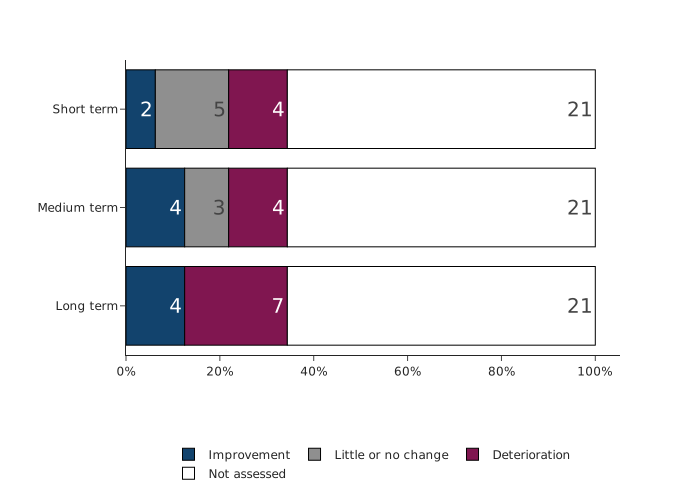
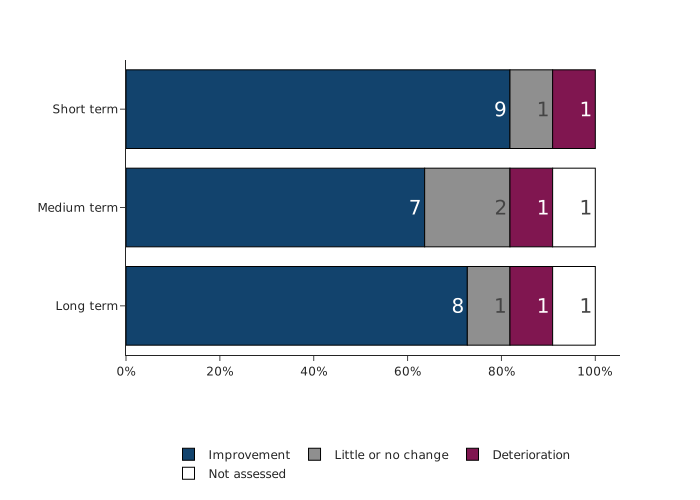
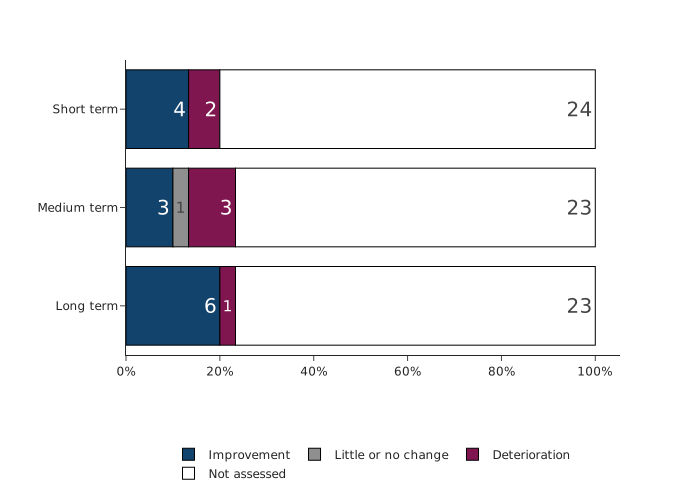
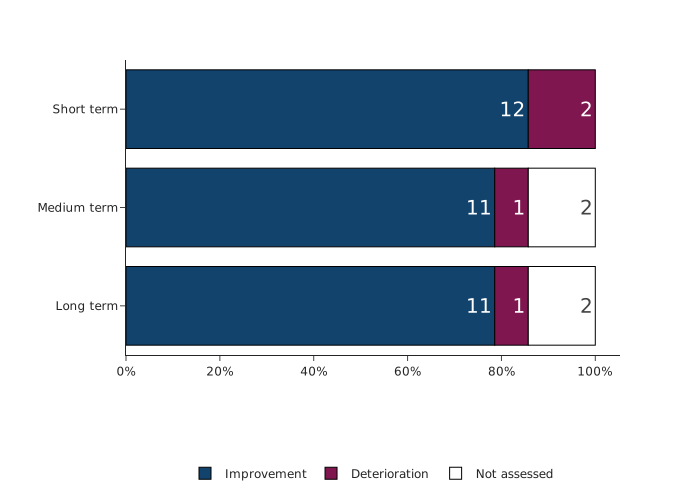
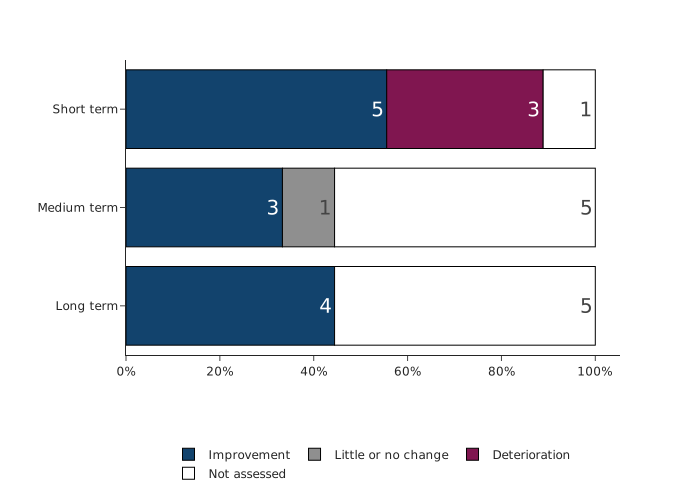
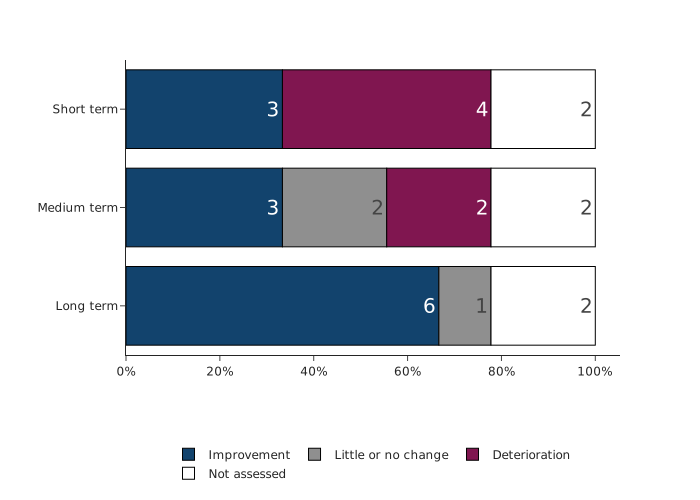
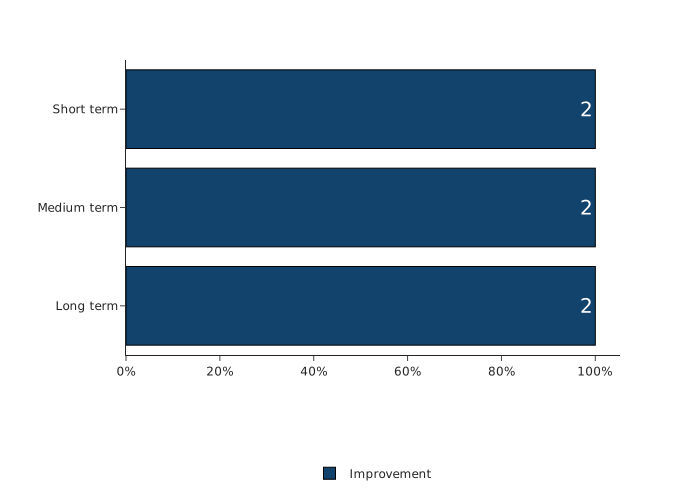
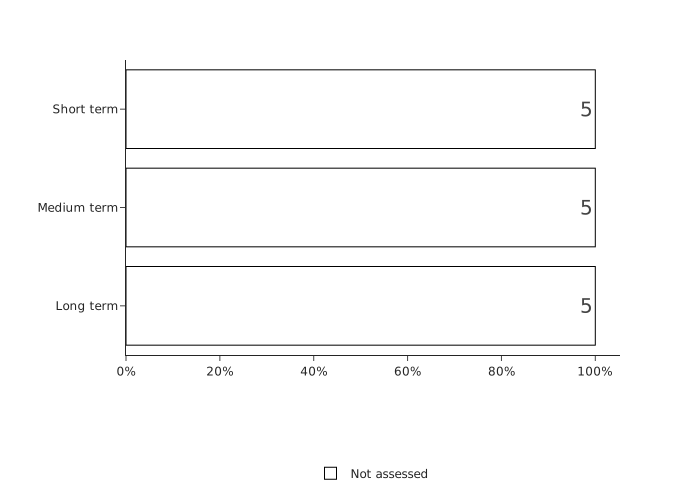
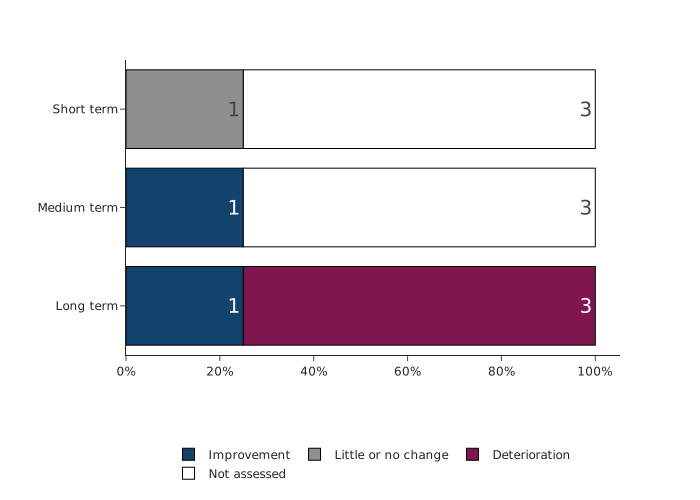
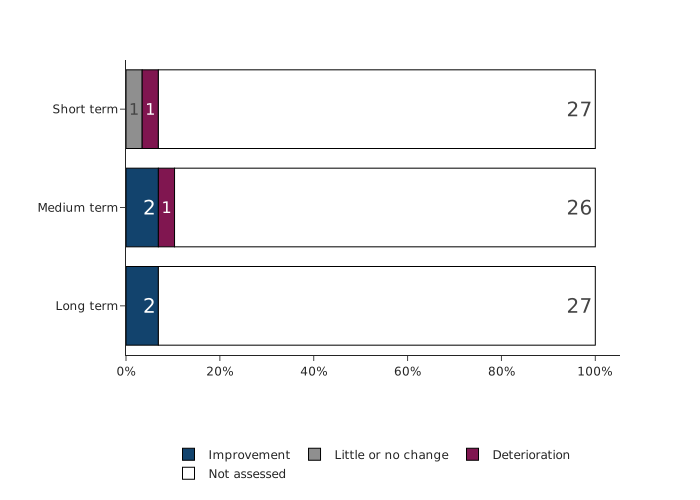
Assessment summary figures show the proportion of assessable indicator components, which correspond to each primary Environmental Improvement Plan (EIP) goal, that have been assigned to each assessment category (short, medium and long term). The exact number of indicator components in each category is shown as a label on the bars.
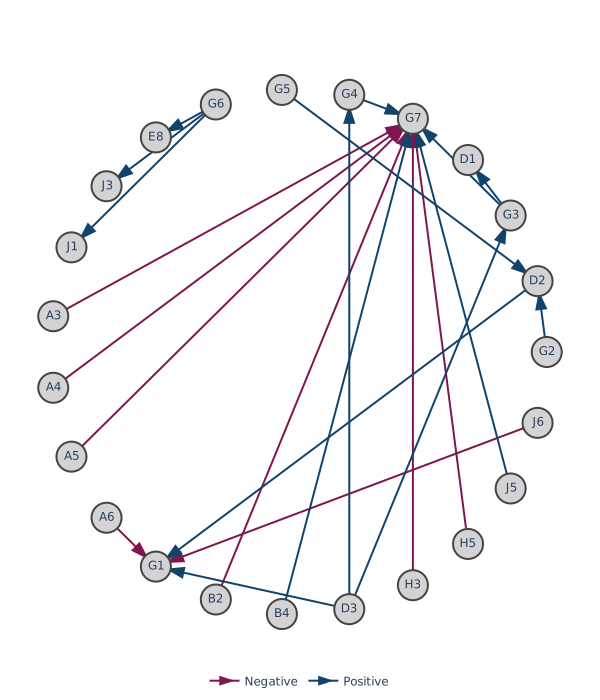
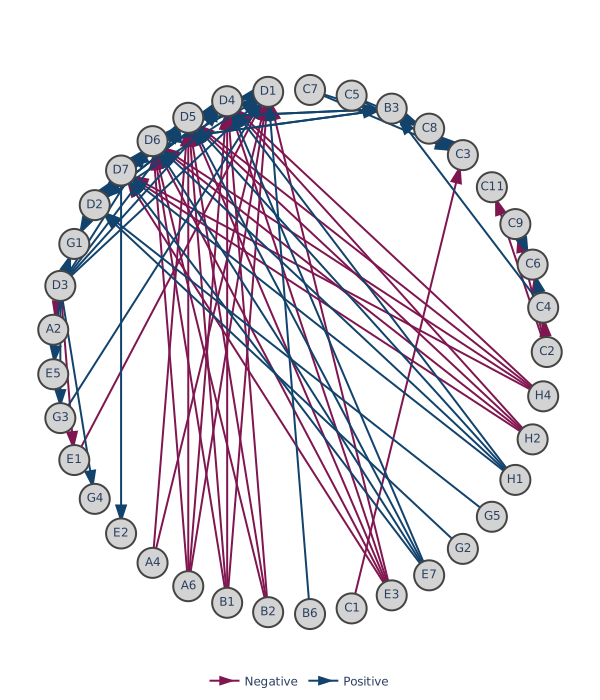
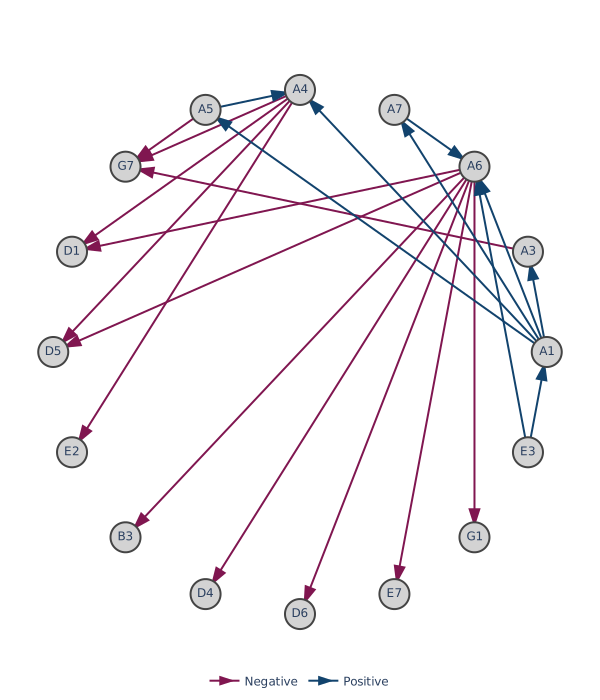
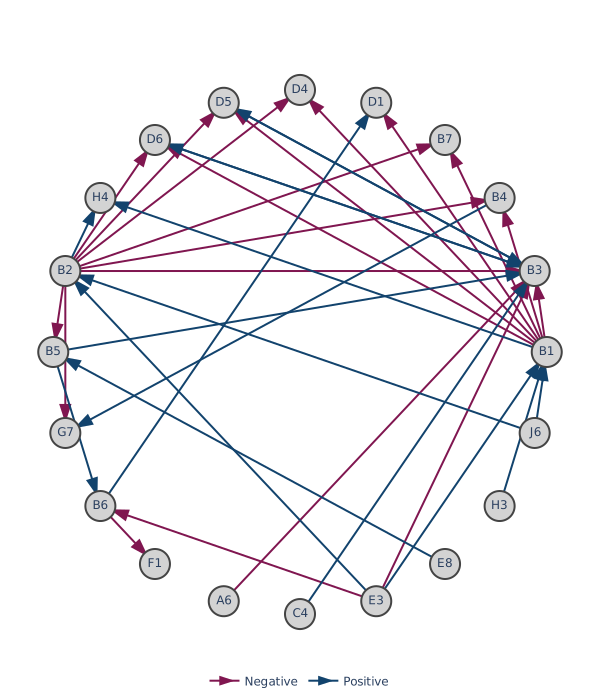
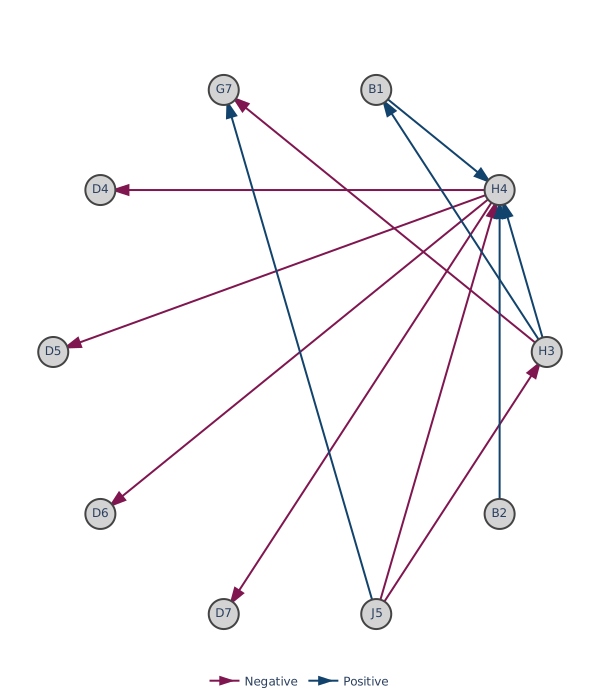
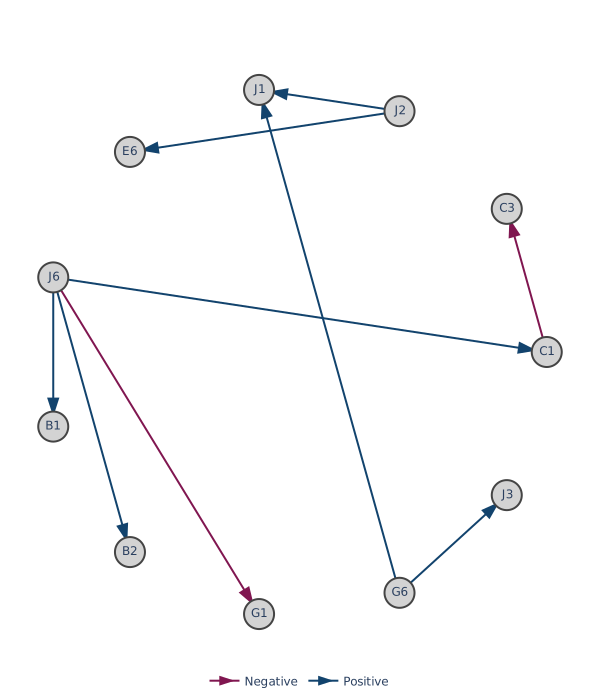
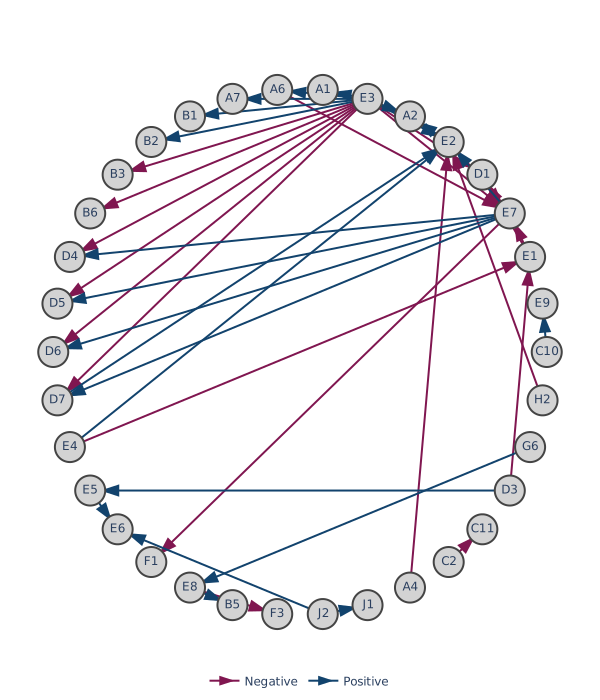
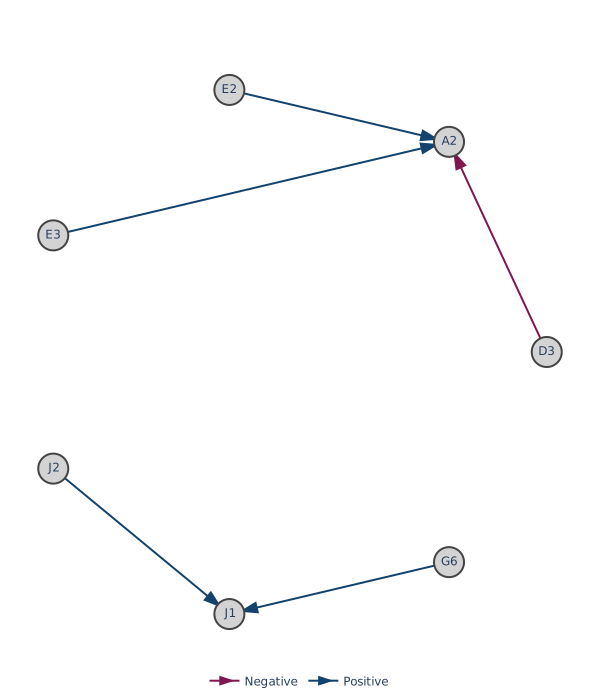
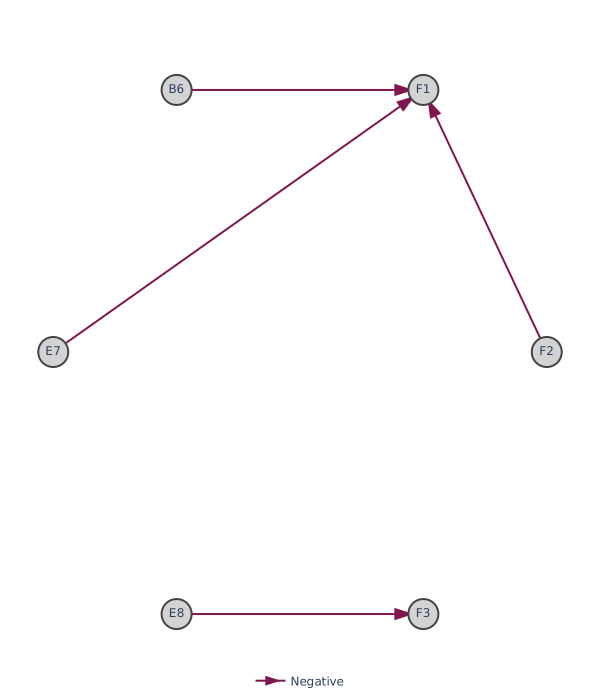
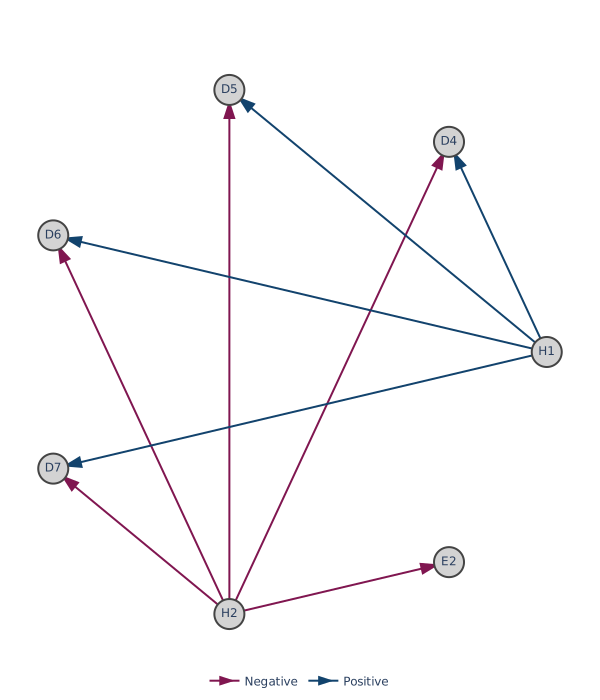
Network figures show the results of a mapping exercise conducted to identify potential links between indicators relevant to each primary goal. The underlying data include the rationale for each connection and subsequent interconnectivity between different environmental goals.
Each identified link is supported by evidence presented in the indicator pages, original indicator methodologies, assessment reports, or other key references provided by indicator leads. These links indicate that two indicators are likely related and that changes in one could influence the other, rather than evidence a statistical, causal link.
Only direct links between specific indicators were considered - chains of indirect relationships were excluded. Links were established based on the current scope implied by the indicator description, rather than planned future scope.
Goal 1: Restored nature
There are 17 indicators comprising 32 indicator components under this primary goal. Although all 32 indicator components under this primary goal present data in this Environmental Indicator Framework update, the majority (20 components) do not yet contain sufficient time-series data to allow assessment. Due to methodological issues in the underlying source data for component D7i, no assessment results are provided for this component.
Of the remaining 11 components assessed, two showed improvement over the short term: C3bi – Percentage of marine bird species achieving relative breeding abundance targets, Celtic Seas and D2a – Extent of protected sites in England (sites at sea). Five components showed little or no change over the short term: D2a – Extent of protected sites in England (sites on land and water), D3 – Area of woodland in England, D4i – Relative abundance of all species in England, D6ai – Relative abundance of priority species in England, and E9a – Landings of quota fish and shellfish into English ports by sustainability status. A further four components deteriorated over the short term: C3bi – Percentage of marine bird species achieving relative breeding abundance targets, Greater North Sea; C3bii – Percentage of marine bird species achieving relative non-breeding abundance targets, Celtic Seas; C3bii – Percentage of marine bird species achieving relative non-breeding abundance targets, Greater North Sea; and D6bi – Distribution of priority species in England.
Over the medium term, D2a (sites at sea and on land and water) E9a, and D3 improved; D4i, D6ai, and C3bi (Celtic Seas) showed little or no change; and C3bi (Greater North Sea), C3bii (Celtic Seas), C3bii (Greater North Sea), and D6bi deteriorated.
Over the long term, D2a (sites at sea and on land and water), D3, and E9a improved, while C3bi (Celtic Seas), C3bi (Greater North Sea), C3bii (Celtic Seas), C3bii (Greater North Sea), D4i, D6ai, and D6bi deteriorated.
Figure 1: Goal 1 (Restored nature) summary
Download the data for this chart in .csv format
Figure 2: Goal 1 (Restored nature) network
Download the data for this chart in .csv format
Goal 2: Air
There are six indicators comprising 11 assessable components under this primary goal. All components were assessed for at least one time period, with 10 assessed across all three (short, medium, and long term) and one (A3i – Population exposure to fine particulate matter (PM2.5)) assessed only for the short term due to limited data.
Overall, nine components showed improvement in at least one period, with seven improving consistently across all three assessment periods (A1 – Emissions of PM2.5, NOx, NMVOCs, SO2; A5 – Roadside nitrogen dioxide concentrations; A6ii – Excess deposition of nutrient nitrogen; A7 – Area of land exposed to damaging levels of ammonia). One component (A1 – Emissions of ammonia (NH3) in England) improved in the short and long term but showed little or no change in the medium term. One component (A3i – Population exposure to fine particulate matter (PM2.5) in the air in England) showed short-term improvement but was not assessed for the medium or long term due to insufficient data. One component (A6i – Exceedance of damaging levels of nutrient nitrogen deposition) showed little or no change across all three time periods, while one (A4 – Rural background concentrations of ozone) deteriorated across all periods.
Figure 3: Goal 2 (Air) summary
Download the data for this chart in .csv format
Figure 4: Goal 2 (Air) network
Download the data for this chart in .csv format
Goal 3: Water
There are eight indicators comprising 30 assessable components under this primary goal. Of the 10 components under B1 – Pollution loads entering waters, seven have not been assessed as further development is required to present statistical trends for the selected contaminants. All 11 components under B3 – State of the water environment were not assessed, as results are not currently presented as a time series. The two components under B5 – Water bodies achieving sustainable abstraction criteria could not be assessed due to insufficient time series, and B6 – Natural functions of water and wetland ecosystems does not currently present information compatible with the standard Environmental Indicator Framework assessment method.
Of the remaining nine indicator components that were assessed, the three B1 components showed long-term improvement, with two also showing medium-term improvement and one showing medium-term deterioration. None of these components had sufficient data for short-term assessment. B2 – Serious pollution incidents to water, category 1 and 2 showed long-term improvement but deteriorated over the medium and short term. B4 – Condition of bathing waters in England deteriorated over the short term, with insufficient data for medium- or long-term assessment. B7a – Salmon stock status in principal salmon rivers at risk in England showed short-term improvement but medium- and long-term deterioration, while B7b – Classification of fish in English rivers showed short-term improvement but lacked sufficient data for medium- or long-term assessment. E8a – Water leakage in England improved across all three assessment periods. E8b – Per capita water consumption in England showed improvement over the short term and long term but little or no change over the medium term.
Figure 5: Goal 3 (Water) summary
Download the data for this chart in .csv format
Figure 6: Goal 3 (Water) network
Download the data for this chart in .csv format
Goal 4: Chemicals and pesticides
There are two indicators comprising of 14 assessable components under this primary goal. The two components of indicator H3a – Emissions of mercury to air, land and water in England do not yet have a sufficiently long time series for an assessment over the medium or long term but now have sufficient data to assess the short-term trend, both components showing an improvement. Indicator H3b – Emissions of persistent organic pollutants to air, land and water, England – could be assessed across all three periods. All seven of the pollutants measured by H3b showed improvement over the long term. Most also showed medium- and short-term improvements; however, emissions of hexachlorobenzene showed deterioration over the medium and short term, and emissions of polychlorinated naphthalenes showed deterioration over the short term.
The other indicator within this goal, J5a – Stockpile of three persistent organic pollutants remaining in the UK (Decabromodiphenyl Ether; Hexabromocyclododecane; Polychlorinated Biphenyls) – showed improvements across all three assessment periods for all components except Hexabromocyclododecane, which deteriorated in the long term. The final two components both showed improvements across the short, medium and long-term assessment periods: J5bi – The proportion of persistent organic pollutant hexabromocyclododecane (HBCDD) sent for destruction (incinerated) versus other waste treatment and disposal options, UK; and J5bii – The proportion of persistent organic pollutant decabromodiphenyl ether (DecaBDE) sent for destruction (incinerated) versus other waste treatment and disposal options, UK.
Figure 7: Goal 4 (Chemicals and pesticides) summary
Download the data for this chart in .csv format
Figure 8: Goal 4 (Chemicals and pesticides) network
Download the data for this chart in .csv format
Goal 5: Waste
There are five indicators comprising nine assessable components under this primary goal. Of these, three components showed improvement across all three assessment periods: C1b – Percentage of sampled fulmars having more than 0.1 g of plastic in their stomach, Greater North Sea; J1 – Consumption based greenhouse gas emissions in England (total); J6a – Illegal waste sites in England (total active sites).
Two additional components improved over the short term but had insufficient data for medium- or long-term assessment: C1a – Items of litter per 100m of beach, England; C1c – Mean probability that benthic trawl surveys contain a litter item, Celtic Seas. One component showed short-term deterioration and was not assessed over the medium or long term: C1c – Mean probability that benthic trawl surveys contain a litter item, Greater North Sea.
Of the remaining components, one showed deterioration over the short term, little or no change over the medium term, and improvement over the long term: J3 – ‘Household waste’ and ‘waste from households’ recycling rates in England. One component deteriorated over the short term and was not assessed over the medium or long term: J6b – Fly-tipping incidents in England (new methodology). One component had insufficient data to be assessed over any of the three periods: J4i – Residual waste (excluding major mineral wastes) in England (kilograms per capita).
Figure 9: Goal 5 (Waste) summary
Download the data for this chart in .csv format
Figure 10: Goal 5 (Waste) network
Download the data for this chart in .csv format
Goal 6: Resources
There are 10 indicators comprising 14 assessable components under this primary goal, 12 of which have been assessed. Indicator E7 – Healthy soils is not assessed as it is still in development, and C11 – Long-term and short-term changes in the occurrence of sensitive fish species, Greater North Sea and Celtic Seas is not assessed due to insufficient time-series data.
For the four agriculture-related indicators (E1 – Area of productive agricultural land in England, E2 – Volume of agricultural production in England, E3 – Volume of inputs used in agricultural production in England, and E4 – Efficiency of agricultural production measured by Total Factor Productivity in England), it is not possible to classify changes simply as improvement or deterioration, because the environmental impact depends on the specific farming practices and associated trade-offs. Similarly, changes in the biomass component of J2a – Raw material consumption per capita in England (biomass) have no defined desired direction. As a result, these results are not included in the summary figure. However, the directions of change for these components are reported in the underlying data for this chart.
Of the seven indicator components assessed, three showed improvement over the short term: C10a – Marine fish (quota) stocks of UK interest harvested sustainably, C10b – Marine fish (quota) stocks of UK interest with biomass at levels capable of maintaining full reproductive capacity, and J2a – Raw material consumption per capita in England (metal ores). Four components deteriorated over the short term: E5 – Percentage of the annual growth of trees in English woodlands that is harvested, E6 – Volume of timber brought to market from English sources, J2a – Raw material consumption per capita in England (non-metallic mineral ores), and J2b – Gross value added per kg of raw material consumption (excluding fossil fuels) in England. Over the medium term, C10a, C10b, and J2a (metal ores) improved, J2b and E6 showed little or no change, and E5 and J2a (non-metallic mineral ores) deteriorated. Over the long term, C10a, C10b, E6, J2a (metal ores), J2a (non-metallic mineral ores) and J2b improved, and E5 showed little or no change.
Figure 11: Goal 6 (Resources) summary
Download the data for this chart in .csv format
Figure 12: Goal 6 (Resources) network
Download the data for this chart in .csv format
Goal 7: Climate change
There are two indicators comprising two assessable components under this primary goal. Both components, A2 – Emissions of greenhouse gases from natural resources in England and J1 – Consumption-based greenhouse gas emissions in England, showed improvement across all three assessment periods.
Figure 13: Goal 7 (Climate change) summary
Download the data for this chart in .csv format
Figure 14: Goal 7 (Climate change) network
Download the data for this chart in .csv format
Goal 8: Reducing environmental hazards
None of the three indicators comprising five assessable components under this primary goal have sufficient data points to allow an assessment across any of the time periods within the Environmental Indicator Framework. These indicators will be assessed in future years when suitable data series become available.
Figure 15: Goal 8 (Reducing environmental hazards) summary
Download the data for this chart in .csv format
Figure 16: Goal 8 (Reducing environmental hazards) network
Download the data for this chart in .csv format
Goal 9: Biosecurity
There are two indicators comprising four assessable components under this primary goal. The three components of indicator H1 – Cumulative net total number of invasive non-native species established across or along 10% or more of the land area or coastline of Great Britain (freshwater; marine; terrestrial) – all showed long-term deterioration. These components do not yet have sufficient data to assess medium- or short-term trends.
The other component, H2 – Number of additional tree pests and diseases becoming established in England, showed improvement over the long- and medium-term assessments and little or no change in the short term.
Figure 17: Goal 9 (Biosecurity) summary
Download the data for this chart in .csv format
Figure 18: Goal 9 (Biosecurity) network
Download the data for this chart in .csv format
Goal 10: Access to nature
There are nine indicators comprising 29 assessable components under this primary goal. Although data for all components are included in this year’s Environmental Indicator Framework update, the majority (26 components) do not yet contain sufficient time-series data to allow an assessment.
The three components assessed are D3 – Area of woodland in England, G1b – The influence of agri-environment schemes in conserving and enhancing landscape character in England, and G5a – Volunteer time spent on the natural environment in England. D3 showed little or no change over the short term but improved over the medium and long term. G1b improved over the medium term, which was the only period for which sufficient data were available. G5a deteriorated over the short- and medium-term periods but showed improvement over the long term.
Figure 19: Goal 10 (Access to nature) summary
Download the data for this chart in .csv format
Figure 20: Goal 10 (Access to nature) network