
Dry weather and drought in England: 27 February to 26 March 2026
Updated 26 June 2026
Applies to England

© Crown copyright 2026
This publication is licensed under the terms of the Open Government Licence v3.0 except where otherwise stated. To view this licence, visit nationalarchives.gov.uk/doc/open-government-licence/version/3 or write to the Information Policy Team, The National Archives, Kew, London TW9 4DU, or email: psi@nationalarchives.gov.uk.
Where we have identified any third party copyright information you will need to obtain permission from the copyright holders concerned.
This publication is available at https://www.gov.uk/government/publications/dry-weather-and-drought-in-england-july-2025-to-march-2026-summary-reports/dry-weather-and-drought-in-england-27-february-to-26-march-2026
1. Summary
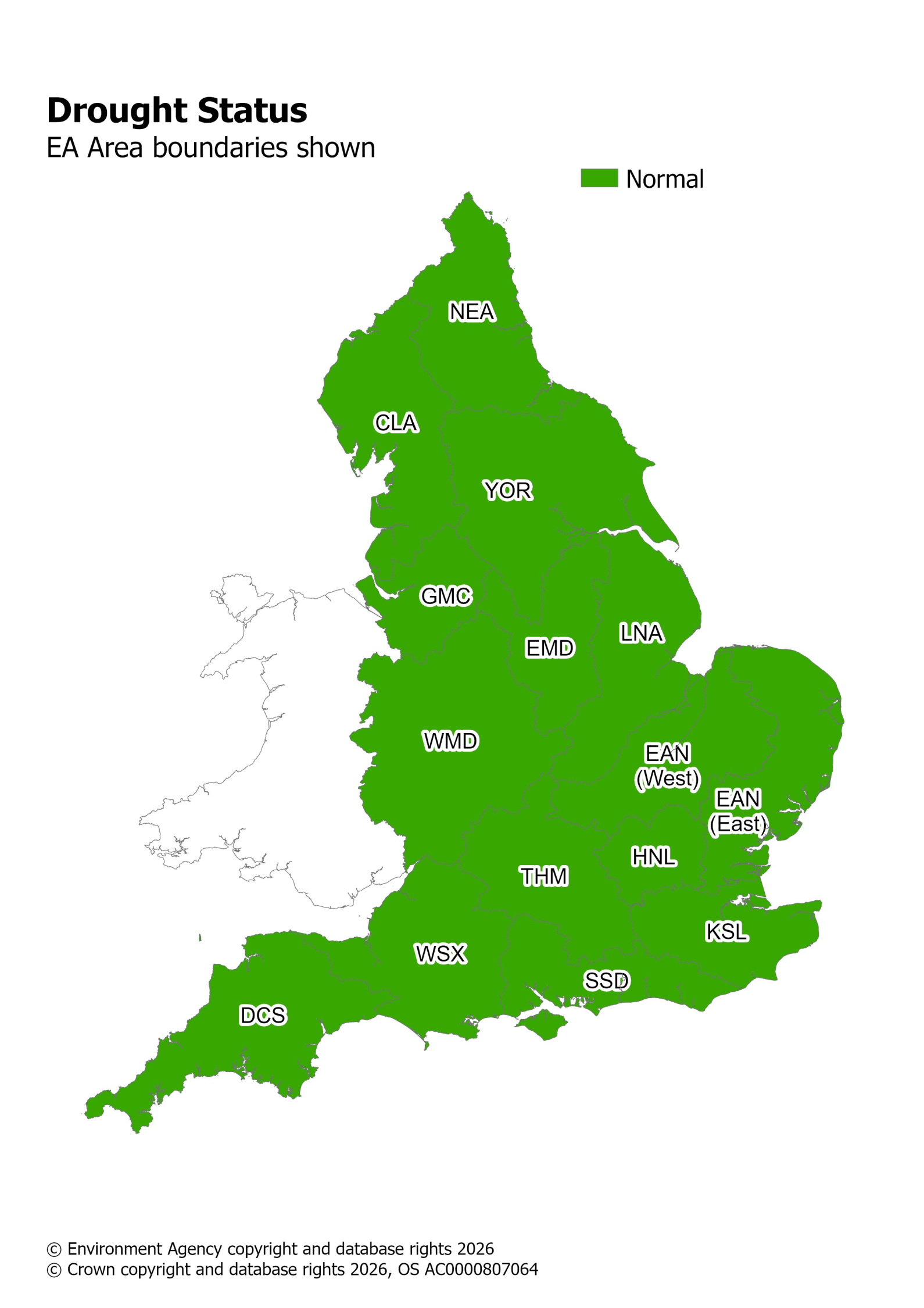
Since the last briefing on 26 February, all areas are now at normal status including the following catchments within East Anglia area, which have moved from recovery to normal status:
-
Cam & Ely Ouse
-
North West Norfolk
-
Essex
More detail of how we manage drought, including our 4 stages of drought response are available in section 4.2.1 of Drought: how it is managed in England.
2. Current water situation
March has been relatively dry for much of England, with east, south-east and south-west England receiving around half the rainfall we would expect with 5 days left in the month. It has been wetter in the north, with the north-west the only region to have already received above average rainfall for the month. England as a whole has received 67% of the long term average (LTA) for March.
River flows on 24 March at three-quarters of nationally reported sites are normal for the time of year. In the north-west a handful of sites are above normal or higher following recent rainfall. In southern groundwater dominated catchments, some river flows remain above normal or higher as they are support by high groundwater levels.
Soil moisture deficits have begun to develop as is expected at this time of year as warmer temperatures and growing crops increase evapotranspiration. Despite this, soils remain wetter than average across most of England following the wet winter.
With significant groundwater recharge occurring in early 2026, on 17 March, groundwater levels were classed as normal or higher at all national indicator sites. They are notably or exceptionally high for the time of year across many of the chalk aquifers of the Wessex and South Downs and across Yorkshire.
Reservoir storage for England is now 94.8%, 1.7% above average for the time of year. Storage is still rising in east England but remains just below average. Three reservoirs are notably or exceptionally low for the time of year. Refill in these reservoirs has been impacted by water quality and operational issues.
More details are available in our water situation reports for England.
3. Public water supply
The majority of water companies have seen good recovery and all are in business as usual. There are no customer water restrictions in place. As noted in section 2, a small number of reservoirs are still below normal, with residual risks remaining for some water companies. Essex and Suffolk Water’s Essex water resource zone has now moved into business as usual along with Anglian Water’s Fenland, Norfolk Norwich and the Broads, and several Ruthamford water resources zones.
4. Agriculture
Heading into the growing season, there is a good level of resilience for the agriculture sector with the majority of farm irrigation reservoirs having sufficiently refilled over the winter. Winter crops have become well established over the season, but some areas have experienced waterlogged fields from heavy rainfall, which is providing challenging conditions for farmers. The reduced availability of forage caused by the drought last year, still remains an issue for farmers. The initial prospects for irrigation are good this spring for most parts of England and an updated report will be published at the end of April.
5. Weather forecast
Friday will see wet weather in the south, after rain moves in late on Thursday. Saturday will turn clearer although showers are likely and temperatures will be colder. Wet and windy weather is expected on Sunday. From Monday high pressure is expected to dominate, bringing more settled, drier conditions for many.
6. Drought readiness actions
The Environment Agency stood down its national Gold Command structure for drought on 22 January but continues to monitor residual risks and ensures it is prepared for the next drought. The last National Drought Group of this drought was held on 23 March, more information is available in the press release England recovered from drought as weather whiplash sees floods. Following the improved situation, the National Drought Group has returned to the usual schedule of meeting twice a year, with the next meeting planned for September to October.
With the improved water resources position, this is last briefing of this drought event.
7. Contact us
Contact drought.national@environment-agency.gov.uk if you have questions about this report.