Digital and Technologies Sector – Economic Statistics
Published 4 June 2026

© Crown copyright 2026
This publication is licensed under the terms of the Open Government Licence v3.0 except where otherwise stated. To view this licence, visit nationalarchives.gov.uk/doc/open-government-licence/version/3 or write to the Information Policy Team, The National Archives, Kew, London TW9 4DU, or email: psi@nationalarchives.gov.uk.
Where we have identified any third party copyright information you will need to obtain permission from the copyright holders concerned.
This publication is available at https://www.gov.uk/government/publications/digital-and-technologies-sector-statistics-volume-1-economic-statistics/digital-and-technologies-sector-economic-statistics
1. Summary
This release provides estimates of company count, productivity, employment, turnover, gross value added (GVA), and wages for the Digital and Technologies (D&T) sector in the UK in 2024. More details on how these metrics are defined can be found in the accompanying technical report.
The D&T sector is one of the 8 priority sectors in the UK’s Modern Industrial Strategy. These statistics support monitoring and evaluation of the Digital and Technologies Sector Plan by providing evidence on economic activity in the sector.
This release provides an improved definition of the D&T sector and subsequent updated statistics that supersede the statistics originally published in June 2025 as part of the Digital and Technologies Sector Plan.
These statistics have been produced using a novel methodology (see the technical report) and constitute an ad-hoc statistics release.
These statistics should be used for:
-
Estimating the size of the D&T sector and frontier technologies.
-
Assessing the variation in how different sized companies contribute to the D&T sector.
These statistics should not be used for:
-
Estimating the size of the Digital sector, Digital Economy, or any individual frontier technology.
-
Direct comparison of the D&T sector with other sectors defined using SIC codes, or with other countries.
-
Assessing progress in the D&T sector as this is the first iteration of these statistics.
2. Overview of the D&T Sector
- The updated Digital and Technology (D&T) sector definition contains 107,082 D&T sector companies, representing 5.2% of all companies within the UK[footnote 1].
- In 2024, the D&T sector generated an estimated £408 billion in turnover (around 8.2% of the UK total from companies[footnote 1]).
- In 2024, the D&T sector employed an estimated 1.33 million people (5.8% of UK employment within companies[footnote 1]).
- In 2024, the D&T sector produced an estimated £158 billion in gross value added (GVA), equivalent to 6.0% of overall UK GVA[footnote 2].
- In 2024, productivity, measured as GVA per employee, averaged an estimated £119,000 GVA per employee in the D&T sector, 53.3% (£41,000) higher than the UK average[footnote 3] of £78,000 GVA per employee.
- In 2024, average[footnote 4] wage in the sector was an estimated £56,000 per employee, 49.6% (£19,000) higher than the UK median earnings[footnote 5] of £37,000 across all industries.
3. D&T Sector by Company Size
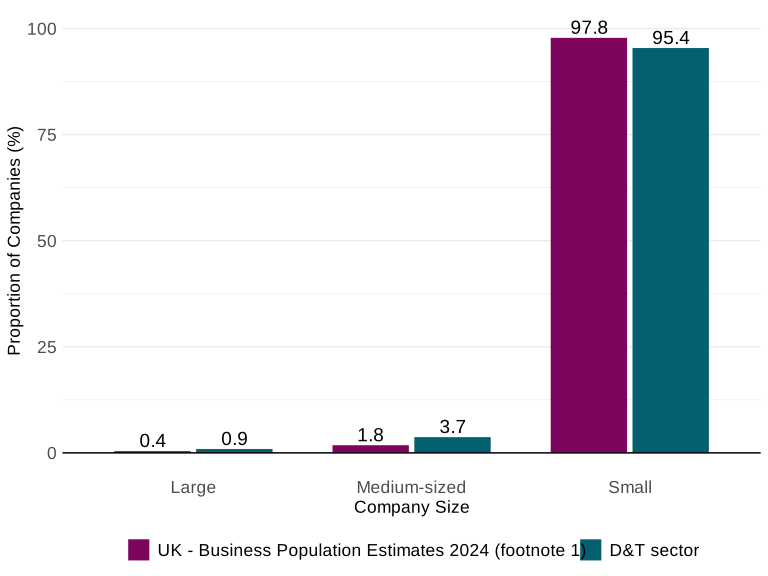
As shown in Figure 1, small companies made up the majority of companies in the Digital and Technologies (D&T) sector, accounting for 95.4% of the sector total. Trends in the proportion of small, medium-sized and large companies in the D&T sector largely reflect those in the UK as a whole.
Figure 1: Proportion of small, medium-sized and large UK and D&T sector companies, 2024, UK
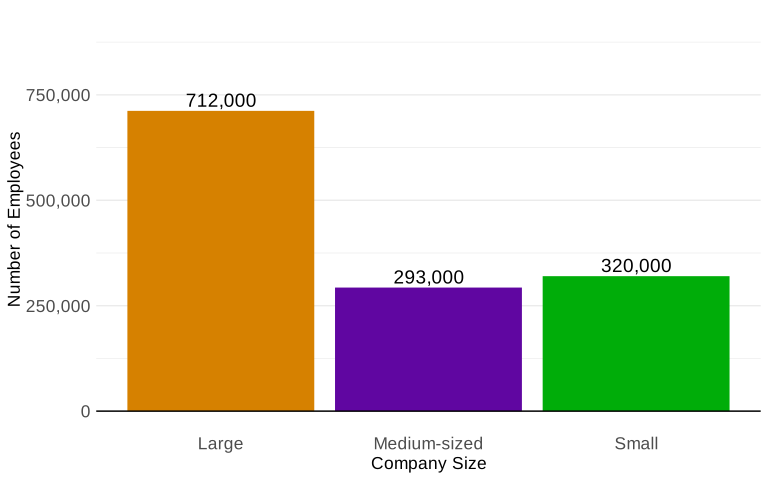
Despite this, large companies employed the greatest number of people in the sector, with an estimated employment of 712,000 (53.7% of the total). This was followed by small companies (320,000, or 24.1% of the total) and medium-sized companies (293,000, or 22.1% of the total) each employing a similar number of people, as shown in Figure 2.
Figure 2: Number of D&T sector employees by company size, 2024, UK
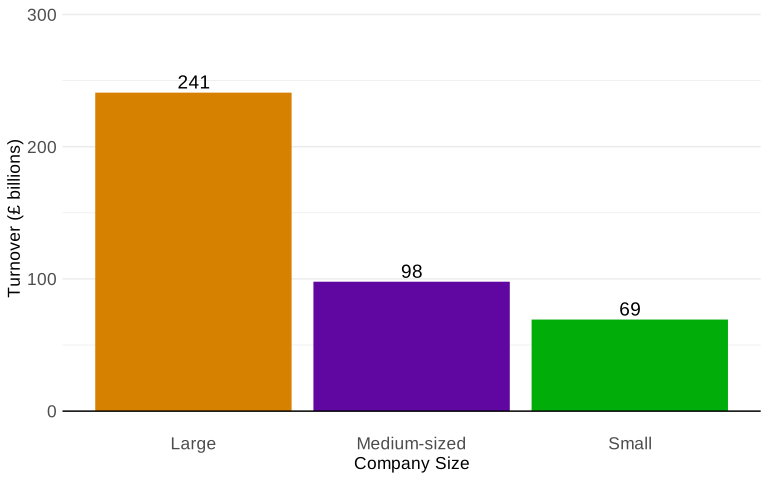
Large companies also generated the largest share of turnover in the D&T sector at an estimated £241 billion (59.0% of the total). Medium-sized (£98 billion, or 24.0% of the total) and small (£69 billion, or 17.0% of the total) companies each contributed a similar share of turnover (Figure 3).
Figure 3: D&T sector turnover by company size, in £ billions, 2024, UK
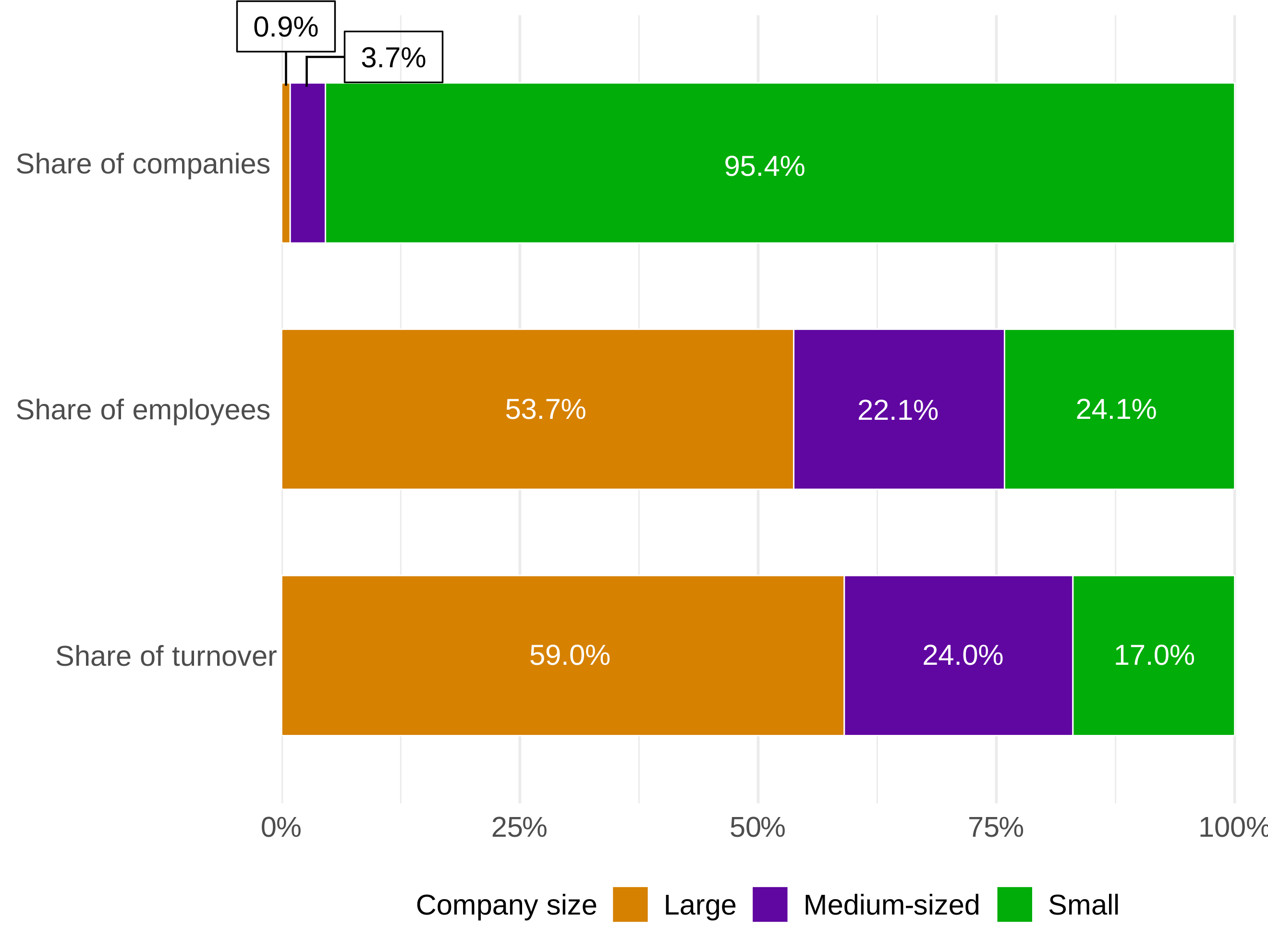
Overall, while large companies represented the smallest proportion of D&T companies, they employed the majority of employees and generated the largest share of sector turnover (Figure 4).
Medium-sized companies also represented a small portion of D&T sector companies but employed a larger proportion of employees. The share of D&T sector turnover produced by medium-sized companies was similar to the proportion of D&T sector employees in medium-sized companies.
Small companies represented the majority of D&T sector companies but employed a much smaller proportion of employees and generated an even smaller proportion of sector turnover.
Figure 4: Share of D&T sector companies, employees and turnover by size, 2024, UK
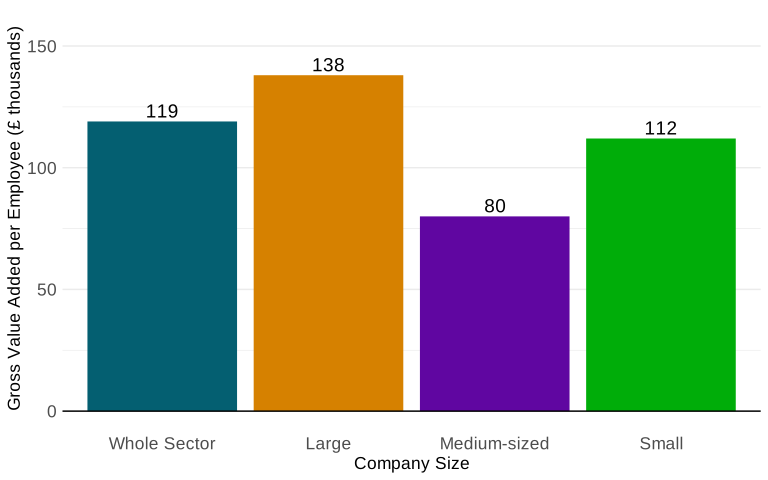
As shown in Figure 5, large companies in the D&T sector were the most productive (£138,000 GVA per employee), followed by small companies (£112,000 GVA per employee), then medium-sized companies (£80,000 GVA per employee). Productivity across the whole D&T sector was estimated to be £119,000 GVA per employee.
Figure 5: D&T sector productivity by company size, in £ thousands, 2024, UK
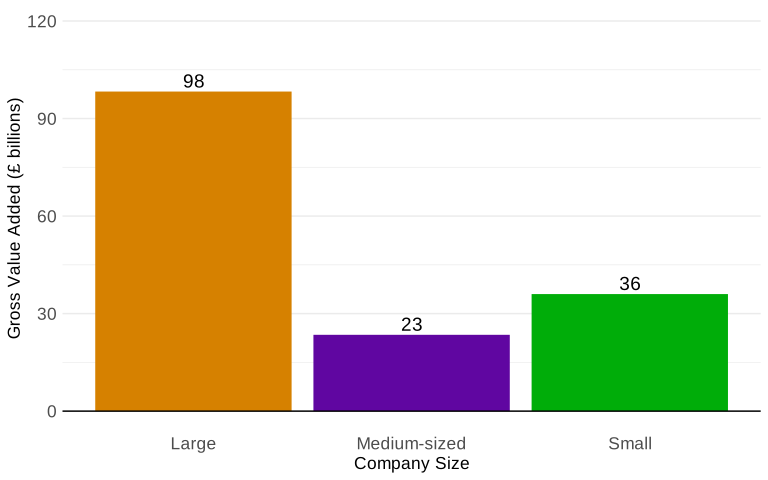
Reflecting the distribution of turnover, large companies contributed the largest share of D&T sector gross value added (GVA) at an estimated £98 billion, or 62.3% of the total. Medium-sized (£23 billion, or 14.9% of the total) and small (£36 billion, or 22.8% of the total) companies each contributed a smaller share than large companies to D&T sector GVA (Figure 6).
Figure 6: D&T sector GVA by company size, in £ billions, 2024, UK
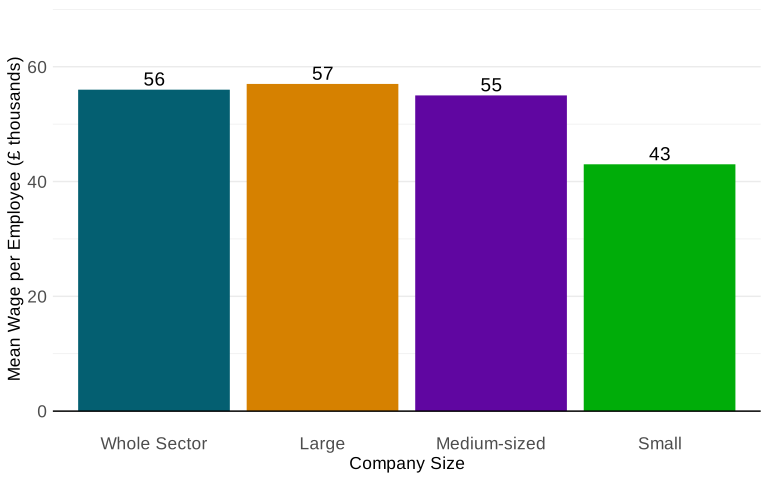
As shown in Figure 7, large companies (£57,000) are estimated to have had similar average[footnote 4] wages to medium-sized companies (£55,000). Small companies had slightly lower estimated average[footnote 4] wages at £43,000. The average[footnote 4] wage across the whole D&T sector was £56,000.
Figure 7: D&T sector average[footnote 4] wage by company size, in £ thousands, 2024, UK
4. Overview of the Frontier Technologies
The frontier technologies are a component of the wider D&T sector. For more details on what constitutes the frontier technologies, please see the definitions page of this release.
-
Frontier technology companies account for around 10.2% of the wider D&T sector definition, at 10,972 companies.
-
In 2024, frontier technology companies employed approximately 637,000 people (48.0% of D&T employment).
-
In 2024, frontier technology companies generated an estimated £237 billion in turnover (58.0% of D&T turnover).
-
in 2024, frontier technology companies produced an estimated £70 billion in GVA (44.6% of D&T GVA).
-
In 2024, the average[footnote 4] wage for frontier technology companies was around £58,000, similar to the D&T average[footnote 4] wage of £56,000.
5. Frontier Technologies by Company Size
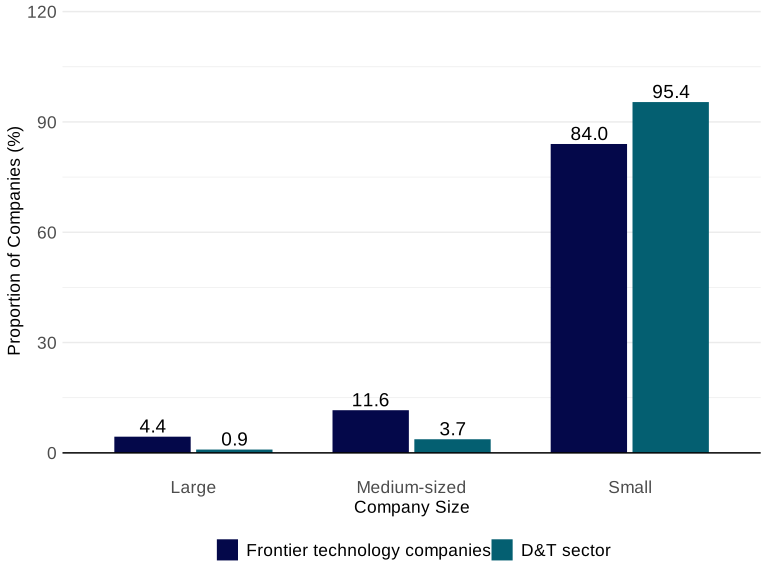
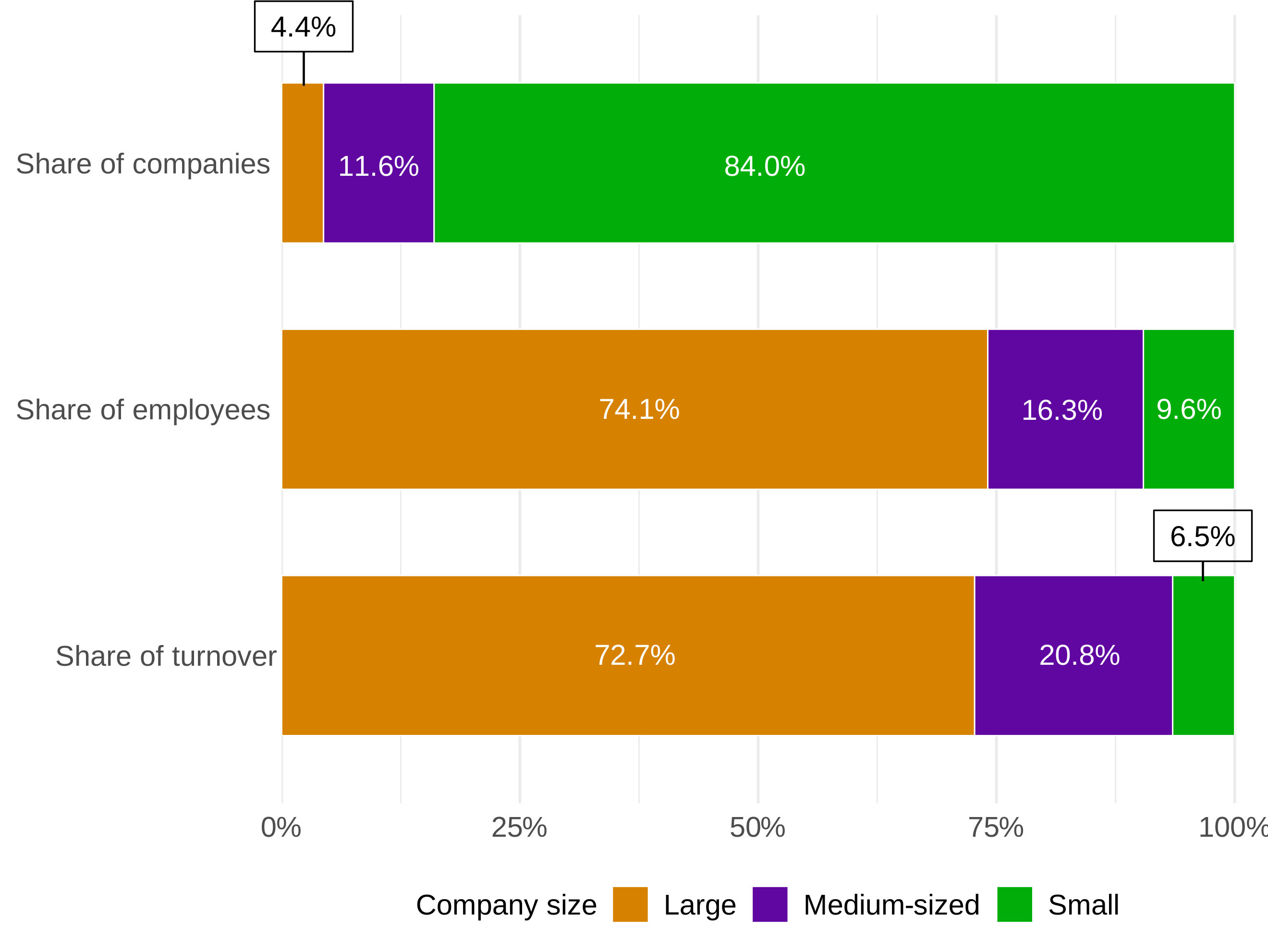
The proportion of small, medium-sized and large frontier technology companies was similar to the whole D&T sector, but with a slightly more even distribution across company size categories (Figure 8).
Figure 8: Proportion of small, medium-sized and large frontier technology companies compared to the whole D&T sector, 2024, UK
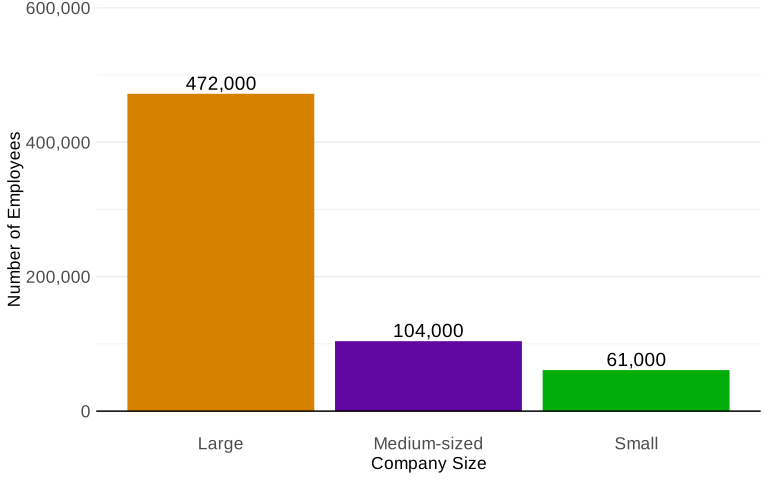
As in the D&T sector overall, large frontier technology companies employed the majority of the frontier technology workforce at an estimated 472,000 employees or 74.1% of the frontier technology companies total (Figure 9). Small and medium-sized frontier technology companies employed a similar number of people at 61,000 and 104,000 respectively.
Figure 9: Number of employees in frontier technology companies by company size, 2024, UK
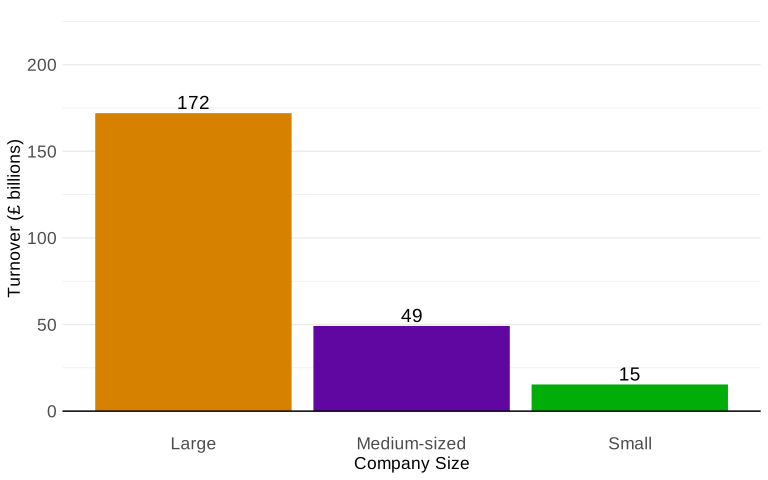
As shown in Figure 10, large companies were responsible for the largest proportion of frontier technology companies turnover at £172 billion, or 72.7% of the frontier technology companies total. This was a larger proportion than large companies in the D&T sector as a whole which contributed 59.0% of the D&T sector turnover total.
Figure 10: Frontier technology company turnover by company size, in £ billions, 2024, UK
Overall, frontier technology companies showed a more pronounced concentration of activity among large companies than the D&T sector overall. While large companies account for a small minority of frontier technology companies, they account for a large share of employment and a similarly large share of turnover (Figure 11).
Figure 11: Share of frontier technology companies, employees and turnover by size, 2024, UK
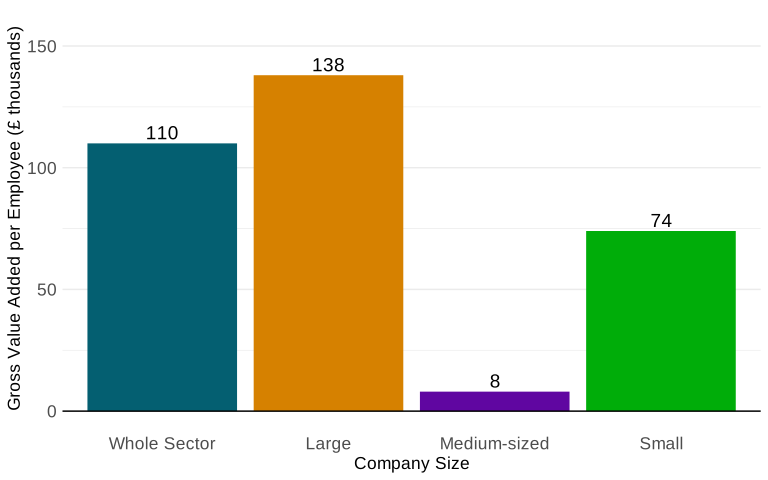
Similar to the D&T sector as a whole, large frontier technology companies were the most productive at an estimated £138,000 GVA per employee (Figure 12). Medium-sized and small companies appear less productive, but are likely to be affected by the lack of recognition for intangible assets in GVA calculations as discussed in the next paragraph. Productivity across all frontier technologies companies was estimated at £110,000 GVA per employee.
Figure 12: GVA per employee (productivity) for frontier technology companies by company size, in £ thousands, 2024, UK
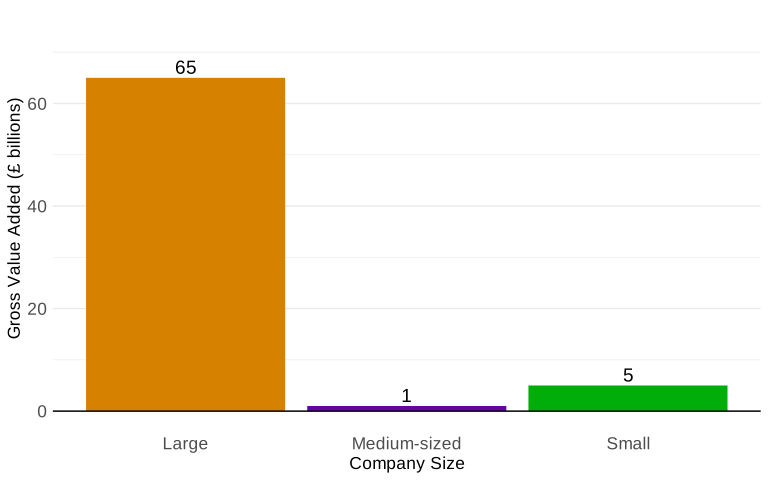
As shown in Figure 13, large companies were responsible for most of the GVA produced by frontier technology companies (£65 billion, or 92.4% of the frontier technology companies total). Medium-sized and small companies had very low GVA. As described for the engineering biology sector, this likely reflects the lack of recognition for intangible assets in GVA calculations which is particularly impactful for relatively small companies with high levels of research and development activity.
Figure 13: GVA for frontier technology companies by company size, in £ billions, 2024, UK
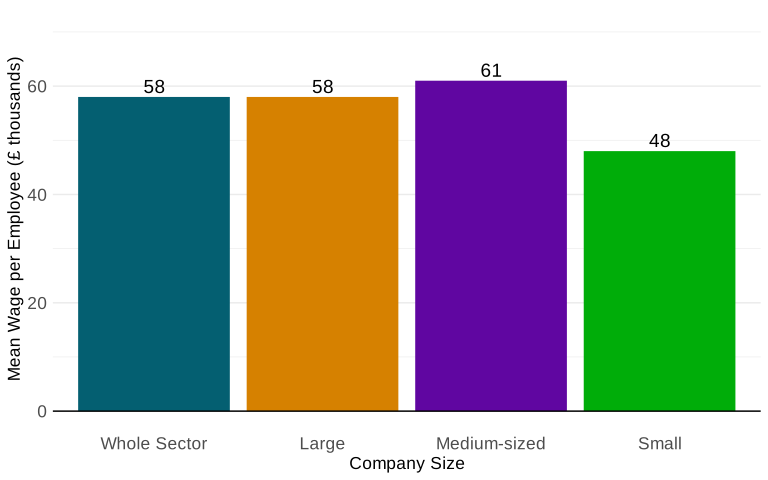
The average[footnote 4] wage was similar across large and medium-sized frontier technology companies at £58,000 and £61,000 respectively (Figure 14). Small frontier technology companies had a lower average wage of £48,000. This is similar to the trend observed in the D&T sector as a whole, where large companies and medium-sized companies had a higher average wage than small companies. The average wage across all frontier technology companies was £58,000.
Figure 14: Average[footnote 4] wage for frontier technology companies by company size, in £ thousands, 2024, UK
6. Technical Note
For some economic statistics, we provide a breakdown by business size, defined as:
- Small companies: fewer than 50 employees
- Medium-sized companies: between 50 and 249 employees (inclusive)
- Large companies: 250 or more employees
This follows the approach used in the Business Population Estimates series of statistics.
Please note that, while figures are quoted as being from 2024, some data may come from a preceding time period. Where this has occurred, such data has been normalised using a chosen set of assumptions. Apart from some of the company lists used to define the D&T sector, no data after 2024 was used in the production of these economic statistics. For more information on data sources and time periods, see the technical report.
There is an increased level of uncertainty for gross value added (GVA) and wages estimates presented in this publication as these estimates are based on a smaller sample of D&T sector companies. See the GVA and wages methodology section of the associated technical report for further information.
Estimates in this publication are rounded to at least the nearest thousand for employment and wages, and to the nearest million for turnover and GVA; some estimates in this report are rounded more coarsely. Percentages are rounded to a single decimal place. Estimates may not sum due to rounding. Calculations used to produce derived statistics within this release are based on unrounded figures.
7. Feedback
This is an ad-hoc statistical release containing exploratory methods of producing statistics for the D&T Sector. If you have any feedback on this release or the methods used within, please contact economicestimates@dsit.gov.uk.
8. Footnotes
-
UK totals sourced from DBT’s Business Population Estimates 2024, based specifically on data relating to companies only. UK totals from 2024 have been selected for consistency when comparing totals from this release with UK totals. ↩ ↩2 ↩3
-
UK GVA total sourced from 2024 data from GDP output approach – low-level aggregates - Office for National Statistics. This UK total includes data from other forms of companies not captured in this release and so any comparisons with the statistics produced in this release are indicative only. ↩
-
UK output per worker average sourced from 2024 data from ONS Output per worker dataset. ↩
-
In this release average wage is defined as the mean wage per employee for the company which contains the median employee. For more details on this methodology, please see the technical report accompanying the release. ↩ ↩2 ↩3 ↩4 ↩5 ↩6 ↩7 ↩8 ↩9
-
UK median full-time employee earnings sourced from 2024 data from ONS Employee Earnings in the UK: 2025. Values have been rounded to the nearest thousand. Earnings are a broader concept than wages. Comparison with wages data is used to indicate a trend rather than provide a precise comparison. ↩