Code of practice on litter and refuse
Updated 10 March 2026
Applies to England

© Crown copyright 2026
This publication is licensed under the terms of the Open Government Licence v3.0 except where otherwise stated. To view this licence, visit nationalarchives.gov.uk/doc/open-government-licence/version/3 or write to the Information Policy Team, The National Archives, Kew, London TW9 4DU, or email: psi@nationalarchives.gov.uk.
Where we have identified any third party copyright information you will need to obtain permission from the copyright holders concerned.
This publication is available at https://www.gov.uk/government/publications/code-of-practice-on-litter-and-refuse/code-of-practice-on-litter-and-refuse
1. Introduction
1.1 This code of practice on litter and refuse (‘the code’) provides statutory guidance on fulfilling the duties under section 89 of the Environmental Protection Act 1990.
1.2 Local authorities and a range of other bodies that manage public land (‘duty bodies’) have a statutory duty, as far as is practicable, to keep:
- land clear of litter and refuse
- certain roads clean
1.3 Bodies that are subject to these duties must consider this code. It explains how different types of land should be kept clean and clear of litter and refuse and where it might not be practicable to meet the relevant standard (see section 8).
1.4 The code seeks to encourage duty bodies to maintain their land within acceptable cleanliness standards. The emphasis is on the consistent and appropriate management of an area to keep it clean, not on how often it is cleaned.
1.5 Part 1 (sections 2 to 9) establishes the standards that duty bodies are required to achieve for each duty and the duty bodies that must comply with each of these duties. As a last resort, it also provides a set of recovery times for restoring local environmental standards for litter, refuse and detritus if they fall below the prescribed standard.
1.6 Where land is defaced by litter and refuse and action alleging breach of a section 89 duty is taken in court under section 91 of the act, this code is admissible in evidence in proceedings. See section 11a for more details.
1.7 Engagement with the local community, education and effective use of enforcement powers can help duty bodies to comply with their duties to keep relevant land clear of litter and refuse and highways clean. Legislation and guidance to support the code are outlined in Part 2.
1.8 This is the fourth code of practice on litter and refuse. The first was published in January 1991 by the Secretary of State. It was substituted by a code dated 1 June 1999 published by the Department for Environment, Transport and the Regions. These first two versions were both applicable to England, Scotland and Wales. The third version, applicable in England only, was published in April 2006 by the Department for the Environment, Food and Rural Affairs and modified in September 2019 to incorporate enforcement guidance. This enforcement guidance has been removed and replaced by statutory littering enforcement guidance. This fourth version of the code is applicable in England only.
1.9 Other issues, such as graffiti and fly-posting, even if partially removed, have a negative effect on the quality of the local environment. While not covered by this code, local authorities and other duty bodies should seek to manage these issues while complying with their section 89 duties. See guidance on the management of graffiti and fly-posting. This replaces the advisory standards that were set out in the previous code.
Who else should be interested in the code?
1.10 While not subject to the code, it may also be of interest to:
- individuals and community groups, as it will inform them of what is expected of local authorities and other duty bodies and what to do if local standards are not being met
- businesses, as they should recognise the benefits of reducing litter and the role they may be able to play in reducing it at source
- registered social landlords and managers of private land that are not subject to the section 89 duty. A person can report litter and refuse on such land to the local authority who could investigate whether to take further action, such as through a Community Protection Notice – see section 11C for more information
1.11 Collaborative action among all land managers, public and private, is vital to good management of the shared local environment.
Part 1: Code of practice on litter and refuse
Issued under section 89(7) of the Environmental Protection Act 1990 (EPA 1990).
2. The duties
2.1 Duty 1 – Section 89(1) of the EPA 1990 places a duty on certain bodies to ensure that land for which they are responsible is, so far as is practicable, kept clear of litter and refuse.
2.2 This duty affects:
- each local authority, as respects any relevant highway for which it is responsible
- The Secretary of State, as respects any trunk road that is a special road and any other relevant highway or road for which they are responsible
- a strategic highways company as respects any trunk road which is a special road for which it is the highway authority, and any relevant highway for which it is responsible
- each principal litter authority (for example, local authorities), as respects its relevant land
- the appropriate Crown authority, as respects its relevant Crown land
- each designated statutory undertaker, as respects its relevant land
- the governing body of each designated educational institution, as respects its relevant land
2.3 Designated statutory undertakers include:
- any relevant airport operators (as defined by Part V of the Airports Act 1986)
- any operator of a relevant railway asset (such as a railway station and track)
- passenger transport executives in relation to railway undertakings
- any person or body authorised by any enactment to carry on any canal, inland navigation, dock, harbour or pier undertaking
- any person authorised by any enactment to carry on any road transport undertaking, other than the operator of a licensed taxi or hire car
- any person authorised by any enactment to carry on any railway, light railway, tramway or undertaking
2.4 Duty 2 – Section 89(2) of the EPA 1990 places an additional duty on certain bodies to ensure that the highway or road is, so far as practicable, kept clean.
This means the removal of detritus as well as litter and refuse.
2.5 This duty affects:
- each local authority, as respects any relevant highway or relevant road for which it is responsible (this will include local roads and most trunk roads)
- the Secretary of State, as respects any trunk road which is a special road (except those which are the responsibility of the strategic highways company) and any relevant highway or relevant road for which he is responsible
- the strategic highways company as respects any trunk road which is a special road for which it is the highway authority, and any relevant highway for which it is responsible (this will include motorways and sections of certain trunk roads)
2.6 Section 3 defines litter, refuse and detritus. Section 8 provides more information on the caveat about practicability.
2.7 The removal of detritus is only required on metalled surfaces. It is recommended that detritus is removed from other hard surfaces. ‘Metalled surfaces’ or ‘metalled highways’ are roads laid with solid materials such as concrete. They are not unpaved paths or tracks that consist of loose stone, gravel or mud.
2.8 The original definitions for bodies subject to these duties are provided in sections 86 and 98 of the EPA 1990. They are supplemented by the:
- Litter (Statutory Undertakers) Designation and Relevant Land Order 1991
- Litter (Designated Educational Institutions) Order 1991
- Railways Act 1993 (Consequential Modifications) Order 1999
2.9 These duties relate to the duty body’s relevant land and relevant highways or special roads. Definitions of these are provided in section 86 of the EPA 1990. In addition, relevant land must be:
- open to the air on at least one side, for example, bus shelters, rail shelters and tram shelters
- under the direct control of a duty body
- publicly accessible (with or without payment)
2.10 These duties are not transferable. A duty body can contract a private company or another agency, for example a cleansing contractor or a parish council, to carry out cleansing on its behalf. However, the duty body remains responsible if the land is not maintained to acceptable standards. Similarly, within Business Improvement Districts, the duty body for that land is still responsible for ensuring that the statutory requirements are met.
3. What comprises litter and refuse
3.1 The EPA 1990 does not provide a comprehensive definition of litter or refuse. The following summarises common definitions and is provided purely as a guide.
Litter
3.2 Litter is most commonly assumed to include materials that are either:
- improperly discarded and left by members of the public, often associated with smoking, eating and drinking
- spilt during business operations or waste management operations
3.3 Generally a single plastic sack of rubbish or more would usually be considered fly-tipping rather than litter, although several bags of rubbish may amount to littering (see Westminster City Council v John Riding 1995)
3.4 Under section 98(5A) of the EPA 1990, certain discarded smoking-related materials (cigarette ends, for example) and discarded chewing gum and the remains of other products designed for chewing are specifically stated to be items of litter. Both items are litter when they are dropped (meaning the person who dropped them could be prosecuted under section 87 of the EPA 1990 for leaving litter).
3.5 However, the grading standards in the code do not apply to trodden-in chewing gum. Duty bodies are not required to employ special cleansing methods to remove compacted gum, or gum staining, over and above normal cleansing regimes. It is recommended that duty bodies remove staining at the same time as complying with their section 89 duties.
Refuse
3.6 Refuse should be regarded as having its ordinary meaning of waste or rubbish, including household and commercial waste, and can include fly-tipped waste.
Detritus
3.7 Detritus is small, broken down particles of synthetic and natural materials. Detritus includes:
- dust
- mud
- soil
- grit
- gravel
- stones
- rotted leaf and vegetable residues
- fragments of twigs, glass, plastic and other finely divided materials
3.8 Leaf and blossom falls become detritus once they have substantially lost their structure and have become mushy or fragmented. A significant and avoidable source of detritus is uncollected grass cuttings and weed growth from seeds germinating in moist detritus. Weeds and detritus are interlinked and therefore need to be managed together.
3.9 Detritus on metalled highways must be removed as a requirement of the section 89 duty to keep highways clean. It is also recommended that detritus should be removed alongside litter and refuse by duty bodies from all other hard surfaces as well (see 2.3).
Fly-tipping
3.10 The illegal deposit (dumping) of waste is commonly known as fly-tipping. The offence of fly-tipping is contained in subsection 33(1)(a) of the EPA 1990. This subsection states that it is an offence to either deposit controlled waste or knowingly cause or permit controlled waste to be deposited on land without an environmental permit.
3.11 There is no specific definition of fly-tipping other than in the offence set out above.
3.12 Local authorities deal with most fly-tipping incidents while the Environment Agency focuses its efforts on dealing with larger, more serious incidents. The National Fly-Tipping Prevention Group have produced a document “Fly-tipping responsibilities: Guide for local authorities and land managers”. This outlines the division of responsibilities between local authorities and the Environment Agency. This, and other resources to help tackle fly-tipping, are available from the National Fly-Tipping Prevention Group.
4. The principle underpinning this code
4.1 The quality of the local environment, that is, the appearance of an area, and the way that people perceive it, comes down to good, effective management. Accurate and systematic monitoring is needed to know what resources should be deployed and when. This enables duty bodies to:
- identify when and where the greatest litter problems are likely to occur
- put into place procedures to ensure that these do not build up and that acceptable standards are maintained
4.2 It is good practice for duty bodies to make this information available to the public, for example, through publishing cleansing regimes.
4.3 Government does not expect that implementing this code will demand additional expenditure on the part of a duty body. Better standards can often be achieved within the existing levels of expenditure, by deploying suitable resources at appropriate times and combining this with education and enforcement.
4.4 Public opinion tends to be shaped by a minority of sites – unsightly niches and areas where litter may be trapped due to the nature of the environment itself. For most responsible bodies, good management therefore means:
- managing the minority of locations for short periods of time
- maintaining a consistent overall cleansing strategy
4.5 All duty bodies are encouraged to adopt suitable monitoring systems. Systematic data collection throughout the year and across different land use types is vital for ensuring compliance with the code. It will also help land managers to identify sources of problems and take efficient and effective action to resolve, or better still pre-empt, problems.
4.6 This code provides a set of recovery times for restoring local environmental standards for litter, refuse and detritus, if they fall below the prescribed standard. However, these should be regarded as a last resort as the levels should be maintained to an acceptable standard at all times.
5. Grades of cleanliness
5.1 The grades of cleanliness are shown below.
Litter and refuse
Grade A: No litter or refuse
Grade B: Predominately free of litter and refuse apart from some small items
Grade C: Widespread distribution of litter and/or refuse with minor accumulations
Grade D: Heavily affected by litter and/or refuse with significant accumulations
Detritus (to be removed on metalled highways and recommended to be removed on all hard surfaces)
Grade A: No detritus
Grade B: Predominately free of detritus except for some light scattering
Grade C: Widespread distribution of detritus with minor accumulations
Grade D: Heavily affected by detritus with significant accumulations
5.2 These standards may be applied to any site for litter and refuse, and in the case of detritus, they may also be applied to metalled highways. For detritus, it is also recommended that the standards are applied to all hard surfaces, using the following principles.
5.3 Although the nature and characteristics of land may vary, the principles on which litter, refuse and detritus are graded remain the same. The photos below demonstrate how these principles appear in different settings.
- Grade A means that no litter, refuse (or detritus where applicable), is present in the area.
- The presence of even one small item of litter, refuse (or a small scattering of detritus where applicable) downgrades the environment to a B.
- The presence of litter, refuse or both (as well as detritus where applicable) that is significant enough to form a few minor accumulations (grade C) or significant accumulations (grade D) is regarded as unacceptable.
5.4 It is recognised that an area cannot be maintained to a grade A at all times. The presence of a few small items of litter and refuse, not yet accumulating, are regarded by the public as acceptable for short periods of time. Land managers should, through monitoring and the appropriate use of resources, keep their land clear of litter and refuse so that it does not fall below grade B and is cleansed to an A on a regular basis. Metalled highways must be free from detritus after cleansing (to a grade A).
5.5 The aim of the recommendation that all hard surfaces be cleansed to be free from detritus is to encourage thorough cleansing on a regular basis. Without this, an area still appears dirty.
5.6 It may not be feasible to remove all litter items from some softer or non-metalled surfaces, such as grass or sand. In these cases, a grade B would be acceptable.
5.7 Where vegetated and metalled surfaces meet and form a boundary without clear kerb edging, land managers should make a judgement on the definitive edge of the metalled surface. For example, a grass verge leading onto a rural road. The extent of detritus is then the amount of encroachment onto the metalled surface from this definitive edge.
5.8 It should be regarded as good practice to cut back any vegetation that encroaches upon a metalled surface. Detritus can be managed with an effective sweeping regime. Although a grade A standard may not be achievable in every circumstance, it is expected that an acceptable grade (grade B) be achieved on the exposed metalled surface of a road or highway. Mud and skim from flooding are separate issues.
5.9 Land managers should be able to predict times or situations that lead to greater fluctuations in likely disposal patterns and prepare for them appropriately. Land managers should also consider shaping their monitoring to enable them to respond quickly to potentially dangerous items such as glass or drug needles, or to sensitive areas such as playgrounds.
Visual examples of the grading principles in different settings
Grading photos: litter and refuse in a suburban area
Grade A
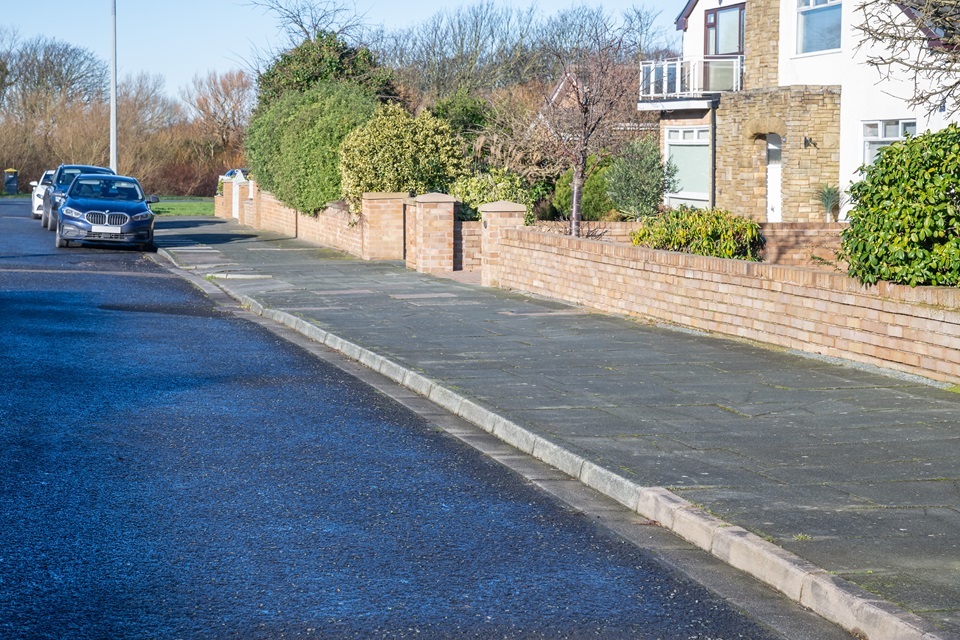
A road in a suburban area with no litter or refuse. This means it is a grade A standard.
Grade B
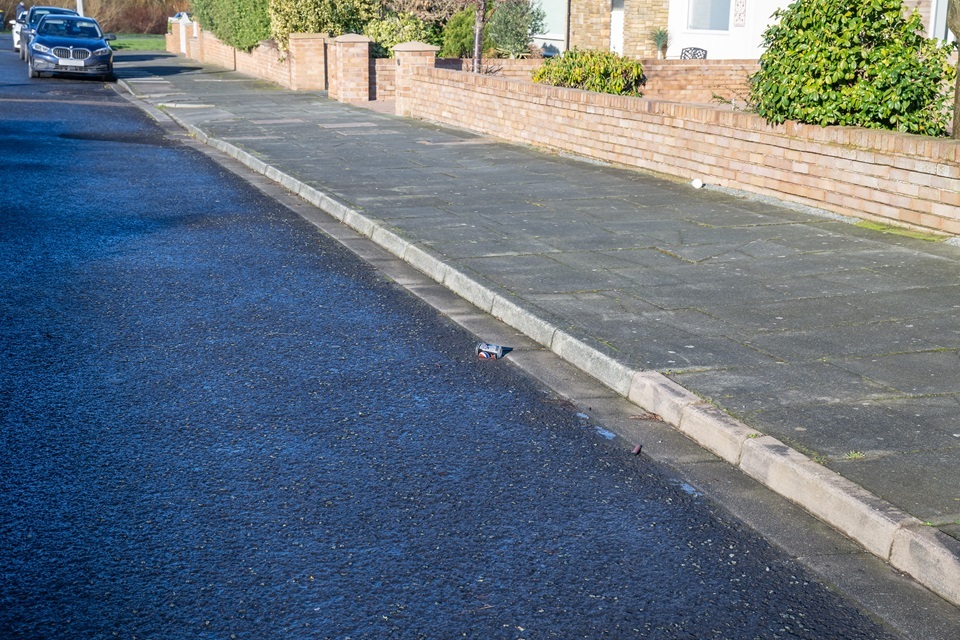
A road in a suburban area that is predominantly free of litter and refuse with the presence of a few small items. This means it is a grade B standard.
Grade C
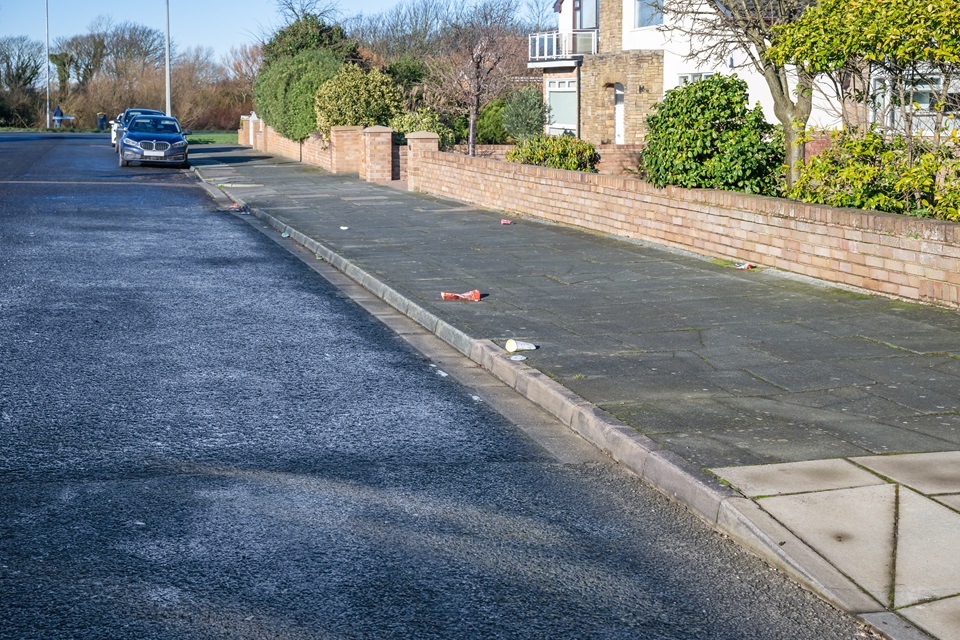
A road in a suburban area with widespread distribution of litter and refuse with minor accumulations. This means it is a grade C standard.
Grade D
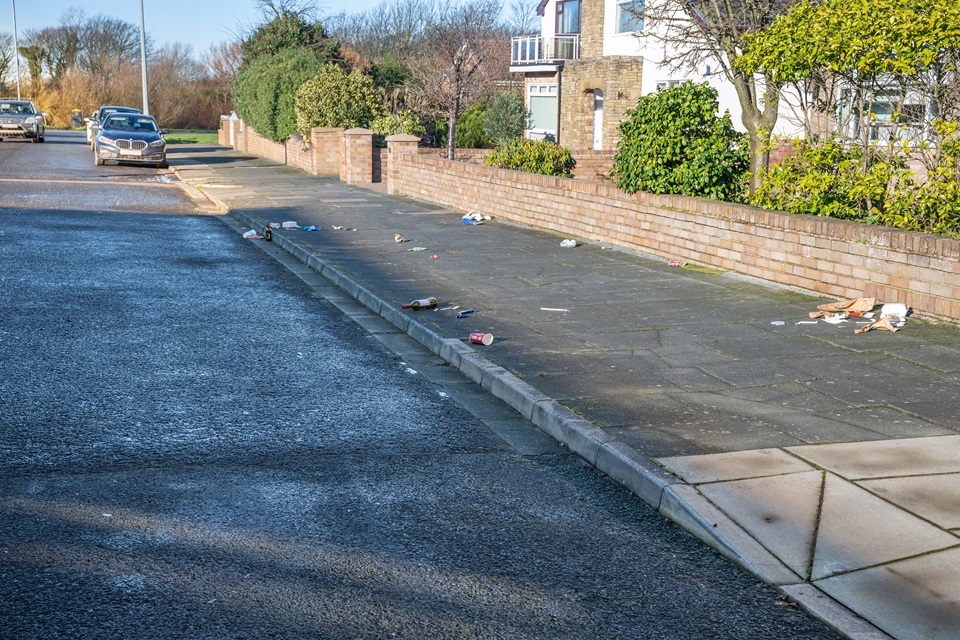
A road in a suburban area with significant accumulations of litter and refuse. This means it is a grade D standard.
Grading photos: litter and refuse in a park
Grade A
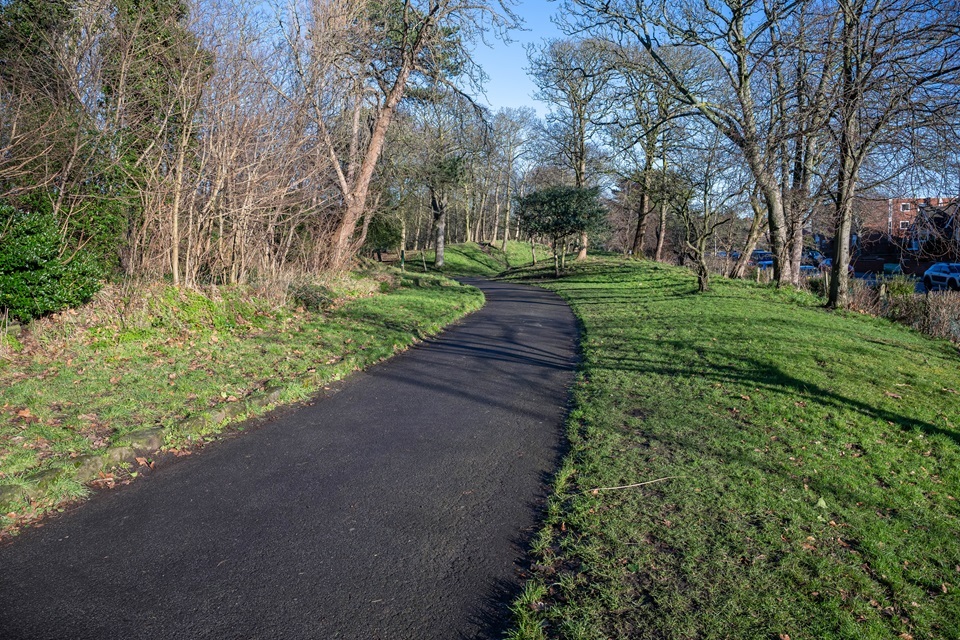
A path in a park with no litter or refuse. This means it is a grade A standard.
Grade B
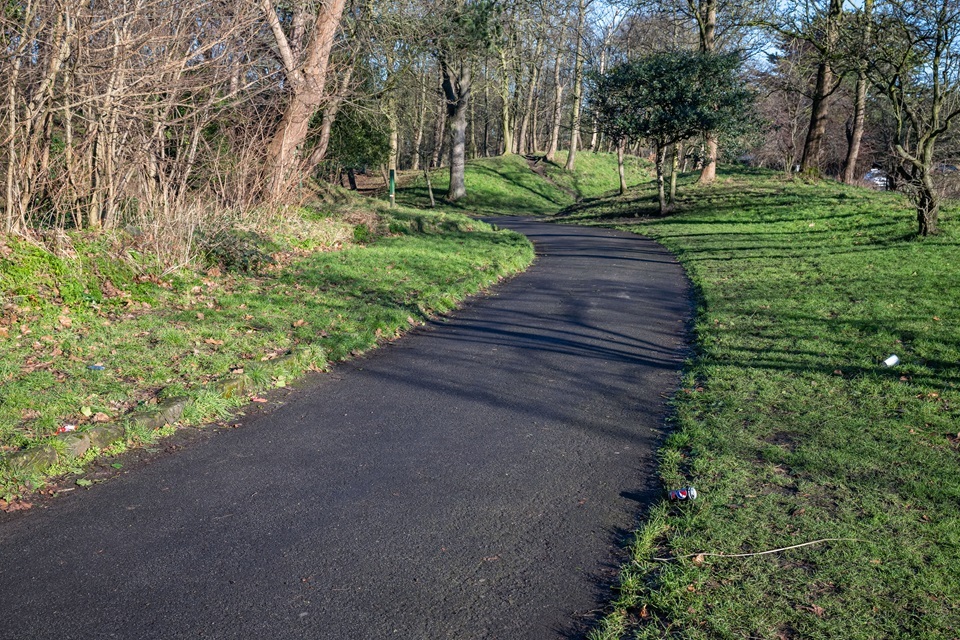
A path in a park that is predominantly free of litter and refuse with the presence of a few small items. This means it is a grade B standard.
Grade C
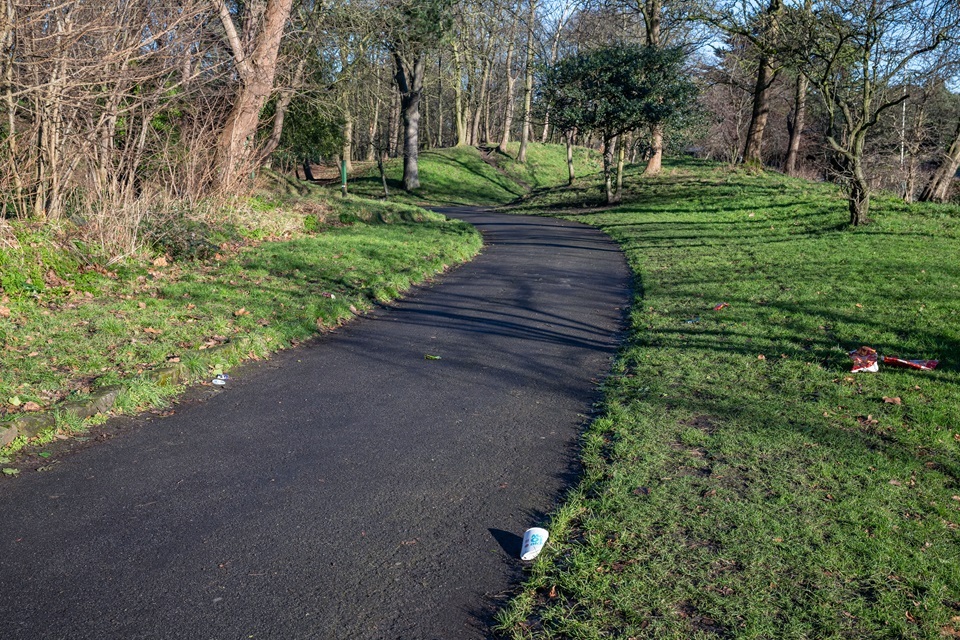
A path in a park with widespread distribution of litter and refuse with minor accumulations. This means it is a grade C standard.
Grade D
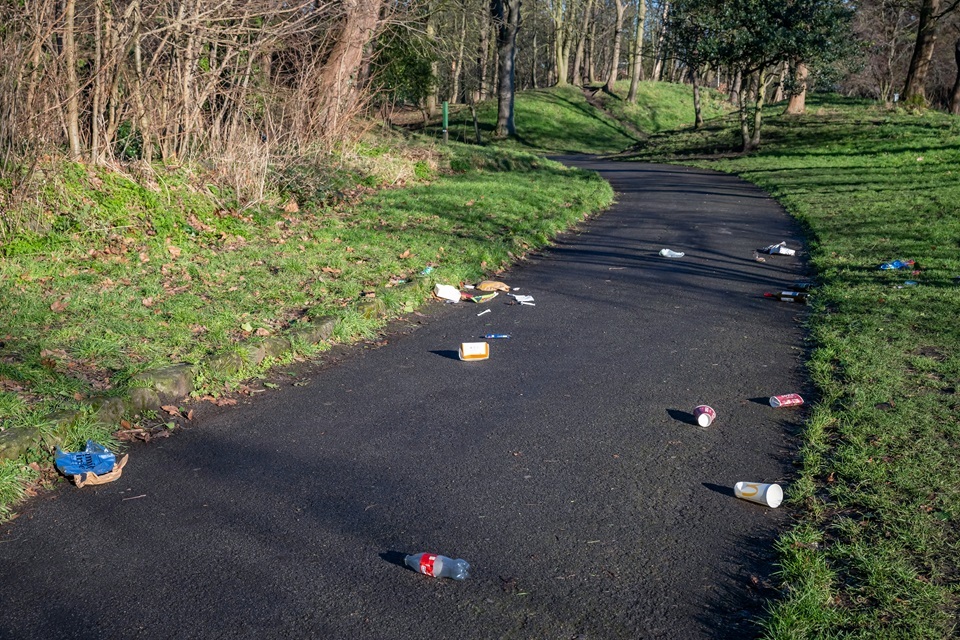
A path in a park with significant accumulations of litter and refuse. This means it is a grade D standard.
Grading photos: litter and refuse on a waterside path
Grade A

A waterside path with no litter or refuse. This means it is a grade A standard.
Grade B
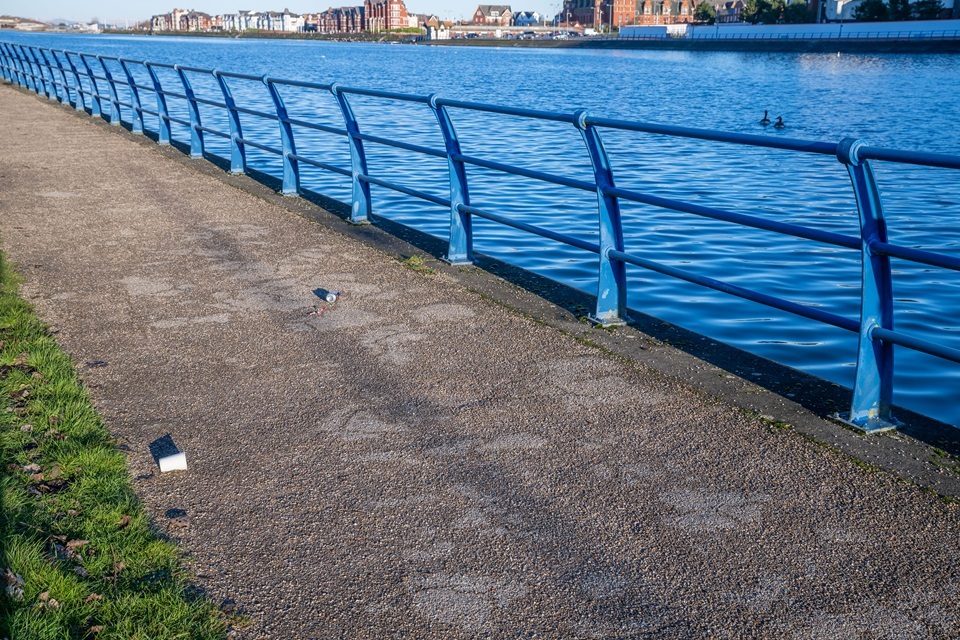
A waterside path that is predominantly free of litter and refuse with the presence of a few small items. This means it is a grade B standard.
Grade C
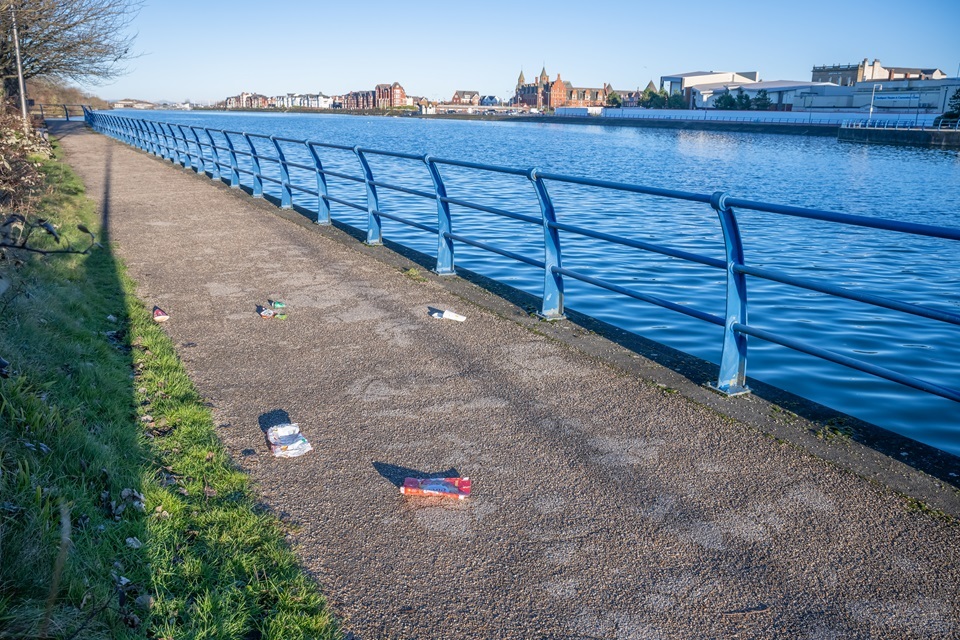
A waterside path with widespread distribution of litter and refuse with minor accumulations. This means it is a grade C standard.
Grade D
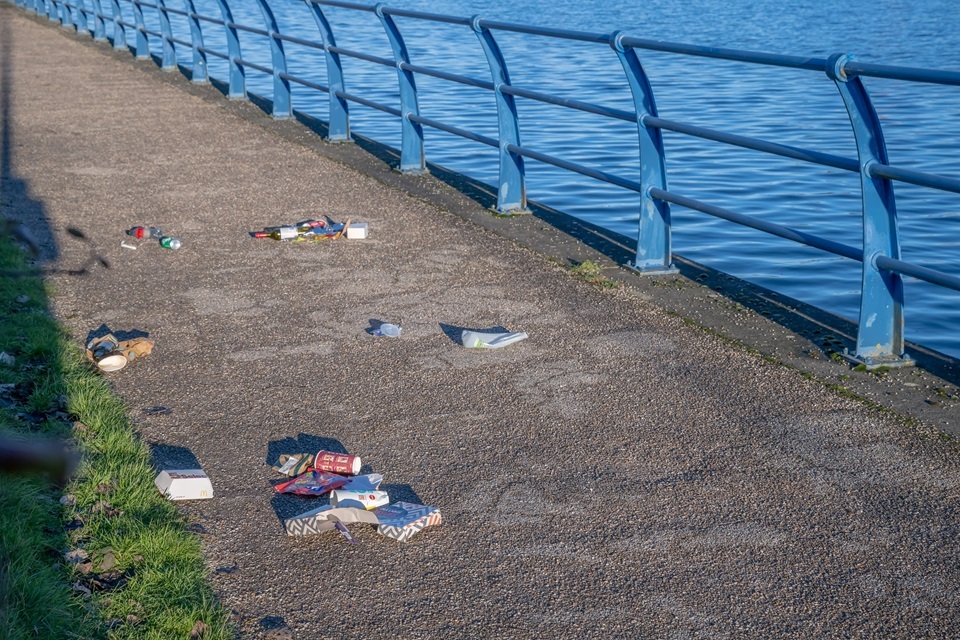
A waterside path with significant accumulations of litter and refuse. This means it is a grade D standard.
Grading photos: litter and refuse at a beach
Grade A
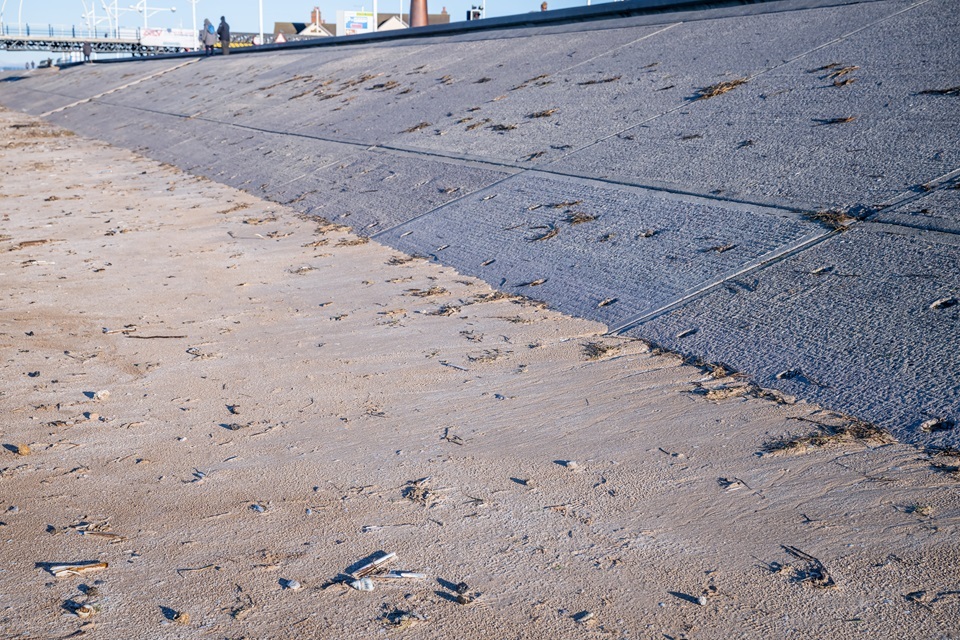
A section of beach with no litter or refuse. This means it is a grade A standard.
Grade B

A section of beach that is predominantly free of litter and refuse with the presence of a few small items. This means it is a grade B standard.
Grade C
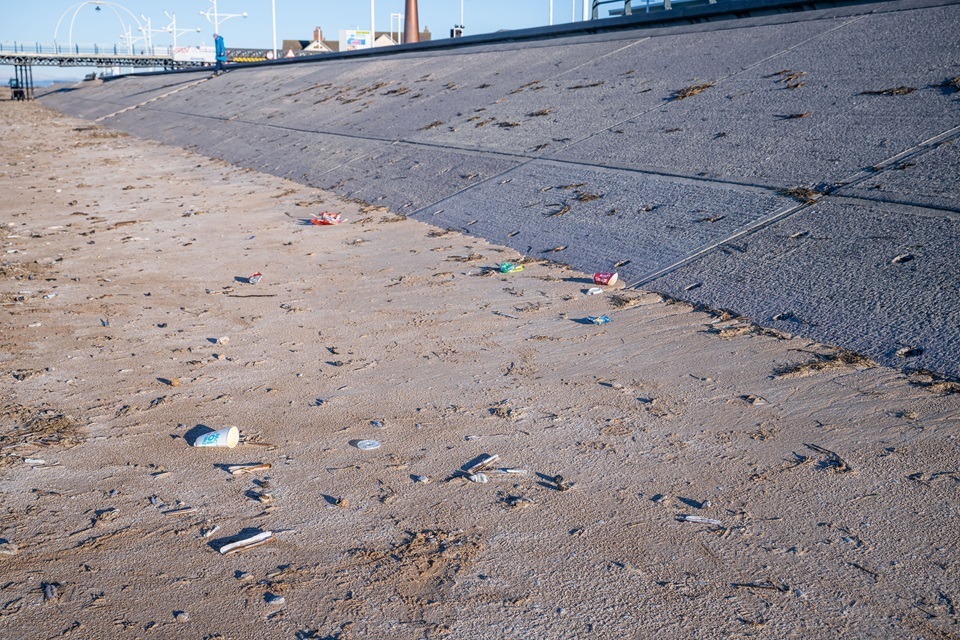
A section of beach with widespread distribution of litter and refuse with minor accumulations. This means it is a grade C standard.
Grade D
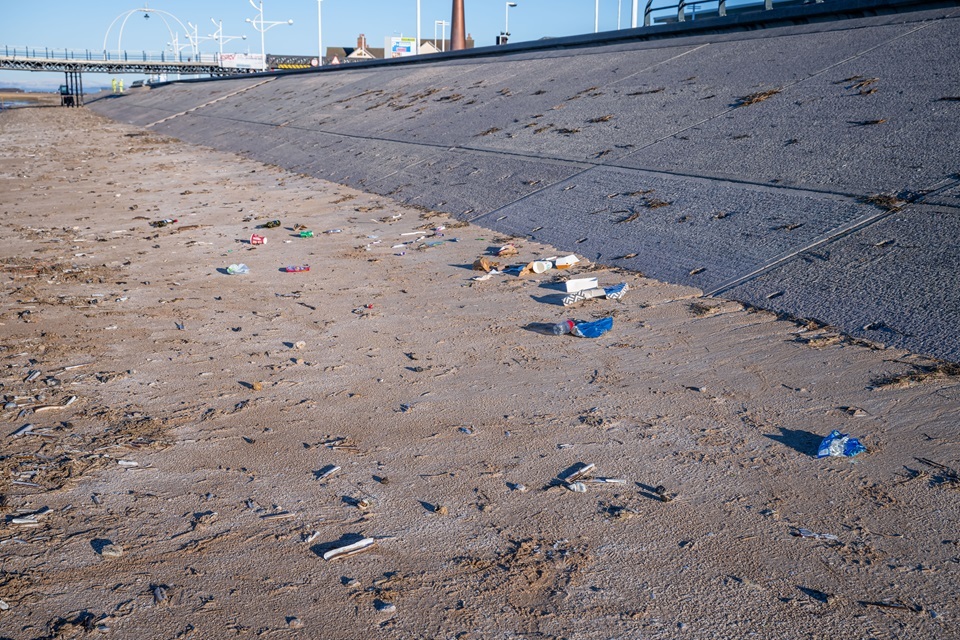
A section of beach with significant accumulations of litter and refuse. This means it is a grade D standard.
Grading photos: litter and refuse on a major road
Grade A
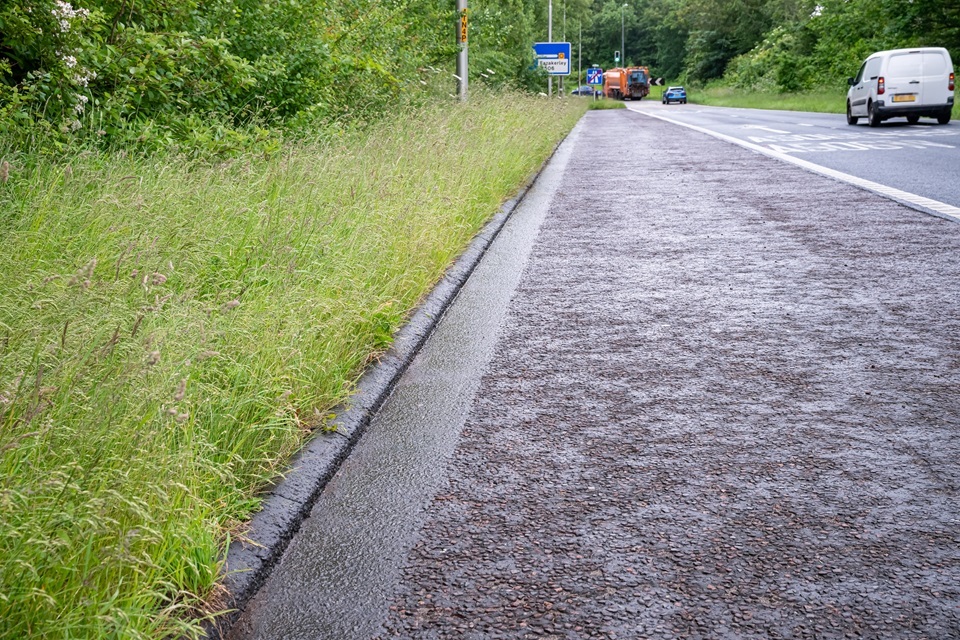
A layby on a main road with no litter or refuse. This means it is a grade A standard.
Grade B
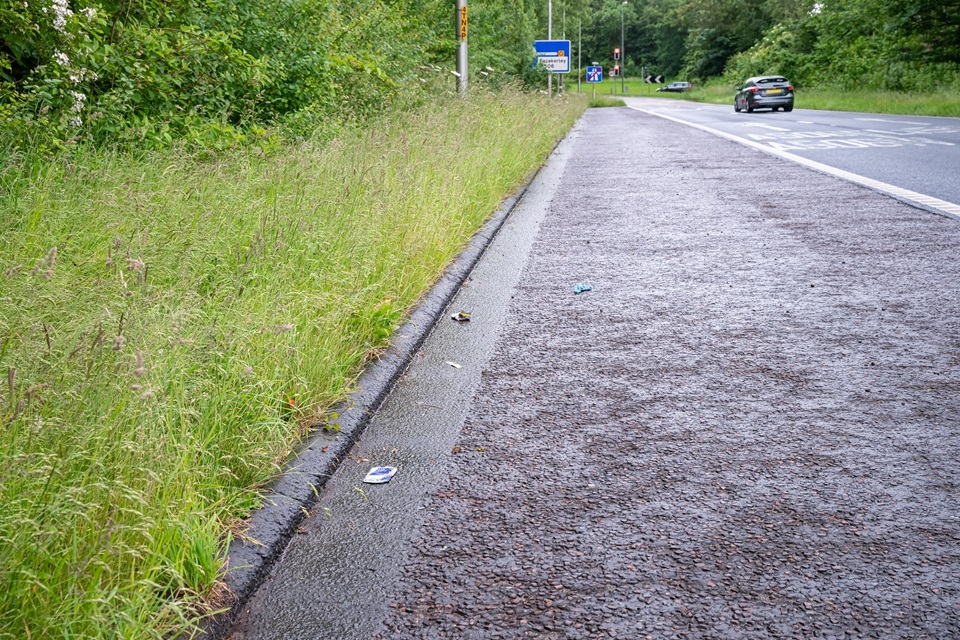
A layby on a main road that is predominantly free of litter and refuse with the presence of a few small items. This means it is a grade B standard.
Grade C
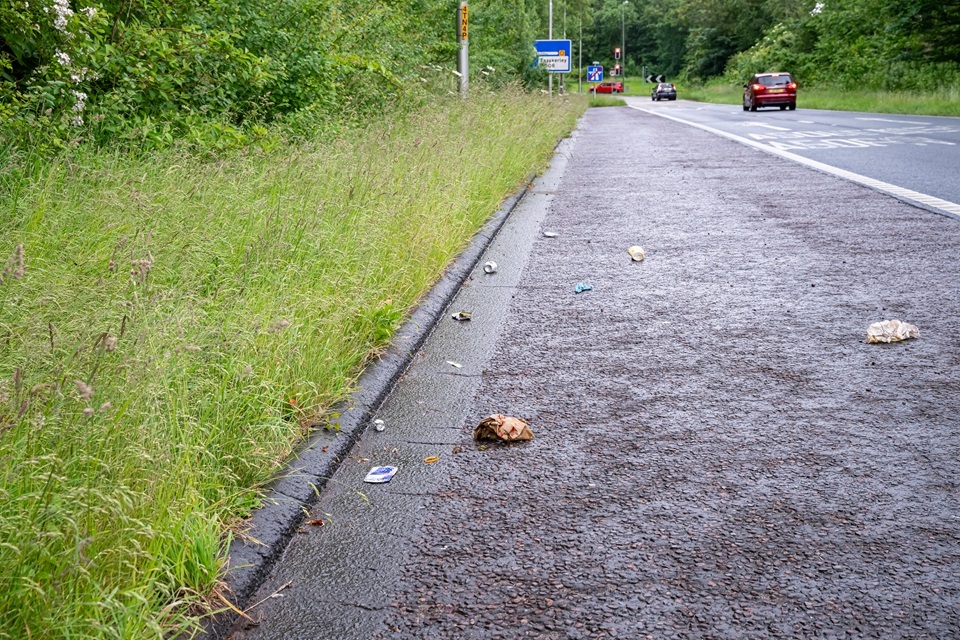
A layby on a main road with widespread distribution of litter and refuse with minor accumulations. This means it is a grade C standard.
Grade D
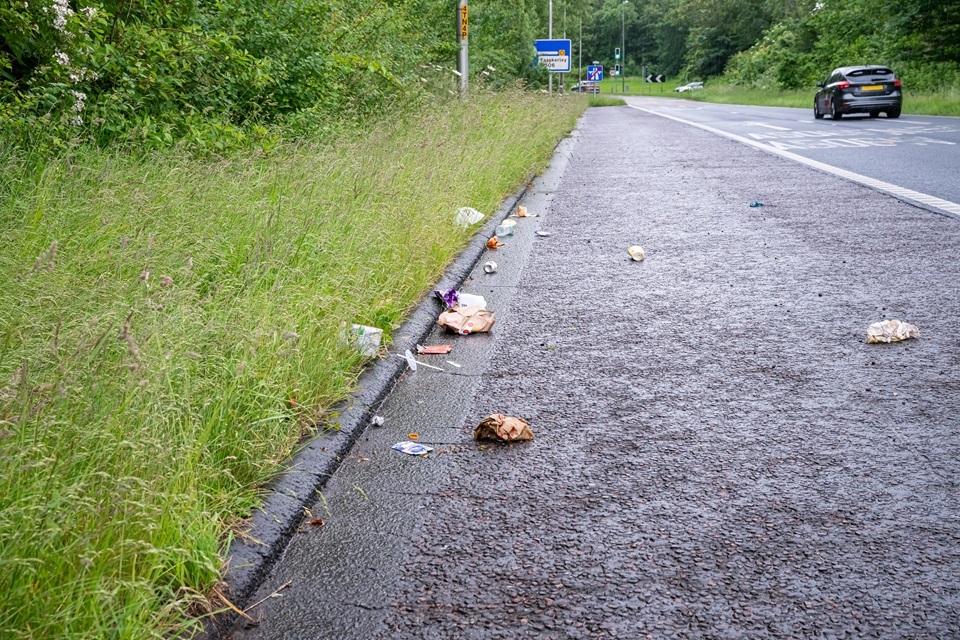
A layby on a main road with significant accumulations of litter and refuse. This means it is a grade D standard.
Grading photos: detritus on an urban road
Grade A
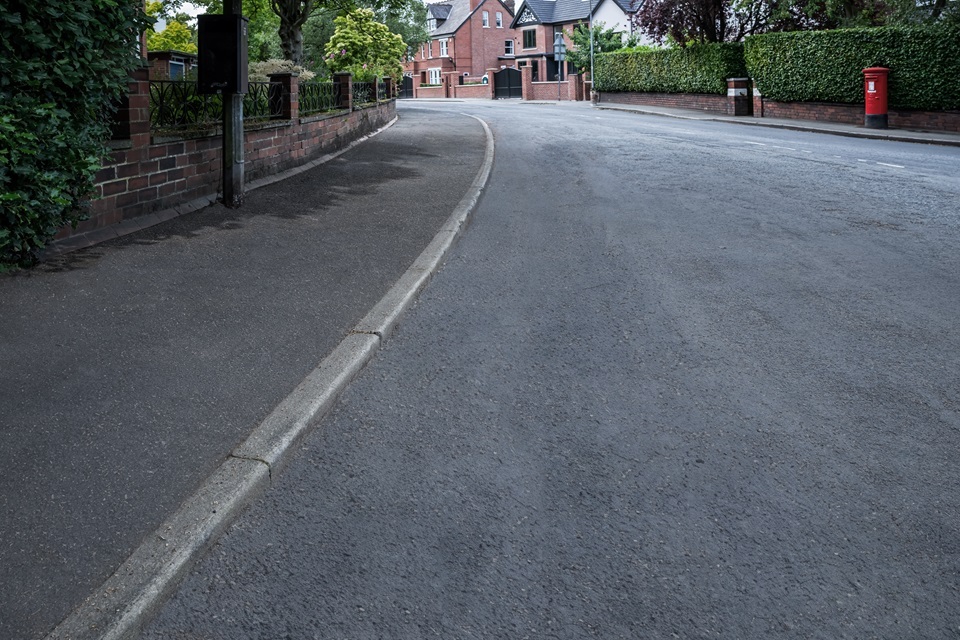
An urban road with no detritus. This means it is a grade A standard.
Grade B
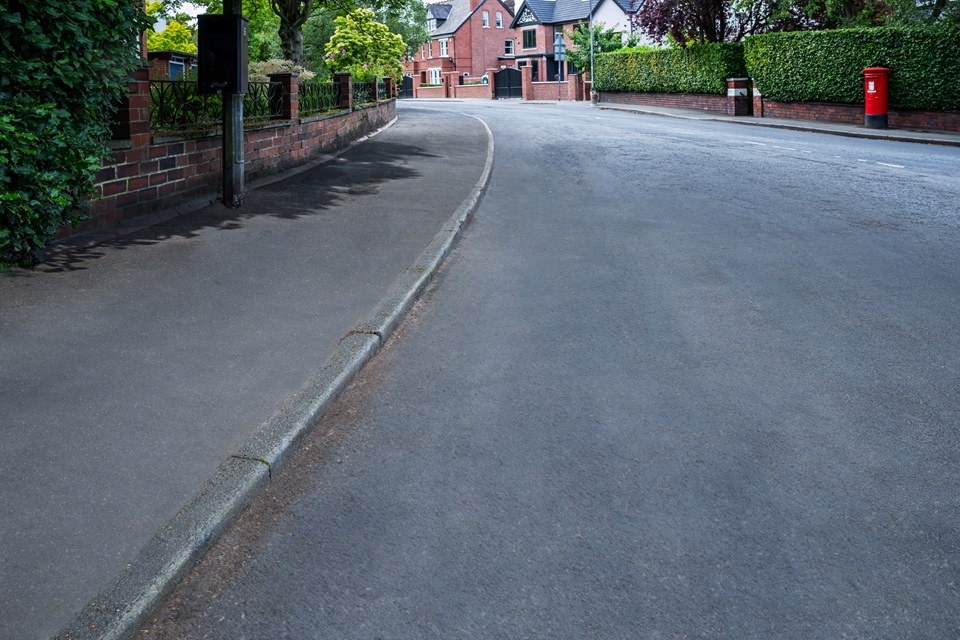
An urban road with small scatterings of detritus. This means it is a grade B standard.
Grade C
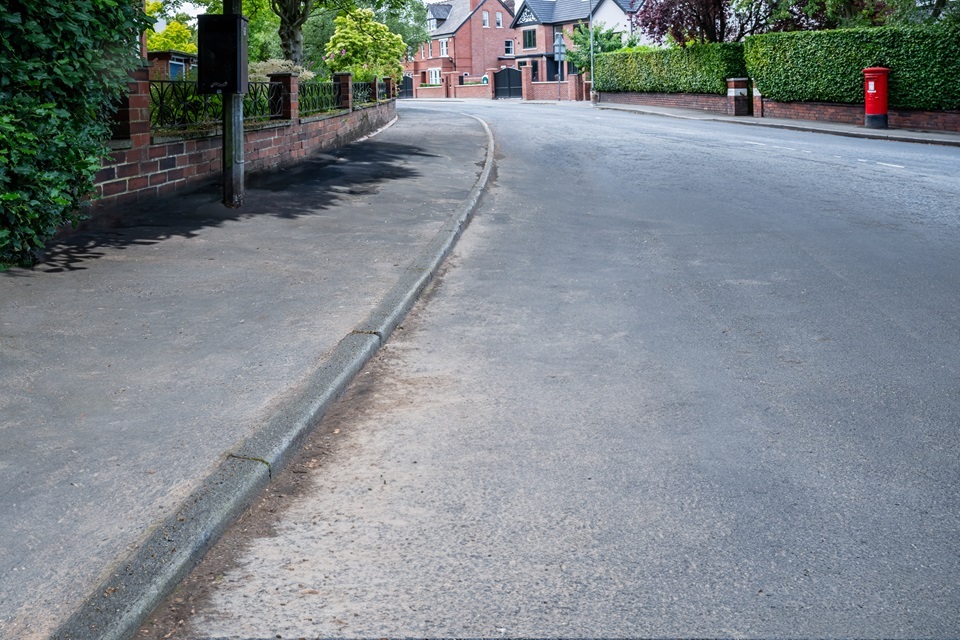
An urban road with widespread distribution of minor accumulations of detritus. This means it is a grade C standard.
Grade D
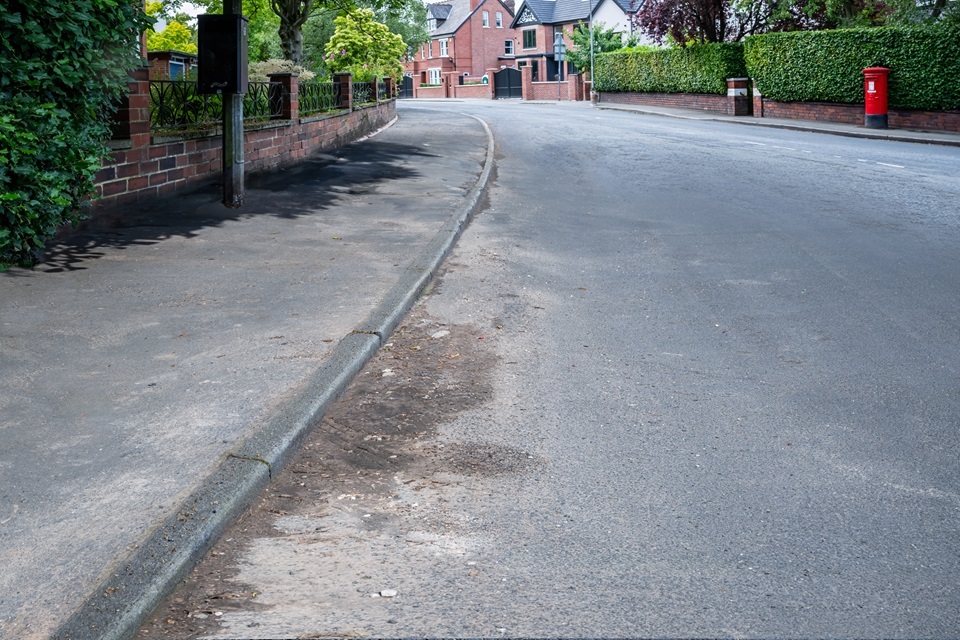
An urban road with significant accumulations of detritus. This means it is a grade D standard
Grading photos: detritus on a major road
Grade A

A major road with no detritus. This means it is a grade A standard.
Grade B

A major road with small scatterings of detritus. This means it is a grade B standard.
Grade C

A major road with widespread distribution of minor accumulations of detritus. This means it is a grade C standard.
Grade D
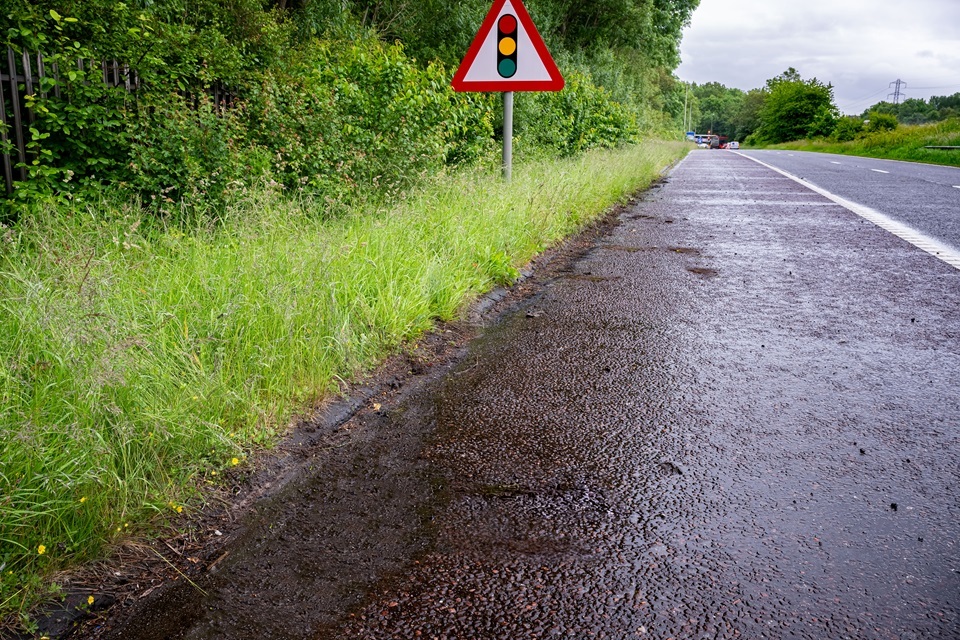
A major road with significant accumulations of detritus. This means it is a grade D standard.
6. Zones
6.1 The speed and intensity of the accumulation of litter and refuse in an area depends on many factors. These can include:
- levels of pedestrian and vehicular traffic
- natural physical features and location
- weather
- the time of year
- the nature of the surface of the terrain
- structural and physical items that affect the ability to clean
- the nature and condition of the surrounding areas
6.2 All of these must be accounted for when analysing the most effective cleansing strategy.
6.3 However, there are two features that most impact the levels and frequency of attention that need to be paid to an area, to keep levels of litter and refuse to acceptable standards. They are:
- the intensity of activity in the area from people and vehicles
- health and safety limitations
6.4 As such, the different types of land managed by duty bodies can be classified into four main zones, based on these two variables. This should help to guide duty bodies on the intensity of management required. These zones are:
- high intensity of use
- medium intensity of use
- low intensity of use
- areas with special circumstances
High intensity of use
6.5 Areas which, through intense pedestrian or vehicular movements, or both, are prone to fluctuations in litter and refuse and require both high levels of monitoring and frequent cleansing.
Medium intensity of use
6.6 Areas affected by moderate levels of pedestrian and vehicular activity and therefore less prone to fluctuations in litter and refuse, usually situated outside centres of retail or commercial activity, but used regularly by the public.
Low intensity of use
6.7 Areas subject to low or infrequent levels of pedestrian and vehicular activity and therefore less prone to fluctuations in litter and refuse. They are often located in more rural areas.
Special circumstances
6.8 Types of land where issues of health and safety and practicability are dominant considerations when undertaking environmental maintenance work (see section 8 for more information on practicability). This may include incidences of natural disasters such as flooding and any legislative restrictions.
6.9 Duty bodies should allocate land into one of these four zones and manage it accordingly. See table 1 for further information how these zones relate to different types of land. More detailed descriptions of land uses and accompanying management notes are listed in section 9.
6.10 If in doubt, categorise a land use into the same zone as the dominant land uses around it. For example, a park located within a housing area should be managed as a medium intensity zone.
6.11 A road would be designated as a:
- high- intensity zone while running through a primary or secondary retail and commercial centre
- medium-intensity zone in the suburbs
- low- intensity zone once in the countryside
6.12 Hotspots should be classified as high-intensity zones so they can be managed effectively. For example, areas within 200m of entrances of car parking areas in busy public parks, or national tourist attractions located in rural areas. Carriageway, verges and central reservations of motorways and trunk roads would typically fall under special circumstances. This is because of health and safety concerns about carrying out cleansing activities on live carriageways and the disruption that would be caused by regularly shutting these carriageways for cleaning.
Zoning maps
6.13 All duty bodies should publish their zoning maps online, and make them available in hard copy on request. Each map should show a date of publication. It is good practice for duty bodies to routinely review their zoning maps, especially whenever changes are made to relevant land, and re-publish as necessary. This enables more effective management by all parties.
Approach to zoning and re-zoning areas
6.14 All duty bodies in an area should work together to develop an integrated approach to zoning. It is recommended that subsequent zoning or re-zoning is also done after a period of consultation. In particular, any body under the duty should consult the principal litter authority when changing an existing zone or when zoning previously un-zoned areas.
Zones covered by multiple duty bodies
6.15 In some cases, these land uses may integrate with areas for which other duty bodies have responsibility. For example, suburban transport centres, the strategic road network, or land adjacent to canals. In these cases, respective zones of responsibility should be clearly defined. Partnership working is recommended to manage such areas.
Table 1: General zoning guidance for land types
| High intensity of use | Medium intensity of use | Low intensity of use | Special circumstances | |
|---|---|---|---|---|
| Retail, office and commercial (see section 9.2) | Primary and secondary retail, office and commercial areas. | Primary and secondary retail, office and commercial areas. | ||
| Housing land (see section 9.4) | Areas of housing (except those located within primary or secondary retail, office and commercial areas which fall within high intensity areas). | |||
| Industrial areas (see sections 9.5 – 9.7) | Industry, warehousing, retail parks. | Industry, warehousing, retail parks. | Industry, warehousing, retail parks. | |
| Roads (see sections 9.8 – 9.25) | Main roads and other highways running through the above areas. | Main roads and other highways running through the above areas. | Rural roads, other highways running through the above areas. Motorway and trunk road roundabouts, lay-bys and approach and slip roads connecting to such roads. | The carriageway, verges and central reservations of motorways and trunk roads. |
| Transport interchanges (see sections 9.26 – 9.37) | Publicly accessible areas in and around transport interchanges in busy public areas (most likely to be major airports, ports, harbours, bus, train, and tram passenger stations in cities and town centres, and car parks). | Publicly accessible areas in and around transport interchanges located in these areas (most likely to be suburban and important town harbours, bus, train and tram interchanges, car parks and haulage operations). | Public areas in and around transport interchanges located in these areas. Also, operational rail land between platforms and within 100m of platform ends. | Operational rail land within urban areas, not covered by other zones. Operational land belonging to the Strategic Highways Company (National Highways). |
| Public open spaces (see sections 9.38 – 9.40) | Parks and open spaces located in busy public areas, or with strategic national importance, or parts of other open spaces subject to high intensity of use. | Parks and open spaces located in areas as described above, or parts of other open spaces subject to medium intensity of use. | Parks and open spaces located in areas as described above, or parts of other open spaces subject to low intensity of use. | |
| Educational land (see sections 9.41 – 9.45) | Land of designated educational institutions (most commonly schools, colleges and universities), during term-time, other than weekends or half-term holiday. | Land of designated educational institutions (most commonly schools, colleges and universities), when being used for a purpose authorised by governing body or managers during holidays. | ||
| Waterside land (see sections 9.46 – 9.54) | Waterside land in areas with high intensity of use. | Waterside land in areas with medium intensity of use. | All other waterside land. | |
| Beaches (see sections 9.55 – 9.62) | Amenity Beaches should be generally clear of all litter and refuse between 1 May and 30 September inclusive. | |||
| Other areas (see section 9.63) | Other busy public areas. | All other areas. |
7. Timings
7.1 Duty bodies are expected to manage their resources so they can keep their relevant land clear of litter and refuse, and highways clean.
7.2 Land managers need to identify when it is most safe and efficient to carry out the required cleansing for every site. In some areas, the standards can be effectively maintained during daylight or working hours. However, in other areas longer hours of management are required, for example, in town and city centres and other areas with significant night-time economies. If the standard in high intensity areas should fall to an unacceptable level during the evening, it should be restored to grade A by 8am. Good practice would be that grade A is achieved earlier, by the time the area begins to get busy. This applies to weekends, bank holidays and weekdays.
7.3 If land managers need to work outside of normal working hours, they may benefit from carrying out daytime operations to ensure acceptable standards are maintained and thorough cleansing regimes outside normal working hours.
7.4 As a last resort, if acceptable standards of litter and refuse are not met, recommended maximum response times have been set for each of the four categories (table 2). Land should be returned to a grade A standard within these maximum response times.
7.5 Duty bodies that allow their land to fall below acceptable standards for longer than the allowed response time may be subject to a litter abatement order (see section 91 of the Environmental Protection Act 1990). Further details on legislation can be found in section 10 of this code.
Table 2: Maximum response time by zone to restore land to a grade A standard if it falls below a grade B
| Zone’s intensity of use | Maximum response time to restore to a grade A standard |
|---|---|
| High | Half a day (this means by 6pm if reported before 1pm, or by 1pm the next day if reported between 1pm and 6pm on the previous day) |
| Medium | 1 day (this means by 6pm the following evening) |
| Low | 14 days |
| Special circumstances | 28 days or as soon as reasonably practicable (see section 8 for more information on practicability) |
7.6 There will be circumstances that require land managers to respond far quicker than the recommended maximum response time laid out in this code and remove objects as a matter of priority due to health and safety. It is recommended that for drug-related litter, duty bodies respond within 3 hours.
7.7 When there is an accumulation of material that is potentially hazardous to health (for example waste food), duty bodies should remove this at the earliest available opportunity.
7.8 Response times will be subject to overriding requirements, especially in relation to health and safety and traffic management, where the regulations or procedures laid down in the relevant legislation must be adhered to in the first instance.
8. Practical issues
8.1 The time periods given in Table 1 are recommended maximum response times for cleaning an area that has become adversely affected by litter and refuse or detritus, or both (where applicable).
8.2 The caveat in the duties (see section 2) concerning practicability is very important. On some occasions, circumstances may render it not practicable for the body under the duty to discharge it. It is for the courts to agree whether or not it was practicable for a person under the duty to discharge it.
8.3 Examples when it may not be considered practicable to clear within duty timescales include:
- when there are severe weather conditions
- when special events present practical difficulty in meeting the response times
- health and safety considerations
- to avoid damage to sensitive areas (such as natural habitats and heritage sites or the need to preserve forensic evidence at a crime scene)
- where advance notice is required for traffic management
8.4 Every effort must be made to clear the land at the earliest opportunity. See section 9 for further information on practicability issues for each land type.
8.5 The courts may also take into account action taken through other legislation.
9. Detailed descriptions of land uses
9.1 This section provides more detailed descriptions of the types of land referred to in Table 1. Where appropriate, it also provides specific notes on the discharge of the duty and issues of practicability.
Retail, office and commercial areas
9.2 This category includes:
- all city and town centre areas
- all the main town and city retail, office and commercial centres, as defined in local plans
- busy tourist hot spots outside central areas
- secondary retail, office and commercial areas (that have a frontage of over 50 metres), often located in areas of housing or smaller towns and villages
9.3 Out-of-town retail parks and industrial estates are not included in this category (see 9.5 below).
Housing land
9.4 This category includes all (relevant) land primarily used for housing. It does not include housing located within busy town and city centres. This should be included within the retail, office and commercial category.
Industrial areas
9.5 This category includes:
- land within industrial and warehousing developments
- out-of-town retail parks and science parks
- roads running through these industrial areas
9.6 Many out-of-town retail parks are used intensively and should be managed as a high intensity zone. Some large industrial estates also have several mobile or fixed establishments selling food or are known fly-tipping sites. These should be managed as high-intensity zones.
9.7 Some warehouse developments in urban areas have become mixed-use areas with housing, hospitality and other public facing businesses alongside pre-existing industry. Duty bodies should be aware of this when considering the relevant zone.
Roads
9.8 This category covers certain types of highway including:
- motorways
- trunk roads
- main roads
- rural road
- other highways
9.9 Rights of way that are publicly maintainable will normally fall into the rural roads category in rural areas.
9.10 The duty relating to relevant highways under section 89 of the EPA 1990 is that they should also be kept clean, not just clear of litter and refuse. In practice, the code therefore requires the removal of detritus from metalled highway surfaces and recommends its removal from all other hard surfaces. This should be reflected in the cleansing strategy.
9.11 Care should always be taken to ensure that debris, detritus, and other materials are not left to become a danger to road users. This could happen if it:
- accumulates to block channels, gullies and cause flooding
- encourages weed growth
- becomes compacted
9.12 The seasonal variations in such accumulations should be taken into consideration when formulating cleaning regimes. The difficulty of removing seasonal leaf fall is recognised in the definition of detritus, which only covers leaf fall that has substantially broken down. Extensive deposits of mud and slurry arising from farms, forestry and construction activities may present practicability issues. This is especially true in rural areas, to which the principles in section 8 apply.
9.13 The Secretary of State or the strategic highways company are the duty body on motorways and certain sections of trunk roads. The responsibility for litter clearance and cleaning on the rest of the trunk road network, and on local roads, lies with the relevant local authority.
9.14 Main roads and other highways should fall into high or medium intensity zones depending on the surrounding land use. This includes for example, dedicated cycle ways, and redundant highway infrastructure still accessible to the public. Rural roads fall into the low intensity zone.
9.15 Sections of motorways and trunk roads where vehicle speeds tend to be lower and traffic less frequent fall into the low intensity zone, namely roundabouts, lay-bys and approach and slip roads connecting to such roads. Other areas of motorways may be subject to the following health and safety considerations.
9.16 On motorways, trunks roads and other major roads, where safety issues are paramount, it is recommended that cleansing is always carried out alongside routine maintenance to aid maintenance of standards. The issues of practicability for motorways are recognised. However, examples of good practice in regular operation include the use of moving blocks, or scavenging crews, which have proved to be effective in tackling littered areas. Good practice guidance is available on Well-managed Highway Infrastructure: A code of practice (UK Roads Liaison Group 2016), which was accurate and applicable at the time of publishing this Code of Practice.
9.17 In general, managers should identify times at which roads are least busy or obstructed and cleansing should be carried out at these times. This may mean working outside normal working hours.
9.18 On roads where high levels of vehicle obstruction occur most of the time, appropriate cleansing strategies must be used such as manual sweeping. for example, on roads located within areas of high-density housing.
9.19 It should be possible for managers to set up effective cleansing strategies to manage levels of litter and refuse above acceptable standards. Managers should carry out thorough cleansing with appropriate equipment, as required, during times with lower levels of traffic flow and or obstruction.
Using traffic signs and barriers
9.20 Section 89(5) requires local authorities to place appropriate traffic signs and barriers on the highway or road to warn or regulate traffic when exercising their litter duty.
9.21 Section 89(6) also requires local authorities to comply with any directions from the highway authority in respect of:
- the placing of such signs and barriers
- days or periods during which clearing or cleaning must not be undertaken
9.22 Additionally, section 89(6) allows local authorities to apply to the highway or roads authority asking it to exercise its powers to make temporary traffic regulation orders to restrict or prohibit the use of the road. This can allow cleaning and the clearance of litter and refuse to take place.
9.23 In certain circumstances, it may be necessary for the strategic highways company to place signs on behalf of the local authority.
9.24 When using traffic signs and barriers, the duty body will need to liaise with the highway authority to identify and agree suitable arrangements. These considerations arise particularly in relation to motorways and strategic routes that are subject to continuously heavy traffic flows. Wherever possible, agreement should be reached on the coordination of highway maintenance and cleansing activities in order to help improve efficiency and service standards.
9.25 The Waste Industry Health and Safety (WISH) forum has developed guidance to help control health and safety risks associated with safe cleansing on the highway, which was accurate and applicable at the time of publishing this Code of Practice. The guidance, WISH 24, contains advice relating to good working practice. It spans all aspects of the cleansing operations including temporary traffic management operations where required. Whilst the guidance is not intended to be exhaustive, it provides a good starting point for duty bodies seeking to develop a comprehensive policy which incorporates appropriate risk mitigation.
Transport interchanges
9.26 Transport interchanges are the interchange between two or more modes of transport. For example, major transport centres including:
- railway stations
- bus stations
- taxi ranks
- ports and airports as well as any approach roads
- landscaped areas, and car parking facilities within them
9.27 Non-operational land, to which the public has access would not normally be expected to be subject to special considerations relating to health and safety. For example, platforms in railway stations and approach roads and areas. Some health and safety caveats apply to operational railway land, ports and airports, addressed in sections 9.32 to 9.37.
9.28 Relevant land in this land use falls under the direct responsibility of duty bodies named under the Litter (Statutory Undertakers) (Designation and Relevant Land) Order 1991 (S.I.1991/1043). The designated statutory undertakers include train and tram operators, road transport undertakings (other than taxi or hire cars), canals, ports, docks, harbours, piers and airports.
9.29 Relevant land in this category may also fall under the direct responsibility of principal litter authorities.
9.30 Responsibility for transport interchanges and the land around them has been transferred between different companies and agencies a number of times since this duty came into force under the 1990 Act. When carrying out such a transfer responsibility for all areas of land, including adjacent car parks and landscaped areas, should be noted in the documents of transfer. This can avoid inconsistencies later.
9.31 The predominant land use around public transport facilities will determine the cleanliness standards and response times expected of the duty body, in addition to the general levels of usage. For example, a bus station in a central business district, or a major international airport, would form a high-intensity area. However, a small railway station in a rural area would be a low-intensity zone.
Railway land: specific issues
9.32 Areas of railway land where the public are permitted to have access should not normally be subject to significant health and safety caveats that would preclude management of litter and refuse to acceptable levels. These areas include station forecourts, platforms and public land adjacent to the station.
9.33 Operational land up to 100m beyond the end of and between railway station platforms is subject to a 14-day response time. This allows for possible delays due to health and safety considerations. This time should be sufficient to clear such land, if the levels of litter and refuse fall below acceptable levels between regular cleansing cycles.
9.34 It is recognised that operational land within urban areas may be subject to greater health and safety considerations. However, duty bodies are expected to combine management of litter and refuse with routine track maintenance work to avoid significant accumulations of litter and refuse. Any significant accumulations should be removed at the earliest opportunity.
9.35 In areas where the origin of litter or refuse is external to railway activities, the duty body may consider it appropriate to make clearance arrangements on a partnership basis. This may involve the railway undertaking, local authorities and other relevant stakeholders.
9.36 Access to railway land is subject to strict controls. Local authorities must not under any circumstances enter nor purport to authorise entry by any person. Only the railway undertaker concerned can authorise entry by persons in possession of appropriate railway safety certification. This must meet the requirements of Railways and Other Guided Transport Systems (Safety) Regulations 2006 (SI 2006/599).
Ports and airports: Specific issues
9.37 Access to ports and airports is strictly controlled because of the risks to safety and security. Access to the airside at commercial airports and access into restricted areas of ports is subject to stringent security checks. The port authority or airport authority responsible for the site must therefore always be contacted about accessing such land.
Public open spaces
9.38 This land use type includes a wide range of open spaces to which the public has access. Sites include parks, picnic sites, and municipal cemeteries.
9.39 Public open spaces experience varying levels of patronage, often determined by their location or national and regional reputation. As an example, public open spaces located in intensely used zones should be managed closely. This is because they will be subject to the same fluctuations in pedestrian, and in some cases, vehicular, flows, as the surrounding area. The same rule should be used for the other zones. Some hotspots in the less intensely used open spaces, such as car parks or information points, should be zoned as higher intensity zones. This allows appropriate management of likely fluctuations in littering.
9.40 Duty bodies must have regard to relevant guidance relating to protected areas. For example, Sites of Special Scientific Interest, National Landscapes and National Parks.
Education land
9.41 This duty applies to land that is both:
- in the open air
- under the direct control of the governing body of designated education institutions
9.42 Universities, publicly funded colleges of higher or further education and schools are designated for the purpose of this duty. For full details see section 98(2) EPA 1990 and the Litter (Designated Educational Institutions) Order 1991 (S.I.1991/561).
9.43 In developing their management strategies, managers should consider:
- the changing intensity of use throughout the year
- the likely impacts of the different users (students studying during term-time, visiting students and other visitors)
9.44 Duty bodies should also take into consideration the impact of their land on the land around it, particularly at key times of the day or year. They should seek to work with neighbouring duty bodies to address some of these impacts through awareness-raising or more practical activities.
9.45 Litter trails from schools to local shops and the impact of residential university students on litter and waste collection in specific areas can significantly increase the management requirements for other duty bodies as well as on education land itself.
Waterside land
9.46 This land use includes:
- canal waterways
- marinas
- inland navigation towpaths
- towpaths to which the public has access in urban areas
9.47 The Litter (Statutory Undertakers) (Designation and Relevant Land) Order 1991 (S.I.1991/1043) states that land is not to be treated as relevant land of any designated statutory undertaker if it is adjacent to:
- an unpaved towpath
- a paved towpath where the paving extends for a length of less than 1 kilometre
9.48 Busy waterside areas should be treated as a high intensity zone. For example, leisure areas comprising bar and restaurant developments, visitor attractions or honey pot sites.
9.49 Likewise, waterside areas experiencing medium intensity of use or located within a medium intensity zone, would be zoned as a medium-intensity zone. This will enable them to be managed appropriately to address the levels of use and high fluctuations of litter and refuse likely related to the weather and the time of day.
9.50 The duty body may consider it appropriate to make clearance arrangements on a partnership basis involving the undertaking, local authorities and amenity groups. For example, in areas where the origin of litter or refuse is external to the activities of the canal or inland navigation undertaking.
9.51 Land covered by water is not relevant land and the section 89 duty does not apply. However, many duty bodies do remove litter from water when it is safe and feasible to do so. This is recommended as good practice.
9.52 Duty bodies responsible for canals, marinas and towpaths should aim to cleanse hard surfaced areas to a grade A. A grade B is sufficient as a standard for areas subject to issues of practicability. For example, due to access, physical restrictions, design or nature of the environment and the ecological sensitivity of an area.
9.53 Secluded areas such as underneath canal bridges or near waterside buildings are particularly likely to attract individuals taking drugs. These areas are therefore susceptible to higher levels of drug-related litter.
9.54 It is recommended that canals and related areas should be subject to regular and systematic management and monitoring.
Beaches
9.55 Duty bodies responsible for beaches include principal litter authorities and Crown Authorities.
9.56 This land use includes amenity beaches (including inland beaches where substantial numbers of bathers or beach users may congregate).
9.57 As a minimum standard, amenity beaches should generally be kept clear of all types of litter and refuse between 1 May and 30 September inclusive. During this time of the year, beaches are expected to be subject to frequent monitoring and cleansing. The code recognises that a grade A is not always achievable, due to the terrain and conditions in a beach environment. Grade B would be a suitable cleanliness standard under these circumstances.
9.58 Due to changing holiday and climatic patterns, beaches are increasingly being used outside of the traditional bathing season of May to September. Although the duty does not extend beyond the bathing season, or to non-amenity beaches, it is recommended as good practice that land managers:
- are aware of the different nature of beaches within their area
- carry out a regular monitoring programme of those beaches
- develop an appropriate cleansing regime
9.59 The Litter (Relevant Land of Principal litter authorities and Relevant Crown Land) Order 1991 (S.I.1991/476) is relevant. It states that land below the place to which the tide flows at mean high water springs is not to be treated as relevant land of principal litter authorities or as relevant crown land. Again, it is recommended as good practice that duty bodies are aware of the impact of litter in the inter-tidal area, and where appropriate, carry out cleansing.
9.60 Local authorities should identify those beaches for which they have responsibility, which might reasonably be described as “amenity beaches”. Any assessment should consider the level of use of the beach for recreational purposes.
9.61 The duty applies to items or materials originating from discharges directly to the marine environment as well as discarded items from beach users. The only litter that should be removed is manufactured or processed items that have been disposed of discarded or abandoned, either by intent or accident. Litter should include processed food items. It does not include seaweed or twigs, which contribute to maintaining the local ecosystem.
9.62 There may be issues of practicability relating to litter removal from beaches. Particular care is needed in sensitive habitats.
Other areas
9.63 This category represents all other areas of relevant land under the duties under the 1990 Act that are not classified within any other type of land in section 9: detailed descriptions of land uses, above. These areas should be managed according to the intensity of use of the surrounding land and zoned accordingly.
Part 2: Legislation and guidance to support the code of practice
10. Legislation
10.1 The EPA 1990 and other legislation, such as the Anti-social Behaviour Crime and Policing Act 2014, provides enforcement powers and tools to help duty bodies maintain land within acceptable levels of cleanliness.
10.2 Sub-section A outlines the legislation available to individuals and authorities who consider that duty bodies are not meeting their duties under section 89.
10.3 Sub-section B details the main powers available to land managers to prevent littering.
10.4 Sub-section C outlines the legislation available to help tackle litter and refuse on private land.
10.5 Sub-section D outlines the legislation available to manage dog fouling.
10.6 Sub-section E outlines the legislation available to manage fly-tipping.
10.7 This Part must not be seen to be comprehensive, and it does not constitute legal advice. Copies of all the legislation referred to is available on legislation.gov.uk. It is important to note, however, that some of the legislation may be pending updates at any given time. Where this is the case, the top of the webpage provides a summary of changes yet to be applied. If you wish to take advice or pursue a case, you must seek independent legal advice.
A: If the duty is not met
Litter Abatement Orders (Environmental Protection Act 1990 section 91).
10.8 Section 91 of the EPA 1990 allows any person (which includes any business, private landowner, land manager or occupier but not principal litter authorities), to take action, via the magistrates’ courts, against those not complying with the duty to keep land clear of litter or refuse, or highways clean.
10.9 If the magistrates’ court concludes that the complaint is well founded, it may issue a Litter Abatement Order requiring the person complained against to clear or clean the land. Local authorities and other duty bodies should inform the public about procedures for making a formal complaint and the right to seek redress in the courts if the litter duty is not met. Any code of practice under s89(7), including this one, can be admissible in evidence in proceedings and relevant provisions can be taken into account.
10.10 Before initiating legal proceedings, the complainant must first give the duty body at least five days’ written notice of the intention to make the complaint. A potential complainant should seek their own independent legal advice before taking any such action.
10.11 If a Litter Abatement Order is issued and not complied with, the duty body may then be guilty of an offence and could be fined up to and not exceeding level 4 on the standard scale (currently £2,500). They could also receive further fines equal to 5% of that level per day for each day the offence continues after conviction.
B: Powers to prevent littering
Offence of leaving litter – prosecution and fixed penalties (Environmental Protection Act 1990, sections 87 and 88)
10.12 It is an offence to throw down, drop or otherwise deposit, and then to leave, litter under section 87 of the 1990 Act. The offence, as extended by section 18 of the Clean Neighbourhoods and Environment Act 2005, applies to all places that are open to the air, including private land and land covered by water. A person found guilty of the litter offence may be fined up to level 4 on the standard scale (currently £2,500).
10.13 Fixed penalty notices for littering (of between £65 and £500) may be issued in lieu of prosecution by an authorised officer of a litter authority (including parish councils), by National Park Authorities, Police Community Safety Officers and accredited persons.
Littering From Vehicles Outside London (Keepers: Civil Penalties) Regulations 2018
10.14 These regulations allow district councils outside of London to issue a civil penalty to the registered keeper of a vehicle from which litter is thrown. The powers under the regulations operate separately to the powers contained under section 87 and 88 of the EPA 1990. However, a civil penalty under the regulations cannot be issued to a person who has received a fixed penalty notice for littering under EPA 1990 in respect of the same incident. Additionally, a civil penalty cannot be issued where a person has been prosecuted for the littering offence under section 87 of the EPA. This is to prevent duplicate enforcement.
10.15 This civil penalty may be useful in situations where litter has been dropped from a vehicle, but the authority cannot identify the person responsible for the littering.
10.16 The maximum civil penalty is the same as that for a fixed penalty notice issued for littering under the EPA 1990, £500. Under the 2018 regulations, if a civil penalty is not paid in full within the fixed penalty payment period, the amount increases by 100%.
10.17 See statutory guidance on litter enforcement.
Littering from Vehicles in London (London Local Authorities Act 2007 sections 24 and 61)
10.18 The London Local Authorities Act 2007 (amended in 2012) gives powers to London councils to issue Penalty Charge Notices to the owner of a vehicle from which litter is dropped. London Councils can set penalty charges according to this Act providing they inform the Secretary of State.
Community Protection Notice (CPN) (Anti-social Behaviour, Crime and Policing Act 2014 section 43(1-3)).
10.19 This notice is intended to deal with unreasonable, ongoing problems or nuisances of a persistent nature which negatively affect the community’s quality of life. They target the person, business or organisation responsible for the issue. With regards to littering, it may be possible to use a CPN to require the owner of premises to take certain actions to prevent littering. For example, ensuring bins are emptied before they overflow.
10.20 Before a CPN can be issued, a written warning must first be issued to the relevant person or organisation. Enough time should be left between the issue of a written warning and the issue of a CPN to allow the individual or organisation to deal with the matter.
10.21 It should also be noted that section 46(e) of the Anti-social Behaviour, Crime and Policing Act (2014) offers a defence against CPNs. In the example above, the behaviour of the customers may be deemed to be conduct that the person (in this case the business owner) cannot reasonably be expected to control or affect. If this is the case, then the business owner cannot be held responsible for it.
10.22 Failure to comply with a notice or order is a criminal offence, punishable by a maximum fine at level 4 (currently £2,500), for an individual. Bodies, such as organisations and businesses, will be liable to pay an unlimited fine on conviction.
10.23 Alternatively, a person who fails to comply with a CPN may be issued with a fixed penalty notice under section 52 of the 2014 Act. The current maximum fixed penalty amount is £100 however the Home Office have committed to raising it to £500 as part of the Crime and Policing Bill going through parliament at the time of writing.
Public Spaces Protection Orders (PSPOs) (Anti-social Behaviour, Crime and Policing Act 2014 section 59(1)).
10.24 PSPOs put conditions or restrictions on an area, for a specified period of time, which apply to everyone and can be enforced by authorised officers. A local authority may make a PSPO for activities that are, or are likely to be, carried out in a public place within the authority’s area. They must be satisfied on reasonable grounds that two conditions are met. These are:
- that the activities have had or will have a detrimental effect on the quality of life of those in the locality
- that these activities are or are likely to be persistent and unreasonable and therefore justify the restrictions imposed by the notice
10.25 With respect to littering, it may be possible to use PSPOs to prevent the consumption of alcohol in a specific area which could reduce littering of associated drinks containers.
10.26 Failure to comply with a notice or order is a criminal offence, punishable by a maximum fine at level 3 (currently £1,000). Alternatively, those who breach a PSPO may be issued with a fixed penalty notice under section 68 of the 2014 Act. The current maximum penalty amount is £100 however the Home Office have committed to raising it to £500 as part of the Crime and Policing Bill going through parliament at the time of writing.
10.27 The existence of alternative forms of enforcement, such as fixed penalty notices issued under section 87 of the EPA 1990 in the case of litter, should be considered before designing a PSPO or issuing a CPN.
10.28 It should also be noted that while a CPN has no requirement for an expiry date, a PSPO has a maximum time limit of 3 years and a limit of 6 months for an expedited PSPO.
10.29 See the statutory guidance on the use of Anti-social Behaviour powers for frontline professionals.
Planning conditions
10.30 Local authorities may be able to use planning conditions to help tackle litter. For example, when granting an application for any change of use of premises to one that is likely to cause litter, such as a hot food takeaway. Local authorities can refer to planning guidance on promoting healthy and safe communities from the Department for Levelling Up, Housing and Communities and Ministry of Housing, Communities and Local Government.
Controlling the distribution of free literature (Environmental Protection Act 1990, section 94B and Schedule 3A)
10.31 The distribution of free literature can blight public spaces if leaflets and other printed materials are subsequently dropped as litter. Section 94B and Schedule 3A of the EPA 1990 (inserted by the Clean Neighbourhoods and Environment Act 2005) gives principal litter authorities powers to control such distributions. Authorities can designate, by order, areas of their own land or highways, in which the distribution of free literature is permitted only with their content.
10.32 Anyone distributing free literature, or who causes another person to distribute free literature, in such an area without consent commits an offence. This is punishable by a fine of up to £2,500 upon conviction in the magistrates’ court, or a fixed penalty notice. The maximum fixed penalty amount is currently £150.
10.33 Authorities are encouraged to work with retailers and businesses to minimise the problems associated with the distribution of free literature before imposing restrictions.
Household waste receptacle breaches (Environmental Protection Act 1990 – section 46-46C EPA 1990)
10.34 Local authorities have powers to issue penalties to householders who do not follow waste collection rules, and their failure to comply does one of the following:
- causes or is likely to cause a nuisance
- has a negative effect or is likely to have a detrimental effect on local amenities
10.35 Defra has published guidance on when to issue penalties to householders who do not follow waste collection rules. These powers more generally can help local authorities to:
- require households to use a specific size, style or number of bins
- determine which items can be placed in each bin
- set requirements for when and where bins can be placed and collected
10.36 Use of these powers can help authorities to prevent litter from occurring on streets via improper storage of waste. Local authorities must only issue penalties for these offences according to the above guidance. They must not seek to circumvent this guidance or levy greater penalties by improperly labelling these offences as fly-tipping or littering and attempting to issue fixed-penalty notices under the wrong legislation.
C: Powers for managing litter on others’ land
Community Protection Notice (CPN) (Anti-social Behaviour, Crime and Policing Act 2014 section 43(1))
10.37 In addition to using CPNs to prevent littering, they may also be used to manage litter that has built up on other’s land. A CPN could include a requirement for a landowner to clean the waste that is on their land.
Commercial waste receptacle offences (Environmental Protection Act 1990 – section 47)
10.38 This section gives waste collection authorities in England broad powers to make requirements for what kind of waste receptacles are acceptable in order to prevent waste from becoming a nuisance or detrimental to the amenities of the locality. This could be used to prevent waste receptacles from leaking rubbish, producing a smell or attracting pests.
Part III (Statutory Nuisance) Environmental Protection Act 1990
10.39 District councils can serve an abatement notice if an accumulation or deposit is considered to be prejudicial to health or a nuisance. Reasonable costs can be recovered by the authority in abating or preventing the recurrence of a statutory nuisance for which a notice has been served. Inert material, however, would not be categorised as a statutory nuisance.
10.40 The threshold for a statutory nuisance is high and may cover situations where waste is attracting vermin, for instance. The test would not be met in the case of litter on the land or small accumulations of waste which are not posing a health and safety issue.
Section 215 Town and Country Planning Act 1990
10.41 Provides the local planning authority (LPA) with the power to serve a notice on a land owner or occupier if it appears that the amenity of a part of their area is adversely affected by the condition of that land. Non-compliance is punishable (s.216) by a level 3 fine, currently £1,000.
10.42 Section 215 notices can require a wide range of works to be carried out to improve the appearance of land in a state of disrepair. The legislation does not provide a definition for ‘amenity’. However, before serving a section 215 notice, the LPA should be able to show that the land in question is visible from a public vantage point. It should also show that the condition is such that it adversely affects the amenity of the area.
10.43 A section 215 notice could, for instance, be used to require a person to clear rubble or rubbish from their garden. Section 215 is a broad power. It can also require that the occupier take steps to prevent a reoccurrence of that behaviour. It could, for instance, require that the occupier cease storing large amounts of rubbish in their front garden.
10.44 Furthermore, a section 215 notice must be served by an LPA.
10.45 See Town and Country Planning Act 1990 Section 215: best practice guidance from the Ministry of Housing, Communities and Local Government.
D: Powers to reduce dog fouling
Public Spaces Protection Orders (PSPOs) (Anti-social Behaviour, Crime and Policing Act 2014 section 59(1))
10.46 PSPOs can be used put conditions or restrictions on an area which apply to everyone, such as to:
- require dog owners to pick up their dog’s faeces
- exclude dogs from designated spaces (for example a children’s play area)
- require dogs to be kept on leads
10.47 See section B for more information on PSPOs.
10.48 Guidance on using these powers and dealing with dog-related incidents is available. See Dealing with irresponsible dog ownership, Department for Environment, Food and Rural Affairs.
E: Powers to address Fly-tipping
Environmental Protection Act (EPA) 1990 (sections 33, 33ZA, 34B and 34C)
10.49 Fly-tipping is the illegal deposit of household, commercial and industrial waste on land without an environmental permit. It is an offence under section 33(1)(a) of the act for a person to deposit the waste themselves, or to knowingly cause or knowingly permit waste to be deposited without an environmental permit.
10.50 Fly-tipping offences can be prosecuted in the magistrates’ court or the crown court. The sentence will depend on a number of factors, including the:
- seriousness of the offence
- impact of harm on the environment
- offender’s means
10.51 A person who is found guilty of a fly-tipping offence is liable to a term of imprisonment of up to 12 months, a fine or both upon conviction in the magistrates’ court. The maximum penalty upon conviction in the crown court is a term of imprisonment of up to 5 years, a fine or both.
10.52 Alternatively, section 33ZA of the EPA gives an authorised officer of a waste collection authority the power to issue a fixed penalty notice in respect of fly-tipping offences. The fixed penalty range is £150 to £1000.
10.53 Section 34B of the EPA 1990 gives an authorised officer of a waste collection authority the power to seize a vehicle, and any of its contents, that they suspect of having been used, being in use, or is about to be used as part of a fly-tipping offence.
Waste duty of care (section 34 of the Environmental Protection Act (EPA) 1990)
10.54 Subsection 34(1) provides that waste holders are subject to a duty of care in relation to waste to help ensure that it is managed appropriately. This is known as the general waste duty of care. Failure to comply with the duty of care is an offence with no upper limit on the courts’ power to fine. In some instances, a fixed penalty notice may be issued for failure to comply with the duty of care in place of prosecution. A separate code of practice details how to meet the waste duty of care requirements.
10.55 Householders in England and Wales are also subject to a duty of care, as set out in section 34(2A). This places a responsibility on the occupier of any domestic property to ensure that any household waste they generate is only transferred to an authorised person to ensure proper disposal.
10.56 See Defra’s Guidance for local authorities on household waste duty of care fixed penalty notices.
Control of Pollution (Amendment) Act 1989 (sections 1, 5 and 5B)
10.57 Section 1 of the act provides that it is an offence for a person to transport controlled waste for a business, with a view to profit, if they are not a registered carrier of controlled waste.
10.58 Where an authority is investigating a fly-tipping offence involving an unauthorised waste carrier, they may consider whether an offence has been committed under section 1. Under section 5 of the act, the authority has the power to request a person suspected of transporting waste without the requisite authorisation, produce evidence that they are authorised to transport waste. Failure to comply with this request is an offence.
10.59 Unregistered waste carriers who have committed an offence under section 1 are liable to pay an unlimited fine on conviction in the magistrates’ court. A person who fails to produce on request, an authorisation to transport waste under section 5, is liable to pay an unlimited fine upon conviction in the magistrates’ court. Alternatively, in the case of a failure to produce an authorisation, the authority can issue a fixed penalty notice under section 5B of the act. The maximum penalty amount is £300.
10.60 Carriers, brokers, dealers (CBD) reform will move the regulation of waste management and transport from a light-touch registration system into environmental permitting. We will aim to ensure that our reforms maintain equivalence for local authorities with their current enforcement powers. The Environment Agency will publish guidance on enforcement.
Section 59 Environmental Protection Act (EPA) 1990
10.61 Provides powers for waste regulation authorities and waste collection authorities to serve a notice on the occupier of land to require the removal of controlled waste that has been unlawfully deposited. Where a person fails to meet these requirements the local authority may clear the waste and seek to recover the costs.
10.62 It is important to note that the deposit in question must constitute a deposit (such as fly-tipping) for the purposes of section 33(1). The power could not be used, for instance, to deal with litter.
10.63 Subsection 33(2) of the EPA 1990 provides that; subsections 33(1)(a) and (b) do not apply in relation to household waste from a domestic property which is treated, kept or disposed of within the curtilage of a property. For example, this means that where a household is storing domestic waste which has been produced on the property in their garden, a fly-tipping offence under section 33(1)(a) has not been committed. Therefore a section 59 notice cannot be served on that household in these circumstances, requiring them to clear the waste, though other powers may be available (see section C).