Basic bank accounts: July 2023 to June 2024
Published 5 November 2025

© Crown copyright 2025
This publication is licensed under the terms of the Open Government Licence v3.0 except where otherwise stated. To view this licence, visit nationalarchives.gov.uk/doc/open-government-licence/version/3 or write to the Information Policy Team, The National Archives, Kew, London TW9 4DU, or email: psi@nationalarchives.gov.uk.
Where we have identified any third party copyright information you will need to obtain permission from the copyright holders concerned.
This publication is available at https://www.gov.uk/government/publications/basic-bank-accounts-july-2023-to-june-2024/basic-bank-accounts-july-2023-to-june-2024
1. Introduction
The government recognises that access to a transactional bank account is key to enabling people to manage their money on a day-to-day basis effectively, securely and confidently.
Under the Payment Account Regulations (PARs) 2015, HM Treasury has designated the nine largest personal current account (PCA) providers in the UK to offer basic bank accounts to customers who are legally resident in the United Kingdom and do not have a bank account, or who are not eligible for a standard current account.
Basic bank accounts must be fee-free for standard operations (when provided in sterling) and not have an overdraft facility, but otherwise offer the same core services as a standard personal current account, as set out in the PARs.
The nine designated institutions are:
- Barclays UK
- The Co-operative Bank
- HSBC UK
- Lloyds Banking Group (including Halifax and Bank of Scotland brands)
- Nationwide Building Society
- NatWest Group (including RBS and Ulster Bank brands)
- Santander UK
- TSB
- Virgin Money UK
Prior to the PARs, basic bank accounts were offered under the terms of the 2014 voluntary agreement, which is still in force and complements the terms set out under the PARs. The agreement included a commitment by participating institutions to provide data to HM Treasury on their basic bank accounts and personal current accounts, and a commitment by HM Treasury to publish information on basic bank account market share. The data in this publication fulfils that commitment.
In the Summer of 2023, in response to public interest around the rejection and termination of payment accounts, the Financial Conduct Authority (FCA) conducted a data collection exercise to improve understanding of why this may be taking place, including in the context of basic bank accounts. Following this, the FCA conducted further work to explore why firms may decline applications and terminate basic bank accounts, as well as further research into the reasons why there continue to be ‘unbanked’ people in the UK.
On 12 June 2025, the government amended the PARs to require firms to provide customers with a sufficiently detailed and specific reason for closing a basic bank account and furthermore extended the minimum notice period of termination from two months to 90 days. These changes will apply to contracts entered into on or after 28 April 2026 when The Payment Services and Payment Accounts (Contract Termination) (Amendment) Regulations 2025 come into force.
About the data
This publication presents data that has been reported to HM Treasury, covering the period July 2023 to June 2024, by each of the nine designated institutions. HM Treasury has committed to publishing the data annually.
This publication does not include data from institutions that are not designated under the PARs.
The figures reported have not been verified by HM Treasury or any other body. Enquiries on any individual institution’s data or basic bank account product should be directed to that institution. The FCA is responsible for ensuring designated institutions comply with the PARs.
2. Basic bank accounts
Total stock of basic bank accounts
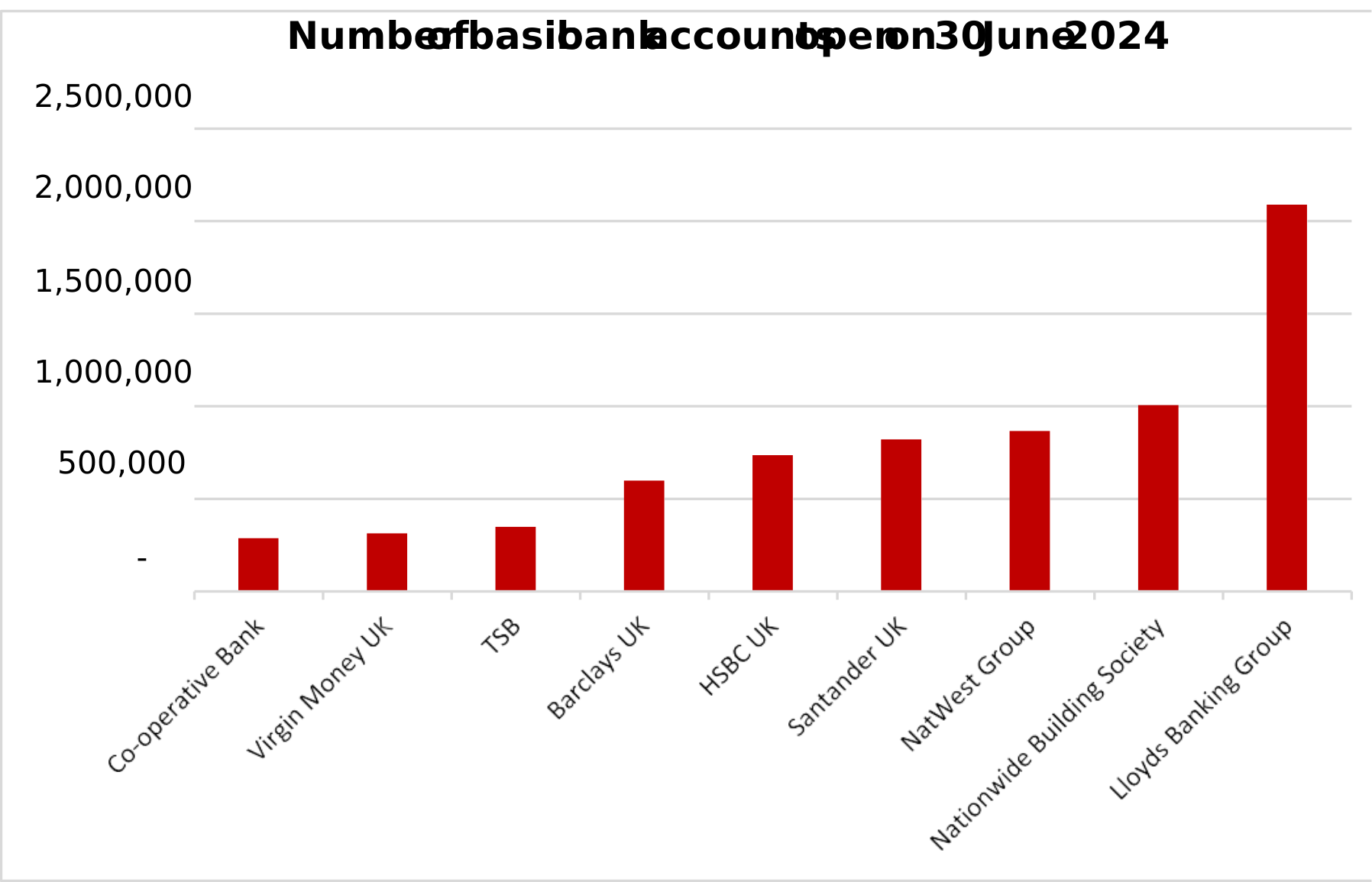
As of 30 June 2024, there were 7,039,100 basic bank accounts open at the nine designated institutions.
Chart 2.A shows how many of these basic bank accounts were open at each designated institution.
Figure 2.A Total stock of basic bank accounts on 30 June 2024
Source: HM Treasury
A basic bank account is considered open even if no transactions have taken place on the account. A basic bank account is also considered open if a decision has been taken to close the account, but the account has not yet been closed.
Upgrades and migrations
Designated institutions may review their portfolio of basic bank accounts periodically and upgrade customers to a personal current account (PCA), taking account of:
- the eligibility criteria of basic bank accounts
- the customer’s financial circumstances
- how the account is being used
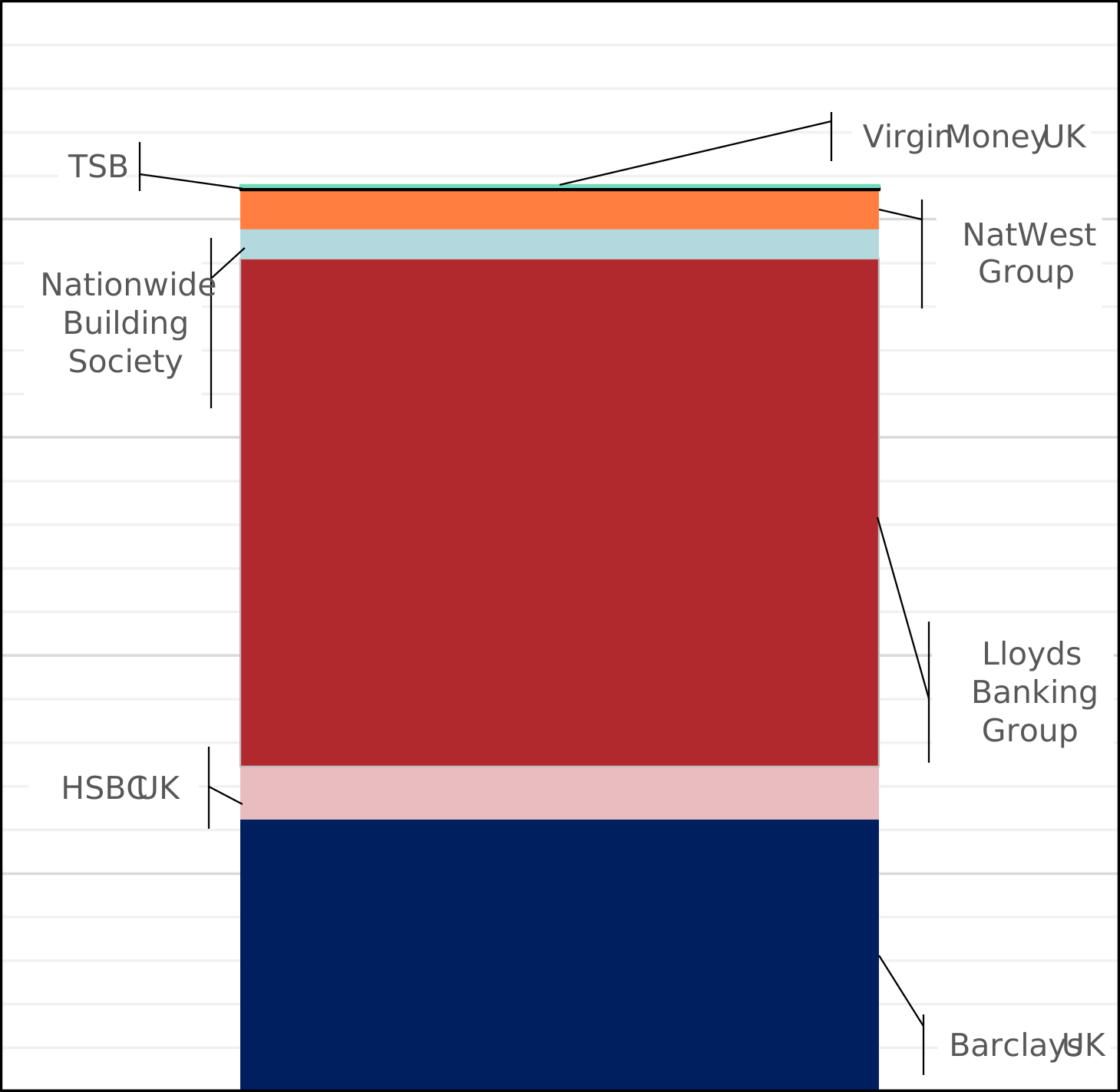
Chart 2.B shows the total number of basic bank accounts that have been upgraded and/or migrated to another PCA in the reporting period by a designated institution.
Figure 2.B Basic bank accounts upgraded and migrated in the reporting period
Number of basic bank accounts upgraded or migrated in the reporting period
Source: HM Treasury
The figures include basic bank accounts that have been upgraded at the customer’s request, as well as those upgraded or migrated in line with the process set out in the 2014 agreement. The Co-operative Bank had no upgrades or migrations in the period. Santander UK had a nominal volume of upgrades and no migrations.
The figures do not include the number of basic bank accounts for which written notice has been given to the account holder(s) that they will be upgraded but have not been upgraded by the end of the reporting period.
Opening and closing of accounts
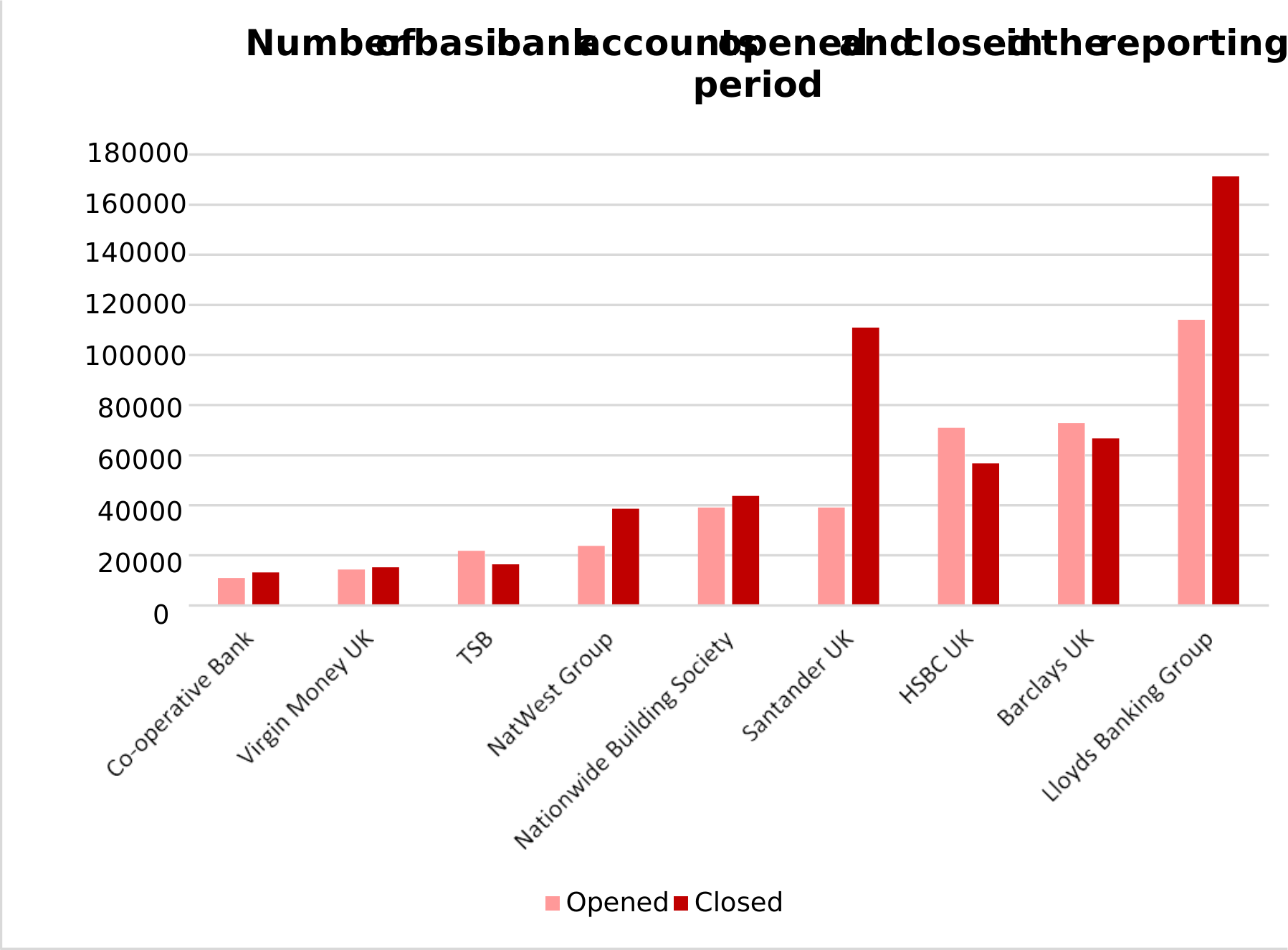
Chart 2.C shows the number of basic bank accounts that have been opened and closed during the reporting period.
A basic bank account opened under the PARs may only be closed without the consumer’s consent in limited circumstances, for example, if a consumer has knowingly used, or attempted to use, the account for illegal purposes, or if there has been no transaction on the account for more than 24 consecutive months.[footnote 1] The data below also includes basic bank accounts closed following a customer request (including account switches) or a customer bereavement.
Figure 2.C Basic bank accounts opened and closed in the reporting period
Source: HM Treasury
Refusals
Under the PARs, designated institutions must refuse to open a basic bank account for a consumer where it would be unlawful for it to do so. This includes, for example, where opening an account would be contrary to the Fraud Act 2006 or the Money Laundering Regulations, or where the consumer’s behaviour constitutes an offence under harassment or public order laws.[footnote 2] Customers may also be refused a basic bank account due to already holding a current account, or in some cases redirected to the bank or building society’s standard current account where eligible.
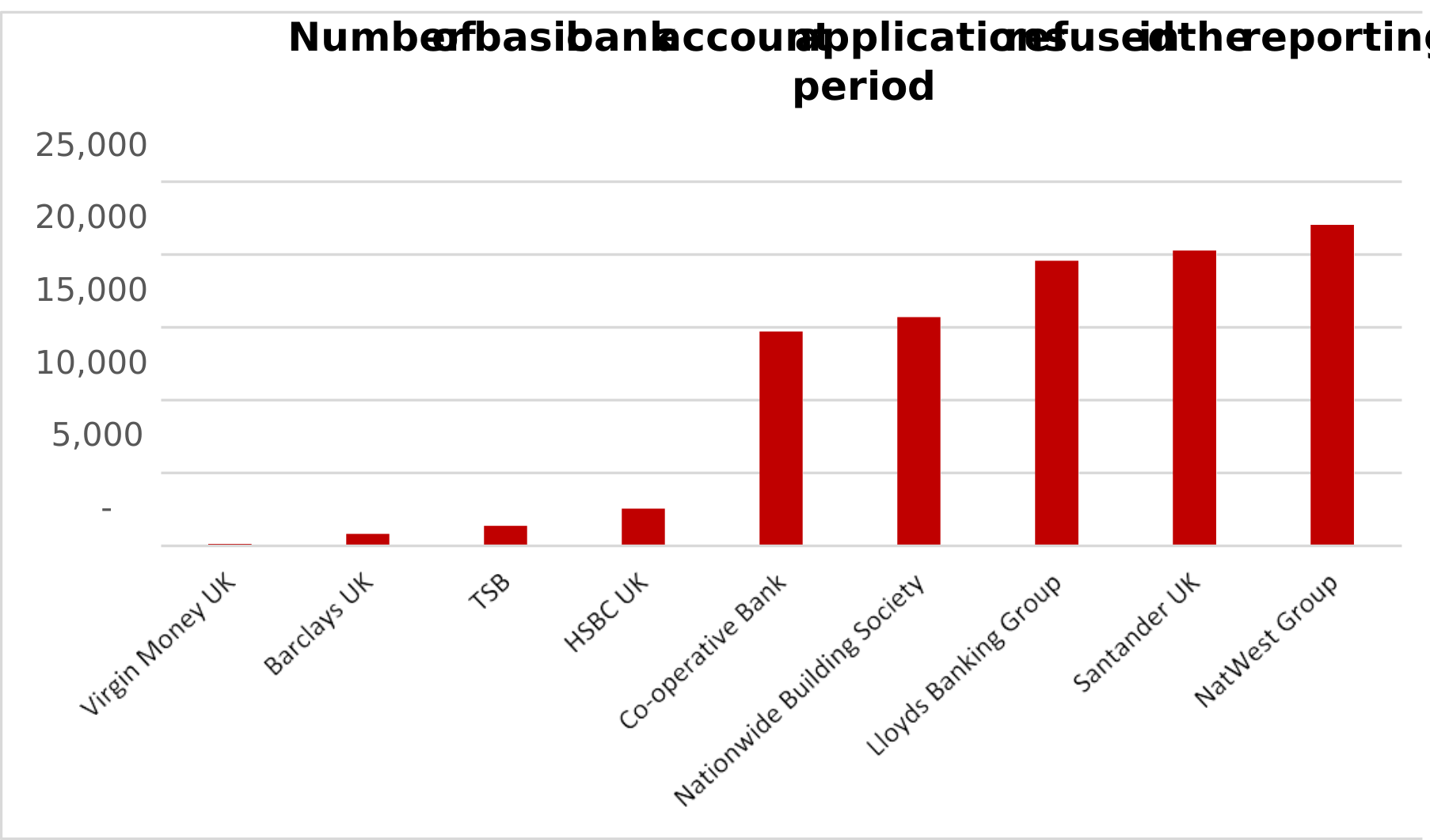
Chart 2.D shows the number of basic bank account applications refused at each institution.
Figure 2.D Number of basic bank account applications refused in the reporting period
Source: HM Treasury
The data does not include partially completed applications that are not considered.
The data does not include applications that are still under consideration or ‘pending’.
As there is no standardised definition of what constitutes a refused application, and different designated institutions will have different processes for onboarding customers (including when they conduct credit and financial crime checks), there is likely to be some expected variation between the refusal numbers of each designated institution.
The PARs require that where an application is refused, the participating institution must, without delay, inform the customer in writing and free of charge of the reason for the refusal if it may lawfully do so. In those circumstances the institution must also tell the customer how to complain to the institution and the Financial Ombudsman Service and provide the relevant contact details.
3. Market distribution
Market shares
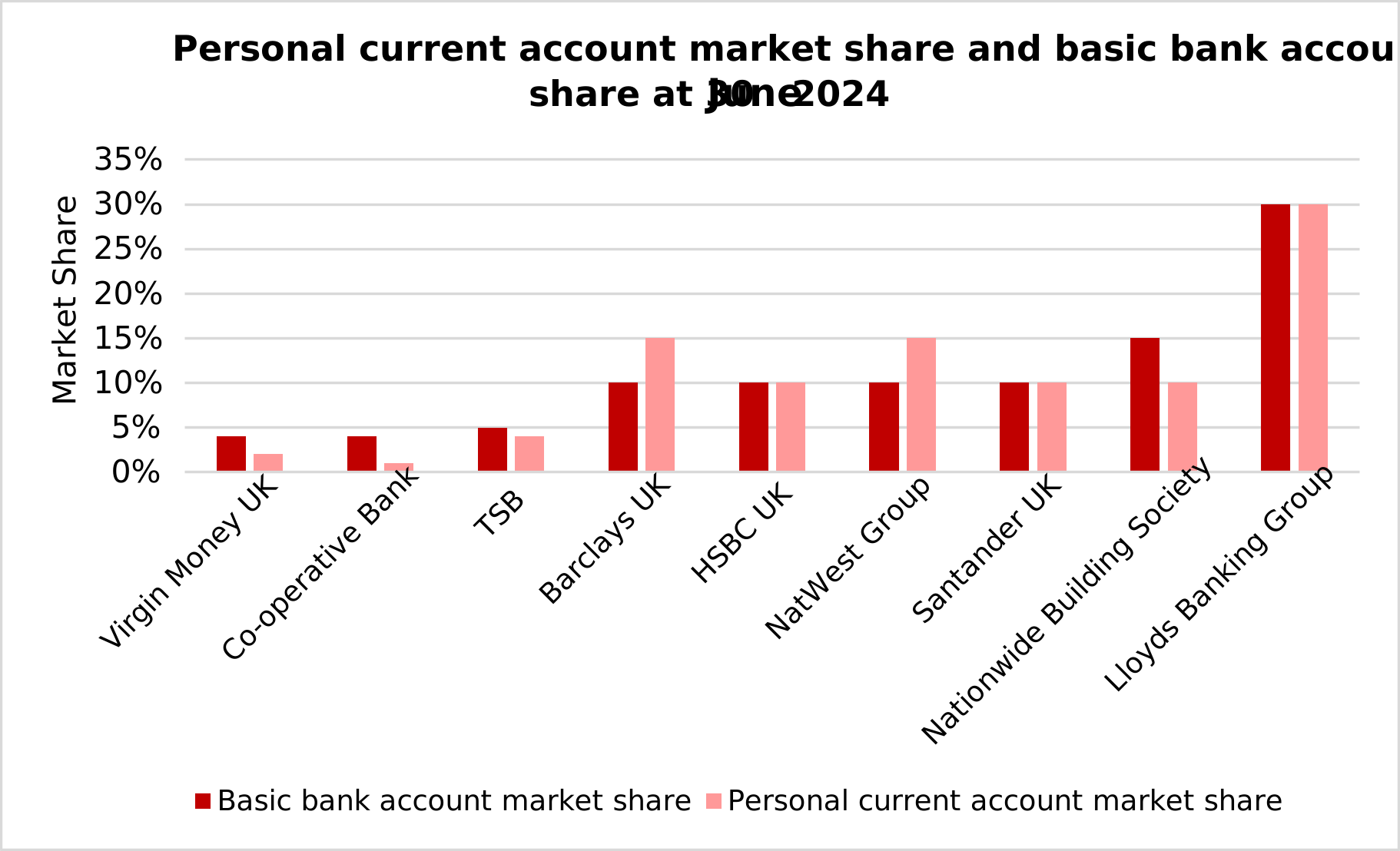
Chart 3.A uses data reported by designated institutions on their total numbers of personal current accounts and basic bank accounts to calculate market shares and compare them.
Market share in chart 3.A refers to the respective shares of the market held by each of the nine designated institutions in comparison with each other only. The market shares have not been calculated based on the entire UK market.
The personal current account market shares have been rounded to the nearest five percentage points (or one percentage point where that value would have been zero), because some firms consider personal current account market share to be commercially sensitive information.
Designated institutions are not required to reach or exceed any particular number of basic bank accounts. There is no upper or lower limit on the number of basic bank accounts a designated institution can open or hold.
Figure 3.A Comparing personal current account market share and basic bank account market share
Source: HM Treasury
4. Further information
Money Helper provides further information about basic bank accounts on its website at What is a basic bank account? - MoneyHelper.
If you would like to know more about a specific credit institution’s basic bank account product, or would like to apply for one, you can contact any of the nine providers for more information.
HM Treasury’s previous publications of basic bank account data can be found at Basic bank accounts collection.
Further information about the 2014 agreement can be found at Revised basic bank account agreement.
The Payment Accounts Regulations 2015 can be found at The Payment Accounts Regulations 2015
Following the UK’s exit from the European Union, the Payment Accounts Regulations were amended by the Payment Accounts (Amendment) (EU Exit) Regulations 2019. Further information can be found at Payment Accounts (Amendment) (EU Exit) Regulations 2018: explanatory information.
The Payment Services and Payment Accounts (Contract Termination) (Amendment) Regulations which recently amended the Payment Account Regulations 2015 can be found at The Payment Services and Payment Accounts (Contract Termination) (Amendment) Regulations 2025