Backing your business: evidence annex (web version)
Updated 9 January 2026

© Crown copyright 2026
This publication is licensed under the terms of the Open Government Licence v3.0 except where otherwise stated. To view this licence, visit nationalarchives.gov.uk/doc/open-government-licence/version/3 or write to the Information Policy Team, The National Archives, Kew, London TW9 4DU, or email: psi@nationalarchives.gov.uk.
Where we have identified any third party copyright information you will need to obtain permission from the copyright holders concerned.
This publication is available at https://www.gov.uk/government/publications/backing-your-business-our-plan-for-small-and-medium-sized-businesses/backing-your-business-evidence-annex-web-version
Introduction
This annex sets out an overview of current analysis and evidence on small and medium-sized enterprises (SMEs), to supplement the government’s ‘Backing your business: our plan for small and medium-sized businesses’. It provides a non-exhaustive overview of the evidence around SMEs, including their opportunities and barriers for growth and improving productivity.
SME landscape
The UK SME population
At the start of 2024 there were 5.5 million SMEs – defined as businesses with fewer than 250 employees – in the UK, 99.8% of the business population. This was made up of [footnote 1]:
- 4.1 million businesses that did not employ anyone aside from the owner (or owners), 74% of the total business population
- 1.2 million micro businesses (with 1 to 9 employees), 21.1% of total
- 220,000 small businesses (with 10 to 49 employees, 4% of total
- 37,800 medium-sized businesses (with 50 to 249 employees), 0.7% of total
Total employment in SMEs was 16.6 million (60% of the total), while turnover was estimated at £2.8 trillion (52% of the total).
SMEs operate in all sectors, however:
- the largest number of SMEs (870,000 or 16%) were operating in Construction, compared with less than 1% in the Mining, Quarrying and Utilities sector (31,000)
- there were also a large number of SMEs operating in the Professional, Scientific and Technical Activities (754,000 or 14%), and Wholesale and Retail Trade and Repair sectors (558,000 or 10%)
- SMEs make up at least 99% of every main industry sector [footnote 2], with at least 97% of these being micro or small firms
SMEs are not evenly distributed across the UK, for example:
- London had the largest number of SMEs (981,000 or 18%), followed by the South East (906,000 or 16%), comprising almost one-third of SMEs based in either region
- the North East had the smallest number of SMEs (166,000 or 3%)
- this distribution is broadly in line with the general business population, with SMEs making up at least 99.8% of every nation and region in the UK
SMEs exported £107.9 billion worth of goods in 2023, accounting for 25.6% of total UK goods exports [footnote 3].
SMEs include many family-owned and rural businesses but leadership from under-represented groups remains limited:
- in 2023 75% of SME employers (90% of SMEs with no employees) were family-owned businesses [footnote 4]
- in 2023 15% of SME employers (18% of SMEs with no employees) were women-led and 7% of SME employers (6% of SMEs with no employees) were minority ethnic group-led
- in 2024 7% of SMEs were led by disabled people [footnote 5]
- in 2022/23 there were 548,000 registered SMEs in rural areas, employing 2.7 million people [footnote 6]
The UK productivity puzzle
The UK’s productivity performance
Growth in the UK’s productivity has slowed over the last 2 decades, from averaging 2% growth in output per hour worked in the decade leading up to the 2008 Global Financial Crisis to around 0.4% on average ever since [footnote 7]. Since 2008, the UK has seen a worse slowdown in productivity growth compared with other G7 countries [footnote 8].
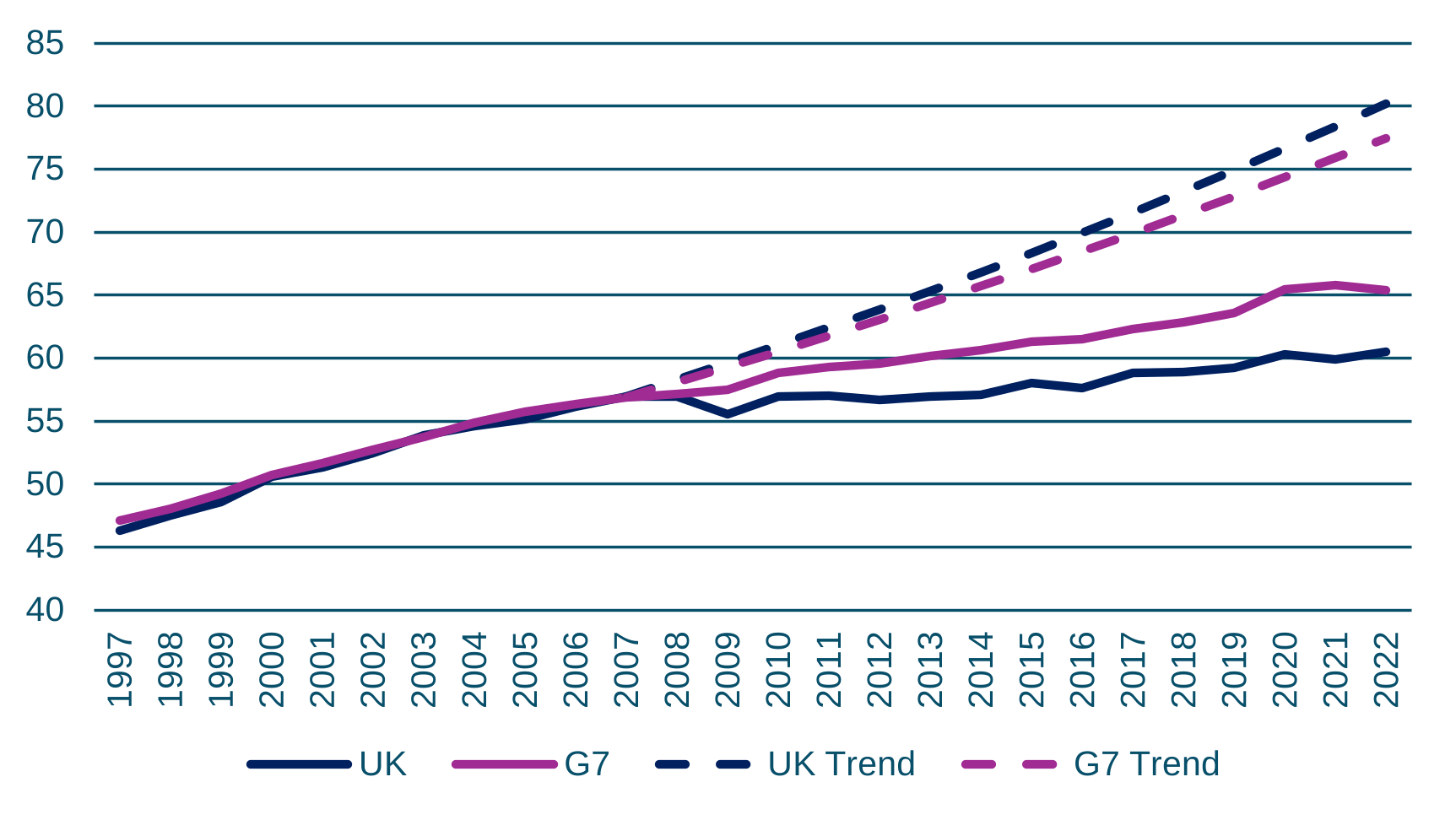
Source: Organisation for Economic Co-operation and Development (OECD)
Source: Organisation for Economic Co-operation and Development (OECD) Output per hour worked in constant prices 2015 $PPP
Accessible description of figure 1
This line graph shows trends in UK and G7 labour productivity, how much economic value (or ‘output’) firms produce for every hour worked, from 1997 to 2022. It adjusts for differences in prices between countries (using something called ‘purchasing power parity’) so we can compare fairly.
Key points:
- Labour productivity has generally risen for both the UK and the G7 over the whole time period.
- After 2008, the average growth rate of productivity for both the UK and G7 has decreased.
- Pre-2008 the UK and G7 had very similar trends. However, post-2008 the UK productivity growth is less than the G7 average.
The UK has some of the most productive businesses in the world, however we also have a large number of low-productivity businesses. In 2022, 67.7% of firms in the UK had labour productivity below the mean [footnote 9]. This ‘long tail’ of low-productivity firms, who lag behind firms at the frontier of performance, partly explains the UK’s ‘productivity puzzle’.
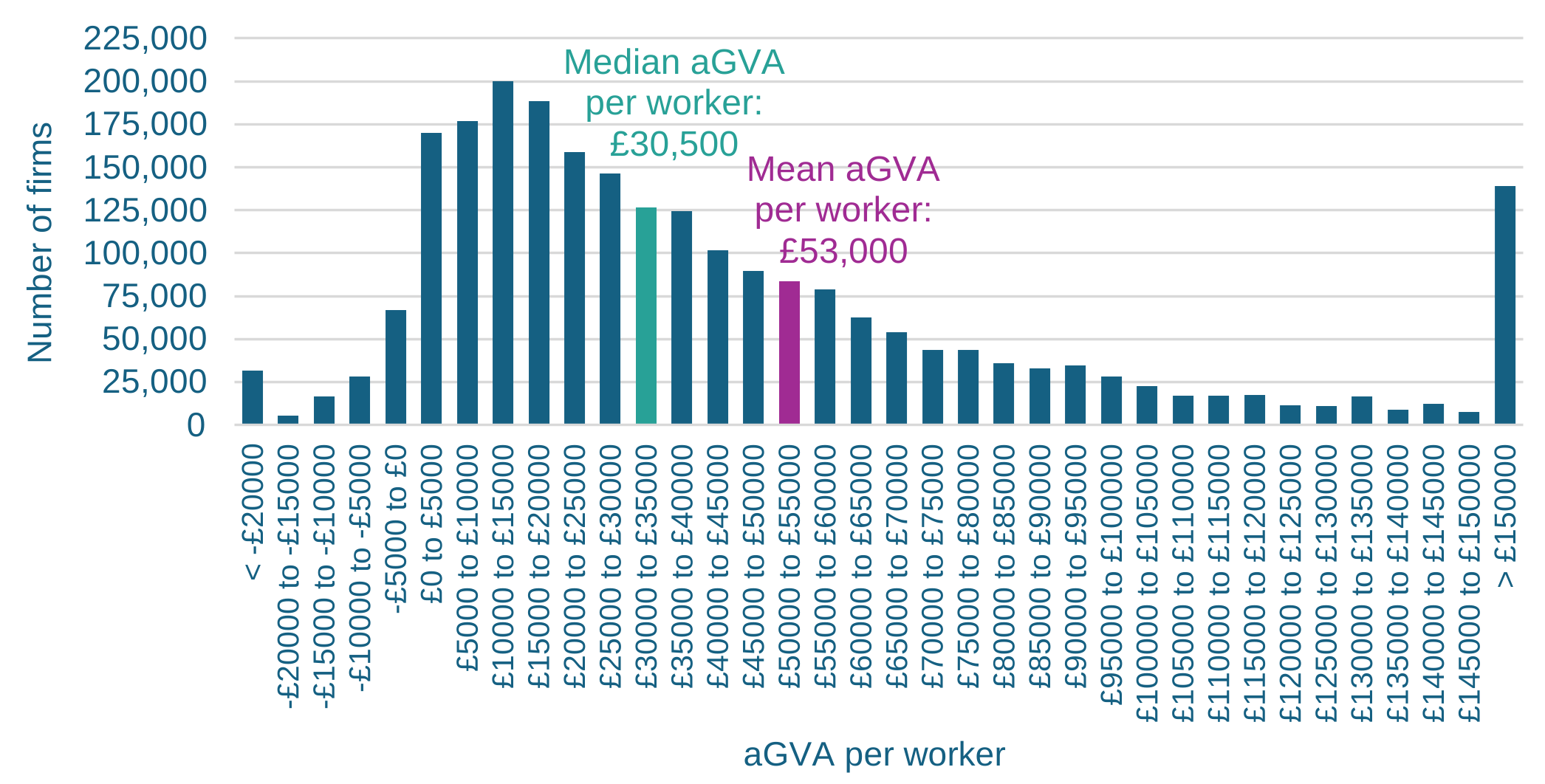
Office for National Statistics (ONS) Trends in UK Business Dynamism and Productivity: 2024
Source: ONS Trends in UK Business Dynamism and Productivity: 2024
Accessible description of figure 2
This bar chart shows how productive UK businesses were in 2022, specifically in the non-financial business sector. Productivity here is measured by approximate Gross Value Added (aGVA) per worker, which is essentially the economic value each firm contributes per person employed.
Key points:
- There is a wide distribution in UK firm labour productivity.
- Many firms have relatively low productivity per worker.
- The median aGVA per worker is £30,500.
- The mean aGVA per worker is £53,000.
- 139,000 firms have aGVA per worker of more than £150,000.
Part of this productivity slowdown can be explained by a slowdown in business dynamism in the UK over the last 2 decades, with the job reallocation rate – the sum of job creation (via entry and expansion) and job destruction (via contraction and closure) rates – falling from 30.7% in 2001 to 20.6% in 2023 [footnote 10]. Most of this decline has been because of lower job reallocation from incumbent firms, either growing or shrinking.
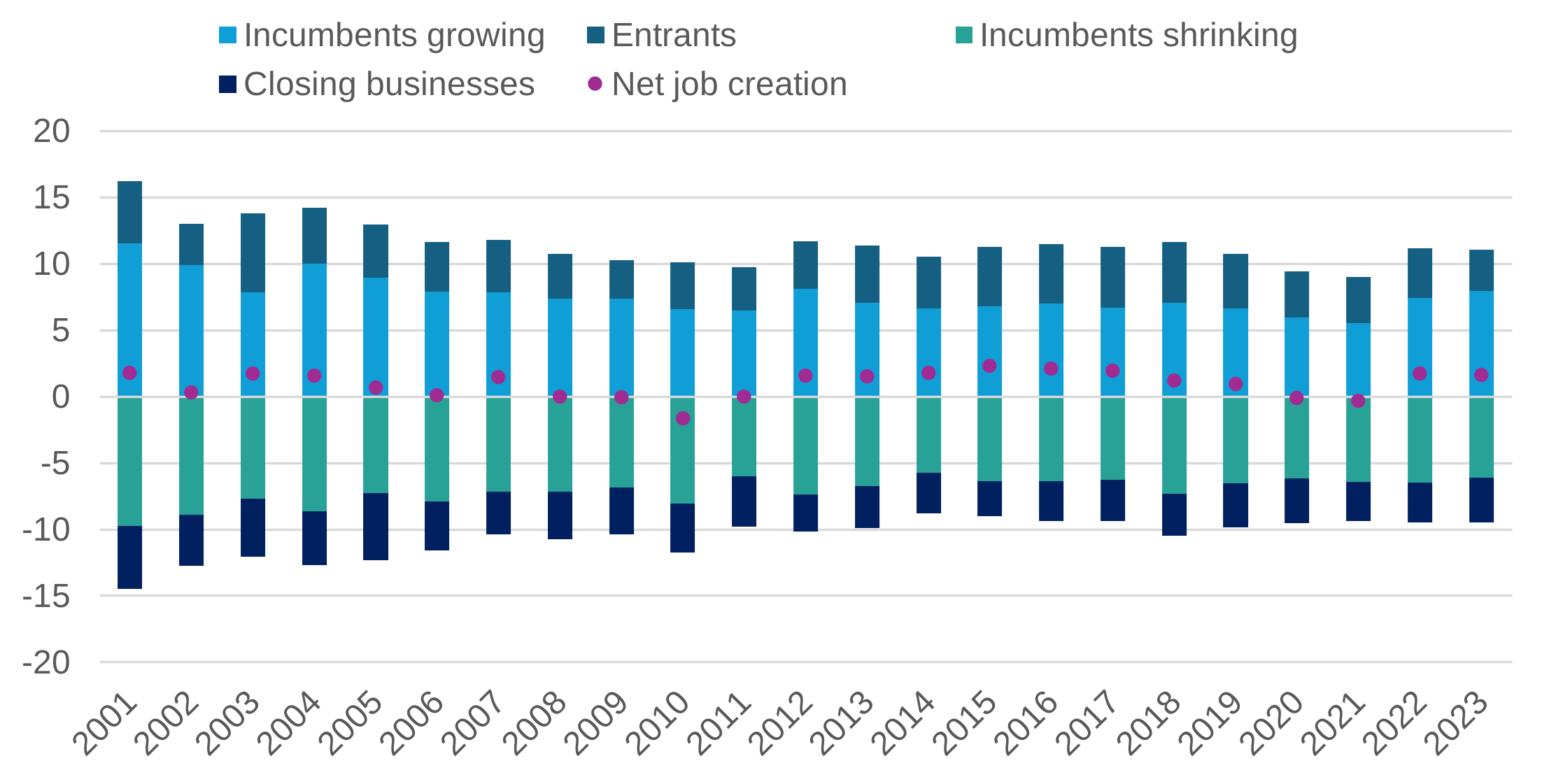
ONS Trends in UK Business Dynamism and Productivity: 2024
Source: ONS Trends in UK Business Dynamism and Productivity: 2024
Accessible description for figure 3
This stacked bar chart shows how net job creation in the UK is driven by firms growing (by hiring more employees), firms shrinking (by losing employees), firm entering the market and firms exiting.
Key points:
- The net job creation has fallen from 1.8% in 2001 to 1.6% in 2023 but has fluctuated over this period.
- In 2006, 2008, 2009, 2010, 2020 and 2021 had no significant or negative net job creation (where either similar or more jobs were lost than jobs gained).
- The job creation rate by entrants has fallen from 4.7% in 2001 to 3.1% in 2023
- The job creation rate by incumbents growing has fallen from 11.6% in 2001 to 8.0% in 2023.
- The job destruction rate by incumbents shrinking has fallen from 9.7% in 2001 to 6.1% in 2023.
- The job destruction rate by closing businesses has fallen from 4.8% in 2001 to 3.4% in 2023.
According to the Resolution Foundation, the responsiveness of firm-level employment growth to productivity has fallen by 30% since the 2008 downturn, leading to overall lower productivity growth as relatively more productive businesses expand more slowly [footnote 11]. In addition, research by the Enterprise Research Centre (ERC) suggests very few firms achieve employment, turnover and productivity growth simultaneously [footnote 12]. Productivity growth continues to be disproportionately more reliant on frontier firms (top 10th percentile), with the dispersion of firm-level productivity increasing across firms [footnote 13].
The decline in business dynamism poses several challenges. It:
- dampens technology diffusion
- limits wage improvements
- suppresses competition
- encourages market domination by a few firms
However, this experience is not unique to the UK. According to the Centre for Economic Policy Research, business dynamism has also declined in other countries, such as the US and across Europe [footnote 14].
Start-ups
The UK’s start-up performance
Start-ups play a crucial role in encouraging competition, innovation and supporting the emergence of brand new sectors. Start-ups and entrepreneurs are a driving force for greater investment, more jobs and economic growth in the UK.
In the financial year ending 2025, the number of UK incorporations registered on Companies House fell by 10%, but is up 37% from a decade ago [footnote 15]. ONS estimates the number of UK business births has fallen by 6%, from 337,000 in 2022 to around 316,000 in 2023, leading to a fall in the birth rate from 11.5% to 11.0% [footnote 16]. This had been steadily increasing from 2010 to 2016 and has remained fairly stable since.
London produces the largest number of start-ups, at 592,000 business births in 2023, and has the highest business birth rate, at 12.6%. However, this is the lowest birth rate for London since 2009.
Transport and storage has the highest start-up rate of industry groups since 2017 (at 14.5% in 2023), although this fell 6.7 percentage points from 2022. This is closely followed by accommodation and food services (14.2%) and business administration and support services (14.2%).
The UK remains one of the easiest places globally to start a business, with one of the highest business start-up rates in the OECD [footnote 17]. For the first time, just under 30% of working-age individuals in 2023 were either engaged in entrepreneurial activity or intended to start a business within the next 3 years [footnote 18]. There has also been a significant three-fold increase in early stage entrepreneurial activity by women in the UK since 2002. Immigrant and ethnic minorities are consistently the most entrepreneurial groups in the UK.
The opportunity and barriers
Over a million jobs were created by new entrants in the UK in 2023, accounting for around 3% of employment [footnote 19]. But the start-up job creation rate has declined in recent years.
The failure rate of start-ups is high, in part due to the high birth rate. ERC research estimates of the 325,811 start-ups registered in 2020 only 47% survived to 2023 and of these only 2% achieved £1 million turnover after 3 years – a proportion that has remained constant over the last decade [footnote 20]. Even so, UK start-ups have a relatively better survival rate compared with OECD counterparts [footnote 21].
Start-ups face a number of barriers. Experts assessing the overall quality of the UK’s entrepreneurial environment for the Global Entrepreneurship Monitor (GEM) identify access to finance, government support, Research and Development (R&D) transfers and entrepreneurial education as areas that are less than sufficient to support entrepreneurship in the UK [footnote 22].
Fear of failure is also a formidable obstacle to new start-ups. According to the GEM UK 2023/24 report, 53% of UK entrepreneurs that see good opportunities would not start a business for fear it would fail, higher than in other comparable countries (compared with the 45% global average) [footnote 23].
Perceived costs of starting a business may prevent new entrepreneurship activity. Research by the Entrepreneurs Network finds more than two-fifths of those who have never set up a business are “not sure on how much it costs” [footnote 24]. Around 14% thought it costs more than £50,000, with an average response of £34,304.
SME growth
UK SME growth performance
There are many ways to measure the growth of a business. Research tends to look at growth in turnover or employment, but businesses also often look at profit.
According to the ERC, there are 400,000 more established SMEs (trading for at least 3 years) since 2010 but the proportion registering any growth in employment has fallen from 20% to 13% [footnote 25], with the majority tending to have lower levels of growth. Around two-thirds of businesses with 10 or more employees with positive employment growth over the 2020 to 2023 period experienced average annual employment growth between 0% and 4% [footnote 26].
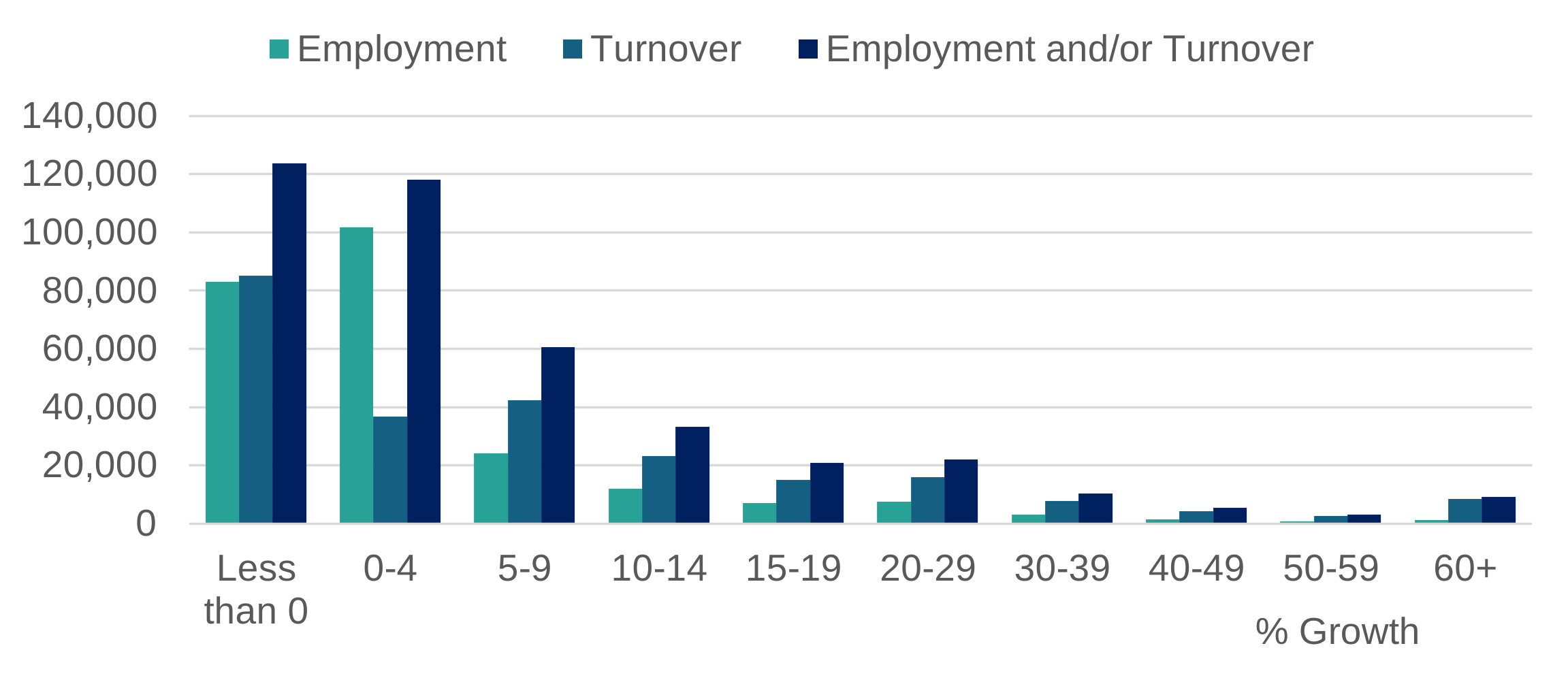
ONS High growth businesses by employment, turnover and both, May 2025
Source: ONS High growth businesses by employment, turnover and both, May 2025
Accessible description for figure 4
This bar chart looks at the number of businesses with 10 or more employees by average annual growth between 2020 and 2023, based employment growth, turnover growth or either employment or turnover growth.
Key points:
-
Most businesses had less than zero growth followed by modest growth between 0-4% and 5-9%.
-
Fewer businesses had higher levels of average annual growth in either employment or turnover
Sustained growth is uncommon for SMEs, with only 14.5% of firms achieving sustained growth between 2020 and 2023 [footnote 27].
Prior performance is a weak indicator of future growth. Nearly half (45.5%) of those businesses that had experienced a reduction in their employee numbers in 2022 subsequently increased employment in 2023.
Expectations of employment growth tend to be unrealised for many small businesses. Around half (49.3%) of the businesses that said that they had expectations of employment growth in 2022 actually achieved this in 2023.
SMEs face a number of barriers to achieving growth, with level of energy prices (56%), competition (48%), taxation (45%), regulations and red tape (41%) and staff recruitment and skills (40%) cited as major obstacles to success by SME employers in 2023 [footnote 28].
Many small businesses also lack growth ambition, with 1 in 4 SME employers and half of non-employers not aiming to grow their sales over the next 3 years [footnote 29]. Businesses who believe they are willing to take risks to grow their business are averse to borrowing and the use of external finance [footnote 30].
Scale-ups
The UK scale-up population
High growth firms (also known as ‘scale-ups’) are a critical part of employment creation, driving economic growth and boosting UK productivity through more productive use of resources. How we define scale-ups matters as definitions that are too restrictive risk ignoring firms showing potential growth and scaling companies facing addressable barriers to growth.
The OECD defines high growth firms as a firm of 10 or more employees with annual growth of 20% or more in either staff or turnover over a 3-year period. This definition is commonly used and useful for comparative purposes, especially when looking across different countries’ performance. There are many other definitions of high growth, such as those with lower growth thresholds [footnote 31], capturing micro firms [footnote 32] and reflecting the age of the firm [footnote 33] that provide different perspectives on SME growth and growth journeys.
Using the OECD definition, in 2023, there were 44,600 scale-ups in the UK, across every sector and locality [footnote 34]. This is the highest number of scale-ups on record, up 56% from its COVID-pandemic dip in 2021, but a 30% increase from 2022 [footnote 35]. The significant rise in recent years is likely a reflection of post-pandemic recovery and the period of high inflation. Previously, the number of scale-ups had been steadily increasing from 22,400 in 2011 to 36,500 in 2017 and remained fairly stable between 33,000 and 34,000 until 2020 [footnote 36].
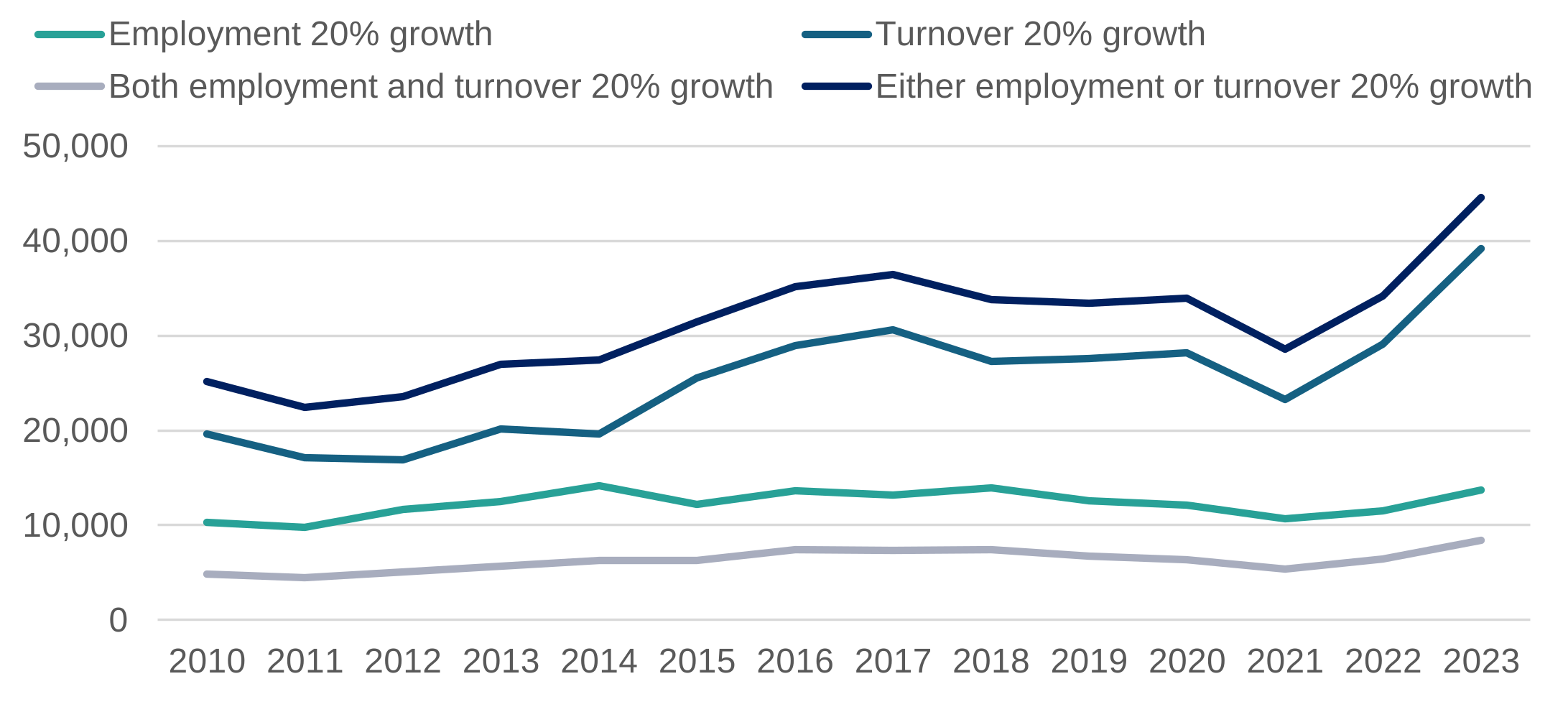
ONS High growth businesses by employment, turnover and both, May 2025
Source: ONS High growth businesses by employment, turnover and both, May 2025
Accessible description for figure 5
This line graph shows the number of scale-up businesses in the UK from 2010 to 2023. A scale-up is here defined using the OECD definition of a business with 10 or more employees that’s growing by 20% or more per year for three years, either in terms of employment, turnover, or both.
| Year | Employment 20% growth | Turnover 20% growth | Both employment and turnover 20% growth | Either employment or turnover 20% growth |
|---|---|---|---|---|
| 2010 | 10,300 | 19,655 | 4,805 | 25,150 |
| 2011 | 9,765 | 17,130 | 4,465 | 22,430 |
| 2012 | 11,665 | 16,915 | 5,035 | 23,545 |
| 2013 | 12,495 | 20,190 | 5,705 | 26,980 |
| 2014 | 14,190 | 19,610 | 6,315 | 27,485 |
| 2015 | 12,180 | 25,535 | 6,275 | 31,440 |
| 2016 | 13,665 | 28,970 | 7,425 | 35,210 |
| 2017 | 13,165 | 30,650 | 7,305 | 36,510 |
| 2018 | 13,965 | 27,280 | 7,390 | 33,855 |
| 2019 | 12,600 | 27,565 | 6,720 | 33,445 |
| 2020 | 12,090 | 28,240 | 6,375 | 33,955 |
| 2021 | 10,695 | 23,285 | 5,390 | 28,590 |
| 2022 | 11,485 | 29,125 | 6,425 | 34,185 |
| 2023 | 13,750 | 39,225 | 8,380 | 44,595 |
Key points:
- The number of scale-ups has generally increased over time, with declines in 2014, 2018 and 2021.
- This trend is driven by businesses growing in turnover.
- Few of these achieve high growth in both employment and turnover.
- There are approximately 44,600 scale ups in 2023, 19,400 more than in 2010.
There are many businesses with rapid growth that fall outside the OECD definition. Of the 87,200 firms with 10 or more employees growing by more than 10% annually in either staff or turnover over the 2020 to 2023 period, only around half of these are high growth (44,600) [footnote 37]. Research (2020) suggests many firms do not have high growth on a consistent year on year basis but in 1 or 2-year episodes, falling short of the 3-year consecutive requirement [footnote 38]. Furthermore, if the employee threshold is relaxed to 8 or more employees, the number of employment scale-ups nearly trebles from 13,800 to 38,300.
The UK performs relatively well at producing medium and high growth firms [footnote 39] compared with the OECD average, but still only ranks 9th, behind countries including Greece, Ireland and Sweden [footnote 40].
The opportunity and barriers
Using the OECD definition, scale-ups contribute £2.2 trillion to the UK economy and create high quality jobs, employing 3.9 million people [footnote 41]. SMEs account for 95% of scale-ups (42,400), employing 1.7 million people and generating £0.85 trillion in annual turnover. Scale-ups are more likely to have higher growth ambition, use more external finance, be more export-orientated and more innovative than the general SME population [footnote 42].
But high growth is hard to sustain. ERC research (2016) finds almost half of firms decreased their employment or ceased to exist following their spell of high growth [footnote 43]. Instead, they tend to have several high growth episodes. Scale-ups experience a range of barriers to growth which prevent further high growth episodes, but the ScaleUp Institute’s scale-up survey suggests the top cited barriers are similar to those faced by SMEs in general. The top 5 cited barriers include:
- Access to UK and international markets (62%).
- Talent and leadership development (54%).
- Access to finance (47%)[footnote 44].
- Infrastructure and access to R&D (28%).
- Access to tax breaks (28%).
While there has been good growth in SME equity finance in the UK over the last decade, most venture capital funds are focused on the seed and at the venture stage (“Series A”) where firms are typically not yet profitable and have no more than modest sales [footnote 45].
Later-stage investment rounds (“Series B1”), needed for scaling-up, are substantially better financed in the US than in the UK, enabling US businesses to out-compete their overseas rivals. As a result, while equity finance gaps remain in all stages and parts of the UK, ensuring the UK’s pipeline of later-stage innovative companies with potential to impact the economy at scale receive equity finance remains the most pressing need.
There is likely a much larger pool of firms with the potential to achieve high growth but face barriers in achieving this. In 2023, there were 21,000 businesses with 10 or more employees with growth in either turnover or employment of between 15% and 20% over a 3-year period and a further 33,300 with growth between 10% and 15% over the same period [footnote 46]. But it is difficult to predict high growth systematically, with prior growth being generally a poor predictor of future growth. According to the ScaleUp Institute, predictors of high growth include innovation, exporting, having growth ambition, being 10 to 15 years old, seeking or using core finance and planning capital investment [footnote 47].
There are large potential gains in supporting current and potential scale-ups to reach their growth potential. They contribute disproportionately to the economy – despite making up 0.8% of the business population, scale-ups [footnote 48] account for 25% of turnover and 14% of employment in the UK [footnote 49]. Research by NatWest (2021) estimates that helping around 1,700 more SMEs across the UK become scale-ups and assisting existing scale-ups continue their growth journey could unlock £35 billion GVA [footnote 50].
Firm-level productivity
Productivity growth
The UK’s overall productivity growth is, in large part, determined by the performance of individual businesses and SMEs. While the UK has some of the most productive businesses in the world, we also have a large number of low productivity businesses. In 2022, around two-thirds of firms in the UK had labour productivity below average (£53,000 per worker) [footnote 51].
ERC research finds most SMEs struggle to grow turnover, jobs and productivity simultaneously, with fewer than 1 in 10 of established SMEs (trading for at least 3 years) increasing productivity also growing in turnover and employment [footnote 52]. These firms contribute around £290 billion in annual turnover to the UK economy and employ 1.4 million people.
The Business Productivity Review (2019) identified 2 clear drivers of firm-level productivity: investing in improving leadership and management practices and the diffusion and adoption of digital technology [footnote 53].
Leadership and management practices
Leadership and management practices include effective monitoring, the setting of targets, providing incentives and introducing efficient processes [footnote 54]. SMEs are less likely to invest in leadership and management compared with larger firms [footnote 55]. The ONS Management and Expectations Survey (MES) has examined and scored management practices in the UK since 2016. It found that an increase of 0.1 points in management scores was associated with a 9.6% increase in productivity [footnote 56]. Therefore investing and improving management skills among SMEs is expected to increase firm-level productivity and positively impact UK growth.
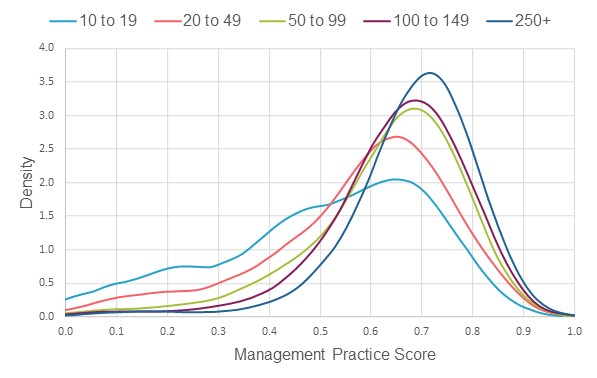
ONS Management and Expectations Survey, 2024
Source: ONS Management and Expectations Survey, 2024
Accessible description for figure 7
This line graph (density plot) looks at the distribution of management practices across UK businesses by employment size bands in 2023. Each business is given a management practice score between 0 (poor) and 1 (excellent), and the chart shows how these scores are spread out depending on how many people the business employs.
Key points:
- Larger businesses tend to have better management practices – their scores are relatively more concentrated toward the higher end (closer to 1).
- Relatively more smaller businesses have lower management practice scores.
Diffusion and adoption of digital technology
UK SMEs have low rates of digital adoption compared with many other advanced economies. This has been identified as an important reason for low productivity among UK firms. Digital technology is advancing rapidly and investing in tools such as AI offer the potential to transform many businesses. For instance, the productivity enhancing impact of AI could be worth as much as an additional £650 billion GVA to the UK, through delivering 25% productivity improvements [footnote 57]. This offers a major opportunity but many SMEs are still not making use of even basic productivity-enhancing digital technologies such as customer relationship management, E-Commerce, web-based accounting software and Cloud computing. According to the World Digital Competitiveness Ranking, the UK is ranked 20th out of 64 economies surveyed [footnote 58]. UK technology adoption rates among businesses are close to the OECD average but far behind leading countries such as Denmark and Sweden [footnote 59].
Small businesses are less likely to invest in and adopt new technologies compared with larger firms and face more challenges to successful adoption of new technology as they are less likely to have the skills, knowledge, finances and capacity necessary for restructuring business processes around new technologies. There are a number of barriers to technology adoption. Although cost is important for many, other barriers include skills shortages, difficulty in finding solutions and measuring benefits, a lack of good quality independent advice, and the potential for business disruption.
ERC research (2018) finds productivity improvements of between 7% and 18% per technology among microbusinesses, depending on the technology adopted [footnote 60]. Similarly, the ONS find that small firms that use at least 2 technologies show productivity gains of 25% [footnote 61]. This suggests that improving SMEs access and adoption of digital technologies would lead to improvements in firm-level productivity.
Skills and access to talent
Skills gap
15% of all firms reported a ‘skills gap’ (having at least one employee not fully proficient) in 2022, up from 13% in 2017 [footnote 62]. Larger firms are more likely to report this, at nearly half of large firms (250 or more employees) compared with 6% of firms with 2 to 4 employees. Despite a less prominent skills gap in smaller firms, the impact of one under-skilled employee may be disproportionately high.
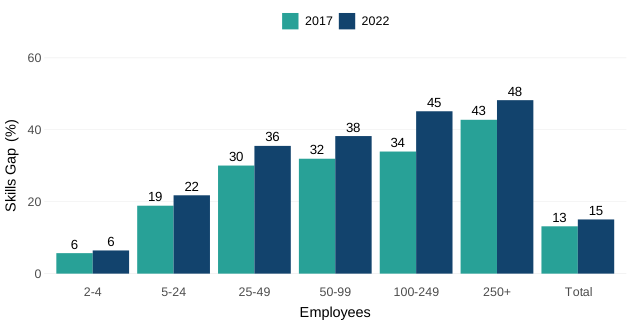
DfE Employee Skills Survey: 2022
Source: DfE Employee Skills Survey: 2022
Accessible description of figure 8
This bar chart compares the skills gap in UK businesses between 2017 and 2022, across different sizes. A skills gap means the business feels its workers don’t have all the skills needed to do their jobs effectively.
| Firm Size Band | 2017 | 2022 |
|---|---|---|
| 2 to 4 employees | 6% | 6% |
| 5 to 24 employees | 19% | 22% |
| 25 to 49 employees | 30% | 36% |
| 50 to 99 employees | 32% | 38% |
| 100 to 249 employees | 34% | 45% |
| 250+ employees | 43% | 48% |
| Total | 13% | 15% |
Key points:
- The skills gap has increased across nearly all firm sizes from 2017 to 2022.
- Larger SMEs (especially those with 100 - 249 employees) report higher skills gaps than smaller ones.
- The overall skills gap rose from 13% in 2017 to 15% in 2022
Skills shortage
The proportion of firms with skill-shortage vacancies (SSVs) rose from 6% in 2017 to 10% in 2022. While large firms are more likely to report SSVs, firms with 2 to 4 employees face the steepest hiring challenges. 42% of their vacancies are hard to fill due to skill shortages, compared with 35% for large firms (250 or more employees). This suggests that smaller firms struggle more to compete for talent, often losing out to larger employers who may offer higher wages and better benefits.
Training
Despite rising demand for skilled workers, training provision is falling. In 2022, only 60% of firms offered training, down from 66% in 2017. The smallest firms (2 to 4 employees) had the steepest drop, down 8 percentage points. Off-the-job training has declined across all firm sizes, likely due to cost pressures, COVID-19 disruptions, and a shift toward cheaper in-house alternatives.
Firms with 2 to 4 employees spend the most on training per employee, £2,480 in 2022, more than double the £1,135 spent by larger firms (100 or more employees). Yet their investment has declined more sharply since 2017 (down 23% compared to 16% for larger firms), suggesting that rising costs and limited internal capacity are eroding their ability to upskill staff.
Skills and training for growth
Firms that provided training for their employees tended to report a higher likelihood of improved performance outcomes in terms of both employment and turnover than businesses that did not report providing training [footnote 63].
Fewer firms offer training in areas critical for long-term growth, such as management (32%) and supervisory skills (33%), with SMEs being less likely to offer these than large firms [footnote 64].
When it comes to digital skills, 16.1% of businesses have demand for basic digital skills and 10.5% for advanced digital skills [footnote 65]. Larger firms are more likely to demand advanced digital skills over smaller firms. Despite these levels of demand, only 6.2% of businesses support or provide training in basic digital skills and 9% for advanced digital skills. Large SMEs (100 – 249 employees) are the group most likely to offer support or training for both advanced and basic digital skills, at 15.1% and 9.6% respectively.
Exports
The opportunity
Stronger participation by SMEs in global markets creates opportunities to scale-up and enhance productivity, by accelerating innovation, facilitating spill-overs of technology and managerial know-how, and broadening and deepening the skillset [footnote 66].
Businesses which export goods were around 21% more productive than businesses which do not trade after controlling for their size, industry and ownership status [footnote 67].
These findings align with empirical studies that suggest a positive relationship between international trade and employment and output. For example, a 2015 analysis of European SMEs found that between 2008 and 2010, exporting SMEs had a significantly higher average growth rate of output and employment than non-exporting SMEs [footnote 68]. Sectors with a high propensity to export pay 7% higher wages relative to those with a low propensity to export [footnote 69].
Exporter characteristics (SMEs with employees)
In 2022, there were 323,000 SMEs exporters in the UK, 11.8% of all registered SMEs [footnote 70]. In comparison, around 40% of large firms (250 or more employees) exported [footnote 71]. This suggests that SMEs are disproportionately impacted by trade barriers, leading to their underrepresentation in international trade.
In 2023, SMEs with employees were most likely to export in the manufacturing (47%), information and communication (41%), retail and wholesale (29%) and professional and scientific sectors (27%) [footnote 72]. By nation, the highest proportion of SME employers that exported in 2023 was found in Northern Ireland (32%).This was lower than average in Wales (14%) and Scotland (15%), but higher in England (19%). Exports accounted for less than a quarter of turnover for 63% of SME employers that exported.
In 2023, of UK SME employers that exported in the last year, 75% exported to the EU and 73% exported outside the EU. The USA was the most common, with 45% of SME exporters selling goods or services there.
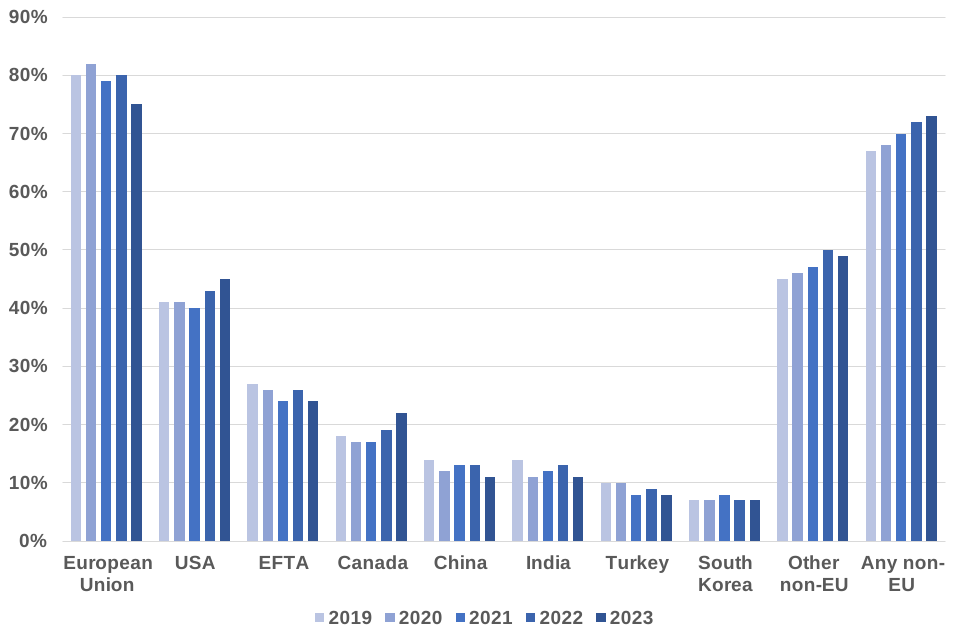
DBT, Longitudinal Small Business Survey SME employers, 2023
Source: DBT, Longitudinal Small Business Survey SME employers, 2023
Accessible description of figure 9
This bar chart looks at where UK exporting SME employers reported exporting goods or services in the last year across the years 2019 to 2023.
Key points:
- The EU remains the top export destination for UK SMEs.
- The proportion exporting to non-EU destinations has steadily increased over this period from 67% to 73%.
- The USA is the most common exporting destination of non-EU countries.
The challenge for SMEs intending to export
SMEs are more likely to have limited resources and less ability to absorb the costs associated with trade barriers (for example customs costs, costly product standards and lack of information). Removing obstacles to trade benefits SMEs disproportionately more [footnote 73].
Based on businesses with at least £500,000 turnover only (one marker of high export potential), the National Survey for Registered Businesses (NSRB) found that in 2023 [footnote 74]:
- 27% of SMEs intended to grow their business but lacked concrete plans, compared with 11% of large businesses (250 or more employees)
- 37% of SMEs viewed international expansion too risky (excluding those whose products/services would never be suitable for export), more than double the rate of large businesses (18%) [footnote 75]
- 66% of these SMEs reported that they had enough financial resources to start or continue exporting, compared with 87% for large businesses
- 58% stated they were more likely to face barriers to trade, compared with 44% of large businesses
- medium businesses (50 to 249 employees, 41%) were more likely to report high levels of knowledge of where to go for information than small businesses (10 to 49 employees, 26%) and large businesses (250 or more employees, 29%)
- SMEs were more likely to disagree that the government is providing information and support to help businesses like theirs access the benefits of FTAs (40%) than large businesses (23%)
- large businesses were more likely to agree that there is a lot of demand for UK products and services around the world (69%) compared with 51% of SMEs
- while agreement has been in decline among SMEs over recent years, this has not been the case for large businesses
- top reasons noted by SMEs as to why their business has not yet exported despite their products/services being suitable were that they do not have the capacity to produce more (12%), and that they hadn’t researched other markets so they don’t know if there is demand for their product/service (10%)
Debt finance
The UK’s debt finance performance
Debt finance markets play an important role in supporting businesses to invest and grow. However, the UK has amongst the lowest levels of borrowing by non-financial businesses as a percentage of GDP compared with other G7 countries [footnote 76]. This is particularly pronounced for UK SMEs [footnote 77].
This is an issue of both demand and supply. Demand for external finance is low, but even for firms that do apply the supply of finance is constrained. Overall loan success rates for firms applying for bank finance are low in the UK, at less than 50% on average, down from pre-pandemic (67% in quarter 1 2018 to quarter 2 2019) and pre-financial crisis (90% or higher) levels [footnote 78]. Approval rates are also lower than in other OECD countries[footnote 79].
Most high street lending currently goes to low-risk, larger and long-established firms where margins are lower due to competitive pressure. Existing borrowers and applicants for leasing or hire purchase products enjoy higher success rates of around 80% as the lender has legal ownership of the collateral[footnote 80] . First-time applicants, loan applicants and those applying to their main bank see lower success rates. It is always difficult for finance providers to properly assess applications with the available information provided by firms.
Some of the supply-side factors could include:
- banks’ risk appetite has contracted due to higher costs of capital and an assessment of available returns
- the macro-prudential and micro regulation landscape deters banks from making all but the safest loans
- new lenders are growing with the support of the British Business Bank (BBB) but could charge firms much higher interest rates, which makes lending uneconomic for many firms
- post-pandemic lending levels could also be affected by the stage of the economic cycle with a general rise in interest rates and a concern around rises in future insolvencies
Although 46% of SMEs were using external finance in quarter 4 2024, underlying core business finance usage levels by SMEs are currently low [footnote 81]. Most of the current external finance usage is based on temporary, high-interest rate forms of borrowing, which are not sustainable as a source of finance for firms. Around a third of borrowers are using their credit card to borrow, which is not designed as a business finance product and for many are a payment mechanism. Around a quarter of borrowers are financing via an overdraft, which has become a very high-interest rate product[footnote 82]. Only 9% of firms have a regular loan, which ought to be one of the most appropriate types of finance for a typical SME and yet most of these loans are a Bounce Back Loan Scheme (BBLS) facility taken out during the pandemic [footnote 83].
There are a number of reasons why demand for external finance remains low in the UK, including perceptions around external finance, risk aversion and lack of financial awareness among SMEs.
SME perception of finance and impact on demand
A reluctance to use external finance amongst SMEs has led to a reliance on internal and personal funds as a source of finance, particularly for investment purposes. 86% of SMEs have no desire to borrow [footnote 84]. And over 50% of businesses that invest exclusively use internal funds as finance. Moreover, 79% of UK SMEs report that they would accept a slower growth rate that can be funded internally rather than borrowing to grow faster [footnote 85] and around 75% agree with the statement ‘I would like my business to pay down debt/be debt free’ [footnote 86].
These attitudes pre-date the current period of higher interest rates, so cannot be attributed to the phase in the economic cycle. Low demand is also not due to overall levels of business indebtedness, which are very low both in absolute terms and relative to deposits [footnote 87]. According to the National Institute of Economic and Social Research (NIESR), in the UK, the ratio of lending to domestic enterprises (non-MFIs) and self-employed, relative to their deposits has shifted such that businesses are now depositing more with banks than they are borrowing from them (see figure 10). In contrast, Germany’s Cooperative and Savings banks, which are the main stay of German SMEs, holding around 50% of domestic banking assets, demonstrate significantly higher lending to deposit ratios, with nearly 3 times as much lending to businesses as deposits from them [footnote 88].
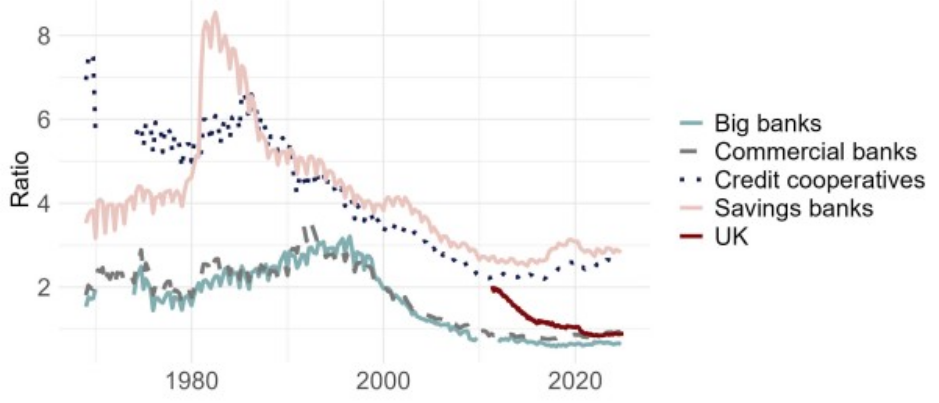
NIESR analysis
Source: NIESR analysis
Accessible description of figure 10
This line graph showing the ratio of bank lending to domestic enterprises and self-employed individuals over deposits of domestic enterprises across different types in Germany (including commercial, savings and cooperative banks) and compares this with the UK.
Key points:
- German savings and cooperative banks consistently lend more than they receive in deposits from enterprises, maintaining a ratio between 2 and 3 since 2010.
- German commercial banks, have a ratio just below 1 since 2010, indicating they lend less than they receive in deposits from enterprises.
- the UK ratio declines from 2 in the early 2010s to below 1 after 2020.
SMEs can also be discouraged from applying due to low expectations of success in securing finance. They may have been deterred by previous rejections or have had poor experiences during the application process. Only 34% of SMEs who are planning to apply for new or renewed finance are confident their bank will agree to the facility, down from 56% in 2019 [footnote 89].
Risk aversion
Many businesses feel that they invest too little into their business. Over a third of SMEs both want to be a bigger business and are willing to take risks to be successful [footnote 90]. Despite this, only 3.5% of SMEs apply for new or renewed external finance, suggesting that even businesses who believe they are willing to take risks to grow their business are averse to borrowing and the use of external finance.
At the same time, 24% of businesses feel that they have invested too little, with smaller businesses more likely to report this, and 60% of businesses not going ahead with investment due to prioritising building up cash reserves [footnote 91]. This may be driven by risk aversion as there is a strong correlation between businesses that do not invest due to building cash reserves and businesses that have the desire to avoid lender control of their business. If increasing cash buffers were a lower priority for small businesses, more investment opportunities would be pursued.
Financial awareness
SMEs consistently say that they find the business support landscape fragmented and complex, with only 26% of UK SME employers reporting in 2023 to have sought external advice or information in the last year [footnote 92]. A lack of awareness and understanding of finance options and products suited to their specific needs, and how to best use them, could contribute to low levels of demand for external finance.
Equity finance
Regional differences in the availability of equity finance
Equity finance is important for businesses with the potential to grow rapidly, especially for tech-led and other innovative firms. The UK, however, is known to have regional disparities in equity finance. London and the South East account for around two-thirds of all equity finance invested in the UK [footnote 93], even though only around a third of the UK’s high-growth firms are based there [footnote 94], suggesting the supply of equity capital to meet the needs of fast-growing smaller businesses is more likely to be constrained outside London and the South East.
DBT research (2019) [footnote 95] showed that all UK regions, even London, have an equity finance gap, and the gap is due to insufficient supply to match the needs of businesses with the potential to grow rapidly but also an unwillingness by some businesses to use equity finance.
There are different approaches for assessing market gaps, including bottom-up estimates that relate to firm characteristics (such as the approach taken in DBT estimation of the regional finance gap) and estimates based on comparisons between the UK and US on venture capital investment such as those identified in the Patient Capital Review.
The main findings are as follows:
- the research estimated the SME equity finance gap for the whole of the UK at £10.5 billion per year in 2017, due to a combination of demand and supply side factors, with robustness checks putting this in a range between £6.5 billion and £12 billion [footnote 96]
- all areas of the UK have an equity finance gap; London has the largest equity finance gap (£3.7 billion) in absolute terms but the smallest relative finance gap: for every £1 of equity finance received, SMEs in the region could have absorbed an additional 80p of equity finance
- the East Midlands had the largest relative gap: for every £1 of equity finance received, SMEs in the region could have absorbed an additional £9 of equity finance
- the equity finance gap in each region is determined by demand as well as supply factors, and so consequently, the North East’s equity finance gap is a similar size to London’s in relative terms – with a capacity to absorb only an additional £1 of equity finance for every £1 of finance received, due to weak demand factors in the North East region owing to the type and mix of businesses there
Other findings include:
- for an identical-looking firm, the probability of getting any equity funding is up to 50% lower in all regions outside of London, with the exception of Scotland
- deal values are up to 40% lower in other regions than in London, all else being equal
- investors prefer to invest in companies based in their home region, with the number of equity investments decreasing with distance from the investor
- family businesses are significantly less likely to use external equity funding, all else being equal, that is compared with other high-growth or potential high-growth firms
- investors are more likely to invest outside of their region if government is involved as one of the investors, or if a director has past experiences with equity finance, all else being equal
Other differences in the availability of equity finance
There are differences in the breadth and depth of VC funds available in the UK which puts UK companies at a disadvantage. Although the UK performs strongly compared with European counterparts, UK VCs lack the deep pools of risk capital seen in US equivalents. Even at the seed and Series A investment rounds, where UK performance has improved, funding is typically smaller than in the US. In 2023, the median deal size in the US for seed companies was £2.1 million, compared with £1.0 million in the UK [footnote 97]. Smaller deal sizes can lead to slower growth as businesses will need to raise funds more often, leading to uncertainty, and spend additional time seeking finance instead of developing the business.
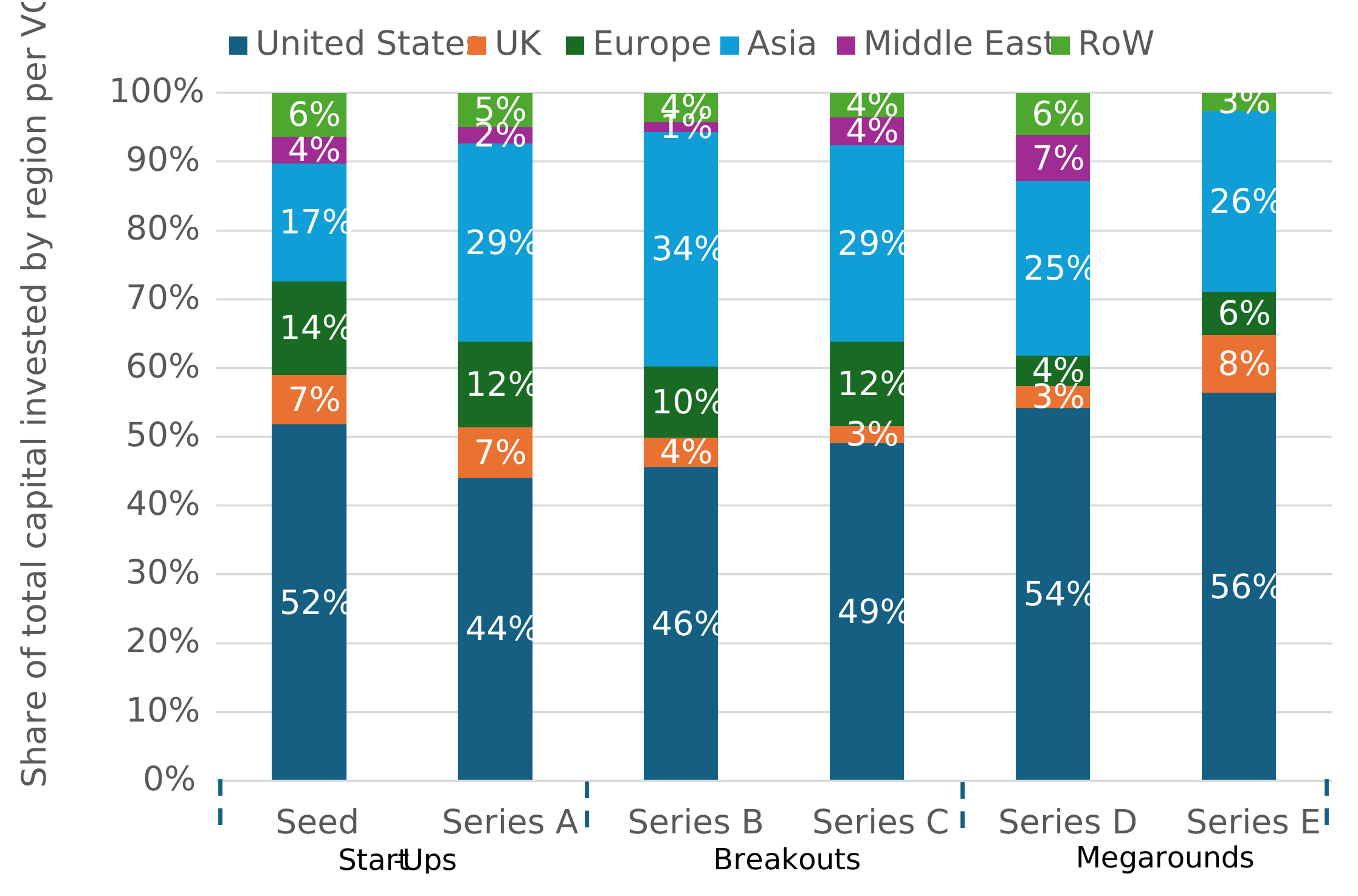
DBT Analysis of Pitchbook data (2025) showing the comparison of UK, US and other nations investment by source and round size. To note, 2023 has been used as it was the latest year with complete data.
Source: DBT Analysis of Pitchbook data (2025)[footnote 98], showing the comparison of UK, US and other nations investment by source and round size. To note, 2023 has been used as it was the latest year with complete data.
Accessible description of figure 11
This bar chart showing how much venture capital (VC) investment came from different regions at each stage of startup funding in 2023. The chart compares the percentage share of total capital invested across six funding rounds: Seed, Series A, B, C, D, and E. The six regions include the United States, the UK, Europe, Asia, the Middle East and the Rest of the World (RoW).
Key points:
- The US dominates VC at every stage contributing approximately half of VC ranging from 44% in series A to 56% in series E.
- The UK has a much smaller share of VC which is less than 10% across all rounds.
As well as the relatively low number of later-stage investment rounds in the UK, at every funding round, the average deal size in the UK is smaller than in the US, sometimes considerably so, but this is especially pronounced in the case of some later funding rounds [footnote 99]. Growth in UK equity funding over the last decade has not been uniform, with a lot of the growth driven by 2 industry sectors – Fintech and Software. Growth of overall UK venture finance has gone from £2.7 billion in 2013 to £17.3 billion in 2023, with VC investment in FinTech going from £0.24 billion in 2013 (accounting for 9% of the total VC) to £4.6 billion in 2023 (26% of the total) and VC investment in the software sector increasing from £0.9 billion (accounting for 33% of the total) to £8.7 billion (accounting for 51%) over the same period [footnote 100]. Growth in the funding of other sectors has been much weaker.
The UK also underperforms in corporate venture capital (equity investment from an established corporate into an external start-up), especially compared with the US. The US has a deep pool of strategic venture capital provided by corporate investors (known as ‘corporate venturing’). This is a key part of the US equity funding landscape which only has a small echo in the UK. In the US, the ‘magnificent 7’ collectively invested $27.5 billion last year, more than the entire UK VC sector ($21.50 billion) [footnote 101]. This can also be seen comparing the UK with European counterparts such as France; whose share of corporate venture capital in total venture fundraising (5.4%) was almost double that in the UK (2.8%) in 2023 [footnote 102]. The US benefits from plentiful access to funding for new ventures via entrepreneurs’ personal funds, such that many innovative companies can be funded without making demands on the US’s pool of external venture capital. Serial entrepreneurs, who recycle their gains from previous ventures, are a source of considerable funding of US high-growth companies. The US advantage in serial entrepreneurship is also a powerful cultural driver of business growth.
In the UK, there is a greater presence of overseas investors in the venture capital market. This is especially the case for later-stage rounds, where UK firms are predominantly reliant on funding from overseas investors [footnote 103]. Overseas investors often prefer companies they have invested in to expand and sometimes relocate activities to the US, which limits the long-term benefits for the UK of the initial investment.
Business support
Business support fragmentation
Business support for SMEs in the UK, is viewed as fragmented and lacking consistency of provision, with SMEs finding business support difficult to navigate and garner the benefits from [footnote 104]. Furthermore, business support uptake has fallen from 49% in 2010 [footnote 105] to 26% in 2023 [footnote 106], with this being particularly noticeable in the smallest firms. Only 16% of businesses with no employees [footnote 107] and 23% of micro businesses reporting seeking external advice in 2023.
A HMG evaluation of Growth Hub’s evidenced that a lack of awareness amongst businesses was flagged as a potential barrier to uptake, linked to potentially ineffective marketing and branding. This was highlighted through 71% of regional stakeholders flagging a lack of awareness as a key barrier to uptake and 43% of national stakeholders highlighting the complicated landscape of support [footnote 108].
Business support and growth
Business support can be seen as a key driver of SME growth and productivity. According to ERC research, businesses that access external advice seeing an average increase of 22% in labour productivity [footnote 109] compared to businesses that have not utilised external advice. Furthermore, advice from trusted professionals led to the largest increases in productivity, such as a 35% productivity increase from advice on exporting and 26% increase from advice on tax and payments [footnote 110].
The most common reason for SMEs with employees to access advice was on business growth, with 25% reporting this in 2023. This is followed by finance and general running of the business (24%). For those with no employees, the most common advice being sought is financial advice. SME employers commonly choose to pursue this advice through consultants and business advisors (36%) and business networks (19%). Face-to-face is the preferred method of receiving business advice with 45% of SME employers choosing this approach, followed by 22% over email.
Targeting and segmentation of SMEs
Targeting and Segmentation are important activities for the Government’s SME-related policies and programmes. Segmentation is the action of dividing the SME business population into groups that share similar characteristics, where Government can then target its specific programme or policy. It enables the Government to focus its resources on specific groups of SMEs, ensuring that the support it provided is to the ‘correct’ SMEs. This ensures maximum impact and value-for-money through directing limited resources effectively.
However, there are risks associated with targeting and segmentation, such as excluding certain groups of SMEs. Additionally, an unclear framework (such as programme entry requirements) can result in confusion for both SMEs and policymakers reducing uptake. Therefore, there is no ‘one-sized’ fits all approach to targeting and segmentation.
This is evidenced through a range of approaches to targeting and segmentation being chosen, including British Business Bank’s ‘Start up, Scale Up, Stay Ahead’ [footnote 111], which targets businesses according to the finance packages that would be applicable. The OECD [footnote 112] also presented a paper that highlighted how segmentation needs to be appropriate for the objectives of the programme and based on reliable and comparable data, while not being complex. Furthermore, DBT has a range of targeting and segmentation approaches which are appropriate for the size, scope and aim of the individual policy or programme that is being offered. This can range from firm characteristics, region, exporters, growth potential and placing firms in a segment based on the chosen indicator.
-
DBT, Business population estimates for the UK and regions 2024: statistical release, October 2024 ↩
-
Industry sections A-S in Standard Industrial Classification (SIC) codes ↩
-
HMRC, UK trade in goods by business characteristics 2023, November 2024 ↩
-
DBT, Small Business Survey 2023, September 2024 ↩
-
British Business Bank, Small Business Finance Markets 2024/25, p.58 ↩
-
DEFRA, Statistical Digest of Rural England – Rural Economic Bulletin, July 2025 ↩
-
ONS, UK Whole Economy: Output per hour worked SA: Index 2022 = 100, May 2025 ↩
-
OECD, Output per hour worked in constant prices 2015 $PPP ↩
-
ONS, Trends in UK business dynamism and productivity, 2024, December 2024 ↩
-
ONS, Trends in UK business dynamism and productivity: 2024, December 2024 ↩
-
Resolution Foundation, Ready for change, September 2023 ↩
-
ERC, Productivity Puzzles, Long Tails and Productivity Heroes: developing a new focus for small business policy in the UK, 2024 ↩
-
ONS, Trends in UK business dynamism and productivity: 2024, December 2024 ↩
-
CEPR, Declining business dynamism in Europe: The role of shocks, market power, and responsiveness, March 2024 ↩
-
Companies House, Companies register activities: statistical release April 2024 to March 2025 ↩
-
ONS, Business demography, UK, November 2024 ↩
-
OECD, Structural Business Demography Indicators ↩
-
GEM, United Kingdom 2023/2024 National Report, July 2024 ↩
-
ONS, Firm-level business dynamism from the Longitudinal Business Database: summary statistics, UK ↩
-
ERC, The State of Small Business Britain Report 2024, March 2025 ↩
-
OECD, Structural Business Demography Indicators ↩
-
GEM, Global Report 2024/2025, February 2025 ↩
-
GEM, United Kingdom 2023/2024 National Report, July 2024 ↩
-
The Entrepreneurs Network (TEN), Entrepreneurs Unwrapped, February 2024 ↩
-
ERC, The State of Small Business Britain Report 2024, March 2025 ↩
-
ONS High growth businesses by employment, turnover and both, May 2025 ↩
-
DBT, Longitudinal Small Business Survey: SME Employers (businesses with 1 to 249 employees) – UK, 2023 ↩
-
DBT, Small Business Survey reports, 2023 ↩
-
See Debt finance section ↩
-
Some OECD/Eurostat publications have used a 10% growth threshold. ↩
-
A small high growth firm is defined in the literature (e.g. Clayton et al. 2013, ERC) as a firm with fewer than 10 employees which added 8 or more employees during the 3-year period. ↩
-
ERC’s The State of Small Business Britain Report 2024 report identifies growth metrics that incorporate the age of the business, including start-ups scaling, established firms stepping up and productivity heroes. ↩
-
ONS, High growth businesses by employment, turnover and both, May 2025 ↩
-
ONS, High Growth by Region and Section and by District 2021 & High growth 2019 into 2022 ↩
-
ONS, High Growth by District and Section 2020, High Growth by District and Section 2019, High Growth by District and Industry 2018 & High Growth by Industry and Employee Size bands 2010 to 2017 ↩
-
ONS High growth businesses by employment, turnover and both, May 2025 ↩
-
Hart, Prashar and Ri, From the Cabinet of Curiosities: The misdirection of research and policy debates on small firm growth, 2020 ↩
-
A firm with 10 or more staff with at least 10% annual growth in employment over a 3-year period ↩
-
OECD Structural Business Demography Indicators, Rate of medium and high-growth enterprises (based on 10%+ growth in employment) ↩
-
ONS, High growth businesses by employment, turnover and both, May 2025 ↩
-
ScaleUp Institute, Annual Review 2024; DBT, Small Business Survey reports, 2023 ↩
-
Lee, Brown, and Schlueter, Modes of firm growth, 2016, ERC Research Paper No.46. ↩
-
ScaleUp Institute, Annual Review 2024 ↩
-
See Equity finance section ↩
-
ONS, High growth businesses by employment, turnover and both, May 2025 ↩
-
ScaleUp Institute, ScaleUps-Debt-Finance-Journey, January 2023, p.33. ↩
-
Defined as a firm of 10 or more employees with annual growth of 20% or more in either staff or turnover over a 3-year period. ↩
-
DBT analysis of ONS High growth businesses by employment, turnover and both & DBT Business Population Estimates 2023. Employment and turnover of firms with 10+ employees growing by at least 20% in either employment or turnover over 2020-2023 as a percentage of total employment and turnover of firms in 2023, Note scale-up finance and insurance turnover is excluded to be consistent with the BPE estimates where this data is not available on a consistent basis. ↩
-
NatWest, BCC and FSB, SME Recovery Report, Mar 2021 ↩
-
ONS, Trends in UK business dynamism and productivity, 2024 ↩
-
HMG, Business productivity review, 2019 ↩
-
ONS, Management practices in the UK, 2024 ↩
-
ONS, Management practices and productivity in British production and services industries - initial results from the Management and Expectations Survey, 2018 ↩
-
Made Smarter Review, 2017 ↩
-
IMD, World Digital Competitiveness Ranking 2024 - business school for management and leadership courses ↩
-
OECD Data Explorer – ICT access and usage by business ↩
-
ERC, State of Small Business Britain – Micro-Business Britain report, 2018 ↩
-
ONS, Information and communication technology intensity and productivity - Office for National Statistics, 2018 ↩
-
DBT, Small Business Survey 2023: panel report, 2024. ↩
-
ONS, Business Insights and Impacts on the UK economy, Wave 132, 2024 ↩
-
OECD, Strengthening SMEs and Entrepreneurship for Productivity and Inclusive Growth, 2018 ↩
-
ONS, UK trade in goods and productivity: new findings, 2018 ↩
-
Falk and Hagsten, Export Status and firm growth in European SMEs, 2015 ↩
-
DIT, Evaluating the impact of exports on UK jobs and incomes, 2021 ↩
-
DBT, Number of exporting registered businesses in the UK, 2016 to 2022, December 2024 ↩
-
ONS, Annual Business Survey exporters and importers, June 2025, 2022 data, Great Britain only ↩
-
DBT, Longitudinal Small Business Survey: SME Employers (businesses with 1 to 249 employees) – UK, 2023 ↩
-
WTO, World Trade Report 2016: Levelling the trading field for SMEs ↩
-
DBT, National survey of registered businesses’ exporting behaviours, attitudes and needs 2023 NSRB’s Exporting Behaviours, Attitudes and Needs Wave 8 Data Tables ↩
-
Includes businesses that already export ↩
-
Bank for International Settlements, Credit to the non-financial sector - data, up to Q4 2024: Italy has lowest 58.2%, UK has second lowest 61.2%. ↩
-
It should be noted that international comparisons do not allow for breakdowns by size of business ↩
-
BVA BDRC, SME Finance Monitor Monthly snapshot to Dec 2024 ↩
-
OECD, Financing SMEs and Entrepreneurs 2024, p.39 ↩
-
BVA BDRC, SME Finance Monitor Q2 2024 ↩
-
BVA BDRC, SME Finance Monitor Monthly snapshot to Dec 2024 ↩
-
MoneyFacts, a typical business overdraft interest rate in the UK is currently between 10% - 20% EAR (Effective Annual Rate), but can reach up to 30% EAR for some SMEs ↩
-
BVA BDRC, SME Finance Monitor: 6% of SMEs have a Covid loan (BBLS or CBILS) and no other finance product, hence although overall loan usage is 9%, non-covid loan usage may be as low as 3%. ↩
-
BVA BDRC, SME Finance Monitor Q2 2024, Having no desire to borrow meaning they have not had a borrowing event and nothing in the last 12 months has stopped them from applying for any funding. ↩
-
BVA BDRC, SME Finance Monitor Q4 2024 ↩
-
Bank of England, Identifying barriers to productive investment and external finance: a survey of UK SMEs 2024 ↩
-
UK Finance data & BoE, Financial Stability Report, July 2023 ↩
-
NIESR, Alternatives-to-Commercial-Lending, March 2025. Analysis of Deutsche Bank and BoE data. To note, “commercial banks” also includes “big banks”. ↩
-
BVA BDRC, SME Finance Monitor Q4 2024 ↩
-
BVA BDRC, SME Finance Monitor Q4 2024 ↩
-
BEIS/Marc Cowling, FINANCE AND INVESTMENT DECISIONS SURVEY 2018, 2025 ↩
-
DBT, Small business survey, 2023 ↩
-
British Business Bank, Small Business Finance Markets 2024/25, p.79 ↩
-
ONS, High growth businesses by employment, turnover and both, May 2025 ↩
-
DBT/BEIS, Business equity finance and the UK regions, 2019 ↩
-
DBT’s estimates continue to be based on the 2019 publication. Follow-up analysis was done in 2022/23 using 2021 data, but equity finance allocations were unusual in 2021 due to a temporary Covid-related bubble which reduced the finance gap somewhat. Looking at trends over the last several years show current equity finance allocations are similar to those just before the pandemic, which suggests that the current SME equity finance gap is likely to have reverted to around 2019 levels of £10.5bn. ↩
-
Pitchbook, https://my.pitchbook.com/search-results/s561474591/company_chart. Needs a sign-in via PitchBook ↩
-
DBT Analysis of Pitchbook data showing the comparison of UK, US and other nations investment by source and round size. To note, 2023 has been used as it was the latest year with complete data. Needs a sign-in via PitchBook ↩
-
DBT Analysis of Pitchbook data (last accessed July 2025), (https://my.pitchbook.com/search-results/s561916666/deal_pivot). Needs a sign-in via PitchBook ↩
-
DBT Analysis of Pitchbook data (last accessed July 2025)(https://my.pitchbook.com/search-results/s569575632/company_chart) Needs a sign-in via PitchBook ↩
-
Dealroom, The Magnificent Seven - The Venture Capital frontier & the new AI Wild West, May 2024 ↩
-
DBT analysis of Invest Europe, Annual Activity Statistics (2025), https://www.investeurope.eu/research/activity-data/ ↩
-
Dealroom data, showing “growth stage” or B, C, D, E rounds having an increasingly high proportion of funding from overseas, especially from the US - compared to overseas involvement at the earlier venture and seed stages. ↩
-
ERC, State of Small Business Britain, 2024 ↩
-
BIS, Small Business Survey, 2010 ↩
-
DBT, Small Business Survey, 2023 ↩
-
DBT, Small Business Survey (no employees) 2023 ↩
-
BEIS, Evaluation of Growth Hubs, 2023 ↩
-
ERC, Advice and SMEs, 2024 ↩
-
ERC, What Kind of Business Advice Improves Small Business Productivity, 2024 ↩
-
OECD, Understanding SME heterogeneity October 2021 ↩