Air quality Environment Act target delivery plan
Published 1 December 2025
Applies to England

© Crown copyright 2025
This publication is licensed under the terms of the Open Government Licence v3.0 except where otherwise stated. To view this licence, visit nationalarchives.gov.uk/doc/open-government-licence/version/3 or write to the Information Policy Team, The National Archives, Kew, London TW9 4DU, or email: psi@nationalarchives.gov.uk.
Where we have identified any third party copyright information you will need to obtain permission from the copyright holders concerned.
This publication is available at https://www.gov.uk/government/publications/air-quality-environment-act-target-delivery-plan/air-quality-environment-act-target-delivery-plan
Statutory Environment Act targets
-
annual Mean Concentration Target for PM2.5 – a maximum of 10 µg m-3 to be achieved by 31 December 2040
-
population Exposure Reduction Target for PM2.5 – a minimum of 35% reduction compared to 2018 by 31 December 2040
Interim targets
-
an annual mean concentration target of 10 micrograms per cubic metre (µg m-3) to be achieved by December 2030
-
a population exposure reduction target of 30% compared to 2018 to be achieved by December 2030
Rationale for the interim targets: why and how they will progress delivery of the Environment Act target
We are increasing the ambition of our interim targets to align more closely with the recent trajectory towards the statutory targets. The graphs below show progress. Interactive versions of these graphs are available on the UKAIR interactive graphs page.
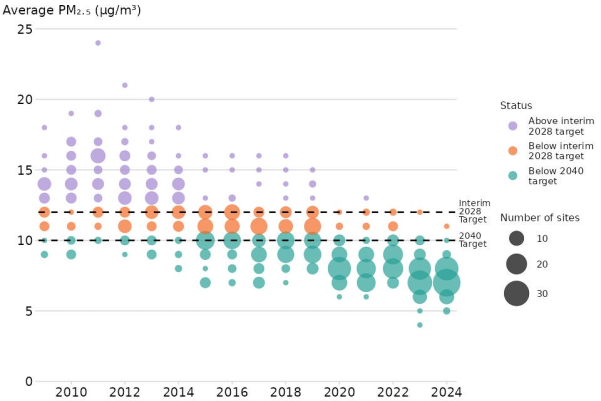
Figure 1. Progress towards the Annual Mean Concentration Target (AMCT) for PM2.5 at monitoring sites, 2009 to 2024.
The graph in Figure 1 shows the progress towards the Annual Mean Concentration Target (AMCT). Annual mean PM2.5 concentrations measured at monitoring sites in England from 2009 to 2024 are shown. Each circle represents the value of the measurement at individual sites for the stated year, the larger the circle, the greater the number of sites measuring this value. To meet the AMCT, all monitoring sites need to be at or below 10 µg m-3 in 2040. Purple circles are measurements above the current interim target; orange circles are measurements which meet the interim but not the statutory target and green circles meet the statutory target.
Figure 1 shows that concentrations of PM2.5 have decreased over time. The spread of measurements has also decreased as the maximum concentration has reduced more than the average. In 2024 only one monitoring site did not meet the statutory AMCT, and all sites met the interim target. Most measurements in 2024 are in the range of 6 to 8 µg m-3, compared to 9 to 12 µg m-3 in 2018.The maximum concentration measured in 2024 was 11 µg m-3 (below the current interim target for 2028).
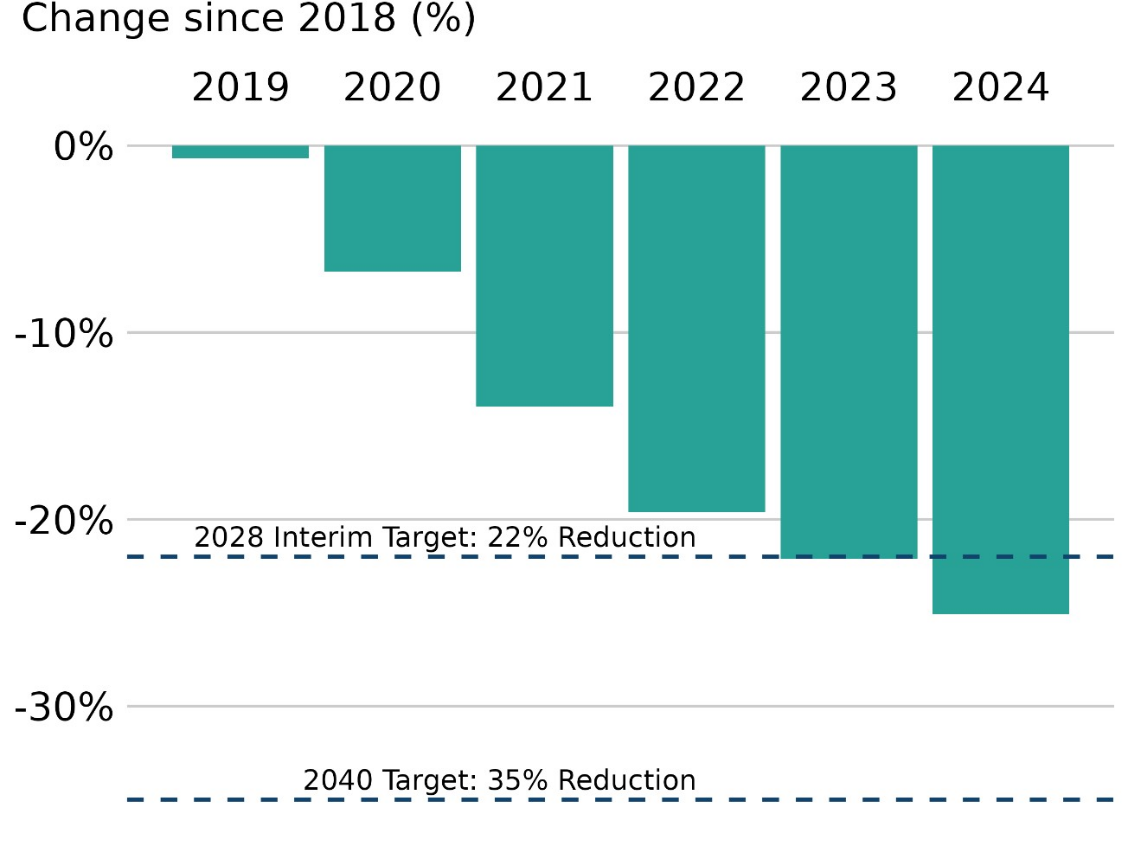
Figure 2. Progress towards the Population Exposure Reduction Target (PERT) for PM2.5: Percentage change in population exposure since 2018, 2018–2024.
The graph in Figure 2 shows progress towards the Population Exposure Reduction Target (PERT). The green columns are the annual changes in population exposure compared to 2018. The dashed lines show the reduction in population exposure needed to meet the 2028 interim target, and the 2040 target.
Figure 2 shows that since 2018, population exposure has decreased each year. The 3 year averaging means there is less annual variability than for the AMCT (Figure 1) the graph shows a steady decrease in the metric whereas the maximum annual concentration may increase or decrease compared to the previous year as a result of weather conditions, although the long-term trend is similar.
Between 2018 and 2024 the reduction in population exposure is 25%. This exceeds the previous interim target but does not yet meet the 2040 target (35%).
Concentrations of PM2.5 since 2020 have decreased more quickly than indicated by modelling. Analysis commissioned by Defra suggests this reduction is likely to be due to a combination of factors such as reducing emissions of PM2.5 precursors (pollutants which react in the atmosphere to produce PM2.5) in the UK and also in Europe, leading to a lower amount of pollution being blown in from outside the UK.
Delivery measures
The new interim AMCT is likely to be achieved by measures already in train (such as tighter vehicle emissions standards, which reduce emissions over time as people purchase new vehicles, and phasing out of fossil fuel powered power stations), but maintaining this and meeting the new interim PERT may need additional measures. The additional measures that we will take to tackle these sources and help provide further assurance of target delivery are outlined in the EIP Air goal. These measures are designed to reduce emissions from the major sources of PM2.5 – domestic combustion, transport and industry. Reductions in precursor pollutants (such as NOx and NH3) also helping to contribute.
Alongside the delivery measures outlined in this section, we also expect that net zero measures will contribute towards delivery of the interim targets. Planned future modelling will help provide further information.
Table 1. Summary of delivery measures under the air quality delivery plan.
| Delivery measure | Description | Estimated contribution to the interim targets | Evidence of impact | Responsible | Status |
|---|---|---|---|---|---|
| Domestic Combustion consultation | We will undertake a consultation on new measures that cut emissions from domestic combustion, whilst minimising the impact on those that need to burn and respecting traditional celebratory festivals such as 5 November and Diwali. | The contribution of this measure will depend on the final policy adopted after consultation. | Domestic combustion is a major source of PM2.5 emissions contributing 20% of total UK PM2.5 emissions in 2023. The consultation will focus on evidence-based proposals and policy mechanisms, which, if implemented, are expected to reduce PM2.5 emissions. |
Defra | In development |
| Industrial emissions consultations | We have consulted on wide-ranging reforms to industrial permitting that will reduce emissions of key pollutants including sectoral reforms for combustion, batteries and anaerobic digestion, and wider reforms to the overall framework. We will also explore options to reduce emissions from small industrial combustion plants. | The contribution of this measure will depend on the final policy adopted after consultation. | Industrial combustion and industrial processes and product use are a major source of PM2.5 emissions, contributing 10% and 16% of total UK PM2.5 in 2023 respectively. Reforms are expected to reduce emissions of PM2.5 and its precursors across multiple sectors. |
Defra | In development |
| Reduced transport emissions | We are undertaking a range of actions designed to reduce emissions from transport. This includes supporting the transition to zero emission vehicles; funding research and development to accelerate the technologies necessary to decarbonise the domestic maritime sector and addressing the air quality impacts of shipping through UK Shipping Office for Reducing Emissions (UK SHORE); and publishing the third Cycling and Walking Investment Strategy and new statutory Local Transport Plan Guidance. | Further details of the travel related measures are available under the Air goal in the EIP. It has not been possible to estimate the contribution of these measures at this point. |
Transport is the single largest emissions source for NOx (a PM2.5 precursor) and second largest for primary emissions of PM2.5. In 2023, transport accounted for 49% of all domestic NOx emissions in the UK, and 26% for domestic primary PM2.5 (ENV01 - Emissions of air pollutants, statistical dataset, Defra, 2025). Ongoing actions are expected to reduce emissions across road and maritime transport over time. |
Department for Transport | Various - in delivery and development |
Key milestones
Key milestones for 2025 include:
-
consulted on wide-ranging reforms to industrial permitting, including combustion, batteries, anaerobic digestion, and the overall framework
-
publish new statutory Local Transport Plan guidance
Key milestones for 2026 include:
-
explore options to reduce emissions from small industrial combustion plants
-
consult on new measures to reduce emissions from domestic combustion
Illustrative trajectory
Figure 3 and Figure 4 show that real world progress is greater than expected when considering ‘progress to-date’ against the ‘planned’ trajectory line, developed when the previous interim targets were set. However, modelling and monitoring are not directly comparable for several reasons, including differences in spatial representation.
The business as usual (BAU) trajectory is based on National Atmospheric Emission Inventory emissions projections published in 2022, and the planned trajectory is based on planned government air quality and net zero policy at the time. Defra intend to update the modelling with more recent emissions projections and current planned policy (which differs from that previously modelled) soon. We are also considering how to better compare modelled and measured data in a way that takes account of the spatial and other differences.
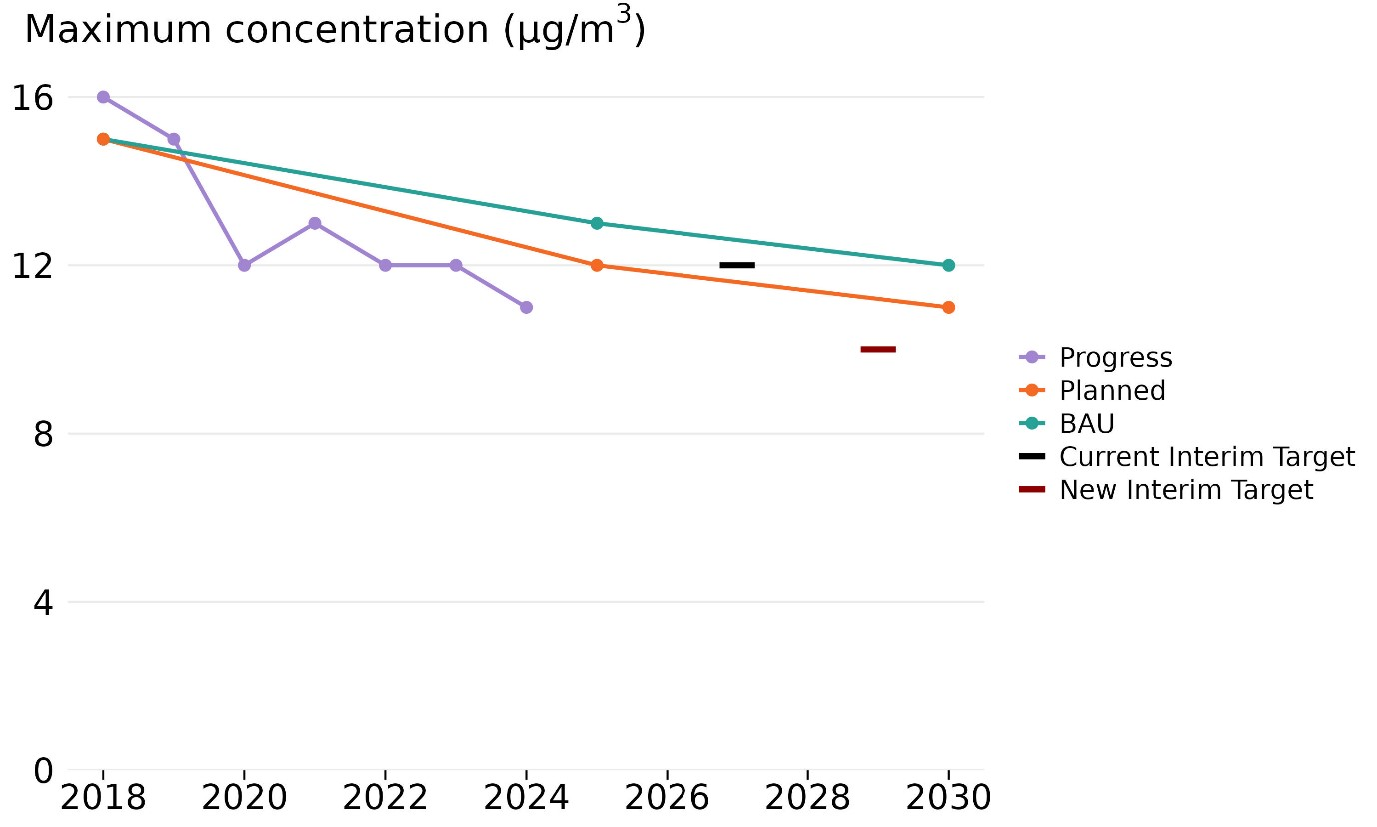
Figure 3. Modelled trajectories towards the Annual Mean Concentration Target (AMCT) for PM2.5 from 2018 to 2030
The graph in Figure 3 shows the modelled AMCT trajectories to 2030. The change in the maximum PM2.5 concentration expected under BAU and with planned policy is plotted up to 2030 alongside measured values from 2018 to 2024. The green line is the modelled BAU trajectory, the orange line is the planned trajectory which includes additional policies, and the purple line is verified measured progress. The black and brown dashes indicate the previous and new interim targets respectively. The dashes align with the calendar year of measurement, not the target deadline which is part way through the following year.
All trajectories show a decrease in the maximum concentration over time. The planned trajectory is lower than the BAU trajectory and meets the current interim target; the BAU trajectory does not. The measured concentrations decrease more rapidly than both the BAU and planned trajectory from 2020 to 2024. The 2024 measurement would meet the current 2028 interim target but not the proposed 2030 target.
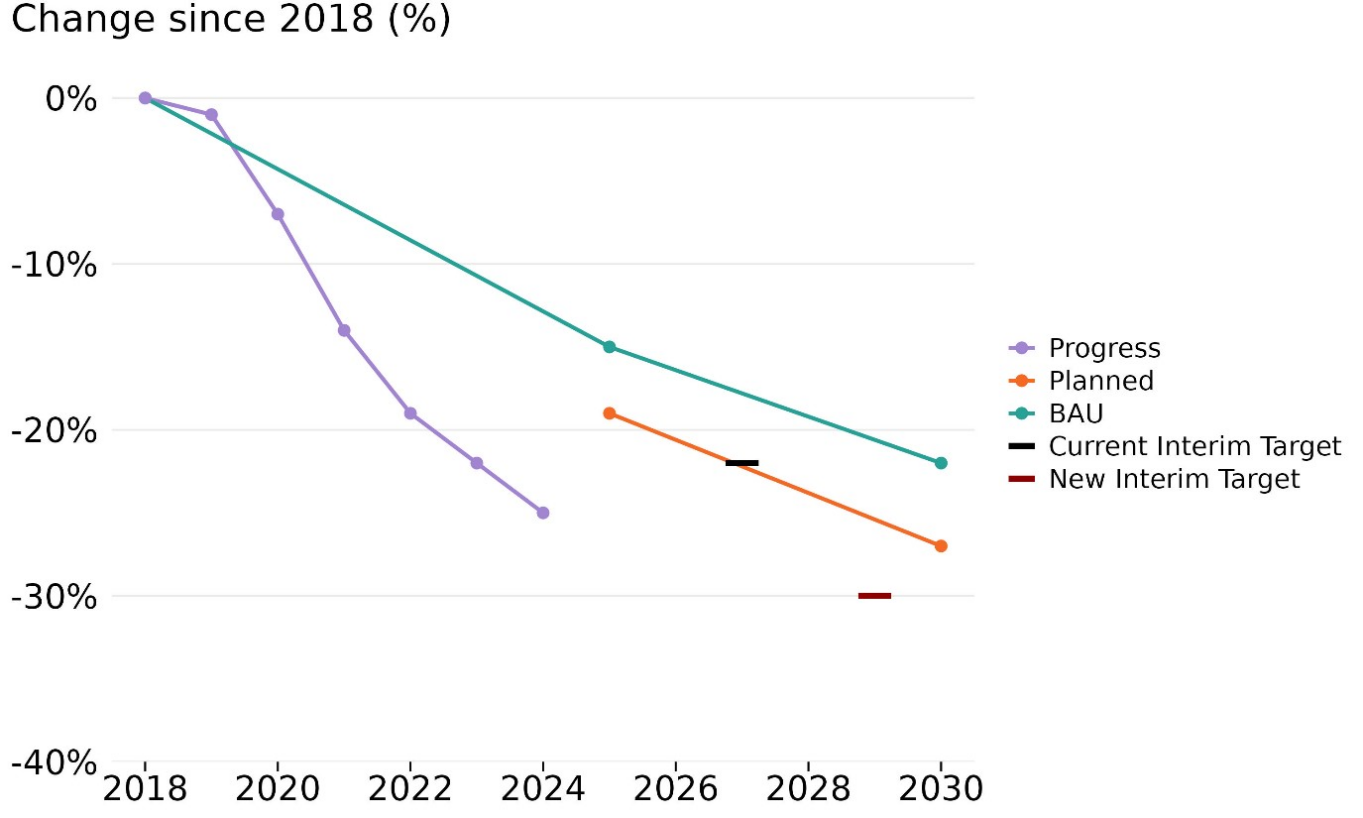
Figure 4. Modelled trajectories towards the Population Exposure Reduction Target (PERT) for PM2.5, 2018 to 2030
The graph in Figure 4 shows the modelled PERT trajectory from 2018 to 2030. The green line is the modelled BAU trajectory, the orange line is the planned trajectory and the purple line is verified measured progress. The black dash at 2027 is the previous interim target and the brown dash at 2029 is the new interim target. The dashes align with the calendar year of measurement not the target deadline which is part way through the following year.
The trajectories all decrease over time, with the planned trajectory decreasing more than the BAU trajectory. The planned trajectory meets the current interim target, the BAU trajectory does not. The measured progress decreases more rapidly than both the BAU and planned modelled trajectories from 2020 to 2024. The 2024 measurement would meet the current 2028 interim target, but not the new 2030 interim target.
All air quality modelling has multiple sources of uncertainty, including those inherent in the model (how it represents complex chemistry and dispersion processes), the input data (for example, projected UK emissions and transboundary and natural contributions), and the impact of external events such as pandemic and economic conditions. In addition, as weather impacts air pollutant dispersion and atmospheric chemistry, climate change may influence future air quality. When developing the long-term statutory targets, at Defra’s request, the Air Quality Expert Group held a call for evidence which covered climate change impacts. The Group’s conclusion was that it is not certain which factors will dominate so it is not possible to know the overall impact of climate change and therefore it was not practical to take this into account in Defra’s modelling.
Climate change is also likely to have a mixed effect on achieving the targets, with complex interdependencies and dependence on people’s behaviour in response to climate change. For example, milder winters may reduce the amount of domestic burning, whereas the impact of climate change on agriculture could precipitate a greater use of fertiliser to compensate for reduced yields. It is, therefore, not possible to estimate the overall impact of climate change, but it adds additional uncertainty to the level of impact measures may have on target delivery and the ease of their implementation.
Monitoring and evaluation summary
The new interim targets use the same metrics as the statutory targets and will be assessed in the same way through measurements of PM2.5 concentration made at fixed monitoring locations around the country. This allows for direct assessment of progress towards the statutory targets.
Fixed monitoring for PM2.5 has been routinely carried out in the UK since 2009. The number of monitors deployed in England is set out in regulation and is determined by a minimum requirement per population head in each zone and agglomeration.
For the AMCT, the highest measured annual mean concentration of PM2.5 (measured in µg m-3 and rounded to the nearest integer) at each relevant monitoring site needs to be at or below the target concentration for it to be met.
The PERT is expressed as percentage reduction compared to a base year. Population exposure is represented by a population exposure indicator (PEI) calculated using measurements from a sub-set of monitoring sites representative of population exposure. The average of the annual mean concentrations at these sites is taken to provide one value for England, which is then averaged with the 2 proceeding years to create the PEI. A 3 year average is less affected by annual variations (for example, as a result of meteorological conditions), enabling the long-term trend to be seen. A statistical approach is used to accommodate the phased introduction of new monitors into the PERT calculation in a mathematically robust way. Reductions in PEI between 2 consecutive years are calculated using only the monitors in operation in both assessment periods (4 years in total). Each annual incremental change in PEI is summed, to equate to the total change over multiple years and then related back to the base year of 2018 to produce the percentage change.
Monitoring site measurements need to meet data capture requirements to be included in the calculations of both targets and monitoring data is subject to a data ratification process carried out by a contractor. Measurement data is publicly available (as unratified data) in near real time, but the ratified annual mean (and so the verified target progress) is not available until 6 months after the end of the year.
The full calculation method for both target metric is on Defra’s UKAIR website.