2025 Global Accounts of private registered providers
Published 15 January 2026
Applies to England

© Crown copyright 2026
This publication is licensed under the terms of the Open Government Licence v3.0 except where otherwise stated. To view this licence, visit nationalarchives.gov.uk/doc/open-government-licence/version/3 or write to the Information Policy Team, The National Archives, Kew, London TW9 4DU, or email: psi@nationalarchives.gov.uk.
Where we have identified any third party copyright information you will need to obtain permission from the copyright holders concerned.
This publication is available at https://www.gov.uk/government/publications/2025-global-accounts-of-private-registered-providers/2025-global-accounts-of-private-registered-providers
Executive summary
The Global Accounts present the consolidated financial statements of private registered providers for the year ending March 2025. Providers continued to spend record amounts on improving the quality and safety of existing homes whilst also maintaining investment in new supply. When combined with higher rates of interest on new and refinanced debt, financial capacity remains constrained and some financial indicators have weakened at a sector level.
Sector turnover increased by 9% to £27.4bn. This was mainly attributable to permitted rent increases of 7.7% in the year (based on CPI inflation of 6.7% in September 2023 plus 1%). Despite this, EBITDA MRI (earnings before interest, taxation, depreciation and amortisation inclusive of capitalised major repairs costs) interest cover was below 100% for the second consecutive year, falling four percentage points to 87%. Interest cover of below 100% means that the cost of servicing debt in the year was greater than net earnings after deducting the costs of maintaining existing housing stock (regardless of whether such spend is capitalised).
The decrease in interest cover is largely attributable to a 13% increase in repairs and maintenance costs. Total spend on repairs and maintenance reached £10.0bn in the year, of which £3.9bn was capitalised. Such costs have increased materially for several years in a row, even after the impact of inflation has been taken into account.
The cost of servicing debt has also increased. Total interest costs increased by 8% to £4.8bn. Of the increase in interest payable, approximately two thirds was attributable to higher rates on debt drawn in the year with the remainder driven by an increase in the volume of debt.
Not all financial indicators have deteriorated. Measures which exclude capitalised spend on existing stock have improved slightly. Operating margins, whilst still at historically low levels, showed a marginal improvement for the second consecutive year to reach 17.3%. The operating surplus on social housing lettings (SHL) activity increased by 11% to £4.7bn. Core SHL activity now accounts for 77% of sector turnover and 98% of the operating surplus.
The sector’s underlying surplus also increased from £1.6bn in 2024 to £1.9bn in 2025. This was partially a result of SHL rental income but was also attributable to an increase in the surplus from the sale of properties previously held for rent (referred to as fixed assets).
The surplus on fixed asset sales increased by 27% to £1.3bn in 2025, the highest level on record. The increase reflects a step up in the strategic disposal of properties as providers rationalise their stock holdings. The regulator will continue to monitor the financial viability of providers where such sales are required in mitigation of financial pressures.
Despite some of the challenges, the sector continues to invest significantly in new supply. Across all tenures, the sector spent £14.2bn on development and delivered 54,000 new social homes. This level of spend on new supply was a slight decrease on last year. Providers’ business plans also show that fewer new units are forecast to be delivered over the next five years than in previous iterations. These plans were submitted to the regulator before the government’s commitment to a new ten-year affordable housing grant programme.
Forecasts submitted by providers in June 2025 include an average annual spend of £10.9bn per annum on repairs and maintenance over the next five years. However, investment plans will need to be revised to incorporate grant funding for cladding replacement, the implementation of Awaab’s law and the consultations on a new Decent Homes and Minimum Energy Efficiency Standard - all of which have been announced in the period between the end of March 2025 and the publication of this report.
The total value of housing assets held by the sector increased by £10.4bn to £218.2bn, reflecting both the capital investment in existing stock and in new supply. Providers utilised internally generated reserves and debt to support this growth. The total amount of debt reported by the sector increased by £5.7bn to £105.4bn at the end of the reporting period. The sector was able to raise the funds required to support investment in new and existing supply. Including refinancing, the sector agreed new facilities of £12.3bn in the year and reported undrawn facilities of £30.6bn in March 2025.
In aggregate, the sector continues to demonstrate robust liquidity. However, weaker performance and high levels of investment are impacting on the level of cash and short-term investments held by the sector which decreased for the fourth consecutive year, reducing by 8% to £5.1bn. The regulator reviews financial positions throughout the year and will engage with providers where indicators identify short-term liquidity issues.
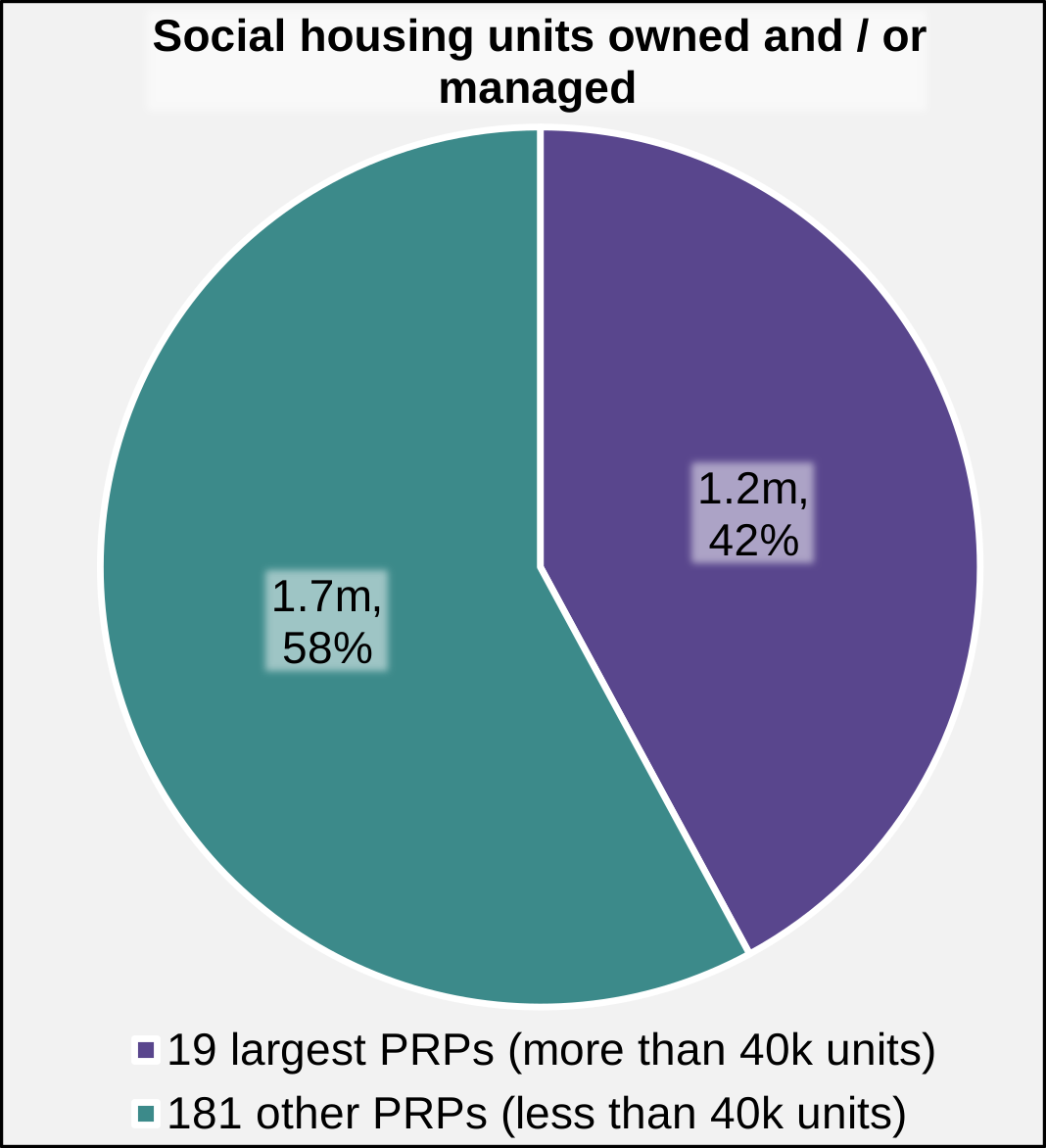
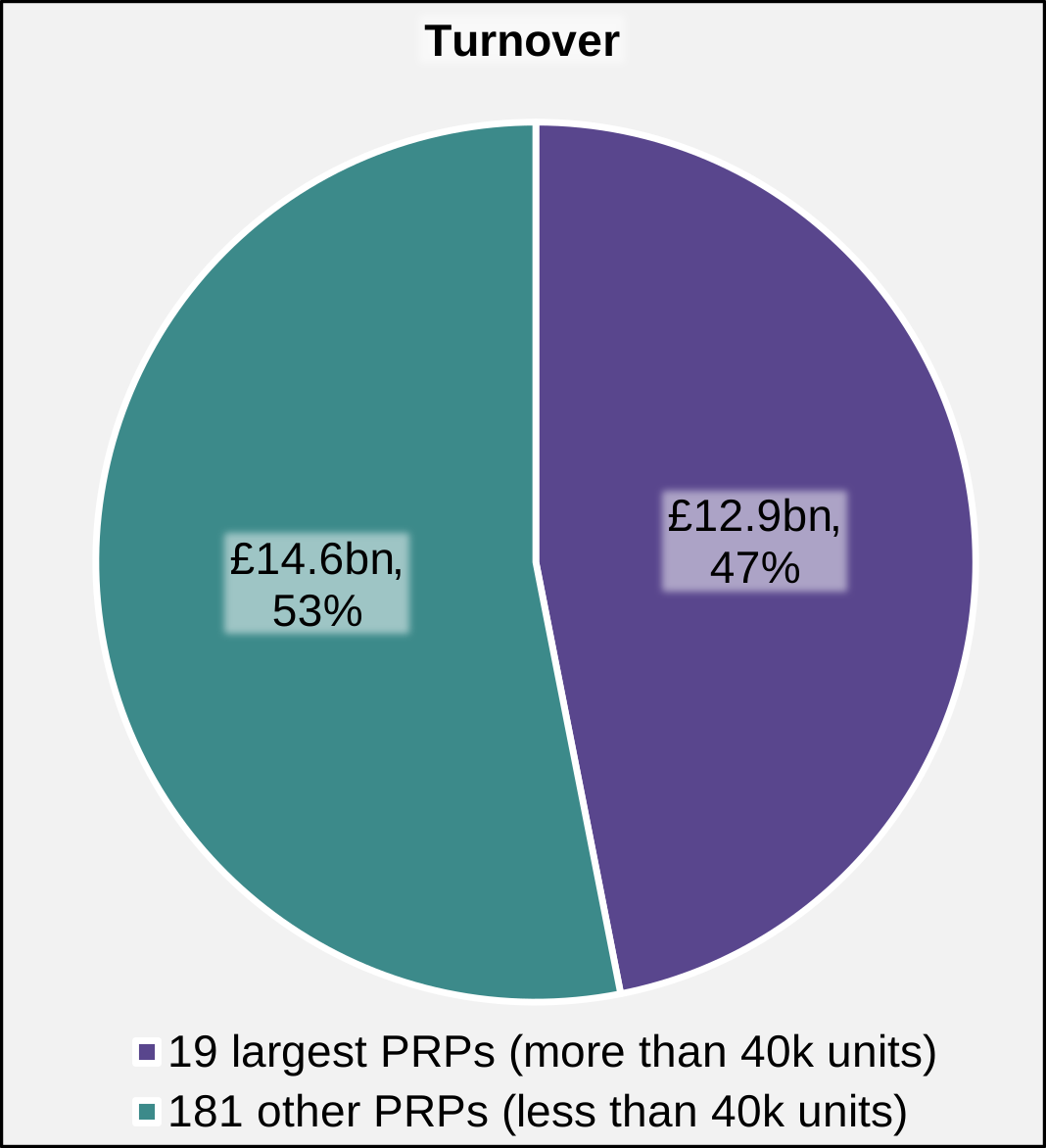
Whilst financial pressures continue to restrict the sector’s financial position in aggregate, performance varies significantly across the range of providers which make up these accounts. Nineteen providers with at least 40,000 social housing units collectively account for 42% of the sector by units owned and 47% by turnover. Accordingly, these providers have a material impact on the aggregate performance of the sector. Many of these providers have significant operations in London and the South East, where costs are generally higher, and they have increased exposure to higher repairs and maintenance expenditure, leading to tighter margins. When combined with a higher level of indebtedness, this means that collectively they exhibit weaker financial performance than the rest of the sector across a range of key metrics.
To support the required investment, the government confirmed that social housing rents will be permitted to increase by CPI+1% from April 2026 for ten years. It was also announced that a rent convergence mechanism will be implemented as part of the new rent settlement, with details to be confirmed in early 2026. Although the rent settlement gives long-term certainty, significant levels of investment in both new and existing stock mean financial headroom is likely to remain restricted. Providers will need to respond to both the challenges and opportunities presented by the evolving operating and macro-economic environment. They will need to ensure that their organisations continue delivering for both current and future tenants. The regulator expects providers to be proactive, delivering new homes and services to tenants efficiently, managing risks effectively and maintaining strong contingency plans.
1 - Introduction
1.1 - The 2025 Global Accounts of registered providers (Global Accounts) provides a financial overview of the social housing sector based on an analysis of the regulatory returns of private registered providers (providers). The publication does not include any financial data relating to social housing stock held by Local Authorities.
1.2 - In total, there are over 1,500 providers on our Register, of which the majority have fewer than 1,000 homes. This publication is concerned with the financial analysis of 200 large provider groups which own or manage at least 1,000 social homes, together representing more than 96% of the sector’s stock. The underlying dataset used to produce the Global Accounts is subject to change as the number of providers above or below the 1,000 homes cut-off changes each year.
1.3 - The provision of homes for rent is the main activity of the sector. Many providers also generate income from the sale of homes, either on a shared ownership basis or through outright sale at market value. This activity exposes providers to a different risk profile to that of traditional renting and has changed the financial profile of several providers.
1.4 - Most large providers are part of a group structure; these can include multiple registered providers and non-registered entities. The development of properties for outright sale and other non-social housing activity is often delivered by non-registered entities or joint ventures within group structures. This leads to differences between the accounts prepared by registered entities (entity level) and those prepared on a consolidated group basis (consolidated level). This publication presents both sets of results.
1.5 - Further differences exist between providers. While most providers have some supported housing or housing for older people, there is a small but significant number of primarily specialist providers. A small sub-set of supported housing providers operate a lease-based business model. The vast majority of providers are designated as not-for-profit. The Global Accounts dataset includes the results of nine for-profit providers which hold more than 1,000 homes. Together these currently comprise a very small but growing part of the sector.
1.6 - The publication also includes segmented analysis of a subset of 19 providers owning more than 40,000 social housing units. Together, this group account for 42% of the sector’s housing stock and 47% of the total turnover recognised in financial statements.
1.7 - A financial review of the 2024/25 Global Accounts is presented in Part 2 of this document. Part 3 comprises the aggregate financial statements. Part 4 contains notes to the primary statements showing further detail of key entries and balances.
1.8 - Analysis of providers’ financial forecasts submitted in June 2025 is included in a separate publication (see Global Accounts Financial Forecast report).
2 - Financial review
Operating environment
2.1 - For most providers, the financial year reflected in this report covers the period between 1 April 2024 and 31 March 2025. The maximum permissible rent increase for the vast majority of rented units was 7.7%. This was based on September 2023 CPI of 6.7% plus 1%.
2.2 - Subsequently, 12-month CPI inflation fell steeply, reaching 2.3% in April 2024. Although there was a degree of volatility over the course of the next 12 months, inflation remained at 3% or below throughout the period and closed at 2.6% in March 2025 (Consumer price inflation, UK - Office for National Statistics). The lag between permitted rent increases of 7.7% and lower inflation in the year is reflected in the financial results.
2.3 - As inflation became more closely aligned with the Bank of England (BoE) target, the BoE began easing monetary policy through a series of interest rate cuts. The base rate was reduced three times, falling from 5.25% in April 2024 to 4.5% by February 2025, where it remained for the rest of the reporting period.
2.4 - Average house prices increased by 6.7% in the 12 months to March 2025 (UK House Price Index summary - March 2025, ONS). However, there were notable regional variations. The North East was the fastest growing region with annual growth of 14.3%, followed by Yorkshire and The Humber at 9.5% and the North West at 9.4%. In contrast, London saw the lowest increase at 0.8%. According to Energy Performance Certificate (EPC) data 205,000 new homes of all tenures were completed in the 12 months to March 2025, a 9% reduction on the previous year (Housing supply: indicators of new supply, England Jan to March 2025).
2.5 - During the reporting period a number of measures were announced to boost housebuilding and stimulate the construction industry. The annual construction output for all works in the year to March 2025 was 1.8% higher than in the year to March 2024 (Output in the construction industry : all work summary). Across the UK, average construction costs on new properties increased by 3.8% over the 12-month period to 31 March 2025 (March 2024 2.3%) (Construction output price indices - Office for National Statistics).
2.6 - To support the development of new homes in the sector the 2021-26 Affordable Homes Programme was allocated top-ups of £500 million following the Autumn Budget and £300 million in February 2025). The spring statement presented to Parliament on 26 March confirmed £625 million to address skills shortages in the construction sector, and another £2 billion in additional grant funding to deliver up to 18,000 homes.
2.7 - Post-reporting period, the Spending Review in June announced a £39 billion, 10-year Social and Affordable Homes Programme (SAHP 2026–36) to accelerate large-scale social and affordable housebuilding nationwide. In addition, the announcement set out the availability of £2.5 billion of low-interest loans to support development in the sector and complement commercial lending.
2.8 - Commencing 1 April 2024, the regulator introduced new consumer standards, the biggest change to social housing regulation in over a decade. These standards apply to all social landlords, including Local Authorities and private registered providers. These financial results reflect the sector’s continuing focus on investment in the quality, safety and energy efficiency of existing stock.
2.9 - The Introduction of Awaab’s Law in October 2025 set out timescales for providers to address all damp and mould hazards. In the second half of 2025, consultations have been undertaken on the future of the Decent Homes Standard and a Minimum Energy Efficiency Standard. As more details relating to stock quality targets emerge, providers will have to ensure they have financially sustainable asset management strategies in place.
2.10 - The Spending Review confirmed that social housing rents will be permitted to increase by CPI+1% from April 2026 for ten years. It was also announced that a rent convergence mechanism will be implemented as part of the new rent settlement, with details to be confirmed in early 2026.
2.11 - The rent settlement gives providers, lenders, and investors greater long-term certainty. However, significant levels of investment in both new and existing stock mean financial headroom is likely to remain restricted. Providers will need to respond to both the challenges and opportunities presented by the evolving operating and macro-economic environment. They will need to exercise real skill and judgement to ensure that their organisations continue delivering for both current and future tenants. The regulator expects providers to be proactive, delivering new homes and services to tenants efficiently, managing risks effectively and maintaining strong contingency plans.
Financial highlights
The reported and underlying surplus
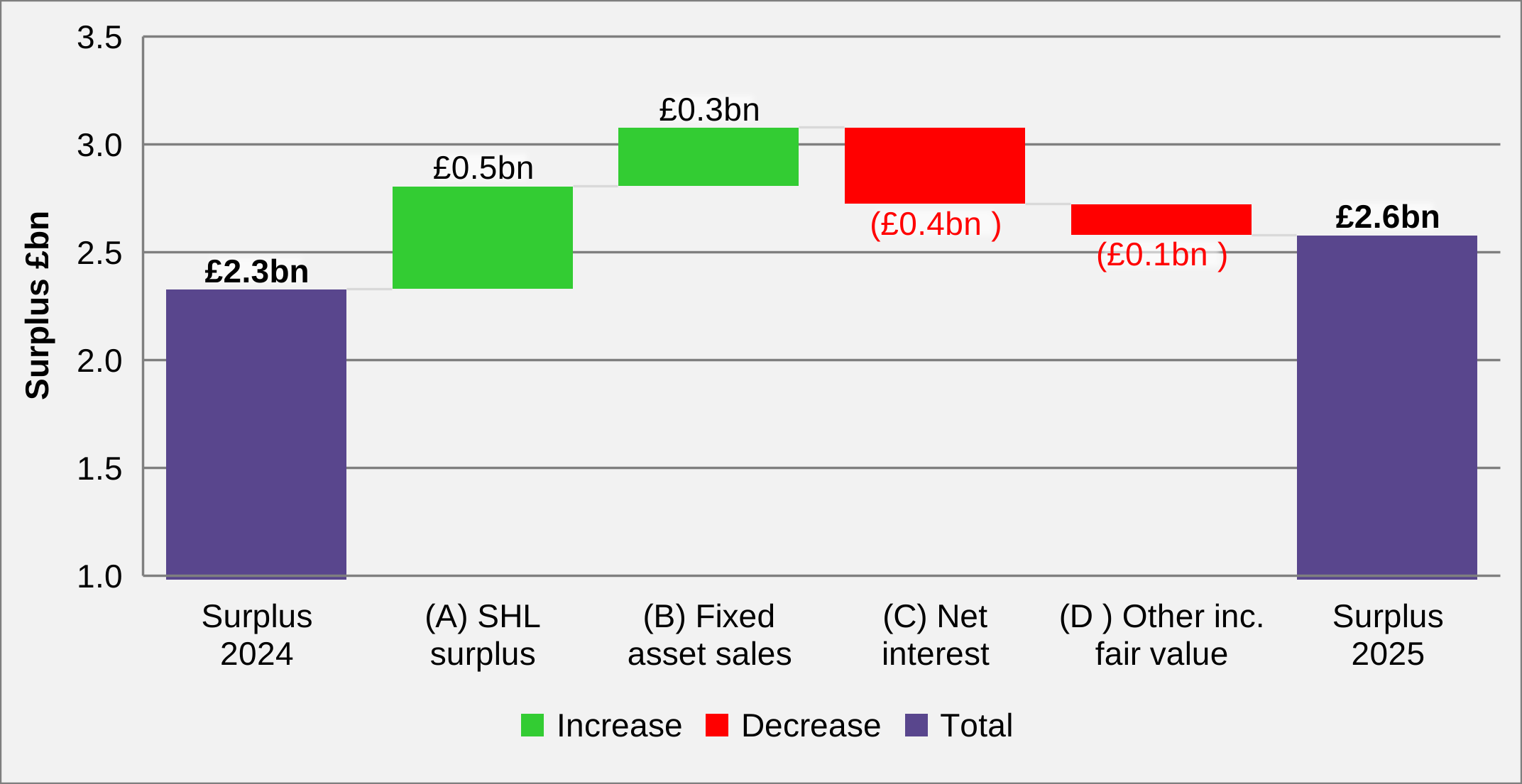
2.12 - Based on consolidated financial statements, the reported surplus increased from £2.3bn in 2024 to £2.6bn in 2025.
Figure 1: Factors impacting the reported surplus (consolidated)
| £bn | |
|---|---|
| Surplus 2024 | 2.3 |
| (A) SHL surplus | 0.5 |
| (B) Fixed asset sales | 0.3 |
| (C) Net interest | (0.4) |
| (D ) Other inc. fair value | (0.1) |
| Surplus 2025 | 2.6 |
2.13 - The increase in the reported surplus was mainly attributable to two factors:
-
The surplus from social housing lettings (A) increased by £0.5bn (11%) to £4.7bn. This was mainly attributable to permitted rent increases of 7.7% in the year. An increase in the number of social housing units was also a contributing factor.
-
The surplus from the disposal of properties held for rent, classified as fixed assets sales (B), increased by £0.3bn (27%) to £1.3bn. This includes surpluses recognised from staircasing by shared owners and from Right to Buy / Right to Acquire (RTB/RTA) sales to tenants. However, most of the increase reported in 2025 related to other sales of social housing properties. This includes bulk transactions between providers and the disposal of void properties. Just over 20% of the total fixed asset sales surplus for the year is attributable to two providers.
2.14 - The increase in the surplus from SHL activity and fixed asset sales was offset by a £0.4bn (10%) increase in net interest costs (C) to £3.9bn. Of the increase in interest payable, approximately two thirds was attributable to higher rates with the remainder driven by an increase in the volume of debt.
2.15 - Other items (D) include movements in fair value. In the consolidated financial statements this often includes gains from group merger activity. In both 2024 and 2025 fair value gains from business combinations were £0.9bn. When analysing movements in surplus, the regulator excludes these ‘non-cash’ fair value gains and losses in order to calculate the underlying surplus.
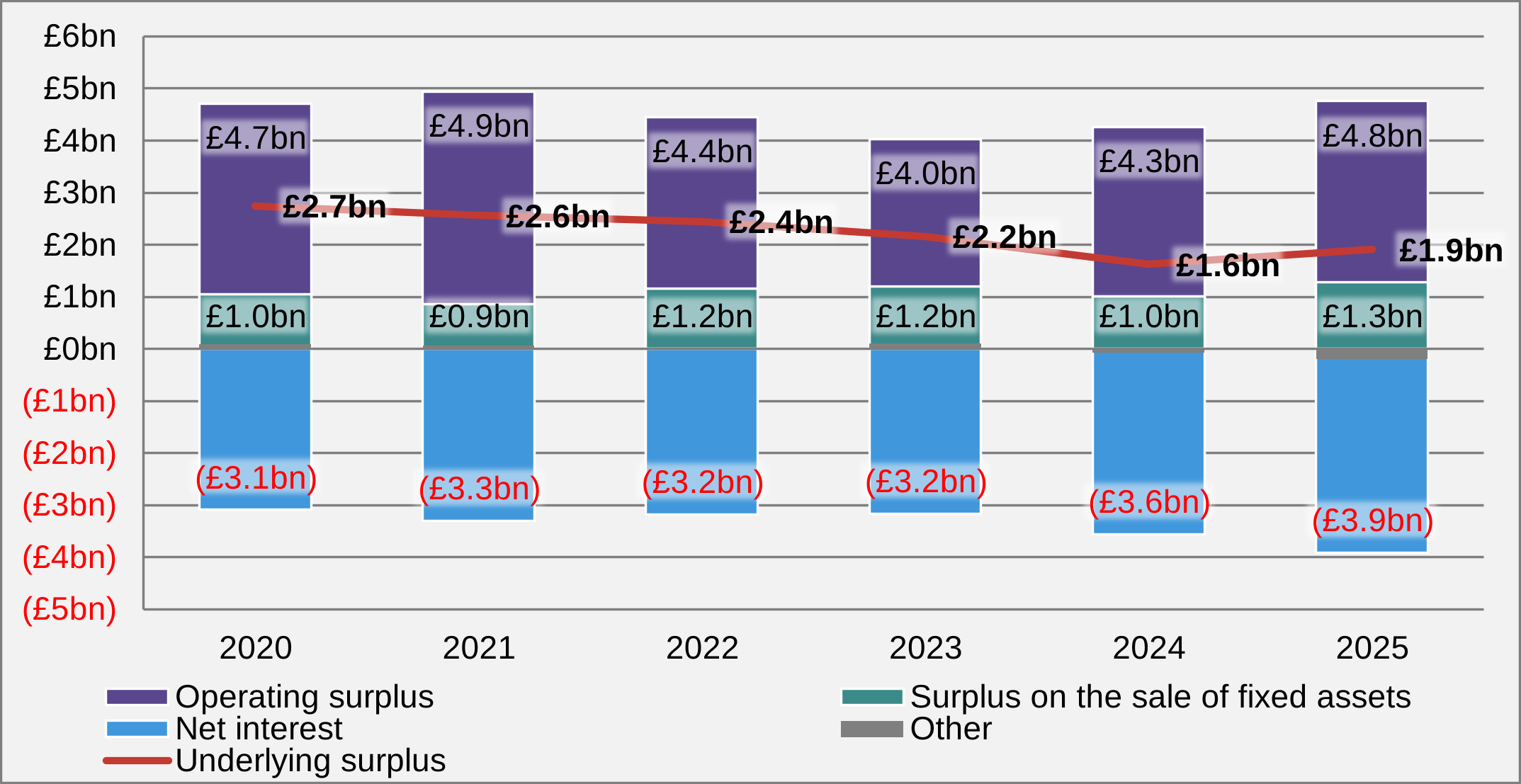
Figure 2: Underlying surplus - excluding movements in fair value (consolidated)
| £bn | 2020 | 2021 | 2022 | 2023 | 2024 | 2025 |
|---|---|---|---|---|---|---|
| Operating surplus | 4.7 | 4.9 | 4.4 | 4.0 | 4.3 | 4.8 |
| Surplus on the sale of fixed assets | 1.0 | 0.9 | 1.2 | 1.2 | 1.0 | 1.3 |
| Net interest | (3.1) | (3.3) | (3.2) | (3.2) | (3.6) | (3.9) |
| Other | 0.1 | 0.1 | 0.0 | 0.1 | (0.1) | (0.2) |
| Underlying surplus | 2.7 | 2.6 | 2.4 | 2.2 | 1.6 | 1.9 |
2.16 - Since we started collecting data on gains and losses from business combinations in 2018, the underlying surplus had deteriorated year-on-year from more than £3.6bn to £1.6bn in 2024. However, in 2025 social housing rent growth and more fixed asset sales resulted in a £0.3bn increase in the underlying surplus.
Spend on existing stock
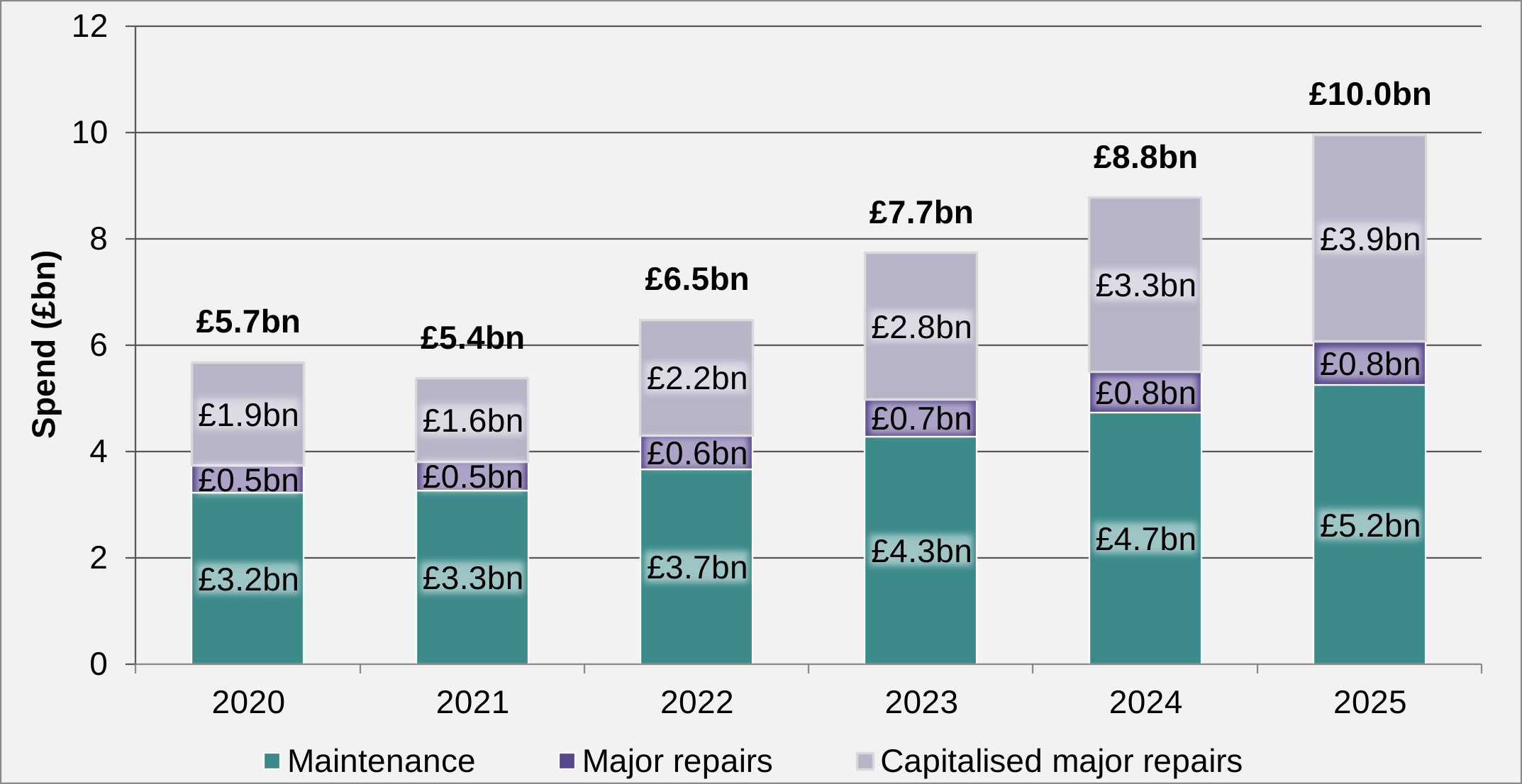
2.17 - The underlying surplus reported above is after recognition of revenue repair and maintenance costs on existing stock of £6.1bn (2024: £5.5bn). In addition to this spend a further £3.9bn (2024: £3.3bn) of major repairs works were capitalised in the year.
2.18 - Although this capitalised element of repairs spend is not recognised in the reported surplus in the year it occurs, the cash impact continues to be a key contributor towards the continued financial pressures experienced by parts of the sector. Including capitalised spend, total spend on existing stock was a record £10.0bn in 2025 (2024: £8.8bn), a 13% increase on the previous year.
2.19 - In absolute terms, spend on repairs and maintenance in 2025 reflects a 75% (£4.3bn) increase on the pre-pandemic peak of £5.7bn reported in 2020. This increase is partially attributable to inflation, with CPI inflation over this period peaking at more than 10% in 2022. The £10.0bn spend in 2025 is equivalent to £8.0bn in 2020 prices[footnote 1]. This nonetheless represents a significant 42% (£2.4bn) increase in real terms.
Figure 3: Total repairs and maintenance spend (consolidated)
| £bn | 2020 | 2021 | 2022 | 2023 | 2024 | 2025 |
|---|---|---|---|---|---|---|
| Maintenance | 3.2 | 3.3 | 3.7 | 4.3 | 4.7 | 5.2 |
| Major repairs | 0.5 | 0.5 | 0.6 | 0.7 | 0.8 | 0.8 |
| Capitalised major repairs | 1.9 | 1.6 | 2.2 | 2.8 | 3.3 | 3.9 |
| Total | 5.7 | 5.4 | 6.5 | 7.7 | 8.8 | 10.0 |
2.20 - Maintenance and repairs expenditure recognised in the Statement of Comprehensive Income (SOCI) has increased by 10% to £6.1bn. Providers continued to report higher volumes of responsive repairs driven by an increase in stock surveying activity, the ongoing management of damp and mould issues, and a continued focus on stock quality.
2.21 - Total major repairs spend increased from £4.0bn to £4.7bn, of which capitalised spend (that which add to the reporting value of the asset) increased by 19% to £3.9bn. The main drivers of this increase relate to fire remediation, building safety, and investment works. Providers are also investing to improve the energy efficiency of existing homes.
2.22 - Business plans submitted in June 2025 show that investment in existing stock is set to continue to increase (see Global Accounts Financial Forecast report). Projections include an average annual spend of £10.9bn per annum on repairs and maintenance over the next five years.
Spend on new supply
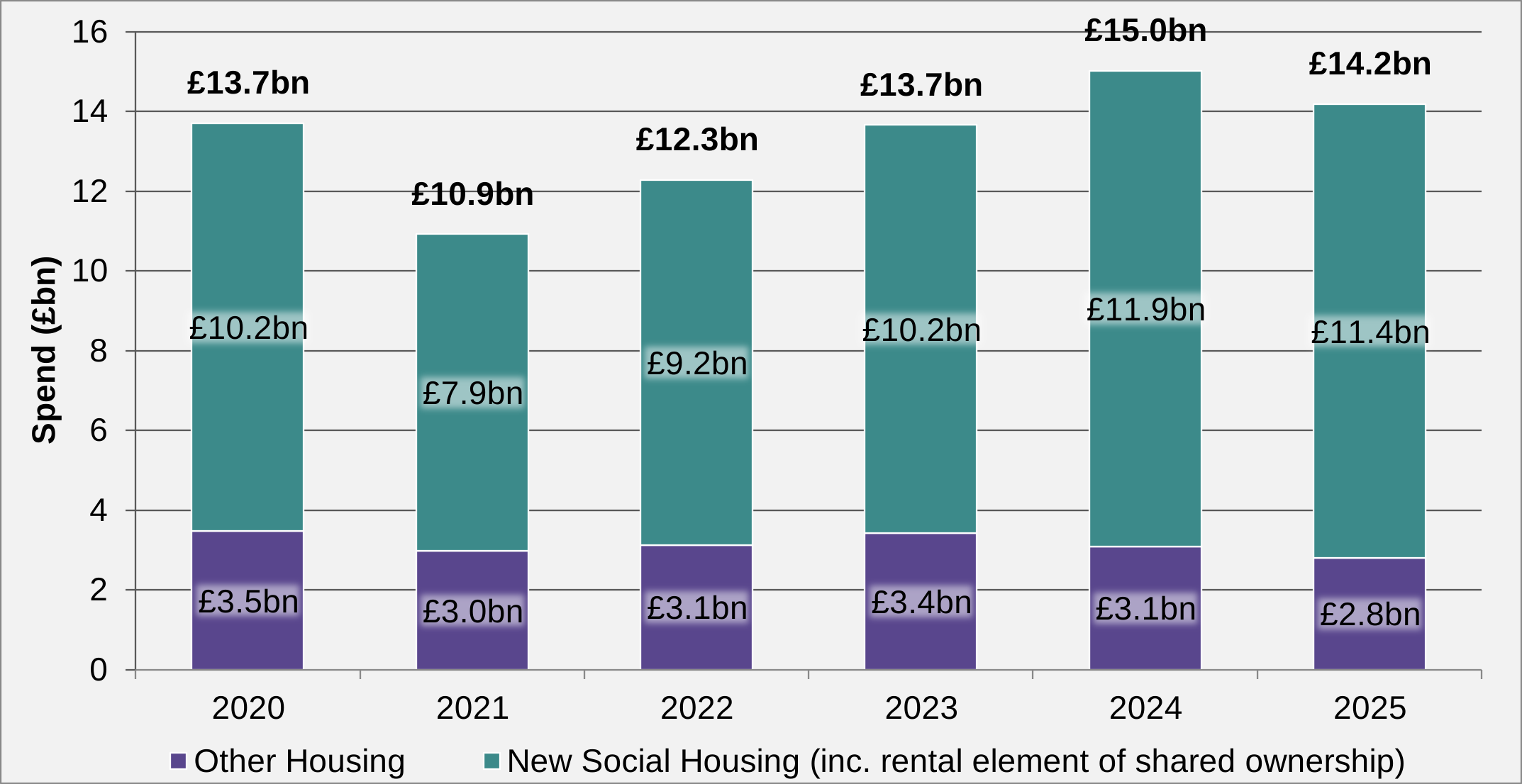
2.23 - Investment in new supply decreased from £15.0bn in 2024 to £14.2bn in 2025. This total figure includes the development and acquisition of social housing properties, properties developed for sale, and investment properties.
2.24 - In cash terms, spend on new supply has been greater than the pre-pandemic peak of £13.7bn reported in 2020 for the past two years. However, when adjusted for inflation the £14.2bn spend in 2025 is equivalent to £11.5bn in 2020 prices[footnote 2].
Figure 4: Spend on new supply (consolidated)
| £bn | 2020 | 2021 | 2022 | 2023 | 2024 | 2025 |
|---|---|---|---|---|---|---|
| New Social Housing (inc. rental element of shared ownership) | 10.2 | 7.9 | 9.2 | 10.2 | 11.9 | 11.4 |
| Other Housing | 3.5 | 3.0 | 3.1 | 3.4 | 3.1 | 2.8 |
| Total | 13.7 | 10.9 | 12.3 | 13.7 | 15.0 | 14.2 |
2.25 - A total of £11.4bn was invested in new social housing properties for rent (including the rental element of shared ownership properties), a decrease of 5% compared to 2024.
-
In 2025, housing properties worth £10.2bn were completed in the year (transferred from ‘under construction’ to ‘completed’ properties in providers’ financial statements). In 2024, the equivalent figure was £9.4bn.
-
The number of new units actually completed during the year was 54,000 (2024: 54,000).
-
The rest of the spend on social housing new supply relates to work in progress.
2.26 - In addition to the £11.4bn invested in social housing properties for rent, providers spent a further £2.8bn on the supply of properties developed for sale and units classified as investment properties. This is the lowest amount since data on investment properties was first collected in 2019.
-
Of this figure, estimated spend on properties developed for outright sale and the expected first tranche element of shared ownership properties was £2.1bn (2024: £2.4bn).
-
Total additions to investment properties over the year amounted to £0.7bn (2024: £0.6bn). Of this, 64% related to spend on market rent or other non-social housing purposes. The remaining 36% related to spend on new social housing properties by for-profit providers[footnote 3].
2.27 - The financial statements show that future capital expenditure, either contracted for or approved by directors, has decreased again to £36.5bn (2024: £38.6bn). In latest business plans, forecast development activity has dropped again (see Global Accounts Financial Forecast report). The first five forecast years from latest projections include the delivery of 274k new units (2024 forecast 292k units, 2023 forecast 333k units).
Housing assets
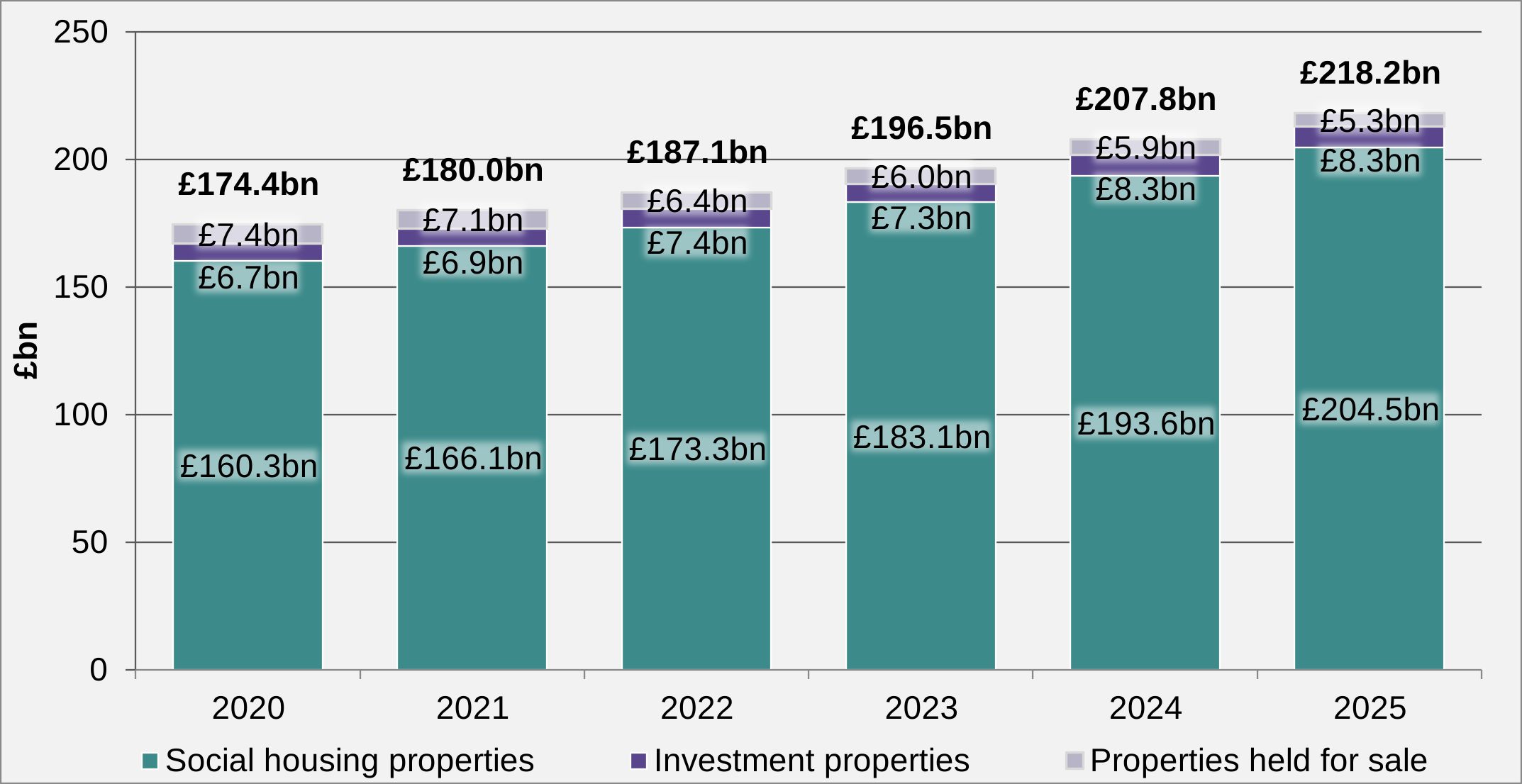
2.28 - With high levels of investment in both new and existing stock over the year, the total value of housing assets held by the sector increased by £10.4bn (5.0%) to reach £218.2bn. This includes both completed properties and properties under construction.
Figure 5: Housing assets (consolidated)
| £bn | 2020 | 2021 | 2022 | 2023 | 2024 | 2025 |
|---|---|---|---|---|---|---|
| Social housing properties | 160.3 | 166.1 | 173.3 | 183.1 | 193.6 | 204.5 |
| Investment properties (Current period) | 6.7 | 6.9 | 7.4 | 7.3 | 8.3 | 8.3 |
| Properties held for sale (Current period) | 7.4 | 7.1 | 6.4 | 6.0 | 5.9 | 5.3 |
| Total | 174.4 | 180.0 | 187.1 | 196.5 | 207.8 | 218.2 |
2.29 - The greatest increases were in respect of social housing properties, the net book value of which increased by 5.7% (£11.0bn) to £204.5bn. This includes £16.0bn worth of properties under construction; equal to 8% of the total.
2.30 - The value of properties held for sale decreased for the fifth year in a row, reducing by 11% to £5.3bn. Of this figure, £3.9bn (74%) related to land and properties under construction and £1.4bn (26%) related to completed properties.
Debt and funding
2.31 - Over the past five years the value of social housing properties reported in the Statement of Financial Position (SOFP) has increased by £44.2bn. Of this increase, 50% (£22.3bn) has been funded by an increase in debt and 23% (£10.1bn) by new grant received over the five year period. The remainder reflects the extent to which internally generated funds are reinvested into new and existing stock.
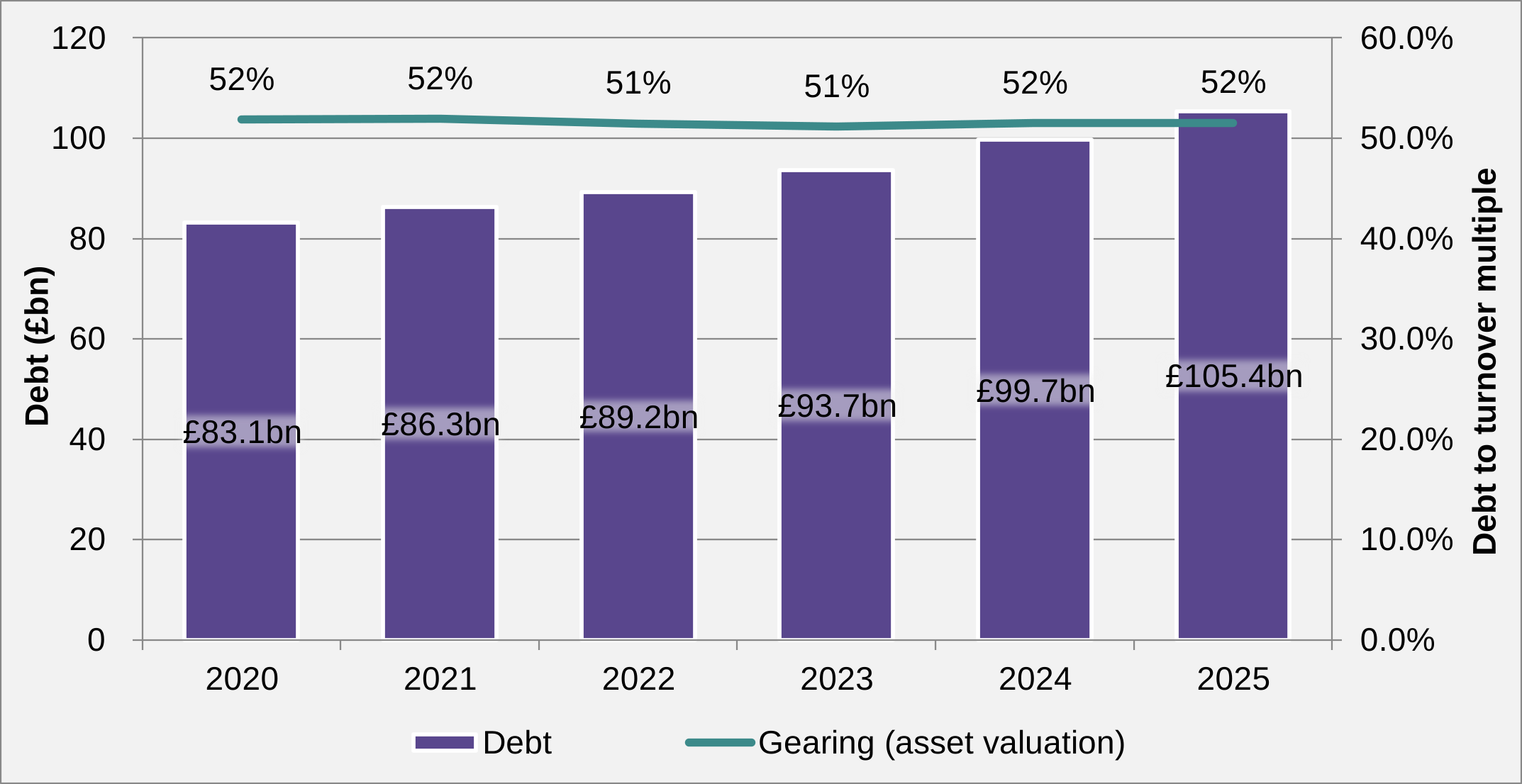
2.32 - Total debt reported in the SOFP increased in 2025 by £5.7bn (6%) to £105.4bn. Data from the March 2025 Quarterly Survey showed that during the year, including refinancing, the sector agreed new facilities of £12.3bn in the year.
Figure 6: Total debt and gearing (consolidated)
| £bn / % | 2020 | 2021 | 2022 | 2023 | 2024 | 2025 |
|---|---|---|---|---|---|---|
| Debt | 83.1 | 86.3 | 89.2 | 93.7 | 99.7 | 105.4 |
| Gearing (asset valuation) | 52% | 52% | 51% | 51% | 52% | 52% |
2.33 - Proportionately, the growth in debt in the year was comparable to the increase in asset value. Gearing (debt as a % of social housing assets) remained stable. Debt as a multiple of sector turnover decreased as a result of the 9% increase in the latter (driven by permitted rent increases of 7.7%).
Table 1: Indebtedness metrics
| Consolidated | Entity | |||
|---|---|---|---|---|
| Metric | 2025 | 2024 | 2025 | 2024 |
| Gearing (debt as % of social housing assets) | 52% | 52% | 52% | 52% |
| Debt to turnover (as a multiple) | 3.9 | 4.1 | 4.2 | 4.3 |
| Debt per unit (£ per social housing unit) | 35,817 | 34,344 | 34,986 | 33,918 |
2.34 - Overall levels of liquidity remain robust within the sector. Available undrawn facilities at the end of the year were £30.6bn (March 2024: £29.9bn). Providers continue to be able to access the funding required to support investment in new and existing stock.
2.35 - However, levels of cash and short-term investments held by providers reduced for the fourth consecutive year, decreasing by 8% to £5.1bn (2024: £5.5bn). Increasing costs of borrowing and weaker cash generation means that capacity and appetite to increase debt is constrained. The regulator continues to review each provider’s Quarterly Survey and will engage with providers where indicators identify short-term liquidity issues.
Financial performance
Interest cover
2.36 - A key indicator of sector viability is providers’ ability to cover ongoing finance costs from core activity. The interest cover measure used by the regulator includes all major repairs spend. Capitalised major repairs expenditure is critical in maintaining homes to meet statutory and regulatory requirements and enabling providers to achieve their objectives. Including all repairs spend also ensures a consistent comparison of performance across providers, regardless of capitalisation policies.
2.37 - In 2025, the regulator made an adjustment to how headline EBITDA MRI interest cover is calculated. The metric now includes grant income associated with capitalised major repairs works. In total, the sector reported capitalised grant of £182m in 2025 (2024: £122m). Prior year figures in the graph and analysis below have been restated to reflect the amendment to the metric.
Figure 7: EBITDA MRI interest cover (consolidated)
| % / £bn | 2020 | 2021 | 2022 | 2023 | 2024 | 2025 |
|---|---|---|---|---|---|---|
| EBITDA MRI Interest Cover | 138% | 151% | 128% | 105% | 91% | 87% |
| Maintenance & Major Repairs Spend | 5.7 | 5.4 | 6.5 | 7.7 | 8.8 | 10.0 |
| Total Interest | 3.7 | 3.8 | 3.7 | 3.8 | 4.4 | 4.8 |
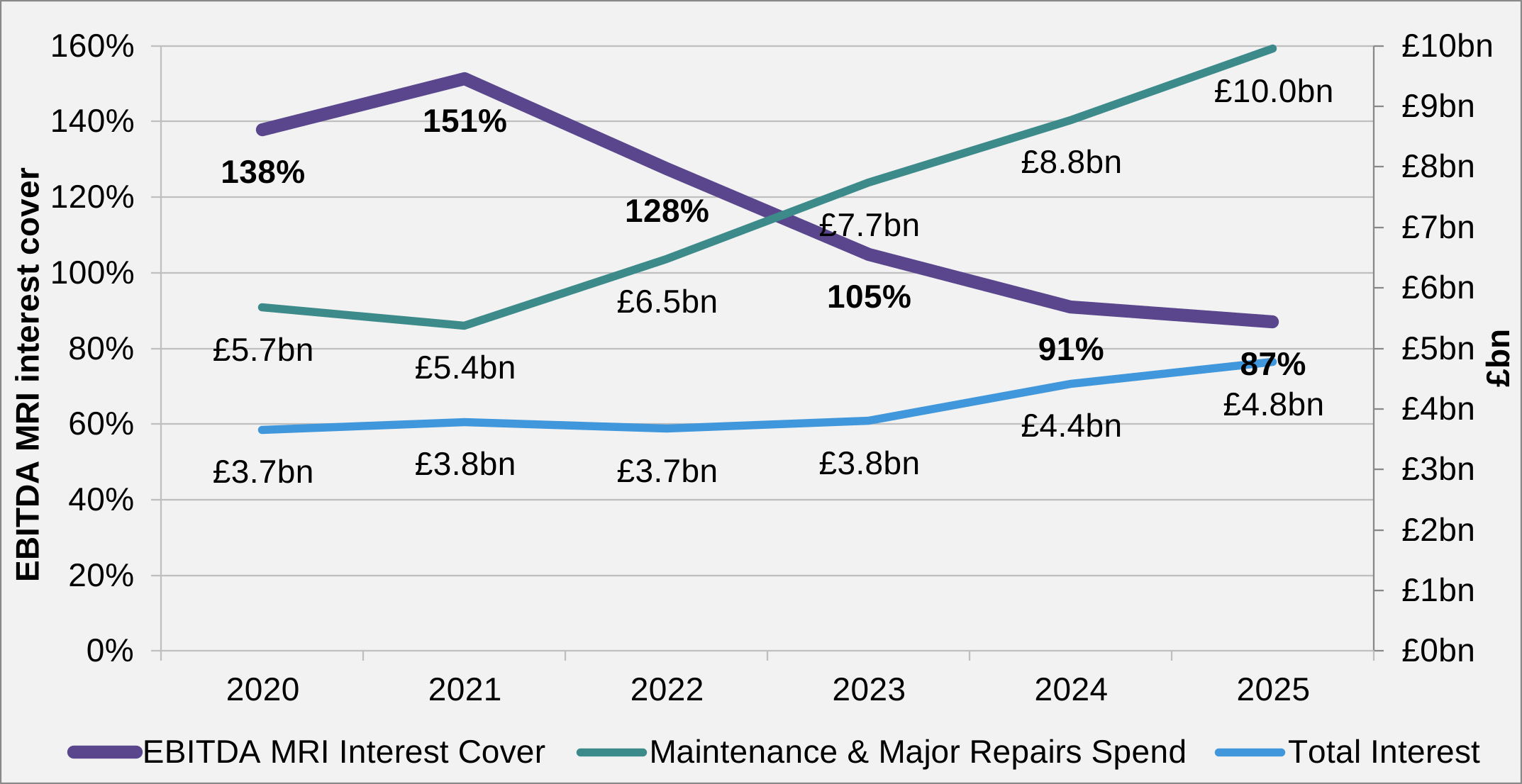
2.38 - Aggregate EBITDA MRI interest cover was below 100% for the second year running. The deterioration from 91% in 2024 to 87% in 2025 was mainly attributable to the following:
-
A £1.2bn (13%) increase in repairs spend. This is the main driver for the drop in the margin from 16.3% in 2024 to 15.5% in 2025.
-
A £0.4bn (8%) increase in interest costs. The sector’s aggregate effective interest rate increased from 4.4% to 4.5%.
Table 2: EBITDA MRI interest cover metrics
| Consolidated | Entity | |||
|---|---|---|---|---|
| Metric | 2025 | 2024 | 2025 | 2024 |
| EBITDA MRI interest cover | 87% | 91% | 89% | 96% |
| EBITDA MRI interest cover SHL | 85% | 90% | 90% | 94% |
| EBITDA MRI Margin | 15.5% | 16.3% | 17.0% | 18.6% |
| Debt to Turnover | 3.9 | 4.1 | 4.2 | 4.3 |
| Effective interest rate | 4.5% | 4.4% | 4.6% | 4.6% |
2.39 - Most providers have an interest cover loan covenant, with limits typically between 110% and 125%. However, some covenants may be calculated on a different basis to our headline EBITDA MRI metric, for example, lender covenants may exclude elements of major repair spend, particularly where they relate to exceptional costs. Where this is not the case some providers have sought waivers from lenders to exclude specific components of expenditure from covenant calculations.
2.40 - On an EBITDA only basis interest cover is 165% (2024: 162%). However, due to the essential nature and increasing amount of spend on capitalised repairs, it is not possible to take an aggregate view on interest cover with such spend excluded from the calculation.
2.41 - Sector EBITDA MRI interest cover below 100% indicates that the cost of servicing debt exceeds net earnings after all repairs spend is deducted. Regulatory judgements published by the regulator continue to reflect the impact of broader financial pressures currently faced by providers.
2.42 - The latest forecasts suggest interest cover will remain constrained. Plans include further investment in existing stock and assume interest rates will remain at a raised level for several years. The sector in aggregate is evidently in a weaker financial position than it has been in the recent past. Many providers face difficult decisions, balancing reduced financial headroom and less capacity to absorb downside risk with continued investment in new homes.
Operating activity
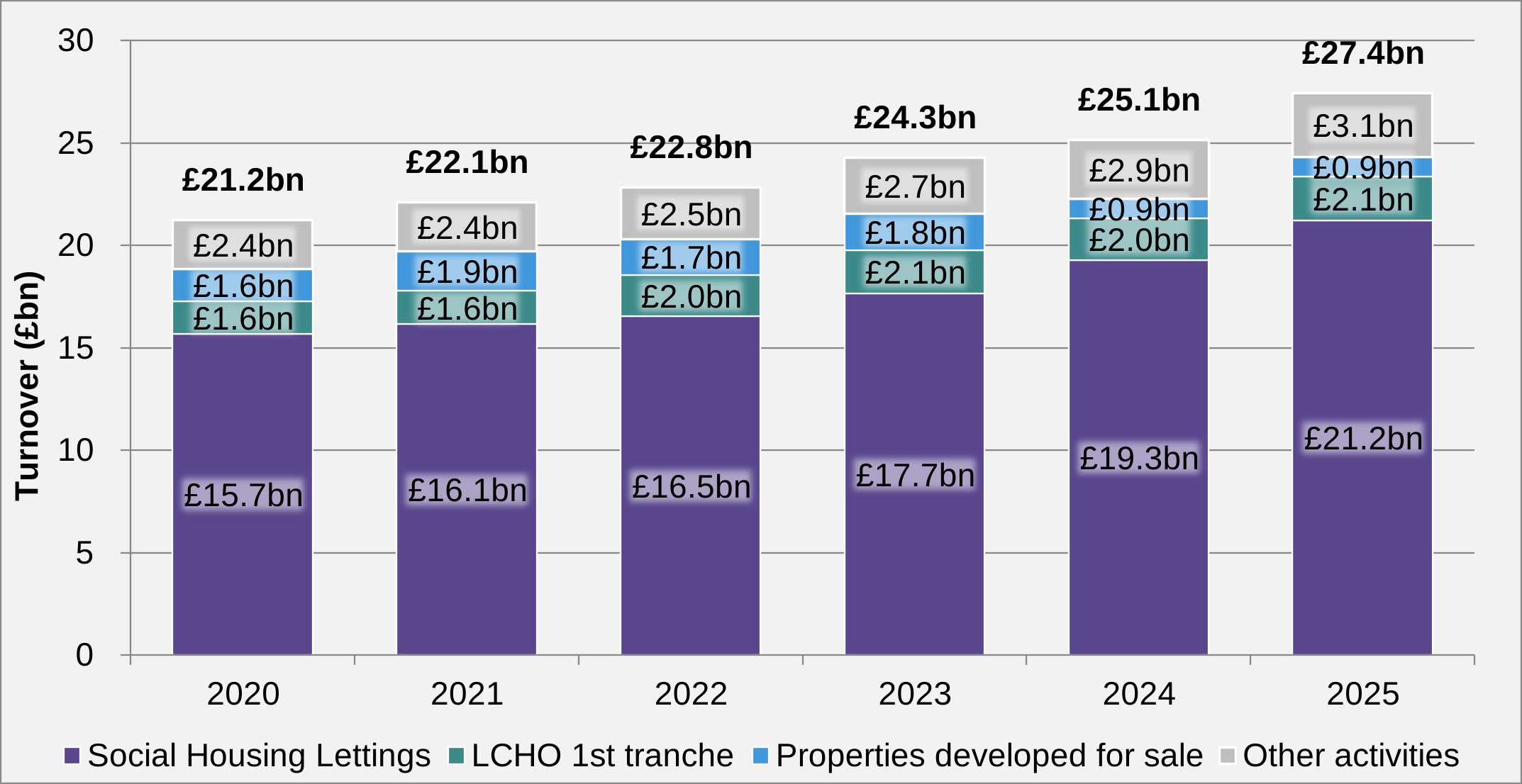
2.43 - Growth in sector turnover was almost entirely attributable to Social Housing Lettings (SHL) activity. Income from SHL increased by £1.9bn (10%). SHL activity now accounts for 77% of total turnover and 98% of the sector’s operating surplus.
Figure 8: Breakdown of turnover (consolidated)
| £bn | 2020 | 2021 | 2022 | 2023 | 2024 | 2025 |
|---|---|---|---|---|---|---|
| Social Housing Lettings | 15.7 | 16.1 | 16.5 | 17.7 | 19.3 | 21.2 |
| LCHO 1st tranche | 1.6 | 1.6 | 2.0 | 2.1 | 2.0 | 2.1 |
| Properties developed for sale | 1.6 | 1.9 | 1.7 | 1.8 | 0.9 | 0.9 |
| Other activities | 2.4 | 2.4 | 2.5 | 2.7 | 2.9 | 3.1 |
| Total | 21.2 | 22.1 | 22.8 | 24.3 | 25.1 | 27.4 |
2.44 - Based on consolidated returns, the aggregate operating margin has increased from 16.9% in 2024 to 17.3% in 2025. This is in contrast to the deterioration in margin on an EBITDA MRI basis referenced in the section above. The difference is largely a result of the treatment of capitalised repairs spend and depreciation costs in financial reporting.
Table 3: Spend on existing stock: operating costs vs. EBITDA MRI (consolidated)
| Operating costs | EBITDA MRI costs | |||
|---|---|---|---|---|
| £bn | 2025 | 2024 | 2025 | 2024 |
| Revenue repairs and maintenance spend | 6.1 | 5.5 | 6.1 | 5.5 |
| Total depreciation | 3.4 | 3.1 | NA | NA |
| Capitalised repairs spend | NA | NA | 3.9 | 3.3 |
| Capitalised repairs grant income | NA | NA | (0.2) | (0.1) |
| Total | 9.4 | 8.6 | 9.8 | 8.7 |
2.45 - Capitalised spend (i.e. spend which adds value to the asset) is not recognised as an expense in the year it occurs in the Statement of Comprehensive Income (SOCI). From an accounting perspective, such spend is recognised in financial statements gradually over the useful life of the asset (depreciation cost).
2.46 - The regulator’s EBITDA MRI interest cover metric excludes depreciation costs but includes capitalised spend. For the second year in a row, capitalised spend on existing housing assets exceeds depreciation costs recognised in the Statement of Comprehensive Income (SOCI). As a result, the sector’s operating surplus has increased by £0.5bn (12%) to £4.8bn, whereas EBITDA MRI has increased by just £0.1bn (3%) to £4.2bn.
Table 4: Operating Margins by activity
| Consolidated | Entity | |||
|---|---|---|---|---|
| % | 2025 | 2024 | 2025 | 2024 |
| Operating margin | 17.3% | 16.9% | 17.6% | 17.7% |
| Operating margin on SHL | 22.1% | 21.8% | 21.7% | 21.3% |
| Operating margin on 1st tranche sales | 13.7% | 17.9% | 13.4% | 17.0% |
| Operating margin on other activities | (5.4%) | (8.1%) | (14.2%) | (9.9%) |
2.47 - In the year a deterioration in the margin on 1st tranche sales was offset by improvements on the margin from SHL and other activities. Despite the improvement in the year, the aggregate operating margin remains historically low; 2023 was the first year that the aggregate operating margin, based on consolidated returns, had fallen below 17% since 2009.
2.48 - The total impairment charge recognised by providers was £311m in 2025 (2024: £317m). An impairment loss is normally recognised in operating expenditure against the associated activity. Impairment charges recognised in the year are mainly attributable to fire and building safety works, schemes identified for sale or divestment, regeneration, and construction delays. Ten providers reported total impairment charges of over £10m each, accounting for just over 60% of the total charge reported in the year.
Social housing lettings
2.49 - The operating surplus on SHL increased by £0.5bn to £4.7bn. Turnover increased by £1.9bn (10%) to reach £21.2bn.
Figure 9: Social housing lettings income and expenditure growth (consolidated)
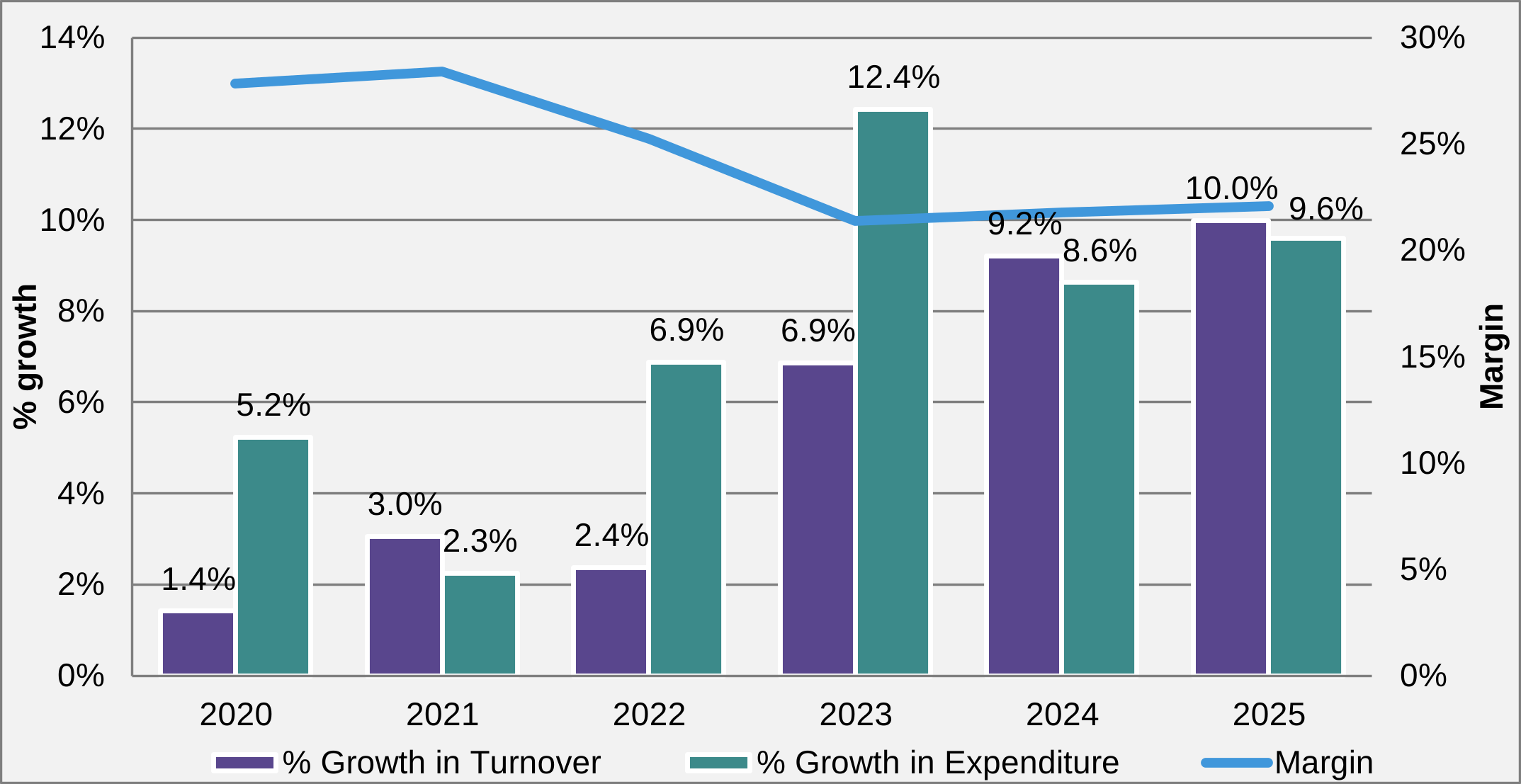
| % | 2020 | 2021 | 2022 | 2023 | 2024 | 2025 |
|---|---|---|---|---|---|---|
| % Growth in Expenditure | 5.2% | 2.3% | 6.9% | 12.4% | 8.6% | 9.6% |
| % Growth in Turnover | 1.4% | 3.0% | 2.4% | 6.9% | 9.2% | 10.0% |
| Margin | 27.8% | 28.4% | 25.3% | 21.4% | 21.8% | 22.1% |
2.50 - The majority of SHL income (£18.3bn) is from rent. For the year ending March 2025 permitted rent increases for general needs Social Rent and Affordable Rent tenancies were capped at 7.7%. On a per-unit basis, rent increased by 9%. The higher increase in average rent per unit is driven by the addition of new units and properties being re-let throughout the year. Further to this, the financial year from 1st April to the 31st March unusually covered 53 rent weeks. For some providers this would have resulted in additional income.
2.51 - The operating margin on SHL increased slightly from 21.8% in 2024 to 22.1% in 2025. As annual permitted rent increases are based on the published CPI figure for the previous September, there can be a mismatch between increases in income and increases in costs. This was the case in 2025 where 12-month CPI inflation fell steeply from 6.7% in September 2023 to 2.3% in April 2024, the start of the period covered by the Global Accounts.
2.52 - Although there was a degree of volatility in the year, 12-month CPI inflation remained at 3% or below throughout the period up to the end of March 2025. In total, SHL expenditure increased by 9.6% on the previous year, equivalent to 8.1% on a per-unit basis. This included the following:
-
A £0.6bn (10%) increase in repairs spend to £6.1bn. The main factors placing upward pressure on repairs and maintenance costs are covered elsewhere.
-
A £0.5bn (8%) increase in management and service costs to £6.7bn. In total, 83% of providers reported an increase in management and service costs relative to 2024. This was due to salary increases, insurance costs and a general focus on consumer regulations and tenant services.
2.53 - Void losses, current tenant arrears and the level of bad debts reported are key performance indicators in assessing the efficiency of letting and rent collection. Current tenant arrears decreased to below 5% for the first time since the pandemic.
Table 5: Indicators of operating performance
| Consolidated | Entity | |||
|---|---|---|---|---|
| % | 2025 | 2024 | 2025 | 2024 |
| Rent loss from void properties | 1.8% | 1.9% | 1.8% | 1.9% |
| Bad debts for the year | 0.7% | 0.6% | 0.7% | 0.6% |
| Current tenant arrears | 4.9% | 5.3% | 4.8% | 5.2% |
2.54 - Measured as a percentage of gross rent, relative to the previous year, rent loss from voids and bad debts are broadly stable. In aggregate void levels remain raised relative to the sector’s pre-pandemic position. The highest levels of voids continue to be experienced by providers with a large proportion of supported housing units, care home units or housing for older people.
Sales
2.55 - Including both current and fixed assets, total sales receipts increased by £0.8bn (14%) over the year to a total of £6.2bn (2024: 5.4bn). The corresponding surplus increased by £0.2bn (16%) to £1.6bn.
Figure 10: Surplus on sales
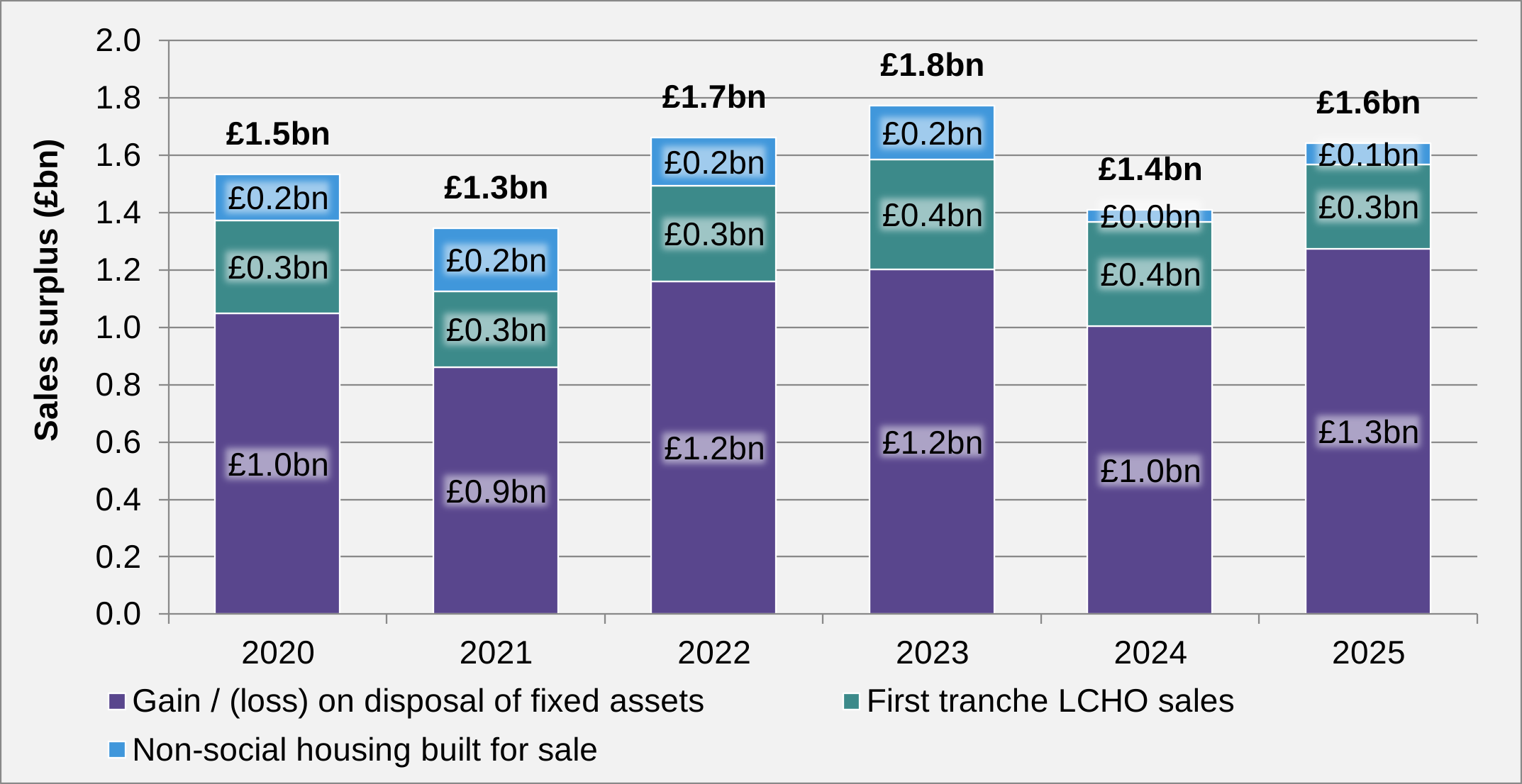
| £bn | 2020 | 2021 | 2022 | 2023 | 2024 | 2025 |
|---|---|---|---|---|---|---|
| Gain/(loss) on disposal of fixed assets | 1.0 | 0.9 | 1.2 | 1.2 | 1.0 | 1.3 |
| First tranche low cost home ownership sales - Operating surplus(deficit) (Current period) | 0.3 | 0.3 | 0.3 | 0.4 | 0.4 | 0.3 |
| Non-social housing property built for sale - Operating surplus(deficit) (Current period) | 0.2 | 0.2 | 0.2 | 0.2 | 0.0 | 0.1 |
| Total | 1.5 | 1.3 | 1.7 | 1.8 | 1.4 | 1.6 |
2.56 -Many providers develop properties for sale. These may be units for outright sale at market values, or low-cost home ownership (LCHO) units where a proportion of the property is sold as a first tranche. Both types of sale are classified as current asset sales, with the turnover and associated cost of sales being included within operating activities.
2.57 - Total receipts from LCHO first tranche sales increased by 6% over the year to £2.1bn. However, the impact of inflationary cost pressures reported in recent years contributed towards costs increasing by 11%. The resulting margin of 14% was the lowest value reported since 2011. The overall contribution from first tranche sales reduced to £293m; equivalent to 6% of the sector’s operating surplus (2024: £364m, 9%).
2.58 - In 2024, outright sale activity reduced dramatically, with both turnover and the associated margin on sales falling to the lowest level reported since consolidated group data was first collected in 2015. In the current year there has been limited recovery, and activity remains at historically low levels. The contribution from outright sales increased to £75m, equivalent to 2% of the sector’s operating surplus (2024: £43m, 1%).
2.59 - The sector also recognises profits from the sale of properties previously held for rent, with such transactions being classified as fixed asset sales. The profit reported on this type of disposal increased by 27% to £1.3bn in 2025; the highest level on record.
Figure 11: Surplus on Fixed Asset sales
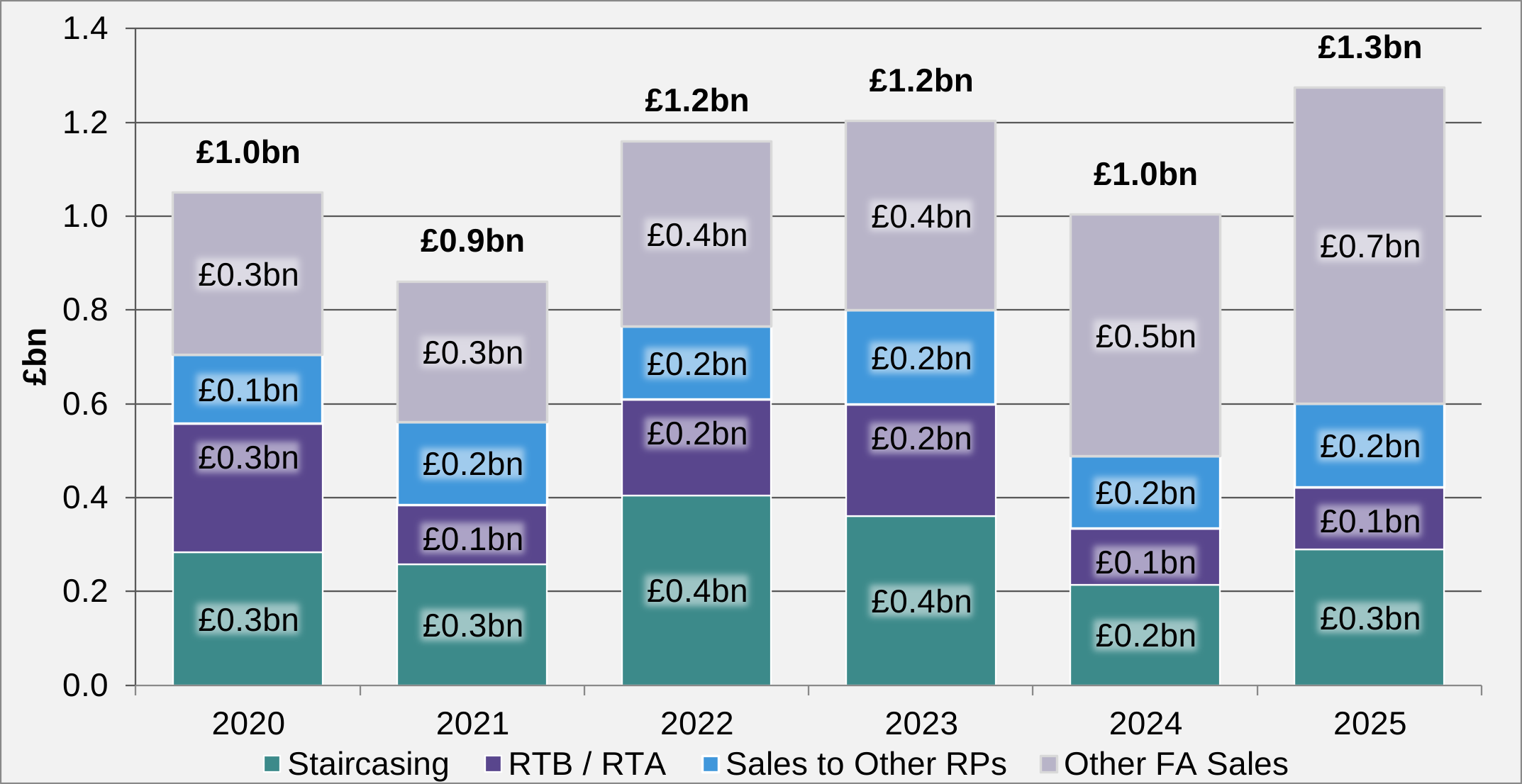
| £bn | 2020 | 2021 | 2022 | 2023 | 2024 | 2025 |
|---|---|---|---|---|---|---|
| Staircasing | 0.3 | 0.3 | 0.4 | 0.4 | 0.2 | 0.3 |
| RTB / RTA | 0.3 | 0.1 | 0.2 | 0.2 | 0.1 | 0.1 |
| Sales to Other RPs | 0.1 | 0.2 | 0.2 | 0.2 | 0.2 | 0.2 |
| Other FA Sales | 0.3 | 0.3 | 0.4 | 0.4 | 0.5 | 0.7 |
| Total | 1.0 | 0.9 | 1.2 | 1.2 | 1.0 | 1.3 |
2.60 - Around half of the increase in surplus from fixed asset sales relates to ‘other’ fixed asset sales, which increased from £468m in 2024 to £603m in 2025. Sales reported under this category include the disposal of individual housing properties on the open market as they become void. The majority of these sales are strategic disposals of properties that are either uneconomical to bring up to existing decency or future energy efficiency standards, or non-core assets that fall outside of the main geographical operating area of the provider or are used for non-social purposes.
2.61 - Providers also conduct stock rationalisation by way of bulk disposals to other organisations, including to other providers. The receipts from such sales amounted to £787m (2024: £587m) which generated a surplus of £179m in 2025 (2024: £154m).
2.62 - Fixed asset disposals also include sales made directly to existing tenants or shared owners.
-
Tenants with a qualifying rental agreement are able to purchase their social or affordable rent property through the RTB or RTA schemes. The surplus generated from such sales increased only slightly to £132m, remaining at historically low levels.
-
LCHO shared owners are able to purchase additional shares of their property through a ‘staircasing’ mechanism. Receipts from staircasing transactions increased by 40% over the year, and accounted for one-quarter of total fixed asset sale receipts.
2.63 - Business plans submitted in June 2025 are forecasting surpluses of £7bn to be achieved over the next five years from fixed asset sales (see Global Accounts Financial Forecast report). It is essential that providers understand the associated financial and reputational risks where such sales are required to support cashflows or to maintain covenant compliance.
Sector segmentation
2.64 - The preceding sections set out the financial position of the sector in aggregate and illustrate the range of financial pressures that it faces. It is important to note that this aggregate position is arrived at by combining the financial results of a diverse range of providers, each of which is a unique business.
2.65 - The providers which make up the sector vary substantially in terms of factors including size, geographic area of operation and business model. Financial performance also varies significantly. Figure 12 below illustrates how interest cover performance varies across the sector and how it has changed in recent years. Whilst in aggregate the sector reported EBITDA MRI Interest Cover of 87%, only 38% of providers reported a figure of less than 100%.
Figure 12: EBITDA MRI Interest Cover by band (consolidated)
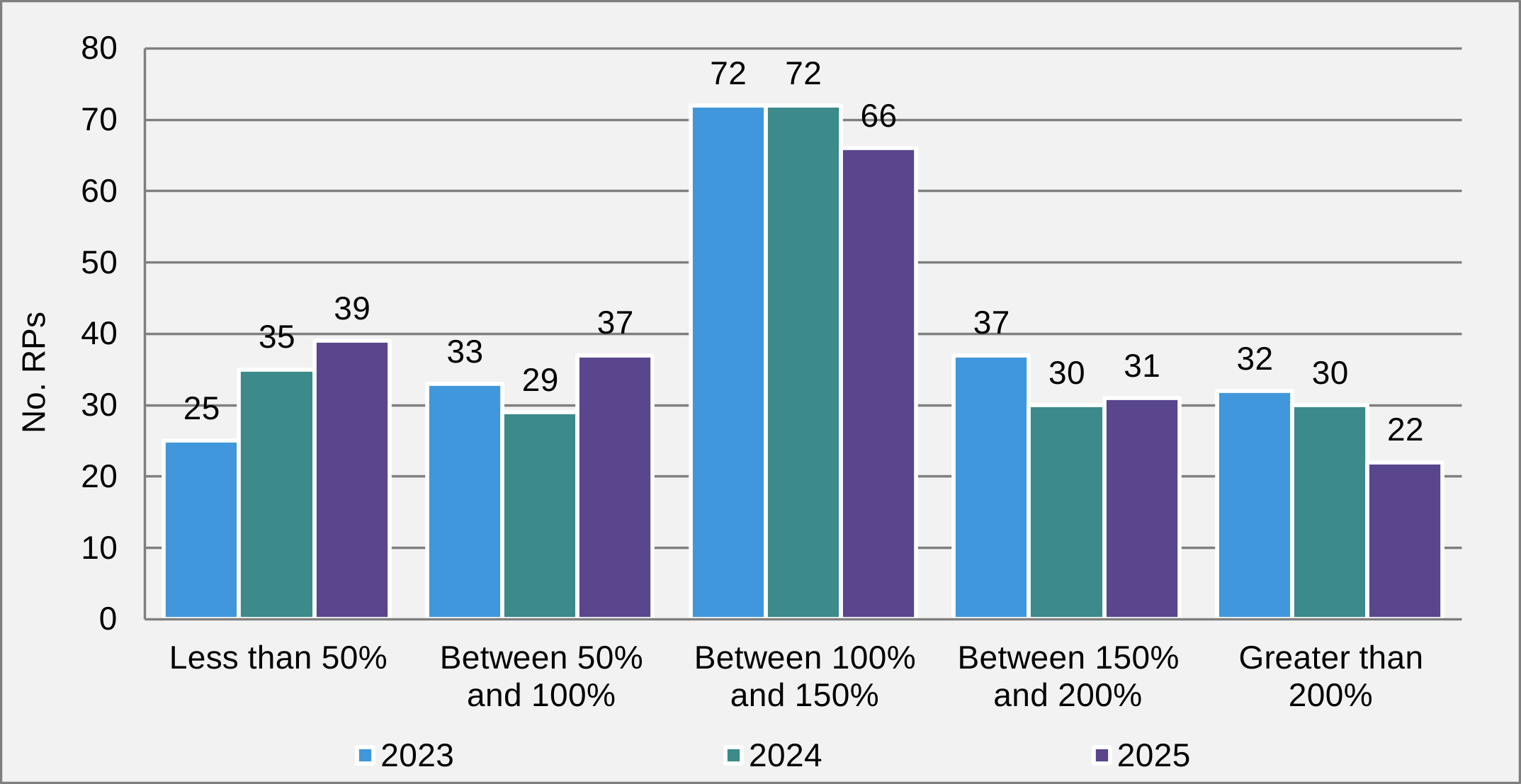
| No. RPs | 2023 | 2024 | 2025 |
|---|---|---|---|
| Less than 50% | 25 | 35 | 39 |
| Between 50% and 100% | 33 | 29 | 37 |
| Between 100% and 150% | 72 | 72 | 66 |
| Between 150% and 200% | 37 | 30 | 31 |
| Greater than 200% | 32 | 30 | 22 |
2.66 - The significant variation in the size of providers which make up the sector means that a small number of very large providers significantly influence the sector aggregate results. Whilst on average providers included in these accounts own around 15,000 social housing units, half of them own fewer than 7,000.
2.67 - This section of the report focuses on the nineteen providers with more than 40,000 social housing units which together account for 42% of the sector’s housing stock and 47% of the aggregate turnover.
Figure 13: Largest 19 Providers (consolidated)
| SH Units Owned and/or managed | Turnover | |||
|---|---|---|---|---|
| No. | % | No. | % | |
| 19 largest PRPs (more than 40k units) | 1.2m | 42% | £12.9bn | 47% |
| 181 other PRPs (less than 40k units) | 1.7m | 58% | £14.6bn | 53% |
| Total | 2.9m | £27.4bn |
2.68 - Whilst these providers are not a homogeneous group, they do generally share some common characteristics:
-
Almost all operate across multiple regions
-
Tend to be more diverse businesses with a greater proportion of income generated from activities other than social housing lettings
-
Have active social housing development programmes
2.69 - Table 6 below sets out some key financial metrics for this group of providers and compares them to both the remainder of the sector and the sector aggregate.
Table 6: Financial metrics of the largest 19 Providers (consolidated)
2025
| Largest 19 Providers | Other Providers | Sector total | |
|---|---|---|---|
| EBITDA MRI Interest Cover | 77% | 97% | 87% |
| EBITDA MRI Margin | 15% | 16% | 15% |
| Debt to Turnover | 4.3 | 3.6 | 3.9 |
| Effective Interest Rate | 4.5% | 4.5% | 4.5% |
| SHL EBITDA MRI Interest Cover | 80% | 92% | 85% |
| Gearing | 51% | 52% | 52% |
| Maintenance & MR per unit | £3,601 | £3,223 | £3,382 |
2.70 - The largest providers generally exhibit weaker financial performance than the rest of the sector as evidenced by these metrics. In particular the combination of tighter margins and a greater level of indebtedness results in weaker interest cover. One of the key drivers for this is the higher level of maintenance and major repairs spend per property.
2.71 - This group of providers includes several with a strong geographic focus in London and the South East. It includes all except one of the eleven providers which constitute the ‘G15’ group of large London-based providers. These providers are likely to have a greater number of properties in high-rise blocks and to be exposed to associated building safety expenditure.
2.72 - In general, their size gives these larger providers the financial capacity to effectively manage their financial position with the capacity to invest where needed and adapt their more diverse range of activities to effectively mitigate their risk exposures. A number of the providers in this group have recently grown substantially through merger activity, a trend which is continuing to increase the proportion of the sector accounted for by providers of this size.
2.73 - The tighter financial position of this group does mean that they must actively manage competing priorities and make trade-offs when reviewing their business plans. This includes balancing their capacity to develop new social housing stock against the need to invest in and maintain their existing portfolio. The regulator’s engagement with this group of providers is proportionate to their size, complexity and risk exposures.
2.74 - To an extent, some of these providers are more actively managing their stock through increased use of fixed asset sales to rationalise their stock holdings. Proceeds from fixed asset sales accounted for 11.3% of the total income received by these providers compared to 9.6% for the remainder of the sector.
2.75 - Further comparisons between this group of providers and the sector as a whole are included in the companion publication based on providers’ financial forecasts (see Global Accounts Financial Forecast report).
3 - Financial statements
Table 7: Statement of Comprehensive Income
| Consolidated | Entity | ||||
|---|---|---|---|---|---|
| £ billion | Note | 2025 | 2024 | 2025 | 2024 |
| Turnover | 2 | 27.4 | 25.1 | 25.5 | 23.6 |
| Operating expenditure | 2 | (19.9) | (18.3) | (19.1) | (17.5) |
| Cost of sales | 2 | (2.8) | (2.6) | (2.0) | (1.9) |
| Operating surplus/(deficit) | 2 | 4.8 | 4.3 | 4.5 | 4.2 |
| Gain/(loss) on disposal of fixed assets | 4 | 1.3 | 1.0 | 1.3 | 1.0 |
| Operating surplus/(deficit) including fixed asset disposals | 6.0 | 5.3 | 5.8 | 5.2 | |
| Other items | 5 | 0.7 | 0.8 | 0.0 | (0.1) |
| Interest receivable | 0.3 | 0.3 | 0.7 | 0.7 | |
| Interest payable and financing costs | 6 | (4.2) | (3.9) | (4.3) | (4.0) |
| Movements in fair value | 7 | (0.2) | (0.2) | (0.1) | (0.1) |
| Surplus/(deficit) before tax | 2.6 | 2.3 | 2.1 | 1.7 | |
| Taxation | (0.0) | (0.0) | (0.0) | (0.0) | |
| Surplus/(deficit) for the period | 2.6 | 2.3 | 2.1 | 1.7 | |
| Unrealised surplus/(deficit) on revaluation of housing properties | (0.2) | 0.0 | (0.2) | 0.0 | |
| Actuarial (loss)/gain in respect of pensions | 20 | 0.3 | (0.2) | 0.2 | (0.2) |
| Change in fair value of hedged instruments | 7 | 0.1 | (0.0) | 0.1 | (0.1) |
| Total comprehensive income for the period | 2.8 | 2.1 | 2.2 | 1.5 |
Table 8: Statement of changes in reserves
| £ billion | Income and expenditure reserves | Revaluation reserves | Other reserves | Total |
|---|---|---|---|---|
| Consolidated | ||||
| Closing balance 2024 | 57.4 | 10.6 | 1.5 | 69.4 |
| Restatements | (0.0) | (0.0) | 0.0 | (0.0) |
| Balance at start of period | 57.4 | 10.6 | 1.5 | 69.4 |
| Surplus/(deficit) for the period | 2.6 | 2.6 | ||
| Other comprehensive income | 0.2 | (0.2) | 0.1 | 0.2 |
| Transfer from revaluation reserve | 0.1 | (0.1) | (0.0) | |
| Other transfers | 0.2 | (0.0) | 0.1 | 0.3 |
| Closing balance 2025 | 60.5 | 10.3 | 1.7 | 72.5 |
| Entity | ||||
| Closing balance 2024 | 54.5 | 11.8 | 1.5 | 67.9 |
| Restatements | (0.0) | 0.0 | 0.0 | 0.0 |
| Balance at start of period | 54.5 | 11.8 | 1.5 | 67.8 |
| Surplus/(deficit) for the period | 2.1 | 2.1 | ||
| Other comprehensive income | 0.2 | (0.2) | 0.1 | 0.1 |
| Transfer from revaluation reserve | 0.1 | (0.1) | (0.0) | |
| Other transfers | 0.3 | (0.0) | 0.1 | 0.3 |
| Closing balance 2025 | 57.0 | 11.6 | 1.7 | 70.3 |
Table 9: Statement of Financial Position
| Consolidated | Entity | ||||
|---|---|---|---|---|---|
| £ billion | Note | 2025 | 2024 | 2025 | 2024 |
| Fixed assets | |||||
| Tangible fixed assets: | |||||
| housing properties at cost & valuation | 8 | 204.5 | 193.6 | 199.3 | 188.0 |
| Other fixed assets | 9 | 3.2 | 3.1 | 2.9 | 2.7 |
| Investment properties | 9 | 8.3 | 8.3 | 5.1 | 5.2 |
| Other investments | 9 | 1.6 | 1.7 | 3.6 | 3.9 |
| Total fixed assets | 217.8 | 206.6 | 210.9 | 199.9 | |
| Current assets | |||||
| Properties held for sale | 10 | 5.3 | 5.9 | 2.7 | 2.8 |
| Trade and other debtors | 10 | 3.1 | 2.6 | 2.4 | 2.1 |
| Cash and short-term investments | 10 | 5.1 | 5.5 | 4.0 | 4.4 |
| Other current assets | 10 | 2.8 | 2.3 | 9.3 | 9.3 |
| Total current assets | 16.2 | 16.4 | 18.5 | 18.5 | |
| Creditors: amounts falling due within one year |
|||||
| Short-term loans | 12 | 2.8 | 2.1 | 3.0 | 2.4 |
| Deferred capital grant: due within one year | 13 | 0.7 | 0.6 | 0.7 | 0.6 |
| Other current liabilities | 11 | 8.5 | 8.0 | 9.1 | 8.4 |
| Total creditors: amounts falling due within one year |
12.0 | 10.8 | 12.8 | 11.4 | |
| Net current assets/liabilities | 4.2 | 5.5 | 5.7 | 7.1 | |
| Total assets less current liabilities | 222.0 | 212.1 | 216.6 | 207.0 | |
| Creditors: amounts falling due after more than one year |
|||||
| Long-term loans | 12 | 101.4 | 96.3 | 75.3 | 72.5 |
| Amounts owed to group undertakings | 12 | 0.5 | 0.5 | 24.5 | 22.4 |
| Finance lease obligations | 12 | 0.7 | 0.8 | 0.7 | 0.8 |
| Deferred capital grant: due after more than one year | 13 | 43.1 | 41.1 | 42.5 | 40.4 |
| Other long-term creditors | 14 | 2.1 | 2.2 | 1.9 | 1.9 |
| Total creditors: amounts falling due after more than one year |
147.9 | 140.9 | 144.9 | 138.1 | |
| Provisions for liabilities | |||||
| Pension provision | 20 | 0.5 | 0.7 | 0.4 | 0.7 |
| Other provisions | 15 | 1.1 | 1.1 | 0.9 | 0.8 |
| Total net assets | 72.5 | 69.4 | 70.3 | 67.4 | |
| Reserves | |||||
| Income and expenditure reserve | 16 | 60.5 | 57.4 | 57.0 | 54.2 |
| Revaluation reserves | 16 | 10.3 | 10.7 | 11.6 | 11.8 |
| Other reserves | 16 | 1.7 | 1.4 | 1.7 | 1.4 |
| Total reserves | 72.5 | 69.4 | 70.3 | 67.4 |
4 - Notes to the accounts
4.1 - Global Accounts methodology
4.1.1 - This analysis is based on a database of information derived from housing providers’ audited financial statements. The database contains data from the annual account regulatory returns (known as Financial Viability Assessments – FVAs) which must be submitted by providers that own or manage 1,000 or more homes.
4.1.2 - Where a provider is a parent of a group structure that produces consolidated financial statements, it submits both an entity and a consolidated FVA.
4.1.3 - These regulatory returns are aggregated to produce the Statement of Financial Position (SOFP), Statement of Changes in Reserves and Statement of Comprehensive Income (SOCI). The statements and notes within this document are based on the entity and consolidated datasets for 2024/25. Comparative figures for 2023/24 are also provided.
4.1.4 - Figures have been rounded to the nearest £billion or £million to one decimal place. This can result in rounding differences in totals as the individual returns are denominated in £000s.
Aggregate SOCI
4.1.5 - The aggregate SOCI reflects the sum of private registered provider activity for all accounting periods ending between 1 April 2024 and 31 March 2025.
Aggregate SOFP
4.1.6 - The aggregate SOFP is the sum of individual statements where the financial year-end falls within the period from 1 April 2024 to 31 March 2025.
Additional information
4.1.7 - Additional information is provided on other activities, selected notes to the financial statements and the number of homes in management.
Changes to the FVA return
4.1.8 - The following changes were made to the ‘Notes’ section of the FVA return for 2025.
-
A new line was added to the note on ‘investment properties’, to capture transfers and acquisitions to/from other registered providers.
-
A new line was added to the note on ‘profit/loss on sale of fixed assets’ for Right to Shared Ownership sales.
-
The line for ‘other housing property sales’ has been reworded as ‘housing property sales to non-RPs’, to distinguish between sales in and out of the sector.
4.2 - Particulars of turnover, operating expenditure and operating surplus
Social housing lettings
4.2.1 - Turnover from SHL increased by 10% in both the consolidated and entity returns, reaching £21.2bn and £21.0bn respectively. Factors contributing to the small difference between the consolidated and entity figures include turnover from small registered providers with fewer than 1,000 units where these form part of group structures, and social housing letting activity undertaken outside of England.
Table 10: Income and expenditure from SHL
| Consolidated | Entity | |||
|---|---|---|---|---|
| £ billion | 2025 | 2024 | 2025 | 2024 |
| Income | ||||
| Rents | 18.3 | 16.5 | 18.1 | 16.4 |
| Service charge income | 2.1 | 2.0 | 2.1 | 1.9 |
| Net rental income | 20.4 | 18.5 | 20.1 | 18.4 |
| Capital grant released to income | 0.6 | 0.5 | 0.6 | 0.5 |
| Other & revenue grant | 0.3 | 0.3 | 0.3 | 0.3 |
| Turnover from SHL | 21.2 | 19.3 | 21.0 | 19.2 |
| Expenditure | ||||
| Management | 4.1 | 3.7 | 4.0 | 3.7 |
| Service charge costs | 2.7 | 2.6 | 2.7 | 2.6 |
| Routine maintenance | 3.8 | 3.4 | 3.8 | 3.4 |
| Planned maintenance | 1.5 | 1.3 | 1.4 | 1.3 |
| Major repairs expenditure | 0.8 | 0.8 | 0.8 | 0.8 |
| Bad debts | 0.1 | 0.1 | 0.1 | 0.1 |
| Depreciation of housing properties | 3.0 | 2.8 | 3.0 | 2.7 |
| Impairment of housing properties | 0.1 | 0.1 | 0.1 | 0.1 |
| Other costs (including lease costs) | 0.4 | 0.4 | 0.5 | 0.4 |
| Expenditure on SHL | 16.5 | 15.1 | 16.5 | 15.1 |
| Operating surplus/(deficit) on SHL | 4.7 | 4.2 | 4.6 | 4.1 |
| Void rent loss | 0.3 | 0.3 | 0.3 | 0.3 |
4.2.2 - Rental income increased by £1.8bn (11%) in the consolidated return. For most providers, the financial year reflected in this report covers the period between 1 April 2024 and 31 March 2025. The maximum permissible rent increase for the vast majority of rented units was 7.7%. This was based on September 2023 CPI of 6.7% plus 1%. This permitted increase was the highest amount in over 20 years.
4.2.3 - A net increase in the number of housing units during the year contributed towards the growth in rental income. Also, in respect of the number of chargeable periods, 2024/25 was a 53-week year for most providers.
4.2.4 - 12-month CPI inflation fell steeply from 6.7% in September 2023 to 2.3% in April 2024, the start of the period covered by the Global Accounts. This timing difference resulted in lower inflationary pressures on expenditure in the year relative to permitted rent increases.
4.2.5 - Total expenditure on SHL increased by 10% to £16.5bn. Management costs increased by £378m (10%) over the year. 83% of providers reported an increase in management costs relative to 2024, predominantly due to insurance costs, legal dis-repair claims, supply chain price sensitivity, inflationary pressures, and staff salary increases.
4.2.6 - Service charge costs increased by £102m (4%) compared to 2024, with the corresponding income increasing by £120m (6%). Increases were widespread, with 67% of providers reporting an increase in service charge costs (82% 2024), whilst 75% reported an increase in related income (2024: 88%). The higher proportion of providers increasing their charges is mainly due to timing differences of when costs are incurred by the provider, and when they are recharged back to the tenants. This time lag can result in a discrepancy between service charge costs and income. The ratio of service charge income to associated costs rose to 78% (2024: 76%). Providers with a significant presence in the care and support sector tend to have higher service charge costs.
4.2.7 - Total maintenance and major repairs costs (recognised as operating expenditure) increased by 10% in 2025, with 83% of providers reporting an increase in spend compared to 2024. Twenty-three providers reported spend over £70m each, accounting for half of the total spend, whilst twelve providers from the largest 19 segmented group had expenditure over £100m, accounting for 35% of the total spend.
4.2.8 - Within this, routine maintenance and planned maintenance expenditure increased by £515m (11%) over the year. In addition, expensed major repairs spend increased by £54m (7%) in the year. Widespread cost increases have been primarily attributed to several interrelated factors. There has been a significant rise in demand for routine repairs, particularly those aimed at mitigating damp and mould issues and addressing building safety risks. This heightened demand has necessitated a greater volume of works, often involving increased complexity. To meet these requirements, additional contractors have been engaged, introducing further cost pressures due to the specialised nature and scale of the works.
4.2.9 - Depreciation charges increased by £238m (9%) over the year, reflecting a period of sustained investment in new and existing properties. Impairment charges relating to SHL were £144m, 57% higher than in 2024. Impairment charges recognised in the year mainly related to fire and building remediation works, increased construction costs, contractor insolvencies and regeneration plans. One provider accounted for 32% of the overall SHL impairment charge. Bad debt charges, including the movement in provisions and amounts written off, were largely in line with the previous year.
4.2.10 - On a consolidated basis, operating surplus has increased by £479m (11%), with the operating margin increasing slightly from 21.8% to 22.1%. The margin on an entity basis increased by a similar degree.
4.2.11 - At both consolidated group and entity level, void rent losses remained at elevated levels at £0.3bn, in line with the average in recent years following the pandemic. Providers have continued to experience increased void re-let and repair times. This is partly due to a rise in repair works relating to damp and mould and building safety. Delays in tenant referrals from partnering agencies for supported housing are also a factor. As reported in the Quarterly Survey submission of Q4 2024/25, the highest void rent losses continue to be experienced by providers with a large proportion of supported housing units, care home units or housing for older people.
Other social housing activities
Table 11: Other social housing activities
| Consolidated | Entity | |||
|---|---|---|---|---|
| £ billion | 2025 | 2024 | 2025 | 2024 |
| First tranche LCHO sales | ||||
| Turnover | 2.1 | 2.0 | 2.1 | 2.0 |
| Expenditure / Cost of sales | 1.9 | 1.7 | 1.8 | 1.6 |
| Surplus | 0.3 | 0.4 | 0.3 | 0.3 |
| Other social housing activities | ||||
| Turnover | 0.9 | 0.9 | 1.1 | 1.1 |
| Expenditure / Cost of sales | 1.3 | 1.3 | 1.5 | 1.4 |
| Surplus | (0.4) | (0.4) | (0.4) | (0.3) |
| Total | ||||
| Turnover | 3.1 | 2.9 | 3.2 | 3.1 |
| Expenditure / Cost of sales | 3.1 | 3.0 | 3.3 | 3.0 |
| Surplus | (0.1) | (0.0) | (0.1) | 0.1 |
4.2.12 - Turnover from first tranche LCHO sales in the consolidated statements increased by 6% (£115m) in 2025 to £2.1bn (2024: £2.0bn). However, the associated costs increased at a rate of 11% (£186m), resulting in a 19% (£71m) reduction in the overall surplus. The margin on first tranche sales stood at 14% (2024: 18%); the lowest value reported since 2011. Providers have attributed the reduction in margins to factors including contractor failure, increased interest rates, and the inflationary costs pressures of recent years now being realised as schemes complete. LCHO sales activity continues to be widespread across the sector, with over three-quarters of providers reporting income from this source. The providers in the largest 19 segmented group accounted for over 40% of the overall sector turnover and one-third of the sector surplus, together reporting an average margin of 11%.
4.2.13 - At group level, the turnover and surplus from other social housing activities (excluding first tranche LCHO sales) were consistent with the figures reported in 2024. At entity level, turnover reduced by £15m (1%) and costs increased by £97m (7%), resulting in an increased deficit of £384m. Turnover from other social housing activities is higher in the entity accounts than at group level due to the effect of intra-group transactions that are eliminated on consolidation, such as development service recharges and Gift Aid receipts, the latter of which amounted to £73m in 2025 (see note 3).
4.2.14 - Just under half of other social housing activity (excluding first tranche LCHO sales) relates to support services. In the consolidated accounts, income from support services reduced by 1% to £416m, however the deficit from this activity reduced by 60% to £27m (2024: £67m deficit). Almost half of the sector’s support service income is attributable to just six providers, each of which reported turnover in excess of £20m.
4.2.15 - At group level, development service activity accounts for just 4% of turnover from other social housing activities (excluding first tranche LCHO sales), however it accounts for 17% of costs. The deficit from development activity increased by 5% over the year to £177m (2024: £169m deficit). Income in this category generally relates to development services provided to external organisations. However, the operating costs also include development costs that cannot be capitalised, abortive scheme costs and impairment of properties under construction. In 2025, 45% of the sector’s total development service costs were reported by three providers.
4.2.16 - The remainder of other social housing activity in consolidated accounts includes community and neighbourhood services, housing management services, and a range of other miscellaneous costs and income streams. The sector reported income of £460m from these activities (2024: £448m), and costs of £619m (2024: £624m).
Non-social housing activities
Table 12: Non-social housing activities
| Consolidated | Entity | |||
|---|---|---|---|---|
| £ billion | 2025 | 2024 | 2025 | 2024 |
| Properties developed for sale | ||||
| Turnover | 0.9 | 0.9 | 0.1 | 0.1 |
| Expenditure / Cost of sales | 0.9 | 0.9 | 0.1 | 0.1 |
| Surplus | 0.1 | 0.0 | 0.0 | 0.0 |
| Other non-social housing activities | ||||
| Turnover | 2.2 | 2.0 | 1.2 | 1.2 |
| Expenditure / Cost of sales | 2.1 | 1.9 | 1.2 | 1.2 |
| Surplus | 0.1 | 0.1 | 0.0 | 0.0 |
| Total | ||||
| Turnover | 3.1 | 2.9 | 1.3 | 1.3 |
| Expenditure / Cost of sales | 3.0 | 2.8 | 1.2 | 1.3 |
| Surplus | 0.1 | 0.1 | 0.0 | 0.0 |
4.2.17 - Turnover from properties developed for sale increased by 1% (£6m) to £942m in the consolidated statements (2024: £936m). The level of development for outright sale has reduced substantially in recent years, and the current and prior year sales proceeds are the lowest recorded since consolidated financial data, including the results from non-registered entities, was first collected in 2015. Providers reported selling a total of 2,800 market sale units in 2025; an increase of 7% compared to the 2,620 units sold in 2024.
4.2.18 - Around a quarter of providers have reported turnover from outright sales in 2025, however activity is concentrated in a small number of large providers. Just under half of the total was reported by six provider groups; each of which recorded turnover in excess of £50m from this source. Five of these six providers are also included in the largest nineteen segmented group. Turnover from outright sales includes £91m worth of bulk sales to other organisations (2024: £54m), with four providers reporting transactions of this type.
4.2.19 - Outright sales activity is primarily undertaken by non-registered entities within group structures and is therefore materially greater in the consolidated returns. Fewer than 10% of individual entities reported turnover from outright sales in 2025, the total value of which reduced by 22% to £87m (2024: £112m).
4.2.30 - The relatively low levels and high concentration of outright sales activity, particularly within individual entities, creates volatility within the calculated sales margins. This is especially the case when the impact of one-off charges such as scheme impairments are factored in.
4.2.31 - At group level, the costs attributable to outright sales reduced by £26m (3%). Although this is a relatively small movement in cash terms, it resulted in a 74% increase in the reported surplus, which amounted to £75m in 2025 (2024: £43m). This gave an increased margin of 8.0%, compared to the 4.6% reported in 2024. As with turnover, the current and prior year margins are the lowest recorded since 2015.
4.2.32 - A number of providers deliver units for outright sale through joint ventures, the income and expenditure from which is not separately reported. The net surplus from joint ventures is included in the income statement under “Other items” (see note 5.
4.2.33 - Income from all other non-social housing activities increased by 11% (£217m) in the consolidated accounts, reaching £2.2bn. Costs also increased by 11% (£206m) to £2.1bn, resulting in a surplus of £69m (2024 surplus: £58m).
4.2.34 - Total other non-social housing turnover of £2.2bn is categorised by providers as relating to either market rent (£383m; 17%), nursing home provision (£353m; 16%), student accommodation (£102m; 5%), or non-social support services (£65m; 3%).
4.2.35 - However, the bulk of the income does not sit within these categories and is disclosed simply as ‘other activity’. This category accounted for 59% (£1.3bn) of the £2.2bn total other non-social housing turnover. The majority of income is concentrated in a small number of specialist or diverse groups. Within consolidated returns, six providers each reported income in excess of £50m; together accounting for just under half of the overall sector total. The nature of the non-social housing activity varies between providers, and includes the provision of leisure facilities, property management, care services, and commercial and leasehold property income.
4.3 - Gift Aid
4.3.1 - Within provider groups, Gift Aid payments are typically made by a trading subsidiary to a charitable group member, thereby allowing tax relief to be claimed on the amount donated. Gift Aid receipts and payments are eliminated on consolidation in group accounts.
4.3.2 - Within entity returns, Gift Aid receipts are included within turnover and disclosed as either ‘other social housing’ or ‘non-social housing’ activity. Receipts totalled £184m in 2025; 13% less than the £212m reported in 2024. The Gift Aid receipts recognised in the year include distributions from group members participating in mixed-tenure development and regeneration, market rent, care home management, and property maintenance services. Providers classified £73m of the total receipts as social housing income (2024: £106m), and £111m as non-social housing income (2024: £106m).
4.4 - Disposal of fixed assets
4.4.1 - Based on consolidated returns, total fixed asset sales generated proceeds of £3.1bn; an increase of 26% compared to the £2.5bn total reported in 2024, with the corresponding surplus increasing by 27% to £1.3bn (2024: £1.0bn). Both the proceeds and surplus are the highest level on record.
4.4.2 - The overall margin on sales stood at 41%, compared to 40% in 2024. The surplus on disposal of fixed assets is calculated by deducting the carrying value of the asset from the sales proceeds. For the majority of providers, the carrying value is equal to the historic cost of the asset, less accumulated depreciation, and therefore this typically results in higher surpluses and margins than with current asset sales.
4.4.3 - The providers in the largest 19 segmented group accounted for 51% of both the overall sector proceeds from fixed asset sales, and the resulting surplus on disposal.
Table 13: Disposal of fixed assets
| Consolidated | Entity | |||
|---|---|---|---|---|
| £ billion | 2025 | 2024 | 2025 | 2024 |
| Staircasing | ||||
| Proceeds | 0.8 | 0.5 | 0.8 | 0.5 |
| Costs of Sales | 0.5 | 0.3 | 0.5 | 0.3 |
| Surplus | 0.3 | 0.2 | 0.3 | 0.2 |
| RTB/RTA | ||||
| Proceeds | 0.2 | 0.2 | 0.2 | 0.2 |
| Costs of Sales | 0.1 | 0.1 | 0.1 | 0.1 |
| Surplus | 0.1 | 0.1 | 0.1 | 0.1 |
| Other housing property sales | ||||
| Proceeds | 1.9 | 1.5 | 2.0 | 1.6 |
| Costs of Sales | 1.1 | 0.9 | 1.1 | 1.0 |
| Surplus | 0.8 | 0.6 | 0.8 | 0.6 |
| Sales of other assets | ||||
| Proceeds | 0.2 | 0.2 | 0.2 | 0.3 |
| Costs of Sales | 0.1 | 0.1 | 0.1 | 0.2 |
| Surplus | 0.1 | 0.0 | 0.1 | 0.1 |
| Total | ||||
| Proceeds | 3.1 | 2.5 | 3.2 | 2.7 |
| Costs of Sales | 1.8 | 1.5 | 1.8 | 1.6 |
| Surplus | 1.3 | 1.0 | 1.3 | 1.0 |
4.4.4 - In percentage terms, staircasing receipts experienced the greatest increase in comparison to 2024, rising by 40% at consolidated group level up to £768m (2024: £550m). Surpluses increased by 34% up to £288m, compared to £215m in 2024. Ten providers each reported sales of over £20m, together accounting for more than half of the sector’s total staircasing receipts.
4.4.5 - Proceeds from RTB and RTA sales to tenants increased by 13%, and the corresponding surplus increased by 11%. However, levels of RTB and RTA sales remain relatively low in comparison to recent years.
4.4.6 - Other housing property sales include stock rationalisation, sales to other organisations and the strategic sale of void properties. This category continues to account for the majority of fixed asset sales, with proceeds of £1,914m representing 61% of all fixed asset sales receipts (2024: £1,536m, 62%). Sales proceeds were 25% higher than in 2024, with the surplus increasing by 26% to £782m (2024: £622m). The providers in the largest 19 segmented group accounted for 54% of the proceeds from other housing property sales, and 56% of the corresponding surplus.
4.4.7 - The category of other housing property sales includes bulk transfers of portfolios of housing properties to other private registered providers and Local Authorities. A total of 25 providers reported disposals of this type, which generated proceeds of £787m and a surplus of £179m (2024: £587m proceeds, £154m surplus). Three-quarters of the total receipts were attributable to just four providers.
4.4.8 - Sales of other assets, including the sale of commercial and investment properties such as student accommodation, amounted to £190m in the year, with a surplus of £71m being achieved. Over a third of these sales were reported by just two providers, each of which reported sales proceeds of over £25m within this category.
4.5 - Other items
Table 14: Other items
| Consolidated | Entity | |||
|---|---|---|---|---|
| £ billion | 2025 | 2024 | 2025 | 2024 |
| Other items | 0.6 | 0.7 | (0.0) | (0.1) |
| Share of operating surplus in joint ventures or associates | 0.0 | 0.1 | 0.0 | 0.0 |
| Total | 0.7 | 0.8 | (0.0) | (0.1) |
4.5.1 - The majority of the balance of ‘other items’ is comprised of gains on business combinations, which amounted to £878m in 2025 (2024: £858m). This was partially offset by other sundry items with an overall net loss of £241m (2024: £138m loss). This includes a loss on disposal of a business interest of £120m, and pension scheme cessation costs of around £50m.
4.5.2 - Gains on business combinations arise where a public benefit entity acquires another entity for nil or nominal consideration, and the transaction is classed as being in substance a gift. When this occurs, the assets and liabilities of the acquired organisation are restated at fair value, with the net difference being recognised in the SOCI as the gain or loss on combination. Of the £878m total gain reported, £836m relates to acquisitions where a new subsidiary is acquired, with three providers reporting transactions of this nature. The remaining balance relates to gains on transfers of engagements, where an organisation – either an existing subsidiary or a newly acquired entity – is subsumed into the acquiring organisation.
4.5.3 - At entity level, gains on business combinations include only acquisitions via a transfer of engagements. In 2025, total gains of £248m were reported (2024: £58m) in relation to four separate transactions. These gains were more than offset by other sundry items, for which a net loss of £288m was reported.
4.5.4 - In 2025, providers reported a share of turnover from joint ventures of £672m; 36% below the £1,043m reported in 2024. The net surplus from joint ventures, as reported in the SOCI in consolidated returns, reduced by 38% to £41m (2024: £67m). The majority of the surplus from joint ventures is generated through the provision of homes for outright sale, although many partnerships undertake a variety of regeneration and mixed-tenure development activity.
4.6 - Interest payable and finance costs
Table 15: Interest payable and finance costs
| Consolidated | Entity | |||
|---|---|---|---|---|
| £ billion | 2025 | 2024 | 2025 | 2024 |
| Interest payable on liabilities | 4.6 | 4.2 | 4.5 | 4.2 |
| Defined benefit pension charges | 0.0 | 0.0 | 0.0 | 0.0 |
| Other amounts payable | 0.2 | 0.2 | 0.2 | 0.2 |
| Less: interest capitalised in housing properties | (0.5) | (0.5) | (0.5) | (0.4) |
| Total interest payable and financing costs | 4.2 | 3.9 | 4.3 | 4.0 |
4.6.1 - Total interest payable and financing costs increased by £0.3bn (9%) in the consolidated statements to a total of £4.2bn, mainly due to an increase in interest payable on liabilities.
4.6.2 - Total debt increased by £5.7bn (6%) to £105.4bn in 2025 and the aggregate Effective Interest Rate (EIR) for the sector increased from 4.4% to 4.5%. The increase in interest payable on liabilities was widespread throughout the sector with 74% of providers reporting an increase compared to 2024.
4.6.3 - Total loan breakage costs decreased by £16m compared to 2024, resulting in an overall net gain for the year of £4m. This was primarily driven by four providers reporting negative values, mainly due to the restructuring of group debt facilities and the termination of hedge and interest rate swap agreements. Twelve providers reported loan breakage costs, compared to six last year.
4.6.4 - Capitalised interest of £542m (2024: £520m) is netted off the figure reported in the SOCI. When this is added back, total interest costs (as used in the regulator’s EBITDA MRI interest cover metric) increased by £0.4bn (8%) in the year to £4.8bn.
4.7 - Movements in fair value and remeasurement
Movements in the fair value of investment properties
4.7.1 - Properties held for market rent or for capital appreciation are categorised as investment properties. They are re-measured annually at their fair value, with any change in fair value being reported in the surplus for the year.
4.7.2 - Based on the consolidated returns, the fair value of investment properties held by the sector fell by a net total of £182m. One provider reported revaluation losses of over £100m, accounting for 65% of the sector total.
Movements in the fair value of financial instruments
4.7.3 - Interest rate swaps and a minority of loans are classified as ‘non-basic’ or ‘other’ financial instruments under FRS102 and must be re-measured annually at fair value. Movements in the fair value of financial instruments are included within either the surplus, or, where they meet the conditions for hedge accounting, within other comprehensive income. Whether hedge accounting can be applied or not is determined by the economic relationship between the hedged item and the hedging instrument.
4.7.4 - Financial instruments held at fair value through the SOCI decreased by £13m during the year. Three providers reporting a total fair value loss of £47m, offset by two providers reporting fair value gains of £27m.
4.7.5 - In respect of hedged financial instruments, providers reported a favourable movement of £151m for the year, with four providers accounting for over 40% of this amount. The majority of hedging instruments within the sector are variable rate to fixed-rate interest rate swaps, and the liability associated with these reduces as swap rates increase. Over the year, the 15-year swap rate increased from 3.66% in March 2024 to 4.26% in March 2025.
4.8 - Fixed assets – housing properties
Table 16: Fixed asset housing properties
| £ billion | Consolidated | Entity |
|---|---|---|
| Housing properties at cost or valuation | ||
| Properties held at cost | 221.9 | 217.6 |
| Properties held at valuation | 1.6 | 1.6 |
| Total properties held at start of period | 223.4 | 219.2 |
| Additions | ||
| Additions (new properties) | 11.4 | 11.3 |
| Additions (existing properties) | 3.8 | 3.8 |
| Disposals | (1.8) | (1.9) |
| Transfers and reclassifications[footnote 4] | 0.1 | 0.5 |
| Revaluation and other | 0.6 | (0.2) |
| Total properties held at end of period | 237.6 | 232.6 |
| Depreciation and impairment | ||
| Total depreciation and impairment at start of period | 30.6 | 30.8 |
| Depreciation and impairment charged in period | 3.1 | 3.1 |
| Released on disposal | (0.6) | (0.6) |
| Revaluation and other | (0.1) | (0.1) |
| Total depreciation and impairment at end of period | 33.0 | 33.2 |
| Net book value at end of period: | ||
| Properties held at cost | 203.2 | 198.0 |
| Properties held at valuation | 1.3 | 1.4 |
| Total net book value | 204.5 | 199.3 |
| Net book value at start of period (restated) | 192.9 | 188.4 |
4.8.1 - The gross book value of housing properties in the consolidated statements at the end of the period was £237.6bn, a net increase of £14bn (6.3%) during the year. This increase was comprised of:
-
£11.4bn of investment in new supply
-
£3.8bn of works to existing properties
-
Disposal of stock valued at £1.8bn
-
Other movements to a net value of £0.7bn including transfers and revaluations.
4.8.2 - Whilst total investment in new supply was down by £0.5bn (5%) in comparison to 2024, capital investment in existing social stock increased by £0.6bn (17%).
4.8.3 - Development activity is widespread, with 85% of providers completing new social units in the year. However, spend is concentrated and a group of 11 providers each invested more than £250m in new social housing supply. Together, this group accounted for 37% (£4.2bn) of the sector total. All but two of these providers are also included in the largest 19 segmented group.
4.8.4 - Accumulated depreciation and impairment increased by £2.5bn in the period to £33.0bn. After this is deducted from the gross book value, the net book value of housing properties at the end of the period was £204.5bn, an increase of £11.7bn (6%) from the opening value. Within this, the value of properties under construction was £16.0bn (8% of the total).
4.9 - Other fixed assets and investments
Table 17: Other fixed assets
| Consolidated | Entity | |||
|---|---|---|---|---|
| £ billion | 2025 | 2024 | 2025 | 2024 |
| Tangible fixed assets: other | 2.1 | 2.0 | 1.9 | 1.8 |
| HomeBuy loans receivable | 0.5 | 0.5 | 0.5 | 0.5 |
| Intangible fixed assets and goodwill | 0.6 | 0.6 | 0.5 | 0.4 |
| Total | 3.2 | 3.1 | 2.9 | 2.7 |
4.9.1 - The total value of other fixed assets reported in 2025 increased by 6% in consolidated statements to £3.2bn, and by 5% in entity statements up to £2.9bn. At both consolidated and entity level, other tangible fixed assets continue to account for around two-thirds of the overall total. This category includes items such as office buildings, IT equipment, and fixtures and fittings.
4.9.2 - Intangible fixed assets and goodwill have increased by 15% (£83m) in the consolidated statements, and by 9% (£39m) in entity statements. The majority of the balance at both group and entity level relates to IT software.
Table 18: Investments
| Consolidated | Entity | |||
|---|---|---|---|---|
| £ billion | 2025 | 2024 | 2025 | 2024 |
| Investment properties | 8.3 | 8.3 | 5.1 | 5.2 |
| Investment in joint ventures | 1.2 | 1.2 | 0.1 | 0.1 |
| Investment in associates | 0.1 | 0.1 | 0.0 | 0.0 |
| Investment in subsidiaries | 0.0 | 0.0 | 3.1 | 3.3 |
| Other investments | 0.4 | 0.4 | 0.4 | 0.4 |
| Total | 10.0 | 10.0 | 8.7 | 9.1 |
4.9.3 - The value of investments reported in the consolidated statements remained at £10.0bn in 2025. At entity level the total stood at £8.7bn; a reduction of 4% (£0.4bn) compared to the £9.1bn total reported in 2024. In both sets of statements, investment properties (see Table 19) are the largest class of investment, accounting for 84% of the consolidated total and 58% of the entity total.
4.9.4 - A total of 44 providers reported investment in joint ventures, the overall value of which remained in line with the previous year. Joint venture activity continues to be concentrated in a small number of large provider groups, with six providers reporting total investments in excess of £80m each, and together accounting for over three-quarters of the sector total. Joint ventures are typically used by the sector as a risk-sharing mechanism, and are primarily used to undertake development of both social and private housing, as well as large-scale regeneration works.
4.9.5 - Within entity accounts the value of investment properties and investments in joint ventures is substantially lower than in consolidated accounts, as much of the activity is managed through non-registered entities. However, entity accounts include the value of investment in subsidiaries, which are eliminated on consolidation in group accounts. The value of such investments reduced by 5% (£156m) over the year to £3.1bn, with a combination of increases and decreases in investment being reported across the sector.
Table 19: Investment properties
| Consolidated | Entity | |
|---|---|---|
| £ billion | 2025 | 2025 |
| Opening valuation (restated) | 8.5 | 5.5 |
| of which under construction | 0.2 | 0.1 |
| Additions | 0.7 | 0.4 |
| Transfers and acquisitions (to)/from other RPs | 0.0 | (0.1) |
| Transfers & reclassifications | (0.5) | (0.4) |
| Movement in fair value | (0.2) | (0.1) |
| Disposals | (0.2) | (0.2) |
| Closing valuation | 8.3 | 5.1 |
| of which under construction | 0.3 | 0.1 |
4.9.6 - The categorisation of fixed assets as investment properties has historically been restricted to properties held for market rent and other units held primarily for non-social housing purposes. However, in recent years this category has also been used by a small number of for-profit providers to record social housing properties.
4.9.7 - The closing value of investment properties reported in consolidated accounts decreased by £0.1bn (1%) to £8.3bn, which includes £0.3bn relating to properties under construction.
4.9.8 - Total additions to investment properties over the year in consolidated statements amounted to £0.7bn (2024: £0.6bn). Three providers accounted for 75% of this figure. Total disposals came to £0.2bn overall, with five providers having amounts over £15m, to make up 77% of the sector total.
4.9.9 - Investment property activities remain condensed amongst a small number of providers, with 15 providers reporting balances greater than £100m, which together account for 77% of the £8.3bn consolidated statements sector total. This total includes £1.3bn of social housing assets held by five for-profit providers.
4.10 - Current assets
4.10.1 - Total current assets held by consolidated groups decreased by £0.1bn (1%) over the year to £16.2bn. At entity level, the total remained consistent at £18.5bn.
Table 20: Total current assets
| Consolidated | Entity | |||
|---|---|---|---|---|
| £ billion | 2025 | 2024 | 2025 | 2024 |
| Properties held for sale | 5.3 | 5.9 | 2.7 | 2.8 |
| Trade and other debtors | 3.1 | 2.6 | 2.4 | 2.1 |
| Cash and short-term investments | 5.1 | 5.5 | 4.0 | 4.4 |
| Other current assets | 2.8 | 2.3 | 9.3 | 9.3 |
| Total current assets | 16.2 | 16.4 | 18.5 | 18.5 |
4.10.2 - The total value of properties held for sale is considerably higher at consolidated level (£5.3bn compared to £2.7bn in entity returns). This reflects market sale developments undertaken by unregistered entities.
4.10.3 - Of the £5.3bn total at consolidated level, 74% relates to land and properties under construction rather than unsold properties. Properties held for sale are concentrated in a small number of providers; a total of 18 provider groups reported values in excess of £100m, and between them accounted for 71% of the sector total. Almost half of the overall decrease in the year is attributable to one provider.
Table 21: Cash and short-term investments
| Consolidated | Entity | |||
|---|---|---|---|---|
| £ billion | 2025 | 2024 | 2025 | 2024 |
| Cash | 4.6 | 5.1 | 3.7 | 4.1 |
| Short-term investments | 0.5 | 0.4 | 0.3 | 0.3 |
| Total | 5.1 | 5.5 | 4.0 | 4.4 |
4.10.4 - Based on consolidated returns, total cash and short-term investments decreased by £0.4bn (8%) to £5.1bn. Reducing balances were widespread in the sector, with half of providers reporting this trend. Cash held by the sector decreased by 10% to £4.6bn, with two providers reporting a cash reduction of over £100m and accounting for over 40% of the total decrease.
4.10.5 - Almost a quarter of providers hold short-term investments. Balances increased by 26% to £0.5bn at consolidated level, with seven providers reporting an increase of over £10m each, and one provider accounting for almost 70% of the overall increase.
4.10.6 - At both consolidated and entity level, cash balances are at their lowest levels in 10 years. Cash balances peaked at £7.8bn in 2021 as the Covid pandemic prevented normal levels of development and repairs activity to be undertaken. However, they have been gradually reducing since then as the delayed works were completed, and as additional works to improve the decency, safety and energy efficiency of existing stock are carried out. The continuing fall in cash balances also reflects both the reduction in capital commitments across the sector (see note 18), and careful cash management as the cost of debt has increased.
Table 22: Other current assets
| Consolidated | Entity | |||
|---|---|---|---|---|
| £ billion | 2025 | 2024 | 2025 | 2024 |
| Amounts owed by group undertakings | 0.1 | 0.1 | 7.1 | 7.6 |
| Refurbishment obligations | 0.4 | 0.4 | 0.4 | 0.4 |
| Fair value of derivative financial instruments | 0.1 | 0.1 | 0.1 | 0.1 |
| Other debtors due after one year | 0.7 | 0.8 | 0.4 | 0.4 |
| Any other current assets | 1.5 | 1.0 | 1.3 | 0.7 |
| Total | 2.8 | 2.3 | 9.3 | 9.3 |
4.10.7 - Amounts owed by group undertakings make up 76% of other current assets in entity level accounts. Of the £7.1bn total reported, 13 providers accounted for nearly 80% of this with balances in excess of £100m. Amounts owed by group undertakings are eliminated on consolidation in group accounts. The small balance reported at consolidated level relates to groups where there is an unregistered parent.
4.10.8 - Refurbishment obligations reduced by around £55m at both consolidated and entity level. This balance relates to cases where a provider has entered into an agreement with a local authority to undertake refurbishment on transferred stock.
4.10.9 - The fair value of derivative instruments remained at £0.1bn in both consolidated and entity accounts. This is reported by providers making use of freestanding interest rate swaps or currency hedges. In 2025 returns, there were 23 provider groups reporting a derivative financial instrument current asset.
4.11 Other current liabilities
4.11.1 - Total other current liabilities, as reported in the consolidated accounts, increased by £0.5bn (6%) over the year.
Table 23: Other current liabilities
| Consolidated | Entity | |||
|---|---|---|---|---|
| £ billion | 2025 | 2024 | 2025 | 2024 |
| Trade creditors | 0.9 | 0.9 | 0.7 | 0.7 |
| Rent and service charges received in advance | 0.8 | 0.7 | 0.8 | 0.7 |
| Amounts owed to group undertakings | 0.1 | 0.1 | 2.2 | 2.1 |
| Recycled Capital Grant Funds | 0.2 | 0.4 | 0.2 | 0.4 |
| Accruals and deferred income | 4.1 | 3.8 | 3.1 | 2.8 |
| Other | 2.4 | 2.1 | 2.0 | 1.8 |
| Total | 8.5 | 8.0 | 9.1 | 8.4 |
4.11.2 - In the consolidated returns Recycled Capital Grant Fund liability decreased from £423m to £243m with 6 providers being accountable for 89% of the reduction.
4.11.3 - ‘Other’ current liabilities have increased to £2.4bn in consolidated group accounts. This category includes various miscellaneous creditor balances, including finance lease obligations and short-term refurbishment liabilities.
4.12 - Debt
4.12.1 - Total debt in the consolidated accounts increased by £5.7bn (5.7%) to reach £105.4bn. The largest 19 segmented group collectively accounted for £54.2bn (51%) of this total and a proportionate amount of the increase.
Table 24: Debt
| Consolidated | Entity | |||
|---|---|---|---|---|
| £ billion | 2025 | 2024 | 2025 | 2024 |
| Short-term loans | 2.8 | 2.1 | 3.0 | 2.4 |
| Long-term loans | 101.4 | 96.3 | 75.3 | 72.5 |
| Amounts owed to group undertakings | 0.5 | 0.5 | 24.5 | 22.4 |
| Finance lease obligations | 0.7 | 0.8 | 0.7 | 0.8 |
| Total | 105.4 | 99.7 | 103.5 | 98.1 |
4.12.2 - The total amount of debt held as short-term loans increased by just over a third to £2.8bn but continues to represent less than 3% of total debt.
4.12.3 - The key difference in the entity accounts is the categorisation of a significant proportion of debt as ‘Amounts owed to group undertakings’. This reflects the practice of holding debt within a designated treasury vehicle as part of a group structure. Thirteen entities reported owing at least £0.5bn to group undertakings, collectively accounting for 69% of the total.
4.13 - Capital grant
4.13.1 - A total of £43.8bn in capital grant was reported within creditors at the end of the year. Key movements during the year included:
-
Receipt of new grant to a total value of £2.9bn
-
Amortisation of grant to the value of £0.5bn which was recognised as income during the year
-
A total of £0.2bn in grant was released on the disposal of housing properties and other movements amounted to £0.1bn
4.14 - Other long-term creditors
4.14.1 - The amount owed to other long-term creditors at the end of the period was £2.1bn, a reduction of £0.1bn (2%) from the previous year.
Table 25: Other long-term creditors
| Consolidated | Entity | |||
|---|---|---|---|---|
| £ billion | 2025 | 2024 | 2025 | 2024 |
| Fair value derivative financial instruments | 0.2 | 0.3 | 0.1 | 0.2 |
| HomeBuy grant | 0.2 | 0.3 | 0.2 | 0.3 |
| RCGF | 0.7 | 0.6 | 0.7 | 0.6 |
| Other | 1.0 | 1.0 | 0.9 | 0.8 |
| Total | 2.1 | 2.2 | 1.9 | 1.9 |
4.14.2 The major change in the year was the reduction in the fair value of derivative financial instruments which fell by 44% (£0.1bn). The majority of these derivatives are standalone interest rate swaps and the reduced liability reflects a rise in long term swap rates over the period covered by these statements.
4.14.3 - Derivative financial instrument liabilities were disclosed by a total of 31 providers, with three recognising a liability in excess of £30m and collectively accounting for 63% of the sector total.
4.15 - Provisions
4.15.1 - The provision reported in respect of pension liabilities is covered in note 20, Pensions.
4.15.2 - Based on consolidated returns, other provisions were reported at £1.1bn (2024: £1.1bn). Of this, £0.3bn (2024: £0.4bn) relates to obligations to undertake refurbishment work where a stock transfer provider has entered into an agreement with a local authority. Providers must report both a payment in advance (creditor) and a prepayment (debtor), the latter is reported within current assets (see note 10).
4.15.3 - Provider’s future shared ownership repairs provision increased to £5m (2024: £2m) based on consolidated returns.
4.16 - Reserves
4.16.1 - Reserves represent the difference between the valuation of total assets and total liabilities in the statement of financial position. They are not cash-backed and will largely have been reinvested to provide new homes or deliver capital improvements to existing stock.
4.16.2 - At the end of the reporting period total reserves within the consolidated accounts were £72.5bn representing an increase of £3.1bn (4%) during the year. The majority of this total is held in the income and expenditure reserve (£60.5bn, 83%) with the revaluation reserve making up a further £10.3bn (14%). Table 25 below further breaks down the other reserves.
Table 26: Other reserves
| Consolidated | Entity | |||
|---|---|---|---|---|
| £ billion | 2025 | 2024 | 2025 | 2024 |
| Restricted reserves | 0.5 | 0.5 | 0.5 | 0.5 |
| Cashflow hedge reserves | 0.0 | (0.1) | 0.0 | (0.1) |
| Other reserves | 1.2 | 1.0 | 1.2 | 1.0 |
| Total | 1.7 | 1.4 | 1.7 | 1.4 |
4.16.3 - A total of 44 providers reported a balance in their cashflow hedge reserve at the end of the period. The aggregate balance increased by £0.1bn during the period reflecting the decreased liability against derivative financial instruments.
4.16.4 The balance of £1.2bn reported as ‘other reserves’ is almost entirely (96%) held by six for-profit providers and will represent shareholder equity.
4.17 - Operating leases
4.17.1 - The total amount of future obligations under operating leases disclosed in the financial statements at the end of the period was £7.8bn. This was an increase of £1.2bn (17%) on the previous year. Two providers which are new to the dataset account for £0.3bn of this increase.
4.17.2 - The value of operating leases is concentrated within a very small number of providers. A single for-profit provider reported obligations in excess of £5bn, 66% of the sector total. A further five providers each with obligations in excess of £0.1bn account for an additional 19% of the total.
Table 27: Operating leases
| Consolidated | Entity | |||
|---|---|---|---|---|
| £ billion | 2025 | 2024 | 2025 | 2024 |
| Amounts payable not later than one year | 0.3 | 0.3 | 0.3 | 0.2 |
| Amounts payable between one and five years | 0.9 | 0.7 | 0.9 | 0.7 |
| Amounts payable later than five years | 6.6 | 5.6 | 6.5 | 5.7 |
| Total | 7.8 | 6.6 | 7.7 | 6.6 |
4.18 - Capital commitments
4.18.1 - As a note to published accounts, providers must disclose the value of contracts for capital expenditure that have not yet been accounted for in the primary financial statements. In addition, they must also disclose the value of capital expenditure that has been approved by the board but has not yet been contractually committed.
Table 28: Capital commitments
| Consolidated | Entity | |||
|---|---|---|---|---|
| £ billion | 2025 | 2024 | 2025 | 2024 |
| Expenditure contracted but not accounted for | 19.5 | 21.5 | 16.6 | 18.3 |
| Expenditure approved but not yet in contract | 17.0 | 17.1 | 13.5 | 13.2 |
| Total | 36.5 | 38.6 | 30.1 | 31.5 |
4.18.2 - Based on consolidated returns, future capital expenditure that is contractually committed has decreased by 9% to £19.5bn, and capital expenditure that has been approved but is not yet in contract has decreased by 1% to £17.0bn. In aggregate, this has resulted in a 5% overall reduction in capital commitments, decreasing by £2.1bn to £36.5bn. The majority of capital commitments relate to the development of new housing properties.
4.18.3 - The providers in the largest 19 segmented group account for 54% of the sector’s total capital commitments, together reporting total commitments of £19.6bn. This is a reduction of 6% from the £20.8bn reported by the same providers in 2024.
4.19 - Homes owned and managed
4.19.1 - At entity level, the number of units owned is slightly lower than at consolidated level. The majority of the difference relates to a small number of provider groups where the consolidated returns also include entities operating outside of England. There are also a number of small subsidiary providers that own or manage less than 1,000 units and are therefore not required to submit an FVA, however these are included at the consolidated level.
4.19.2 - Restatements between the 2024 and 2025 returns result from changes to the population of providers in the dataset and from merger activity. In the case of the latter, units included in the 2024 closing total are not shown in the 2025 opening total. The units from the ‘merging’ organisation will instead be included in the ‘transfers’ line of the acquiring provider following the completion of the merger.
4.19.3 - Based on consolidated returns, the total number of units owned increased by 38,000 (1%) to 2,896,000.
Table 29: Social housing units owned
| Unit numbers (‘000s) | Consolidated | Entity |
|---|---|---|
| 2024 closing units owned | 2,858 | 2,823 |
| Restatements | (7) | (3) |
| Opening units owned | 2,850 | 2,820 |
| Units developed | 54 | 54 |
| Units sold/demolished | (16) | (17) |
| Transfers and sales to providers and other | 8 | 11 |
| Closing units owned | 2,896 | 2,868 |
| Units managed but not owned | 47 | 91 |
| Units managed and/or owned | 2,944 | 2,959 |
4.19.4 - Development activity is concentrated with 13 providers reporting more than 1,000 units developed or acquired in the year. Together, these providers were responsible for 38% of the total new social units reported by the sector. This group includes two for-profit providers which, in combination, developed or acquired 4,600 new social units. In total, 10% of all new social units were attributable to for-profit providers.
4.19.5 - These additional units were partially offset by 16,000 units that were lost from the sector through either sale or demolition, including through RTB/RTA and voluntary open market sales. Although this number represents a 26% increase on the previous year, the number of units sold / demolished is in line with the longer term average.
4.19.6 - In total, providers also reported a further 47,000 social units which they manage on behalf of another organisation but do not own (2024: 46,000). This figure is greater in entity returns, reflecting the management arrangements within group structures.
4.19.7 - The number of non-social homes owned or managed in consolidated returns is significantly higher than that included in entity returns. This reflects the extent to which non-social housing activity, such as market rent, is delivered in non-registered entities within group structures.
4.19.8 - Based on consolidated returns around 1,000 new non-social rent units were developed or acquired in the year.
Table 30: Non-social housing units owned and managed
| Unit numbers (‘000s) | Consolidated | Entity |
|---|---|---|
| 2024 closing units | 88 | 44 |
| Restatements | (2) | (1) |
| Opening units | 86 | 43 |
| Units developed | 1 | 1 |
| Units sold / demolished and other | (1) | (1) |
| Transfers and other movements | 51 | (1) |
| Closing units | 137 | 42 |
4.19.9 - In October 2024, one large provider acquired a national housing management business. The acquisition resulted in a 52,000 unit increase in non-social homes under the provider’s management but not owned. Across the whole sector, almost 60% of total non-social units are now managed on behalf of other organisations.
4.19.10 - In addition to the note on non-social housing units, the FVA return includes disclosures relating to the number of outright sale units developed and sold. Based on consolidated returns, 2,900 new outright sale units were completed in the year (2024: 3,500, 2023: 4,800).
4.20 - Pensions
4.20.1 - In 2025, based on consolidated returns, an overall net defined benefit pension provision of £0.5bn was reported (2024: £0.7bn).
4.20.2 - During the year, providers contributed £298m towards the pensions of employees that were members of defined benefit pension schemes, 11% less than in the previous year (2024: £335m). This does not include payments made towards defined contribution schemes, which are not separately reported.
4.20.3 - The actuarial gain or loss in respect of the revaluation of defined benefit pension scheme obligations is reported in other comprehensive income and arises as a result of movements in underlying actuarial assumption. It also includes differences between the expected interest and actual investment return on assets over the year. Actuarial gains and losses on pension schemes can therefore fluctuate year-on-year. In 2025, based on consolidated returns, an overall actuarial gain of £271m was reported, compared to a loss of £163m being recognised in 2024. The net actuarial gain was driven by changes in financial assumptions, in particular, increases in the discount rate used to value future liabilities. This was partially offset by lower returns on assets over the year.
-
Calculated by reference to annual CPI rates from September of each year from 2020 to 2024. ↩
-
Calculated by reference to annual CPI rates from September of each year from 2020 to 2024. ↩
-
Under financial reporting standards, for-profit providers holding social housing for capital appreciation can choose to recognise assets as investment properties. This treatment is not an option for not-for-profit providers. ↩
-
Includes mergers where the acquisition method is used and the units are transferred/acquired during the year. ↩