2025 financial forecasts of private registered providers
Published 15 January 2026
Applies to England

© Crown copyright 2026
This publication is licensed under the terms of the Open Government Licence v3.0 except where otherwise stated. To view this licence, visit nationalarchives.gov.uk/doc/open-government-licence/version/3 or write to the Information Policy Team, The National Archives, Kew, London TW9 4DU, or email: psi@nationalarchives.gov.uk.
Where we have identified any third party copyright information you will need to obtain permission from the copyright holders concerned.
This publication is available at https://www.gov.uk/government/publications/2025-financial-forecasts-of-private-registered-providers/2025-financial-forecasts-of-private-registered-providers
Executive Summary
This report provides an overview of key data from the financial forecasts of large private registered providers of social housing (providers) submitted to the Regulator in June 2025. It is a companion to the ‘Global accounts of private registered providers’ publication which presents the sector finances for the most recent financial year. The forecasts summarised here show what providers project for the five years commencing April 2025.
The forecasts show that providers are continuing to respond to a range of financial pressures including the combination of increasing operating and finance costs. In particular, forecast spend on the repair and maintenance of existing stock continues to increase year on year. As a result forecast interest cover has fallen to 106% in aggregate over the first five forecast years.
It should be noted that there is substantial variation within the individual business plans which make up this dataset and despite the increased financial pressure, the majority of providers continue to be financially robust. The median level of interest cover over the first five years of plans is 123% with 52 providers (26%) reporting a figure of less than 100%. This report includes segmented commentary based on the largest providers which have a disproportionate impact on aggregate results. This group is consistent with that reported on in the companion ‘Global Accounts’ publication.
Providers are responding to this increased financial pressure by adapting their business plans to include less expenditure on the development of new social housing stock and with some providers also forecasting more disposals of their existing stock.
It is important to note that landlords will generally have been compiling these forecasts in Spring 2025, before the announcement of the 2025 Spending Review. Key policy developments since these plans were developed will help to provide some additional financial capacity. Notably the announcement of a ten year rent settlement with additional rent convergence provides certainty for future income growth and some additional income in the later part of these forecasts. Providers are also likely to be revising development plans following the announcement of the Social and Affordable Homes Programme 2026.
The impact of long-term repairs and maintenance costs remains a key financial restraint and additional requirements relating to revised Decent Homes and energy efficiency standards may further add to this pressure.
1. Financial forecasts of private registered providers
Background
1.1 - Financial forecast returns (FFRs) are collected from all private registered providers (providers) of social housing owning and/or managing more than 1,000 units. The returns set out the financial elements of providers’ business plans in a standardised form and include 30-year projections of the key financial statements plus further details of development plans and the key financial assumptions used.
Context
1.2 - The data in this report is based on the 197 FFRs submitted in June 2025 and focusses on the first five forecast years of those plans, that is the period from April 2025 to March 2030. It also draws on the submissions from previous years to identify some key long-term trends. Business plans are considered commercially sensitive and therefore the dis-aggregated data source will not be made publicly available.
1.3 - Providers’ business plans represent their view of a range of key factors at a given point in time. They show how the business is likely to continue under a specific set of assumptions but are not predictions of the future. All providers undertake stress-testing of their business plans which is designed to show the impact of a range of adverse scenarios and identify appropriate mitigating actions. There can be substantial changes made to forecasts between years as providers react to the prevailing economic climate and adapt their business plans to emerging priorities and risks.
Continued weakening of financial forecasts
1.4 - The latest set of FFRs continue the recent trend which has seen a weakening of financial performance across the sector year on year. This is evidenced in the declining performance as measured by EBITDA MRI[footnote 1] interest cover, a key measure of the ability to cover finance costs from operating income.
1.5 - Chart 1 below shows how the sector aggregate forecast for EBITDA MRI interest cover has weakened with each successive FFR since 2021. The aggregate sector interest cover forecast for years 1 to 5 has fallen from 114% in 2024 to 106% in the latest forecasts. Business plans typically show that interest cover is forecast to improve over the life of the plan however historically the forecast improvements have not subsequently been achieved.
Chart 1: EBITDA MRI Interest Cover (Source: Global Accounts and FFR 2021-25)
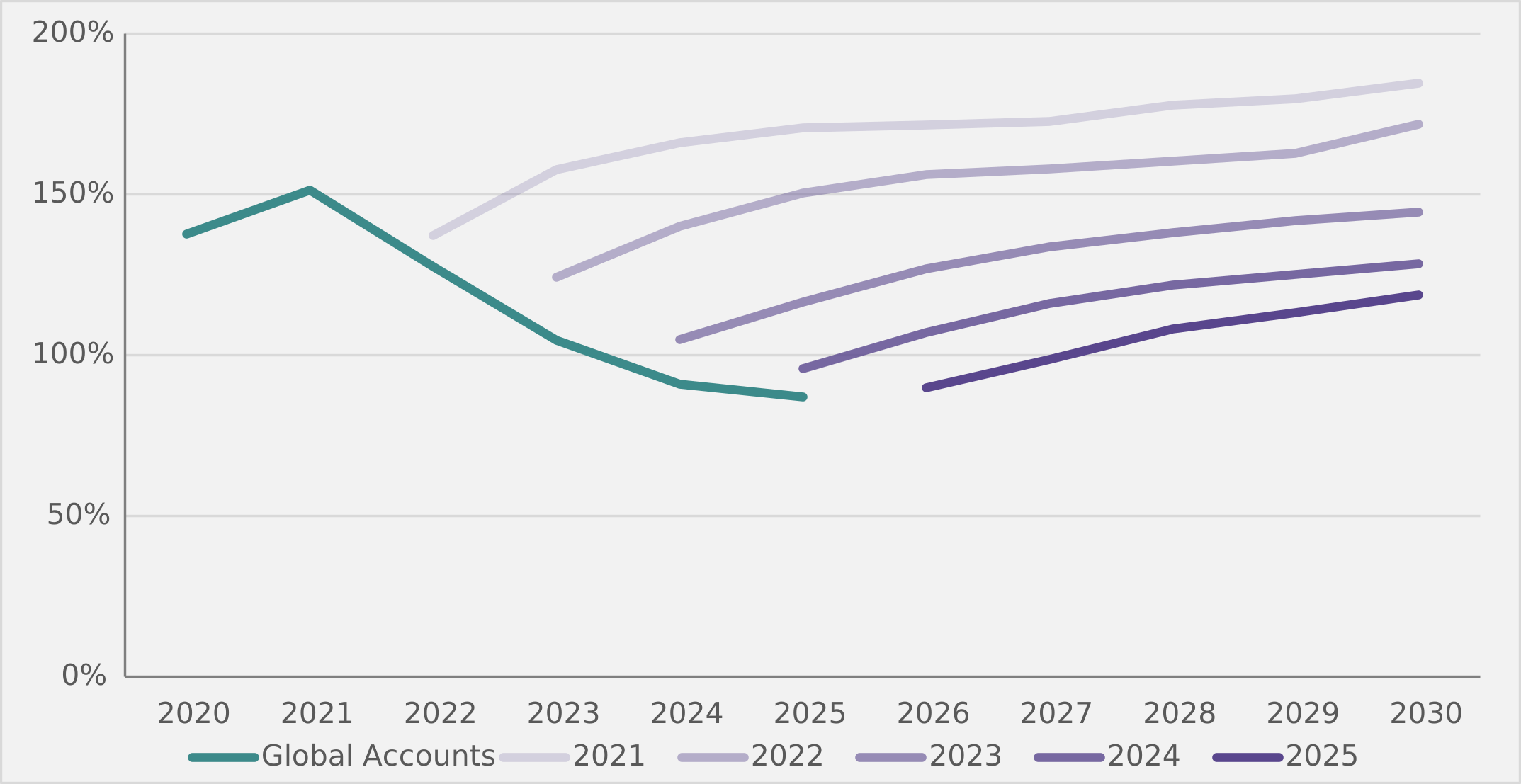
| Year | 2021 | 2022 | 2023 | 2024 | 2025 | Global Accounts |
| 2020 | 137.8% | |||||
| 2021 | 151.3% | |||||
| 2022 | 137.4% | 127.5% | ||||
| 2023 | 157.7% | 124.3% | 104.8% | |||
| 2024 | 166.2% | 140.1% | 105.0% | 91.0% | ||
| 2025 | 170.8% | 150.6% | 116.6% | 95.9% | 87.0% | |
| 2026 | 171.6% | 156.3% | 126.9% | 107.0% | 89.9% | |
| 2027 | 172.7% | 157.9% | 133.7% | 116.2% | 98.8% | |
| 2028 | 177.7% | 160.5% | 138.3% | 121.8% | 108.3% | |
| 2029 | 179.9% | 162.8% | 141.9% | 125.3% | 113.4% | |
| 2030 | 184.6% | 171.8% | 144.6% | 128.4% | 118.8% |
1.6 - There are three key elements which determine interest cover performance, all three of which have weakened in comparison to the previous set of forecasts:
EBITDA MRI Margin
This is the proportion of operating income that remains after the deduction of operating expenses and the cost of capitalised major repairs. Margins have been squeezed in recent years as costs, particularly repairs, have increased more rapidly than rental income. Margins over the first five years of plans have fallen to 19% in the latest set of forecasts, down from 20% in 2024.
Debt to Turnover
This is a measure of the total indebtedness of the sector. Whilst relatively stable, total indebtedness in plans has increased slightly from 3.8 times turnover in 2024 to 3.9 in the latest plans. The forecasts indicate that total debt drawn and repayable is forecast to increase by £19bn over the first five years of plans to reach a total of £123bn. A total £49bn of new facilities will be raised over this period which includes the refinancing of existing facilities reaching term.
Effective Interest Rate
This is the amount of interest paid expressed as a proportion of total debt. In part this is a function of providers’ assumptions about future interest rates which tend to be relatively prudent but are not unreasonable given the current degree of uncertainty in the financial markets. The latest plans have an average effective interest rate of 4.65% over the first five years, up very slightly from 4.63% in 2024. In aggregate the sector is forecasting £27.1bn in interest payments over the first five forecast years of plans. This represents a 6% increase compared to the previous plans.
1.7 - Performance varies significantly across the sector, while the sector aggregate EBITDA MRI Interest Cover is 106% over the first five forecast years, the median is 123% and the top quartile is 144%. A total of 52 providers have interest cover of less than 100% over this period, up from 46 in 2024.
1.8 - Performance against these metrics is notably weaker amongst the largest[footnote 2] providers as illustrated in Table 1 below. Collectively these largest providers are forecasting lower margins, more debt and higher interest rates than the rest of the sector resulting in interest cover of less than 100% in aggregate for the first five forecast years.
Table 1: EBITDA MRI Interest Cover FY1-5 (Source: FFRs 2023-25)
| 2023 All |
2024 All |
2025 All |
2025 Largest |
2025 other |
|
|---|---|---|---|---|---|
| EBITDA MRI Margin | 21.2% | 20.1% | 19.2% | 18.9% | 19.6% |
| Debt to Turnover | 3.8 | 3.8 | 3.9 | 4.1 | 3.7 |
| Effective Interest Rate | 4.5% | 4.6% | 4.6% | 4.7% | 4.6% |
| EBITDA MRI Interest Cover | 124.8% | 113.7% | 106.4% | 97.8% | 114.7% |
Increasing spend on repairs and maintenance.
1.9 - Total spend on repairs and maintenance over the first five years of plans continues to grow, increasing by 9% from the 2024 plans to reach £54bn. Of this, £24bn (45%) is capitalised major repairs with the remainder being revenue spend.
Chart 2: Repairs & Maintenance Spend FY1-5 (Source: FFRs 2023-25)
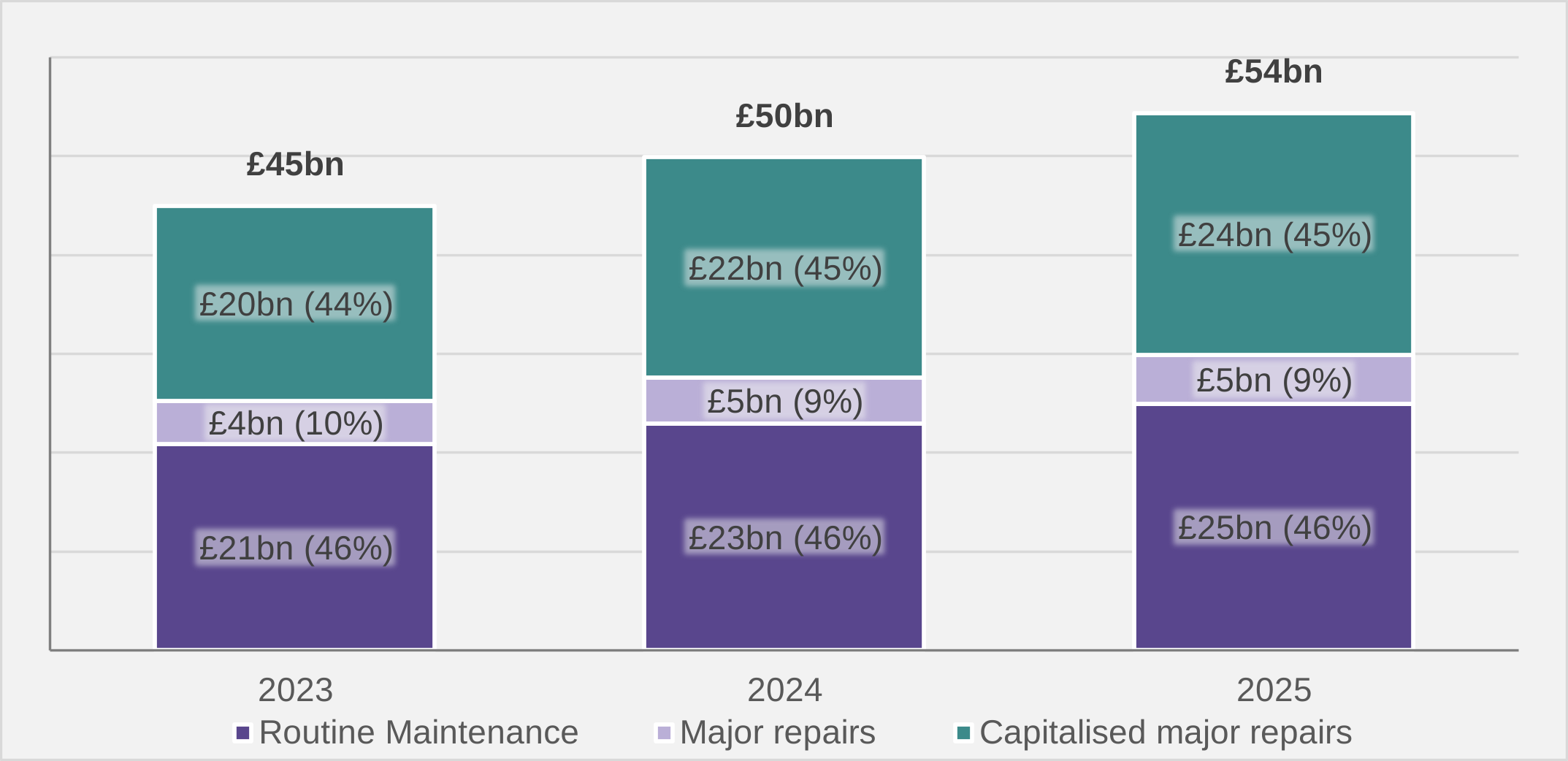
| £bn | 2023 | 2024 | 2025 |
|---|---|---|---|
| Routine Maintenance | 20.8 | 22.9 | 24.9 |
| Major repairs | 4.4 | 4.6 | 5.0 |
| Capitalised major repairs | 19.7 | 22.3 | 24.4 |
| Total | 45.0 | 49.9 | 54.4 |
1.10 - On average this represents spend of over £3,900 per unit per annum. There is significant variation around this figure with a quarter of providers spending in excess of £4,200 and a quarter spending less than £3,200 per unit per annum. This will reflect variations in the type and condition of stock between providers and the business planning assumptions that have been made.
1.11 - Maintaining the condition of the housing stock remains a key priority for providers and there are additional cost pressures associated with improving energy efficiency and decarbonisation. Most providers have included costs to bring stock up to EPC C within their current plans and many are starting to include estimates for achieving net zero.
1.12 - The largest providers collectively have markedly higher repairs and maintenance costs per unit (Table 2). Many of these providers have significant operations in London and the South East, where costs are generally higher, as well as greater exposure to additional building safety costs associated with high-rise buildings.
Table 2: Repairs and maintenance expenditure FY1-5 (Source: FFRs 2023-25)
| Forecast spend per unit per annum | 2023 All |
2024 All |
2025 All |
2025 Largest |
2025 other |
|---|---|---|---|---|---|
| Routine maintenance costs | £1,532 | £1,683 | £1,809 | £2,002 | £1,676 |
| Major repairs costs | £323 | £340 | £362 | £325 | £388 |
| Capitalised major repairs costs | £1,450 | £1,638 | £1,774 | £2,009 | £1,612 |
| Total | £3,306 | £3,660 | £3,945 | £4,335 | £3,676 |
| Of which building safety | £313 | £331 | £402 | £525 | £317 |
1.13 -Repairs and maintenance spending is accounting for an increasingly large proportion of income, amounting to 45% of all rental income received in the first five years of the latest plans, up from 43% in 2024.
Consequences of weakening financial performance.
1.14 - Providers are required to maintain a certain level of financial performance in order to remain compliant with their loan covenants. Failure to do so could result in the provider having to repay the debt or renegotiate the loan which would result in additional finance costs.
1.15 - There is a lot of variation in the specific details of loan covenants but the vast majority of providers have a covenant which requires them to maintain a specified level of interest cover. In recent years there has been a marked shift away from covenants which include capitalised repair expenditure in the interest cover calculation. This has reduced one of the key risks for providers associated with the rising costs of repairs and maintenance and is reflected in the data submitted regarding covenant headroom which remains consistent with previous forecasts despite the weakening financial position.
1.16 - In the short term low levels of interest cover are not necessarily a problem, particularly where there is a requirement for a specific time-limited programme of stock improvement. However, for a business to remain financially viable in the longer term it will be necessary for operating income to increase relative to either expenditure or finance costs in order to enable the investment required to maintain existing stock and enable the development of new homes.
Provider responses to weakening financial performance.
1.17 - The increased financial pressures outlined above mean that providers are taking actions to strengthen their business plans.
1.18 - The amount of development included in plans has fallen across successive forecasts with a reduction of 18,000 units (6%) in the first five years of plans compared to 2024. The reduction continues to be concentrated in the low cost home ownership (LCHO), market sale and non-social rented tenure types. There is a very small increase in the forecast number of sub-market rental units in plans and within this a more marked shift from ‘Affordable’ to ‘Social’ rent units.
1.19 - After the first two forecast years the vast majority of development included in plans is not contractually committed. For many providers the ability to delay or cancel development programmes is a key mitigation cited in the stress testing of their business plans.
Chart 3: Forecast Development – new units (thousands) FY1-5 (Source: FFRs 2022-24)
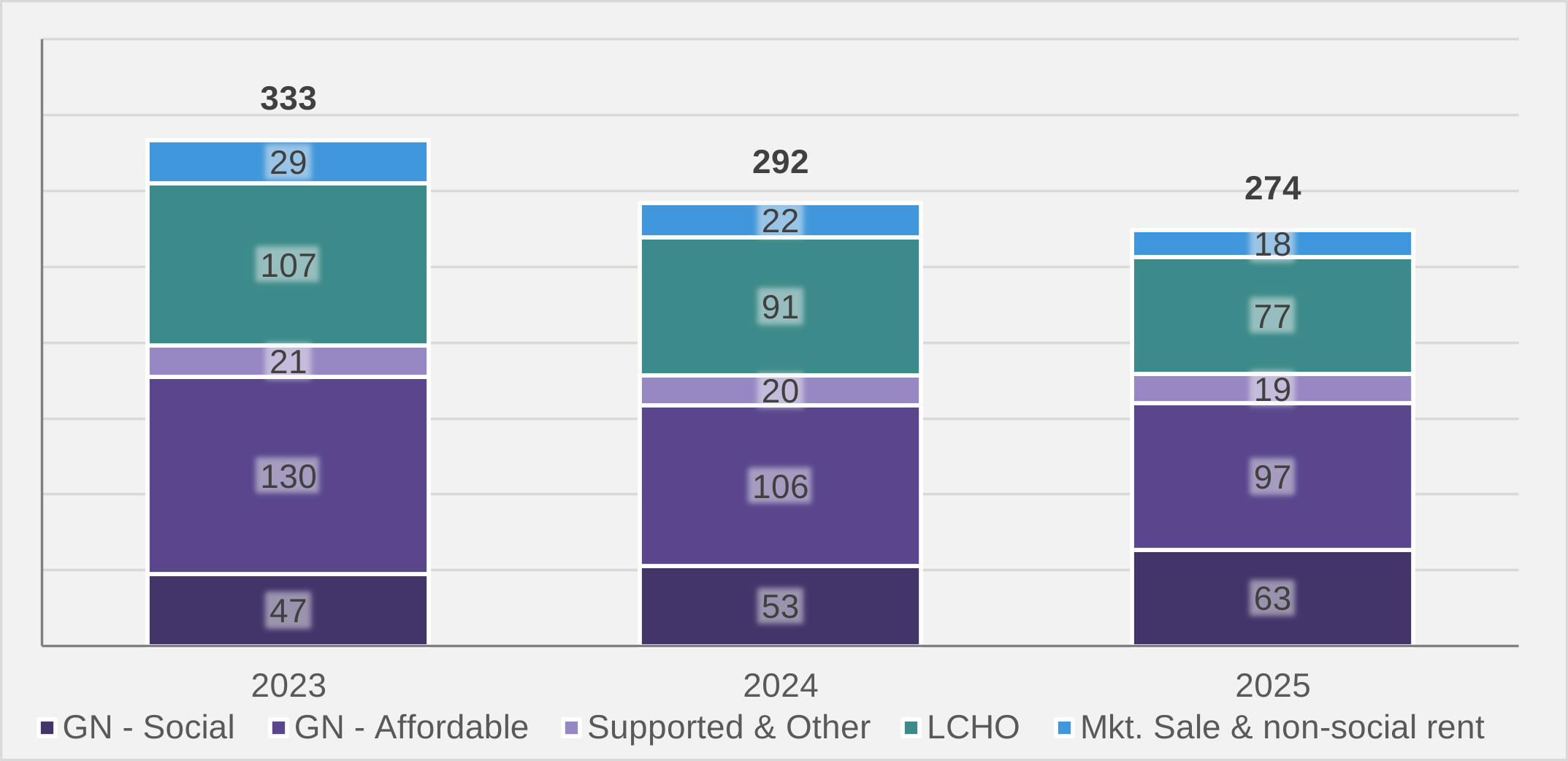
| Units, Thousands | 2023 | 2024 | 2025 |
|---|---|---|---|
| GN - Social | 47.2 | 52.8 | 63.3 |
| GN - Affordable | 130.3 | 105.7 | 96.9 |
| Supported & Other | 20.7 | 19.8 | 19.2 |
| LCHO | 106.6 | 91.1 | 77.2 |
| Mkt. Sale & non-social rent | 28.5 | 22.5 | 17.7 |
| Total | 333.4 | 291.9 | 274.2 |
1.20 - It should be noted that this set of forecasts was produced before the announcement of funding plans for the Social and Affordable Housing Programme from 2026 onwards which may have reduced assumed levels of development in plans. The announcement of a 10-year rent settlement together with rent convergence also provides increased certainty for future income flows and will increase capacity in the sector.
1.21 - Capital expenditure on development over the first five years of plans has fallen from £74bn in the 2023 plans to £64bn in the latest iteration, as shown in Table 3. Whilst providers are continuing to plan to invest more in the development of new stock than they are in maintaining their existing properties, the ratio has fallen from 8:5 in 2023 to 6:5 in 2025.
Table 3: Forecast capital expenditure FY1-5 (Source: FFRs 2023-25)
| £bn | 2023 All |
2024 All |
2025 All |
2025 Largest |
2025 other |
|---|---|---|---|---|---|
| All | All | All | Largest | Other | |
| Committed | 27.8 | 27.1 | 24.7 | 11.0 | 13.7 |
| Uncommitted | 46.4 | 43.1 | 39.6 | 16.9 | 22.7 |
| Total | 74.2 | 70.2 | 64.4 | 27.9 | 36.5 |
1.22 - In addition to the reduction in development, there is a further increase in the value of fixed asset sales included in plans with the total surplus forecast over the first five years up 10% to £7bn. As in 2024, surplus on sales to existing tenants (through staircasing, Right-to-Buy or Right-to-Acquire) remains reasonably constant with the increase coming from other sales of social housing units. These could reflect a variety of approaches including disposal of units deemed uneconomic as they fall vacant or rationalisation of stock holdings of particular tenure types or in specific locations.
Chart 4: Surplus on Fixed Asset Sales by Type FY1-5 (Source: FFRs 2022-24)
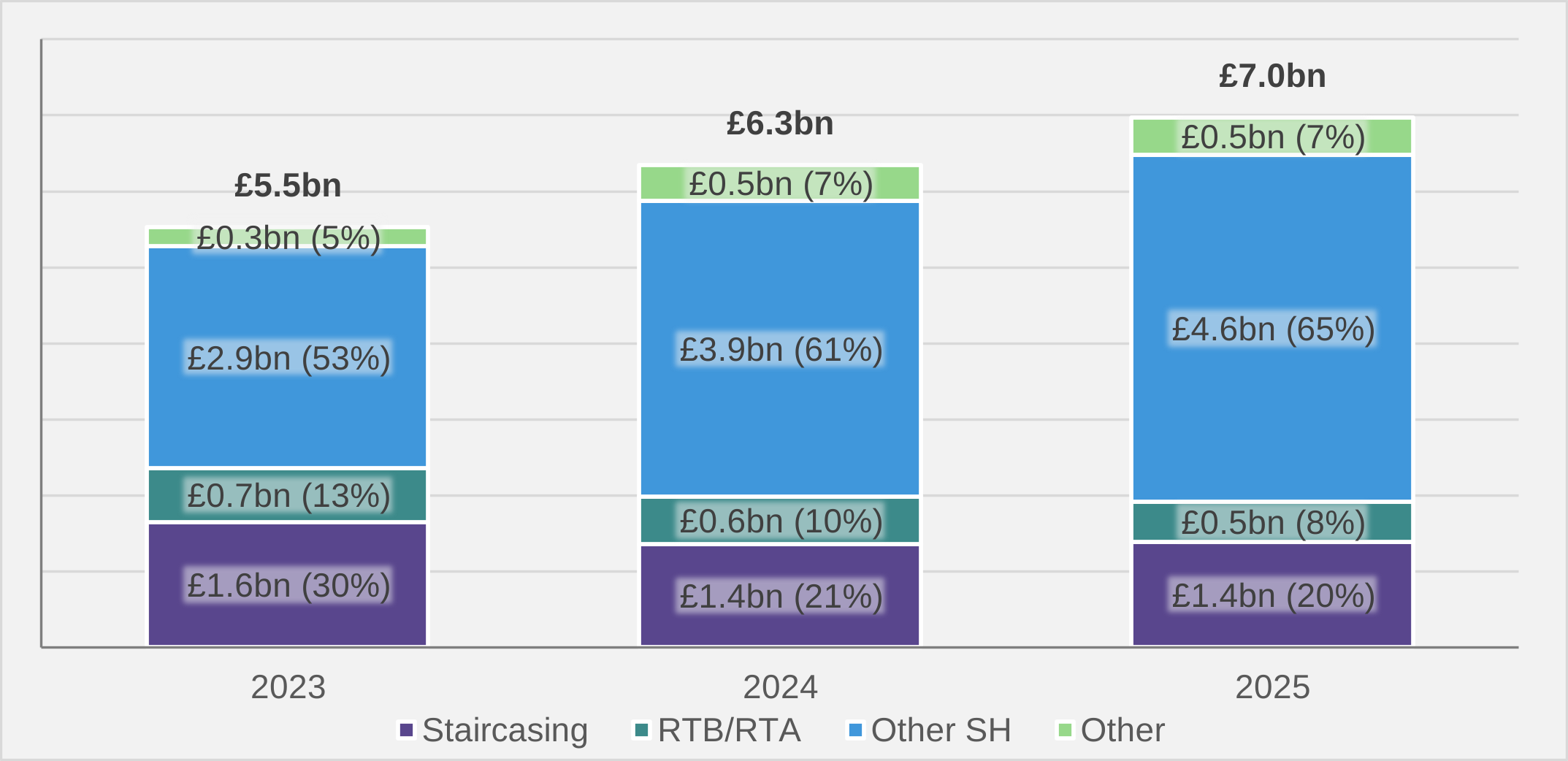
| £bn | 2023 | 2024 | 2025 |
|---|---|---|---|
| Staircasing | 1.6 | 1.4 | 1.4 |
| RTB/RTA | 0.7 | 0.6 | 0.5 |
| Other SH | 2.9 | 3.9 | 4.6 |
| Other | 0.3 | 0.5 | 0.5 |
| Total | 5.5 | 6.3 | 7.0 |
1.23 - Fixed asset disposals are heavily concentrated in a relatively small number of providers. The forecast £7bn surplus is generated from a total of £18bn in cash receipts. Nine large providers account for £11.4bn (63%) of this income, mainly active in the London area.
1.24 - Where a provider is reliant on the surplus generated by fixed asset sales to bolster their business plan or maintain covenant compliance, it is important that they have a strategic rationale for disposals and understand the implications for their total social housing stock. Mitigations may be required should it not prove possible to generate the forecast surplus on sales in the required time frame.
Policy developments
1.25 - The business plans on which these forecasts are based will have been prepared in the first quarter of 2025 and have used the economic and policy information that was available at that time to project future performance. Subsequent developments to either the policy context or the economic environment can have a significant impact and will be built into the next round of business plans.
1.26 - Since these plans were developed, the government has confirmed that social rents will be allowed to increase by CPI+1% for a period of ten years. Whilst most business plans had this as an assumption for the early years of plans, it is estimated that replacing provider assumptions with CPI+1% for the full 10 years could generate cumulative additional rental income in the region of £4.7bn. This would be concentrated in the latter part of this period.
1.27 - In addition, the government is consulting on additional flexibility to achieve convergence between actual and formula rents. This would allow higher rent increases for some properties and provide additional income which is not currently factored into business plans.
1.28 - Other factors in the policy environment which will impact business plans relate to the developing decent homes and minimum energy efficiency standards. Whilst business plans have largely factored in the costs of achieving current standards there remains uncertainty about the cost of meeting future regulatory requirements and the extent to which these may have a negative impact on operating expenditure.
2. Conclusions
2.1 - The latest set of forecasts consolidates the picture presented in recent years with the combination of increased cost pressures and higher borrowing costs reducing financial headroom across the sector. The rising costs of maintaining and improving an ageing housing stock are a major contributory factor in this.
2.2 - Business plans are being revised to address the impact of these factors and, in aggregate, contain less development and more asset sales as a result.
2.3 -There have been some key policy developments since these plans were produced which may impact on the next set of forecasts. Key among these are the future rent policy and the affordable housing programme which are both positive for the sector. Meanwhile the development of new requirements for the decent homes and energy efficiency standards have the potential to generate further costs which will need to be managed.
2.4 - Whilst a minority of providers are under financial pressure and capacity is more constrained than in the past , there is significant variation within the forecasts and the majority of providers remain financially robust. Some providers have particular challenges due to the type of stock they own and their specific operating circumstances. It is essential that boards actively manage providers’ financial risk exposures. The Regulator will continue to monitor financial forecasts and quarterly cashflows, engaging with providers in ways proportionate to their financial risk.
-
Earnings before interest taxation depreciation and amortisation, including all major repairs expenditure. ↩
-
Comparisons in this report referencing the largest providers refer to the 19 providers who reported more than 40,000 social housing units in their 2025 financial statements. Collectively these account for 42% of the sector social housing stock and 47% of turnover. ↩