UK, Ukraine and Latvia extend crackdown on Russian grain theft
The UK, Ukraine and Latvia agreed to extend the Grain Verification Scheme, widening the net against those profiting from stolen Ukrainian grain
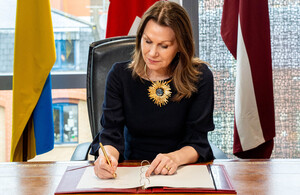
The UK, Ukraine and Latvia have signed a Memorandum of Understanding (MoU) to extend the Grain Verification Scheme, building on the UK’s landmark 100-year partnership with Ukraine and strengthening international cooperation to support Ukraine in responding to Russia’s illegal invasion.
The scheme uses cutting-edge science to identify the geographic origin of grain, helping to track produce stolen from Russian-occupied areas of Ukraine. Latvia’s participation expands the international network of countries able to use the scheme, strengthening Baltic cooperation and supporting Ukraine’s efforts to address the theft of agricultural produce from occupied territories.
The extension comes as Ukraine seeks support from European partners on the Baltic Sea to prevent grain of Russian origin from transiting through Baltic ports, amid ongoing disruption to legitimate grain exports through the Black Sea.
Trade Minister Baroness Hayman this week signed the MoU with counterparts from Ukraine and Latvia, extending access to the scheme beyond Lithuania and Ukraine, which have used the Grain Verification Scheme since a first MoU was signed in January 2025.
Defra Minister Baroness Hayman said:
The UK continues to stand shoulder to shoulder with Ukraine against Russia’s illegal invasion.
By extending the Grain Verification Scheme to Latvia, we are widening the net against those profiting from stolen Ukrainian grain and helping to protect the integrity of global food markets.
The Grain Verification Scheme was developed by the UK, on behalf of the G7, after Ukraine’s Minister of Agrarian Policy and Food asked for support in tracing grain stolen from territories under Russian control and sold on the international market.
The scheme combines physical grain samples with machine learning, using established scientific techniques, including stable isotope ratio analysis and trace element analysis, to build a chemical “fingerprint” for grain samples.
This is compared against a reference database of nearly 3,400 geolocated points across Ukraine and neighbouring countries, allowing an assessment of the likely origin of a grain sample.
Since the Grain Verification Scheme was handed over to Ukraine and Lithuania in March 2025, Lithuania has established a legal framework for sampling and testing relevant grain consignments, and its authorities are now gathering and analysing samples.
The UK will continue to work with Ukraine and Latvia on its future development and use.