UK forces intercept Russian shadow fleet vessel for the first time in blow to Putin's war chest
British forces this morning boarded a sanctioned shadow fleet oil tanker in the Channel in the latest blow to Russia’s war economy.
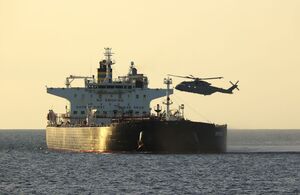
UK Armed Forces intercept a Russian shadow fleet vessel
- British Armed Forces interdict Russian shadow fleet vessel in the early hours of this morning
- Royal Marine Commandos and National Crime Agency board the ship in the channel, which will disrupt Putin’s war chest
- Vessel will now be held and monitored off the South Coast as investigations continue
In the first UK-led operation of its kind, the vessel SMYRTOS was boarded by Royal Marine Commandos and specially trained law enforcement officers from the National Crime Agency, despite Russia’s best efforts to evade sanctions and continue fuelling its barbaric war with Ukraine.
The military operation, which lasted 6 hours, was supported with aircraft from the Maritime Air Group (Chinooks, Merlin Mk4 and Wildcat), an RAF P-8 aircraft, as well as HMS SUTHERLAND and HMS LEDBURY.
The Prime Minister agreed in March that British Armed Forces and law enforcement officers were able to board shadow fleet vessels, in accordance with international law.
The SMYRTOS will be provisionally moved to an anchorage off the South Coast of England and will be monitored for any environmental or safety concerns.
The enforcement action against this vessel took place in international waters and was carried out in accordance with domestic and international law.
Prime Minister Keir Starmer said:
This operation delivers yet another blow to Russia and reminds those fueling Putin’s war in Ukraine that they cannot hide.
I want to pay tribute to all those involved, including our Armed Forces and law enforcement officers who keep this country safe 24 hours a day, 365 days a year.
Defence Secretary Dan Jarvis said:
Operations like this require skill, professionalism and courage. I pay tribute to our Armed Forces personnel and all those involved.
Russia relies on its shadow fleet to fund their conflict in Ukraine and our interdiction delivers a blow to Putin’s illegal war.
The operation builds on recent support provided by the UK to its allies to interdict shadow fleet vessels, which included RAF and Royal Navy capabilities supporting US and French operations. Today’s operation was conducted in close coordination with the French.
By disrupting the shadow fleet, we and our international partners are directly bearing down on the resources sustaining Russia’s aggression in Ukraine and reducing its capacity to threaten security across Europe and beyond.
Responsible for carrying 75% of Russia’s sanctioned oil, the shadow fleet of over 700 vessels provides a critical lifeline for the Kremlin, generating a war fund that supplies missiles and drones targeting innocent Ukrainian civilians and sustaining Russia’s illegal war.
The UK is a leader in tackling the shadow fleet, having already sanctioned over 500 vessels. And these sanctions are working, Russia’s oil and gas revenues fell by 24% year-on-year in 2025.
Today’s action sends a clear message to Russia that the UK will use the full range of legal tools available to enforce those sanctions and protect our security.
Background
- The UK has sanctioned almost 600 Russian shadow fleet vessels to date.
- Russia’s oil revenues are down 27% compared to October 2024, the lowest since the start of the war.
- In the first quarter of 2025, ships sanctioned by the UK carried $1.6 billion less in Russian oil than a year ago.
- Over 72% of shadow tankers are more than 15 years old. There have been over 50 incidents involving Russia’s shadow fleet.
- UNCLOS Article 110 permits a warship to exercise a right of visit to verify the flag where there are reasonable grounds to suspect the vessel is without nationality. Where a vessel is determined stateless, the UK can exercise powers available under its domestic legislation. Potential domestic powers include the ship-sanctions provisions in the Russia (Sanctions) (EU Exit) Regulations 2019, criminal and maritime enforcement powers under the Policing and Crime Act 2017