Sussex coastal defence scheme powers ahead with electric trial
The successful trial showed electric diggers and trucks can handle tough coastal defence work.
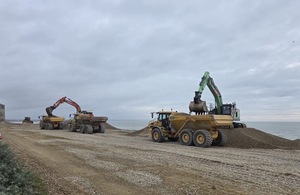
Throughout the week, the project team gathered data on productivity, reliability, battery performance, energy consumption, charging requirements and operator experience
The Environment Agency has put electric construction vehicles through their paces on a Sussex beach, proving that green technology can stand up to the demands of vital coastal defence work while cutting air and noise pollution.
From 12 to 16 October, an electric fleet successfully shifted shingle from White Point in Eastbourne to North-east Beach in Sovereign Harbour. The fleet, which included a 22-tonne excavator, tipper trucks, hybrid bulldozers and 4x4s, carried out the work as part of annual efforts to protect the coast from flooding and erosion.
The “Electric October” trial showed that battery-powered machinery can cope with the tough demands of a working beach, while cutting emissions and fuel bills.
Throughout the week, the project team gathered data on productivity, reliability, battery performance, energy consumption, charging requirements and operator experience, all of which pointed to the same conclusion: electric machinery can do the job, with the added benefit of significantly reducing air and noise pollution.
The results will now help shape future decisions on rolling out lower-emission equipment in beach management, coastal construction, and flood and coastal erosion risk management projects across the country.
Amber Carr, Pevensey Bay to Eastbourne Beach Manager, said:
Electric October has shown us that this technology is not just a nice idea, it can work in a real operational environment.
Watching a fully electric excavator and fleet of vehicles keep pace with our teams on the beach has been genuinely exciting, and it’s given us real confidence about how we can run these essential operations more sustainably in future.
Nick Gray, Area Flood and Coastal Risk Manager, added:
Keeping shingle moving along this stretch of coast is essential to protecting homes, businesses and infrastructure from flooding and erosion.
This trial has shown that low-carbon technology can do that job just as effectively as traditional machinery, giving us a clear and practical route towards cleaner coastal defence in the future.
The trial forms part of wider efforts by the Environment Agency to find innovative solutions to environmental challenges while keeping communities safe from flooding and erosion.
Background
-
Electric October was a joint innovation project between the Environment Agency and industry partners, testing low-carbon machinery on live coastal defence works.
-
The Pevensey to Eastbourne Coastal Management Scheme covers 15km of coastline in southeast England and will cost around £140 million over the next 10 years.
-
The Environment Agency currently manages the 9km Pevensey stretch. From June 2027, it will also take over management of the Eastbourne Frontage from Eastbourne Borough Council.
-
Further beach modification and coastal flood protection works are planned between 2027 and 2037.