New 'spy' drones to give Army greater powers on the battlefield
British soldiers will receive new Intelligence, Surveillance and Reconnaissance (ISR) drones, giving them better sight of the battlefield and greater protection against emerging threats in conflict.
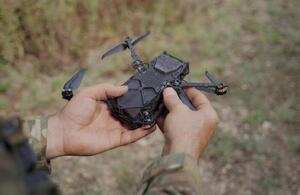
FOXE-NATO UAS by Evolve Dynamics
-
British soldiers will be better protected and gain greater intelligence on the battlefield with new ‘spy’ drones.
-
Up to £400 million investment in long-endurance surveillance drones and more than one thousand smaller drones unveiled as part of separate £16 million deal.
-
Part of government’s commitment to the Army’s next generation of uncrewed aerial systems highlighted in the Defence Investment Plan.
They range from small, easy-to-use drones that give soldiers real-time awareness on the frontline, to larger aircraft that give commanders detailed intelligence over longer distances and periods of time.
A new contact, worth up to £400 million, has today been awarded to Tekever to bring their AR5 drone into service. The AR5 is a long-endurance surveillance drone that can carry up to 50kg of cameras and sensors, replacing the ageing Watchkeeper system which has been used since 2014.
Meanwhile, more than 1,025 small drones are being delivered as part of a £16 million deal with three UK-based small and medium-sized companies with deliveries nearing completion.
Minister for Defence Readiness and Industry Luke Pollard MP unveiled the news at this year’s Defence Vehicle Dynamics event – the UK’s biennial land warfare exhibition.
Minister for Defence Readiness and Industry, Luke Pollard MP said:
Our soldiers deserve the best technology, and that’s what we’re delivering. From small drones giving troops eyes on the enemy, to the AR5 offering commanders better intelligence over the battlefield, we’re transforming the Army’s ability to see, understand and act first.
This is defence procurement that backs British industry, creates skilled jobs and keeps our Armed Forces ahead of our adversaries.
Both programmes are creating jobs in the UK. The Tekever contract will help support more than 1,000 highly skilled jobs by 2030 across the company’s UK sites in locations including Bristol, Swindon, Lydd, London, Southampton, Edinburgh, and at West Wales Airport. The small drone deal has created more than 30 new roles so far, with 18 already filled in Hampshire, Surrey, Exeter, including several veterans.
This builds on the government’s commitment to backing business and British industry, creating new jobs and delivering growth in every postcode.
The small drones being delivered include:
-
245 FOXE-NATO drones from Evolve Dynamics, based in Hampshire. These weigh less than 250g and include infrared cameras for use at night.
-
670 Skydio X10 INTL drones from Marlborough Communications Limited in Surrey. These can be ready to fly in under a minute and reach speeds of up to 45mph.
-
110 SONORA drones from a partnership between Brigantes Consulting (based in Exeter) and Harmattan AI. These are designed to help train soldiers before they use similar drones in real operations.
The Tekever AR5 deal starts with an initial order of six drones, rising to up to 24 by 2029. The drones will be built at a new Tekever factory in Swindon and have already been used by Ukraine against Russia.
Tekever UK’s Managing Director Karl Brew said:
We are proud to be delivering the AR5 to the British Army at this critical moment for national security. This investment allows us to grow our UK operations, create hundreds of skilled jobs and bring cutting-edge surveillance technology, proven on the battlefield in Ukraine, into service with British forces.
The small drone deal was delivered by the UK National Armaments Director Group. It forms part of Project Rapstone, the Army’s programme to bring new technology to soldiers faster, with a goal of doubling the Army’s fighting power by 2027 and getting new equipment from industry to the front line within 24 months.
The Defence Investment Plan commits new investment in the Army’s long-range surveillance and reconnaissance capabilities, including the next generation of uncrewed aerial systems to replace legacy Watchkeeper drones.