How we protected the UK and space in September 2026
This report was issued in October 2026 and covers the time period 1 September 2026 to 30 September 2026 inclusive.

The National Space Operations Centre is led by the UK Space Agency and UK Space Command in partnership with the Met Office.
September saw a slightly elevated risk levels to UK interests, with more uncontrolled re-entry and collision hazards but lower space weather activity when compared with August.
All NSpOC warning and protection services were functioning throughout the period.
Re-entry analysis
There was a 7% increase in the number of objects re-entering Earth’s atmosphere monitored by NSpOC in September, when compared with the previous month.
Of the 58 objects that re-entered, 51 were satellites, five were rocket bodies and two were likely pieces of debris.
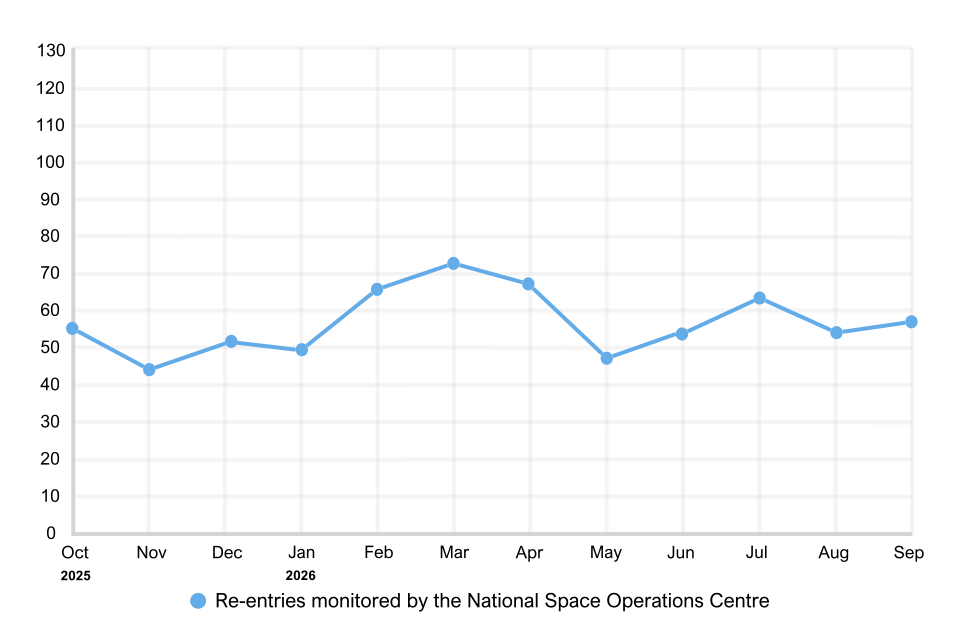
October: 54, November: 43, December: 52, January: 50, February: 66, March: 72, April: 68, May: 48, June: 53, July: 62, August: 54, September: 58
Collision avoidance analysis
Collision risks to UK-licensed satellites were 16% higher in September than in August but sat well below the 12-month rolling average.
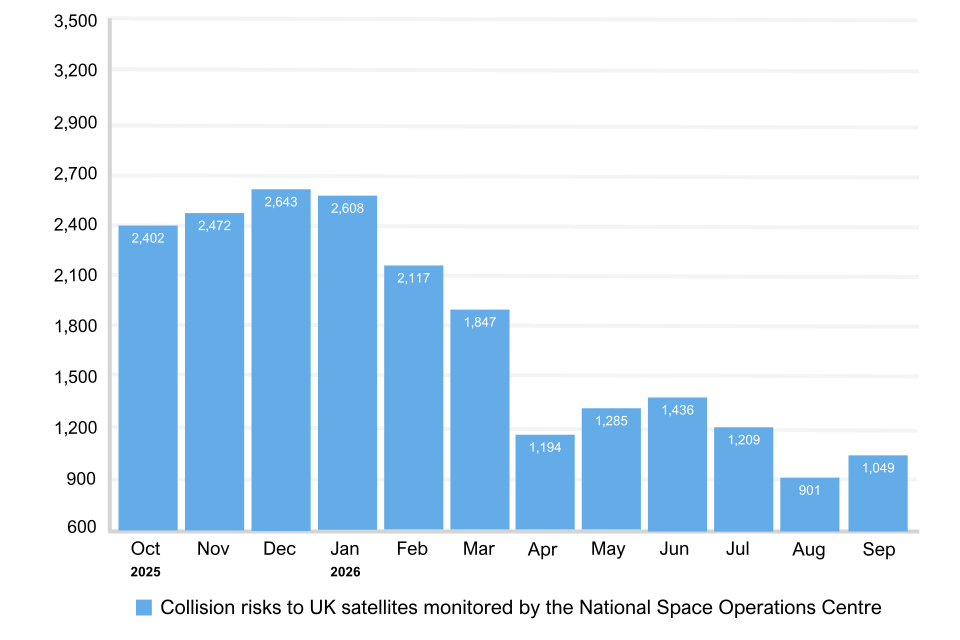
October: 2,402, November: 2,472, December: 2,643, January: 2,608, February: 2,117, March: 1,847, April: 1,194, May: 1,285, June: 1,436, July: 1,209, August: 901, September: 1,049
Registered Space Objects (RSOs) analysis
The in-orbit population increased in September, with a net addition of 163 objects to the US Satellite Catalogue.
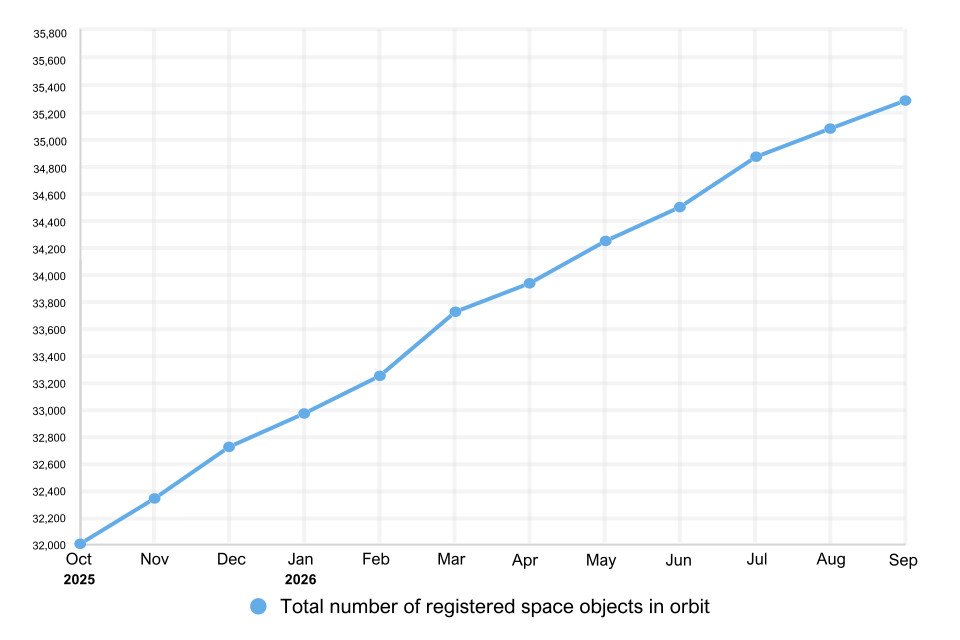
October: 31,981, November: 32,366, December: 32,756, January: 32,981, February: 33,221, March: 33,673 , April: 33,952, May: 34,218, June: 34,509, July: 34,832, August: 35,075, September, 31,238
The number of Resident Space Objects (RSOs) reported may be subject to small adjustments over time as the way objects are tracked is refined. Figures in this report reflect the most current available data and may differ slightly from those published in previous months.
Fragmentation analysis
One fragmentation incident took place in September involving a satellite in Low Earth Orbit. Assessments are ongoing to understand how many pieces of debris were released into orbit.
Space weather analysis
Space weather activity was lower in September when compared with the previous month, consisting of some very limited solar radiation and geomagnetic storms.
Comments
The National Space Operations Centre combines and coordinates UK civil and military space domain awareness capabilities to enable operations, promote prosperity and protect UK interests in space and on Earth from space-related threats, risks and hazards.