Additive manufacturing: transforming submarine maintenance and support
The Submarine Delivery Group is using advanced and additive manufacturing to improve submarine availability.
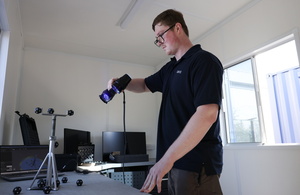
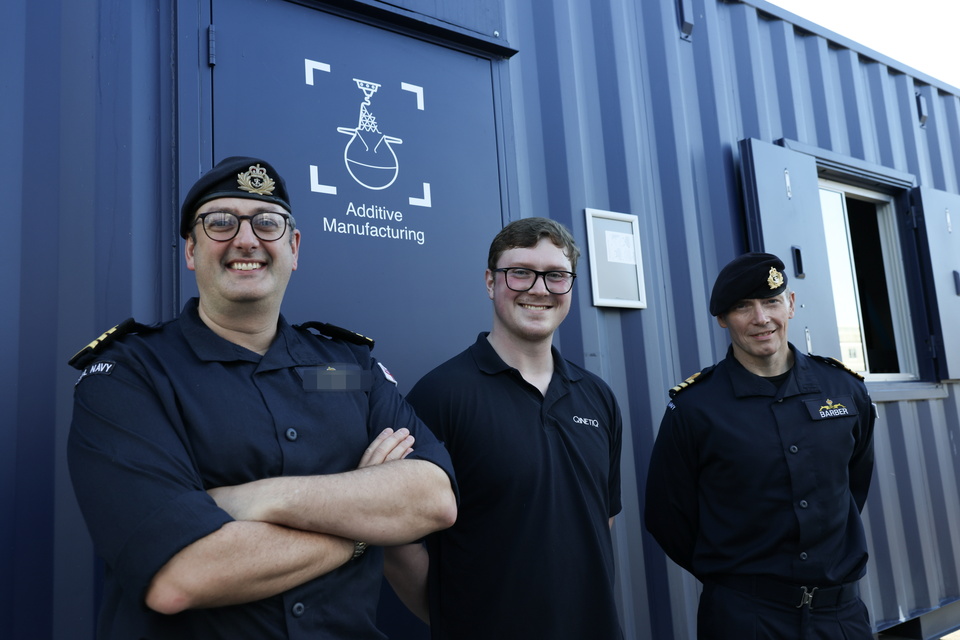
The Submarine Delivery Group (SDG), which is part of the Defence Nuclear Enterprise, is using advanced and additive manufacturing to improve submarine availability. The work of the SDG Additive Manufacturing (AdM) team, alongside industry and the Royal Navy, is reducing reliance on traditional supply chains, and building an enduring AdM industrial capability across the UK’s submarine programmes.
What are advanced manufacturing and additive manufacturing?
Advanced manufacturing uses innovative techniques and technologies, including automation, artificial intelligence and additive manufacturing, to improve productivity, precision and sustainability in production.
Additive manufacturing — commonly known as ‘3D printing’ — builds components layer by layer from a digital file. Unlike traditional manufacturing, which cuts or shapes material, additive processes can produce complex parts quickly, with less waste.
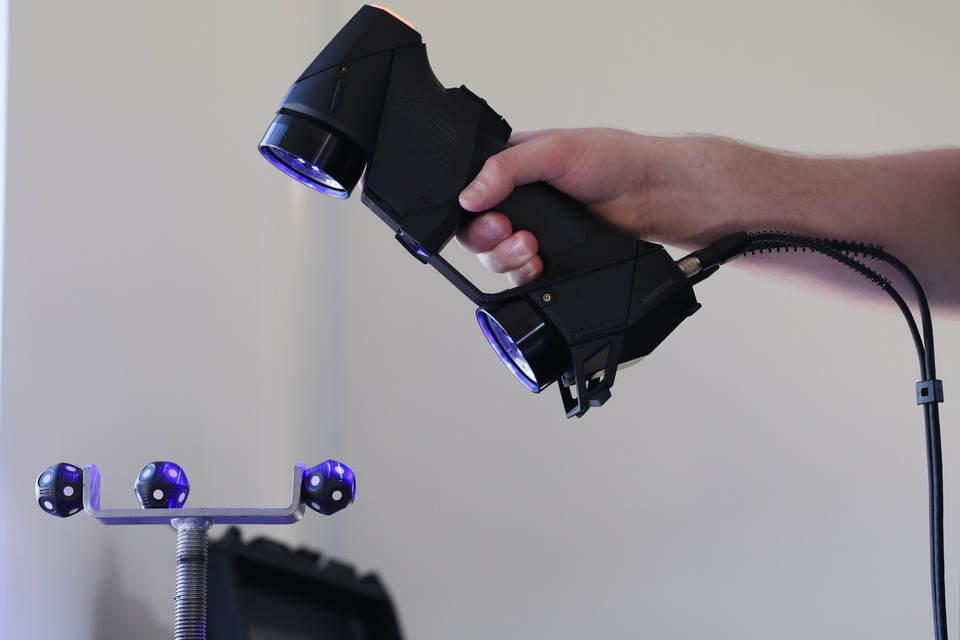
In the submarine context, subject to appropriate legal, safety and quality considerations, this includes using handheld scanners to create precise digital replicas of existing components and printing those components using stainless steel, as well as other techniques and materials.
Why it matters for submarines
Sourcing replacement components for submarines can involve lengthy supply chains and extended lead times. This can increase the time required alongside for a vessel waiting for parts that are obsolete, or no longer commercially available within operational timescales.
The AdM team was established as part of the SDG’s Platform Equipment Delivery Team (PEDT) in February 2024 to address this challenge directly. Championed by Sir Chris Gardner KBE, Director General SDG, the team’s role is to harness advanced and additive manufacturing to improve submarine availability, capability, and delivery across all programmes — predominantly in in-service submarines but also including the submarine build programmes.
The Market Access Cell
A central part of the team’s work is the Market Access Cell, which manages demand signals from ship’s staff and joint planning teams when components are unavailable, or lead times are too long. When a demand signal is received, the team works with QinetiQ, the SDG Design Authority, and other in-service teams to identify the best manufacturing solution and get the component to the submarine as quickly as possible.
One method of creating the digital design files for components uses handheld scanners, operated by QinetiQ engineers, to capture precise measurements of components on board. They are converted into digital files that can be used to manufacture bespoke replacements. This is particularly valuable for one-off or legacy parts where no existing design file exists.
Deployable workshops at HMNB Clyde
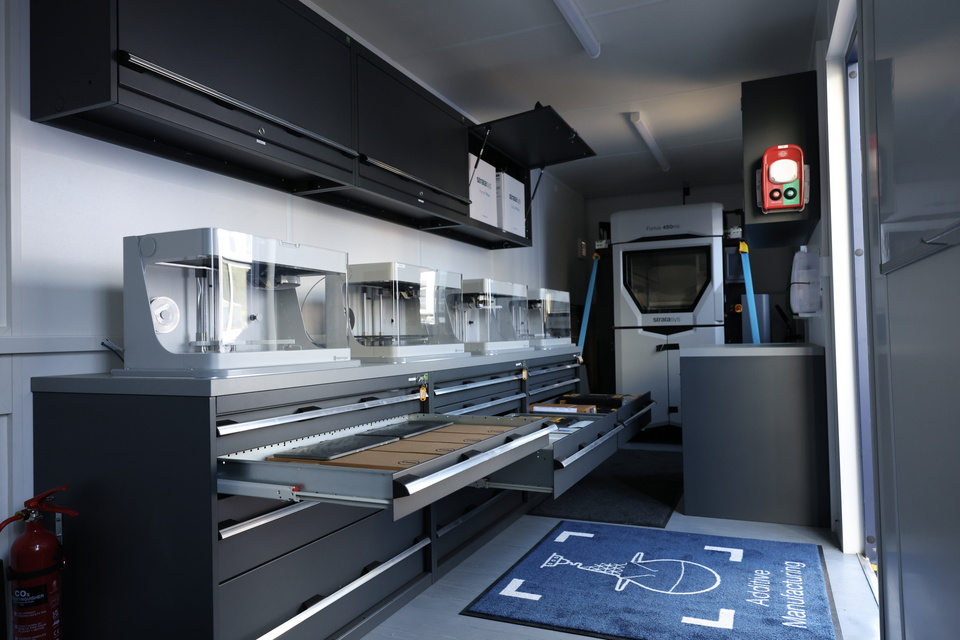
Shipping containers have now arrived at HM Naval Base Clyde, providing an on-site additive manufacturing capability that includes metal printing, scanning equipment, and dedicated engineering workspace. Two of the containers are custom-designed by QinetiQ, based on the requirements of the PEDT.
QinetiQ staff will operate the facility alongside ship’s staff and the Submarine Flotilla (SUBFLOT) Engineering Support Group for the first twelve months. Ship’s staff are also receiving training to use the capability directly.
Max, a Commander in the Royal Navy and SDG Additive Manufacturing Lead said:
“This capability enhances our capacity to return submarines to service faster, directly supporting operational readiness.
“These deployable additive manufacturing workshops represent a significant advancement in how the Royal Navy supports submarine maintenance. By enabling engineers to produce components on-site, we are reducing dependence on complex supply chains and accelerating repair timelines, ultimately improving the submarine’s material state and availability.”
Supporting the Submarine Maintenance Recovery Plan
The deployable workshops and the broader additive manufacturing programme will support the Submarine Maintenance Recovery Plan (SMRP), which was launched by the First Sea Lord in January 2026. By bringing manufacturing capability to the front line, the programme supports a more agile and responsive maintenance model.
First Sea Lord, General Sir Gwyn Jenkins, said:
“The arrival of these deployable workshops marks a step forward in delivering the Submarine Maintenance Recovery Plan. This new technology has the potential to change how we maintain our submarines – cutting time alongside and increasing availability. It represents the real, tangible, progress the Royal Navy is making to strengthen the underwater fleet.”
AUKUS and international collaboration
Additive manufacturing is also a key enabler of the AUKUS submarine partnership. The SDG is working with US and Australian submarine industrial bases to develop common material standards and requirements, enabling allied nations to share advanced manufacturing equipment and recognise each other’s qualified components.
This was demonstrated successfully at the UK Submarine Maintenance Period at HMAS Stirling in Australia in early 2026, where QinetiQ UK and QinetiQ Australia, working with Australian supply chain partners, produced additively manufactured parts that were approved for use on HMS Anson.
A trilateral advanced manufacturing landscape review is under way to map existing capabilities across the UK, US, and Australia to identify gaps, and determine how they can be exploited across all three nations’ submarine programmes. The review will inform the development of shared Defence Standards covering material requirements, which will eventually enable the qualification of higher-risk components such as valves.
Looking ahead
The long-term ambition is for additive and advanced manufacturing to become business as usual across the submarine build, in-service, and disposal programmes. Future developments include:
- qualifying higher-risk components, such as hull valves, through trilateral Defence Standards
- optimising component designs digitally — not simply reproducing legacy parts, but improving performance, fatigue life, and other characteristics such as reducing weight
- recycling additive materials recovered from decommissioned submarines
- embedding additive manufacturing skills into training at the newly opened Royal Navy Submarine Training Centre at HMNB Clyde
Max said: “Additive manufacturing is not a silver bullet, and it does not replace traditional supply chain methods. But it is absolutely about supplementing and augmenting current manufacturing to support submarine maintenance. It’s just another option that Chief Engineers and Duty Holders have when considering solutions — and one that will only become more capable over time.”