Consultation on mandatory ethnicity and disability pay gap reporting: summary of responses
Updated 25 March 2026

© Crown copyright 2026
This publication is licensed under the terms of the Open Government Licence v3.0 except where otherwise stated. To view this licence, visit nationalarchives.gov.uk/doc/open-government-licence/version/3 or write to the Information Policy Team, The National Archives, Kew, London TW9 4DU, or email: psi@nationalarchives.gov.uk.
Where we have identified any third party copyright information you will need to obtain permission from the copyright holders concerned.
This publication is available at https://www.gov.uk/government/consultations/equality-race-and-disability-bill-mandatory-ethnicity-and-disability-pay-gap-reporting/public-feedback/consultation-on-mandatory-ethnicity-and-disability-pay-gap-reporting-summary-of-responses
Executive summary
Large employers – those with 250 or more employees – in Great Britain (England, Scotland and Wales) have been required to report their gender pay gap data since 2017. This has led to greater transparency for employers and employees. It also gives employers important data to inform their actions to address inequalities.
In July 2024, the government announced in the King’s Speech that the Equality (Race and Disability) Bill would include its policy promises to:
- introduce mandatory ethnicity and disability pay gap reporting for large employers
- extend the right to make equal pay claims to ethnic minority and disabled people
To help with the next steps in making this legislation, the Office for Equality and Opportunity (OEO) put out a public consultation in 2025. The consultation was open between 18 March 2025 and 10 June 2025.
The consultation asked people for feedback on whether they agreed or disagreed with the proposed measures to include in the upcoming Equality (Race and Disability) Bill.
The consultation was an online survey accessible and open to all views, particularly those who will be affected by the proposals, including:
- employers
- public sector bodies
- trades unions
- race and disability stakeholders
- people from ethnic minority groups
- disabled people
- disabled people’s organisations
The consultation consisted of closed survey questions and open-response questions. It was available in Easy Read, BSL, Welsh translation, Large Print, accessible PDF and HTML, and hard copy. Responses could also be submitted by email in a non-standard format that did not follow the consultation survey questions.
Structure of this report
This report takes each topic of the consultation in turn, providing:
- a brief explanation of the government’s proposal
- the survey data in graph form
- a summary of all responses relating to the topic
Consultation responses
Extending mandatory pay gap reporting to ethnicity and disability
87% of respondents agreed that large employers should have to report their pay gaps for both ethnicity and disability.
When providing comments, many respondents expressed their support for mandatory reporting and the need for transparency and guidance in the reporting process. But some noted the potential burden additional reporting could have, and issues around the willingness of employees to share their information.
Geographical scope
88% of respondents agreed that both ethnicity and disability pay gap reporting should have the same geographical scope as gender pay gap reporting.
When providing comments, many respondents said it would make reporting consistent, simple, and comparable. Some expressed the need to take regional differences into account, noting the importance of local context in understanding the data.
Other themes included:
- extending mandatory ethnicity and disability pay gap reporting to smaller organisations
- setting out requirements clearly for those who are not office-based
- the need for public bodies to work together to ensure a consistent approach across England, Scotland and Wales
Pay gap calculations
Pay gap measures:
84% of respondents agreed that employers should report their ethnicity and disability pay gaps using the same 6 measures as gender pay gap reporting.
When providing comments, many respondents expressed their general agreement that reporting should be aligned with gender pay gap reporting as it would make comparing data easy and consistent. Some suggested other measures, including:
- the recruitment process
- work patterns
- contract types
- turnover
- reasonable adjustments (requests and implemented changes)
A few also thought improvements could be made to the current pay gap calculation.
Workforce reporting:
83% of respondents agreed that large employers should have to report on the breakdown of their workforce by both ethnicity and disability status.
86% agreed that large employers should have to submit data on the percentage of employees who do not state their ethnicity or disability status.
When providing comments, there was broad support among respondents for reporting on the breakdown of the workforce to give context to pay gap data and identify potential barriers. But some respondents questioned the reliability of the breakdowns due to low disclosure rates.
The most common comment about submitting data on the proportion of employees who do not share their ethnicity or disability status was about the impact of employee trust. These respondents said trust might affect employees’ willingness to share their information. Some thought publishing this information was a way to make sure organisations justify how reliable their data is.
When providing comments on the proposals for calculating pay gaps, some respondents said clear guidance would be required to make sure there was a consistent approach to data collection and reporting. Some also said intersectional analysis should be considered to get the most out of the data and highlight the ways in which gender, ethnicity, and disability interact.
Action plans
81% of respondents agreed that employers should have to produce an action plan about what they are doing to improve workplace equality for ethnic minority employees.
85% agreed that employers should have to produce an action plan about what they are doing to improve workplace equality for disabled employees.
When providing comments, many respondents expressed the importance of making sure there was a follow up to the plans, so they make a difference. Some thought the data alone would not force change and an action plan alongside the data would give clear targets to work towards. However, a few respondents were concerned about the extra costs and resource burdens, particularly for smaller companies.
When providing comments, respondents called for clear guidance to make sure all employers fully understood what they needed to do to create their plans consistently. Some highlighted reasonable adjustments as a focus when creating action plans, and a few thought that further education for employers was required.
Additional reporting requirements for public bodies
80% of respondents agreed that public bodies should have to report on pay differences between ethnic groups by grade and/or salary band.
81% agreed that public bodies should also have to report on recruitment, retention, and progression by ethnicity.
When asked to suggest what public bodies should have to report on for ethnicity, respondents most commonly suggested promotions, hiring rates, applications, turnover, and length of service.
82% of respondents agreed that public bodies should have to report on pay differences between disabled and non-disabled employees by grade and/or salary band.
82% agreed that public bodies should have to report on recruitment, retention and progression by disability.
When asked to suggest what public bodies should have to report on for disability, the most commonly suggested were promotions, applications, turnover, hiring rates, and length of service.
When providing comments, some respondents supported separating data by pay bands or levels. Some expressed their general support for public bodies reporting on recruitment, retention, and progression data. A few thought the number of complaints and performance markings should also be reported.
Dates and deadlines
87% of respondents agreed that the ethnicity pay gap reporting should have the same reporting dates as gender pay gap reporting.
88% agreed that disability pay gap reporting should have the same reporting dates as gender pay gap reporting.
90% agreed that ethnicity pay gap reporting should be reported online in a similar way to the gender pay gap service.
91% agreed that disability pay gap reporting should be reported online in a similar way to the gender pay gap service.
When providing comments, many respondents supported aligning dates and deadlines and online reporting with gender pay gap reporting. They thought it would make it simpler for employers and lessen their workload. A few concerns were raised about whether current human resource (HR) systems would be able to handle the additional reporting.
Enforcement
82% of respondents agreed that ethnicity pay gap reporting should have the same enforcement policy as gender pay gap reporting.
83% agreed that disability pay gap reporting should have the same enforcement policy as gender pay gap reporting.
When providing comments, some respondents supported the same enforcement approach as the method was familiar. Some also highlighted that enforcement would make sure everyone followed the same requirements. But some thought the current enforcement approach needed to be stronger in the future.
Ethnicity: data collection and calculations
Data collection:
77% of respondents agreed that ethnicity data should be collected using the GSS harmonised standards for ethnicity.
When providing comments, some respondents thought the GSS harmonised standards would ensure a consistent approach. They also said that clear guidance would be needed to give confidence to all and reduce any inconsistencies.
Some questioned the additional workload on organisations who do not currently use the GSS harmonised standards. Some questioned the categories used within the GSS harmonised standards, such as the absence of a category for Jews or Sikhs.
Calculating and reporting ethnicity pay gaps:
73% of respondents agreed that all large employers should report ethnicity pay gap measures using one of the binary classifications as a minimum.
73% agreed that there should be at least 10 employees in each ethnic group reported on.
81% agreed that employers should use the Office for National Statistics (ONS) guidance on ethnicity data to aggregate ethnic groups.
When providing comments, some respondents raised concerns about the classification and representation of ethnic groups. This was because they thought more granular groupings should be used. Other respondents thought a binary classification would ensure individuals and their information were protected.
Some thought the threshold should be higher as there was lack of confidence that a threshold of 10 could protect anonymity. Others thought the threshold should be lowered to include data from employers with less than 10 employees in each group.
Some respondents supported using ONS guidance on aggregated ethnic groups. Others questioned the classification of groups such as non-British White employees and whether they would be combined with responses of White British and White Other employees.
Additional comments on ethnicity pay gap reporting
When asked for any other comments about ethnicity pay gap reporting, some respondents called for intersectional analysis across a number of protected characteristics, most commonly gender but also religion, socio-economic background and geography. Some called for the government to help employers in the set-up of reporting and collection of data.
Some repeated points around the need for disaggregated classification, while a couple of others talked about the need for an independent body to oversee reporting.
Disability: data collection and calculations
73% of respondents agreed with using a ‘binary’ approach to reporting disability pay gaps.
When asked to give feedback on the proposal to use the Equality Act 2010 definition of ‘disability’ for pay gap reporting, some were concerned that it would not include all employees who would consider themselves disabled. Some reiterated their general agreement with the definition, saying that it would be a way to make sure the data is comparable.
Other themes included:
- using the Equality Act 2010 definition ensures consistency
- using the Equality Act 2010 definition comes with challenges as it’s a broad term
- amending the term ‘disability’ would be more appropriate
- the Equality Act 2010 definition does not reflect lived experiences
76% of respondents agreed that there should be at least 10 employees in each group being compared.
When providing comments, some respondents said breaking data down by impairment type would allow for a more accurate dataset and make specific impairments more visible. Several respondents said the threshold should be at least 10 to protect the anonymity of individuals. Several others said the threshold should be raised to protect people’s anonymity.
In contrast, some questioned whether a minimum threshold of 10 would be achievable for each group. A few others raised concerns on the additional workload reporting would bring.
Additional comments on disability pay gap reporting
When asked for any other comments about disability pay gap reporting, some respondents called for the government to support organisations with setting up, and to provide resources to make sure reporting is successful. Some thought intersectional data analysis would be more accurate and representative.
Some raised the importance of not pressuring employees to disclose this information. A few others said factors such as disability incentives were more important for inclusion than pay gap. A few also expressed their concern that pay gap reporting could have a negative impact on employees.
Introduction
Large employers (those with 250 or more employees) across Great Britain have been required to report their gender pay gap data since 2017. This has led to greater transparency for employers and employees. It also gives employers important data to inform their actions to address inequalities.
In July 2024, it was announced in the King’s Speech that the Equality (Race and Disability) Bill will include the government policy promises to:
- introduce mandatory ethnicity and disability pay gap reporting for large employers
- extend the right to make equal pay claims to ethnic minority and disabled people
To help with the next steps in making this legislation, the Office for Equality and Opportunity (OEO) put out a public consultation in 2025. The consultation was open between 18 March 2025 and 10 June 2025.
The consultation asked people for feedback on whether they agreed or disagreed with the proposed measures to include in the upcoming Equality (Race and Disability) Bill on introducing mandatory ethnicity and disability pay gap reporting for large employers.
The consultation was an online survey, accessible and open to all views, particularly those who will be affected by the proposals, including:
- employers
- public sector bodies
- trades unions
- race and disability stakeholders
- people from ethnic minority groups
- disabled people
- disabled people’s organisations
The consultation consisted of a mix of closed survey questions and open-response questions and was available in Easy Read, BSL, Welsh translation, Large Print, accessible PDF and HTML, and hard copy could be requested. Responses could also be submitted by email in a non-standard format that did not follow the consultation survey questions.
People were also welcome to respond more than once – for example, an employer could choose to submit one response as a representative of their organisation and one response as an individual.
Explain Research was commissioned by the Office of Equality and Opportunity (the OEO) to conduct an independent analysis of the Equality (Race and Disability Bill) consultation.
Research approach
Number of responses
The consultation received a total of 917 responses. After conducting checks for duplication and missing data, 40 null responses were removed and 20 duplicate responses merged or removed.
The final number analysed for this consultation was 857 responses. This included 614 responses to the Citizen Space survey and 243 responses that were submitted in a different way, such as by email and including alternative formats. A breakdown of respondent characteristics is provided in Annex A.
Data cleaning
Responses were checked for duplication and missing data, with 40 null responses removed and 20 duplicate responses merged or removed. Python was used for data processing, and to organise data into tables.
Quantitative analysis
Data tables were created to produce descriptive statistics for all closed questions. Comparative analysis with cross-tabulation (for example, by type of respondent) was provided, and Z tests were undertaken to determine any significant differences in subgroups.
Qualitative analysis
Analysis of open questions began during the consultation period and continued after it closed. All responses were read and coded by an analyst, with analysis carried out in MAXQDA. An initial code frame was developed based on 287 responses across all questions. This code frame was then developed and iterated as all remaining responses were read and analysed. For robustness, double coding was performed on samples of the data. Once coding was complete, the research team developed these into themes for each question. The most frequently mentioned themes are summarised in this report and ordered by frequency for each question.
How to understand the results in this report
When reading charts, some percentages may not add up to 100% due to rounding.
Responses to closed questions are reported using net agreement and disagreement figures. Net disagreement is the overall percentage of those who selected 1 (strongly disagree) or 2 (somewhat disagree). Net agreement is the overall percentage of those who selected 4 (somewhat agree) or 5 (strongly agree). Due to rounding, the net agreement and disagreement figures may differ slightly to the sum of the two figures presented in the graph.
Questions within the consultation were optional, meaning respondents could decide which questions they wanted to answer or not answer. This means that base sizes, which is the number of responses to a question, does vary from question to question.
This also means that the demographic information was not provided by each respondent. The consequence of this is that not all responses can be linked to a respondent type (for example, an individual). When this is the case, quotes within the report will say the respondent is an uncategorised respondent.
Responses to open questions are ordered by the most frequently mentioned.
Results: a summary of the findings
Extending mandatory pay gap reporting to ethnicity and disability
Background on proposals from the consultation
Large employers (those with 250 or more employees) across Great Britain have been required to report their gender pay gap data since 2017. This has led to greater transparency for employers and employees. It also gives employers important data to inform their actions to address inequalities.
The government is committed to introducing mandatory ethnicity and disability pay gap reporting for large employers. This will provide the same transparency and impetus for positive change for people from different ethnic groups and disabled people.
The government is aiming to use a similar reporting framework for ethnicity and disability to that already in place for gender pay gap reporting. But there are also distinct considerations for ethnicity and disability, particularly in data collection and analysis.
Closed consultation questions
Question 1. Do you agree that large employers should have to report their ethnicity pay gaps? (answered by 616 respondents)
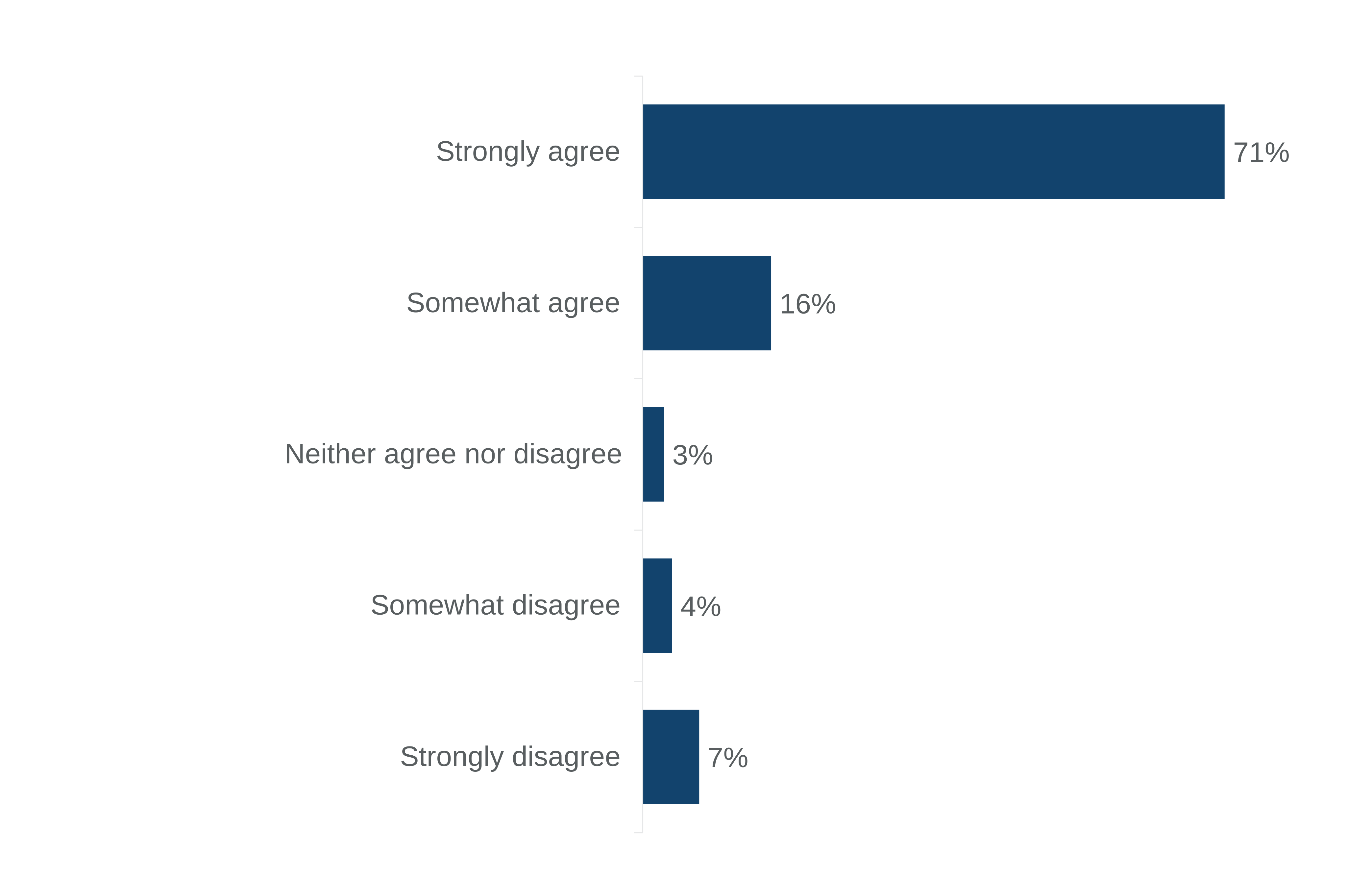
87% of respondents agreed with extending mandatory pay gap reporting to ethnicity.
Question 2. Do you agree or disagree that large employers should have to report their disability pay gaps? (answered by 613 respondents)
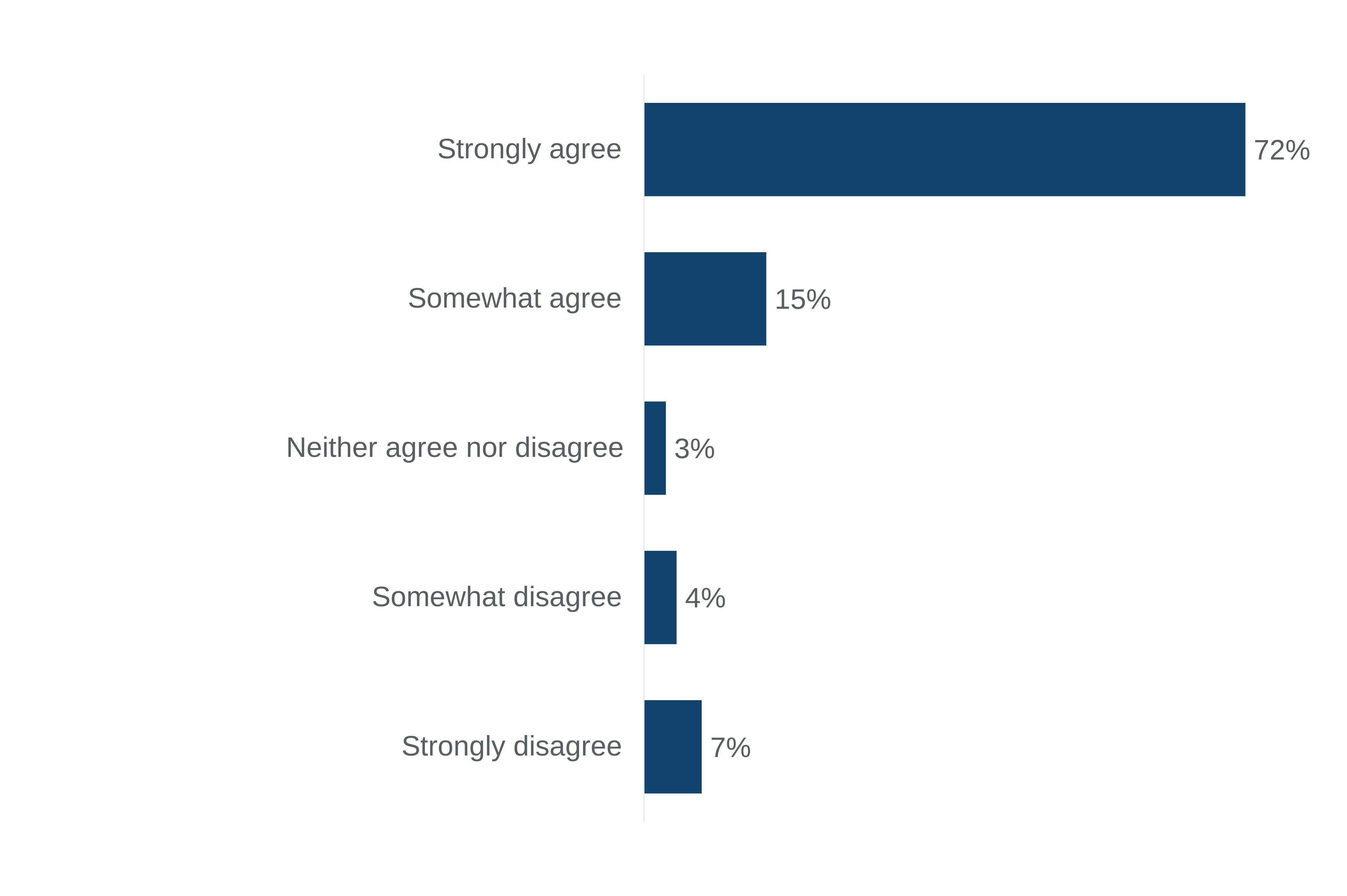
87% of respondents agreed with extending the mandatory pay gap reporting to disability.
Open consultation questions
Respondents had the opportunity to provide additional comments on their response. Within these comments, many expressed support for mandatory reporting, including highlighting research that backs up the need for reporting.
“We strongly support mandatory ethnicity pay gap reporting. The Equality and Human Rights Commission (EHRC) has noted that pay disparities are often rooted in systemic discrimination, occupational segregation, and unequal access to senior roles. Research from the ONS indicates that, in 2022, employees from Pakistani and Bangladeshi backgrounds earned 13.3% and 17.5% less than their White British counterparts, respectively” – An employer or business respondent
Some respondents argued for the benefits of transparency, highlighting that bringing inequalities to light could help make sure they are addressed.
“Transparency drives accountability and progress. It surfaces hidden inequities in representation, promotion, and reward. It reveals deeper equity gaps” – An employer or business respondent
Some respondents also stated that providing clear guidance was crucial to making sure reporting is effective and the data collected is correct and meaningful.
“Overall, employers should also be supported with clear guidance and tools to ensure data accuracy and meaningful interpretation. If this is done correctly, this can drive real progress in workplace inclusion” – An individual respondent
The extra work that extending mandatory reporting could bring to organisations, particularly the administrative work that would be required, was a concern for some.
“The collection and analysis of workforce data on ethnicity for the purpose of reporting creates a significant challenge, cost and administrative burden for businesses with the need for often scarce resources to be re-allocated and scheduled for this purpose. This could divert resources away from the implementation of appropriate measures and adjustments that have a more tangible impact for individuals and groups in the workforce” – An organisation or network
A few also questioned whether employees would be willing to share information on their disability and ethnicity, meaning the data might not be correct.
“A reasonable percentage of employees will not wish to disclose their disability – those who feel they could be judged or penalised if they disclosed conditions to employers, so the data will not be complete or reliable, and action plans based on incorrect data will serve a limited purpose” – An individual respondent
Geographical scope
Background on proposals from the consultation
For mandatory ethnicity and disability pay gap reporting, the government is proposing to follow the same approach as gender pay gap reporting. That is, mandating reporting by:
- large private and voluntary sector employers in Great Britain (England, Wales and Scotland)
- large public sector bodies in England
- certain public authorities operating across Great Britain in relation to non-devolved functions
Closed consultation questions
Question 3. Do you agree or disagree that ethnicity pay gap reporting should have the same geographical scope as gender pay gap reporting? (answered by 590 respondents)
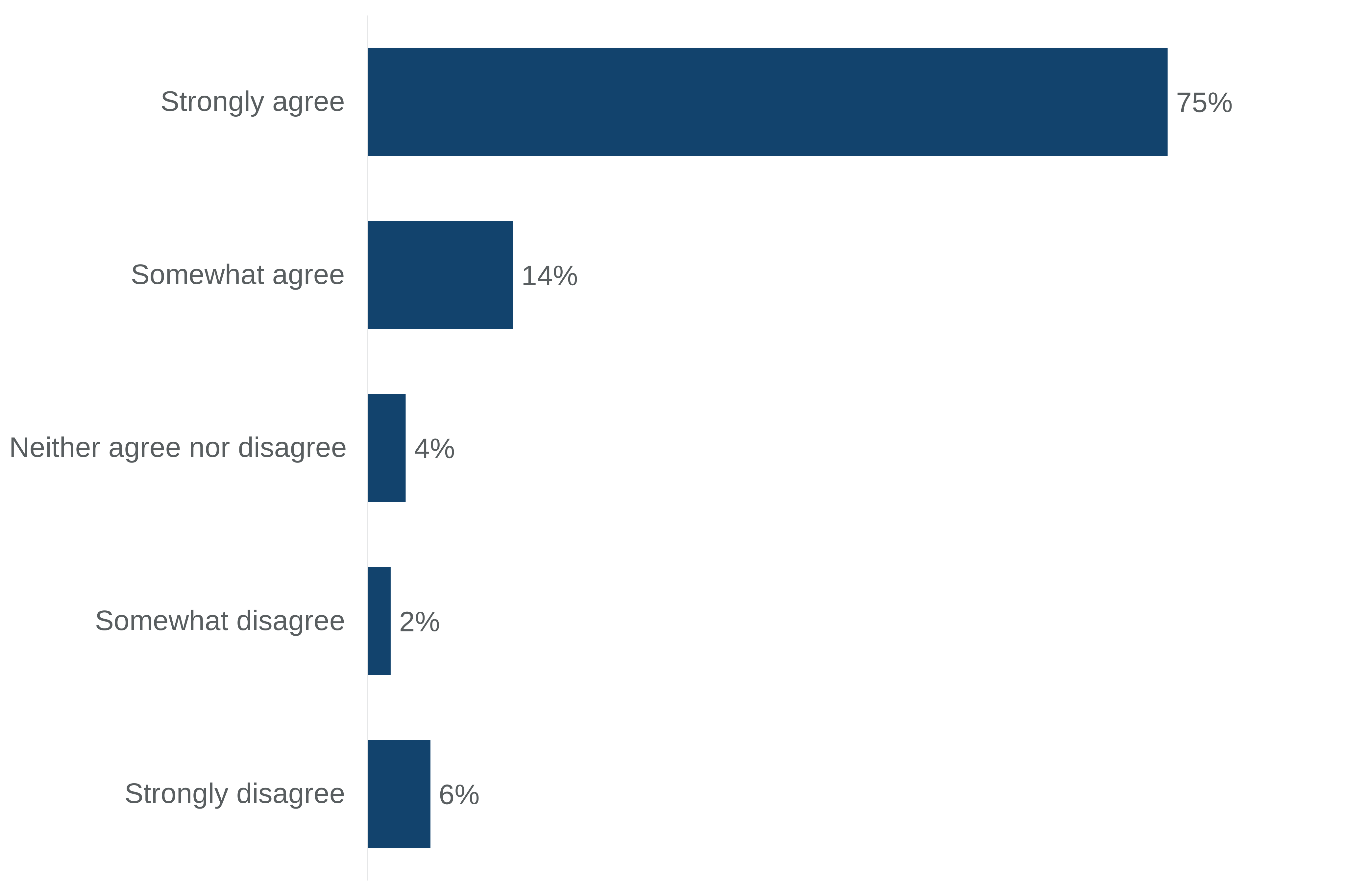
88% of respondents agreed that ethnicity pay gap reporting should have the same geographical scope as gender pay gap reporting.
Question 4. Do you agree or disagree that disability pay gap reporting should have the same geographical scope as gender pay gap reporting? (answered by 592 respondents)
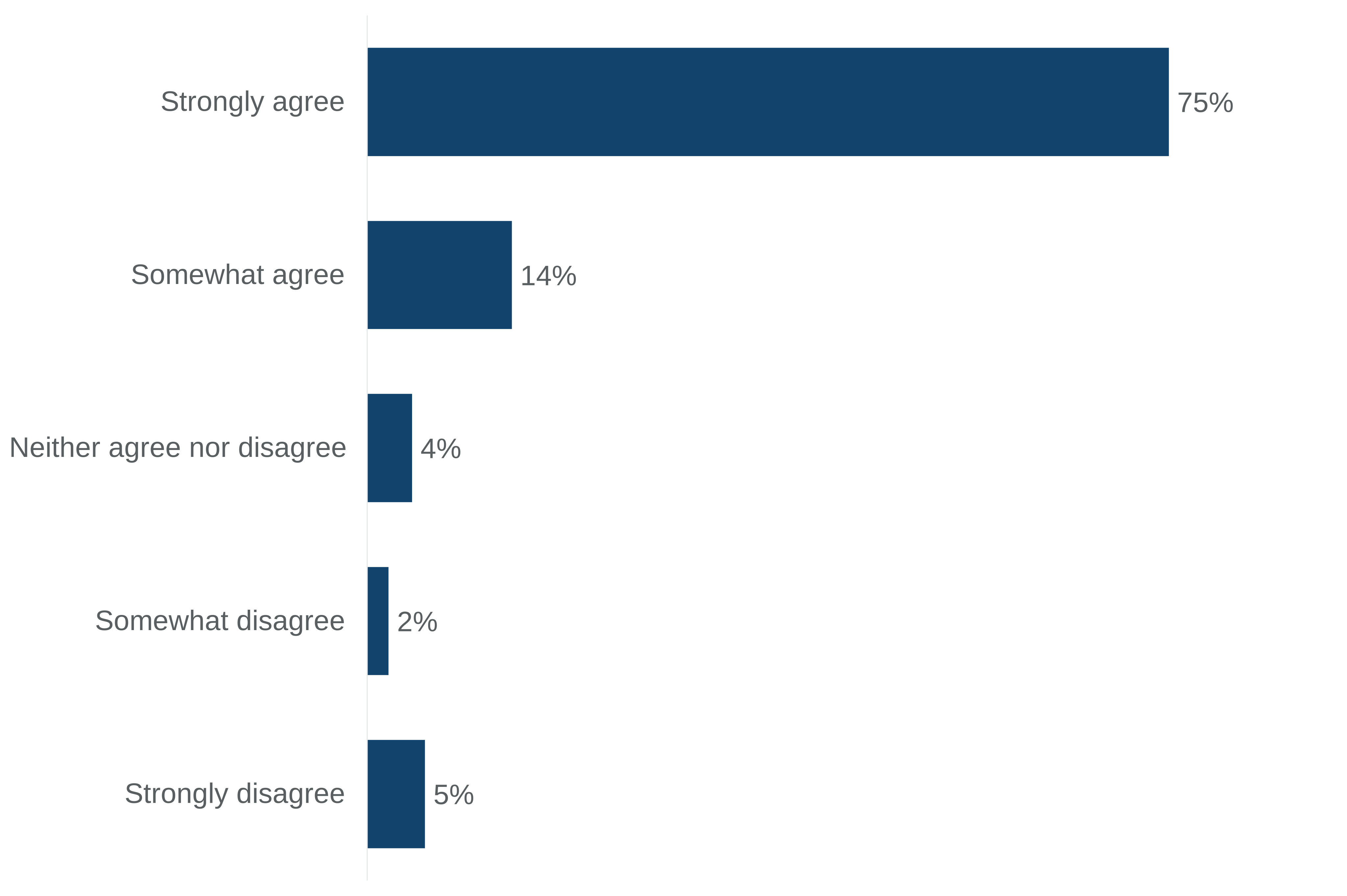
88% of respondents agreed that disability pay gap reporting should have the same geographical scope as gender pay gap reporting.
Open consultation questions
Respondents had the opportunity to provide additional comments on their response. Within these comments, many respondents expressed their support for having the same geographical scope as gender pay gap reporting, saying that it would make sure reporting was consistent, simple, and comparable.
“Consistency with gender pay gap reporting enables comparability and encourages employers to approach ethnicity gaps with equal rigour. Disability pay gap reporting should be aligned geographically with gender reporting to ensure it is taken just as seriously. Applying the same geographical scope as gender pay gap to disability pay gap reporting would provide a systematic approach across protected characteristics. This would allow more accurate benchmarking and comparison, and ensures that regional variations in disability inclusion and support are captured” – Another organisation operating in the UK (England, Wales, Scotland and Northern Ireland)
Some wanted to make sure that the regional differences were taken into account, noting the importance of local context in interpreting the data.
“In comparison, ethnicity across the UK is not uniform, and some employers may face challenges accessing a diverse talent pool due to geographic reasons. This could lead to disparities in the reported data and unfair penalties on businesses. Likewise, disabilities across the UK are not uniform. Cities tend to have more disabled people of working age, while rural areas tend to have more retired disabled. This puts unfair pressure on rural businesses and favours city-based businesses. The same applies for ethnicity as cities tend to have more ethnically diverse populations” – An organisation or network operating in Great Britain (England, Wales and Scotland)
Some also called for mandatory reporting to be extended to organisations with fewer than 250 employers to make sure more employees were included in the data.
“Mandatory reporting should apply to all employers with more than 50 staff, not just those with 250+, to ensure wider impact. There could be fewer requirements for smaller businesses if necessary” – An individual respondent working or living in Wales
A handful of respondents also questioned how much the data would include employees who are not standard office-based or are temporarily working overseas. It was suggested that the thresholds and definitions would need to be set out clearly to make sure a fair approach was taken by all.
“We suggest that guidance clearly articulates any differences in reporting thresholds, definitions or applicable staff populations. Where necessary, examples should be provided to illustrate how organisations with overseas operations or remote workforces can ensure fair and complete disclosures within the defined geographical scope” – An employer or business respondent operating internationally (UK and other countries)
One further respondent took the chance to highlight the need for the legislation to be co-created across all countries to make sure it is fit for purpose.
Pay gap calculations: Pay gap measures
Background on proposals from the consultation
The government is proposing to require employers to report the same set of pay gap measures for ethnicity and disability as for gender. This is based on previous feedback from employers and to ensure a consistent approach.
This would mean reporting on:
- mean differences in average hourly pay
- median differences in average hourly pay
- pay quarters – the percentage of employees in 4 equally sized groups, ranked from highest to lowest hourly pay
- mean differences in bonus pay
- median differences in bonus pay
- the percentage of employees receiving bonus pay for the relevant protected characteristic
Closed consultation questions
Question 5. Do you agree or disagree that employers should report the same six measures for ethnicity pay gap reporting as for gender pay gap reporting? (answered by 603 respondents)
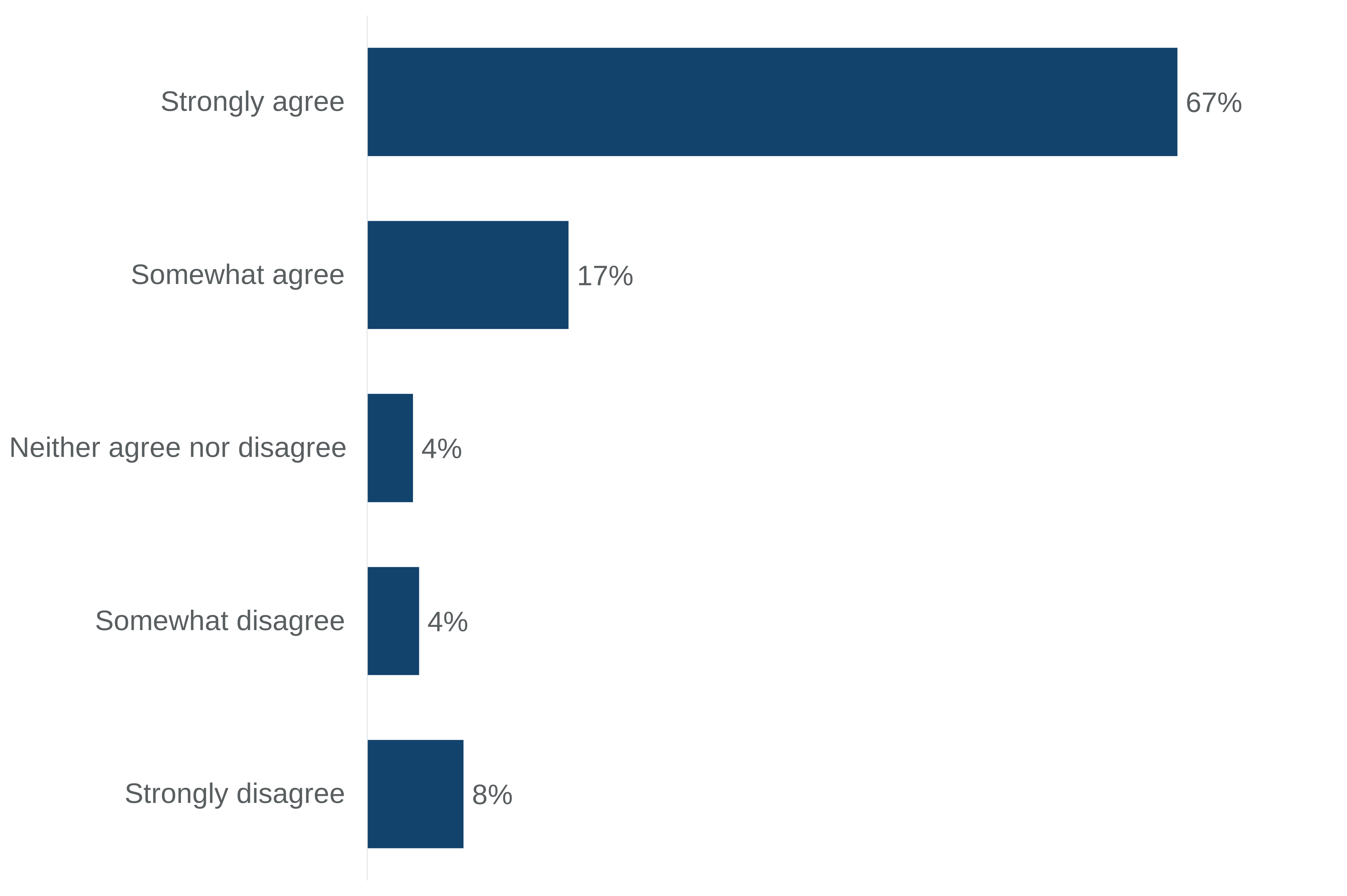
84% of respondents agreed that employers should report their ethnicity pay gaps using the same 6 measures as gender pay gap reporting.
Question 6. Do you agree or disagree that employers should report the same six measures for disability pay gap reporting as for gender pay gap reporting? (answered by 596 respondents)
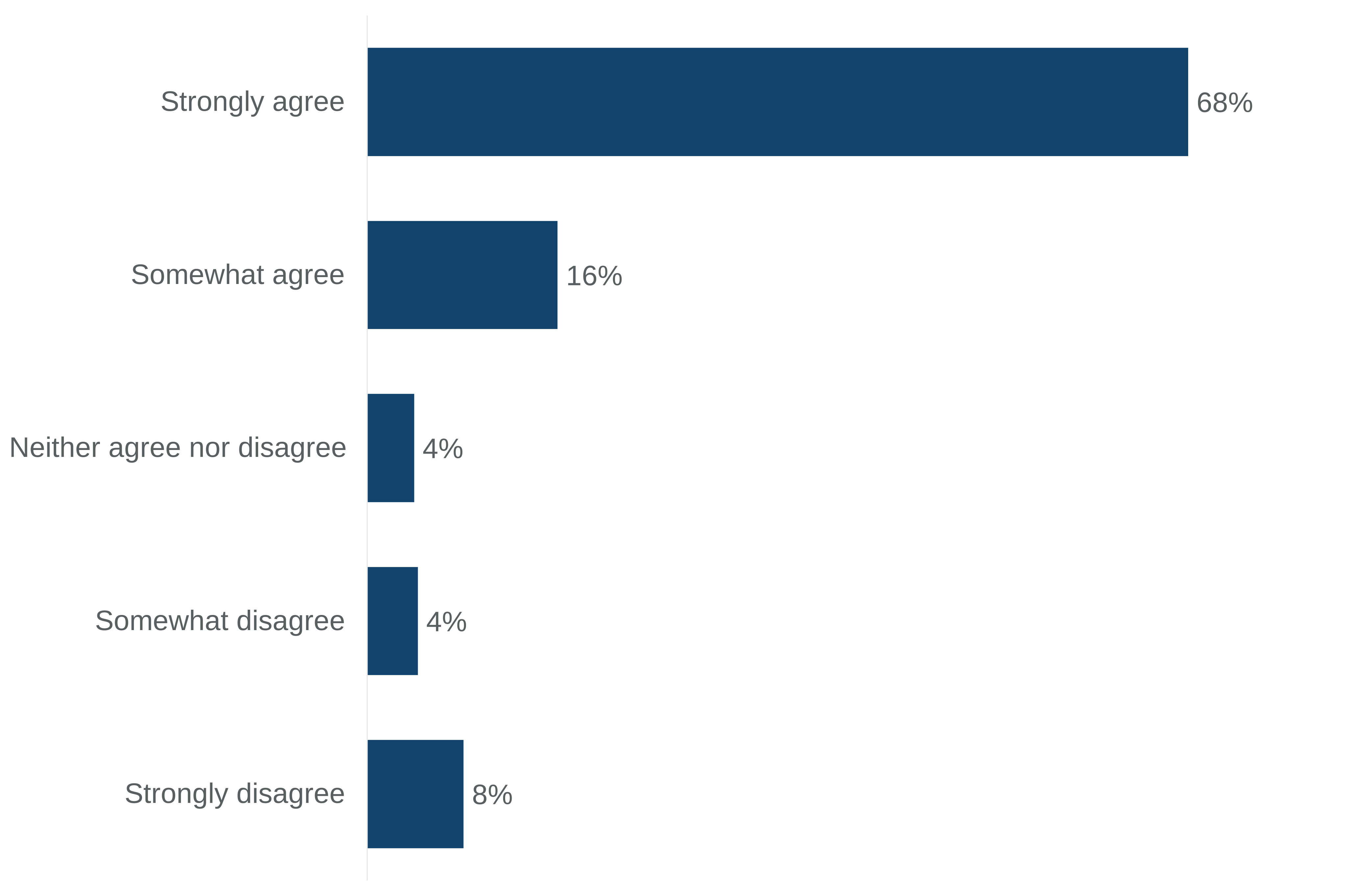
84% of respondents agreed that employers should report their disability pay gaps using the same 6 measures as gender pay gap reporting.
Open consultation questions
Respondents had the opportunity to provide additional comments.
In open responses, many respondents expressed general agreement that reporting should be aligned with the gender pay gap reporting. They thought this would make comparing data easy and consistent.
Some respondents listed other measures that they thought should be reported on alongside the 6 measures. This included the recruitment process, work patterns, contract types, turnover and reasonable adjustments (requests and implemented changes).
“In addition to the proposed 6 measures, we recommend all large employers should also be required to report annually on:
- the number of interviews offered to disabled candidates
- the number of disabled people recruited
- the number of reasonable adjustments made
- the number of disabled people who have left the workforce” – Other organisation respondent
A further few thought that only some of the gender pay gap reporting measures are fit to use for ethnicity and disability. They also felt that improvements could be made to the reporting of the current pay gap calculations.
Pay gap calculations: Workforce reporting
Background on proposals from the consultation
The government is also proposing to make it mandatory for employers to report on:
- the overall breakdown of their workforce by ethnicity and disability
- the percentage of employees who did not disclose their personal data on their ethnicity and disability
This additional data would give context to an employer’s ethnicity and disability pay gap figures – for example, if they have low self-declaration rates from their employees on these characteristics. This is not an issue for gender pay gap reporting as employers already have this data for pay purposes.
Closed consultation questions
Question 7. Do you agree or disagree that large employers should have to report on the ethnic breakdown of their workforce? (answered by 604 respondents)
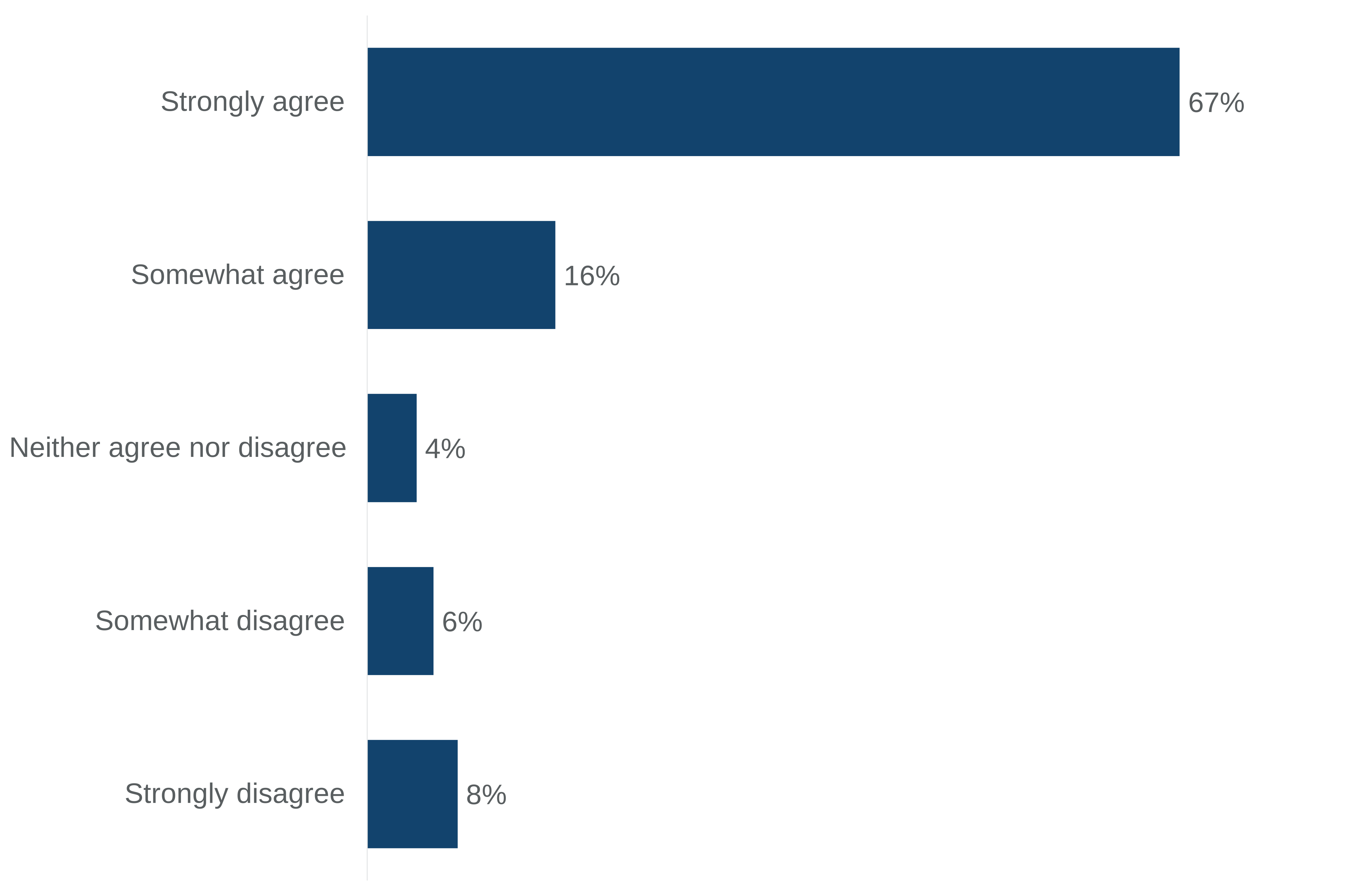
83% of respondents agreed that employers should have to report on the ethnic breakdown of their workforce.
Question 8. Do you agree or disagree that large employers should have to report on the breakdown of their workforce by disability status? (answered by 603 respondents)
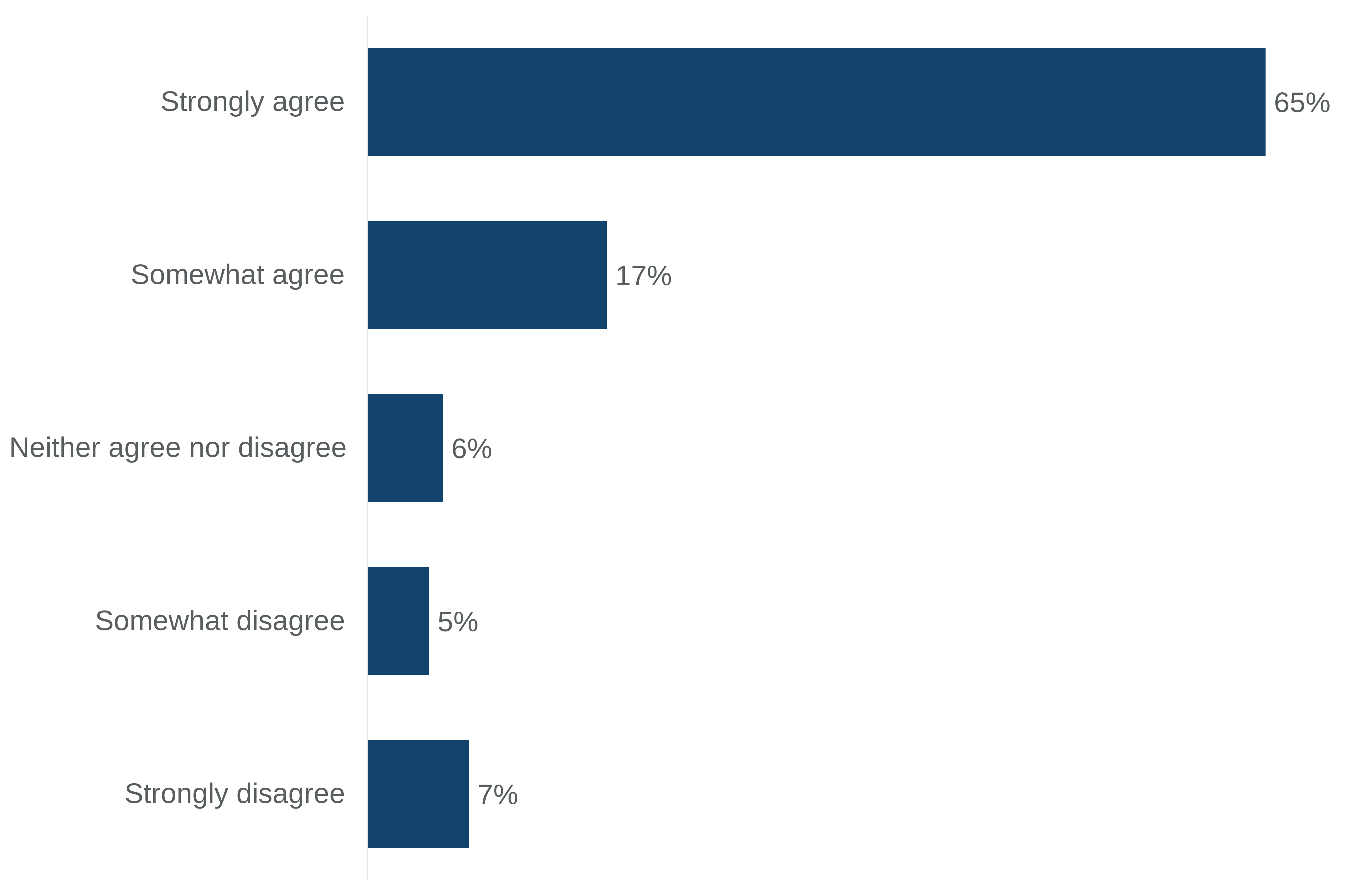
83% of respondents agreed that employers should have to report on the breakdown of their workforce by disability status.
Question 9. Do you agree or disagree that large employers should have to submit data on the percentage of employees who did not state their ethnicity? (answered by 602 respondents)
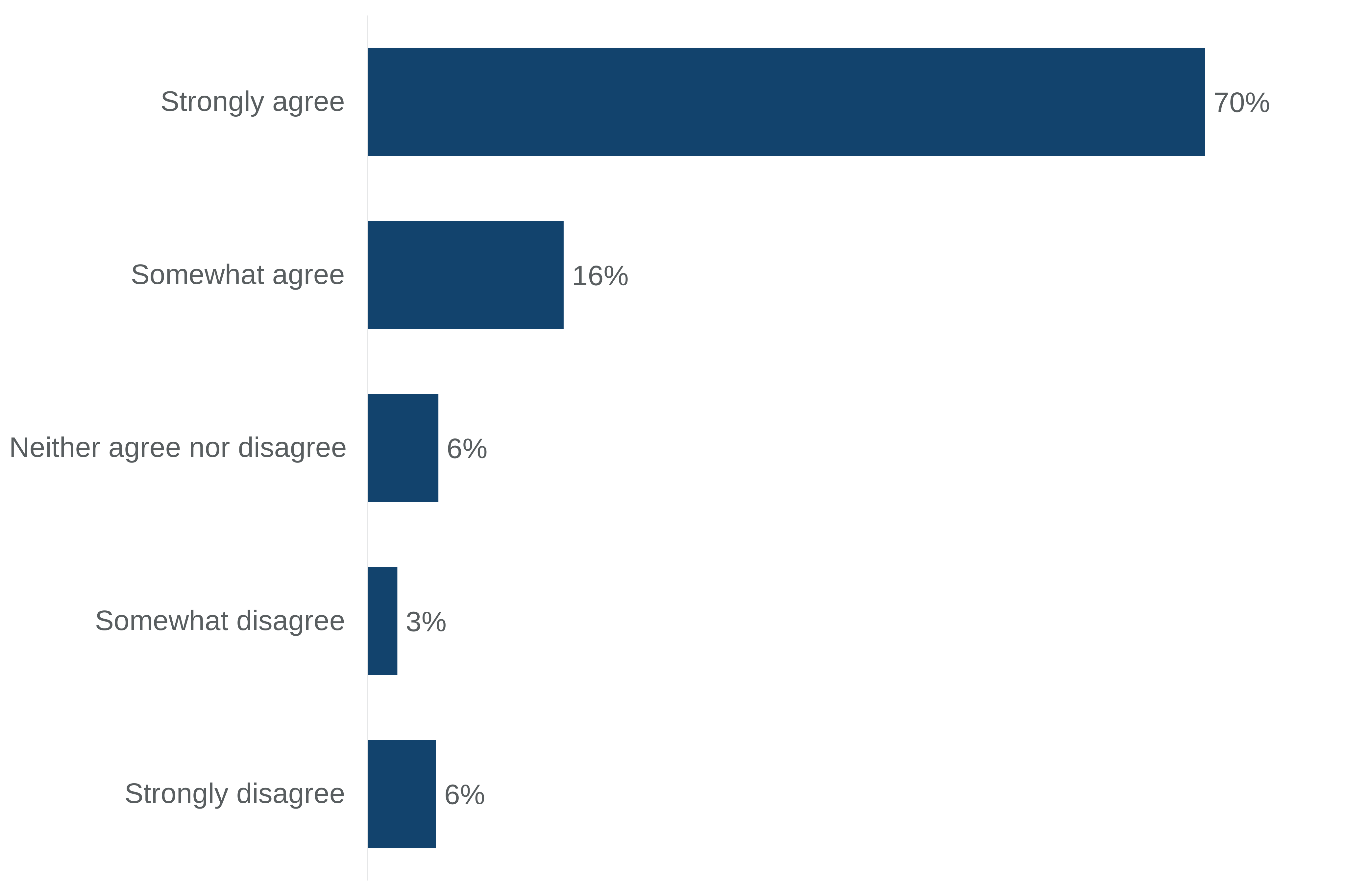
86% of respondents agreed that employers should have to submit data on the percentage of employees who did not state their ethnicity.
Question 10. Do you agree or disagree that large employers should have to submit data on the percentage of employees who did not state their disability status? (answered by 605 respondents)
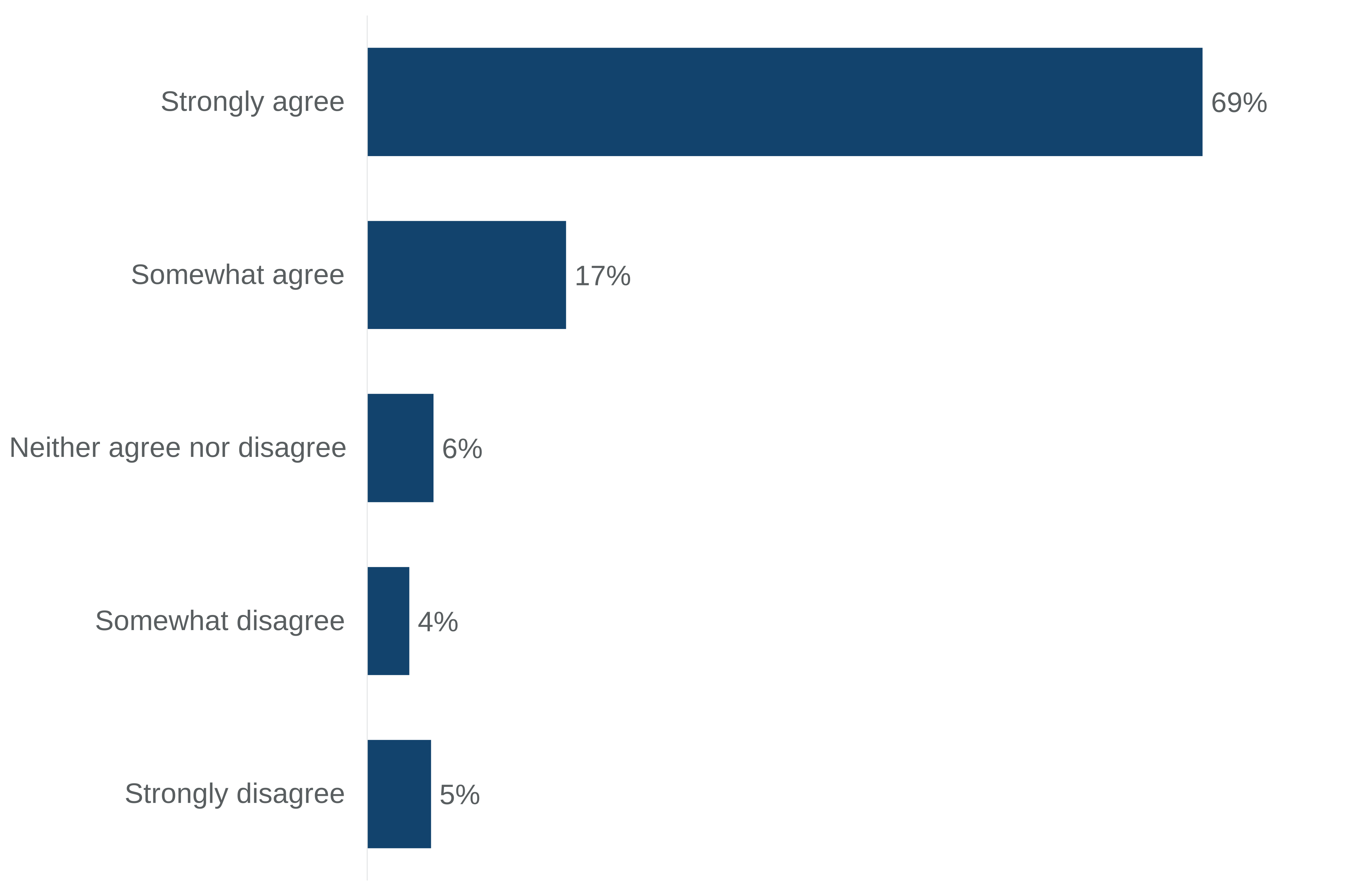
86% of respondents agreed that large employers should have to submit data on the percentage of employees who did not state their disability status.
Open consultation questions
Respondents had the opportunity to provide additional comments.
Comments relating to the breakdown of workforce tended to express broad support for the proposals.
Reporting the breakdown of employees by disability status was described by some as a way to give context to pay gap data and pinpoint potential barriers.
“[Organisation name] also agrees that large employers should report on the ethnic and disability breakdown of their workforce, including the percentage of employees who did not disclose this information. This transparency helps build trust, contextualises pay gap data, and identifies areas where cultural or systemic barriers to disclosure remain” – An employer or business respondent
However, the reliability of breakdowns was questioned by some due to the impact that anticipated low disclosure rates would have on the data.
“On reporting the ethnic breakdown of the workforce - I agree however this relies on employees disclosing this information in the first place, which some may be reluctant to do. Any published data would therefore require a caveat around its reliability.” – An employer or business- respondent
The most common comment relating to submitting data on the proportion of those who do not share their ethnicity or disability status was about the impact of employee trust on disclosure of information.
“Crucially, employers should report non-disclosure rates and track them over time. Consistent low disclosure might indicate cultural issues around trust and psychological safety that need addressing before pay gap data becomes truly representative” – An employer or business respondent
Some also thought publishing both disability pay gaps and disability disclosure rates was a way to make sure organisations can justify how reliable their data is.
“Collecting good disability data is more challenging because many people don’t disclose their disability. Disabled people are also more likely to be in part-time or insecure jobs, which can make overall pay gap figures misleading. For instance, in 2022, only 4.2% of NHS staff said they had a disability on official records, but a staff survey showed the real number was closer to 23.2%. If these differences aren’t explained, the reported pay gaps could give the wrong picture. To improve this, employers should have to publish both their disability pay gap and their disability disclosure rate, along with an explanation of how reliable their data is and what it means. So, while consistent reporting is important, disability and ethnicity pay gap reports also need to reflect the complex issues around fairness and representation” – An employer or business respondent
When asked an open-response question on the proposals for calculating pay gaps, some expressed that clear guidance would be required to make sure there is a consistent approach to data collection and reporting.
Some further respondents said intersectional analysis should be considered to maximise insight and understanding from the data, highlighting the way in which gender, ethnicity, and disability interact.
“We also encourage the Government to consider how the reporting framework can support intersectional analysis. Individuals’ experiences in the workplace are shaped by multiple overlapping characteristics. A framework that only allows for single-characteristic reporting may obscure important disparities. Enabling intersectional analysis, either from the outset or through a phased approach, would significantly enhance the insight and effectiveness of pay gap reporting” – An organisation or network that represents either employers, employees or both
Action plans
Background on proposals from the consultation
The government is proposing introducing action plans for ethnicity and disability pay gap reporting. Action plans can help employers identify why they have a pay gap and how they intend to close it. Employers can use action plans to explain the reasons behind any pay gaps and set out the actions they are taking to improve equality in their workforce. Employees can use these plans to understand the actions that their employer is taking and to hold them to account. Introducing action plans would also broadly align with the findings of the 2021 to 2022 consultation on disability workforce reporting. This highlighted the need for reporting practices to be supported by initiatives to increase workplace equality.
Closed consultation questions
Question 11. Do you agree or disagree that employers should have to produce an action plan about what they are doing to improve workplace equality for ethnic minority employees? (answered by 611 respondents)
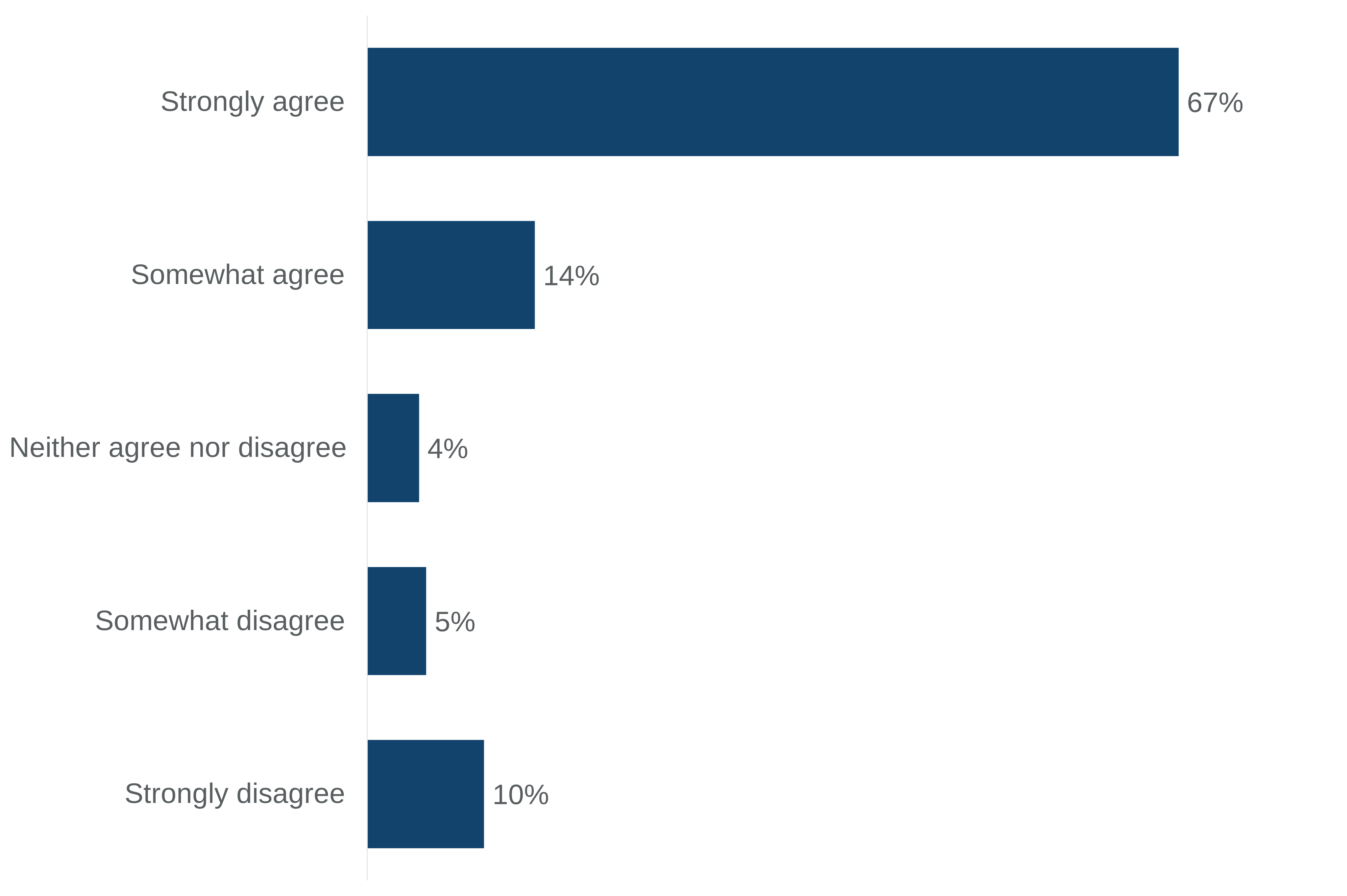
81% of respondents agreed that employers should have to produce an action plan about what they are doing to improve workplace equality for ethnic minority employees.
Question 12. Do you agree or disagree that employers should have to produce an action plan about what they are doing to improve workplace equality for disabled employees? (answered by 603 respondents)
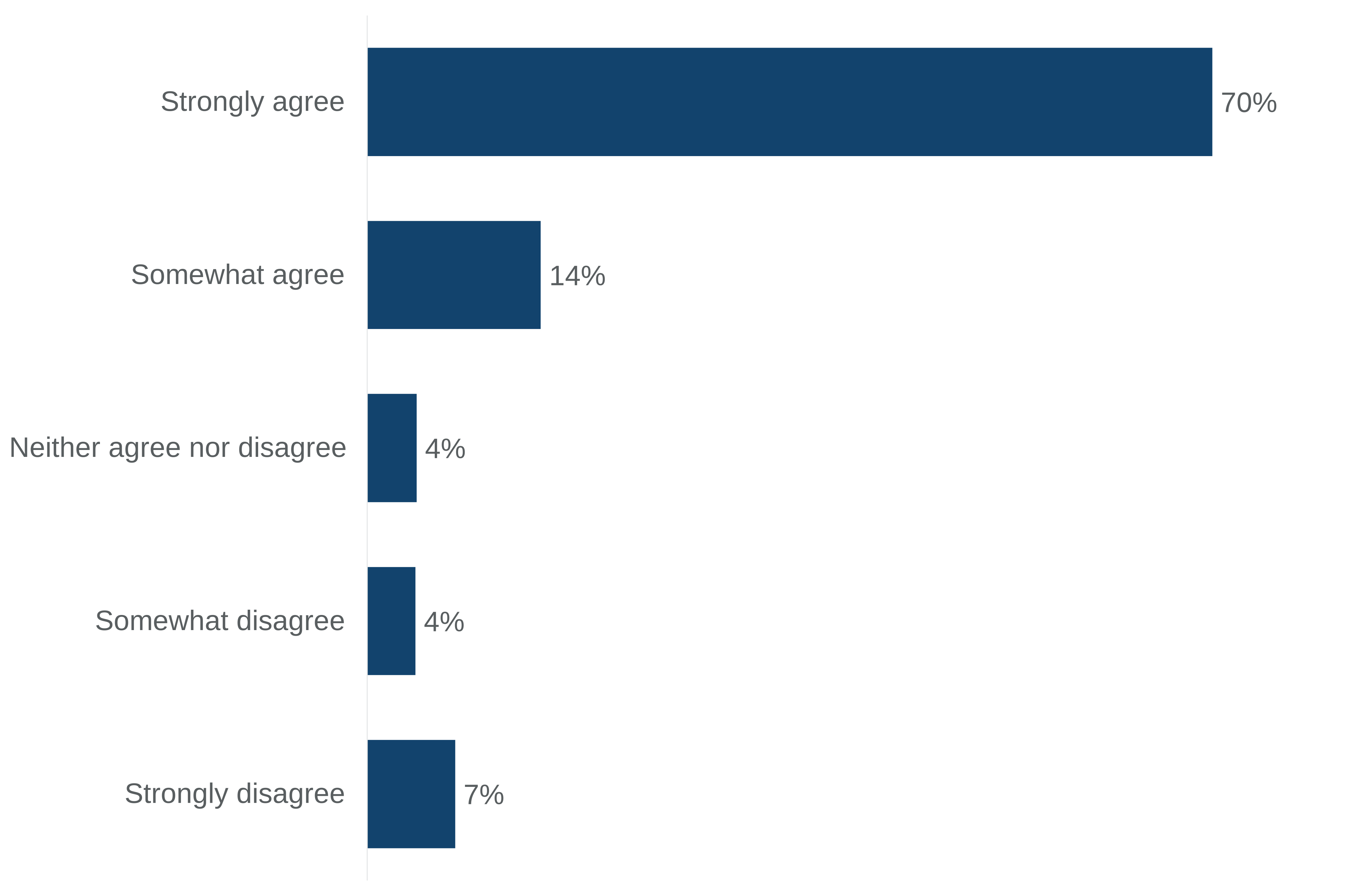
85% of respondents agreed that employers should have to produce an action plan about what they are doing to improve workplace equality for disabled employees.
Open consultation questions
Respondents could also provide comments on these proposals.
In relation to the proposal of producing an action plan about what they are doing to improve workplace equality for ethnic minority employees, ensuring there was a follow up to the plans was thought by many to be crucial to make sure the plans actually make a difference.
“We also believe that action plans should be monitored and challenged by the EHRC, where appropriate, so that they are not allowed to become tokenistic statements that the employer has no intention of implementing and are perhaps repeated annually simply to fulfil the requirement to make an entry” – An organisation or network respondent
Some thought the data alone would not force change and an action plan alongside the data would give clear targets to work towards.
“We agree that efforts should be made to indicate how action will be taken to improve workplace equality. We support the requirement for action plans, as they demonstrate an organisation’s commitment to addressing identified pay gaps. Action plans should outline specific, measurable steps with timelines and accountability measures, fostering transparency and progress” – An employer or business
However, a few were concerned about the extra cost and administrative burden, particularly for smaller companies.
“It’s worth considering that for some smaller organisations, creating detailed action plans may be time-consuming and resource-intensive, but the benefits to wider society possibly outweigh these concerns” – An employer or business respondent
In relation to the proposal of producing an action plan about what they are doing to improve workplace equality for disabled employees, some felt that clear guidance would need to be provided to make sure all employers understood fully what was required so they could create their plans consistently.
Some also highlighted that reasonable adjustments should be a focus when creating action plans for improving disability inclusion.
A few respondents thought there could be some further education for employers, such as training employers about why change should happen and how the support would be helpful to employees.
“There still requires a lot of education of ‘Why’ is this ultimately good for our business to do, rather than it ‘just’ being viewed as the right /nice thing to do. As many boards still view DEI as a process on the side, rather than really understanding the business commercials, productivity & culture outcomes to ensuring all people from all walks of life & backgrounds can thrive in the workplace” – An employer or business respondent
Additional reporting requirements for public bodies
Background on proposals from the consultation
The government is considering whether further information should be required from public bodies on ethnicity and disability, in addition to the data outlined above. This could help improve transparency and accountability.
Questions were included on whether large public bodies (those with 250 or more employees) should report:
- ethnicity pay differences by grade or salary bands
- data relating to recruitment, retention and progression by ethnicity
These additional requirements would apply to public bodies including:
- most government departments and arm’s length bodies
- the armed forces
- local authorities
- NHS bodies
- universities
- most schools, including academies and multi-academy trusts
This data could provide further evidence to help public bodies identify where racial inequalities persist – such as barriers to promotion or progression – and understand how these apply to different groups. This is particularly important given the increase in ethnic diversity seen in many public bodies’ workforces in recent years. The government is also interested in whether the additional reporting requirements for public bodies should be extended to disability.
Closed consultation questions
Question 13. Do you agree or disagree that public bodies should also have to report on pay differences between ethnic groups by grade and/or salary bands? (answered by 576 respondents)
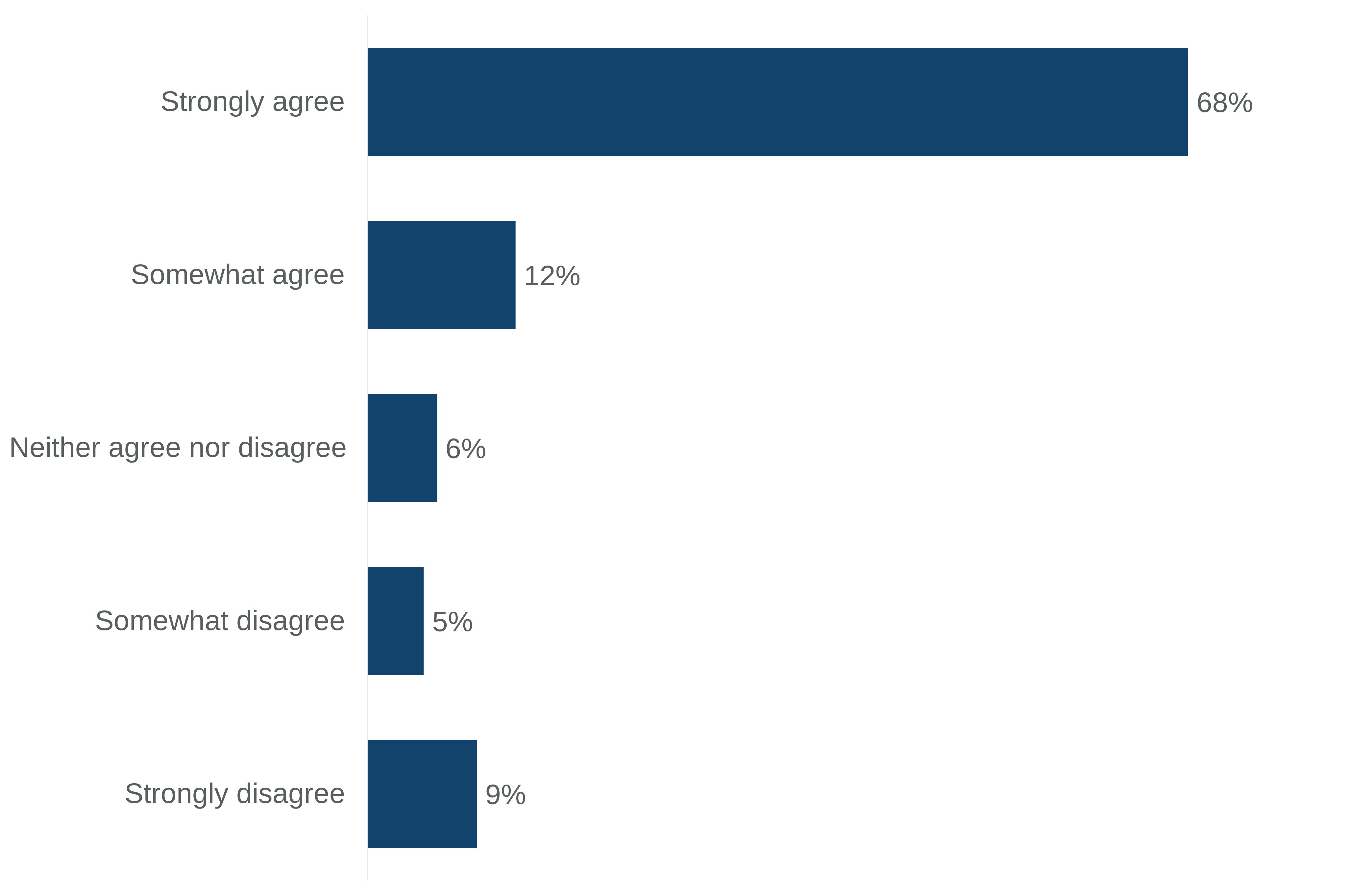
80% of respondents agreed that public bodies should have to report on pay differences between ethnic groups by grade and/or salary bands.
Question 14. Do you agree or disagree that public bodies should also have to report on recruitment, retention and progression by ethnicity? (answered by 579 respondents)
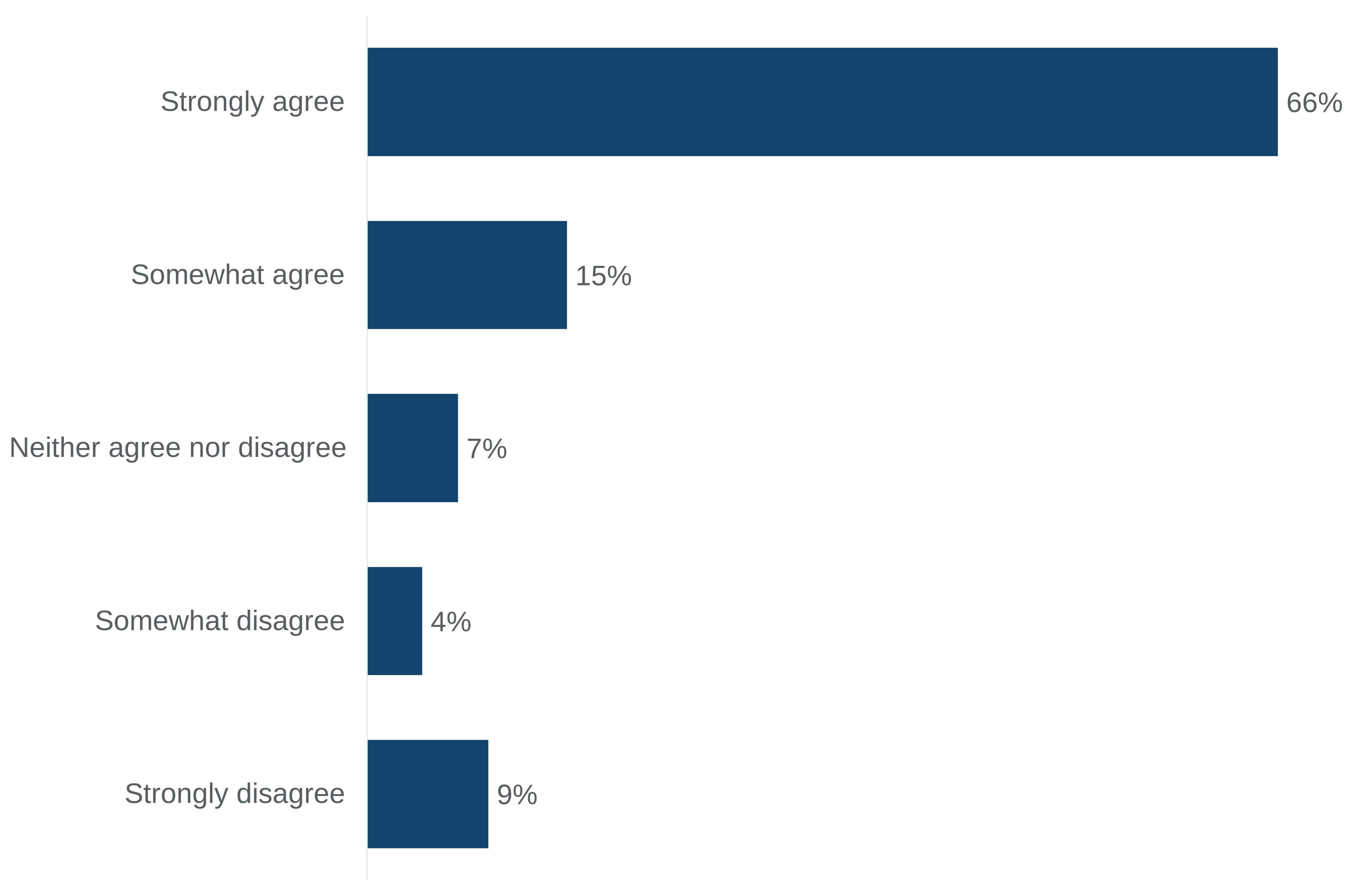
81% of respondents agreed that public bodies should also have to report on recruitment, retention, and progression by ethnicity.
Open consultation question
Question 15. If public bodies have to report on recruitment, retention and progression by ethnicity, what data do you think they should have to report on?
The most common suggestions made were: promotions, hiring, applications, turnover, and length of service.
Closed consultation questions
Question 16. Do you agree or disagree that public bodies should have to report on pay differences between disabled and non-disabled employees, by grade and/or salary bands? (answered by 570 respondents)
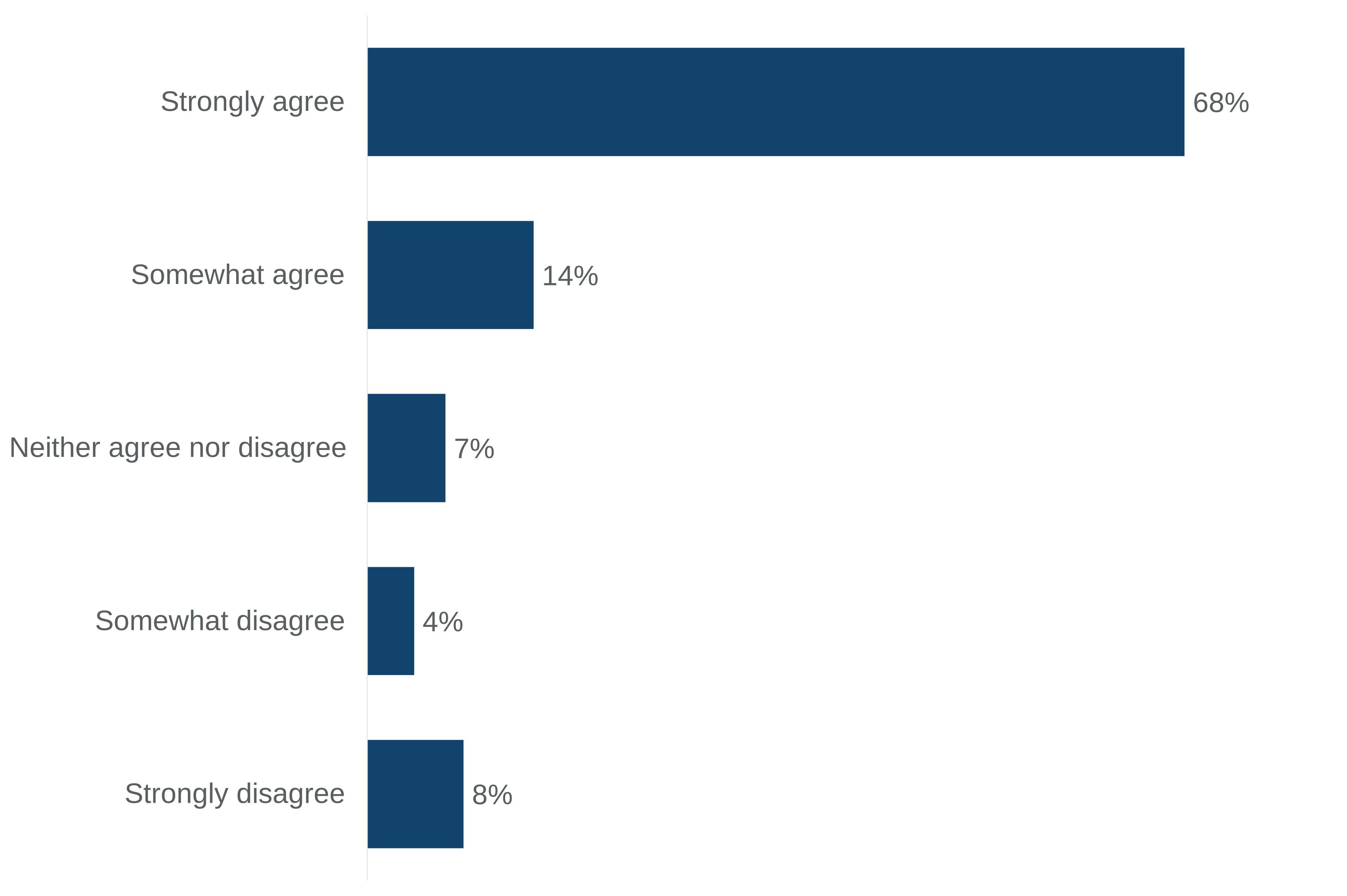
82% of respondents agreed that public bodies should have to report on pay differences between disabled and non-disabled employees by grade and/or salary bands.
Question 17. Do you agree or disagree that public bodies should have to report on recruitment, retention and progression by disability? (answered by 566 respondents)
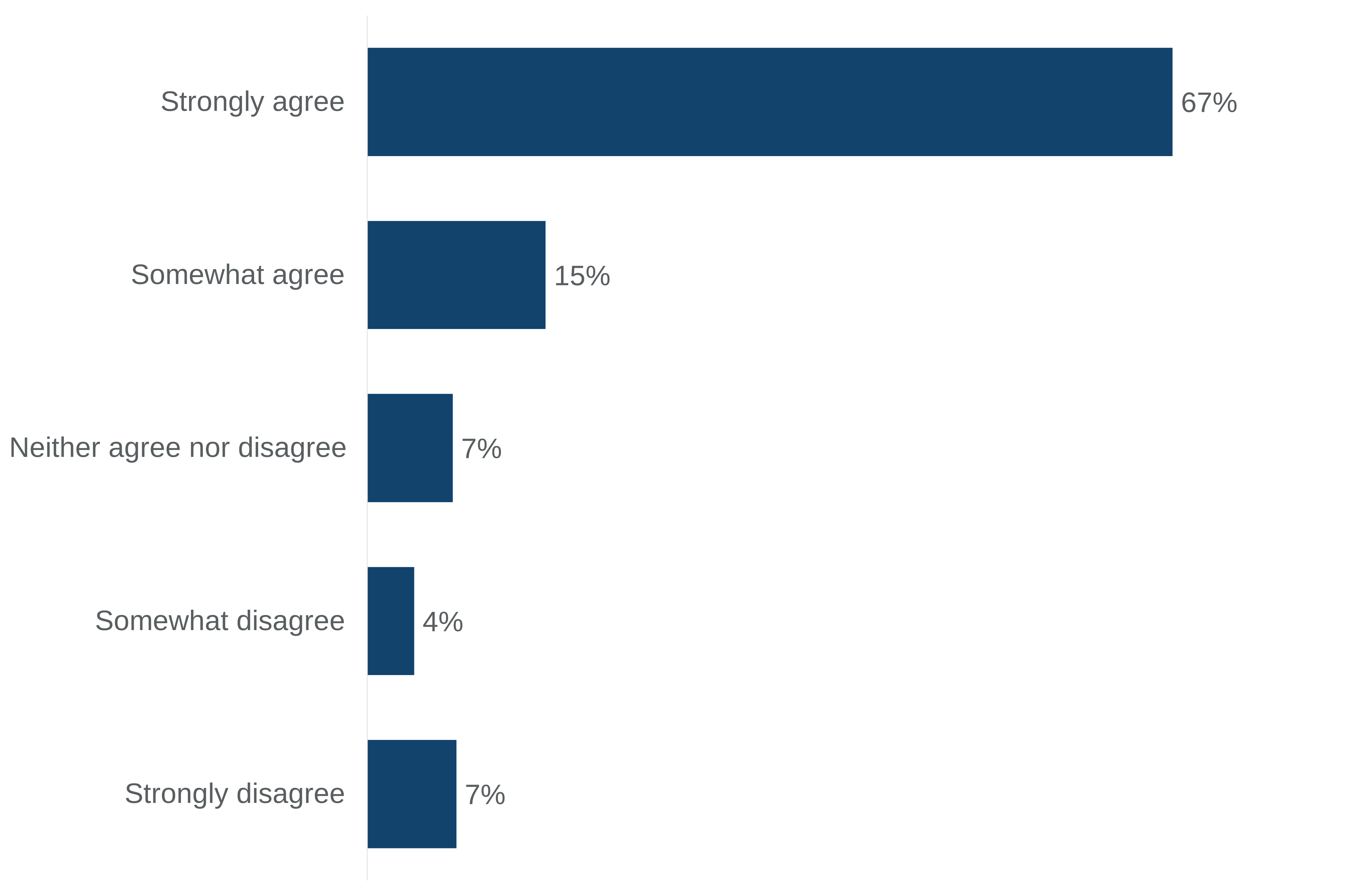
82% of respondents agreed that public bodies should have to report on recruitment, retention, and progression by disability.
Open consultation question
Question 18. If public bodies have to report on recruitment, retention and progression by disability, what data do you think they should have to report?
The most common suggestions were: promotions, applications, turnover, hiring rates, and length of service.
Open consultation questions
Respondents could also provide comments on these proposals.
On the topic of additional requirements for public bodies, some respondents expressed support for separating data by pay bands or levels as they thought it would make sure differences were clear to all.
“Pay differences at salary bands /grades enables employers to pinpoint where meaningful action may need to be implemented whereas reporting overall pay gaps is generally very broad particularly for large employers and those who may have a combination of operational employees on spot or fixed rates of pay where variable unsocial hours allowance is taken in to consideration although core rates for the job remain the same, and non-operational employees who are not on fixed rates of pay as part of their workforce” – An employer or business in the public sector
Some respondents expressed their general support for public bodies reporting on recruitment, retention, and progression data.
Some also found it important for public bodies to lead by example to make sure they set a standard that others will follow.
“Public bodies should model best practice in equality, diversity, and inclusion. Reporting across the employment lifecycle from recruitment to retention and progression—ensures that public institutions are not just hiring disabled employees, but also supporting their development and long-term success” – Another organisation in the public sector
A few thought that the number of complaints and performance markings should be reported on to give a wider understanding of workforces.
“Public bodies should be required to report the number of race-related grievances, bullying, and discrimination complaints received annually. This would provide insight into workplace culture and highlight whether ethnic minority employees are experiencing higher levels of workplace conflict” – An individual respondent
Dates and deadlines
Background on proposals from the consultation
Under the gender pay gap regulations, large employers in the private and voluntary sectors across Great Britain and public bodies in England have ‘snapshot dates’ to collect pay data from their employees and then have 12 months to report on their pay gap data. The government is proposing using the same 2 sets of dates when introducing mandatory pay gap reporting on ethnic and disability, to ensure consistency. They are also proposing employers report their ethnicity and disability pay gap data online, in a similar way to the gender pay gap service.
Closed consultation questions
Question 19. Do you agree or disagree that ethnicity pay gap reporting should have the same reporting dates as gender pay gap reporting? (answered by 590 respondents)
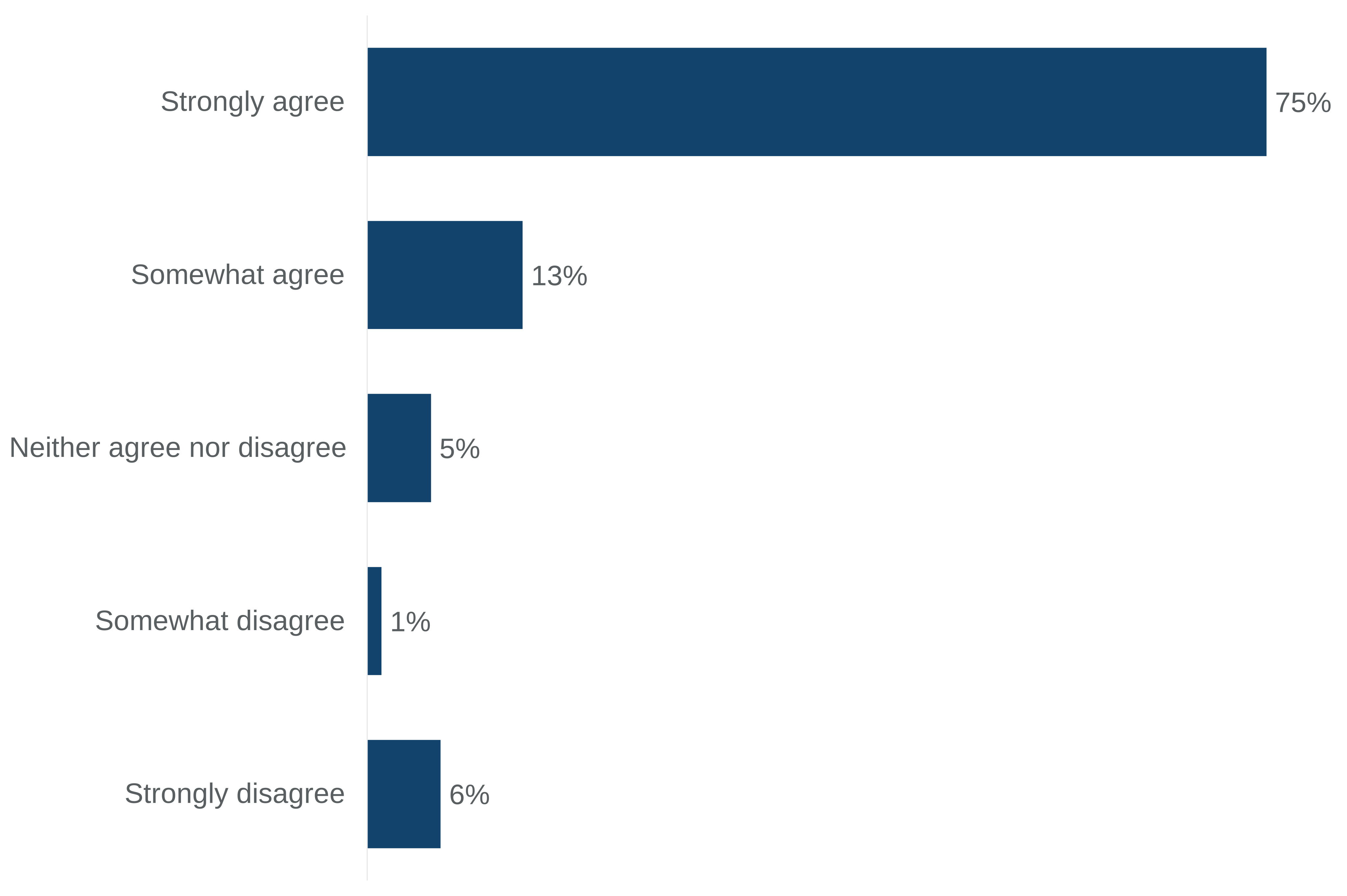
87% of respondents agreed that ethnicity pay gap reporting should have the same reporting dates as gender pay gap reporting.
Question 20. Do you agree or disagree that disability pay gap reporting should have the same reporting dates as gender pay gap reporting? (answered by 583 respondents)
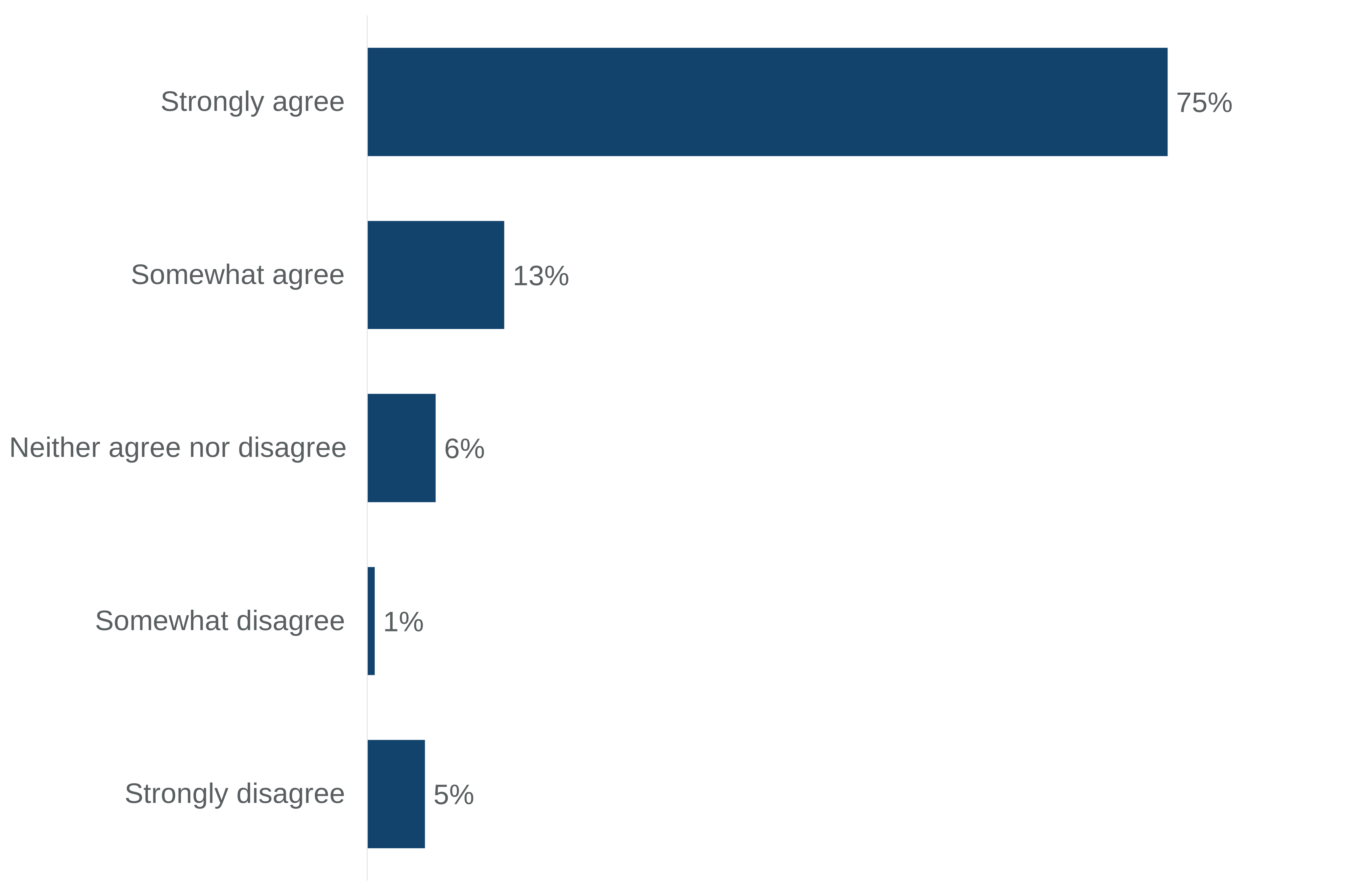
88% of respondents agreed that disability pay gap reporting should have the same reporting dates as gender pay gap reporting.
Question 21. Do you agree or disagree that ethnicity pay gap reporting should be reported online in a similar way to gender pay gap service? (answered by 589 respondents)
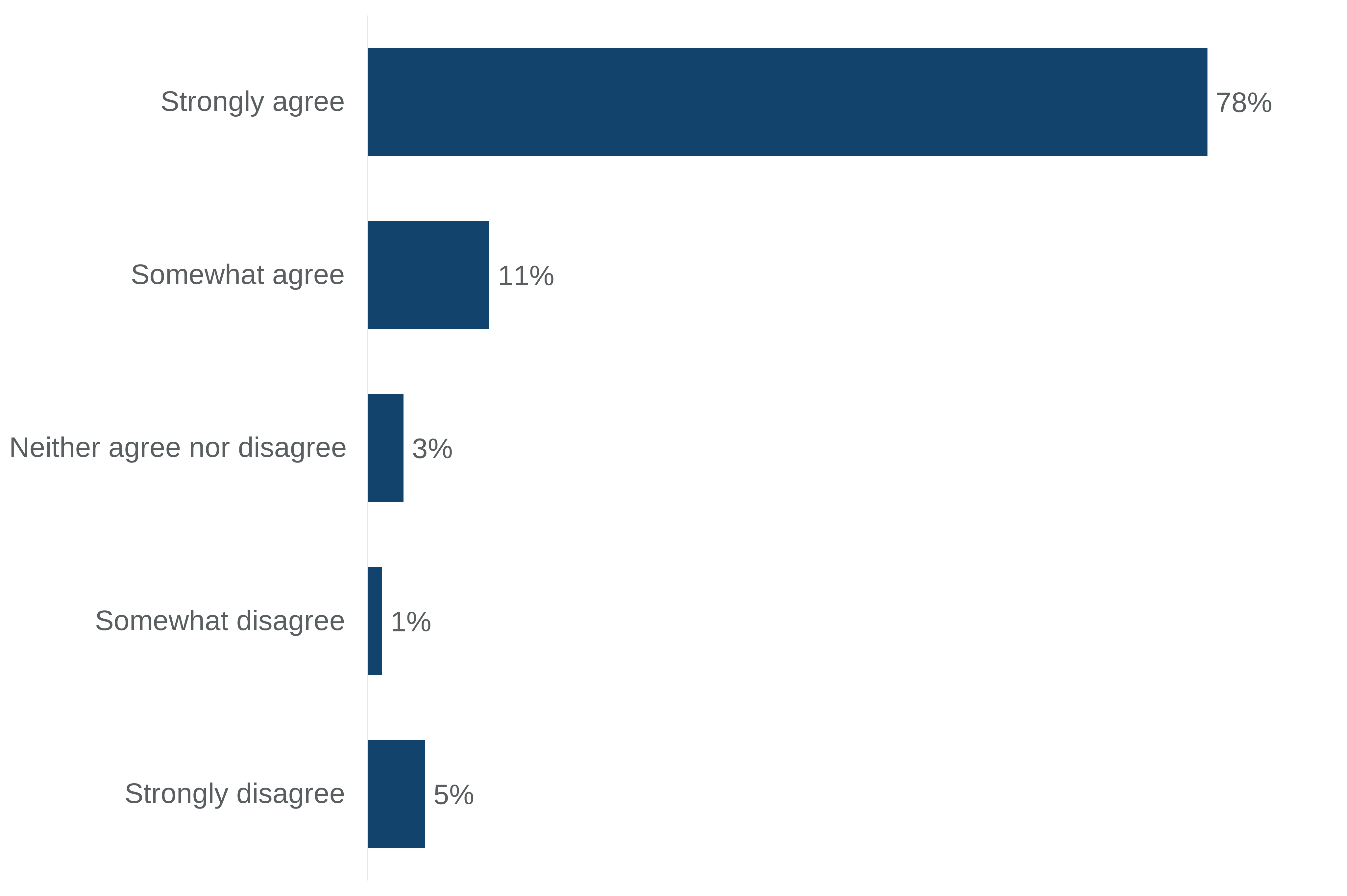
90% of respondents agreed that ethnicity pay gap reporting should be reported online in a similar way to the gender pay gap service.
Question 22. Do you agree or disagree that disability pay gap data should be reported online in a similar way to gender pay gap service? (answered by 587 respondents)
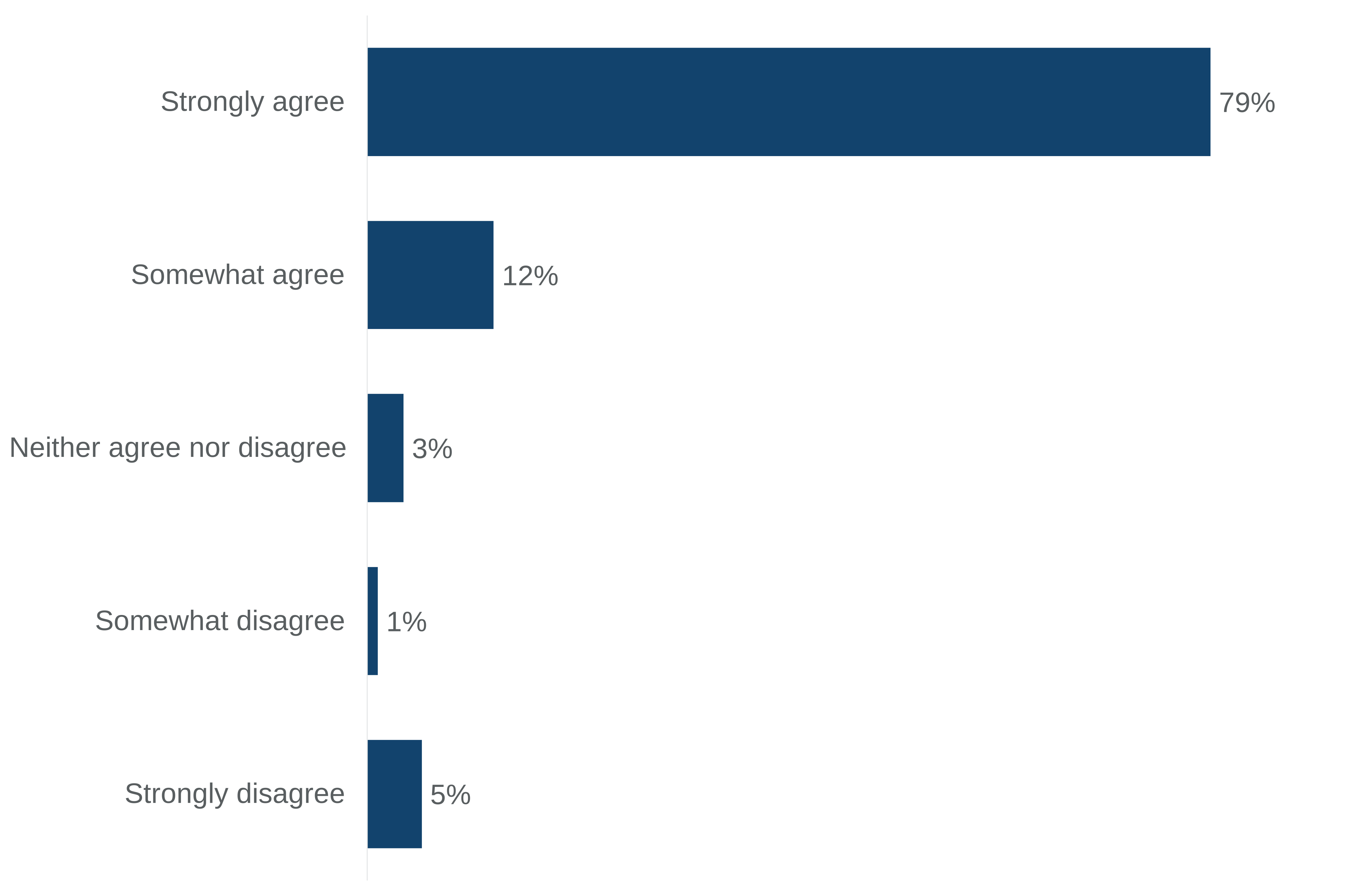
91% of respondents agreed that disability pay gap reporting should be reported online in a similar way to the gender pay gap service.
Open consultation questions
Respondents could also provide comments on these proposals.
On the proposals for dates and deadlines, many took the opportunity to further make clear their support for aligning the dates and deadlines and online reporting with gender pay gap reporting. They thought it would make it simpler for employers and lessen additional workload by streamlining reporting.
A few concerns were raised about whether current human resource (HR) systems would have the capabilities to handle the additional reporting, particularly in smaller organisations.
Enforcement
Background on proposals from the consultation
The Equality and Human Rights Commission (EHRC) currently enforces gender pay gap reporting. The government proposes that the same enforcement policy is used for ethnicity and disability pay gap reporting.
Closed consultation questions
Question 23. Do you agree or disagree that ethnicity pay gap reporting should have the same enforcement policy as gender pay gap reporting? (answered by 596 respondents)
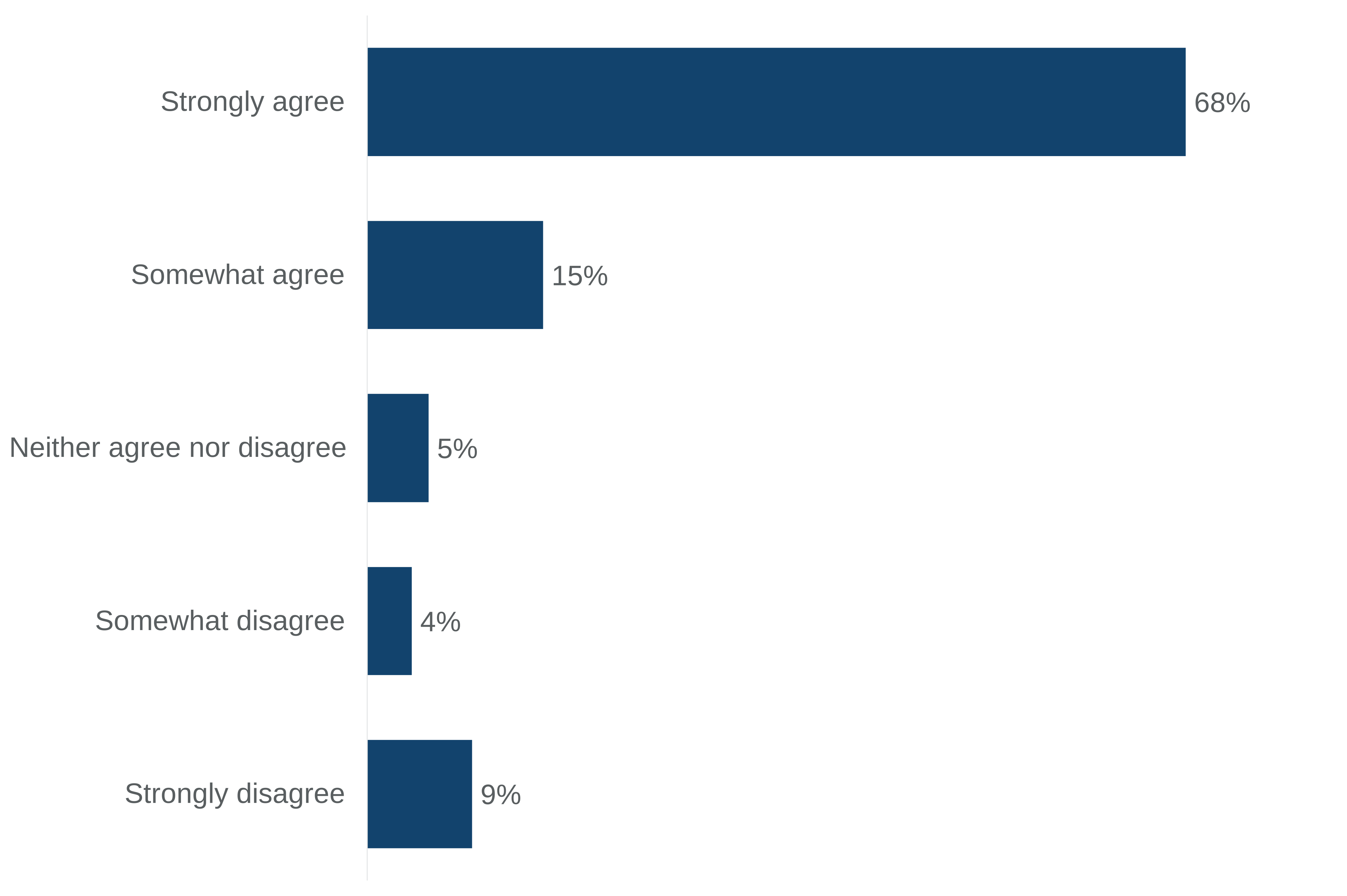
82% of respondents agreed that ethnicity pay gap reporting should have the same enforcement policy as gender pay gap reporting.
Question 24. Do you agree or disagree that disability pay gap reporting should have the same enforcement policy as gender pay gap reporting? (answered by 591 respondents)
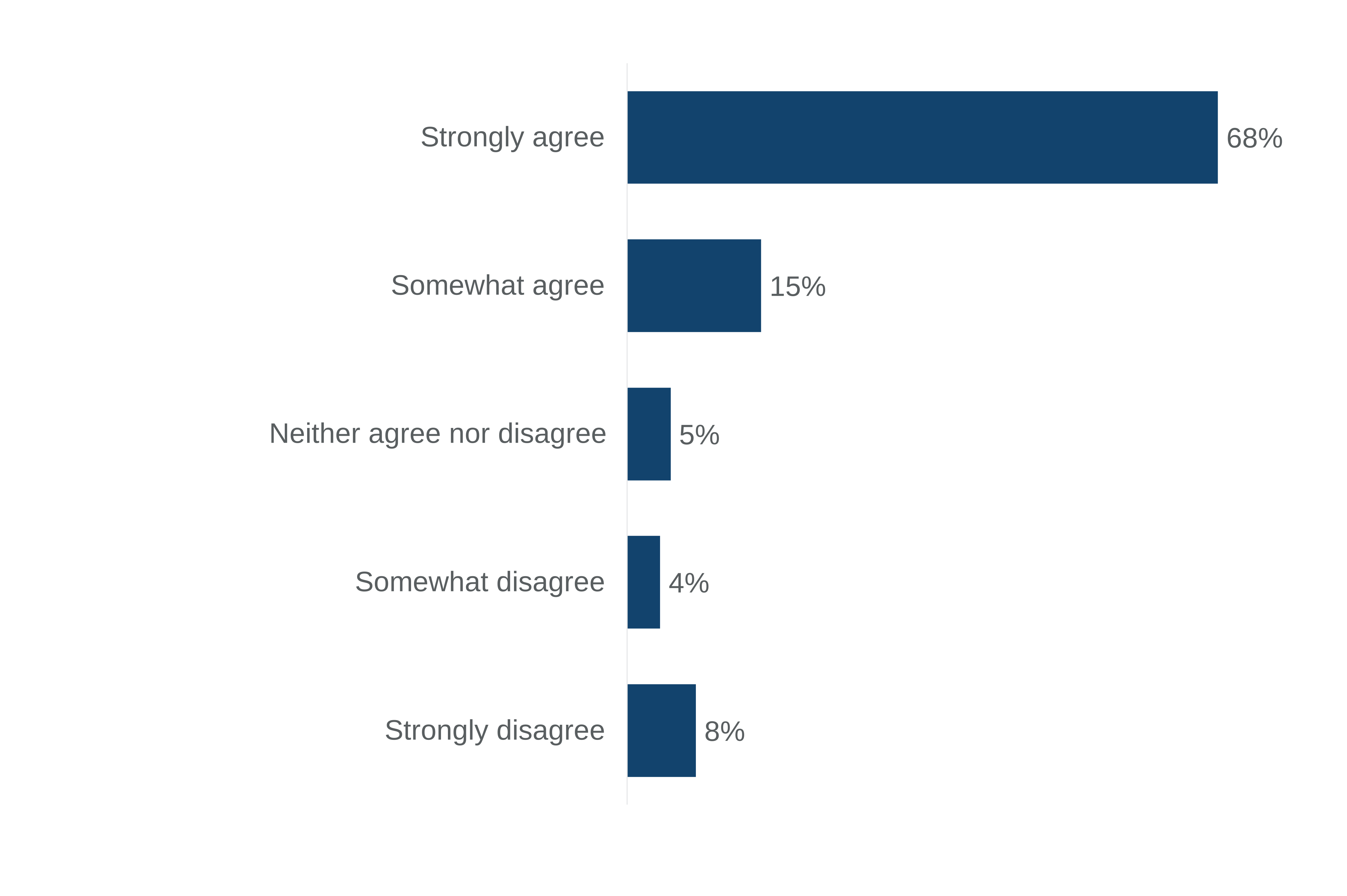
83% of respondents agreed that disability pay gap reporting should have the same enforcement policy as gender pay gap reporting.
Summary of responses
Respondents could also provide comments on these proposals.
Some respondents emphasised their support for the same enforcement approach as gender pay gap reporting. These respondents said that using the same approach would make sure the method used is familiar and would make reporting consistent.
“Using the established enforcement model from gender pay gap reporting provides a familiar framework that most employers already understand. It creates predictability in compliance expectations and reduces confusion about obligations” – An employer or business respondent
Some also highlighted the importance of making sure the enforcement actually happens, and that enforcement would make sure everyone follows the same requirements.
“If mandatory reporting requirements are made, they should be enforced. Consistent enforcement policies ensure that all types of pay gap reporting are taken seriously and that employers are held accountable for addressing disparities. This approach drives meaningful change and ensures that we maintain focus on all aspects of pay equity” – An employer or business
There were some concerns about the current level of enforcement for gender pay gap reporting, arguing that the approach in the future would need to be stronger.
“[Organisation name] remains concerned that the Equality and Human Rights Commission, the body responsible for providing enforcement on equality pay gaps, has been systematically weakened in recent years due to political interference and consistent cuts in funding. We would welcome ring-fenced funding for the EHRC in order to provide effective monitoring and enforcement of reporting against ethnicity, disability, and gender pay gaps” – Other organisation respondent
Ethnicity: data collection and calculations – data collection
Background to the proposal from the consultation
The government feels the best way for employers to collect ethnicity data is to ask employees to report their own ethnicity with an option to opt out of answering. They propose that employers in England and Wales should collect ethnicity data using the detailed ethnicity classifications in the Government Statistical Service (GSS) ethnicity harmonised standard that was used for the 2021 Census.
Using the harmonised standards can help:
- employers be consistent with their calculations in different time periods
- ensure comparability across different data collections produced by the government and other employers
- derive more useful statistics that give people a greater level of understanding
They also provide a ready-to-use set of tested and legally sound questions.
Closed consultation questions
Question 25. Do you agree or disagree that large employers should collect ethnicity data using the GSS harmonised standards for ethnicity? (answered by 548 respondents)
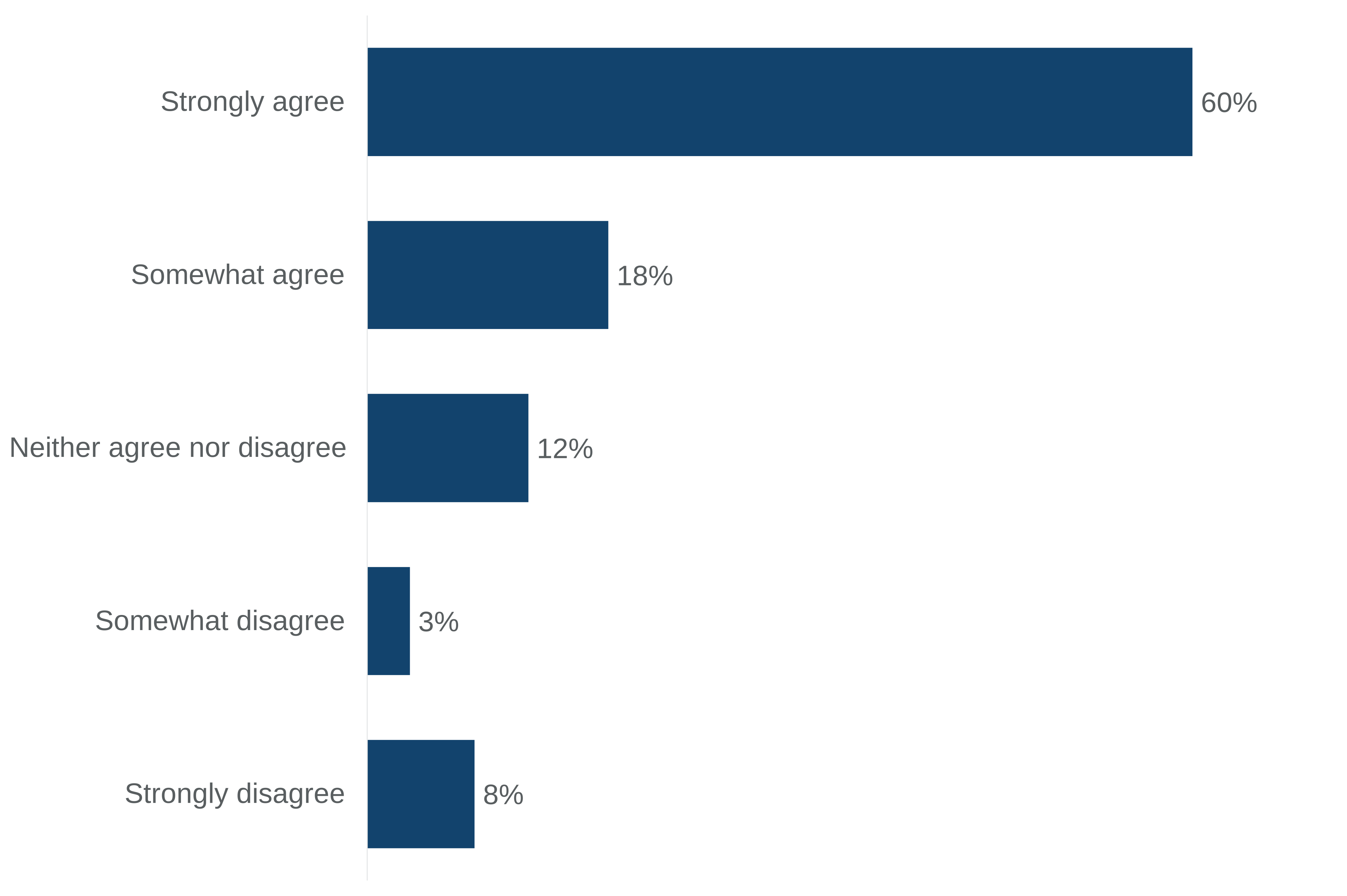
77% of respondents agreed that ethnicity data should be collected using the GSS harmonised standards for ethnicity.
Open consultation questions
Respondents could also provide comments on this proposal.
Some respondents said that using the GSS harmonised standards would make sure the data is comparable and ensure there is a consistent approach.
Some further respondents thought clear guidance would need to be provided to give confidence to all and reduce any inconsistencies in data collection and reporting.
Some highlighted the fact that many organisations do not currently use the GSS harmonised standards to collect data. Changing to the GSS harmonised standards would therefore require new data collection from employees, creating extra workload for these organisations.
“Data has likely not been collected in this way on existing employer records. This will require asking individuals to revisit and update - which may cause offence. For some employer’s data is currently collected that aligns with other reporting responsibilities that are mandated - e.g. the Higher Education sector. This would need to be overhauled first” – An individual respondent
A few also questioned the categories within the GSS harmonised standard, such as the absence of a category for Jews or Sikhs.
“There are several issues arising from the proposal to use the Government Statistical Service (GSS) ethnicity harmonised standard, which excludes Jews and Sikhs in England and Wales. This is of course highly consequential, as it would mean that inequalities faced by these groups would remain invisible to decision-makers, allowing discrimination to be left unaddressed. Both Jews and Sikhs have been recognised ethnic groups since the Mandla v Dowell case in 1983, and this was reaffirmed in the Equality Act 2010” – An individual respondent
Ethnicity: data collection and calculations – calculating and reporting ethnicity pay gaps
Background to the proposal from the consultation
To gain the most detailed insights from ethnicity pay gap reporting, an employer would ideally disaggregate their figures as far as possible. However, to protect the privacy of employees (in line with General Data Protection Regulation - GDPR) and to produce statistically robust data, the government proposes that there should be a minimum of 10 employees in any ethnic group that is being analysed.
To protect confidentiality, the government therefore proposes that employers report at minimum a ‘binary classification’. This means if an employer has smaller numbers of employees in different ethnic groups, they can report their figures for 2 groups - for example, comparing White British employees with ethnic minority employees. However, employers with larger numbers of employees in different ethnic groups should be encouraged to report their figures for 5 groups or more, following the ONS guidance on ethnicity data to aggregate ethnic groups. The minimum threshold of 10 should apply for each aggregated ethnic group being analysed.
Closed consultation questions
Question 26. Do you agree or disagree that all large employers should report ethnicity pay gap measures using one of the binary classifications as a minimum? (answered by 553 respondents)
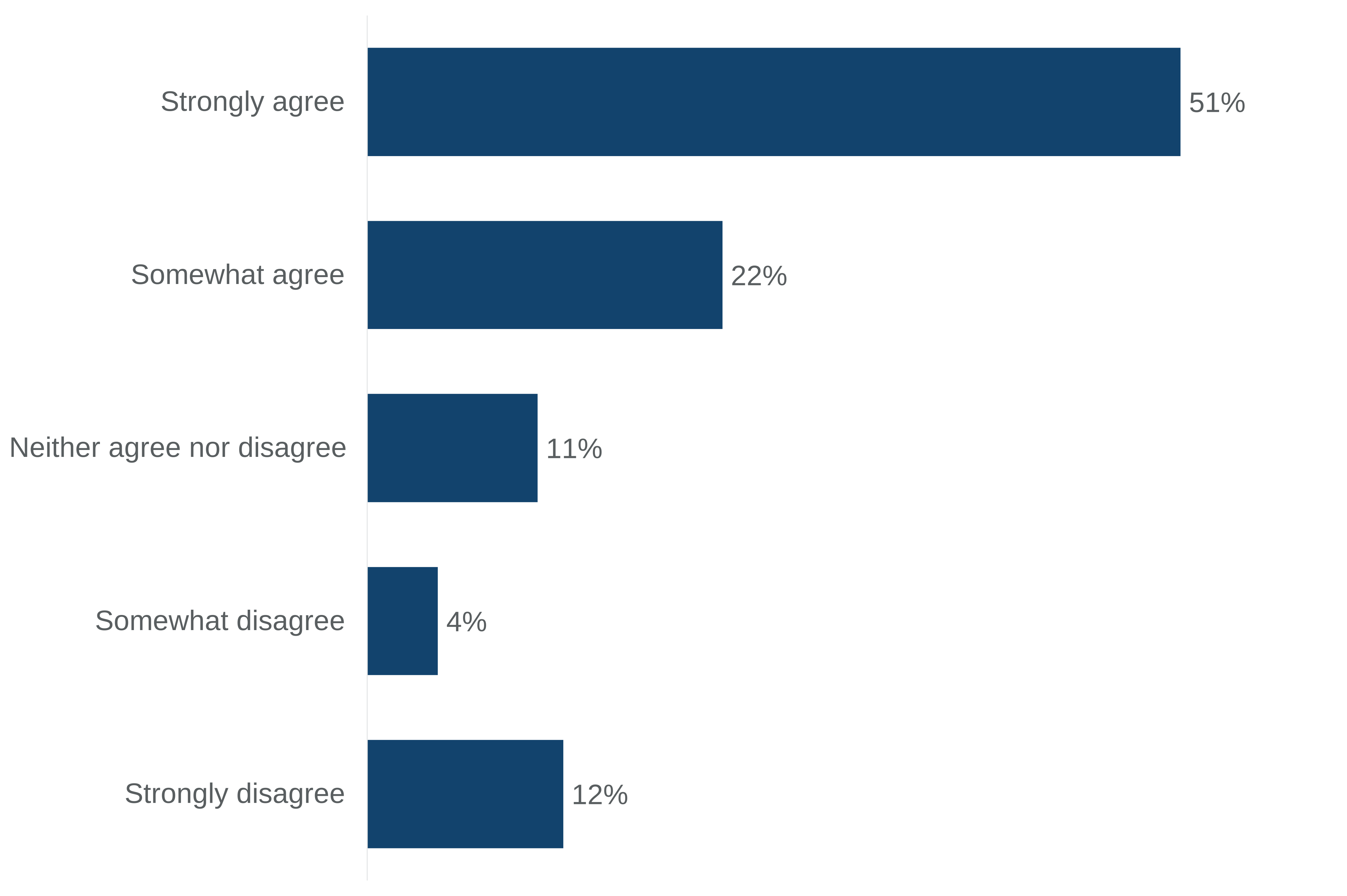
73% of respondents agreed that all large employers should report ethnicity pay gap measures using one of the binary classifications as a minimum.
Question 27. Do you agree or disagree that there should be at least 10 employees in each ethnic group being reported on? This would avoid disclosing information about individual employees. (answered by 575 employees)
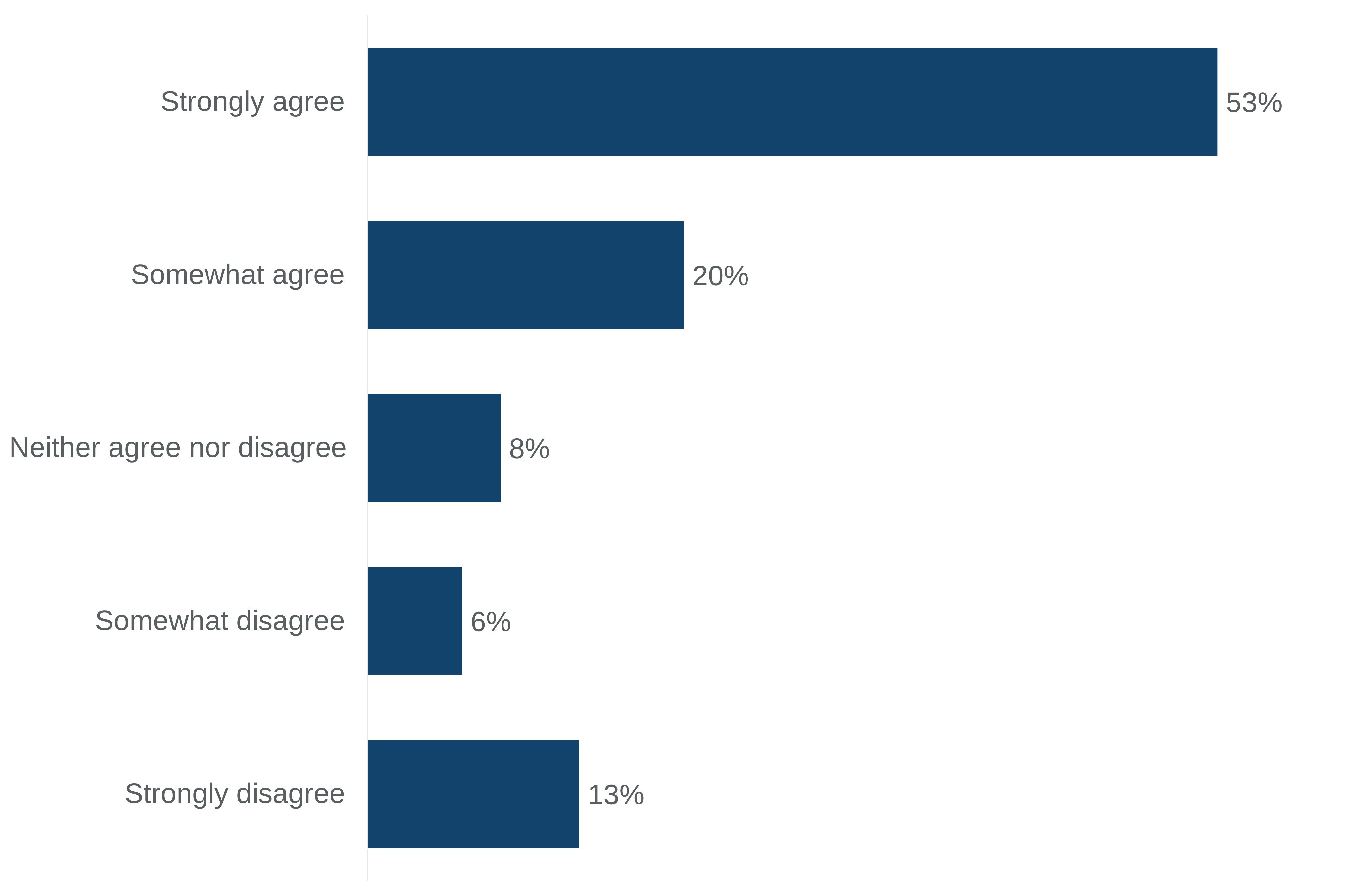
73% of respondents agreed that there should be at least 10 employees in each ethnic group reported on.
Question 28. Do you agree or disagree that employers should use the ONS guidance on ethnicity data to aggregate ethnic groups? This would help protect their employees’ confidentiality. (answered by 565 respondents)
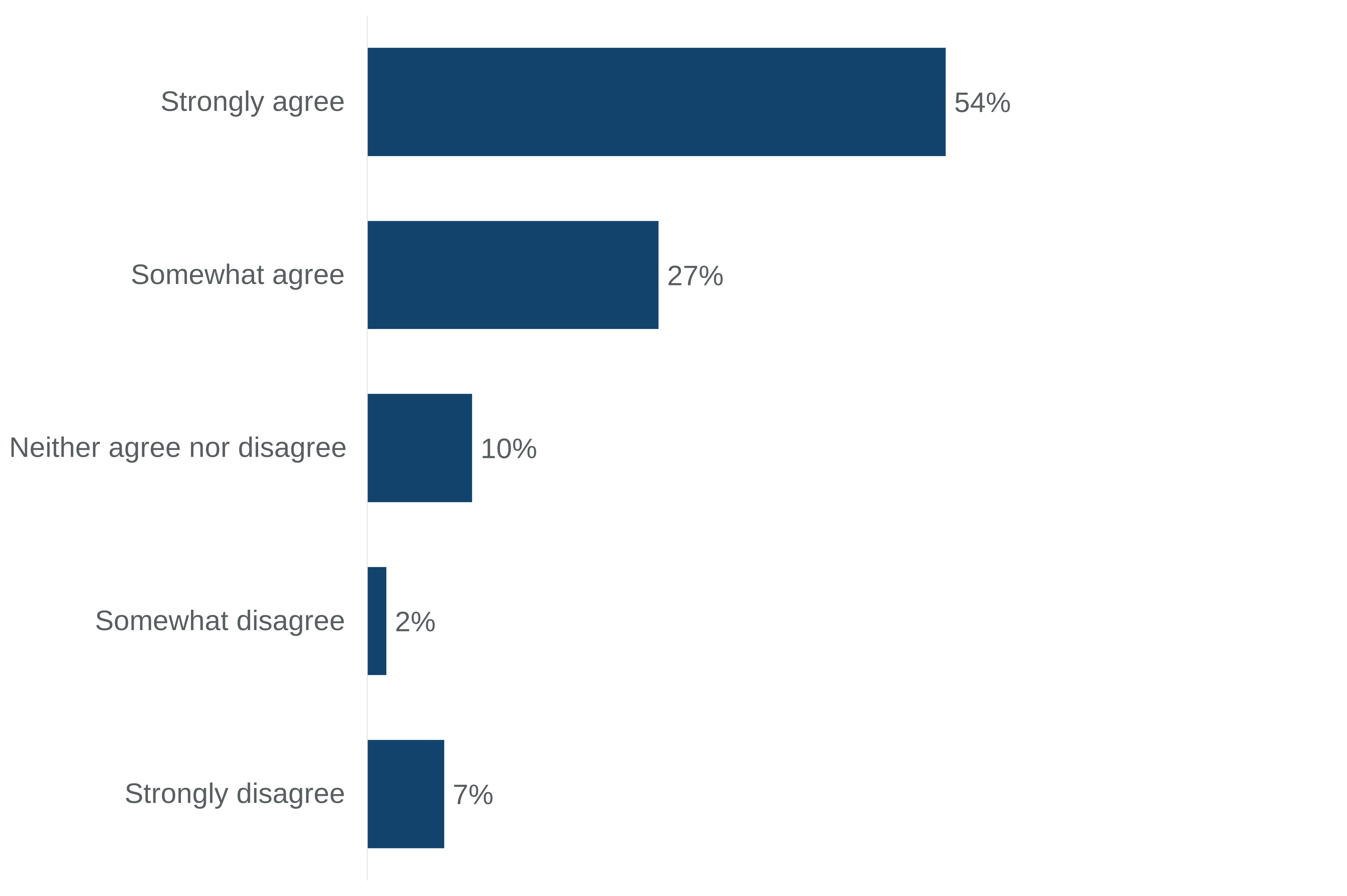
81% of respondents agreed that employers should use the ONS guidance on ethnicity data to aggregate ethnic groups.
Open consultation questions
Respondents could also provide comments on these proposals.
Concerns were raised in open-response comments about the classification and representation of ethnic groups as some thought that more granular groupings should be used to avoid specific experiences getting lost within a more generalised classification.
“I somewhat agree with the guidance to aggregate ethnic groups, and I don’t mean to be too granular, but I’d be interested in being a little bit more specific. “White/Other White” could include Eastern Europe, or even country-specific, Spanish, etc; similarly, with “Black African/Black Caribbean” – An individual respondent
A binary classification however was cited by some as a way to make sure that individuals and their information were protected. For most, this was thought to be the way to protect privacy.
“Where group sizes are too small, we agree that binary classifications can be permitted to be used by employers for ethnicity pay gap measures, in order to protect individual anonymity and confidentiality. A minimum of ten employees for ethnic group reporting (adhering to GSS harmonised standards for ethnicity) will protect individual privacy and confidentiality” – Other organisation respondent
In open-response questions, some respondents felt the threshold should be higher as there was lack of confidence that 10 could protect anonymity. Specific suggestions for the threshold ranged from 12 to 100 employees per ethnic group, with 50 being the most commonly suggested.
However, some thought the threshold needed to be lower. They thought most organisations will have fewer than 10 employees from each ethnic group and thus questioned whether these groups would then be excluded from the data.
“Some positions inevitably would only attract less than ten employees; therefore the exclusion of this group skews the data and the whole purpose of race and disability pay gap reporting” - An employer or business respondent
Some respondents expressed their support for using ONS guidance on aggregating ethnic groups as they felt it would provide a consistent and comparable approach across employers.
“The ONS guidance on which ethnic groups to aggregate for ethnicity data will ensure a consistent and comparable approach across different employers. The ONS approach on aggregating ethnic groups has also been tested and is widely recognised” – Other organisation respondent
When asked to leave any comments about the proposals for calculating and reporting ethnicity pay gaps, some questioned the classification of ethnic groups such as non-British White employees. These respondents expressed concern for grouping methods which would combine the responses of White British and White Other employees, with the potential of losing the experiences of some groups.
“Second binary classification – need to stress the difference between White British vs White and emphasise that non-British White communities still face racial discrimination, and the second binary classification doesn’t seek to undermine their experiences by incorporating them into a broader White category” – An employer or business respondent
Additional comments on ethnicity pay gap reporting
Question 29. Is there anything else you want to tell us about ethnicity pay gap reporting?
Some called for intersectional analysis across a number of protected characteristics. Most comments referred to gender, but there were other suggestions like religion, socio-economic background, and geography. Respondents thought intersectional analysis would be more meaningful and allow the potential to pinpoint the root causes of disadvantage.
“Ethnicity pay gap reporting must therefore be sensitive to the intersection of race, religion, and cultural heritage. Aggregated ethnic categories may obscure the specific disadvantages faced by Muslim communities, particularly where ethnic and religious identities overlap. For example, the experiences of a Black Muslim woman may differ significantly from those of a non-Muslim Black woman or a White Muslim man. Without disaggregated data and intersectional analysis, these nuances are lost, and the structural barriers affecting Muslim employees remain unaddressed. To ensure meaningful reporting, employers should consider how anti-Muslim prejudices and Muslim heritage intersect with ethnicity and ensure that their data collection and analysis frameworks are capable of capturing these layered experiences. In turn, it may be useful to include optional collection of religion data for greater analysis.” – Other organisation respondent
Some other respondents also called for the support of the government to help employers in the setup of reporting, such as templates and best practice examples, as well as guidance on how employers can make sure all data is collected correctly.
“The calculation of the ethnicity pay gap should follow a standardised, consistent methodology across organisations. This includes clear guidance on how to deal with factors such as part-time or flexible working, and how to account for different job levels or roles, to ensure the data is not skewed” – An employer or business respondent
Some echoed earlier comments about the need for classifications to be disaggregated.
“Using broad classifications can mask larger differences between ethnic groups. Where employers have more in-depth data on the ethnic breakdown of their workforce they should be encouraged to publish this (providing it does not risk disclosing information about individual employees)” – An organisation or network that represents either employers, employees or both respondent
A couple of respondents talked about the need for an independent body to oversee reporting.
“To guarantee integrity and accountability, an independent oversight body—such as a well-resourced Fair Work Agency or similar public body—must be established” – Other organisation respondent
Disability: data collection and calculations
Background to the proposal from the consultation
Previous work on disability workforce reporting, together with early engagement with academics, employers and civil society organisations, has identified 2 approaches to calculating the disability pay gap:
-
Measure the difference in pay between disabled employees and non-disabled employees – we call this a ‘binary approach’.
-
Measure the difference in pay between employees with different impairment types and non-disabled employees.
There was support within earlier engagement for reporting on impairment types, for example by using the GSS impairment harmonised standard. However, there are some significant risks to such an approach if applied to pay gap or workforce reporting. These include the risk of individuals becoming identifiable, and greater complexity in calculations where people have multiple impairments.
As such, the government proposes to take the binary approach, measuring the disability pay gap by comparing the pay of disabled employees with non-disabled employees. The proposal uses the Equality Act 2010 definition of ‘disability’ as the basis of identifying disabled employees.
To protect the privacy of employees (in line with GDPR) and to ensure data is statistically robust, the government proposes that there should be a minimum of 10 employees in each disability group being compared in terms of pay.
Closed consultation questions
Question 30. Do you agree or disagree with using the ‘binary’ approach (comparing the pay of disabled and non-disabled employees) to report disability pay gap data? (answered by 563 respondents)
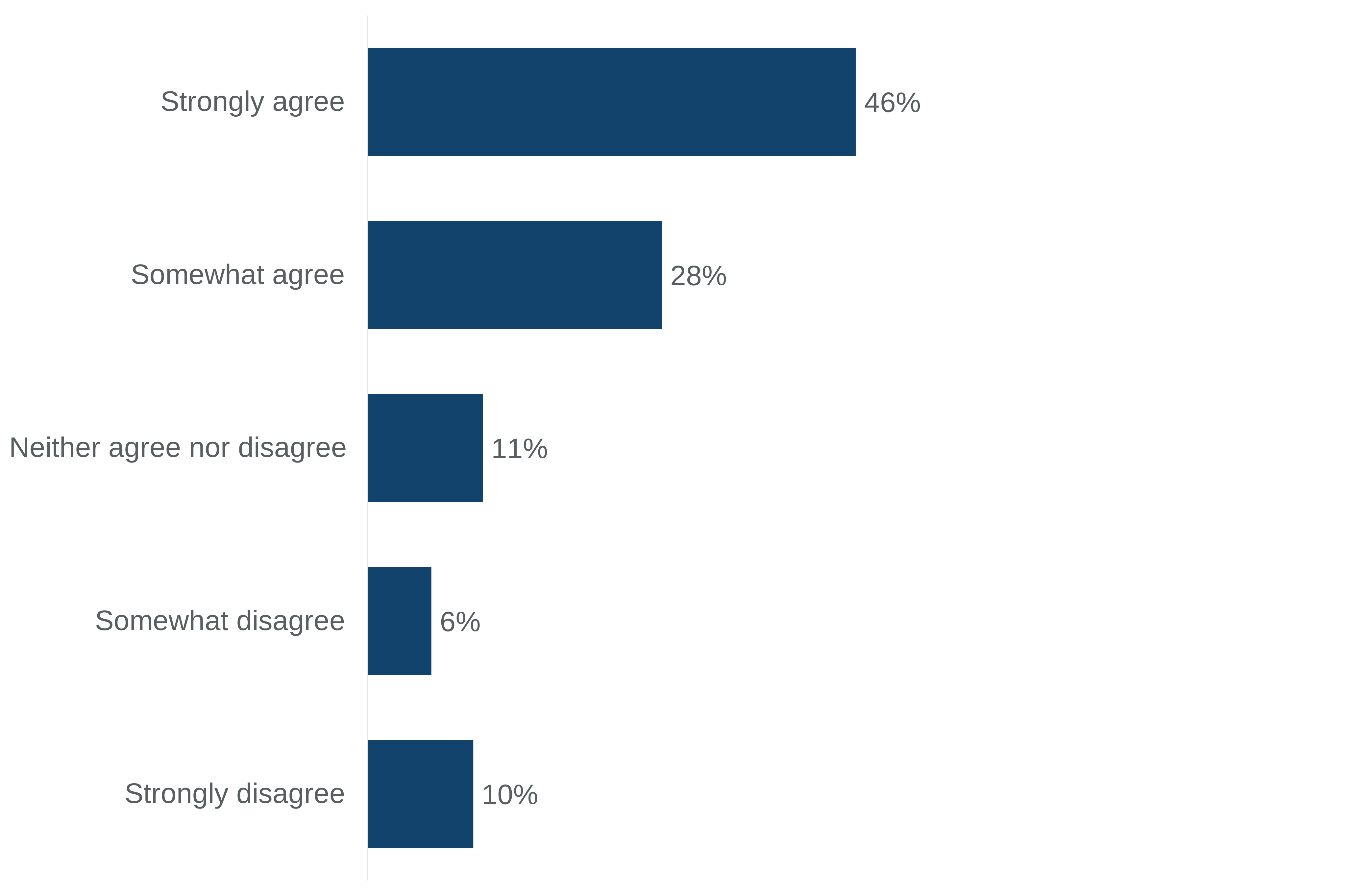
73% of respondents agreed with using a ‘binary’ approach to reporting disability pay gaps.
Open consultation questions
Question 31. Do you have any feedback on our proposal to use the Equality Act 2010 definition of ‘disability’ for pay gap reporting?
Some respondents expressed concerns that, although the Equality Act (2010) definition of disability is the legal definition, this definition might not include all employees who would consider themselves disabled. Respondents highlighted that the definition only works if it aligns with the way that employees describe themselves.
“It is the appropriate definition on a legal basis but doesn’t truly reflect those like myself whose conditions are not disabling where appropriate adjustments exist” – An individual respondent
Some respondents reiterated their general agreement with using the definition. It was thought to be a standard definition that would make sure data is comparable on an ongoing basis, as well as a definition that would help prevent conditions not classed as impairment types being included in the data, thus avoiding skewing results.
“We agree with the proposal to use the Equality Act 2010 definition of ‘disability’ for pay gap reporting. This definition aligns with the GSS harmonised standards for long lasting health conditions and illness and activity restriction. Using this definition will ensure that employers’ disability pay gap data is consistent over time and comparable with other important national and regional data sources such as the Census and the Labour Force Survey. The GSS standards have been carefully tested and are well-understood by employers and employees” – Other organisation respondent
Some respondents thought using the Equality Act 2010 definition would be a way of ensuring consistency in how data is captured and compared.
“We strongly agree with the Cabinet Office’s proposal to use the Equality Act 2010 definition. It is essential that all employers are required to use this question in asking employees about their disability status, given that small differences in question wording can yield large differences in reported disability figures. In the absence of such consistency across employers, the full potential of mandatory reporting would not be realised, as it would not be possible to compare the data across organisations, use the figures to underpin reform of other schemes (e.g., Disability Confident and social value in public procurement), or develop national, regional, or sector averages for benchmarking purposes” – An organisation or network
The Equality Act 2010 definition was thought to be too broad by some. These respondents argued for the need for all employees to fully understand what was categorised under the definition. This was because disability was thought to be subjective and related to how an employee wants to define themselves.
“Make sure all employees are aware of categories within the broad definition e.g. chronic/fluctuating health conditions, neurodiversity, mental health conditions. Sometimes even the broad definition catches some people out who would be comfortable identifying themselves as having a disability, but don’t often frame themselves in this way” – An individual respondent
Some addressed the terminology used, saying that the word ‘disability’ was not appropriate. This was due to its broad nature and the fact that many individuals do not identify as ‘disabled’. These respondents suggested amending the terminology to asking if employees have a physical or mental impairment or health condition.
“I agree - but the word ‘disability’ should not be foregrounded. Research suggests the majority of people who qualify as disabled people under the Equality Act do not see themselves as ‘disabled’ but rather as having cancer, or a mental health problem, or whatever. So, I would dive straight into the Equality Act definition rather than start with any preamble using the word ‘disability’. I would also add the word health condition - since ‘impairment’ may be an alien term to some people. So, ask whether people have ‘a physical or mental impairment or health conditions” – An individual respondent
A few respondents thought the definition was too medical and, because of this, barriers or wider factors such as environmental and attitudinal challenges are not taken into account. Therefore, this would mean it was not truly reflective of lived experience.
“1. Medical Model Bias - Although the Act tries to incorporate aspects of the social model of disability, the definition still relies heavily on the medical model, by requiring proof of an ‘impairment’ and its effects. This can stigmatise individuals and place the burden on them to justify their disability.
2. Barrier to Disclosure and Support - Many people—particularly those with invisible disabilities (e.g. neurodivergence, mental health conditions)—may not see themselves reflected in the legal definition. Others may fear stigma or not wish to ‘prove’ their impairment, resulting in under-disclosure and lack of workplace support.
3. Ambiguity in ‘Substantial’ and ‘Day-to-Day Activities’ - The terms ‘substantial’ and ‘normal day-to-day activities’ are open to interpretation. This vagueness can create inconsistency in how the law is applied, leaving room for challenges or dismissals of genuine needs in employment or service provision.
4. Neglect of Environmental and Attitudinal Barriers - The definition focuses on the individual’s impairment, rather than on external barriers—such as inaccessible workplaces, discriminatory attitudes, or policy design—that actually disable people. This limits the transformative potential of the law” – An individual respondent
Closed consultation questions
Question 32. Do you agree or disagree that there should be at least 10 employees in each group being compared (for example, disabled and non-disabled employees)? This would avoid disclosing information about individual employees. (answered by 571 respondents)
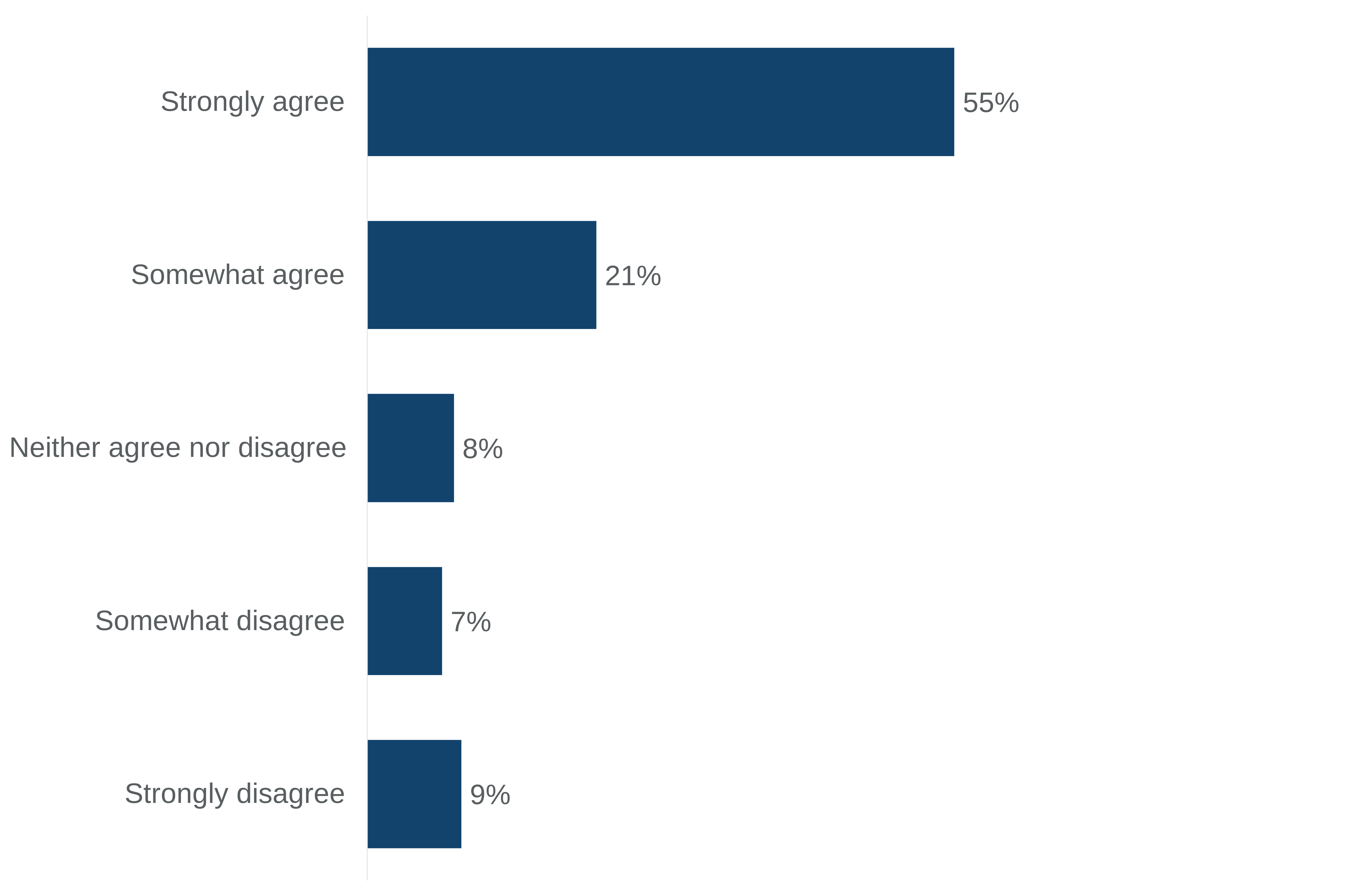
76% of respondents agreed that there should be at least 10 employees in each group being compared.
Open consultation questions
Respondents were able to share additional comments on these proposals.
Some respondents said that disaggregating data by impairment type would allow for a more accurate dataset. This would mean more visibility for specific impairments and historically overlooked impairment types such as neurodivergence. However, others highlighted the challenges linked to this method of classification.
“While we encourage the use of data and reporting in a way that ensures employee confidentiality is maintained it should be noted that using aggregated disabled and non-disabled employee groupings can disguise significant inequity for any specific type or presentation of disability, and issues related to intersectionality of protected characteristics. We would therefore encourage guidance to employers that in their action plans they should consider how they review inequities in the disaggregated data that may mean specific actions to address inequities in subgroups are identified and actioned. We would also encourage the provision of guidance around use of sensitive inclusive language relating to disability and needs such as neurodiversity” – Other organisation respondent
Several respondents also said that the minimum threshold for employees per group to be reported on should be higher. Mainly, this concern was linked to protecting the anonymity of individual employees. Thresholds suggested ranged from 20 to over 1,000, with 50 being the most often suggested.
“People interpreting pay gap reporting (employers and other users of data) are likely to have less of a statistical background and therefore it may be pertinent to have a larger number of people (e.g. 50) in each category to be able to report. This could help avoid conclusions being made on unsuitably small sample sizes” – Other organisation respondent
Furthermore, some respondents highlighted the importance of maintaining anonymity in collecting data, mainly in relation to comments on the threshold for inclusion in reporting. These respondents felt strongly about the risks of individuals being identifiable and about the importance of trust in the reporting to ensure data integrity.
“I agree with the requirement for at least ten employees in each group being compared. This is a sensible threshold that helps protect individual privacy and aligns with data protection principles like GDPR. It also encourages responsible reporting by ensuring that data is statistically meaningful and not misleading. While it may limit granularity in some cases, safeguarding employees’ confidentiality is essential for building trust and encouraging more people to disclose sensitive information such as disability status” – An employer or business respondent
Some respondents called for a lower threshold for inclusion of a group in the report. Several reasons were provided for this, including transparency and the numbers of disabled employees being generally lower than the number of employees belonging to an ethnic minority, making data collection more challenging. A few who gave specific suggestions thought the threshold should be 5.
“Depending on the type of disabilities, a pool of ten for data may be difficult to achieve” – An individual respondent
A few others suggested that pay gap reporting will create extra work for organisations, which could become burdensome for specific departments (such as HR or payroll), particularly for organisations that only just meet the threshold of 250 employees.
“These questions show the complexity of this issue, the collation, analysis to report could end up being very onerous and potentially leave companies unable to comply with the reporting requirements or get their reporting wrong. It is far more complex than reporting on two discrete groups based on biological gender. Again, I work in an HR team in what is classed as a large organisation; however we are a small team with limited resources, and the additional burden will be with my team” – An employer or business respondent
A binary approach for disability was also highlighted by a few as they cited their concerns that certain categorisations will not account for all conditions, such as fluctuating or temporary conditions.
“The GSS harmonised standard referenced in the consultation may not adequately capture conditions that are episodic or variable in nature, such as menopause, endometriosis or migraines, which may still fall under the Equality Act 2010. The government should consider whether a binary-only framework is sufficient to meet the aims of pay gap reporting, and whether more detailed categorisation should be supported over time” – An organisation or network
Additional comments on disability pay gap reporting
Question 33. Is there anything you want to tell us about disability pay gap reporting?
Some respondents stated the need for the government to offer support to organisations to ensure the success of the reporting process. Resources such as templates, examples, reports, clear definitions, or support with communications, were cited. It was highlighted that these resources should be kept up to date to make sure accurate reporting was achieved.
“Employers also said that they would welcome materials to help them to understand the definitions of disability and neurodiversity and the sharing of key messages to make disclosure a positive change. This would enable employers to provide better support. Employers would like simple, easy-to-understand guidance to help them collect data, as well as access to practical examples of how they can use it to introduce positive actions and support employees with disabilities. Employers would like guidance to support with key communication messages for each stage of the legislation process and support with practical messaging strategies to encourage voluntary disclosure. Smaller organisations would especially need tailored support due to limited resources, especially those who have not begun to take any action yet on capturing data linked to disability in the workplace” – Other organisation respondent
In terms of data analysis, some respondents called for intersectional data analysis to account for a wider range of factors, such as gender or socioeconomic status, which can influence pay gaps. These respondents thought intersectional analysis would be more accurate and representative.
“Research on pay gaps also illustrates why an intersectional approach to disability (including race and gender) is necessary to effectively tackle pay gaps. Women, and particularly Black, Asian and Minority Ethnic and Disabled women, are over-represented in low-paid, insecure and part-time work. Similarly, the motherhood penalty intersects with ethnicity, disability and age discrimination, compounding pay gaps for these groups over a lifetime” – Other organisation respondent
Some also said that if reporting on disability and ethnicity pay were to become mandatory, organisations should not pressure their employees to share information.
“Mandatory reporting could create perverse incentives, where organisations focus on numbers and the pay gap rather than on meaningful change, potentially leading to a pressure to disclose disability or even ‘bullying’ for data” – An individual respondent
A few respondents also highlighted that other factors were more important for inclusion than the pay gap, such as disability initiatives.
“Measuring disability pay gaps does not provide an indicative metric of the adverse dynamics faced by disabled people in the workplace. It is more likely that people with disabilities will need adjustments, to working hours, for example, which impacts their pay. The work of the Government and of firms on disability should be aimed to increase access/opportunities in the workplace for disabled people, rather than focusing on remuneration” – An organisation or network
A few respondents mentioned that reporting could have a negative impact, in particular on disabled employees.
“Pay gap reporting for disability is a complex topic and as mentioned previously, the concern is that if pay gaps are low, some employers may not want to risk increasing their pay gap by recruiting people with disabilities into entry level positions” – An employer or business respondent
Annex A: summary of respondent demographics
Please note: Respondent profile information is based only on those who disclosed who they were responding as. Out of 857 overall responses, 208 did not disclose this information.
Individual respondents (355 respondents)
These demographic questions were only asked to those responding as an individual.
Gender of individual respondents
| Gender | Count |
| Female | 249 |
| Male | 80 |
| Prefer not to say | 18 |
| No answer | 8 |
Age of individual respondents
| Age band | Count |
| 24 and under | 9 |
| 25 to 34 | 59 |
| 35 to 44 | 83 |
| 45 to 54 | 102 |
| 55 to 64 | 70 |
| 65 and above | 6 |
| Prefer not to say | 18 |
| No answer | 8 |
Disability status of individual respondents
Please note respondents could select more than one option for this question.
| Disability status | Count |
| Disabled | 127 |
| Neuro-divergent | 99 |
| d/Deaf | 18 |
| Condition lasting 12 months or more | 107 |
| None of these | 115 |
| Other | 11 |
| Prefer not to say | 23 |
| No answer | 9 |
Ethnicity of individual respondents
| Ethnicity | Count |
| English, Welsh, Scottish, Northern Irish, British | 147 |
| Irish | 4 |
| Gypsy or Irish Traveller | 0 |
| Roma | 0 |
| Any other White background | 18 |
| White and Black Caribbean | 8 |
| White and Black African | 2 |
| White and Asian | 9 |
| Any other Mixed background | 7 |
| Bangladeshi | 3 |
| Chinese | 1 |
| Indian | 28 |
| Pakistani | 9 |
| Any other Asian background | 3 |
| Caribbean | 26 |
| African | 33 |
| Any other Black, Black British, Caribbean or African background | 20 |
| Arab | 3 |
| Other Ethnic Group | 7 |
| Prefer not to say | 20 |
| No answer | 1 |
Organisation respondents (294 respondents)
Size of organisation
This demographic question was only asked to those responding as ‘employer or business’, ‘organisation or network’, or ‘other organisation’.
| Size of organisation | Count |
| 1 to 24 | 22 |
| 25 to 249 | 33 |
| 250 to 999 | 57 |
| 1,000 or more | 142 |
| No answer | 40 |
Organisation type
This demographic question was only asked to those responding as ‘organisation or network’, or ‘other organisation’.
| Organisation type | Count |
| Disabled people led organisation | 3 |
| Disability charity or organisation | 12 |
| Disabled staff network | 3 |
| Ethnic minority organisation | 23 |
| Ethnicity staff network | 6 |
| Trade union | 9 |
| Other (please specify) | 64 |
| No answer | 24 |