Variations in sex characteristics (VSC): experiences of life in the UK for people with VSC and those who care for them
Updated 30 July 2026

© Crown copyright 2026
This publication is licensed under the terms of the Open Government Licence v3.0 except where otherwise stated. To view this licence, visit nationalarchives.gov.uk/doc/open-government-licence/version/3 or write to the Information Policy Team, The National Archives, Kew, London TW9 4DU, or email: psi@nationalarchives.gov.uk.
Where we have identified any third party copyright information you will need to obtain permission from the copyright holders concerned.
This publication is available at https://www.gov.uk/government/calls-for-evidence/variations-in-sex-characteristics-call-for-evidence/outcome/variations-in-sex-characteristics-vsc-experiences-of-life-in-the-uk-for-people-with-vsc-and-those-who-care-for-them
Variations in sex characteristics (VSC): experiences of life in the UK for people with VSC and those who care for them
Analysis of the responses to the government’s call for evidence (2019)
July 2026
Disclaimers
This call for evidence was an evidence-gathering exercise and did not put forward any proposals for policy or legislative change.
This report was completed under the previous administration but not published. Owing to delays in publication, the content and language of the report does not reflect current government policy or the latest available evidence. While the Office for Equality and Opportunity has made every effort to ensure the information in this document is accurate, they do not guarantee the accuracy, completeness or usefulness of that information.
Executive summary
Introduction
The Government Equalities Office (GEO) launched a call for evidence in 2019 to gain better insight into the experiences and needs of people in the UK who have variations in sex characteristics (VSC).
Our working definition of the term ‘variations in sex characteristics’, adapted from research in the Netherlands (van Lisdonk, 2014), is:
An umbrella term used to describe physical sex development which naturally occurs in humans, and differs from what is generally expected of males or females. These variations are congenital and may be chromosomal, gonadal, anatomical or hormonal.
Some people may prefer this definition, but we know others might not. The call for evidence asked questions about preferred terminology, as well as healthcare and medical interventions, experiences in education, support services and organisations, workplace, benefits, sport and leisure services, sex assignment and birth registration.
There is no comprehensive estimate of the number of people with VSC in the UK. The Office of the United Nations High Commissioner for Human Rights estimates that between 0.05% and 1.7% of infants will be born with varied sex characteristics (United Nations, 2015).
Analysis is based on 2 groups of respondents:
- those who have variations in sex characteristics
- those who look after people who have variations in sex characteristics in a personal capacity, such as parents, legal guardians, or carers.
The rounded sample sizes are 120 and 80 respondents, respectively. This analysis should not be interpreted as representative of the population with VSC, or those who care for people with VSC, as a whole.
Main findings
All references, unless otherwise stated, refer to respondents with VSC.
Terminology
Diagnoses of VSC are extremely diverse in nature, and though different terms for VSC are commonly used, there was considerable support from respondents and those caring for someone with VSC for the government to use the umbrella term ‘variations in sex characteristics’ to describe people who have a body that is not typically male or female.
Nearly twice as many respondents agreed with the use (59%) as disagreed (29%). Half of respondents who care for someone with VSC agreed with the use of the umbrella term (50%) and around a third disagreed (34%).
Healthcare
People with VSC have had diverse experiences of healthcare and interactions with healthcare professionals. Informed consent and the age at which people with VSC, particularly young children, should be allowed to undergo surgeries and procedures related to having VSC are areas of particular interest to VSC individuals and organisations.
Although 7 out of 10 respondents were first diagnosed as having VSC under 18 years (67%), only 47% of respondents reported finding out about their diagnosis under 18 years, with others learning of their diagnosis later in life.
Of respondents who consented to disclose information on medical interventions or procedures they had undergone in relation to having VSC, nearly 1 in 5 (19%) had undergone their first such medical intervention or procedure when they were under 2 years old.
Of respondents who had undergone medical interventions and were willing to disclose information on these:
- 65% reported that they were not able to provide informed consent to the interventions or procedures they had undergone due to having VSC
When asked why they had felt unable, explanations given included:
- believing that they were too young to be able to give informed consent
- not being given the information needed
- not being included in the decision making, despite being old enough to be
Respondents were almost 3 times as likely to report that they had had a negative experience than positive experience of aftercare (50% and 18%, respectively).
83% reported that they did not have appropriate access to psychological support in their aftercare, and 57% reported that they did not have appropriate access to aftercare information and advice from healthcare professionals.
Experiences in education
People with VSC in education may experience:
- difficulties being open with school staff and peers about their variation
- unwillingness to use school facilities
- lack of awareness from teachers and school staff
- absences from school
- social exclusion
65% of respondents reported that their VSC was never discussed, either by themselves or their guardian, with their education staff.
Almost three-quarters of respondents believed that VSC had affected their school life (73%). Many described negative experiences, such as bullying and harassment and their experiences of negative mental health when at school.
1 in 5 respondents (20%) reported that they were absent from secondary school ‘often’ or ‘very often’ owing to having VSC.
Workplace, benefits, and sport and leisure services
There is a lack of evidence on experiences of adults with VSC in the UK in these areas in comparison with health services.
57% of respondents reported that having VSC had affected their experiences of the workplace. When asked to describe how, respondents largely mentioned negative impacts, for example, on social, mood, mental health, and career trajectory.
39% of respondents stated that they had not had any experience of claiming benefits.
16% of respondents felt that having VSC had affected their experiences of claiming benefits. When asked to describe how, respondents mentioned lack of knowledge about VSC and negative interactions with staff.
Half of respondents felt that having VSC had affected their experience of using sport and leisure services (50%). When asked to describe how, respondents mentioned experiences such as feeling unsafe or uncomfortable using public single-sex or gendered spaces.
Sex assignment, birth registration, and correcting birth certificates
People with VSC and their parents may face unique challenges when it comes to birth registration, with some people with VSC experiencing medical errors in the assignment of their sex at birth which came to light as they developed.
59% of respondents were unaware that people could change the sex marker on their birth certificate if their sex was incorrectly assigned at birth as a result of a medical error.
4% of respondents had already changed their sex marker at the time of responding to the call for evidence. Around a quarter had considered changing their sex marker, but had not done so (24%). There could be a number of reasons for this, however it is not clear from the data why this was the case.
Support services and organisations
People with VSC may seek support from a variety of sources outside their family, public health, and education services, for example, from specific VSC organisations and charity support groups.
Respondents mentioned seeking support from a range of sources, such as:
- specific VSC organisations and charity support groups
- followed groups on social media
- friends
- therapists, psychologists or counsellers
- other people with VSC
- online research
57% of respondents who care for someone with VSC had used a support service or organisation for people with VSC and those who look after them in the last 3 years. Of these respondents, 88% had found these support services or organisations very or quite useful.
Conclusion
Overall, the call for evidence findings represents the broad and diverse nature of living with VSC. Consistently, the majority of respondents felt that having VSC had affected an area or stage of their whole life course. More research would be needed to better understand the issues raised in more detail.
Limitations of this analysis
These results are based on a small sample of people who were aware of, and responded to, the call for evidence in 2019. While every effort was made to publicise the call for evidence to the relevant groups, including via VSC organisations and via healthcare providers, this analysis should not be interpreted as representative of the population with VSC, or those who care for people with VSC, as a whole.
1. Introduction
1.1 Policy context
People with VSC are born with naturally occurring sex characteristics that vary from what is typical for female and male bodies, meaning that their sexual health and broader health can sometimes be affected. People with VSC may experience some of the same barriers as lesbian, gay, bisexual and transgender (LGBT) people due to shared experiences arising from stereotypes about men and women, boys and girls. However, having VSC is distinct from being LGBT – it is not the same as sexual orientation or gender identity.
From September 2017 to February 2018, Government Equalities Office (GEO) officials engaged with stakeholders internal and external to the government to determine what role the government might play in improving life experiences for people with VSC. This included people with VSC, support organisations, academics and Parliamentarians, as well as clinical professionals such as psychologists and endocrinologists. Additionally, we met with academics from Belgium, the Netherlands and Australia and attended a conference at the University of Bologna. We also learned about Malta’s approach by meeting with Maltese civil society organisations and government officials.
To collect more evidence on the breadth and scale of issues faced by people with VSC in everyday life in the UK, the previous administration issued a call for evidence in 2019, with the input and support of people with VSC and organisations who support people with VSC.
After thorough engagement with stakeholders, we adopted the broad term ‘variations in sex characteristics’ for the purposes of the call for evidence. This is not an attempt to limit terminology in this area and others may have a preference for different terminology. We recognise that terminology in this area is evolving, and also that the VSC population is highly diverse.
1.2 Definitions
Some important terms which are used in this report and their working definitions, include:
Variations in Sex Characteristics (VSC) – an umbrella term for people with varied sex characteristics (hormones, chromosomes and or external or internal reproductive organs) that might differ to those typically expected of a male or female. We chose to use this term for the purposes of this call for evidence.
Intersex – a different umbrella term for people with varied sex characteristics.
Chromosomes – bundles of DNA located within the nucleus of the cells in our body.
Hormones – molecules produced by the endocrine system that send messages to various parts of the body.
Gonads – primary reproductive organs, either testes or ovaries. These organs are responsible for producing the sperm and ova, but they also secrete hormones and are considered to be endocrine glands.
1.3 About variations in sex characteristics
Sex is assigned at birth and it is usually straightforward to identify whether a newborn baby is a boy or a girl, based on their physical characteristics and their chromosomal and hormonal patterns. However, occasionally it may not be possible to identify a child’s sex at birth. A variation or variations to these patterns may be identified, which make them atypical for a boy or a girl. To describe children who develop in this way, we use the term ‘variations in sex characteristics’ (VSC), adapted from research in the Netherlands:
to describe various congenital conditions in which the development of sex differs from what medical professionals generally understand to be ‘male’ or ‘female’. The differences may be chromosomal, gonadal or anatomical (van Lisdonk, 2014, p.9).
These variations can be identified at any time. Sometimes they are diagnosed prenatally, sometimes at birth, while in others the variations do not become apparent until puberty, or even at a later date when a person seeks medical advice about an issue. It is also possible that some people may never know they have a variation. Most conditions do not have long term medical consequences, whereas others require regular medical treatment. This can create challenges for people and services trying to understand and help people with VSC.
An accurate estimate of the number of people with VSC in the UK is difficult to achieve. This is due to a range of factors affecting any calculation, such as those identified above, for example, diagnosis, and definitions (Jones, 2016). However, a number of estimates of the global VSC population have been produced in the last 10 years. It has, for example, been estimated that people with ‘intersex variance’ comprise anywhere up to 4% among general populations (Zeeman and Aranda, p.2, 2020), while the United Nations estimates that anywhere between 0.05% and 1.7% of the global population is born with what it terms ‘intersex traits’ (United Nations, p.1, 2015). The latter figure, suggested by Blackless and others (2000) is the most frequently cited.
In the UK, it has been estimated that around 130 babies born each year (approx 0.2 live births in the UK in 2017 per 1,000) need “investigations before their sex is assigned” (dsdfamilies in Monro and others, p.3, 2017). The prevalence of babies born with ‘genital anomalies’ in Scotland has been estimated to be around 4.6 per 1,000 births (Ahmed and others, 2004). In this case, ‘genital anomalies’ were identified through medical records of newborn babies. These definitions are different which is likely to account for the difference. Again, this highlights one of the challenges with making comparisons between these estimates, in that they are often comparing the sizes of slightly different populations.
1.4 Evidence assessment
A high-level assessment of evidence was conducted to provide context to the findings from the call for evidence. It focused particularly on the experiences and needs of people in the UK who have variations in sex characteristics, in the topic areas of:
- health
- education
- support services
- workplace
- benefits
- sport
- leisure services[footnote 1]
This assessment found that the quality and nature of the evidence about people with VSC is hampered by a range of methodological challenges. For example, studies reviewed for the assessment:
- are both large and small in scope
- use a range of methods
- draw their samples from a range of different participants (from different ages, backgrounds and often countries) with different conditions
- use a range of different outcome measures
However, the assessment was sufficient to provide a high level introduction to each topic area focussing on the experiences of people with VSC, which are presented below.
While there is reported to be a lack of evidence concerning people with VSC (Zeeman and Aranda, 2020), a large proportion of that which was found for this review is centred on their healthcare. People with VSC tend to be exposed to healthcare interventions, often from an early age, to align their bodies with male or female sex characteristics. Research in this area has therefore tended to focus on diagnosis and treatment, and has been published in medical journals. More recently research has started to focus on wider healthcare issues such as patient experience, and has been published in journals from other disciplines. These studies have used a range of methods highlighted by studies reported on for the systematic reviews into issues such as patient-centred health care (Jones, 2018), and health disparities (Zeeman and Aranda, 2020).
The experiences of people with VSC with healthcare professionals tend to be mixed, often depending on their variation, with some people needing more support, and more consistent intervention than others (van Lisdonk, 2014). However those who do come into contact with their healthcare systems often report a “range of health inequalities” such as “increased levels of psychological distress such as anxiety and depression compared to the general population or social isolation, stigma, discrimination and/or rejection from others”. (Zeeman and Aranda, 2020, p14).
Previous systematic reviews have found people with VSC to be more likely than the general population to report poor experiences accessing healthcare, including a lack of communication from healthcare professionals and dissatisfaction with the treatment and care they receive (for example, Zeeman and Aranda 2020, Jones 2018). A review of ‘grey literature’[footnote 2] in 27 countries suggested that healthcare professionals lack the training, understanding and awareness to accommodate the needs of ‘LGBTI people’ (Sherriff and others, 2019). Further reviews have suggested that this problem is exacerbated by the size and complexity of the population of people with VSC – people with VSC often being reluctant to disclose their status, for fear of their status and their needs being over medicalised (Roen, 2019). This can create feelings of stigma which can lead to isolation and act as a barrier to receiving care (Wilson and Cariola, 2019).
People with VSC report a range of concerns about their healthcare including problems with sexual experiences (Wang and Tian, 2015) and sexual desire (Köhler, 2012), unhappiness with their treatment and surgery (Thyen and others, 2014) and treatment preferences (Davis, 2014), and a lack of consultation about their health needs (Wang and Tian, 2015). More recent UK evidence carried out with 13 young women aged 14 to 19 with a disorder of sex development’, seems to support this latter point. The participants reported that healthcare professionals who were unfamiliar with them, and their needs, were more reluctant to share information with them (Sanders and Carter 2015). Better communication and support are ways that have been suggested to help people (especially young people) with VSC understand their variation, and especially how to manage sharing this information with others (Jones, 2016).
Education
Little is reported to be known about people with VSC and their educational experiences (Jones 2016), however it has also been reported more recently as “growing” (Henningham and Jones, 2021). Research in this area has tended to concentrate on students’ experiences during school years, more particularly around issues such as how integrated young people in educational settings feel (considering issues such as stigma, friendship networks, participation, isolation, and bullying).
One qualitative study from the UK which looked at the experiences of young women “with a disorder of sex development” found they experienced uncertainty, confusion and insecurity in their school setting, particularly around how they fitted into friendship circles. The participants reported wanting to fit in, but were reticent about reaching out to others at the same time for fear of disclosure and potential bullying (Sanders and Carter 2015 in Henningham and Jones, 2021). A more recent international qualitative study with 86 people with “intersex variations”, aged 22 to 71 years, including 10 participants from the UK (Henningham and Jones, 2021), found that respondents said they felt isolated, or different to their peers while they were at school, and tended to “gravitate towards other ‘social outcasts’” (pg. 605). While 3 respondents reported bullying, more felt they removed themselves from certain situations from fear of being bullied.
This fear of being bullied may be a genuine concern given that, in a 2015 online Australian survey of 272 people with “intersex variations” aged between 16 to 87, three-quarters (75%) of participants reported that they had been bullied while they were at school. However, the authors report that the bullying was probably more likely to be as a result of their respondents’ physical appearances while they were at school, rather than their VSC. A smaller minority of respondents (just under a quarter or 24%) said they’d had a positive experience of education (Jones, 2016). Those respondents who had been bullied while at school suggested that better anti-bullying prevention, and more staff help would have supported them better (Jones 2016 in Henningham and Jones, 2021).
Alongside challenges with social relationships, a review from the Netherlands has reported that some people with “chromosomal variations” may have challenges with social and cognitive behaviour that can affect their education (van Lisdonk, 2014), p.56. However 2 studies, one from Australia and another from Denmark suggest more positive outcomes for people with VSC. The Australian survey of people with “intersex variations” found that 62% of respondents had a post-secondary qualification compared to 56% of Australians aged 15 years and over who held a post-school qualification in 2016 (Australian Bureau of Statistics, 2017). A more recent Danish study of 123 XY females compared a range of educational and social outcomes with a matched control group from the general population. It found that educational outcomes were either similar or slightly better than those of males and females in the general population (Berglund, 2018).
Support services and organisations
One report from the UK found for this review looked at what support organisations who work with people with VSC provided (Monro and others, 2017). Through use of a document review and interviews with activists and key workers (including representatives from government, and medical organisations) they found that organisations provided:
- advice and information for individuals and families
- awareness raising – running support groups, conferences and workshops, and internet forums media work and collaboration with medics
- training including of professionals and within universities
- educational materials including for teachers and schools
- work with LGBT organisations, international collaborations, consulting with politicians, and human rights work
Capacity and funding were found to be particular challenges to these organisations. While this is likely to be true of many third sector organisations, the report suggests that there are specific challenges for organisations working in this area. This is supported by a study describing the findings from a survey of 54 international groups working with people on “intersex issues”. It found that “intersex groups” face particular problems when seeking funding as it is not always clear whether they are eligible (as eligibility is often on the basis of sex) (Howe and others, 2017).
Workplace, benefits, sport and leisure services
An evidence review carried out by The Institute of Employment for ACAS, to explore how gender is managed in UK workplaces, found very little research about the experiences of “trans and intersex” people. More specifically they were “unable to report qualitative findings that truly reflect the distinct issues facing intersex people in the UK labour market” (Marvell and others, 2017).
One study from the Netherlands suggests that because people with VSC are generally not visible in the workplace they don’t appear to have problems finding employment. However, it goes on to say that during the 7 interviews with people with “various conditions that are classified as intersex/dsd” and 8 “professional experts” (p.18), some employees retrospectively reported encountering problems once they were more open about their identity. Some reported having contracts cancelled, encountering discrimination and harassment or being declared unfit for work which they attributed to being open about their VSC (van Lisdonk, 2014).
The study from the Netherlands also identifies challenges experienced by people with VSC engaging in sports and leisure activities. However some of the interviewees said that as they became older they reported fewer problems, potentially having learned how to manage their identity in public situations. They did add, though, that they tended to shy away from taking part in activities where their body might be seen, such as in changing facilities, even as adults (van Lisdonk, 2014).
1.5 Interpreting the findings and report outline
This report summarises the findings from the call for evidence by providing a general overview of the number and type of responses received, followed by a more detailed look at responses in each question area, identifying themes, uncertainties and any gaps in the responses received.
We have highlighted the main findings from people who have VSC, followed by findings from people who care for people who have VSC. The chapter sequence is as follows:
-
Chapter 2 – outlines the methodology and provides details about the data used and the samples (including demographics of respondents)
-
Chapter 3 – outlines respondent views on terminology used when referencing variations in sex characteristics.
-
Chapter 4 – outlines respondent experiences of openness about having VSC, and whether they are content with how open they are with those they interact with in their everyday life.
-
Chapter 5 – outlines respondent experiences in healthcare, specifically respondent experiences of diagnosis, including diagnosis given and the process of finding out.
-
Chapter 6 – outlines respondent further experiences in healthcare, specifically respondent experiences with medical interventions and procedures, including the type undergone, the effect on them, and aftercare.
-
Chapter 7 – outlines respondent further experiences in healthcare, specifically, respondent experiences with informed consent, including access to information and support after medical interventions or procedures.
-
Chapter 8 – outlines respondent further experiences in healthcare, specifically, respondents’ wider experiences of, and barriers to, healthcare.
-
Chapter 9 – outlines respondent experiences in education, specifically, it touches on whether respondents have disclosed their variation to their educational institution, their experiences of doing so and whether the services could be improved.
-
Chapter 10 – outlines respondent experiences engaging with support services and organisations, including where they seek support, how helpful this is, and how the services could be improved.
-
Chapter 11 – outlines respondent experiences in the workplace, of claiming benefits and of using sport and leisure services.
-
Chapter 12 – outlines respondent experiences with sex assignment, birth registration and correcting birth certificates, including people’s experiences of the process of amending sex markers on birth certificates where these were incorrectly assigned or registered because of their variation, and their views on whether this needs to be improved.
2. Method
In 2019, GEO launched a call for evidence to seek information on the experiences and needs of people in the UK who have VSC. This call for evidence ran online for 10 weeks, from 17 January 2019 to 28 March 2019.
2.1 Target population(s) and questionnaire
This call for evidence was aimed at 3 particular groups of respondents:
- those who have VSC
- those who look after people who have VSC in a personal capacity, such as parents, legal guardians, carers
- those who work with or provide services to people who have VSC in a professional capacity – this could include healthcare professionals, academics, teachers, employers, support services and service providers
The call for evidence included a combination of closed and open questions. Questions were divided into themes:
- terminology
- health
- education
- support services and organisations
- workplace, benefits, sport and leisure services
- sex assignment, birth registration and correcting birth certificates
Question sets were designed for each of these respondent groups, with some overlap. Most questions were aimed primarily at those with VSC, and this group represents the main sample for analysis in this report. The questions are available in Annex D.
2.2 Analysis
Percentages are presented for responses to closed questions. Due to the size of the sample there are no further breakdowns of survey responses by characteristic data (such as age) as the small numbers would potentially make responses identifiable. For open questions, a coding scheme was developed based on the main themes identified in each section of the call for evidence. Responses were reviewed and themed. The data in each theme were then reviewed further to explore similarities and differences in experiences and views. Coding schemes were reviewed, and final themes were spot checked within the quality assurance process.
2.3 Sample sizes
There were a total of 120 valid responses from people with VSC, and 80 valid responses from those who look after those with VSC in a personal capacity (for example, parents or legal guardians).
A further 80 responses were also received from people who provide services for or work with people with VSC (including individuals and organisations). A high level summary of these responses is available in Annex B.
Bases of respondents will be referred to in this format in the report: “(n=number of respondents)”.
2.4 Sample profiles
The demographic characteristics for both samples are as follows:
Respondents with VSC
Age – respondent ages were as follows:
- 18 to 24 (16%)
- 25 to 34 (22%)
- 35 to 44 (21%)
- 45 to 54 (24%)
- 55 to 64 (13%)
- 65 and over (4%)
Gender – 38% of respondents identified as women, and 31% identified as men. 8% of respondents identified as non-binary, and a further 17% reported that they ‘identified in another way’.
Sex assigned at birth – 49% of respondents were assigned as male at birth, and 46% were assigned as female. Of those assigned male at birth, 59% identified as men at the time of the survey. Of those assigned female at birth, 58% identified as women at the time of the survey. Overall, 28% of respondents identified with a different gender than their sex assigned at birth, and 60% identified with the same gender as their sex assigned at birth. Data was unavailable for the remaining 13% of respondents.
Ethnicity – the majority of participants were White (91%), followed by mixed or multiple ethnic groups (4%), and Asian or Asian British (3%). All other groups had a count of 2 or under.
Disability – 42% of respondents considered themselves to have a disability, of these respondents, 50% considered their disability to be related to having VSC. 53% of respondents did not consider themselves to have a disability.
Sexual orientation – 40% of respondents identified as heterosexual or straight, followed by 21% who identified as bisexual, and 17% who identified as gay or lesbian. 9% of respondents identified in another way.
Region – respondents to the call for evidence were most likely to be living, at the time of completing this survey, in the South East (18%) or London (17%), followed by the South West (12%), Scotland (9%), Yorkshire and Humber (9%), East Midlands (7%), West Midlands (6%), East of England (6%), Wales (4%), and the North West (4%). All other locations had a count of 2 or below.
Religion – half of respondents did not consider themselves to have a religion (50%). A third (34%) cent were Christian, 3% were Jewish, and 2% were Muslim. All other religions had a count of 2 or below.
Respondents who care for people with VSC personally
Age – respondent ages were as follows: 25 to 34 (29%), 35 to 44 (29%), 45 to 54 (18%), 55 to 64 (12%), and 65+ (8%). Percentages for those who skipped the question or who were 18 to 24 have been suppressed due to anonymity.
Gender – 84% of respondents identified as women, and 12% identified as men.
Sex assigned at birth – 86% of respondents were assigned as female at birth. The remaining respondents did not specify or were assigned as male, however due to suppression rules we cannot list their percentages here.
Ethnicity – the majority of participants were White (92%). All other groups had a count of 2 or below.
Disability – 88% of respondents considered themselves to not have a disability.
Sexual orientation – 92% of respondents identified as heterosexual or straight.
Region – respondents to the call for evidence were most likely to come from the South East (16%) or South West (14%), followed by the North West (13%), Scotland (13%), London (9%), Yorkshire and the Humber (8%), West Midlands (7%), East of England (4%), North East (4%), and East Midlands (4%). All other locations had a count of 2 or below.
Religion – around half of respondents considered themselves to be Christian (51%) or did not consider themselves to have a religion (49%).
2.5 Data cleaning
Some of the responses submitted to the survey were removed from the final analysis for quality control reasons. Reasons included:
- living outside the United Kingdom
- skipping the large majority of questions
- answering a question set that they do not qualify for – for example, someone who isn’t a carer for someone with VSC, responding as if they are
2.6 Statistical suppression
In line with the proposed disclosure control policy by the Government Statistical Service, ‘unsafe cells’ (potentially identifiable) have been defined as cells based on 1 or 2 statistical units (Government Statistical Service, 2014). As such, and in line with the small size of the sample, cells with 1 or 2 statistical units have been statistically suppressed to prevent disclosure (marked ‘x’ in the Annex tables). Where possible, answer categories have been merged to prevent losing the data. For questions where respondents could select a single response, if a single cell in a column has been suppressed then the second smallest has also been suppressed. Where there were no respondents in a particular cell this is marked ‘-‘ in the annex tables.
In addition, the following rules apply:
-
due to the small size of the sample, further breakdowns (for example, by demographic) cannot be provided
-
for questions which were more sensitive in nature, such as sexual orientation or a specific diagnosis, data in cells with a low number of respondents (5 or under) has been suppressed to prevent disclosure (marked ‘x’ in tables)
-
within this report, and in the annex tables, figures referencing numbers of respondents are rounded to the nearest 10, to prevent potential disclosure of individual respondents
-
due to the small sample, those who stated prefer not to say or who skipped the question have been included in the analysis, to prevent potential disclosure of individual respondents
-
where quotes have been provided from the open text responses, we have provided details of gender, age, and location when these details have been provided
2.7 Use of quotes
Only respondents who have given their permission for quotes from their answers to be published have been quoted within the report.
2.8 Limitations of the data
The dataset represents a self-selected sample and is not intended to be representative of all people in the UK with VSC – the results hold for respondents to the survey only.
3. Terminology
Respondents with VSC and carer respondents were asked whether they agreed or disagreed with the government using the umbrella term ‘variations in sex characteristics’ to describe people who have a body that is not typically male or female, and also to list any other term(s) that they would prefer were used.
Main findings
-
Nearly twice as many respondents with VSC agreed with the use of the umbrella term ‘variations in sex characteristics’ than disagreed with the term (59% vs 29%).
-
Half of respondents who care for someone with VSC agreed with the use of the umbrella term and around a third disagreed (50% vs 34%).
When asked specifically about the term ‘variations in sex characteristics’, nearly twice as many respondents with VSC agreed with the use of this term (59%) than disagreed with the term (29%). The distribution of responses to an open text question about terms they would prefer for the government to use describing people who have a body that is not typically male or female, in future, suggested that, after VSC, intersex had the most backing from respondents (45%) followed by 5% of respondents who re-emphasised their support for the term VSC, and DSD – Disorders of Sex Development (5%). Other suggestions included:
- specific condition or diagnosis name (4%)
- female or male (4%)
- DSD – Differences of Sexual Development (3%)
- and non-binary (3%)
The findings on preference for terminology were consistent with those from respondents who care for someone with VSC, where half of the sample agreed with the use of the umbrella term ‘variations in sex characteristics’ (50%), and around a third disagreed (34%).
When asked about terms that they would prefer for the government to use describing people who have a body that is not typically male or female, carer respondents mentioned:
- using specific condition or diagnosis name (16%)
- DSD – Differences of Sexual Development (5%)
8% of carer respondents mentioned that they would prefer the term intersex to not be used.
Overall, among VSC respondents and those who care for someone with VSC, there was no clear consensus on preferred terminology. However, as respondents agreed most with the use of the umbrella term ‘variations in sex characteristics’ or ‘VSC’, this report will continue to use this while recognising that the use and preference of use for this term will vary among individuals.
4. Openness
Respondents with VSC were asked about their levels of openness about having VSC, and the impact that their openness has on their day-to-day life.
Main findings – respondents with VSC
Over half (56%) of respondents reported being content with how open or private they are about having VSC. However just under a third (31%) reported not being content.
Respondents were most likely to be always open about having VSC with their current partners (54%) and family members that they lived with (41%).
Respondents were most likely to report never being open about having VSC with people that they have lived with (excluding family members) (43%). This was closely followed by colleagues, whom 40% of respondents said that they were never open with.
4.1. Openness about having VSC
Respondents were asked how open they were about having VSC with friends, family (both living with and not living with), partner(s), colleagues, and other people that they have lived with.
More respondents reported that they were content with their openness about having VSC with those they interact with in their everyday life compared with respondents that were not (56% and 31%, respectively).
As might be expected, respondents were more open with close friends and family, and less open with those in a more formal setting, such as the workplace. Overall, respondents were most likely to report being always open with current partner(s) about having VSC (54% were always open) and family members that they lived with (41% were always open), followed by family members they do not live with (22%), friends (19%), other people they have lived with (13%). Respondents were least likely to always be open with colleagues (12%). These findings seem to suggest that respondents decide on a case-by-case basis whom they are open with.
Figure 4.1 How open had respondents been with the following people about having variations in sex characteristics

Base: 120
Respondents: All Respondents
See Annex A (Q16) for data
Note: Data in cells with a low number of respondents (5 or under) has been suppressed to prevent disclosure (marked ‘x’ in Annex). For questions where respondents could select a single response, if a single cell in a column has been suppressed then the second smallest has also been suppressed
4.2 Impact of openness on everyday life
In total, 110 participants provided responses to an open question about how their level of openness had affected their everyday life, if at all. Main themes included
- feelings of shame
- negative social impact
- supportive reactions
- difficulties being open in the workplace
- complications with explaining VSC or diagnoses
- bad experiences with public facilities
Some respondents mentioned that feelings of shame had prevented them from being open. In particular, aspects such as fear about the reaction of others, the stigma surrounding discussion of VSC, including the private nature of VSC were raised similar to Wilson and Cariola, 2019):
“Even having talked to some friends and family about the condition, it still generates an ever-present feeling of shame and embarrassment which permeates everything I do.” Man, 65+ years, South East
“Keeping it secret consumed all my time and mental energy and I felt stigmatized [sic] and isolated.” Woman, 35 to 44 years, North West
In addition to the perceived stigma associated with VSC, some respondents mentioned a negative social impact of being open, such as on friendships, romantic relationships, or even more generally, minimising engagement with other people such as neighbours and colleagues.
“It has affected romantic relationships and friendships due to other people’s ignorance.” Non-binary, 18 to 24 years, London.
Other respondents, by contrast, felt that their level of openness about having VSC had little to no impact or effect on their everyday life.
“I wouldn’t say it has affected me too much, not many people have ever heard of KS [Klinefelter’s Syndrome], so either they google after or ask for me information.” Man, 25 to 34 years, London.
Some respondents mentioned how they have experienced supportive reactions from being open about their VSC, sometimes after fearing negative consequences:
“I wrote a post on Facebook and, essentially, told everyone at the same time. It was like finally exhaling. People responded immediately and said, “We just love you.”” Woman, 25 to 34 years, London.
In contrast to romantic relationships and friendships in a more personal setting, a few respondents mentioned difficulties that they had experienced with being open at work (similar to Van Lisdonk, 2014). References such as reasonable adjustments are also reflected in responses to workplace specific questions later in the survey (see Chapter 11).
“My negative situations have been with employer [sic.] when disclosing because they did not understand reasonable adjustments.” Woman, 35 to 44 years, Wales.
“I’m not at all open at work, having had a very bad experience in my former employment.” Identify in another way, 45 to 54 years, London.
A few respondents mentioned challenges with explaining VSC or specific diagnoses with people.
“The other issue for me is that if I do tell people, it then tends to need quite a lot of explaining.” Man, 45 to 54 years, South East.
A few respondents mentioned having bad experiences with public facilities:
“I don’t want to use men’s toilets, but because of my beard and other physical differences I am not safe using women toilets. It also makes it really difficult when I have a period if I have to use men’s toilets. Even if I shave off my beard I still look masculine.” Identify in another way, 45 to 54 years, East Midlands.
5. Healthcare – diagnosis
This chapter provides details on the diagnosis of VSC among respondents with VSC and respondents who care for someone with VSC. It covers the variation(s) they have and the process of finding out about their diagnosis.
Main findings
Respondents with VSC
Although nearly 7 out of 10 respondents were diagnosed as having VSC before they reached the age of 18 years (67%), only 47% of respondents reported finding out about their diagnosis under the age of 18 years.
Main themes associated with the process of finding out about VSC diagnoses included:
- lack of advice and support
- feeling that their status was deliberately hidden from them
- taking on a proactive role in their own healthcare experience
- negative mental health consequences and issues with consent
Respondents who care for someone with VSC
The sample of people with VSC whom the carer respondents were providing support for were more likely to have classical congenital adrenal hyperplasia than the sample of respondents with VSC (29% vs 9%).
5.1 Respondents with VSC
It is worth noting that respondents were not asked when the following healthcare experiences occurred, and as such it is unclear from the data how many of these reflected historical experience or more recent events.
5.1.1 Medical diagnosis of VSC
Respondents were asked to identify their diagnoses or variations from a list (Annex A). They were able to select more than one diagnosis. As a result of these multiple response options, percentages do not necessarily sum to 100%. If the diagnosis was not listed, they were able to use the ‘other’ field.
Respondents were asked ‘how would you describe your diagnosis and/or variation(s)’ and were given a list from which to select one or more conditions. The sample returned the following:
- Klinefelter Syndrome (23%)
- Hypospadias (10%)
- Turner Syndrome (10%)
- XXY/47 (9%)
- Congenital Adrenal Hyperplasia – Classical CAH (9%)
- Androgen Insensitivity Syndrome – Partial (PAIS) (7%)
- Androgen Insensitivity Syndrome – Complete (CAIS) (5%)
7% of respondents stated that their diagnosis or variation was ‘unknown’, and 18% stated a variation that was not on the list (this included specific types of variations listed and general descriptions of their variation). All other diagnoses or variations had a count of 5 or under. Owing to small numbers, and risks of disclosure, it is not possible to do analysis breakdowns specifically by VSC diagnosis.
Around 7 out of 10 respondents reported being diagnosed with having VSC before turning 18 years old (67%). Specifically, respondents mostly reported being diagnosed between in-utero and up to the age of 2 years old (28%).
Despite respondents largely being diagnosed as minors (67%), only 47% of respondents reported finding out about their diagnosis under the age of 18 years. Although for some respondents it may be that they were only diagnosed as adults, the disparity between those who were diagnosed as minors and found out as minors suggests that some respondents were not informed of their diagnosis until adulthood despite being diagnosed as minors.
5.1.2 The process of finding out about their diagnosis
Most respondents indicated that they had first found out about their diagnosis through discussions with clinicians (40%), around a quarter found out through discussion with parents (26%), respondents also reported finding out after accessing medical records (11%), by accident during a routine GP appointment (11%). 6% of respondents had not received a diagnosis at the point of responding to the call for evidence (it is not clear from the data what the circumstances were in their cases).
Respondents were asked how the process of finding out about your diagnosis was handled. Of the 110 participants who provided a response, main themes included:
- lack of advice and support
- feeling that their status was deliberately hidden from them
- taking on a proactive role in their own healthcare experience
- negative mental health consequences
- issues with consent
Many respondents mentioned the minimal advice or support they were offered, often specifically linking this to the lack of knowledge of the healthcare professionals involved (similar to Sherriff and others, 2019):
“The process was handled very poorly. I was told pretty much that I “should have been a boy but something went wrong”. The operation for my orchidectomy [surgical removal of one or both testicles] was scheduled immediately. There was no explanation of what to expect, no signposting to resources etc.” Identify in another way, 35 to 44 years, East of England.
“The doctor simply read this [the diagnosis] off the computer screen as he had obviously not looked before hand [sic.] and had no knowledge of the condition at all, there was no mention of support organisations or possible treatments that would be needed.” Man, 25 to 34 years, Scotland.
Some respondents mentioned that they felt their status had been hidden from them, often by their parents and/or doctors (similar to Sanders and Carter 2015).
“My parents, consultant and GP had deliberately hid my diagnosis from me and had no intention of telling me, despite being an adult.” Woman, 35 to 44 years, South East.
“I found out accidentally when I accessed my medical records when I turned 18. Discussing it with my doctor led to him admitting that he was intentionally keeping this information from me and had advised my parents to do so as well.” Man, 18 to 24 years, South East.
Some respondents mentioned that they had a proactive role in their healthcare experience, often also mentioning feeling the need to seek out information on their own, and experiences of pushing for their diagnosis and or treatment:
“I was proactive in seeking out my own diagnosis, as doctors were unconvinced by my concerns. Through my own persistence, I got tets [sic.] done myself until I found out about my hormonal and genetic problems.” Man, 45 to 54 years, East of England.
Shame and isolation as a consequence of the diagnosis process, for example, through not receiving a specific diagnosis or being discouraged from telling people by doctors, were mentioned by some of the respondents:
“My diagnosis was not handled very well due to a reluctance by the consultants to even use the term intersex [sic]. All they were interested in was to “fix” the problem surgically.” Woman, 55 to 64 years, London.
“Terrible, neither myself nor my parents were given the name of my condition, and when we questioned the doctor he told us we would never meet anyone with the same condition, to keep it quiet, it was all very shameful.” Woman, 35 to 44 years, East of England.
A few respondents mentioned the negative mental health consequences they had experienced either as a result of the process of getting a diagnosis or as part of more general healthcare experiences relating to VSC.
“There were times during the process where I had thoughts of hurting myself because it was so difficult to get a diagnosis.” Non-binary, 25 to 34 years, London.
Some responses mentioned issues with consent, including a lack of choice, including experiences of invasive viewing by medical professionals and students.
“I often had to deal with healthcare professionals being very interested in seeing me naked and it became a normal part of my life from the age of 5 at least – to be naked and observed by doctors and students regularly.” Man, 18 to 24 years, London.
5.2 Respondents who care for someone with VSC
5.2.1 Diagnosis of VSC
Carer respondents were asked about the variation or diagnosis of their child or person they look after. They were provided with a list of diagnoses comprising 38 options, including Unknown and Other (Annex A). Respondents were able to pick as many of the variations which best described the diagnosis of their child / the person they look after. As a result of these multiple response options, percentages do not necessarily sum to 100%. If the diagnosis was not listed, they were able to use the ‘other’ field.
A main difference between the sample of VSC respondents and the sample of carer respondents related to the profile of VSC conditions diagnosed. The sample of people with VSC whom the carer respondents were providing support for were more likely to have classical congenital adrenal hyperplasia than the sample of respondents with VSC (29% vs. 9%).
Carer respondents were asked the age at which their child/person whom they looked after was diagnosed with having VSC. The vast majority reported diagnosis between in-utero and
2 years (76%), in contrast, only 28% of respondents with VSC reported this.
Carer respondents were asked to rate their satisfaction with the advice they received from healthcare professionals upon diagnosis. Similar proportions of respondents were dissatisfied (49%) and satisfied (47%).
6. Healthcare – medical interventions or procedures
This chapter provides details on the medical interventions or procedures that respondents with VSC had undergone due to having VSC, including the type of intervention(s) or procedure(s), the effect that it had on them, and aftercare they received. It also covers the related experiences of those who care for someone with VSC.
Main findings
Respondents with VSC
Of respondents who were willing to disclose information on medical interventions or procedures they had undergone due to having VSC, nearly a fifth (19%) had undergone their first when they were under 2 years old.
Respondents were more than twice as likely to report that they had had a negative experience than positive experience of aftercare (50% and 18% respectively).
When asked how to describe how medical interventions or procedures had affected them, respondents mentioned:
- negative impact on mental health
- negative social impact, discomfort and unease with their bodies
- distrust and negative views of healthcare profession or professionals
- negative side effects
- positive effects of medical interventions or procedures
Respondents who care for someone with VSC
Of carer respondents who were willing to disclose information about medical interventions or procedure their child or person they look after has undergone because of having VSC:
-
66% reported that, at the time of their first medical intervention or procedure, their child or the person they look after was aged 0 to 2 years old
-
overall, 83% reported the first medical intervention or procedure taking place under the age of 18 years
6.1 Respondents with VSC
The following analysis on medical interventions and procedures, unless otherwise stated, is based on a sub-sample of 70 respondents who had:
- undergone medical interventions or procedures because of having VSC
- consented to disclose these
It is worth noting that respondents were not asked when they underwent medical interventions or procedures, and as such it is unclear from the data how many of these reflected historical experience or more recent events.
6.1.1 Age of first intervention or procedure
Of these respondents, the majority had their first procedure under the age of 18 years (70%), with the most commonly reported age group being between 0-2 years (19%), and a second peak between 13 to 17 years (17%) (Figure 6.1).
Figure 6.1: The age at which respondents had their first medical intervention or procedure because of having variations in sex characteristics

Base: 70 Respondents
Respondents: Respondents who have undergone medical interventions, and had given consent to discuss
See Annex A (Q21) for data
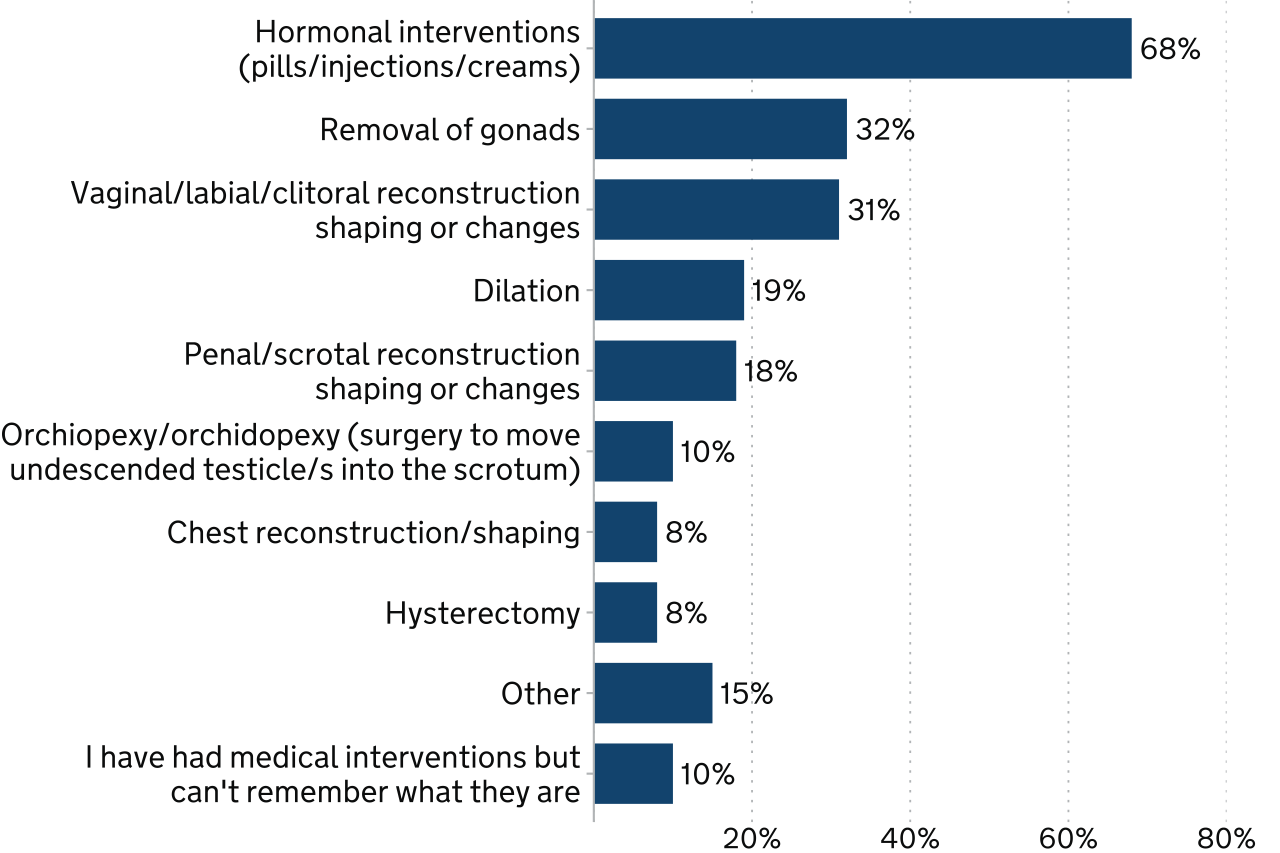
Respondents were asked to identify which medical interventions or procedures they had undergone from a list. Respondents were most likely to report having had hormonal interventions (68%) (for example, pills, injections, and creams), followed by removal of gonads (32%), and vaginal/labial/clitoral reconstruction (31%) (Figure 6.2). Medical interventions or procedures likely reflect the specific variation(s) that respondents have, for example, someone with Klinefelter Syndrome may undergo testosterone replacement therapy (TRT).
Figure 6.2: The types of medical interventions or procedures that respondents had undergone due to having variations in sex characteristics
Note: Respondents could select one or more of the listed items
Base: 70 Respondents
Respondents: Respondents who have undergone medical interventions, and had given consent to discuss
See Annex A (Q23) for data
The data suggest that respondents tend to experience multiple or repeat interventions or procedures associated with having VSC: 81% stated that they had undergone further medical interventions or procedures from birth until now because of having VSC, and 69% reported having had ‘repeat’ medical interventions or procedures (undergoing this on more than one occasion on the same area of the body). Those who had had repeat medical interventions or procedures were asked to describe what these were (n=40). Descriptions included: surgical, medication/hormonal, and tests (some of which were invasive).
6.1.2 Aftercare
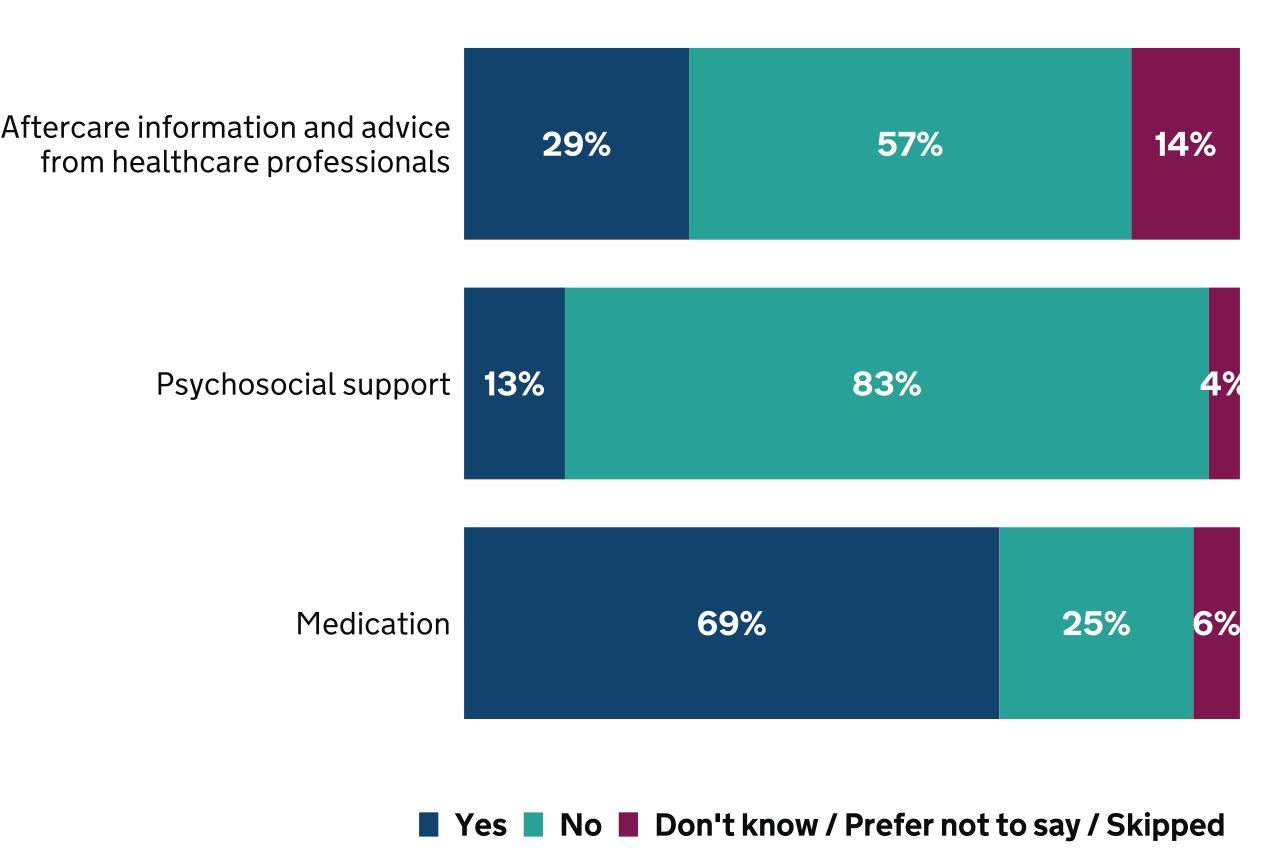
Respondents were almost 3 times as likely to report that they had had a negative experience than positive experience of aftercare (50% and 18% respectively). Respondents were asked to indicate if they had had appropriate aftercare access to:
aftercare information and advice, psychosocial support, and medication after undergoing medical interventions or procedures related to having variations in sex characteristics.
While 29% of respondents reported that they had appropriate access to aftercare information, 57% felt that they did not. In comparison, only 13% of respondents reported that they had appropriate access to psychosocial support, and 83% felt that they did not (Figure 6.3).
Figure 6.3: Whether respondents felt that they had ‘appropriate’ access to aftercare treatments, classified into aftercare information and advice from healthcare professionals, psychosocial support, and medication
Base: 70 respondents
Respondents: Respondents who have undergone medical interventions and had given consent to discuss
See Annex A (Q27) for data
6.1.3 Effect of medical interventions or procedures
In total, 70 people provided a response to an open question which asked them to describe how medical interventions or procedures undergone related to having VSC had affected them. Respondents mentioned:
- negative impact on mental health
- negative social impact
- discomfort and unease with their bodies
- distrust and negative views of healthcare profession or professionals
- negative physical side effects
- positive effects of medical interventions or procedures
The majority of respondents mentioned the negative impact of the medical interventions or procedures on their mental health: anxiety, depression, feelings of shame and resentment, suicide ideation and even, suicide attempts (similar to previous systematic reviews in this area such as Zeeman and Aranda 2020 and Jones 2018).
“I was raised female and given female hormone [sic.] despite being biologically male, though I was not told that I was male. Due to this I spent most of my childhood and early adulthood confused and depressed, leading to severe anxiety, self harm and attempted suicide.” Man, 25 to 34 years, East Midlands.
“For a long time I lacked stamina, I suffered long episodes of fatigue, mood swings and depression.” Man, 55 to 64 years, Yorkshire and the Humber.
Some respondents mentioned a negative social impact of the medical interventions or procedures, including on their relationships and more general social interactions, for example, not wanting to meet people.
“It’s made me not want to go out or mix or meet people.” Women, 55 to 64 years, South West.
“It has had such a major impact on my ability to form lasting and meaningful relationships.” Man, 18 to 24 years, London.
Some respondents mentioned experiences of discomfort and unease with their own bodies following medical intervention or procedures, sometimes in connection with feelings of regret.
“I wish I still had my internal sex organs because my body hasn’t felt normal ever since they were removed and I do not feel the same person as I was before doctors removed them.” Identify in another way, 35 to 44 years, Yorkshire and the Humber.
As a consequence of medical interventions and procedures, some respondents reported that they now hold negative views, including distrust, of healthcare professionals and the healthcare profession in general.
“It has made me distrustful of medical professionals.” Woman, 35 to 44 years, North West.
“It’s given me a wide distrust of the NHS.” Identify in another way, 18 to 24 years, Scotland.
The negative physical effects, both long term and short term, associated with medical interventions or procedures were mentioned by some respondents. This included mentions of pain, complications of surgery, and physical side-effects of procedures.
“I suffered terribly through my 20s and 30s with urine infections which were debilitating.” Man, 45 to 54 years, South East.
“I hurt a lot physically, bruising and bleeding affected by pain management levels.” Identify in another way, 25 to 34 years, London.
A few respondents mentioned the positive effects of medical interventions or procedures on themselves, including both mental and physical benefits.
“Assisted growth and development have helped greatly with self esteem.” Woman, 35 to 44 years, South East.
6.2 Respondents who care for someone with VSC
Carer respondents were asked if they were willing to disclose information about medical interventions or procedures their child or person they look after has undergone because of having VSC. The majority (93%) indicated that they were willing to disclose, and 7% indicated that they were not.
Carer respondents who were willing to disclose information were asked at what age their child/person they look after had their first medical intervention or procedure related to having VSC. 66% reported the first medical intervention or procedure aged 0-2 years old, and, overall, 83% reported the first medical intervention or procedure taking place under the age of 18 years. This was similar to respondents with VSC, where 70% had their first medical intervention or procedure under 18 years.
A total of 70 carer respondents who were willing to disclose information about medical interventions or procedures their child/person they look after who has VSC provided a response to an open question about the medical interventions which their child or the person they look after has undergone from birth until now. Respondents mentioned:
- surgical interventions
- tests (including invasive)
- medication/hormonal interventions
A small number of respondents stated that the child or person they looked after had not undergone any interventions at the point of completing the survey.
7. Healthcare – informed consent
This chapter provides details on the experiences of informed consent by respondents with VSC and respondents who care for someone with VSC. It also covers details about access to information and support about medical interventions or procedures and suggested improvements to the process.
Main findings
Respondents with VSC
Of respondents who had undergone medical interventions or procedures because of having VSC and who consented to disclose information about these:
Twice as many respondents said that they had not been able to give informed consent to the medical interventions or procedures which they had undergone because of having VSC compared with those who said that they had been able to provide informed consent (65% vs 31%).
Respondents who care for someone with VSC
Of carer respondents whose child had undergone medical interventions or procedures that they were willing to disclose information about, only 11% of carer respondents felt that their [the carer] informed consent had not been sought, with 75% stating that it had.
7.1 Respondents with VSC
The NHS defines informed consent as follows: ‘for consent to be valid it must be voluntary and informed, and the person consenting must have the capacity to make the decision’.
It is worth noting that respondents were not asked when they underwent medical interventions or procedures, and as such it is unclear from the data how many of these reflected historical experience or more recent events.
7.1.1 Ability to give informed consent
Not all respondents were willing to provide details of their healthcare experiences. The analysis on informed consent within this section is based on a sub-sample, comprising 70 respondents who had:
- undergone medical interventions or procedures because of having VSC
- consented to disclose information about these
These respondents were asked a series of questions about their experiences of giving informed consent in relation to their medical interventions or procedures.
Twice as many respondents said that they had not been able to give informed consent to the medical interventions or procedures which they had undergone because of having VSC compared with those who said that they had been able to provide informed consent (65% vs 31%).
Respondents who had reported feeling unable to provide informed consent for the medical interventions or procedures that they had undergone (n=50) were asked to, in an open response, explain why they felt they were unable to provide informed consent. Nearly all provided a response. Explanations given included:
- believing that they were too young to be able to give informed consent
- not being given the information needed
- not being included in the decision making, despite being old enough to be
Around half of respondents indicated that they were too young at the time of their medical interventions or procedures to be able to give informed consent. This was either because they were an infant at the time, or that they believed that they were too young to comprehend.
“I was 8 hours old. My mother had ultimate authority over my body and often I had no say.” Identify in another way, 18 to 24 years, Scotland.
“All the surgery I went through happened when I was too young to understand.” Man, 45 to 54 years, South West.
Many of these respondents mentioned that they, and or their parents, had not been given the information needed to give informed consent. Some of these respondents reported that they thought that they had not been given accurate or full information, for example, some felt that surgical intervention was presented as the only viable option.
“The operation was presented as the only option available. Nobody went into any details about how it will affect me and what effects it will have.” Identify in another way, 35 to 44 years, East of England.
“My parents had to make decisions on my behalf, though they often had to make decisions with little or no information, and on occasion the information provided was false.” Man, 25 to 34 years, East Midlands.
“I wasn’t even told about my variation – withholding this basic information denies people the agency to make informed decisions about their own healthcare.” Woman, 35 to 44 years, North West.
Respondents mentioned feeling like they had not been included in the decision making, and were not asked or consulted, sometimes despite being old enough to understand. For example, some respondents felt left out of decisions that they could have been involved in or, in some cases, were explicitly overruled.
“I was never told about the surgeries by either my parents, GPs, consultants or nurses. I was always removed from the room after examination, so no one ever spoke to me about anything.” Woman, 45 to 54 years, South East.
“I was never asked. It’s the parents the doctors ask, not us. Anyway, they got started on me when I was an infant, so asking me was out of the question. By the time I was a teenager it was simply “assumed. [sic.] that I’d go along with it all.” Identify in another way, 45 to 54 years, Prefer not to say.
Respondents who felt that they had been able to give informed consent were asked to specify the age that they first started providing informed consent to the medical interventions or procedures they had undergone because of having VSC (n=20). Of this small sub-sample, 55% reported first providing informed consent under the age of 18 years, and 45% reported first providing informed consent over the age of 18 years.
7.1.2 Access to information and support about medical interventions or procedures
The following analysis on questions regarding informed consent, unless otherwise stated, is based on a sub-sample, comprising 70 respondents who:
- had undergone medical interventions or procedures because of having VSC
- had consented to disclose information about these
- did not indicate that they would prefer not to say when asked if they had felt able to provide consent.
Respondents were asked follow-up questions around whether they had appropriate information, appropriate time, and access to a clinical psychologist, when making decisions about medical interventions or procedures undertaken because of having VSC.
The majority of these respondents (85%) reported that they did not have access to a clinical psychologist when making decisions about medical interventions or procedures. The availability and accessibility of specialist psychologists was raised as an issue for affected individuals and families, in the stakeholder engagement leading up to this call for evidence.
Some stakeholders suggested that psychologists can play a vital role in supporting decision making by offering a breadth of balanced information, challenging assumptions and offering advice on alternative non-surgical pathways.
Over half of respondents felt that they did not have appropriate information (63%) or appropriate time (56%). It is worth noting that respondents were not asked when they underwent medical interventions or procedures, and as such it is unclear from the data how many of these reflected historical experience or more recent events.
7.1.3 Suggested improvements to the process of informed consent
The following analysis is based on the same sub-sample referenced at 7.1.2 (n=70).
Respondents were asked to, in an open response, suggest how the process of providing informed consent for medical interventions or procedures related to having VSC could be improved, if at all. 70 participants provided a response, suggestions given included:
- improving information content
- providing greater access and quality of support
- ensuring informed consent was sought at the right age in an age appropriate way
- providing families with more time to make decisions about interventions or treatment options
The majority suggested that informed consent for medical interventions or procedures relating to VSC could be improved through improving information content. More specifically, some of these respondents suggested that there should be a greater transparency in reasoning behind the intervention or procedures to ensure that an informed decision can be made, and that there should be clearer information on the specific diagnosis.
“It is important there is more dialogue not just between parents and children, but also with older adults with VSCs who can share their experiences (and elevate some of the concerns).” Woman, 45 to 54 years, South East.
“For parents and patients alike, understanding whether the intervention is directly linked to the physical health of the patient. Giving them adequate time to process the options available. Providing access to intersex/VSC resources and pointing to examples of VSC/intersex visibility to reinforce that whilst an [sic.] life with an intersex trait(s) may be a defining experience, it does not define that person.” Woman, 25 to 34 years, London.
An opinion commonly expressed by respondents was that informed consent could be improved through greater access and quality of support, including psychological and psychosocial. Some of the respondents suggested that greater support would ensure that the decision regarding medical interventions or procedures would then be made rationally, not on the basis of shame. A few respondents explicitly mentioned that contact and access to other people with VSC, and specific support groups, would have been helpful as an opportunity to hear about other first-hand experiences.
“Patients need to be told directly what is happening to them and why, even if they’re young. They need to be given an opportunity to ask questions and actually have them answered. It needs to be made clear to them that they have options including rejecting treatment. They need to know that they do not require treatment in order to be socially accepted.” Non-binary, 45 to 54 years, Scotland.
Some respondents mentioned that informed consent would be improved if the consent of the person with VSC was sought.
The NHS recommends that children under the age of 16 years can consent to their own treatment if they’re believed to have enough intelligence, competence and understanding to fully appreciate what’s involved in their treatment. This is known as being ‘Gillick competent’.
A few respondents also explicitly stated their view that surgery, especially aesthetic in nature, should be the choice of the person with VSC, and that medical interventions or procedures that are non-urgent should not be performed on children or infants. These responses tended to be communicated with strong conviction.
“Parents and professionals should not be allowed to make decisions on a child’s behalf if the decision can wait until the young person is old enough to be involved. Assignment of gender should also wait until the young person is old enough to be included.” Woman, 35 to 44 years, South East.
“The process should be to wait for all interventions for non-life threatening reasons to be done until the intersex person can provide informed consent, and then that should be sufficient.” Man, 35 to 44 years, London.
“I think we need to have a clear understanding where there are medical interventions that are purely cosmetic, against those that are a medical emergency. On the former, the child should be giving their ‘informed consent’, unless the [sic.] are extreme circumstances.” Woman, 45 to 54 years, South East.
7.2 Respondents who care for someone with VSC
7.2.1 Informed consent
Carer respondents who were willing to disclose information were asked whether, if their child had undergone medical interventions or procedures, their informed consent had been sought (n=70). 75% of these respondents felt that their informed consent had been sought, with a minority of 11% stating that it had not. In contrast, only 31% of respondents with VSC felt that they had been able to provide consent, with the majority (65%) stating that they had not.
7.2.2 Access to information and support about medical interventions or procedures
Carer respondents who had not indicated ‘prefer not to say’ (n=70) to whether they felt that their informed consent had been sought, were asked in follow up questions about whether they had appropriate information, access to a clinical psychologist, and appropriate time, when making decisions about medical interventions or procedures undertaken because of having VSC.
-
63% of these respondents reported that they felt they had appropriate time when making decisions about medical interventions or procedures their child or person they have looked after has undergone
-
58% reported that they had appropriate information
-
23% reported having access to a clinical psychologist
In comparison to the sample of respondents with VSC, carer respondents were more likely to report having appropriate access to time, information, and a clinical psychologist (Figure 7.1).
Figure 7.1 Whether respondents felt that they had appropriate access to the following when making decisions about medical interventions undergone due to having VSC

Base: 70 respondents with VSC, 70 carer respondents
Respondents: Respondents who have undergone medical interventions, or the person they care for has, they had given consent to discuss, and were willing to answer whether their informed consent had been sought
See Annex A (Q32-34) & Annex B (Q87-89) for data
7.2.3 Improving the process of informed consent
Carer respondents were asked about how the process of informed consent could be improved, if at all. Of the 60 participants who provided a response, Main themes included:
- improved support
- improvements in the information content
- no need for improvements
- alternative medical options being made available
Some respondents mentioned support, with specific suggestions that greater psychological and psychosocial support should be offered by healthcare services to improve informed consent.
“Have a family to confer with that have already had the experience of going through surgery and all that brings.” Woman, 35 to 44 years, South West.
Respondents also suggested that there should be improvements in the information content, for example, clearer information given on reasoning for surgery and regarding the specific diagnosis. Some of these respondents mentioned that sometimes they felt that certain procedures, often specifically surgery, were presented as the only options at the time.
“More time and more information and support from a multi-disciplinary team would have been appreciated. From a surgical aspect, the operation was performed as soon as it was felt appropriate and was a complete success without the need for further surgery but whether this was the right thing to do in light of information available now, is debateable [sic.].” Woman, 65 years or more, South West.
“Elective procedures were presented as “this is what we are going to do/is right to do” rather than “this is what we can do if you feel appropriate”. Information was select, and most gained from my own personal research.” Prefer not to say, 25 to 34 years, West Midlands.
A small number of respondents suggested that alternative medical options should be made available, including alternatives to surgery.
“Given the complications my son went through I wish I had declined the surgery. The staff clearly did not think this would be in the best interest of our son and I went with their expertise, but I wonder if providing more psychological support for children with variations of sex development would be better than doing these surgeries.” Woman, 35 to 44 years, Scotland.
“It was never suggested that anything other than corrective surgery was an option.” Woman, 55 to 64 years, East of England.
Some respondents mentioned that they felt that the informed consent procedure was good, with some believing that their experience overall of informed consent did not require improvement.
“We had access to the right consultants, surgeons, physiologists and supporting information/groups, therefore believe nothing else needs improving.” Man, 25 to 34 years, South West.
“We have been treated at a large children’s hospital and we have found the support to be excellent. I have found the process of informed consent to be completely satisfactory. This has been assisted by an excellent patient-led National Support charity for Turners syndrome.” Woman, 45 to 54 years, West Midlands.
8. Healthcare – wider experiences of and barriers to healthcare
This chapter provides details on the wider experiences of, and barriers to, healthcare by respondents with VSC and respondents who care for someone with VSC. This includes:
- most negative and positive experiences
- rating of services
- barriers to access
- suggestions of improvements to healthcare services
Main findings
Respondents with VSC
When asked to describe the most negative experience they had had when using healthcare services related to having VSC, respondents mentioned:
- lack of knowledge of healthcare professionals
- inappropriate comments or questions
- misgendering or assumptions about whether they were transgender or not
Around 6 out of 10 respondents reported that anxiety and fears of a negative reaction from healthcare professionals (61%), and assumptions that healthcare professionals will not understand their VSC were barriers that had prevented them from using healthcare (60%).
Respondents who care for someone with VSC
When asked to suggest improvements that could be made to healthcare services, carer respondents mentioned:
- more training and increased knowledge of healthcare professionals
- better support services and aftercare around revealing of diagnosis
- greater sensitivity of those involved
- improved ease of access to medical specialists
8.1 Respondents with VSC
8.1.1 Experiences of healthcare
Respondents were asked about their experiences of healthcare services in the last 3 years, and specifically whether they were positive or negative.
The proportion of respondents who had used different healthcare services varied. Of respondents who had rated the healthcare services as generally positive, neither positive nor negative, or generally negative, private clinics had the highest positive rating (59%), followed by NHS specialist clinics (adolescent and adult care) (55%), and hospitals (44%). The bases of respondents for each healthcare service varied largely (see figure 8.1), for example, GP services have a base of 100 respondents, in comparison to NHS specialist clinics (paediatric care) which have a base of 20 respondents.
Figure 8.1: Respondents’ experiences of healthcare services, in the last 3 years

Base: Varies (see in line on graph)
Respondents: All respondents who rated the healthcare service as generally positive, neither positive nor negative, or generally negative
See Annex A (Q36) for data
8.1.2 Positive experiences of healthcare
Respondents were asked to describe the most positive experience they have had when using healthcare services related to having VSC in the 3 years prior to the call for evidence. 100 respondents gave a response. Main themes included:
- acceptance and understanding of VSC from healthcare workers
- good communication
- informed and knowledgeable healthcare workers
When describing their most positive healthcare experience in the past 3 years, some respondents mentioned the acceptance and understanding of healthcare workers about their VSC. More specifically, respondents talked about situations where they weren’t made to feel ashamed of having VSC, and instead had the opportunity to be treated ‘normal’ rather than medicalised or ‘othered’.
“When I went to the GP I saw a new one who said, “I’ve never met an intersex person before, that’s cool.” Made me feel like a unicorn. He didn’t dwell on it or ask questions, he just let me be there for what I needed. For once I wasn’t a lab rat.” Identify in another way, 35 to 44 years, North West.
“I gave the doctor my full medical history and was met with kindness and compassion. Without stigmatising, she reinforced that there was nothing to be ashamed of but understood that this must be difficult. She did not ask any stigmatising or irrelevant questions, and made sure I understood the relevance of each question before asking.” Woman, 25 to 34 years, London.
Some respondents mentioned good communication as an aspect of the most positive experience, in particular feeling included and listened to. They also indicated that being told information proactively was a positive experience.
“A surgeon who was familiar with intersex conditions, did not attempt to judge or impose their own views, and was willing to listen to what I personally wanted – and did a competent job of the actual reconstruction.” Woman, 18 to 24 years, East Midlands.
Some respondents mentioned informed and knowledgeable staff as a part of their most positive experience, with respondents commenting on the expertise of the healthcare staff that they have interacted with.
“The nurses do my injections and they’re all lovely and most importantly know what they’re doing.” Man, 25 to 34 years, South East.
Unfortunately, some respondents mentioned being unable to recall a positive healthcare experience in the last 3 years, or, in some cases, ever.
“It’s [sic.] hard to think of a positive experience – they are all difficult.” Identify another way, 35 to 44 years, Scotland.
8.1.3 Negative experience of healthcare
Respondents were asked to describe the most negative experience they have had when using healthcare services related to having VSC in the last 3 years. 90 respondents gave a response. Main themes included:
● lack of knowledge of healthcare professionals
● inappropriate comments or questions
● misgendering or assumptions about whether they were transgender or not
When asked to describe their most negative healthcare experience, some respondents mentioned that the healthcare professionals involved were not knowledgeable (similar to Sherriff and others, 2019), or, in some cases, were not aware of VSC. Respondents mentioned a wide range of healthcare professionals in their responses including:
- GPs
- nurses
- gynaecologists
- paramedics
- therapists
- surgeons
- endocrinologists
Some respondents also mentioned that there didn’t appear to be any available specialists in these situations.
“I have been in multiple consultations where they read what my variation is then ask me what it is. A lot of the time I tell them what my variation is and what I have had done in terms of medical intervention. At this point many times, they will sit there in front of me and google my variation and then read it out to me. It is slightly insulting that they don’t trust me to know about my own variation and that they often don’t even have basic knowledge such as what intersex means.” Identify in another way, 18 to 24 years, South West.
“In my area, there isn’t any specially trained consultants in CAH [congenital adrenal hyperplasia], they fall under the endocrine section which generally specialise in diabetes. It’s a waste of time spending time at hospital appointment with a consultant whereby I probably know more about CAH than them. There needs to be more done to encourage specialists in this condition.” Woman, 25 to 34 years, East Midlands.
Respondents also mentioned, in the context of the most negative healthcare experience, that they had received inappropriate questions and comments from healthcare professionals, sometimes viewed as a result of medical curiosity about VSC on the part of the healthcare professional. In some cases this caused respondents to feel as though they were being ‘dehumanised’ – as their variation was being focused on, rather than their health needs as an individual.
“The doctor asked me for a full medical history and when I got to the XY bit, he said, “You’ve given me an incorrect medical history. If you’ve got XY chromosomes, you’re a boy.” I tried to explain but he wouldn’t listen. He said, “I don’t know what you’ve been told but you are a boy. That’s it.” I was so ill and in such a vulnerable position. Even as I was weeping, he continued: “What do you look like? What are your breasts like?”” Woman, 25 to 34 years, London.
“I was treated like an object and repeatedly referred to as a “complex urological case”. They repeatedly asked me personal questions relating to my sexuality which was not important in the context. I then overheard them talk to fellow colleagues about the “interesting pseudo-hermaphrodite” and how they feel “sorry for me”.” Man, 18 to 24 years, London.
A small number of respondents reported incidents where they were misgendered (referred to as the wrong gender) or healthcare professionals had incorrectly assumed that they were transgender.
“The nursing staff came to me in the night and tried to force me onto the men’s ward. They got really angry with me and said that someone needed this bed and I should be on the man’s [sic.] ward. I was really scared. They got really cross with me because I said I am not a man, and I don’t feel safe to be put on the men’s ward.” Identify in another way, 45 to 54 years, East Midlands.
“Trying to get a sexual health test as an intersex trans woman was really difficult and she kept saying “male genitalia” even when I asked her not to.” Identify another way, 18 to 24, Prefer not to say.
8.1.4 Barriers to healthcare
Respondents were asked, from a list, if certain barriers (see Figure 8.2) had prevented them from using healthcare services because of having VSC.
Around 6 out of 10 respondents reported that anxiety and fears of a negative reaction from healthcare professionals, and assumptions that healthcare professionals will not understand their VSC had been barriers that had prevented them from using healthcare (61% and 60% respectively).
In comparison, 39% of respondents believed that problems accessing a healthcare service in their local areas had been a barrier, and only 21% of respondents believed that physical health issues had been a preventing barrier (Figure 8.2).
Figure 8.2: Respondents’ assessment of whether these barriers had prevented them from using healthcare services

Base: 120
Respondents: All respondents
See Annex A (Question 39) for data
Respondents were also invited, in an open response, to specify any other barriers that they felt had prevented them from using healthcare services. 20 participants provided a response. They mentioned the following:
- barriers to access, for example, appropriate healthcare specialists being unavailable or lengthy waiting times
- lack of sensitivity and or respect displayed by healthcare professionals as preventing use of healthcare – this included situations where inappropriate comments had been made
- lack of knowledge about VSC by healthcare professionals, with respondents reporting that some professionals that they encountered did not have an appropriate level of expertise or, in some cases, an awareness of their variation ahead of their interaction
8.1.5 Suggested improvements to healthcare services
Respondents were asked to, in an open response, suggest any improvements they feel could be made to healthcare services, to better support the needs of people who have VSC. 100 participants gave a response. Main suggestions included:
- increased knowledge of healthcare professionals
- improved support services and aftercare
- greater sensitivity with language and behaviours
- easier access to medical specialists
- improved informed consent procedures
- system changes such as to hospital procedure or policy
- non-binary recognition
A regularly expressed suggestion from respondents was that healthcare services could be improved through increasing the knowledge of healthcare professionals, with some responses explicitly suggesting that this could be done through training and education (see also Jones, 2016 and Sherriff and others, 2019).
“All GPs need to have basic training or understanding in these issues so that they can refer to different services as opposed to just knowing about surgery.” Man, 18 to 24 years, London.
Better support services and aftercare were mentioned in some of the responses as a way to improve healthcare services. Respondents mentioned using these support services in the process of revealing a diagnosis. Some respondents also mentioned better use of sign-posting towards VSC groups as a support service.
“To be aware of support groups/ services and to pass on that information. Not tell their patient to find out about the support groups/ services themselves on their own.” Man, 45 to 54 years, East of England.
“I would love to see a greater level of knowledge and understanding from GP’s [sic] and doctors of the existence of this condition especially geared towards understanding that such a diagnosis should be eased into and discussed with treatments and support available. Not simply dropped into the conversation and then for the patient to be ushered out the door.” Man, 25 to 34 years, Scotland.
Respondents also called for greater sensitivity with language and behaviours in healthcare services. Respondents mentioned that there should be less stigma and shame around VSC in interactions with healthcare professionals, with a focus on respectful interactions.
“Education, the ability to recognise variations and the ability to communicate with respect and treat all with dignity, as an actual human being.” Don’t know, 45 to 54 years, Prefer not to say.
“Realise we are people not case studies. Realise [sic.] we are whole human beings and our sex and sexuality have a right to be respected.” Identify in another way, 45 to 54 years, London.
“Do not assume that all women have a cervix, and respond swiftly and sensitively when you’re told by the patient that a smear test is not applicable. I lost count of the number of times I had to inform the GP service to remove me from the reminder list.” Woman, 35 to 44 years, South West.
Responses also suggested that providing better or easier medical access to specialists would improve healthcare services for those with VSC, including suggestions for VSC-specific clinics:
“There should be a list of Intersex clinics available, and referrals made easier without barriers in place.” Identify in another way, 35 to 44 years, Scotland.
“Each health authority needs specialist consultants / clinics to support each of the conditions that affect the variations in sex characteristics.” Woman, 35 to 44 years, Wales.
Respondents also suggested that healthcare services could be improved by seeking informed consent for surgeries or treatments from the individual with VSC. Respondents mentioned that, specifically with children with VSC, their informed consent should be sought, sometimes through waiting until they are old enough to give this.
“Operations to “correct” hypospadias in small children should respect bodily integrity, and should be deferred unless there is a danger to life until such time as the child can be consulted and give informed consent.” Man, 65 years or more, South East.
A smaller number of respondents suggested changes to the official processes currently in place. Respondents mentioned hospital procedures, and also policy based, for example, funding.
“Adopt a social model as opposed to a medical model of healthcare.” Woman, 55 to 64 years, South West.
A small number of respondents suggested that recognition of non-binary gender and or sex would improve healthcare services.
“All healthcare services must stop categorizing everyone as male or female only. I am frightened that I am susceptible to “male” health issues (associated with my Y chromosome) that would not be picked up or considered because the NHS can only class me as female.” Woman, 35 to 44 years, North West.
8.2 Respondents who care for someone with VSC
8.2.1 Improvements to healthcare services
Carer respondents were asked to suggest any improvements they feel could be made to healthcare services, to better support the needs of people who have VSC. 70 participants gave a response. Main themes included:
- more training and increased knowledge of healthcare professionals including greater sensitivity of those involved
- better support services and aftercare around revealing of diagnosis
- improved ease of access to medical specialists
Some respondents suggested that healthcare services could be improved through increasing the knowledge of healthcare professionals. Some respondents explicitly suggested more training, and a few respondents specifically mentioned greater sensitivity with language and behaviours.
“I feel more research needs to be undertaken on hypospadias and related conditions. More people need to be made aware of it and more information needs to be out there. I spoke with a few health professionals who had never heard of hypospadias.” Woman, 25 to 34 years, Scotland.
“All health carers should be given full knowledge of all the different variations as it states Variations,all are different and therefore [sic.] should be treated differently.” Woman, 55 to 64 years, South West.
“Training is needed as A&E staff and other general hospital staff can be very insensitive and this is not uncommon.” Woman, 35 to 44 years, London.
Respondents also suggested improvements through the provision of better support services and aftercare around revealing of diagnosis for the families and the person with VSC, better diagnosis procedure and more psychological care (for example, direction to support groups).
“More support for parents. I was traumatised by not knowing the gender [sic.] of my baby and needed counselling desperately but didn’t have it.” Woman, 35 to 44 years, South East.
“Access to peer support was actually discouraged by our endocrinologist! This should be encouraged and parents should absolutely be signposted to families with similar experiences. Clinical staff should be aware, and actively participate, in providing information for peer support.” Prefer not to say, 45 to 54 years, Scotland.
“A few respondents mentioned a need for improved access to medical specialists.
When receiving a diagnosis [sic.] it would be useful if you put in a specifically designed system that covered all the possible areas. ie S&L therapy, IEP, Tooth assessments, bone density scans, endocrine referrals, anxiety programs.” Woman, 55 to 64 years, South East.
9. Education
This chapter provides details on the experiences of respondents with VSC in education, as well as those who care for someone with VSC in a personal capacity. It covers their interactions with peers and school staff, and the impact their variation has had on their life in education. This included experiences at all education levels from early years to higher education and, depending on the respondent, may relate to experiences that are relatively recent or from longer ago.
Main findings
Respondents with VSC
- 65% of respondents reported that their VSC was never discussed, either by themselves or their guardian, with their education staff
-
almost three-quarters of respondents believed that VSC had affected their school life (73%)
-
1 in 5 respondents felt that they were absent from school often or very often (20%)
Respondents who care for someone with VSC
- 43% of carer respondents didn’t agree that the educational institutions attended by their child/person they care for had appropriate support available for pupils with VSC (in comparison to 21% who agreed)
9.1 Respondents with VSC
Depending on the individual respondent, these experiences may reflect historical experience or more recent events.
9.1.1 Education background
Respondents were asked about their education background. This included how recently they were in education, the furthest education level that they have completed so far, and the type of educational institution that they attended during the majority of their schooling.
Half of respondents were last in education more than 10 years ago (50%), a quarter were in education between 2 and 10 years ago (26%), and 11% were in education up to 2 years ago. 10% of respondents were still in education at the point of completing the survey. This indicates that some of the experiences discussed within the report may reflect historical experiences in education, rather than more recent events.
The furthest level of education completed varied among respondents with VSC. Just over a quarter of respondents listed an undergraduate degree as the furthest level completed (26%). This was closely followed by post-graduate degree (21%), then vocational qualification (18%).
9.1.2 Experiences at school
Just under three-quarters of respondents believed that VSC had affected their school life (73%), 16% believed that it had not. Respondents who stated that VSC had affected their school life (73%) were asked to describe the effect that having VSC had on their experience of participating in school life. 80 participants provided a response. Main themes included:
- negative mental health
- anxiety and incidents involving single-sex areas
- puberty as a key time
- bullying and harassment
- specific learning and physical difficulties caused by VSC
- absences from school
- sexual assault
Some respondents mentioned negative mental health as an effect that having VSC had on their school life, with respondents regularly mentioning feelings of isolation and ‘otherness’ which, in some cases, respondents linked to experiences of depression and anxiety (similar to Henningham and Jones, 2021).
“My diagnosis made me feel isolated from peers and unable to focus on anything outside my fear, sadness, and self hatred.” Woman, 18 to 24 years, East Midlands.
Respondents also mentioned changing rooms, toilets, uniforms, sport, and same-sex schools as triggers of anxiety and stress.
“Using the changing rooms was absolutely humiliating, especially as I was made to use the ones for the wrong gender. At age 13, the same time I found out I was intersex, I refused to enter them any more.” Woman, 18 to 24 years, East Midlands.
“I was forced to choose between girls or boys uniforms. At sixth form, I was not allowed to use the toilets of either gender.” Non-binary, 18 to 24 years, London.
Puberty was mentioned by some respondents as a key time in VSC impacting upon education experiences. Respondents noted that puberty was when their VSC made a noticeable difference between themselves and their peers.
“My failure to undergo puberty was noted by all of my peers, and resulted in a fair amount of bullying.” Man, 35 to 44 years, London.
“I was physically so androgynous looking, as well as having female body language and instinctive social behaviour more female than male. That hadn’t mattered so much before puberty (when the physical and behavioural differences between boys and girls aren’t as great), but after puberty I stuck out like a sore thumb.” Identify in another way, 45 to 54 years, West Midlands.
Some respondents mentioned that they were bullied or harassed at school due to having VSC. These experiences included both verbal and physical assault. Respondents often referred to being seen as ‘different’ from their peers.
“I was visibly different from other children of my assigned sex during and after puberty, making me the subject of frequent comments and bullying throughout high school.” Prefer not to say, 18 to 24 years, Scotland.
“I was very shy at school due to the bullying that ensued from looking different.” Woman, 18 to 24 years, West Midlands.
Specific learning and physical difficulties directly caused by VSC were mentioned by respondents.
“The psycho-emotional and cognitive profile of my syndrome has been in play throughout my education, leading to misperceptions and misinterpretations of my academic abilities.” Woman, 55 to 64, London.
A small number of respondents mentioned the impact of missing school due to medical or hospital visits. Some respondents mentioned that not being present affected them socially – sometimes because it made it harder to bond with their peers or that the lack of openness about having VSC made it difficult.
“When I was at secondary school I often missed classes because of treatment and felt unsafe explaining to classmates or teachers in any detail, which made life difficult.” Non-Binary, 45 to 54 years, Scotland.
“I missed a lot of school, and it was hard to bond with the other children in my class because of this.” Identify in another way, 45 to 54 years, East Midlands.
A small number of respondents mentioned assault that was sexual in nature when asked about how VSC had affected their school life. Due to the sensitive and private nature of these experiences, quotations will not be included on this.
9.1.3 Disclosure to education staff
Levels of openness with school staff could potentially have an impact on people with VSC’s experience of education settings. If staff know a student has VSC they may be able to ensure any specific needs they have are met (for example, by allowing time off for medical appointments) or they may try to create a supportive environment for that student (for example, by ensuring that topics around bodies and sex are discussed sensitively or by signposting to helpful resources). Not all students will want to disclose their variation to school staff.
The majority of respondents believed that their VSC had never been discussed with their educational staff, by either themselves or their parent, carer or guardian (65%). Just under 1 in 10 had had their VSC discussed with staff at primary school or secondary school (9%), 5% had had their VSC discussed with staff at their higher education institution.
Small numbers of respondents reported that their VSC had been discussed at their early years institution (3%) or further education institution (data has been suppressed for anonymity). The call for evidence did not collect data on the reasons VSC was not discussed.
9.1.4 Absences from secondary school
When asked how often they were absent from secondary school owing to having VSC, most respondents reported that they were never absent or not absent often (69%). However, 1 in 5 respondents were absent from school very often or often (20%).
Of respondents who had not indicated ‘prefer not to say’ in response to how often they were absent owing to VSC, attending medical appointments was the main reason given for absence from secondary school (54%), followed by feeling unwell (35%), recovering from medical interventions (30%), and administering medication at home (data has been suppressed for anonymity).
Respondents who had not indicated ‘prefer not to say’ in response to how often they were absent owing to VSC, were asked to describe how their participation in secondary school life was affected because of these absences, if at all. 80 participants provided a response.
Some respondents stated that there was minimal or no impact. Respondents, for whom absence had an impact, tended to report that this was negative. Main themes included:
- negative impacts on education and learning
- negative impacts on social life
- negative impacts on mental health
Some of these respondents mentioned absences from school having a negative effect on their education and learning, feeling like they needed to ‘catch-up’ due to lessons and work that they had missed due to appointments or treatment related to having VSC. Some of these respondents felt that this had led to them getting lower grades in exams and assessments.
“I had been a straight A student. I still got some As but didn’t do as well as I’d hoped and I felt that I was always having to work extra hard to catch up, which was especially difficult when I was experiencing depression or fatigue because of my treatment.” Non-Binary, 45 to 54 years, Scotland.
“Missing at least one day a week, at its worst, meant I fell far behind on my work. This lead to a drop in GCSE studies and I feel it contributed to me having lower grades.” Non-Binary, 18 to 24 years, South East.
Respondents also mentioned negative effects on their social life at school. These respondents mentioned situations such as difficulty with hiding the reasons for their absences from other students, sometimes feeling like they had to lie rather than tell peers about their VSC. Others simply felt that they had lost out on friendships due to being away.
“I found it difficult to engage with other students after prolonged periods away, and in secondary school especially it was harder to just say “I was ill” as they wouldn’t believe it and would want to know exactly why you were off.” Woman, 18-24 years, West Midlands.
“I missed lessons, lost time in the run up to my ‘O’ levels, lost friendships through absence. In short, I became detached at a time when it was most important that I forge a social support network.” Identify in another way, 45 to 54 years, Prefer not to say.
Respondents also mentioned absences having a negative impact on their mental health. This included feelings of isolation, depression, and anxiety.
“It left me with no confidence and anxiety which I still have today.” Man, 45 to 54 years, Yorkshire and the Humber.
“I became quite depressed and felt isolated, and it was hard to keep secrets, and I didn’t even have the language to explain what was happening.” Identify in another way 45 to 54 years, East Midlands.
Some respondents felt that their absences from school had little to no impact on their participation in school life. For some of these respondents, this was because they had had minimal absences.
“A few days missed for appointments which, apart from raising questions from fellow pupils, had little impact.” Identify in another way, 35 to 44 years, London.
“It was annoying to have to be absent for medical appointments but did not overall have too much impact.” Identify in another way, 45 to 54 years, London.
9.1.5 Suggestions for how primary and secondary schools can be improved for young people who have VSC
Respondents were asked to suggest, reflecting on their own experiences, how primary and secondary schools could be improved to better support the needs of young people who have VSC. 100 participants provided a response. Suggestions included:
-
VSC should be taught to students at school, for example, within the biology and sexual education curriculum
-
improving teachers’ knowledge and understanding about VSC, and providing appropriate training to address issues relating to VSC in young people that may come up, including improved awareness of bullying
-
options relating to specific facilities in schools, for example, some respondents suggested that changing rooms should have greater privacy
9.1.6 Suggestions for how further and higher education institutions can be improved for young people who have VSC
Respondents were asked to suggest, reflecting on their own experiences, how further and higher education institutions could be improved to better support the needs of people who have variations in sex characteristics. 80 participants provided a response. Suggestions included:
-
improving knowledge among staff and students about what VSC is, potentially through events or representatives
-
improved support and information being made more available to students, for example, learning adjustments being available to those who need it
9.2 Respondents who care for someone with VSC
34% of carer respondents stated that the person they care for with VSC went or goes to mainstream primary or secondary school. 28% of carer respondents stated that the person in their care is currently too young for school.
43% of carer respondents felt that the educational institution(s) that the person in their care attended did not provide appropriate support, in comparison to the 21% who felt that appropriate support was provided.
Carer respondents were asked to suggest how educational institutions could be improved to better support the needs of pupils with VSC, if at all. 60 participants provided a response. Suggestions included:
-
VSC being taught to students, for example, through sex education, science lessons or Personal, social, health and economic (PSHE) education
-
greater awareness of additional support needs and adjustments for children with VSC, and making this support available
-
improved knowledge and awareness among teachers and schools, for example, through training
10. Support services
This chapter provides details on the experiences of respondents with VSC, and respondents who care for someone with VSC, with support services or organisations. It covers where they are seeking support, how helpful the support is, and how these services could be improved.
By support services and organisations, this call for evidence is referring to any organisation (outside a public health or education provider) that explicitly works with people who have VSC. This includes but is not limited to the following:
- online forums
- helplines
- registered peer support charities
- advocacy organisations
- voluntary organisations
Main findings
Respondents with VSC
When asked to state where they seek support as a person with VSC outside their family, public health, and education services, respondents mentioned:
- specific organisations and charity support groups
- followed groups on social media
- friends
- therapist, psychologist or counselling
- other people with VSC
- online research
Respondents who care for someone with VSC
57% of carer respondents had used a support service or organisation for people with VSC and those who look after them in the last 3 years. Of these respondents, 88% had found these support services or organisations very or quite useful.
10.1 Respondents with VSC
Anecdotal evidence from the stakeholder engagement leading up to the call for evidence suggested that some people with VSC had found a sense of belonging through support groups and organisations.
Respondents were asked to state where they seek support as a person with VSC, outside their family, public health, and education services. 100 participants provided a response.
Sources of support mentioned included:
- specific organisations and charity support groups
- followed groups on social media, for example, YouTube, Facebook
- friends
- therapists, psychologists or counselling
- other people who have VSC
- online research
Of respondents who had rated services on helpfulness, the services with the highest percentage of respondents rating them as helpful were registered peer support charities (78% of 50 respondents) and volunteer-led groups (77% of 60 respondents). Individualised support, for example, counselling was rated less highly, with fewer than half of respondents rating it as helpful (46% of 50 respondents) (See Figure 10.1).
Figure 10.1 Respondents rating of helpfulness of support services
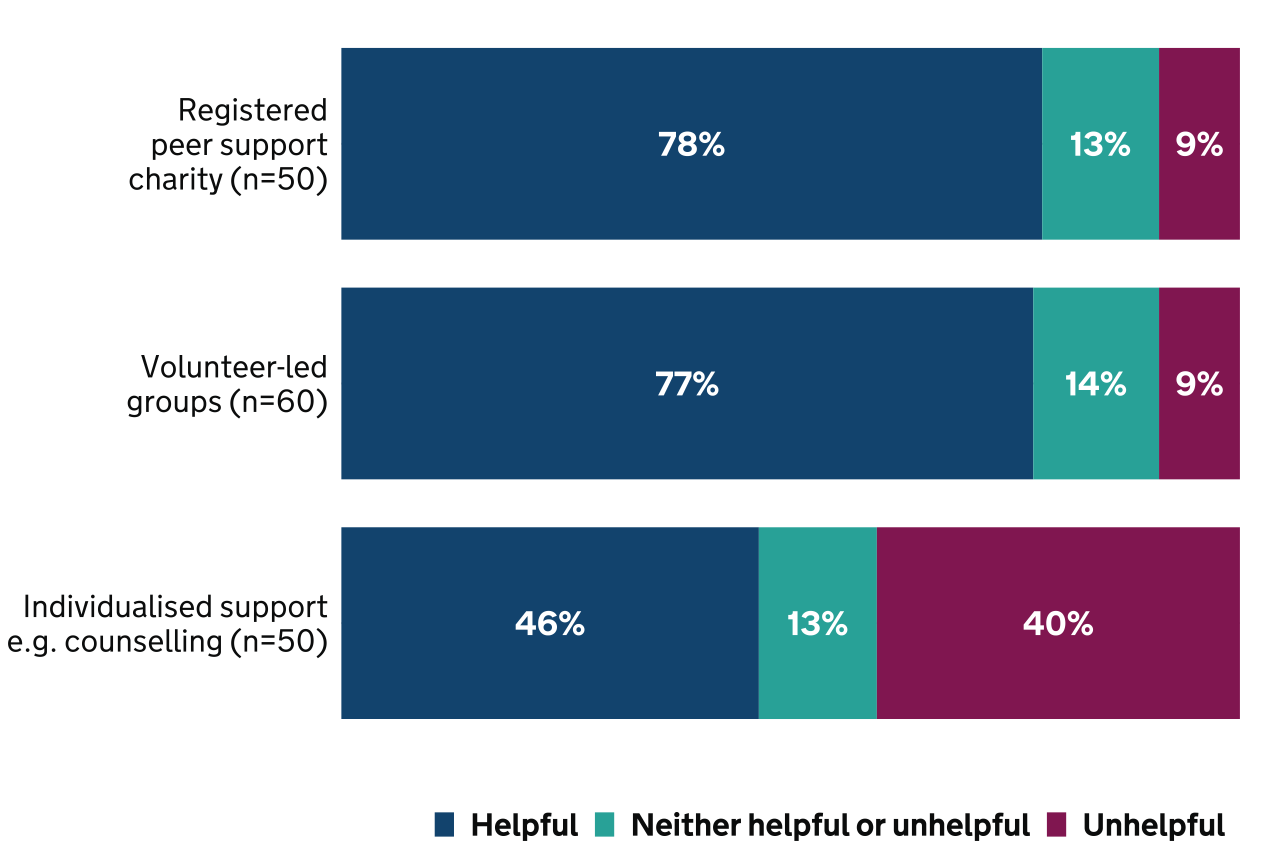
Base: Varies (see in line on graph)
Respondents: All Respondents who had given a rating of the helpfulness of the support given by the service
See Annex A (Q54) for data
Respondents were specifically asked how they thought support services and organisations could be improved, if at all. 70 participants provided a response. Suggestions provided by respondents included:
- better funding being available to support services
- improved knowledge and understanding
- catering to a greater range of ages
- improved promotion of services such as advertising and signposting
- a greater availability of services through increased number and wider range geographically
10.2 Respondents who care for someone with VSC
Over half of carer respondents had used a support service or organisation for people with VSC and those who look after them in the 3 years leading up to the survey (57%), 41% had not.
Of the carer respondents who reported using a support service or organisation in the last 3 years, 53% reported using a registered peer support charity, 49% used a volunteer-led group(s), 16% reported having accessed individualised support such as counselling, and 21% reported using overseas-based organisations or networks.
Carer respondents who reported using a support service in the last 3 years were also asked how useful they had found support services or organisations for people who have VSC and those who look after them. The majority of these respondents reported these to be very or quite useful (88%). 12% found them not very useful.
Carer respondents were asked how they thought support services and organisations could be improved, if at all. 60 respondents provided a response. Suggestions for improvement included:
- availability of services – both quantity and quality (type of services provided)
- greater signposting, ideally at an early stage, and communication about services
- greater funding for support services and organisations
- improved access to medical professionals and medical advice, for example, access to psychologists
11. Workplace, benefits, sport and leisure services
This chapter provides details on the experiences within the workplace, claiming benefits, and within sport and leisure services of respondents with VSC and respondents who care for someone with VSC. This includes suggestions for improvements in these spaces for those with VSC.
Main findings
These findings reflect the need for better understanding of how VSC affects people in contexts outside healthcare.
Respondents with VSC
Nearly 6 out of 10 respondents felt that having VSC had affected their experiences of the workplace (57%)
Half of respondents felt that having VSC had affected their experiences of using sport and leisure services (50%). 31% felt that it had not.
Overall, 16% of respondents felt that having VSC had affected their experiences of claiming benefit payments. The number of respondents with experience of claiming benefits is not known, though 39% stated explicitly that they had no experience of claiming benefits.
Respondents who care for someone with VSC
Carer respondents mentioned a lack of awareness and understanding of VSC, both in the context of related challenges experienced in the workplace as someone who looks after a person with VSC, and also in the context of claiming benefits because the person they look after has VSC.
11.1 Workplace
11.1.1 Workplace – respondents with VSC
The majority of respondents felt that having VSC had affected their experiences in the workplace (57%). Just over a quarter disagreed (25%).
Those who felt that having VSC had affected their experiences of the workplace were asked to describe how. In total, 70 participants provided a response. Main themes included:
-
negative social experiences in the workplace, including reactions from being open about having VSC, and lack of understanding about VSC
-
negative impacts on mental health
-
work absences
-
requiring workplace adjustments
-
impact on career trajectories
Some respondents mentioned negative social experiences in the workplace. For example, some respondents mentioned experiencing inappropriate comments from colleagues, or difficult situations due to a lack of understanding about VSC.
“I would argue that the way being intersex has affected me is primarily the way that those who are not white, cis, straight, and (chiefly) male experience the workplace. After I came out, it was often commented on by one employer that certain traits I exhibited or my gender expression were ‘male’.” Woman, 25 to 34 years, London.
“Colleagues often ask when I will be settling down and having children – something that isn’t possible with my variation in sex characteristics. It is upsetting and distracting.” Woman, 18 to 24 years, South East.
Further to this, some respondents mentioned negative experiences regarding being open about their VSC in the workplace, with some detailing incidents where there had been negative reactions from colleagues when they had found out (similar to van Lisdonk, 2014).
A few of these respondents mentioned anxiety in relation to being open, with some actively avoiding it.
“I was badly bullied in 2 jobs by 2 male line managers who I disclosed my condition to. They both used the fact I had the condition against me and regularly belittled me because of it.” Identify in another way, 45 to 54 years, London.
“When I worked in jobs where I felt I had to continue to hide, I was also unsupported by my line manager and manager, and I continued to experience bullying, and feel unable to support myself and unable to access support.” Identify in another way, 45 to 54 years, East Midlands.
Respondents also mentioned negative impacts on their mood and mental health at work. Sometimes this was described as a direct result of either their variation and or medication that they were taking due to their variation.
“For me it’s twofold – my pcos [polycystic ovary syndrome] if untreated is having menstruation 24/7, but the treatment leads to a testosterone imbalance. I’ve ended up a lot more short-tempered than previously.” Identify in another way, 35 to 44 years, North West.
“One of the most difficult things is about what happens with stress in the work place [sic.]. I am well aware of the fact that stress can cause my body to burn through the artificial testosterone that I have to apply onto my skin every day.” Identify in another way, 45 to 54 years, London.
Work absences were also highlighted as an important workplace issue related to having VSC. Some respondents mentioned negative situations which had arisen in their workplace, resulting from taking absences due to having VSC (for example, healthcare appointments). Sometimes respondents attributed this to a lack of understanding or assumptions from colleagues.
“Just try telling an employer why you need time off for medical appointments. Then you would understand. I’ve worked for people who have simply decided I was seeking help to medically transition, and then treated me accordingly. Which wasn’t very well at all.” Identify in another way, 45 to 54, Prefer not to say.
“I have been affected by the same stigma, secrecy and shame as I experienced at school. I have had to have absences for medical procedures that haven’t been understood. I have had to out myself again and again to unsympathetic/uncomfortable/disgusted line managers.” Woman, 35 to 44 years, North West.
A small number of respondents mentioned experiences where their VSC meant that they needed workplace adjustments. Some mentioned difficulties with obtaining these.
“In recent years it has been difficult getting ‘reasonable adjustments’ because my condition is mostly invisible.” Man, 55 to 64 years, North West.
Some respondents mentioned their career trajectory being affected by having VSC and referred to negative experiences of recruitment, progression, and retention.
“Problems with memory and not being able to use memory related software like Microsoft Excel has prevented me for [sic.] going for higher positions in my company.” Man, 45 to 54 years, South East.
“I was also asked for full body medicals [sic.] which scared me to death and stopped me from even accessing some career opportunities. Woman, 35 to 44 years, South West.
When asked how the workplace could be improved for people with VSC, 70 participants provided a response. Suggestions given included:
- greater training and support being made available
- more official protections for those with VSC, through routes such as HR policies against bullying, or the inclusion of VSC in workplace related legislation (for example, the Equality Act)
- reasonable adjustments being made more available to those who need them
- a more generally inclusive workplace environment
- greater availability of facilities that aren’t separated on the basis of sex, such as unisex toilets
11.1.2 Workplace – respondents who care for someone with VSC
Carer respondents were asked what challenges, if any, they had experienced in the workplace as someone who looks after a person with VSC. A total of 60 participants provided a response. Some carer respondents felt that they had not experienced any challenges in the workplace, however others had. Challenges mentioned included:
-
difficulties in getting approval for, and taking, time off work for medical appointments or emergencies for their children or people they look after with VSC
-
lack of understanding and awareness of VSC, from colleagues or employers
-
and hiding details of the VSC diagnosis of their children or people they care for, from their colleagues and employer
When asked how the workplace could be improved for those who look after people with VSC, 50 participants provided a response. Suggestions included:
-
improved provisions to allow people to take time off for medical appointments, including ideas such as flexible working provisions and paid leave for medical situations
-
improved awareness and understanding of VSC
11.2 Benefits
11.2.1 Benefits – respondents with VSC
16% of respondents indicated that having VSC has affected their experiences of claiming benefits payments. These respondents were asked to describe their experience of claiming benefits as someone with VSC – 20 participants provided a response. Themes included:
-
lack of knowledge about conditions which fall under the VSC umbrella in the current benefits system
-
treatment that was disrespectful or felt to be discriminatory
Respondents mentioned lack of knowledge, from the benefits system, with some mentioning that their VSC-related circumstances were not recognised as valid for claiming benefits.
“There have been times where I cannot work because of recovering from surgery or living with chronic pain and the DWP and job centre have never understood the complexity of living with VSC or even known about it. I’ve had to wait long periods of time for supporting medical evidence to come through and then for a decision to be made which is based on guidelines that are not always applicable to me.” Man, 18 to 24 years, London.
Some respondents mentioned treatment that they felt was disrespectful or discriminatory, by either staff or the system itself.
“It is very difficult to be assessed fully and explain when I’m too fearful to do so. This is not something that can be obviously seen, they treat you extremely badly with no humanity, dignity or respect so I will not allow any further bullying or prejudice.” Don’t know, 45-54 years, prefer not to say.
When respondents were asked how they felt the process of claiming benefits could be improved for people with VSC, 50 participants responded. Some respondents suggested further training and knowledge for staff on VSC, with some mentioning explicitly the need for an accepting environment to be created.
“DWP/HMRC staff would need to be educated in the nature of VSC/Intersex conditions and the range of issues they cause.” Man, 55-64 years, North West.
“I think there needs to be training for staff so that they treat intersex people with respect, and dignity.” Identify in another way, 45-54 years, East Midlands.
11.2.2 Benefits – respondents who care for someone with VSC
Carer respondents were asked whether they had experienced any challenges claiming benefits because the person they look after has VSC. 50 participants provided a response. While many noted that they had not experienced any challenges, among those that had, main themes included:
-
the system is not suited to VSC, in some cases this was specifically linked to VSC not being recognised as a disability
-
challenges explaining VSC or the specific condition, and the lack of awareness and understanding.
When asked for suggestions about how to improve the process of claiming benefits for those who look after people with VSC, if at all, 50 participants gave a response. Suggestions included:
- improved knowledge and awareness of VSC for staff, including assessors. Some respondents specifically suggested training
- VSC being better recognised as a potentially valid reason to claim benefits
- making the process simpler, for example, by requiring less paperwork and evidence, and simplifying the forms
11.3 Sport
11.3.1 Sport and leisure services – respondents with VSC
Half of respondents felt that having VSC had affected their experience of using sport and leisure services (50%). 31% felt that it had not. Those who felt that having VSC had affected their experience of using sport and leisure services were asked to describe how. 60 respondents provided an answer. Main themes included:
- body consciousness and fear of judgement from others
- feeling unsafe or uncomfortable using public spaces
- performance in sports
- issues with competing, including fear of disclosure or being outed
Respondents mentioned being body conscious and fearing judgement or negative comments from others for how they look.
“Confidence is a big thing. When you have scars and an abnormal body, you can develop an anxiety and fear of being different and how others will judge you for it.” Identify in another way, 18 to 24 years, Scotland.
“Having a difference in appearance makes me stand out and so people may stare or say something ignorant. I would feel more exposed and probably deprive myself of leisure activities based on prior bad experiences or my possibly ingrained beliefs that people will treat me negatively.” Man, 45 to 54 years, East of England.
Respondents also mentioned feeling unsafe or uncomfortable when using public spaces such as changing rooms or communal showers (similar to van Lisdonk, 2014).
“Unfortunately, there’s a large amount of discrimination in gendered spaces, for instance changing rooms in gyms and leisure centres. This puts a lot of intersex people off using these services.” Man, 18 to 24 years, South East.
“Neither changing room is very appropriate for my body-type, but using disabled changing facilities isn’t appropriate either.” Identify in another way, 18 to 24, Prefer not to say.
“I have experienced prejudice when trying to access gendered sports spaces, because I don’t easily fit anywhere. It feels like an unsafe space, and I have felt intimidated and uncomfortable when I have to use men’s spaces. I don’t want to use men’s spaces and I don’t feel like a man. I am an intersex woman and I don’t want to have to change the way I look to fit in with people’s ideas of what people should look like who access women’s spaces.” Identify in another way, 45 to 54 years, East Midlands.
Some respondents mentioned that their variation itself had an influence on their performance in sports, often mentioning it as being a barrier to participation – for example, a lack of muscle mass due to a lack of testosterone.
“Before my removal of testes I had energy and was quite athletic. Once removed I became sluggish and had hardly any energy so stopped sports [sic] Plus having weak bones due to removal I have to be careful.” Identify in another way, 35 to 44 years, North West.
“The main effects are a lack of strength and endurance, which make it difficult to do well in most sporting activities.” Identify another way, 45 to 54 years, West Midlands.
A small number of respondents mentioned issues with competing, such as not knowing whether to register as male or female. Some mentioned that they specifically had fears around having their VSC status disclosed (being ‘outed’) and causing controversy around their involvement in competitions.
When asked how sport and leisure services could be improved for people who have VSC, 70 participants gave a response. Suggestions included:
-
private cubicles for changing and showering or making gender-neutral facilities available (for example, showers, or toilets)
-
better education and awareness of VSC from the general public and those who work in sports and leisure services
11.3.2 Sport and leisure services – respondents who care for someone with VSC
Carer respondents were asked what challenges, if any, they had experienced when using sports and leisure services as someone who looks after a person with VSC. 50 respondents provided a response. While some noted that they had not experienced any challenges (or that the question was not applicable to them) among those that had, some respondents mentioned challenges with privacy when changing in public, and issues with communal changing rooms at facilities.
When asked how sport and leisure services could be improved, if at all, for people who have VSC and those who look after them, 40 participants provided a response. Some of these respondents suggested more private cubicles and changing spaces should be available.
12. Sex assignment, birth registration and correcting birth certificates
This chapter provides details on the experiences of respondents with VSC with the process of changing their legal sex when it had been incorrectly recorded due to medical error. It also covers the experiences of carer respondents who had registered the birth of a child with VSC, and suggestions for how this process could be improved.
Main findings
Respondents with VSC
Many respondents were unaware that people could change the sex marker on their birth certificate, if their sex was incorrectly assigned at birth as a result of a medical error (59%)
Respondents who care for someone with VSC
37% of carer respondents reported having a positive experience when registering their child’s sex at birth, with 7% reporting a negative experience.
12.1 Respondents with VSC
12.1.1 Birth registration
In the UK, there is no provision for registering the birth of a child with unspecified or indeterminate sex – children are registered as either male or female in accordance with the information provided. In England, Wales, and Northern Ireland registration is required within a period of 42 days, and in Scotland it is a legal requirement to register the child’s birth and the sex within a period of 21 days.
The General Register Office for England and Wales (GRO) reports that there are circumstances where the registration can be delayed if the registrar is informed prior to, or at the point of registration, that there is some ambiguity in the child’s sex (Government Equalities Office, 2019). This provides parents with the opportunity to obtain further medical advice to determine the child’s sex.
12.1.2 Correcting birth certificates
Where it is determined that the legal sex – as registered on the birth certificate in infancy – is incorrect, there are processes in place to correct it. As set out below, this process differs between England and Wales, Scotland and Northern Ireland.
The following questions were asked explicitly on the VSC-related processes practised by the General Register Office for England and Wales, the National Records of Scotland and the General Register Office for Northern Ireland, not those of the Gender Recognition Act 2004.
The majority of respondents were not aware that people could change the sex marker on their birth certificate, if their sex was incorrectly assigned at birth as a result of a medical error (59%), 41% of respondents were aware.
4% of respondents had already changed their sex marker at the time of doing this survey, and just under a quarter had considered changing their sex marker, but had not done so (24%).
Over a third of respondents had not considered changing their sex marker (39%), and a further 17% of respondents felt that it was not applicable to them (this is potentially because these respondents do not believe their sex was incorrectly assigned at birth).
When asked how the process could be improved, 60 respondents provided an answer. Suggestions given by respondents included:
- a third option alongside male and female
- making the process less complex – for example, by requiring less proof
- making the process better suited to people with VSC, for example, by understanding that not every person with VSC will have access to their medical history as evidence
- a small number of respondents suggested that legal sex should not be recorded at birth
12.2 Respondents who care for someone with VSC
12.2.1 Birth certificate registration
Carer respondents were asked whether they had a positive or negative experience when registering their child’s sex at birth. 37% reported having a positive experience and 7% reported having a negative experience. 28% stated their experience was neither positive nor negative and 24% stated that the question was not applicable to them.
When asked what challenges, if any, they had experienced in registering their child’s birth due to them having VSC, 50 respondents provided an answer. Of those who identified a challenge, the main issue mentioned was the delays they had experienced when registering the birth. These delays were largely due to waiting for medical confirmation on their child’s sex, which in some cases required specific medical testing.
Carer respondents were asked about how the process of registering the birth of a child with VSC could be improved, if at all. Of those respondents that gave suggestions, these tended to relate to extending the time to register, either the birth or the sex, of the child in these circumstances.
12.2.2 Changing birth certificates
Fewer than 5 carer respondents (percentage suppressed for anonymity) reported changing their child’s sex marker on their birth certificate because their sex was incorrectly assigned at birth due to a medical error. 80% had not, and 14% either skipped the question or preferred not to provide a response.
Although carer respondents were asked how the process of changing the sex marker on the birth certificate could be improved for someone who has VSC, of the 20 who provided a response the majority were stating that they did not know or that the question was not applicable to them. The remaining responses could not be reliably themed or coded.
13. Conclusion
Overall, the findings from this call for evidence demonstrate the diversity of experiences among those living with VSC. Consistently, across each of the areas covered, such as education, the workplace, and in particular dominating their interactions with healthcare, the majority of respondents felt that having VSC had affected their experiences. This impact ranged across age and settings – from in utero, to birth, their childhood or experiences as students, and on into the workplace.
This diversity is also reflected in preferences with terminology. Overall, among both respondents with VSC and respondents who care for someone with VSC, there was no clear consensus on preferred terminology. Preferences given included:
- VSC
- Intersex
- DSD (disorders or differences of sexual development)
- the specific variation or diagnosis
- non-binary
This diversity of thought and experience reflected in respondents to this call for evidence supports the conclusion that a one-size-fits-all approach would be inappropriate when designing interventions that support people with VSC. Instead, an appropriate strategy would be sensitive to the individual needs of those under the wide ranging VSC definition.
One of the main issues the call for evidence sought to explore was how people with VSC interacted and experienced health services. The main issues that respondents with VSC flagged in their medical journey included (but not limited to):
- a lack of advice and support
- barriers to informed consent
- a need for increased knowledge among healthcare professionals about VSC
By gathering this information, we hoped to identify opportunities for removing barriers for people with VSC across their whole life course, not just in the healthcare pathway. Challenges that respondents experienced went beyond direct physical medical complications. Respondents reported a variety of challenges and barriers across the life course including (but not limited to):
- shame and stigma
- social exclusion
- negative mental health outcomes
Respondents, both those with VSC and those who cared for someone with VSC, consistently mentioned a lack of understanding about VSC as a main challenge that they faced across different life settings. A recurring theme for suggestions of improvement was improving awareness and understanding of VSC among the general public and specific job role holders (for example, teachers).
Next steps
NHS England has recently reviewed the evidence relating to early gonadal surgery on infants and children with VSC and will be clarifying their position on a clinical commissioning policy for these surgeries in 2021.
However, because having VSC is not simply a health issue, there are also opportunities for improving the life experiences of people with VSC by developing policies other than in the healthcare space.
Awareness raising with the general public and within specific spheres could have a positive impact on the lives of people with VSC. Analysis from the call for evidence, in education, the workplace, the benefits system and other parts of public life, suggests that VSC and carer respondents and stakeholder respondents think that VSC is not well understood by others. This lack of understanding can create barriers for people with VSC in all areas of their lives – including healthcare, education, and the workplace. This is something the GEO will take into account when working with other government departments and more widely.
We know that working with organisations who are led by people with VSC including peer support groups is important when conducting research and developing policy. We will consider the diversity of experiences of people with VSC, and those who care for them in any further work in this space. This call for evidence was an evidence-gathering exercise and may create impetus for further research outside government.
References
Ahmed S F, Dobbie R, Finlayson A R, Gilbert J, Youngson G, Chalmers J, Stone D (2004) Prevalence of hypospadias and other genital anomalies among singleton births, 1988–1997, in Scotland. Arch Dis Child Fetal Neonatal Ed;89:F149–F151. doi: 10.1136/adc.2002.024034. https://pubmed.ncbi.nlm.nih.gov/14977900/
Australian Bureau of Statistics (2017) Australians pursuing higher education in record numbers. Media release. Available at: https://www.abs.gov.au/AUSSTATS/abs@.nsf/mediareleasesbyReleaseDate/1533FE5A8541D66CCA2581BF00362D1D
Berglund A, Johannsen T H, Stochholm K, Viuff M H, Fedder J, Main K M, Gravholt C H (2018) Morbidity, mortality, and socioeconomics in females with 46,XY disorders of sex development: A Nationwide Study. J. Clin. Endocrinol. Metab., 103, 1418–1428. https://pubmed.ncbi.nlm.nih.gov/29165629/
Blackless M, Charuvastra A, Derryck A, Fausto-Sterling A, Lauzanne K and Lee E (2000) How sexually dimorphic are we? Review and synthesis. Am. J. Hum. Biol., 12: 151-166. https://doi.org/10.1002/(SICI)1520-6300(200003/04)12:2
Davis G (2014) The power in a name: Diagnostic terminology and diverse experiences. Psychol. Sex. 2014, 5, 15–27. https://www.tandfonline.com/doi/abs/10.1080/19419899.2013.831212
Dsdfamilies (n.d.) Frequently Asked Questions, https://www.dsdfamilies.org/faq in Monro S, Crocetti D, Yeadon-Lee T, Garland F and Travis M (2017) Intersex, Variations of Sex Characteristics, and DSD: The Need for Change. http://eprints.hud.ac.uk/id/eprint/33535/
Government Equalities Office (2018) The National LGBT Survey Research Report. Government Equalities Office. https://www.gov.uk/government/publications/national-lgbt-survey-summary-report
Government Equalities Office (2019). Variations in Sex Characteristics Technical Paper. https://www.gov.uk/government/calls-for-evidence/variations-in-sex-characteristics-call-for-evidence/variations-in-sex-characteristics-technical-paper
Government Statistical Service (2014) GSS/GSR Disclosure Control Guidance for Tables Produced from Surveys. Available at: https://gss.civilservice.gov.uk/wp-content/uploads/2018/03/Guidance-for-tables-produced-from-surveys-4.pdf
Henningham M and Jones T (2021) Intersex students, sex-based relational learning & isolation, Sex Education, 21:5, 600-613. https://www.tandfonline.com/doi/full/10.1080/14681811.2021.1873123
Howe E, Frazer S, Dumont M, and Zomorodi G (2017) The State of Intersex Organizing (2nd Edition): Understanding the Needs and Priorities of a Growing but Under-Resourced
Movement. New York: American Jewish World Service, Astraea Lesbian Foundation for Justice and Global Action for Trans Equality. https://s3.amazonaws.com/astraea.production/app/asset/uploads/2017/10/Intersex-REPORT-For-the-Web-updated.pdf
Hughes M (2018) Health and wellbeing of lesbian, gay, bisexual, transgender and intersex people aged 50 years and over. Aust. Health Rev. 2018, 42, 146–151. https://pubmed.ncbi.nlm.nih.gov/28263707/
Jones T (2018) “Intersex Studies: A Systematic Review of International Health Literature.” SAGE Open 8 (2): 1–19. doi:10.1177/2158244017745577. https://journals.sagepub.com/doi/pdf/10.1177/2158244017745577
Jones T (2016) The needs of students with intersex variations. Sex Educ. 2016, 16, 602–618. https://www.tandfonline.com/doi/abs/10.1080/14681811.2016.1149808
Köhler B, Kleinemeier E, Lux A, Hiort O, Grüters A., Thyen U (2012) Satisfaction with genital surgery and sexual life of adults with XY disorders of sex development: Results from the German clinical evaluation study. J. Clin. Endocrinol. Metab. 97, 577–588. https://pubmed.ncbi.nlm.nih.gov/22090272/
Marvell R, Broughton A, Breese E and Tyle E (2017) Supporting trans employees in the workplace. The Institute for Employment Studies. Available at: https://www.acas.org.uk/supporting-trans-employees-in-the-workplace/html#3.-evidence-review
Monro S, Crocetti D, Yeadon-Lee T, Garland F and Travis M (2017) Intersex, Variations of Sex Characteristics, and DSD: The Need for Change. http://eprints.hud.ac.uk/id/eprint/33535/
Roen K (2019) Intersex or Diverse Sex Development: Critical Review of Psychosocial Health Care Research and Indications for Practice. J. Sex. Res. 56, 511–528. https://pubmed.ncbi.nlm.nih.gov/30907687/
Sanders C and Carter B (2015) “A Qualitative Study of Communication between Young Women with Disorders of Sex Development and Health Professionals.” Advances in Nursing 2015 (1): 1–7. doi:10.1155/2015/653624. https://www.hindawi.com/journals/anurs/2015/653624/
Sherriff N, Zeeman L, McGlynn N, Pinto N, Hugendubel K, Mirandola M, Gios L, Davis R, Donisi V, Farinella F, Amaddeo F, Costongs C, Browne K (2019) Co-producing knowledge of lesbian, gay, bisexual, trans and intersex (LGBTI) health-care inequalities via rapid reviews of grey literature in 27 EU Member States. Health Expect. 2019, 22, 688–700. http://europepmc.org/article/MED/31228361
Thyen U, Lux A, Jürgensen M, Hiort O, and Köhler B (2014) Utilization of health care services and satisfaction with care in adults affected by disorders of sex development (DSD). J Gen Intern Med. 2014;29: 752‐759. https://pubmed.ncbi.nlm.nih.gov/25029980/
United Nations, Office of the High Commissioner for Human Rights, Free & Equal Campaign Fact Sheet: Intersex, available online: https://www.unfe.org/wp-content/uploads/2017/05/UNFE-Intersex.pdf
Van Lisdonk J (2014) Living with Intersex/DSD: an exploratory study of the social situation of persons with intersex/DSD. The Netherlands Institute for Social Research. 2014-23
Wang C and Tian Q (2015) The Investigation of Quality of Life in 87 Chinese Patients with Disorders of Sex Development. BioMed. Res. Int., 2015, 342420. https://www.ncbi.nlm.nih.gov/pmc/articles/PMC4449867/
Wilson C and Cariola L (2019) LGBTQI+ Youth and Mental Health: A Systematic Review of Qualitative Research. Adolescent Research Review (2020) 5:187–211, available at, https://doi.org/10.1007/s40894-019-00118-w
Zeeman L, Sherriff N S, Aujean S, Pinto N, Browne K, McGlynn N, Davis R, Mirandola M, Gios L, Amaddeo F, Donisi V, Rosinska M, Niedźwiedzka-Stadnik M and Pierson A (2017) Comprehensive Scoping Report: A Review of the European Grey Literature on Health Inequalities Experienced by LGBTI People and the Barriers Faced by Health Professionals in Providing Healthcare for LGBTI People; European Union: Luxembourg. Available at: https://ec.europa.eu/health/social_determinants/projects/ep_funded_projects_en#fragment2
Zeeman L and Aranda K. (2020). A Systematic Review of the Health and Healthcare Inequalities for People with Intersex Variance. Int J Environ Res Public Health. Sep 8;17(18):6533. doi: 10.3390/ijerph17186533. PMID: 32911732; PMCID: PMC7559554. https://pubmed.ncbi.nlm.nih.gov/32911732/
-
A search was carried out for each topic area using EBSCO, and Internet search engines, and using high level keywords (such as ‘Variations in Sex Characteristics’ ‘VSC’ (or other synonyms) AND ‘Health’ for example), for research published in the last 10 years, where the nature and scope of research into people with VSC has developed more widely. An evidence hierarchy was established at the outset to identify key sources. Priority was given to high quality systematic and narrative reviews, and rapid evidence assessments, which had already summarised the evidence in this area, official statistics (and sources using them), UK Government reports, peer reviewed literature, and grey literature from UK organisations. Once a pool of key sources was identified a modified thematic analytical approach was taken, whereby studies obtained were logged and relevant information for each study was captured. ↩
-
There is no agreed definition of ‘grey literature’, but it is considered as information produced outside traditional publishing and distribution channels. It can include sources such as policy research reports, working papers, conference papers and dissertations for example. ↩