Positioning, Navigation and Timing Growth: government response
Updated 12 December 2025

© Crown copyright 2025
This publication is licensed under the terms of the Open Government Licence v3.0 except where otherwise stated. To view this licence, visit nationalarchives.gov.uk/doc/open-government-licence/version/3 or write to the Information Policy Team, The National Archives, Kew, London TW9 4DU, or email: psi@nationalarchives.gov.uk.
Where we have identified any third party copyright information you will need to obtain permission from the copyright holders concerned.
This publication is available at https://www.gov.uk/government/calls-for-evidence/positioning-navigation-and-timing-growth/outcome/positioning-navigation-and-timing-growth-government-response
1.0 Executive summary
Positioning, Navigation and Timing (PNT) technologies are critical for the UK’s economy. The 2023 Government Policy Framework for Greater PNT Resilience included an action to “develop a PNT growth policy, including R&D programmes, standards and testing, to drive innovation for PNT based productivity”. This call for evidence gathers views on opportunities and challenges for the UK’s PNT industry.
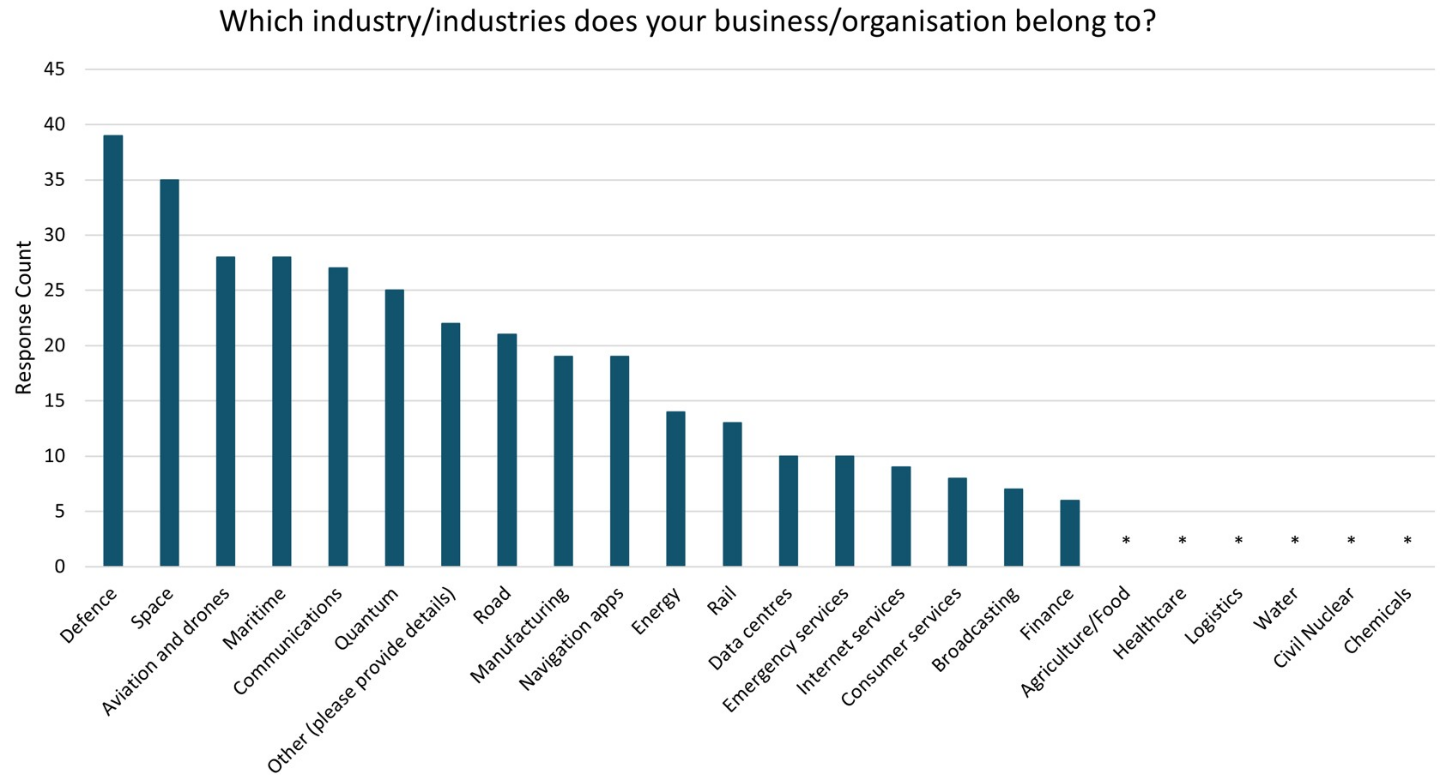
128 responses were received from businesses (sellers and users of PNT), academics, industry bodies, catapults, and the public. Respondents could select multiple sectors when describing their background; the defence sector was selected most frequently (39 responses), followed by space (35 responses), aviation and drones (28 responses), maritime (28 responses), and communications (27 responses).
Key themes were identified from the responses
Viability of a Global Navigation Satellite Systems (GNSS)-independent PNT market
- The majority of respondents (55 of the 64) believe a viable market exists for GNSS-independent PNT, with respondents citing applications in defence and other Critical National Infrastructure (CNI) sectors.
- Among those who responded and did not believe a viable market exists, factors cited included the dominance and low cost of GNSS and the lack of mature alternatives and demand signals.
Awareness and adoption of GNSS-independent PNT
- Many respondents raised that GNSS is seen as “good enough”, and many respondents agreed that awareness of GNSS vulnerabilities in end users and CNI sectors is low.
- Others noted an underestimation of reliance on GNSS among end users, lack of funding, and absence of standards as being barriers. Solutions proposed included legislation, guidance for CNI, awareness campaigns, and collaborative networks between government, industry and academia.
PNT market opportunities
- Responses identified trends towards GNSS-independent PNT (41 out of 61) and other technologies (39 out of 61), including Enhanced Long-Range Navigation (eLoran), Low Earth Orbit (LEO)-PNT, 5G, quantum PNT, inertial systems, and applications in GNSS-denied environments as potential opportunities.
- Responses also identified the use of a national resilient PNT system (31 out of 61), legislation for CNI (29 out of 61), and the establishment of standards (25 out of 61) as key opportunities.
PNT market challenges
- Respondents identified funding constraints and a lack of legislation and standards as key short-term challenges.
- Respondents mentioned scalability, lack of sovereign manufacturing capability, and insufficient long-term planning as key long-term challenges.
Research and development (R&D) and commercialisation
- Many respondents emphasised the need for sufficient funding for R&D to advance alternative PNT technologies and maintain UK competitiveness.
- Respondents frequently cited overly bureaucratic processes as being barriers to R&D progress.
- Some respondents recommended increased government funding, seed contracts, procurement, and clear government intent to provide market confidence.
Standards and regulation
- Most respondents agreed that government should play a proactive role in shaping international standards.
- Some respondents noted that voluntary adoption of resilient PNT is unlikely to scale without regulatory or contractual drivers and assistance integrating with legacy systems.
Skills landscape
- The majority of respondents (48 out of 68) stated they, or their company, were experiencing a skills shortage, with respondents highlighting shortages across a range of technical skills, especially in engineering.
- Respondents cited a limited talent pipeline and lack of dedicated training opportunities as drivers.
The responses to the PNT Growth call for evidence will be used, along with wider research, to inform future government policy interventions to support the UK PNT sector.
2.0 Introduction
2.1. Background to PNT
Positioning, Navigation and Timing (PNT) describes the ability to determine location and orientation (positioning), current and desired position (navigation) and the ability to acquire and maintain accurate and precise time from a standard anywhere in the world (timing). PNT matters to the UK economy: it underpins the technologies that enable everyday life. It is vital to the functioning of Critical National Infrastructure (CNI) and enables transport, telecommunications, computers, emergency services, personal navigation, and finances.
Most industries in the UK currently rely on PNT from Global Navigation Satellite Systems (GNSS), but a 2023 report estimated a loss of GNSS over a 7 day period would cost the UK economy £7.6 billion[footnote 1]. PNT-enabled products and services also provide significant economic benefits. The benefits of PNT to the UK economy from GNSS alone have been estimated at £13.6 billion per year [footnote 1], and new opportunities are emerging for the UK to be a market leader in the development and export of resilient PNT technologies.
To address the risks of PNT loss and capitalise on PNT-enabled benefits, the Government Policy Framework for Greater PNT Resilience[footnote 2] was published in 2023. It includes an action to “develop a PNT growth policy, including R&D programmes, standards and testing, to drive innovation for PNT based productivity”. In support of the framework, Lord Vallance announced a £155 million investment at the Royal Institute of Navigation’s PNT Leadership Seminar on 19 November 2025, to strengthen the UK’s GNSS-independent PNT systems, which will enable PNT to continue to support the UK’s economic activities and boost national security.
2.2 PNT Growth Call for Evidence overview
To gather evidence to develop policy interventions to support the UK PNT sector, the Department for Science, Innovation and Technology (DSIT) held a call for evidence which ran from 30 June 2025 to 22 September 2025.
The call sought views on:
- the UK PNT market and R&D landscape
- barriers to market entry and commercialisation
- barriers to user adoption of resilient PNT
DSIT would like to thank stakeholders for the detailed consideration of the topics that were explored in the call for evidence and the thorough written responses they have provided.
This summary of responses document aims to set out the written evidence provided by stakeholders through the call for evidence. This summary addresses the primary themes identified in the responses while recognising that some perspectives may not be fully represented; however, all feedback will be used to inform future policy development. Quotations are selectively included throughout the report to add context and nuance.
2.3 Methodology
Format
This call for evidence took the form of a survey on GOV.UK for 12 weeks, from 30 June to 22 September 2025, and was open to anyone. DSIT specifically targeted responses from groups including: academics working with PNT, businesses that sell PNT products and services, professional bodies with an interest in PNT, professional bodies not directly related to PNT, e.g. Institute of Marine Engineering, Science and Technology (IMarEST), Nautical Institute (NI) and Royal Aeronautical Engineering Society (RAes), and PNT-related catapult organisations e.g. Satellite Applications Catapult. Members of the public also completed the survey.
The survey included closed multiple-choice questions, as well as free-text questions where respondents could leave detailed comments (up to 1,500 characters).
Not all questions were shown to all respondents; the questionnaire used branching logic, so the questions shown for each respondent varied according to the answers given to the question “What kind of respondent are you?”. This was to ensure that participants saw the questions most relevant to them.
Analysis
To analyse the responses, we:
- produced summary data tables of the multiple-choice responses.
- identified themes in the free-text responses (125 online form returns only) using inductive analysis and the Consult consultation analysis tool, developed by the Incubator for artificial intelligence. Consult’s outputs were cross-checked using a human reviewer to ensure outputs were accurate.
Caveats
When reading this report, it is important to note the following caveats.
The results are based on a relatively small number of responses. While this might be expected considering the specialist area, care must still be taken in interpreting the results as they may not be fully reflective and/or representative of any group and do not represent an effective sample of the wider population.
Throughout the report, results for each question are shown based on the number of people who answered that particular question. Since answering was optional, and some were targeted at specific sub-groups, the total number of responses can be different for each question.
In order to prevent potential identification of individuals or organisations, responses to questions with fewer than 5 responses have been supressed. This is indicated in tables and charts with an asterisk (*). In some instances, secondary suppression has also been applied.
The suggestions and recommendations in this report represent the views of those who responded to our survey. We recognise there may be alternative views on specific issues and the inclusion of these does not mean they are endorsed by DSIT or government.
2.3 Results
Overall, 128 responses were submitted to this call for evidence. Of these, 125 answered through the online form, with 3 further responses coming directly to the National PNT Office. The latter group were also supplied the questionnaire for reference.
Using the responses to the questions, as well as the thematic analysis, we have summarised the results under the following headings:
- Overview of respondents
- Viability of a GNSS-independent PNT market
- Awareness and Adoption of GNSS-independent and resilient PNT
- UK PNT market opportunities and challenges
- R&D and commercialisation
- PNT Standards and Regulation
- PNT Skills
2.4 Overview of respondents
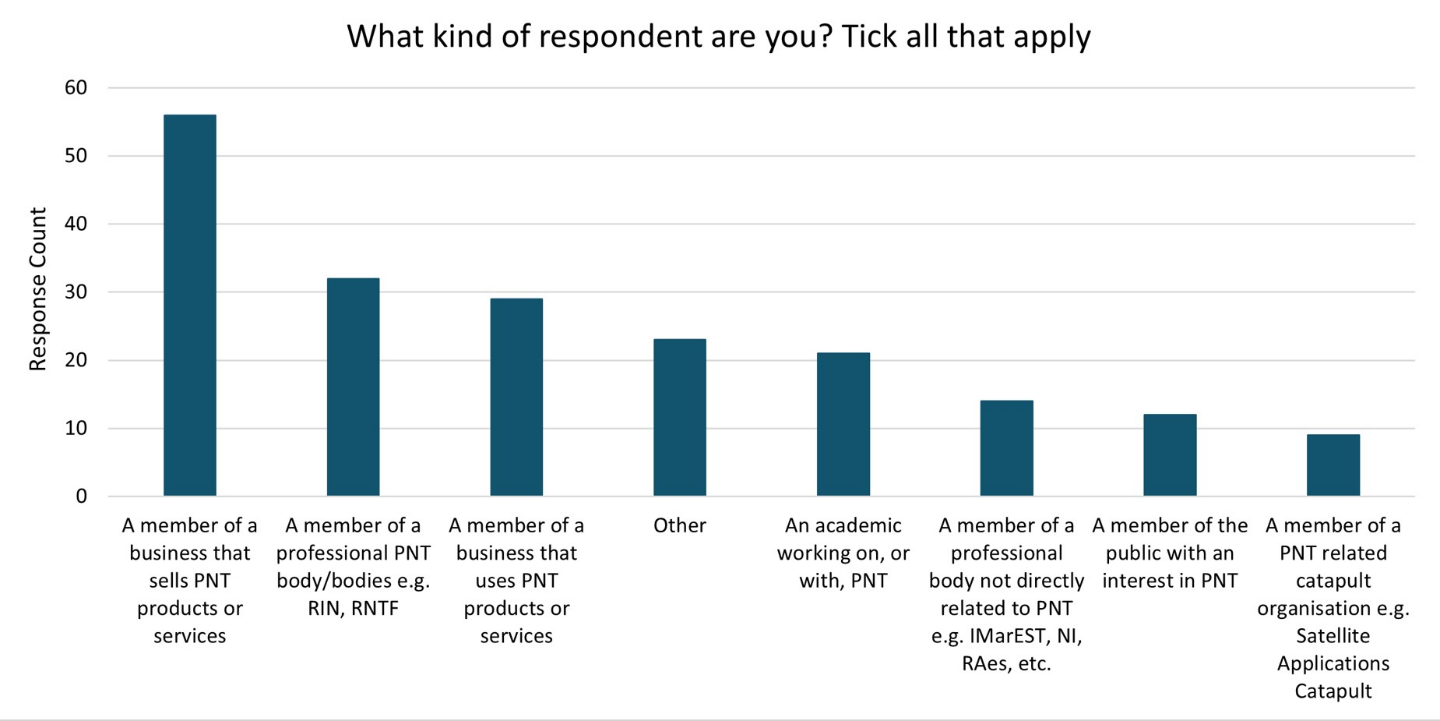
Businesses and individuals from a variety of roles and sectors responded. Respondents were able to select more than one category and therefore the sum of counts exceed the ‘Total responding’ figure and percentages will exceed 100%.
| What kind of respondent are you? | Response count |
|---|---|
| A member of a business that sells PNT products or services | 56 |
| A member of a professional PNT body/bodies e.g. Royal Institute of Navigation (RIN), Resilient Navigation and Timing Foundation (RNTF) | 32 |
| A member of a business that uses PNT products or services | 29 |
| Other | 23 |
| An academic working on, or with, PNT | 21 |
| A member of a professional body not directly related to PNT e.g. Institute of Marine Engineering, Science and Technology (IMarEST), Nautical Institute (NI), Royal Aeronautical Engineering Society (RAes). etc. | 14 |
| A member of the public with an interest in PNT | 12 |
| A member of a PNT related catapult organisation e.g. Satellite Applications Catapult | 9 |
| Total responding | 128 |
Chart: What kind of respondent are you?
| Q4: Which industry/industries does your business/organisation belong to? | Response count |
|---|---|
| Defence | 39 |
| Space | 35 |
| Aviation & drones | 28 |
| Maritime | 28 |
| Communications | 27 |
| Road | 21 |
| Manufacturing | 19 |
| Navigation apps | 19 |
| Energy | 14 |
| Rail | 13 |
| Data centres | 10 |
| Emergency services | 10 |
| Consumer services | 8 |
| Broadcasting | 7 |
| Finance | 6 |
| Agriculture/Food | (note) |
| Healthcare | (note) |
| Logistics | (note) |
| Water | (note) |
| Civil Nuclear | (note) |
| Chemicals | (note) |
| Other | 22 |
| Total responding | 105 |
(note) Count suppressed to protect confidentiality
Chart: Which industry/industries does your business/organisation belong to?
3.0 Viability of a GNSS-independent PNT market
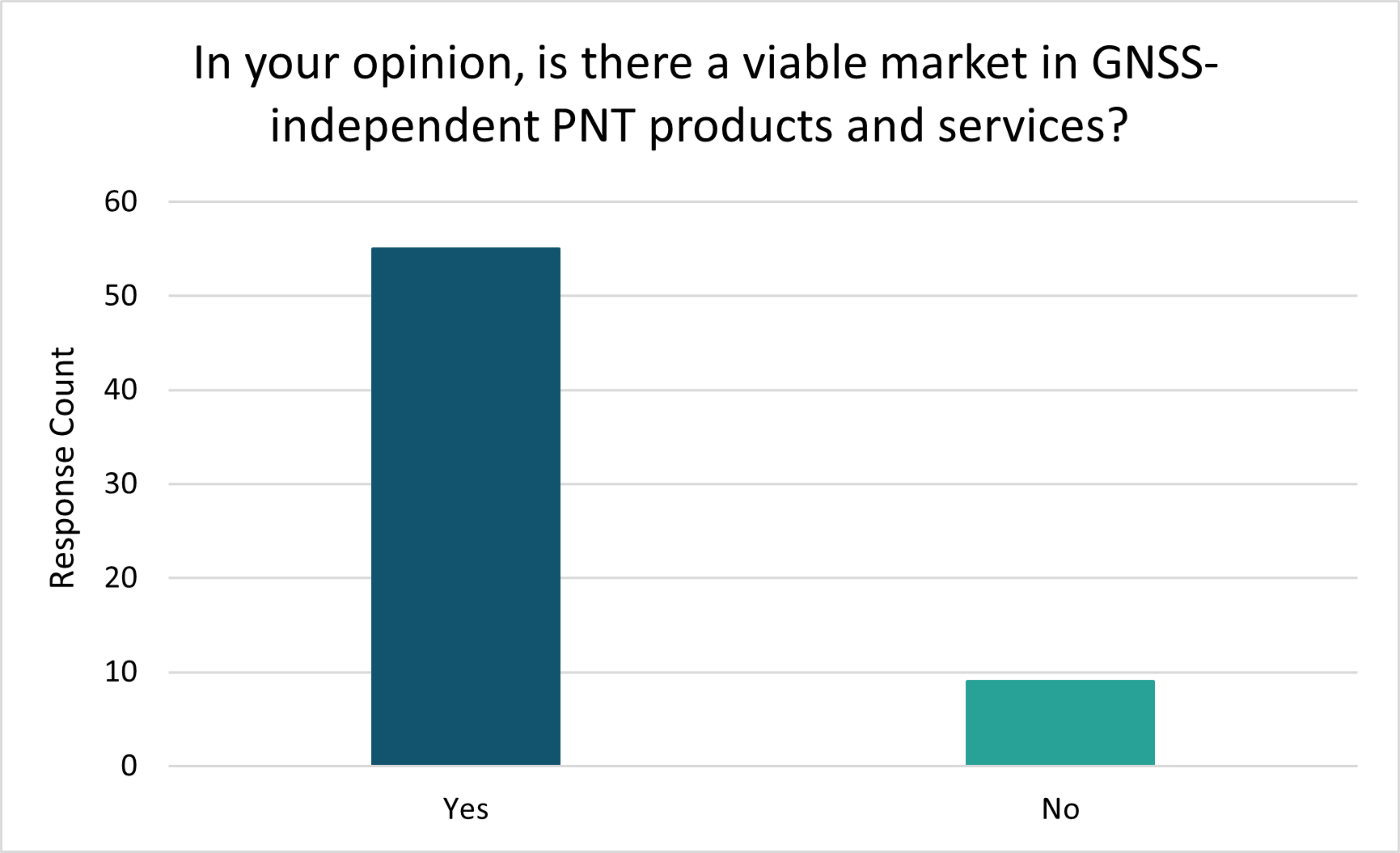
Respondents were asked about their thoughts on the viability of the GNSS-independent PNT market. The majority of those who answered (55 out of 64) considered there to be a viable and growing market for GNSS-independent PNT products and services.
| Q10: In your opinion, is there a viable market in GNSS-independent PNT products and services? | Response count |
|---|---|
| Yes | 55 |
| No | 9 |
| Total responding | 64 |
Chart: Is there a viable market in GNSS-independent PNT products and services?
Of those respondents that considered a GNSS-independent PNT market to be viable, some highlighted that the market’s viability was strongest in defence and security, where the need for assured PNT in contested, denied, or degraded environments is most acute.
Occasionally, respondents pointed to emerging opportunities in autonomous vehicles, drones, smart mobility, and indoor or underground navigation, where GNSS is unreliable or unavailable.
Many respondents noted that international demand for GNSS-independent solutions is increasing, particularly among allies and partners seeking to reduce strategic dependence on foreign systems and strengthen infrastructure against spoofing (sending fake radio signals to deceive a navigational system into showing false positions or data), jamming (deliberately interfering with radio signals, blocking the system’s ability to receive accurate data), and GNSS denial.
Some respondents expressed scepticism about the market’s viability, citing the dominance, low cost and reliability of GNSS. They also noted the lack of clear demand signals and the absence of mature alternatives as limiting factors.
Several respondents felt that, outside of defence and CNI, the market for GNSS-independent PNT was less certain, with some sectors (such as maritime and energy) seeing less immediate need for alternatives due to cost, integration challenges, and the reliability of GNSS for their current needs. Many responses noted that the market is highly fragmented, with viability varying significantly by use case and sector.
4.0 Awareness and adoption of GNSS-independent and resilient PNT
4.1 Awareness of GNSS-independent PNT
Respondents were asked about the most significant barriers to adoption, and they identified a significant barrier being a lack of awareness of their reliance on GNSS, its vulnerabilities, and the available GNSS-independent PNT solutions. Many respondents agreed that awareness of GNSS vulnerabilities among end users and in Critical National Infrastructure (CNI) sectors is currently low, and that this lack of understanding is a major barrier to adoption of resilient PNT solutions.
Some respondents emphasised that organisations often underestimate or are unaware of their reliance on GNSS and the risks of disruption, which can lead to limited investment in alternatives. A couple of respondents explained that this is further exacerbated by the absence of a significant GNSS loss or “crisis”, despite evidence of growing threats such as jamming or spoofing attacks.
A few respondents highlighted that it is important to raise awareness of the alternative PNT solutions available, such as quantum PNT. Enhancing understanding of these alternatives is needed to ensure organisations are well informed about all viable options for a resilient “system of systems”.
A few respondents commended the risk of PNT loss being added to the National Risk Register, but individuals noted that this should be followed by actions such as implementing legislation, having long-term Ministerial leadership on the matter, and quantifying the risk.
Respondents also linked awareness gaps to other challenges such as lack of funding, absence of standards, and slow uptake.
Respondents were also asked how the government could build awareness and adoption for resilient PNT. Many respondents (46 out of 124) recommended leveraging regulation and guidance for CNI on PNT resilience to drive awareness and adoption. A few respondents suggested top-down awareness campaigns targeting industry and the public to highlight the risks of GNSS disruption and the benefits of resilient PNT.
Several respondents suggested using real-world examples and simulations to demonstrate the impact of GNSS outages on critical services.
Additionally, nearly a third of respondents (39 out of 124) advocated for collaborative networks between government, industry, and academia to facilitate knowledge transfer and the sharing of best practice.
4.2 Adoption of GNSS-independent PNT
Some respondents specifically mentioned a need for GNSS-independent PNT for Critical National Infrastructure (CNI), defence, and regulated sectors.
Several respondents suggested that GNSS remains dominant in the mass market, and that the government should not focus solely on GNSS-independent technology, but to focus on GNSS-complementary technologies as well. As such some respondents advocated for an approach that uses a mix of GNSS-independent and GNSS-dependent technologies, rather than solely GNSS-independent technologies. They cited hybrid GNSS and terrestrial systems, inertial systems, and quantum systems as potential industries for government to support.
One barrier raised by the majority of respondents included the challenge and cost of integration and interoperability, particularly with legacy systems built around GNSS. Some respondents added the fact that GNSS is free at the point of use, which may not be the case for an alternative system. Respondents raised concerns that alternatives would be difficult and costly to retrofit into existing infrastructure.
Many respondents cited that raising awareness of GNSS vulnerabilities, such as jamming, spoofing, and outages, would be a key driver for the adoption of GNSS-independent PNT.
Several respondents raised the lack of standards as a barrier to adoption, with a further subset of respondents mentioning regulatory and policy momentum as a barrier. Some respondents suggested that the development and enforcement of standards for resilient PNT, would help drive the market for GNSS-independent PNT in the UK through increased user adoption, supporting it to be a viable industry, as well as contributing to PNT resilience.
Some respondents suggested that if CNI acts as an anchor customer, it would facilitate growth in the GNSS-independent PNT market. Respondents stated that Government procurement would de-risk, validate, and stimulate the UK GNSS-independent PNT market.
5.0 UK PNT market opportunities and challenges
5.1 Opportunities in the UK PNT market
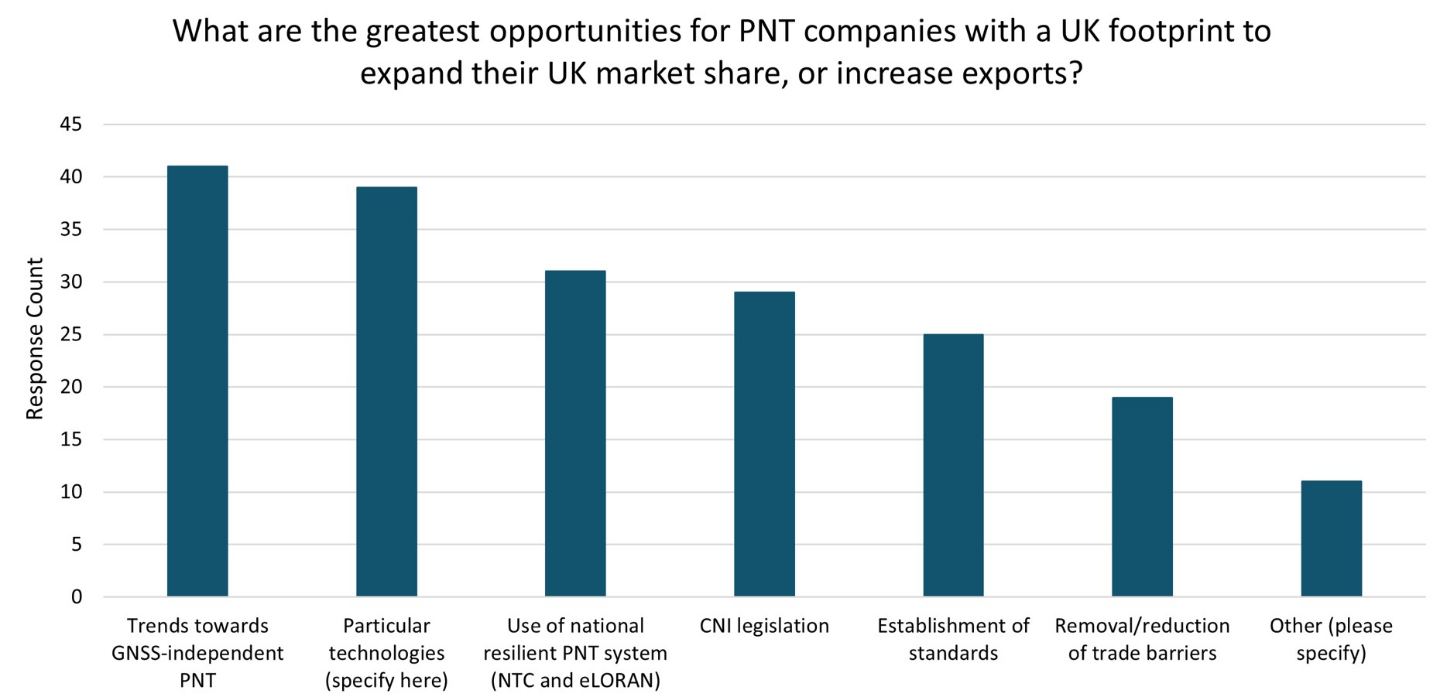
Respondents were asked to select the greatest opportunities for PNT companies with a UK footprint to expand their UK market share or increase exports; there were 61 responses to this question.
Of those who responded, just over two thirds of responses (41 out of 61) listed the greatest opportunity to grow the UK PNT market being the “trend towards GNSS-independent PNT products and services”. A few respondents highlighted the growing demand for resilient PNT solutions being a growing opportunity, as digitalisation increases across sectors such as energy, telecoms, finance, and autonomous systems.
A majority of responses (39 out of 61) noted particular GNSS-independent technologies presenting significant opportunities for the UK PNT market, such as Enhanced Long-Range Navigation (eLoran), Low Earth Orbit (LEO) PNT, 5G, quantum, and inertial systems.
Around half of responses (31 out of 61) noted that a national resilient PNT system, including infrastructure such as the National Timing Centre (NTC) and eLoran, was among the greatest opportunities for PNT market growth.
Nearly half of responses (29 out of 61) stated that legislation for CNI was among the greatest opportunities in growing the UK PNT market. Standards were selected as the greatest opportunity to grow the PNT market by around 4 in 10 respondents (25 out of 61).
A third of responses (19 out of 61) noted that the removal of trade restrictions and barriers would be a significant opportunity for growth of the UK PNT market.
In the table below, respondents were permitted to select more than one response, meaning the total response will exceed 100%.
| Q11: What are the greatest opportunities for PNT companies with a UK footprint to expand their UK market share, or increase exports? | Response count |
|---|---|
| Trends towards GNSS-independent PNT | 41 |
| Particular technologies (specify here) | 39 |
| Use of national resilient PNT system (NTC and eLoran) | 31 |
| CNI legislation | 29 |
| Establishment of standards | 25 |
| Removal/reduction of trade barriers | 19 |
| Other (please specify) | 11 |
| Total responding | 61 |
Chart: What are the greatest opportunities for PNT companies with a UK footprint to expand their UK market share, or increase exports?
Across multiple questions, a few respondents also raised potential opportunities in the use of GNSS-independent PNT in emerging fields such as indoor or underground positioning, autonomous technologies, and GNSS-denied environments. A few respondents also highlighted the potential opportunities in developing receivers and sensors with lower Size, Weight, Power, and Cost (SWAP-C).
5.2 Relative advantages of UK PNT market
The call for evidence also asked respondents about the relative advantages of the UK’s PNT market. Many respondents pointed to the UK’s strong international reputation for science and technology and the potential for export growth, especially as global awareness of GNSS vulnerabilities rises.
Some responses highlighted government awareness of the threats posed to national security from a loss of GNSS as being an advantage, reflecting government attention and appreciation of GNSS vulnerabilities and the need for resilience. Some mentioned the UK’s establishment of the National PNT Office in DSIT, infrastructure programmes like the National Timing Centre (NTC) and government involvement in international discussions as being examples of this.
Some responses highlighted the UK’s opportunities in having world-renowned academic institutions and infrastructure. A few responses to this question suggested that developing a national resilient PNT system including a National Timing Centre (NTC) and Enhanced Long-Range Navigation (eLoran) will generate significant opportunities for the UK.
5.3 Relative disadvantages of UK PNT market
The call for evidence asked respondents about the relative disadvantages of the UK’s PNT market.
Some responses mentioned a lack of market demand as being a key driver, with the UK having a relatively small market and no clear demand signal. A few responses mentioned risk aversion, slow adoption of new technologies, and a lack of government funding as barriers.
5.4 Top challenges in growing UK PNT market share
Respondents were prompted to discuss the top 3 challenges for the UK in growing the PNT market in the short term (0 to 3 years) and the long term (3+ years).
Over the short term, the top 3 themes that emerged included challenges relating to:
1. investment and commercialisation,
2. legislation and standards (including a lack of legislation or standards),
3. competing with GNSS.
Some respondents emphasised a lack of skills in technical and engineering areas, as expanded on in answers to the later skills-related questions.
Some respondents mentioned challenges accessing EU markets after Brexit and the need for international collaboration to maintain access to expertise and infrastructure.
Some respondents also noted risk aversion and slow uptake in sectors such as defence, which could delay early adoption.
Over the long term, the top 3 themes that emerged included challenges relating to:
1. lack of funding,
2. supporting a sovereign supply chain and manufacturing capability,
3. the UK’s ability to compete globally (in market share and in influencing regulations).
Respondents mentioned scalability, lack of sovereign manufacturing capability, and insufficient long-term planning as critical challenges beyond the initial 3-year horizon.
Several responses raised concerns about the complexity and bureaucracy of funding, and procurement processes which can slow innovation.
Some responses emphasised the need for international standards and interoperability to ensure UK-developed PNT solutions remain competitive globally. To address this, some respondents recommended that the UK government engage proactively in international standard-setting bodies.
A few responses expressed concerns that in the long-term, without clear roadmaps and government direction, the UK could fall behind in alternative PNT technologies.
A few responses raised concerns about talent retention and the risk of losing expertise and skills to other countries or higher-paying industries.
6.0 R&D and commercialisation
Respondents were asked to consider additional support that could strengthen the UK PNT research and development (R&D) and commercialisation ecosystem.
The majority of respondents emphasised that funding for R&D is critical in advancing alternative PNT technologies and ensuring UK competitiveness. A few respondents specified that funding streams dedicated to PNT were needed.
Some respondents raised the need for R&D and commercialisation opportunities for Small to Medium Enterprises (SMEs).
Several respondents raised that R&D must focus on support though to higher Technology Readiness Levels (TRLs) and bridging the gap between early-stage research and commercial deployment.
Many respondents cited overly bureaucratic processes as being significant barriers to R&D progress. A few respondents suggested the amount of paperwork, the high level of detail required in proposals, and generally the effort required as being out of proportion compared to the amount of funding on offer. The cost and time required to bid for funding presented a barrier to some companies. However, several respondents mentioned finding success in UK funding streams such as Innovate UK.
A few respondents commented that the timescale of funding tends to be shorter than needed, which presents a barrier for innovative PNT solutions that may need longer development times.
Most respondents highlighted the need for collaboration between government, academia, and industry to accelerate innovation. A few respondents raised the potential of catapults, forums, and technical support to bridge the gaps.
Some respondents recommended increased government funding, seed contracts, and procurement to stimulate innovation. A few respondents specified that longer-term grants and funding timelines would enable sustained development efforts and facilitate the maturation and commercialisation of technologies. A few respondents suggested access to testbeds and simulation facilities would also assist with commercialisation.
A few respondents called for indication of government intent to provide market confidence, reassure stakeholders, and encourage further private sector investment. A small number of responses recommended tax incentives and investor partnerships to increase risk tolerance in the PNT market.
7.0 PNT standards and regulation
7.1 Support for PNT standards and certification
Some respondents noted the absence of government enforced PNT resilience standards as a barrier to adoption, and procurement. A few respondents stated that they wanted government to lead on developing a “PNT Resilient Certified” scheme, supported by procurement templates and sector guidance. At least 5 respondents explicitly stated that voluntary adoption of resilient PNT is unlikely to scale without regulatory or contractual drivers, whilst at least a dozen implied this through comments about the need for regulation.
A few respondents called for standards to be practical, outcome-based, and aligned with international frameworks such as ISO (International Organisation for Standardization), ITU (International Telecommunication Union), and ICAO (International Civil Aviation Organization), so solutions are exportable and interoperable, positioning the UK as a leader in setting global PNT standards. Most respondents agreed that government should play a proactive leadership role in shaping both domestic and international standards and regulations, with one respondent stating that the UK’s position having left the European Union makes international engagement even more important.
A small number of respondents called for a lighter-touch response in the form of a national PNT resilience strategy, with clear timelines, funding, and guidance on adopting GNSS-independent solutions, but didn’t specify a need for legislating resilient PNT.
7.2 Challenges for PNT standards and regulation
Some challenges raised for introducing standards and regulations for PNT include integration and interoperability with legacy systems built around GNSS. Mandating the inclusion of GNSS-independent PNT would have large upfront costs for existing systems.
One respondent expressed concerns that standards development would be under-resourced and called for government funding to support participation in standards bodies and the creation of testbeds and certification facilities.
8.0 PNT skills
8.1 Current state of the PNT skills landscape in the UK
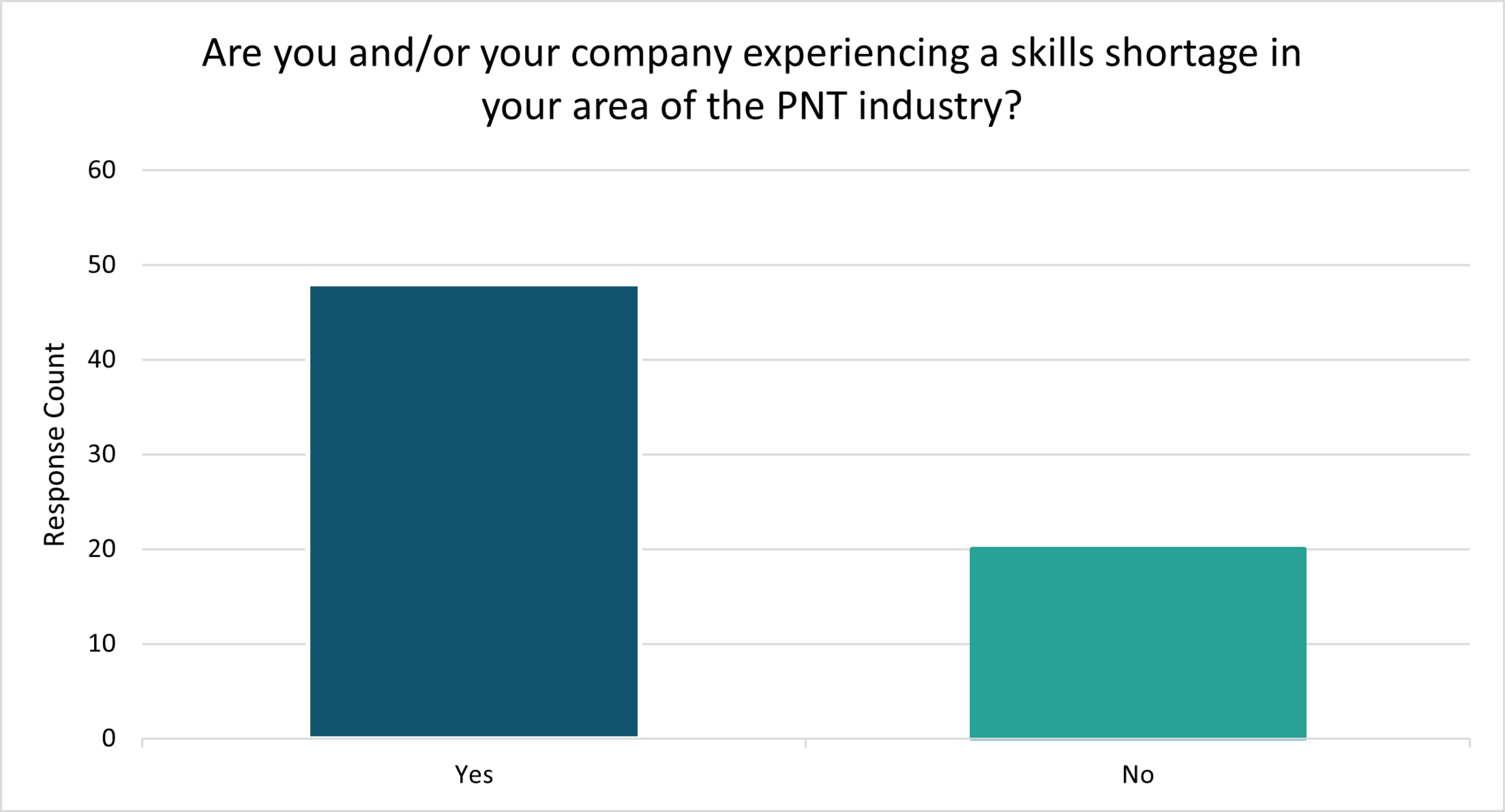
The majority of respondents (48 out of 68) said they were experiencing a skills shortage in their area. Respondents perceived a significant and widespread skills shortage across the UK’s PNT sector, with participants reporting gaps in their area of the industry.
| Q37: Are you and/or your company experiencing a skills shortage in your area of the Positioning, Navigation and Timing industry? | Response count |
|---|---|
| Yes | 48 |
| No | 20 |
| Total responding | 68 |
Chart: Are you and/or your company experiencing a skills shortage in your area of the Positioning, Navigation and Timing industry?
Some responses highlighted a shortage in broad PNT capabilities, especially in non-GNSS technologies. Some specific skills that were identified include software development, hardware design and fabrication, and specialised expertise in Radio Frequency (RF) engineering, digital signal processing, cyber security, and antenna and Field Programmable Gate Array (FPGA) design.
The majority of respondents cited a limited talent pipeline and lack of dedicated training opportunities, with a few respondents noting very few degree courses available in PNT-specific disciplines such as quantum engineering. One respondent explained that PNT lacked visibility and appeal compared to more prominent fields like artificial intelligence (AI) and quantum computing, resulting in lower awareness and fewer entrants to the profession.
8.2 Recommendations to improve the PNT skills landscape in the UK
To address these challenges, a few respondents specifically suggested raising the awareness of PNT, particularly as a strategic and attractive career path. Similarly, some respondents saw public engagement as vital, with calls to highlight the risks of GNSS loss and the importance of resilient PNT systems to business leaders, policymakers, and the wider public.
Support for PhD and postdoctoral research was also recommended by a few respondents, with improved stipends and clearer career pathways to retain talent in both academia and industry. From these respondents, there was strong support for multidisciplinary training that combines electronics, software, systems engineering, and domain-specific knowledge to meet the evolving needs of the sector.
Finally, a few respondents suggested that skills development should be aligned with a long-term national strategy. A clear signal of government commitment would provide stability, encouraging universities to offer courses, companies to invest in training, and individuals to pursue careers in PNT. They suggested skills initiatives should be linked to national programmes and bodies such as the National PNT Office, Quantum Missions, and the National Timing Centre (NTC) to ensure coherence and impact.
9.0 Next steps
The government is grateful to all those who took the time to respond to the call for evidence. These responses will be used, along with wider research, to inform future government policy interventions to support the UK PNT sector. We will provide a further update to the PNT sector in future and look forward to continuing to engage with the sector meanwhile.
Annex A: Call for evidence questions
Note that not all questions were shown to all respondents; the questionnaire used branching logic, so the questions shown for each respondent varied according to the answers given to the question “What kind of a respondent are you?”.
Demographics
1. If you are happy to do so, please state your name and your organisation (Optional).
2. What kind of respondent are you? Tick all that apply.
- An academic working on, or with, PNT
- A member of a business that sells PNT products or services
- A member of a business that uses PNT products or services
- A member of a professional body not directly related to PNT e.g. Institute of Marine Engineering, Science and Technology (IMarEST), Nautical Institute (NI) and Royal Aeronautical Engineering Society (RAes), etc.
- A member of a PNT related catapult organisation e.g. Satellite Applications Catapult
- A member of the public with an interest in PNT
- A member of a professional PNT body/bodies e.g. RIN, RNTF
- Other (please explain here):
3. How many employees work at your organisation?
- 1-9 employees
- 10-49 employees
- 50-249 employees
- 250 or more employees
- Don’t know
4. Which industry/industries does your business/organisation belong to? Select all that apply.
- Aviation and drones
- Agriculture/Food
- Broadcasting
- Communications
- Consumer services
- Data centres
- Defence
- Emergency services
- Energy
- Finance
- Healthcare
- Internet services
- Logistics
- Manufacturing
- Maritime
- Navigation apps
- Rail
- Road
- Space
- Quantum
- Water
- Civil Nuclear
- Chemicals
- Other (please provide details):
5. Which form of Positioning, Navigation and Timing do you work with/research/sell Select all that apply.
- GNSS (Global Navigation Satellite Systems)
- Space-Based Augmentation
- Atomic Clocks
- Holdover Clocks
- NPL Time
- NTP (Network Time Protocol)
- PTP (Precision Time Protocol)
- Quantum PNT
- INS (Inertial Navigation Systems)
- eLoran (Enhanced Long-Range Navigation)
- LEO (Low Earth Orbit) PNT
- MEO (Medium Earth Orbit) PNT
- GEO (Geostationary Earth Orbit) PNT
- Satellite Signals of Opportunity
- Terrestrial Signals of Opportunity
- Inertial Systems
- Pseudolites
- Multi-PNT (Systems of Systems)
- Audio and/or visual-based systems
- Jamming or signal degradation detection systems
- LiDAR (Light Detection and Ranging)
- Other [Free text]
6. Please select the nation or region where you are headquartered/based.
- Cymru/Wales
- East Midlands
- East of England
- London
- North East and Cumbria
- North West England
- Northern Ireland
- Scotland
- South East England
- South West England
- West Midlands
- Yorkshire and Humber
- Not headquartered in the UK
PNT market
7. Do you use a source of Positioning, Navigation and Timing independent to Global Navigation Satellite Systems? Note: GNSS-independent PNT: PNT products or services that can operate independently from global navigation satellite systems.
- Yes
- No (Please add any comments below)
8. What source of Global Navigation Satellite Systems-independent Positioning, Navigation and Timing do you use? (maximum 900 characters)
9. What market advancements would make you more likely to adopt Global Navigation Satellite Systems-independent Positioning, Navigation and Timing? (maximum 1500 characters)
10. In your opinion, is there a viable market in Global Navigation Satellite Systems-independent Positioning, Navigation and Timing products and services? Note: GNSS-independent PNT: PNT products or services that can operate independently from global navigation satellite systems
- Yes
- No
11. What are the greatest opportunities for Positioning, Navigation and Timing companies with a UK footprint to expand their UK market share, or increase exports?
- Particular technologies (specify here)
- Establishment of standards
- Removal/reduction of trade barriers
- Trends towards GNSS-independent PNT
- CNI legislation
- Use of national resilient PNT system (NTC and eLoran)
- Other (please specify)
12. What do you think are the UK’s top 3 challenges in growing the PNT market share in the short term (0-3 years) and the long term (3+ years)?
a. in the short term (0-3 years)
b. in the long term (3+ years)?
13. What are the relative advantages and disadvantages of the UK’s Positioning, Navigation and Timing market compared to international markets?
a. advantages
b. disadvantages
PNT adoption
14. How could government most effectively build awareness and adoption of Global Navigation Satellite Systems-independent Positioning, Navigation and Timing among critical national infrastructure and business users whose operations would stop in the event of a Global Navigation Satellite Systems loss incident? Please select the 3 most effective options.
- Grants and/or loans for business R&D and innovation in GNSS-independent PNT
- Procurement programmes for R&D and innovation in GNSS-independent PNT
- Institutional funding for public research
- Project grants for public research
- Interventions to support PNT talent and skills pipeline
- Collaborative infrastructure and networks for GNSS-independent PNT (physical and digital)
- Business advisory services
- Guidance, regulations or legislation for CNI on PNT resilience
- End user industry outreach
- Standards and certification for GNSS-independent PNT development and adoption
- International collaboration
- Signalling UK strengths and ambitions
15. Do you have any additional suggestions for government to build awareness and adoption of Global Navigation Satellite Systems-independent Positioning, Navigation and Timing? Please explain below (maximum 1500 characters). Note: GNSS-independent PNT: PNT products or services that can operate independently from global navigation satellite systems.
16. What are the 3 most significant barriers to the adoption of Global Navigation Satellite Systems-independent Positioning, Navigation and Timing technologies? Note: Answer with reference to your customers if you sell PNT products, and/or with reference to your company if you buy/use PNT. (maximum 1500 characters).
17. What are the 3 most significant drivers of the adoption of Global Navigation Satellite Systems-independent Positioning, Navigation and Timing technologies? Note: Answer with reference to your customers if you sell PNT products, or with reference to your company if you buy/use PNT. (maximum 1500 characters).
PNT R&D and commercialisation
18. Which research and development/commercialisation sources of support have you and/or your company used?
- Navigation Innovation and Support Programme
- Innovate UK
- Defence and Security Accelerator
- National Physical Laboratory Innovation Nodes
- Catapult
- UK Space Agency’s Unlocking Space for Business
- Other
- None of the above
19. If you’ve used the above sources of support, please rate these from 1 to 5, with 5 reflecting the most positive rating.
- Did not use
- 1
- 2
- 3
- 4
- 5
20. Any further comments on the sources of support used?
- Yes
- No
21. Any further comments on the sources of support used?
- Navigation Innovation and Support Programme
- Innovate UK
- Defence and Security Accelerator
- National Physical Laboratory Innovation Nodes
- Catapult
- UK Space Agency’s Unlocking Space for Business
- Other
22. What type of additional support could strengthen the UK Positioning, Navigation and Timing research and development and commercialisation ecosystem? (maximum 1200 characters).
23. Which source makes up the majority of your funding?
- Grant-based
- Venture capital
- Self-funded
- Customer financed
- Other business streams
- Other
24. Have you tried to raise capital of any of these types? Select all that apply.
- UK grant
- ESA/EU grant or contract
- Other foreign grant
- UK Venture Capital
- Non-UK Venture Capital
25. For each type of capital you have selected, explain any challenges or barriers you have faced in raising this capital (maximum 1500 characters).
26. If you have previously attempted to raise funding for Positioning, Navigation and Timing research and development or commercialisation, which size of investment has been the most challenging?
- more than £100,000 (note)
- £100,000 - £500,000
- £500,000 - £1 million
- £1 million - £10 million
- more than £10 million
Note: The less than symbol was written incorrectly/mistyped as the more than symbol in the call for evidence survey.
27. Any further comments on raising capital/commercialisation? (900 characters maximum).
28. Have you experienced challenges in risk tolerance towards Positioning, Navigation and Timing from investors?
- Yes
- No
29. If yes, what role could government play to increase investors’ risk tolerance? (maximum 1500 characters).
Imports and exports
30. Do you export your Positioning, Navigation and Timing products or services internationally? If yes, which product(s) do you export and where to?
- Yes [Free text]
- No
31. Do you import any components/materials for your own Positioning, Navigation and Timing products? If yes, what are they and from which countries do you import them from?
- Yes [Free text]
- No
32. Do you import any Positioning, Navigation and Timing technology, products or services and from which countries? (maximum 900 characters).
33. Have you faced export restrictions on your Positioning, Navigation and Timing products or any import restrictions on goods or components? Please explain your experience. (maximum 1500 characters).
PNT regulatory environment
34. How could government influence the development of international regulations and standards to help grow the UK Positioning, Navigation and Timing sector? (maximum 1500 characters).
35. Are you aware of the Royal Institute of Navigation’s Positioning, Navigation and Timing Best Practices and Guidance?
- Yes
- No
36. If yes, have you reviewed the Positioning, Navigation and Timing resilience checklist and/or made actions to prepare for potential Positioning, Navigation and Timing disruption in accordance with the Royal Institute of Navigation’s Positioning, Navigation and Timing guidance?
- Yes
- No
PNT skills
37. Are you and/or your company experiencing a skills shortage in your area of the Positioning, Navigation and Timing industry?
- Yes
- No
38. Which skills are you and/or your company missing? (maximum 900 characters)
Further contact
39. If you are happy to be recontacted about your responses to this survey, please provide your email address below (optional).
Annex B: Glossary of terms
| Term | Meaning |
|---|---|
| CNI | Critical National Infrastructure. The National Protective Security Authority (NPSA) defines CNI as critical elements of infrastructure whose loss or compromise could severely impact the delivery of essential services or have significant impact on national security, national defence, or the functioning of the state. It also includes some functions, sites and organisations which are not critical to the maintenance of essential services, but which need protection due to the potential danger to the public (civil nuclear and chemical sites, for example). |
| eLoran | Enhanced Long-range Navigation. A PNT system that uses terrestrial towers that transmit low radiofrequency signals, which can be used to transmit positioning and timing information. |
| GNSS-independent PNT | PNT products or services that can operate independently from Global Navigation Satellite Systems (GNSS). |
| IET | Institution of Engineering and Technology |
| ICAO | International Civil Aviation Organization |
| Inertial Navigation System | A navigation system that uses internal sensors (motion sensors and rotation sensors) to determine position, velocity and orientation without external references such as signals from GNSS. |
| ISO | International Organisation for Standardization |
| ITU | International Telecommunication Union |
| LEO-PNT | PNT satellites that use a low-earth-orbit |
| NTC | National Timing Centre |
| PNT | Positioning, Navigation and Timing |
| SME | Small to Medium Enterprise |