Community Services Data Set data quality review: report
Updated 14 September 2026
Applies to England

© Crown copyright 2026
This publication is licensed under the terms of the Open Government Licence v3.0 except where otherwise stated. To view this licence, visit nationalarchives.gov.uk/doc/open-government-licence/version/3 or write to the Information Policy Team, The National Archives, Kew, London TW9 4DU, or email: psi@nationalarchives.gov.uk.
Where we have identified any third party copyright information you will need to obtain permission from the copyright holders concerned.
This publication is available at https://www.gov.uk/government/statistics/community-services-data-set-and-healthy-child-programme-data-quality-review-2015-to-2025/community-services-data-set-data-quality-review-report
Main findings
This review is a summary of analysis of how complete the Community Services Data Set (CSDS) is for children aged 0 to 4 years. The analysis covers the financial year 2015 to 2016 to financial year 2024 to 2025 and includes analysis of the CSDS predecessor Children and Young People’s Health Services Data Set (CYPHS) for the earlier years. NHS England replaced CYPHS with CSDS in October 2017.
All years in this commentary refer to financial years (1 April to 31 March). In the bar charts covering multiple years, each year refers to when that financial year ended.
The counts of children in the CSDS data at ages 30 days (one month), 56 days (8 weeks), 457 days (15 months), and 914 days (2 and a half years) were compared with either the Office for National Statistics (ONS) mid-year estimates of population, or the ONS count of live births. The data is described nationally and regionally. The purpose of this analysis is to determine the completeness of the CSDS data set and therefore its robustness for producing indicators of public health outcomes from the healthy child programme (HCP).
Throughout this report we assess the percentage of children included in CSDS against a completeness threshold of 80%. Based on this threshold, we will be able to publish indicators for England starting from 2017 to 2018. For smaller geographical areas, we will be able to publish indicators for infants aged:
- 30 days (one month) and 56 days (8 weeks) starting from 2020 to 2021
- 457 days (15 months) and 914 days (2 and a half years) starting from 2021 to 2022
We looked at how many of the records include details of the child’s sex and ethnicity. Based on the 80% threshold, indicators for all 4 age groups can be published with breakdowns by sex. Breakdowns by ethnicity will not be possible as the current CSDS data does not have this characteristic recorded for enough children.
The statistics in this report are taken from the accompanying data tables on the Community Services Data Set and healthy child programme: data quality review, 2015 to 2025 page.
Detailed findings
England
Infants aged 30 days (one month)
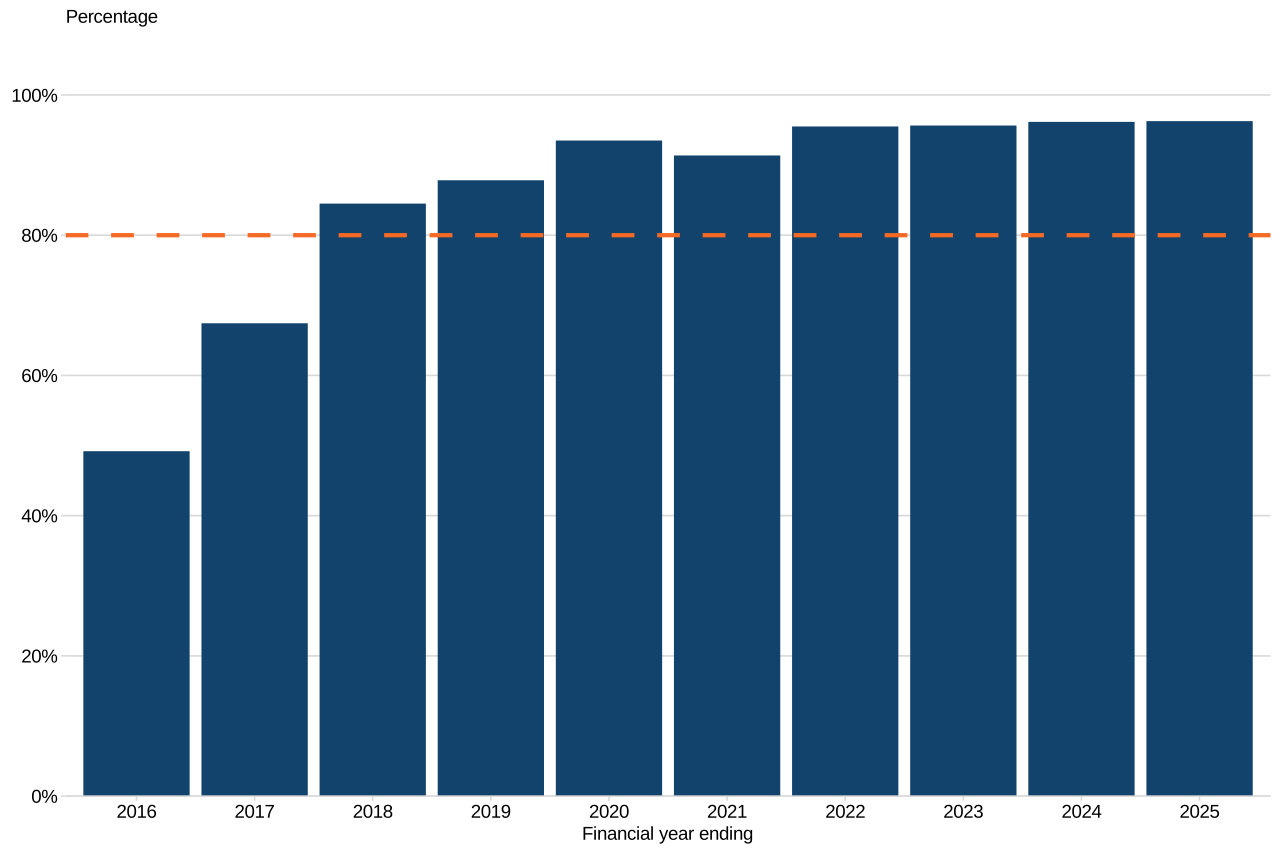
The number of infants aged 30 days in CSDS as a percentage of the ONS count of live births in England (see figure 1) reached the 80% threshold in 2017 to 2018. It has been consistently over 90% since 2019 to 2020.
Figure 1: infants aged 30 days (one month) in CSDS, as a percentage of ONS live births, England, April 2015 to March 2025
This data can be found in table 4 of the accompanying data tables on the CSDS and HCP: data quality review, 2015 to 2025 page.
Infants aged 56 days (8 weeks)
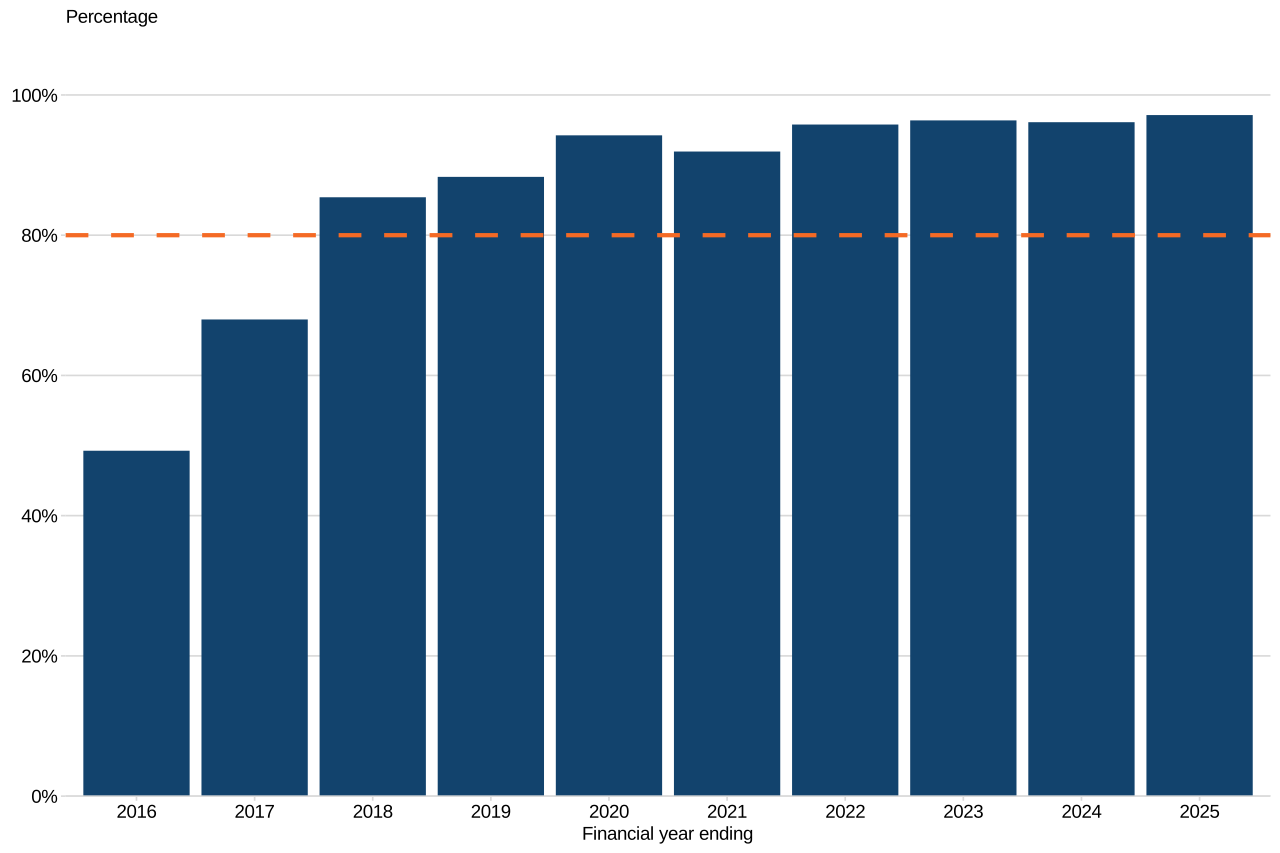
The number of infants in England recorded in CSDS aged 56 days as a percentage of the ONS count of live births (see figure 2) has been above the 80% threshold since 2017 to 2018.
Figure 2: infants aged 56 days (8 weeks) in CSDS, as a percentage of ONS live births. England, April 2015 to March 2025
This data can be found in table 4 of the accompanying data tables on the CSDS and HCP: data quality review, 2015 to 2025 page.
Breastfeeding status
A breastfeeding status recorded when the infant is between 42 and 63 days old is used for the measurement of breastfeeding status at 6 to 8 weeks. For infants reaching 56 days old in April where their breastfeeding status was recorded early in the 42 to 63 day window, it could be recorded in the data for the previous financial year. We therefore searched 2 financial years for evidence of a breastfeeding status between 42 and 63 days of age.
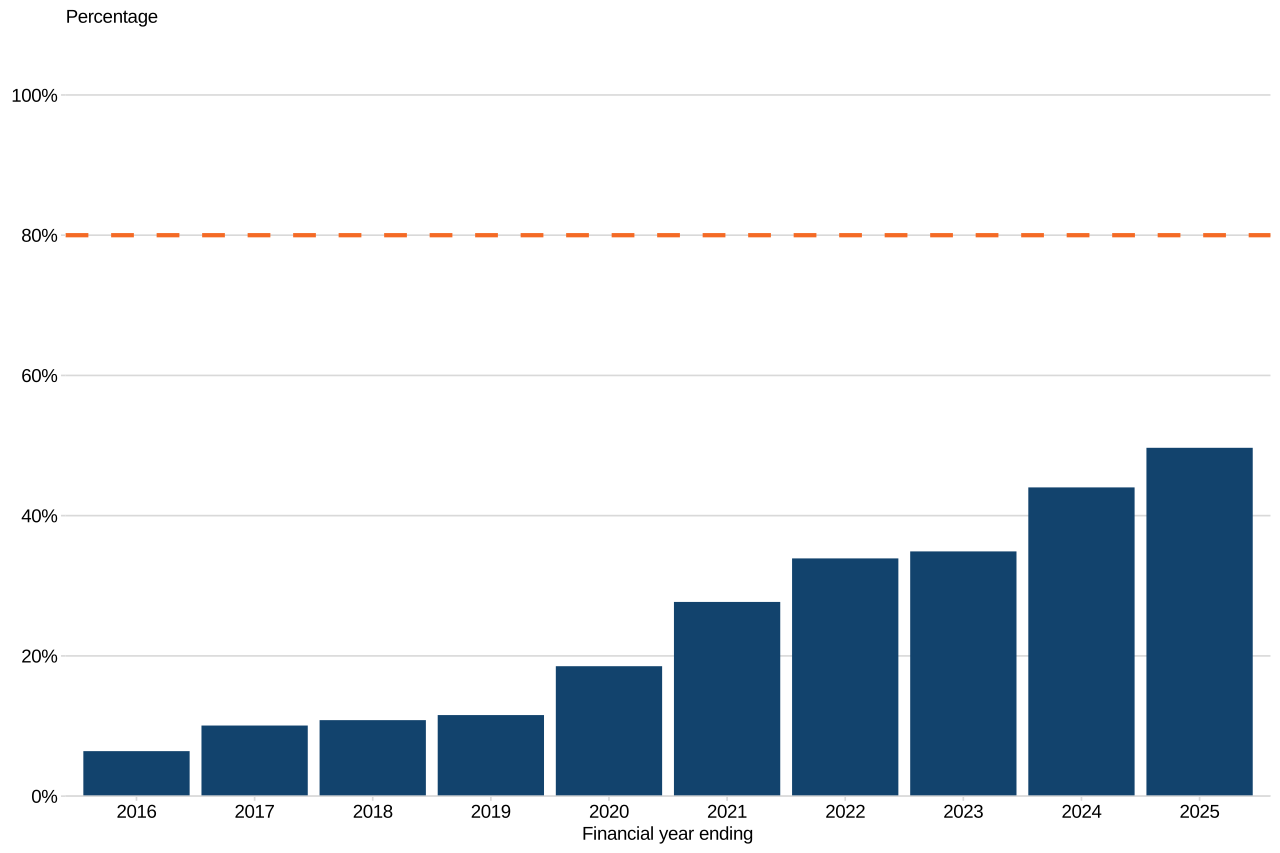
The percentage of infants in CSDS aged 56 days with a recorded breastfeeding status has steadily increased from 6% in 2015 to 2016 to 50% in 2024 to 2025 (see figure 3). However, this is still below the 80% threshold, suggesting it will not be possible to produce reliable breastfeeding prevalence figures from CSDS for England until there is an improvement in data quality.
Figure 3: percentage of infants aged 56 days (8 weeks) in CSDS with a recorded breastfeeding status, England, April 2015 to March 2025
This data can be found in table 1 of the accompanying data tables on the CSDS and HCP: data quality review, 2015 to 2025 page.
Children aged 457 days (15 months)
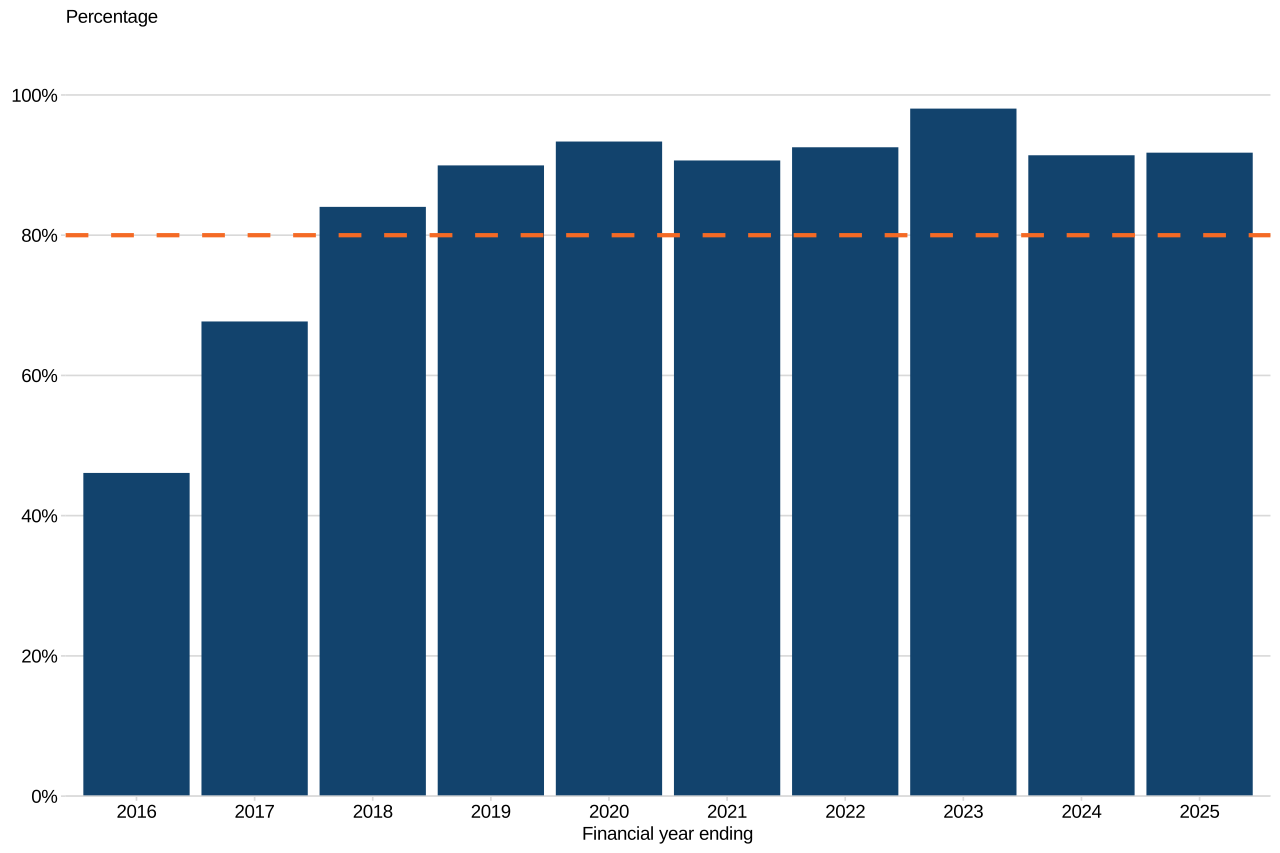
The number of children in England recorded in CSDS aged 457 days as a percentage of the ONS population estimate of one year olds (see figure 4) has been above the 80% threshold since 2017 to 2018.
Figure 4: children aged 457 days (15 months) in CSDS, as a percentage of the ONS population estimate of one year olds, England, April 2015 to March 2025
This data can be found in table 4 of the accompanying data tables on the CSDS and HCP: data quality review, 2015 to 2025 page.
Children aged 914 days (2 and a half years)
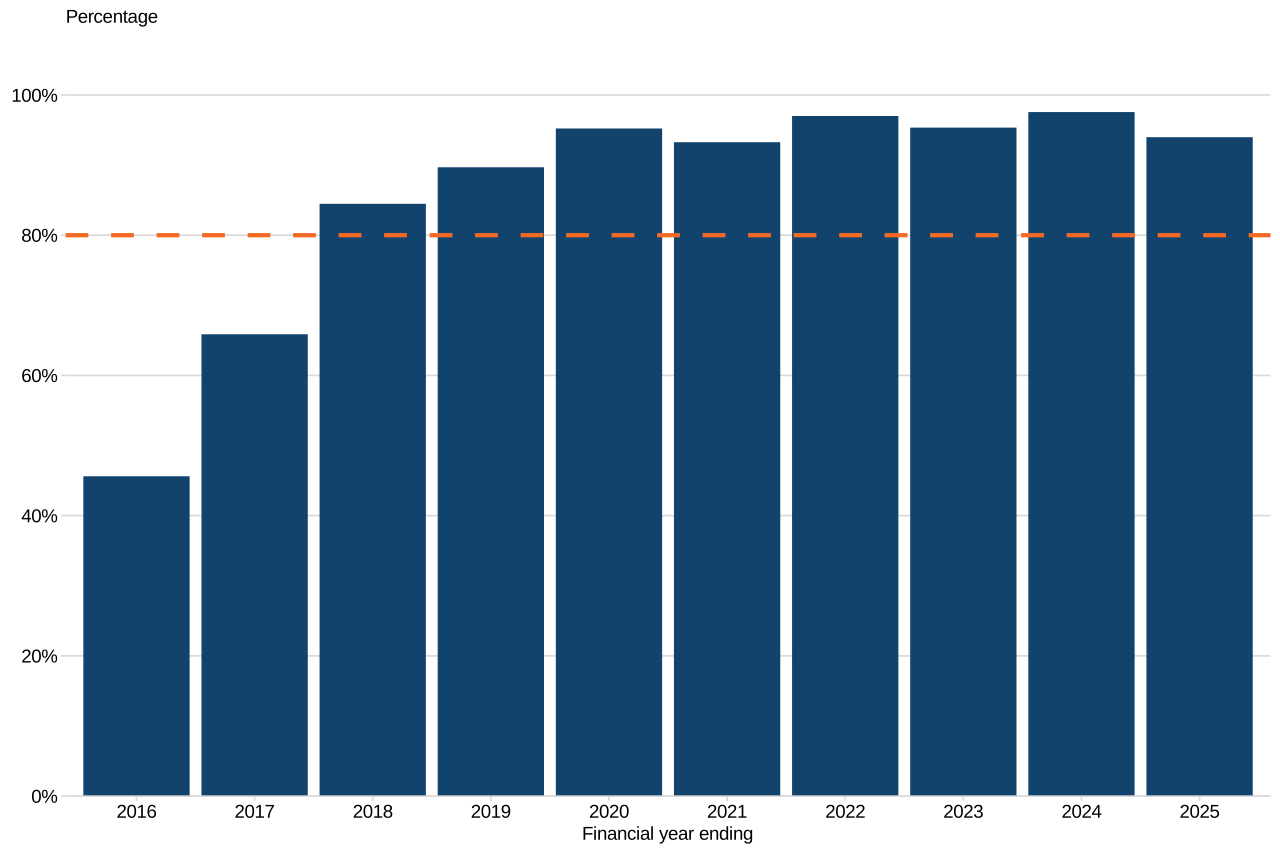
The number of children in England recorded in CSDS aged 914 days as a percentage of the ONS population estimate of children aged 2 (see figure 5) has been above the 80% threshold since 2017 to 2018.
Figure 5: children aged 914 days (2 and a half years) in CSDS, as a percentage of the ONS population estimate of children aged 2, England, April 2015 to March 2025
This data can be found in table 4 of the accompanying data tables on the CSDS and HCP: data quality review, 2015 to 2025 page.
Children with Ages and Stages Questionnaires Third Edition (ASQ-3) assessment
The healthy child programme commissioning guidance identifies developmental surveillance as a core component. The Department of Health and Social Care (DHSC) funds access to the Ages and Stages Questionnaires Third Edition (ASQ-3) tool for HCP providers for this purpose, although alternative tools can be used.
The ASQ-3 tool is designed to assess children’s development across 5 domains, at ages 3 months to 5 years. For the assessment as part of the 2 to 2 and a half year developmental review, the ASQ-3 assessments for ages 24, 27 or 30 months are appropriate. The 5 domains assessed by ASQ-3 are:
- communication skills
- gross motor skills
- fine motor skills
- problem solving skills
- personal-social skills
In CSDS, ASQ-3 assessments are recorded independently of 2 to 2 and a half year reviews. It is therefore possible that there will be more children who received an ASQ-3 assessment than received 2 to 2 and a half year reviews. In this analysis we have assessed how many children had a record of an ASQ-3 assessment which may have been part of a 2 to 2 and a half year review or been conducted independently or recorded as such. Although the review is mandated and the assessment of development is a core component, parents and caregivers can refuse either element.
The ASQ-3 assessment can take place at any time when the child is between 691 and 914 days old. For children reaching 914 days old (2 and a half years) in the first half of a financial year, their ASQ-3 assessment may have been in the previous financial year. Therefore, we have searched in 2 financial years for evidence of an ASQ-3 assessment.
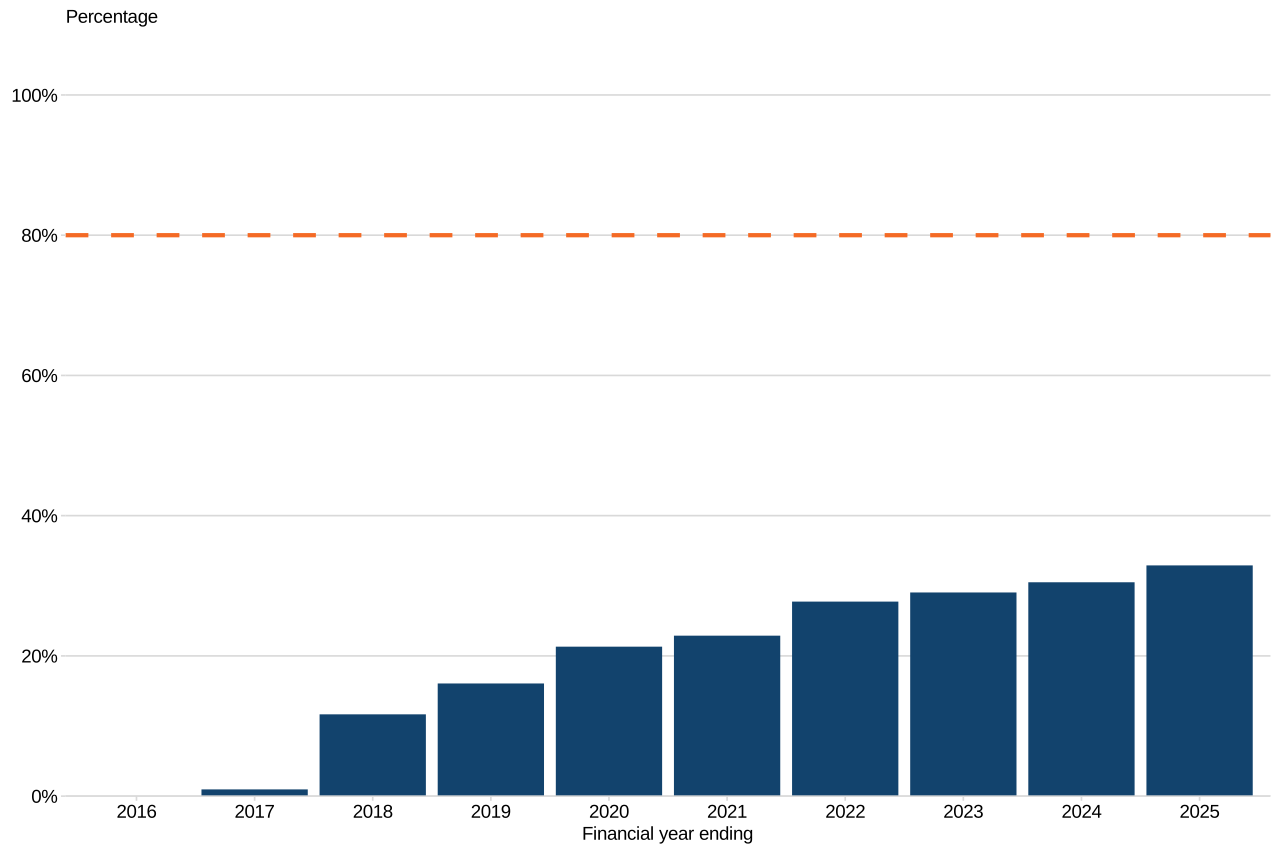
Figure 6 shows the percentage of children in CSDS aged 914 days who were recorded as having received an ASQ-3 assessment for all 5 domains. In 2024 to 2025 this was 33% in England, well below the 80% threshold.
Figure 6: percentage of children aged 914 days (2 and a half years) in CSDS with a recorded ASQ-3 assessment in all 5 domains, England, April 2015 to March 2025
This data can be found in table 6 of the accompanying data tables on the CSDS and HCP: data quality review, 2015 to 2025 page.
We also analysed how many children were assessed for at least one of the 5 domains, and how many were assessed for each individual domain. The results were broadly similar to those for all 5 domains discussed above.
All children aged 0 to 4 years
The count of children aged 0 to 4 years in CSDS is unlikely to be used for any indicators but is included here as a general measure of how well data is flowing into CSDS. All children under 5 years should have a referral to health visiting services, or the school nursing service if they have started school , and therefore should be recorded in CSDS.
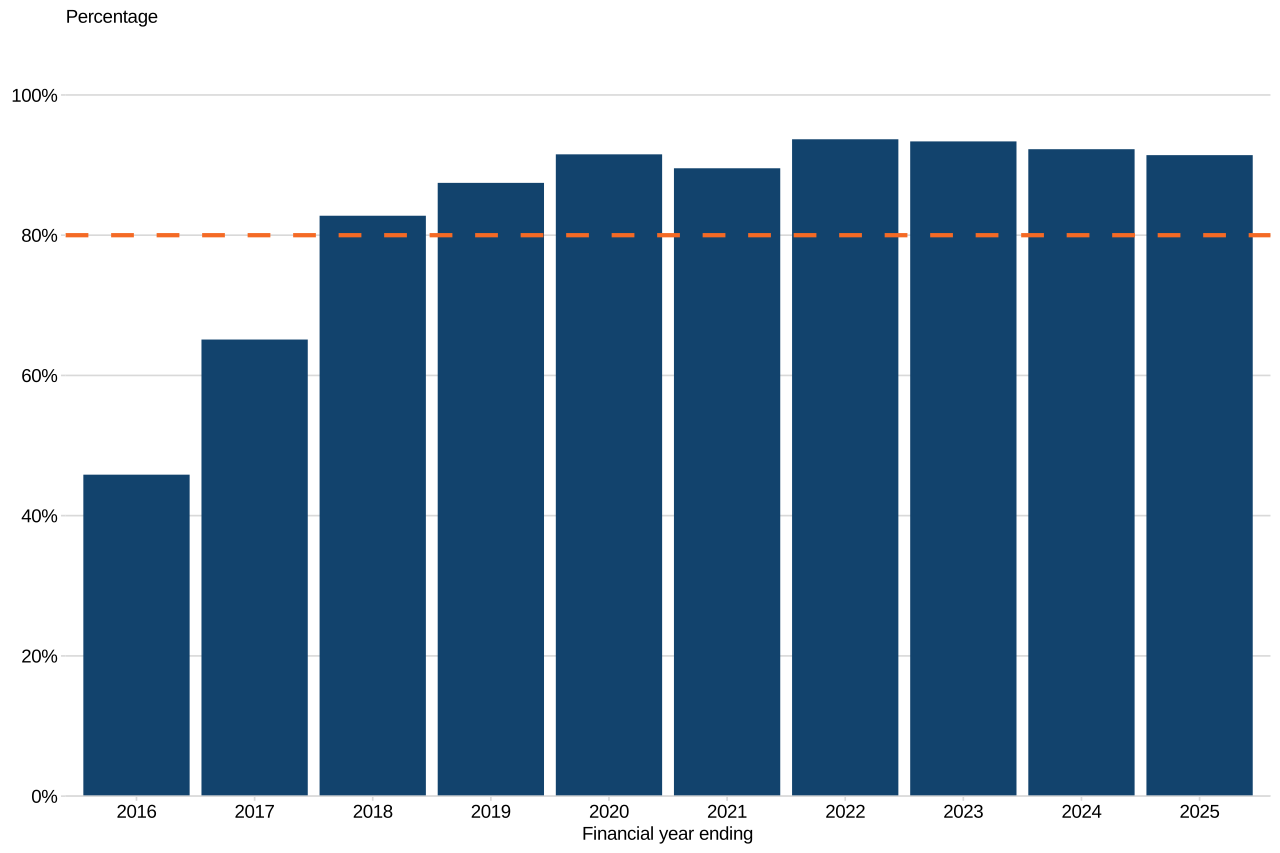
In terms of the proportion of the England population aged 0 to 4 years in CSDS, this has been consistently above 80% since 2017 to 2018, and above 90% since 2021 to 2022 (see figure 7).
Figure 7: children aged 0 to 4 years in CSDS, as a percentage of the ONS population estimate, England, April 2015 to March 2025
This data can be found in table 4 of the accompanying data tables on the CSDS and HCP: data quality review, 2015 to 2025 page.
Regions
Infants aged 30 days (one month)
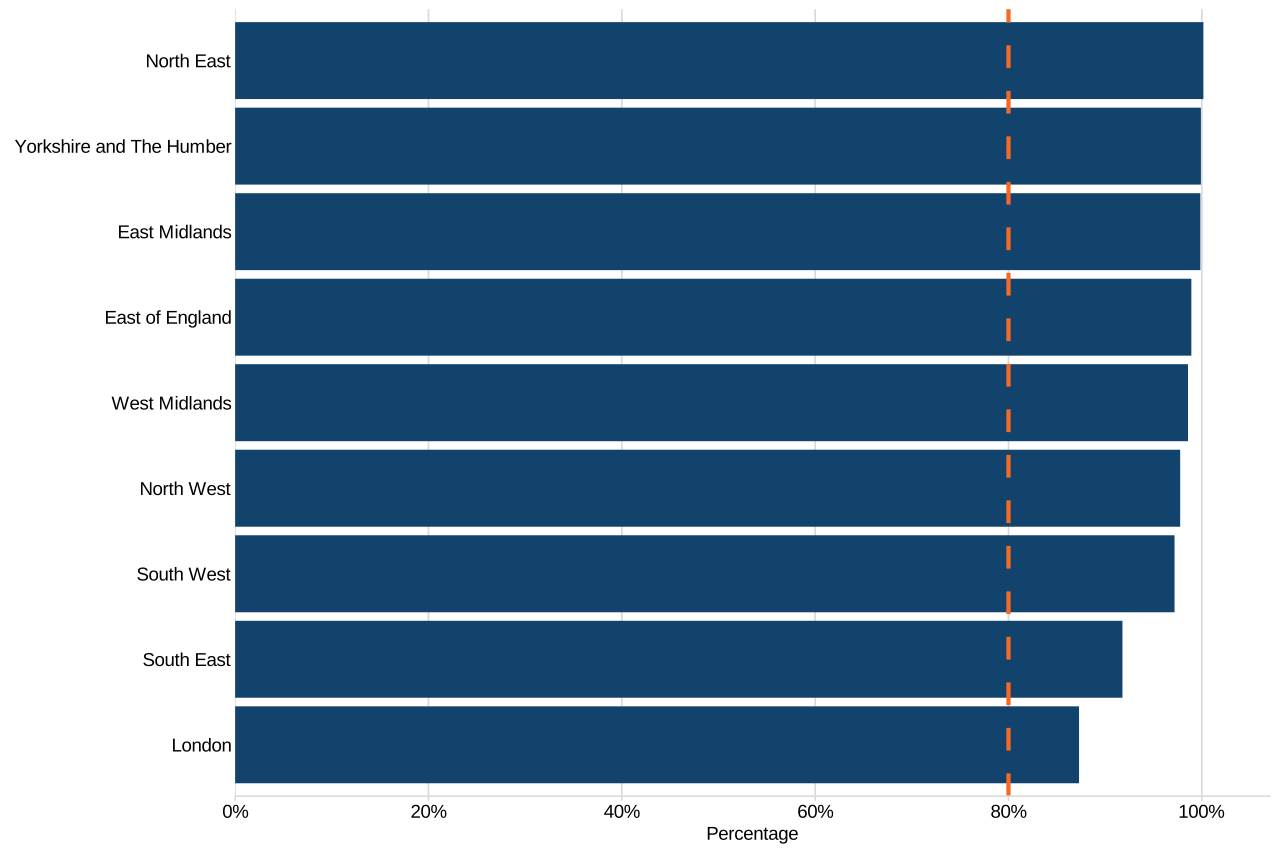
We analysed the counts of infants aged 30 days in CSDS as a proportion of ONS count of live births by region for 2024 to 2025 (see figure 8).
The picture varies regionally with the South West first reaching the 80% threshold in 2020 to 2021, while Yorkshire and the Humber has been above or only slightly below the threshold since 2015 to 2016. The rate in London fell from a peak of 94.7% in 2021 to 2022 to 83.3% in 2023 to 2024, before recovering slightly in the following year.
All regions have been above the 80% threshold since 2020 to 2021.
Figure 8: infants aged 30 days (one month) in CSDS, as a percentage of ONS live births, statistical regions, 2024 to 2025
This data can be found in table 4 of the accompanying data tables on the CSDS and HCP: data quality review, 2015 to 2025 page.
Infants aged 56 days (8 weeks)
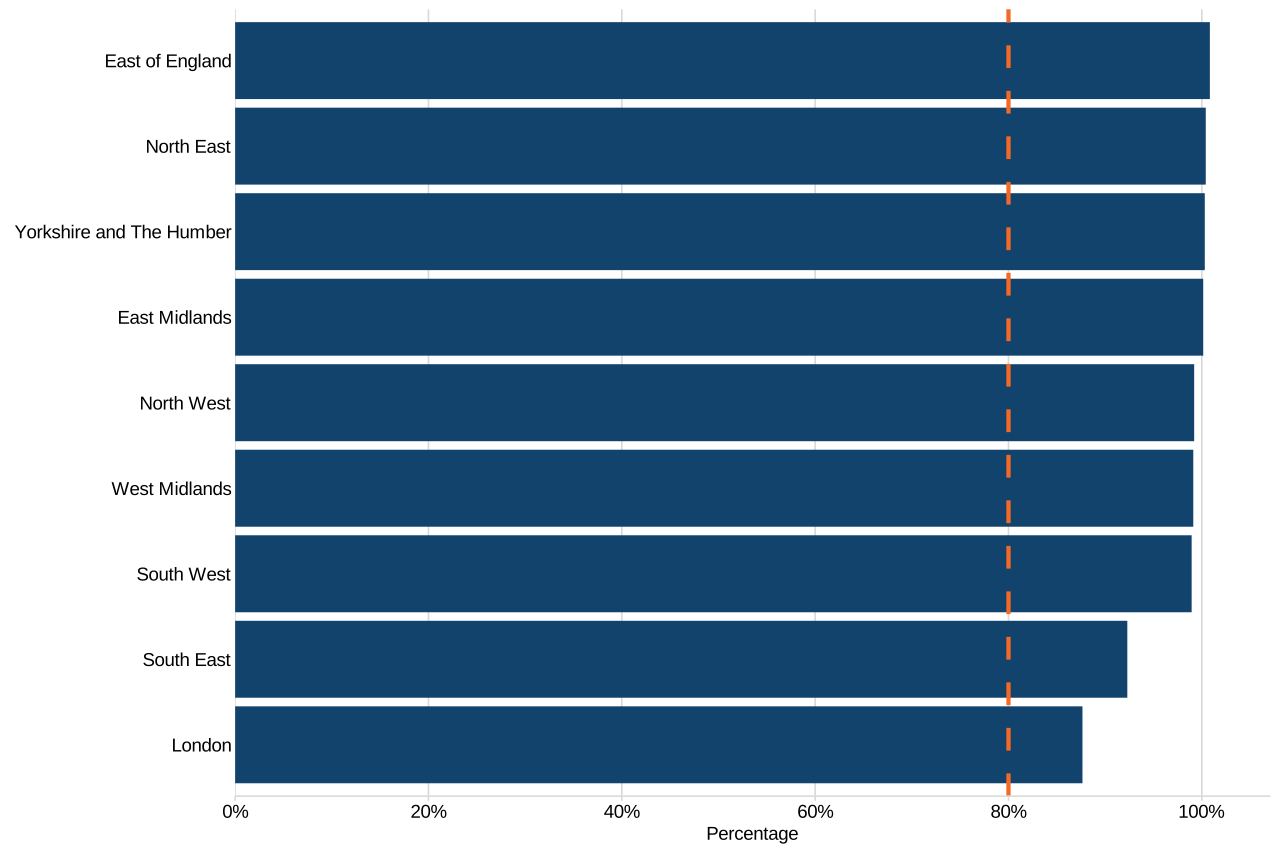
There is regional variation in the percentage of infants aged 56 days recorded in CSDS. All regions have been consistently above the 80% threshold since 2020 to 2021.
Figure 9 shows the counts of infants aged 56 days in CSDS as a percentage of the ONS count of live births by region in 2024 to 2025.
Figure 9: infants aged 56 days (8 weeks) in CSDS as a percentage of ONS live births, statistical regions, 2024 to 2025
This data can be found in table 4 of the accompanying data tables on the CSDS and HCP: data quality review, 2015 to 2025 page.
Breastfeeding status
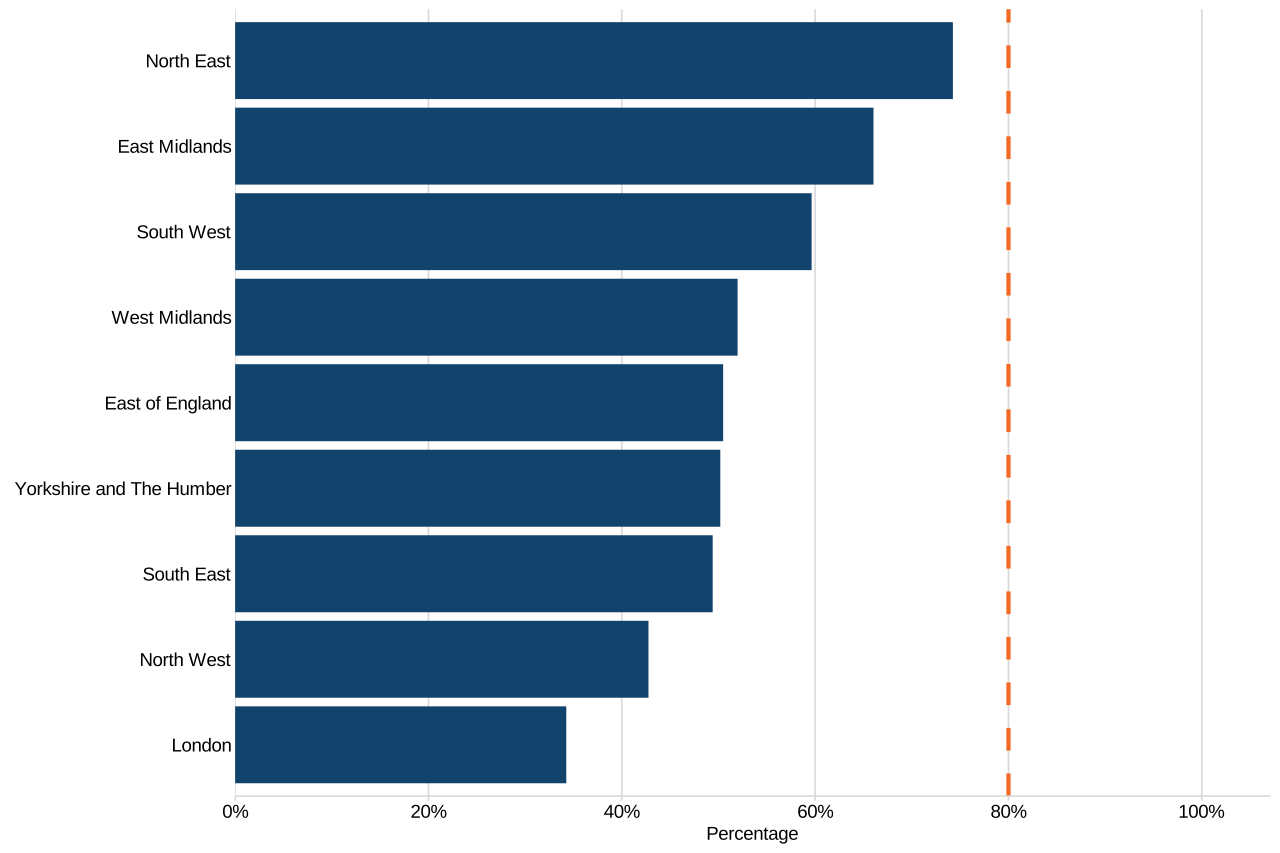
There is regional variation in the recording of breastfeeding status (see figure 10). In 2024 to 2025 the North East had the highest percentage of records with known breastfeeding status (74%), while London had the lowest (34%). All regions are below the 80% threshold under consideration. Therefore it will not be possible to publish breastfeeding prevalence at 6 to 8 weeks for any regions until data quality improves.
Some upper tier local authorities do meet the 80% threshold of infants having a recorded breastfeeding status. In 2024 to 2025, 39 individual upper tier local authorities (26% of all upper tier local authorities) met the 80% threshold. This suggests there is good recording practice in some areas, and publication of rates for these local authorities will be considered.
Figure 10: percentage of infants aged 56 days (8 weeks) in CSDS with a recorded breastfeeding status, statistical regions, 2024 to 2025
This data can be found in table 1 of the accompanying data tables on the CSDS and HCP: data quality review, 2015 to 2025 page.
Children aged 457 days (15 months)
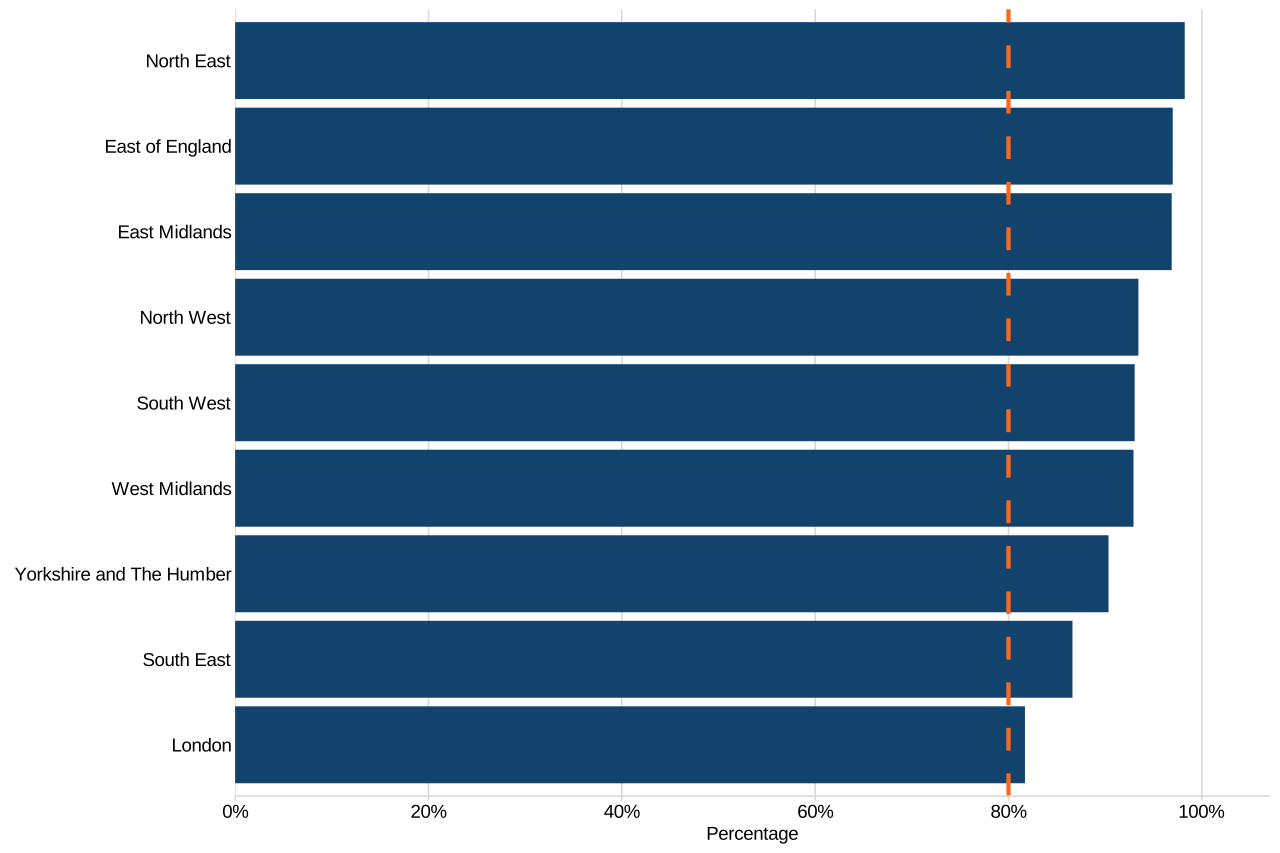
There is regional variation in the percentage of children aged 457 days recorded in CSDS (see figure 11). Yorkshire and the Humber has been above the 80% threshold since 2015 to 2016, whereas the South West did not reach this threshold until 2021 to 2022. All regions have been consistently above the 80% threshold since 2021 to 2022.
Figure 11: children aged 457 days (15 months) in CSDS, as a percentage of the ONS population estimate of one year olds, statistical regions, 2024 to 2025
This data can be found in table 4 of the accompanying data tables on the CSDS and HCP: data quality review, 2015 to 2025 page.
Children aged 914 days (2 and a half years)
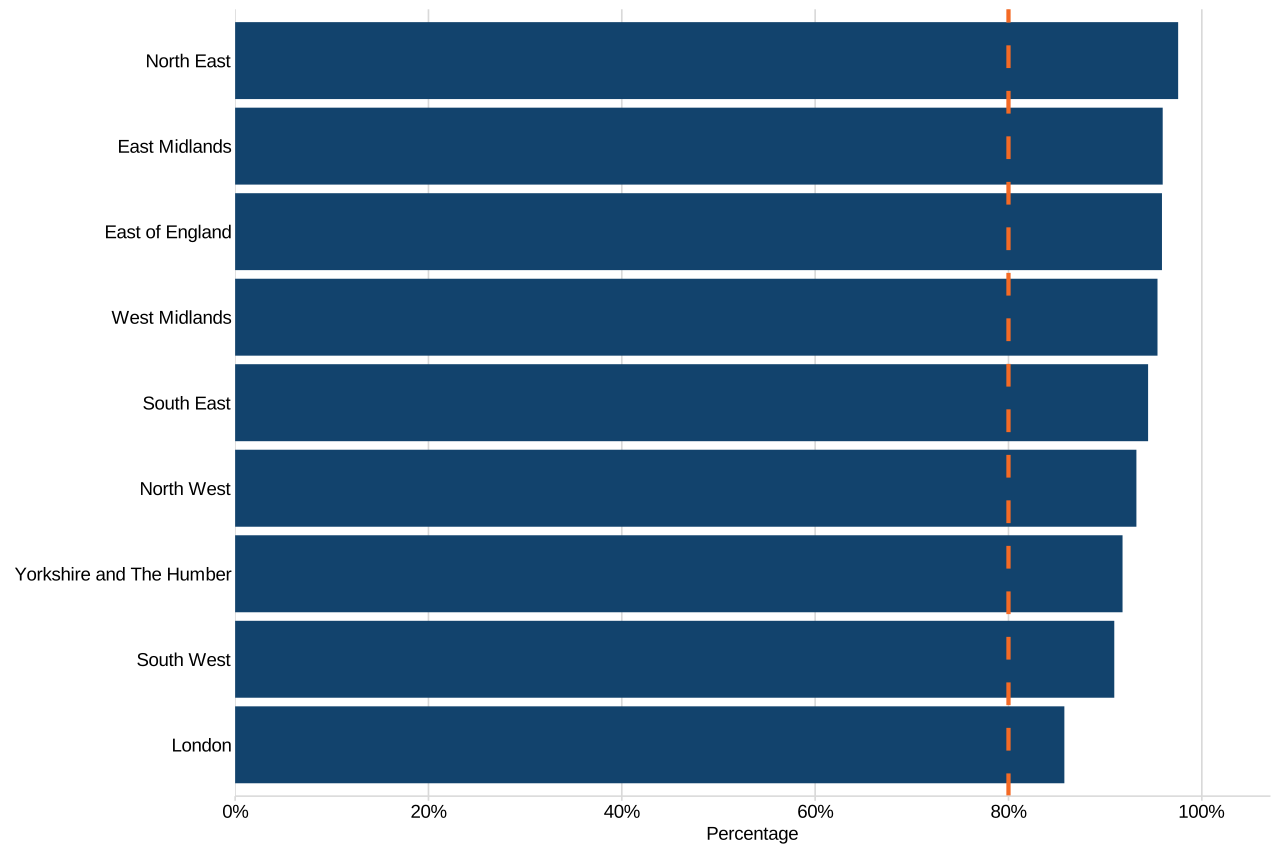
There is regional variation in the percentage of children aged 914 days as a percentage of the ONS population estimate of children aged 2 recorded in CSDS in 2024 to 2025 (see figure 12). Yorkshire and the Humber has been above the 80% threshold since 2015 to 2016, whereas the South West did not reach this threshold until 2021 to 2022. All regions have been consistently above the 80% threshold since 2021 to 2022.
Figure 12: children aged 914 days (2 and a half years) in CSDS, as a percent of the ONS population estimate of children aged 2, statistical regions, 2024 to 2025
This data can be found in table 4 of the accompanying data tables on the CSDS and HCP: data quality review, 2015 to 2025 page.
Children with Ages and Stages Questionnaire (ASQ-3) assessment
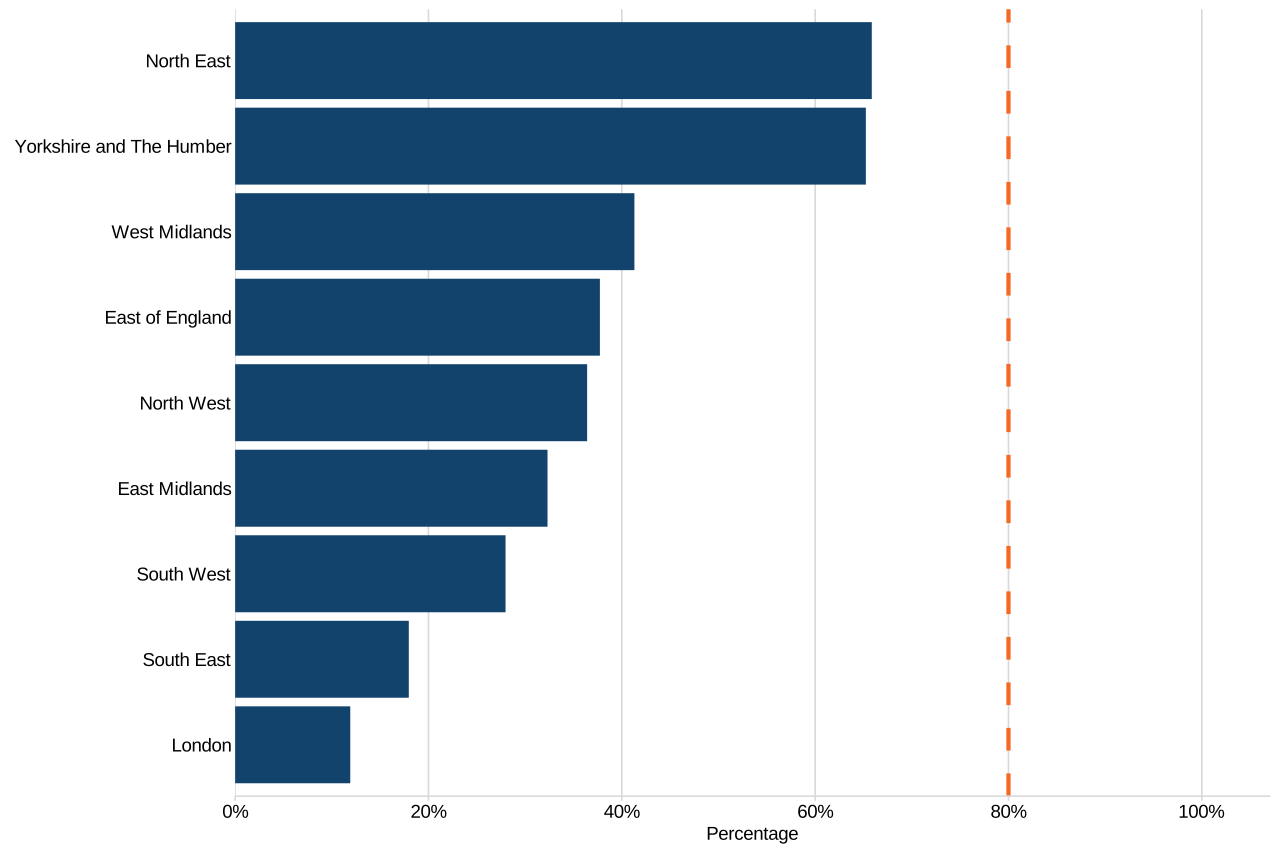
The regional picture of ASQ-3 recording is mixed (see figure 13). The North East recorded that 66% of children who were due an ASQ-3 assessment received one in all 5 ASQ-3 domains in 2024 to 2025, whereas in London only 12% of children were recorded as assessed. This is below the suggested threshold of 80% for all regions.
Figure 13: children aged 914 days (2 and a half years) in CSDS with a recorded ASQ-3 assessment in all 5 domains, statistical regions, 2024 to 2025
This data can be found in table 6 of the accompanying data tables on the CSDS and HCP: data quality review, 2015 to 2025 page.
The CSDS will be the only source of data for these important indicators. Some upper tier local authorities do meet the threshold of 80% of children having received an assessment. In 2024 to 2025, 13 individual upper tier local authorities (9% of all upper tier local authorities) met the 80% threshold. This suggests there is good recording practice in some areas and publication of rates for these local authorities will be considered.
All children aged 0 to 4 years
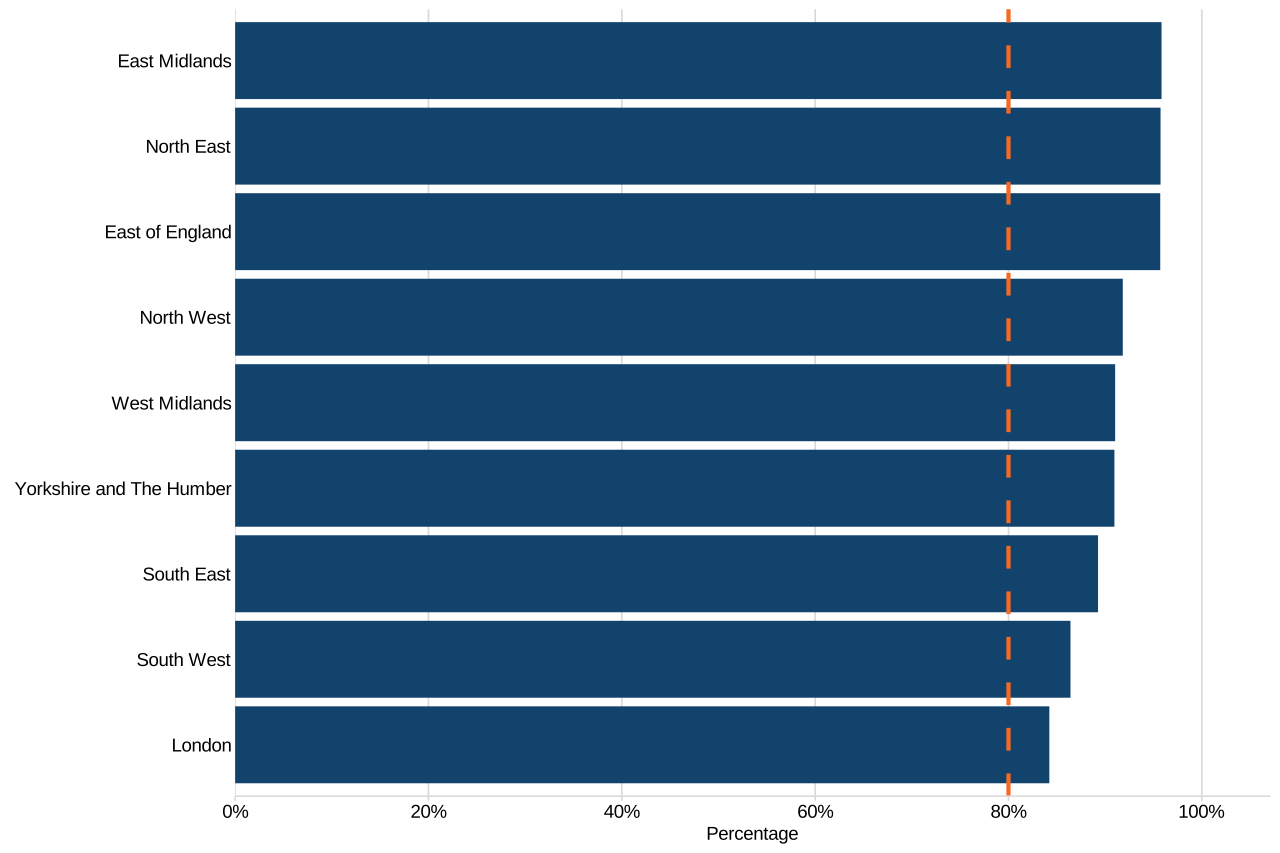
Figure 14 shows the counts of children aged 0 to 4 years in CSDS, as a percentage of the ONS population estimate for this age group, by region for 2024 to 2025.
Regionally the picture is mixed, with the South West region first reaching the 80% threshold in 2021 to 2022, while the Yorkshire and the Humber region passed that milestone in 2015 to 2016.
Figure 14: children aged 0 to 4 years in CSDS as a percentage of the ONS population estimate, statistical regions, 2024 to 2025
This data can be found in table 4 of the accompanying data tables on the CSDS and HCP: data quality review, 2015 to 2025 page.
Percentage of upper tier local authority areas reaching the threshold of recording over 80% of children aged 0 to 4 in CSDS
Indicators produced from CSDS would be published at upper tier local authority level. It is therefore important that each individual local authority records a high percentage of the children resident in their area in CSDS.
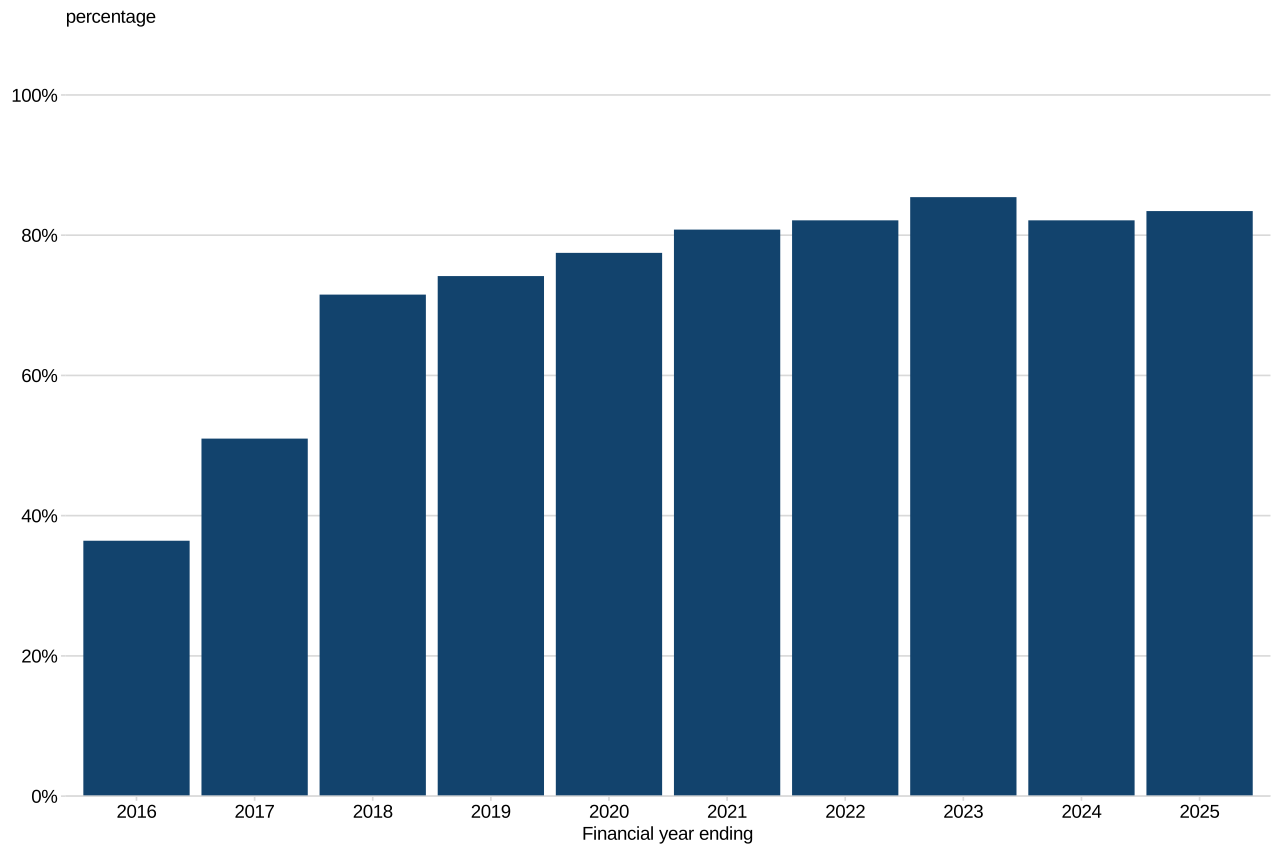
The proportion of individual upper tier local authorities reaching the threshold of recording 80% of 0 to 4 year old children in CSDS, as a proportion of the ONS population estimate, has stayed around 80% since 2020 to 2021 (see figure 15). This suggests there has been little improvement in recording since this time . The local authorities achieving the 80% threshold change slightly from year to year.
Consequently, for indicators where publication depends only on meeting this population coverage threshold, values would be expected for approximately 80% of upper tier local authorities overall, but with variation in which authorities are included in any given year.
Figure 15: upper tier local authorities with at least 80% of children aged 0 to 4 years in CSDS, England, April 2015 to March 2025
This data can be found in table 5 of the accompanying data tables on the CSDS and HCP: data quality review, 2015 to 2025 page.
Inequality breakdowns
One of the advantages of using CSDS as the data source is that it records inequalities characteristics such as deprivation, sex and ethnicity. Furthermore, if we link CSDS to the Maternity Services Data Set (MSDS) there is potential to examine data by age of mother, birth outcomes such as multiple births and caesarean sections, and parity.
Initially we would like to publish breakdowns by deprivation, sex and ethnicity, which can all be sourced from CSDS alone. Lower Super Output Area (LSOA) of residence is used to assign children to local authorities, as well as to ascertain deprivation. Analysis by sex and ethnicity requires these demographic details to be recorded consistently and thoroughly in the data for children of all ages.
The following analysis for children aged 0 to 4 years shows that we can publish breakdowns by sex for England and all regions for most years where it is possible to publish data. However, adding breakdowns by ethnicity will require an improvement in data completeness. Further analysis by age groups 30 days, 56 days, 457 days and 914 days did not show any different patterns in terms of valid sex and ethnicity recording for the different ages.
LSOAs are designed to be stable over time, but they change following national censuses to reflect population growth, housing development or boundary revisions, ensuring they maintain similar population sizes. CSDS includes LSOA2011, but not LSOA2021. The Index of Multiple Deprivation 2025 (IMD2025), the latest official measure of deprivation in England, is based on LSOA2021. Population estimates for 2024 are only available at LSOA2021 level, not the older LSOA2011. Therefore, it has not been possible to assess if CSDS data is representative of the population across deprivation quintiles, and it will not be possible to include this breakdown in indicators until CSDS includes LSOA2021.
Sex
In England, most records for 0 to 4 years old in CSDS have a valid record of a child’s sex. For the purposes of inequality monitoring, only these codes have been considered valid:
- for male: ‘1’, ‘m’ or ‘M’
- for female: ‘2’, ‘f’ or ‘F’
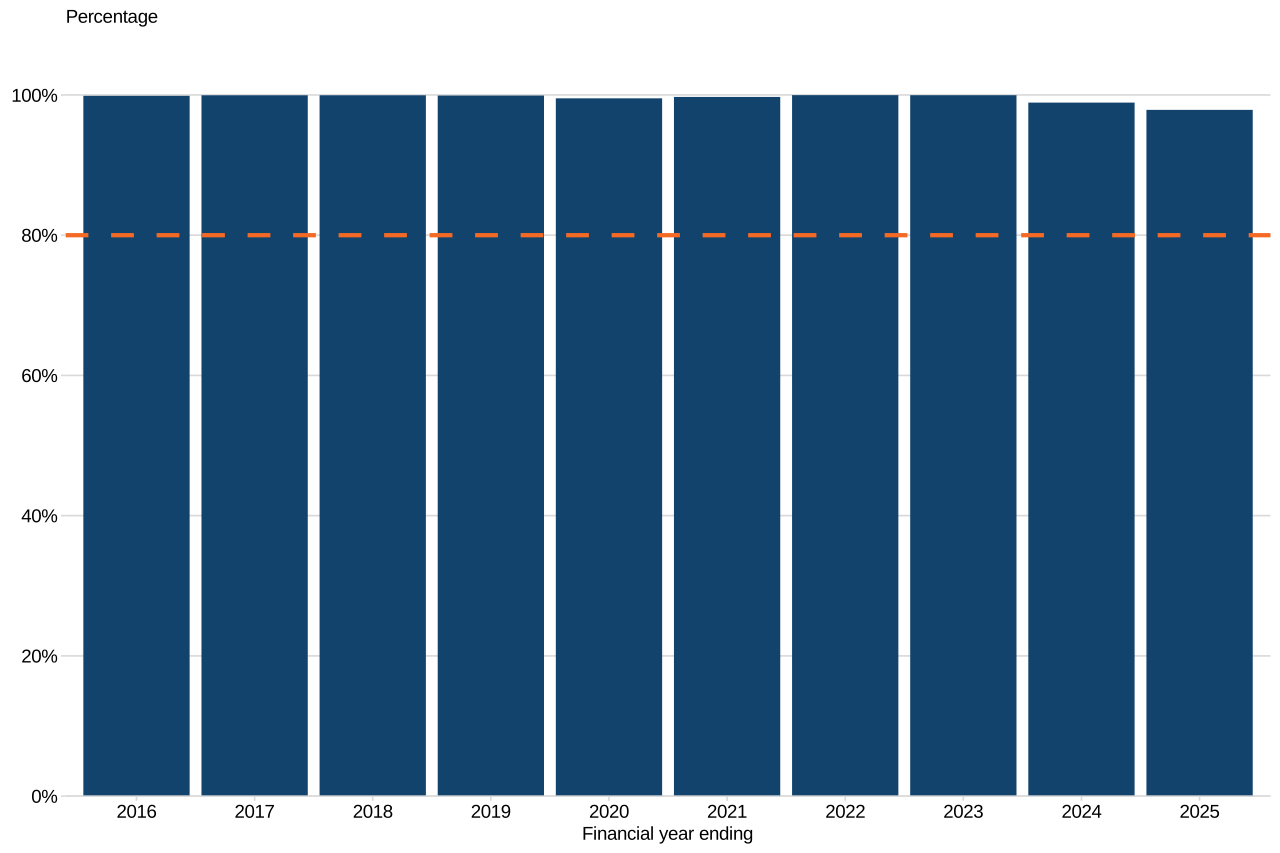
The proportion of records with a valid sex has been consistently above 97% since 2015 to 2016 (see figure 16).
Figure 16: children aged 0 to 4 years with a valid recording of sex in CSDS, England, April 2015 to March 2025
This data can be found in table 1 of the accompanying data tables on the CSDS and HCP: data quality review, 2015 to 2025 page.
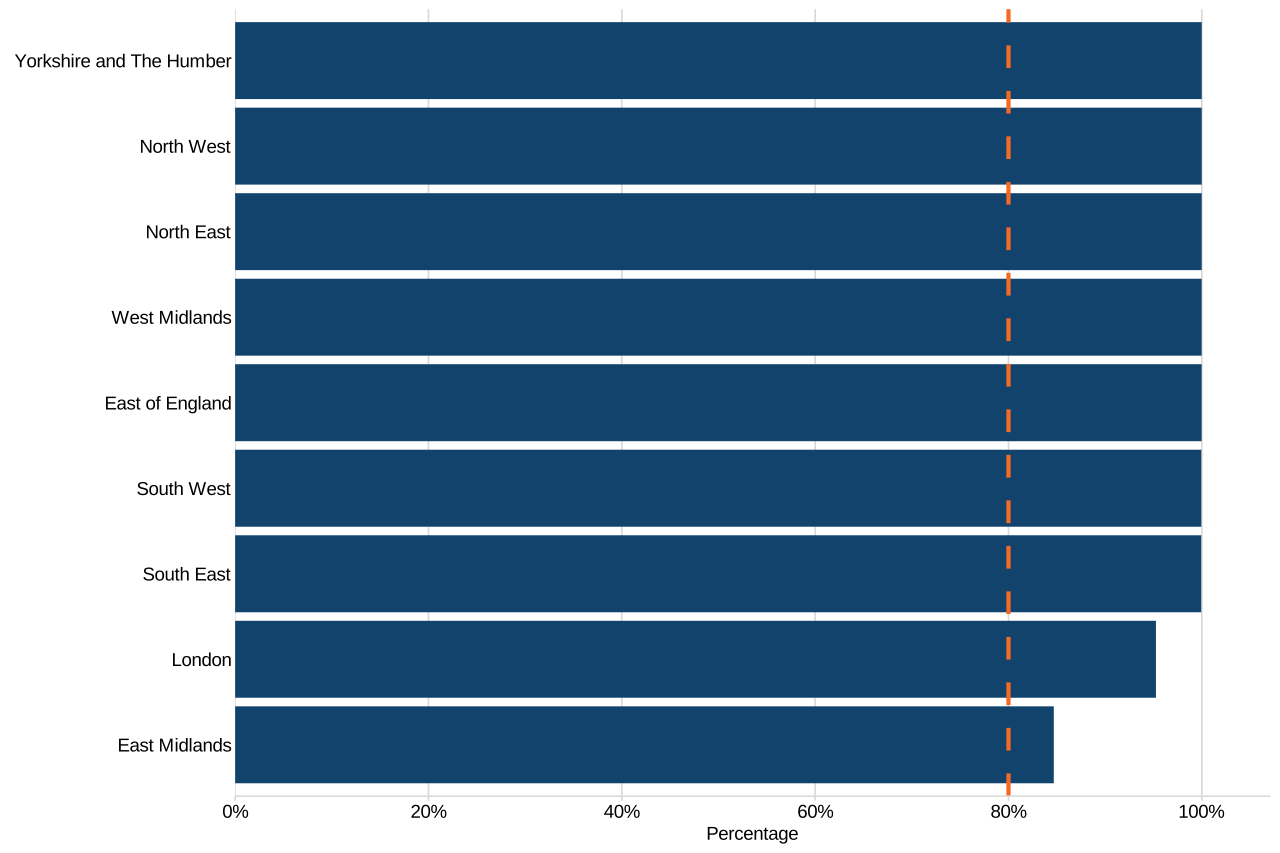
This is also true for most regions (see figure 17). However, the proportion of records with a valid sex decreased in recent years in the East Midlands to 85% in 2024 to 2025 (still above the threshold).
Figure 17: children aged 0 to 4 years in CSDS, with a valid recording of sex, statistical regions, 2024 to 2025
This data can be found in table 1 of the accompanying data tables on the CSDS and HCP: data quality review, 2015 to 2025 page.
Ethnicity
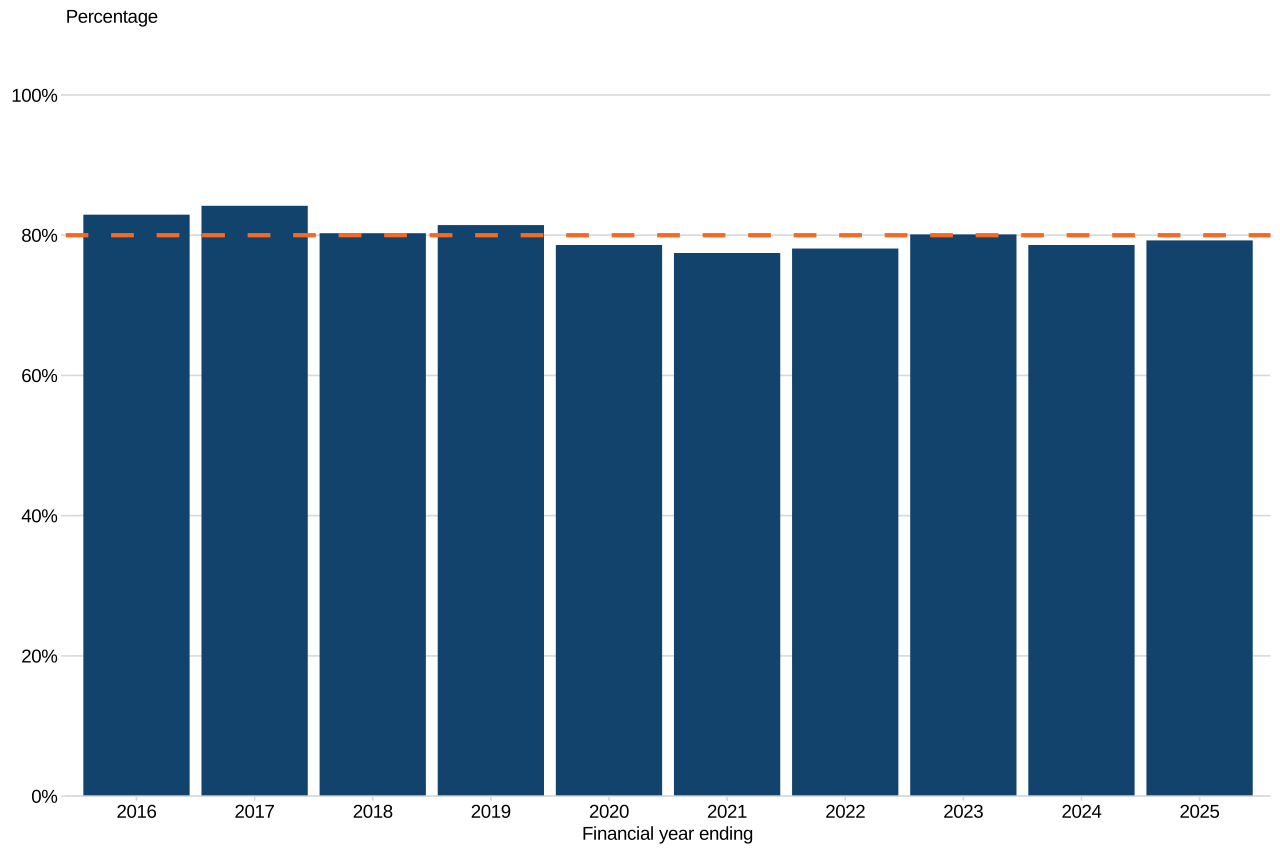
Ethnicity is less well-recorded than sex, with around 80% of children in England having a valid ethnicity code recorded. This has not improved since 2016 to 2017 (see figure 18). A list of valid codes is available in the NHS Dictionary page for ethnic category. The code for ‘not stated’ has been included as invalid in this analysis.
Figure 18: children aged 0 to 4 years in CSDS with a valid recording of ethnicity, England, April 2015 to March 2025
This data can be found in table 1 of the accompanying data tables on the CSDS and HCP: data quality review, 2015 to 2025 page.
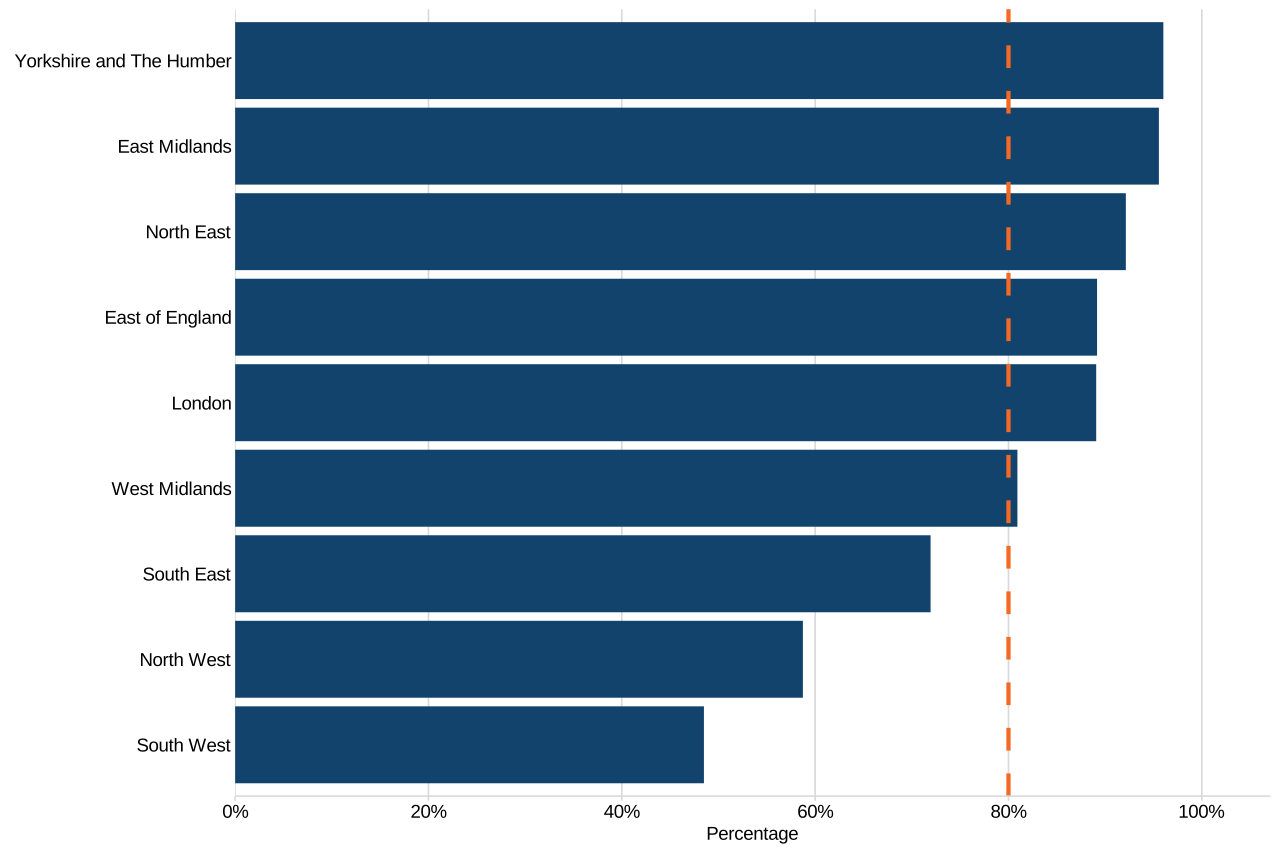
Regionally, the recording of ethnicity is mixed and has been variable. Yorkshire and the Humber has consistently had over 90% of records with a valid ethnicity since 2015 to 2016, whereas the South West decreased from 83% in 2015 to 2016 to 48% in 2024 to 2025.
Figure 19 shows the percentage of children in CSDS with a valid recording of ethnicity by region in 2024 to 2025.
Figure 19: children aged 0 to 4 years in CSDS, with a valid recording of ethnicity, statistical regions, 2024 to 2025
This data can be found in table 1 of the accompanying data tables on the CSDS and HCP: data quality review, 2015 to 2025 page.
Methods
The CSDS is a complex data set for which OHID receives an extract through NHS England’s Data Access Request Service (DARS). This differs from the data used by NHS England for their monthly publications as some details are removed from the DARS version. Further details are available in the CSDS v1.6 DARS specification from NHS England’s CSDS tools and guidance website (linked above).
NHS England has provided guidance for providers on how to submit data to CSDS, and the Office for Health Improvement and Disparities (OHID) has published supplementary guidance for providers of the HCP. NHS England publishes data from CSDS each month, which commissioners can use to understand what data is being submitted to CSDS by their provider.
Each provider of health visiting and school nursing services submits demographic information to CSDS, which means that children in contact with multiple providers may have multiple differing demographic records. Records of ASQ assessments are commonly duplicated, with some children receiving multiple assessments with different ‘Systemized Nomenclature of Medicine - Clinical Terms’ (SNOMED CT or SNOMED) codes and scores. OHID therefore developed a de-duplicated view of the data set to remove some of this duplication. Details of how this de-duplicated view was built are described in the data dictionary accompanying this publication.
Recording activity
This review has only considered the completeness of denominators for any CSDS-based indicators. It has compared counts of children at different age groups in CSDS with the counts of either live births or ONS population estimates. It has also considered what proportion of infants in CSDS have a recorded breastfeeding status and ASQ-3 assessment.
It has not considered the completeness of numerators for any CSDS‑based indicators - for example, the number of:
- mandated health visitor reviews
- infants who are fully, partially, or not at all breastfed
- children achieving the expected level of development in the ASQ‑3 assessment
In contrast to the denominators, no robust comparative data exists for these counts. While comparisons can be made with figures from the interim reporting system, these are not considered sufficiently reliable for this purpose. The CSDS‑based counts show lower numbers of children receiving mandated reviews than counts from interim reporting (see table 1).
Table 1: counts of mandated reviews in CSDS and interim reporting, England, 2024 to 2025
| Review | CSDS count | Interim reporting count |
|---|---|---|
| Antenatal review | 32,920 | 179,197 |
| New birth review | 346,310 | 520,536 |
| 6 to 8 week review | 291,265 | 448,637 |
| 12 month review | 315,650 | 479,908 |
| 2 to 2 and a half year review | 300,240 | 460,102 |
This may reflect low levels of activity being reported to the CSDS. This will result in CSDS-based indicators showing lower rates of delivery of mandated reviews, breastfeeding prevalence at 6 to 8 weeks, and children reaching the expected levels of development. Work is ongoing to support HCP providers to improve the completeness and accuracy of their CSDS submissions.
Note on thresholds
The interim reporting system validated denominators as being within 20% of the ONS mid-year population estimate for the relevant age group for each indicator. Throughout this analysis we have used the same arbitrary threshold of 80% as an indication that there is enough data in CSDS to produce indicators. For example, if the count of children of a set age with records in CSDS is at least 80% of the ONS count of live births, for infants under one year old, or the ONS mid-year estimates of population for children aged between 1 and 4 years, then we have concluded that indicators using children of that age as a denominator can be published.
Missing data is problematic because it is likely that access is socially distributed, and that families in more deprived areas or from ethnic minority groups are less likely to access services [footnote 1]. Research has also shown that recording certain ethnic categories in health data sets does not match well with census ethnic categories [footnote 2]. These differences may lead to biased estimates of differences in health outcomes and outputs between ethnic groups. Higher rates of data completeness will result in more robust indicators.
Feedback
For queries about this report contact pha-ohid@dhsc.gov.uk.
Local authorities can access data quality information for their area in spreadsheet format and in the CSDS data quality review: data dashboard. For further enquiries, local authorities should contact their Local Knowledge and Intelligence Service (LKIS) team or regional lead for detailed support and data at upper tier local authority level, at lkis@dhsc.gov.uk.
Acknowledgements
The responsible statistician is Principal Public Health Analyst, Population Health Analysis Team, OHID.
The product leads are:
- Deputy Director, Population Health Analysis, OHID
- Head of Public Health Analytical Product Development, Population Health Analysis Team, OHID
-
Bidmead, Hayes and others. Poverty proofing healthcare: A qualitative study of barriers to accessing healthcare for low-income families with children in northern England. PLOS One, published 26 April 2024 (viewed on 2 February 2026) ↩
-
Razieh and others. Understanding the quality of ethnicity data recorded in health-related administrative data sources compared with Census 2021 in England. PLOS One, published 26 February 2025 (viewed on 3 February 2026) ↩