Minister McDonald speech at ADS annual dinner 2026
Industry Minister Chris McDonald's speech at the ADS Annual Dinner, 27 January 2026.
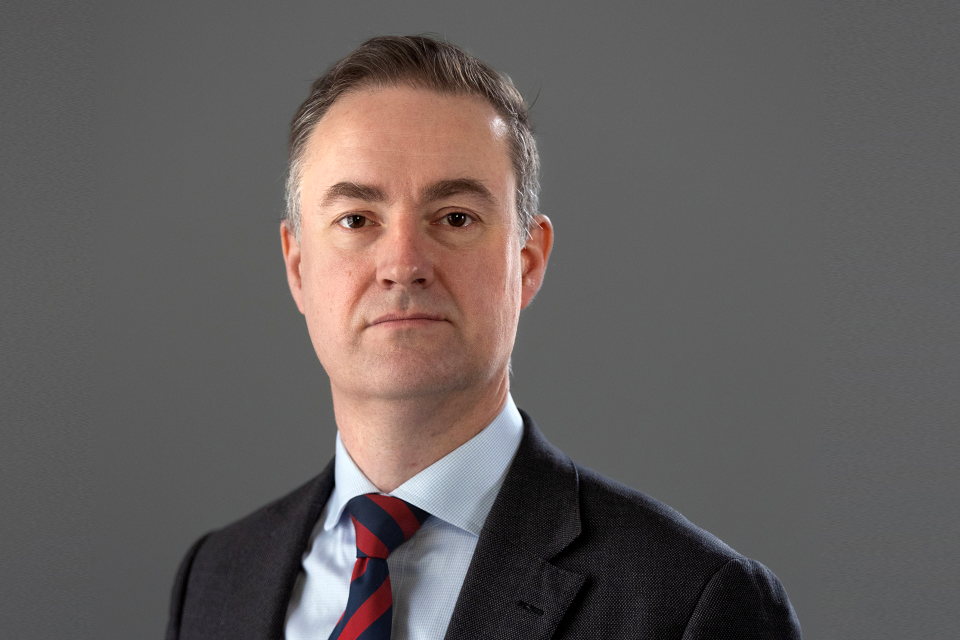
Good evening and thank you so much for having me here tonight.
Before I was an MP, I worked in materials research, and I specialised in steel. And while I wasn’t working directly for your sectors, I do know how important lightweighting has been, particularly in aerospace, but also across defence, security and space. So much research, resource and energy go into making materials lighter and more durable and has done, really, since the birth of those industries.
And with good reason. Because reducing weight is one of the most significant levers you can pull. If you want a launch to cost less, reduce the weight. If you need your armoured vehicles to move faster, reduce the weight. If you want to use less fuel flying across the Atlantic, and therefore reduce the carbon footprint of your planes, reduce the weight. Despite the popular expression, we here in this room know that rather than time, mass is money.
Since becoming an MP, and since joining the Department for Business and Trade, I have realised how true that is for businesses too. Every business carries weight that makes it harder to accelerate, but what businesses keep telling us is that they are carrying too much. They are held back by high energy costs, by a lack of access to capital, and by weak supply chains, to name a few.
Our job as government is to try and take some of that weight off you.
Our Modern Industrial Strategy is our plan for doing just that.
I should say, at this moment, that I am so grateful to ADS for your contribution to the creation of the Industrial Strategy. That work was before I became a minister, but your efforts are running right through the document, and your partnership as we deliver it make such an impact.
The Industrial Strategy focuses on the eight growth driving sectors that will drive our economy into the future, and it is no surprise that Aerospace, Defence, Security and Space are major industries within them.
And as part of that strategy we’ve launched a number of initiatives to support those sectors.
For example, firstly, energy bills. Last year we announced the British Industrial Competitiveness Scheme, which will cut electricity bills for more than 7,000 of our most energy intensive businesses by up to 25% when it launches next year.
Secondly, we know your sectors need investment. That starts with the Aerospace Technology Institute R&D programme which we have committed roughly £2.3 billion to over the next ten years. I know the programme has been important for many companies in this room, and we are glad to invest in our best.
Just last week, we went further, when the Secretary of State announced a shift in the way we support our most promising businesses.
Our start-ups, spinouts, and scale-ups are some of the best in the world.
But the truth is they often lack the access to capital they need.
Scaleups that should have become homegrown champions have struggled against a system that’s too slow, too cautious, too fragmented.
Many have been forced to look abroad for growth and have become someone else’s success story.
That doesn’t help business, and it doesn’t help the UK.
So, we have instructed the British Business Bank to channel investment into scale-ups within our eight priority sectors, including the ones represented here.
And that announcement came with a statement of intent. The largest direct company investment the British Business Bank has ever made to Kraken Technologies. Or perhaps it is more appropriate to say, the largest direct investment the Bank has made so far.
Because we’re going to make sure the best companies get the money they need.
We also announced £50 million for Epidarex, a life science fund, and a further £50 million for IQ Capital, one of the world’s leading Deep Tech funds - one that has partnered with companies in the security sector.
This combined investment is the largest the Bank has ever made.
And finally, on supply chains we are investing heavily not just in your sectors, but the sectors that enable you. We have done that by protecting virgin steelmaking at British Steel, launching the Battery Innovation Programme as I did last week, and most crucially, launching our Critical Minerals Strategy.
Critical minerals are essential for building the modern world, and perhaps no industries understand that better than the ones represented here. But we cannot supply all of the demand for these minerals from the UK, and the trading environment is increasingly volatile. So, we needed a plan that made us more resilient and less dependent. That’s why we have set some ambitious goals.
By 2035, we will ensure that at least 10% of annual UK demand is met from domestic production, and 20% from recycling. We will ensure that by that time no more than 60% of any critical mineral will come from a single country so that you can feel confident in stability of supply in the UK, and that your growth won’t be disrupted by your resources drying up.
So, let me finish by saying that this government is fully committed to your industries. Economic growth is our number one mission, and we believe that happens by betting on our high innovation, high potential sectors, just like yours. And as the Minister for Industry, I want to take some of the weight off you, reduce the friction on your goals, and partner with you as you lead us into our future economy.
Thank you.