Keynote Address at Society of Motor Manufacturers and Traders
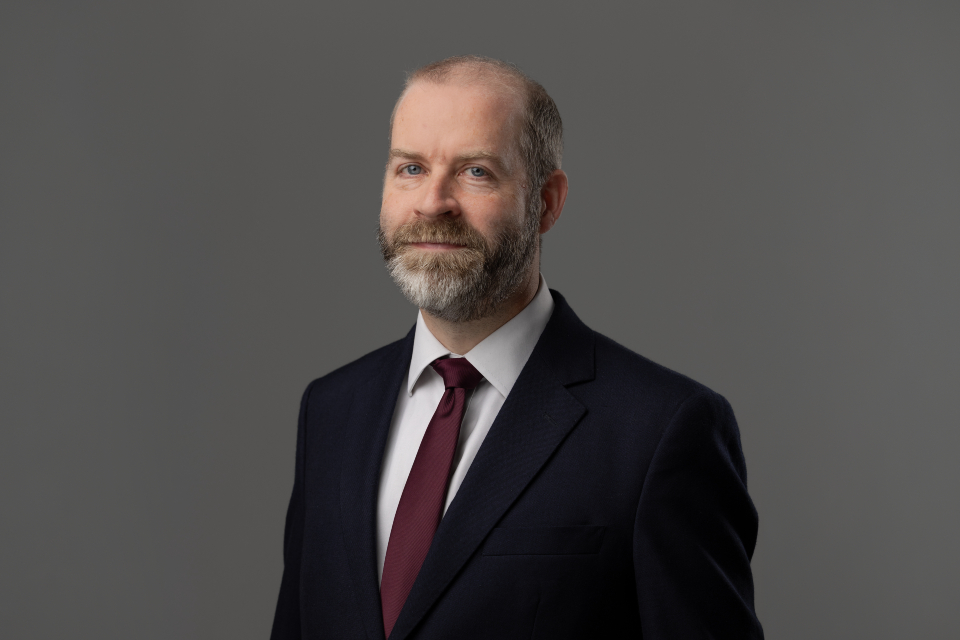
The Business, Innovation, Science and Trade Secretary gave the Keynote Address at the Society of Motor Manufacturers and Traders (SMMT) on 24 November 2026.
Thank you, Mike, as always, for your insights, your reflections and your words on the challenges and the opportunities facing this sector.
And thank you too for that very kind introduction and obligatory football reference.
We’re actually doing all right in Europe better than we are doing in the Premier League.
And friends, I always enjoy attending this dinner as Business Secretary. In fact, I enjoyed it so much I actually came last year when I wasn’t the Business Secretary.
And I did so because I value this organisation and all of you a great deal. And speaking of the dinner last year, can I just take this opportunity to thank my predecessor Peter Kyle for his work to maintain the strong ties between my department and the SMMT, which I also greatly appreciate.
But it is good to be back with you and good to be back at the cabinet table fighting for you, the whole of the British automotive industry.
I was telling Mike earlier, I remember once speaking, I think I’ve spoken at most of your summits most of the years, and I was in opposition, I came off stage and I’d been through the plans that Labour would have in government and I remember some guys started to give me a bit of a hard time, which happens sometimes.
And he was basically saying “you’ve got it all wrong mate, you should be talking about how politicians should want to kind of phase out car ownership. It’s a thing of the past.”
I did think, “I’m not sure an SMMT event was the right place for him to be,” to be honest. I did then try and explain to him, actually, for the majority of people, as you all know, owning a car or a van, it’s about freedom. It’s about mobility. It’s for working families, about opportunity.
It’s a chance to do jobs that otherwise wouldn’t be able to be done, to go to places which might be too difficult to get to otherwise. For a tradesman, it’s about the chance to do the job, to reach your customers.
But it’s also a source of pride. I mean, who doesn’t get excited when it’s time to get a new car? So I am very happy to be, as Mike said, a champion of all of that and to shout loudly and proudly about this industry and it’s something I will always do.
I also like the fact, Mike, that this dinner is near Christmas every year. It’s a bit like a work do, isn’t it? It’s nice to be invited to.
And it has been a fairly whirlwind year, hasn’t it? I mean, at the beginning of 2026, forecasters were predicting lower inflation, further interest rate cuts, greater degree of stability. And then came the US conflict with Iran. Which I have to say, I think we were a hundred per cent right to stay out of. And with it, we’ve had surging oil prices, we’ve had a further significant disruption to global trade.
And I was chatting to one of the members here, actually earlier in the year, and they told me about this industry’s moose test, where hazards seemingly appear out of nowhere and drivers have got to take emergency moves to dodge them. It’s a bit like what the year has been like for all of you, to be honest.
And I don’t underestimate for a second, the challenges that you are facing and the pressures that you are under. I want to acknowledge those. I want to assure you that the government will continue to work with you so we can overcome them together.
But at the same time, I do want to celebrate success where we’ve had it. In September alone, in just over one week, a billion pounds of private sector investment was announced by a host of British automotive manufacturers.
We have Bentley unveiling its first fully electric car after upgrading its Cheshire factory. Meanwhile, Jaguar launched its Type 01 Grand Tourer as part of its £15 billion of investment planned for the UK.
Nissan also debuted its new Kicks model for Europe investing 170 million pounds to build it at its Sunderland plant, which of course means a great deal to me.
And then McLaren announced a big increase to its UK footprint, creating 1,000 new high-quality jobs by 2032. The Prime Minister and I selflessly went to the McLaren Technology Centre to welcome that announcement, to learn about the company’s plans to bring engine production in-house and launch new models.
Apparently, it is not appropriate to request a McLaren as a ministerial car. I am actually very happy with my British-made Land Rover instead of that. But every single one of these investments means more manufacturing, more growth across the supply chain, and more well-paid jobs here on these shores.
And that does matter because the Prime Minister has made clear this government will be committed to the re-industrialisation of the UK to bring good work, good jobs and good growth to every postcode of our country.
And the automotive sector is clearly central to making that ambition a reality. And at the Budget, the Chancellor announced some short-term measures to ease the burdens on businesses and motorists like cancelling the 5 pence fuel duty rise scheduled for January and extending the cut by a further six months.
We’re also deferring the planned RPI increase to July next year. And over the long term, we are continuing to use our industrial strategy to create the right conditions for our automotive sector to invest and grow.
Our British Industrial Competitiveness Scheme, or BICS for short, will slash electricity bills by 25 per cent for 10,000 manufacturers from next year, alongside backdated payments for support.
I really do, friends, want to plug BICS because the application window will close next Monday and I want to make sure eligible businesses don’t miss out. I have championed in government the need for UK energy prices to be more competitive. And this is the first step towards interventions that make a real difference.
So if any of you or other SMMT members think they could benefit, please do not delay in getting those registrations and claims in. Then of course, there is our £4 billion of investment from our Drive 35 programme.
Money we’re ploughing into the electrification of vehicle parts, batteries, and electric drive alongside all the other components and manufacturing processes that will transform our supply chains.
And it’s already making a big impact. Last month I was in the Midlands visiting Longbow Motors. They’ve received £3 million from the Drive 35 supplier readiness and transformation programme. And thanks in part to that support The company’s beginning production of its fully electric speedster at their site in Coventry next year, and that will be followed by its fully electric roadster.
Their aim is to make over 10,000 cars a year, using as many UK parts and components as they can. And our work with the West Midlands and North East Mayoral combined authorities on projects like the one at Longbow is a blueprint for success, a new devolved approach to modernise our supply chains, working in genuine partnership with local leaders. That’s something I want to see us replicate in other parts of the country.
And we’re bringing forward more than £100 million of funding through that programme just so we can do it, so we can help local automotive suppliers invest in new technologies to invest in and modernise manufacturing, to transform productivity and diversify into the electric vehicle supply chains of the future. In other words, to ensure suppliers take full advantage of emerging market opportunities and remain right at the heart of the UK automotive industry.
At the same time, I’m keen that we work directly with you to deliver the changes in national industrial policy requirements. In support of this effort, this week we have launched our new joint industry government task force. It is developing a new manufacturing and technology plan for the automotive industry and it’s set for publication next year.
This plan will shape the future focus of our ambitious investment programmes, including Drive 35, so that we really hone in on the UK’s technology strengths and use them to this sector’s full advantage. So we have a lot happening domestically, but we are working just as hard to deliver for you internationally.
Beyond the economic prosperity deal with the US, our landmark trade agreement with India entered into force this year. It means tariffs on British-made vehicles bound for India, falling from over 100 per cent to 10 per cent within their quota. And similarly, in the trade agreement we struck with the Gulf Cooperation Council, import duties for 90 per cent of existing UK car exports will be removed entirely when we have full entry into force.
At a time when many countries are turning inwards, the UK remains an open outward-looking nation, one ready to strengthen ties with new friends and old allies. And that very much includes the UK’s second largest export market for vehicle parts and our largest trading market overall, the European Union.
And friends, I know this move to bring us closer to Europe has generated a lot of headlines. It has prompted a lot of debate. Let me say unequivocally where I stand, our motor industry needs Europe and Europe needs our motor industry. Our supply chains are, as you know, highly interconnected. And that is why we said from the outset of our negotiations that we wanted to be a close and trusted European partner. One focused squarely on economic and security cooperation right across our industrial sectors.
We knew that with the UK supplying 10 per cent of the EU’s imported auto parts, restrictions would needlessly cause disruption for you but also for the EU. The EU cannot build a stronger automotive industry by cutting the UK out of its supply chains that make it more competitive. Made in Europe has to recognise UK built vehicles, parts and batteries are a key part of European industrial strength and cutting us out would make it harder to compete with other places. And that’s why we pressed hard to secure a commitment from our European friends, a commitment to reciprocal market openness and to work together especially on electric vehicles, so that we could build resilient supply chains and limit harm when protecting our economies from future threats.
And look, the automotive provisions of the Industrial Accelerator Act remain proposals that are still being debated in the EU. They cannot be decided by the Commission alone. But what we’ve agreed with the Commission is, I think, a strong framework. A framework based on trust and reciprocity. A framework that means the UK and EU can work together to limit the negative impacts of exactly these kinds of measures.
Our aim is absolutely to secure full market access to the EU for the UK automotive sector. and we can review the progress we’re making now every four months as part of our new dialogue on economic security. And I want to acknowledge Mike, the SMMT’s brilliant work with us on this, on lobbying EU manufacturers as well as governments.
This has had a massive impact and that message about the interconnected nature of our supply chains has I think landed in EU capitals in the Commission and in the European Parliament. The political declaration agreed alongside the progress at the summit on food and agriculture and emissions trading and young people should be understood as an explicit recognition on all sides that the UK is that trusted partner.
As I say, there’s a legislative process in Europe But the government’s job is now to make sure that the outcomes of that deliver on the political commitments that have been made. But we should take a moment to reflect on the fact that we have achieved something here. It looked pretty difficult a while ago, but we’ve done it thanks to all of you.
And on electric vehicles and rules of origin, I know as Mike said, there’s understandable concerns. about the deadline at the end of this year. We know businesses on both sides of the channel would see significant tariff liabilities if those rules remain unaltered. And I can promise you that we are working urgently with the Commission on this to try and get a workable solution acceptable to industry and in place by the end of the year.
We are in a very similar place on the EU’s provisional safeguards and quotas on imports of hybrids and plug-in hybrids. And you will have seen again, Mike said this, they were announced today and they will enter into force next week on the 1st of December.
But here again, our new economic security dialogue provides a forum to discuss and resolve these issues. And we want to use it to our full advantage so we can secure agreements that protect UK, EU trade and by extension protect this sector.
Meetings are taking place this week on the Economic Security Dialogue and of course I will keep the SMMT closely informed as to what is discussed. And this matters even more because I echo what my predecessor said at last year’s dinner. And you should say it again: electric is the future.
Those who have already made the jump to electric are very unlikely to return to petrol or diesel, that’s a point the great adman Rory Sutherland regularly makes on the lecture circuit when he talks about EVs. He asked people who have bought an electric car to raise their hands, and then he asked the same people to keep their hands raised if they were thinking about going back to internal combustion and very few hands remain.
This is borne out by multiple UK studies too. One reported by the RAC found that only 3 per cent of UK EV drivers say they’d consider returning to petrol or diesel. So I will always champion that EV transition. Those who invest in it and embrace it today will be the market leaders of tomorrow.
But equally, I have said all along that the transition has to be fair and manageable for UK producers. I know Mike, we have a lot of our friends from the press who always come to this dinner and I’m always intrigued. They write up the cabinets, people on the climate side, people on the investment and job side. Honestly, friends, I think that is wrong. I think the best way to secure the transition is to retain the support of the kind of people who work in this sector, who are the people I grew up with in Sunderland.
And actually the two things, rather than being in conflict, go hand in hand together. And so that need for a pragmatic and balanced transition has been at the heart of the consultation that we’ve just run on the zero-emission vehicle. And I want to thank everyone who has submitted their views. I’m happy to tell you that the result of that consultation will be known shortly.
I want to assure you of something. We’re looking at all the evidence submitted and we aim to publish a shared response to the consultation with the devolved governments by the end of the year. And we’ll give this industry clarity on the way forward.
But whatever the decision and the timeline, please remember you are not alone in making this decision. We’ll continue in my department to play our part, backing zero emission vehicle production, in supporting supply chains and driving up demand through the electric car grant and through charging infrastructure. And in five to 10 years’ time, those investments that are being made by government and industry will be seen as the right ones, as the shrewd ones.
There’s no question that the end goal is 100 per cent of vehicle sales eventually being zero emission vehicles. The government’s committed to it, industry’s committed to it. But the path we choose and the pace that we set are key. And we’re committed to choosing the right path, with uptake rising as quickly as we can drive up demand from consumers and industry keeping pace so you can meet those consumer expectations.
So we want the UK to stay competitive and to stay a proud automotive nation now and for many years to come. Because we do not underestimate the contribution you make to our economy and our country, the 13 billion pounds you generate in GVA each and every year, the 358,000 jobs you support across the automotive supply chain and across the UK too, from Dagenham and Swindon in the south, to Coventry and Hams Hall in the Midlands, to Sunderland in the northeast and Ellesmere Port in the northwest. And that’s to say nothing of Wrightbus in Northern Ireland or Aston Martin sites in Wales. And quite frankly, I don’t really care who the next James Bond is, as long as there’s an Aston Martin in that movie.
We know we cannot drive good growth in every postcode without you. We cannot re-industrialise Britain without you. I can tell you I know that. I can tell you the Prime Minister knows that. And friends in the weeks and months ahead, we will be doing everything we can to help you succeed. Thank you, as ever, for having me here at the dinner tonight.
And thank you for everything you do.