RTA: Advanced composites for climate adaptation
Updated 27 May 2026

© Crown copyright 2026
This publication is licensed under the terms of the Open Government Licence v3.0 except where otherwise stated. To view this licence, visit nationalarchives.gov.uk/doc/open-government-licence/version/3 or write to the Information Policy Team, The National Archives, Kew, London TW9 4DU, or email: psi@nationalarchives.gov.uk.
Where we have identified any third party copyright information you will need to obtain permission from the copyright holders concerned.
This publication is available at https://www.gov.uk/government/publications/rapid-technology-assessment-advanced-composites-for-climate-adaptation/rta-advanced-composites-for-climate-adaptation
Advanced composites can offer strong, lightweight materials that help support new solutions for climate adaptation.
Context
Composites combine two or more materials to deliver enhanced properties unattainable by each material alone. Advanced composites use fibres such as carbon, glass, basalt or aramid within polymer, ceramic or metal matrices, offering high strength‑to‑weight ratios, corrosion resistance and durability. Advanced composites are a large, diverse global market, widely used in aerospace, defence and wind energy. Performance demands and sustainability drive development with expanding use in applications for climate mitigation, such as renewable energy. While the application of these state-of-the-art materials to support adaptation to a changing climate is much less mature, a range of important applications are emerging (see figure 1).
Technology
Advanced composites span mature technologies such as fibreglass and carbon fibre, alongside emerging materials that are smart, bio‑based, self‑healing, shape‑changing and energy‑storing. Fibre orientation, fibre length, matrix chemistry and layering strategies all offer extensive design flexibility.
UK position
Between 2020 and 2024, the UK ranked 4th globally for the volume of advanced composite research output and 2nd for research quality. UK experts recognised strengths in testing, simulation and design, supported by national centres including the Advanced Manufacturing Research Centre Composites at Speed and Scale (COMPASS) facility, Offshore Energy Catapult, and the National Composites Centre (NCC). The recent increase in demand for large structures in the UK is driving development, such as larger wind turbine blades. However, the UK lacks end‑to‑end capability for all advanced composites, relying heavily on international supply chains, particularly for high‑grade carbon fibre. The UK fibreglass sector is also small and less developed than other countries, such as Germany.
Figure 1: ~50% of UK composite market share is in aerospace & defence
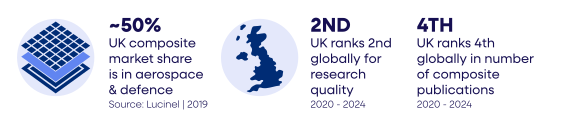
- ~50% of UK composite market share is in aerospace & defence (Source: Lucinel)
- The UK ranks 2nd globally for research quality (2020-2024)
- The UK ranks 4th globally in the number of composite publications (2020-2024)
Applications of advanced composites for climate adaptation
Potential uses of advanced composites to adapt to climate change:
- Adding advanced composites to power cables and pylons to allow higher carrying capacity, requiring fewer, smaller pylons that are more resilient to severe weather.
- New infrastructure, such as bridges made fully or partially from advanced composites, can accelerate installation, reduce disruption, and extend lifetimes.
- Advanced composite utility poles have increased temperature resilience and corrosion resistance, leading to fewer critical failures.
- Emergency shelters and barriers built from advanced composites can be quickly deployed for use in emergencies.
- Infrastructure repair & retrofitting using advanced composites could be quick and effective, supporting more frequent repairs due to climate events.
- Rail infrastructure and vehicles can benefit from advanced composites to deliver platform and embankment reinforcement, or reduce train weight and associated track damage.
- Flood barriers and drainage pipework made from advanced composites have improved longevity due to non‑corrosive properties, making them ideal for controlling sea flooding.
- Aeroplane fuselage to withstand severe turbulence – expected to rise due to climate change, advanced composites in aeroplanes may need to adapt to provide improved structural resilience.
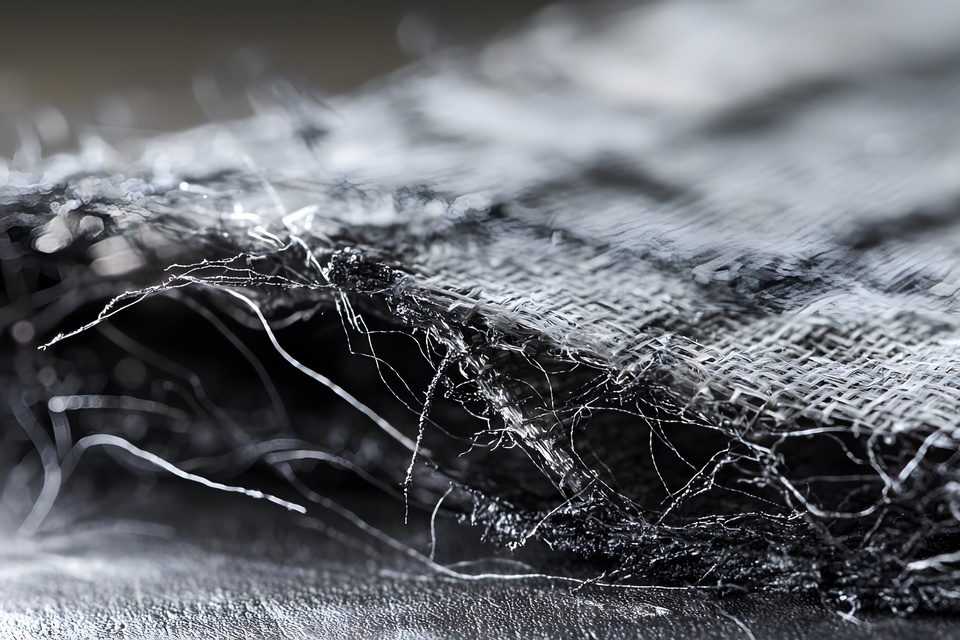
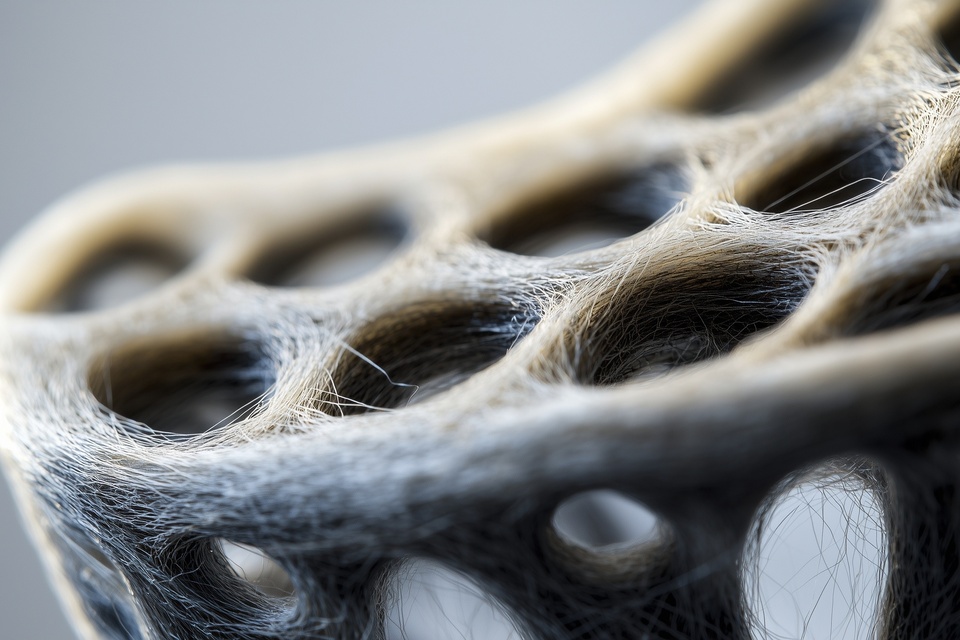
Advanced composites up close
Woven fibres used to reinforce a material
Bio-degradable composite
A fibreglass lattice
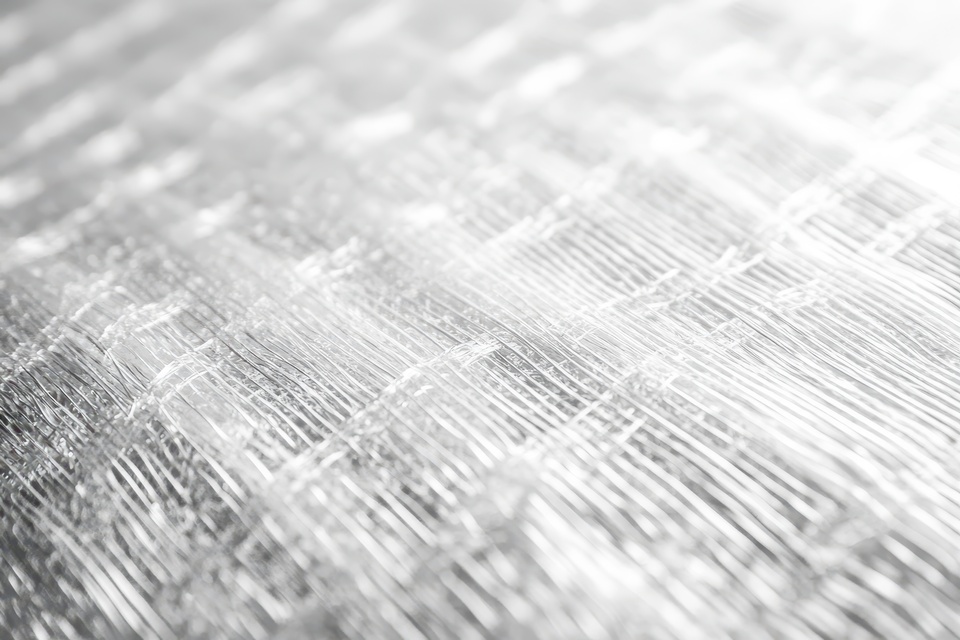
Fibreglass

Advanced composites can take many forms, with the orientation of fibres, fibre length, the matrix material and other layering techniques. The structure can impact the overall properties of the material.
Opportunities
- Advanced composites offer high durability, are chemical-, heat- and corrosion-resistant, with high strength/stiffness-to-weight ratios, useful for applications in infrastructure, energy systems and transport. These properties make them ideal for applications in climate adaptation.
- Their design flexibility, allowing tailoring of properties to requirement and functionality, enables maximum performance in a given application.
- The UK’s influential research and strengths in testing, design and simulation create openings for leadership in a foundational industry.
Challenges
- There are a range of non‑technical barriers to the widespread adoption of advanced composites (including for climate adaptation), such as;
- Slow development timelines in non‑traditional sectors, as complex structures lead to a slow and complicated certification process, hindered by limited use of digital tools and simulation to model performance;
- Limited industry awareness and understanding in new sectors where advanced composites could be applied;
- High cost of carbon fibre composites.
- UK institutions are actively tackling some of these issues, including the NCC and Henry Royce Institute.
- Technical constraints persist around internal damage detection, long‑term performance uncertainty and insufficient recycling pathways.
- There are also outstanding uncertainties as to the most likely and impactful applications of advanced composites to climate adaptation.
Do you have thoughts on the topic? Email us at emtech@go-science.gov.uk.