Healthy child programme: supplementary guidance for completing the Community Services Data Set
Published 27 February 2026

© Crown copyright 2026
This publication is licensed under the terms of the Open Government Licence v3.0 except where otherwise stated. To view this licence, visit nationalarchives.gov.uk/doc/open-government-licence/version/3 or write to the Information Policy Team, The National Archives, Kew, London TW9 4DU, or email: psi@nationalarchives.gov.uk.
Where we have identified any third party copyright information you will need to obtain permission from the copyright holders concerned.
This publication is available at https://www.gov.uk/government/publications/healthy-child-programme-supplementary-guidance-for-completing-the-community-services-data-set/healthy-child-programme-supplementary-guidance-for-completing-the-community-services-data-set
Purpose of this guidance
This document is for providers of healthy child programme (HCP) services and their local authority commissioners. It provides guidance on the data tables and fields in the Community Services Data Set (CSDS) that must be completed when recording information about the HCP, including:
- referrals
- contacts
- activities
- assessments
- breastfeeding status
The HCP covers both health visiting and school nursing services.
The guidance is based on version 1.6 of the CSDS and will only be revised if a future release requires it. It should be read alongside Implementing the CSDS v1.6 tools and guidance from NHS England, particularly the CSDS 1.6 User Guidance. This document does not replace any guidance issued by NHS England but is intended to supplement and clarify details for HCP activity.
Submitting CSDS data
A data provision notice was issued in 2017 requiring all providers of community services that are funded and/or provided by the NHS or local authorities to make monthly CSDS submissions. CSDS submissions must be made to NHS England through the Strategic Data Collection Service (SDCS).
Support to submit CSDS data to the SDCS cloud is available from NHS England.
Tables and fields needed to record HCP activity
The CSDS is a complex data set with around 40 data tables. However, not all are needed to record data for the HCP. It is a patient level data set which, if properly completed, will deliver robust, comprehensive, nationally-consistent and comparable information about children in contact with publicly-funded community health services, including health visiting and school nursing.
In this document we will refer to a field in CSDS by ‘TableName.FieldName’. For example, CYP001MPI.DateOfBirth is the field called DateOfBirth in the CYP001MPI table.
A full list of fields used for HCP analysis is available in appendix 1.
Providers must submit a CYP000Header record for each submission. This includes the date of the submission, the submitting organisation and the provider of the data. This table is not covered in this document as it is standard across NHS data sets and not related to the HCP. It is mentioned here for completeness.
Data model for HCP activity
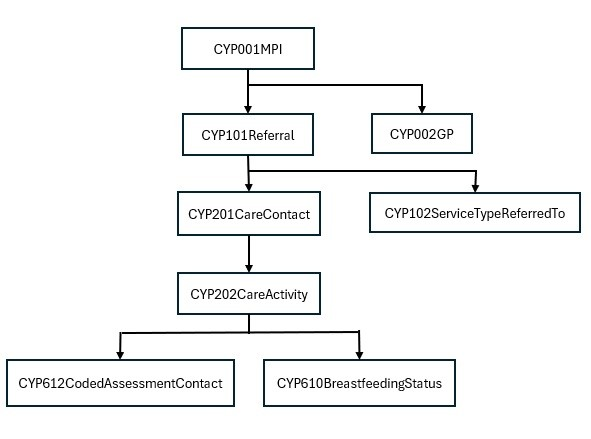
Figure 1 below is the data model for HCP activity. It shows the following:
-
providers must submit a CYP001MPI record for each child, with an attached CYP101Referral record for each referral
-
the CYP101Referral record should have a CYP102ServiceTypeReferredTo record attached. If this is missing it is not possible to identify school nursing activity, or non-mandated health visiting activity
-
the CYP101Referral record must have CYP201CareContact records attached for each planned contact and these must have CYP202CareActivity records attached for any mandated postnatal reviews. CYP202CareActvity records can also be attached to CYP201CareContact records for non-mandated activity
-
CYP202CareActivity records can have CYP610BreastfeedingStatus records attached if this is the chosen method to submit breastfeeding status
-
CYP202CareActivity records should also have CYP612CodedAssessmentContact records attached when an assessment of the child’s development has taken place
-
CYP002GP record must be submitted for each child. Although this will not be used for HCP analysis, it is mandated by CSDS and the whole submission will be rejected if there are missing records
Figure 1: CSDS tables used for the healthy child programme
The CSDS is submitted monthly to the deadlines available on the ‘Submitting CSDS data to the SDCS cloud’ page (as previously linked).
CYP001MPI table
Providers must submit a CYP001MPI Master Patient Index record for each child with a HCP referral open at any time in the month, containing demographic details. The referral may have been open for many years or be a new referral that month. The referral may close in the month and can both open and close in the same month.
CYP002GP table
This table must be submitted for each child and the submission will be rejected if it is missing. It contains details of the GP practice at which the child is registered. It is not used for any current or planned analysis of HCP.
CYP101Referral table
Within a provider, a child can have multiple referrals. For example, a provider may deliver a health visiting service and a community paediatric nursing service, and some children may have a referral to both services. There must be at least one CYP101Referral record for each child. The referral record holds details such as the date of the referral opening and closing. It does not include which team the referral is for.
CYP102ServiceTypeReferredTo table
Each referral should have a service or team type record, describing which team the referral is for. For a referral to a health visiting team, this should be type ‘16’. For a referral to a school nursing team it should be type ‘32’.
This is the only way to identify non-mandated activity delivered by health visiting teams and all activity delivered by school nursing teams.
CYP201CareContact table
Every time a child or family has an appointment or a planned contact, a care contact record must be created. This includes details about the contact, such as date and time, and if it was attended. For a definition of ‘care contact’ see the ‘CSDS 1.6 User Guidance’ document on ‘Implementing the CSDS v1.6 tools and guidance’ (linked previously)
CYP202CareActivity table
Care contacts can have multiple care activity records. For example, a health visitor might deliver a mandated review and advise on weaning or mental health support. These would be separate activities and they should all be recorded accurately. Where the activity delivered was a mandated postnatal review, this table must be submitted. For a definition of ‘care activity’ see the ‘CSDS 1.6 User Guidance’ document on ‘Implementing the CSDS v1.6 tools and guidance’ page (as linked previously).
CYP610BreastfeedingStatus table
Any activity can have a record of breastfeeding status attached. The child’s age at the time the breastfeeding status was recorded will be calculated by CSDS from the CYP201CareContact.Contact_Date field and the CYP001MPI.DateOfBirth field.
CYP612CodedAssessmentContact table
Any activity must have multiple coded scored assessment records attached if an ASQ-3 assessment has taken place. There should be one CYP612CodedAssessmentContact record for each domain of the ASQ-3 assessment. It should include the Systemized Nomenclature of Medicine - Clinical Terms (SNOMED-CT or SNOMED) code for the version used and domain assessed, and a score. SNOMED codes for all ASQ-3 assessment domains and age groups are available on the ‘CSDS Assessment Tools’ tab of the ‘CSDS v1.6 Enhanced Technical Output Specification (ETOS)’ document on the ‘Implementing the CSDS v1.6 tools and guidance’ page (as linked previously).
Health visiting activity
Antenatal visits
The date of the first antenatal visit to the pregnant woman who becomes the mother of the child, must be recorded in the CYP001MPI.HVFAV_Date field on the child’s record.
Other mandated reviews at birth, 6 to 8 weeks, 12 months and 2 to 2 and a half years
The CYP202CareActivity.Activity_Type must be set to the code representing the review delivered. For:
- new birth visits use CYP202CareActivity.Activity_Type ‘08’
- 6 to 8 week reviews use CYP202CareActivity.Activity_Type ‘09’
- 12 month reviews use CYP202CareActivity.Activity_Type ‘10’
- 2 to 2-and-a-half year reviews useCYP202CareActivity.Activity_Type ‘11’
The child’s age when the review took place is calculated by CSDS from the CYP001MPI.DateOfBirth and the CYP201CareContact.Contact_Date fields.
Non-mandated activity
This can only be identified if the CYP102ServiceTypeReferredTo.TeamType is ‘16’. Non-mandated contacts should be recorded as CYP201CareContact records attached to a CYP101Referral record which has an attached CYP102ServiceTypeReferredTo record. These CYP201CareContact records can then have CYP202CareActivity records describing the activities that happened at the contact.
Child development outcomes
Assessments must be recorded in the CYP612CodedAssessmentContact table.
The CYP612CodedAssessmentContact.SNOMED_ID field must contain a SNOMED code for the domain and version of ASQ-3 used. These codes are published in the ‘CSDS v1.6 Enhanced Technical Output Specification’ document (see the sheet called ‘CSDS Assessment Tools’) on ‘Implementing the CSDS v1.6 tools and guidance’ page (as linked previously)
The CYP612CodedAssessmentContact.Score field must contain the child’s score for that domain. It must be numeric, between 0 and 60 inclusive, with no special characters.
The CYP612CodedAssessmentContact section of the ‘CSDS 1.6 User Guidance’ on the ‘Implementing the CSDS v1.6 tools and guidance’ page (as linked previously), includes some examples of these fields.
The child’s age when the assessment took place is calculated by CSDS from the CYP001MPI.DateOfBirth and CYP201CareContact.Contact_Date fields.
Breastfeeding at 6 to 8 weeks of age
Breastfeeding status
This can be recorded in 2 ways.
The first is by setting CYP610BreastFeedingStatus.BreastFeedingStatus to:
- ‘01’ for exclusively breast milk feeding
- ‘02’ for partially breast milk feeding
- ‘03’ for no breast milk feeding at all
This CYP610BreastFeedingStatus field must be attached to a CYP202CareActivity record which is attached to a CYP201CareContact record for a contact which happened when the infant was aged between 42 and 63 days inclusive, if this is the chosen method of submitting breastfeeding status.
The second is by using the CYP202CareActivity.CodedFinding field. Valid codes are published in the CYP202CareActivity table of the ‘CSDS 1.6 User Guidance’ document on the ‘Implementing the CSDS v1.6 tools and guidance’ page (as linked previously).
For analysis of breastfeeding status at 6 to 8 weeks of age, only some of the codes are valid but the preferred terms in the ‘CSDS 1.6 User Guidance’ document are informative. The term ‘breastfeeding’ should be understood to mean receiving breast milk, including breast milk in a bottle.
The child’s age when the status was recorded is calculated by CSDS from the CYP001MPI.DateOfBirth field and the CYP201CareContact.Contact_Date field.
School nursing activity
This can only be identified if the CYP102ServiceTypeReferredTo.TeamType is ‘32’. Contacts by school nursing teams must be recorded as CYP201CareContact records attached to a CYP101Referral record which has an attached CYP102ServiceTypeReferredTo record. These CYP201CareContact records may then have CYP202CareActivity records describing the activities that happened at the contact.
Some school nursing activity will be delivered as group sessions, and while these may be submitted to CSDS, the details are outside the scope of this guidance.
Other optional tables
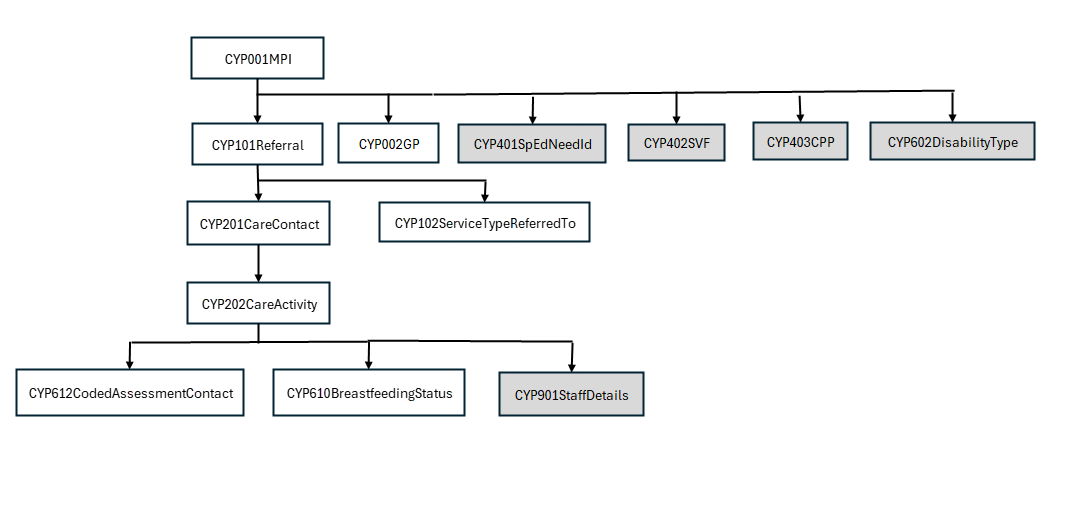
Additional analysis of local inequality and quality is possible if records are submitted for extra tables - as shown in figure 2 below. The CYP001MPI record for the child can have CYP401SpEdNeedId records, CYP402SVF records, CYP403CCP records and CYP602DisabilityType records attached. CYP202CareActivity records can have CYP901StaffDetails records attached. A full submission should include these tables, where relevant, but the submission will not be rejected without them.
These tables are coloured grey in the data model in figure 2.
Figure 2: useful additional tables
CYP401SpEdNeedId table
The CYP401SpEdNeedId.EducationNeed_Type field holds a code describing the child’s special educational need. Each child can have multiple records of special educational need. The latest codes are available in the NHS Data Model and Dictionary - special educational need type.
CYP402SVF table
The CYP402SVF.SafeguardingFactors_Type field holds a code describing any safeguarding factors relevant to the child. Each child can have multiple records of safeguarding factors. The latest codes are available in NHS Data Model and Dictionary - safeguarding vulnerability factors type.
If this table is submitted, the CYP001MPI.Safeguarding_Indicator should be set to ‘Y’.
CYP403CPP table
The CYP403CPP.CPP_Reason field holds a code describing the reason for a child having a child protection plan (CPP) in place. CYP403CPP.CPP_StartDate and CYP403CPP.CPP_EndDate contain the start and end date of the plan. If this table is submitted it must include the start date. Each child can have multiple records of child protection plans. The latest codes to describe the reason for the CPP are in the NHS Data Model and Dictionary - child protection plan reason code.
CYP602DisabilityType table
The CYP602DisabilityType.Disability field holds a code describing any disability the child has. The latest codes used here are in the NHS Data Model and Dictionary - disability code. There is also a CYP602DisabilityType.DisabilityImpactPerception field which holds a code to describe the impact of the disability on the child’s life. The latest codes are available in the NHS Data Model and Dictionary - disability impact perception. Each child can have multiple records of disability.
CYP901StaffDetails table
The CYP901StaffDetails.StaffGroup holds a code describing a staff member’s group. The latest codes are available in the NHS Data Model and Dictionary - staff group.
The CYP901.OccupationCode holds a code describing a staff member’s occupation. The latest codes are available in the NHS Occupation Code Manual, available on their National Workforce Data Set (NWD) and NHS Occupation Codes page.
The CYP901.JobRoleCode field contains a code for the job role of the staff member. The latest codes are available in the NHS Data Model and Dictionary - job role.
Any or all of the described fields can be completed to provide details of the staff member delivering the activity. If this table is submitted, along with the CYP202CareActivity.CareProfessionalID_Local field it is possible to analyse the staff groups and job roles of the staff delivering each care activity. This can be used in analysis as a proxy measure of quality.
Useful information and contacts
For support on CSDS submissions contact NHS England’s National Service Desk on 0300 303 5035 or email ssd.nationalservicedesk@nhs.net.
Local authority commissioners can contact their Office for Health Improvement and Disparities (OHID) regional team for support.
Appendix 1: full list of fields to complete
Appendix 1 shows the full list of fields you need to complete to enable analysis of the healthy child programme.
CYP000Header table
The fields are:
Version
XML Schema Element Name: C000010.
Data Item Name (Data Dictionary Element): DATA SET VERSION NUMBER.
OrgID_Provider
XML Schema Element Name: C000020.
Data Item Name (Data Dictionary Element): ORGANISATION IDENTIFIER (CODE OF PROVIDER).
OrgID_Submitter
XML Schema Element Name: C000030.
Data Item Name (Data Dictionary Element): ORGANISATION IDENTIFIER (CODE OF SUBMITTING ORGANISATION).
RP_StartDate
XML Schema Element Name: C000040.
Data Item Name (Data Dictionary Element): REPORTING PERIOD START DATE.
RP_EndDate
XML Schema Element Name: C000050.
Data Item Name (Data Dictionary Element): REPORTING PERIOD END DATE
FileCreation_DateTime
XML Schema Element Name: C000060
Data Item Name (Data Dictionary Element): DATE AND TIME DATA SET CREATED.
PrimarySystem
XML Schema Element Name: C000070.
Data Item Name (Data Dictionary Element): PRIMARY DATA COLLECTION SYSTEM IN USE.
CYP001MPI table
The fields are:
LocalPatientID
XML Schema Element Name: C001901.
Data Item Name (Data Dictionary Element): LOCAL PATIENT IDENTIFIER (EXTENDED).
OrgID_LocalPatientID
XML Schema Element Name: C001010.
Data Item Name (Data Dictionary Element): ORGANISATION IDENTIFIER (LOCAL PATIENT IDENTIFIER).
OrgID_EducationEstablishment
XML Schema Element Name: C001030.
Data Item Name (Data Dictionary Element): ORGANISATION IDENTIFIER (EDUCATIONAL ESTABLISHMENT).
NHSNumber
XML Schema Element Name: C001040.
Data Item Name (Data Dictionary Element): NHS NUMBER.
NHSNumber_Status
XML Schema Element Name: C001050.
Data Item Name (Data Dictionary Element): NHS NUMBER STATUS INDICATOR CODE.
DateOfBirth
XML Schema Element Name: C001060.
Data Item Name (Data Dictionary Element): PERSON BIRTH DATE.
Postcode
XML Schema Element Name: C001070.
Data Item Name (Data Dictionary Element): POSTCODE OF USUAL ADDRESS.
Gender
XML Schema Element Name: C001080.
Data Item Name (Data Dictionary Element): PERSON STATED GENDER CODE.
EthnicCategory
XML Schema Element Name: C001090.
Data Item Name (Data Dictionary Element): ETHNIC CATEGORY.
LanguagePreferred
XML Schema Element Name: C001100.
Data Item Name (Data Dictionary Element): LANGUAGE CODE (PREFERRED).
HVFAV_Date
XML Schema Element Name: C001120.
Data Item Name (Data Dictionary Element): HEALTH VISITOR FIRST ANTENATAL VISIT DATE.
ChildLookedAfter_Indicator
XML Schema Element Name: C001130.
Data Item Name (Data Dictionary Element): LOOKED AFTER CHILD INDICATOR.
Safeguarding_Indicator
XML Schema Element Name: C001140.
Data Item Name (Data Dictionary Element): SAFEGUARDING VULNERABILITY FACTORS INDICATOR.
EducationAssessment
XML Schema Element Name: C001160.
Data Item Name (Data Dictionary Element): EDUCATIONAL ASSESSMENT OUTCOME.
DateOfDeath
XML Schema Element Name: C001200.
Data Item Name (Data Dictionary Element): PERSON DEATH DATE.
CYP002GP table
The fields are:
LocalPatientID
XML Schema Element Name: C002901.
Data Item Name (Data Dictionary Element): LOCAL PATIENT IDENTIFIER (EXTENDED)
OrgID_GP
XML Schema Element Name: C002010
Data Item Name (Data Dictionary Element): GENERAL MEDICAL PRACTICE (PATIENT REGISTRATION).
GPRegistration_StartDate
XML Schema Element Name: C002020.
Data Item Name (Data Dictionary Element): START DATE (GMP PATIENT REGISTRATION).
GPRegistration_EndDate
XML Schema Element Name: C002030.
Data Item Name (Data Dictionary Element): END DATE (GMP PATIENT REGISTRATION).
CYP101Referral table
The fields are:
ServiceRequestID
XML Schema Element Name: C101902.
Data Item Name (Data Dictionary Element): SERVICE REQUEST IDENTIFIER.
LocalPatientID
XML Schema Element Name: C101901.
Data Item Name (Data Dictionary Element): LOCAL PATIENT IDENTIFIER (EXTENDED).
OrgID_Commissioner
XML Schema Element Name: C101912.
Data Item Name (Data Dictionary Element): ORGANISATION IDENTIFIER (CODE OF COMMISSIONER).
ReferralRequest_ReceivedDate
XML Schema Element Name: C101010.
Data Item Name (Data Dictionary Element): REFERRAL REQUEST RECEIVED DATE.
CYP102ServiceTypeReferredTo table
The fields are:
ServiceRequestID
XML Schema Element Name: C102902.
Data Item Name (Data Dictionary Element): SERVICE REQUEST IDENTIFIER.
TeamType
XML Schema Element Name: C102010.
Data Item Name (Data Dictionary Element): SERVICE OR TEAM TYPE REFERRED TO (COMMUNITY CARE).
CYP201CareContact table
The fields are:
CareContactID
XML Schema Element Name: C201903.
Data Item Name (Data Dictionary Element): CARE CONTACT IDENTIFIER.
ServiceRequestID
XML Schema Element Name: C201902.
Data Item Name (Data Dictionary Element): SERVICE REQUEST IDENTIFIER.
Contact_Date
XML Schema Element Name: C201020.
Data Item Name (Data Dictionary Element): CARE CONTACT DATE.
ConsMechanism
XML Schema Element Name: C201080.
Data Item Name (Data Dictionary Element): CONSULTATION MECHANISM (COMMUNITY CARE).
Activity_LocationType
XML Schema Element Name: C201909.
Data Item Name (Data Dictionary Element): ACTIVITY LOCATION TYPE CODE.
Treatment_OrgSiteID
XML Schema Element Name: C201906.
Data Item Name (Data Dictionary Element): ORGANISATION SITE IDENTIFIER (OF TREATMENT).
GroupTherapyIndicator
XML Schema Element Name: C201090.
Data Item Name (Data Dictionary Element): GROUP THERAPY INDICATOR.
AttendanceStatus
XML Schema Element Name: C201100.
Data Item Name (Data Dictionary Element): ATTENDANCE STATUS.
CYP202CareActivity table
The fields are:
CareActivityID
XML Schema Element Name: C202904.
Data Item Name (Data Dictionary Element): CARE ACTIVITY IDENTIFIER.
CareContactID
XML Schema Element Name: C202903.
Data Item Name (Data Dictionary Element): CARE CONTACT IDENTIFIER.
Activity_Type
XML Schema Element Name: C202010.
Data Item Name (Data Dictionary Element): COMMUNITY CARE ACTIVITY TYPE
CareProfessionalID_Local
XML Schema Element Name: C202020
Data Item Name (Data Dictionary Element): CARE PROFESSIONAL LOCAL IDENTIFIER.
Finding_Scheme
XML Schema Element Name: C202060.
Data Item Name (Data Dictionary Element): FINDING SCHEME IN USE (COMMUNITY CARE).
CodedFinding
XML Schema Element Name: C202070.
Data Item Name (Data Dictionary Element): CODED FINDING (CODED CLINICAL ENTRY).
CYP401SpEdNeedId table
The fields are:
LocalPatientID.
XML Schema Element Name: C401901.
Data Item Name (Data Dictionary Element): LOCAL PATIENT IDENTIFIER (EXTENDED).
EducationNeed_Type
XML Schema Element Name: C401010.
Data Item Name (Data Dictionary Element): SPECIAL EDUCATIONAL NEED TYPE.
CYP402SVF table
The fields are:
LocalPatientID
XML Schema Element Name: C402901.
Data Item Name (Data Dictionary Element): LOCAL PATIENT IDENTIFIER (EXTENDED).
SafeguardingFactors_Type
XML Schema Element Name: C402010.
Data Item Name (Data Dictionary Element): SAFEGUARDING VULNERABILITY FACTORS TYPE.
CYP403CPP table
The fields are:
LocalPatientID
XML Schema Element Name: C403901.
Data Item Name (Data Dictionary Element): LOCAL PATIENT IDENTIFIER (EXTENDED).
CPP_Reason
XML Schema Element Name: C403010.
Data Item Name (Data Dictionary Element): CHILD PROTECTION PLAN REASON CODE.
CPP_StartDate
XML Schema Element Name: C403020.
Data Item Name (Data Dictionary Element): CHILD PROTECTION PLAN START DATE.
CPP_EndDate
XML Schema Element Name: C403030.
Data Item Name (Data Dictionary Element): CHILD PROTECTION PLAN END DATE.
CYP602DisabilityType table
The fields are:
LocalPatientID
XML Schema Element Name: C602901.
Data Item Name (Data Dictionary Element): LOCAL PATIENT IDENTIFIER (EXTENDED).
Disability
XML Schema Element Name: C602010.
Data Item Name (Data Dictionary Element): DISABILITY CODE.
DisabilityImpactPerception
XML Schema Element Name: C602020.
Data Item Name (Data Dictionary Element): DISABILITY IMPACT PERCEPTION.
CYP610BreastfeedingStatus table
The fields are:
CareActivityID
XML Schema Element Name: C610904.
Data Item Name (Data Dictionary Element): CARE ACTIVITY IDENTIFIER.
BreastFeedingStatus
XML Schema Element Name: C610010.
Data Item Name (Data Dictionary Element): BREASTFEEDING STATUS.
CYP612CodedAssessmentContact table
The fields are:
CareActivityID
XML Schema Element Name: C612904.
Data Item Name (Data Dictionary Element): CARE ACTIVITY IDENTIFIER.
SNOMED_ID
XML Schema Element Name: C612910.
Data Item Name (Data Dictionary Element): CODED ASSESSMENT TOOL TYPE (SNOMED CT).
Score
XML Schema Element Name: C612911.
Data Item Name (Data Dictionary Element): PERSON SCORE.
CYP901StaffDetails table
The fields are:
CareProfessionalID_Local
XML Schema Element Name: C901010.
Data Item Name (Data Dictionary Element): CARE PROFESSIONAL LOCAL IDENTIFIER.
StaffGroup
XML Schema Element Name: C901040.
Data Item Name (Data Dictionary Element): CARE PROFESSIONAL STAFF GROUP (COMMUNITY CARE).
OccupationCode
XML Schema Element Name: C901050.
Data Item Name (Data Dictionary Element): OCCUPATION CODE.
JobRoleCode
XML Schema Element Name: C901060.
Data Item Name (Data Dictionary Element): CARE PROFESSIONAL (JOB ROLE CODE).