Government Office for Technology Transfer (GOTT): Theory of Change Review
Updated 3 July 2026

© Crown copyright 2026
This publication is licensed under the terms of the Open Government Licence v3.0 except where otherwise stated. To view this licence, visit nationalarchives.gov.uk/doc/open-government-licence/version/3 or write to the Information Policy Team, The National Archives, Kew, London TW9 4DU, or email: psi@nationalarchives.gov.uk.
Where we have identified any third party copyright information you will need to obtain permission from the copyright holders concerned.
This publication is available at https://www.gov.uk/government/publications/government-office-for-technology-transfer-progress-evaluation-report/government-office-for-technology-transfer-gott-theory-of-change-review
1. Introduction
Context
In 2025, The Government Office for Technology Transfer (GOTT) commissioned SQW, supported by Wellspring, to undertake further research following a previous progress evaluation of GOTT (completed in 2024)[footnote 1]. There were 2 main requirements for the study:
-
Review and update GOTT’s existing logic model and theory of change[footnote 2] to reflect GOTT’s current scope and focus, and in response to evidence from client case studies. The updated logic model and theory of change were expected to build on the previous versions (developed in 2024) to reflect GOTT’s current position and include updated causal links to understand impact pathways. These were also intended to allow GOTT to map its impacts onto strategic priorities in DSIT and wider government, and inform future monitoring and evaluation.
-
Produce in-depth case studies of GOTT-supported client projects that provide impact-focused deep-dives, exploring enabling factors, barriers and common themes. The purpose of the case studies was to gather evidence about how GOTT-supported activities lead to benefits, including the pathways which projects have taken, and the links between GOTT support and client outcomes. They were also intended to explore a range of knowledge assets and outcomes and support wider learning about public sector commercialisation pathways.
The study is not an updated evaluation. The report builds on and is supplementary to the 2024 evaluation.
Methodology
The case study research drew on principles of Contribution Analysis, which is a theory-based evaluation approach. This was used to test whether GOTT support, rather than other factors, was critical in causing the benefits observed. Mixed methods research was used to inform both elements of the study, including:
-
Desk review of background data and documentation
-
Scoping consultations with GOTT staff (x11)
-
Case study consultations with GOTT staff (x5 Technology Transfer Strategic Partner – or TTSP – leads) and clients (x18 individuals from 10 organisations)
-
Theory of Change workshop with GOTT (x4 senior and working level representatives).
Logic model and theory of change update
The approach for updating the logic model and theory of change was iterative and completed in close collaboration with GOTT. This process was initially informed by a desk-based review of GOTT’s documentation, alongside scoping discussions with GOTT staff and regular discussions with the core client group. These insights were used to inform an initial update of the logic model. Following development of the case studies, the connected evidence was used to test and validate suggested updates. A workshop with GOTT also informed the second iteration of the logic model and theory of change.
Case studies
Case studies involved an initial conversation with the GOTT support lead, followed by in-depth interviews with GOTT clients. In total, 10 case studies were undertaken with client organisations. These were identified in collaboration with GOTT and selected via purposive sampling, including both (i) projects that were considered to be ‘success stories’, as well as (ii) projects where opportunities for learning had been identified. The sampling considered 3 types of criteria:
-
First, exclusion criteria were applied, with projects that were not suitable removed from the longlist (for example, because they were too recent for commercialisation outcomes to be expected).
-
Second, a set of priority criteria were defined which informed the selection of a shortlist, based on likely impact of the project (such as the likelihood of social or economic benefits) or potential learning for GOTT.
-
Finally, the shortlist was referenced against a checklist of secondary criteria to ensure a reasonable spread across the portfolio (including types of support received, types of knowledge assets and commercialisation routes).
In interpreting the findings, it is important to recognise that:
-
The case study sample is not representative of the whole GOTT client portfolio, so insights are not intended to be generalisable across all clients, but cases provide evidence of the causal pathways specific projects have followed after receiving GOTT support.
-
The gathered evidence reflects the specific experiences and views of the individuals who were interviewed and may include personal biases.
Report structure
The report is structured as follows:
-
Section 2 sets out the updated GOTT logic model and theory of change
-
Section 3 presents key themes from the case studies.
2. Logic model and theory of change
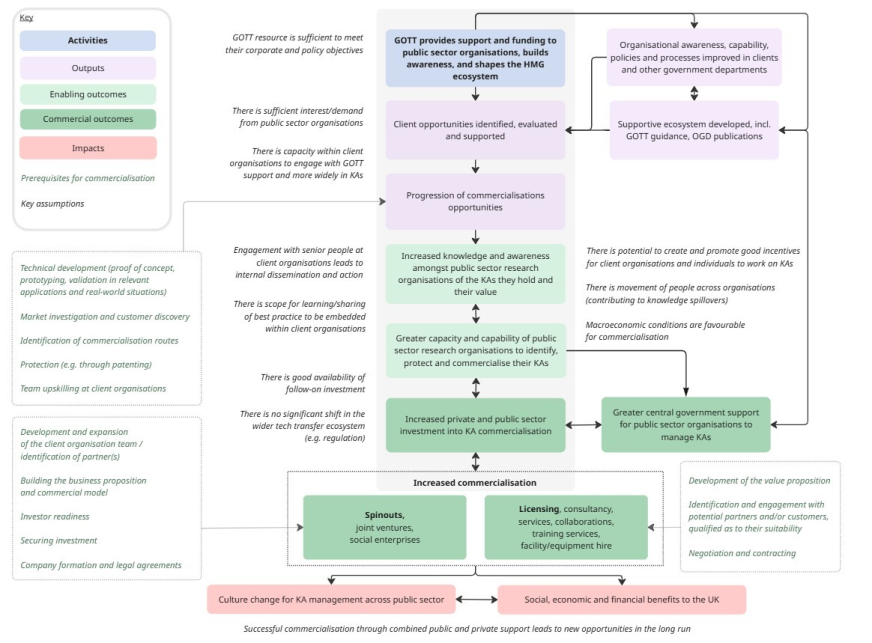
This section presents the updated logic model and theory of change (ToC) for GOTT. These have been updated through an iterative process of co-development between SQW and GOTT, to reflect GOTT’s evolving priorities. The logic model and ToC build on the versions in the 2024 progress evaluation, and set out how GOTT delivers change. This includes the intended causal chain from GOTT’s inputs and activities, through to expected outputs, outcomes and impacts. Underpinning the ToC is a set of assumptions, which are factors that can enable (or potentially hinder) GOTT’s ability to function as intended.
We highlight 2 important points for interpreting the logic model and ToC graphics (presented at the end of this section):
-
There is an inevitable trade-off between accuracy and clarity in illustrating the way GOTT is intended to operate. A fully accurate representation would need to capture multiple routes to impact, including feedback loops, but this would reduce clarity to the reader. The ToC therefore prioritises the key routes to impact.
-
The logic model and ToC are intended to be used as live tools which should be updated over time. The below depiction reflects GOTT’s position as of May 2026. We acknowledge that this may change.
The updated logic model and ToC graphics are presented at the end of Section 2.
Strategic context, rationale and objectives
What are Knowledge Assets?
Knowledge Assets (KAs) are intangible assets that have the potential to yield social, economic and financial benefits. KAs include software, know-how, data, and intellectual property (IP) such as patents, trade marks and copyright. Evidence suggests these assets are undervalued and underexploited in the UK public sector.[footnote 3]
Why are Knowledge Assets important?
Commercialising public sector KAs can bring benefits to society such as increased citizen wellbeing (e.g. through providing better access to services), productivity and GVA benefits to the UK economy (e.g. by bringing new technologies to market) and benefits to government (e.g. through financial returns that can be reinvested).
What are the barriers to unlocking the value of Knowledge Assets?
Barriers which prevent public sector organisations from unlocking the value of KAs include identification or information failure, insight or capability failure, infrastructure or institutional/coordination failure, limited incentives and lack of investment required to generate value from KAs.
In addition, many public sector organisations lack dedicated resource (including both finance and ring-fenced time) to focus on KA activities. Together, these barriers contribute to a public sector culture which does not effectively encourage active KA management and exploitation.
What is the role of GOTT?
GOTT was established in 2022 as a cross‑government unit within the Department for Science, Innovation and Technology (DSIT, formerly within BEIS). Its purpose was to help public sector organisations identify, protect and develop their KAs.[footnote 4]
GOTT currently focuses on public sector research organisations, supporting these clients to commercialise research and innovations by providing expert advice, funding, access to networks and capability-building. By concentrating on this group – rather than all government departments and public bodies – GOTT aims to target its finite resources where it can maximise impact. GOTT’s core objective is therefore to accelerate the commercialisation of KAs from eligible public sector research organisations to contribute to economic growth.
This feeds into GOTT’s overall vision: to create a hive of commercialisation activity in public sector research organisations, stimulating businesses to deliver government innovations that benefit citizens and help to grow the UK economy.
Theory of change
Inputs
GOTT’s inputs are the resources dedicated to its delivery, including funding, people, expertise and governance. In terms of financial inputs, GOTT has a total budget of £44.6m, allocated by DSIT over 5 years (2025/26 to 2029/30). The funding is used to pay for: staff costs (c. 38 staff); grant funding distributed to government research organisations; outsourced administrative support (e.g. grant related admin through Innovate UK); outsourced external expertise; internal development; and events. Alongside this, GOTT has provided £10m to the UK Innovation and Science Seed Fund (UKI2S) to sponsor a sub-portfolio focused on investing in knowledge assets. GOTT receives governance and oversight from its sponsor department, DSIT, and is engaged with other public sector partners (e.g. HM Treasury, the Department for Business and Trade, the Intellectual Property Office, the Ministry of Defence).
Activities
GOTT delivers a range of activities to support clients throughout the full commercialisation process, from the initial identification of potential KAs to full commercialisation of these KAs. This process is complex and often not linear, with multiple feedback loops.
GOTT’s model is designed to combine a range of complementary levers to support commercialisation, bringing together advice, funding, capability-building, policy engagement and access to external expertise. GOTT’s core activities include both direct support to clients as well as cross-cutting functions. The different types of support available to clients are intended to be complementary, with clients typically engaging with multiple strands of GOTT’s activities. GOTT aims to provide a combination of support that is tailored to an individual organisation, depending on its needs, as well as the specific requirements of the KA(s) of interest.
GOTT provides direct support to client organisations via:
-
Technology Transfer Strategic Partnerships (TTSP) : GOTT’s TTSP team delivers advice and practical support to help clients to identify and assess KA opportunities. This includes: technical, commercial and IP advice; structuring routes to market; managing access to external specialist support; negotiation support; licence and investment support and deal making; and Rapid Response Awards (RRA) in collaboration with the funding team. RRA provides funding of up to £50k to help bring KAs closer to commercialisation.
-
Commercialising Knowledge Assets Fund (CKAF) : Larger grants (£50k to 250k) are available to clients through the CKAF programme.[footnote 5] GOTT’s activities include assessing applications and monitoring project delivery, with support from the CKAF panel and external administrative support from Innovate UK. The total value of the funding pot is £23.4m, delivered over 4 years.
-
Knowledge Asset Capability Enhancement (KACE) : KACE activities aim to upskill client organisations and wider public sector personnel. This activity stream includes a funding programme and training/knowledge development, which is delivered through events, bootcamps, workshops, online training material and toolkits.
GOTT also has a set of cross-cutting activities, including those carried out by the Policy and Analysis team to influence levers for change across government. Key activities include producing best practice guidance (e.g. the Rose Book) and building approvals pathways to support KA commercialisation across the public sector, as well as analysis and evaluation activities. The Communities and Engagement team activities include building and managing communities of practice across the GOTT client base, facilitating the exchange of best practices and insights, as well as member-led discussions to support KA management and commercialisation. Other Communities and Engagement activities include managing events/workshops that support sharing best practice. Finally, GOTT carries out Enabling and Operational support activities, including contract management and customer relationship management.
In addition to the above, GOTT ensures there are sources of independent funding available for public sector knowledge assets, including through the external UK Innovation & Science Seed Fund (UKI2S) investment fund managed by Future Planet Capital.[footnote 6] The fund has a KA sub-portfolio which provides early investment to promising KA commercialisation opportunities. UKI2S also runs the Accelerate to Investment (A2I) programme which GOTT clients can apply to join.[footnote 7]
Outputs
The activities listed above are expected to lead to a range of outputs (i.e. direct effects from the activities undertaken) that can be monitored:
-
At the project level, client opportunities are identified, evaluated and progressed, moving KAs closer to commercialisation. This process is often supported through direct commercialisation support from the TTSP team and grant funding to help clients identify, develop and commercialise KAs.
-
At the client organisation level there are a range of outputs related to knowledge and capability development. These include clients undertaking skills support, and organisations supported to increase their KA management capacity and capability.
-
More widely, GOTT’s policy, engagement and operational functions generate outputs that support the broader public sector KA commercialisation ecosystem, including published guidance, the development of strategies and action plans within client organisations, cross-government policy influence and engagement through networks and events.
Outcomes
The outputs outlined above are expected to translate into a set of outcomes. These can be grouped into 2 categories: ‘enabling’ outcomes and ‘commercial’ outcomes. Enabling outcomes relate to improvements in organisations knowledge, capability, and capacity to commercialise KAs. They also include stronger incentives to commercialise KAs and improvements in the wider cross-government KA commercialisation ecosystem. Commercial outcomes focus on the successful commercialisation of KAs. Importantly, enabling outcomes provide the foundation necessary to achieve commercial outcomes.
Enabling outcomes are expected to occur in the short to medium term[footnote 8]. Through engagement with GOTT, public sector organisations are expected to: (i) develop a stronger understanding of the KAs they hold and their potential value; and (ii) improve their capability and capacity to identify, protect and commercialise these assets. This includes more public sector research organisations developing dedicated KA management support capability, supported by better incentives for public sector research organisations to pursue KA opportunities. GOTT aims to influence the latter primarily through its policy activities. Over time, this support is expected to generate increased enthusiasm, profile and traction on KAs across public sector research organisations, extending beyond the individuals that have directly received GOTT support.
As these enabling outcomes are achieved, they support subsequent commercial outcomes over the longer term.[footnote 9] Improved capability of public sector research organisations, alongside targeted public sector funding, allows organisations to progress KAs further along the commercialisation pathway. This is expected to leverage further investment both from the public and private sector as the commercial potential becomes clearer. With continued central government support for the KA commercialisation agenda, this will lead to increased commercialisation activity through routes such as spinouts, licensing, consultancy and joint ventures.
Impacts
In the long-term, GOTT seeks to influence a culture change for KA management across the public sector. Sustained commercialisation activity will bring financial, economic and societal impacts. Financial benefits expected include direct income/returns to the public sector (e.g. from licensing IP, investment in spinouts). Economic benefits could include new companies created and jobs maintained, increased productivity across government (and the wider economy) and increased Gross Value Added (GVA). Societal benefits may be seen in environmental or other types of social benefits (such as innovations applied in new companies, a more entrepreneurial public sector and knowledge spillovers through the movement of people across organisations). As successful commercialisation examples accumulate, this will help to strengthen central government support for public sector organisations to manage KAs, and further boost private and public sector investment. This creates an important feedback loop between culture change and increased commercialisation, which amplifies both and promotes economic growth.
Assumptions
The routes to impact described above are underpinned by a set of assumptions that enable (or potentially hinder) the theory of change. These assumptions represent the factors that may influence how, and to what extent, GOTT realises intended outcomes and impacts. The role of assumptions becomes increasingly important as you move through the logic model from activities to impacts, with a higher level of uncertainty in the causal chain.
The key assumptions are as follows:
-
In order for GOTT’s activities to be delivered as planned, its resource (funding, staff and expertise) must be sufficient to meet its corporate and policy objectives. This relies on continued central government support for GOTT’s work, and ongoing clarity in the policy landscape regarding GOTT’s role and purpose.
-
Effective delivery of a coherent set of activities relies on clarity within GOTT around its objectives and scope. This internal clarity is important for ensuring that resources are allocated effectively, activities are well-coordinated, and support is delivered in a consistent way across the GOTT client base.
-
For these activities to translate into outputs, there must be sufficient interest and demand from public sector organisations to ensure take up of activities. This will depend on client organisations having sufficient capacity to engage with GOTT support and the KA agenda.
-
In practice, having sufficient capacity and capability may include clients having ring-fenced staff time to prioritise commercialisation activities alongside other organisational objectives. Achievement of enabling outcomes - such as improvements in knowledge, capacity and capability within client organisations - is therefore highly dependent on securing senior level buy-in which can steer resource allocation. This assumes that GOTT can engage effectively with senior stakeholders within client organisations, and that there is commercialisation capability and capacity within organisational structure to support the activity.
-
For benefits to extend beyond individual projects, there must also be mechanisms for internal dissemination, often championed by senior leaders, to embed learning more widely. Over the longer term, client organisations must embed learning and share best practice to ensure a sustained change in the enabling outcomes (such as increased awareness, capability and capacity in the researcher base).
-
In relation to policy shifts and incentives, it is assumed that there is potential to create and promote good incentives for client organisations to work on KAs, which links back to continued central government support for the KA agenda. Similarly, it is assumed that stakeholder organisations (non-GOTT clients), including sponsor departments, help to influence policy on KAs to continue to support knowledge and capability development across the public sector. This could also be reinforced through the movement of people across public sector organisations, which enables knowledge spillovers.
-
For commercialisation outcomes to be achieved, macroeconomic conditions must be favourable for commercialisation. This could be through good availability of further investment for spinouts, including public sector sources (e.g. UKI2S) and private sources (e.g. venture capital). For licensing or consultancy routes, this could include factors such as private sector willingness or ability to take on new technology.
-
In addition, it is assumed that there will be no significant shift in the wider tech transfer ecosystem, for example in relation to licensing or spinout regulation. Any significant shift may require GOTT to reconsider its focus and activities.
Figure 2-3: Logic model
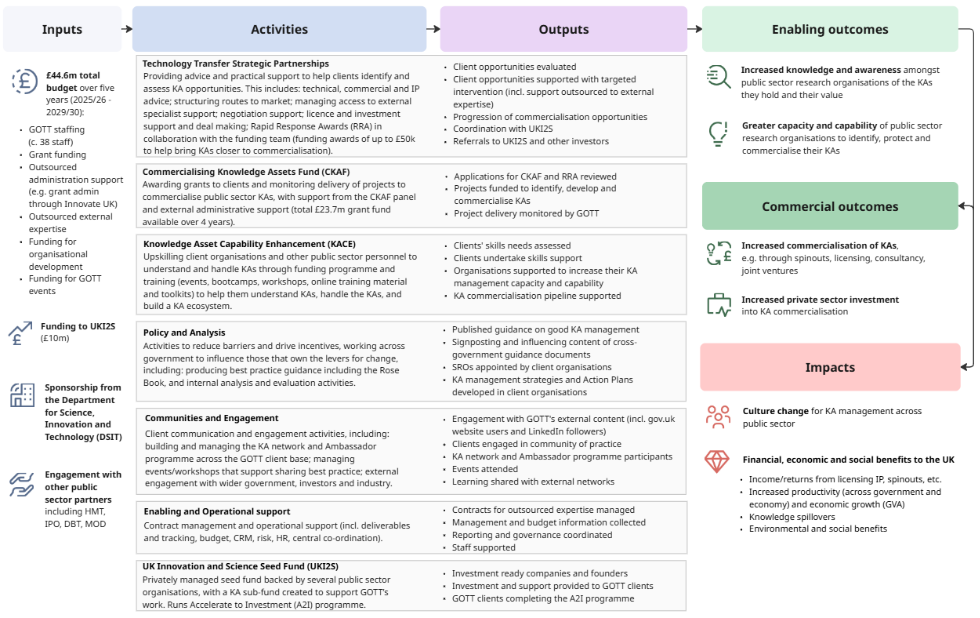
Figure 2-4: Theory of Change
3. Key themes from case studies
This section presents thematic analysis of evidence from the case studies. This covers: reasons for accessing GOTT support; experiences with the support; and the difference the support has made for the client organisations. In our analysis, we have highlighted the most frequently cited themes, whilst also drawing out those that were less common but considered interesting or important for informing future support.
Strategic context and rationale
Key headlines
GOTT support is intended to address barriers to KA commercialisation faced by client organisations. Case study evidence illustrated how these barriers have led to the decision to seek support from GOTT, with 3 main challenges highlighted:
-
Resource constraints (i.e. ‘investment’)
-
Knowledge and capability gaps (i.e. ‘insight’)
-
Absence of a dedicated commercialisation function (i.e. ‘infrastructure’), which cuts across both of the above.
Two reinforcing factors were apparent which can amplify the above barriers:
-
Lack of organisational memory
-
Lack of organisational buy-in.
The supporting evidence is summarised below.
Resource constraints – including limited funding and capacity - were the most commonly cited barriers to commercialisation. In many case studies, limited internal funding for commercialisation was a key barrier, particularly given the scale of funding typically required. In several cases, this was compounded by the organisation lacking the flexibility or mandate to prioritise commercial activity. In one case, a client reported that the project had been progressing slowly over a long period of time, with organisational interest and buy-in diminishing over time, meaning that funding for the project was deprioritised. Several organisations had considered other sources of external funding, but found there were no other appropriate options available, particularly for early-stage technologies. In this context, a few client organisations referred to the ‘valley of death’ in funding commercialisation projects.
“Often our projects are at a low Technology Readiness Level, so they do require some significant funding to get to a commercialisation stage.” – GOTT Client
Many client organisations also faced knowledge and capability gaps. Whilst they had strong technical capability, organisations often lacked the commercialisation expertise and market insight required for the project to progress. These knowledge gaps spanned the full commercialisation process, including: identifying a particular knowledge asset; understanding its potential commercial application; protecting it appropriately; and exploiting it through commercial mechanisms (e.g. spinout, licensing, consultancy). Market insight was widely lacking, particularly around how the knowledge assets could have applications in sectors outside the client organisation’s expertise. It was highlighted that organisational memory is typically relatively short, compounded by staff turnover. For example, in one case there had been a previous spinout, but many of the people involved had since left the organisation so this knowledge was not retained.
Cutting across both capability gaps and resource constraints, some clients referred to the absence of a dedicated internal commercialisation function as another key barrier. In practice, this meant a lack of ring-fenced time, clear ownership and established processes for taking commercialisation opportunities forward. However, the presence of an internal technology transfer office (TTO) alone is not necessarily sufficient to generate widespread momentum and culture change around commercialisation. For wider culture change to happen, organisational buy-in is required, including from senior leadership. Indeed, one client organisation highlighted that securing senior-level buy-in was the first essential step to unlock other barriers:
“This was very new for [the organisation]. Problem number one was: how do we get science senior leadership comfortable with taking these kinds of risks associated with scalable IP ventures?” – GOTT Client
Activities
Engagement with GOTT support
Key headlines
Case study evidence demonstrated the importance of GOTT providing a range of support across the full spectrum of the commercialisation process. Feedback from clients highlighted that the most appropriate support often depends on a range of factors (such as existing organisational capacity, capability and buy-in, or type and stage of knowledge asset development). This meant there was no standard ‘pathway’ through GOTT’s offering as support was tailored to client needs. Client needs can change as projects progress.
The supporting evidence is summarised below.
Within the case study sample, there were examples of various GOTT support (see Table 3‑1), with all but one project receiving at least 2 different types of support[footnote 10]. Two key points are noted based on case study feedback:
-
There is value in GOTT providing a breadth of support, with different support needed at different stages. For example, grant funding is often among the earliest support received, which illustrates the importance of overcoming the funding barrier. Support is also required at different levels, including direct support provided to the project teams, wider policy support at the organisation level, and advocacy with sponsor departments.
-
The breadth and flexibility of the activities support the natural evolution of projects. In the context of a typically non-linear innovation process, there are examples of one thing leading to another, e.g. in terms of the findings from one project identifying a need for further technical or commercial development.
Table 3‑1: Examples of GOTT support
| Key types of support | Description |
|---|---|
| Grant funding | Funding has been used for a range of purposes spanning both technical and commercial development. Technical activities included: general technology readiness level progression; refining the technology for a specific market; and delivering a formal demonstrator or commercial trials. Commercial activities included market research to develop the commercial offering. |
| Technology Transfer Strategic Partnerships | The Technology Transfer Strategic Partnerships (TTSP) team acted as a hands-on commercialisation partner, delivering support at individual, project and organisational level from early-stage opportunity assessment through to active commercialisation. This included shaping and challenging initial views on commercial potential, developing and testing routes to market, and brokering connections with investors and delivery partners. Where appropriate, GOTT has leveraged external expertise by commissioning IP specialists (e.g. to undertake a review of the patent landscape) and market research companies (to explore opportunities in other regions or sectors). |
| Capability support | KACE team activities include supporting individuals and organisations to enhance their KA management capability. One example is the Public Research Innovation & Market Accelerator (PRIMA) programme, which has provided intensive support to individuals, focusing on testing, validating and progressing projects towards market. This has included support with exploring market potential and competition, and developing a robust business model/value proposition. |
| Policy support | Policy support has included engagement with senior leadership, both internally within the client organisations and with their sponsor departments. This function can also directly support commercialisation, through facilitating approvals. In addition, GOTT has helped organisations to develop their internal commercialisation policies and guidance documents, e.g. in relation to spinout processes. |
| Events and networking | GOTT has provided networking and knowledge exchange opportunities, including through the GOTT Annual Conference, the Knowledge Asset Network and the emerging venture reception. |
| UKI2S | Pre-seed and seed investment into spinouts from the KA portfolio have been made through the UKI2S investment fund. Potential founders and their spinout projects have been accepted onto the A2I accelerator programme. |
Source: SQW based on case study evidence
Feedback on the support received
Key headlines
Across the projects selected for case studies, feedback on GOTT support was overwhelmingly positive, with the perceived strengths primarily relating to:
-
A tailored approach which has enabled holistic, layered and flexible support
-
A proactive and professional delivery team at GOTT, with strong technical and commercial expertise (complemented by its external partners).
There are some opportunities for further improving support provision, based on individual experiences (i.e. there is no single ‘common thread’ across feedback). This included recommendations for GOTT to provide some additional support, and better promote its support offering. The supporting evidence is summarised below.
GOTT’s tailored approach to delivering the support was highlighted as a key strength. Importantly, the allocation of support was informed by an understanding of the client organisation needs, rather than a pre-determined formula. As noted by one consultee:
“TTSP support is agile […]. It is also borne out of dialogue, rather than trying to squeeze projects into a particular mould.” – GOTT Client
This tailored approach has led to support that is holistic and layered, at the appropriate points on the pathway towards commercialisation. In most cases, projects had received multiple types of support from GOTT to progress both technical and commercial aspects. This was sequenced to meet project needs as they evolved over time, often starting with early-stage scoping and sense-checking through TTSP and KAGF/CKAF, and progressing to commercial and capability progression through further funding (including RRA) or PRIMA. This in-depth support has often exceeded client expectations:
“I was pretty gobsmacked at how effective they were for a government organisation. I went into it thinking, this is probably worth a try, but who knows what’s going to happen. But… it’s been more beneficial than I ever expected. I was pretty impressed with them” – GOTT Client
Relatedly, the tailored approach means that GOTT is able to offer support that is adaptive and flexible in response to specific needs as the projects evolve. For example, when one project team was struggling to articulate their unique selling point when preparing for investor pitches, GOTT was quick to offer Rapid Response Award (RRA) funding to allow the client to undertake some further market research. It was noted that flexibility is a key strength of the RRA funding. The ability to recognise client needs and opportunities as the projects progress is particularly important because the process of innovation is unlikely to be linear.
The positive feedback on GOTT support was underpinned by the capability of its staff. Clients valued the proactive and professional delivery team at GOTT. Given the issues regarding resource constraints (see Section 2: Strategic context and rationale), GOTT’s proactiveness was important for maintaining momentum in situations where clients were managing competing priorities. In this context, there was value in having a dedicated point of contact within the TTSP team, which has allowed clients to access more ad-hoc, informal advice and signposting. GOTT’s professionalism is directly linked to the support being perceived as credible, by both the direct project teams as well as across the client organisations.
“They’re very proactive, responsive and professional. I think that it’s been a good experience… It’s been a gamechanger for this project” – Client organisation
Feedback also highlighted the technical and commercial expertise of its staff, which has allowed meaningful engagement with projects spanning a wide range of sectors. For example, this expertise has allowed it to act as a ‘sounding board’ to clients, providing challenge on technology readiness and commercial pathways. The ability to leverage external expertise through TTSPs has complemented GOTT’s internal capability.
In terms of opportunities for GOTT to further strengthen its support activities, feedback on this was project-specific, with no major areas for improvement identified. The recommendations for GOTT to consider are listed in Table 3‑2.
Table 3‑2: Recommendations for improving GOTT activities based on feedback
| No. | Recommendation |
|---|---|
| Promotion, outreach and networks | |
| 1 | Improve the clarity and promotion of GOTT’s offering. The nature and breadth of GOTT support have evolved since its inception. A clearer articulation of its current support offer would be helpful, e.g. through effective visual tools such as infographics. |
| 2 | More proactively build/strengthen relationships with sponsor departments. GOTT is well positioned to engage with the sponsor departments, bringing expertise and credibility, and this is valued by clients. There are opportunities to expand this support, particularly considering that sponsor buy-in is a common barrier for client organisations. |
| 3 | Establish closer and more proactive working relationships with the UKI2S team. This would enable ongoing sense-checking (with UKI2S able to provide the investor perspective), more effective pipeline building (with UKI2S keen to see projects earlier) and maintaining momentum within the client organisations (with GOTT able to provide support and resolve any issues that may be delaying progress). |
| Grant funding | |
| 4 | Enhance transparency around grant funding decisions. It is important for applicants to understand how grant applications are assessed, including the basis for unsuccessful outcomes, in order to consider opportunities to refine their project/application. |
| 5 | Ensure the additionality of later-stage grant funding is assessed. The additionality of public sector funding compared to potential private sector investment should be carefully considered when assessing applications for later-stage funding, in the context of a potential risk of delaying access to private sector funding. |
| 6 | Explore opportunities to help mitigate sub-contractor delays to grant-funded projects, for example by introducing flexibility in timings if projects need longer to agree and arrange sub-contractors (though it is noted that this may be restricted by funding cycles) |
| Wider support offer | |
| 7 | Consider extending the length of the PRIMA programme. It was suggested that extending it to 12 weeks (rather than 8 weeks) would help to “take the heat off” and provide flexibility alongside participants’ other work commitments. |
| 8 | Provide additional support in relation to: (a) Online training courses or other resources focused on the key principles of market research and commercialisation to support wider organisational understanding. (b) Securing investment following GOTT support: better and more structured alignment between GOTT and other public sector funders (e.g. Innovate UK); direct introductions to private sector investors; hands-on commercialisation support (e.g. entrepreneurs in residence). (c) Events and networking opportunities connecting the ecosystem, e.g. venture café. |
Source: SQW based on case study evidence
Routes to impact
Key headlines
Through the activities it delivers, clients suggested that GOTT has helped to progress knowledge assets towards commercialisation. This primary route to impact is said to be underpinned by 3 types of benefits for client organisations:
-
Knowledge and capability development
-
Improving market-readiness of KAs
-
Securing further investment
The supporting evidence is summarised below.
Based on the feedback on the difference that GOTT support has made:
-
Knowledge and capability development can occur at both the project- and organisation-level. Success breeds success, with successful examples of commercialisation building awareness and helping to accelerate organisational change. However, long-term culture change takes time and repeated effort.
-
Progressing commercialisation opportunities requires work on both the technical and commercial aspects of KAs. This is typically undertaken in parallel, with both equally important for successful commercialisation. There are feedback loops between the 2, e.g. if market research indicates that changes to product are required.
-
Securing investment following GOTT support is a key part of the commercialisation process, particularly for projects that are focused on the spinout route. The connection between GOTT and UKI2S has provided clients with a helpful pathway to further investment, and the role of the latter extends beyond the funding provided.
-
The above benefits are distinct but reinforcing, with the whole greater than the sum of its parts. For example, the development of knowledge and capability within the research team (and the wider client organisation) directly enables the progression of commercialisation opportunities. Similarly, both of these support investment readiness; and vice versa via engagement with UKI2S.
Developing knowledge and capability
As a result of the activities GOTT delivers, clients reported increased knowledge/awareness of the KAs they hold, and greater capacity/capability to identify, protect and commercialise these KAs. At the project level, these outcomes were reported to be a direct result of the support and advice received through GOTT programmes (e.g. grants, TTSP and PRIMA). The support has helped clients to improve their understanding, from the earliest exploratory stages (e.g. assessing the market potential of their KAs) to commercialisation activities (e.g. developing a value proposition and business model). GOTT’s role as a ‘convener’ was also highlighted, in terms of leveraging its vast networks to broker connections across the commercialisation landscape, giving clients access to other external expertise. Knowledge and capability development is an important enabling outcome for commercialisation:
“How can you negotiate with a buyer when you don’t know what you’re selling?” – GOTT Client
Clients had also experienced these outcomes at the organisation level which, in turn, has led to greater organisational maturity in relation to KA commercialisation. Examples of this included a shift towards organisations thinking more systematically about their knowledge assets, possible routes to market, and the capability needed to support this work. The routes to achieving this were varied and often interlinked:
-
Knowledge spillovers from project-level knowledge and capability development. This was primarily through this work spreading awareness of the value and opportunities associated with KAs. In one case, market engagement activity relating to the project highlighted other potential KAs within the organisation.
-
Wider GOTT support provided outside of the case study projects (e.g. working directly with the technology transfer office) to improve processes for KA commercialisation. Examples included the development and publication of guidance (e.g. KA management strategy guidance and spinout guidance) and organisation-level KA reviews.
-
Organisational buy-in through confidence and cultural acceptance of commercialisation, which has occurred as a downstream effect of the above benefits. This has been reinforced by GOTT engagement lending external credibility, and the success of specific projects.
However, a sustained organisation-level shift in the capability and maturity of clients takes time and repeated effort. Whilst project-level support can act as a catalyst, the effects on capability are often partial or confined to those directly involved. There is a risk of losing this expertise if these staff members leave the organisation. An organisation-level capability shift, and the associated commercialisation outcomes, requires long-term senior level buy-in and the allocation of sufficient resources. These, in turn, depend on the priorities of the client organisation, its sponsor department, and wider government. This indicates the importance of GOTT’s advocacy work.
Improving market-readiness of KAs
GOTT support has improved the market-readiness of KAs held by clients through technical development. Funding has allowed projects to develop the KAs towards marketable products/services, including the development of prototypes/demonstrators and refining the technology for specific markets. In some cases, considerable pivots were required in response to market feedback, for example reconfiguring a desktop-based system into a handheld device for greater accessibility. The funding for technical development was considered essential, in the context of limited internal budgets and competing priorities within the organisations that GOTT supports. The grants helped to ring-fence people’s time internally and ensure the projects remained active. In most cases, projects would have struggled to secure funding from elsewhere.
“It would have died. I couldn’t find a funding stream that was aligned enough and that was of the right scale.” – GOTT Client
Alongside technical development, GOTT has also helped with market-readiness in terms of commercial development. There was evidence of financial support from GOTT enabling organisations to undertake market research, benchmark technologies against potential competitors, and explore different commercialisation routes. Four of the case studies were in the early development stages of licences. Two of the case study projects had fully commercialised by establishing spinout companies. Clients indicated that GOTT has provided a crucial funding stream for these commercially focused activities.
GOTT has also supported commercial development through non-financial support. Several consultees highlighted how discussions with GOTT (drawing on external expertise, where relevant) had influenced which commercialisation route to opt for, taking into account the practicalities, risks and potential benefits of different options. In addition to informing commercialisation plans more generally, there was evidence of this support generating commercial leads for clients. This support filled a clear gap in knowledge within client organisations, particularly as this was an area that technical teams are typically less comfortable with. As noted by one client, they may have been able to secure funding for technical development from other sources, but the main barrier was commercial expertise:
“The technical side we could do [ourselves] in principle – had we found the money from somewhere else, we have the right people to do it in house […] The crucial step is what to do with an interested licencing partner, and that was just a void.” – GOTT Client
Securing further investment
Securing further investment is necessary for commercialisation, particularly via the spinout route. The benefits outlined above directly support investment readiness, both in terms of the team and the technology. GOTT’s convening role is also relevant here, with examples of supporting potential further investment by making introductions, either directly (leveraging its networks) or indirectly (providing opportunities for networking).
The connection to UKI2S is also important, providing a direct route to investment and further support. The clients that had engaged with UKI2S had received investment (pre-incorporation and Seed), informal advice, and hands-on support through the Accelerate to Investment (A2I) programme. Clients described the UKI2S team as “very heavily involved” in helping the projects become commercially ready, including through advising on business plans and providing skills development opportunities (e.g. pitching).
“[Engaging with the UKI2S team] gave us that opportunity to think in advance of talking to investors about the way we need to be thinking.” – GOTT Client
“[One of the scientists] now walks and talks like a CEO.” – GOTT Client
Additionality and contribution
Key headlines
Across the case studies, there was a high level of additionality associated with GOTT support. Alongside GOTT, some other contributory factors were identified, but in all cases GOTT support was considered to have played either a critical or important role.
The additionality and contribution of GOTT support was underpinned by its role in:
-
Providing a vital source of funding
-
Filling knowledge and capability gaps
-
Providing credibility.
The supporting evidence is summarised below.
Across the projects selected as case studies, GOTT support was associated with a high level of additionality. Clients commonly considered that none of the benefits would have been achieved without GOTT support (i.e. the benefits were fully additional). In a few cases, GOTT support had accelerated or increased the overall scale of benefits achieved (i.e. the benefits were partially additional).
As explained earlier in the report, the sample for the case studies was selected purposively, and so the findings on additionality are not necessarily reflective of the wider portfolio. However, this feedback is valuable in that it highlights 3 key arguments underpinning additionality of GOTT support. These have been covered in the narrative above in relation to routes to impact, and can be broadly summarised as follows:
- GOTT provided a vital source of funding that otherwise may have not been available. This funded technology and commercial development activities to drive projects closer to commercialisation.
“We needed £250k – that is half our budget gone on one project so [the organisation] would not have approved that.” – GOTT Client
- GOTT’s expertise filled knowledge and capability gaps within client organisations. In particular, this helped to inform commercial thinking and decision-making.
“It is sort of night and day between what the picture was – [we went] from budding entrepreneurs within a science lab, to now having this confidence and the support to think that this is a possible spinout.” – GOTT Client
- GOTT’s involvement lent credibility, which helped to secure senior buy-in within client organisations and their sponsor departments. This, in turn, helped to unlock internal funds and other support for the projects.
“We didn’t really have the permission, and had to really fight within [the organisation] to do this because it was quite a bit different from what they were used to. […] we showed the wider executive team that this was a viable thing. Just [GOTT] being there and providing the support gave permission and confidence to those teams.” – GOTT Client
In all cases, GOTT support was considered to be either the critical enabler, or important alongside other contributory factors. Other factors that contributed to outcomes included those relating to the client organisation itself (e.g. existing expertise, senior level buy-in, dedicated resource) as well as external factors (e.g. other support/funding received, government priorities). However, these enabling factors were not universal: across many case studies, their absence continued to act as a significant barrier to progress.
This study has updated the logic model and theory of change for GOTT, which now reflect the current priorities. The case studies have gathered evidence on causal pathways associated with GOTT support, and how this support is experienced by clients. This report summarises the findings from both workstreams which can be used by GOTT to inform its future activities.
-
GOTT (2024) Progress Evaluation ↩
-
The original specification for this research stated the requirement for a theory of change. At the inception meeting, it was agreed that the scope will also cover an updated logic model, as an underpinning element of the theory of change. ↩
-
Government Office for Technology Transfer (2024) The Rose Book – guidance on Knowledge Asset management in government; HM Treasury (2017) The Balance Sheet Review Report: Improving public sector balance sheet management; HM Treasury (2018) Getting smart about intellectual property and intangible assets - GOV.UK; HM Treasury (2021) Getting smarter: a strategy for knowledge & innovation assets in the public sector. The Mackintosh Report. ↩
-
HM Treasury (2021) Getting smarter: a strategy for knowledge & innovation assets in the public sector. The Mackintosh Report. ↩
-
GOTT (2026) Funding to accelerate your Knowledge Assets towards market ↩
-
UKI2S – Investing in innovations that transform our future ↩
-
Within approx. 1-5 years since engagement with GOTT. ↩
-
Approx. 5+ years. ↩
-
This is partly reflective of the criteria for selecting the case studies, and so inferences in relation to the wider GOTT portfolio would not be appropriate. ↩