Global supply chains: a foresight report on risk and resilience: annex A – evidence and trends for supply chain vulnerability and resilience
Updated 24 September 2026

© Crown copyright 2026
This publication is licensed under the terms of the Open Government Licence v3.0 except where otherwise stated. To view this licence, visit nationalarchives.gov.uk/doc/open-government-licence/version/3 or write to the Information Policy Team, The National Archives, Kew, London TW9 4DU, or email: psi@nationalarchives.gov.uk.
Where we have identified any third party copyright information you will need to obtain permission from the copyright holders concerned.
This publication is available at https://www.gov.uk/government/publications/global-supply-chains-a-foresight-report-on-risk-and-resilience/annex-a-evidence-and-trends-for-supply-chain-vulnerability-and-resilience
Introduction
This section describes further information to support the analysis presented in Global supply chains: a foresight report on risk and resilience.
Global supply chains are complex systems made up of many interlinked stages of production, transport, and coordination that often span multiple countries. While trade data at the country level can show where goods are bought and sold, it does not capture the full production process or the extent of exposure embedded along entire supply chains (Bank of England, 2024). As a result, understanding supply chain vulnerability and resilience requires looking beyond national trade flows to the structures, relationships, and external conditions that shape how supply chains function and respond to disruption.
This chapter begins by drawing on existing literature to set out what makes supply chains vulnerable and what supports resilience. It distinguishes three interconnected dimensions of vulnerability: firm‑level factors, such as sourcing strategies and operational practices; external factors, such as geopolitical dynamics and climate and environmental pressures; and network‑level factors, including concentration, interdependencies, and bottlenecks. Genuine supply chain resilience depends on how these dimensions interact, rather than on any single factor in isolation. This conceptual grounding provides the basis for understanding why some shocks propagate widely while others are absorbed, and why similar hazards can lead to very different outcomes.
Building on this foundation, the chapter then reviews evidence on the external risk factors scoped in Chapter 2.2 (geopolitical fragmentation and climate and environmental change) and how trends in these areas may shape future supply chain vulnerability and resilience. These external pressures are treated as key sources of uncertainty that influence firm and network behaviour, and that may interact in ways that compound risk. Insights from supply chain modelling, which focuses on network‑level vulnerability patterns, are presented separately in Chapter 4. This evidence base anchors the subsequent scenarios, which explores how remaining uncertainties around geopolitical futures and climate adaptation could drive divergent supply chain outcomes over time.
What makes supply chains vulnerable, and what makes them resilient?
Understanding supply chain vulnerability and resilience
Before examining threats to global supply chains, it is essential to establish what makes supply chains vulnerable and resilient.
Supply chain vulnerability is the susceptibility of a supply chain to disruption and its ability to respond or recover. Disruption could originate inside the chain itself, stem from wider external forces, or be attributed to effects resulting from the production network the supply chain is part of (Wieland and Durach, 2021; Ivanov, 2023). In other words, a vulnerable supply chain is one where an event, for example, a port closure, a new tariff, or a flood, can translate into major operational, financial, or reputational damage because the chain is heavily exposed, highly sensitive, and/or lacks backup options. This vulnerability has been illustrated in events such as the 2011 Japanese earthquake and tsunami, which forced firms like Toyota, Nissan, and Boeing to halt production because they relied on highly concentrated suppliers in the affected region (Hosseini, Ivanov, and Dolgui, 2019).
Supply chain resilience is the capacity of the supply chain to continue to function and recover when things go wrong. Despite the varied terminology used across the literature, it points to three linked capabilities that are central to understanding supply chain resilience: withstanding, adapting, and recovering from disruption (Wieland and Durach, 2021; Hosseini, Ivanov, and Dolgui, 2019). In other words, supply chain resilience can be understood as the time it takes an affected supply chain to recover, the performance lost during the disruption, and the level of performance after recovery (Behzadi, O’Sullivan, and Olsen, 2020).
A growing body of evidence emphasises that resilience encompasses capabilities beyond merely recovering lost performance. It suggests resilience needs to be understood as a system’s capacity to persist, adapt, or transform (corresponding to a social‑ecological view of supply chain resilience), not merely “bounce back” (engineering view). This views resilience not as returning to a prior stable state after a disruption has ended, but as the ability to persist and reconfigure under long, uncertain crises such as COVID-19 (Wieland and Durach, 2021; Ivanov, 2023). Resilience is not just about restoring pre-crisis performance, but also about learning and, where needed, changing how the supply chain is organised.
Importantly, vulnerability and resilience are not simple opposites. Vulnerability captures how exposed and fragile the system is to particular shocks; resilience captures the capacities that allow the system to absorb, adapt, and recover when those shocks occur. A supply chain can be highly exposed (for example, very reliant on a single semiconductor plant in an earthquake-prone region) yet still relatively resilient if the focal firm has robust contingency plans, flexible production, and strong recovery capabilities. Conversely, a chain that appears “lean” and efficient may in practice be both vulnerable (e.g. single sourcing, tight just-in-time inventories) and lacking the redundancy or flexibility needed to respond. Resilience is therefore multi-dimensional, spanning absorptive capacity (e.g. buffers and redundancy), adaptive capacity (e.g. process flexibility, alternative suppliers), and restorative capacity (e.g. ability to reconfigure and recover), each of which responds differently to different types of disruptions (Hosseini, Ivanov, and Dolgui, 2019; Behzadi, O’Sullivan, and Olsen, 2020).
Because of this complexity, no single measure or perspective can fully capture supply chain resilience or vulnerability. Network-level models can highlight structurally critical firms and risk archetypes, for example, hubs whose failure would create large ripple effects across multiple industries. However, these models say little about how individual firms actually manage shocks (their redundancy, flexibility, and recovery practices), or about how likely those firms are to be hit by particular external threats such as climate hazards, geopolitical conflict, or cyber-attacks. To support robust and reliable decision-making for resilient supply chains, we therefore need to look at supply chain vulnerability and resilience through three complementary lenses: (i) firm-level resilience and vulnerability (how companies organise and invest to cope with shocks), (ii) the landscape of external threats that may impact them, and (iii) the network-level structure of supply chains and the systemic risks that follow from it.
The following sections provide overviews of these three perspectives, recognising that each provides only a partial view and that effective policy must integrate across all three. While firm level decisions and strategies are a crucial part of supply chain resilience, this report prioritises external pressures and network level vulnerabilities, where government has greater leverage and where firm behaviour is often shaped reactively by wider geopolitical, climate, and structural conditions.
Firm-level vulnerability and resilience
At the level of an individual firm, supply chain vulnerability reflects how easily its operations can be disrupted by shocks, given its sourcing choices, inventory policies, production set-up, and organisational practices. Firms are particularly vulnerable when they rely on single critical suppliers or sites, operate with very low inventories, or lack visibility beyond their first tier of suppliers (Hosseini, Ivanov, and Dolgui, 2019).
Firm-level resilience refers to the capabilities that allow a company to absorb, adapt to, and recover from such shocks while maintaining or restoring acceptable performance. A growing body of work conceptualises these capabilities as three “lines of defence” (Hosseini, Ivanov, and Dolgui, 2019): absorptive capacity (withstand), adaptive capacity (adjust), and restorative capacity (recover and learn). In practice, this maps closely onto redundancy, flexibility, and recovery-oriented strategies.
Redundancy is the most intuitive way for firms to build resilience: it means holding extra resources so the business can keep operating when something goes wrong. This includes additional inventory, spare capacity in plants and warehouses, backup suppliers, and geographically dispersed facilities (Sheffi, 2005). For example, multinational food and beverage firms have used backup packing plants and risk-mitigation inventories to continue production when a key ingredient sourced from a single region was disrupted by weather events (Hosseini, Ivanov, and Dolgui, 2019).
Such redundancy strengthens absorptive capacity by allowing firms to withstand the initial impact of a disruption with limited performance loss. Yet redundancy is costly: excess stock ties up capital and can become obsolete, and underutilised capacity and duplicate suppliers raise operating costs. Highly efficient “lean” systems often minimise redundancy, increasing vulnerability unless other resilience measures compensate (Sheffi, 2005). Evidence therefore suggests that firms should use redundancy selectively, focused on genuinely critical inputs and bottlenecks, and combine it with better information and risk assessment, rather than assuming that more stock is always better (Vlajic, 2017).
Flexibility offers a second, often more sustainable, route to resilience, through adaptive capacity. Instead of (or in addition to) holding buffers, flexible firms can reconfigure their operations when conditions change, for example by switching between suppliers, rerouting transport, or reallocating production across plants that use standardised processes (Sheffi, 2005). Practical examples include electronics manufacturers that design factories with identical layouts and common process standards, enabling them to shift production to unaffected sites after an earthquake, or apparel companies that postpone final product differentiation (such as dyeing) so that semi-finished goods can be directed to where demand or capacity is available (Wang, Liu, and Li, 2025). Recent work also highlights the role of digital tools, such as end-to-end tracking and advanced analytics, in improving visibility and making flexibility usable in real time, for instance by rapidly identifying alternative routes or suppliers during a pandemic or port closure (Zhao, Hong, and Lau, 2023).
Are firms changing supply chain strategy?
What the evidence shows
Supply chains are increasingly moving from pure just-in-time (JIT) to hybrid resilience models, and the evidence below reflects this shift.
Post-pandemic firm-level studies find import-reliant manufacturers raised and sustained higher input inventories, indicating a targeted shift from JIT to strategic buffers (Zhang and Doan, 2032).
Global surveys show widespread reconfiguration (near/reshoring, multisourcing, supplier development); Deloitte cites 97% of firms reconfiguring in 2024, with 86% of US manufacturers actively de-risking (Kilpatrick, Berckman, Faver, Hardin, and Sloane 2024).
Hybrid models dominate: many firms retain JIT for predictable items while using just-in-case (JIC) for critical components; 77% report safety stock in use alongside JIT (Anand, 2025).
UK survey points to greater emphasis on resilience capabilities (risk mapping, supplier diversification, digital tools), even if official statistics don’t separately identify “JIT vs JIC” (Make UK, 2026).
Recovery-focused capabilities form the third aspect of firm-level resilience: how quickly and effectively the firm can restore and, ideally, improve and change operations afterwards (Sheffi, 2005). Recovery depends not only on physical repair (rebuilding facilities, restoring IT systems) but also on organisational factors: clear crisis management plans, empowered decision-making, and the ability to learn from past events and adjust strategies accordingly (Hosseini, Ivanov, and Dolgui, 2019; Behzadi, O’Sullivan, and Olsen, 2020). Sheffi (2005) describes this as a cultural dimension of resilience, where preparedness, cross-functional collaboration, and openness to change are embedded in the firm’s routines, allowing it to treat disruptions as opportunities to improve rather than just problems to survive. Empirical work following the global financial crisis and COVID-19 shows that firms which use disruptions to diversify suppliers, invest in visibility, and adjust product portfolios tend to recover faster and emerge more competitive, whereas firms that simply “bounce back” to previous configurations remain vulnerable to the next shock (Guo et al. 2025; Amico et al. 2024).
These three elements show that at firm-level, vulnerability and resilience are interconnected. Critically, the literature emphasises that no single capability is sufficient: heavy redundancy without flexibility can be expensive and still fragile to extreme events; flexibility without some buffers can be overwhelmed by large shocks; and rapid recovery is limited if a firm repeatedly exposes itself to the same high-risk patterns (Behzadi, O’Sullivan, and Olsen, 2020; Wieland and Durach, 2021).
External threats and risks
At the network-wide level, external threats refer to disruptive events and trends that originate outside a firm’s own operations or design choices. Researchers commonly group external risks under broad categories, e.g. natural risks (environmental or climate-related), operational risks (logistics, transport, port operations), demand and supply-side risks (e.g. sudden demand surges or supplier failures), and macro/global risks (economic, political, regulatory) (Ho et al, 2015; Arowosegbe et al. 2024). Other recent work includes emerging areas, such as technological and digital threats, notably cyber and AI risk, acknowledging that risks evolve as the supply-chain ecosystem becomes more interconnected and technologically mediated (Pandey et al. 2020).
Building resilience to external threats requires supply chains to improve how they anticipate, absorb, and adapt to shocks arising outside their direct control. Evidence shows that three approaches are especially effective. First, enhancing visibility, for example through multi-tier supplier mapping and digital monitoring, helps firms detect disruptions earlier and understand where vulnerabilities lie (Ivanov and Dolgui, 2021; Piprani et al, 2025). Second, diversification strategies such as multi-sourcing and geographically distributed production can reduce exposure to individual chokepoints or politically sensitive regions (Lin et al., 2021). Third, collaborative risk management, including information-sharing and joint contingency planning between firms and with governments, has been shown to significantly improve response and recovery during major disruptions (Maemunah, 2024). As mentioned previously, the complexity of supply chains requires a multifaceted approach, and considering resilience to external risks is only one aspect of supply chain resilience. Firm‑level choices still play a critical role, and businesses have capacity to enhance their own resilience and mitigate manageable risks.
Given the breadth of potential external threats, from climate, environmental, political, economic, logistical, to technological, the picture is one of growing complexity. For this reason, a later section of the review will delve deeper into a selected subset, focusing especially on environmental and climate hazards and geopolitical disruptions.
Network-level risks
A third and distinct dimension of supply-chain vulnerability arises from the fact that supply chains are not linear chains, but complex, interdependent networks. In these networks, firms are connected through thousands of supplier-customer relationships, often spanning multiple tiers and geographies. Network science shows that systems with highly connected nodes, such as finance, transportation, or energy, can be disproportionately affected when a single critical node fails, because shocks propagate through interlinked pathways rather than remaining contained. Supply chains exhibit similar behaviour: the temporary failure of a strategically central supplier, logistics hub, or raw-material producer can create cascading disruptions that ripple far beyond the original point of failure. Even firms with strong individual resilience can be severely affected when upstream partners or transport infrastructures experience shocks, because the network’s structure itself amplifies disruption (Hosseini, Ivanov, and Dolgui, 2019; Scheibe and Blackhurst, 2018; Korniyenko, Pinat, and Dew, 2017).
Understanding supply chains as networks also helps explain why firm-level strategies alone cannot fully mitigate systemic risk. Network-level vulnerabilities emerge from structural properties such as supplier concentration, clustering around specific regions, reliance on global chokepoints, or the presence of highly central “hub” firms. Studies using real-world supply chain datasets highlight that industries often rely heavily on a relatively small number of upstream producers, whose failure would affect multiple downstream sectors simultaneously. Firms with high “network centrality” pose outsized systemic risk when disrupted (Brintrup and Ledwoch, 2018)
Because network effects can amplify relatively small shocks into large-scale disruptions, resilience at the system level requires more than redundancy or flexibility within individual firms. Evidence suggests that identifying network structure, central hubs, bottlenecks, tightly coupled subnetworks, and mapping potential cascade pathways allows policymakers and firms to target interventions more strategically. Supply-chain modelling can reveal “risk archetypes,” such as critical suppliers whose disruption would cause widespread downstream losses, or vulnerable clusters reliant on single-source inputs. These modelling approaches represent emerging best practices to detect systemic vulnerabilities and assess how shocks propagate through multi-tier supply networks (Fagundes et al, 2020; Tabachová et al, 2024).
Examining supply-chain resilience through a network lens rather than focusing solely on firms or external hazards is crucial to a comprehensive understanding. Network-level risk is a separate dimension because even well-prepared firms can be destabilised by failures elsewhere in the system, and because systemic patterns of dependency shape how the entire supply chain responds to shocks. In line with this insight, we have developed a bespoke supply-chain network model to support HMG in reviewing systemic patterns of vulnerability and how different types of disruption might propagate through complex supplier networks. The analysis highlights indicative patterns of vulnerability and resilience relevant to UK access to critical goods, which are explored in our chapter on analytical insights (Chapter 4) later in this report.
Critical uncertainties of external supply chain trends
The broad categories of critical uncertainties we have examined are “climate and environmental uncertainties” and “geopolitical tensions”. Climate and environmental pressures can alter what is produced, where it is produced, and how goods move, affecting every stage of global supply chains. Differing levels of climate‑adaptation planning and investment creates additional uncertainty around future production, infrastructure resilience, and access to critical goods. Geopolitical tensions, meanwhile, influence trade policy, market access, transport routes, resource availability, and the stability of global economic systems. Together, these forces underpin many of the other commonly recognised external risks for supply chain resilience, such as natural hazards, transport disruption, demand‑supply shocks, and regulatory volatility. These two critical uncertainties form the building blocks of our scenarios, and therefore also of this review. Each broad category is made up of sub-uncertainties, described in more detail below, which correspond directly to the critical uncertainties identified during the scoping phase (Chapter 2.3.1).
Climate and environmental uncertainties
As mentioned previously, near-term emissions and climate impacts are reasonably well constrained (over the next 5-15 years), but longer-term climate impacts depend on future emissions scenarios. How countries, economies and societies will respond to these challenges and adapt to the effects will impact supply chains. This section explores some of the ways in which climate and environmental change create uncertainties for global supply chains, affecting both the production of goods and the routes through which they move.
Disruption of what can be produced where, and how much
This section explores how climate change might disrupts production of goods, especially those involving extraction or cultivation. Differing levels of climate adaptation will shape the severity of these impacts. Rising sea levels, changing weather patterns, heat stress, drought, and more frequent extreme weather events are amongst the climate hazards affecting agricultural yields and resource extraction, posing significant risks to supply chain stability. The extent of disruption will depend not only on the hazards themselves but also on how effectively countries and industries adapt to them. These production shocks can also trigger demand shifts elsewhere (e.g. higher import demand when domestic output falls).
Food and plant-based materials
Climate analysis suggests that rising temperatures is likely to increase weather variability and the likelihood of extreme weather events, representing significant risks to UK food security (Defra, 2024). Environmental factors, such as soil quality, climate, and water availability (Lesk, Rowhani, and Ramankutty, 2016), as well as biological factors (for example, the availability of pollinators) alter where crops can be grown (Settele, Bishop, and Potts, 2016). Changes to environmental factors and extreme weather disrupts both planting and harvesting cycles (Defra, 2024). Climate change, nature loss, and water insecurity pose risks to global food security over the medium and long-term (Mirzabaev, et al., 2023). Between 2015 and 2019, the amount of global land which was reported as being degraded increased by 4.2 percentage points, from 11.3% to 15.5% (Defra, 2024).
The global food supply relies heavily on nine crops: sugarcane, maize (corn), rice, wheat, potatoes, soybeans, palm oil, sugar beet, cassava (FAO, 2025). These crops are predominantly grown in a few “breadbasket” regions. This includes South America, Midwestern United States, Europe, and Asia. Only one country (Guyana) produces enough food to self-sufficiently feed all its citizens without imports (Stehl et al, 2025). In 2023, around 40% of the UK’s food supply was imported (Defra, 2024).
Climate change intensifies disruptive events affecting agricultural production and food supply chains, such as droughts, pests, diseases, and storms. The risks of simultaneous disruption in multiple production areas leads to amplified impacts (Challinor and Benton, 2021). Climate change increases the probability of simultaneous ‘breadbasket’ failures, which could lead to severe food shortages and price spikes across the global market (Guapp et al., 2020). These products are also important in other industries. For example, soy and wheat are important for meat production, palm oil is used in the chemical industry, and palm oil and soy are used as biofuels.
Climate change also affects the yields of crops, livestock, aquaculture, and fisheries (Challinor and Benton, 2021), with studies projecting not only long-term yield shifts but also greater year-to-year variability under warming scenarios (Ostberg et al., 2018). Beyond crop-by-crop impacts, climate change increasingly interacts with land-use change, biodiversity loss (including pollinator decline) and soil degradation to undermine the long-term resilience of agricultural systems. Recent reviews show that rising temperatures, altered rainfall patterns, and more frequent extreme weather events weaken soil structure and nutrient cycling, reduce soil organic carbon and microbial diversity, and disrupt plant–pollinator networks, diminishing soil fertility and ecological productivity over time (IPCC, 2019; Raza et al., 2025). Warmer climates are also linked to the spread of pests and diseases that threaten yields (Defra, 2024) making formerly productive land less reliable for food cultivation and increasing systemic risks to global food supply chains.
Recent extreme weather events underscore these vulnerabilities. Droughts, for instance, dry out soil, reduce crop yields, and impact livestock due to poor grass growth. This raises costs for farmers and affects the entire food supply system. Dry soil also increases the probability of extreme flooding (Pizzorni, Innocenti, and Tollin, 2024). The 2010 heatwave in Russia, for example, led to a doubling of global wheat prices, illustrating how single events can disrupt supply and inflate prices (Ministry of Defence, 2024a). However, not all crops are affected equally. Wheat and rice might benefit from higher CO2 levels, and high-latitude crops might benefit from warmer temperatures, whilst many plants will suffer from impacts of climate change (Farooq et al., 2023).
Beyond food crops, other plant-based materials, such as timber, are highly susceptible to climate change. Rising temperatures and shifting weather patterns increase the risk of forest fires, pests, and diseases which could reduce timber availability (Brecka, Shahi, and Chen, 2018). Similarly, textiles, especially cotton, are highly sensitive to changes in weather patterns, flooding and heat, which could severely impact cotton yields (Aamir, et al., 2025).
In the UK, the main risks to food security are not long-term yield changes, but variability in food access due to supply-side disruptions from weather variability and potential cascading risks (Defra, 2024). For example, food price spikes in 2007/8 and 2010/11 were caused by climate-related production disruptions, compounded by factors like lack of transparency in holdings (for example, limited visibility over size and distribution of grain reserves), biofuel policies, and international policy decisions such as export bans and stockpiling, (Challinor, et al., 2017).
The UK Food Security Strategy indicates that ongoing challenges and risks could impact food availability in the UK in the future, whilst also highlighting areas of resilience (Defra, 2025). The UK continues to be highly dependent on imports to meet consumer demand in some areas, for example fruit, vegetables, and seafood (Defra, 2024). Some sources report that 16% of food imports to the UK came directly from nations with low climate readiness in 2022 (Energy and Climate Intelligence Unit, 2023). Therefore, climate risks in other countries are likely to impact UK food supply chains. As the international food system becomes more exposed to climate-related hazards, food price spikes may become increasingly likely, and supply chains may be impacted.
Critical minerals
Critical mineral extraction is also susceptible to climate change. Extreme weather events, such as flooding, hurricanes, heat waves, and wildfires can damage equipment and infrastructure or require emergency evacuations, creating costly delays in production. For example, Hurricane Helene caused severe flooding in North Carolina, leading to the shutdown of ultrapure quartz mines in Spruce Pine. These mines are crucial for the global semiconductor industry, as they supply around 70% of the high-purity quartz needed for manufacturing electronic devices (Greene, 2024).
Climate-change driven droughts will likely intensify water stresses and water scarcity. Water scarcity is a significant challenge for mineral extraction, as water is essential for various mining processes, including ore concentration, dust control, and cooling. 40% of major mining companies have identified water scarcity as a risk which could disrupt production (IEA, 2021). This risk is particularly severe for mines and deposits in arid regions. Over 50% of today’s lithium and copper production is concentrated in areas where water supply can be a problem, such as northern Chile and Australia (IEA, 2021). Nickel production requires a lot of water and is also susceptible to water shortages. With demand for these minerals set to increase in the near future, climate change-driven droughts and associated water stresses are likely to heighten the risk of supply chain disruptions.
Manufacturing and industrial clusters
Additionally, climate-driven temperature increases and heatwaves may strain industries requiring precise temperature control, such as semiconductor, pharmaceutical, chemical manufacturing. Extreme heat can reduce efficiency, damage equipment, and increase operational costs, creating additional supply chain challenges (Hu and Chuah, 2003). Because chemicals are a foundational upstream input (including for pharmaceuticals, water treatment, energy systems and manufacturing), disruption to chemical production can translate into downstream shortages and price volatility across multiple sectors.
Production hubs (where there is a high concentration of production of certain goods) are also vulnerable to climate impacts, with knock-on impacts across supply chains. For example, extensive flooding in Thailand in 2011 disrupted the automotive and high-tech industries globally, reportedly costing Lloyd’s of London $2.2 billion and significantly impacting Japanese car makers like Toyota and Honda who were exposed to upstream shortages. The floods also affected Thailand’s hard disk drive production, leading to worldwide shortages and price increases (desktop drives up by 80-190% and mobile drives up by 80-150%), with the World Bank estimated the economic at $45.7 billion, around 13% of Thailand’s GDP (Climate Change Committee, 2022b; Makan and Simon, 2011). The event was attributed to human induced climate change, and there is an increasing probability of similar events happening in the future (Promchote, Wang, and Johnson, 2016). Whilst the flooding took place in Thailand, UK firms were impacted by this, demonstrating the knock-on impact to supply chains and businesses.
Mining and processing supply chains are increasingly concentrated, making them vulnerable to shocks such as natural disasters (DBT, 2025c). The UK will continue to be reliant on imports for its critical minerals, making it particularly vulnerable to supply chain disruptions and climate risks (DBT, 2025c). This includes essential materials like antimony, cobalt, lithium, and rare earth elements, which are crucial for various industries, including technology, defence, and renewable energy (British Geological Survey, 2025). For example, electrolytic hydrogen is likely to require significant amounts of platinum and iridium, which have the potential for supply scarcity in the context of global demand (UK Critical Minerals Intelligence Centre, 2023).
Trade route disruption as a result of climate change
This section covers trade route disruption as a result of climate change, looking both at the route availability and potential disruptions along the route. Climate change is anticipated to disrupt global transport routes through increasingly intense storms, rising sea levels, prolonged periods of heavy rainfall, and drought (Ministry of Defence, 2024a). These disruptions can significantly impact domestic and international transport, particularly at maritime chokepoints, leading to costly delays and supply chain issues. The extent of disruption will depend not only on the hazards, but also the effectiveness of climate adaptation measures, such as strengthened coastal infrastructure, upgraded port and logistics systems, improved early-warning capabilities and planning. Where adaption is poor, vulnerabilities are likely to increase.
Ports
Climate-related disruptions at ports can have significant impacts on global shipping, trade, and supply chains. Ports handle about 80% of the volume of global trade (Verschuur, Koks, and Hall, 2023). Around $81 billion of global trade and at least $122 billion of economic activity are at risk annually due to these disruptions (Verschuur, Koks, and Hall, 2023). Many ports are exposed to operational disruptions from extreme weather, such as high winds, flooding, and cyclones which can cause costly downtime (Verschuur, Koks, and Hall, 2023). The world’s busiest port, Shanghai, handled 49m twenty foot-equivalent units (TEU) in 2023 (Ahmed, 2025). More than 25% of China’s trade flows through the port. As climate hazards intensify, the risk to further closures due to extreme weather is likely to increase (Challinor and Benton, 2021).
As well as localised climate hazards, wider ocean-circulation changes may also influence long-term port disruption risks. A gradual weaking (not collapse) of the Atlantic Meridional Overturning Circulation (AMOC) is expected to amplify regional sea-level rise and coastal flooding across parts of the North Atlantic (Baker, et al., 2025; Boers, 2021; Met Office, 2024). This raises long-term exposure for major Atlantic ports and associated maritime logistics and infrastructure.
Maritime chokepoints
Maritime chokepoints present a critical vulnerability, as over half of global maritime trade passes through just four narrow straits: Panama Canal, Suez Canal, Strait of Hormuz and Strait of Malacca (BCG, 2024). These chokepoints are susceptible to climate-related disruptions (as well as geopolitical – see direct military conflict section below). For example, the Panama Canal has already placed restrictions on the number and size of ships passing through due to changes in precipitation patterns and drought leading to falling water levels (Barnes, et al., 2024). The 2021 blockage of the Suez Canal demonstrated the significant repercussions that single-route disruptions can have on supply chains (Özkanlısoy and Akkartal, 2022). The dependency on these straits leaves the UK vulnerable to supply chain issues.
Figure 1: Global map illustrating key maritime trade routes and four critical chokepoints shaping international trade flows, taken from BCG (2024).
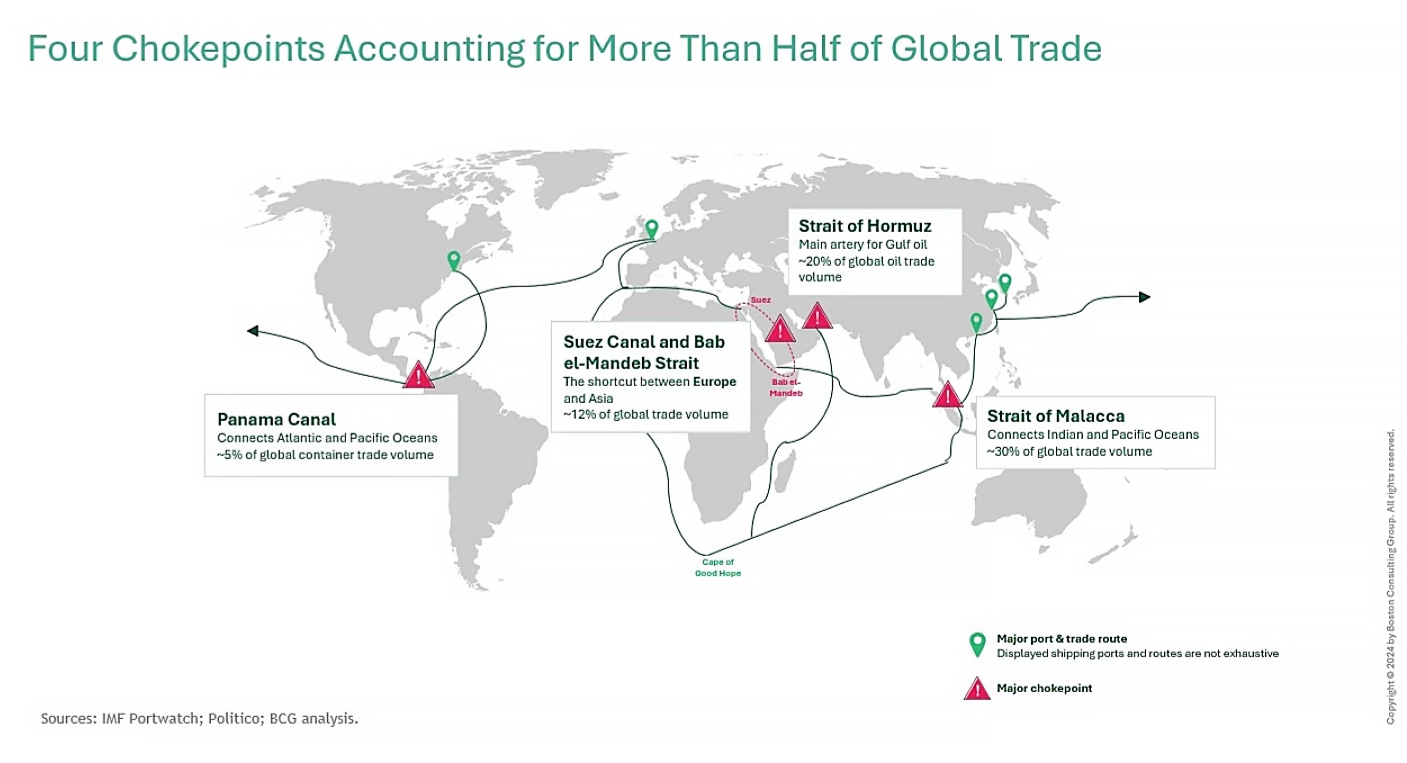
Alt text: Map showing four global maritime chokepoints—Panama Canal, Suez Canal and Bab el‑Mandeb, Strait of Hormuz, and Strait of Malacca—highlighting key shipping routes and their large share of global trade.
Inland waterways & transport
Inland waterways are also impacted by climate change, including droughts and flooding. The 2022 drought in Europe led to critically low water levels in the Rhine, delaying transport for German companies reliant on the river for transporting goods (Reuters, 2024). Cargo ships had to reduce their loads, which led to higher transport costs and supply chain delays.
On land, rising temperatures could buckle railway tracks, overheat underground rail networks, and melt tarmac surfaces, while increasingly heavy rainfall may affect road networks (Tang, 2022; World Bank, 2016). Heavy rainfall, exacerbated by climate change, is already increasing road subsidence risks, making roads impassable in certain area (Vienna University of Technology, 2025). This can lead to price rises, delays, and failures in the supply of goods and services (Climate Change Committee, 2022a).
Air transport
Air transport is similarly vulnerable, although less for the UK. The polar front jet stream, a current of fast-moving air in the upper atmosphere, is expected to strengthen, which could lead to more frequent incidents of high turbulence during winter (Gratton et al., 2021). This could result in longer flight times, higher fuel consumption, and an increased need for aircraft maintenance. This isn’t likely to have a large impact on the UK, given air transport for goods represents a small fraction of the total freight moved in the UK, as the majority is transported by road, rail, and sea (Statista, 2023).
Shifting shipping routes
Climate driven sea ice decline is opening parts of the Arctic to seasonal shipping, with summer Arctic sea ice shrinking by around 12% per decade relative to the 1981-2010 mean (Blockley, et al., 2023). However, the implications of declining sea ice for shipping depend not only on how much ice remains, but on how navigable conditions become in practice. In this context, “ice‑free” does not mean the complete absence of ice, but rather conditions in which ice concentration falls below thresholds (typically when total sea‑ice extent falls below 1 million km2) that substantially reduce navigation constraints and allow vessels to transit without continuous icebreaker assistance. The Northern Sea Route (NSR) along Russia’s Arctic coast is already becoming more navigable during late summer and early autumn and has seen a steady increase in traffic, particularly by ice‑strengthened cargo vessels (OECD, 2017a). Under current conditions, navigation is largely limited to Polar‑Class or ice‑strengthened ships, often operating with icebreaker support, while conventional open‑water container vessels generally remain unable to use the route safely or reliably (Christensen, Georgati, and Arsanjani, 2022).
Where accessible, Arctic routes can offer meaningfully shorter transit distances between East Asia and Northern Europe, potentially reducing voyage length by up to 30–40% relative to the Suez Canal route, cutting fuel use and travel time for certain bulk and energy shipments (Melia, Haines, and Hawkins, 2016). For example, in 2025 a Chinese ship halved its delivery time to Europe via the NSR (Reuters, 2025). Over time, limited diversion of specific cargoes through Arctic routes could partially reduce pressure on major chokepoints such as the Suez Canal or the Strait of Malacca, but the literature suggests this is more likely to be complementary rather than transformative for global shipping patterns, particularly given insurance, governance, and geopolitical constraints (Melia, Haines, and Hawkins, 2016).
However, year to year variability in sea-ice conditions, severe weather, drifting ice, and limited infrastructure mean conditions remain challenging for navigation (OECD, 2017a; Yang and Magnusdottir, 2018;). The timing of reliably ice-free summers is uncertain, though at least one practically sea-ice-free September is considered likely before 2050 (IPCC, 2021; Mahmoud, Roushdi, and Aboelkhear, 2024). Overall, the Arctic introduces both potential new pathways and new climate driven risks for global trade routes out to 2040, given that ice-strengthened ships can navigate the routes before it is ‘ice-free’.
Domestic transport
In the UK, climate-related hazards, such as flooding, drought, high temperatures (including extreme heat causing railway tracks to buckle), and other extreme weather events are already disrupting domestic transport (Climate Change Committee, 2022b). These conditions affect several modes of transport and can create knock-on delays across the wider supply chain.
The potential vulnerability from various methods of transport highlights the need for robust adaptation and resilience measures to sustain the movement of goods and service and to mitigate climate risks across various transport modes (Stockholm Environment Institute, 2023).
Decarbonisation of transport and logistics
Supply chains account for 90% of companies’ greenhouse gas emissions (US Environmental Protection Agency, 2022). The transition to a low-carbon economy is likely to impact supply chains at multiple stages. Emissions occur across the whole supply chain, and there are opportunities to reduce impact at all stages, from sourcing materials, manufacturing, transport, distribution, and end-of-life management, including adopting circular economy practices. This section focuses on decarbonisation of transport and logistics, since this will impact most supply chains irrespective of product.
There has been progress in decarbonising shipping and aviation, with net-zero goals and targets set by organisations like the International Maritime Organisation (IMO) and the International Civil Aviation Organisation (ICAO), as well as domestic targets. However, achieving these goals is economically and technologically challenging, with added costs for logistics and infrastructure. Alternative fuels, such as sustainable aviation fuels (SAFs) and electro fuels (e-fuels), are crucial for reducing emissions, but are not yet economically viable or widely available (International Transport Forum, 2023).
Innovation in clean fuels and electric vehicles may help to maintain trade flows, whilst reducing energy costs. Electric vehicles (EVs) and hydrogen-powered fuel cells are emerging in the logistics sector. Megawatt charging system infrastructure is developing rapidly, and tests show that megawatt chargers can replenish up to 70% of an electric heavy duty truck’s range in around 30 minutes (Lambert, 2025). Similarly, in maritime transport, the shift towards low-carbon fuels is accelerating. Maersk, for example, have begun deploying dual-fuel methanol-powered container ships (Fuel Cells Works, 2026). Although SAF comprises only about 0.1% of aviation fuel today (U.S Government Accountability Office, 2023), it has the potential to grow substantially by 2040 as investment and adoption increase (Unifuel, 2023).
Currently, clean fuels only make up a small fraction of the logistics sector. The pace of technological advancements, the scalability of low-carbon solutions, and the adaptability of supply chains to these changes are all areas of uncertainty. Looking ahead to 2040, these factors may continue to evolve, adding to the complexity of predicting the future impacts of the transition to a low-carbon economy on global supply chains and the UK’s access to critical goods. More reliable information on the change in transport costs from changes to fuels, as well as from the potential opening up of the Arctic shipping route would help to inform analysis on future impacts (OECD, 2017a).
Goods and resources for net zero and climate change adaptation
This section provides an overview of how the demand for net zero goods will change and the potential impacts on supply chains. Several uncertainties remain, such as the pace of decarbonisation, development of policy, innovation rate and time to market for breakthrough technologies (McKinsey & Company, 2022a). There is also uncertainty around the demand for goods, materials and technologies designed to help societies to adapt. The scale, timing, and direction of this adaptation‑driven demand will shape global supply chains alongside the net‑zero transition.
Net zero goals impacting demand for goods
A growing number of countries and companies are committing to climate goals: 142 countries now have national net zero targets (Energy and Climate Intelligence Unit, 2025), and more than 5,000 companies have joined the UN’s Race to Zero campaign (McKinsey & Company, 2022b). Achieving the net zero goals outlined in these commitments will require rapid shifts across all sectors of the economy, reshaping patterns of production and demand1. Shifts in policy support in major economies could alter the pace of deployment and demand.
Shifts in policies, technologies, investor and consumer preferences may boost demand for low-emission products and services while reducing demand for high-emission ones. The IEA estimates that global mineral demand for clean energy technologies could rise four- to six-fold by 2040 (IEA, 2021), and many minerals and metals for key low-carbon technologies may face supply shortages by 2030 (McKinsey & Company, 2022a). These pressures could lead to price spikes, market volatility, and higher costs for the technologies that rely on these minerals. Exact trends are difficult to predict, as they will depend on factors such as the development of new technologies, where these materials are sourced, and who refines them.
Circular economy as a resource for net zero and climate adaptation
The circular economy refers to an economic model that aims to keep materials and products in use for as long as possible, reduce waste and minimise environmental harm by prioritising reuse, repair, remanufacturing, and recycling. In the context of net zero and climate adaptation, circularity is increasingly seen as a critical ‘resource’ in its own right, because it reduces reliance on virgin raw materials while lowering emissions across production systems. This is particularly important for critical minerals, such as lithium, cobalt, nickel, copper and rare earths, which are essential for low-carbon and adaptation technologies but face supply chain concentration and environmental constraints. Evidence shows that improving recycling rates, extending product timelines, and designing products for disassembly could significantly reduce future primary demand for these minerals, lowering both emissions and exposure to geopolitical risk while supporting net zero goals (European Commission, 2026; IEA, 2021).
Evidence suggests that greater circularity does not necessarily reduce international trade volumes but instead changes its composition. A recent empirical study of EU economies finds that higher circularity is associated with increased trade in secondary raw materials, recycled inputs, repair services, and circular-enabling technologies, rather than a decline in trade overall (de Lange, 2024). Circular economy policies tend to restructure global trade flows, shifting them away from primary resource extraction towards value-added services and circular supply chains (Barrie and Schröder, 2021). This implies that circularity supports net zero not by reducing economic activity but by redirecting trade and production towards lower-carbon, more resource-efficient pathways, with important implications for supply chain resilience and industrial strategy.
Climate change adaptation
Climate adaptation refers to the steps societies take to manage the impacts of climate change. It involves adjusting systems, infrastructure, and behaviours to reduce harm and improve resilience as climate risks intensify (Viner, et al., 2020). Adaptation is closely linked to mitigation: reducing emissions lowers the scale of future hazards, while adaptation determines how exposed and vulnerable societies remain to those hazards. Mitigation and adaptation can also sometimes work against each other. For example, expanding air‑conditioning reduces heat exposure but significantly increases electricity demand and emissions, creating a clear trade‑off (Colellie, Wing, and Cian, 2023). Yet they can also work hand‑in‑hand, as nature‑based measures like restoring wetlands or other natural flood defences both reduce climate impacts and enhance carbon storage, supporting mitigation and resilience together (MIT Climate Portal, 2023).
Countries will increasingly need to respond to the growing impacts of climate change while also managing other risks. Even if global efforts succeed in limiting warming, scientific evidence shows that significant changes to the climate and increased climate hazards, such as more frequent and intense floods, droughts, or extreme weather events, are still expected by 2040, making adaptation essential (UNEP, 2024; Climate Change Committee, 2023).
Meeting adaptation needs requires goods that are either produced in climate-resilient ways or used specifically to reduce the negative impacts of climate change2 (International Institute for Sustainable Development, 2021). Demand for these products is rising, and adaptation costs in developing countries are now estimated to reach US$310–365 billion per year by 2035 (UNEP, 2025). The growth could reshape business practises and global supply chains, placing pressure on certain materials and resources. Depending on how technology develops, demand for advanced technologies might create dependencies on specialised suppliers, potentially leading to bottlenecks and vulnerabilities.
Many businesses in the UK will need to adapt to climate change. The response will vary based on company size, regulatory frameworks, and the nature of the business. There has been some progress in responding to climate hazards, but the evidence base remains uncertain, as it is largely drawn from self‑reported information and is weighted towards larger companies (Climate Change Committee, 2022b).
Impact of biodiversity loss
This section provides an overview of how biodiversity loss can impact the UK’s ability to access goods, given it impacts the availability of raw materials. Regulation focused on biodiversity, and how businesses respond to this, will also likely impact supply chains. Climate-adaptation strategies can help to slow biodiversity loss.
The World Economic Forum estimates that over half of the World’s GDP is moderately or highly dependent on nature and its services (World Economic Forum, 2020).. Degradation of ecosystems and biodiversity can disrupt economic activities, increase costs, and reduce resilience to environmental changes. Indirect impacts, such as social unrest in production regions, can occur if communities lose access to ecosystem services.
Key drivers of biodiversity loss include climate change, habitat loss and degradation, pollution, invasive species, and overexploitation including illegal wildlife trade and overexploitation of the marine environment with fisheries (UNEP, 2023). Biodiversity loss also contributes to climate change by reducing natural carbon sequestration (Pfenning-Butterworth, et al., 2024). An estimated 47,187 species face extinction globally (IUCN, 2025), with monitored populations of mammals, fish, birds, reptiles, and amphibians having decreased by over 69% between 1970 and 2018 (WWF, 2022). The pace and location of these trends How quickly these trends continue and where will impact supply chains in different ways.
Impact of biodiversity loss on food and raw products
Biodiversity supports essential ecosystem services like pollination, soil health, and pest control, all of which are vital for food production. When biodiversity declines, the range of viable crops narrows and the food system becomes less resilient to climate change and disease, with implications for food security (Department for Environment, 2021). In the UK, 70% of land area is used for agriculture (Defra, 2023) and declines in pollinators and other beneficial invertebrates that control crop pests (such as beetles, wasps and spiders) pose risks to crop yields. Biodiversity loss will likely impact food security more in other countries, especially in the global south, more than in the UK, due to their reliance on rain-fed agriculture and higher levels of biodiversity, making them more vulnerable to ecosystem changes (Edwards, 2022; Muluneh, 2021).
Beyond food systems, biodiversity loss also poses risks to supply chains through secondary impacts, such as reducing innovation potential, as well as potential impacts to global health (Kedward and Ryan-Collins, 2020). Many industries rely on raw materials that are directly sourced from biodiverse ecosystems. For example, the pharmaceutical industry depends on a variety of plant and animal species for drug development. Over 50% of modern medicines are derived from natural sources, for example, painkillers from plant compounds and antibiotics from fungi (WHO, 2025). A decline in biodiversity could limit the discovery of new medicinal resources. Diverse ecosystems are also more resilient to pests and disease. This impacts not only food security but also the risks of zoonotic diseases spilling over into humans, including those with pandemic potential (Johnson, et al., 2020; Gibb, et al., 2020). The covid-19 pandemic demonstrated the disruption to supply chains that a global pandemic can cause.
Physical risk
Habitat degradation can lead to an increased vulnerability to natural disasters, such as floods and landslides, which can impact transport routes (see trade route disruption section above). For example, mangroves currently reduce annual expected flood damages from tropical cyclones by $ 60 billion and protect 14 million people (Menéndez, Losada, and Torres-Ortega, 2020). The loss of mangrove forests for coastal development or aquaculture could lead to an increase in coastal flooding. Countries that benefit from mangroves to prevent flooding include the US, China, Taiwan, Vietnam, India, Mexico, and many islands in the pacific and Caribbean (Menéndez, Losada, and Torres-Ortega, 2020).
As countries introduce regulation to protect biodiversity, supply chains may face additional pressures, from compliance costs to shifts in sourcing practices. Overall, the UK’s exposure to supply‑chain risks from biodiversity loss will depend on global conservation outcomes, the adaptability of businesses, and the resilience of ecosystems that underpin critical goods and services.
Geopolitical uncertainties
Political and geopolitical instability can alter supply‑chain conditions across multiple tiers. Geopolitical tensions have intensified in recent years, driven by global events, such as the COVID-19 pandemic, Russia’s invasion of Ukraine, and rising tensions in the Middle East. These events have had wide and varied impacts on the supply of critical goods into the UK. Geopolitical tensions impact economic diplomacy, trade policy, regulatory environments and the reliability of cross-border transport routes, and wider conditions underpinning global supply‑chain stability. Volatility increases uncertainty, and how these trends evolve through to 2050 may impact supply chains in various ways.
Geopolitical conflicts
Global conflicts, both physical and diplomatic, are already impacting the resilience of global supply chains. This section explores how conflicts disrupt supply chains, from transport routes to the overall business environment. This can lead to disruptions such as market volatility, exchange rate fluctuations, and changes in commodity prices.
Geopolitical tensions are a source of concern for businesses, with 85% of senior procurement leaders expressing apprehension about their potential impact on suppliers and supply chains (Interos, 2023). The volatility can complicate financial planning, budgeting for supply chain operations, and can delay long‑term investment decisions. As global competition intensifies and the geopolitical environment becomes increasingly multipolar, conflicts are becoming more international in scope (Ministry of Defence, 2024a), making them harder to resolve. How these tensions unfold will impact the global security environment, as well as the stability of global supply chains.
Direct military conflict
Armed conflicts are increasing worldwide, with international security treaties being dismantled, and military expenditures reaching record levels at USD 2.24 trillion in 2023 - a 9% increase from 2022 (Tian et al., 2024). Military engagements can directly damage critical infrastructure, including transport networks, ports, and manufacturing facilities, causing production halts and delays in goods movement. For instance, Russia targeted Ukraine’s agriculture facilities, as well as ports and key transport routes in Ukraine, affecting global grain availability and a price increase of approximately 2% (Devadoss and Ridley, 2024).
Maritime choke points can be particularly vulnerable to conflict. The Suez Canal, which handles 12% of global maritime trade, was severely affected in 2023 when Houthi rebels attacked commercial vessels in the Red Sea following the October 7th attack on Israel by Hamas. This incident highlighted the cross-border spillover effects of conflicts. As a result, hundreds of ships rerouted around the Cape of Good Hope, increasing transit times by 9 to 17 days (BCG, 2024) and reducing Suez Canal revenue by $2 billion in 2023/24 compared to the previous year (Al-Monitor, 2024). UK trade volumes through the Suez Canal declined in 2024 because of instability in the Middle East. Less than 1% of UK container imports passing through five major global maritime passages used the Suez Canal in 2024, compared with around 30% in 2023 (ONS, 2025) Many insurance companies are still reluctant to provide cover for ships and cargo transiting the Red Sea (S&P Global, 2025), demonstrating conflict risks informing business decisions. (S&P Global, 2025).
At the time of writing in May 2026, it remains unclear how the ongoing conflict in the Strait of Hormuz will evolve, or what the resulting impacts on global energy markets and wider supply chains may be.
Conflict and natural resources
Around 40% of all intrastate conflicts in the past 60 years have been linked to natural resources (United Nations Peacekeeping, 2025). Conflicts can result in the scarcity of critical raw materials, particularly when affected regions are key suppliers. These shortages can, in turn, intensify competition for natural resources, potentially escalating existing conflicts or sparking new ones.
Minerals and different resources can exacerbate conflict dynamics or prolong conflicts (Chatham House, 2025; World Economic Forum, 2023). For example, Russia’s invasion of Ukraine in 2022 caused a shock to global energy markets, sending gas prices to historic highs. Europe reduced Russian gas imports by 80%, while competition for liquefied natural gas increased (Kovacevic, 2024).
How competition for resources evolves is likely to shape both geopolitics and supply chains. Potential outcomes include, resource nationalism (leading to protectionist policies and potential conflicts), resource cooperation (including international agreements and shared technology), resource innovation (technological advancements reduce dependency on scarce resources) or resource scarcity (shortages lead to heightened competition and geopolitical tensions) (World Economic Forum, 2023).
Diplomatic tensions
Rising diplomatic tensions can result in sanctions and trade barriers, which disrupt the flow of goods and services. Trade policy can also be used for national security aims, adding to restrictions as tensions rise. For example, sanctions imposed on Russia following the invasion of Ukraine have had major impacts on UK-Russia trade, reducing imports from Russia to the UK by 99% with roughly £20bn of UK-Russia bilateral trade under sanction since 2021, based on pre-sanction trade flows (UK Government, 2024). This has impacted the UK’s access to fuels and a range of commodities, such as precious metals (Office for National Statistics, 2022).
Tariffs and trade barriers can force companies to find new suppliers and markets, often at higher costs (Bednarski et al., 2023). Tensions create uncertainty, making it difficult for businesses to invest in long-term supply chain strategies.
Cyber warfare
Global conflicts may evolve, incorporating more non-traditional weapons and rapid technological advancements. In addition to highly effective conventional weapons, states and non-state actors will likely use cyberattacks to target civilian, military, and critical national infrastructure, amplifying disinformation and disruption (Office of the Director of National Intelligence, 2021). This may further blur the line of conflicts, causing further disruption and uncertainty.
Cyberattacks on supply chains can cause widespread disruption, especially with the increasing use of cloud-based systems. For example, a ransomware attack on Blue Yonder in November 2024 disrupted services for major grocery chains and Fortune 500 companies in the UK and USA (Tech Monitor, 2025). The 2024 CrowdStrike-related IT outage, though not a cyber-attack, demonstrated the potential scale of impact a cyber-attack could have, disrupting 8.5 million computers and causing delays at major ports. Planes and cargo were stuck at major hubs, with disruption at ports such as Gdansk, Rotterdam, Dover, Felixstowe, and Liverpool. Cybersecurity threats are a growing concern, with 52% of UK manufacturers reporting they have experienced cyberattacks (Make UK, 2022). Intellectual property theft, data breaches, and ransomware attacks could result in delays and increased costs.
The shifting balance of power amongst nations
This section discusses the impacts of the shifting power dynamics on trade, including volatility in the global order, shifting economic power, and changing geopolitical alliances. Demographics may impact this too.
The global balance of power will likely continue changing over the coming decade, with a trend towards a more diffuse distribution of power (Ministry of Defence, 2024a). The period of relative stability and multilateralism that followed the end of the Cold War appears to have been replaced by a multipolar era, with rising regional powers, changing alliances, national security, and economic nationalism (BCG, 2025). States may also pursue flexible, issue-based partnerships, and avoid being locked into fixed alliances, leading to issue-based coalitions (Ministry of Defence, 2024a). This will likely impact bilateral relationships, as well as the role and structure of international organisations, including the norms and rules underpinning global trade (covered further in the section on regulation below).
The UK Government’s assessment of trends to 2055 highlights significant long‑term shifts in global power structures (Ministry of Defence, 2024a). While the USA and China may remain dominant global powers, with their ongoing rivalry shaping global trade, security, and international cooperation, the nature of their relationship will likely depend on their domestic politics and ability to cooperate on global issues like climate change, technological standards, and trade governance. Meanwhile, emerging powers such as India are expected to expand their influence, leveraging favourable demographics and economic growth potential despite domestic challenges and regional tensions. Russia’s future geopolitical standing is less certain, contingent on the outcome of the war in Ukraine and its ability to manage domestic and international consequences. Established powers, such as the UK, France, Germany, Japan, South Korea, Canada, and Australia, may continue to exert significant influence through their economic, diplomatic, and military capabilities. By 2040, additional countries such as Brazil, Egypt, Indonesia, Kenya, Mexico, Nigeria, the Philippines, South Africa, Türkiye, and Vietnam are expected to wield greater global influence, either independently or as part of regional blocs (Ministry of Defence, 2024a).
The balance of geopolitical power is shifting alongside economic power. The US, China and the EU account for around 60% of global GDP and are three key economic actors at scale (DBT, 2025a). In the future, there may be a more complex global economic order, dominated by these three economic blocs but with a growing number of other actors (Bates, 2026). Emerging economies are projected to contribute around 65% of global growth by 2035, led by Asia-Pacific (Bates, 2026; DBT, 2025b). How these countries use their economic power is likely to impact supply chains.
The shifting balance of power could lead to new geopolitical alliances, which could impact supply chains as trade become increasingly intertwined with strategic policy objectives. The BRICS (Brazil, Russia, India, China and South Africa) are already expanding their membership, with invites extended to Argentina, Egypt, Ethiopia, Saudi Arabia, and the UAE in 2023. The BRICS+ economies are increasingly relying on trade with each other, and over the next decade, China’s trade with BRICS + countries is projected to account for 44% of China’s forecast trade growth (BCG, 2025).
Trade and geopolitics are becoming increasingly interlinked (BCG, 2025; McKinsey, 2025; World Economic Forum, 2024a). The medium-sized nations may play a large role in this, given they often rely more on trade because they typically have a more limited internal market and critical resources. Trade constitutes a much greater proportion of their economies than more populated countries like the United States, China, and India (Fletcher, Malik and Sedwill, 2024). For countries such as the UK, this could mean adapting to new trade dynamics shaped by evolving alliances and dependencies. Many countries or regions are taking measures to avoid excessive dependency on certain regions or countries to manage the risks of the weaponisation of trade (World Economic Forum, 2024a). If geopolitical tensions rise, this trend may accelerate.
Demographic changes may also reshape the global power balance. By 2040, a significant proportion of the world’s working-age population will be concentrated in Africa and South Asia, regions projected to experience robust population growth (Ministry of Defence, 2024a). This demographic shift could enhance the economic influence of these regions, providing opportunities for increased labour supply and domestic market growth, while also potentially creating new pressures on global supply chains, including demand for goods and critical resources.
Trade fragmentation and vulnerabilities due to single-source supplier base
For this review, trade fragmentation is considered through the lenses of “friendshoring” (a preference for sourcing inputs from trusted countries with similar values), and “nearshoring” or “reshoring/onshoring” (relocating production in neighbouring countries or domestically). We also explore sole suppliers and dependency on a small number of suppliers or countries.
Friendshoring and nearshoring aim to reduce dependency on distant or potentially risky suppliers, enhance supply chain resilience, and strengthen relationships with aligned countries. These shifts may be driven by fluctuations in transport costs or perceived resilience from proximity. Whilst such strategies could improve supply chain reliability, they may be accompanied with decreases in aggregate output (Javorcik et al., 2023; Georgieva, 2023) or inflation pressures (Lagarde, 2023).
Nearshoring
Nearshoring impacts supply chains by shifting traditional flows of goods. Evidence of its global scale remains mixed and likely varies across countries and sectors.
Recent industry surveys suggest that British manufacturers are adopting reshoring and nearshoring strategies. A 2023 survey found that 40% of British manufacturers had increased their supply from domestic proportions, with a similar proportion intending to do so within a year (Make UK, 2023). As shipping costs rise, two-in-five small businesses are considering switching to UK manufacturers (ARUP, 2023). This trend is seen in other regions too. A 2025-report found that 56% of large companies (across Europe and the USA) had invested in reshoring or nearshoring production in the past year, up from 42% the previous year (Capgemini, 2025). These shifts were found to be driven by several factors, including geopolitics, rising shipping costs, Brexit, and the Covid-19 pandemic (Bednarski et al., 2023), as well as a desire to reduce lead times, counter tariffs, maintain control, prioritise sustainability, and a desire for resilience (Capgemini, 2025).
However, global nearshoring is not yet widespread. The average distance of trade has continued increasing by around 10km annually over the past decade (McKinsey, 2025). Some evidence suggests that nearshoring and friendshoring began rising, but reversed in 2024, as firms diversified across multiple regions to reduce risks (UNCTAD, 2025). This highlights the uncertainty of how nearshoring might evolve.
The pace and extent of nearshoring will depend on barriers such as limited natural resources, workforce skill shortages, and infrastructure constraints (Manufacturing & Logistics IT, 2024). Reshoring does not eliminate supply chain risks but instead redistributes them across different stages of the supply chain (Bublu Thakur-Weigold, 2023).
Friendshoring
Friendshoring prioritises geopolitical alignment, supply chain reliability, and economic security over cost efficiency. It has gained traction amid geopolitical, economic and environmental pressures. While friendshoring offers potential benefits, such as improved stability and insurance against geopolitical disruptions, it can also involve higher production and sourcing costs (Javorcik et al.., 2023). Evidence of widespread friendshoring in the UK remains limited (Make UK, 2023). Reconfiguring supply chains to align with political and strategic goals can be costly and time-consuming, requiring significant investment and cooperation between states and corporations. However, due to the potential benefits, such as shorter lead times, improved sustainability, and reducing dependency on high-risk regions (Khadka, Gopinath, and Batarseh, 2025), friendshoring may increase over the next 15 years.
Policies encouraging due diligence in supply chains, focused on environmental standards, human rights, or national security, may accelerate friendshoring by prompting firms to withdraw from “risky” markets in favour of those with shared values and regulatory alignment (see impact of global regulation on supply chains section). However, friendshoring could also heighten geopolitical tensions. Policies and trade agreements designed to facilitate such shifts may complicate international trade routes, cooperation, and potentially increase competition among nations (Maihold, 2022).
It is also likely that sourcing strategies will evolve differently in each sector, based on the structure and nature of the sector. For example, the aerospace sector has long lead times, certification requirements, fewer choices and higher upfront costs (Grozinger, 2015), whilst other sectors will be able to make changes more quickly.
Single-source suppliers
Single sourcing refers to choosing to procure materials or components from one supplier even when alternatives exist. Similarly, sole sourcing occurs when companies are forced to rely on a single supplier due to a lack of viable alternatives, often for highly specialised goods. If single or sole sourcing occurs, supply chains may be more vulnerable to shocks. Firms may reconsider their sourcing strategies due to recent shocks.
Geopolitical tensions have exposed the risks associated with over-reliance on specific regions or suppliers. For example, China’s dominance in critical minerals, such as rare earth elements, and Russia’s significant role in European gas supplies have highlighted vulnerabilities in global supply chains (Brookings, 2023). As mentioned above, these dependencies can lead to significant risks during geopolitical conflicts or crises, as alternative sources may not be readily available.
Many countries are adopting the “China-Plus-One” strategy, where companies diversify their supply chain and manufacturing operations by expanding beyond China while still maintaining a presence there (Tan, 2025; Maersk, 2025). This strategy aims to reduce the risks associated with over-reliance on a single country. This shift is driven by rising labour costs in China, geopolitical tensions and supply chain vulnerabilities exposed by the Covid-19 pandemic, and the fact that moving away from China entirely in the short run is challenging (Basu and Ray, 2021). Many countries in Asia are already benefiting. Examples include Dell’s plans for 20% of its laptops would be made in Vietnam, and Apple’s plans for 18% of its iPhone production to be based in India (Global Strategic Risk, 2023). This diversification is reshaping global supply chains, though the long‑term trajectory remains uncertain.
Sole sourcing presents unique challenges as highly specialised suppliers or products are often difficult to replace. For example, the UK defence sector uses single source or non-competitive contracting for almost 50% of its procurement due to national security as well as specialisation (Ministry of Defence, 2024b). This can leave these supply chains vulnerable to shocks. The lack of viable alternatives increases vulnerability to geopolitical disruptions, particularly in industries reliant on complex technologies or raw materials with limited global availability. For instance, semiconductors and critical minerals required for renewable energy technologies often come from specialised suppliers, with supply disruptions leading to cascading effects across industries (CSIS, 2024; IEA, 2025).
Trade policy restrictions and interventions
Trade policy restrictions and interventions can impact supply chains in many ways, from raised prices for consumers, delays, disruptions to reduced investments and implications for innovation. The scale and design of these measures, their objectives as well as how other countries respond will shape the overall impact on supply chains. This section explores their potential impacts and how these trends may evolve over the coming decades.
Trade policy interventions can include the introduction of tariffs, quotas, subsidies and other non-tariff barriers. They can be introduced for a range of reasons, including to support domestic jobs, safeguard nascent industries, counter dumping and foreign subsidies, address concerns of national security or intellectual property rights, or secure domestic supply during crises. The reason for their introduction matters, since it can dictate which sectors are impacted as well as influencing how other countries respond.
Tariffs and other trade measures can raise the cost of imported goods, create challenges in sourcing materials and logistics, and increase production costs for businesses, often resulting in higher prices for consumers (Ansari, 2022). Proponents argue that these measures can support domestic industries, but critics argue that these policies reduce economic efficiency and limit consumer choices (Ansari, 2022). Some measures may offer benefits in the short-term to certain industries, but their long-term consequences include economic fragmentation and decreased levels of global cooperation (Arif and Zahid, 2024).
These measures can alter global trade patterns. Their spillover effects can impact countries not directly involved (Bednarski et al., 2023). For example, the tariffs imposed by the USA and China during President Trump’s first Presidency led to an additional burden of around USD 500 million to 1 billion on the EU, Canada, and Mexico (Mao and Görg, 2020). Firms may respond by relocating to countries with more favourable trade policies or increasing domestic production. The tariffs China put on US agricultural imports created new opportunities for agriculture imports from other countries. China’s soybean imports from Brazil rose significantly, with Brazil’s share increasing from 46% to 76%, while imports from the USA fell from 40% to 18% (U.S News, 2024).
Trade restrictive measures can impact supply chains indirectly via the impacts they can have on the global economy. They can reduce business confidence and increase uncertainty, leading to lower investment and slower global capital growth. They can also contribute to tighter global financial conditions by increasing uncertainty and perceived risk, which can make investors more cautious and lead to falling share prices and higher borrowing costs for companies (Zahoor et al.., 2023). Frequent policy shifts add to the uncertainty, deterring long-term investments and hindering expansion and innovation.
Trade measures can lead to retaliatory actions from other countries, sometimes resulting in trade wars, which can escalate beyond tariffs and quotas. These conflicts can include currency manipulation, investment restrictions, and technology embargoes (Ansari, 2022). Intellectual Property (IP) laws are being used as strategic tools in broader trade wars, for example, IP disputes are central to the US-China trade war (Humaira, 2025). How these evolve might impact supply chains and could accelerate partitioning into regional blocks that obey sets of rules.
Trends in trade policy restrictions and interventions
For decades, global trade tended towards liberalisation, with average tariffs on goods falling from 8.5% in 1994 to 2.5% in 2017 (Bank of England, 2019). However, this trend is reversing. Between mid‑October 2023 and mid‑October 2024, the WTO recorded 169 new trade‑restrictive measures by its members, covering US $887.7 billion in trade, up from US $337.1 billion in the previous year (WTO, 2024). Tariffs rose in 2025, especially in manufacturing, led by US measures tied to industrial and geopolitical objectives (UNCTAD, 2026). Export restrictions on industrial raw materials increased more than fivefold between 2009 and 2023 (OECD, 2025).
Global crises often trigger policy interventions, as demonstrated during the COVID-19 pandemic. To address shortages of critical goods, such as medical supplies and food, over 220 measures restricting exports were introduced globally, with G20 countries responsible for more than 90% of these actions (Casey and Cimino-Isaacs, 2021). Examples included export bans (such as India’s restrictions on the export of medicines), licensing requirements, and government-first refusal policies (Ibrahim, 2021). Such measures, including vaccine nationalism and personal protective equipment (PPE) hoarding, exacerbated trade tensions and disrupted supply chains (Bednarski et al., 2023). Future global crises might result in similar restrictions, leading to shortages, price increases, and delays in supply chains.
Trade restrictive measures and interventions are becoming increasingly evident in areas of future strategic importance, such as emerging technologies, where competition for critical resources is intensifying (Zahoor et al., 2023). Restrictions are particularly prevalent in raw materials critical for the green transition, such as rare earth elements, lithium, and cobalt, as demand for these resources grows (OECD, 2024). This trend is expected to continue, especially as governments prioritise national access to essential materials for renewable energy technologies and electric vehicles (OECD, 2024).
Trade restrictive policies and interventions are often justified on the grounds of national security. Governments seek to protect critical industries from foreign dependence, ensuring that essential goods and technologies remain under national control. This is particularly relevant in sectors such as advanced manufacturing, technology, and healthcare. For example, the development of new standards and trade agreements to protect data and prevent cyber fraud could restrict the global flow of information, creating additional complexities for supply chains (Keitner and Clark, 2019). These measures will likely increase the fragmentation of trade and shift supply chains towards trusted regions or domestic production. If geopolitical tensions rise, it is likely that trade measures on the grounds of national security will also rise.
Overall, the use of trade measures is likely to fluctuate based on geopolitical dynamics and economic conditions (Arif and Zahid, 2024).
The impact of global regulation on supply chains
Regulation can impact supply chains in many ways, from custom procedures, tariffs, intellectual property rights, compliance standards to the broader structure of global trade. Its impact is multifaceted, involving both international frameworks and domestic policies. International organisations can face challenges in achieving consensus, whilst domestic legislation can drive shifts in supply chain strategies and alter global market dynamics. This section covers the role of international organisations and how domestic legislation beyond trade policy has wider consequences on supply chains.
International organisations
International organisations and their frameworks impact supply chains in many ways, from setting standards to managing disputes. Since the mid-20th century, they have played a role in promoting economic globalisation and trade, encouraging cooperation. However, rising geopolitical tensions and national interests challenge their effectiveness, and state rivalries often play out here.
Multilateral institutions may weaken if major powers choose to bypass or challenge these frameworks, favouring regional alliances and trade blocs based on strategic interests. This could lead to a more fragmented trade environment, complicating efforts to build resilient and inclusive global supply chains (World Economic Forum, 2024b). For example, the World Trade Organization (WTO) oversees global trade rules, negotiates agreements, and resolves disputes but currently faces significant challenges, including the continued paralysis of its dispute settlement mechanism (DBT, 2025b; Hopewell, 2025). Achieving consensus within the WTO has become increasingly difficult due to varied priorities and differing views on how the organisation should be reformed. When WTO members fail to reach agreements, it often results in maintaining the status quo, leading to uncertainty and inefficiencies in international trade. This hinders the development of uniform trade rules, causing varied regulations and standards, which can increase costs and complicate logistics for companies.
Plurilateral agreements, involving a subset of WTO members, allow participating countries to establish specific trade rules among themselves and can offer a path forward, bypassing full WTO consensus (DBT, 2025b; IMF, 2023). This streamlines and makes supply chains more efficient within these countries, improving transparency in regulatory frameworks, but can create complexities for businesses in non-participating countries due to different rules and standards.
By 2040, a continued move toward regionalisation and an increase in plurilateral agreements could reduce global cooperation on technical standards and regulation, complicating efforts to manage economic shocks and creating a fragmented trade environment.
Domestic legislation
Trade policies have long shaped supply chains, but other forms of domestic legislation are increasingly influential, ranging from environmental to labour laws or compliance with data and technology regulation amongst others.
Industrial policies and legislation that incentivise domestic production and restrict exports can reshape global supply chains and could accelerate onshoring. Examples include the USA’s Inflation Reduction Act (IRA) 2022, which incentivises domestic production for clean energy and EVs, and the 2022 CHIPS and Science Act (CHIPS), which aimed to boost domestic semiconductor manufacturing and restrict the export of advanced chips and semiconductor manufacturing equipment to China. The Biden Administration claimed that these policies have led to an increase in investment: manufacturers announced USD 188 billion in investments in electric vehicle and EV battery manufacturing in the US, an increase of more than 50% from the year before (Environmental Defence Fund, 2024). More recently, the Trump Administration has signed an Agreement on Trade and Investment with Tawain that aims to strengthen the US domestic semiconductor supply chain and their reshoring efforts (U.S Department of Commerce, 2026).
These shifts have prompted other countries, including the EU and South Korea, to increase investments in their own semiconductor sectors (Anselmo, 2024), contributing to a more fragmented and competitive global market. UK supply chains may feel the effects of these policies: in hydrogen and CCUS (carbon capture, usage, and storage), support packages abroad, such as the IRA, may divert investment away from the UK.
Measures to protect critical national infrastructure (CNI) and strategic sectors may prompt supply chains to realign due to geopolitical considerations rather than economic efficiency. For example, investment screening is increasing globally (Alami, 2024), driven by national security concerns and geopolitical tensions. In 2023, 42 countries adopted investment screening policies, an all-time high (UNCTAD, 2023). Companies may need to diversify their supplier bases or relocate production to comply with these measures.
Environmental regulations are increasingly shaping supply chains. Many countries have introduced Environmental Social and Governance (ESG) regulations, which require corporations to ensure that their supply chains meet environmental and human rights standards, and can cause shifts in sourcing decisions. ESG regulation has increased by 155% over the past decade and is expected to continue growing, which may lead other countries to introduce their own legislations (Burkinshaw, 2024). For example, Mexico has banned goods made with forced labour to comply with the United States-Mexico-Canada Agreement (USMCA). This may affect supply chains, as companies may shift their sourcing strategies to prioritise suppliers that meet high environmental and labour standards, potentially increasing operational costs but also reducing reputational and financial risks. The complexity of emerging ESG legislation means companies face inconsistent compliance across jurisdictions, often because of data gaps, limited visibility or resource constraints (PwC, 2023; EY, 2023).
Data protection and cybersecurity regulation, such as the General Data Protection Regulation (GDPR) and the Cybersecurity Information Sharing Act (CISA), affect supply chains by imposing requirements on how businesses handle and protect data. These regulations necessitate robust data security measures to prevent breaches and ensure compliance, which can increase operational costs and complexity. For example, non-compliance with GDPR can result in fines up to €20 million or 4% of global annual revenue (GDPR.eu, n.d). As supply chains become more digitised and interconnected, these challenges are likely to intensify (OECD, 2023; World Economic Forum, 2024c).
Technologies such as AI and blockchain are likely to enhance transparency and efficiency but also introduce new vulnerabilities. Regulatory frameworks are expected to evolve accordingly, with a stronger emphasis on proactive cybersecurity measures and third-party risk management (Huang, Madnick, and Zhang, 2021). Differing data protection rules across jurisdictions already require businesses to navigate complex compliance landscapes, potentially creating trade barriers. As digital globalisation accelerates, global data governance may become increasingly fragmented, further complicating digital trade (Kalin, 2024).
Relationships between climate and geopolitical uncertainties
Climate change out to 2040 is almost certain to create challenges for supply chains, but how countries, economies, and societies respond to these challenges and adapt to its effects is much less certain. Geopolitical shifts have the potential for even more acute, extreme, and unpredictable changes for global supply chains. There are several ways in which these critical uncertainties can impact and exacerbate each other, further increasing the amount of uncertainty global supply chains will face out to 2040.
This section provides examples of how geopolitics can shape climate action and how climate impacts can, in turn, reshape geopolitical dynamics. In many cases, these forces interact, reinforcing and amplifying one another.
Geopolitical tensions impacting availability of critical minerals for renewable energy technology
Tensions between countries that control rare earth elements and those that need them for green technologies could slow down the deployment of renewable energy infrastructure (World Economic Forum, 2024d). Prices of key clean-energy minerals were 18-39% lower than their peak 2021-2022 levels, reflecting oversupply, shifting demand and technological shifts reducing mineral intensity. However, supply risks remain (UNCTAD, 2026).
The global transition to low carbon‑ energy systems is increasing dependent on a relatively small group of critical minerals, including lithium, cobalt, graphite and rare earth elements, which are essential for renewable power generation, battery storage and electric vehicles (Lee, Ahuja, and Čavoški, 2025). While these minerals are geologically widespread, many supply chains including critical minerals are highly concentrated at key stages, particularly in processing and refining (Vivoda, Matthews, and McGregor, 2024). This creates structural vulnerabilities: access to minerals can be constrained not only by physical availability, but by trade rules, industrial policy and geopolitical relations. States are increasingly treating critical minerals as strategic assets within a more fragmented global economic order (Lee, Ahuja, and Čavoški, 2025; Vivoda, Matthews, and McGregor, 2024).
Geopolitical rivalry can affect mineral availability through export controls, tariffs, licensing requirements and other forms of state intervention. Rather than outright supply cut‑offs, these measures often introduce uncertainty, delays and higher costs, which can slow down the investment in and deployment of renewable energy infrastructure (World Economic Forum, 2024d). China’s export controls on gallium and germanium in 2023, followed by licensing requirements for certain graphite products used in electric vehicle batteries, are examples of how geopolitical tensions can translate into supply chain risk for clean energy technologies (Blackwood and DeFilippo, 2024). Academic analyses emphasise that such leverage stems less from geological dominance than from long‑term industrial strategy and concentration of processing capacity, making diversification difficult in the short to medium term (Lee, Ahuja, and Čavoški, 2025).
Geopolitical shifts affecting energy policy
International events can influence national energy policies and expose vulnerabilities in existing energy systems. Russia’s invasion of Ukraine in 2022 triggered the most significant energy security crisis in Europe since the 1970s, highlighting the risks of heavy dependence on imported fossil fuels, particularly natural gas (Falkner, 2023). In response, European governments pursued a combination of short-term measures to secure alternative supplies and structural shifts, including accelerated investment in domestically generated renewable energy (European Investment Bank, 2024). Further instability in other fossil-fuel exporting countries could accelerate this trend. this shock contributed to a measurable acceleration in solar and wind deployment across Europe, reframing decarbonisation not only as a climate objective but as a core element of energy security and strategic autonomy. As a result, geopolitical instability in fossil‑fuel‑exporting regions is increasingly seen in the literature as a potential catalyst for faster transitions towards low‑carbon energy systems (Vasylieva, Derkacz, Popp, and Horsch, 2025). In addition, geopolitical competition can drive technological innovation in climate solutions. Countries may invest heavily in green technologies to gain a competitive edge, leading to advancements in renewable energy, energy storage, and carbon capture technologies. However, many technologies for net zero and climate adaptation rely heavily on critical minerals (see above).
Conflict may divert finance for adaptation and mitigation
This can happen directly, for example through donor withdrawal, and indirectly with reduced fiscal space and funds diverted for military purposes. For example, following Russia’s invasion of Ukraine, Ukraine’s ability to invest in climate change mitigation decreased as funds were diverted to the war and reconstruction efforts (Block et al., 2024). Additionally, climate adaptation finance tends not to be allocated to fragile and conflict affected areas, seemingly due to perceived higher risks and challenges (Jones et al.., 2024; Meijer and Ahmad, 2024). Climate shocks exacerbate fragility, while conflict undermines the capacity to adapt, increasing exposure to future climate risks. This creates a reinforcing loop in which conflict becomes a barrier to effective adaptation, and inadequate adaptation heightens conflict risk (Sitati et al., 2021).
Economic sanctions and environmental policies
Geopolitical conflicts can lead to economic sanctions that impact environmental policies. Sanctioned countries such as Iran, North Korea, and Cuba tend to deprioritise the environment compared to issues causing more immediate national security problems (Madani, 2020). Sanctions on a country with significant fossil fuel reserves could push it to exploit these resources more aggressively, increasing greenhouse gas emissions. Additionally, sanctions against a major producer of a critical mineral for a green technology could interrupt the development and deployment of that technology.
Conflicts caused by resource scarcity
As climate change exacerbates water and food shortages, competition for these essential resources could lead to conflicts, particularly in regions already facing scarcity (Ministry of Defence, 2024a). Around 40% of the human population live in areas of water scarcity, with tensions over water availability already being seen over the Jordan river and the Nile (BBC, 2021a). Similar dynamics may apply to critical minerals are often produced by a small number of countries: 37 critical minerals have been identified where more than half of global production relies on a single country (World Economic Forum, 2024d). As demand for these minerals increases, competition over access could become more acute, with potential implication for conflict risk. Competition for resources could also lead to increased protectionism and conflicts over trade routes and supply chains (Ministry of Defence, 2024a).
Biodiversity loss and geopolitics
Conflict drives biodiversity loss, and biodiversity loss can exacerbate conflict, creating reinforcing negative feedback loops (Rist, Queiroz, and Norström, 2023). As ecosystems degrade, countries are increasingly likely to compete for food, water, and other natural resources, heightening geopolitical tensions and driving inter‑state rivalry. The UK’s national security assessment highlights that these cascading risks, from resource scarcity to migration and conflict, could destabilise regions that underpin global supply chains, and increase the likelihood of disruptions to essential imports such as food and fertiliser (Defra, 2026). Conflict can drive biodiversity loss through direct impacts (physical destruction, pollution and destabilising ecosystems), as well as indirectly, for example exploitation of natural resources to fund armed groups (Rist, Queiroz, and Norström, 2023).
Food shortages exacerbated by conflict and climate change
Food shortages can arise independently from conflict and climate change. Armed conflict can disrupt agricultural production, for example, through destroying farmland and infrastructure, and restricting trade and humanitarian access. Climate change can reduce food availability through droughts, floods and heat stress that reduce crop yields, impact livestock. When they occur together, they reinforce each other, overwhelming coping capacity, deepening food insecurity and increasing the risk of further violence as hunger, displacement and food-price shocks fuel instability. This interaction has been seen in contexts such as Yemen, Syria and Somalia (UNUCPR, 2025; Awoke and Brück, 2026).
Transport routes and chokepoints are vulnerable to both climate and geopolitical hazards
The climate-driven drought in Panama reduced water levels in capacity through the Panama Canal. A drop in water in Gatún Lake forced the Panama Canal Authority to cut daily vessel transits and contributing to a 49% drop in freight volumes by February 2024 compared with the January 2022 peak. At the same time, Houthi attacks in the Red Sea caused shipping companies to avoid the Bab-el-Mandeb and Suez Canal, leading to a more than 50% fall in traffic through the region and onto alternate route (EPRS, 2024). If climate pressures or regional conflict intensify, future disruptions could become more prolonged and widespread, with higher shipping costs, longer lead times impacting global supply chains.
Climate-induced displacement
Rising sea levels, extreme weather events, and desertification could force millions of people to migrate, creating humanitarian crises and putting pressure on the resources of receiving countries. Most climate-related migration in the near future will be within affected countries or to neighbouring countries. By 2050, over 200 million people could be forced to migrate within their own country (World Economic Forum, 2021). This could cause national security concerns and increased geopolitical tensions leading to physical conflicts (Ministry of Defence, 2024a). Climate migration is already being seen in areas such as the African Sahel (a semi-arid region south of the Sahara), where altered rainfall patterns have caused farmers to abandon their farms and seek refuge in cities. In Honduras, Nicaragua, and El Salvador, prolonged droughts have caused migration (Columbia Magazine, 2024).
As climate-induced displacement intensifies, evidence suggests it can act as a catalyst for the formation of more antagonistic trading blocs or regional geopolitical alliances, particularly where large migration flows intersect with domestic political pressures and weak multilateral coordination. While most climate-related migration in the near to medium term is internal or regional, secondary effects, including border pressures, social polarisation, and fiscal strain, can incentivise states to adopt more protectionist trade, migration, and industrial policies. Research indicates that such pressures tend to reinforce regionalisation and bloc-based cooperation, as states seek to stabilise supply chains, labour markets, and political coalitions through preferential trade agreements and selective alignment rather than open multilateralism (IPCC, 2022; OECD, 2023; World Bank, 2018).
In more fragmented geopolitical environments, this dynamic may also accelerate monetary and financial fragmentation, including efforts by some states to reduce reliance on the US dollar for trade settlement and reserves. While the dollar is expected to remain dominant through 2040, recent evidence points to growing use of alternative settlement arrangements in energy, commodities, and bilateral trade among geopolitically aligned partners, often motivated by sanctions risk and financial sovereignty concerns (IMF, 2022; BIS, 2023). For the UK, a highly open, services-oriented economy with deep integration into global trade, finance, and insurance, such fragmentation would increase exposure to currency volatility, raise transaction and compliance costs, and complicate access to critical imports during crises. As a medium-sized, multi-aligned economy, the UK would face heightened pressure to navigate shifting alliances, manage regulatory divergence, and maintain financial connectivity across competing systems, making supply-chain resilience increasingly dependent on diplomatic agility and institutional credibility rather than market size alone.
Energy transition affecting global power dynamics
The global shift towards renewable energy sources may alter the geopolitical landscape. Middle East countries rich in fossil fuels may lose influence, while those with abundant renewable resources and minerals needed for the transition could gain influence. For example, China accounted for about two thirds of global production of rare earth elements (mined rather than refined) in 2023 (Ritchie and Rosado, 2024).
Another strategically consequential concentration is often not mining but processing and manufacturing: the International Energy Agency notes that diversified “midstream” supply chains have not yet emerged, leaving processing and refining highly concentrated in a small set of countries, with China holding especially significant positions in several key energy-mineral value chains. This concentration interacts with China’s position in net-zero technology manufacturing, particularly solar PV, where the IEA reports China’s share exceeds 80% across all major manufacturing stages (polysilicon, ingots, wafers, cells, modules). Taken together, these upstream (materials) and downstream (technology manufacturing) chokepoints create favourable conditions for China to shape the speed, cost, and geographic distribution of the energy transition, and, by extension, to influence trade patterns and geopolitical alignment (IEA, 2023; IEA, 2022). In practice, China’s scale can influence global prices and market entry conditions (e.g. by driving cost reductions that accelerate adoption globally while undercutting competitors) (IRENA, 2023), while its centrality in supply networks can also create leverage during disputes, particularly if states perceive rising risks of export controls, licensing constraints, or de facto preferential access for aligned partners. Network scholarship on “weaponised interdependence” suggests that states occupying central nodes in global economic networks can gain coercive and bargaining advantages because other actors find it costly to reconfigure away from those nodes quickly (IRENA, 2023), an effect likely to become more salient as clean-tech deployment accelerates and strategic competition intensifies.
International cooperation on climate change
Increasing geopolitical tensions could make it harder for countries to agree on mutual action to slow climate change. This would require countries to agree on mutual action and engage in international agreements, such as The Paris Agreement, and with bodies such as the United Nations Framework Convention on Climate Change. However, differing national interests and priorities could lead to tensions, especially if some countries perceive climate policies as unfair or economically damaging. Many countries have raised objections to international climate policies aimed at limiting deforestation, which they see as infringing on their economic development and sovereignty (BBC, 2021b).
Climate policy
Government measures vary in stringency and approach, and this variation can lead to increased costs, prompt responses by firms, and can alter economic outcomes, including trade dynamics (Venmans, Ellis, and Nachtigall, 2020).
Sustainability-related regulatory changes impacting supply chains includes transparency, reporting, carbon pricing and emissions standards and supply chain due diligence requirements, such as Carbon Border Adjustment Mechanisms (CBAM) and other policies that look to prevent carbon leakage3. Countries with similar environmental standards may group together, reshaping trade dynamics. Some countries have explored the creation of “carbon clubs” to address carbon leakage (European Parliament, 2023). This would require businesses to navigate new trade dynamics and could introduce compliance challenges but could also harmonise regulation across areas with alignment. For example, the UK and EU have agreed to link emissions trading systems (ETS), which will streamline regulatory barriers (Cabinet Office 2025).
Other measures that focus on imports include the EU’s deforestation regulation, which aims to ensure deforestation-free supply chains and cover certain products imported to the EU with rules regarding the land where they were produced. This could lead to a reconfiguration of supply chains, with businesses potentially shifting to low-risk jurisdictions or alternative markets if they cannot meet the EU’s standards or if it is too expensive to do so (S&P Global, 2023). Other measures that can affect trade include State aid and subsidies. For example, the EU’s Clean Industrial Deal State Aid Framework (CISAF), that allows rapid approval of targeted subsidies for clean-tech and industrial decarbonisation to accelerate the green transition.
References
Aamir, K., Saeed, A., Mubashir, A., Muhammad, A., Fokke, d., Muhammad, A., Zhang, R. (2025). Impacts of climate change on cotton production and advancements in genomic approaches for stress resilience enhancement. Journal of Cotton Research.
Ahmed, Z. (2025, February 4). Top 10 Busiest Ports in the World. Marine Insight.
Ahn, J., and Tan, B. (2025). Supply Chain Diversification and Resilience. IMF Working Paper.
Akerlof, K., DeBono, R., Berry, P., Leiserowitz, A., Roser-Renouf, C., Clarke, K.-L. and Maibach, E.W. (2010). Public perceptions of climate change as a human health risk: surveys of the United States, Canada and Malta. International Journal of Environmental Research and Public Health, 7(6), 2559–2606.
Alami, I. (2024). Foreign Investment Screening Mechanisms and Emergent Geopgraphies of (post)globalisation. Sage.
Al-Monitor. (2024). Houthi attacks on Red Sea shipping wipe $2B off Suez Canal annual revenue.
Amico, A., Verginer, L., Casiraghi, G., Vaccario, G. and Schweitzer, F. (2024). Adapting to disruptions: Managing supply chain resilience through product rerouting. Science Advances 10(3).
Anand, P. (2025). From ‘Just in Time’ to ‘Just in Case’: Building Resilient Inventory Management. SupplyChainBrain.
Ansari, S. (2022). Trade Wars and Protectionsim: Impacts on the Global Economy. Econmics Online.
Anselmo, J. (2024). CHIPS and Science Act: Breaking down the law’s impact 2 years later. Manufacturing Dive.
Arif, U. and Zahid, H. (2024). Global Trade Policies and Economic Warfare: Analysing the Rise of Protectionism.
ARUP. (2023). Future of Goods Movement. Supply chain management.
Baier, S.L. and Bergstrand, J.H. (2007). Do free trade agreements actually increase members’ international trade? Journal of International Economics, 71(1), 72–95.
Baker, J., Bell, M., Jackson, L., Vallis, G., Watson, A., and Wood, R. (2025). Continued Atlantic overturning circulation even under climate extremes. Nature, 987-994.
Bank of England. (2019). Monetary Policy Report.
Bank of England. (2024). A portrait of the UK’s global supply chain exposure.
Barnes, C., Paton, S., Stallard, R.F., de Lima, H., Clarke, B., Vahlberg, M. and Arrighi, J. (2024). Low water levels in Panama Canal due to increasing demand exacerbated by El Niño event. Centre for Environmental Policy, Imperial College London (report).
Barrie, J., and Schröder , P. (2021). Circular Economy and International Trade: a Systematic Literature Review. Circular Economy and Sustainability.
Basu, P., and Ray, P. (2021). China-plus one: expaning global value chains. Journal of Business Strategy.
Bates, J. (2026). The Changing Global Economic Order: Anchor Paper – The Building Blocks and Choices for a Strategy. University of Oxford: Heywood Fellowship, Blavatnik School of Government.
BBC. (2021b). COP26: Indonesia criticises ‘unfair’ deal to end deforestation.
BCG. (2024). These Four Chokepoints Are Threatening Global Trade.
BCG. (2025). Great Powers, Geopolitics, and the Future of Trade. Boston Consulting Group.
Behzadi, G., O’Sullivan, M.J. and Olsen, T.L. (2020). On metrics for supply chain resilience. European Journal of Operational Research, 287(1), 145–158.
BIS. (2023). The future of the international monetary system.
Blackwood, M., and DeFilippo, C. (2024). Germanium and Gallium: U.S. Trade and Chinese Export Controls. U.S. International Trade Commission.
Blockley, E., Aksenov, Y., Campbell, K., Hewitt, H., Oltmanns, M., Screens, J., and Tsamados, M. (2023). Impacts of climate change on Arctic Sea Ice. MCCIP Science Review 2023.
Boers, N. (2021). Observation-based early-warning signals for a collapse of the Atlantic Meridional Overturning Circulation. Nature Climate Change, 680-688.
Borgatti, S.P. (2005). Centrality and network flow. Social Networks, 27(1), 55–71.
Bowen, F. and Siegler, J. (2024). The role of visibility in supply chain resiliency: Applying the Nexus supplier index to unveil hidden critical suppliers in deep supply networks. Decision Support Systems, 176, 114063.
Brecka, A. F., Shahi, C., and Chen, H. Y. (2018). Climate change impacts on boreal forest timber supply. Forest Policy and Economics, 92, 11-21.
Brintrup, A., and Ledwoch, A. (2018). Supply network science: emergence of a new perspective on a classical field. Institute for Manufacturing, Department for Engineering, University of Cambridge
British Geological Survey. (2025). Critical Raw Materials.
Brookings. (2023). Europe’s Messy Russian Gas Divorce. 14 February 2023.
Bublu Thakur-Weigold, S. M. (2023). Supply chain myths in the resilience and deglobalization narrative: consequences for policy. Journal of International Business Policy.
Burkinshaw, A. (2024). 2024 Guide to ESG Regulation. Sustainability News
Capgemini. (2025). Reindustrialization: Edition 2.
Casey, C., and Cimino-Isaacs, C. (2021). Export Restrictions in Response to the COVID-19 Pandemic. Congressional Research Service
Challinor, A., and Benton, T. (2021). International dimensions. In The Third UK Climate Change Risk Assessment Technical Report. Prepared for the Climate Change Committee, London.
Challinor, A., Adger, W., Di Mauro, M., Baylis, M., Benton, T., Conway, D., Wellesley, L. (2017). UK Climate Change Risk Assessment 2017: Evidence Report: Chapter 7, International Dimensions. Report prepared for the Adaptation Sub-Committee of the Committee on Climate Change, London.
Chatham House. (2025). Conflict Minerals and Wars Over Natural Resources. Chatham House
Choi, T. and Kim, Y. (2008). Structural embeddedness and supplier management: a network perspective. Journal of Supply Chain Management, 44(4), 5–13.
Christensen, M., Georgati, M., and Arsanjani, J. (2022). A risk-based approach for determining the future potential of commercial shipping in the Arctic. Journal of Marine Engineering & Technology 21(2), 82–99.
Climate Change Committee. (2022a). Climate risk to UK Supply Chains: The roles of government and business. Climate Change Committee
Climate Change Committee. (2022b). Resilient Supply Chains. London.
Climate Change Committee. (2023). 2023 Progress Report to Parliament. CCC.
Colellie, F., Wing, I., and De Cian, E. (2023). Air-conditioning adoption and electricity demand highlight climate change mitigation–adaptation tradeoffs. Scientific Reports, 13, 4413
Columbia Magazine. (2024). America’s Great Climate Migration Has Begun. Here’s What You Need to Know.
Craighead, C. W., Blackhurst, J., Rungtusanatham, M. J., and Handfield, R. B. (2007). The Severity of Supply Chain Disruptions: Design Characteristics and Mitigation Capabilities. Decision sciences, .38(1), 131-156.
CSIS. (2024). Mineral demands for resilient semiconductor supply chains. Centre for Strategic and International Studies.
Daniel, S. (2025). Logistics flow disruptions through the Suez Canal: enhancing supply chain risk management and resilience. International Scientific Journal about Logistics 12(3), 595-603.
DBT. (2025a). Global Trade Outlook - June 2025.
DBT. (2025b). The UK’s Trade Strategy.
DBT. (2025c). Vision 2035: Critical Minerals Strategy. Department for Business and Trade.
de Lange, D. (2024). Circular economy international trade: An investigation of the relationship between european union circularity and international trade. Journal of Cleaner Production.
Defra. (2023). Agricultural Land Use in the United Kingdom. Department for Environment, Food and Rural Affairs.
Defra. (2024). United Kingdom Food Security Report 2024. Department for Environment, Food and Rural Affairs.
Defra. (2025). A UK government food strategy for England, considering the wider UK food system. Department for Environment, Food and Rural Affairs.
Defra. (2026, February). National security assessment on global ecosystems. Department for Environment, Food and Rural Affairs.
Devadoss, S., and Ridley, W. (2024). Impacts of the Russian Invasion of Ukraine on the global wheat market. World Development, 173.
Diem, C., Borsos, A., Reisch, T., Kertész, J., and Stefan, T. (2022). Quantifying firm-level economic systemic risk from nation-wide supply networks. Scientific Reports 12, 7719.
Dolgui, A. and Ivanov, D. (2021). Ripple effect and supply chain disruption management: new trends and research directions. International Journal of Production Research, 59(1), 102-109.
Edwards, S. (2022). Impact of Climate Change and Biodiversity Loss on Food Security. House of Lords Library
Energy and Climate Intelligence Unit. (2023). Climate impacts on UK food imports.
Energy and Climate Intelligence Unit. (2025). Net Zero Tracker. Data-Driven EnviroLab, New Climate Institute, Oxford
Environmental Defence Fund. (2024). U.S. Electric Vehicle Investments Have Grown to $188 Billion, Almost 200,000 Jobs. March 2024.
European Commission. (2026). Circular Economy - Environment.
European Investment Bank. (2024). Invested in renewables The only way forward.
European Parliament. (2023). Navigating the trade climate nexus for a carbon neutral economy: opportunities, challenges and policy options. European Parliamentary Research Service.
EY. (2023). How to prepare for ESG reporting: Global Corporate Reporting and Institutional Investor Survey.
Falkner, R. (2023). Weaponised Energy and Climate Change: Assessing Europe’s Response to the Ukraine War. LSE Public Policy 3(1), 1-8.
Fletcher, T., Malik, M., and Sedwill, M. (2024). The World in 2040: Renewing the UK’s Approach to International Affairs. UCL Policy Lab.
Freund, C., and Ornelas, E. (2010). Regional Trade Agreements. Annual Review of Economics 2(1), 139-166.
Fuel Cells Works. (2026). Maersk Completes Groundbreaking Dual-Fuel Methanol Fleet with Delivery of Barcelona Mærsk. 14 January 2026.
GDPR.eu. (n.d). GDPR fines. GDPR.eu
Gibb, R., Redding, D. W., Qing Chin, K., Donnelly, C. A., Blackburn, T. M., Newbold, T., and Jones, E. K. (2020). Zoonotic host diversity increases in human-dominated ecosystems. Nature vol 584, 389-402
Global Strategic Risk. (2023). The rise and rise of ‘China Plus One’ risk strategies. 10 September 2023. Strategic Risk Global
Greene, T. (2024). Helene takes ultrapure quartz mines offline, threatens tech supply chains. Wired.
Grozinger, D. (2015). Sourcing Strategies and their Implementation in the Aerospace Industry. University of Gothenburg.
Guo, Y., Liu, F., Song, J.-S. and Wang, S. (2025). Supply Chain Resilience: a Review from the Inventory Management Perspective. Fundamental Research 5(2), 1–14.
Hansen, J. (2025). What If? Revisiting The Famous Nokia and Ericsson Case Study. Procurement Insights
Heuzé, C., and Jahn, A. (2024). The first ice-free day in the Arctic Ocean could occur before 2030. Nature Communications 15, 10101.
Hopewell, K. (2025). Unravelling of the trade legal order: enforcement, defection and the crisis of the WTO dispute settlement system. International Affairs, 101(3), 1103-1117.
Hosseini, S., Ivanov, D. and Dolgui, A. (2019) Review of quantitative methods for supply chain resilience analysis, Transportation Research Part E: Logistics and Transportation Review, 125, 285–307.
Hu, S.-C., and Chuah, Y. K. (2003). Power consumption of semiconductor fabs in Taiwan. Energy 28 8, 895-907.
Huang, K., Madnick, S., and Zhang, F. (2021). Navigating cybersecurity risks in international trade. Harvard Business Review
Humaira, I. (2025). The Role of Intellectual Property in Trade Wars: US-China IP Disputes and Global Impact. Lawful Legal.
Ibrahim, I. (2021). Overview of export restrictions on COVID-19 vaccines and their components. American Society of International Law.
IEA. (2021). The Role of Critical Minerals in Clean Energy Transitions. International Energy Agency.
IEA. (2022). Solar PV Global Supply Chains.
IEA. (2023). Critical Minerals Market Review 2023.
IEA. (2025). Global Critical Minerals Outlook. Paris: International Energy Agency.
IMF. (2022). Dollar Dominance and the Rise of Nontraditional Reserve Currencies.
IMF. (2023). Confronting Fragmentation Where It Matters Most: Trade, Debt, and Climate Action. 16 January 2023.
Inoue, H., and Todo, Y. (2019). Firm-level propagation of shocks through supply-chain networks. Nature Sustainability 2, 841–847.
International Institute for Sustainable Development. (2021). IISD.
International Transport Forum (2023). The Potential of E-fuels to Decarbonise Ships and Aircraft. OECD Publishing.
Interos. (2023). Supply Chain Survey 2023.
IPCC. (2021). AR6 WGI: The Physical Science Basis.
IPCC. (2022). AR6 Working Group II: Impacts, Adaptation and Vulnerability (mitigation and security chapters).
IRENA. (2023). Geopolitics of the Energy Transition: Critical Materials.
Ivanov, D. (2023). Two views of supply chain resilience. International Journal of Production Research 62(11), 4031-4045.
Ivanov, D., and Dolgui, A. (2021). A digital supply chain twin for managing the disruption risks and resilience in the era of Industry 4.0. Production Planning & Control 32(9), 775-788.
Johnson, C. K., Hitchens, P., Pandit, P. S., Rushmore, J., Evans, T. S., Young, C. C., and Doyle, M. M. (2020). Global shifts in mammalian population trends reveal key predictors of virus spillover risk.
Jozepa, I. (2026). Trade in goods and services: Economic indicators. House of Commons Library.
Kalin, R. (2024). Data Protection and Data Protectionism in International Trade. In Digital Trade and Data Privacy. European Yearbook of International Economic Law.
Kawabata, Y., and Fujita , K. (2026). Bottleneck Detection within Supply Chain Networks beyond the Factory Boundary and Shifting Bottleneck Trajectories. Information Technology and Management.
Kedward, K., and Ryan-Collins, J. (2020). Managing nature-related financial risks: a precautionary policy approach for central banks and financial supervisors.
Keitner, C., and Clark, H. (2019). Cybersecurity and Trade Agreements. Harvard Business Review Online.
Khadka, S., Gopinath, M., and Batarseh, F. A. (2025). Friendshoring in global food supply chains. European Review of Agriculture Economics, 52, 463-493.
Kilpatrick, J., Berckman, L., Faver, A. D., Hardin, K., and Sloane, M. (2024). Restructuring the supply base: Prioritizing a resilient, yet efficient supply chain. Deloitte - Energy & Industrials.
Korniyenko, Y., Pinat, M., and Dew, B. (2017). The Impact of Localized Supply Shocks Using Network Analysis. IMF Working Paper WP/17/30.
Kovacevic, A. (2024). The Impact of the Russia-Ukraine War on Global Gas Markets. Current Sustainable/Renewable Energy Reports, 11, 1-9.
Lagarde, C. (2023). Central Banks in a Fragmenting World. European Central Bank.
Lambert, F. (2025). Tesla releases video of Tesla Semi electric truck charging at impressive 1.2 MW. Elektrek. 31 December 2025.
Ledwoch, A., Brintrup, A. M., Mehnen, J., and Tiwari, A. (2016). Systemic Risk Assessment in Complex Supply Networks. IEEE Systems Journal, 1-12.
Lee, R., Ahuja, J., and Čavoški, A. (2025). The Geopolitics of Access to Critical Minerals Necessary to Support Energy Transition. Global Energy Law and Sustainability 5(2), 163-181.
Leonard, M. (2021). Container ships steer toward longer route around Cape of Good Hope to avoid Suez Canal. Supply Chain Dive. March 2021.
Lesk, C., Rowhani, P., and Ramankutty, N. (2016). Influence of extreme weather disasters on global crop production. Nature 529, 84–87.
Limão, N. (2016). Preferential Trade Agreements. National Bureau of Economic Research (NBER) Working Paper 22138.
Lin, Y., Fan, D., Shi, X., and Fu, M. (2021). The effects of supply chain diversification during the COVID-19 crisis: Evidence from Chinese manufacturers. Transportation Research Part E: Logistics and Transportation Review (155), 102493.
Lorenzoni, I., and Pidgeon, N. F. (2006). Public Views on Climate Change: European and USA Perspectives. Climate Change 77, 73-95.
Madani, K. (2020). How International Economic SanctionsHarm the Environment. Advancing Earth and Space Science.
Maemunah, S. (2024). Supply Chain Resilience: Strategies for Mitigating Disruptions and Building. Management Studies and Business Journal 1(3), 421-431.
Maersk. (2025). Is your sourcing strategy ready for the next global disruption? Maersk Insights. 20 May 2025.
Mahmoud, M., Roushdi, M., and Aboelkhear, M. (2024). Potential benefits of climate change on navigation in the Northern Sea Route by 2050. Scientific Reports, 14, 2771.
Maihold, G. (2022). A New Geopolitics of Supply Chains:The Rise of Friend-Shoring. Stiftung Wissenschaft und Politik.
Makan, A., and Simon, B. (2011). Thai floods hit global hard drive production. Financial Times. 20 October 2011.
Make UK. (2022). Cyber security in manufacturing.
Make UK. (2023). No Weak Links: Building Supply Chain Resilience.
Make UK. (2026). Executive Survey 2026..
Manufacturing and Logistics IT. (2024). UK manufacturers plan to increase reshoring to get better value and more security.
Mao, H., and Görg, H. (2020). Friends like this: The impact of the US–China trade war on global value chains. The World Economy, 43(7), 1776-1791.
McKinsey & Company. (2022a). The Net Zero Materials Transition: Implications for Global Supply Chains.
McKinsey & Company. (2022b). The Net Zero Transition: What It Would Cost, What It Could Bring.
McKinsey. (2025). Geopolitics and the geometry of global trade: 2025 update. McKinsey Global Institute. January 2025.
Melia, N., Haines, K., and Hawkins, E. (2016). Sea ice decline and 21st century trans-Arctic shipping routes. Geophysical Research Letters 43 (18), 9720-9728.
Menéndez, P., Losada, I., and Torres-Ortega, S. (2020). The Global Flood Protection Benefits of Mangroves. Scientific Reports, 4404.
Met Office. (2024). The Atlantic Meridional Overturning Circulation in a changing climate.
Met Office. (2025). Factsheet: The Atlantic Meridional Overturning Circulation (AMOC). Met Office Climate Science.
Ministry of Defence. (2024a). Global Strategic Trends: Out to 2055 v7.
Ministry of Defence. (2024b). MOD Trade, Industry and Contracts: 2024. UK Government.
Mirzabaev, A., Bezner Kerr, R., Hasegawa, T., Pradhan, P., Wreford, A., Tirado von der Pahlen, M. C., and Gurney-Smith, H. (2023). Severe climate change risks to food security and nutrition. Climate Risk Mangement 39, 100473.
MIT Climate Portal. (2023, December14). Mitigation and Adaptation.
Muluneh, M.G. (2021). Impact of climate change on biodiversity and food security: a global perspective. Agric & Food Security 10, 36.
Mungo, L., Brintrup, A., Garlaschelli, D., and Lafond, F. (2024). Reconstructing supply networks. Journal of Physics: Complexity 5, 012001.
Namdar, J., Blackhurt, J., Zhao, K., and Suyong, S. (2024). Cascading disruptions: Impact of modularity and nexus supplier predictions. Journal of Supply Chain Management 60(3), 18-38.
Notz, D., and SIMIP Community. (2020). Arctic sea ice in CMIP6. Geophysical Research Letters 47.
OECD. (2017a). International Trade Consequences of Climate Change.
OECD. (2023). Globalisation, Geopolitics and Trade Fragmentation.
OECD. (2024). OECD Inventory of Export Restrictions on Industrial Raw Materials. OECD Publishing, Paris.
OECD. (2025). OECD Supply Chain Resilience Review: Navigating Risks. OECD Publishing, Paris.
Office for National Statistics. (2022). The impact of sanctions on UK trade with Russia: November 2022.
Office of the Director of National Intelligence. (2021). Global Trends 2040. National Intelligence Council.
Özkanlısoy, O., and Akkartal, E. (2022). The Effect of the Suez Canal Blockage on Supply Chains. Maritime Faculty Journal.
Patrucco, A. S., Rodrigues, V. P., Fransoo, J. C., and Mejia-Argueta, C. (2025). Resilient Supply Chains Amid Uncertainty: Do Agility, Adaptability, and Alignment Mitigate the Effects of Major Disruptions? Journal of Business Logistics 46(4).
Pfenning-Butterworth, A., Buckley, L., Drake, J., Farner, J., Farrell, M., Gehman, A.-L., Davies, J. (2024). Interconnecting global threats: climate change, biodiversity loss, and infectious diseases. The Lancet Planetary Health, 270-283.
Piprani, A. Z., Nazir, S., Najmi, A., Watabe, M., and Jaafar, N. I. (2025). Digital Capabilities and Supply Chain Resilience: Is Supply Chain Mapping the Missing Link? Business Strategy & Development 8(3).
Pizzorni, M., Innocenti, A., and Tollin, N. (2024). Droughts and floods in a changing climate and implications for multi-hazard urban planning: a review. City and Environment Interactions, 24.
Promchote, P., Wang, S. S., and Johnson, P. G. (2016). The Great Flood in Thailand: Climate Diagnostic and Implications from Climate Change. Journal of Climate, 367–379.
PwC. (2017). The World in 2050. PwC.
PwC. (2023). Global ESG Reporting Survey 2023.
Reuters. (2024). Low water hampers Rhine river shipping in Germany. 29 August 2024.
Reuters. (2025). Chinese freighter halves EU delivery time on maiden Arctic voyage. 14 October 2025.
Rist, L., Queiroz, C., and Norström, A. (2023). Biosphere Security: Understanding the connections between conflict and biodiversity. The Stockholm Hub on Environment, Climate and Security.
Ritchie, H., and Rosado, P. (2024). Which Countries Have the Critical Minerals Needed for the Energy Transition.Our World in Data.
S&P Global. (2023). Global Impact of the EU’s anti-deforestation law. S&P Global Insights.
S&P Global. (2025). Ship Cargo Insurers Reluctant to Cover Red Sea Transit Until Ground-Level Threat Near Zero. S&P Global Commodity Insights.
Scheibe, K. P., and Blackhurst, J. (2018). Supply chain disruption propagation: a systemic risk and normal accident theory perspective. International Journal of Production Research 56(1-2), 43-59.
Schorr, R. (2021). Impact from Renesas Fire Manageable for Toyota, Honda. FitchRatings. 22 March 2021.
Settele, J., Bishop, J., and Potts, S. G. (2016). Climate change impacts on pollination. Nature Plants 2, 16092.
Sheffi, Y. (2005). Building a Resilient Supply Chain. Harvard Business Review - Supply Chain Strategy 1(8), 1-4.
Sheffi, Y., and Rice, J. B. (2005). A Supply Chain View of the Resilient Enterprise. MIT Sloan Management Review 47(1), 41-48.
Statista. (2023). Freight and cargo in the UK - Statistics and Facts. Statista.
Stockholm Environment Institute. (2023). Impacts and risks from climate change on trade infrastructure.
Tan, A. (2025). Driving factors of China Plus One. Institute of Strategic and International Studies.
Tang, K. (2022). Railways around the world are literally melting - here’s why they can’t take the heat. Inverse.
Tech Monitor. (2025). Blue Yonder ransomware attack disrupts supply chains across UK and US. Tech Monitor
U.S. Department of Commerce. (2026). Fact Sheet: Restoring American Semiconductor Manufacturing Leadership Through an Agreement on Trade & Investment with Taiwan.
U.S Department of Commerce. (2024). Two Years Later: Funding from CHIPS and Science Act Creating Quality Jobs, Growing Local Economies, and Bringing Semiconductor Manufacturing Back to America.
U.S Government Accountability Office. (2023). Sustainable Aviation Fuel: Agencies Should Track Progress Toward Ambitious Federal Goals.
U.S News. (2024). Analysis: China pivot from US farm imports bolsters it against trade war risks. U.S News. 1 November 2024.
UK Critical Minerals Intelligence Centre. (2023). UKCMIC Scoping Report on the Material Requirements for a UK Hydrogen Economy.
UK Government. (2024). New UK sanctions to crack down on Putin’s war machine.
UN WPP. (2024). World Population Prospects. United Nations Department of Economic and Social Affaris, Population Division.
UNCTAD. (2023). The Evolution of FDI Screening Mechanisms. United Nations Trade and Development.
UNCTAD. (2025). Global Trade in 2025: Resilience under pressure. United Nations Trade and Development
UNCTAD. (2026). 10 trends shaping global trade 2026. United Nations Trade and Development.
UNEP. (2023). Five drivers of the nature crisis. United Nations Environment Programme.
UNEP. (2024). Adaptation Gap Report 2024. United Nations Environment Programme.
UNEP. (2025). Adaptation Gap Report. Nairobi: United Nations Environment Programme.
Unifuel. (2023). Understanding the SAF Process: Sustainable Aviation Fuel Production.
United Nations Peacekeeping. (2025). Conflict and Natural Resources.
US Environmental Protection Agency. (2022). Supply Chain Guidance - Information for organizations interested in reducing their supply chain emissions.
van der Linden, S. (2021). The Gateway Belief Model (GBM): A review and research agenda for communicating the scientific consensus on climate change. Current Opinion in Psychology 42, 7-12.
Vasylieva, T., Derkacz, A., Popp, J., and Horsch, A. (2025). From energy dependency to energy security: How the war in Ukraine accelerated renewable deployment in Europe. Economics and Sociology 18(3), 229-253.
Venmans, F., Ellis, J., and Nachtigall, D. (2020). Carbon pricing and competitiveness: are they at odds? Climate Policy 20(9), 1070–1091.
Verschuur, J., Koks, E.E. and Hall, J.W. (2023). Systemic risks from climate-related disruptions at ports. Nat. Clim. Chang. 13, 804–806.
Verschuur, J., Lumma, J. and Hall, J.W (2025). Systemic impacts of disruptions at maritime chokepoints. Nat Commun 16, 10421.
Vienna University of Technology. (2025). Climate change intensifies short-duration precipitation events and flooding, more than century’s worth of data reveals.
Viner, D., Ekstrom, M., Hulbert, M., Warner, N., Wredford, A., and Zommers, Z. (2020). Understanding the dynamic nature of risk in climate change assessments - A new starting point for discussion. Atmos Sci Lett. 2020;21.
Vivoda, V., Matthews, R., and McGregor, N. (2024). A critical minerals perspective on the emergence of geopolitical trade blocs. Resources Policy 89, 104587.
Wang, J., Liu, Y., and Li, J. (2025). Supply Chain Capability and Performance Under Environmental Uncertainty: The Mediating Role of Multidimensional Resilience. Systems, 13(8), 618.
WHO. (2025). Biodiversity. 18 February 2025.
Wieland, A., and Durach, C. F. (2021). Two perspectives on supply chain resilience. Journal of Business Logistics 42(3), 315-322.
World Bank. (2016). Flood Risk in Road Networks.
World Bank. (2018). Groundswell: Preparing for Internal Climate Migration.
World Bank. (2021). The Economic Case for Nature: A Global Earth-Economy Model to Assess.
World Bank. (2025). Trade (% of GDP), all countries [Data table].
World Economic Forum. (2020). Nature Risk Rising: Why the Crisis Engulfing Nature Matters for Business and the Economy.
World Economic Forum. (2021). Climate change could trigger internal migration of 216 million people - World Bank.
World Economic Forum. (2023). Resource Rivalries: Four Emerging Futures. Global Risk Report.
World Economic Forum. (2024a). Geopolitics and trade policy are becoming intertwined. Her’s how it’s impacting the global economy. December 2024.
World Economic Forum. (2024b, February 28). Global trade is fragmenting. The WTO must make a stronger case that can benefit us all.
World Economic Forum (2024c) Global Cybersecurity Outlook 2024. Geneva: World Economic Forum.
World Economic Forum. (2024d). 4 ways geopolitical tensions are increasing carbon emissions.
WWF. (2022). Living Planet Report 2022 – Building a nature positive society. World Wide Fund for Nature.
Yang, W., and Magnusdottir, G. (2018). Year-to-year variability in Arctic minimum sea-ice extent and its preconditions in observations and the CESM Large Ensemble Simulations. Scientific Reports.
Zahoor, N., Wu, J., Khan, H. and Khan, Z. (2023). De-globalization, International Trade Protectionism, and the Reconfigurations of Global Value Chains. Management Internationa Review 63, 823–859.
Zhang, H., and Doan, T. (2023, September 1). From just-in-time to just-in-case: Global sourcing and firm inventory after the pandemic. VoxEU
Zhao, N., Hong, J., and Lau, K. H. (2023). Impact of supply chain digitalization on supply chain resilience and performance: A multi-mediation model. International Journal of Production Economics 259, 108817.