
Evaluation: Inspiration programme
Published 10 December 2025

© Crown copyright 2025
This publication is licensed under the terms of the Open Government Licence v3.0 except where otherwise stated. To view this licence, visit nationalarchives.gov.uk/doc/open-government-licence/version/3 or write to the Information Policy Team, The National Archives, Kew, London TW9 4DU, or email: psi@nationalarchives.gov.uk.
Where we have identified any third party copyright information you will need to obtain permission from the copyright holders concerned.
This publication is available at https://www.gov.uk/government/publications/evaluation-inspiration-programme/evaluation-inspiration-programme
0.1 Acknowledgements
The authors would like to thank everyone who took part in surveys, focus groups and interviews for their time and valuable insights. We are grateful for the time and input from all the Inspiration programme project leads and staff who contributed to workshops and supported us throughout the evaluation to recruit participants and provide monitoring information data.
We would like to thank everyone at NatCen who contributed to data collection and data management, in particular to Anji Damodaran, Charles Wilson, Matilda North, Alina Haque, and Kate Baird. We are also grateful to Ingmar Kamalagharan, Marianne Shelton, Adam Ledger, Jasmin Keeble, Alex Leudar, Peter Trussell, Bernice Huntley, and Henry Dyson at the UK Space Agency for their support and guidance.
0.2 Key Terms and Acronyms
| Acronym/term | Meaning | |
|---|---|---|
| Inspiration programme projects | ASDC | UK Association for Science and Discovery Centres |
| Catapult | Satellite Applications Catapult | |
| ESERO-UK | European Space Education Resource Office | |
| ISU | International Space University | |
| JET | Jon Egging Trust | |
| NSA | National Space Academy | |
| SPIN | Space Placements in Industry | |
| TP Fund | The Training Programmes Fund | |
| Intervention-related terms | CPD | Continuing Professional Development |
| Science capital | The knowledge, resources, attitudes, experiences and contacts that a person may have that relate to science | |
| Space clusters | Regional hubs of space activity providing opportunities for networking, shared facilities and funding support | |
| STEM | Science, Technology, Engineering and Maths | |
| Transferable skills | A set of skills which can be applied to a range of different jobs and industries | |
| Process evaluation | Beneficiaries | The intended recipients of Inspiration programme activities |
| CYP | Children and young people in compulsory education up to age 18 | |
| Management information (MI) data | Information relating to the activities of an organisation | |
| Participant | Any person who took part in interviews, focus groups or workshops | |
| Process evaluation | Analysis of whether a programme is being implemented as intended, whether the design is working, and what is working more or less well and why | |
| Respondent | Any person who completed the survey | |
| Value for Money evaluation | Additionality | The extent to which an impact occurs as a result of the intervention. In other words, the observed impact of an intervention is additional if it would not have occurred in the absence of the intervention. |
| Benefit-Cost Ratio (BCR) | An indicator showing the relationship between the relative costs and benefits of the programme | |
| Breakeven analysis | An analysis of the threshold needed for the monetisable benefits to equal the costs | |
| Counterfactual | What would happen in the absence of the intervention | |
| Deadweight | Outcomes that would have taken place without the programme under consideration | |
| Displacement | The extent to which an increase in the one desired outcome is offset by reduction in the other desired outcome in the area under consideration | |
| Intervention | A specific project, programme or policy implemented with an aim to produce positive outcomes within a targeted group | |
| Leakage | The extent to which effects / benefits “leak out” of a target group into those outside of the intervention’s target group | |
| Net Present Social Value (NPSV) | The value of money that is expected to be generated in the future minus the investment required to deliver the programme | |
| Outcomes | The change or result as a result of an intervention, e.g. improved diversity in STEM studies over a set period of time | |
| Scenario analysis | A form of ‘what if’ analysis that is conducted to explore uncertainties which will affect the success of the programme | |
| Social value | A measure of total social welfare. As a net value it is the sum of total benefits and total costs to society |
1. Executive Summary
1.1 About the evaluation
In 2023, the UK Space Agency commissioned the National Centre for Social Research (NatCen) and WPI Economics to evaluate the Inspiration programme, which aims to:
- Engage and support young people from all backgrounds and stages of education to pursue Science, Technology, Engineering and Mathematics (STEM), using space as a context.
- Address and improve diversity in STEM and the space sector.
- Support greater awareness and positivity for the importance, benefits, and relevance of space.
- Demonstrate and promote the diverse and rewarding careers in the space sector, including those that do not require a STEM background, and provide coherent careers support.
- Build and strengthen a diverse and skilled workforce to support sector resilience and growth.
The Inspiration programme invested £12M across the delivery of three distinct but linked workstreams: Space to Inspire; Space to Learn; and Skills for Space. Under each workstream sit a number of funded projects. Space to Inspire aims to reach the widest audience of young people, parents, teachers, club leaders, especially those not already interested or aware of space, by developing practical forms of engagement with space, to gain a practical understanding of space careers. Space to Learn targets the classroom, to empower teachers to use space as a teaching context, to highlight space careers and provide meaningful, engaging interventions for students. Skills for Space partners across the UK space sector to support pathways into space careers, provide training and professional development, enable networks and resources, and monitor space workforce challenges.
Our evaluation of the Inspiration programme consisted of two main strands:
- Process evaluation and monitoring Management Information (MI) data
- Value for Money (VfM) insights
Alongside the collation and analysis of MI data, the process evaluation takes a mixed methodological approach, collecting data through surveys (123 respondents), qualitative interviews and focus groups (75 respondents). The VfM analysis identifies the costs and benefits to be considered – and, where possible, quantified – within a breakeven analysis only, due to limited quantitative impact evidence. The process evaluation and MI data collection were conducted by NatCen, and WPI Economics led on the VfM insights.
1.2 Key findings
- During the nine month period of the evaluation, a total of 945,772 people were reached and 1,942 activities delivered. The most common activities were hands-on workshops, talks/lectures, and careers fairs or conferences.
- 97% of children and young people (CYP) reported a positive experience of their participation in the Inspiration programme. Activities were described as ‘fun’, ‘educational’ and the staff delivering the activities as ‘friendly’ and ‘engaging’.
- 78% of CYP reported that the space sector was ‘quite important’ or ‘very important’ for their own and others’ lives.
- 84% of respondents stated they were ‘quite interested’ or ‘very interested’ in studying a science subject in the future.
- 60% of respondents stated they were ‘quite interested’ or ‘very interested’ in pursuing a career in the space sector.
- More than 80% of teachers reported improvements in their pupils’ STEM skills and knowledge and other competencies.
- CYP described support from role models increased their confidence to engage with the activities. 95% of teachers rated their students’ interactions with role models as very positive.
- 82% of teachers reported increased opportunities for hands-on learning about space. Teachers also said they were motivated to incorporate more practical activities into their own lessons after the activities and observed positive changes in participants’ skills because of hands-on activities.
- 97% of teachers reported that they were likely to recommend the activities they took part in to other teachers and schools.
- The level of challenge in activities and the extent to which participants were stretched (covering advanced content for example) was generally found to be positive.
- Some respondents indicated that they would like activities to be longer in duration. However, there are trade-off decisions to be made around the balance between increasing the length of an activity and reaching greater numbers of participants, i.e. the offer of longer activities may result in fewer young people being able to take part.
- 79% of SPIN interns rated their satisfaction with their placements as at least 8 out of 10 (around a third (32%) rated their experience as 10/10).
- 54% of SPIN interns felt they had developed transferable skills, with problem-solving, critical thinking, adaptability and time-management skills frequently developed during their internship.
- 91% of SPIN interns agreed that they had opportunities for networking as part of their internship
- Industry professionals hosting SPIN interns identified how supporting SPIN interns increased their own skills, also positively impacted their company’s reputation among other space sector organisations, potentially aiding in attracting skilled workers in the future.
- Benefits reported by industry professionals from their involvement in the TP Fund and SPIN projects included providing opportunities to train the current and future workforce in areas directly addressing recognised skills gaps in the space sector, and developing relationships between organisations, and between skilled workers and industry. A more standardised approach to the collation of monitoring data across the programme would enable more confidence in the reporting of how the programme is improving the diversity of its participant profile. A more intentionally joined-up approach across projects could also make delivery more effective. Our respondents also called for increased support and training for people delivering Inspiration programme activities and increased support for schools and teachers to participate in Inspiration programme activities.
Although we are unable to fully capture long-term impacts on behaviour change within the current evaluation, data from individuals, stakeholders and industry professionals do provide evidence for changes in individuals’ capabilities and perceptions of themselves and the space sector. Specifically, individuals reported increased technical and transferable skills, confidence, and awareness of the space sector. They also tended to perceive the space sector as more relevant and accessible to them after participating in Inspiration programme activities.
1.3 Study limitations
The Inspiration programme is delivered through three workstreams which encompass a number of delivery partners each with different projects. It was challenging to collate quantitative and qualitative data in a consistent way across projects for the purposes of the evaluation, particularly as projects were not initially set up to track and record data in the same way and use the same metrics. Activities did not have a unique identifier, there was inconsistent reporting across projects, and little data available on ‘special category’ demographics (e.g. gender, ethnicity, Special Educational Needs and Disabilities (SEND). Response rates across both our quantitative and qualitative evaluation workstreams were not intended to be representative of the reach of the Inspiration’s programme. There are therefore limits to the generalisability of the evaluation’s findings. However, our qualitative research (interviews and focus groups) provides depth and nuance to programme participant’s experiences and the impact on their interest in STEM and in the space sector.
2. Introduction
2.1 Purpose of the document
In 2023, the UK Space Agency commissioned the National Centre for Social Research (NatCen) and WPI Economics to evaluate the Inspiration programme, which aims to:
- Engage and support young people from all backgrounds and stages of education to pursue Science, Technology, Engineering and Mathematics (STEM), using space as a context.
- Address and improve diversity in STEM and the space sector.
- Support greater awareness and positivity for the importance, benefits, and relevance of space.
- Demonstrate and promote the diverse and rewarding careers in the space sector, including those that do not require a STEM background, and provide coherent careers support.
- Build and strengthen a diverse and skilled workforce to support sector resilience and growth.
This report provides an overview of the Inspiration programme and the projects funded by the UK Space Agency, the development of the Theory of Change, the design of the evaluation and the methods used, and an in-depth exploration of the findings related to the research questions. The report also highlights key areas of learning and draws conclusions about future delivery and evaluation of the Inspiration programme from the data collected.
The intended use of this report is to aid the UK Space Agency’s understanding of the factors that contribute to, or hinder progress towards, the Inspiration Priority, to “deliver a programme that engages and supports young people to pursue STEM education, attracts talent to the UK space sector, and demonstrates the benefits of space science, technology, and applications”.[footnote 1]It assesses the evidence for the perceived impact of Inspiration programme activities and the efficacy of the current metrics used for reporting impact.
The remainder of this chapter provides an overview of the Inspiration programme and this evaluation. We summarise the context in which the Inspiration programme operates, including existing theory and research concerning the development of science career aspirations. We also introduce the Inspiration programme and the current evaluation, including the Theory of Change developed during the scoping phase of the evaluation, which has been used to measure and evaluate outcomes.
2.2 The Inspiration programme in context
In 2021/22, the UK space sector was worth £18.9 billion per year and employed more than 52,000 people across the country, and it is anticipated to grow further.[footnote 2] Whilst the National Space Strategy (NSS) aims to build on this growth and make the UK a world leader in space science and technology, the sector reports difficulties recruiting and retaining the skilled workforce needed to meet this ambition. [footnote 3]
Amongst the skills that are most needed in the space sector, organisations are particularly struggling to recruit people with software and data skills.[footnote 4],[footnote 5] This may in part be due to the fast pace of change in technology, with half of organisations expecting that their space skills needs will be different in three years’ time. It may also stem from a lack of understanding of the nature of careers in the space sector amongst people with these technical skills, or from the fact that they can earn more using these skills outside of the sector. [footnote 6] People employed in the sector usually have at least degree-level education and are increasingly taking on internships and other pre-employment experience opportunities to boost their chances of securing a job in the industry.[footnote 7] These factors might prove to be barriers to entry for some individuals and may lead skilled workers to choose to work in other sectors.
As well as a shortage of the most relevant skills in new and existing staff, space sector organisations are also struggling to attract enough applicants.[footnote 8] This may reflect a more general lack of science career aspirations amongst young people, which is thought to be influenced by a number of intersecting factors, [footnote 9][footnote 10] and which we discuss in more detail below.
Factors affecting science career aspirations
An individual’s ‘science capital’ is a key factor in career aspirations in science, technology, engineering and mathematics (STEM). [footnote 11] Science capital refers to the types of knowledge, resources, attitudes, experiences and contacts that a person may have that relate to science. For example, those with high science capital may: have a family member who works in STEM, be taken to visit museums or science exhibitions, or attend a science-related extracurricular club. All of these experiences give a young person greater insight into what science is and what it might look like as a career.
Providing more engagement and enrichment opportunities both inside and outside of formal education for young people to engage with STEM can increase science capital amongst those who may otherwise be underrepresented in STEM careers. It can also serve to challenge dominant stereotypes about STEM and scientists which can put young people off from an early age, especially girls.[footnote 12]
Educational factors and practices, such as teachers’ subject-specific knowledge and attitudes, subject choice management, and careers information, are also important in shaping STEM career aspirations amongst young people. [footnote 13] Providing support for teachers through relevant continuing professional development (CPD) and by developing engaging and informative educational resources is a vital step in encouraging more young people to aspire to and pursue careers in STEM fields.
Increasing access to diverse representations of the space sector and the people who work in it is also vital, especially for those young people who do not know people in the industry or have opportunities to interact with space-related activities (i.e. those with lower science capital). A recent study found that scientific roles were over-represented in space sector career resources, reinforcing misconceptions about the types of jobs available and the qualifications needed for them. [footnote 14] In another study, individuals delivering space-related outreach to young people reported that information about non-technical roles in the space sector did not feature enough in communications about careers. [footnote 15] This fits with a dominant view that the principal aim of studying science is to become a scientist, and not that STEM subjects can be a springboard to a wide range of future career pathways.[footnote 16]
Engaging with industry professionals can be one way of challenging these stereotypes, although building these relationships between industry and schools, youth organisations and other community partners can be difficult and require a great deal of thought, planning, and support to ensure that interactions do not inadvertently reinforce stereotypes or have a negative effect on young people’s interest in science or space-related topics.[footnote 17] Targeting younger age groups (i.e. before they make subject choices) with career-related information and engagement is also of great importance, given the decline in science career aspirations over the course of secondary school.[footnote 18]
Developing the pipeline of skilled workers into the space industry
A wide range of interventions aimed at increasing career aspirations and increasing the number of people choosing STEM qualifications and careers have been developed by educational suppliers, industry and government. Understanding how these interventions work to lead to these desired outcomes is complex but is important for evaluating their success.
The COM-B model of behaviour change[footnote 19][footnote 20] considers how interventions change an individual’s capacity by increasing their capabilities (e.g., skills, knowledge) and providing new opportunities for learning. This in turn leads to increased motivation to learn more or implement that learning. As a result of this capacity change, individuals are more likely to change their behaviour. Importantly, short-term behaviour changes can then influence further capacity change, and this cyclical relationship can lead to longer-term behaviour change. In the case of developing the pipeline of skilled workers into the space industry, the desired long-term behaviour change is choosing to study STEM-related qualifications and pursuing a space sector career.
This model, however, fails to fully capture a key factor affecting science capital and science career aspirations: individuals’ perceptions of STEM, the space sector, and who can work in it. According to Situated Expectancy-Value Theory (SEVT[footnote 21]), subject and career choices are influenced by the individual’s perceptions of subject difficulty, their own perceived abilities and the perceived value of the subject or career to their families, teachers and society. Perceived value may be affected by the perceived usefulness of subjects or careers and the perceived costs of pursuing a particular pathway (e.g., time, money, or closing off other potential avenues). SEVT also highlights the importance of social and cultural stereotypes and expectations on an individual’s perceptions of the appropriateness or relevance of a particular subject or career for them.
Given the importance of these perceptions to developing science capital and choosing STEM careers, we combined key elements of SEVT with the COM-B model of behaviour change to help us update the Inspiration programme’s Theory of Change and aid us in the evaluation. The proposed model is presented in Figure 1.
Figure 1: Suggested model of the pathways from Inspiration programme activities to increased participation in STEM and/or space-related activities, education and careers
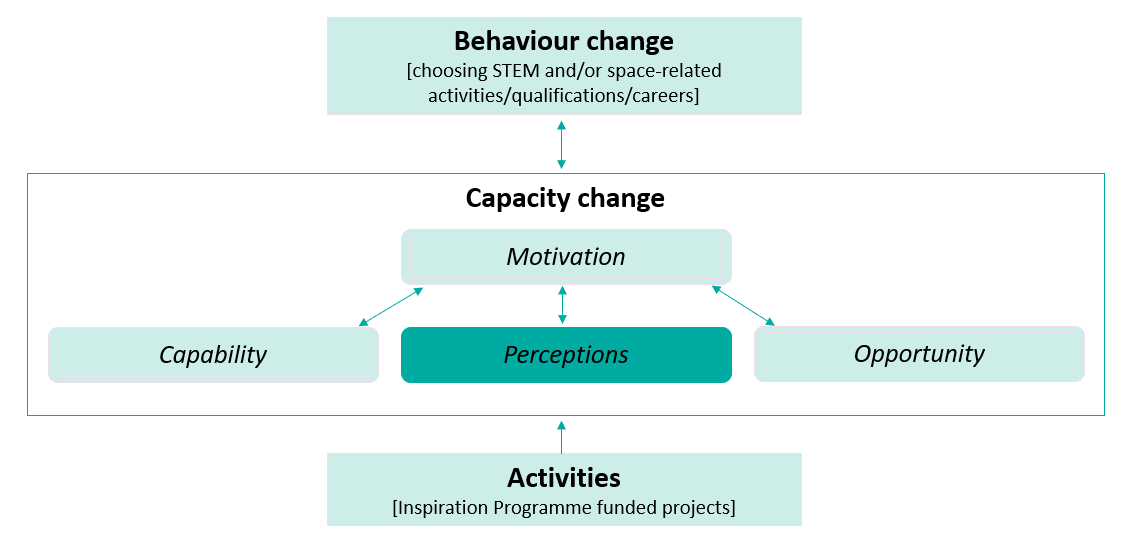
Alt: This figure shows a behavioural change model outlining how activities funded by the Inspiration programme could lead to increased participation in STEM and/or space-related activities, qualifications or careers. This is a complex diagram and more detail is contained in supplementary information at the end of this document.
2.3 Introduction to the Inspiration programme
The Inspiration programme was developed as one strand of the UK Space Agency’s Inspiration priority, which directly addresses one of the ten commitments in the NSS, specifically to “upskill and inspire our future workforce”. It consists of three distinct but connected and complementary workstreams, each funding a range of projects and focused on different age groups or contexts, targeting audiences in formal and informal education contexts and in social and cultural settings:
- The Space to Inspire workstream aims to reach the widest audience of children and young people, parents and carers, education providers, and the general public through projects designed to increase public engagement with STEM more broadly, and space-related topics more specifically.
- The Space to Learn workstream aims to support teachers and young people to contextualise STEM subjects and provide informal engagement and enrichment opportunities to learn more about space-related topics and careers in the space sector.
- The Skills for Space workstream targets students in further/higher education, along with the existing and prospective space sector workforce, to learn more about careers in the space sector, gain relevant experience, and provide training opportunities to develop key skills and competencies for space sector jobs. It also supports the academic community to build networks with industry and provide high-quality teaching related to the space sector.
The role of the UK Space Agency Inspiration programme team is to coordinate across a number of different projects and delivery partners. They provide a centralised system for defining objectives, supporting partners to effectively deliver and evaluate their projects, and communicating the impacts of the projects to a wider audience through their profile within Government. Delivery partners and projects differ in size, scope, and target audience both within and across workstreams. More information about these partners and projects is provided in the next section.
2.4 About the evaluation
The evaluation of the Inspiration programme consists of two main strands:
- Process evaluation and monitoring Management Information (MI) data
- Value for Money (VfM) insights – breakeven analysis
Alongside the collation and analysis of MI data, the process evaluation takes a mixed methods approach, collecting data through surveys, qualitative interviews and focus groups. The breakeven analysis identifies the costs and benefits to be considered – and, where possible, quantified, and estimates the minimum level of benefits required for the programme to break even (i.e. when the net present value becomes positive or the benefit-cost ratio (BCR) equals 1). The process evaluation and MI data collection were conducted by NatCen, and WPI Economics led on the VfM evaluation.
The delivery partners included in the evaluation[footnote 22] are outlined in Table 1, along with the projects that they deliver as part of the Inspiration programme. For each of these projects, we state in which strands of the evaluation they are included.
Evaluation Objectives
The evaluation focuses on understanding the overall perceived impact of the Inspiration programme, its workstreams and constituent projects, specifically:
- the impact of the programme in relation to the UK Space Agency’s Inspiration Priority and the National Space Strategy,
- how effectively funded projects are being delivered, including the barriers and enablers for delivery, and for monitoring and evaluation,
- potential improvements to monitoring and evaluation of the programme and projects,
- to what degree the outcomes or perceived impacts can be monetised and measured,
- how cost-effective are the activities associated with the Inspiration programme, and to what extent are the overall costs justified by the benefits achieved.
Table 1: Inspiration programme projects and their contribution to the data collection for the evaluation.
| Workstream | Project Overview | Process | MI | VfM |
|---|---|---|---|---|
| Space to Inspire | The Association for Science and Discovery Centres (ASDC) supports the ‘Our World from Space’ programme which runs: science/planetarium shows; workshops; Q&As; Science, Technology, Engineering and Maths (STEM) fairs; Continuous Professional Development (CPD) training for science centre staff. This programme is aimed at children and young people (CYP) as well their wider families and communities (all ages). | Y | Y | Y |
| The Girl Guiding partnership programme targets CYP from 4 to 18 years (Rainbows, Brownies, Guides, and Rangers) by running a range of educational activities, including the brownie space badge. Activities involve hands-on-tasks, research, and engagement with space content. | N | Y | Y | |
| The Scouts partnership programme targets CYP from 4 to 18 years (Squirrel Scouts, Beaver Scouts, Cub Scouts, Scouts, and Explorer Scouts) by running a range of educational activities to earn badges. Activities involve hands-on-tasks, research, and engagement with space content. | N | N | Y | |
| The 2024 Space for All grants provided funding to 15 community projects to provide opportunities to engage with space. | N | N | Y | |
| Space to Learn | The European Space Education Resource Office-UK (ESERO-UK) delivered by STEM Learning provides a range of free-to-access activities for CYP in primary and secondary education (4 to 18 years) and their teachers. CYP benefit from: challenges, such as CanSat; online events; research placements; careers information; access to Space Inspirations STEM Ambassadors. Teachers are provided with: CPD training; teaching and activity resources; networking opportunities; support to deliver space-themed activities. | Y | Y | Y |
| The National Space Academy (NSA) provides a range of free-to-access opportunities for CYP (10 to18 years) through curriculum-linked specialist physics masterclasses, space camps and space career conferences. | Y | Y | Y | |
| The Jon Egging Trust’s (JET) Blue Skies programme provides out-of-school sessions with disadvantaged CYP (12 to 15 years) over 3 years, as well as outreach activities for schools. | Y | Y | Y | |
| Skills for Space | The Satellite Applications Catapult delivery of the Space Placements in Industry (SPIN) scheme, for students in further or higher education (FHE), through eight-week internship opportunities. | Y | Y | Y |
| The Training Programmes Fund (TP Fund) addresses skills gaps highlighted in the Space Skills Survey by providing funding for training which targets recruitment and retention in the space sector. | Y | Y | Y | |
| International Space University (ISU) is a scholarship scheme for graduate-level training on a 9-week Space Studies summer programme or a 1-year Masters of Space Studies. | N | Y | N | |
| Space Universities Network (SUN) supports a network of space academics to enhance quality of teaching and learning in Higher Education. | N | Y | N | |
| N.B. The Training Programmes (TP) Fund consists of five funded projects, for which two projects provided MI data during the evaluation period: the University of Leicester, and the Royal Institute of Navigation (RIN). We did not receive data from the Space Skills Alliance or UKSEDS. Space for All projects were not included in the process or MI analysis due to the timing of the start of the projects. The complete list of projects that provided MI data is presented in the Appendix. |
Research Questions
The evaluation aims to address the following research questions:
RQ1 What is the perceived impact of the Inspiration programme, and the interventions it supports, on:
- Individuals’ knowledge, skills, attitudes, perceptions and aspirations towards space and working in the space industry?[footnote 23]
- formal and informal education providers’ knowledge, skills, attitudes and capacity to deliver space science learning opportunities for individuals?
- industry’s perceptions of individuals’ space sector relevant qualifications and skills and their ability to recruit skilled workers?
RQ2 What are the barriers or moderators that affect: 1. the delivery of interventions? 2. the overall perceived impact of the Inspiration programme?
RQ3 How can the Inspiration programme, and the interventions it supports, be best monitored to capture impact in dynamic contexts?
RQ4 How cost-effective are the interventions and what are the best methods for evaluating value for money across different contexts?
2.5 Theory of Change
During the scoping phase of the evaluation (January – April 2024), we conducted a workshop with Inspiration programme workstream leads and UK Space Agency analysts to learn more about how the programme’s existing Theory of Change was developed and how it is used in practice.
Figure 2 provides a visual representation of the updated Theory of Change for the evaluation of the Inspiration programme.
Activities represent events, short- and long-term interactions, resource development, network building, and grant schemes delivered within funded projects and separated by workstream (Space to Inspire, Space to Learn, Skills for Space). The activities are developed and delivered by project partners, who provide their own monitoring and evaluation data. As outlined at the top of the diagram, the activities target different age groups and types of participants, depending on the workstream.
Mechanisms represent the expected effects of the activities on their participants, which lead to the planned outcomes. They are separated into what participants experience (i.e. the opportunities provided) and what they feel as a result of the activities. These proposed mechanisms are based on discussions from the workshops conducted with UK Space Agency staff and delivery partners, as well as key literature relating to STEM engagement, subject and career choice.
Short-Term Outcomes represent the results that are achieved immediately or soon after the intervention and are separated into different groups of individuals: project/activity/intervention participants (e.g. CYP, SPIN interns, teachers); influential adults (such as teachers/academics, youth practitioners, and volunteers); and communities and systems (potential and existing workforce and space sector organisations and educational organisations).
Outcomes for CYP include increased motivation to engage with STEM and space further, including through relevant qualifications and careers. The outcomes for influential adults and the broader community and education system include changes in behaviour which can support future prospective employees in the STEM/space sector journey. These include increasing and improving the teaching of space-related content, and increased collaboration between different stages of the education pipeline, as well as engagement with future enrichment opportunities.
Long-Term Impacts represent longer-term objectives that the Inspiration programme aims to achieve. These include increasing the number and diversity of applicants to the space sector with the relevant qualifications and training and improving public understanding of the value/relevance of the space sector. The impact and process evaluation gathered evidence of distance travelled towards these impacts. However, it was beyond the time frame and scope of this evaluation to capture conclusive evidence of all impacts and the Inspiration programme’s contribution to them. This is illustrated on the Theory of Change by the dotted line between Short-Term Outcomes and Long-Term Impacts.
Impacts on the space sector and wider society was assessed through the Value for Money evaluation. Benefits were considered in relation to specific groups of people (CYP, teachers, existing workforce), as well as to businesses and the wider economy.
Figure 2: Updated Theory of Change for the UK Space Agency Inspiration programme evaluation
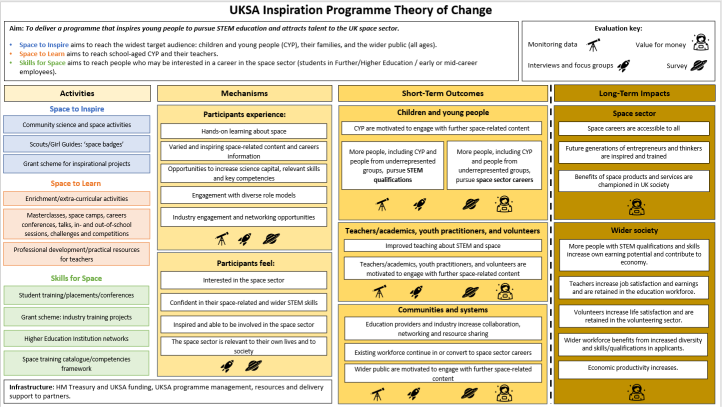
Alt: The figure shows the Inspiration Programme’s Theory of Change, detailing the theoretical framework for how specific activities could initiate mechanisms that facilitate change, resulting in short-term outcomes and long-term impacts. This is a complex diagram and more detail is included in supplementary information at the end of this document.
3. Methodology and Analysis
Chapter 3 provides an overview of the methods of data collection and analyses for the different strands of the evaluation. A more detailed explanation of the methodology is provided in the Appendix.
3.1 Overview of methods: Process evaluation
The methods of data collection used in the process evaluation are described below. The methods, number of participants and relevance to research questions is presented in Table 2. Full details of the recruitment, data collection and analysis and reporting are presented in the Appendix.
Staff interviews
Interviews were conducted with strategic and operational staff across the projects involved in the process evaluation, focusing on the projects’ aims, intended impact and current monitoring systems, and barriers and moderators to delivery and evaluation.
Interviews and focus groups with individuals
SPIN intern interviews
We conducted online interviews with students who participated in an internship as part of the SPIN project with the Satellite Applications Catapult (hereafter ‘Catapult’). These interviews explored students’ experiences of placements, barriers and moderators to participating and the perceived impact of the initiative on their skills and perceptions of the space sector.
CYP focus groups
CYP took part in in-person focus groups based on their involvement in space careers conferences (NSA), the Blue Skies project (JET), or the CanSat competition (ESERO-UK). Each group comprised a group of between four and six students in the same year group. We visited three schools in total, in the West Midlands, the North West and the South East of England. The discussions explored participants’ experiences of the activities, their perceptions of the space sector, and their motivation to continue to engage in STEM/space-related activities, qualifications, and careers, including any barriers/enablers to this future engagement.
Teacher interviews and focus groups
We conducted an online focus group with teachers based on their involvement in running the CanSat competition in their schools (ESERO-UK). We also conducted and interview with a teacher involved in NSA space masterclasses[footnote 24]. The discussions focused on participants’ experiences of the activities and the impact on their own teaching and their perceptions of the space sector and space-related curriculum. They also explored barriers and enablers for teachers to engage in future skills development and provide opportunities for CYP, and their perceptions of barriers and enablers to CYP pursuing STEM qualifications and space sector careers.
Surveys
We developed three separate online surveys and distributed these through delivery partners to reach their projects’ participants:
- CYP who have participated in the projects (ASDC, ESERO-UK, NSA, JET). This survey focused on participants’ experiences of the activities, their perceptions of the space sector, and their motivation to continue to engage in STEM/space-related activities, qualifications, and careers. (n = 79 completed surveys).
- Teachers who participated in the projects (ESERO-UK, NSA). This survey focused on their perceptions of the effect of the activity on the young people associated with them, as well as their own engagement with space-related content now and in the future. It also asked about the effect of the activities on their own capabilities and motivation to deliver space-related content to students. (n = 35)
- Space Inspiration STEM Ambassadors who act as volunteer role models from various space sector employers and support schools in delivering space-related content (ESERO-UK). This survey focused on the impact their involvement with the project has had on them personally, as well as the perceived impact on students. It also asked about barriers and moderators to participating in the project from their perspectives. (n = 9) Additionally, we received survey data from two recent surveys conducted by Inspiration programme projects. The UK Space Agency shared survey data collected from previous SPIN cohorts and NSA shared data from a recent survey of teachers who had facilitated an NSA masterclass, developed by an independent evaluation being conducted by ERS Research. We present findings from these surveys alongside the survey outlined above.
Focus groups and workshops with stakeholders
We organised an online focus group with representatives from industry and academia who have hosted an intern through the SPIN programme. This focused on the aims of their involvement with the SPIN programme, along with the moderators and barriers to hosting an intern and the perceived impact of the project on the interns and on their businesses and universities. They were also asked to reflect on broader collaboration opportunities between industry and academia. We conducted three workshops with staff and industry stakeholders from projects across the Inspiration programme to explore three key themes: 1) building science capital amongst children and young people; 2) engaging and working with education providers, and 3) engaging and working with industry. The workshops took a semi-structured approach. Participants answered questions and gave reflections about each of the key themes via the interactive presentation software, Menti, followed by an open discussion exploring best practice in relation to these themes, as well as strategies that have worked less well.
Table 2: Summary of process evaluation interviews, focus groups and surveys
| Research methods | Data collection methods | Participants / data sources | Number of participants/respondents | Data analysis methods |
|---|---|---|---|---|
| Qualitative | Interviews | Delivery partners from Inspiration programme projects | 20 | Thematic analysis |
| Qualitative | Interviews | SPIN interns | 11 | Thematic analysis |
| Qualitative | Interviews and focus groups | Teachers facilitating Inspiration programme activities in schools | 5 | Thematic analysis |
| Qualitative | Focus group | Professionals working in the space sector | 5 | Thematic analysis |
| Qualitative | Focus groups | CYP receiving Inspiration programme activities | 22 | Thematic analysis |
| Qualitative | Thematic workshops | Professionals working in the space sector (inc. Inspiration programme projects) | 12 | Thematic analysis |
| Qualitative/Quantitative | Survey | Teachers facilitating Inspiration programme activities in schools | 35* | Thematic analysis /Descriptive statistics |
| Qualitative/Quantitative | Survey | CYP receiving Inspiration programme activities | 79* | Thematic analysis /Descriptive statistics |
| Qualitative/Quantitative | Survey | Space Inspirations STEM Ambassadors | 9* | Thematic analysis /Descriptive statistics |
| *Number of full survey completions. Bases reported for individual questions vary due to respondent dropout |
MI Data
During the scoping phase, we collated details of the MI data typically collected by projects. We developed a new template for MI data collection, incorporating existing data fields and identifying gaps in information required to report on progress against the updated Theory of Change. The value for money strand of the evaluation also made use of MI data in its analysis.
Projects completed the MI template on a monthly or quarterly basis, depending on the project. [footnote 25] We collected data concerning the number and characteristics of people engaged in the projects’ activities, the number and types of engagements (and re-engagements), and the number and characteristics of people delivering the activities. Characteristics included: gender, ethnicity, age and, for CYP in schools, any special educational needs or disabilities, and eligibility for Free School Meals.
3.2 Value for Money insights
The aim of the VfM evaluation was to provide objective and evidence-based insights into how additional public value could be created from the public resources that the UK Space Agency is dedicating to the Inspiration programme, and its three constituent workstreams. The primary analysis is a breakeven analysis, due to the lack of quantitative impact findings, coupled with qualitative assessment, to determine the breakeven points at which the programme contributes to an effective use of public resources and to address RQ1 (perceived impacts on individuals, education providers, and industry), and RQ4 (cost-effectiveness / monitoring VfM). Definitions of the key terms used below are provided in the Key Terms and Acronyms.
For the VfM evaluation, we developed a model through the following processes:
- Identifying costs and benefits associated with the programme, in line with the Theory of Change.
- Monetising costs and benefits by assessing which aspects can be expressed in monetary terms, using data collected from the UK Space Agency, as well as from the process and impact strands and existing evaluations where available.
We then employed Breakeven analysis to estimate the threshold at which the monetisable benefits equal the costs (i.e. the benefit-cost ratio (BCR) equals one) and where the Net Present Value (NPV) of the programme turns positive. This allows us to assess the key benefits driving value and assess the programme’s likelihood of delivering value for money.
Our benefit channels are evaluated from a public finance and public value perspective, with focus on the following benefits that we identified as having robust unit cost savings / benefit:
- Earning uplifts from education and skills development (student-related benefits)
- Teacher workforce retention, job-satisfaction and earnings (teacher-related benefits)
- Economic productivity (economy-related benefits)
The costs related to the delivery of each workstream that are monetisable include: - Human resources (e.g., staffing costs). - Financial resources (funding from the UK Space Agency and other sources). - Partner support (costs to partners for supporting project delivery).
A full summary of the monetisable costs and benefits considered in the analysis are provided in the Appendix.
In addition, we have identified and assessed a range of unmonetisable costs and benefits to ensure that a comprehensive scope of programme impacts is captured. These include improving the space sector’s talent pipeline, improving workforce diversity and increasing the STEM-skilled workforce.
3.3 Overview of analyses
We took a coordinated approach to data analysis across the study, looking at each of the strands of the evaluation together to answer the evaluation objectives. We triangulated and synthesised survey, interview, and focus group data with the management information and breakeven analysis and metrics to tell the story of the Inspiration programme as a whole, as well as the individual workstreams.
We managed and analysed MI data and any quantitative survey data using SPSS statistical analysis software. We analysed these data using descriptive statistics and cross-tabulations.
For interviews, focus groups and thematic workshops, we digitally recorded (with participant permission) all interviews and focus groups, which were then professionally transcribed. We managed and analysed interview and focus group data using the Framework approach, developed by NatCen. [footnote 26]
Using this approach, we developed thematic analytical frameworks for each qualitative research activity (e.g. stakeholder interviews), using themes from the topic guides and other themes emerging from the data. We assembled each framework into a matrix, where each row represents an individual interview or observation and each column a theme and any related sub-themes, in alignment with each research question. This approach allowed us to thematically organise and chart qualitative data using the Framework approach.
We reviewed transcripts in detail, and summarised and categorised data systematically by theme, whilst using illustrative verbatim quotes where appropriate.
We then conducted a phase of ‘detection’, including studying elements of participants’ responses relating to a particular topic (e.g. technical skills development), listing these and then sorting them thematically (e.g. self-confidence, accessibility, interest). Once we had identified different themes in the data, we created higher-level categories that work as meaningful conceptual groupings for participants’ views and experiences within and across settings (e.g. exposure to a space sector workplace).
Where possible and relevant, we triangulated and synthesised data from the MI and process evaluation strands.
For the VfM insights, we collected the costs and benefits data directly from the UK Space Agency and supported by the MI data, survey data and process evaluation, as well as from existing literature, to calculate the breakeven points of the programme, following the principles set out in the Green Book and Magenta Book guidance (government’s guidance on policy, project and programme appraisal and evaluation respectively). [footnote 27][footnote 28] We focused on three key impact variables (listed in Section 3.2). We flexed each variable at a time, assuming no net impact from the others, to calculate a single breakeven point for each variable.
For the unmonetisable costs and benefits, we qualitatively assessed the magnitude of the impacts based on the evidence gathered from MI and process evaluation strands, existing evaluation reports, and existing literature.
3.4 Note on methodological challenges and limitations
The Inspiration programme is a £12 million programme delivered through three workstreams and encompassing a number of delivery partners and projects. The diversity of the work delivered as part of the programme posed a challenge to the evaluation tasked with collating quantitative and qualitative data in a consistent way across projects which may not have been initially set up to track and record data in the same way and using the same metrics.
MI data
For collation of management information data, we developed a bespoke template for use by the delivery partners, designed for the capture of data on activities and demographic characteristics of participants. Completion of the template tool was not consistent across the range of delivery partners which makes comparison across projects a challenge. Some projects for example provided no data at all, and other returns were incomplete. Space for All demonstrated inconsistent reporting across multiple data uploads. Space for All is an initiative made up of 15 separate funded national community projects. They did not use the standardised template, submitting instead data in a narrative format, making it difficult to extract structured information. Key details, such as dates of activities, were often unclear. In many cases, a project title would be provided, with a broad project timeline spanning beyond our evaluation time period. This makes it difficult to determine which specific activities occurred within the relevant timeframe. The variety of activity and grant recipients contributed to inconsistency in reporting.
The absence of a unique identifier for activities made it difficult to link audience type data (when provided) to specific activities. Furthermore, no consistent or comprehensive reporting of activities were included. Given these inconsistencies, reporting participation numbers for this delivery partner would be misleading. Totals reported for the management information evaluation strand (discussed in section 3.1) therefore present a snapshot of the nine-month evaluation period (May 2024 to January 2025) with an assumption made that, because of inconsistent and incomplete returns, the totals cited are likely to be under-reported.
The development of a standardised template (similar to the one produced for this evaluation) introduced to projects and delivery partners at the set-up phase of a new initiative with a clear ask and expectations of regular completion would aid future evaluation work and would enable more consistent comparison across the diversity of the Inspiration programme. As one of the aims of the programme is to enable wider participation and inspire an interest in space across a diversity of potential future STEM graduates, a standardised data collection tool would also enable the collation of, with appropriate informed participant consent, ‘special category’ demographic data, such as participant gender, ethnicity, family’s receipt of free school means, and Special Educational Needs and Disability (SEND).
The value for money strand of the evaluation also, to some extent, relies on robust MI data. Results from the VfM work package should therefore be interpreted with the appropriate caution and caveats around inconsistencies in MI data in mind.
Sampling/response rates
Participants in our qualitative fieldwork (interviews and focus groups) totalled 75, including 22 children and young people. Survey participants totalled 123, including 79 children and young people respondents. Responses to both qualitative and quantitative research encounters are therefore not representative of the totality and diversity of the Inspiration programme which, our MI shows, reached over 900,000 participants over a nine month period (see section 3.2 below). Our response rate is not (and was not intended to be) representative of the scale of Inspiration programme’s reach. There are therefore limits to the generalisability of the evaluation’s findings. However, our qualitative research encounters (interviews and focus groups) in particular provide depth and nuance to participant’s experiences of their participation in programme’s activities and the impact on their interest in STEM and in the space sector.
The evaluation was not designed as a quasi-experimental study and did not involve any qualitative or quantitative counterfactual elements (i.e. what would have happened in the absence of the Inspiration programme). When we refer to ‘impact’ throughout the report, we are therefore referring to perceived impact as reported by our respondents, and not ‘impact’ in a QED-measured form of impact.
We would also expect an element of response bias in our survey responses which were all self-reported questionnaires and involved a degree of self-selection into participation in the survey. It was not always possible to determine the length of time in between the participant’s engagement with the activity and the time of survey completion which might have affected the nature of the responses given, the participant’s memory of the activity, and the extent to which the perceived impact of the activity had had time to take effect.
4. Findings
Chapter 4 brings together and synthesises the findings from all our primary data collection approaches, including focus groups, interviews and surveys, and our collation of management information data via our bespoke template. We present our analysis considering each of the research questions, i.e. perceptions of impact (from the point of view of children and young people, education providers, and industry professionals); barriers and moderators; measuring and capturing value for money; and suggestions for ways of capturing monitoring data – both now and in the future. Before we consider each of the research questions, we present first some monitoring data as captured via our template tool on activities offered under the Inspiration programme and on its participants.
4.1 Snapshot of available monitoring data
We asked delivery partners to send us regularly-completed template returns, designed to allow us to capture data during the evaluation period of May 2024 to January 2025. Fully-completed template returns would have allowed for data capture against the following variables: date of activity delivered; interaction type; activity description; location; interaction duration; number of attendees and teachers; audience type/age; gender and ethnicity of attendees, teachers and volunteers; number of attendees with SEND; number of attendees in receipt of FSM; number of industry professionals involved.
There were eight delivery partners who provided MI data in a format which allowed us to have a sufficiently consistent approach to collating data against the different variables across the body of activities/projects. Returns from those eight indicated that a total of 945,772 people were reached during the nine month evaluation period. Returns from a further five projects were missing and an additional 2 included VfM data only.[footnote 29]
Profile of programme participants
Data on participants’ demographic characteristics was not collected at the time of the activity from all participants and template returns from some delivery partners did not include demographic characteristics. The data we have available on participants’ ethnicity and gender, for example therefore does not show the complete profile of all programme participants. The available data is presented in Table 3 below.
Table 3: Reported demographic information of individuals
| Attendee demographic | No. for whom data was available | Percentage |
| Gender | 75,489 | |
|---|---|---|
| Girls/Women | 47.27 | |
| Boys/Men | 52.72 | |
| Non-binary | 0.01 | |
| Ethnicity | 8,471 | |
| Asian or Asian British | 5.65 | |
| Black African, Caribbean or Black British | 2.64 | |
| Mixed or Multiple Ethnic Groups | 4.69 | |
| White | 87.01 | |
| SEND* | 1,169 | |
| Eligibility for FSM | 1,925 |
*SEND = individuals with special educational needs and/or disabilities; FSM = Free school meals. This demographic information was reported by schools on behalf of pupils for some projects.
The data on participant demographic characteristics should be interpreted with some caution given the patchiness in data returns and an incomplete dataset. The reported gender parity is positive for example, considering the acknowledged gender gap in the STEM sector more generally. However, these figures should be interpreted with some caution given that data on gender was only provided by three return types. One of those was from the Girl Guiding Association and as we do not have a similar level of return from Scouts, we would expect the data to be skewed here given the expected gender of each organisation’s overall participant profile. Data on ethnicity should also be interpreted with caution as it is missing from most project returns (only consistently reported by two returns). Survey data included postcode and free school eligibility as indicators of socioeconomic status from around half of CYP respondents.
However, the numbers are too low for us to draw any generalisable conclusions. Previous SPIN cohorts provided data on their eligibility for free school meals when they were at school, representing those who came from low-income families. Of the 97 respondents, 12% reported that they had been eligible for free school meals. This is lower than the current national average of 24% (although this figure has increased in recent years). As the programme aims to reach a greater diversity of participants, it would be necessary to develop more consistent ways of capturing and measuring effectiveness and progress against any interventions aimed at increasing the diversity of participants.
Profile of activities
Template returns reported a total of 1,942 activities. The most common activities were hands-on workshops, talks/lectures, and careers fairs or conferences. For some projects, a single activity made up the majority of all engagement, e.g. masterclasses for NSA, and industry training projects for the University of Leicester and the Royal Institute of Navigation (RIN) (through the TP Fund). ASDC reach figures mostly comprised of drop-in activities and planetarium visits at the science centres, with workshop and science shows also proving popular.[footnote 30]
Activities were delivered across all regions of the UK during the evaluation period (see Figure 3), with the highest proportions taking place in the North West, the South East and the East of England from those projects who provided location data. This does not include ASDC, who have 22 science centres around the UK who deliver ‘Our World From Space’ activities throughout the year (see Figure 3). ISU, as an international project, delivered activities outside of the UK, and RIN’s activities were entirely delivered online. Across projects, Wales and Northern Ireland were relatively less represented than England and Scotland in terms of delivery.
Figure 3: Reported locations of project delivery during the evaluation
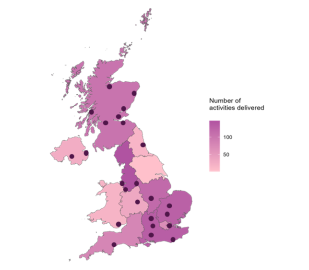
Alt: Map shows the geographical distribution of Inspiration programme projects delivered across the UK during the evaluation period. The intensity of shading on the map reflects numbers of activities, with darker shading indicating greater numbers of activities. Dots on the map indicate ASDC science centres that delivered ‘Our World from Space’.
N.B. This map represents activities delivered by projects who provided location data. Darker areas are those with higher reported levels of activity delivery. Dots represent ASDC’s science centres.
4.2 Reported impacts for beneficiaries of participation in the Inspiration programme
In this section, we present how our research participants (survey respondents, interviewees and focus group participants) report on the impact of their participation in Inspiration programme’s activities.
Evaluation respondents reported high levels of engagement with Inspiration programme activities, which they attributed to a number of elements:
- Interest and enjoyment
- Opportunities for hands-on learning
- Length of activities
- Challenging work
- Working in a team
- Impact on confidence
- Increased relevance, value and interest in space
- CYP’s increased technical and transferable skills
We report on examples of each of these in the following section.
Interest and enjoyment
Responses from CYP and SPIN interns revealed a largely positive experience of Inspiration programme activities amongst respondents:
- 97% (77 of 79) of CYP reported a positive experience
- 79% (62 of 97) of SPIN interns from previous cohorts rated their satisfaction with their placements as at least 8 out of 10 (around a third (32%) rated their experience as 10/10)
CYP survey respondents who reported positive experiences of Inspiration programme activities, described them as “fun” and “educational” and the staff delivering the activities as “friendly” and engaging”. Respondents who took part in NSA space masterclasses described this activity as enjoyable and, as a result, their interest in space sector careers increased. Those who had a negative experience did not give reasons for their ratings.
“I really liked it because we did a lot of different activities that were all related to space but you wouldn’t think were necessarily so interlinked. It opened up a new field of opportunities in my head and got me thinking about careers in space.”CYP survey respondent
Opportunities for hands-on learning
Teachers observed positive changes in participants’ skills because of hands-on activities, which they did not always have opportunities to do during other lessons. This reflects the general decline in practical activities delivered in UK schools in recent years; the 2023 Science Education Tracker[footnote 31] reported a decrease in hands-on activities in science lessons and less frequent practicals.
As shown in Figure 4, over three quarters of teachers (82%) involved in ESERO-UK and NSA activities who responded to our survey agreed that the activity increased opportunities for hands-on learning about space. Teachers also said they were motivated to incorporate more practical activities into their own lessons after the activities.
Both CYP and teachers indicated that hands-on activities (examples provided below) were interesting and engaging. In ESERO-UK and JET focus groups, CYP said they expected activities to be more theory-based than hands-on, and they appreciated the mix of theoretical and practical elements. Examples of practical activities included:
- building mini telescopes,
- trying on a pressurised flight suit in NSA masterclasses,
- 3D printing and building electrical circuits (tasks needed to design and build a can-sized satellite as part of the CanSat competition).
Exposure to these different tasks improved CYP’s understandings of the connections between theoretical concepts and real-world applications, which they reported made learning even more enjoyable. One CYP from an ESERO-UK focus group expressed satisfaction in designing a product on a computer and then building it in real life:
“It was very different to what we did in class because a lot of the stuff we do in class isn’t very hands-on. It’s a lot of equations and stuff like that, whereas with this, you could pick which bits you like. I did the soldering for my group, and it’s a lot more hands-on and seeing what you can do with your skills, rather than just writing on a bit of paper. It’s a lot more interesting for me to see what I can make and how it affects other things.” ESERO-UK CYP focus group participant
Length of activities
CYP, teachers and SPIN interns all discussed how the length of the activities affected their impact. The general pattern of results reflected that seen in the wider literature around the impact of STEM engagement programmes[footnote 32]: the longer engagements with multiple touch-points (such as the ESERO-UK CanSat competition) were generally perceived as having more impact than shorter or one-off interactions.
CYP and teachers reported a number of positive aspects of the longevity of the CanSat project:
- CYP had time to develop a range of new skills.
- CYP were able to participate in a “technical equivalent of a Duke of Edinburgh award” through their involvement with the project, which has prestige.
- CYP were able to see the culmination of a lot of hard work in the final launch.
- The tasks mirrored real-world space sector work, which increased awareness of and interest in space-related careers.
However, there were some negatives to the time requirements of the project:
- Many schools did not have enough time in the regular school timetable to incorporate the CanSat competition, meaning that they ran sessions during breaktimes or as an extracurricular activity.
- The time commitment was difficult for CYP to manage around conflicting pressures such as exam preparation and other assignments. ESERO-UK focus group participants suggested that this meant that Year 12 students were more able to participate than those in Year 13 who were taking their A Levels.
Given these time restrictions, it might be useful for ESERO-UK to work with schools and teachers in the future to consider how CanSat might be adapted for different age groups, or to allow more of the content to be embedded within the regular school timetable, which may encourage greater levels of participation and would reduce the extra-curricular burden on both CYP and teachers. If possible, this would mean that CanSat could engage a wider range of CYP and schools in the competition.
JET stakeholders also discussed the relative benefits of a longer programme on CYP participating in the Blue Skies programmes. They noted that focusing in on fewer pupils within each cohort (around 15 per school) allowed them to increase the number of contact hours per student and the number and types of interactions they had with space-related content and organisations, which they believed had a greater impact on the CYP involved. In particular, teachers reported improved behaviour and school engagement amongst CYP participating in the programmes over this longer time period.
However, JET research participants also highlighted some issues for schools participating in the programmes:
- Increased contact hours have cost implications for schools, who need to provide a school staff member to support students during each Blue Skies session for safeguarding reasons.
- Focusing on 15 students per year is a relatively small number within the school’s intake and schools may prefer to increase the offer within their schools to enable more CYP to benefit.
JET stakeholders recognised the need to balance the in-depth Blue Skies programme with wider school engagement through shorter Inspirational Outreach activities involving more students. In terms of costs for schools, budgeting for the time of school staff supporting activities for JET and across the wider Inspiration programme could be beneficial for school engagement in the future.
SPIN internships last around two months, Some SPIN interns suggested that they would have benefited from the internship being longer. Key advantages of this were more opportunities to:
- complete more substantial tasks for the company, once initial induction was completed,
- network more with peers and other organisations,
- see a project through from start to finish,
- further develop their skills.
One intern suggested that increasing the two month internship to three months would have achieved some of these benefits, although the most useful length of the work placement is likely to depend on the organisation, the type of work it does and the scale of the projects it undertakes. It will be important to work closely with host organisations to identify key development goals for interns and the appropriate length of placement within their organisation to achieve these goals, recognising that longer placements may impact upon the total number offered (thereby potentially reducing the number of young people able to benefit from the experience).
Challenging work
CYP and teachers suggested that the level of challenge in the ESERO-UK CanSat competition and NSA masterclasses in particular had positive impacts on participants. The tasks involved were often perceived as more difficult than schoolwork, required independent work, or covered advanced content.
CYP in the NSA focus groups further suggested that the challenging nature of the masterclass content enhanced their problem-solving skills and their confidence.
“A lot of the questions were difficult […] A lot of the things at the beginning were stuff that Year 13s were doing, and knowing that despite not doing that content yet, I could find a way around that, kind of boosted my confidence, which I think helped my approach to things rather than being all nervous and just putting maths all over the place.” NSA CYP focus group participant
Teachers noted however that some of the tasks required for ESERO-UK, such as coding in Python, were too advanced for some pupils and hard to support without additional training for both teachers and younger students. In the teacher survey, one respondent suggested “it requires a lot of technical knowledge that I was unable to provide”, while another noted “I would hesitate to run this with lower school unless there is time available for teachers to actively teach the students skills”. However, despite the challenging nature of the activity, the majority of teachers who participated in CanSat and responded to our survey would recommend the competition to other teachers (see Figure 4).
Figure 4: Percentage of teachers who agreed with statements about the likelihood of recommending ESERO-UK activities to other teachers/schools (n= 38)**
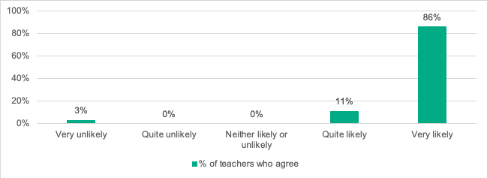
Alt: This bar chart shows the percentage of teachers who agreed with statements about the likelihood of recommending ESERO-UK activities to other teachers/schools (n= 38). The results are contained in supplementary information at the end of this report.
86% of teachers agreed that they were ‘very likely’ to recommend ESERO activities to other teachers or schools.
11% of teachers agreed they were ‘quite likely’ to recommend ESERO activities to other teachers or schools.
3% of teachers agreed they were ‘very unlikely to recommend ESERO activities to other teachers or schools.
0% of teachers agreed they were either ‘quite unlikely’ or ‘neither likely of unlikely’ to recommend ESERO to other teachers or schools.
Teachers who previously participated in the NSA evaluation survey would also recommend masterclasses to others (44 of 45 respondents agreed). The majority agreed that “students were appropriately challenged” by the material and “resources and experiments were accessible for all individual needs” (see Figure 5).
Figure 5: Percentage of teachers who agreed with statements about the impact of NSA activities on young people (n= 45)**
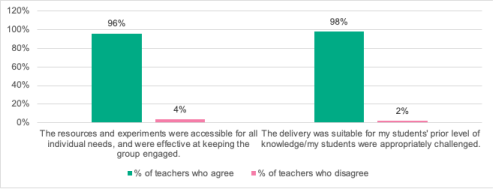
Alt: This bar chart shows the percentage of teachers who agreed with statements about the impact of NSA activities on young people. The results are contained in supplementary information at the end of this report.
Overall, the challenging nature of the activities was seen as positive for those participating in them but may serve as a barrier for some potential beneficiaries. As outlined earlier, adapting the requirements or content of the activities for different age groups may enable projects to widen their reach and have an earlier impact on CYP, intervening before they start to narrow their subject and career choices and become less interested in science careers.[footnote 33]
Working in a team
In JET and ESERO-UK CanSat, teamwork was central to the activities and therefore developed over the course of these longer interventions, alongside leadership and team management and organisation. Another positive impact of working in a team included improved relationship-building with peers.
However, teachers and CYP involved in ESERO-UK CanSat did identify some negatives of groupwork:
- It can be difficult to separate everyone’s contribution.
- It can require more time and planning than completing work individually.
- Team members have different schedules and so it can be difficult to complete tasks together.
Despite these difficulties, CYP did learn to work effectively together, which they recognised as a valuable skill for their later careers. While it may not be appropriate for all activities and interventions to include group work, our findings suggest that it would be important for the programme to continue to invest in projects that promote CYP’s teamwork and leadership development for CYP.
Impact on confidence
In JET and ESERO-UK CanSat, teamwork was central to the activities and therefore developed over the course of these longer interventions, alongside leadership and team management and organisation. Other positive impacts of working in a team included:
- Increased confidence in speaking up in class
- Increased confidence in talking to new people
I used to really struggle to speak up and put my hand up. I’ve always been a bit more shy when it comes to talking out loud and stuff […] but from when I first joined to now, I’ve definitely learnt to speak up a bit more, and to voice my opinions a bit more now.” JET CYP focus group participant
However, CYP in the ESERO-UK focus groups suggested that the CanSat challenge did not significantly boost their confidence because they were already confident in science subjects. This observation highlights a potential limitation in the broader impact of certain Inspiration programme activities. Some Space to Learn projects may aim to reach a wider audience but end up being directed by teachers towards CYP who are already interested in STEM or have chosen to study science subjects at GCSE or A Level. However, we note that these potential limitations are not relevant to all CYP-focused projects, and the overall Inspiration programme is therefore likely to be more balanced between activities that are targeted at CYP with different levels of pre-existing interest in STEM.
Increased relevance, value and interest in space
Activities in schools and science centres introduced topics and experiences beyond the usual science curriculum, providing enrichment opportunities for CYP. Examples include:
- ESERO-UK’s ‘Protect our Planet’ day
- ASDC’s focus on climate change as a context for learning about space
- visits to workplaces and interactions with different professionals through JET and NSA These activities aimed to tap into issues that are important to CYP and increase the relevance of space-related learning. They also provided new experiences and aimed to show CYP the relevance of space-related careers for them. Teachers who responded to the previous NSA evaluation survey highlighted the importance of these new experiences: 93% of the 45 respondents agreed or strongly agreed that “students have learnt things through this masterclass that they wouldn’t have learnt otherwise.” CYP participating in NSA and ESERO-UK focus groups also discussed how content was connected to the real world and explained that they enjoyed learning about topics that were not necessarily connected to exams.
“…researching into satellites allow better understanding of our world. We are able to predict droughts, improve GPS, and more via the space sector, making it an essential part of today’s world.” NSA CYP focus group participant
“This day allowed us to, not really relax from learning, but allow us to really see how physics can be applied into the real world, and that makes it just so much more fun.” NSA CYP focus group participant
After participating in activities, 78% of CYP reported that the space sector was ‘quite important’ or ‘very important’ for their own and others’ lives (67 out of 86 respondents). “It is important as it can help us learn about the Earth’s past and future, as well as providing resources that are rarer on Earth. It may not be important for some people who believe we should focus on the issues faced on Earth first.” Across responses, CYP noted the relevance of space sector work for a wide range of other disciplines, such as medicine and technology: “Advancement in the space sector leads to advancements in medicine, engineering and science here on earth”. CYP also suggested that other areas of scientific work were as important, and suggested that that space should therefore not be prioritised over other areas: “It is useful [to] develop our understanding of space for our future and to increase our scientific knowledge, however, I do think that it is equally important to focus on the sciences more close to home in order to create and improve the scientific field.”
New experiences also affected CYP’s interest in learning more about space (see Figure 6). According to the CYP survey, respondents became more interested in learning about space because of their experiences (represented by an increase in those who were ‘very interested’ from before to after the activity). [footnote 34]
Figure 6: Percentage of children and young people who agreed with statements about the impact of NSA or ESERO-UK activities on their interest in learning about space (n= 90)
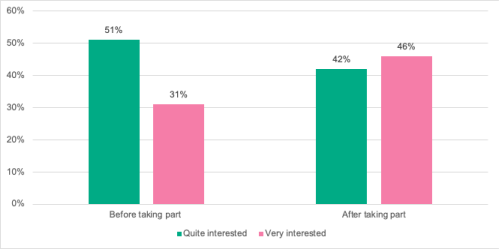
Alt: This bar chart shows the percentage of children and young people who agreed about statements about the impact of NSA or ESERO activities on their interest in learning about space. The results are contained in supplementary information at the end of this report.
CYP in focus groups from JET and NSA suggested that engagement with volunteers and industry professionals was more interesting than listening to a teacher or lecturer in usual classroom activities.
“It’s quite interactive, as well. You’re not just sat there, listening, the whole time. You can interact and you can say what you want to say.” JET CYP focus group participant
The CYP survey shows that that a relatively high proportion of those who responded were interested in pursuing science subjects and space sector careers: - 84% (69 of 81) respondents stated they were ‘quite interested’ or ‘very interested’ in studying a science subject in the future - 60% (46 of 78) respondents stated they were ‘quite interested’ or ‘very interested’ in pursuing a career in the space sector Importantly, the new activities and experiences had a positive effect on interest for many of the CYP: (see Figures 7 and 8) - 53% (26 of 49) respondents reported increased interest in studying science - 51% (40 of 78) respondents reported increased interest in space sector careers
Figure 7: Percentage of children and young people who agreed with statements about the impact of activities on interest in science subjects (n = 49)
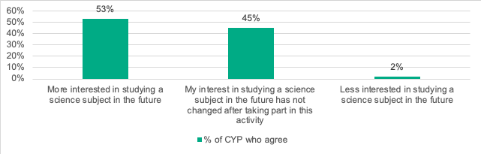
Alt: This bar chart shows the percentage of children and young people who agreed with statements about the impact of activities on interest in science subjects. The results are contained in supplementary information at the end of this report.
Figure 8: Percentage of children and young people who agreed with statements about the impact of activities on interest in pursuing a career in the space sector (n=78)
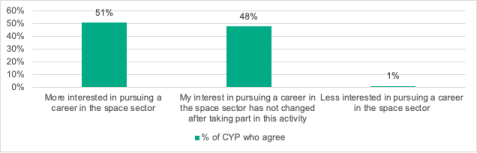
Alt: This bar chart graph shows the percentage of children and young people who agreed with statements about the impact of activities on interest in pursuing a career in the space sector (n=78). The results are contained in supplementary information at the end of this report.
The figures above show that most participants who did not report an increase in interest after the activities said their interest remained the same, rather than decreased. This finding might indicate that those children and young people respondents were already engaged with STEM subjects and activities, as suggested earlier, and therefore had high levels of interest before participating in the activities.
Overall, we suggest using new and relevant contexts for space-related enrichment will be key to improving how CYP perceive the space sector’s work in future Inspiration programme activities. Furthermore, we suggest understanding more about changes in interest and aspirations among those with generally lower science capital or younger students will be important for future evaluations.
CYP’s increased technical and transferable skills
Participation in some Inspiration programme activities also had an impact CYP’s reported perceived skills. Twelve of the 33 CYP who responded to the question “What did you learn by taking part in this activity?” reported improvements in transferable skills, particularly in teamwork and leadership.
In the CYP survey, those who had completed the CanSat competition (n = 54) reported that they had developed a wide range of skills through the challenging tasks associated with the activity. Specific technical skills included:
- programming
- electronics
- design
- using different types of software
- 3D printing
The TP Fund training opportunities are specifically aimed at upskilling the existing or future workforce, for example, delivery partners provide courses focusing on technical space-related topics, such as engineering and safety strategies. Our respondents expected these skills to be passed to others inside their organisation, having a deeper impact on the space sector through cascading training.
“They can share it with colleagues to really get the best for their organisation and ensure that this support is not just the individual that’s attending the course in upskilling and training them, but it also contributes to their wider organisation to help support the industry as a whole.” TP Fund interviewee
However, given the early stages of the TP Fund projects, it is not clear the extent to which these expected impacts were achieved. Further evaluation over the longer-term will be necessary to assess if and how training was cascaded through organisations of participating individuals. Engaging with more of the individuals delivering content as volunteers across different projects will also allow future evaluations to take a broader view of the impact of the Inspiration programme across different groups.
Of the 97 respondents to the previous SPIN cohorts’ survey, 80% reported that ‘gaining technical skills’ was the most useful aspect of their internship.
Of the 23 CYP who participated in an NSA activity and responded to our survey, 12 (53%) highlighted new space-related knowledge that they had learned during their activities. This included topics such as:
- gravitational fields and escape velocity
- space flight
- planets, asteroids, and comets
- satellites
- technology used in space
One CYP respondent highlighted how applying their theoretical knowledge to space increased their interest in the topic:
I learned how maths and physics relate to space in completely new ways and the basics of telescope building, spectroscopy and human space flight which increased my interest in space a lot CYP survey respondent
SPIN interns, who had an extended period of time within a workplace environment, had opportunities to develop a wider range of skills. More than half (54%) of SPIN interns from previous cohorts agreed that they developed transferable skills as a result of their internships. Figure 9 presents the types of skills respondents believed they had developed.[footnote 35]
Figure 9: Results from the SPIN intern survey: “Did you develop any of the following soft skills during your internship?” (n=97)
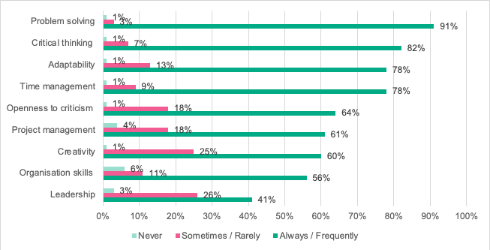
Alt: This bar chart shows the percentages of respondents reporting on the extent to which they developed soft skills during their internship. The results are contained in supplementary information at the end of this report.
** Percentages do not total 100% because some respondents chose not to answer the question.
More than 80% (28 of 35) of teachers who responded to the survey also reported improvements in their pupils’ STEM skills and knowledge and other competencies as a result of their participation (see Figure 10 for full range of impacts).
Figure 10: Percentage of teachers who agreed with statements about the impact of
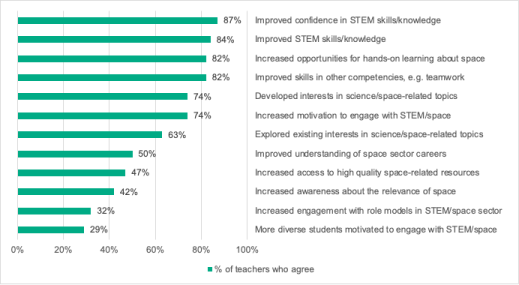
Alt: This bar chart showing the percentage of teachers who agreed with statements about the impact of ESERO-UK and NSA activities on young people. The results are contained in supplementary information at the end of this report.
ESERO-UK and NSA activities on young people (n= 35)
More than three quarters of interns agreed they used problem-solving, critical thinking, adaptability and time-management skills ‘always’ or ‘frequently’, while opportunities to develop project management, openness to criticism, creativity and organisation and leadership skills were less frequent during their placements. This may be related to the relatively short time period over which SPIN placements take place, which may be a barrier to organisations providing opportunities for more independent, organisational and leadership roles within projects or teams. As outlined earlier, longer internships or providing multiple successive internships may allow interns to spend more time on projects and grow into more of an organisational or leadership role as they gain further knowledge of the business.
Industry host organisations and interns suggested different ways that the development of transferable skills was supported during internships, including:
- providing opportunities to improve communication skills through presentations and inter-company networking events,
- identifying key transferable skills that interns aimed to develop over the course of the internship and setting developmental goals around those skills.
The size of the host organisation may have moderated the amount of support they could provide for interns around this skill development; for example, one SPIN intern suggested that, in larger space sector companies, they may have been assigned smaller or less important tasks, resulting in reduced opportunity for learning and growth.
“I think what I liked about the fact, it was a smaller company, and I think the advantage of that was I got given more responsibility. I got given my own project to do. Whereas in a bigger company, which I had worked at before, it wasn’t as interesting because you get shoved to one side in a sense.” SPIN intern interviewee
Others suggested that they received limited guidance on work they were completing and felt they would have benefited from more direct management, although some of this limited interaction was attributed to remote working resulting from the COVID-19 pandemic. Nevertheless, it may be useful to develop further guidance to all host organisations on how to best support interns’ skill development, ensuring that there is some comparability across internships even when host organisations differ in size and capacity. Considering different ways of sharing this guidance (e.g., through documents, workshops, webinars, etc.) may also help organisations engage with it in different ways.
4.3 Engaging with industry professionals, workplaces and career information
Participants in the evaluation identified engagement with space sector professionals and workplaces, and educational professionals outside of their usual learning environment, as key factors in developing individuals’ capabilities and changing perceptions, highlighting three important elements of these engagements:
- interactions with role models,
- opportunities to better understand careers within the space sector,
- opportunities to develop sector-relevant knowledge and capabilities.
Interactions with role models
Our respondents suggested that interactions with role models from the space sector (such as volunteers from the space sector during the JET Blue Skies project, NSA careers conferences and space camps or Space Inspiration STEM Ambassadors) or engagement/education (such as NSA’s Space Advocates who are specialist physics teachers or science centre staff and volunteers) are particularly significant for those with socio-economic disadvantage, or for those whose parents had not previously been to university.
Our respondents expected interactions with role models to dispel stereotypes about the space sector, making the sector seem more accessible to individuals participating in Inspiration programme activities. For CYP, interacting with a Space Advocate who did not fit their pre-conceived stereotype was surprising:
“Physics is stereotypically quite a male field, so I was expecting some sort of old man to be lecturing us at the front, and it was actually a really enthusiastic woman that was teaching us. […] She was so enthusiastic. She was so lovely.” NSA CYP focus group participant
CYP described support from role models increased **their confidence to engage with the activities. CYP involved in JET and NSA projects referred to reassurance and encouragement from role models and the creation of a friendly environment with support around learning from their mistakes. Teachers reflected how these role models were good at communicating, which helped CYP engage further.
“It also speaks to the environment that develops when the sessions are run, how friendly it is. It’s not intimidating. It’s not challenging. It’s always friendly and different. So even if you’re attending those sessions, if you make a mistake, you wouldn’t be judged, you would be supported. It’s like any lesson basically. The presenters are very understanding.” Teacher interviewee
These impacts rely on having positive interactions with role models. The majority of teachers in our survey and those who completed the previous NSA masterclass evaluation reported that the interactions were indeed positive:
- 44/45 (98%) of teachers agreed or strongly agreed that the Space Advocate was engaging and informative during the NSA masterclass.
- 19/20 (95%) of teachers rated their students’ interactions with role models as very positive.
Alongside the reports from CYP, these data are encouraging and suggest that Inspiration programme projects are providing helpful and interesting role models to interact with CYP. Connecting role models from industry with schools and young people is at the heart of the Space Inspirations STEM Ambassadors project. However, limited data were available due to a lack of survey response. We suggest that more detailed data collected from CYP concerning their interactions with Space Inspiration STEM Ambassadors, Space Advocates, and other role models will be important for future evaluations.
Building a network
Building links with people in the local area who do related work is an important aspect of Inspiration programme activities. It can increase science capital and provide opportunities for future work experience and employment. It can also affect perceptions of the relevance of the space sector for individuals’ lives: if they can connect the sector to their own communities, then they can see its importance for their lives and those around them. Research shows that perceiving science as useful is closely associated with science study and career aspirations[footnote 36] and that directly teaching about the applications of science and its wider relevance is key to changing students’ perceptions of science’s utility. [footnote 37]
NSA, JET and ASDC stakeholders discussed the importance of local connections and of identifying different types of people to represent the space sector.
“One of the key things that we say when we do take the young people to these different environments is see if they have a variety of different role models of who has gone, you know, follow different career pathways. We try and encourage that some people, they might have left school at 16 and worked their way through a company. Or some have gone to university and have got science degrees or so on…” Thematic workshop participant
For SPIN interns, chances to network provided them with opportunities to develop connections that would be important to them for their future employment. Of the 97 respondents to the survey of previous cohorts, 91% agreed that they had opportunities for networking as part of their internship.
Some interns faced barriers to attending networking events such as Space-Comm, including the location, travel time and travel costs. This meant they felt they had missed opportunities to connect with peers and professionals. Including travel and training bursaries for interns in future may support more of them to engage in a wider range of networking activities and benefit from these opportunities.
Interns identified how building connections with organisations through their internship led to future opportunities in the space sector. Some applied for additional internships, while others extended their internships or secured jobs within their placement organisation.
“As a SPINtern I have gained an excellent relationship with the company I worked for, I still assist them on a part time basis during my studies and they sponsor the rocketry team of which I am a part-time.” SPIN intern survey respondent
Overall, it is clear that having positive interactions with role models can change perceptions of who can work in the space sector and provide the basis for future engagement and employment in the industry. Removing barriers related to these interactions, such as location and cost, will be important for future Inspiration programme activities.
Research suggests that, to maximise the impact of their engagement with CYP, role models should be perceived as similar to the young people and their success should be seen as attainable. [footnote 38] Ensuring that Inspiration programme activities involve role models that are as diverse as possible in terms of personal characteristics and career paths, and so more closely reflect the wide range of CYP involved in the activities, will continue to be important for shaping CYP’s perceptions of the space sector.
Opportunities to better understand careers within the space sector
Highlighting the different types of roles within the space sector is important because it allows individuals to understand how their own skills and interests can fit within the sector and the range of qualifications they could use as a “springboard” into space-related employment.[footnote 39]
Opportunities to access careers information was provided throughout Inspiration programme activities focused on CYP, and through SPIN internships. Two important outcomes of these opportunities were identified:
- increasing awareness of different roles in the space sector,
- improving perceptions of the accessibility of the space sector.
Increased awareness of different roles and skills in the space sector: Individuals across projects talked about accessing career-related information which helped to increase their awareness about different careers in the space sector (STEM and non-STEM), the skills needed and the routes to achieving this. Individuals often expressed that they had not previously considered these routes.
“Space camp […] opened my eyes to all the opportunities and ways I could work with space and has made me consider it again as something to potentially work with in the future.” CYP survey respondent
Responses to the survey also revealed that CYP could identify a wide range of roles and types of work within the space sector after participating in Inspiration programme activities. Although the majority of examples provided included technical roles (both space-related and in the broader industry) some also identified examples of core business functions (see Table 4).
Table 4: CYPs’ responses to the question: ‘What types of work do you think people in the space sector do?’
| Space- / physics-related roles | Space exploration; Earth observation; manufacturing rockets; launching satellites |
|---|---|
| Broader technical and manufacturing roles | Engineering; research and development; software development; supply chain management; manufacturing and assembly |
| Core business functions | Communications and marketing; sales; finance; human resources |
From open-ended survey data it was clear CYP understood that a range of skills were required to work in the space sector. The skills identified by CYP align well with the technical skills that industry have reported they require (see Table 5). [footnote 40]
Table 5: CYPs’ responses to the question: ‘What skills do you think someone needs to work in the space sector?’
| STEM skills | Maths and science; numeracy; arithmetic |
|---|---|
| Non-STEM skills | IT; research; design, data analysis; programming |
| Transferable skills | Teamwork; critical thinking; adaptability; creativity; leadership |
| Social and emotional skills | Resilience; independence; curiosity |
A barrier to increasing awareness of the space sector for some individuals was that some of the workplaces they were exposed to were more broadly STEM-based, such as in universities or the aviation industry (see Barriers and Moderators to delivery and participation), and this may affect their interest in pursuing a space sector career. For example, some SPIN interns’ placement experiences encouraged them to refine their interest in aerospace engineering rather than the space sector. This highlights the importance of emphasising the links between the space sector and broader STEM careers and workplaces in future Inspiration programme activities.
Perceptions of the accessibility of the space sector:
In the survey with previous SPIN cohorts and our interviews with SPIN interns, their experiences in the workplace helped them view the space sector as more accessible. Key points that they raised included:
- There are a range of roles in the sector and their qualifications could be applied within space sector roles.
- Training is available within the sector so that skills that they do not currently do not need to be a barrier to employment.
- Building networks as part of their internship has opened doors to different organisations and roles in the sector, which they would not have had without the internship.
“I was very motivated to work in the sector, but couldn’t find other opportunities. I highly doubt I would have moved directly into the space industry upon graduation (I now work in the space sector) were it not for the experience as a SPINtern, and certainly not into a role that suited me so well.”
Despite these benefits of the internship, SPIN interns still viewed the sector as competitive and difficult to access without particular qualifications or types of experience.
“For sure, you need a minimum of a bachelor’s degree, I would say normally - what is more normal is a master’s degree. Then you have to have at least for just an entry role somewhat proved experience, hands-on experience within the industry, whether it be an internship or project or something like that. Just you need above and beyond just the degree, I would say, to get these roles.” SPIN intern interviewee
While the SPIN programme can make the space sector feel more accessible to interns by giving them an insight into a workplace environment, perceptions are clearly shaped by the organisation and experience that they have during the internship. Although some interns apply for further placements after SPIN, it might be useful to develop a programme in the future that specifically encourages multiple internships or placements over a time period (e.g., over the course of a degree). This would widen interns’ experiences of the sector and could help them to identify different routes into employment.
Programme’s effect on CYP and potential moderators
Our respondents indicated that engaging activities and engaging with industry professionals, workplaces and career information increased motivation for many individuals to study STEM-subjects and to join STEM-related sectors. Variation in changes to motivation may have been affected by:
- individuals’ pre-intervention motivation to study or pursue STEM,
- the age of individuals receiving the intervention,
- the number of interventions in which individuals participated.
As mentioned earlier, pupils who have already chosen their GCSEs and A Levels have already shown motivation to study STEM and some interventions, such as CanSat, may have been targeted at those who were already interested in space. Half of the teachers who responded to the NSA evaluation’s masterclasses survey reported that they chose which of their students to participate based on “previous enthusiasm about space/STEM opportunities”. These individuals are more likely to be motivated to choose STEM subjects and careers regardless of the intervention.
In the current evaluation, there were very few survey respondents below the age of 13 (n = 3), due to reasons outside of our control, and focus groups were aimed at older ages. Collecting survey data from even younger age groups is likely to be more informative, given that there is more opportunity to intervene and change their motivation to study STEM subjects. [footnote 41]
“Towards the end of primary school, it looks like many kids will have already made their decisions as to whether they are interested in that side of things. So, if they’re not getting those experiences early on, then they’re not even going to consider careers in the space sector.” Teacher focus group participant
SPIN interns discussed applying for space-related courses at universities or applying for additional internships as a result of their SPIN internship. Other interns obtained extensions to their internships, or secured jobs within their host organisation.
In line with previous research, [footnote 42] ESERO-UK participants identified how participating in multiple initiatives or placements could increase the impact on individuals’ motivation to study and pursue STEM. They suggested programmes should work together to achieve overarching outcomes and could then benefit from engaging simultaneously with the different groups.
“It is generally accepted in that community now that it is a three-pronged attack whenever you’re trying to change children’s behaviour in this kind of arena, which is you intervene with them in the school, you intervene with the teachers, and you intervene with their families to change perception.” ESERO-UK interviewee
Given the appetite amongst project stakeholders to develop more collaboration and share expertise, this could be a beneficial route to increasing the impact of the Inspiration programme in the future.
4.4 Impact on formal and informal education providers
Teachers in formal education, volunteers delivering enrichment activities, and staff delivering informal education in ASDC science centres reported benefits of their involvement with Inspiration programme activities. These included:
- access to training and resources,
- opportunities to share knowledge and skills with other professionals.
Access to training and resources
Teachers reported increased capabilities and confidence to deliver space-related content as a result of training. ESERO-UK ran in-person training related specifically to the CanSat competition, with an online version for those who could not attend in person. Broadly, teachers found the training useful and described increasing knowledge and skills to deliver space-related content as a result:
“You left the CanSat training feeling like you could make a pretty good go at the project.” ESERO-UK teacher focus group participant
In the teacher survey, more than three-quarters of the 38 respondents (81%) agreed they were likely to participate in ESERO-UK CPD or related programmes in the future. Only two respondents reported that they would not participate, citing a lack of time and a lack of support from their school. Promoting Senior Leadership buy-in in schools is likely to be key to supporting both teachers and their students to benefit from participation in Inspiration programme activities.
Teachers reported accessing a range of resources to support their teaching of space-related content, including:
- videos,
- worksheets,
- space learning kits,
- lesson plans.
One teacher suggested that they did not have a lot of access to resources previously and when they did, resources were not appropriate for the age groups they teach or were of poor quality:
“Trying to find something which is suitable, especially for secondary … It’s definitely there as a bit of a stretch and challenge.” ESERO-UK teacher focus group participant
Teachers reported increased capacity and confidence to teach space-related material as a result of accessing a wider variety of lesson plans and materials. More than half of the teachers who responded to our survey reported that they were more confident in teaching STEM content and delivering practical activities after their involvement in Inspiration programme activities (see Figure 11).
Figure 11: Impact of NSA and ESERO-UK activities for teachers (n=38)
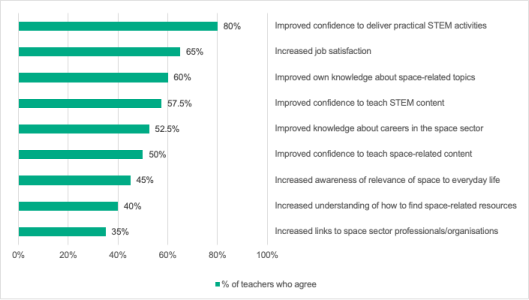
Alt: This is a bar chart showing the reported impact of NSA and ESERO-UK activities for teachers. The results are contained in supplementary information at the end of this report.
Teachers responding to the NSA evaluation’s masterclasses survey also highlighted the impact of seeing practical demonstrations within the masterclasses, giving them a wider range of ideas and resources for lessons. In line with research evidence[footnote 43], they believed that demonstrations increased the engagement of their students, making teachers more likely to incorporate them into their own teaching in the future.
Interviews with staff working in science centres again revealed that ‘Our World From Space’ resources increased their capability to deliver space-related content, which they believed increased public engagement with their planetarium shows and motivated them to continue delivering them in the future. They also reported that flexibility in choosing the appropriate resources for their context was crucial to their success and allowed them to maximise engagement amongst their audiences:
“They showed you all of the [resources], and then gave us [funds], so that we could buy whatever kit we wanted. That meant that there wasn’t a wastage of material and resources, but also, if we wanted to really capitalise on one activity, for example, we could buy ten sets of the activity, as opposed to one. I think that’s been really useful to make sure that we’re delivering what we want to deliver because it fits in with the project, but it’s also got to fit in with who we are as an organisation.” Delivery partner interview participant
Providing training and resources that can be tailored by those delivering lessons and activities is important because it makes the content more relevant for specific audiences and allows it to be adapted to fit into time and budget constraints in different settings.
Furthermore, teachers expressed that getting to the final or winning the ESERO-UK CanSat competition was an enabler to providing more STEM opportunities in their schools; in one case, winning the ESERO-UK CanSat competition gave approval from governors to allow continued STEM teaching outside of lesson time. As highlighted earlier in relation to teacher CPD, providing evidence of added value for pupils and schools of participating in Inspiration programme activities will be key in the future to encourage schools to buy in to the initiatives and allow time for participation. Demonstrating how teachers can use space as a context to teach the current curriculum (e.g. forces, energy, etc), rather than adding it in as an additional topic, will also support teachers to integrate space-related material into their teaching.
Opportunities to share knowledge and skills with other professionals
Research shows that participating in Professional Learning Communities (PLCs), in which teachers can share knowledge and ideas and work collaboratively to solve problems, can have a positive impact on science teachers’ professional development, content knowledge, and teaching practice. [footnote 44] Inspiration programme activities reflected elements of a PLC, supporting teachers, volunteers and staff in science centres who were delivering space-related content to learn from other professionals and share their own knowledge and skills with others.
Teachers in focus groups and surveys discussed sharing resources or contacts with other departments or schools after participating in activities. For example, one teacher introduced another school to their STEM Ambassador:
“I’ve got a former colleague who’s moved into another school. She gained responsibility for STEM in her school and then I’ve introduced her to the STEM Ambassador. We had an excellent STEM Ambassador last year and held on to him again this year, and we’re now sharing him with that school.” ESERO-UK teacher focus group participant
The majority of teachers (97% of the 38 respondents to our survey) reported that they were likely to recommend the activities they took part in to other teachers and schools. As reported earlier, some teachers viewed the technical skills required and time constraints as a barrier to participating, meaning that they may not recommend the activity to everyone.
NSA masterclasses provide opportunities for teachers to interact with Space Advocates and experience new topics and teaching styles. As a result, many teachers in the NSA masterclasses evaluation survey reported motivation to incorporate different elements into their teaching, including buying new equipment and increasing practical activities in lessons (see Figure 12).
Figure 12: Key elements teachers have incorporated into their teaching (n= 32)
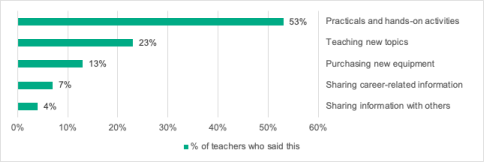
Alt: This bar chart showing the key reported elements that teachers have incorporated into their teaching. The results are contained in supplementary information at the end of this report.
Space Inspiration STEM Ambassadors also reflected on the value of sharing their knowledge and skills through the ESERO-UK programme, reporting a number of personal benefits, including improved teaching and delivery skills, and increased collaboration with industry professionals.
Staff in science centres further identified opportunities for collaboration and networking as beneficial to their confidence and skills. For example, ASDC stakeholders and delivery staff suggested that regular check-ins between science centres and the UK Space Agency allowed delivery staff to build their competence in designing and collecting evaluation data.
Participating in new types of activities and training also had impacts on transferable skills for those who were delivering Inspiration programme content. For example, volunteers who deliver content for the JET Blue Skies programme value the experience and believe it positively impacts their confidence and presentation skills when working with young people. This finding was also reflected in the survey completed by ESERO-UK’s Space Inspirations STEM Ambassadors, who reported
- Improved teaching and delivery skills
- Increased collaboration with industry professionals
Individuals within organisations hosting SPIN interns suggested that different elements of the process of hiring and mentoring interns were beneficial for their own development:
“I actually got a lot out of the experience. I just really appreciated the recruitment process and it taught me lots about how to do that properly. So that’s something I’ve added to my repertoire of abilities.”Industry/academic focus group participant
Overall, Inspiration programme activities give formal and informal education providers opportunities to develop their own skills and knowledge and broaden their networks. Positive interactions with industry professionals, as well as access to high-quality training and resources, encourages education providers to be more interested in space and more motivated to deliver space-related content. Working with schools and informal education providers to overcome barriers to engagement with these activities will ensure that space-related content is delivered to a broader audience, which could encourage more CYP to choose STEM subjects and space-related careers in the long term.
4.5 Industry’s perceptions of qualifications and skills and recruitment of skilled workers
Industry professionals from SPIN and TP Fund projects recognised the value of Inspiration programme activities for both space sector organisations and their potential workforce. Through interviews, focus groups and thematic workshops, they identified three main benefits of the activities:
- providing opportunities to train the current and future workforce in areas directly addressing recognised skills gaps in the space sector,
- developing relationships between organisations, and between skilled workers and industry,
- adding value to space sector organisations.
Addressing skills gaps in the space sector
Respondents from TP Fund projects discussed how they directly targeted skills gaps identified in the Space Sector Skills Survey[footnote 45] when developing their training programmes in order to have the biggest possible impact on the industry’s ability to recruit workers with the skills they need. These included systems engineering and data and analysis.
While each project had a slightly different focus and audiences, respondents all discussed targeting different elements of the workforce:
- individuals in different parts of space sector businesses (e.g., in technical and non-technical roles),
- individuals at different stages in their careers (e.g., those undertaking technical apprenticeships or degrees; early career and mid-career workers),
- individuals in technical careers outside of the space sector (e.g., in automative or aeronautical engineering).
For example, one project was described as a “conversion course”, developing space-specific skills amongst the current workforce:
“[The course] is designed to enable people from technical backgrounds in other sectors… to develop the space-specific knowledge and skills… to be able to function in a space-focused employment environment. There’s a secondary objective, which is that we want to enable people in non-technical roles to understand the space context.” TP Fund stakeholder interviewee
TP Fund stakeholders discussed being responsive to industry’s requirements, as well flexible to different users’ needs, levels of expertise, and objectives. They viewed this as central to changing industry’s perceptions of the workforce and their skills in the future.
Project leads have developed close working relationships with space sector organisations and the Space Skills Alliance, allowing them to address skills that industry professionals believe are a priority for the workforce. Maintaining these relationships and responding flexibly to new training needs will be crucial for supporting the growth of the space sector and its ability to recruit skilled workers.
TP Fund stakeholders, industry professionals and SPIN stakeholders also discussed the relative importance of transferable skills for people working in the space sector, as well as having a broader understanding of the industry. One participant in the thematic workshop identified management and leadership as being particularly important skills to learn and develop, highlighting that these skills are often less of a priority compared to more technical skills:
“I think the soft [transferable] skills across a lot of STEM industries are lacking, not even just at the apprentice and the graduate level, but even at the experienced professional level, because it’s not generally been something that’s been invested in. Generally, people have enough to get by but then if you’re trying to build a strong management concept, we don’t teach people how to be managers in many industries, but especially in STEM.” Thematic workshop participant
Previous evidence indicated that SPIN interns had relatively fewer opportunities to lead or manage projects during their internships. Increasing the focus on transferable skills may therefore be important for future training and interventions funded by the Inspiration programme, alongside the technical skills required for space sector careers.
Developing relationships
Industry professionals and project stakeholders discussed how Inspiration programme activities provided opportunities to develop relationships with the current and future workforce, as well as with other organisations. They suggested that these relationships would help to improve individuals’ qualifications and give the space sector access to a wider range of skilled workers.
Building and maintaining relationships with universities was seen as key for industry professionals and SPIN stakeholders, improving their reach and allowing them to attract students from other disciplines (e.g., maths, geography) who may otherwise be absorbed into other sectors.
“I think [a long-term goal], it’s getting graduates into the space sector before they’re snapped up by other sectors for me is important.” Industry focus group participant
TP Fund stakeholders noted that providing training opportunities helped them build relationships with other training providers and participants. They saw collaboration with other providers as a way to expand training programmes and their reach, enabling more of the current and future workforce to develop necessary skills. Training recipients benefited from longer-term programmes and multiple interactions with providers, often participating in various training types and events. This engagement enhanced their skills and exposed them to a broader range of professionals in the space sector.
The International Space University (ISU) programme and SPIN internships were viewed as key routes for students to develop relationships with peers and with space sector professionals. Industry professionals in the thematic workshop and focus group explained how they had previously benefited from participating in these programmes.
“ISU sell themselves on access to their network, but actually the real value is you meet a bunch of people that you’re going to progress through your career with. When you get to the later stages of career, you have points of contact and a network that you can leverage. Personally, I’ve done that.” Thematic workshop participant
Given the benefits of building relationships for both organisations and the current and future workforce, ensuring Skills for Space projects identify and support opportunities for collaboration and networking from the outset will be key for future Inspiration programme activities.
Adding value to space sector organisations
Industry professionals and SPIN stakeholders identified a number of benefits to space sector organisations hosting SPIN interns, including:
- SPIN interns bringing fresh ideas and new skills to the company,
- improvements in the company’s own processes and employees’ skills,
- positive impacts on the company’s reputation.
The SPIN programme enhanced organisations’ recruitment capabilities by introducing them to new processes for hiring interns. It utilised BeApplied, a non-biased recruitment platform, which organisations can continue to use in the future if they choose to self-fund. Some industry professionals found the system frustrating and would have preferred to look at the applicants’ CVs. However, blind recruitment processes can promote equal opportunities and inclusion in recruitment practices, [footnote 46] which is important for increasing the diversity of workers in the space sector. It may be useful to provide more support for organisations to use these processes in the future to achieve this goal.
Industry professionals hosting interns also identified how supporting SPIN interns increased their own skills, which could help recruit and retain skilled workers in the future:
“It’s been quite a good experience to have someone fresh in who was fresh to the workplace, and take them on that process, and then get good feedback at the end of it, and making sure they got the most out of the experience…As well as making us realise we probably need to write our processes down better when we’re midway through a project so someone can hop in better.” Industry focus group participant
The industry focus group noted that supporting SPIN interns also positively impacted their company’s reputation among other space sector organisations, potentially aiding in attracting skilled workers in the future:
“I think there’s a certain accolade that you get from industry. Oh, you’re hosting interns to do that and helping them to develop, that’s a good thing. So we wanted to capitalise on that as well, aside from all of the other benefits Industry focus group participant
Two main negative effects of hosting a SPIN intern on organisations were identified by industry professionals: increased workload and the length of the internship.
Workload was generally agreed to increase as a result of hosting a SPIN intern because of additional support needs, meaning mentors had reduced capacity for other tasks. However, they generally found that the value of hosting the intern outweighed the additional workload, especially as the internship progressed.
Some industry professionals suggested that the length of the SPIN internship was a barrier to fully capitalising on the value that could be brought to the company, suggesting that longer internships could benefit both the organisation and the intern. However, one focus group participant did note that the two month internship could provide the basis for future engagement with the intern, either through extending the internship or through future employment. As outlined earlier, some SPIN interns did benefit from these further opportunities, allowing organisations to recruit more skilled workers over time.
Overall, activities within the Skills for Space workstream are viewed positively by industry professionals and are supporting the current and future workforce to develop the necessary skills and contacts for a future space sector career. Being flexible and responsive to industry’s training and support needs will be important for the continued success of the Inspiration programme’s activities with these groups.
4.6 Barriers and moderators to delivery and participation
This section explores the barriers and moderators to:
a) successful delivery of Inspiration programme activities, and b) participation in Inspiration programme activities.
As the barriers and moderators identified generally fell under similar themes, they are presented together. The findings represent the views of our interviewees and focus group participants, unless stated otherwise.
Delivery barriers and moderators
Barriers and moderators to delivery fell under the following distinct themes:
- Funding
- Geographical reach
- Working with partners
- Communication with partners
- Capacity of project teams
- Skillset of project teams
Funding:
As many of the Inspiration projects and activities are funded primarily or solely by the UK Space Agency, funding was considered the main enabler for project delivery. A number of our participants recognised that their project or activity would not be possible at all or to the same degree without UK Space Agency funding. However, respondents discussed a number of funding-related factors that influenced delivery and future planning for their activities.
Though project stakeholders believed the activities they offered were of high quality, they described some changes they would implement if they had more funding. This included providing more resources that would add to the experience of individuals: for example, an ESERO-UK project stakeholder discussed a need for more practical resources for activities delivered in primary schools, as teachers found these particularly valuable for engaging younger students.
Participants also described aspirations to improve the accessibility and reach of their activities. For ESERO-UK project stakeholders, this meant being able to cover travel costs to allow students in rural locations to be able to access research placement opportunities. They also felt the uptake of the CanSat competition was limited by current funding, as the team was not able to meet the demand from schools, which has increased as a result of bursaries being made available to CanSat schools. Participants from The Catapult aspired to run additional induction events to reduce the travel time for interns, and offer a wider range of placements, both of which would require additional funding and increased team capacity.
Uncertainty around whether projects would secure funding in the future, as decided by the current government spending review, was a barrier to some projects’ ability to plan future delivery. There were reported aspirations to scale-up delivery, but without a continuation of funding, continued commitment was uncertain. Those participants who work with schools in particular reported that this uncertainty made it difficult to make commitments to schools and partners about the activities they would be able to deliver which is important for sustaining long-term relationships. There was a suggestion that being funded for multiple years (as opposed to yearly) would help to keep the momentum going.
“In order to make this even better, and to keep building on the success year on year, that’s the kind of thing that we need. A committed investment for […] longer term [funding] that just says, ‘Off you go. Go do it. We trust you to do it, or we’ll collaborate better with you to do it.” Interviewee describing Catapult
However, for some projects, these challenges around funding were less prominent, due to other funding sources, corporate partnerships, or in-kind support from partners (see ‘Working with partners’ below). For example, an ASDC stakeholder reported spending more than twice their delivery budget, which was only possible because of financial support from other sources.
“If we were entirely dependent on [UK Space Agency] funding, we wouldn’t have been able to deliver the breadth of the project that we have.” ASDC interviewee
Geographical reach:
A key consideration for the UK Space Agency is whether participation in Inspiration programme activities is representative across regions in the UK. This ambition was reflected in interviews with stakeholders: they described sustained efforts to increase delivery of activities in rural areas where access is typically more limited. However, this came with some challenges.
Engaging individuals and schools were more challenging in rural or semi-rural areas, which were further from clusters of space activity. For JET, which arranges visits to space workplaces as part of the Blue Skies programme and Inspirational Outreach programmes, it has been challenging to find companies to host visits. To address this, JET brought a number of companies together in one place to give the young people exposure to a range of activities and professionals in the space sector. For NSA, which delivers activities in all regions of the country, it was harder to recruit the target number of schools to take part in activities in certain regions because there are not enough schools for the delivery team to fill their time. The stakeholder said they would factor this in when planning for the future.
“Actually, as the project’s gone on, we’ve realised that some of these things, there is no way to make them up. No amount of advertising, no amount of recruiting is going to change the numbers in these regions.” NSA interviewee
Another challenge was the uneven coverage of partners that projects work with to deliver activities across different regions. For example, whilst the numbers of NSA Space Advocates and ESERO-UK consultants delivering CPD are high, they are underrepresented in certain regions. This resulted in delivery of activities being lower than intended in some cases.
Despite these challenges, stakeholders discussed the impact of developing good links with partners across regions in being able to deliver activities more widely. This included building relationships with Space Cluster[footnote 47] managers, working with partner organisations and universities based in different areas, and conducting targeted recruitment of Space Advocates.
“We couldn’t very well work in Belfast ourselves. That would be a huge cost and a huge time outlay for one day’s worth of school content, but people who live in Belfast can very easily go and do that for us, so that’s why we have this network. It allows us to be truly national.” NSA interviewee
Where regional barriers could not be overcome, projects offered some activities virtually. For example, ESERO-UK offered remote and hybrid research placements, with the ability to use equipment remotely, which opened up more opportunities for students in more remote locations. It also allowed more providers who would not have the capability to host students in person, to offer placements, e.g. where staff themselves had hybrid working arrangements. Similarly, remote placements also allowed SPIN interns to apply to projects without the limitation of distance, and suited students who preferred to work from home.
Working with partners:
Working with partners was essential for projects to deliver activities on a wide scale and to offer individuals inspiring learning opportunities. Stakeholders discussed three ways that partners brought value to project delivery:
Expansion of reach: Projects took advantage of their networks to expand their reach to different areas. For example, ESERO-UK drew on consultants’ existing links with schools to reach more teachers about CPD opportunities. This was seen as an important recruitment strategy as space is seen as a ‘niche’ part of the curriculum and teachers may not seek out space CPD of their own accord, or be aware of how space can be used as an engaging way to contextualise the curriculum. Building a database of primary and secondary schools with contact details also allowed ESERO-UK to promote the other activities and opportunities they offer through targeted email campaigns. Working with partners also reduced the promotional work that projects had to do themselves. For example, Raspberry Pi did a lot of the promotion for the Astro Pi competition which meant ESERO-UK did not need to allocate much resource to do this themselves.
Consulting and developing resources: Projects also brought in industry partners to support with the development of resources to ensure they were up to date with the latest developments in science and technology and feed into staff development. For example, ASDC invited development partners to attend staff training so they could meet the science centre staff and provide in-depth background on the science concepts that the activities are about. A stakeholder from a TP Fund funded project described working with the Space Skills Alliance who audited their initial ideas and advised about the skills gaps in the current workforce (e.g., systems engineering, data and analysis, and commercial operations), which they then made sure their training programme addressed.
Delivering or supporting inspirational activities: Partners also directly contributed to delivery by leading or supporting with a range of activities. These include delivering careers talks, written Q&As, or ‘Meet the Expert’ events, as well as longer-term commitments like volunteering as a Space Inspirations STEM Ambassador, and organisations hosting SPIN interns. Industry partners have also supported activities by providing their services or venues for free, which helps projects to maximise the funding for other expenditures. Stakeholders said this support was facilitated by industry partners buying into the ambitions of Inspiration programme projects.
“People have got behind this project in industry. The smaller companies have really embraced this and given those students a chance, so I think all of those things are really, really key enablers to the success of this.” SPIN interviewee
Stakeholders also identified challenges around engaging partners. Working with schools was often difficult due to limited capacity of teachers and other school staff. This, and the limited time teachers have to attend events outside of school, meant teachers were not always able to take part in more time intensive interventions or CPD courses. Teacher capacity was also a barrier to schools being able to participate at all (see Barriers to participation).
Communication:
Communication was an important element of effective project delivery. Stakeholders identified barriers and moderators to communication between their team and various partners.
Communication with delivery partners: Stakeholders expressed that communication with delivery partners was working well, and attributed this success to frequent meetings and check-ins where they could identify challenges and devise solutions. In addition to this, ASDC stakeholders described a MS Teams channel where science centre staff could ask each other questions and give suggestions about how best to run activities. One TP Fund project had several in-person workshops to collectively discuss how to deliver activities and solve problems, which was very successful.
“… that is probably one of the things that we pride ourselves on, that we have really good relationships with our partnerships” TP Fund interviewee
Communication with schools: However, communication with schools and universities was often challenging. Staff at these institutions were time poor, meaning they did not always respond to emails or return calls in a timely manner, or needed prompting to complete the necessary paperwork, e.g. booking forms and evaluation questionnaires. This meant that liaising with these contacts was time intensive for project teams. Staff from one project had worked towards streamlining this process by automating communication as much as possible and using email templates to save time.
“I would say probably a good 70 per cent of the job is external stakeholder communication mostly with schools.” NSA interviewee
Communication with the UK Space Agency: Stakeholders described aspects of working with the UK Space Agency that aided project delivery. The UK Space Agency gave projects a level of flexibility where they were open to changes to the agreed delivery plan, if particular elements were working well or less well. This included the UK Space Agency approving a grant change agreement to stop delivering an activity that was not deemed to be impactful for the target group.
However, stakeholders also described communication with the UK Space Agency as being too infrequent to keep up with the evolving nature of projects, and decisions that required UK Space Agency sign off consequently taking longer than was ideal. One stakeholder felt weekly meetings would have helped to deal with queries more quickly and avoid delays to project activities and invoicing. Delayed communication was thought to have been exacerbated by staffing changes in the UK Space Agency team and a change to the invoicing procedure. For one project, the delays in sign offs caused the project to fall behind schedule, which put pressure on the project team. To enhance efficiency and minimise delays, the UK Space Agency could implement more frequent and structured communication channels to help maintain project schedules and reduce pressure on project teams.
Communication with other Inspiration programme projects: One stakeholder talked about successful joined up working with another Inspiration programme project which involved monthly strategic meetings to identify opportunities to work together and to deliver activities jointly. The communications teams also worked together to ensure they were publicising these activities widely. These strong links were facilitated by the ambition that one project has to deliver all non-school-based sessions in collaboration with a space industry partner. However, not all projects were connected in the same way; another stakeholder felt there could be better collaboration between projects as they had little insight into other Inspiration programme activities and thought they could find opportunities to work together, particularly to signpost individuals to other projects’ activities. This indicates that projects have an appetite for more joined-up working which the UK Space Agency could help to foster by connecting project contacts and facilitating regular collaboration sessions to ensure projects are well-informed about each other’s activities. Additionally, supporting interaction between projects’ communications teams could help maximise the reach of Inspiration programme activities.
Capacity of project teams:
Staff turnover, training needs, high workload and increased demand were all cited as reasons for poor capacity of project teams. Whilst gaining momentum and recognition over time was evidence of success and something projects embraced, increasing delivery without additional funding was a challenge. For example, the SPIN internship is gaining more applicants and host organisations every year, and managing all the organisations has a significant impact on The Catapult team’s workload. One stakeholder suggested that they could reduce their overheads related to supervision of larger organisations which pay for their own interns, whilst still supporting smaller companies which do not have all of the business functions of a larger company, e.g., a HR department.
Skillset of project teams:
Stakeholders felt that the skills and expertise of project staff and their connections in the sector, as well as the positive and growing reputation of the projects, helped to enable them to continue to deliver, and attract interest to, their inspirational activities. For more established projects that existed before UK Space Agency funding, stakeholders also cited their prior experience and learning from the activity as an enabler for successful project delivery. For example, JET had established process for delivering the Blue Skies programme which helped them to deliver activities in the space context:
“I think having an established programme and an established methodology and an established team, [meant] we […] hit the ground running with this completely… So I wouldn’t say it’s been a simple process just to plug in space, because I think that takes away from the sheer amount of work and the sheer commitment from the UK Space Agency and from our space partners to make this happen. But because the methodology was up and running, the schools were engaged, the students were engaged, to then develop and devise those space sessions has taken time, but it’s been a relatively simple plug-in because all the groundwork is in place to make this happen.” JET interviewee
Participation barriers and moderators
Participants also discussed factors that impacted individuals’ ability to take part in activities. Data comes from both stakeholders and individuals (CYP, interns, current workforce and families). As we only spoke to individuals who did take part in activities, the barriers discussed here may not represent all the factors that make it difficult for potential individuals to take part. Factors fell under three themes:
- Location,
- Cost
- School factors.
Location:
As outlined above, projects prioritised ensuring activity delivery was regional, although this was sometimes a barrier to participation, particularly for activities where learners had to arrange their own travel. For example, a project which uses regional partners to deliver activities in different parts of the country sets targets for numbers of learners reached in each region. In practice, this meant learners were only able to apply for placements in their region, even if a placement in a different region was more accessible or desirable to them. There was therefore a “balancing act” between achieving KPIs and improving accessibility, and this was an area that the project intended to review.
“Looking [to] the future, it’s removing those barriers, addressing them so that students can actually make those decisions themselves on the travel, and if they do have an aunt or an uncle in the south west and there’s a placement that they really want to go to, then they will be able to stay with them. That will be down to them really, and it’ll just give more flex for them and more accessibility.” ESERO-UK interviewee in relation to research placements
Some individuals also mentioned location as a challenge. SPIN interns who did not live near their placement organisation described difficulty finding short-term accommodation at short notice. Many of the placements are based in the space cluster in Oxford, where rent is expensive, though SPIN interns said the remuneration for their role covered their rent. Similarly, in a focus group with participants from SPIN host organisations, participants described interns travelling a long distance. A stakeholder from The Catapult also felt the induction events being held in only two locations (Edinburgh and Oxford) made it difficult for many interns who did not live near either of these locations to attend, especially as they were not able to reimburse travel costs. Conversely, location was mentioned as an enabler by SPIN interns who lived close to where their placement was based and often chose the placement for that reason.
To mitigate against these challenges, ESERO-UK provided bursaries for placements, and The Catapult provided travel grants, which were felt to aid participation for some individuals where travel costs were a barrier. SPIN interns also said that placements being paid and having options for hybrid or remote working placements helped individuals to participate who may not otherwise have been able to. Therefore, project teams encouraging companies to offer more flexibility for participants, and more support for relocation and travel, would help to reduce the barriers to participation even further.
Cost
Inspiration programme activities being delivered free of charge was an important factor that enabled schools and individuals to access the range of inspirational activities. However, stakeholders identified other costs, such as travelling to venues and the cost of teacher cover, which were prohibitive to some schools’ participation. Stakeholders said they were working towards reducing these barriers even further. This included NSA covering additional costs such as travel costs, the cost of releasing teachers, and providing catering.
“The fact that it did not come at a cost for our school, meant we benefited a lot from it because we could spend that money towards getting other things in terms of equipment for the kids or resources. We wouldn’t have had that money to spend on the NSA if we had to pay for it.” Teacher interviewee
Additionally, teachers who facilitated students to take part in the CanSat competition said that the costs associated with travel were significant, especially if they got further in the competition. One teacher said their school’s participation was dependent on donations from a local business, which involved a lot of email outreach. It was not clear if this was encouraged by ESERO-UK or if there was other financial support available to schools.
“It’s a lot of work, particularly if you get further in the competition and the costs start to go up around transport. That’s quite a big challenge. There’s no easy answers, I’m afraid. Lots of communication and following up with phone calls. So it’s another thing that saps time.” ESERO-UK teacher focus group participant
School factors
Buy-in from school staff:
Buy-in from other school staff was considered to be an important factor in schools being able to participate in Inspiration programme activities. Support of senior leadership was important for teachers wanting to arrange for an activity to take place, and support of other teaching staff was important to accommodate the activities, e.g., allowing their students to miss a lesson to attend an NSA masterclass. Teachers’ active participation was important for students to get the most out of activities:
“The school staff are really important. Again, to understand that they play an active part in the sessions, by which I mean they should be safeguarding, they should be getting involved in activities if they want to, encouraging the students - as are we. So, yes, the school staff can be really important. I think it can be really beneficial to a session.” NSA interviewee
Where there was less support from other teachers and the senior leadership team (SLT), this put strain on teachers running the activities:
“It’s very rewarding but a lot of hard work and whilst SLT enjoy the kudos they are reluctant to provide time or support.” Teacher survey respondent
Teacher capacity:
In interviews and focus groups with teachers, time to facilitate activities was discussed as a barrier. For activities that required more input from teachers to organise, like running the CanSat competition or arranging an NSA masterclass, this impacted their ability to fulfil other teaching commitments. This was seen as particularly challenging at certain times of year, e.g., end of term deadlines, and around school exams.
“CanSat is a great activity and skills development for students are superb. It requires a huge amount of staff expertise and time however, for a small number of students.” Teacher survey respondent
Additionally, one view was that, due to timing constraints, it was only feasible to run the CanSat competition with older students who had more STEM knowledge and independent learning skills, as younger students would need a lot more guidance and support. This suggests that ESERO-UK could do more to promote other, less labour intensive, activities (e.g. the Climate Detectives competition), and/or STEM Ambassadors who could support the delivery of the CanSat competition, reducing burden on teachers.
Teacher knowledge:
The teacher survey also revealed that teacher knowledge was instrumental for teacher-led activities like the CanSat competition. Whilst all teachers who completed the survey said they were ‘quite likely’ or ‘very likely’ to recommend the activity they took part in to other teachers, one reason given for answering ‘quite likely’ was the view that they lacked the technical knowledge needed and this impacted their ability to deliver the activity.
It may be the case that teachers with higher levels of STEM qualifications are already more confident in their ability to facilitate such activities or engage with space-related CPD resources. Of the teachers that completed the survey, 89% had a degree or equivalent qualification in a STEM subject, which is considerably higher than the number of secondary science teachers with a science degree nationally (at 73%).[footnote 48] This might suggest that other teachers with lower levels of formal science education are less likely to engage with Inspiration programme activities, although we are unable to assess this point directly through the data collected from teachers who did participate in activities.
4.7 Value for Money insights of the Inspiration programme
To assess the value for money of the Inspiration programme, we have considered the programme costs incurred during the grant period (2022/23 – 2024/25), which totals £11.0 million, including £7.1 million budgeted for 2024/25. We have not attempted to project the cost beyond the grant period. This figure represents the direct costs associated with the programme’s activities. Some costs we have identified fall outside of the UK Space Agency’s remit, e.g. funding from employers to run particular activities and volunteer time. These are treated as unquantifiable due to a lack of data to robustly include them. For the benefit considerations, we focused on three key impact variables, which include benefits arising from (1) increased motivation in students pursuing STEM study, (2) more teachers engaged in CPD activities, and (3) more people working in the space sector. The monetisation typically focuses on two key components: the scale of impact and the unit cost. However, due to limited quantified impact evidence, we used breakeven analysis, which focuses on the unit cost savings / benefits rather than the scale of impacts.
The unit cost analysis examines the cost associated with one unit of change in those outcomes. These key unit cost savings / unit benefits include:
- Earnings uplifts of children and young people pursuing STEM study: £37,400 per person who would not otherwise have studied STEM, in 2017/18 prices, which is proxied by the total earning premium of graduates of STEM degree programmes over non-STEM graduates, over the first 10 years after graduation. [footnote 49] Our analysis takes a conservative approach and does not account for any potential differential that may persist beyond this period.
- Teachers supported by continuing professional development (CPD) activities: £29,401 per person, assumed to apply across a teacher’s career, proxied by the direct and indirect benefits attributable to CPD interventions, i.e. increases in wellbeing and reduced downstream training costs incurred by governments and schools [footnote 50]
- Increase in economic productivity through working in the space sector, where we consider two cases: (a) £88,000 per person for those initially not pursuing STEM/space sector careers but who are now motivated to do so, against the counterfactual of individuals not pursuing STEM/space sector careers. The unit cost is proxied by the difference in labour productivity between those working in the space sector and the UK average in 2021/22[footnote 51] and uprated to 2023/24 prices, and (b) £54,700 per person for those who were already pursuing STEM but are now motivated to pursue space sector careers, against the counterfactual of individuals pursuing STEM but not space sector careers. The unit cost is proxied by the difference in labour productivity between those working in the space sector and the information and communication sector.
The cost savings and benefit generated quoted above were uprated to the 2023/24 prices in the modelling. To avoid overstating the programme benefits, we applied optimism bias that acknowledges the potential overestimation of programme benefits. This bias is set at a rate based on the data age and source (similar type of intervention, international analysis, etc), as outlined in HM Treasury’s guidance. [footnote 52] For example, we applied a -40% optimism bias to student earning uplifts, reflecting that the unit cost is derived from data collected between 2010 and 2013. Meanwhile, we applied -25% to economic productivity, where the data used to derive the impact is from 2021/22. The scale of impact measures the extent to which the programme has achieved its intended outcomes and changed participants’ behaviours (e.g. increased motivation of students to pursue STEM study or space sector careers, more teachers engaged in CPD activities). It quantifies the number – or proportion of – participants whose outcomes or behaviours have changed as a direct result of the programme. This measurement considers the following:
- Additionality: the extent to which the observed changes can be attributed to the programme and not to other factors.
- Displacement: the possibility that the impacts may have come at the expense of other activities or groups. The programme does not appear to simply shift existing interest from non-STEM fields or initiatives but rather broadens participants’ understanding of STEM opportunities.
- Leakage: the extent to which the programme’s benefits may have spilled over to unintended individuals. Our analysis suggests that leakage is not a significant concern, as the Inspiration programme is designed to be inclusive, to engage and support individuals from all backgrounds and stages of education to pursue STEM. Findings from the survey and interviews suggest that teachers and students have an overall increased engagement with, and/or new interest in, STEM and the space sector.
Based on the above, the “deadweight” (proportions of costs or benefits that would have occurred even without the Inspiration Programme) can be calculated and excluded from the analysis.
We used breakeven analysis, which identifies the point at which the programme’s monetisable benefits equal its monetisable costs, for the VfM analysis. It identifies what percentage of CYP need to be motivated to pursue STEM study, who would not otherwise, for the benefits to equal the costs, while isolating all other factors. This breakeven approach is used given the presence of data gaps and uncertainties which make precise estimation difficult.
Breakeven analysis findings
Given the limited response rate and the potential for survey bias, we used breakeven analysis to examine the thresholds at which monetisable benefits would offset programme costs. This analysis focuses on three key impact variables:
(1) the number of students newly motivated to pursue STEM who otherwise would not have, (2) the number of people newly interested in pursuing space-related careers, and (3) the number of teachers who benefited from CPD.
To test the programme’s value for money under different assumptions, we flexed each variable individually while assuming no benefits from the other two channels. This allows us to identify the breakeven point for each benefit stream and assess:
- At what threshold does the programme transition from positive Value for Money (VfM) to negative?
- How much can the benefits fall short of expectations while still maintaining VfM?
- Which benefit channels require stronger evidence to improve the model’s robustness? This can inform future research priorities to strengthen the programme’s evidence base.
Our breakeven analysis finds that student benefits are the largest driver of value:
- For student motivation, based on the MI data, 140,868 students participated in programme activities during 2024/25. Additionally, the CYP survey data shows that 84% of respondents were already interested or very interested in STEM prior to the intervention. This suggests that the activities had reached a significant proportion of students who were already enthusiastic about STEM before the intervention. Assuming this represents the deadweight, 0.8% of student participants need to be newly motivated to pursue STEM who otherwise would not have, for the programme to break even. This is driven by the additional benefits for students who go on to STEM careers and the corresponding wage premium over non-STEM graduates in the first 10 years after graduation.
- In terms of space career motivation, the CYP survey findings suggest that none of the students who were previously neutral or uninterested in STEM became interested in space sector careers after taking part in Inspiration programme activities. Therefore, we only consider cases where people were already interested in STEM but not in space sector careers, who are newly motivated to pursue space sector careers as a result of the programme. On this basis, it means that at least 0.5% of participants need to be newly motivated to pursue a space-related career for the programme to break even.
These estimates consider one benefit channel at a time, assuming no benefit from the others. In practice, we might expect multiple benefit channels to apply simultaneously, which could lower the breakeven point.
Separately, when considering the benefits from teachers participating in future ESERO-UK CPD or activities with STEM Learning in the future, our analysis shows that this channel alone is not strong enough to drive the programme to break even. An unrealistically high level (>430%) of teacher motivation would be required for the benefits from this channel alone to exceed the breakeven level.
Table 6: Summary of the Value for Money insights
| Impacts | Breakeven threshold (required percentage) and programme cost | Qualitative assessment of VfM | |
| Education and STEM-specific skills attainment | |||
|---|---|---|---|
| Children and young people (due to earnings uplift) | 0.8% of students motivated to pursue STEM | / | |
| Wider economy (due to broader spillover benefits from general uplift in STEM skills in the economy) | / | Positive | |
| Businesses (due to benefits from a better educated talent pipeline) | / | Positive | |
| Teacher continuing professional development (CPD) | |||
| Direct impacts (due to teachers supported by CPD) | 433.5% of teachers motivated for CPD (breakeven not achievable from this benefit alone) | / | |
| Indirect impacts (due to pupils taught) | / | / | |
| Economic productivity | |||
| Wider society | 0.5% of students motivated to pursue space-related career | / | |
| New partnerships & investment | |||
| Companies | / | Positive | |
| Workforce diversity improvements | |||
| Companies | / | Positive | |
| Volunteering benefits | |||
| Individuals | / | Positive | |
| Local communities | / | Positive | |
| UK’s soft power and reputation | |||
| Companies | / | Positive | |
| Wider society | / | Positive | |
| Public accounts | |||
| UK Space Agency | -£11.0m | / | |
| Non-UK Space Agency | / | Negative |
Unmonetisable costs and benefits
As part of the VfM assessment, we have also considered the unmonetisable costs and benefits identified within the evaluation framework. Although these factors are not directly quantifiable in monetary terms, it is important to assess their plausible directional impact on the NPV and BCR of the programme. Based on the evidence gathered from other evaluation strands and existing evaluation reports, we provide the following assessments, which are also summarised in Table 6 above:
-
Unmonetisable costs. One of the unmonetisable costs identified is the cost incurred by employers to fund certain activities of the programme that fall outside the UK Space Agency’s remit. While this cost to employers is noted, we do not expect it to contribute significantly to the overall programme cost.
-
Benefits to the business sector. A key benefit of the programme is the improvement in the talent pipeline and the potential reduction in skills gaps in the space sector. From the focus group with industry professionals, some companies indicate that their ability to recruit and host placements has improved, as well as attracting new partnerships. This represents a potential benefit from a VfM perspective. However, the number of companies that benefitted and the extent to which these companies benefitted are not yet clear. We consider the overall effect on the programme’s benefits to be limited within the evaluation period. However, while subject to considerable uncertainty, these benefits may accrue over a longer time period.
-
Benefits to the economy from improved workforce diversity. For example, a report by the Centre for Economics and Business Research finds that “the UK’s most diverse workplaces (across gender, ethnicity and sexual orientation) are 12 percentage points more likely to financially outperform their industry average than the least diverse firms”. However, quantifying its impact on the STEM and space-related workforce within the evaluation timeframe is challenging, as we do not have enough evidence to show the quantifiable correlation between diversity in project participation and diversity in the future workforce. This is expected to be a long-term unknown impact, with potential benefits but no clear, immediate correlation between changes in STEM/space career uptake rates among underrepresented groups (e.g. women and/or minority ethnic groups) and the activities provided by the Inspiration programme.[footnote 56]
- Spillover benefits to the wider economy from a more STEM-skilled workforce. This is a positive long-term impact, but the quantifiable impact remains difficult to assess in the context of the current evaluation.
- Increasing the UK’s soft power and reputation in the space sector. This may positively contribute to the UK’s standing on the global stage and facilitate collaboration and partnership with overseas governments and organisations. However, the direct impact of the Inspiration programme through this benefit channel is difficult to measure and quantify.
- Benefits to the volunteers involved in the programme. The programme provides potential benefits to those involved as volunteers, with positive impact such as skill development and gains in subjective wellbeing. However, as we lack sufficient data to quantify these benefits, we cannot fully assess their contribution to the overall programme’s VfM.
Limitations of the VfM analysis
While the MI data and surveys provides useful insights, conducting a cost-benefit analysis of the Inspiration programme is challenging without a robust quantitative impact evaluation. This makes it difficult to assess the true value for money. It underscores the need to expand data collection to support more robust VfM assessments.
For example, in the breakeven analysis, we found that motivating students to pursue STEM studies or space-related careers presented a relatively low breakeven threshold for the programme to achieve value for money. To strengthen future evaluations, a larger sample size of students, capturing both before and after survey data, as well as tracking longer-term effects, would be essential. This approach would not only improve the robustness of the cost-benefit analysis, but also provide a more comprehensive assessment of the programme’s overall value for money.
4.8 How best to monitor the Inspiration programme
Stakeholders reported three main purposes for data collection: to monitor and report on the reach of activities, to judge the effectiveness or value of activities, including potential areas of improvement, and to assess the impact of activities on individuals. Collecting data for each of these purposes was associated with a number of challenges, which we have grouped into four main themes:
- Constraints
- Encouraging individuals to complete monitoring and evaluation measures
- Designing useful and relevant monitoring and evaluation measures
- Measuring impact in the long term
We explore these themes in relation to the different types of data collection below.
Measuring reach
Measurements of an activity’s reach encompass a range of metrics, including:
- the number of resources downloaded (with follow-up data on use)
- the number of schools and/or individuals participating and their interaction hours,
- the number of opportunities available and the number of applications received,
- the amount of interest in a resource or event (e.g. page views, advance registrations),
- characteristics of students and schools participating in the activities.
Tracking the number and length of interactions is quite simple and often the focus of reporting to the UK Space Agency and other funders. Some beneficiary characteristics are also quite straightforward to collect, such as age group, particularly for projects such as NSA, JET and ESERO-UK with activities targeted at specific year groups within schools.
Data concerning other demographic information of individuals is less consistent across projects. Gender, ethnicity, eligibility for free school meals, and religion of individuals were all collected during SPIN’s recruitment process, but other projects do not capture this full range of data, due to the following factors:
Time and resource constraints:
For JET and ESERO-UK Research Placements, which have a focus on supporting underrepresented groups, collecting information on individuals’ socioeconomic status is central to their approach and is prioritised as part of the selection process for participation in the activities. NSA and ASDC also collect postcodes of individuals and/or schools attending activities as a rough measure of socioeconomic status, allowing matching of the postcode to the Index of Multiple Deprivation (IMD) or Scottish IMD. However, time and resourcing constraints can prevent project teams from collecting and analysing the demographic data:
“…it’s easy to get the numbers of the people who come and do the workshops, but to actually then put it into a spreadsheet that says, and they came from this postcode, requires that additional layer of human time.” ASDC interviewee
Data sharing and GDPR:
NSA and ESERO-UK have found issues around data sharing and GDPR to be a constraint on the personal data they can collect on student individuals, particularly when collecting data from schools. As a result, NSA have decided to collect data from classes attending their activities, rather than on an individual basis, focusing on socioeconomic background, nationalities, ethnicities, and the gender split of the class.
Some of the data concerning those taking part in ESERO-UK’s competitions are held by external organisations, such as the European Space Agency. When signing up to these competitions, teachers are required to tick a box to allow their school’s data to be shared with ESERO-UK. Many teachers fail to do this during the sign-up process, meaning that not all beneficiary data is available.
Developing a more nuanced understanding of who the Inspiration programme is reaching will require more standardised instructions to project leads and funding applicants to allow them to plan resourcing to collect these data. If, for example, projects targeted at schools are required to collect personal information about students, they will need to allocate time and funding to developing robust methods to do this, including dealing with GDPR enquiries from schools and following up teachers to provide the data. Understanding the practical issues associated with collecting personal data and planning how to mitigate them from the beginning of a project will help to reduce difficulties with resourcing and improve the quality of the data on the Inspiration programme’s reach.
Judging the effectiveness or value of activities
To judge the effectiveness or value of activities, projects often provide opportunities for individuals, partner organisations, and volunteers to provide feedback:
- The Catapult conducts regular check-ins with SPIN interns throughout their engagement with the SPIN programme (after onboarding, during and after the placement) to assess the quality of the internship and the interns’ opportunities to engage with different activities, as well as any suggestions for improvements to processes. They also ask host organisations for feedback.
- A number of programmes delivered by ESERO-UK incorporate opportunities for feedback from partner organisations and volunteers, as well as from teachers who are involved in supporting CYP to participate in activities.
- TP Fund projects collect feedback from individuals after they have attended their courses and sessions.
- Challenges associated with collecting feedback fell under the following themes:
Feedback fatigue:
A common theme across projects was the difficulty teams had in gathering sufficient feedback. Some participants identified feedback “fatigue” as a key problem, wherein gathering data at multiple times from the same participants or organisations can reduce their engagement with the monitoring and evaluation process. Requesting feedback via email after an event was also identified as a factor in low response rates.
“The challenge is getting people to respond. People are very positive in the room, and we get lots of anecdotal feedback and things like that, but yes… The moment they leave the room, getting that follow-up feedback is tricky.” TP Fund interviewee
Time and resource to chase feedback:
The time and human resources required to follow up on feedback requests is significant for projects. This is particularly the case for larger-scale projects and those working with a wide range of individual partners, such as the Space Inspiration STEM Ambassadors. Although opportunities for feedback are available, the fact that ambassadors are volunteers and often deliver multiple short sessions, rather than engaging in a longer-term programme, means that it is more burdensome for the ambassadors to provide feedback and harder for the project team to track it:
“On the platform, when you do complete an activity, there is a very brief … question-and-answer thing, so just [for example] ‘How did it go? … ‘rate your experience?’ …but once again it’s up to the ambassador to actually go out and do it because they might just ignore it…” ESERO-UK interviewee
However, feedback on sessions from paid staff delivering sessions is easier to gather and forms a central part of the ongoing development of activities for ASDC. Science centre staff delivering ‘Our World From Space’ activities provide a range of feedback, including:
- reflections on their perceptions of how effective the activities were in engaging participants and changing their attitudes towards space,
- quarterly self-reflections on their own role and how they have used and developed their skills in delivering activities.
While these tasks do take up staff time, they have been included as part of a wider monitoring and evaluation strategy which was set out to capture what data collection was already taking place and what was required before rolling out new elements of the programme. This was seen to reduce workload and streamline data collection:
“It was just shifting where the effort lies to get the biggest impact that we know that we can get.” ASDC interviewee
Time and resource to analyse feedback:
As for data collection on reach, collecting feedback on the effectiveness and value of activities requires a great deal of time and resource to first collect the data and then to analyse it and implement the findings. Identifying the best ways to incorporate this data collection into the projects from the beginning can improve the quality and quantity of data and minimise extra effort required from project partners.
Measuring the impact of activities
The main method of measuring impact of the activities is to conduct surveys with individuals. Some of these surveys are incorporated alongside the more general feedback on the sessions, such as those collected by TP Fund projects. Teachers accessing CPD through ESERO-UK are sent an email with an Impact Toolkit form after their participation to try to track the impact the CPD has on their teaching practice and, consequently, on their students. NSA have introduced pre- and post-activity surveys for masterclasses to measure change in a range of student perceptions, knowledge, skills and attitudes as a direct result of participating in the activity, which are completed by the teacher for the class as a whole.
In addition to the fact that response rates are naturally low for evaluation surveys without specific targeted resource to encourage completion, we identified the following challenges:
Reliance on parental consent:
Stakeholders highlighted issues with gathering evaluations from individuals under 16 due to the need to obtain parental consent for this group. Where parents are not engaged, this provides an additional obstacle to survey completion. Project teams are reliant on teachers to follow this up, which places additional burden on them and may discourage them from participating in the future. Considering the best ways to obtain parental consent for younger age groups will be an important factor in planning future project evaluations.
Burden on survey respondents:
Another obstacle to collecting evaluation data from individuals across projects is the design of the survey itself in terms of the type of questions asked, the language used, the length of the survey overall, and its meaningfulness to both individuals and project teams.
“That’s just something that really we have to think about… that some of our young people do struggle with the language side of things or the lengths of the surveys.” Thematic workshop participant
JET address this issue by conducting the surveys in group sessions in which facilitators support the individuals to think about their own skills, give them examples and points of comparison, and help them to judge themselves and their progress more accurately. This approach is embedded into specific sessions within the timetable of their programme. However, when surveys are completed away from the activity, as in other projects, it is not possible to have this level of insight into whether individuals understand the question and how accurate they are in their reflections and answers. It can therefore affect both the quantity of the data collected, where surveys are partially or fully incomplete, and its quality. Encouraging more participants to complete surveys within the activity sessions could help address these issues.
Tailoring surveys to different activities:
When many different types of activities are taking place, such as those being delivered by Ambassadors and across different science centres, it can be difficult to capture impact on individuals through one standard survey.
ASDC have tried to address this issue in different ways. To ensure some comparability across activities, they have incorporated three core questions about the events or sessions for individuals to complete. These can be presented however the centre sees fit, and methods include collecting answers to the questions on postcards and, through online survey tools during the sessions. They can be included alongside wider centre-specific surveys relating to the topic being explored. For example, a centre delivering sessions connecting space-related content to climate change used a validated questionnaire to measure the impact on individuals’ eco-anxiety. These approaches help to integrate some standardisation in evaluation while ensuring that both the questions and the resulting data are meaningful and relevant.
To address the limitations of surveys, stakeholders also used interviews and focus groups where possible to improve the evaluation data they can collect, and to obtain more in-depth feedback about particular activities, although all flagged the time and funding constraints on doing this on a large scale.
“I think we went through about 72 hours of interviews, which was very labour intensive, and included both the student and the mentor. We got a lot more information from them. […] we wouldn’t have been able to have captured as well on a survey”. Thematic workshop participant
Tracking long-term impact:
Some of the more extended activities, such as those provided by The Catapult, JET, and ESERO-UK Research placements, track changes in individuals over the period of engagement. JET do this through a survey based on their five key targeted outcomes (confidence, resilience, goal setting, aspiration, and motivation) for both individuals and teachers to complete at the beginning and end of every year of the three year Blue Skies programme. Due to their long-term relationship with schools and the particular pupils involved in the project, they can also link to broader outcomes such as academic attainment and teachers’ perceptions of the impact of the pupils’ participation on their behaviour and functioning within the school environment.
For longer-term tracking of activities’ impacts on individuals’ study and career progression, The Catapult and ESERO-UK Research Placements encourage individuals who have completed internships and placements to become part of an alumni group, while JET have an Ambassadors scheme for those who have been through the Blue Skies programme. The Catapult use the Space Enterprise Community site to support the development and maintenance of the alumni group, which also allows them to contact alumni in the future and to assess any re-engagement with the SPIN programme.
Projects funded by the TP Fund can also assess future engagements of individuals with other activities run by their organisations. NSA have implemented a system to track school engagement in the longer term, giving schools a bronze rating for one engagement with the project, silver for two engagements, and gold for multiple events or engagements.
While opportunities to build a longer-term relationship with individuals is extremely useful in terms of assessing the overarching aims of the Inspiration programme, constraints remain around resourcing, GDPR, and individuals’ engagement over an extended period. Responses tend to reduce over time and it is difficult to match individuals to later outcomes unless project teams have been given specific permission to contact them again after the end of the project. It is also difficult to judge how much of the impact can be attributed to one particular activity or experience and not to a different one, or the combination of multiple opportunities.
Opportunities to improve future data collection
Long-term monitoring is needed to track the continued effects of the programme on students, teachers and other individuals, e.g., capturing how many of those who showed interest in STEM follow through by pursuing STEM qualifications and careers. Additionally, the programme’s impact on motivation to pursue space-related careers should be assessed over a longer period to evaluate how initial interest translates into actual career paths. Encouraging students to join alumni groups and tracking re-engagement with other training or development opportunities are good examples of this long-term monitoring. For projects with school-aged CYP, having a more joined-up approach across delivery partners in the collection of personal data could enable greater insight into an individual’s engagement with multiple activities and interventions. It could also provide opportunities to track these individuals over the long term by providing contact details for later follow-ups.
Some delivery partners discussed how working with external evaluators has improved their own understanding of how best to monitor and evaluate their own projects and where best to focus efforts on data collection. Working with evaluation partners and across different projects may aid this for future evaluations.
For future VfM assessment specifically, a key area where the analysis can be refined and improved is through the expansion of data collection to include benefits that are not currently captured, such as business impacts from increased partnership, investment, closing talent gaps and improving workplace diversity. This will promote a better understanding of the monetisable and unmonetisable benefits of the Inspiration programme.
5. Conclusions
Chapter 5 presents overall conclusions concerning the impact of the Inspiration programme, limitations of the evaluation, and recommendations for future evaluation and delivery of the Inspiration programme.
5.1 Addressing the evaluation objectives
We present here a summary of findings against each of the evaluation objectives.
a. Impact of the programme in relation to the UK Space Agency’s Inspiration Priority and the National Space Strategy
Throughout the evaluation, we collected evidence of the Inspiration programme’s impact in relation to UK Space Agency’s Inspiration Priority and the programme objectives. These contribute to one of the National Space Strategy’s[footnote 56] priority areas to ‘upskill and inspire our future space workforce’.
One of the programme’s objectives was to inspire and support young people from all backgrounds and stages of education to pursue STEM, using space as a context.
We found that:
- CYP became more interested in learning about space after Inspiration programme activities, or maintained their pre-existing interest
- Those delivering space-related content identified improved skills and confidence in their teaching
- More than 80% of teachers reported improvements in their pupil’s STEM skills and knowledge
Other objectives relate to improving diversity in STEM and the space sector, including demonstrating and promoting the diverse and rewarding careers in the space sector and building and strengthening a diverse and skilled workforce to support sector resilience and growth.
We found that:
- CYP understood the range of skills required and job roles in the space sector
- 80% of SPIN interns reported that ‘gaining technical skills’ was the most useful aspect of their internship.
- 54% of SPIN interns agreed that they developed transferable skills as a result of their internships
- TP Fund projects target skills gaps from Space Sector Skills Survey and diverse audiences
- Positive impact on host organisations and mentors of supporting interns
- 53% CYP reported increased interest in studying science
- 51% CYP reported increased interest in space sector careers
However, the lack of available data on demographic characteristics either collated by or reported on by projects was a barrier to any robust conclusions on how the Inspiration programme is promoting or improving diversity. There was a lack of data on participants’ gender, ethnicity, SEND status and receipt of FSM. Some projects are taking steps to address these questions; for example, JET’s Blue Skies programme focuses on underrepresented groups and is trying to improve longer-term tracking of participant outcomes through linking with school systems. Using a non-biased recruitment tool for the SPIN programme is also supporting efforts to increase the diversity of those receiving offers of internships in space sector organisations. Continuing to work towards ways of gathering data on beneficiaries and tracking them over time will be crucial to understanding the impact of Inspiration programme activities on the diversity of the space sector.
This will enable future evaluations to address questions related to diversity, such as:
- How diverse are the beneficiaries of Inspiration programme activities?
- Are more beneficiaries from underrepresented groups motivated to pursue STEM or space sector careers as a result of participating in Inspiration programme activities?
- Does any increased motivation result in later study and employment in STEM and space-related fields for beneficiaries from underrepresented groups?
Another objective related to the demonstration of the relevance, value and benefits of space, including space science, technology, and its applications.
We found that:
- 78% of CYP reported that the space sector was ‘quite important’ or ‘very important’ for their own and others’ lives after participation in activities
- A range of activities are provided aimed at linking space to topics of importance to CYP
- Workplace visits and internships gave insights into the importance, benefits and relevance of space for CYP and interns.
- 42% of teachers reported participation in activities had increased awareness about the relevant of space to everyday life
b. How effectively are funded projects being delivered, including the barriers and enablers for delivery, and for monitoring and evaluation?
Across the Inspiration programme, the range of projects achieves a balance between shorter, one-off interactions and longer-term interventions with multiple touchpoints. Taken together, these can attract a range of different audiences and provide opportunities for beneficiaries to engage with the Inspiration programme at several points during their education and employment.
However, the evaluation identified several areas of improvement which, if addressed, could improve delivery and evaluation and increase the Inspiration programme’s impact.
The first relates to increased collaboration between projects and workstreams. Using a more joined-up and standardised approach across projects could make both delivery and evaluation more effective. In some cases, project stakeholders have already made links with each other, for example JET and NSA have been working together to develop and deliver content and ESERO-UK and ASDC have linked up for specific events.
In interviews and thematic workshops, our respondents often discussed an appetite to collaborate more with other projects. Facilitating these collaborations could address some of the reported barriers in a number of ways:
- streamlining processes across projects, freeing up capacity and resources,
- broadening the audience for individual projects,
- promoting better monitoring of an individual’s engagement with different Inspiration programme activities over time,
- developing a more standardised approach to monitoring projects’ impact to allow easier comparison across projects in future.
The second area for improvement relates to increased support and training for people delivering Inspiration programme activities. Investing in, and evaluating, training of those delivering the activities is also likely to be key to future delivery and the consequent impact of the programme, specifically: - providing guidance in different formats to support people in industry who host placements and visits - providing guidance and training for those delivering space-related content, including volunteers, to ensure material is pitched correctly and is engaging for different groups
The third relates to increased support for schools and teachers to participate in Inspiration programme activities. Working with schools to identify support needs and encourage buy-in from senior leadership will also be key to engaging with a wider range of schools through Space to Learn. Specific areas of focus should include: - identifying ways to free up time for teachers to participate in CPD and to support CYP-focused activities, or reducing the time requirements of activities, - providing schools with bursaries and travel funds to aid participation, - identifying opportunities to benefit the whole school through participating in enrichment activities.
c. Potential improvements to monitoring and evaluation of the programme and projects
Standardised (as far as possible) data collection on the part of projects and delivery partners is key to ensuring that future evaluations can monitor and report on the reach of activities, the effectiveness and value of different elements of the programme, and can report on the programme’s impact. Projects have developed consistent ways of reporting on certain metrics, such as numbers of resources downloaded, numbers of participating schools or individuals, numbers of opportunities available and numbers of applications received. Data concerning other demographic information of participants is less consistent across projects. Gender, ethnicity, eligibility for free school meals, SEND status and religion of individuals were not captured consistently across the programme. This has sometimes been attributed to administrative errors in a process which would allow data sharing to take place across organisations.
The main method of measuring impact of the activities is to conduct surveys with individuals. This has relied on parental consent in some cases and logistical challenges around the best time to ask potential respondents to complete a survey. Tracking longer-term impact has also been a challenge but there is potential here for linking with academic attainment, for example and with career progression.
Long-term monitoring is needed to track the continued effects of the programme on students, teachers and other individuals, e.g., capturing how many of those who showed interest in STEM follow through by pursuing STEM qualifications and careers. For projects with school-aged CYP, having a more joined-up approach across delivery partners in the collection of personal data could enable greater insight into an individual’s engagement with multiple activities and interventions. It could also provide opportunities to track these individuals over the long term by providing contact details for later follow-ups.
For the VfM assessment specifically, a key area where the analysis can be refined and improved is through the expansion of data collection to include a larger sample size, and benefits that are not currently captured, such as business impacts from increased partnership, investment, closing talent gaps and improving workplace diversity. This will promote a better understanding of the monetisable and unmonetisable benefits of the Inspiration programme.
5.2 Overall conclusion
Overall, Inspiration programme activities were viewed positively. They were perceived to provide a range of opportunities and experiences to engage with space-related content, training, and networking that would otherwise not have been accessible for many of the individuals and education providers who participated in the evaluation.
We found that children and young people became more interested in learning about space after Inspiration programme activities. CYP understood the range of skills required and job roles in the space sector and our children and young people respondents reported the space sector to be important in their lives. The Inspiration programme provides a range of activities which link space to other topics of importance to CYP.
A more standardised approach to the collation of monitoring data across the programme would enable more confidence in the reporting of how the programme is improving the diversity of its participant profile. A more intentionally joined-up and standardised approach across projects could also make delivery more effective. Our respondents also called for increased support and training for people delivering Inspiration programme activities and increased support for schools and teachers to participate in Inspiration programme activities.
Although we are unable to fully capture long-term impacts on behaviour change within the current evaluation, data from individuals, stakeholders and industry professionals do provide evidence for changes in individuals’ capabilities and perceptions of themselves and the space sector. Specifically, individuals reported increased technical and transferable skills, confidence, and awareness of the space sector. They also tended to perceive the space sector as more relevant and accessible to them after participating in Inspiration programme activities.
This suggests that the Inspiration programme is affecting many of the ‘soft outcomes’[footnote 57] that provide the basis for increased uptake of relevant qualifications and employment opportunities and, later, space sector careers.
6. Appendix
6.1 Detailed process evaluation methodology
Recruitment and data collection
Staff interviews:
In the scoping phase of the project, we interviewed the leads of the three Inspiration programme workstreams at the UK Space Agency. The purpose of these interviews was to aid our understanding of the workstreams and their objectives, and to inform the design of data collection tools. These interviews took place online in March and April 2024. Stakeholders were recruited to take part in interviews via our main project contact who nominated staff members who had operational and strategic roles within the project, and those with evaluation duties (where applicable) to capture a diversity of views and experiences. Some stakeholders were interviewed twice, where project timing permitted us to interview staff at the beginning and end of an activity’s delivery, to explore their reflections for the 2024 delivery period specifically. Interviews with stakeholders took place online and lasted approximately 60 minutes. They were scheduled throughout the fieldwork period (August to December 2024) in line with stakeholder availability. In total, we conducted 22 stakeholder interviews. We developed three stakeholder interview topic guides for strategic staff, operational staff and evaluation staff. These covered similar topics including: the background and aims of the project; delivery of project activities, including barriers and enablers; monitoring and evaluation, and impacts for individuals. The topic guides included more prompts that were relevant to the roles of staff, e.g. operational staff were asked more about the day-to-day delivery of activities.
Interviews and focus groups with individuals:
SPIN intern interviews: We recruited SPIN interns via our main contact for The Catapult, who shared information sheets with interns who were either in the process of completing their internship or who had recently finished it and asked them to contact us directly if they wished to take part. We conducted 13 interviews in total. This included baseline and endline interviews with two interns at the start and end of their placements to explore changes in their perceptions, motivations and capabilities after completing the placement. Interviews took place online in July to September 2024 and lasted up to 60 minutes.
Topic guides included prompts about interns’ educational background, motivation for applying and their experience of applying for the internship, their perceptions of the space sectors, and impacts of the internship on their motivation, interest, capabilities, and confidence (or anticipated impacts for baseline interviews).
Teacher interviews and focus groups: Our main contacts for ESERO-UK, JET and NSA contacted teachers who supported the delivery of Inspiration programme activities in their schools about taking part in focus groups, asking them to contact us directly with their availability for an interview. We conducted one focus group with four teachers from schools that had run the CanSat competition and an interview with a teacher from a school that had taken part in an NSA masterclass. A second focus group was not possible due as we did not receive enough responses from teachers. The interview took place online in November 2024 and lasted 60 minutes. The focus group took place in December 2024 and lasted 75 minutes.
A focus group topic guide was developed, which covered the following topics: experience of teaching space-related content prior to the activity; experiences of taking part in activities; barriers and enablers to participating in activities, and impacts for themselves and the CYP who received the activities in terms of their motivation, interest, capabilities, and confidence. The topic guide was developed to foster discussion amongst participants and was adapted for the interview.
CYP focus groups: Given the challenges of recruiting CYP to take part in research activities, we relied on projects’ existing relationships with schools. Projects contacted schools that typically engaged with research activities and, with the schools’ consent, provided us with details for a contact at each school. We arranged for a researcher to visit schools to conduct focus groups with CYP face-to-face. Teachers nominated CYP who had taken part in an Inspiration programme activity and whose parents had not opted them out of the research (see Ethical approval below). We conducted four groups which each had between three and seven participants. Focus groups were conducted with CYP who had taken part in ESERO-UK’s CanSat competition (two groups), NSA masterclasses, or JET’s Blue Skies programme. Focus groups took place in November and December 2024.
A topic guides was developed for CYP focus groups and adapted for the different activities the CYP had taken part in. Topics included: their expectations of the activity and their actual experience and their views on the activity, including elements they did or did not enjoy. The discussion began and ended with activities where CYP indicated their agreement or disagreement with statements. At the start of the discussion they were asked about their interest in space and motivation to pursue further study or careers in STEM before they took part in the activity, and at the end of the discussion they were asked to indicate if there was any change after they took part in the activity.
Focus groups and workshops with stakeholders:
A focus group was conducted with five professionals working in industry and academia whose organisations had hosted students as part of the SPIN internship programme. Professionals were recruited via our main project contacts. The purpose of the discussion was to explore their experience of hosting students, including the barriers and enablers to their involvement; the impact of the placements on the students; and the impact for them and their organisation. The focus group took place online in September 2024 and lasted 90 minutes.
Two workshops were conducted with staff and industry stakeholders from Inspiration programme projects. Participants were either staff from Inspiration programme project teams or those who had expressed an interest in the previous industry focus group but were unable to take part. The workshops explored three key themes:
- Building science capital amongst children and young people;
- Engaging and working with education providers, and
- Engaging and working with industry.
We used the interactive presentation software, Menti, to collect some initial responses from staff about the above themes, and then had an open discussion to explore areas of best practice and challenges staff had identified in each of these remits. Surveys:
We developed three online surveys targeted at different participants groups:
- Children and young people who participated in Inspiration programme activities (ASDC, ESERO-UK, NSA, JET). This survey focused on participants’ experiences of the activities, their perceptions of the space sector, and their motivation to continue to engage in STEM/space-related activities, qualifications, and careers.
- Teachers who participated in the Inspiration programme activities (ESERO-UK, NSA). This survey focused on their perceptions of the effect of the activity on the young people associated with them, as well as their own engagement with space-related content now and in the future. It also asked about the effect of the activities on their own capabilities and motivation to deliver space-related content to students.
- Space Inspiration STEM Ambassadors who support schools in delivering space-related content (ESERO-UK). This survey focused on the impact their involvement with the project has had on them personally, as well as the impact on students. It also asked about barriers and moderators to participating in the project from their perspectives.
Participants were recruited to take part in the survey via the relevant project teams who emailed the links to teachers and STEM Ambassadors in their networks. We also attempted to boost the response rates by asking teachers who we had already made contact with to complete the teacher survey and facilitate their students to complete the CYP survey. Surveys included a mix of open and closed questions and took approximately 10 to15 minutes to complete. Survey data was collected between October 2024 and January 2025. Surveys were completed individually by students, either during a class session or at home, depending on the school’s preferences.
Additionally, we received survey data from previous SPIN cohorts which includes questions about the impact of participation on skills, knowledge and future career plans. NSA shared survey data from teachers who facilitated an NSA masterclass, about their views on the quality of the masterclass, the impact it had on their students and any changes to their teaching practice as a result.
As outlined in Section 3.1, respondents to the CYP and teacher surveys were asked to provide their postcode or that of their school, respectively. The data are presented in Table 9. Additionally, previous SPIN cohorts were asked if they had been eligible for free school meals when they were at school. The data collected from the survey are presented in Table 10.
Table 7: Postcode data for CYP and schools and their relationship to the Indices of Multiple Deprivation
| Decile | Number of CYP | Percentage (of those providing postcode; n = 37) | Number of schools | Percentage (of those providing postcode; n = 25) |
| 10% (Most deprived) | 1 | 2.7% | 0 | 0% |
|---|---|---|---|---|
| 10 to 20% | 4 | 10.81% | 1 | 4% |
| 20 to 30% | 1 | 2.70% | 0 | 0% |
| 30 to 40% | 3 | 8.11% | 0 | 0% |
| 40 to 50% | 5 | 13.51% | 0 | 0% |
| 50 to 60% | 2 | 5.41% | 1 | 4% |
| 60 to 70% | 4 | 10.81% | 5 | 20% |
| 70 to 80% | 4 | 10.81% | 6 | 24% |
| 80 to 90% | 5 | 13.51% | 4 | 16% |
| 90 to 100% (Least deprived) | 8 | 21.62% | 8 | 32% |
Table 8: Previous SPIN cohorts reports of Free School Meal eligibility
| Eligibility for Free School Meals | Number of previous SPIN interns | Percentage | |
| No | 59 | 60.8% | |
|---|---|---|---|
| Not applicable* | 14 | 14.4% | |
| Yes | 12 | 12.4% | |
| I don’t know | 9 | 9.3% | |
| I prefer not to say | 3 | 3.1% | |
| TOTAL | 97 | 100% |
*N/A can apply to those who finished school before Free School Meals were introduced in 1980, or who went to school overseas.
6.2 Ethical approval
The Inspiration programme evaluation received ethical approval from NatCen’s Research Ethics Committee (REC). The REC consists of researchers who critically review all projects to ensure that they meet NatCen’s high ethical standards and conform to the requirements of the Government Social Research Unit (GSRU) Professional Guidance – Ethical Assurance for Social Research in Government. [footnote 58] The key ethical issues addressed in this evaluation are outlined below.
Recruitment and informed consent
During recruitment, we provided clear, accessible information to potential participants setting out the nature of the research and stressing its voluntary nature, including that people can choose not to answer certain questions.
For CYP recruited for focus groups and surveys through schools, delivery partners emailed teachers involved in their projects with information provided by NatCen. Teachers were asked to share information sheets with parents/carers of CYP who have participated in Inspiration programme activities. An opt-out consent procedure was used, whereby parents/carers were given two weeks to contact the teacher/school to indicate that they did not want their child to participate in the evaluation activities. For CYP recruited through JET, we employed an opt-in consent procedure for focus groups only, on the delivery partner’s request.
After the two week window, teachers were asked to select CYP from their class who have not been opted out by their parents to participate in a focus group with NatCen. At this point, students also had the opportunity to opt out of participation. At the beginning of all interviews/focus groups, participants were reminded how their data will be used, issues around anonymity, and their right to withdraw. Audio recordings were taken for transcription purposes, with participants’ consent.
For surveys, teachers were asked to share the survey link with students who have not been opted-out by their parents. An accessible explanation of the survey and issues around anonymity/right to withdraw was provided at the beginning of the survey so that students could also choose not to participate at this point.
For teacher and Space Inspirations STEM Ambassador surveys, delivery partners shared participant information sheets and survey links directly with participants.
Anonymity and confidentiality
Participants were informed of our data security processes and how we will use their data for reporting in our information sheets, the privacy notice, and at the beginning of data collection. Limits to anonymity (i.e., where only a small number of people are interviewed from an organisation) were explained at the beginning of interviews/focus groups. Participants were given the right to withdraw parts of their interview for a set period of time after it took place (before analysis); this was not possible in focus groups as we are not able to identify individuals from the audio recordings. Throughout our reporting, we did not directly identify individuals and aimed to ensure that any information provided does not indirectly breach participants’ right to anonymity/confidentiality.
Incentives
For individuals taking part in interviews or focus groups who received Inspiration programme activities (i.e., CYP or teachers), we provided a £20 shopping voucher to compensate them for their time. There are specific ethical issues we needed to consider around the use of incentives:
- Recognising the time taken by individuals to participate in fieldwork and the impact this has on their other activities
- Appreciating the value of individuals’ contributions to the research
- Reflecting time/contribution without providing unnecessary pressure to participate through a particularly high-value incentive
- Ensuring the incentive is appropriate for different age groups
We agreed with NatCen’s REC and the UK Space Agency that CYP under the age of 14 would not be included in focus groups, given that a £20 incentive may represent a significantly higher relative value for younger children which may make them feel pressure to participate. We explained the incentive to individuals who are invited to participate in interviews/focus groups in the initial information sent out. At the beginning of data collection, the interviewer/moderator again explained the process of receiving the compensation and reiterated individuals’ right to withdraw without impacting their opportunity to receive the incentive.
6.3 Data security
In line with NatCen’s accreditation to the international standard which covers information security, ISO 27001, we have used strict data sharing procedures with all collaborators and delivery partners. Delivery partners have shared MI data from their projects through secure folders set up by NatCen. A named person from the delivery organisation receives an individual username and password to upload MI data, which is anonymised for sharing. Secure folders are also used for sharing sensitive information between NatCen and WPI.
Access to confidential information such as participant contact information and research data is restricted to named members of the specific project research team. Documents or files containing data about a participant were identified by serial number and stored securely on encrypted servers, separate from documents containing names and addresses. Portable drives/USB devices were never used for the research and audio recorders are password protected and encrypted.
6.4 Full summary of costs and benefits considered in the Breakeven analysis model
Table 9: Cost consideration of the VfM framework
| Cost description | Organisation(s) bearing the cost | Monetisable costs | Valuation strategies | |
| Human resources | UK Space Agency; teachers, trainers and volunteers, etc | a) Staffing costs associated with the workstream programmes; b) Time and resources inputted by teachers, trainers and volunteers, etc | We collected the actual expenditure data directly from the UK Space Agency | |
| Financial resources | UK Space Agency, other sources | a) UK Space Agency funding for workstream projects; b) Project-specific funding from sources like Scouts and Girl Guides | ||
| Partner support | Industry stakeholders, researchers, community partners and government | Partnering costs in delivering projects |
Table 10: Benefit consideration of the VfM framework
| Benefit description | Benefitting entities | Monetisable benefits | Valuation strategies |
| Education and STEM-specific skills attainment | a) Children and young people - earnings uplifts; b) Wider economy - broad spillover benefits from a general uplift in the STEM skills in the economy. c) Public finance - increased Exchequer tax income. | The programme is encouraging educational attainment especially in STEM subjects which are typically considered higher-value, and by studying STEM-based subjects, this could have an even greater bearing on the earnings premium. [footnote 59] The British Science Association (2018) [footnote 60] estimate the wage premium of a STEM degree to be £37,400 over the first ten years of a career. | Evidence collected MI data about the number of participants in each activity, coupled with interviews and survey data showing how many more young people were more interested in taking STEM subjects / more engaged in space activities, etc. |
| Teacher continuing professional development (CPD) | a) Direct impacts: Teachers -supported by CPD activities; b) Indirect impacts: Students taught (not to be considered due to risks of double counting) | Previous studies have attempted to value the impact of STEM-subject specific CPD across different Key Stages. The value of increased retention to society can be valued through reduced training costs schools and government face as a result. Wellbeing boosts from teachers remaining in the sector have also been valued.For indirect impacts on students, there is a risk of double counting wage premia valuations with the ‘education and STEM-specific skills attainment’ benefit, and as a result, this indirect benefit is not considered here. | The number of teachers engaged in CPD activity collected from the MI data, and survey/interview exploring changes in teacher retention, job-satisfaction, and earnings. |
| Economic productivity | Wider society - any increase in economic productivity nationally | Labour productivity in the space sector averaged £144,000 in 2020/21 prices, 2.5 times the UK average, placing it as one of the UK’s most productive sectors (DSIT, 2023). [footnote 61] | The increase in labour productivity could be deduced from the additional number of people who chose to enter a space-related / STEM career as a result of the Inspiration programme. |
6.5 MI data tables
Table 11: MI data available from delivery partners in the evaluation period
| Workstream | Delivery Partner | Data available |
| Space to Inspire | ASDC | Quarterly data: Apr to Dec 2024 |
|---|---|---|
| Girl Guides | Jun to Dec 2024 | |
| Scouts | Not available | |
| Space for All | Not available (narrative format provided) | |
| Space to Learn | ESERO-UK | Quarterly data: Apr to Dec 2024 |
| NSA | May to Jul 2024; Sep to Dec 2024 | |
| JET | May to Nov 2024 | |
| Skills for Space | Satellite Applications Catapult | May to Dec 2024 |
| International Space University | Jun to Dec 2024 | |
| Space Universities Network (2024/25) | May to Dec 2024 | |
| Space Skills Alliance | Not Available | |
| UKSEDS | Not Available | |
| Training Programmes Fund: Uni of Leicester | Aug to Sep 2024 | |
| Training Programmes Fund: RIN | Oct to Dec 2024 | |
| Training Programmes Fund: Uni of Portsmouth | Not Available | |
| Training Programmes Fund: Uni of Edinburgh | Not Available | |
| Training Programmes Fund: Plastron Training Ltd | Not Available |
Table 12: Number of attendees by audience (excluding ASDC)
| Audience type | Total number of individuals | Percentage |
| 4 to 6 years | 684 | 0.08% |
| 7 to 10 years | 38465 | 4.46% |
| 11 to 13 years | 10361 | 1.20% |
| 14 to 15 years | 6603 | 0.77% |
| 16 to18 years | 2780 | 0.32% |
| 19+ years | 3048 | 0.35% |
| Adults: FE or HE students | 66366 | 7.70% |
| Adults: Members of the public | 85575 | 9.93% |
| Adults: Other | 226 | 0.03% |
| Adults: Teachers | 98 | 0.01% |
| Adults: Volunteers | 4212 | 0.49% |
| Mixed Group: Children and Adults | 641443 | 74.43% |
| Other | 1953 | 0.23% |
| TOTAL | 861814 |
Table 13: Number of attendees by audience (ASDC)
| Audience type | Total number of individuals | Percentage |
| Adults: FE or HE students | 15 | 0.02% |
| Adults: Member of the public | 191 | 0.23% |
| Adults: other | 81 | 0.10% |
| Adults: teachers | 228 | 0.27% |
| Early years: 3 to 4 years old | 0 | 0.00% |
| Group: community | 81 | 0.10% |
| Group: families | 51,149 | 60.92% |
| Mixed age groups | 18,610 | 22.17% |
| 12 to 14 years old | 1,502 | 1.79% |
| 15 to 18 years old | 420 | 0.50% |
| 5 to 7 years old | 306 | 0.36% |
| 8 to 11 years old | 10,318 | 12.29% |
| Staff | 15 | 0.02% |
| Other | 1,042 | 1.24% |
| TOTAL | 83,958 |
Table 14: Number reached by activity type (excluding ASDC)
| Activity | Total number of activities | Percentage |
| CPD for Industry Professionals | 1 | 0.05% |
| CPD or professional learning for teachers | 60 | 3.09% |
| Camp | 15 | 0.77% |
| Career fair/conference | 239 | 12.31% |
| Challenge/competition | 22 | 1.13% |
| Hands-on workshop | 363 | 18.69% |
| In-and out-of-school session | 28 | 1.44% |
| Industry training project | 193 | 9.94% |
| Interactive exhibit | 69 | 3.55% |
| Internship | 11 | 0.57% |
| Masterclass | 217 | 11.17% |
| Networking event | 44 | 2.27% |
| Other | 70 | 3.60% |
| Other resource | 120 | 6.18% |
| Project mentoring | 5 | 0.26% |
| Science or theatre-style show | 8 | 0.41% |
| Social media posts | 15 | 0.77% |
| Space badge | 7 | 0.36% |
| Staff training | 24 | 1.24% |
| Talk/lecture | 362 | 18.64% |
| Video | 44 | 2.27% |
| Website/page content | 11 | 0.57% |
| Work experience | 14 | 0.72% |
| Total number of activities | 1942 |
Table 15: Number reached by activity type (ASDC)
| Activity type | Number reached (#) | Percentage |
| CPD/Professional learning for teachers | 0 | 0.0% |
| Event / Conference | 249 | 0.3% |
| In person led activity: Science or theatre-style show | 5,801 | 6.91% |
| In person: drop-in activities | 31,787 | 37.86% |
| In person: planetarium | 30,065 | 35.81% |
| In person: workshop | 9,097 | 10.84% |
| Installation or display | 5,485 | 6.53% |
| Internship | 19 | 0.02% |
| Resource used | 388 | 0.46% |
| Social media impressions | 0 | 0.00% |
| Staff training | 25 | 0.03% |
| Video views | 0 | 0.00% |
| Virtual led activity: talk/Q&A | 0 | 0.00% |
| Other | 1,042 | 1.24% |
| TOTAL | 83,958 |
Table 16: Number of activities by region (excluding ASDC)
| Region | Total | Percentage |
| East Midlands | 116 | 5.97% |
| East of England | 129 | 6.64% |
| London | 68 | 3.50% |
| North East | 15 | 0.77% |
| North West | 147 | 7.57% |
| Northern Ireland | 26 | 1.34% |
| Scotland | 103 | 5.30% |
| South East | 133 | 6.85% |
| South West | 79 | 4.07% |
| Wales | 17 | 0.88% |
| West Midlands | 33 | 1.70% |
| Yorkshire and the Humber | 21 | 1.08% |
| Abroad | 577 | 29.71% |
| Online | 157 | 8.08% |
| Unknown | 321 | 16.53% |
| TOTAL | 1942 |
7. Supplementary information
This section contains extra detail on figures contained throughout the document, for those using screen-reader or related technology.
7.1 Figure 1
The model shows a flow chart from Inspiration programme activities leading to capacity change in an individual. The capacity change could be a change in opportunity, capability and perception which increase motivation, and lead to a behavioural change where the individual chooses STEM and/or space-related activities, qualifications and careers. The model depicts a positive feedback loop, whereby increased capability, perception or opportunity can increase motivation, and increased motivation can then lead to further increased capability, perception or opportunity. Similarly, increased behaviour change can lead to further increased capacity changes which further increase an individual’s motivation, leading to further increased behavioural change.
7.2 Figure 2
The Theory of Change is structured into four main columns, each representing a stage in the programme’s pathway from activities to long-term impacts:
1: Activities
-
Space to Inspire: Community science and space activities, Scouts/Girl Guides ‘space badges’, and grant schemes for inspirational projects.
-
Space to Learn: Enrichment and extra-curricular activities, masterclasses, space camps, conferences, and professional development resources for teachers.
-
Skills for Space: Student training, placements, conferences, industry training projects, higher education networks, and a space training catalogue.
2: Mechanisms
-
Participants experience: Hands-on learning, varied and inspiring space-related content, opportunities to build science capital and key skills, engagement with diverse role models, and industry networking.
-
Participants feel: Increased interest in the space sector, confidence in STEM skills, inspiration to get involved, and a sense of relevance of the space sector to their own lives and society.
3: Short-Term Outcomes
-
Children and Young People (CYP): Motivated to engage with further space-related content, more CYP (including those from underrepresented groups) pursue STEM qualifications and space sector careers.
-
Teachers/Academics/Volunteers: Improved teaching about STEM and space, increased motivation to engage with space-related content.
-
Communities and Systems: Enhanced collaboration and resource sharing between education providers and industry, workforce upskilling, and greater public engagement with space content.
4: Long-Term Impacts
-
Space Sector: Space careers become accessible to all, future generations are inspired and trained, and the benefits of space products/services are championed in UK society.
-
Wider Society: More people with STEM skills contribute to the economy, teachers have higher job satisfaction and retention, volunteers benefit from increased life satisfaction, workforce diversity improves, and economic productivity increases.
Infrastructure (noted at the bottom of the diagram): The programme is underpinned by HM Treasury and UK Space Agency funding, programme management, resources, and delivery support to partners.
Evaluation Key: The diagram uses icons to indicate which outcomes are measured by monitoring data, value for money analysis, interviews/focus groups, or surveys.
7.3 Figure 4
The results within the bar chart for Figure 4 were as follows:
86% of teachers agreed that they were ‘very likely’ to recommend ESERO activities to other teachers or schools.
11% of teachers agreed they were ‘quite likely’ to recommend ESERO activities to other teachers or schools.
3% of teachers agreed they were ‘very unlikely to recommend ESERO activities to other teachers or schools.
0% of teachers agreed they were either ‘quite unlikely’ or ‘neither likely of unlikely’ to recommend ESERO to other teachers or schools.
7.4 Figure 5
The results within the bar chart for Figure 5 were as follows:
96% of teachers agreed that the resources and experiments were accessible for all individual needs, and were effective at keeping the group engaged. 4% of teachers disagreed with this statement.
98% of teachers agreed that the delivery was suitable for their students’ prior level of knowledge or that their students were appropriately challenged. 2% of teachers disagreed with this statement.
7.5 Figure 6
The results within the bar chart for Figure 6 were as follows:
Before taking part in the activity, 51% of respondents reported being quite interested and 31% reported being very interested.
After taking part in the activity, 42% of respondents reported being quite interested and 46% reported being very interested.
7.6 Figure 7
The results within the bar chart for Figure 7 were as follows:
53% of respondents reported being more interested in studying a science subject in the future.
45% of respondents reported that their interest in studying a science subject in the future has not changed after taking part in this activity.
2% of respondents reporting being less interested in studying a science subject in the future.
7.7 Figure 8
51% of respondents reported being more interested in pursuing a career in the space sector.
48% of respondents reported that their interest in pursuing a career in the space sector has not changed after taking part in this activity.
1% of respondents reported being less interested in pursuing a career in the space sector.
7.8 Figure 9
The results within the bar chart for Figure 9 were as follows:
Problem solving: 1% (Never), 3% (Sometimes / Rarely) and 91% (Always / Frequently).
Critical thinking: 1% (Never), 7% (Sometimes / Rarely) and 82% (Always / Frequently).
Adaptability: 1% (Never), 13% (Sometimes / Rarely) and 78% (Always / Frequently).
Time management: 1% (Never), 9% (Sometimes / Rarely) and 78% (Always / Frequently).
Openness to criticism: 1% (Never), 18% (Sometimes / Rarely) and 64% (Always / Frequently).
Project management: 4% (Never), 18% (Sometimes / Rarely) and 61% (Always / Frequently).
Creativity: 1% (Never), 25% (Sometimes / Rarely) and 60% (Always / Frequently).
Organisation skills: 6% (Never), 11% (Sometimes / Rarely) and 56% (Always / Frequently).
Leadership: 3% (Never), 26% (Sometimes / Rarely) and 41% (Always / Frequently).
7.9 Figure 10
The results within the bar chart for Figure 10 were as follows:
Improved confidence in STEM skills/knowledge: 87%
Improved STEM skills/knowledge: 84%
Increased opportunities for hands-on learning about space: 82%
Improved skills in other competencies, e.g. teamwork: 82%
Developed interests in science/space-related topics: 74%
Increased motivation to engage with STEM/space: 74%
Explored existing interests in science/space-related topics: 63%
Improved understanding of space sector careers: 50%
Increased access to high quality space-related resources: 47%
Increased awareness about the relevance of space: 42%
Increased engagement with role models in STEM/space sector: 32%
More diverse students motivated to engage with STEM/space: 29%
7.10 Figure 11
The results within the bar chart for Figure 11 were as follows:
Improved confidence to deliver practical STEM activities: 80%
Increased job satisfaction: 65%
Improved own knowledge about space-related topics: 60%
Improved confidence to teach STEM content: 57.5%
Improved knowledge about careers in the space sector: 52.5%
Improved confidence to teach space-related content: 50%
Increased awareness of relevance of space to everyday life: 45%
Increased understanding of how to find space-related resources: 40%
Increased links to space sector professions/organisations: 35%
7.11 Figure 12
The results within the bar chart for Figure 12 were as follows:
Practical and hands-on activities: 53%
Teaching new topics: 23%
Purchasing new equipment: 13%
Sharing career-related information: 7%
Sharing information with others: 4%
-
HM Government (2021). National Space Strategy. https://www.gov.uk/government/publications/national-space-strategy ↩
-
London Economics (2024). Size & Health of the UK Space Industry 2023. https://www.gov.uk/government/publications/the-size-and-health-of-the-uk-space-industry-2023/size-and-health-of-the-uk-space-industry-2023#size-and-health-of-the-uk-space-industry-2023 ↩
-
Space Skills Alliance (2023). Space Sector Skills Survey 2023. https://spaceskills.org/space-sector-skills-survey ↩
-
Space Skills Alliance (2023). Space Sector Skills Survey 2023. https://spaceskills.org/space-sector-skills-survey ↩
-
Thiemann, H., & Dudley, J. (2020). Skills demand for early career space jobs. https://www.ukspace.org/wp-content/uploads/2020/06/SSA-Skills-Demand-2020.pdf ↩
-
Space Skills Alliance (2023). Space Sector Skills Survey 2023. https://spaceskills.org/space-sector-skills-survey ↩
-
Dudley, J., & Thiemann, H. (2023). How and why people join the space sector. ↩
-
Space Skills Alliance (2023). Space Sector Skills Survey 2023. https://spaceskills.org/space-sector-skills-survey ↩
-
Archer, L., Moote, J., MacLeod, E., Francis, B., & DeWitt, J. (2020). ASPIRES 2: Young people’s science and career aspirations, age 10-19. London: UCL Institute of Education. ↩
-
Wellcome Trust (2019). Science Education Tracker 2019. https://wellcome.org/reports/science-education-tracker-2019 ↩
-
Archer, L., Dawson E., DeWitt, J., Seakins, A., & Wong, B. (2015). ‘Science capital’: a conceptual, methodological, and empirical argument for extending Bourdieusian notions of capital beyond the arts. Journal of Research in Science Teaching 52:7, pages 922-948 DOI: 10.1002/tea.21227. ↩
-
Archer, L., Moote, J., MacLeod, E., Francis, B., & DeWitt, J. (2020). ASPIRES 2: Young people’s science and career aspirations, age 10-19. London: UCL Institute of Education. ↩
-
Archer, L., Moote, J., MacLeod, E., Francis, B., & DeWitt, J. (2020). ASPIRES 2: Young people’s science and career aspirations, age 10-19. London: UCL Institute of Education. ↩
-
Archer, M. O., Waters, C. L., Dewan, S., Foster, S., & Portas, A. (2022). GC Insights: Space sector careers resources in the UK need a greater diversity of roles. Geoscience Communication, 5(2), 119-123. ↩
-
Timmermans, R., Rodriguez-Martinez, D., Holling, E., & Temidayo Isaiah, O. (2021). “If you can’t see it, you can’t be it” – Outreach challenges in preparing the young generation for a career in the space industry. 72nd International Astronautical Congress, Dubai, United Arab Emirates, 25-29 October. ↩
-
Archer Ker, L., DeWitt, J., Osborne, J. F., Dillon, J. S., Wong, B., & Willis, B. (2013). ASPIRES Report: Young people’s science and career aspirations, age 10 –14. King’s College London ↩
-
Employer Engagement in Education. https://www.stem.org.uk/resources/elibrary/resource/434913/employer-engagement-education-report ↩
-
Wellcome Trust (2019). Science Education Tracker 2019. https://wellcome.org/reports/science-education-tracker-2019 ↩
-
West & Michie (2020). A brief introduction to the COM-B model of behaviour and the PRIME theory of motivation. Qeios, https://doi.org/10.32388/WW04E6. ↩
-
Mayne, J. (2019). Revisiting contribution analysis. Canadian Journal of Program Evaluation, 34(2), 171-191. ↩
-
Eccles, J. S., & Wigfield, A. (2020). From expectancy-value theory to situated expectancy-value theory: A developmental, social cognitive, and sociocultural perspective on motivation. Contemporary Educational Psychology, 61, 101859. https://doi.org/10.1016/j.cedpsych.2020.101859 ↩
-
The evaluation included our key delivery partners where the total value of the grants or contracts were significant, the projects were long standing and/or had the highest numbers of participants. Some delivery partners were not included in the MI or process evaluation due to project timings and/or resource constraints. ↩
-
By ‘individuals’ we refer to children and young people (CYP: those in compulsory education up to age 18); students undertaking undergraduate or postgraduate qualifications; the current workforce and wider public. ↩
-
An interview was conducted rather than a focus group due to lack of availability of other teachers involved in NSA Masterclasses. ↩
-
Note, we originally planned to collect data on a monthly basis from all delivery partners, but this was considered too great a burden for some of the larger-scale projects. We therefore agreed upload regularity on a case-by-case basis with delivery partners. ↩
-
Ritchie, J., Lewis, J., Nicholls, C.M. and Ormston, R. (2014, eds.) Qualitative Research Practice: A Guide for Social Science Students and Researchers. 2nd ed. London: SAGE Publications Ltd. ↩
-
HM Treasury. (2020). The Green Book: Central Government Guidance on Appraisal and Evaluation. London: HM Treasury. Available at: https://www.gov.uk/government/publications/the-green-book-appraisal-and-evaluation-in-central-governent ↩
-
HM Treasury. (2020). The Magenta Book: Guidance for Evaluation. London: HM Treasury. Available at: https://www.gov.uk/government/publications/the-magenta-book ↩
-
Data were not available for the Scout Association, Space for All (Space to Inspire), UKSEDS, or two of the Training Programme Fund’s recipients, the University of Portsmouth or the University of Edinburgh (Skills for Space). ↩
-
The number of activities delivered by Inspiration programme projects are presented in the Appendix ↩
-
https://royalsociety.org/-/media/policy/projects/science-education-tracker/science-education-tracker-2023.pdf ↩
-
Archer et al. (2021). Going beyond the one-off: How can STEM engagement programmes with young people have real lasting impact?”, Research for All 5(1), 67–85. doi: https://doi.org/10.14324/RFA.05.1.07 ↩
-
Wellcome Trust (2019). Science Education Tracker 2019. https://wellcome.org/reports/science-education-tracker-2019 ↩
-
Note that there were 90 respondents for the ‘before’ question and 89 respondents for the ‘after’ question, so percentages are not exactly equivalent across questions. ↩
-
Note that the previous cohorts’ survey question used the term ‘soft skills’ to refer to skills we have described as ‘transferable skills’ throughout this report. ↩
-
Regan & DeWitt (2015). Attitudes, interest and factors influencing STEM enrolment behaviour: an overview of relevant literature. In: Henriksen, E., Dillon, J., Ryder, J. (eds) Understanding Student Participation and Choice in Science and Technology Education. Springer, Dordrecht. https://doi.org/10.1007/978-94-007-7793-4_5 ↩
-
Sheldrake et al. (2017). Science teaching and students’ attitudes and aspirations: The importance of conveying the applications and relevance of science. International Journal of Educational Research, 85, 167-183. https://doi.org/10.1016/j.ijer.2017.08.002 ↩
-
Gladstone, J. R., & Cimpian, A. (2021). Which role models are effective for which students? A systematic review and four recommendations for maximizing the effectiveness of role models in STEM. International journal of STEM education, 8, 1-20. https://doi.org/10.1186/s40594-021-00315-x ↩
-
Archer et al. (2013). ASPIRES Report: Young people’s science and career aspirations, age 10 –14. King’s College London. https://kclpure.kcl.ac.uk/portal/en/publications/aspires-report-young-peoples-science-and-career-aspirations-age-1 ↩
-
Space Skills Alliance (2023). Space Sector Skills Survey 2023. https://spaceskills.org/space-sector-skills-survey ↩
-
Wellcome Trust (2019). Science Education Tracker 2019. https://wellcome.org/reports/science-education-tracker-2019 ↩
-
Archer et al. (2021). Going beyond the one-off: How can STEM engagement programmes with young people have real lasting impact?”, Research for All 5(1), 67–85. doi: https://doi.org/10.14324/RFA.05.1.07 ↩
-
Kácovský, & Snětinová (2021). Physics demonstrations: who are the students appreciating them? International journal of Science Education, 43, 529-551. https://www.tandfonline.com/doi/abs/10.1080/09500693.2020.1871526 ↩
-
Dogan et al. (2015). The impacts of professional learning communities on science teachers’ knowledge, practice and student learning: a review. Professional Development in Education, 42, 569-588. https://www.tandfonline.com/doi/abs/10.1080/19415257.2015.1065899 ↩
-
Space Skills Alliance (2023). Space Sector Skills Survey 2023. https://spaceskills.org/space-sector-skills-survey ↩
-
CIPD (2022). A guide to inclusive recruitment for employers. https://www.cipd.org/globalassets/media/knowledge/knowledge-hub/guides/2023-pdfs/inclusive-recruitment-employers-guide_tcm18-112787.pdf ↩
-
https://sa.catapult.org.uk/cluster-directory/ ↩
-
https://ffteducationdatalab.org.uk/wp-content/uploads/2023/04/Deployment-of-science-teachers-in-2019.pdf ↩
-
Pro Bono Economics, 2018, Graduate earnings and the STEM premium: a breakeven analysis of BSA’s CREST Silver Programme, https://www.probonoeconomics.com/Handlers/Download.ashx?IDMF=871e8393-3915-4db8-8b19-0ea8dc39496a ↩
-
Simetrica Jacobs, 2021, Valuing the impact of Science CPD ↩
-
Department for Science, Innovation and Technology, ‘The Case for Space: Investing to realise its potential for UK benefit’ https://assets.publishing.service.gov.uk/media/64afdb40c033c1001080623b/the_case_for_space.pdf ↩
-
HM Treasury, 2014, Supporting public service transformation: cost benefit analysis guidance for local partnerships, https://assets.publishing.service.gov.uk/media/5a7dbd4340f0b65d8b4e3357/cost_benefit_analysis_guidance_for_local_partnerships.pdf ↩
-
Dewson et al. (2000). Guide to measuring soft outcomes and distance travelled ↩
-
Government Social Research Unit (2021). GSR Professional Guidance: Ethical Assurance for Social Research in Government. Civil Service. URL: https://assets.publishing.service.gov.uk/media/60e808d0d3bf7f56801f3c3f/2021-GSR_Ethics_Guidance_v3.pdf ↩
-
Assessing the economic returns to Level 4 and 5 STEM-based qualifications: Final Report for the Gatsby Foundationhttps://www.gatsby.org.uk/uploads/education/reports/pdf/le-gatsby-assessing-the-economic-returns-to-level-4-and-5-stem-based-qualifications-final-07-06-2017.pdf ↩
-
https://www.probonoeconomics.com/Handlers/Download.ashx?IDMF=871e8393-3915-4db8-8b19-0ea8dc39496a ↩
-
Department for Science, Innovation and Technology, ‘The Case for Space: Investing to realise its potential for UK benefit’, https://assets.publishing.service.gov.uk/media/64afdb40c033c1001080623b/the_case_for_space.pdf ↩