DCMS R&D Science & Analysis Programme Phase 1 evaluation: Impact tracing case studies
Published 12 October 2026

© Crown copyright 2026
This publication is licensed under the terms of the Open Government Licence v3.0 except where otherwise stated. To view this licence, visit nationalarchives.gov.uk/doc/open-government-licence/version/3 or write to the Information Policy Team, The National Archives, Kew, London TW9 4DU, or email: psi@nationalarchives.gov.uk.
Where we have identified any third party copyright information you will need to obtain permission from the copyright holders concerned.
This publication is available at https://www.gov.uk/government/publications/dcms-rd-science-analysis-programme-phase-1-evaluation/dcms-rd-science-analysis-programme-phase-1-evaluation-impact-tracing-case-studies
1. Introduction
SQW was commissioned by the Department for Culture, Media and Sport (DCMS) to undertake an evaluation of Phase 1 of the R&D Science and Analysis Programme. Phase 1 funded 22 research projects over its delivery period between the winter of 2022 and spring of 2025. As part of the evaluation, five ‘impact tracing’ case studies were produced to test the routes to impact through funded projects. Given the focus on impact tracing, projects were selected in partnership with DCMS (i) where initial evidence (via consultations and document review) suggested evidence of outcomes being achieved, or where these were expected to emerge over the medium to longer term, and (ii) seeking to consider the different routes to impact of the programme. The selection also sought a mix between projects commissioned by different procurement methods, led by both DCMS and DSIT, and by project size. The projects selected are summarised in the table below.
Table 1-1: Projects selected as case studies
| Project title | Year funded | Lead department(s) | Commissioning method |
| Measuring the Legacy and Impact of Major Events | 2023/24 | DCMS | Tendering |
| Future of TV Distribution | 2023/24 | DCMS | Tendering |
| Natural History Museum AI Pilots | 2024/25 | DCMS | MoU |
| AI Skills for Life and Work | 2023/24 | DSIT | Tendering |
| Shaping the Metaverse | 2022/23 (Phase 1) 2023/24 (Phase 2) |
DCMS and DSIT | MoU |
The case studies were conducted on the basis that these could be published by DCMS, but the feedback would not be directly attributed to the individuals who were consulted.
This document, intended to accompany the evaluation report, includes the case study summaries. The case studies follow a consistent structure, covering:
- Why is this project important for DCMS?
- What outputs did the project produce?
- What outcomes are associated with generating evidence?
- What outcomes are associated with DCMS holding and using the evidence?
- What was the role of the programme in enabling these outcomes?
- What can be learned from the delivery of this project?
In addition to the above, each case study includes a project-level ‘impact map’ - a one-page diagram that illustrates the project’s impacts against the programme-level theory of change. The outputs and outcomes have been colour coded for ease of interpretation (see key below). The colour of the final upright arrow is also used to indicate an overall assessment of whether the project can be reasonably judged to have made a plausible contribution to the programme aim of delivering a ‘step change’ in how DCMS approaches its evidence base.
**Figure 1-1: Colour coding for outputs and outcomes
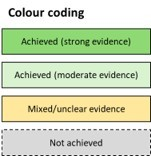
(Colour key for identifying levels of achievement of outputs and outcomes.)
2. Measuring the Legacy and Impact of Major Events
Lead Department: DCMS
Commissioning route: Invitation to Tender
Budget: Approx. £615k
Timings: Research, October 2023 - July 2025; Publication, March 2026
Why is this project important for DCMS?
The Measuring the Legacy and Impact of Major Events project was commissioned to address methodological weaknesses in how the long-term legacy and impact of major sporting and cultural events is evaluated. Although legacy claims are frequently used to justify public investment in major events, evaluations typically focus on shorter-term outcomes and rarely assess impacts against a credible counterfactual.
The project aimed to provide practical guidance for evaluation practitioners to improve methodological rigour in future assessments of impact. The decision to fund the project was informed by wider demand, including recommendations from Spirit of 2012, the London 2012 legacy charity, which highlighted an evidence gap in the longer-term evaluation of impacts of major events.
What outputs did the project produce?
The project produced two key outputs: (1) a practitioner focused evaluation toolkit, and (2) a set of four applied case studies. Both outputs were published in March 2026. The toolkit sets out a structured framework for evaluating the legacy and impact of major events, including a set of usable Theory of Change templates and guidance on defining a counterfactual, choosing evaluation outcomes, identifying relevant secondary data, and selecting appropriate evaluation methods. The case studies operationalise this framework by applying selected methods to four high profile events, drawing mostly on secondary data. They cover: the London 2012 Olympic and Paralympic Games, The Men’s and Women’s Cricket World Cups (2017 and 2019 respectively), The City of Culture Programme (Derry/Londonderry 2013 and Hull 2017), and the Manchester International Festival.
Delivery was supported by fortnightly meetings between DCMS and delivery organisations. Multiple internal workshops were used to share emerging findings throughout project delivery, alongside meetings with stakeholders including relevant Government analysts. The case study evidence indicates that project management and communication between the programme team and delivery organisations were effective, with government teams engaged fully and contributing materially throughout the delivery of the project.
Contributions from government colleagues included reviewing interim findings and outputs, providing a policy-focused perspective to ensure outputs were appropriate for policy audiences. The programme management team effectively coordinated inputs from government colleagues. Wider DCMS engagement was largely limited to analytical leads - while this was valuable for providing strategic feedback, it was noted that more involvement from less senior analysts and practitioners would have been beneficial in ensuring the outputs were accessible and useful for this audience.
The project completed in July 2025, however, publication of the report was substantially delayed to March 2026. At the time of the case study reporting (May 2026), dissemination plans were underway; for example, an internal ‘lunch and learn’ with DCMS colleagues took place in May 2026.
What outcomes are associated with generating the evidence?
There was strong evidence that the project improved alignment of external research with government needs in relation to capturing legacy impacts of events. This was facilitated by close engagement between experts, stakeholders and government, focused on providing practical guidance for policy and research audiences.
Although the majority of outcomes are expected to emerge in the longer-term through the use of the toolkit, there were also short-term upskilling benefits associated with generating the evidence for the project team, through knowledge transfer between the delivery organisation (including staff at different levels) and government analysts, albeit this had not been diffused more widely across the department.
What outcomes are associated with DCMS holding or using the evidence?
At the time of the consultations, the toolkit and case study report had recently been published and outcomes were expected to emerge in the longer-term. Improvements in skills and methodological capability are expected to arise in future through use of the project outputs by government teams and external practitioners. Case study evidence suggests that outcomes are expected to relate to DCMS becoming a more informed and effective commissioner of future evaluations in this area, and the toolkits improving the rigour of future evaluation evidence.
[The research will save] time and money because you aren’t starting from scratch every time you try to evaluate a major event.
– Case study consultee
The toolkit and case studies are intended to contribute to improved decision-making in future and offer evidence grounded in research that can be drawn on in future. The potential for the research to provide consistency in the commissioning and delivery of event impact evaluations was reported by officials to be potentially “transformational” in this space, including by enabling more robust comparisons between studies in future.
Project outputs were also expected to deliver future savings and efficiencies for the department by providing detailed guidance that reduces duplication and removes the need to develop new approaches when commissioning future event impact evaluation work. These cost savings have not yet been realised.
What was the role of the programme in enabling these outcomes?
The project was seen by those involved as important and distinctive when compared with research typically commissioned by DCMS; it prioritised long-term evidence and capability rather than immediate policy demands or evidence requirements related to specific event opportunities. There was consensus that the project is unlikely to have been funded without the programme.
There was also consensus that the programme was critical in enabling outcomes. The CSA team’s involvement was important in coordinating input from teams across DCMS. Capability within the project team, including the involvement of academic experts, was also emphasised as important in enabling outcomes.
Effective internal and external dissemination will be critical to the realisation of these expected outcomes. The programme team should monitor future use of and engagement with the project outputs.
What can be learned from the delivery of this project?
This project demonstrates the programme’s value in generating forward-looking, practical evidence that can be used by policy teams and practitioners. The programme’s design created the opportunity to generate evidence to enhance practice in the longer-term.
The project sought to address an evidence gap through applied, practical outputs that are valuable for both DCMS and wider stakeholders. The use of applied case studies, along with the toolkit, enabled the project to test and apply the approaches and encourage take-up in the sector.
The publication of project outputs was significantly delayed. However, dissemination activities gathered pace in early-2026 following the publication of the outputs, which is encouraging.
At this stage many of the expected outcomes have not yet been realised. DCMS should consider monitoring use of and impacts from the project outputs in the longer-term.
Figure 2-1: Impact map for the Measuring the Legacy and Impact of Major Events

(Flow chart of impact for the Measuring the Legacy and Impact of Major Events.)
Source: SQW; see Figure 1-1 for the colour coding key
3. Future of TV Distribution
Lead Department: DCMS
Commissioning route: Invitation to Tender
Budget: Approx. £455k
Timings: Research, November 2023 - Nov 2024; Publication, November 2024
Why is this project important for DCMS?
The Future of TV Distribution project analysed the shift in TV distribution and consumption from terrestrial TV (DTT) to internet-delivered services (IPTV), with projections on how UK households will receive television through to 2040 without a policy intervention. It examined six areas: audience data analysis, technology, net zero impact, international comparisons, spectrum use, and market impacts.
The research was commissioned to address the need for robust, forward-looking evidence to inform future policy decisions in this area, particularly in relation to the long-term role of DTT infrastructure. It was conducted against the backdrop of increasing policy attention on TV distribution, alongside related work such as DCMS’ 2022 broadcasting review (Up Next) and Ofcom’s 2023-24 Future of TV Distribution assessment.
What outputs did the project produce?
Research findings were published in a gov.uk report in November 2024. Due to the political sensitivity of the research, external publication was delayed during the pre-election period; however, it was issued to government before this date. The project team led a ‘findings workshop’ and a ‘teach-in’ with government colleagues prior to publication.
The research employed a mixed-methods approach, drawing on audience data, expert interviews, and a review of industry and academic literature. It included long-term modelling to 2040, informed by an integrated analysis of audience behaviour, demographics, technology and infrastructure constraints, where previous research was largely focused on short-term market trends.
The work was delivered by a consortium of academic and non-academic partners and led by the Department of Communications, Drama and Film at the University of Exeter.
What outcomes are associated with generating the evidence?
The project upskilled staff within DCMS and delivery organisations. For DCMS teams directly involved, benefits arose from exposure to long-term modelling approaches, including contributing to discussions around underlying modelling assumptions. The benefits were concentrated on the individuals involved in the project teams, and have not been realised more widely in the department. A ‘toolkit’ or similar mechanism to circulate this knowledge and upskilling more widely internally would have been valuable in this context.
There was evidence of benefits in terms of better alignment of external research and government need, driven by engagement with the consortium and with stakeholders during and after the project, focused on how the evidence would be used by policymakers. There was reportedly a growing sector-wide focus on generating evidence in this area, influenced by both this project and wider government priorities.
What outcomes are associated with DCMS holding or using the evidence?
DCMS are using evidence from this project to inform evolving decisions on the future of TV distribution. Following publication of the project report, government convened a stakeholder forum and commissioned further research informed by the report’s recommendations. The stakeholder forum brings together 34 stakeholders, is chaired by a government minister, and has established three ‘working groups’, one of which is chaired by a lead academic from the project. Data from the project, including projections of households’ use of DTT to 2034, have reportedly been used by other partners to inform their decision-making and organisational priorities.
The project has also produced evidence grounded in research that can continue to be drawn on in future. The audience forecasting model will be updated as new audience data becomes available, meaning DCMS will have access to updated forecasts in future. Partners also described the study as a “pivotal piece of research” for their own capability. Importantly, the project required input from academics spanning communications, drama, and film, and created opportunities for academics to build relationships with industry consultant partners.
No evidence emerged of the project contributing to savings and efficiencies in the delivery of research or a reduced need to outsource evidence work due to greater internal capability.
What was the role of the programme in enabling these outcomes?
While demand for evidence in this area means that some research could have potentially been commissioned through alternative routes, there was consensus that, without the R&D programme, DCMS are unlikely to have been able to commit comparable levels of resource. As a result, the evidence produced would have been of lower quality and reduced scope, with some ‘strands’ of the research, including some important audience modelling, unlikely to have been feasible. This would have reduced opportunities for upskilling, reduced engagement with academic and industry partners, and reduced quality of evidence available to inform policy decisions.
We wouldn’t have been able to do nearly as much modelling … The quality and scope would have been massively reduced.
– Case study consultee
The consortium of academic and non-academic partners were effective, bringing complementary expertise, approaches, and practical access to industry data. Given the sensitivity of the policy area, the involvement of academic partners gave the project credibility, including through the use of peer review. This was important in providing DCMS with confidence in the data and the use of its findings to inform on-going policy development.
Communication between government colleagues and the delivery organisations was regular and effective; touch points included fortnightly meetings, and a scoping and interim findings workshop. DCMS engaged consistently in discussions on emerging findings and methodological considerations, such as modelling assumptions, and provided constructive feedback on outputs. The programme helped enable open and collaborative communication between DCMS and the delivery organisations, supported by the central management of financial arrangements. Detailed and proactive engagement with sector stakeholders helped inform project findings and increase their impact within the sector.
Alongside the programme itself, outcomes were supported by an increasing relevance of the topic from a policy perspective. For example, in relation to the decision to commission further research based on the report’s recommendations and convene a stakeholder forum, the project identified further evidence gaps and “prompted” next steps, but these actions also reflected wider demand for evidence and stakeholder engagement in this policy area.
What can be learned from the delivery of this project?
The project was seen as highly strategically important to DCMS, as it directly addressed the need for forward-looking evidence to inform decisions on the future of TV distribution and the future role of DTT infrastructure. Consultees highlighted the project as an illustration of the R&D programme’s importance and distinctiveness in generating this type of strategic evidence.
The project demonstrates that bringing together academic and non-academic partners within project teams can strengthen research by offering a range of insights and methods and enhancing credibility and robustness.
The project also indicates that the R&D programme structure can enable research project teams to focus effectively on delivery and evidence development that can inform policy outcomes by managing other aspects of the project, particularly financial management, centrally.
Figure 3-1: Impact map for the Future of TV Distribution
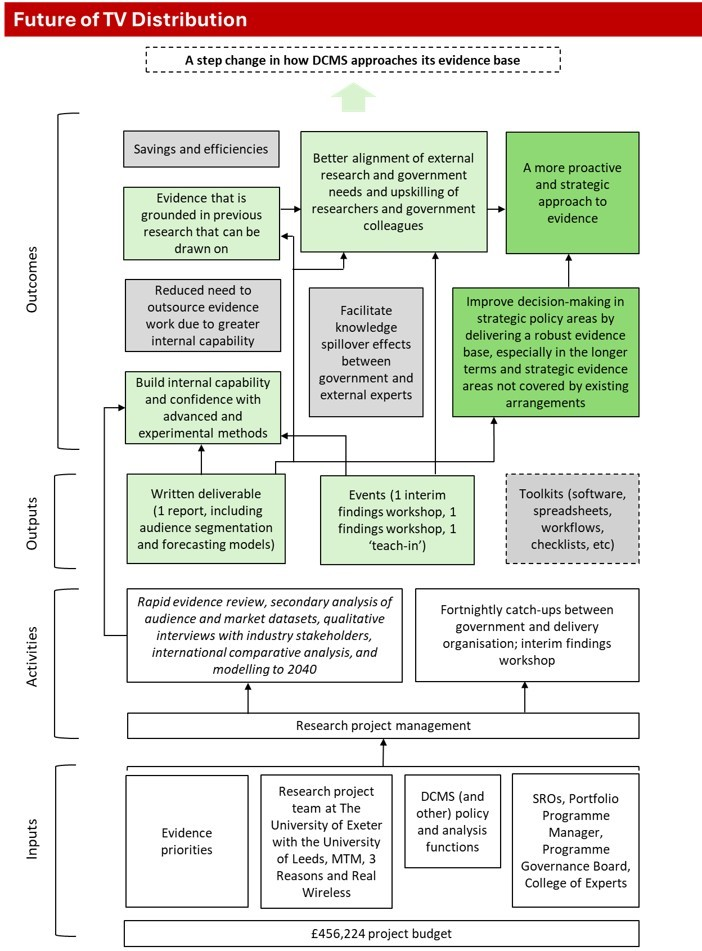
(Flow chart of impact for the Future of TV Distribution.)
Source: SQW; see Section 1, Figure 1-1 for the colour coding key
4. Natural History Museum AI Pilots
Lead Department: DCMS
Commissioning route: Memorandum of Understanding (MoU)
Budget: Approx. £300k
Timings: October 2024 - March 2025
Why is this project important for DCMS?
As part of a wider DCMS AI and technology policy project, DCMS asked the Natural History Museum (NHM) to chair a workshop on AI opportunities with other museums and public bodies. This led to the concept of an ‘AI Centre of Excellence’ to support AI adoption in the sector. Following this, NHM and DCMS co-developed the concept into a proposal for an AI pilot scheme to be funded through the R&D programme.
Typically, projects supported by the R&D programme focused on evidence generation to address long-term, cross-cutting, and/or speculative research questions. However, this project involved more applied R&D activity, developing and testing new AI-driven solutions in a key DCMS sector. It was also distinctive as the only project in the programme funded through a MoU with a partner organisation outside of UKRI, and was genuinely co-developed. The activities and outcomes are therefore quite distinct from other projects, demonstrating the breadth of activity funded through Phase 1 of the R&D programme.
The NHM is a charity and a non-departmental public body, sponsored by DCMS. Positive outcomes for NHM, such as strengthened AI capability, therefore also indirectly represent outcomes associated with, and contributing to, DCMS and its policy agenda.
What outputs did the project produce?
NHM invited institutions to submit proposals for how AI could in principle assist them in their research, management of collections, or public engagement. DCMS and NHM shortlisted five projects for AI tools, which were then developed by NHM in dialogue with the institutions.
NHM used some of the funding to hire additional staff (four data scientists and a research associate) to boost NHM’s internal AI capacity, and deliver the five AI pilots. All pilots were successfully developed to proof-of-concept stage through the project; they are summarised in the Table below.
Table 4-1: AI pilots funded through the NHM AI Pilots project
| Project title | Partner | Description | Project outputs |
| Snake goods classification through an AI computer vision pipeline | Institute of Zoology, Zoological Society of London | Develop an AI tool to identify illegal snake goods (held in the ZSL collection) down to the species level, with potential applications for law enforcement agencies. | Successful proof-of-concept for prototype. Requires further development for functional use (funding applications in process). |
| Automatic data extraction from museum index cards with Large Language Models | Lyme Regis Museum | Develop a tailored OpenAI LLM to extract and categorise handwritten text on data cards, enabling fast and accurate digital conversion of physical records. Potential to scale for use in digitising other collections nationwide. | Successful proof-of-concept and has been implemented at the museum. Has secured funding to scale. |
| AI-assisted alt-text creation for heritage collections | National Museums Liverpool | Implement an AI-driven alt-text generation tool (with expert validation) for the collection’s digital images which will streamline alt-text creation and improve accessibility. | Successful proof-of-concept and has been implemented at the museum. Project code has been made publicly available. |
| Herbarium in dialogue: an LLM-powered chatbot of Professor Samuel Pickworth Woodward | Royal Agricultural University | Create a chatbot with a historical persona which will leverage botanical data from the collection to facilitate interactive inquiries. It aims to broaden public engagement with natural sciences. | Successful proof-of-concept. Planned implementation by the museum for research and outreach. |
| Enhancing herbarium digitisation with AI-driven computer vision for image quality monitoring | Royal Botanic Garden Edinburgh | Develop a quality control framework that assists in the digitisation and QA of herbarium sheet images, by integrating AI-powered quality checks. Potential for scaling to support national and global digitisation efforts. | Successful proof-of-concept and has been implemented at the museum. Has secured follow-on work to scale. |
Source: SQW analysis of project reports
NHM also produced a final summary report for DCMS which compiled short reports from the five completed AI pilots. The five pilot reports have since been revised and expanded by NHM and the other museums, and they have all been separately submitted for publication in academic journals. NHM presented the findings from several of the pilots at Living Data 2025, an international biodiversity data conference. Internally, there was a small-scale final presentation by NHM to DCMS. There was no external dissemination event at the end of the project, partly due to expectations that there would be a second phase of work. Budget and time constraints on both sides have also prevented further dissemination.
What outcomes are associated with generating the evidence?
As noted, this project was not a traditional research project. However, it has led to some upskilling of staff at NHM, including enhanced capabilities in delivering AI-driven technical solutions through developing the new ideas submitted by the other museums. Learning from one of the pilots led to the development of a business case for follow-on work on AI and digitisation (prepared by NHM), which was approved and part-funded through the department. There have also been reputational benefits for NHM, who continue to develop as an AI leader in the sector. It demonstrates to both government and the private sector that NHM are a “valuable and reliable” delivery partner who can deliver this kind of project at pace (in less than 6 months). Some limited knowledge spillover effects were also identified, with staff at DCMS benefiting from a greater understanding of the challenges and opportunities around AI adoption in museums through their engagement in the project.
What outcomes are associated with DCMS holding or using the evidence?
The museums involved have benefitted directly by being provided with access to the custom AI tools developed by the project. Three of these tools have been implemented, and they have collectively led to time-saving benefits and improved and/or accelerated digitisation of collections. One pilot has also improved collection compliance with accessibility standards. Over the longer-term, and subject to the further development and implementation of the tools in practice, the tools have the potential to lead to improved access to and, in some cases, engagement with historic collections. The project has also demonstrated the value and relevance of collections. For example, the snake goods classification pilot shows how ZSL’s collection can address ‘real world’ problems related to the smuggling of illegal snake skins.
There have been several follow-on impacts from the individual pilots. One is being adapted and used in the DiSSCo UK (Distributed System of Scientific Collections) project to support its work to digitise the UK’s natural science collections. If implemented, it is expected to generate significant time and cost saving benefits on digitisation of these collections when compared to a manual process. This represents a complementary benefit for other government-funded programmes; DiSSCo UK is a DSIT initiative (funded by UKRI).
Further, the ‘automatic data extraction from museum index cards with LLMs’ pilot has been approved for a follow-on project, part-funded by DCMS. This would not have been possible without the results from the pilot, and could deliver significant time-saving benefits compared to a manual process. NHM are also adapting and using several of the AI tools developed for other museums to improve access to/engagement with their own collections. There is also reported continuing interest in developing the AI tools created by the pilots, from law enforcement agencies, international researchers and businesses working on digitisation in the museums sector, with potential further impact in the future.
The summary report on the AI pilots is also a valuable contribution to DCMS’s evidence base, providing examples of AI adoption in a sector that often has low capability for using emerging technologies. There is ongoing awareness/interest in the pilots within DCMS’s museums team and an expectation that they will be drawn on in the future for policy development and action related to the use and exploitation of AI in the museum sector. Further, the Government’s AI Opportunities Action Plan (published midway through the project) had a focus on case studies and sector adoption; the project’s evidence was seen as well-aligned with this initiative.
What was the role of the programme in enabling these outcomes?
Without the R&D programme, the majority of AI pilots would not have been delivered. The project was co-developed with DCMS who wanted to extend AI capabilities to benefit others in the sector. This was the first time NHM had engaged with other museums to consider the potential opportunities from AI-related innovation, and the ideas submitted were not ones they were otherwise considering. The exception is the “Automatic data extraction from museum index cards with LLMs” pilot, which was a key aim for DiSSCo UK and would likely have happened at a later date. However, DCMS is unlikely to have been sighted on this work if it had progressed outside of the R&D programme. It should be noted that the commissioning mechanism (MoU) was also critical in ensuring this project could be co-developed and then delivered by a chosen partner.
Although the project would not have progressed without R&D programme funding, the choice of delivery partner was a significant factor in enabling outcomes. NHM had the internal capability and expertise to deliver, as well as strong connections into the sector, which have enabled successful delivery. Their role in DiSSCo UK programme has also provided a critical route to scale one of the AI tools, and thereby scale expected impacts.
A further key contributory factor was the allocation of DCMS policy advisor time to consider technology and AI opportunities in their sector. This ensured that relevant policy advisor staff at DCMS had the capacity to engage materially with NHM and co-develop the proposal.
A lack of internal and external dissemination was a key barrier to enabling outcomes, described as a “real missed opportunity”. This was due to resource constraints in both DCMS and NHM, and an expectation that the project would have a second phase, which reduced the urgency for a closing event.
What can be learned from the delivery of this project?
This project represents a different type of activity than routinely funded by the programme, successfully piloting AI tools to address critical challenges in one of DCMS’s key sectors. There is value in DCMS continuing to fund a wide range of activities through the R&D programme, and the MoU commissioning route provided a useful mechanism for co-development of ‘original’ projects with key partners in DCMS’s sectors. However, dissemination was limited, and a closing event (and associated resource) would have been valuable in driving impact.
Figure 4-1: Impact map for the NHM AI Pilots[footnote 1]
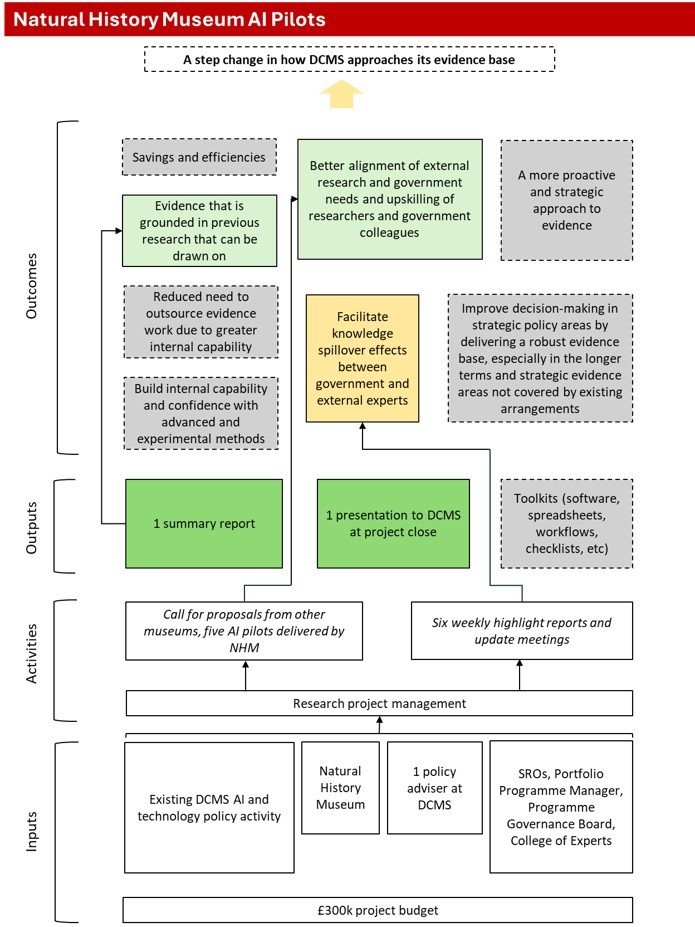
(Flow chart of impact for the NHM AI Pilots.)
Source: SQW; see Section 1, Figure 1-1 for the colour coding key
5. AI Skills for Life and Work
Lead Department: DSIT
Commissioning route: Invitation to Tender
Budget: Approx. £605k
Timings: Research, October 2023 - May 2025; Publication, January 2026
Why is this project important for DSIT?[footnote 2]
By late-2023, DSIT recognised the potential influence of AI in re-shaping the labour market. However, its core evidence base was a labour market survey from 2020. With no resources available to re-run the survey, the R&D programme provided an opportunity to generate new strategic evidence on this topic. The research addressed three questions: What AI-relevant skills are needed for life and work, and how may these transform as the technology develops? Does the UK have or lack the skills needed in the labour force? Is the UK supporting people to develop relevant AI skills?
What outputs did the project produce?
The research used a mixed methods approach involving: a Delphi study with AI experts; employer and general public surveys; rapid evidence review; patent and job vacancy analysis; labour market and skills projections; public dialogue; and a ‘trends and foresight drivers analysis’. Eleven reports were produced, including a summary report. During project delivery, four in-person internal workshops were held to enable knowledge transfer for policy and analyst leads. The workshops also involved senior staff and other government stakeholders.
The project concluded in May 2025. The reports were published in January 2026. No further dissemination by DSIT was undertaken, owing to the lag between completion and publication. The delivery lead presented some of the unpublished research findings (alongside their other AI work) as part of a Westminster e-forum online event, with c.80 online attendees.
What outcomes are associated with generating the evidence?
The project led to some upskilling of DSIT analysts. For example, the work to develop AI skills definitions (identifying the three types of AI workers) has provided a foundation for further job vacancy analysis for analysts and is guiding on-going analysis. There is an expectation that this outcome may diffuse more widely over time, due to knowledge sharing through the cross-DSIT skills network. The project has also increased interest in more complex research methods: both the use of Delphi techniques (as an effective method for researching novel, rapidly evolving technologies), and the future demand modelling. However, the lack of a technical annex accompanying the report on future demand has hindered analysts from building upon this work, acting as a barrier to knowledge spillovers and increased capability with novel/advanced methods across the department.
This project probably had a bit of a catalysing effect on building those links between external organisations that think about these sorts of things.
– Case study consultee
Delivery of the project has connected DSIT colleagues with key experts in this topic area, which is expected to provide future benefit in the form of informal access to/consultation with these new stakeholders. There has also been some improved alignment of AI research between DSIT and one of the delivery partners, and it was reported to have “opened up some avenues for future work”.
There was some evidence of upskilling of staff in external delivery organisations, including developing their capabilities with advanced/experimental methods to produce patent analysis and model future labour market demand. There has also been a benefit for the delivery organisations through connecting several key organisations and experts in this topic area.
However, these outcomes are unlikely to contribute to a reduced need to outsource, and any subsequent savings and efficiencies. This is owing to capacity and the importance of independent research, and advanced methods are often resource-intensive.
What outcomes are associated with DCMS/ DSIT holding or using the evidence?
The project has been valuable in forming an evidence base through robust research that can be drawn on in future. It is understood that robust research in this topic area is limited. Where it exists, there are often concerns about impartiality and unclear methodologies. The project addressed both concerns, enhancing confidence in its use. DSIT analysts are using the survey findings to consider (alongside other sources) which groups/sectors are most lacking in AI skills, to potentially inform future skills interventions. The evidence also provides a baseline for AI skills, which can then be tracked in the future.
DSIT and other government stakeholders continue to draw on the evidence for a range of uses, as part of the wider evidence base on AI, with the caveat that the findings are from 2024 and the technology and application of AI has continued to move at pace. For example, the evidence was used to support the business case for a pilot AI Upskilling Fund, to demonstrate how DSIT have met their requirement to understand the AI Skills Gap (as set out in the AI Opportunities Action Plan), and is cited in Skills England’s 2025 Skills Need assessment of priority sectors.
Whilst the above suggests that the evidence is informing decision-making in strategic policy areas, in practice this has been impacted by the delay in publication. Prior to publication, it was unclear which of the reports would be published in the public domain, which made it difficult for other government colleagues to use the evidence in their own work. The usefulness of the evidence had also been lessened by delays, particularly given the pace of AI development. However, the value in commissioning (and publishing) research in this area was recognised, including by demonstrating to industry and the public government engagement with AI.
What was the role of the programme in enabling these outcomes?
There was consensus that this research would not have happened in the same form without the programme, due to its holistic and longer-term approach to AI skills, which could not have been funded elsewhere. Without it, only smaller elements (e.g. surveys or labour market analysis) would likely have been delivered, lessening or delaying positive outcomes (such as the upskilling of DCMS/DSIT analysts). This would also have impacted on the quality of the evidence base: the mixed-methods approach and triangulation to form the summary report was a key strength of the project.
The programme was essential to enabling long-term, strategic evidence generation in this topic area. The project was long-term (c.18 months), took a holistic approach, and generated broad, wide-ranging findings that have cross-departmental policy implications.
However, the growing interest in AI from the general public and government was also a significant contributing factor towards the project’s outcomes. Government interest in AI integration and adoption has increased use of the project’s evidence base, and the project was seen to have supported the government to ‘get ahead’ on AI.
What can be learned from the delivery of this project?
Timely publication of written reports is a significant enabler of use by stakeholders. Staggered publication of the reports in large projects should be considered, to allow use of the findings to ensure they remain timely, especially when researching novel technologies. Clear communication internally on anticipated publication scope and dates would also increase confidence to use findings. Written outputs should also include full technical annexes, to ensure methods can be adapted and used by government analysts.
In-person workshops worked well as a mechanism for internal knowledge transfer, including engaging other government stakeholders in delivery. They can also facilitate cross-departmental work on policy responses but this is dependent on wider departmental context.
The research for this project was strategic, wide-ranging and in a fast-moving topic area. This meant that direct policy responses were challenging to generate. The internal workshop on policy responses recognised that it required a cross-departmental approach, however the workshop happened in advance of the 2025 Spending Review, and prior to confirmed funding contexts for related interventions. It is important to recognise that wider government spending and policy priorities will influence how research can inform policy decisions.
Figure 5-1: Impact map for AI Skills for Life and Work
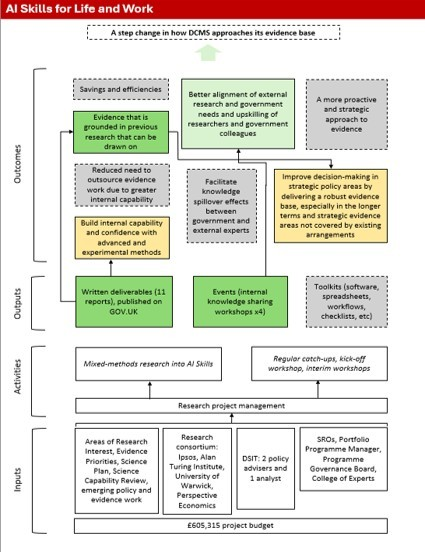
(Flow chart of impact for the AI Skills for Life and Work.)
Source: SQW; see Figure 1-1 for the colour coding key
6. Shaping the Metaverse
Lead Department: DCMS (Phase 1 & 2) and DSIT (Phase 1)
Commissioning route: Memorandum of Understanding (MoU)
Budget: Phase 1: 332k; Phase 2 £874k
Timings: Phase 1: 2022 - 2023; Phase 2: 2023 - 2025
Why is this project important for DCMS/DSIT?
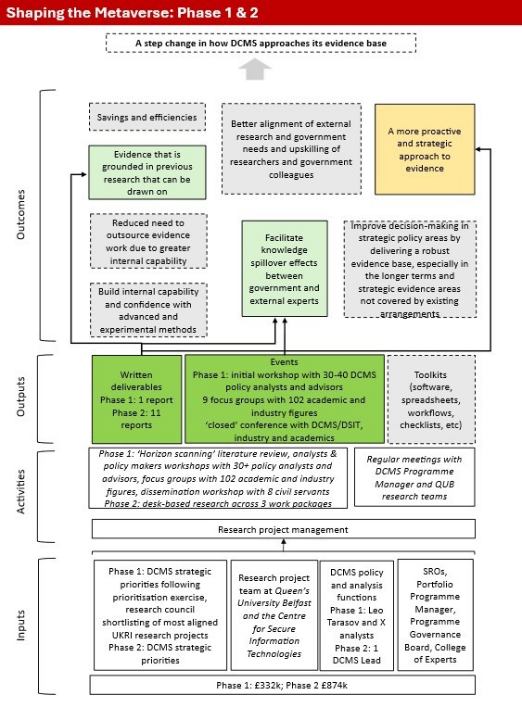
The Metaverse can be understood as “a comprehensive integration of the physical and cyber domains” through the use of “nascent technologies that will allow advanced IT systems to immerse users in realistic or imagined 3D virtual worlds that are dynamically rendered in real-time”[footnote 3]. Nascent technologies include virtual reality, augmented reality, blockchain activities (AKA Distributed Ledger Technologies) and artificial intelligence (AI). From 2014, large technology companies such as Microsoft and Meta drove the development of the Metaverse and related technologies. Interest and investment in the Metaverse peaked in 2021, before experiencing a decline by 2024 following a failure to break into ‘mainstream’ use and to attract regular users, with a lower quality user experience (particularly in terms of graphic quality) as a key factor, despite the high levels of investment. Shaping the Metaverse intersected with several DCMS areas of research interest in 2022, including the role of digital cultural offers, cultural industry research and development, innovation, tech adoption and digital consumption.
Phase 1 included a horizon scanning-focused research exercise to identify the tangible meanings of the Metaverse, its potential future, benefits and challenges, and analysis of UK interests and activity in the technology. Following Phase 1, DCMS commissioned Phase 2 to run from 2023 to 2025, covering three Work Packages: (1) standardisation and interoperability in the Metaverse; (2) privacy and security in the Metaverse including the regulatory landscape; and (3) distributed ledger technology which had strong interest/encouragement from the DCMS Distributed Ledger Technology team (DLT) (now disbanded). The scope of Phase 2 was seen to align strongly with DCMS priorities and trends, and the anticipated key developments within the creative industries related to the metaverse at the time of project approval in 2023.
What outputs did the project produce?
Phase 1 focused on mixed methods analysis, with stakeholder engagement ‘evidence workshops’ and supporting qualitative analysis. The aim was to survey the technologies associated with development of the Metaverse and map out the threats and opportunities they pose to UK society and economy over the next decade.
The engagement consisted of an initial workshop with 30-40 DCMS policy analysts and advisors, with five follow-on evidence gathering workshops across the UK. The 100+ attendees self-identified as having research interests in, or professional experience of, metaverse related technologies or policy areas, or represented NGOs, local government or DCMS. Additional qualitative analysis included: a systematic literature review and meetings with industry, standards bodies and academic experts across the UK and internationally. Phase 1 concluded with a two-day ‘closed’ conference at QUB with 27 attendees, including a mixture of DCMS/DSIT staff, QUB academics and external academic experts. The Phase 1 report was published on a dedicated page on QUB’s Centre for Secure IT (CSIT) website. The report had approaching 2,800 downloads by April 2026.
Phase 2 was initially expected to produce policy-focused reports. However, Machinery of Government changes, associated changes in officials involved, and reduced departmental capacity led to Phase 2 pivoting to focus on producing academic research papers. The papers were based on desk research by the QUB Team under the three Work Packages described above; they did not seek to provide policy implications. The papers were disseminated through a dedicated page on CSIT’s website. Findings on DLT (Work Package 3) were also shared through the QUB NI-Blockchain Initiative, a group set up following Phase 2 to connect students, founders, industry and investors to identify blockchain opportunities in Northern Ireland. Some Phase 2 reports have been submitted to an international Metaverse conference and academic journals.
What outcomes are associated with generating the evidence?
There was some evidence of modest knowledge transfer to DCMS officials through the delivery of the project. For example, the Phase 2 reporting review process provided valuable Metaverse subject matter insight, which has enabled DCMS to advise other departments regarding the topics covered, e.g. Virtual Reality.
However, the evidence is more pronounced in relation to supporting skills development for the QUB and CSIT team involved in delivering the research. The project’s research methods and design was cited as enabling the QUB Team to accelerate their research culture, test mixed methods analysis and create new ways of working in an interdisciplinary way with a genuinely novel approach.
Learning from the project design has also been used to inform other projects, including QUB research for DSIT on future/emergent digital technology. The project also contributed to the business case for a new Futures and Foresights Institute at QUB by demonstrating QUB’s skills in academic research with outputs for policy.
What outcomes are associated with DCMS/DSIT holding or using the evidence?
The two phases of the project have provided DCMS with a strong evidence base that can be drawn upon, in principle, for the Metaverse and related technologies. For example, the project outputs acted as a “primer” for DCMS to respond to inbound questions regarding relevant subject matters, such as the vulnerability of DLTs. DLTs, i.e., blockchain technologies, are used for anonymous online transactions through decentralised databases in financial services, cryptocurrencies, record keeping and voting systems. Blockchain transactions require good governance frameworks as there is no UK regulation specific to the use of DLTs.
However, more broadly, owing to Machinery of Government changes during Phase 2 and the external reduction in the relevance and priority of metaverse issues, by its close the project no longer had a clear alignment with DCMS, or DSIT, remits and priorities. Consequently, there is no evidence that the project has improved decision making in national strategic policy areas or resulted in savings and efficiencies in delivering research.
This said, DCMS have shared the evidence base with wider external organisations, both in the UK and internationally, providing the potential for the research to inform decision-making domestically and at an international level.
What was the role of the programme in enabling these outcomes?
Phase 1 would not have gone ahead at the same scale without the programme, and Phase 2 would not have gone ahead at all. This was due to the nature of the long-term, speculative horizon scanning analysis and the co-investment with UKRI under Phase 1 and the extensive qualitative research undertaken for Phase 2. It was widely reported that the (albeit modest) outcomes for DCMS, and the more material outcomes for QUB would not have happened at the same pace and scale without the programme. Indeed, the Shaping the Metaverse project was cited as a critical factor accelerating research culture and methodology within the QUB team.
However, Machinery of Government changes limited the potential for policy impact. Further, the project’s longer-term relevance and potential impact was influenced crucially by the defunding of metaverse technologies and associated products/services by international technology companies. The longer-term project timeline meant that these changes in the Metaverse subject matter outpaced the project lifecycle, further limiting the relevance of the research to ongoing DCMS priorities.
What can be learned from the delivery of this project?
Changes in the external technology environment - with reduced investment and consumer interest in the Metaverse - significantly reduced the relevance of the project’s findings post-completion. Despite initial alignment to DCMS priorities and areas of research interest, the project’s relevance diminished over time. Projects with fast-developing subject matters should consider the relationship of project timelines with the potential pace of change of the topic area, particularly when undertaking research focused on emerging technology.
The level of departmental engagement with the research also reduced over time. The project was able to pivot in emphasis in Phase 2 to an academic publication focus. However, the lack of consistency in project direction associated with the Machinery of Government changes highlights the challenges that can be faced by long-term strategic research projects in implementation as the policy and structural context evolves.
Existing DCMS relationships with external organisations offered opportunity to disseminate project findings more widely. Dissemination plans should be included from the outset to capitalise on existing relationships and wider engagement within the ecosystem.
Figure 6-1: Impact map for Shaping the Metaverse (Phase 1 and Phase 2)
(Flow chart of impact for Shaping the Metaverse.)
Source: SQW; see Figure 1-1 for the colour coding key
-
Whilst the NHM AI pilots has reportedly delivered savings and efficiencies in digitisation processes for the museums sector, ‘savings and efficiencies’ in the programme logic model relates to ‘savings and efficiencies through internal capability building, and enhanced value from external contractors’, which has not been achieved. ↩
-
Machinery of Government changes in February 2023 resulted in a change of scope for DCMS, and the creation of the Department for Science, Innovation & Technology (DSIT). As a consequence of this, programme funding was split roughly equally between DCMS and DSIT. This project was led by colleagues in DSIT, whilst the overall programme was managed by the Chief Scientific Adviser Officer in DCMS. ↩
-
McWilliams et al., 2023. Shaping the Metaverse: policy engagement with immersive technologies in the UK ↩