DBT gender pay gap report and data 2025
Published 16 December 2025

© Crown copyright 2025
This publication is licensed under the terms of the Open Government Licence v3.0 except where otherwise stated. To view this licence, visit nationalarchives.gov.uk/doc/open-government-licence/version/3 or write to the Information Policy Team, The National Archives, Kew, London TW9 4DU, or email: psi@nationalarchives.gov.uk.
Where we have identified any third party copyright information you will need to obtain permission from the copyright holders concerned.
This publication is available at https://www.gov.uk/government/publications/dbt-gender-pay-gap-report-and-data-2025/dbt-gender-pay-gap-report-and-data-2025
Introduction
The Department for Business and Trade (DBT) has prepared this report as part of the legal requirement for public authorities to publish their gender pay gap on an annual basis.
About the Department
The Department for Business and Trade (DBT) is the department for economic growth. We support businesses to invest, grow and export, creating jobs and opportunities across the country.
The department’s priority is to redraw our rules to ensure businesses thrive, markets are competitive, and consumers are protected. We advise, support, and promote British businesses to grow and export by opening new markets for businesses removing barriers and striking trade deals including promoting free trade, economic security and resilient supply chains.
DBT is an inclusive employer, and we are proud of our employee offer which includes:
- flexible, smarter and job-share working arrangements to empower colleagues to make the right decision about where, when, and how they work
- short- and long-term overseas opportunities
- talent progression
- staff networks that provide peer support and advice around parental and caring responsibilities, gender, ethnic minority, social mobility, disability, and LGBTQ+ issues
- professional development opportunities
DBT is seeking to go beyond the standard employee offer. We are a dynamic and global organisation focused on an important agenda of high-profile work, delivering economic growth. We are committed to supporting our workforce in their career development and building a culture which reflects our DBT values to be excellent, connected, confident and collaborative.
We are keen to ensure high levels of accountability and transparency in our approach to diversity and inclusion (D&I). We launched our Diversity and Inclusion Framework: ‘Embracing Fairness for All’ in summer 2023, setting out DBT’s approach to building a truly diverse and inclusive organisation over the next 4 years. This framework is driven by data to diagnose the D&I challenges for our organisation and utilises research and best practice to identify evidence-based solutions.
Our workforce
DBT was created in February 2023 and, as of March 2025, there were 5,869 full-pay relevant employees in-scope for gender pay gap reporting, of which 49.5% are women, and 50.5% are men. The department uses 11 Civil Service job grades from the most junior (Administrative Officer), to the most senior grade (Permanent Secretary). The workforce is based in multiple locations around the UK and internationally. The DBT gender pay gap report follows the Statutory guidance for employers. As of 31 March 2025, eligible gender pay gap (GPG) and Gender Bonus Pay Gap (GBPG) populations are determined by categorising DBT staff into relevant employees and full-pay relevant employees.
Relevant employees are all employees employed by the department on the snapshot date who have a contract of employment (including those employees working part-time, job-sharing and employees on leave).
Full-pay relevant employees are all employees employed by the department on the snapshot date, who are either:
- paid their usual full basic pay – including paid leave (or pay for piecework) during the pay period in which the snapshot date falls
- paid less than their usual basic pay or piecework rate, but not because of leave (for example because they have irregular working hours)
Only full-pay relevant employees are included in GPG calculations, whereas all relevant employees are included in GBPG calculations, excluding employees who did not receive bonuses.
Table 1: population used in 2025 GPG and GBPG calculations:
Full-pay relevant employees (for GPG)
| Grade | Women | Men | Total |
|---|---|---|---|
| AO | 29 | 22 | 51 |
| EO | 233 | 164 | 397 |
| HEO/FS | 568 | 499 | 1,067 |
| SEO | 777 | 817 | 1,594 |
| Grade 7 | 854 | 963 | 1,817 |
| Grade 6 | 293 | 336 | 629 |
| SCS 1 | 125 | 118 | 243 |
| SCS 2+ | 27 | 44 | 71 |
| Total | 2,906 | 2,963 | 5,869 |
Relevant employees (for GBPG)
| Grade | Women | Men | Total |
|---|---|---|---|
| AO | 23 | 18 | 41 |
| EO | 188 | 134 | 322 |
| HEO/FS | 481 | 406 | 887 |
| SEO | 680 | 716 | 1,396 |
| Grade 7 | 749 | 841 | 1,590 |
| Grade 6 | 259 | 296 | 555 |
| SCS 1 | 81 | 87 | 168 |
| SCS 2+ | 20 | 24 | 44 |
| Total | 2,481 | 2,522 | 5,003 |
Note: Reporting grades have been used for grade breakdowns. This is the acting grade of an individual (or their promoted grade if on temporary promotion) as of 31 March 2025.
Headline figures
The mean GPG for DBT on 31 March 2025 was 4.67%, and the median GPG was 7.39%. These recent figures highlight an improvement as the previous mean GPG for DBT on 31 March 2024 was 5.24%, and the median was 9.15%.
The mean GBPG at DBT was -0.52%, and the median GBPG was -0.79%. These recent figures highlight an improvement as the previous mean GBPG for DBT on 31 March 2024 was -1.04%, and the median GBPG was -2.18%.
This indicates that our previous 2024 gender pay gap action plan has led to some successful results. We continue to review and analyse disparities, innovate new learning and development to attract women through talent pipelines that are accessible across the UK.
Further explanation and analysis of the figures can be found in Section 2 of this document: “Gender pay gap report”.
Gender pay gap report
This report is published in line with Equality Act 2010 (Specific Duties and Public Authorities) Regulations 2017. This requires all organisations with more than 250 employees to annually publish their gender pay gap and gender bonus pay gap.
The Equality Act 2010 (Specific Duties and Public Authorities) Regulations 2017 covers all government departments and came into force on 31 March 2017. Departments are required to publish their GPG taken on the snapshot date of 31 March 2025. GPG figures include:
- the percentage of men and women in each hourly pay quarter
- the mean and median GPG based on hourly pay
- the percentage of men and women receiving a bonus in the 12 months up to 31 March 2025
- the mean and median gender bonus gaps
The GPG is a high-level snapshot of pay within an organisation and shows the difference in the average pay between men and women in a workforce as of a specific reference date. The GBPG is the difference in bonus pay for men and women in a workforce. Both these calculations are completed following methodology that uses 31 March 2025 as a reference date, to determine the figures for the 2025 report.
DBT’s GPG calculations include employees in post on 31 March 2025, those that received full pay for the month of March and our UK-based overseas employees (civil servants working for the department at our posts overseas).
Gender pay gap definition
The GPG is a measure of the comparative hourly wage of men and women in an organisation at a single point in time. It is affected by how many women there are at each grade and their relative position on the pay scale. If a workforce has a particularly high GPG, this can be due to a variety of factors and deeper analysis is required to determine what the cause may be in different organisations.
The GPG is different to equal pay. Equal pay deals with the pay differences between men and women who carry out the same jobs, similar jobs or work of equal value. It is unlawful to pay people unequally because they are a man or a woman.
The gender pay gap
The mean GPG for DBT on 31 March 2025 was 4.67% and the median GPG was 7.39%. This indicates that men, on average, were paid more than women. In monetary terms, the mean hourly difference in ordinary pay is £1.42 and the median hourly difference is £2.16 (see Table 2). This is an improvement from 31 March 2024, where the mean hourly difference in ordinary pay was £1.55 and the median hourly difference was £2.65.
Table 2: summary of main figures for March 2025
| Pay gap summary | Mean (£) | Mean (%) | Median (£) | Median (%) |
|---|---|---|---|---|
| Gender pay gap | £1.42 | 4.67% | £2.16 | 7.39% |
| Bonus pay gap | -£5.26 | -0.52% | -£6.50 | -0.79% |
Table 2 presents the mean and median GPG and GBPG for DBT in March 2025. Values are given as both absolute and percentage differences.
Figure 1: mean and median hourly pay by gender

Figure 1 is a bar chart comparing mean and median hourly pay between the male and female employees. Mean hourly pay is £29.08 for female employees, and £30.50 for males, whereas median pay is £27.10 for female employees and £29.27 for male employees.
Gender bonus pay gap
The mean GBPG is calculated by adding all the bonuses and dividing by the number of employees who received a bonus. The median GBPG is the difference between the employee in the middle of the range of male bonus and their female counterpart. The gender difference in bonus pay is calculated to consider all bonus payments made in the year up to 31 March 2025.
The mean GBPG at DBT was -0.52%, and the median GBPG was -0.79%. This indicates that women, on average, received more in bonus than men. The GPBG mean and median percentages in 2025 show a similar pattern to 2024, where DBT’s mean GBPG was -1.04%, and the median GBPG was -2.18%, indicating that women, on average, received more in bonus than men.
Of the total GBPG eligible workforce, men were slightly more likely to receive a bonus than women. Between April 2024 and March 2025 the number of men receiving a bonus was 83.23% (2,522) and the number of women receiving a bonus was 81.91% (2,481). The total DBT percentage of all staff that received a bonus was 82.57%. Between April 2023 and March 2024, of the total GBPG eligible population, 81.90% of men and 81.35% of women received bonuses.
DBT offers a system of exclusively in-year rewards for delegated grade staff. Performance awards for SCS grade staff remained in place, in adherence with central government policy.
Pay Quartile Distribution
When dividing DBT’s population into 4 equally sized groups or pay quartiles, ranking from highest to lowest hourly pay, more women occupied the lowest pay quartile, and more men occupied the highest pay quartile (see Table 3). A significant factor in this is likely to be the gender distribution across the grades, with more women working at junior grades and more men at the most senior grades.
Table 3: average gender pay gap by quartile
| Quartile | Women headcount | Women hourly pay | Men headcount | Men hourly pay | Pay gap (£) | Pay gap (%) | Gender ratio (men to women) 2025 |
|---|---|---|---|---|---|---|---|
| Lowest | 815 | £19.46 | 652 | £19.58 | £0.12 | 0.61% | 1.25 |
| Upper lower | 712 | £24.96 | 756 | £25.03 | £0.07 | 0.28% | 0.94 |
| Lower highest | 708 | £32.10 | 759 | £32.19 | £0.09 | 0.27% | 0.93 |
| Highest | 671 | £41.93 | 796 | £43.03 | £1.10 | 2.56% | 0.84 |
| Total | 2,906 | £29.08 | 2,963 | £30.50 | £1.42 | 4.67% | 0.98 |
Table 3 shows a breakdown of the gender pay gap in each pay quartile. This includes the headcount of men and women within each pay quartile, the ratio of women to men, and the size of the pay gap within each quartile.
A ratio of 1.0 would mean that there is an equal number of men to women. Numbers above 1 means that there are more women than men, numbers below 1 mean there’s more men than women. Table 3 demonstrates the greater representation of women in the lowest quartile (1.25) in comparison to the highest quartile (0.84).
Hourly wage
As Figure 2 shows, on 31 March 2025, men had a higher hourly wage than women at all grades except EO. An overall trend is noted that as the grade progresses in seniority, the difference between the mean hourly wage grows in favour of men. When we compared to 2024 pay gap figures we note a decrease at AO, HEO, Grade 7, and SCS 2+ grades with more work to do to address the increase at G6 and SCS 1 grades as we continue to reduce the gender pay gap.
Figure 2: mean GPG and hourly rate for men and women by grade, with percentage pay gap
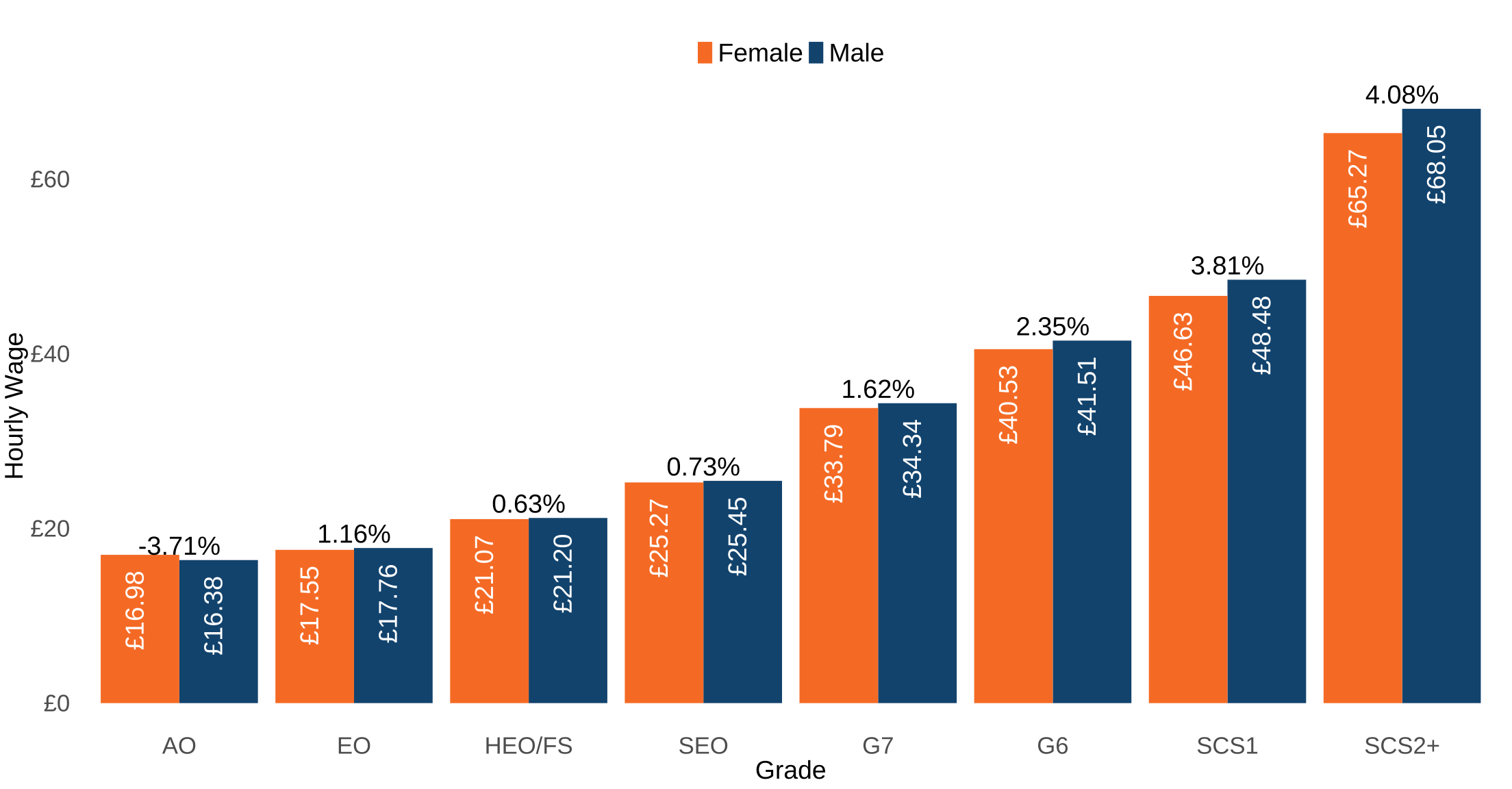
Figure 2 shows the mean hourly wage of men and women at each grade, presented with the percentage difference in hourly pay at each grade.
Figure 3: hourly pay gap between men and women by grade, 2024 vs 2025
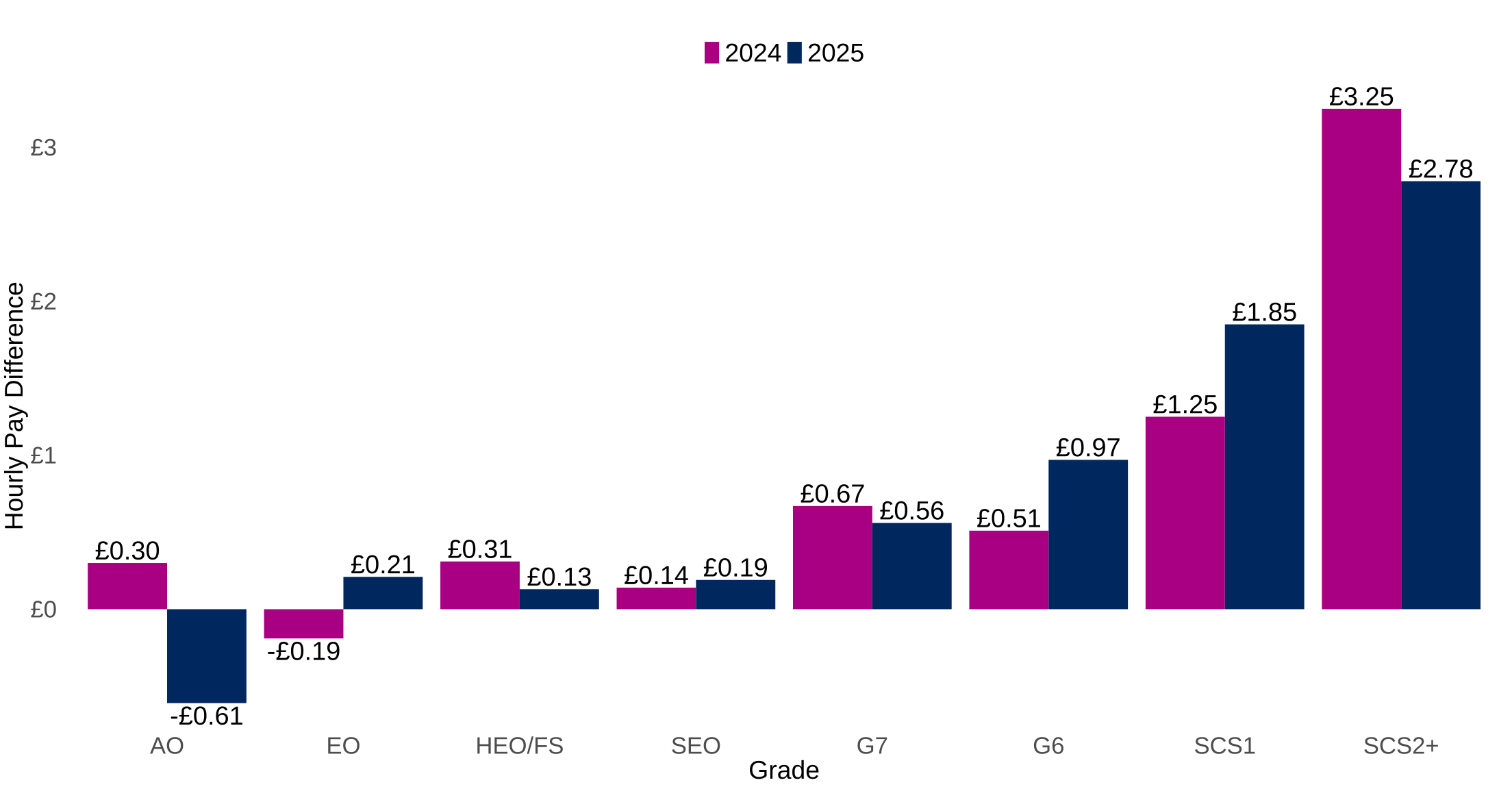
Figure 3 shows the absolute hourly pay gap at each grade in both 2024 and 2025. Absolute pay gaps increased at EO, SEO, G6, and SCS1, but reduced at all other grades.
Analysis of pay gap
Gender pay breakdown between grades
To analyse the factors influencing the headline results, the mean GPG can be considered as a combination of 2 separate elements:
- different pay rates for men and women within the same grade
- the distribution of men and women across various grades (between grades)
In previous years, the gender distribution between grades finds that men are overrepresented in senior positions and women overrepresented in junior roles, a recognised factor influencing the gender pay gap.
Figure 4: headcount of each gender within grade (GPG population)
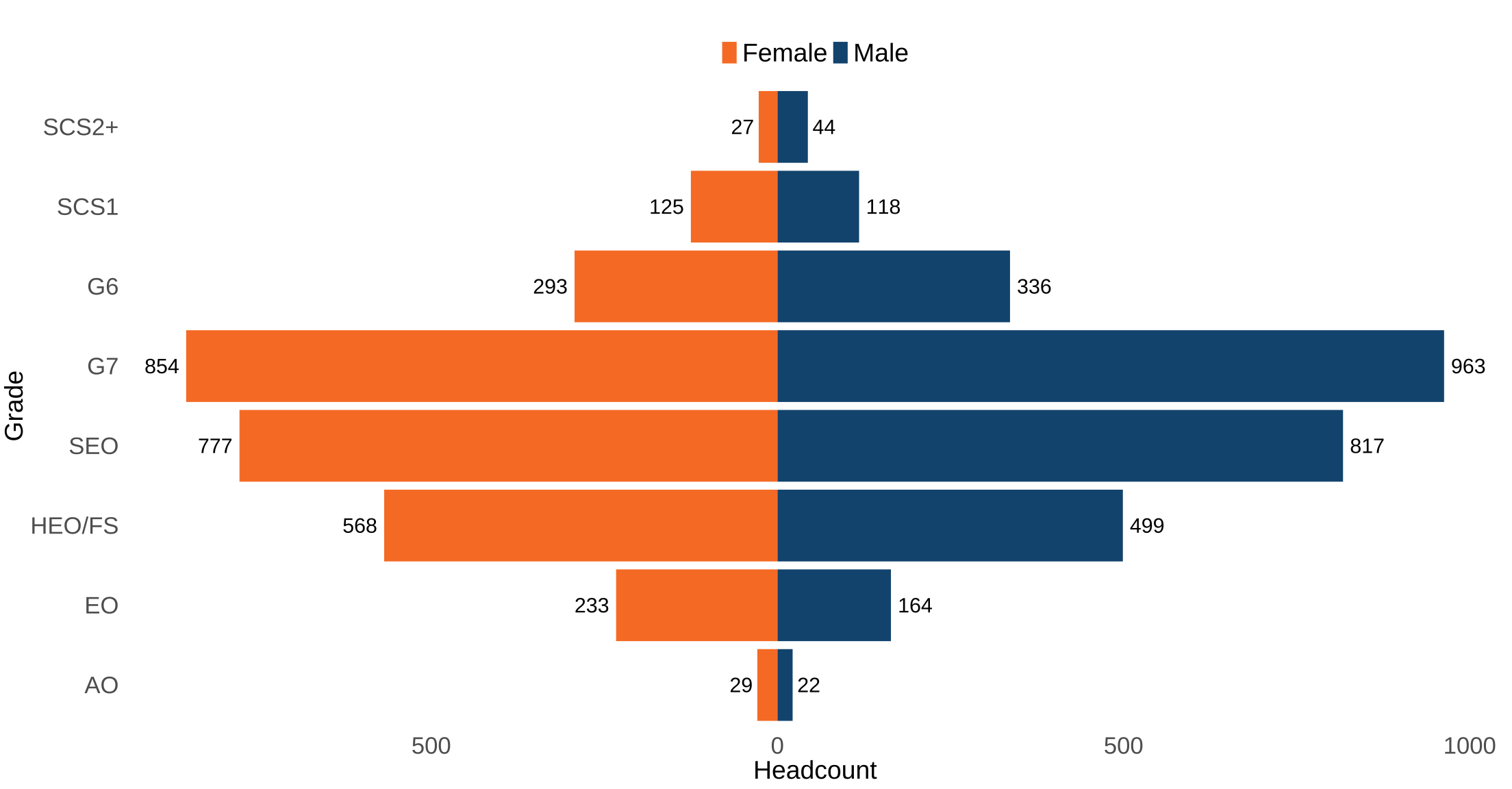
Figure 4 is a funnel chart, showing the headcount of each gender within grade within the GPG reportable population.
For DBT, on 31 March 2025 of the GPG reportable population (5,869 full-pay relevant employees), 2,906 were women and 2,963 were men. The gender distribution between grades shows that women are more represented in lower grades (AO, EO, HEO) and men slightly more in middle grades (SEO, G7, G6).
Gender pay breakdown within grades
Table 4 presents the within grade gender pay gap, noting this can be impacted by the percentage of males and females in the grades. Pay disparity within grade, men and women receiving a different rate of pay when working at the same grade, is another factor relating to DBT’s GPG.
Table 4: within-grade gender pay gap analysis model
| Grade | Gender pay gap (mean) | Difference in mean hourly pay between male and female | % of workforce headcount | Female % | Male % |
|---|---|---|---|---|---|
| AO | -3.71% | -£0.61 | 0.87% | 56.86% | 43.14% |
| EO | 1.16% | £0.21 | 6.76% | 58.69% | 41.31% |
| HEO/FS | 0.63% | £0.13 | 18.18% | 53.23% | 46.77% |
| SEO | 0.73% | £0.19 | 27.16% | 48.75% | 51.25% |
| G7 | 1.62% | £0.56 | 30.96% | 47.00% | 53.00% |
| G6 | 2.35% | £0.97 | 10.72% | 46.58% | 53.42% |
| SCS 1 | 3.81% | £1.85 | 4.14% | 51.44% | 48.56% |
| SCS 2+ | 4.08% | £2.78 | 1.21% | 38.03% | 61.97% |
| All grades | 4.67% | £1.42 | 100.00% | 49.51% | 50.49% |
Table 4 shows how much each grade contributed towards the mean GPG as a combination of the factors within grade. The grades making the biggest contribution to the mean GPG are Grade 7, Grade 6, SCS 1 and 2+. Overall, the mean hourly difference across all grades is £1.42.
The mean hourly wage difference for SCS 2+ is £2.78 in comparison to an AO grade where it is -£0.61.
Table 5: gender pay disparity between and within grade
| Year | Pay disparity between grade | Pay disparity within grade |
|---|---|---|
| 2024 | £1.12 | £0.44 |
| 2025 | £0.96 | £0.47 |
| Change | -£0.16 | +£0.03 |
Table 5 shows the pay disparity within grade increased by £0.03 in 2025 compared to 2024. The overall between grade disparity decreased by £0.16, contributing to narrowing the pay gap. This greater reduction has contributed to a decrease in the overall GPG in 2025 relative to 2024. Reducing the overall pay gap requires focus on intra-grade differences as well as the gender balance across grades.
Analysis of the bonus gap
The department implemented its Performance Development policy in 2022 where bonuses have been distributed as ‘in-year awards’ for delegated grades, made up of both vouchers and cash awards. Senior Civil Service (SCS) grades, receive cash only bonuses.
In 2025, the mean GBPG was -0.52%, and the median GBPG was -0.79%. This reflects a decrease in the mean by 0.52 percentage points from -1.04% and a reduction in the median by 1.39 percentage points from -2.18% in 2024. Negative GBPG values indicate that women received higher bonus pay than men. However, the percentages getting closer to zero show the gap has narrowed further in 2025 compared to 2024.
Table 6: gender bonus pay gap summary table
| Metric | Women | Men | Difference in bonus pay (£) | GBPG (%) |
|---|---|---|---|---|
| Mean GBPG | £1,023.64 | £1,018.38 | −£5.26 | −0.52% |
| Median GBPG | £825.00 | £818.50 | −£6.50 | −0.79% |
- Employees receiving a bonus: 82.6% of eligible records. 2. Total reported females: 2,481. 3. Total reported males: 2,522.
Bonus pay disparity
Figure 5 sets out the variation per grade of the average bonus pay gap between men and women in 2024 and 2025. There is little change in bonus disparity in grades EO to G7 between the 2 years. More significant shifts are observed at higher grades, particularly in Grade 6 and SCS 1, where changes in bonus pay have favoured men. The analysis by grade showed the overall in-year awards value split between men and women is balanced. SCS grades receive significantly larger in-year award amounts compared to lower grades. At SCS 2+, the changes in average bonus amounts have favoured women.
Figure 5: bonus pay difference by grade, 2024 and 2025
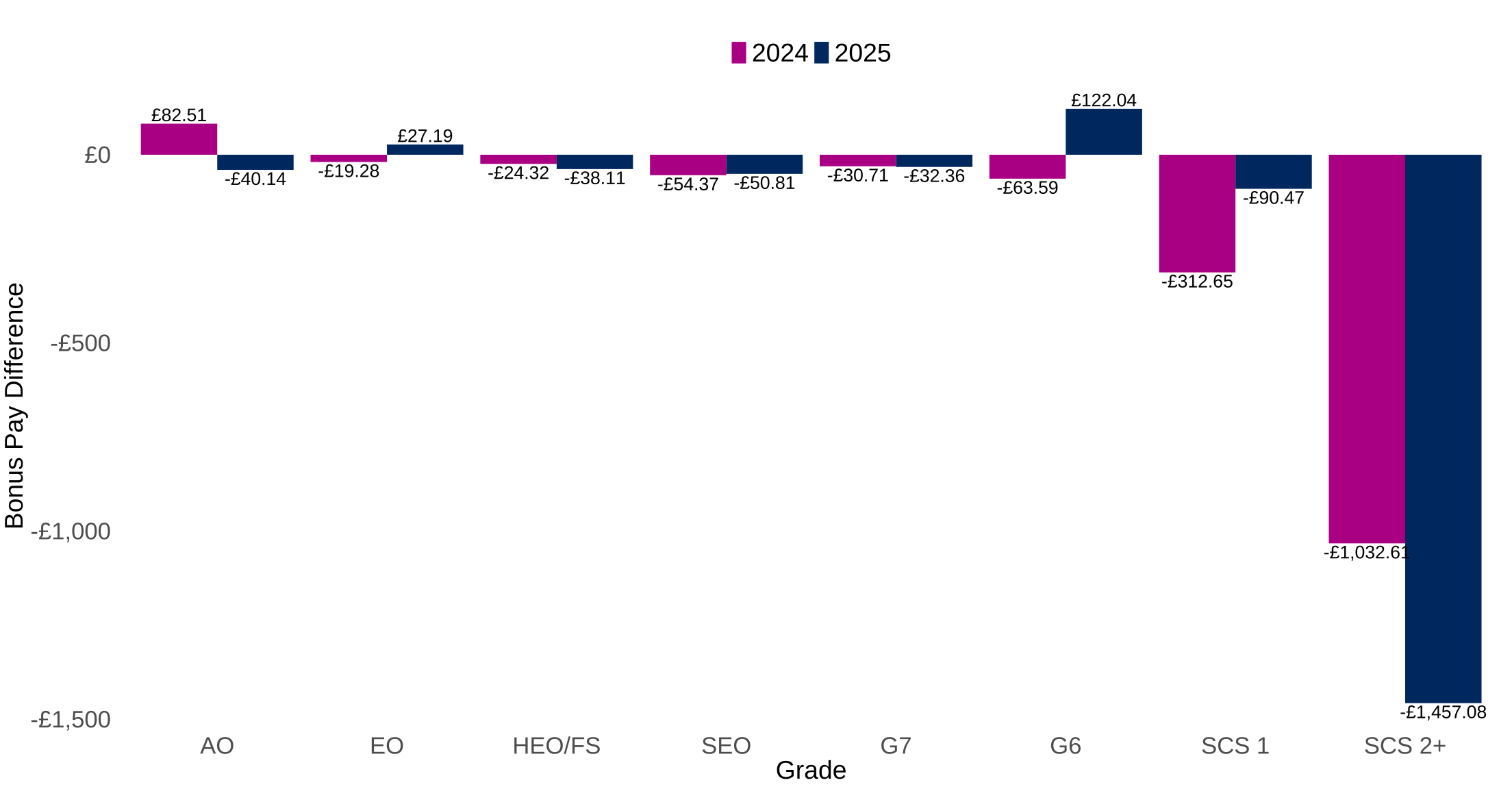
Figure 5 shows the absolute bonus pay gap at each grade in both 2024 and 2025. The pay gap in 2025 is negative (women on average receive more bonus) at all grades except EO and G6.
Note: positive values represent cases where the mean bonus for men is higher than the mean bonus for women.
In 2024, the data indicated that as seniority increased, the bonus pay disparity also increased. By 2025, men received higher bonuses than women at Grade 6. The difference in bonus pay between men and women at SCS 1 narrowed. Overall, these developments have contributed to closing the bonus pay gaps between male and female employees.
Bonus pay distribution
5,003 employees were in-scope for inclusion in the GBPG. Overall, women accounted for 49.59% of bonuses and men for 50.41%, aligning closely with the gender makeup across different grades.
Figure 6: headcount of each gender within grade (GBPG population)
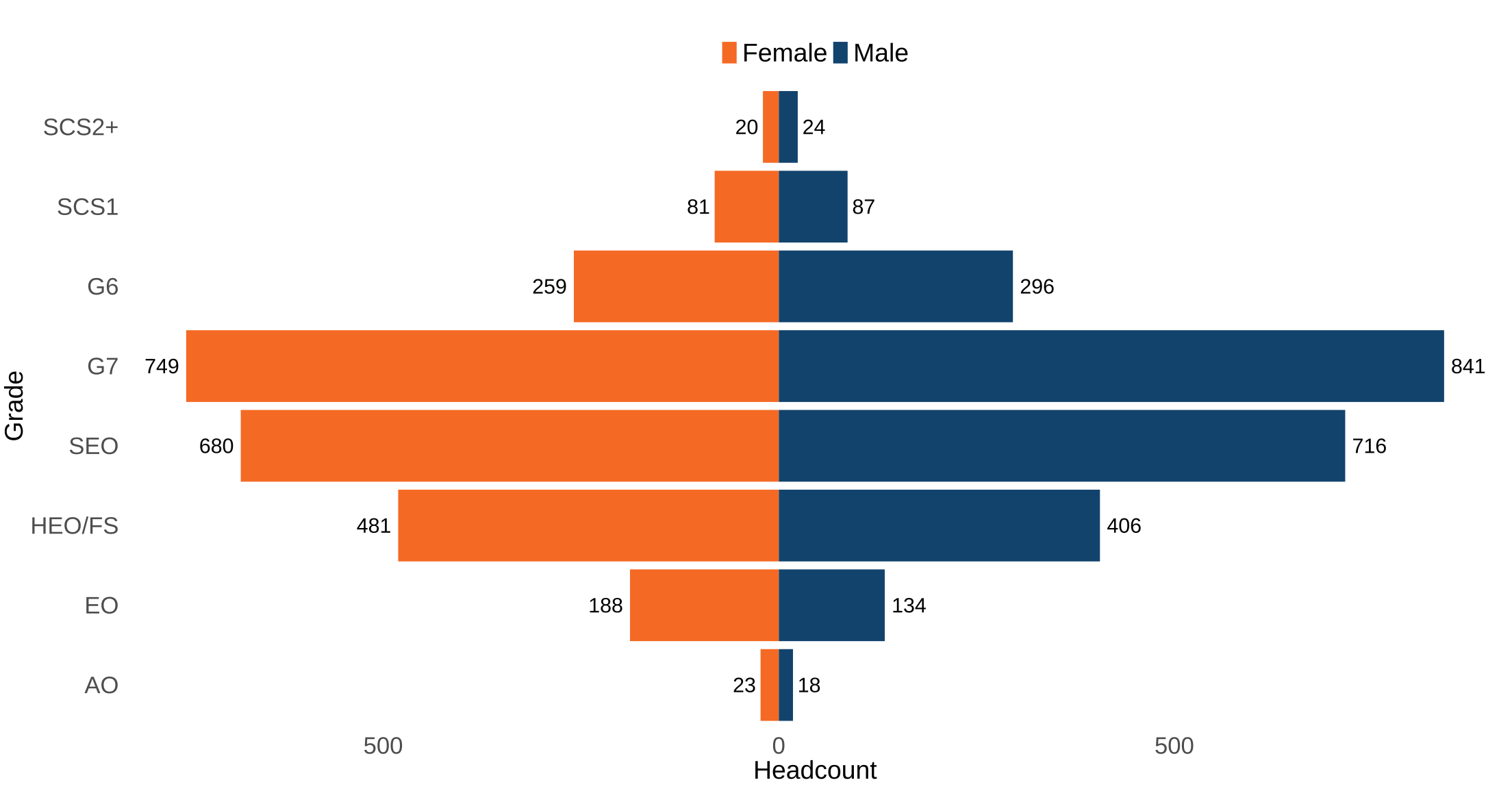
Figure 6 is a funnel chart, showing the headcount of each gender within grade within the GPBG reportable population.
Looking at the split by grade (Figure 6), the trend continues where gender balance is maintained at almost every level. There is a slight increase in bonus recipients for men in certain higher grades (SEO, G7, G6) and for women in the HEO/FS, EO, and AO grades, reflecting the previous pattern of distribution across roles. Overall, the data suggests that DBT’s approach to bonus allocation is fair with the minor variations reflective of the existing workforce demographic rather than systemic disparity.
Targeted action to close the gender pay gap
This action plan has been developed with HR expert services, DBT’s diversity and inclusion staff networks and trade unions. The actions have also been informed by insights from other organisations both within and outside the UK civil service and based on the best available evidence on what works to tackle the GPG from the Behavioural Insights Team, Chartered Institute of Personnel and Development, and Government Equalities Hub.
The action plan sits within and incorporates elements of DBT’s Diversity and Inclusion Framework.
Address gender imbalance across grades and support talented women to progress starting with building on last year’s actions and:
- continue developing and promoting flexible working options, including menopause related actions, (new action) and shared parental leave programme (existing action)
- explore the use of skills-based assessment in recruitment and new processes to boost inclusivity and reduce bias (new action). We will work with resourcing colleagues to scope out this work and aim to have a plan by early 2026
Review and address disparities in pay within grade:
- the pay team can explore the G7 and G6 data in more detail, create proposals on how to potentially address and explain the pay gap issue (new action)
- use a range of methodologies including the use of AI to further understand the detail behind pay gap issues and carry out regular pay audits (new action)
An internal delivery plan will be developed with actions and milestones, and progress will be monitored quarterly with an in-depth data review. DBT will provide a progress update on the implementation of these actions in next year’s gender pay gap report.
Declaration
Calculations and quality statement
Our calculations have followed the legislative requirements of the Equality Act 2010 (Specific Duties and Public Authorities) Regulations 2017. The data reported is accurate as of 31 March 2025, as extracted by our service providers, UK Shared Business Services and the Foreign, Commonwealth and Development Office (FCDO) in line with the Cabinet Office guidance.
DBT’s workforce is based across the UK and overseas, on the One HMG platform. As per the regulations, the March 2025 GPG analysis includes staff deemed to be full paid relevant employees based in the UK, on DBT payroll. It also includes overseas civil servants paid in the UK on the One HMG platform. Country-based staff who are employed locally overseas, contractors, and agency workers are not included. Most Fast Stream staff working at DBT are centrally recruited and employed by Cabinet Office. This group are included in analysis of the GPG for the Cabinet Office rather than DBT.
Part-time staff are included in the analysis, as the ordinary pay is calculated on an hourly pay rate. On the gender bonus pay gap, part-time staff are equally included as any end of year performance awards and in-year awards in DBT are not prorated for part-time staff.
Bonus data includes all end of year bonuses as well as in-year rewards made between 1 April 2024 and 31 March 2025.
Our report is also in line with the recommendations made from the Inclusive Data Taskforce report published in September 2021.
Declaration
We confirm that data reported by the Department for Business and Trade is accurate and has been calculated according to the requirements and methodology set out in the Equality Act 2010 (Specific Duties and Public Authorities) Regulations 2017.
Rebecca Woodward, Chief People Officer