UK Surgeon General joins NATO medical leaders in North Macedonia
Major General Phil Carter attended the NATO Chiefs of Military Medical Services plenary in Skopje to help shape the alliance’s military medical readiness.
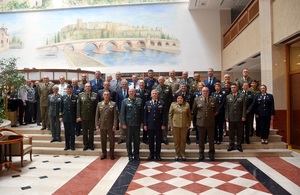
MOD Crown Copyright
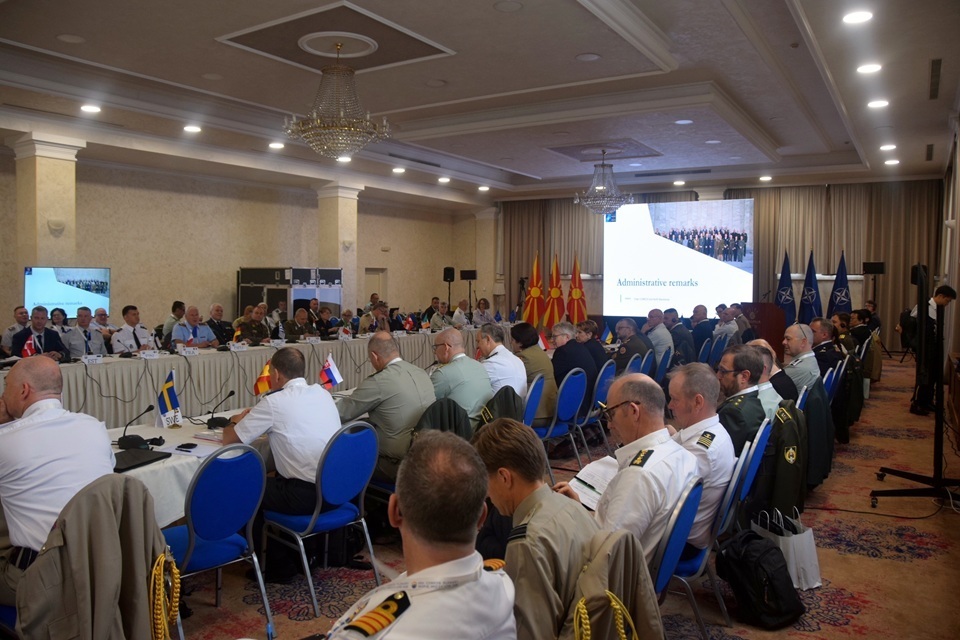
UK Surgeon General, Major General Phil Carter, joined senior military medical leaders from across NATO at the alliance’s 65th Committee of the Chiefs of Military Medical Services (COMEDS) plenary in Skopje, North Macedonia, last week.
COMEDS is NATO’s senior advisory body on military medical matters, bringing member nations together to align medical standards, share lessons from recent conflicts and improve interoperability, including the movement of casualties across borders.
The plenary gave UK Defence Medical an opportunity to show how it is supporting delivery of the NATO Medical Action Plan, which aims to strengthen military medical support for a range of scenarios, including large-scale combat operations.
Addressing delegates, Major General Phil Carter said:
Military medical capability has a key role in generating and regenerating combat power.
The UK is using the NATO Medical Action Plan to drive work across key areas including regulation, workforce development, mass casualty planning, patient evacuation and medical logistics.
This includes engaging closely with allies abroad and the NHS and other health providers at home to improve our understanding of what would be required to provide medical support to military operations at greater scale and under more contested conditions.
The NATO Medical Action Plan focuses on improving interoperability, developing the workforce and strengthening preparedness for mass casualties, patient evacuation and medical logistics, alongside closer civil-military cooperation.
Discussions in Skopje reflected the scale of the challenge, including the likelihood that future operations could generate higher casualty numbers than those seen in recent conflicts in Iraq and Afghanistan.
Major General Carter said:
As the Strategic Defence Review outlined it is essential that we plan for all challenges, which is why we are working closely with our allies to overcome the barriers to interoperability and to understand the challenges that large-scale combat operations could have on our health services both in the UK and across NATO.
NATO medical leaders spoke about the importance of multinational cooperation in casualty evacuation and medical support, where wounded personnel may need to move through several nations and systems of care.
Major General Carter said:
Casualty evacuation is as much a battle space management and force protection challenge as it is a clinical challenge.
No one nation is able to solve these challenges alone, but collectively, by maximising interoperability, and supporting civil-military cooperation, we are ensuring that we are able to provide our service personnel with the best possible care whatever mission they are engaged on.
The plenary also emphasised the importance of research innovation and the contribution of UK Defence Medical personnel based across the NATO alliance who continue to help shape clinical standards and research priorities, and further cooperation to prepare military medical services for future conflict.
Major General Carter said:
Clinical research, often conducted collaboratively with NATO allies, is fundamental to maintaining the medical advantage. Offering the best possible clinical care tomorrow requires detailed research today. But research is complex and it can, therefore, only really be done effectively by nations choosing to work together.
The UK will continue to work through NATO COMEDS and take future opportunities to engage with allies, strengthen cooperation and support the collective development of military medical capability across the alliance.
MOD Crown Copyright