UK Space Agency investment helps launch cutting-edge electric propulsion lab
A new laboratory that will help UK companies develop and test the engines powering the next generation of satellites has opened at Harwell Science and Innovation Campus in Oxfordshire.

Chuong Van Dang, Chief of Staff at Magdrive, Paul Bate, CEO of the UK Space Agency, Mark Stokes, CEO and co-founder of Magdrive, Antonia Yendell, Head of Space Ecosystem at the UK Space Agency. Credit: Stuart Harrison / Magdrive
The Disruptive Experimental Electric Propulsion (DEEP) Lab, built by space technology company Magdrive, gives British businesses access to specialist testing facilities for electric propulsion systems – the technology that allows satellites to manoeuvre, maintain their orbits, and travel further into space using less fuel than traditional chemical rockets.
The £3.8 million facility has been established with £1.8 million from the UK Space Agency’s Space Clusters Infrastructure Fund and £2 million of company investment. While Magdrive will be its largest user, the 10,000 square foot laboratory is open to start-ups, established aerospace firms and academic researchers across the UK space sector.
Space Minister Liz Lloyd said:
From ambitious start-ups to established aerospace firms, this facility will give British companies access to testing capabilities that were previously out of reach. Electric propulsion is shaping the future of how we operate in space, and by investing in infrastructure like this we are ensuring that UK innovators can lead the way.
By opening its doors to the wider space community, the DEEP Lab will accelerate the pace of discovery and help cement the UK’s reputation as a global leader in space technology.
Mark Stokes, CEO and co-founder of Magdrive, said:
We’re delighted to officially unveil the DEEP Lab to the UK space community. A huge thanks goes to the UK Space Agency for supporting us setting up a world-class R&D facility. This milestone accelerates the commercialisation of our next generation And DEEP Lab isn’t just for us, it’s open to companies, startups and academics across the sector, it will also create new opportunities for collaboration and discovery, and to boost national capability and put the UK on the map as a leader in electric propulsion technology.
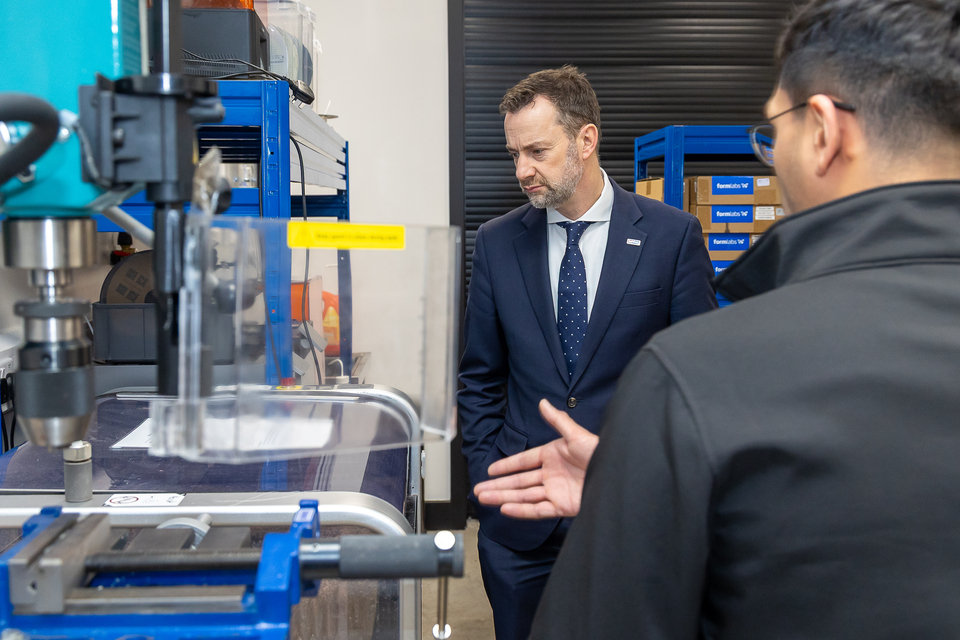
UK Space CEO Dr Paul Bate at Magdrive. Credit: Stuart Harrison / Magdrive
Supporting UK space sector growth
Electric propulsion is increasingly vital for satellite operations, offering greater efficiency and manoeuvrability in space. The new laboratory features six key capabilities, including cleanroom assembly areas, a mechanical prototyping workshop, and advanced plasma diagnostic testing chambers.
The facility’s centrepiece is a 2-metre diameter vacuum chamber that enables comprehensive thruster testing and validation. Magdrive has brought plasma diagnostics commonly used in the fusion industry to the electric propulsion sector, allowing users to image and monitor plasma evolution from multiple angles.
Dr Paul Bate, CEO of the UK Space Agency, said:
The opening of Magdrive’s DEEP Lab is a fantastic example of how targeted investment can deliver real impact for the UK space sector. Our funding will not only help create 50 highly skilled jobs but has also established a world-class facility that addresses a genuine gap in our national infrastructure.
Electric propulsion is fundamental to the future of satellite technology, and by providing accessible testing capabilities, DEEP Lab will accelerate innovation across the industry. We’re particularly pleased to see this facility supporting start-ups and smaller companies who previously faced barriers to testing and developing their technologies.
The UK Space Agency’s Space Clusters Infrastructure Fund has awarded more than £45.6 million for 13 projects since it launched in 2023. This funding is complemented by over £43.8 million in match funding from the sector, generating a total of £89.6 million of private/public investment in space research and development infrastructure.
On top of that, SCIF funding awards have bolstered organisations’ ability to attract investment, helping to secure venture capital, private equity and follow-on public funding, and has already helped catalyse over £50 million in additional investment.
A collaborative approach
The laboratory can accommodate start-ups, established aerospace companies, and academic researchers.
Individual rooms and capabilities can be rented separately under different pricing models designed to cover operational costs rather than generate profit. Enhanced security infrastructure ensures users can access only their booked facilities.
The on-site workshop, equipped with a Hurco 5-axis machine and 3D printers, enables rapid prototyping and iteration. A full-time machinist supports users in operating specialist equipment, significantly reducing development timescales.
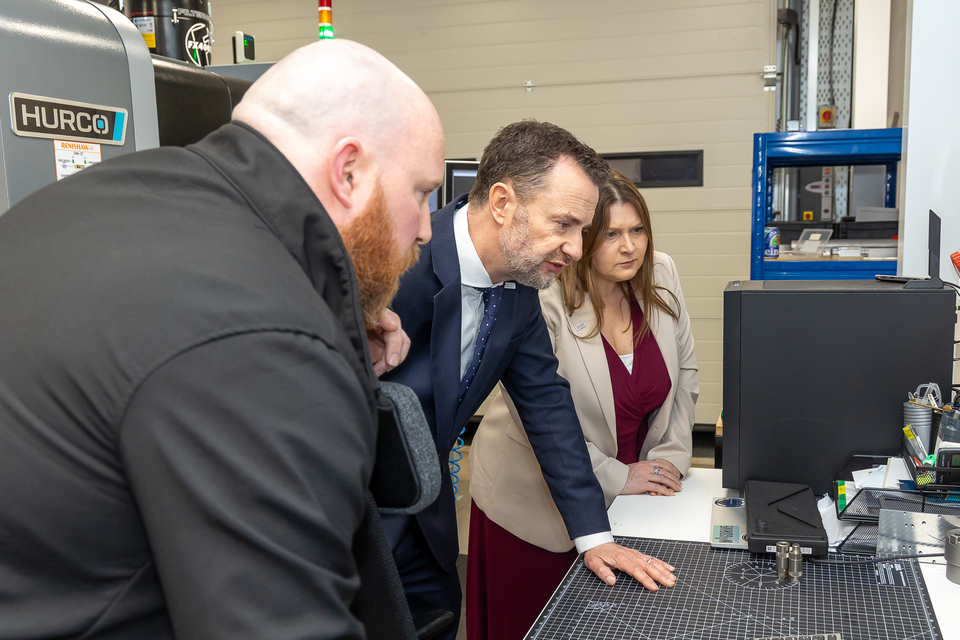
UK Space Agency CEO, Dr Paul Bate, and Antonia Yendell, Head of Space Ecosystem at the UK Space Agency on a tour of Magdrive's facilities. Credit: Stuart Harrison / Magdrive
Building on success
Founded in 2020, Magdrive has attracted over £10 million in funding, including support from the UK Space Agency and European Space Agency. The company is developing next-generation spacecraft propulsion systems at its Oxfordshire base.
As part of the Harwell Space Cluster, Magdrive has proximity to more than 100 other space organisations which helps foster collaboration and knowledge exchange within the space ecosystem.
The DEEP Lab represents a significant enhancement to the UK’s space infrastructure, providing domestic companies with world-class facilities to develop technologies that will power future satellite missions.
Jim Stretton, Managing Director of Harwell Campus, said:
Magdrive shows what’s possible when public and private investment align within a strong innovation ecosystem. Supported by Harwell’s unique mix of government, academic and commercial partners, the company has scaled from incubator space to a new campus base and has now opened the DEEP Lab.
We’re delighted to see Magdrive operating world-class infrastructure that will help smaller space companies accelerate the development of new technologies across the space sector.