Minister for Scotland sets out plans to tackle poverty
Minister for Scotland, Melanie Ward MP gave the keynote address at the Poverty Alliance National Conference 2026.
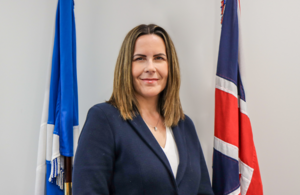
Thank you, Kez, for that warm welcome - it’s great to see you. I think we first worked together on the Debtbusters campaign against rip-off payday lenders that you led, more than a decade ago. And thank you to Polly and the Poverty Alliance for bringing us together today. To the Poverty Alliance and your members: I have huge respect for the work you do.
It is a privilege to address this conference: so many dedicated advocates, community leaders, and organisations who work tirelessly every day to combat poverty. It is a mission of the utmost importance.
I want to start by acknowledging the central theme of today’s gathering: how we deliver meaningful, lasting change in a shifting political and economic landscape.
That key point - bringing about meaningful change. That has been the lodestar for me in my career so far, particularly when it comes to action on poverty.
Before I got into politics, I worked to fight poverty internationally with organisations like Christian Aid and ActionAid. Then, as a frontline humanitarian aid worker, I led programmes in the Middle East and Africa to get lifesaving aid into war zones, for people whose lives were shattered by conflict and crisis.
Together with amazing colleagues, I worked in difficult and sometimes dangerous situations to help total strangers in the most challenging and desperate circumstances.
Why did I do this? A question that my mother often asked me! I did it because of human solidarity. I did it because I believe that everyone matters. Every child, everywhere deserves the chance to live life to their fullest potential. I’m sure that’s a shared belief of most people in this room. It’s also what drove me to politics: all of the horror, all of the suffering I witnessed as an aid worker happened because of a failure of politics. Politics in action can drive the meaningful change we so badly need to defeat poverty and hardship, wherever it is found.
So today I’m going to speak about why this matters so much to the UK Government; what we’ve done so far; and - crucially - what we are going to do next.
The UK Government, between 1997 and 2010, lifted some 600,000 children out of poverty. Shamefully, in the 14 years that followed from 2010, all of that was undone, and then some, as child poverty climbed by 900,000.
The UK Government, with Prime Minister Andy Burnham at the helm, believes that our communities and our country cannot afford anything other than bold action - because tackling poverty is in our Government’s DNA.
You probably heard Prime Minister Andy Burnham say on the steps of 10 Downing Street, on his first day in office, that “care for people will be at the heart of everything” we do. Of everything our government is for, this is the sentiment that means most to me.
When Andy was in Motherwell recently, he spoke about the need for a focus on people through names not numbers, inspired by a visit many years ago to the organisation FARE Scotland in Easterhouse, not too far from here. He cited their people-centred approach to tackling poverty and supporting their community, recognising that the reasons why people find themselves in poverty are different for everyone - and so tailored solutions really matter.
That’s why I’ve just come from visiting FARE Scotland myself this morning. It was an absolute privilege to meet Ian, Chris, Karen and so many members of the local community there. What was abundantly clear was the importance of the relationships - the bonds of trust that are built between staff, volunteers and the people they support. It is through this people-centred approach that we can, together, tackle the reality of poverty in Scotland today.
And as every person in this room will know, poverty in Scotland is multi-faceted and shaped by far more than just a household’s income, central though that is. In my own constituency, the community in Linktown, Kirkcaldy, live that reality every day.
The Links ranks among the most deprived areas in Scotland, facing higher rates of mental ill health than the wider Fife region. Crime of all kinds is a reality, as is housing stock in real need of redevelopment.
The community has lost a devastating number of lives to drugs misuse, leaving fear and grief in far too many homes - one Mum has lost three of her four children. This is a scandal that shames Scotland, still the drug deaths capital of Europe.
Despite residents like Shane and Lizzy in the Links pushing for stronger grassroots support, they feel overlooked when it comes to local investment and public services. It’s a constant battle to make their voices heard, to find solutions that make a difference. They feel they have no control over their community’s future and instead are ‘done to’ by layers of officialdom. As governments, we need to listen. That’s one reason why the Prime Minister’s push to move power closer to people matters so much.
But there’s one statistic that sums up the problem in Scotland more than any other. Life expectancy.
Average life expectancy in Scotland continues to be over a year shorter than in Wales and over two years shorter than in England.
In this very city, as you travel the three miles west between Pollokshields West and Greater Govan, life expectancy drops by over seventeen years. That’s seventeen years of life not lived. Seventeen years of lives lost to persistent health inequalities.
These health inequalities compound generational cycles of unemployment and lost opportunity because people are being failed. At the Cowdenbeath job centre in my own constituency recently, I heard first-hand from staff about the number of young people leaving school, and coming to them, without basic literacy and numeracy skills.
And those staff work in a system that currently asks young people what they can’t do rather than what they can do. It’s failing our young people, preventing them from fulfilling their potential and building a decent future.
And we cannot ignore the housing crisis - because every single person deserves a safe, warm and dry home. In Scotland the number of children living in temporary accommodation has risen each year over the last five years. But those children are not numbers. They are young people trying to get their homework done in crowded and noisy bed and breakfasts. They are sleeping with their family all in one room, not knowing where home will be in a week, never mind a month’s time.
For some children, the costs of this are profound. When I recently visited Rachel’s House, a children’s hospice run by the wonderful CHAS, I was struck to learn that children with life-limiting conditions are 50% more likely to live in the most deprived parts of Scotland.
We all know that diagnosing these causes and symptoms of poverty is easier than solving them. There is no single solution. But as Governments we have to explore every avenue for change that is open to us. We have to work strategically, and challenge ourselves with tough questions.
On the day he became Prime Minister, Andy Burnham’s first instruction was to end rough sleeping - as, he said, part of “putting the right values and the right standards at the heart of government”.
Devolution means Andy can’t mandate this in Scotland but, I very much hope the Scottish Government will follow suit.
And we know that international events mean the cost of living is too high for everyone right now. It’s why the UK Government has cut tariffs on food, and we hope to see more action on food prices coming out of the UK-EU Summit this Friday. It’s why we’re putting in place lots of other small measures: VAT off electricity bills; standing charges off gas bills; tariffs off kerosene for heating oil; a £100 energy payment. But we know it’s much worse for those who have least. That’s why action like our expansion of the £150 Warm Homes Discount to quarter of a million additional households in Scotland is focused on those with the lowest incomes.
These small measures should give people some breathing space. But we’re not in government to make small, temporary changes. We’re here to make big, bold, lasting changes and will lay these out in a new 10 year plan before Christmas.
Our Child Poverty Strategy already set out action to address the key drivers of poverty in a meaningful way.
It’s a whole of government approach to give parents the tools, and children the chance, of a better future. One which stops poverty stealing the potential of our children.
To that end, I’m proud that we scrapped the cruel two-child limit - the single most effective action available to lift children out of hardship.
This change will lift 450,000 children out of poverty across the UK, impacting 95,000 children right here in Scotland. And it’s already working. Just yesterday new figures showed that 300,000 children have already been removed from poverty by this step.
Parents are telling charities that their debts are falling, children have more of the essentials, and family stress has eased. I know some food banks are telling us too, that they are seeing reduced demand since we scrapped the two child limit. This is real change.
We know there is more to do but we are driving the largest reduction in child poverty in a generation.
The Scottish Government has statutory targets to halve poverty rates by 2030. This target is at serious risk of being missed. I welcome recent calls in the Scottish Parliament for cross-party talks to bring forward an ambitious and deliverable plan to meet those targets. We should be working across governments and parties on major issues like this.
My time with FARE Scotland earlier today brought home that their approach is centred on the understanding that a secure, well-paid job is the surest route out of poverty.
And our Child Poverty Strategy understands that too. For work to be a genuine route out of poverty, it needs to pay. And it needs to be secure. That’s why the Government under Tony Blair brought in the minimum wage.
And it’s why the UK Government has boosted it to record levels, while through our Employment Rights Act, we’re delivering the biggest upgrade to workers’ rights in a generation - to ensure dignity and security at work.
But I won’t pretend to an audience like you that all the measures I’ve just outlined are going to do what is needed on their own.
It’s not enough for people to simply ‘get by’. To ‘just about manage’. Tackling poverty is about creating a pathway to the decent life that everyone deserves. Because everyone matters.
So, what next? What we are doing - what we have to do - is take on one of the biggest challenges that is driving poverty in this country.
Between the end of the pandemic and the last General Election, the number of young people who are not in education, employment or training rose to one million. Europe-wide, we have a higher proportion of young people in this situation than any other country except Romania. In Scotland, that means one in every six young people.
Some argue that our young are snowflakes or shirkers. We reject that completely. Our young people are brilliant but they are growing up in a world that has changed beyond recognition. The support and opportunities around them have not kept up. We can’t continue to let them down.
And in too many families, this problem spans the generations since the 1980s and de-industrialisation: a story that Scotland knows too well. Some young people have no-one in their immediate family who has ever had a steady and secure job.
You might have seen that Alan Milburn published his final report yesterday on Young People and Work. The Review is radical. It proposes a totally new settlement for the next generation.
Milburn’s diagnosis is clear. Many young people are trapped in what he calls a ‘rejection economy’. They cannot get a job without experience, but they cannot get experience without someone giving them a first chance. The report sets out how we solve this, with an approach based on names, not numbers: significant investment into personalised earlier support and real opportunities, with a clear expectation that young people take them up.
This includes an Opportunity and Support Guarantee for young people - set in law - so every young person who is NEET or at serious risk of becoming NEET has a credible route into education, training, an apprenticeship, high-quality work experience, or a job. It will be built around what they can do, even if that is just a few hours of work a week. Milburn actually says there are not NEETS but DEETS because he never met a young person who wasn’t Desperate for Education, Employment or Training.
The review presents a bold vision, of not accepting young people being written off, of reversing the generational poverty being baked into towns and cities across our country. It is a watershed moment.
It outlines a package of benefit reform coupled with significantly increased support. Some want us to make crude cuts instead - but we will not take that path. This UK Government ended austerity, and we are proud to have done so.
Milburn’s review is also very clear that for young people who can never work because of serious health conditions or disabilities, the support they receive will be much better than it is now, without regular reassessments. This matters enormously - including to me personally - because my brother is one of these people. It’s one of the reasons why I did not support the first attempt at welfare reform under Keir Starmer.
Milburn’s approach is light years away from this. The report’s impact assessment shows that the proposed new package could lift 50,000 people out of poverty in the next decade.
Making bold and positive changes will mean working in partnership with the Scottish Government, given that they have devolved responsibilities in a number of the areas covered by the review such as education, skills, health and local government. I welcome that the First Minister signalled yesterday that they will carefully consider the report. We are already working together to look at how employability support in Scotland could be better delivered at a more localised level, as part of a drive to push more power out of Holyrood and into communities.
The UK Government will respond to Milburn’s review in detail early next year. But given the scale of the challenge, we can’t, and won’t, stand still on delivering change and supporting people towards a better future.
Just this week we announced that every eligible 18 to 24-year-old claiming Universal Credit and looking for work will be guaranteed a fully funded, six-month job matched to their skills from the end of November. This expansion of our Jobs Guarantee will help at least 6,000 young people here in Scotland. In addition, we have already rolled out 12 youth hubs - new, one stop support centres - across Scotland, with a further 27 on the way.
So this is about meaningful, lasting change. Change that cuts poverty, and makes hope for the future a reality.
Bold change cannot be achieved by any single entity working in isolation. It demands a shared effort. I believe that we have common ground, and know that you will challenge both of Scotland’s governments. I hope you will work alongside us as partners in building the future. We can build a Scotland where no community is left behind, where every child can fulfill their potential, and where opportunity belongs to everyone. Because everyone matters.
Thank you for your tireless dedication, and I look forward to taking questions.
[Political content has been redacted]