Taking flight: UKDI funds military-grade powered paraglider
Wiltshire-based start-up, Blakcro, used UKDI funding to develop defence grade powered paraglider systems — giving troops a discreet, agile and independent air mobility capability
- Blakcro designed and built the UK’s first military-specification foot launched and multi role trike powered paraglider systems
- Blakcro’s platforms are stealthy and can be deployed from a large suitcase-sized box within minutes
- UK Defence Innovation (UKDI) and Defence Science Technology Laboratory (Dstl) supported Blakcro across three projects, including a Defence Innovation Loan to scale production
- Blakcro has grown from a team of 3 to 11 full-time staff, since working with UKDI
- The technology is already in operational use, with contracts held across the UK and NATO allies
Imagine a small team that needs to insert covertly into hostile territory. A helicopter is too vulnerable, loud and visible. Meanwhile, a conventional parachute drop is a one-way-ticket and requires a large transport aircraft to make it happen.
What if the solution was a number of Individual and quiet systems - small enough to fit into a hard case the size of a large rucksack, ready to fly within minutes, capable of travelling 200 miles under its own power, and able to self-extract if the mission demands it?
That is exactly the capability UK Defence Innovation (UKDI) and the Defence Science Technology Laboratory (Dstl) have helped bring to the frontline.
Powered paragliders, built for defence. Built in Britain.
Blakcro was founded in 2024 by Sam Wedgwood in Wiltshire, with a clear understanding of what defence needed for agile air mobility. The company designs and manufactures fully defence-optimised powered paraglider systems, giving a single operator independent air mobility without the need for a runway, a drop aircraft, or a large support footprint.
The team, many of whom had spent years working on powered paraglider systems previously, had seen first-hand the compromises that come with adapting consumer or sports equipment for military use.
Sam Wedgwood, Founder and CEO at Blakcro, is direct about why that matters:
“We’re the only organisation who design a system of this kind for defence from the ground up. We avoid all of the compromises you get when you try to modify consumer or sports equipment.”
Being built for defence from the ground up makes a huge capability difference. Blakcro’s systems are very compact and deployable, have a very low acoustic signature and can handle JPADs (Joint Precision Aerial Delivery) drops at 9G, and can be assembled in under eight minutes in darkness. They are also designed from the outset to accommodate body armour, chest rigs, night vision goggles, and a weapon mount.
Designed for the frontline:
-
UK-manufactured titanium airframe: Sovereign capability for the high-strength, lightweight airframes required.
-
Zero-Tool Field Servicing: Every component is field-replaceable without specialist tools to maintain operational capability.
-
Low-Observable Footprint: Engineered to a minimal acoustic, visual and radar signature for stealth insertions.
-
Rapid Readiness: Assembled in under 8 minutes in complete darkness, with removable fuel tank that safely defuels for rapid transport or refills in under 45 seconds.
-
Tactical Integration: designed from inception to seamlessly integrate with body armour, chest rigs, NVGs , weapon mounts and equipment.
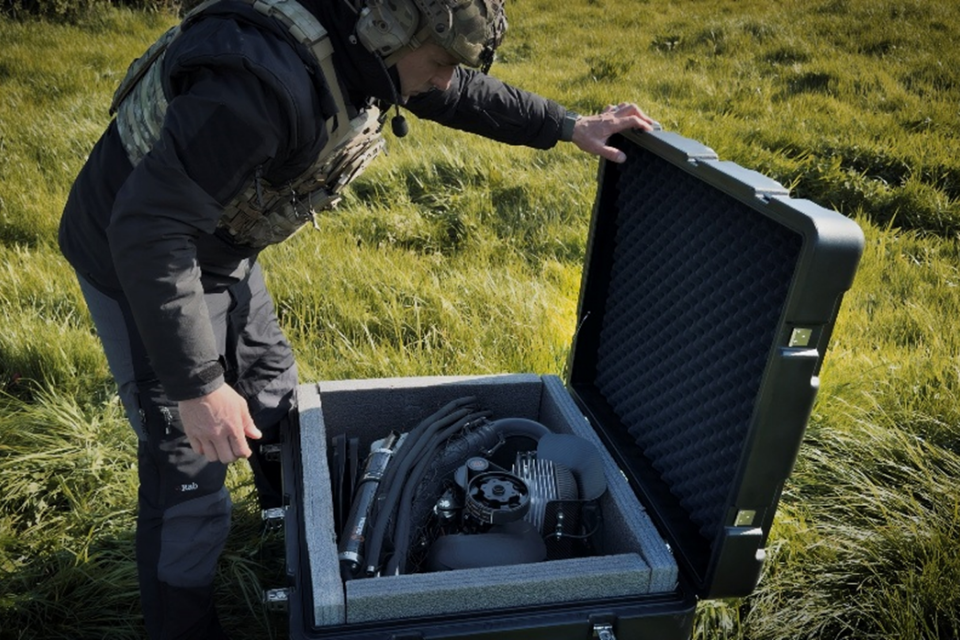
Blakcro powered paraglider can be deployed from its case within minutes
Working with UKDI
Blakcro first received funding from UKDI through its Open Call for Innovation. Since then, the company has received support across two further UKDI projects, each building on the last, with technical assessment and support from Dstl throughout.
The first project focused on eliminating the need for ground-based battery charging. UKDI funding supported Blakcro to develop an in-flight electrical charging system (IFCS) for its mil-spec Electronic Fuel injected (EFI) engines, cutting the dependence on ground power entirely – which was a huge improvement on the original design. The new system can also provide electrical power for communications equipment, electronic warfare tools, and heated clothing for operators working in cold-weather environments.
The second UKDI funded project responded to a direct request from end users: adding a multi-role trike platform (a wheeled airframe that attaches beneath a larger paraglider). This helped transform the system from a solo foot-launch system into a platform capable of carrying two operators, heavy cargo, or a casualty.
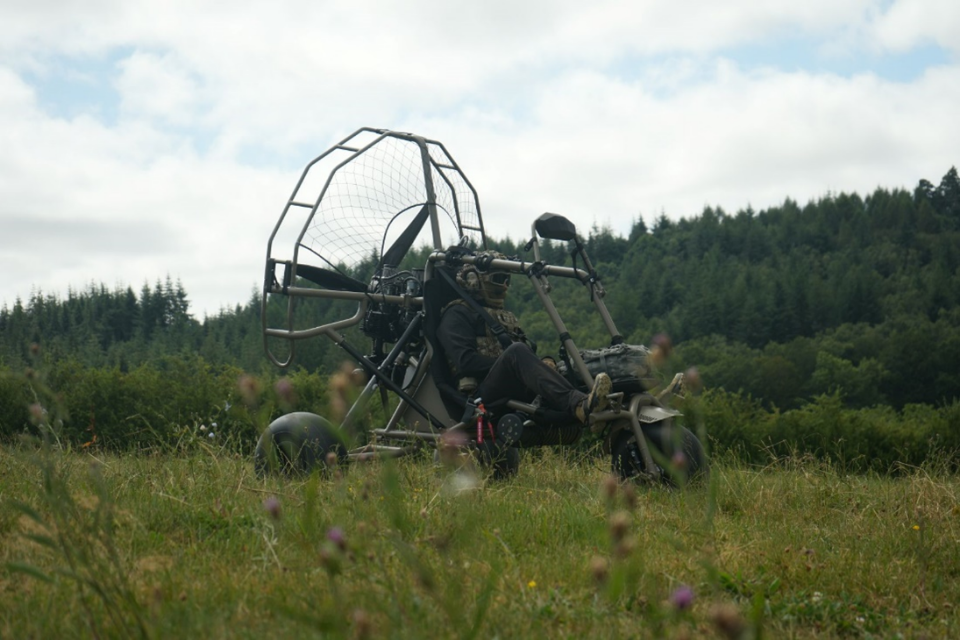
UKDI supported Blakcro T1 trike platform
The third strand of UKDI support came in the form of a Defence Innovation Loan, which helped Blakcro to scale from a single-product operation to full-scale production. The loan also broadened Blakcro’s reach from specialist troops to serving the wider airborne and commando communities, including units like the Royal Marines and Parachute Regiment.
Sam Wedgwood explains the thinking behind that expansion:
“The commando community are interested in moving away from large, loud aircraft, which are a target on the tarmac before they’ve even taken off — to discrete, distributed air mobility where the concentration risk is greatly reduced.”
The results speak for themselves
The pace of Blakcro’s growth in a few years since its founding has been remarkable, reflecting both the quality of the technology and the urgency of the need. The company has more than tripled its headcount, from three to eleven full-time staff, delivering full capability provision, from manufacturing and supplying equipment, delivering flight and technical training, as well as delivering service and support.
Most significantly, the technology is not sitting in a lab. It is already in use. Blakcro holds three prime contracts — with the UK and NATO allies — and two are already in operational use.
Minister for Defence Readiness and Industry, Luke Pollard MP, said:
“With UK Defence Innovation supporting SMEs like Blakcro from the drawing board through to deployment, we are building a more resilient, homegrown defence supply chain and ensuring our armed forces receive the pioneering equipment that can give them the edge on the battlefield.
“Defence has a new way of working with industry, backing British innovation to deliver cutting-edge capability for our armed forces and good jobs in regions like Wiltshire.”
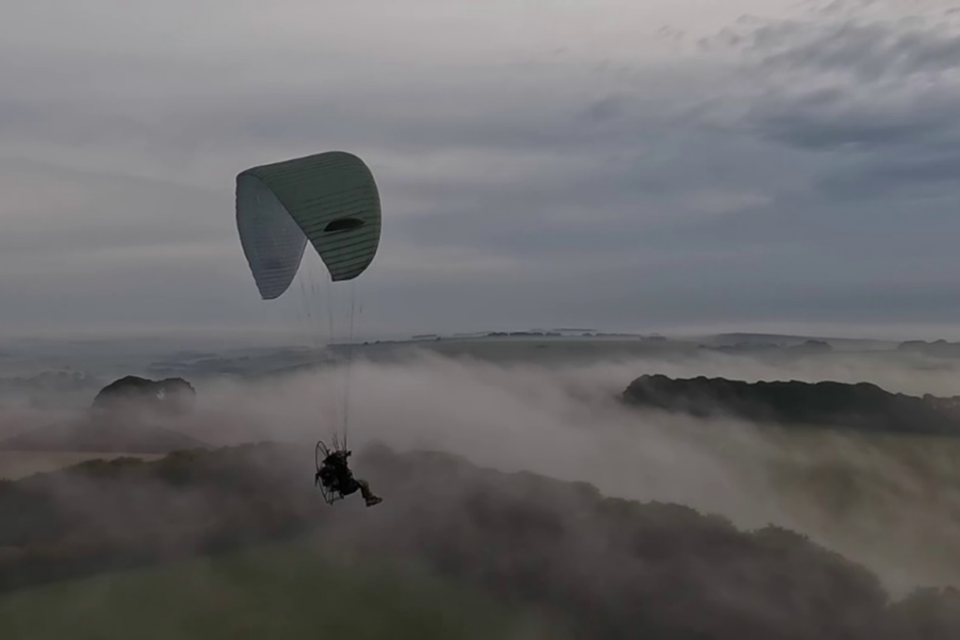
Blakcro paraglider in action
Sam Wedgwood, Founder and CEO at Blakcro:
“From a UKDI success story perspective, we’ve very rapidly moved from base technology in 2024, through UKDI supported rapid innovation, through to purchase, through to operational use by 2026. And we couldn’t have done that at this pace without the support we’ve received — not just the funding, but the commercialisation support and the access to the right people. UKDI kept telling us we were special. I think it’s mutual.”
Looking ahead, Blakcro is already developing the next generation of capability: autonomous cargo delivery using unmanned paramotors, capable of carrying 100 to 200 kilograms over distances of 100 to 200 miles. A demonstrable system is expected within 18 months.
The same autonomy technology will also be applied to manned systems, reducing pilot training burden and enabling operators to switch to autopilot mid-mission — freeing them to focus on the task at hand.
In just a few years, Blakcro has gone from identifying a gap to filling it with technology that is already in the hands of those who need it most.
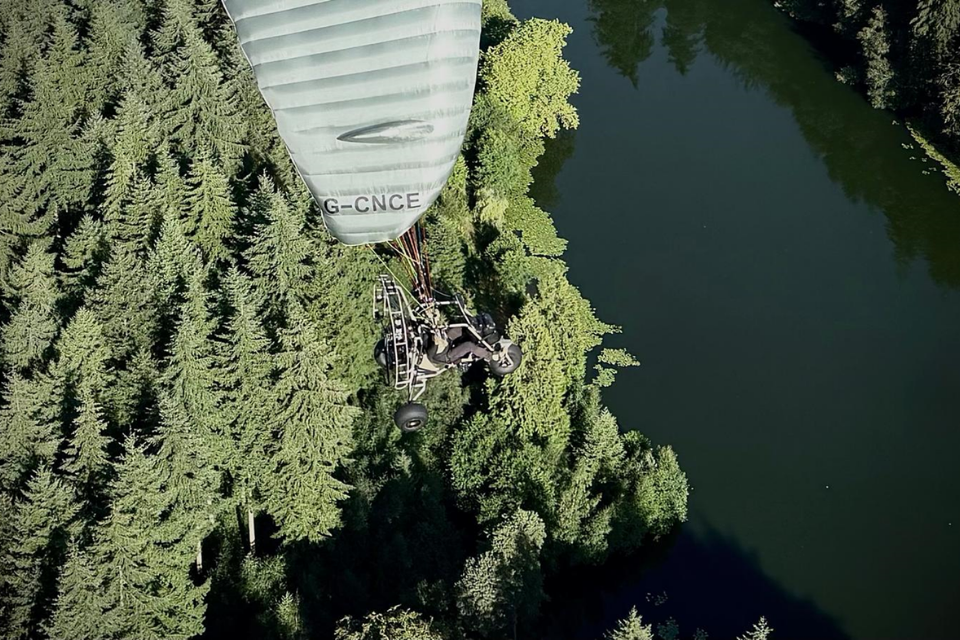
Blakcro T1 multi-role trike in flight
Your idea could be next.
If you have a technology that could solve a real problem for defence and security, we want to hear from you. We bring defence innovation together to move ideas rapidly from concept to frontline and stay ahead through continual technological advantage