Winter Fuel Payment statistics for winter 2025 to 2026
Published 15 September 2026
Applies to England and Wales

© Crown copyright 2026
This publication is licensed under the terms of the Open Government Licence v3.0 except where otherwise stated. To view this licence, visit nationalarchives.gov.uk/doc/open-government-licence/version/3 or write to the Information Policy Team, The National Archives, Kew, London TW9 4DU, or email: psi@nationalarchives.gov.uk.
Where we have identified any third party copyright information you will need to obtain permission from the copyright holders concerned.
This publication is available at https://www.gov.uk/government/statistics/winter-fuel-payment-statistics-for-winter-2025-to-2026/winter-fuel-payment-statistics-for-winter-2025-to-2026
This bulletin provides a summary of the annual Winter Fuel Payment (WFP) statistics for winter 2025 to 2026 at recipient and beneficiary level. The release covers statistics for residents of England and Wales.
Notices
This release covers recipient (claimant) and beneficiary (claimant and any eligible partner) level statistics for winter 2025 to 2026.
WFP statistics are designated as Official Statistics.
In July 2024, the government announced changes to the WFP policy which came into effect for winter 2024 to 2025, whereby pensioners were only eligible for WFP if they qualified for certain means tested benefits.
The eligibility criteria changed for winter 2025 to 2026 meaning that most pensioners living in England and Wales received a WFP (for those born on or before 21 September 1959). If a recipients’ income was over £35,000, the WFP was recovered by HMRC. However, these statistics report on payments made by DWP to pensioners living in England and Wales and do not include statistics on subsequent recoveries made by HMRC and exclude pensioners who opted-out of receiving a WFP before the payment was made.
DWP Management Information recorded 53,000 pensioners opted-out from receiving a WFP for winter 2025 to 2026. A HMRC impact assessment estimates that 2.2 million pensioners (including those from Northern Ireland) would be impacted by recoveries.
For winter 2025 to 2026, people were not eligible to receive a WFP if they lived outside of England and Wales. Therefore, these statistics no longer report on WFP made to recipients living in eligible EEA countries and Switzerland, as individuals residing in these countries are no longer eligible to receive a WFP.
Due to the policy changes which were introduced from winter 2025 to 2026, the measure showing the proportion of the pensioner population who were beneficiaries of a WFP, introduced for winter 2024 to 2025, no longer provides valuable insight and is not included in these statistics.
1. Main stories
The policy changes which came into effect for Winter 2025 to 2026, under which most pensioners living in England and Wales received a WFP, are broadly in line with the policy in place prior to 2024 to 2025 (where WFP were paid to eligible pensioners receiving certain means-tested benefits). The latest statistics are more directly comparable to winter 2023 to 2024 given the restricted eligibility criteria that applied in 2024 to 2025.
The headline statistics for winter 2025 to 2026, England and Wales are:
-
the number of WFP recipients in winter 2025 to 2026 was 10.9 million, an increase of 9.6 million since winter 2024 to 2025 (when WFP were made to eligible pensioners receiving certain means tested benefits), and 290 thousand from 2023 to 2024 when the policy was universal and most pensioners received a WFP
-
the number of WFP beneficiaries (recipients plus eligible pension age partners) in winter 2025 to 2026 was 11 million
-
of all WFP recipients, 37% received £100, 9% received £150, 38% received £200 and 17% received £300
2. What you need to know
WFP were introduced in 1997 to help pension aged people pay their heating bills. It is an annual tax-free payment, to those eligible, to help meet the costs of heating their home in the winter. For winter 2025 to 2026 this payment was between £100 and £300.
These statistics were produced using an extract of the Seasonal Payment System taken on the 6 July 2026. Whilst most WFP are made in November or December, payments can extend throughout the year, and therefore these statistics will not include any (small number of) payments made after the 6 July 2026.
Data tables accompanying this release are published for recipients with breakdowns by amounts paid, with additional breakdowns available by region, local authority and Westminster parliamentary constituency. Statistics are available on Stat-Xplore covering the last six years of WFP. Statistics for winter 2025 to 2026 report on recipients and beneficiaries of WFP.
Further guidance on these statistics is provided in the ‘about these statistics’ section of this bulletin and the background methodology and quality report. Guidance for the background quality and methodology of previous releases is available.
3. WFP recipients
Recipients are the number of people recorded on the Department for Work and Pensions (DWP) Seasonal Payment System (SPS) who received a WFP.
Total number of recipients of a WFP
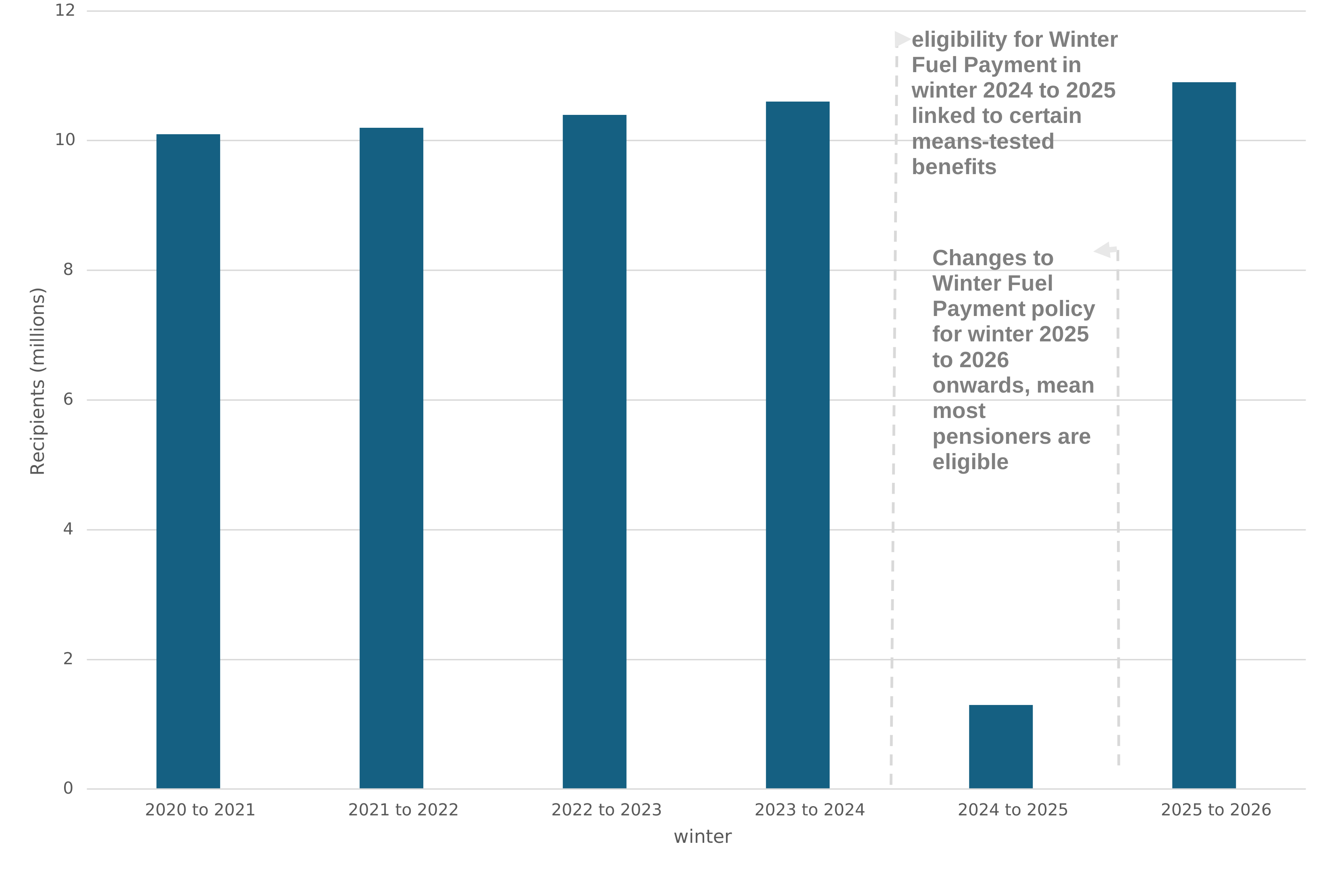
In winter 2025 to 2026, there were 10.9 million WFP to people living in England and Wales. This is an increase of 9.6 million from winter 2024 to 2025 (when WFP were made to pensioners in receipt of certain means tested benefits) and 290 thousand (3%) from 2023 to 2024 when the policy was universal and most pensioners received a WFP.
Figure 1: Winter Fuel Payment recipients (millions) from winter 2020 to 2021 to winter 2025 to 2026. England and Wales.
| Period | Total number of recipients (millions) |
|---|---|
| Winter 2020 to 2021 | 10.1 |
| Winter 2021 to 2022 | 10.2 |
| Winter 2022 to 2023 | 10.4 |
| Winter 2023 to 2024 | 10.6 |
| Winter 2024 to 2025 | 1.3 |
| Winter 2025 to 2026 | 10.9 |
Source: WFP statistics on Stat-Xplore
In winter 2024 to 2025, 1.3 million people in England and Wales received a WFP. In winter 2025 to 2026, after policy changes meaning the majority of pensioners were eligible for a WFP, 10.9 million people received a WFP, this is an increase of 9.6 million from the previous year and an increase of 290 thousand (3%) from winter 2023 to 2024.
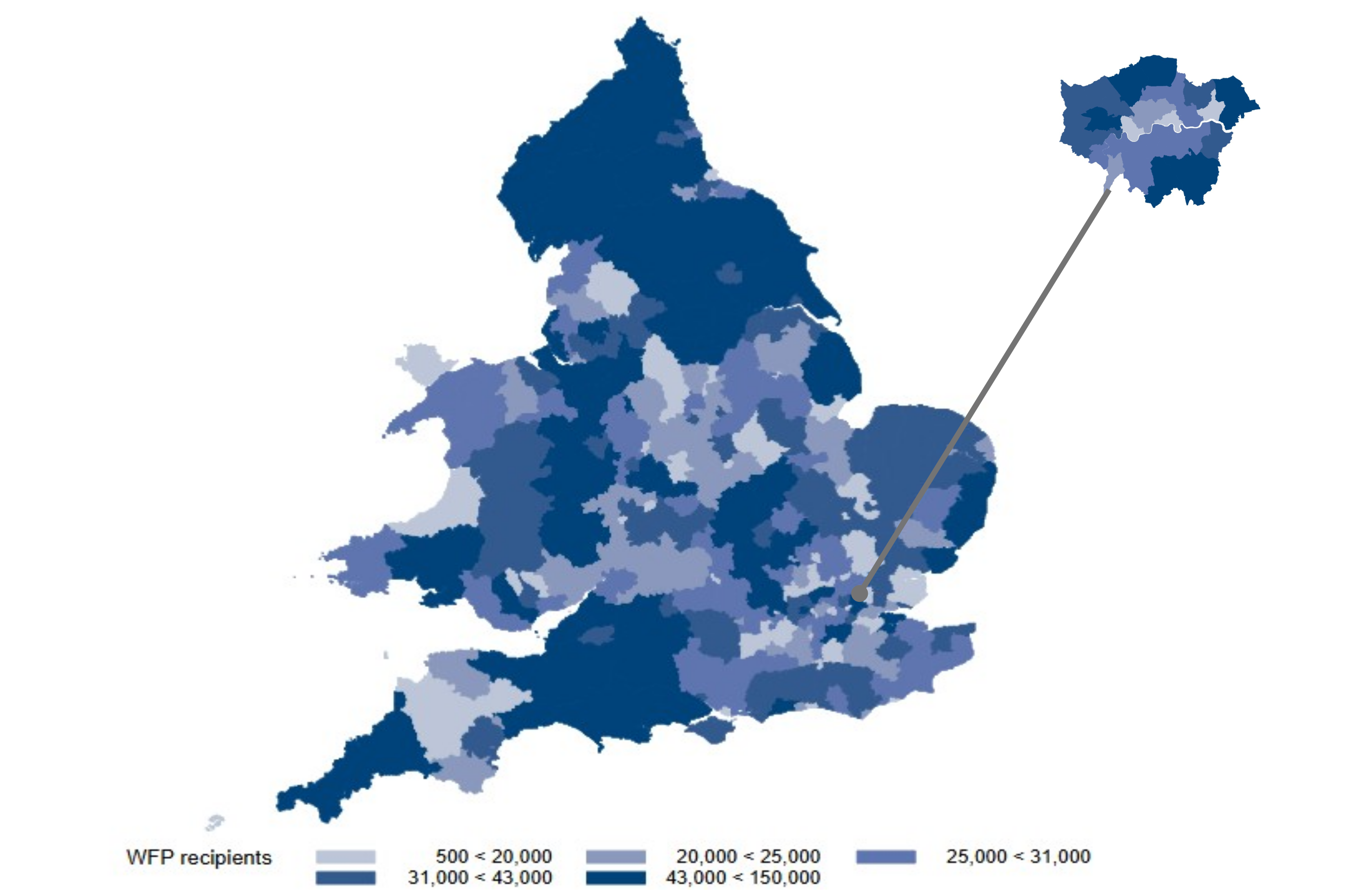
Figure 2: Winter Fuel Payment recipients by Local Authority for England and Wales.
Source: WFP statistics on Stat-Xplore
The local authority of North Yorkshire, had the highest number of WFP recipients (150 thousand), followed by Birmingham (140 thousand) and Cornwall (140 thousand). Isles of Scilly had the lowest number of WFP recipients (500), followed by City of London (1,200) and Rutland (10,100).
DWP Management Information recorded 53,000 pensioners opted-out from receiving a WFP for winter 2025 to 2026. A HMRC impact assessment estimates that 2.2 million pensioners (including those from Northern Ireland) would be impacted by recoveries.
4. Beneficiaries of a WFP
Beneficiaries of WFP include recipients of WFP plus eligible pension age partners, primarily of Pension Credit, which is paid as a household benefit. The methodology for creating this measure is detailed in the Background, Methodology and Quality report.
In winter 2025 to 2026 there were 11 million beneficiaries of WFP.
5. WFP amounts and ages
The amount of WFP paid to recipients depends on the age of a recipient, the age of the person they live with and whether they are in receipt of benefits. If you do not get any benefits, WFP is paid to individuals, if you are in receipt of benefits and you claim these with a partner, then a payment of either £200 or £300 is paid to the main claimant.
Table 1: WFP amounts depending on age of recipient and age of the person they live with if they are not in receipt of benefits
| Scenario | Amount if of State Pension age but under 80 | Amount if 80 or over |
|---|---|---|
| You qualify and live alone (or none of the people you live with qualify) | £200 | £300 |
| You qualify and live with someone under 80 who also qualifies | £100 | £200 |
| You qualify and live with someone 80 or over who also qualifies | £100 | £150 |
| You qualify, live in a care home and do not get certain benefits | £100 | £150 |
For winter 2025 to 2026:
- the majority of WFP recipients (7.7 million, 70%) were under 80 years old
- over a third of recipients received WFP amounts of £100 (37%) and £200 (38%)
Figure 3: Proportion of WFP recipients receiving £100, £150, £200 or £300 by region during winter 2025 to 2026. England and Wales
| Region | £100 (%) | £150 (%) | £200 (%) | £300 (%) |
|---|---|---|---|---|
| North East | 38% | 8% | 38% | 16% |
| North West | 36% | 8% | 39% | 17% |
| Yorkshire and The Humber | 38% | 9% | 37% | 16% |
| East Midlands | 38% | 9% | 37% | 16% |
| West Midlands | 37% | 9% | 37% | 17% |
| East | 38% | 10% | 36% | 17% |
| London | 29% | 6% | 46% | 19% |
| South East | 37% | 10% | 36% | 17% |
| South West | 38% | 10% | 36% | 16% |
| Wales | 37% | 8% | 38% | 17% |
Source: WFP statistics on Stat-Xplore
London is the region with the highest proportion of recipients receiving a WFP amount of £200 (46%) or £300 (19%). The South West has the lowest proportion of recipients receiving a WFP amount of £200 (36%) and the East Midlands has the lowest proportion receiving an amount of £300 (16%).
Statistics for all local authorities and Westminster parliamentary constituencies are available in the supplementary ODS tables and Stat Xplore by payment amount.
6. Definitions
More information about these definitions is available in the Background, Methodology and Quality report.
Recipient
Statistics relate to recipients of payments. Recipients of eligible means tested benefits will receive a WFP on behalf of themselves and an eligible partner (beneficiary).
Beneficiaries
The beneficiaries metric refers to recipients plus eligible pension age partners of recipients who are in receipt of certain benefits.
Qualifying week
To qualify for a WFP, an individual must meet certain eligibility criteria during a specified week each year. For winter 2025 to 2026, the qualifying week was 15 to 21 September 2025. Qualifying weeks for previous years are available in earlier statistical releases.
Winter Fuel Payment (WFP)
An annual tax-free payment made to those eligible to help towards their heating costs. It is a lump sum payment and in most cases is paid automatically with some exceptions to eligible pensioners
Pension Credit
A payment giving extra money to help those eligible over State Pension age with living costs. Read further information about Pension Credit.
7. About these statistics
As of 19 September 2023, WFP Statistics were designated Official Statistics.
Statistics under the previous methodology that cover the winter periods before winter 2020 to 2021 can be found in the previous WFP publications.
WFP was introduced in 1997 to help pension aged people pay their heating bills. It is an annual tax-free payment of either £100, £150, £200 or £300 (in Winter 2025 to 2026), to those eligible, to help meet the costs of heating their homes in winter. Previous payment amounts can be found in previous WFP publications and previous background, quality and methodology reports.
The payment is generally made in November or December but can extend throughout the year. Eligibility is based on the individual’s circumstances during the qualifying week, which is the third full week in the September before the winter covered by the payment. The qualifying age matches the State Pension age and is now 66.
Eligibility criteria are listed on gov.uk.
Rounding
Percentages are calculated using numbers prior to rounding and rounded to the nearest whole percentage point.
| Range | Rounded to the nearest |
|---|---|
| 0 to 1,000 | 10 |
| 1,001 to 10,000 | 100 |
| 10,001 to 100,000 | 1,000 |
| 100,001 to 1,000,000 | 10,000 |
| 1,000,001 to 10,000,000 | 100,000 |
| 10,000,001 to 100,000,000 | 1,000,000 |
8. Related statistics
Cold Weather Payment estimates – estimated number of Cold Weather Payments and total amounts paid.
The annual WFP statistics for Northern Ireland are published in Northern Ireland Social Fund Annual Report 2023 to 2024 – part of Northern Ireland Department for Communities Statistics.
Winter Fuel Payment is now devolved to Scotland who have published Winter Heating Benefit statistics for winter 2025 to 2026.
Benefit Expenditure and Caseload tables - part of the DWP welfare statistics.
Expenditure for residents of Great Britain is covered by a separate report under the terms of the Memorandum of Understanding with the Office for Budget Responsibility (OBR). It is part of the OBR’s independent reporting of benefit expenditure under the Budget Responsibility & National Audit Act 2011.
9. Contacts
Lead Statistician: Dominique Radcliffe
DWP would like to hear your views on our statistical publications. If you use any of our statistics publications, we would be interested in hearing what you use them for and how well they meet your requirements. Email: wfp.statistics@dwp.gov.uk. We are only able to reply to questions about the statistics.
Press enquiries should be directed to the DWP Press Office: E-mail: newsdesk@dwp.gov.uk.
ISBN: 978-1-80786-019-6