First time entrants (FTE) and Offender Histories: 2025
Published 21 May 2026
Applies to England and Wales

© Crown copyright 2026
This publication is licensed under the terms of the Open Government Licence v3.0 except where otherwise stated. To view this licence, visit nationalarchives.gov.uk/doc/open-government-licence/version/3 or write to the Information Policy Team, The National Archives, Kew, London TW9 4DU, or email: psi@nationalarchives.gov.uk.
Where we have identified any third party copyright information you will need to obtain permission from the copyright holders concerned.
This publication is available at https://www.gov.uk/government/statistics/first-time-entrants-fte-and-offender-histories-2025/first-time-entrants-fte-and-offender-histories-2025
1. Contents
Offence type by criminal history
Future publications and contact details
This publication provides an overview of trends in first time entrants into the Criminal Justice System and Offender Histories in England and Wales.
2. Main points
| Point | Change | Commentary |
|---|---|---|
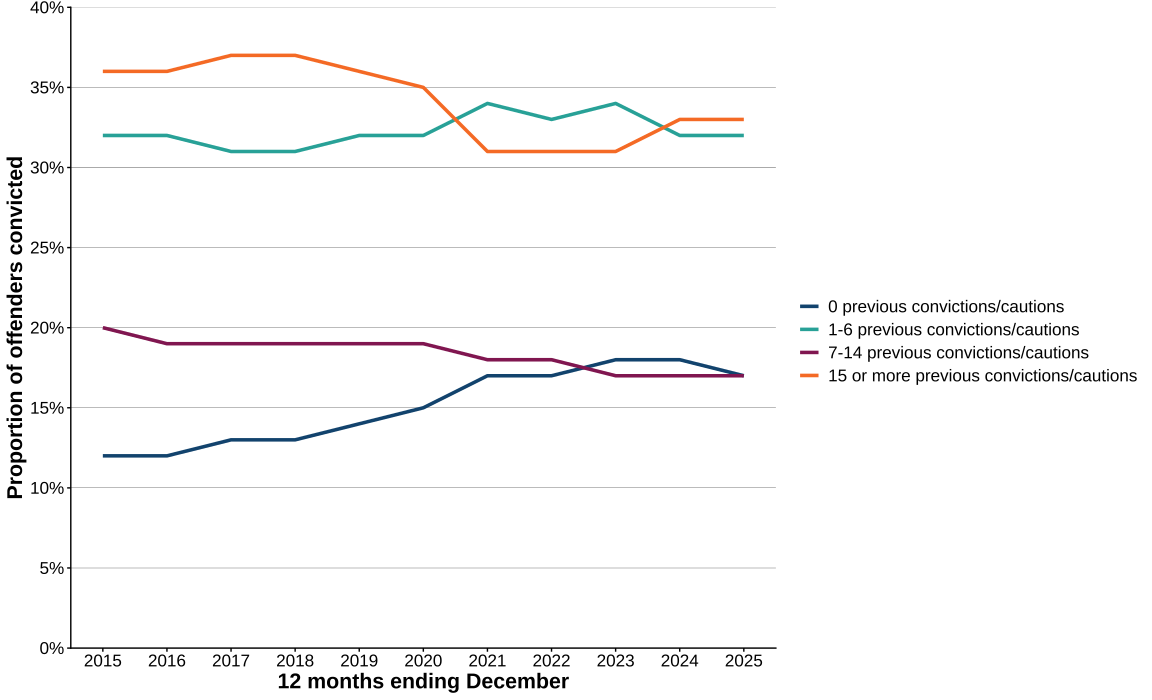
| The proportion of adult offenders convicted for an indictable offence with long criminal careers (15 or more previous cautions or convictions) was 35% in 2025. | No change | This is broadly unchanged from 2024. It is a 2-percentage point increase since 2021 (33%) but is still 3 percentage points lower than pre-COVID in 2019 (38%). |
| The proportion of offenders convicted for an indictable offence who were first time offenders[footnote 1] was 17% in 2025. | No change | This is broadly unchanged since 2024. The proportion increased consistently from 2015 (12%) to 2023 (18%) and has since stayed relatively consistent. |
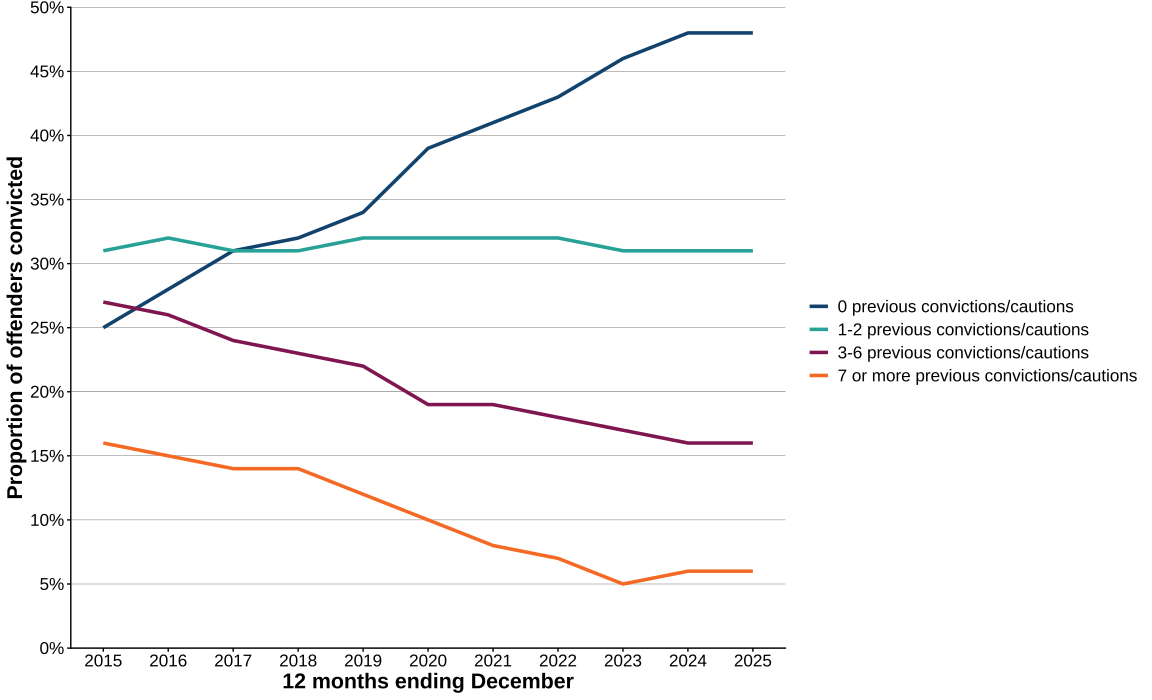
| The proportion of juvenile offenders convicted for an indictable offence was 48% in 2025. | No change | This is broadly unchanged from 2024 but has been increasing consistently since 2015 (25%). This is due to a reduction in overall juvenile convictions, not an increase in juvenile first time offenders. |
| The proportion of offenders cautioned or convicted for an indictable offence in 2025 with at least one prior caution or conviction was 79%. | No change | This is broadly unchanged since 2024 and has remained relatively stable since 2015 with an average of 79% over the 10-year period. |
3. Statistician’s comment
The proportion of adult offenders convicted for an indictable offence with long criminal careers (15 or more previous cautions or convictions) was 35% in 2025, broadly unchanged from 2024. This proportion has increased by 2 percentage points since 2021 but is down compared to the pre-COVID years 2015 to 2019, where between 38% and 39% of adult offenders convicted for an indictable offence had long criminal careers.
The proportion of offenders convicted for an indictable offence who are first time offenders has also remained broadly consistent with 2024. In 2025, 17% of offenders convicted for an indictable offence were first time offenders. The proportion increased by 6 percentage points from 12% in 2015 to 18% in 2023 and has since stayed broadly stable.
79% of offenders had at least one prior caution or conviction for an indictable offence in 2025, this has remained broadly stable since 2015.
4. Long criminal careers
In year ending December 2025, the proportion of adult offenders convicted for an indictable offence with long criminal careers (15 or more previous cautions and convictions) was 35%. This is broadly consistent with 2024 and represents a 2 percentage point increase since 2021, but remains lower than the pre-COVID period from 2015 to 2019, where on average 39% of adult offenders convicted for an indictable offences had a long criminal career. In 2025, immediate custody was the most likely outcome (43%) for those convicted of an indictable offence with a long criminal career.
Figure 1: Proportion of offenders convicted for indictable offences by offender’s previous criminal history, December 2015 to December 2025 (Source: Criminal History Pivot tool - Q4 2025)[footnote 2]
5. First time offenders[footnote 1]
There were around 68,600 first time offenders convicted in 2025. This represents around 21% of all sentencing occasions, a similar level to 2024, but an increase of 5 percentage points since 2015. Despite the increase in proportion since 2015, the number of first time offenders has decreased by 11% from around 77,100. This is due to the total number of offenders decreasing by a greater margin over this period, meaning first time offenders account for a larger proportion of all offenders in 2025 than in 2015.
There were around 32,300 first time offenders convicted of an indictable offence in 2025, up from 29,800 in 2024 and the highest level observed in the period 2015 to 2025. Despite this increase, the proportion they represent has stayed stable between 17% and 18% since 2021.
Amongst juvenile first time offenders, there were around 3,700 offenders convicted for indictable offences in 2025, which is similar to 2024. This is a decrease on 4,200 in 2015.
In the same period, the proportion of juvenile offenders convicted for an indictable offence that were first time offenders increased from 25% to 48%. This is mostly due to a 54% decrease in the number of distinct juvenile offenders, meaning that although the actual number of first time offenders has decreased, the overall number decreased by a greater margin so the proportion of juvenile offenders they represent has increased.
Figure 2: Proportion of juvenile offenders convicted for indictable offence by offender’s previous criminal history, December 2015 to December 2025 (Source: Criminal History Pivot tool - Q4 2025)[footnote 2]
6. Offence type by criminal history
In 2025, first time offenders convicted of an indictable offence were most often convicted for drug offences (23%), miscellaneous crimes against society (17%) and violence against the person (16%). This trend has remained broadly stable for drug offences since 2020, with an average of 22% of first time offenders convicted of drug offences in this period. The proportion of first time offenders convicted of violent offences has decreased by 5 percentage points over this period from 22% in 2020. Theft offences in this group also saw a decrease, accounting for 21% in 2015 and 11% in 2025.
In contrast, offenders convicted of an indictable offence in 2025 with a long criminal career where most often convicted of theft offences, with 54% being convicted for this type of offence. This continues a long-term trend, with theft offences accounting for most offences committed by offenders with long criminal careers from 2015 to 2025. The next most common offence type in 2025 was drug offences (14%).
7. Personal characteristics
Males accounted for 86% of all offenders cautioned or convicted for an indictable offence in 2025, this proportion has remained broadly stable in the last ten years, increasing from 83% in 2015.
In contrast, out of all offenders the proportion who were juveniles has fallen by around a third in the same period. In 2015 8% of all offenders were juveniles, this fell to 5% in 2025.
Around 1 in 7 first time offenders in 2025 were adult females (14%), with adult males accounting for the majority (70%). Since 2015 the proportion of adult females has fallen 7 percentage points, while the male proportion has increased by 11 percentage points. This trend is not seen in those with long criminal careers (15+ previous cautions or convictions), where between 2015 and 2025 consistently 12% of all adult offenders with indictable offences were female.
Adult offenders were more likely than juvenile offenders to receive a conviction for an indictable offence in 2025; 90% of adult sentencing occasions resulted in a conviction, compared to 73% of juvenile sentencing occasions.
8. Further information
The data presented in this publication are provisional and updated in each publication. Figures provided for more recent years are subject to change in future publications as ongoing cases pass through the Criminal Justice System.
A technical guide providing further information on how the data is collected and processed can be found on our website.
8.1 Accompanying files
As well as this bulletin, the following products are published as part of this release:
-
ODS format tables containing data on first time entrants into the Criminal Justice System and Offender Histories in England and Wales up to December 2025.
-
An interactive pivot tool containing data on the number of all offenders cautioned or sentenced for indictable and summary offences, by previous criminal history, offence type, age group, officer identified ethnicity, officer identified sex, disposal category and disposal type, from December 2015 to December 2025
-
An interactive pivot tool containing data on the latest offence for offenders cautioned or sentenced by first and all previous offences, offence type, disposal category and disposal type, from December 2015 to December 2025.
-
An interactive pivot tool containing data on the number of First Time Entrants by offence type, age group, officer identified ethnicity, officer identified sex, disposal category and disposal type, from December 2015 to December 2025.
-
A technical guide providing further information on how the data is collected and processed.
-
The pre-release access list for this publication.
8.2 Official Statistics status
Accredited Official Statistics have been independently reviewed by OSR and confirmed to comply with the standards of trustworthiness, quality and value in the Code of Practice for Statistics.
You can contact us directly with any comments about how we meet these standards.
Alternatively, you can contact the OSR by emailing regulation@statistics.gov.uk or via the OSR website.
9. Future publications
Next update: May 2027
Our statisticians regularly review the content of publications. Development of new and improved statistical outputs is usually dependent on reallocating existing resources. As part of our continual review and prioritisation, we welcome user feedback on existing outputs including content, breadth, frequency and methodology. Please send any comments you have on this publication including suggestions for further developments or changes in content. We have discontinued the Sankey diagram that was published in previous years (as was mentioned in the 2024 release) and are looking at new ways of improving our visualisation tools. If you have any questions or concerns about this change, please contact us at the contact section below.
9.1 Contact
Press enquiries should be directed to the Ministry of Justice Enquiries Team.
Other enquiries about, or feedback on, these statistics should be directed to the Data and Analysis division of the Ministry of Justice:
Sasha King,
Ministry of Justice,
102 Petty France,
London,
SW1H 9AJ
Email: MOJPNCteam@justice.gov.uk
© Crown copyright Produced by the Ministry of Justice. Alternative formats are available on request from MOJPNCteam@justice.gov.uk
-
First time offenders refers to offenders with no previous cautions or convictions. This count differs from First Time Entrants (FTEs) because all offenders prosecuted by an English or Welsh police force, irrespective of country of residence, are included. ↩ ↩2
-
Please be aware that figures from 2020 onwards have been impacted by the effects of the COVID-19 pandemic, the operational restrictions imposed and the continued court backlog. Figures for 2022 will have been impacted by industrial action taken by the Criminal Bar Association. ↩ ↩2